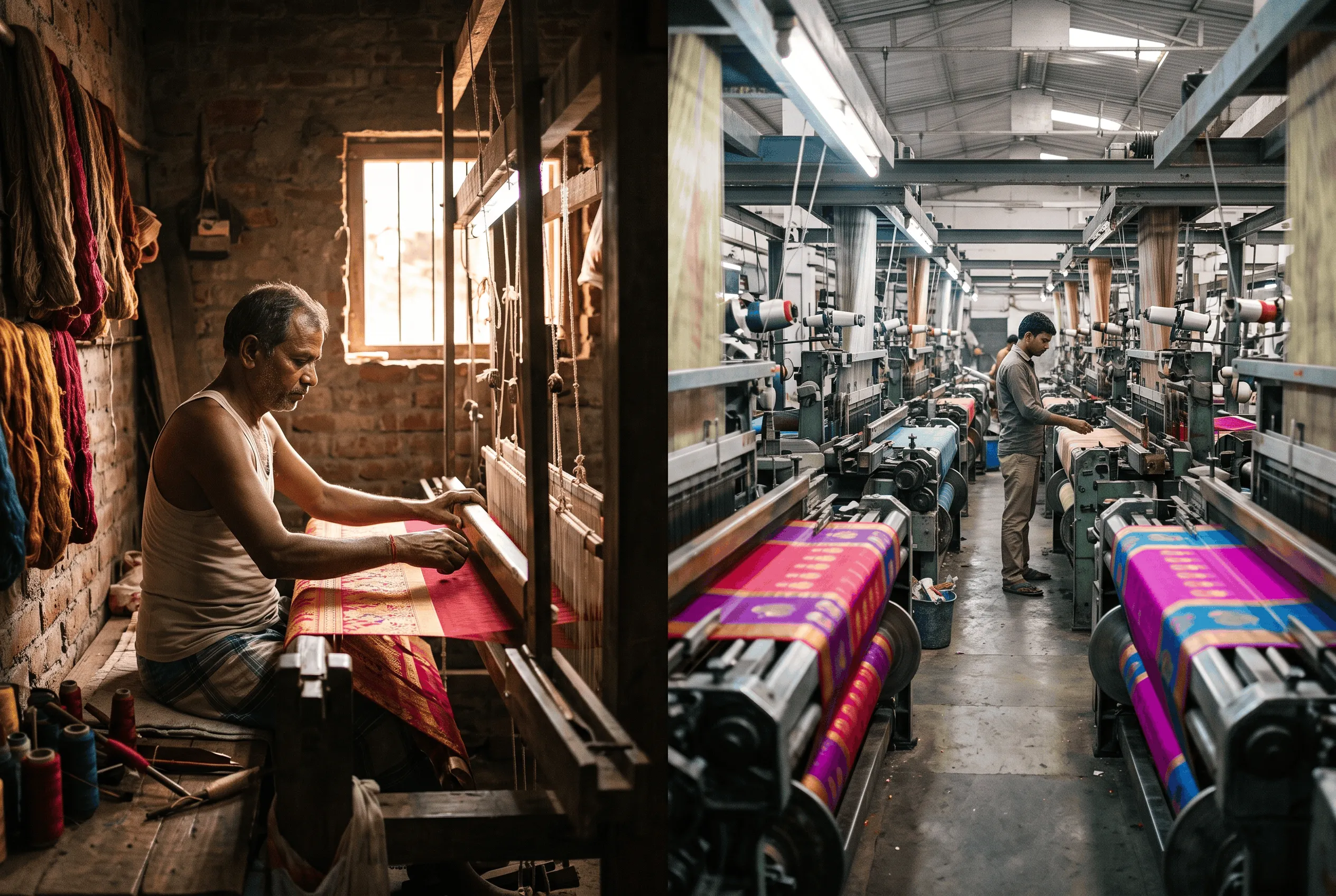
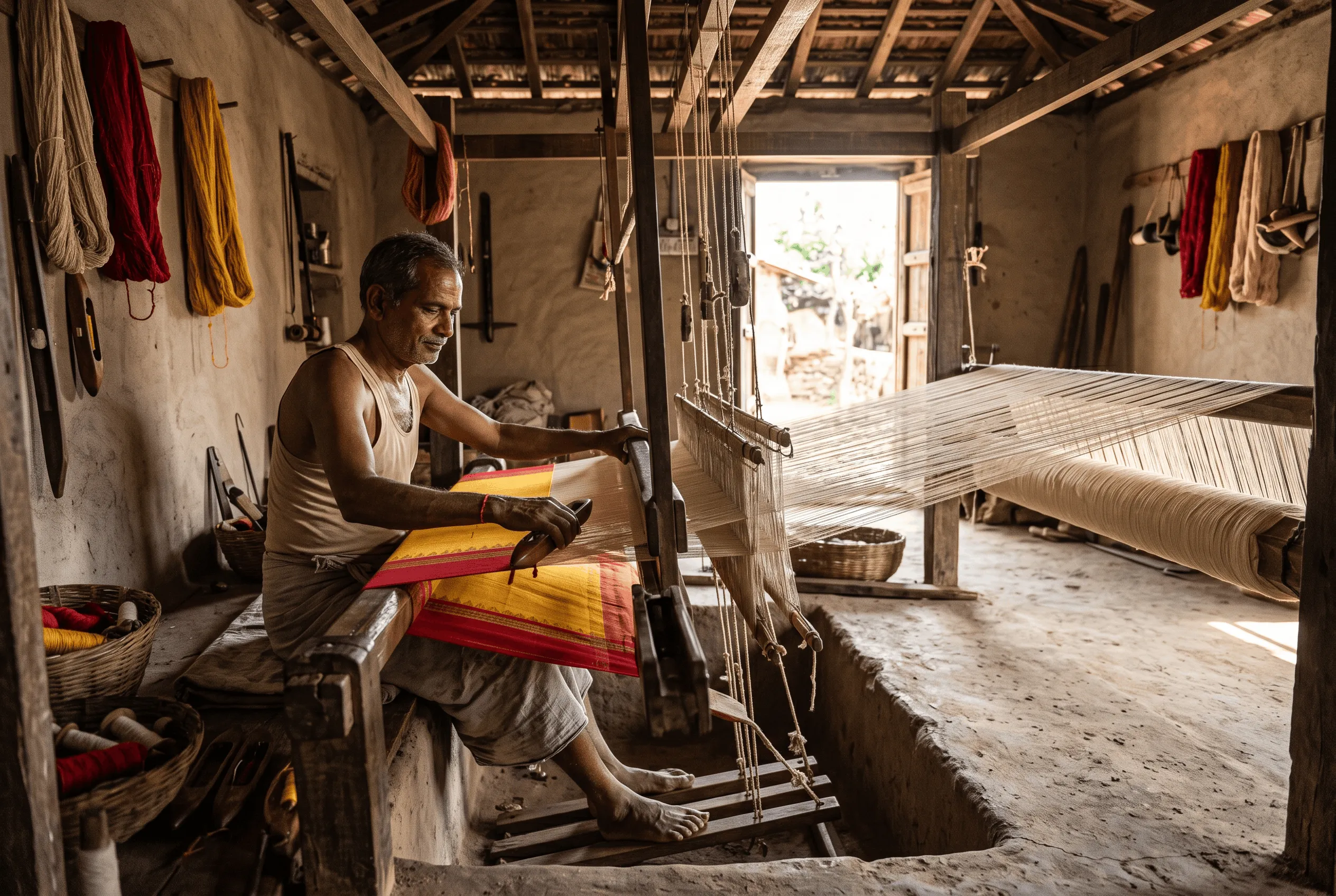
Handloom sarees are some of India's most beautiful and valuable textiles. Each one is woven by hand, often over several days or weeks, by skilled weavers whose techniques have been passed down for generations.
Unfortunately, the popularity of handloom has also created a large market for imitations. Powerloom sarees, printed copies and blended fabrics are often sold as "handloom", "pure silk" or "handwoven" at handloom prices.
Knowing the warning signs protects your money and supports genuine weavers.
This guide lists the red flags to watch for when buying an authentic handloom saree, explains how to check weave, labels and pricing, and gives you a simple checklist to use before you pay.
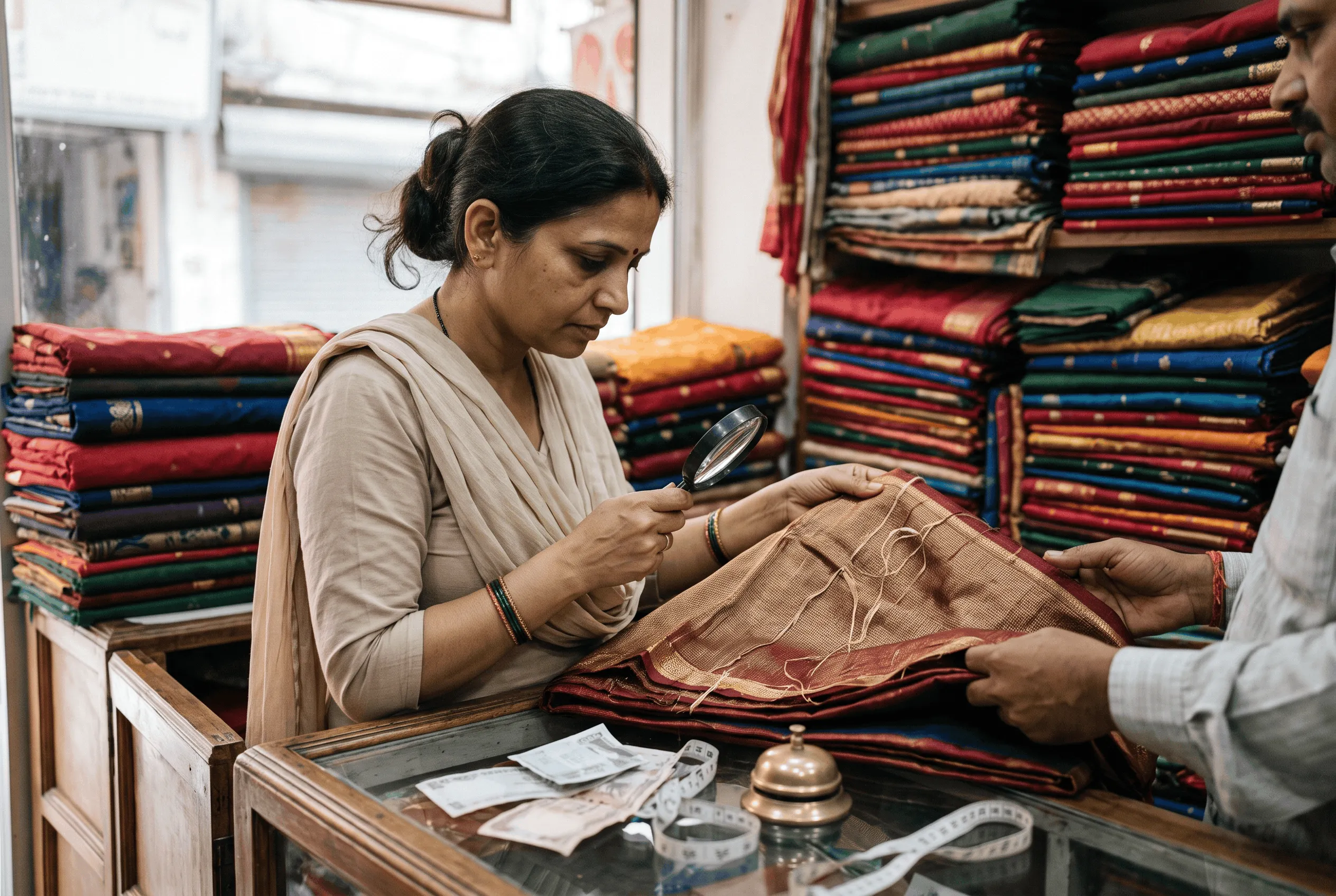
Why Handloom Is Worth Protecting
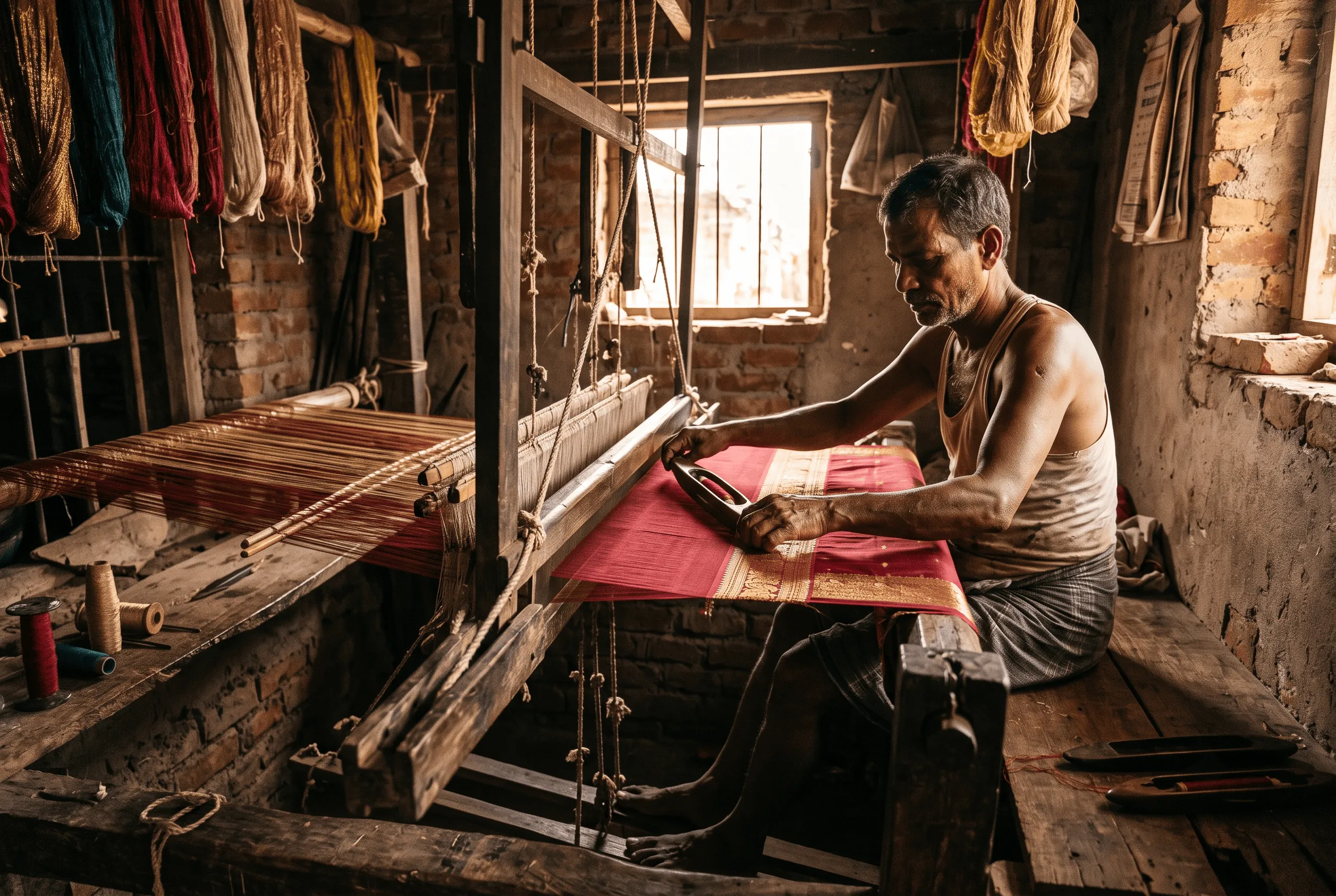
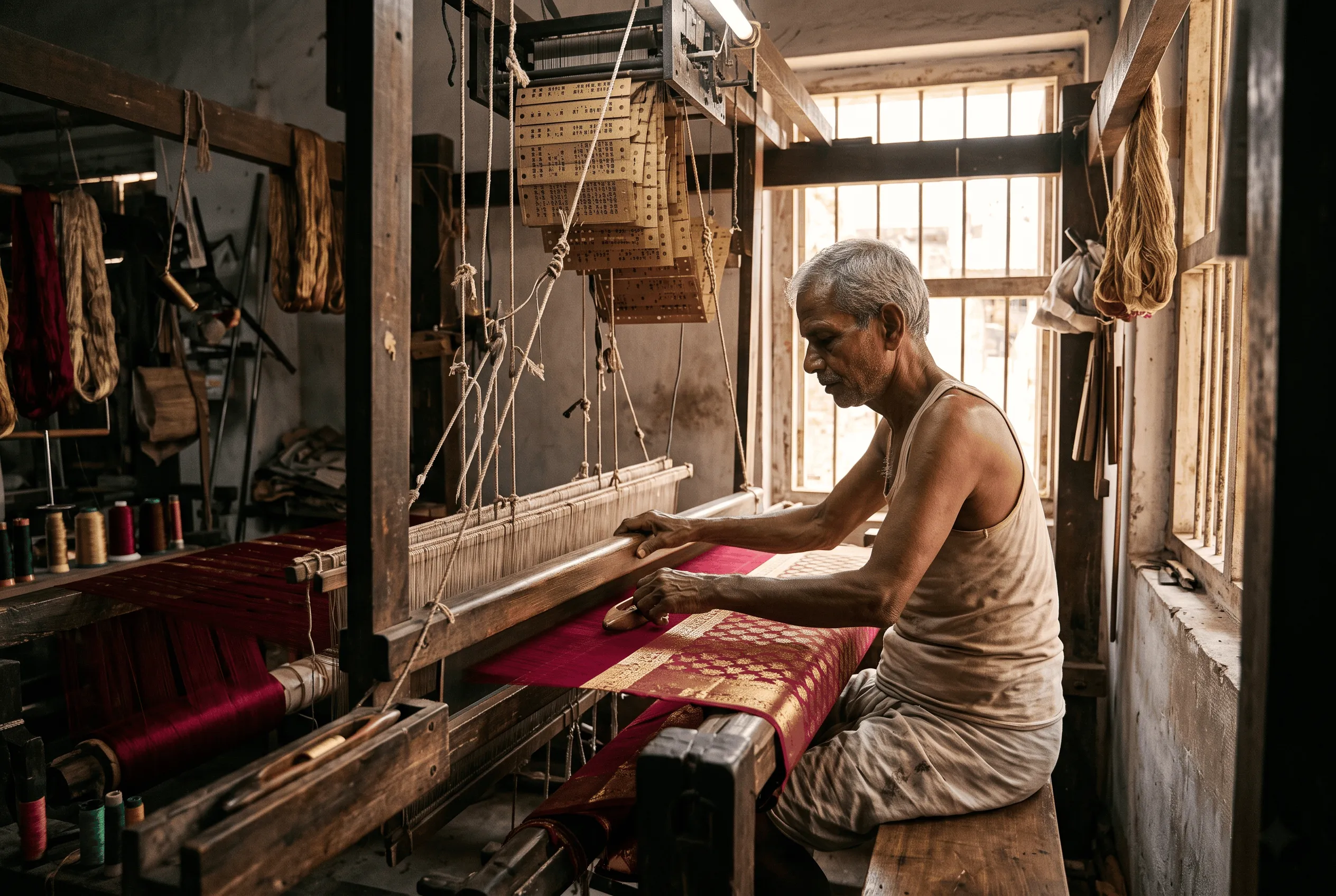
A handloom saree is woven on a loom operated by hand, without electricity. The weaver controls every thread, which creates small irregularities, rich texture and designs that machines cannot fully replicate.
Handloom also supports lakhs of weaving families across India, from Varanasi and Kanchipuram to Pochampally, Chanderi and Bengal.
When imitations are sold as handloom, buyers lose money and genuine weavers lose their market. Learn more in our guide to handloom vs powerloom sarees.
Red Flag 1: A Price That Is Too Good to Be True
Genuine handloom takes time, skill and costly yarn.
A "pure silk handloom Kanjivaram" or "handloom Banarasi with real zari" sold for a few thousand rupees is almost certainly not what it claims.
Compare prices across trusted sellers and check our saree price guide for typical ranges.
Red Flag 2: A Perfectly Uniform Weave
Machine-made sarees have perfectly even weaves, identical motifs and flawless edges.
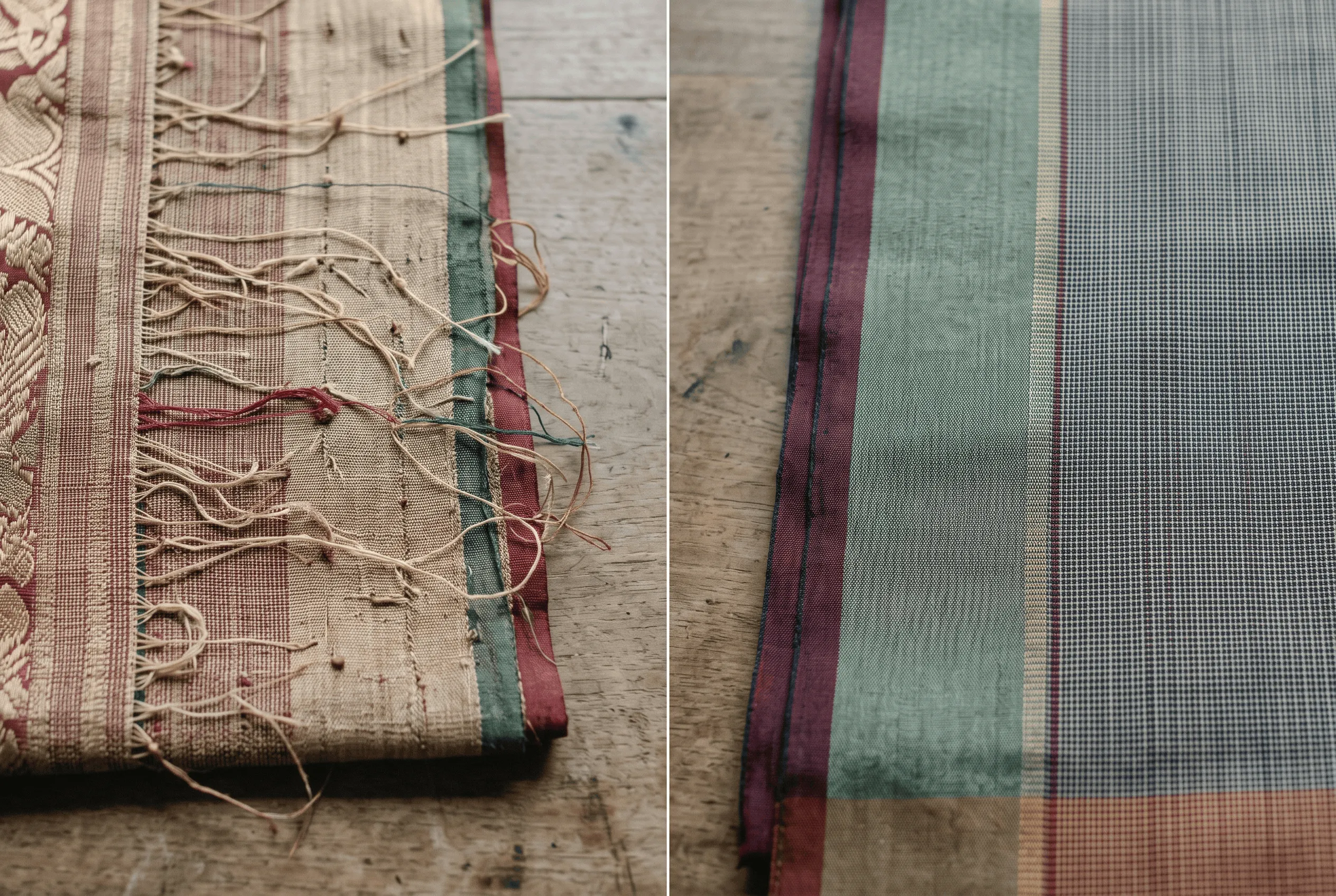
Handloom sarees usually show slight irregularities: small variations in motif spacing, tiny slubs in the yarn and minor differences in tension.
These are not defects but signs of handwork.
Red Flag 3: A Messy or Fused Reverse Side
Turn the saree over.
In many handloom weaves, the reverse shows floating threads or a clean mirror image of the design, depending on the technique.
Printed sarees show a faded reverse, and some powerloom sarees show cut threads fused with glue or heat.
Red Flag 4: Perfectly Straight, Machine-Finished Selvedge
The selvedge (the long edge of the saree) on handloom sarees often shows slight unevenness and small loops or fringes where the weft turns.
A perfectly straight, machine-stitched edge can indicate powerloom.
Red Flag 5: No Handloom Mark or Silk Mark
India has official labels that help buyers.
India Handloom Brand: certifies handloom products for quality and authenticity.
Handloom Mark: identifies products woven on handlooms.
Silk Mark: certifies that a product is made of pure natural silk.
GI tags: protect regional products such as Kanchipuram silk, Banarasi brocades, Pochampally ikat, Chanderi and Paithani.
Not every genuine weaver uses these labels, but sellers of high-value sarees should be able to explain them. See our guide on how to identify a pure silk saree.
Red Flag 6: "Pure Silk" Without Any Proof
"Pure silk" is often used loosely.
Ask whether the saree carries the Silk Mark and whether the seller will allow a burn test on a thread from the edge.
Pure silk burns slowly, smells like burning hair and leaves a crushable ash. Polyester melts into a hard bead and smells like plastic.
Red Flag 7: Vague Answers About Origin
A good seller can tell you:
Where the saree was woven.
Which technique was used.
Whether the zari is pure, tested or imitation.
How long it took to weave.
Vague answers such as "it is from the south" or "it is handloom quality" are warning signs.
Red Flag 8: Zari That Looks Too Bright
Pure zari, made of silver thread coated with gold, has a soft, warm glow.
Tested zari uses copper or other metal with a gold or silver coating.
Imitation zari uses metallic plastic and can look very bright, shiny or brassy.
Scratch a tiny thread gently: pure zari usually reveals silver underneath, while imitation zari may show plastic or red copper. Our zari silk guide explains the differences.
Red Flag 9: Printed Motifs Sold as Woven
Some sarees print motifs that should be woven, such as ikat patterns, Patola designs or Jamdani motifs.
Look closely: printed designs sit on the surface and do not appear on the reverse, or appear faded.
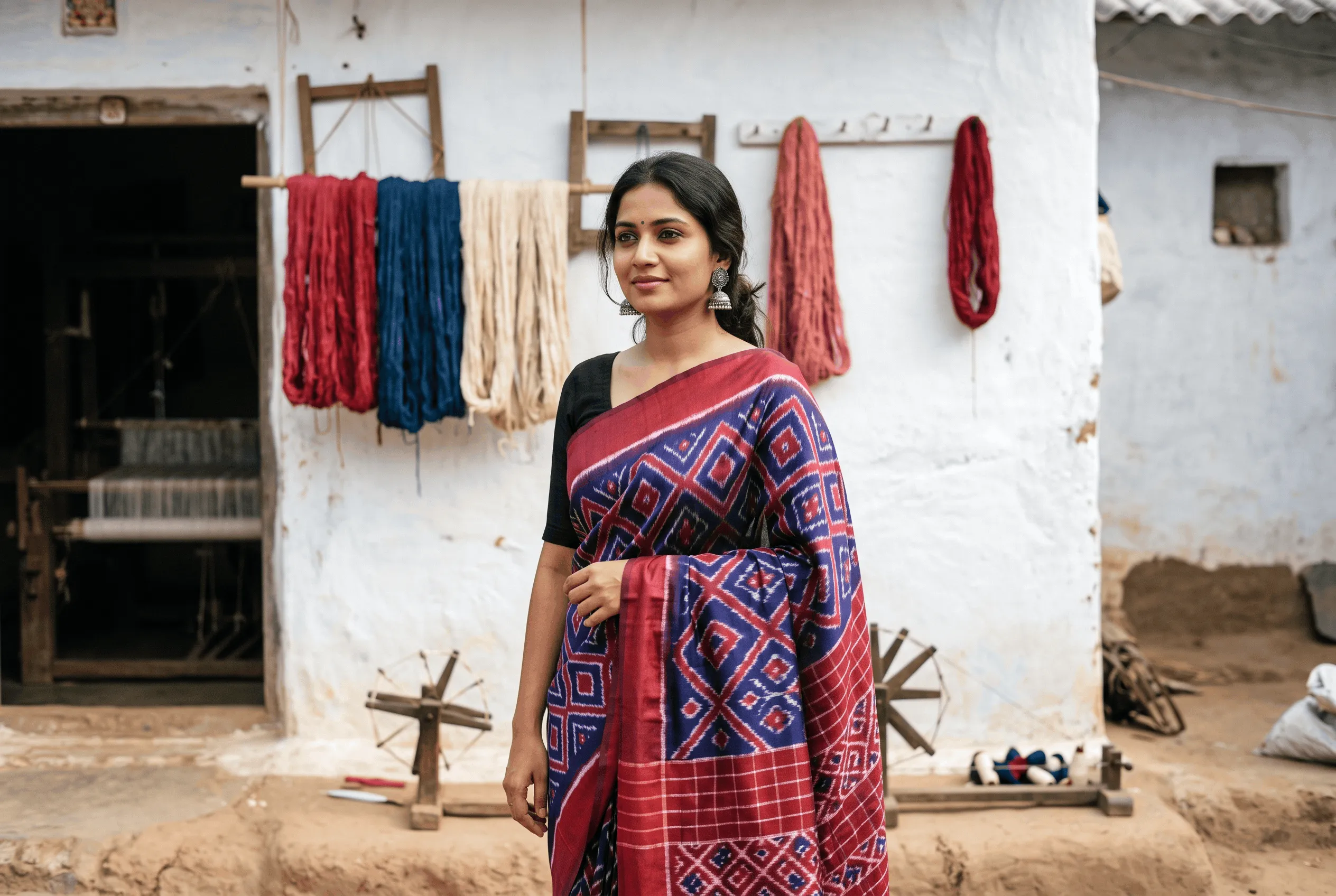
Ikat and Patola patterns have slightly blurred edges because the yarn is dyed before weaving; printed copies often have sharp edges.
Red Flag 10: Too Much Stock of an Identical Design
Handloom sarees are produced slowly, and even repeated designs vary slightly.
If a seller has dozens of absolutely identical "handloom" sarees, ask more questions.
Red Flag 11: Synthetic Feel and Static
Pure silk and cotton handlooms feel natural, breathe well and soften with wear.
Synthetic or blended fabrics often feel slippery, build static and do not breathe.
Red Flag 12: No Returns, No Bill, No Details
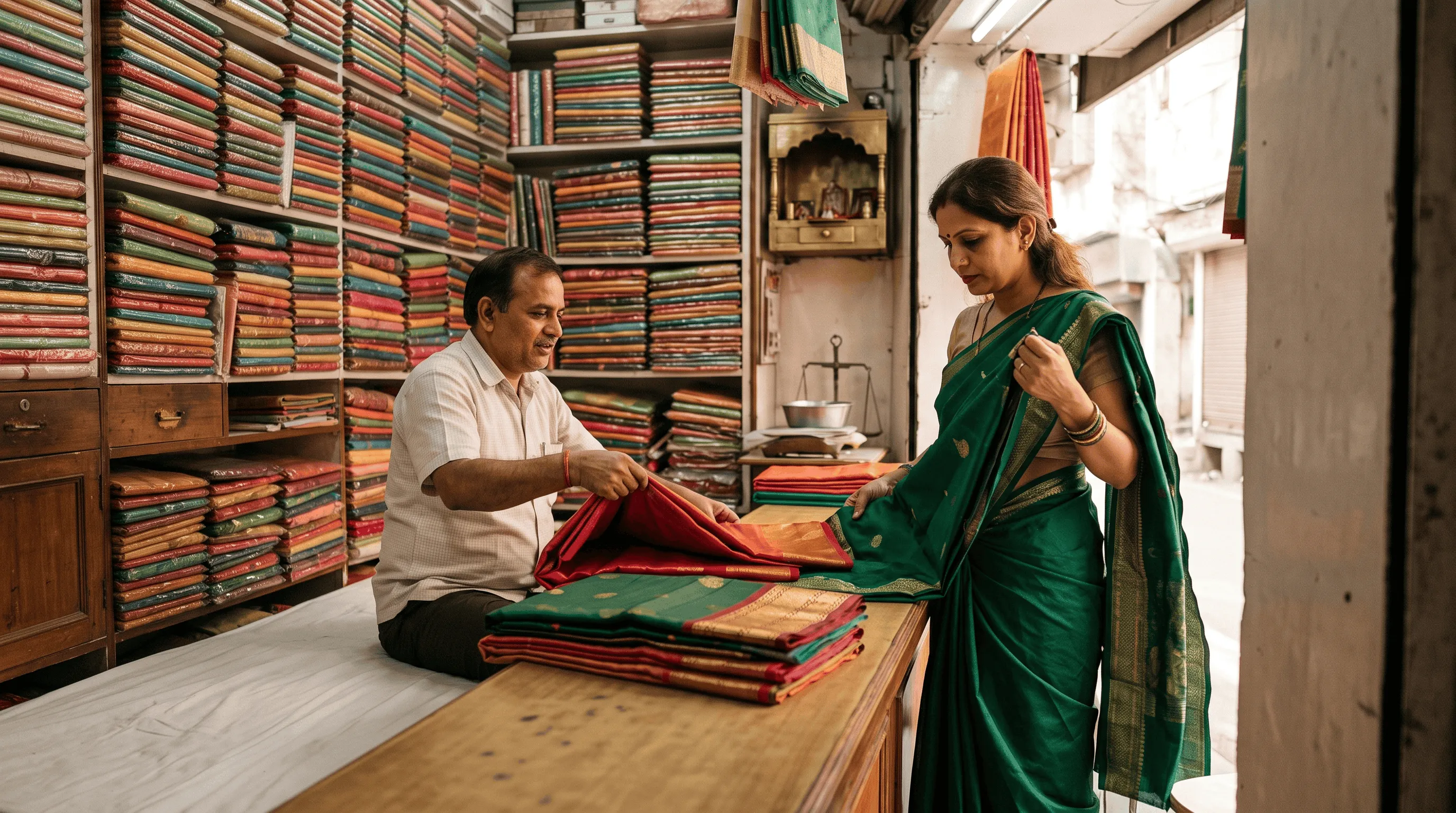
A trustworthy seller provides a proper bill with fabric details, zari type and price.
Avoid sellers who refuse bills, discourage questions or offer no return or exchange policy for genuine defects.
Simple Checks You Can Do in the Shop
Look at the reverse for floating threads or a clean mirror image.
Check the selvedge for slight unevenness.
Examine motifs for small variations.
Feel the fabric for natural texture and breathability.
Ask for labels such as Silk Mark, Handloom Mark or GI details.
Ask about the zari and request a thread test if appropriate.
Compare prices with known ranges.
Get a detailed bill.
Region-Specific Checks
Kanjivaram: heavy silk, contrast borders woven with the korvai technique and pure or tested zari. See how to identify pure Kanjivaram silk.
Banarasi: woven motifs with floating threads on the reverse in kadhua or fekua weaves. See our Banarasi silk saree buying guide.
Pochampally ikat: slightly blurred pattern edges and designs visible on both sides. See our Pochampally ikat guide.
Patola: double ikat with identical designs on both sides. See our Patola ikat guide.
Jamdani: motifs woven by hand into a fine base, with a delicate, slightly raised feel. See our Jamdani saree guide.
Chanderi: sheer, light fabric with woven buttis. See our Chanderi fabric guide.
Buying Handloom Online
Online shopping makes handloom easier to find, but you cannot touch the fabric, so look for other signals.
Detailed product descriptions: fabric, weave, zari type, weaving cluster and approximate weaving time.
Close-up photos of the reverse side and selvedge, not only styled photos.
Real videos showing the drape and sheen in natural light.
Clear labels: Handloom Mark, Silk Mark or GI details where relevant.
Seller information: a named business, physical address and contact number.
Fair return policy: especially for high-value sarees.
Reviews with customer photos, rather than only star ratings.
If a listing uses vague phrases such as "handloom look", "silk feel" or "Banarasi style" without details, treat it as a powerloom or blended product and judge the price accordingly.
Honest Blends Are Not a Problem
Not every good saree has to be pure handloom silk.
Silk-cotton handlooms, art-silk weaves and good-quality powerloom sarees all have a place in a wardrobe, and they can be beautiful and practical.
The problem is not the blend itself but dishonest labelling. A clearly labelled silk-cotton or art-silk saree at a fair price is a perfectly good buy. The red flag is a blend sold as pure silk handloom at a handloom price.
If You Think You Were Misled
Keep the bill, labels and packaging.
Contact the seller first and ask them to explain the fabric and weave in writing.
If the saree carried a Silk Mark label, you can contact the Silk Mark Organisation of India with your concern.
For serious cases, consumer protection forums handle complaints about misleading product claims.
Sharing your experience honestly in reviews also helps other buyers avoid the same problem.
Caring for Handloom After You Buy It
Genuine handloom deserves gentle care so it lasts for years.
Silk handlooms should be dry-cleaned, aired after wearing and stored in muslin.
Cotton handlooms can usually be hand washed in cold water with mild detergent; wash them separately the first few times, as natural dyes may bleed.
Zari should be protected from moisture and perfume and never ironed directly.
Refold every few months so permanent creases do not form along the folds.
Good care also protects the value of a high-quality handloom, which is often passed down in families.
Where to Buy Authentic Handloom
Weaver cooperatives and government emporiums.
Brands that name their weaving clusters and weavers.
Exhibitions organised by handloom boards.
Trusted family shops with long reputations.
Our showroom in Kathodara, Surat: see our saree shop in Surat page if you would like to see handloom weaves in person.
Why Supporting Real Handloom Matters
Buying genuine handloom keeps traditional skills alive, provides income to weaving families and supports sustainable, slow fashion.
Our guide to sustainable handloom fashion explains the wider impact.
Your Handloom Buying Checklist
Is the price realistic for the claimed fabric and weave?
Does the weave show small, natural irregularities?
Does the reverse show floating threads or a clean mirror image?
Is the selvedge slightly uneven?
Does it carry a Silk Mark, Handloom Mark or GI details?
Can the seller explain the origin, technique and zari?
Will you receive a detailed bill?
If the answer to most of these is yes, you are much more likely to be buying a genuine handloom saree.
Learn more in our guides to handloom silk: why it costs more and types of Indian sarees.

Comments (0)
Leave a Thought
No comments yet. Be the first to share your thoughts!