Light, airy, softly lustrous and finished with a border you can wear on either side: the Maheshwari saree is one of Central India's most elegant handlooms.
It is woven in Maheshwar, a temple town on the banks of the Narmada in Madhya Pradesh, where the great Holkar queen Ahilyabai Holkar encouraged weaving in the eighteenth century. The saree's simple stripes, checks and temple-inspired borders reflect the architecture of the town's ghats and fort.
This guide explains the history of Maheshwari, its fabric and signature features, popular patterns and colours, how it differs from Chanderi, how to identify genuine handloom and how to style and care for it.
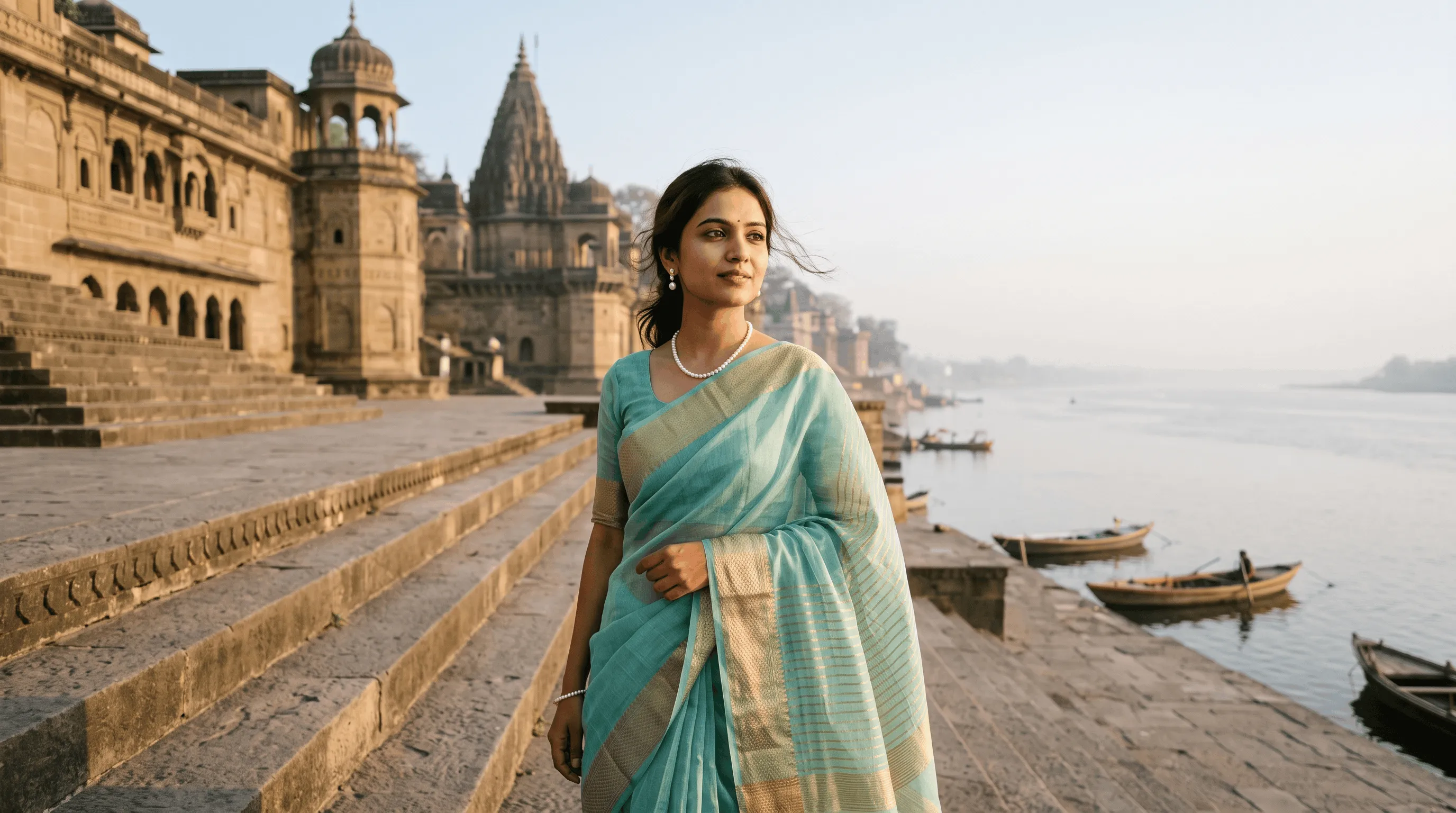
What Is a Maheshwari Saree?
A Maheshwari saree is a handwoven saree from Maheshwar, Madhya Pradesh, traditionally made from a blend of silk and cotton, with pure cotton and pure silk versions also available.
Its key features are:
Light weight and soft sheen: silk-cotton gives a gentle lustre and breathable comfort.
Reversible border (bugdi): the border is woven so that it looks good on both sides, allowing the saree to be worn either way.
Striped pallu: the pallu often has three coloured stripes alternating with two white stripes.
Simple geometric designs: stripes, checks and small motifs rather than heavy decoration.
Maheshwar sarees and fabrics are protected by a Geographical Indication.
A Short History
Maheshwar was the capital of the Holkar rulers under Ahilyabai Holkar in the second half of the eighteenth century.
She invited skilled weavers to Maheshwar and encouraged them to create fine fabrics, which were used for royal wear and as gifts for guests and dignitaries.
The designs drew inspiration from Maheshwar's fort, temples and ghats, with borders reflecting the patterns of carved stone.
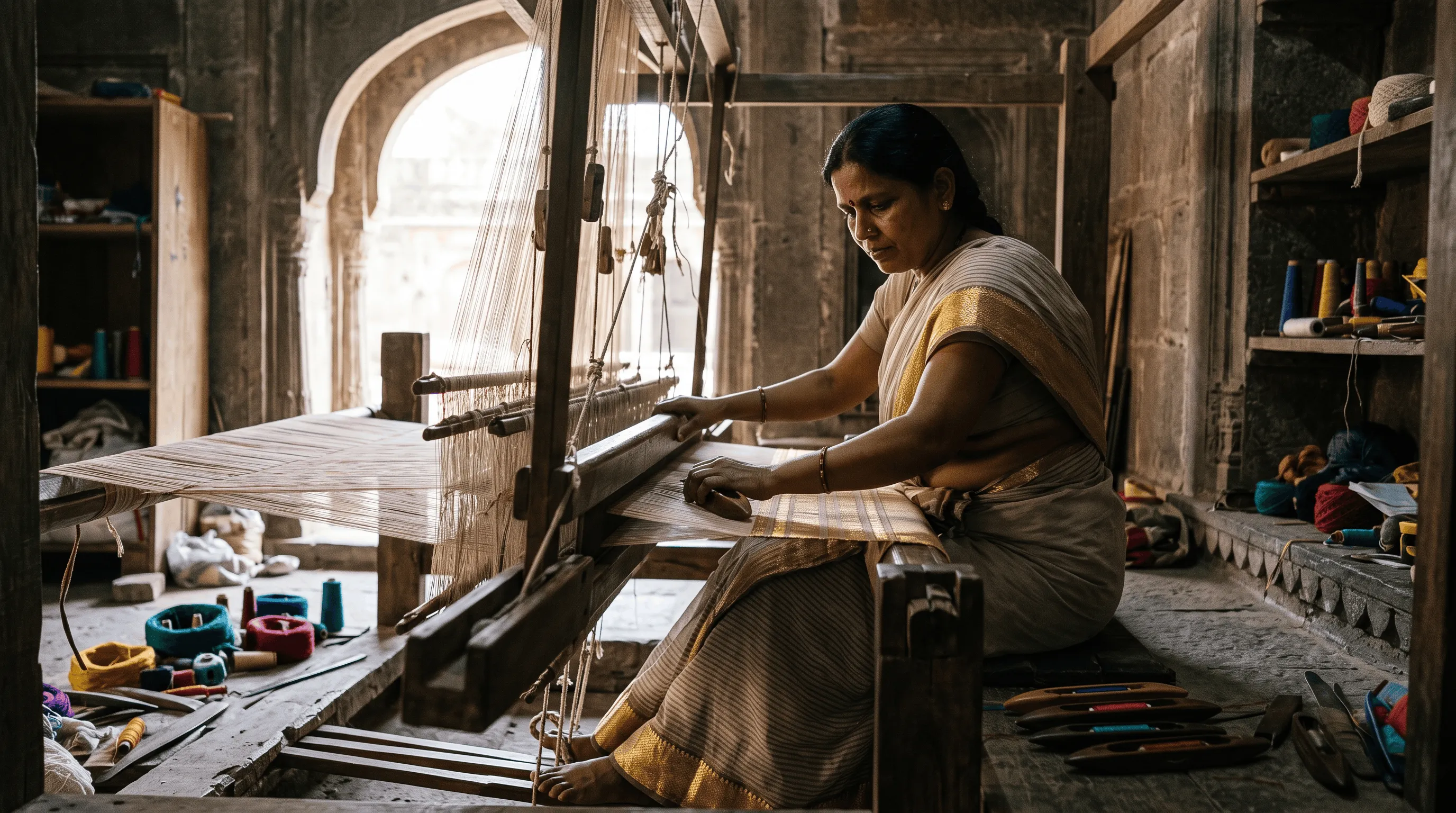
In the twentieth century, the craft declined, but in 1979 the Rehwa Society was set up by members of the Holkar family to revive Maheshwari weaving and support weavers, especially women. Today, Maheshwar is a thriving handloom centre.
Fabric: Silk, Cotton and Silk-Cotton
Silk-cotton: the classic Maheshwari, typically with a silk warp and cotton weft, light, breathable and lustrous.
Pure cotton: soft and ideal for everyday wear in hot weather.
Pure silk: richer and more festive, for weddings and special occasions.
With zari: many Maheshwaris use a zari border or zari motifs for a festive touch.
Signature Patterns
Chatai: a mat-weave pattern.
Chameli ka phool: a jasmine-flower motif.
Eent: a brick pattern inspired by the fort walls.
Heera: a diamond motif.
Stripes and checks: the backbone of everyday Maheshwari designs.
Lehariya and zari buttis: for festive sarees.
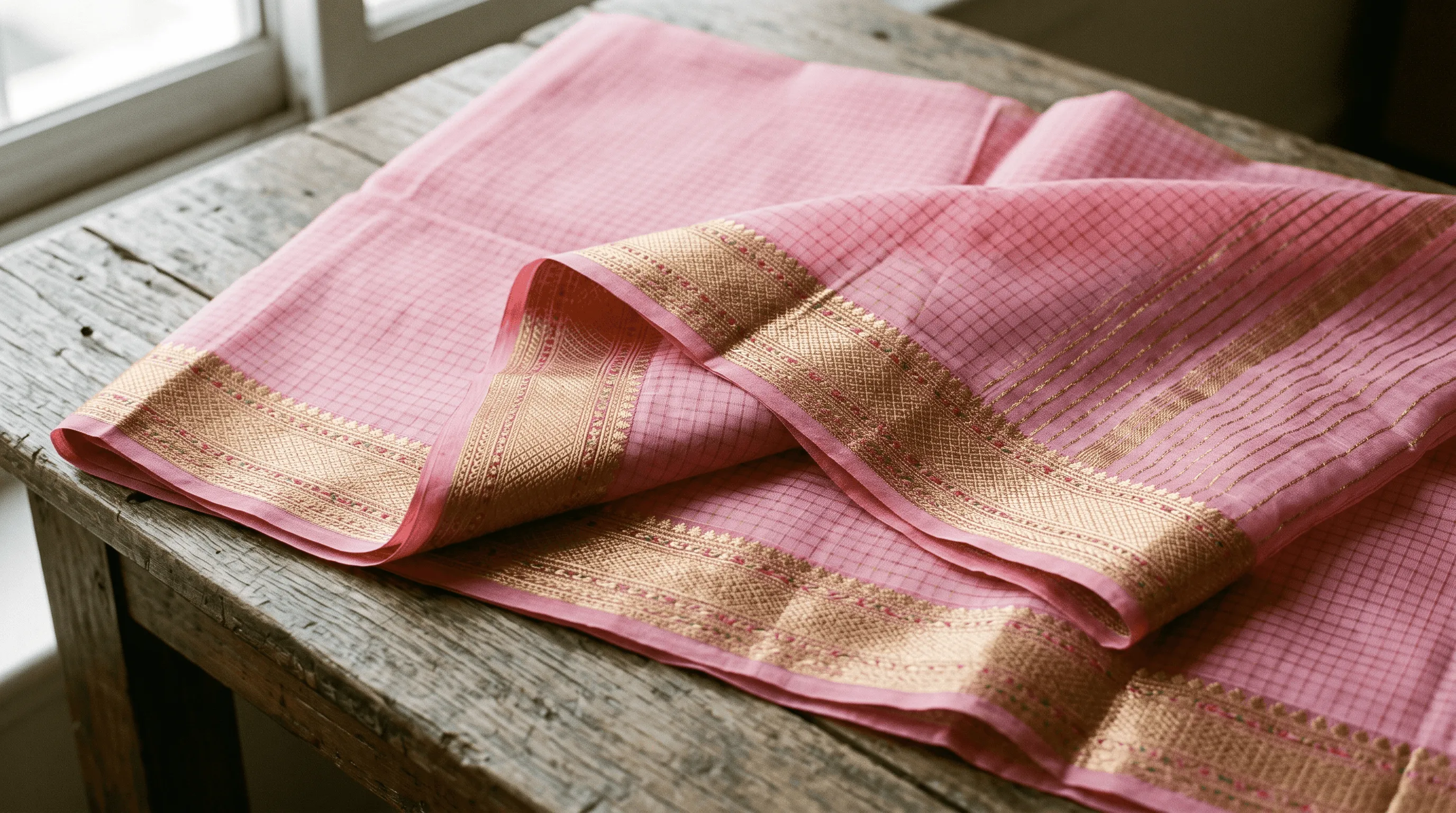
Maheshwari Colours
Maheshwari sarees are known for their soft, elegant colours, often inspired by nature.
Pastels: mint, peach, lilac and powder blue.
Earthy tones: mustard, rust and olive.
Jewel tones: emerald, wine and royal blue for festive wear.
Classic combinations: contrast borders such as pink with green or blue with gold.
Maheshwari vs Chanderi
Both are famous Madhya Pradesh handlooms, and both are often silk-cotton, but they are different.
| Feature | Maheshwari | Chanderi |
|---|---|---|
| Origin | Maheshwar, on the Narmada | Chanderi, Ashoknagar district |
| Texture | Soft, slightly thicker | Very sheer, light |
| Border | Reversible (bugdi) | Not reversible |
| Pallu | Often striped | Often with buttis |
| Look | Simple stripes and checks | Fine motifs and sheer glow |
Read our Chanderi fabric guide for more.
When to Wear Maheshwari
Office wear: cotton or silk-cotton Maheshwari with a collared or boat-neck blouse.
Day weddings and functions: silk-cotton with zari borders.
Festivals: pure silk Maheshwari in jewel tones.
Summer: cotton Maheshwari is light and breathable. See our cotton sarees and suits guide.
Travel: easy to drape and comfortable for long days.
Styling a Maheshwari Saree
Blouses
Contrast cotton or silk blouses: classic.
Collared and high-neck blouses: smart for office.
Block-printed blouses: pair beautifully with plain Maheshwaris. See our Bagh print guide.
Elbow-sleeve blouses: traditional and elegant.
Jewellery
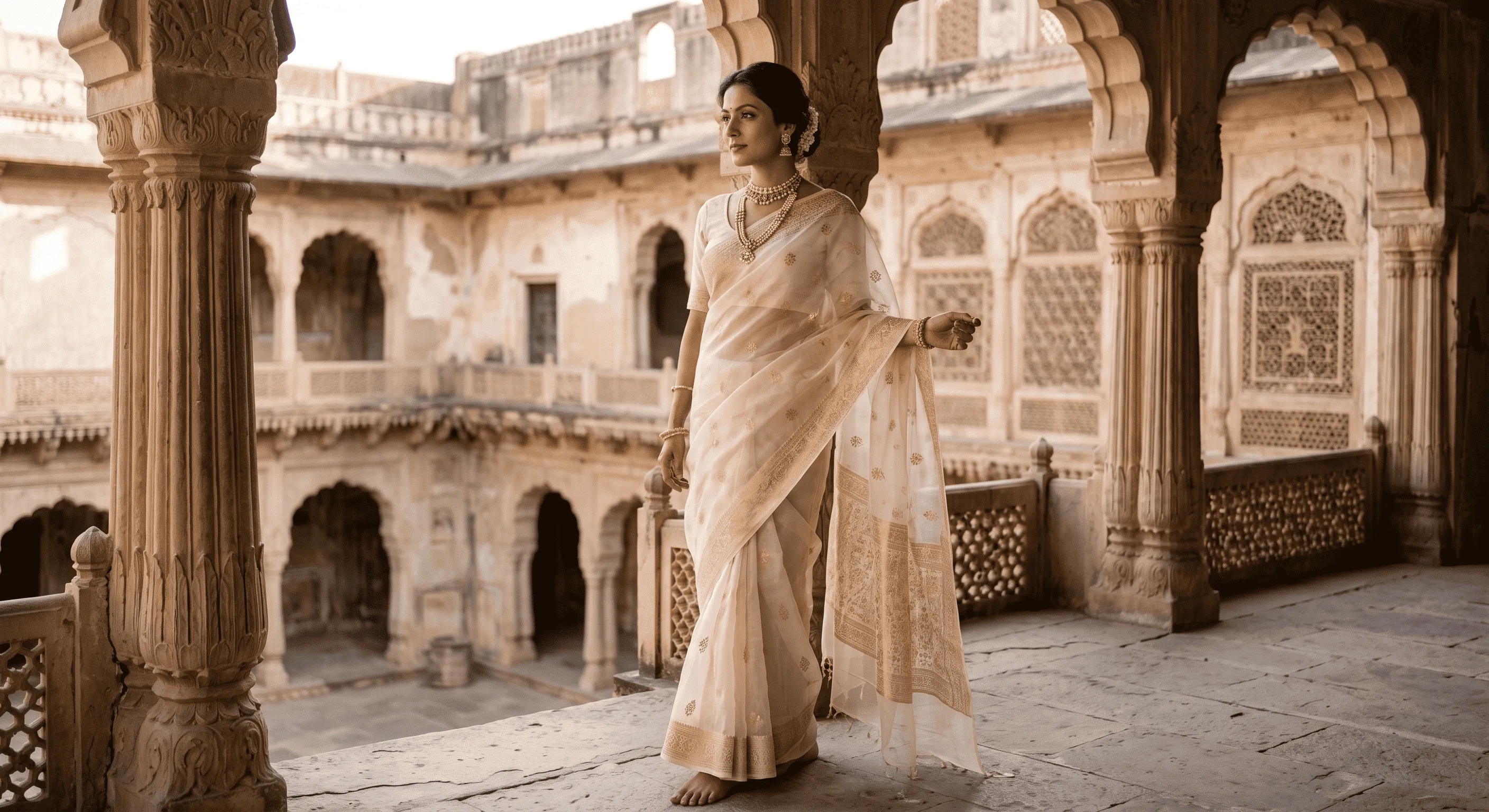
Pearls: soft and elegant.
Silver and oxidised: for office and artistic looks.
Gold: for festive and wedding wear.
Minimal: a single statement necklace or earrings.
Draping
The light, soft fabric drapes easily in the Nivi style. See our Nivi drape tutorial.
Because the border is reversible, you can wear the saree either side out.
Maheshwari Suits and Dupattas
Maheshwari fabric is also woven into dress materials, suits, kurtas and dupattas. A Maheshwari dupatta adds a soft festive touch to plain kurtas.
How to Identify Genuine Maheshwari
Reversible border: the border looks good on both sides.
Silk-cotton feel: light, soft and slightly lustrous.
Small irregularities: a sign of handweaving.
Origin details: ask whether it is woven in Maheshwar and for GI or handloom labels.
Price: genuine handloom costs more than powerloom copies.
See our authentic handloom red flags.
Price Guide
These are indicative 2026 ranges.
| Maheshwari type | Indicative price range |
|---|---|
| Cotton Maheshwari saree | ₹1,500 – ₹4,000 |
| Silk-cotton Maheshwari saree | ₹2,500 – ₹8,000 |
| Silk-cotton with zari | ₹5,000 – ₹15,000 |
| Pure silk Maheshwari | ₹8,000 – ₹25,000+ |
Caring for Maheshwari Sarees
Silk-cotton and silk: dry-clean, especially those with zari.
Cotton: hand wash gently in cold water with mild detergent.
Dry in shade to protect colours.
Iron on medium heat on the reverse.
Store in muslin, refolding every few months.
Choosing Your Maheshwari
For office: a cotton or silk-cotton Maheshwari with small checks or stripes and a narrow border, in muted or pastel colours.
For day functions: silk-cotton with a zari border and a striped zari pallu, in brighter shades such as rani pink, mango or teal.
For festivals and weddings: pure silk Maheshwari with zari buttis and a wider border.
For summer: pure cotton Maheshwari, which is the coolest and easiest to care for.
Check the drape by holding the saree up: a good Maheshwari falls softly, with a gentle sheen, and feels light rather than stiff.
Maheshwari for Different Ages and Body Types
Young women: pastel Maheshwaris with modern blouses, perfect for college events and day functions.
Working women: silk-cotton Maheshwaris are a reliable office staple that look polished all day.
Older women: soft, muted Maheshwaris with narrow zari borders are elegant and comfortable.
Petite: small checks and narrow borders keep the proportions balanced.
Tall: bold stripes and wide borders look graceful.
Curvy: the soft, light drape of silk-cotton skims the body nicely.
Maheshwari as a Wedding Guest
A silk-cotton Maheshwari with a zari border is a lovely choice for day weddings, especially in summer.
Choose jewel tones such as emerald, wine or royal blue, add a contrast silk blouse, and wear gold or kundan jewellery for a festive touch that still feels light.
For evening events, a pure silk Maheshwari with heavier zari works better.
Maheshwari for Men
Maheshwari fabric is also used for men's kurtas, stoles and Nehru jackets.
A light Maheshwari kurta is comfortable for summer festivals, and a zari-bordered Maheshwari stole adds a festive touch to a simple kurta pyjama.
Building a Maheshwari Wardrobe
One cotton Maheshwari for summer and office.
One silk-cotton Maheshwari with zari for day functions and festivals.
One pure silk Maheshwari for weddings.
One Maheshwari dupatta to brighten plain kurtas.
These four pieces cover most occasions across the year.
Common Mistakes
Over-ironing: high heat can flatten the soft sheen; iron on medium heat on the reverse.
Machine washing silk-cotton: it can lose shape and lustre.
Heavy jewellery: Maheshwari's beauty is understated, so very heavy jewellery can overwhelm it.
Ignoring the reversible border: choose which side you prefer before draping, as both sides can look slightly different in colour.
Visiting Maheshwar
Maheshwar is around 90 km from Indore and is known for its ghats, the Ahilya Fort and its temples on the Narmada.
Visitors can see weavers at work, visit the Rehwa Society and buy directly from weaving workshops. Combining a visit with nearby Omkareshwar or Mandu makes for a rewarding heritage trip.
Maheshwari Through the Seasons
Summer: pure cotton Maheshwari in pastels and whites is one of the most comfortable sarees for hot days.
Monsoon: silk-cotton dries faster than heavy silk, but avoid wearing zari Maheshwaris in heavy rain.
Festive season: silk-cotton and silk Maheshwaris with zari borders for Navratri, Diwali and pujas.
Winter: pure silk Maheshwari in jewel tones, layered with a shawl for evening events.
Gifting a Maheshwari
A Maheshwari saree is a thoughtful, elegant gift that suits almost every age.
For mothers and grandmothers: a soft silk-cotton Maheshwari with a narrow zari border.
For young women: a pastel Maheshwari or a Maheshwari dupatta.
For colleagues: a cotton Maheshwari stole or dupatta.
For weddings: a pure silk Maheshwari with zari.
Mention that it is a handloom from Maheshwar, and include care instructions, so the gift is appreciated for its heritage as well as its beauty.
Maheshwari for College and Young Professionals
Maheshwari sarees are a great first handloom for students and young professionals.
They are light, easy to drape, affordable in cotton and silk-cotton, and smart enough for presentations, interviews, college festivals and farewells. Pair a pastel Maheshwari with a collared or puff-sleeve blouse, small earrings and a watch for a fresh, polished look. See our farewell saree ideas for more inspiration.
Supporting Maheshwar's Weavers
Maheshwari weaving supports many families in Maheshwar and nearby villages.
Buying genuine handloom from cooperatives such as Rehwa and other trusted sellers helps sustain the craft. Our guide to sustainable handloom fashion explains why this matters.
Wearing Maheshwari
Maheshwari sarees combine royal history, quiet elegance and everyday comfort.
Choose cotton for summer and office, silk-cotton with zari for day functions, and pure silk for festivals. Enjoy the reversible border, keep the styling simple and care for your saree gently.
Explore more in our guides to Central India handlooms: Chanderi, Maheshwari and Bagh print, Central Indian fabrics and on our Central India page.
Comments (0)
Leave a Thought
No comments yet. Be the first to share your thoughts!