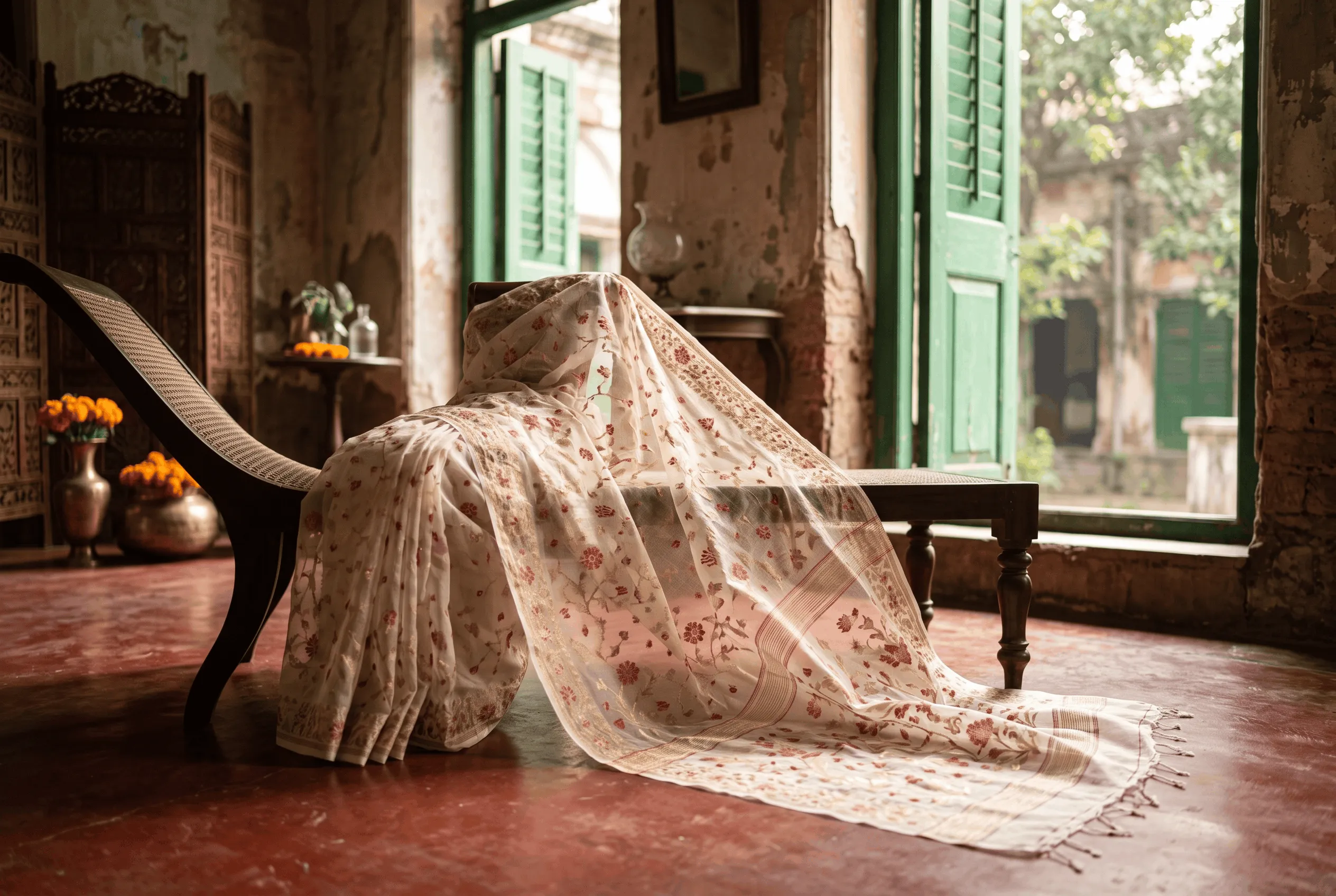
A Jamdani saree is one of the finest examples of handweaving anywhere in the world.
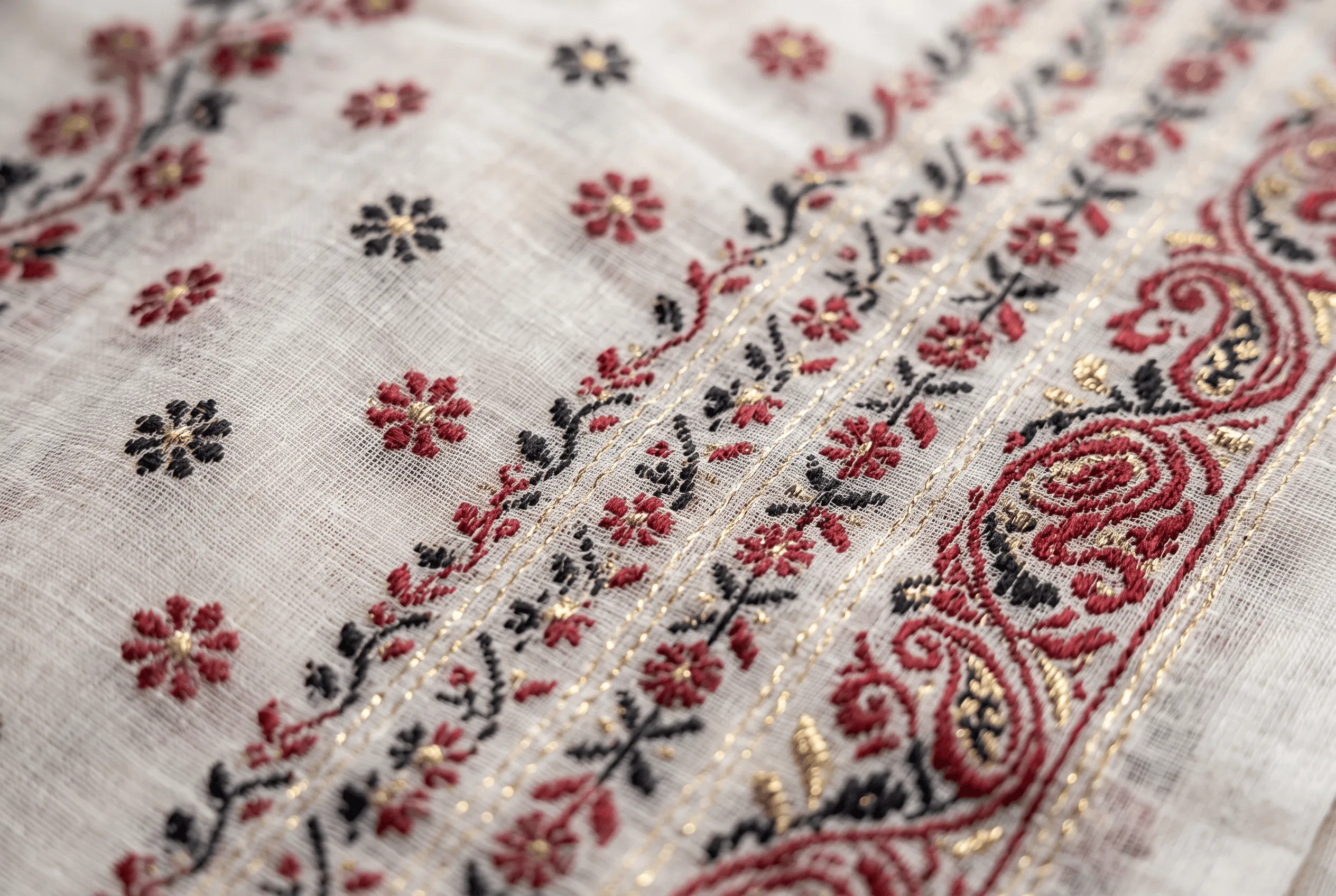
Light as air and almost see-through, it carries motifs that seem to float on the fabric: tiny flowers, vines, paisleys and geometric patterns, all added by hand, one thread at a time, while the saree is being woven.
It is comfortable in hot weather, elegant at weddings and festivals and a treasured part of Bengali heritage on both sides of the border.
Jamdani is also one of the most imitated weaves in India, with many powerloom copies sold under the same name.
Understanding how real Jamdani is made helps you recognise the difference and appreciate why handwoven pieces cost more.
This guide explains how Jamdani is woven, the difference between Dhakai, West Bengal and Uppada Jamdani, popular motifs, how to tell handwoven from machine-made, styling ideas, price ranges and care tips.
What Is Jamdani?
Jamdani is a weaving technique in which decorative motifs are woven into a fine base fabric using extra (supplementary) weft threads inserted by hand.
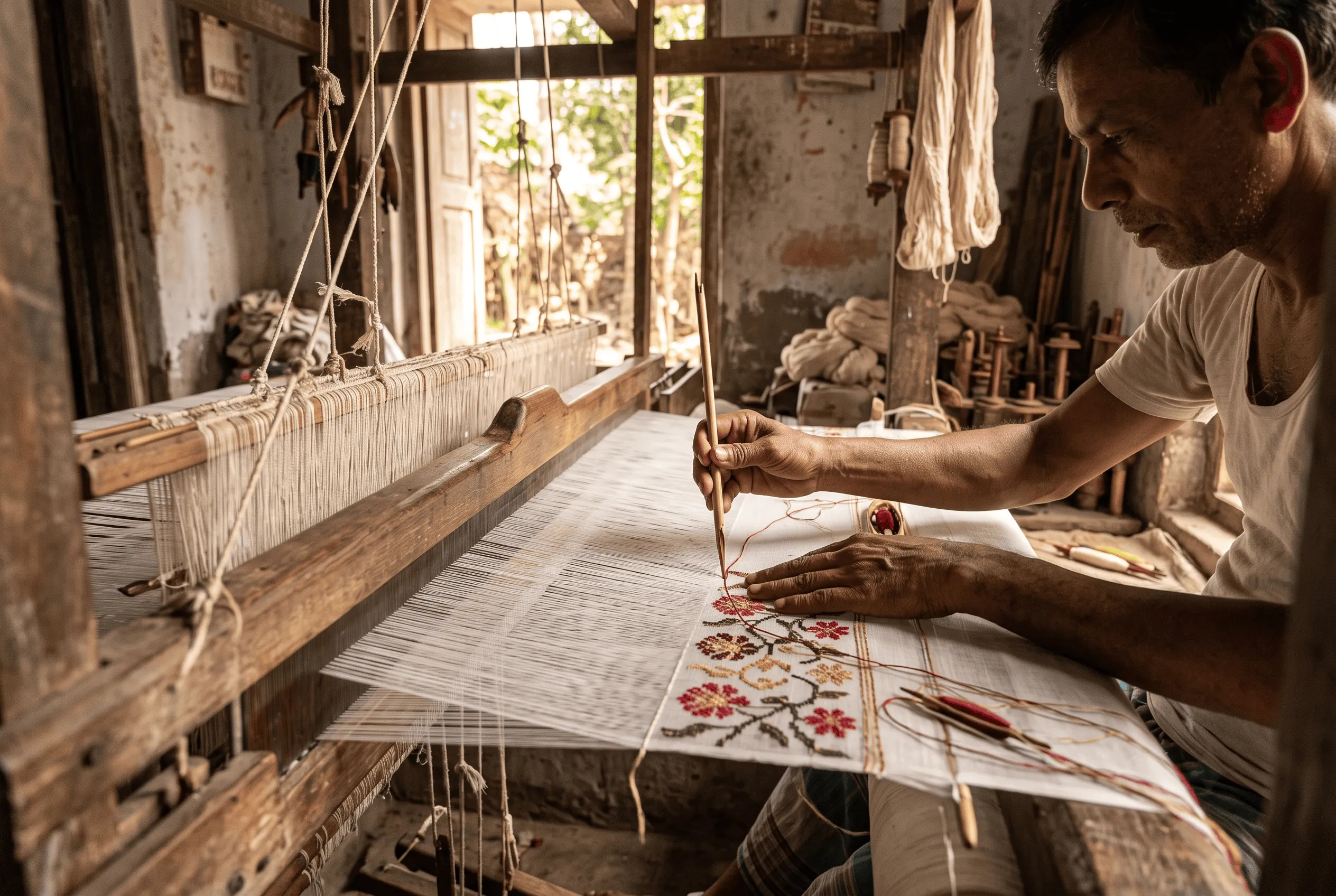
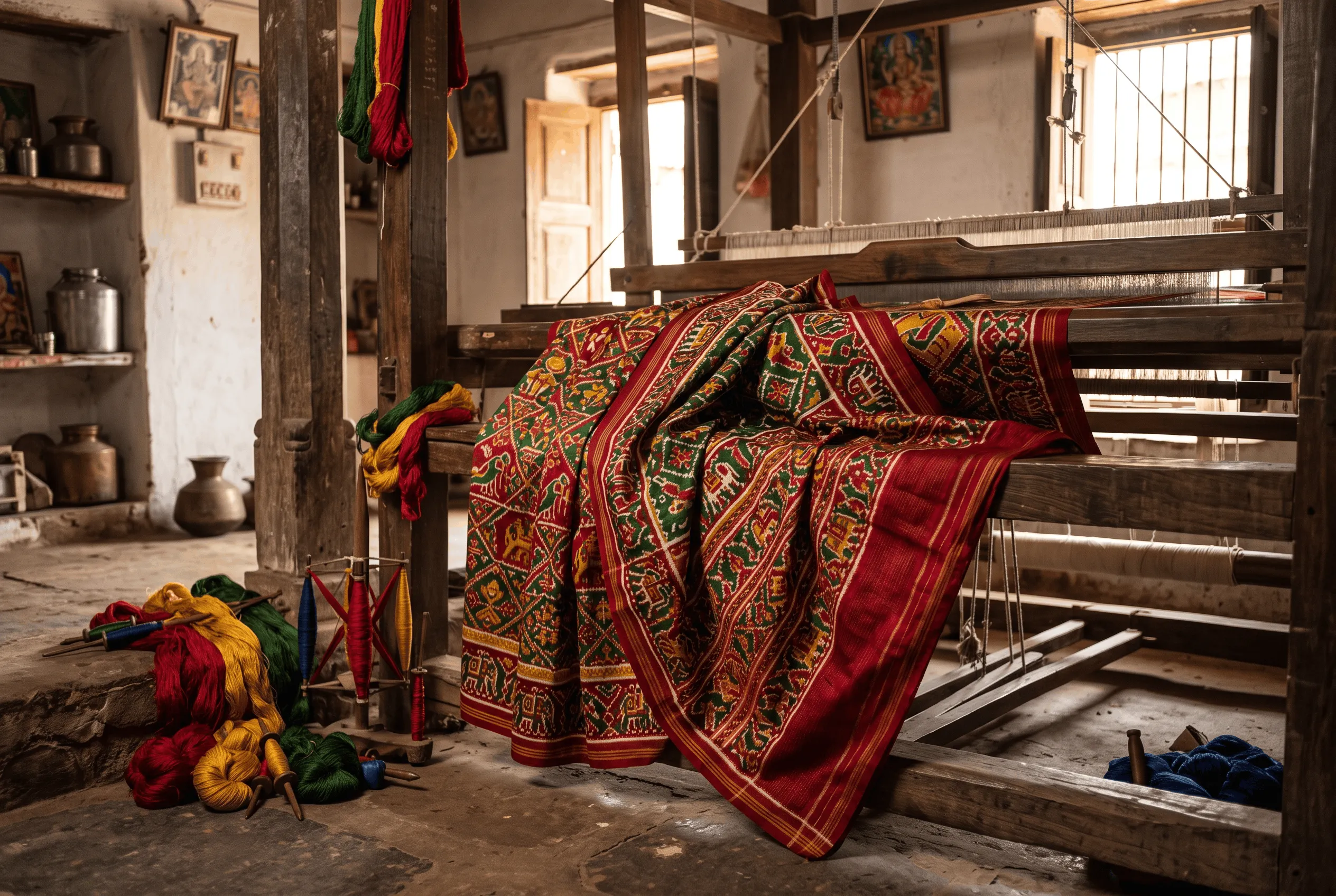
As the weaver works on the loom, they use small spools or slender sticks to place thicker or coloured threads only where each motif should appear, then continue weaving the base fabric.
The base is traditionally a very fine cotton muslin, which is why Jamdani is so light and sheer.
Today it is also woven in cotton-silk and silk.
The traditional art of Jamdani weaving from Bangladesh was inscribed by UNESCO on its list of Intangible Cultural Heritage in 2013, a sign of how highly the craft is valued.
A Brief History of Jamdani
Jamdani's roots lie in the region around Dhaka, in present-day Bangladesh, which was famous for its extremely fine muslin.
Jamdani developed as a way of adding woven decoration to this delicate fabric without embroidery or printing.
After Partition, many weaving families settled in West Bengal and continued the craft there, particularly in Nadia and Purba Bardhaman districts.
Jamdani-style weaving is also practised in other parts of India, such as Uppada in Andhra Pradesh, where it is woven in silk.
How a Jamdani Saree Is Woven
Preparing the yarn: fine cotton or silk yarn is prepared and set up as the warp on the loom.
Weaving the base: the weaver weaves the plain base fabric line by line.
Adding the motifs by hand: for each line of the design, the weaver, often working with a helper, inserts the motif threads by hand only across the width of each motif.
Following the design: many experienced weavers work complex patterns largely from memory or from a pattern placed under the warp.
Repeating for every line: this continues across the whole saree.
Because the motifs are woven in rather than embroidered or printed on, they are part of the fabric itself.
A finely woven Jamdani with dense motifs can take weeks or months to finish.
Dhakai Jamdani vs West Bengal Jamdani vs Uppada Jamdani
| Feature | Dhakai Jamdani | West Bengal Jamdani | Uppada Jamdani |
|---|---|---|---|
| Where | Around Dhaka, Bangladesh | Nadia and Purba Bardhaman, West Bengal | Uppada, Andhra Pradesh |
| Base fabric | Very fine cotton, also silk | Cotton, cotton-silk, silk | Mainly silk |
| Motifs | Dense, intricate, often all-over | Often lighter, spaced buttis and borders | Jamdani-style motifs with zari |
| Feel | Extremely light and soft | Light, slightly crisper | Smooth silk, light |
| Price | Higher for fine pieces | Wide range, often more affordable | Mid to high |
Dhakai Jamdani is prized for its fineness and dense motifs.
West Bengal Jamdani offers a wide range of designs and prices, from simple everyday sarees to festive pieces.
Uppada Jamdani brings the technique to silk, often with zari, making it popular for weddings in South India.
Popular Jamdani Motifs
Butidar
Small motifs (buttis) scattered across the body of the saree.
Tercha
Diagonal stripes of motifs that create movement across the fabric.
Jaal
A net-like pattern of motifs covering the fabric.
Phulwar
Rows of flowers arranged across the saree.
Panna Hazar
A dense pattern sometimes described as "a thousand emeralds".
Kalka
The paisley motif, often used on the pallu and borders.
Fabrics and Colours
Cotton Jamdani is the most traditional and the most comfortable for hot weather.
Silk and half-silk Jamdani have a gentle sheen and suit weddings and festive events.
Zari Jamdani adds gold or silver motifs for a richer look.
Traditional Jamdanis are often white or off-white with coloured or zari motifs, but they are now available in every colour, including bold reds, blacks, blues, mustards and soft pastels.
How to Spot a Real (Handwoven) Jamdani
1. Turn It Over
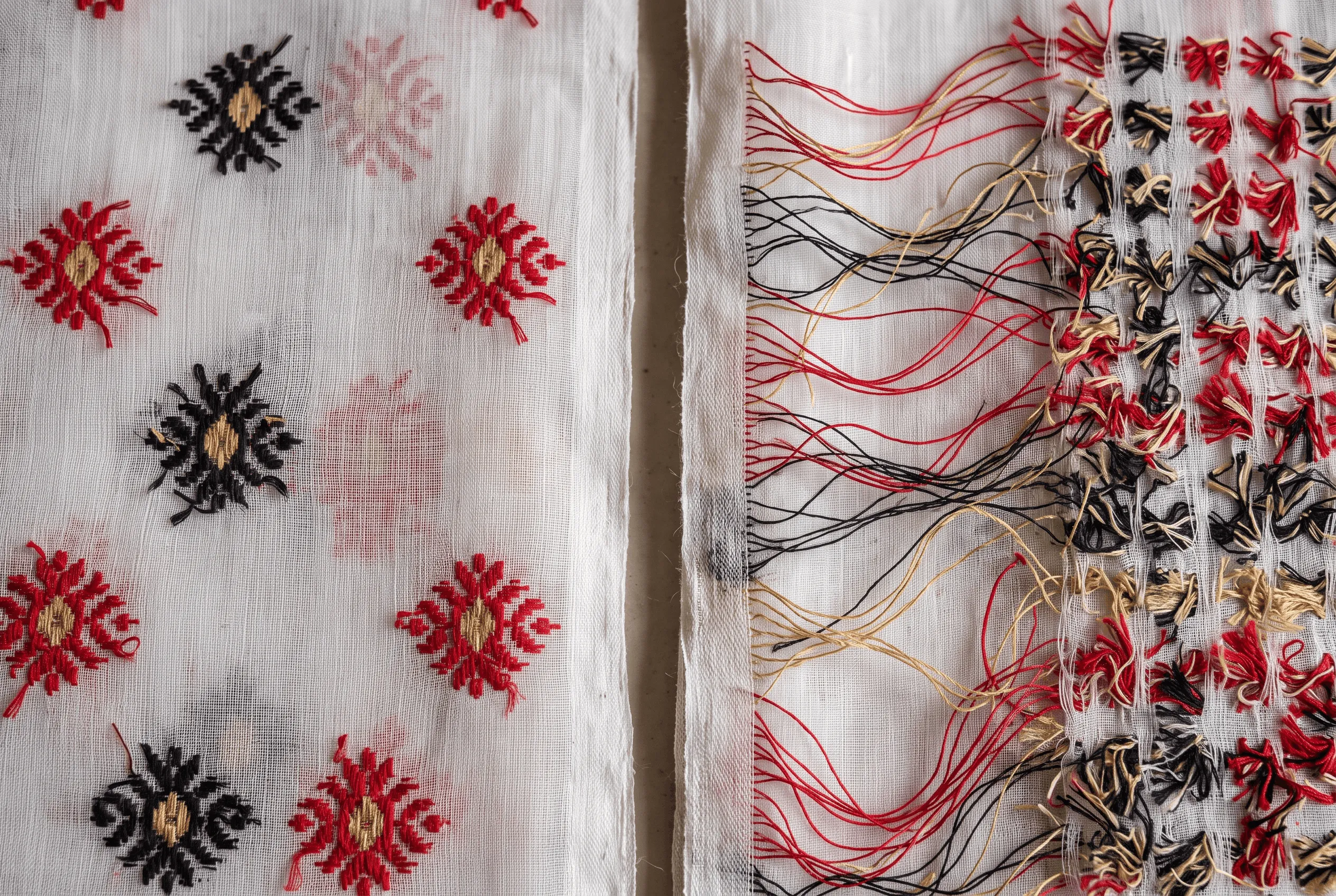
In a handwoven Jamdani, the motif is woven into the fabric and looks very similar on both sides, with only small thread ends at the edges of motifs.
In a powerloom or jacquard copy, the back often shows long floating threads or cut, fringe-like thread ends across the design.
2. Look for Small Irregularities
Handwoven motifs are never perfectly identical.
If every motif is exactly the same, the saree may be machine-made.
3. Hold It Up to the Light
A fine cotton Jamdani is sheer and even, with motifs that stand out clearly against the light.
4. Feel the Fabric
Real cotton Jamdani is soft and light, slightly crisp when new.
Synthetic blends feel slippery or plasticky.
5. Check the Price
Handwoven Jamdani takes a long time to make. A very cheap "Jamdani" is likely a powerloom copy.
6. Ask the Seller
Ask where it was woven and whether it is handloom, and look for the Handloom Mark or other certification. Buy from trusted handloom sellers, cooperatives or weaver groups.
For general tips on handwoven textiles, see our types of sarees guide.
Handloom vs Powerloom Jamdani
| Feature | Handloom Jamdani | Powerloom Jamdani-style |
|---|---|---|
| Reverse side | Motifs similar to front, small thread ends | Long floats or cut threads |
| Motifs | Slight natural variations | Perfectly identical |
| Feel | Soft, light, breathable | Often stiffer or synthetic |
| Time to make | Weeks to months | Much faster |
| Price | Higher | Lower |
When to Wear a Jamdani Saree
Summer weddings and day events: the light cotton keeps you cool.
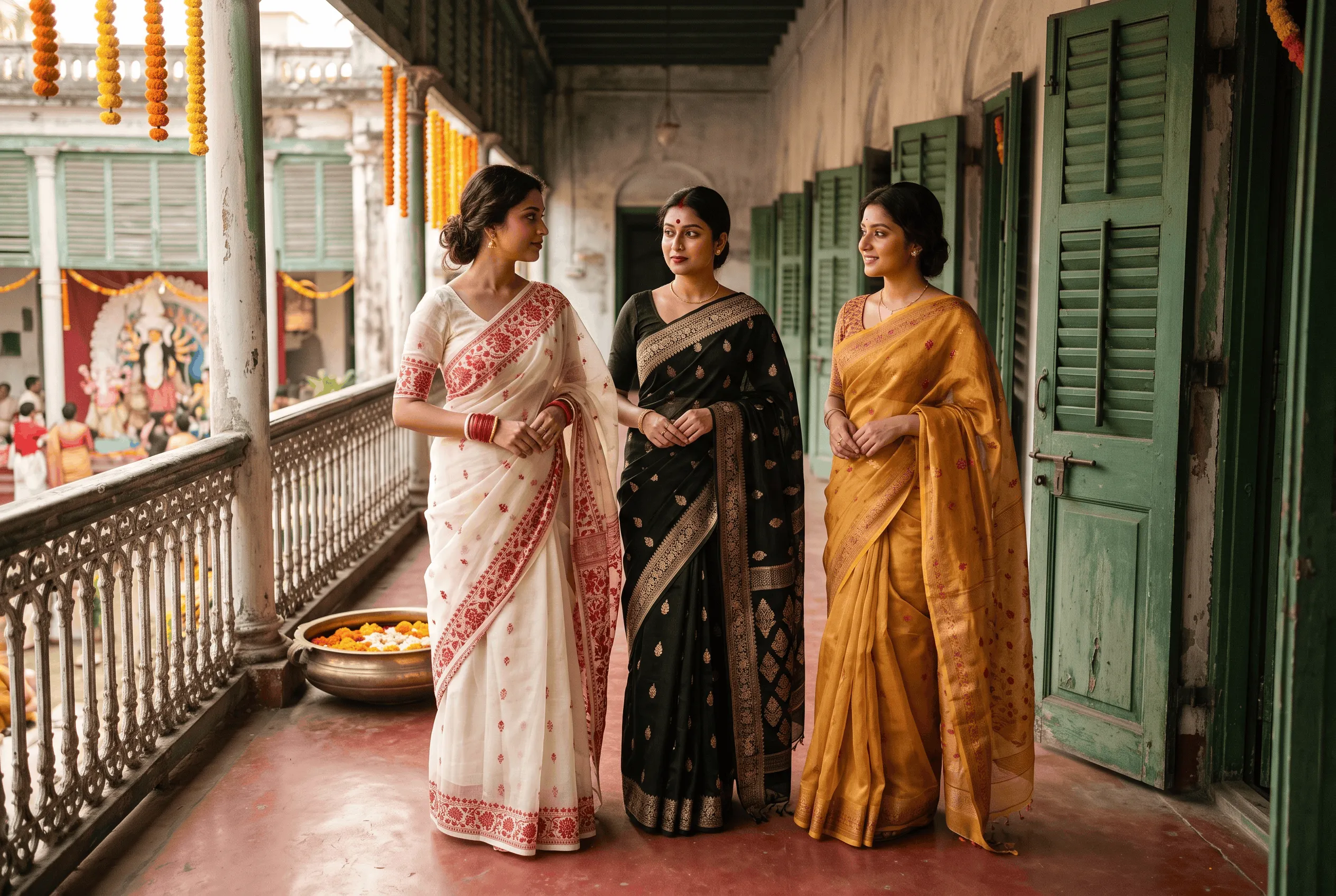
Durga Puja and Bengali festivals: a red-and-white or bright Jamdani is a classic choice.
Office festive days and cultural events: Jamdani looks elegant without being heavy.
Weddings: silk and zari Jamdanis look rich for ceremonies. See our wedding guest saree ideas.
How to Style a Jamdani Saree
Everyday elegance: pair a cotton Jamdani with a simple cotton or khadi blouse, silver or terracotta jewellery and a large bindi.
Festive look: choose a contrast silk blouse and gold jewellery.
Modern look: try a sleeveless or high-neck blouse with statement earrings.
Drape: the traditional Bengali drape suits Jamdani beautifully. Our saree draping styles guide explains how.
Jamdani and Sustainable Fashion
Handwoven Jamdani fits naturally into a slower, more thoughtful wardrobe.
It is woven by hand, often from cotton, and a well-made piece can last for many years with gentle care.
Choosing a genuine Jamdani supports skilled weavers and helps keep a living craft tradition economically viable.
It is also a remarkably versatile saree, moving easily from office celebrations to festivals and day weddings.
Read more about why handloom matters in our guide to sustainable handloom fashion.
Jamdani Beyond Sarees
The Jamdani technique is also used for dupattas, stoles, kurtas and even home textiles.
A Jamdani dupatta or stole is an affordable way to own a genuine handwoven piece and pairs beautifully with plain cotton or silk outfits.
Buying a Jamdani Saree Online
Ask for close-up photographs of both sides of the fabric, especially the motifs.
Check whether the listing clearly says handloom or powerloom, and look for the weaving region.
Look for the Handloom Mark or other certification, seller details and a clear return policy.
Be cautious of very low prices for sarees described as fine Dhakai Jamdani.
Jamdani Saree Price in 2026
These are indicative ranges. Prices vary by fineness of the yarn, density of motifs, weaving region and seller.
| Type | Indicative price range |
|---|---|
| Powerloom or machine Jamdani-style saree | ₹800 – ₹2,500 |
| West Bengal handloom cotton Jamdani (simple motifs) | ₹2,500 – ₹8,000 |
| West Bengal handloom cotton Jamdani (dense motifs) | ₹8,000 – ₹20,000 |
| Silk or cotton-silk Jamdani | ₹6,000 – ₹30,000+ |
| Fine Dhakai Jamdani | ₹10,000 – ₹60,000+ |
| Uppada Jamdani silk | ₹8,000 – ₹40,000+ |
What Makes One Jamdani More Expensive Than Another?
Fineness of yarn: finer yarn takes more skill and time to weave.
Density of motifs: all-over designs take far longer than scattered buttis.
Fibre: silk and zari increase the price.
Region and reputation: fine Dhakai pieces and sarees from well-known weavers cost more.
How to Care for a Jamdani Saree
First wash: dry-clean, or soak gently in cold water with a mild detergent if the seller recommends it.
Never wring or scrub: squeeze out water gently and dry flat or on a line in the shade.
Starch lightly: cotton Jamdani can be lightly starched for a crisp finish, but not too often.
Iron gently: use a low-to-medium setting on the reverse, with a cotton cloth over zari motifs.
Store loosely: fold it in muslin or cotton, away from damp, and refold every few months.
Avoid long hanging: hanging for long periods can stretch fine cotton.
For silk Jamdanis, follow our silk saree care guide.
Common Misconceptions About Jamdani
"Jamdani Is Embroidery"
No. Jamdani motifs are woven into the fabric during weaving, not embroidered afterwards.
"All Jamdani Comes From Bangladesh"
Dhakai Jamdani comes from Bangladesh, but Jamdani is also woven in West Bengal and in Uppada, Andhra Pradesh.
"Jamdani Is Only for Summer"
Cotton Jamdani is perfect for summer, but silk and zari Jamdanis suit weddings and festivals year-round.
"A Stiff Jamdani Is Low Quality"
New cotton Jamdani often feels slightly crisp and softens with washing and wear.
Why Jamdani Continues to Matter
A Jamdani saree is a small miracle of handweaving: fine, light fabric with motifs woven in by hand, line by line.
Every genuine purchase supports weavers who keep this centuries-old craft alive.
Learn the difference between Dhakai, West Bengal and Uppada Jamdani, turn the saree over to check the motifs, pay a fair price for real handwork and care for it gently.
For more weaves from the region, see our East India guide, and explore this season's looks in our traditional wear trends 2026 guide.
Comments (0)
Leave a Thought
No comments yet. Be the first to share your thoughts!