Some sarees are decorated. Baluchari sarees tell stories.
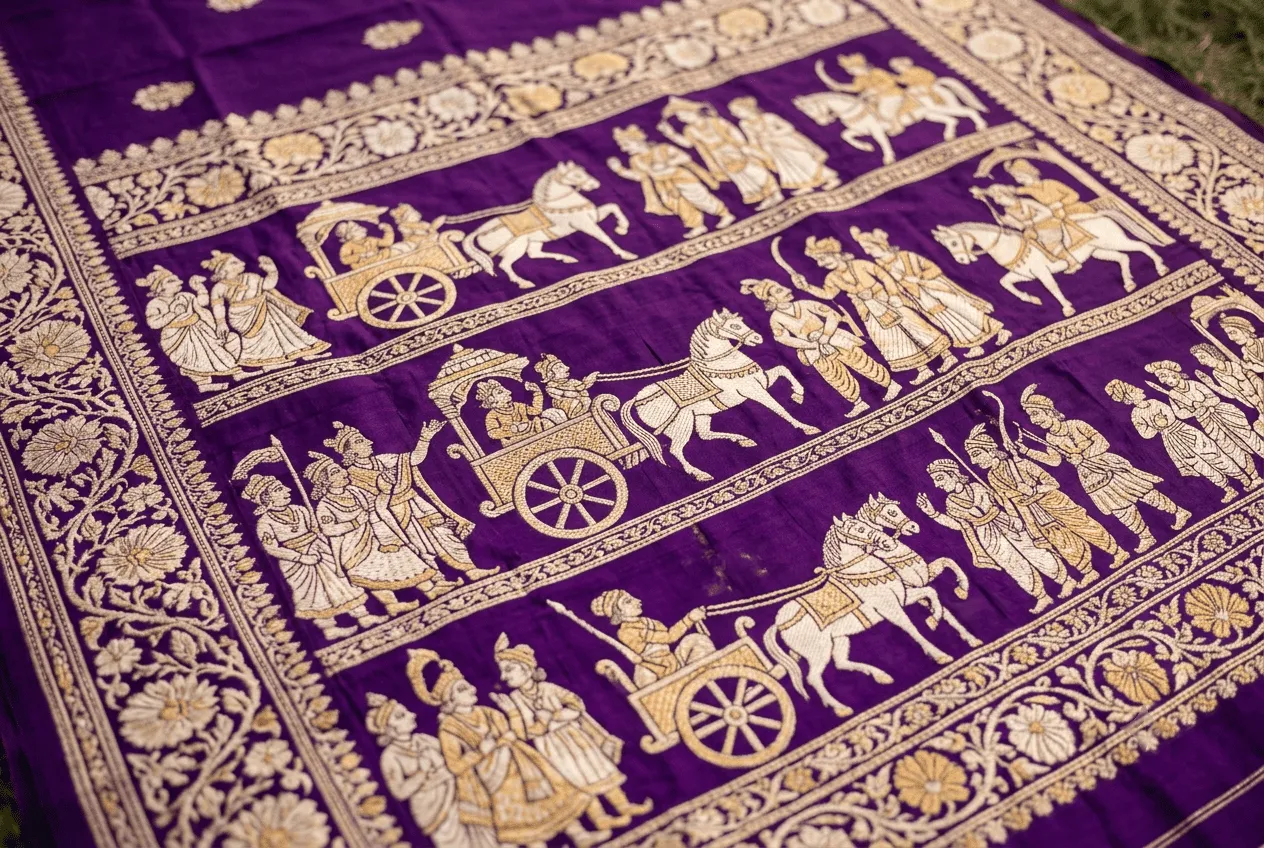
Across the pallu of a Baluchari, you might see Krishna and Arjuna on a chariot, scenes from the Ramayana, courtly figures on horseback or women playing musical instruments, all woven into silk in panels like the pages of an illustrated book.
These storytelling weaves come from West Bengal, where the craft began in Murshidabad and is now centred in Bishnupur, the temple town famous for its terracotta temples.
This guide explains the history of Baluchari silk, how it is woven, the difference between Baluchari and Swarnachari, popular motifs and colours, how to identify genuine pieces, and how to style and care for a Baluchari saree.
What Is a Baluchari Saree?
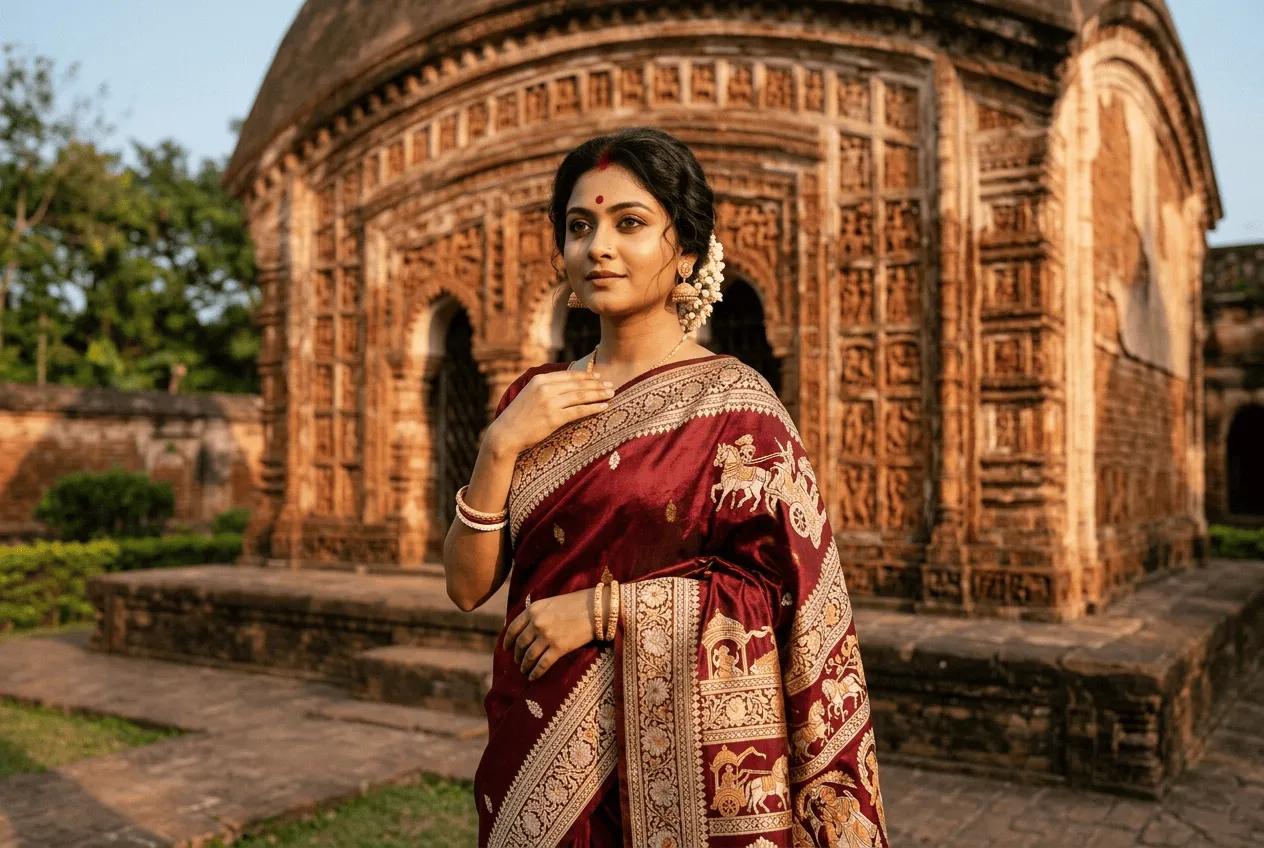
A Baluchari is a silk saree from West Bengal known for its figurative pallu: rectangular panels filled with scenes from mythology, court life and everyday life.
The body usually has small woven motifs (buttis), and the border and pallu carry the most elaborate designs.
Baluchari sarees are traditionally woven in mulberry silk, often in rich colours such as maroon, red, purple, blue and black, with designs in contrasting silk threads.
Baluchari sarees are protected by a Geographical Indication.
A Short History
Origins in Baluchar
The weave takes its name from Baluchar, a village in Murshidabad district on the banks of the Bhagirathi, where it flourished in the eighteenth century under the patronage of the Nawabs of Bengal.
Weavers wove scenes of court life, European visitors, horse riders, hookahs and boats, reflecting the world around them.
Decline and revival
Floods, changing patronage and competition led to the decline of the craft in Baluchar.
In the twentieth century, the craft was revived in Bishnupur in Bankura district. The artist Subho Thakur is widely credited with encouraging the revival, and master weaver Akshay Kumar Das helped re-establish the weaving technique.
Bishnupur's terracotta temples, which carry their own carved scenes from the epics, inspired many of the new Baluchari designs.
Baluchari vs Swarnachari
Baluchari: designs woven in silk threads of one or more colours, giving a soft, painterly look.
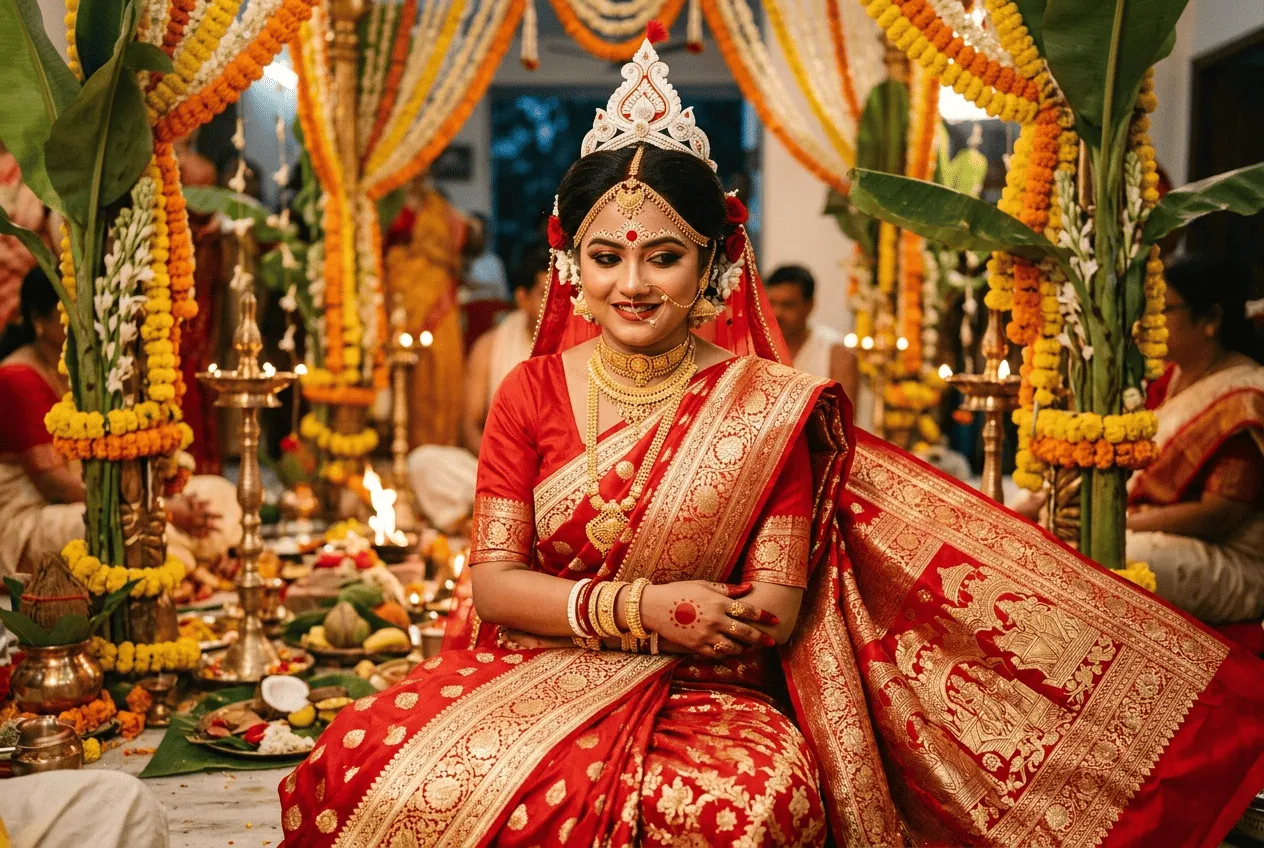
Swarnachari: designs woven with gold or silver zari along with silk, giving a richer, more festive look. Swarnachari is popular for weddings.
Meenakari Baluchari: designs woven with multiple coloured threads, creating a vivid, enamel-like effect.
How Baluchari Is Woven
Then
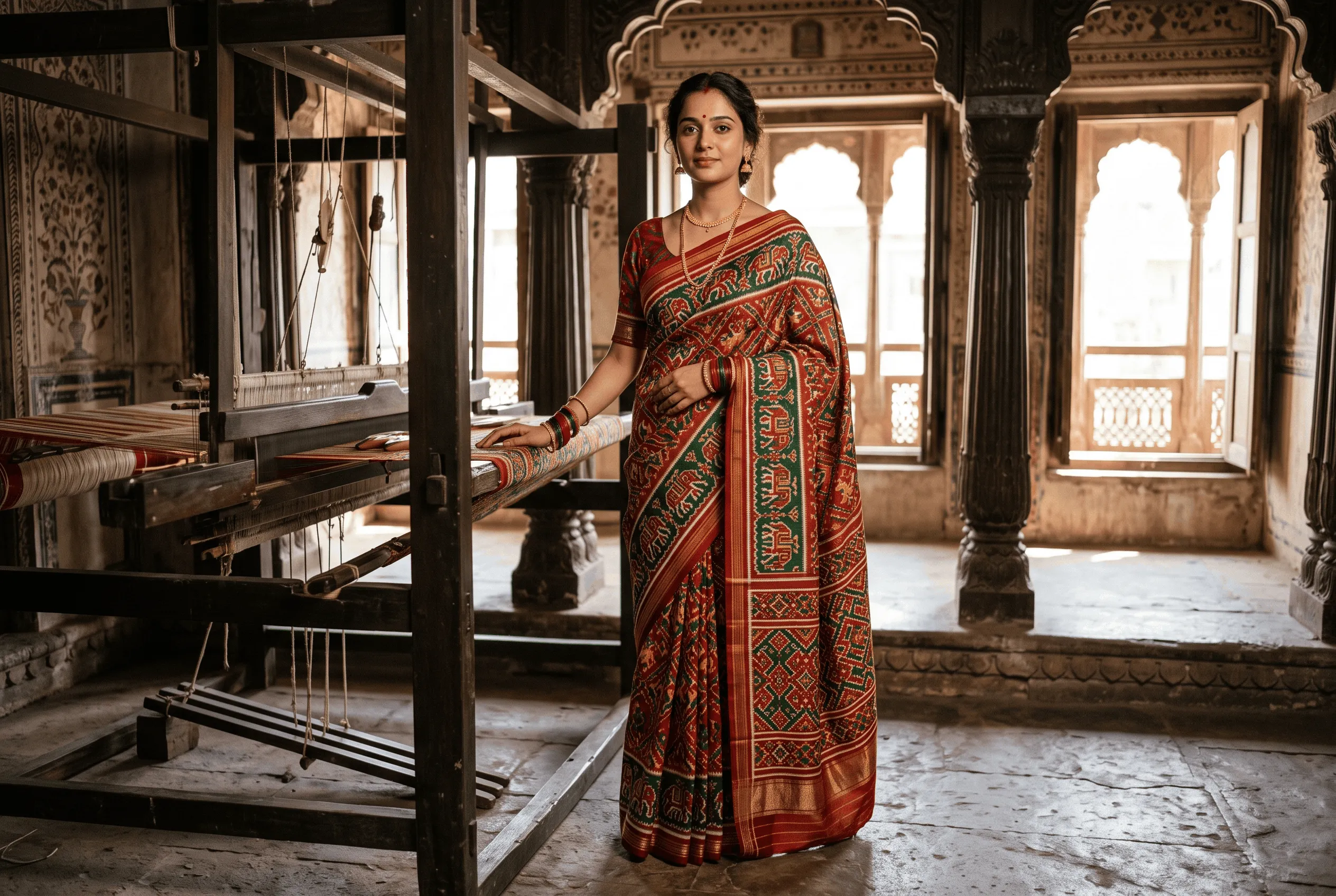
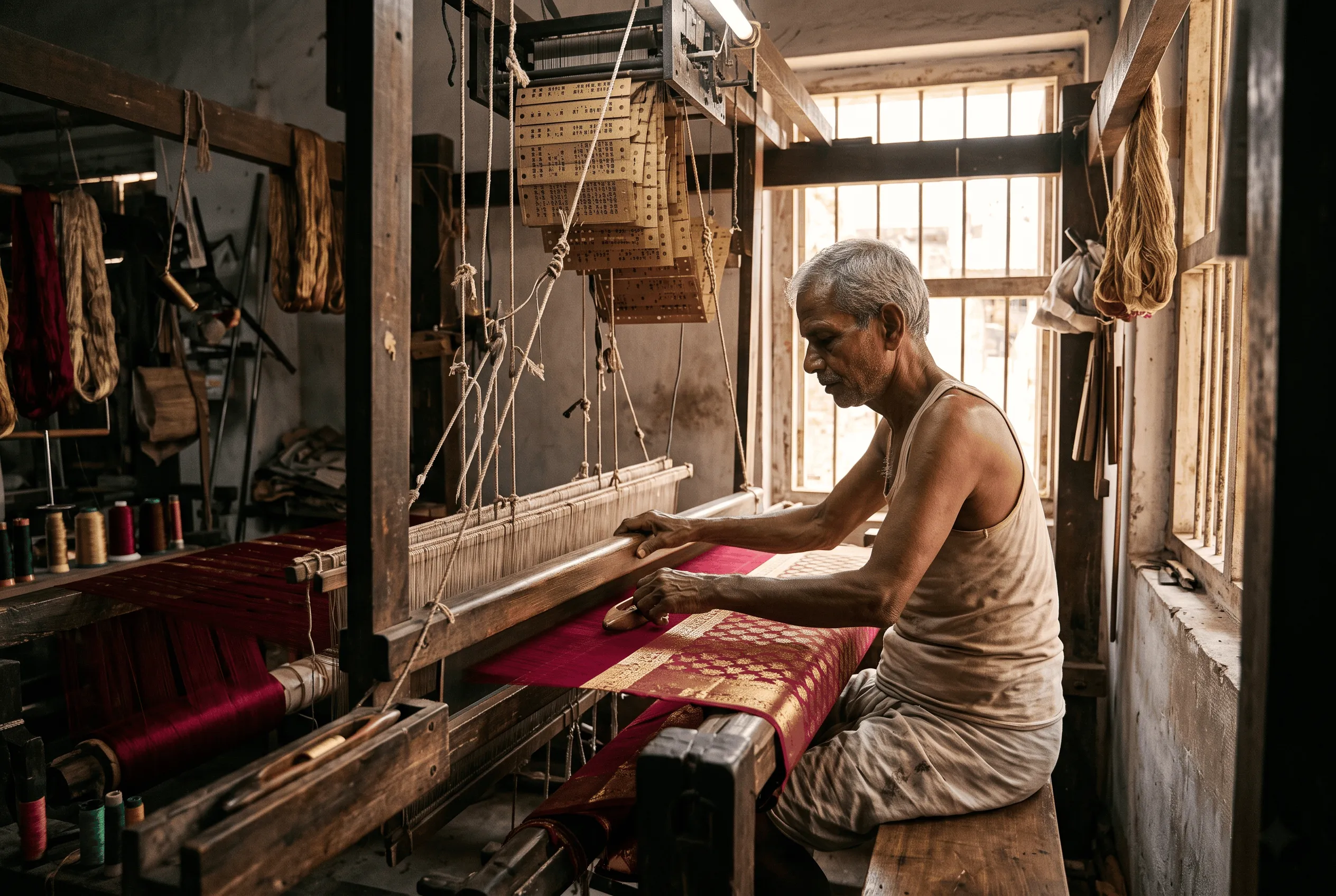
Traditionally, Baluchari was woven using the jala technique, a drawloom system in which the design was "programmed" into the loom with threads.
Now
Today, most weavers use the jacquard attachment with punched cards that control the pattern. This is still handloom weaving, but the jacquard makes complex figurative designs more practical.
Time
Depending on complexity, a Baluchari can take from about a week to several weeks to weave.
Popular Baluchari Motifs
Mahabharata scenes: Krishna and Arjuna on the chariot, the Kurukshetra battle.
Ramayana scenes: Ram, Sita and Lakshman, the golden deer.
Krishna Leela: Krishna with gopis, Radha-Krishna.
Court life: nawabs, dancers, musicians and riders.
Everyday life: women with flowers, boats and village scenes.
Terracotta-inspired panels: inspired by Bishnupur's temple carvings.
Paisleys and floral borders: frame the pictorial panels.
Colours
Maroon, red and wine: classic and festive.
Purple and violet: regal.
Royal blue and peacock blue: striking for receptions.
Black: dramatic with gold Swarnachari designs.
Mustard and orange: bright for Durga Puja.
Pastels: modern options for day functions.
When to Wear Baluchari
Durga Puja: a classic choice, especially in rich colours. See our Bengali saree draping guide.
Bengali weddings: Swarnachari is popular with brides and wedding guests.
Receptions: Swarnachari or Meenakari Baluchari with modern blouses.
Cultural events and exhibitions: Baluchari is a conversation-starting heritage choice.
Gifting: a Baluchari is a meaningful wedding or festival gift.
Styling a Baluchari
Blouses
Plain contrast silk blouses: let the pallu stand out.
Elbow-length or puff-sleeve blouses: classic Bengali styles.
Brocade blouses: for Swarnachari bridal looks.
Boat-neck and high-neck blouses: elegant for receptions. See high neck blouse designs.
Jewellery
Gold jewellery: chik, sita haar and jhumkos for weddings.
Shankha-pola: for married Bengali women.
Terracotta jewellery: a lovely match for Bishnupur's heritage.
Oxidised silver: for cultural events.
Draping
Open pallu: the best way to show off the storytelling panels.
Bengali drape: traditional for Durga Puja.
Nivi drape: easy and elegant. See our Nivi drape tutorial.
How to Identify a Genuine Baluchari
Woven, not printed: the figures are woven into the fabric and visible on the reverse as floating threads.
Silk feel: pure mulberry silk feels soft and smooth.
Detailed panels: genuine Baluchari has finely woven faces, chariots and borders.
Origin and GI details: ask whether it is woven in Bishnupur and for GI or Silk Mark details.
Price: genuine handloom Baluchari, especially Swarnachari, is not cheap.
See our authentic handloom red flags and how to identify a pure silk saree.
Price Guide
These are indicative 2026 ranges.
| Baluchari type | Indicative price range |
|---|---|
| Powerloom or art-silk Baluchari | ₹2,000 – ₹6,000 |
| Handloom silk Baluchari | ₹8,000 – ₹25,000 |
| Meenakari Baluchari | ₹12,000 – ₹35,000 |
| Swarnachari with zari | ₹15,000 – ₹60,000+ |
Caring for Baluchari
Dry-clean only.
Store in muslin, with the pallu folded inward.
Refold every few months to avoid creases on the figures.
Keep away from moisture and perfume, especially for zari Swarnachari.
Do not iron directly on the pallu; use a cloth in between.
See our silk saree care guide.
How to Read a Baluchari Pallu
A Baluchari pallu is usually arranged like a story panel.
The central panel: often a large scene, such as Krishna and Arjuna on the chariot or Ram and Sita in the forest.
Surrounding rectangles: smaller panels repeat figures or show related scenes, framed by woven borders.
Border bands: floral and paisley patterns frame the whole pallu.
The body: small buttis, often tiny flowers or paisleys, keep the rest of the saree light.
When you buy a Baluchari, ask the seller which story the pallu shows. It makes the saree more meaningful, and it is a good test of whether the seller knows the craft.
Choosing Your Baluchari
For a first Baluchari: a silk Baluchari in maroon, purple or blue with a classic mythological pallu is the most versatile.
For a wedding: a Swarnachari in red or maroon with gold zari.
For receptions: Meenakari or Swarnachari in royal blue, black or emerald.
For cultural events: a lighter silk Baluchari with a terracotta-inspired design.
Check the fineness of the faces and figures on the pallu. Finely woven expressions and clear outlines show skilled weaving.
Baluchari Beyond Sarees
Baluchari weaving is also used for stoles and dupattas, which bring the storytelling panels to smaller pieces.
Men's stoles and jackets with Baluchari panels are popular for weddings and Durga Puja.
Framed pallus from old or damaged sarees can become beautiful wall art.
Baluchari at Different Ages
Young women: pastel or bright Meenakari Baluchari with modern blouses.
Brides: red or maroon Swarnachari for weddings and receptions.
Mothers and grandmothers: deep maroon, wine or purple Baluchari with classic gold jewellery.
Gifts for elders: a Baluchari with a Ramayana or Krishna Leela pallu is a meaningful gift for a parent or grandparent.
Visiting Bishnupur
Bishnupur, in Bankura district, is known for its terracotta temples, Baluchari weaving and other crafts such as Dokra metalwork and terracotta horses.
Many visitors combine a temple tour with a visit to weavers' homes or cooperatives, where you can see Baluchari being woven on jacquard handlooms.
Buying directly from weavers helps them earn a fairer price, but still check the silk and the weave before purchasing.
Common Mistakes
Pleating the pallu tightly: it hides the story panels. An open or semi-open pallu shows them best.
Choosing a busy blouse: a printed or heavily embroidered blouse competes with the pallu.
Storing with the pallu outside: the figures can fade or snag; fold the pallu inward.
Paying handloom prices for powerloom or art silk: check the reverse for floating threads and ask about the silk.
Building a Bengal Silk Collection
Baluchari pairs beautifully with Bengal's other silks and handlooms.
One Baluchari in silk threads for Durga Puja and cultural events.
One Swarnachari for weddings and receptions.
One garad or korial laal paar for pujas and Sindoor Khela. See our Bengali saree draping guide.
One tussar Kantha for an artistic, everyday-festive look. See our Kantha stitch guide.
One fine Jamdani for elegant daytime wear. See our Jamdani saree guide.
Together, these pieces tell the story of Bengal's textile heritage and cover almost every occasion.
Baluchari for Men
Baluchari stoles with woven mythological panels are an elegant way for men to wear the craft at weddings and Durga Puja.
A cream silk panjabi with a maroon Baluchari stole, or a Baluchari-panelled Nehru jacket over a plain kurta, creates a festive look that coordinates beautifully with a partner's Baluchari or Swarnachari saree in family photographs.
Supporting Bishnupur Weavers
Baluchari weaving supports artisan families in Bishnupur and nearby areas.
Buying genuine handloom Baluchari from cooperatives and trusted sellers helps sustain the craft. Our guide to sustainable handloom fashion explains why this matters.
A Saree That Tells a Story
A Baluchari is a piece of wearable art that carries Bengal's history, mythology and craftsmanship.
Choose a silk Baluchari for Durga Puja, a Swarnachari for weddings and receptions, and keep the styling simple so the pallu can tell its story.
Explore more in our guides to East India weaves: Jamdani, Baluchari and Kantha, Kantha stitch and on our East India page.
Comments (0)
Leave a Thought
No comments yet. Be the first to share your thoughts!