Few saree looks are as instantly recognisable as the traditional Bengali drape.
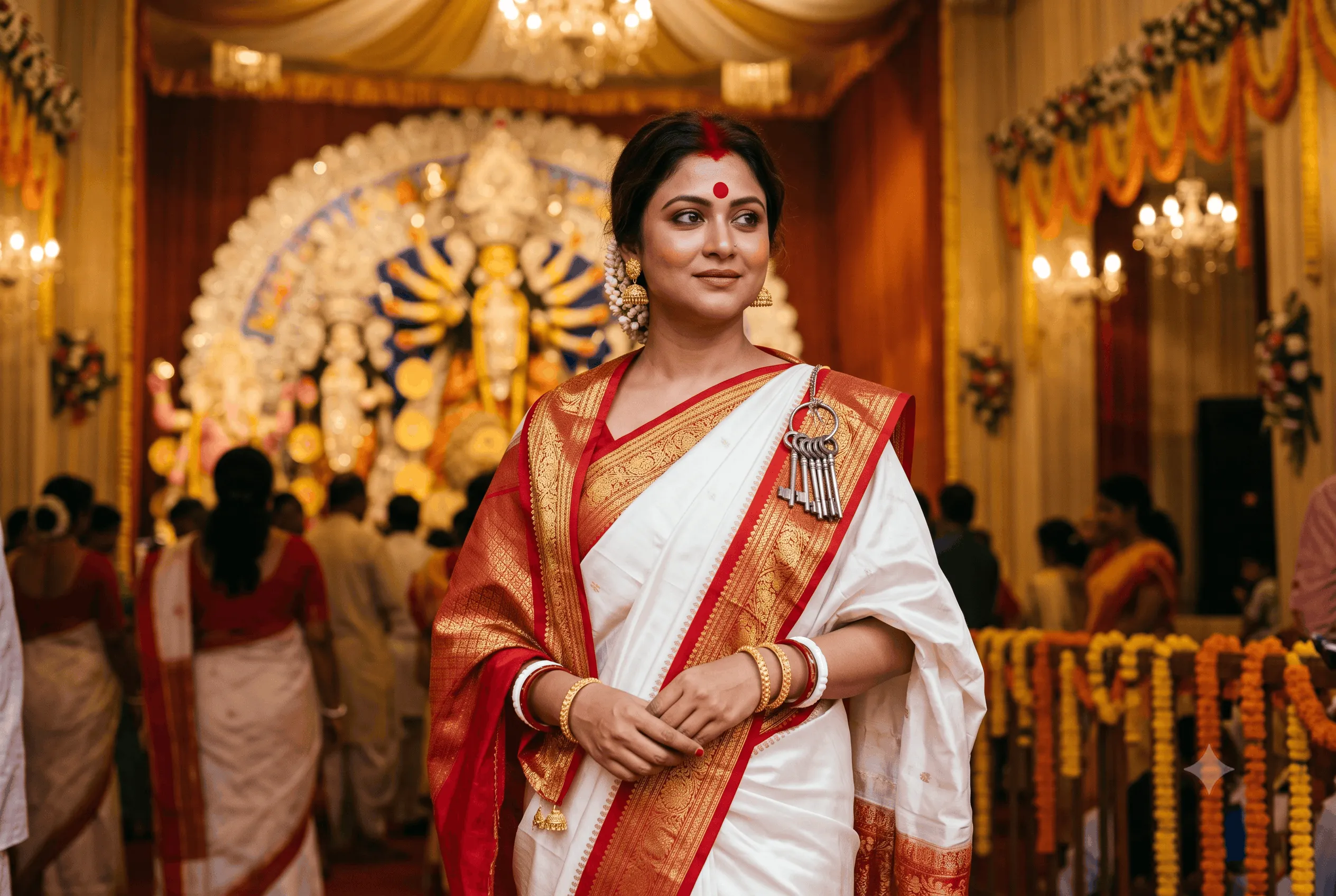
A white saree with a red border, wide box pleats at the front, the pallu brought over the left shoulder and back around the right, a bunch of keys tied to its corner, a large red bindi and sindoor: this is the classic aath poure look that Bengali women wear for Durga Puja, weddings, Poila Baisakh and family celebrations.
It looks regal, feels comfortable and works especially well with Bengal's handloom sarees, from crisp tant cotton to the iconic laal paar (red-bordered) garad and korial silks.
This Bengali saree draping guide explains the traditional style step by step, the modern variations, which sarees suit the drape and how to style it with jewellery, alta and accessories.
What Is the Bengali Saree Drape?
The traditional Bengali drape is often called aath poure (also written Atpoure), and is widely known simply as the Bengali style drape.
Its key features are:
Box pleats: broad pleats at the front, often without being tucked as tightly as in the Nivi drape.
No front pleat on the pallu side: the saree is wrapped so the pallu crosses the body twice.
Pallu over both shoulders: the pallu goes over the left shoulder and is brought around the back to rest on the right shoulder.
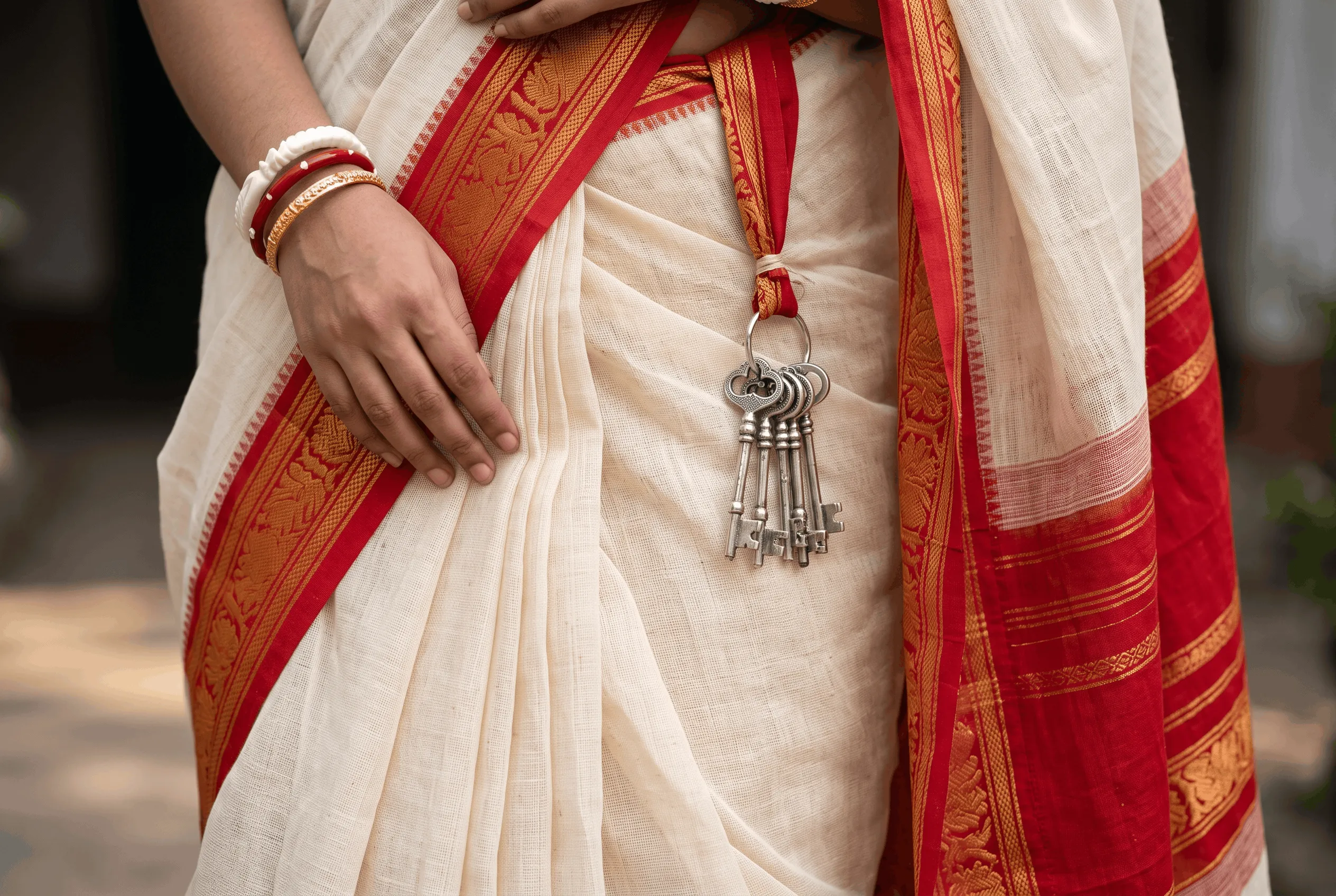
The key bunch (chabi gochha): a bunch of keys tied to the pallu corner, symbolising the woman as the head of the household.
The drape was historically worn without a blouse, but today it is always worn with one.
Best Sarees for the Bengali Drape
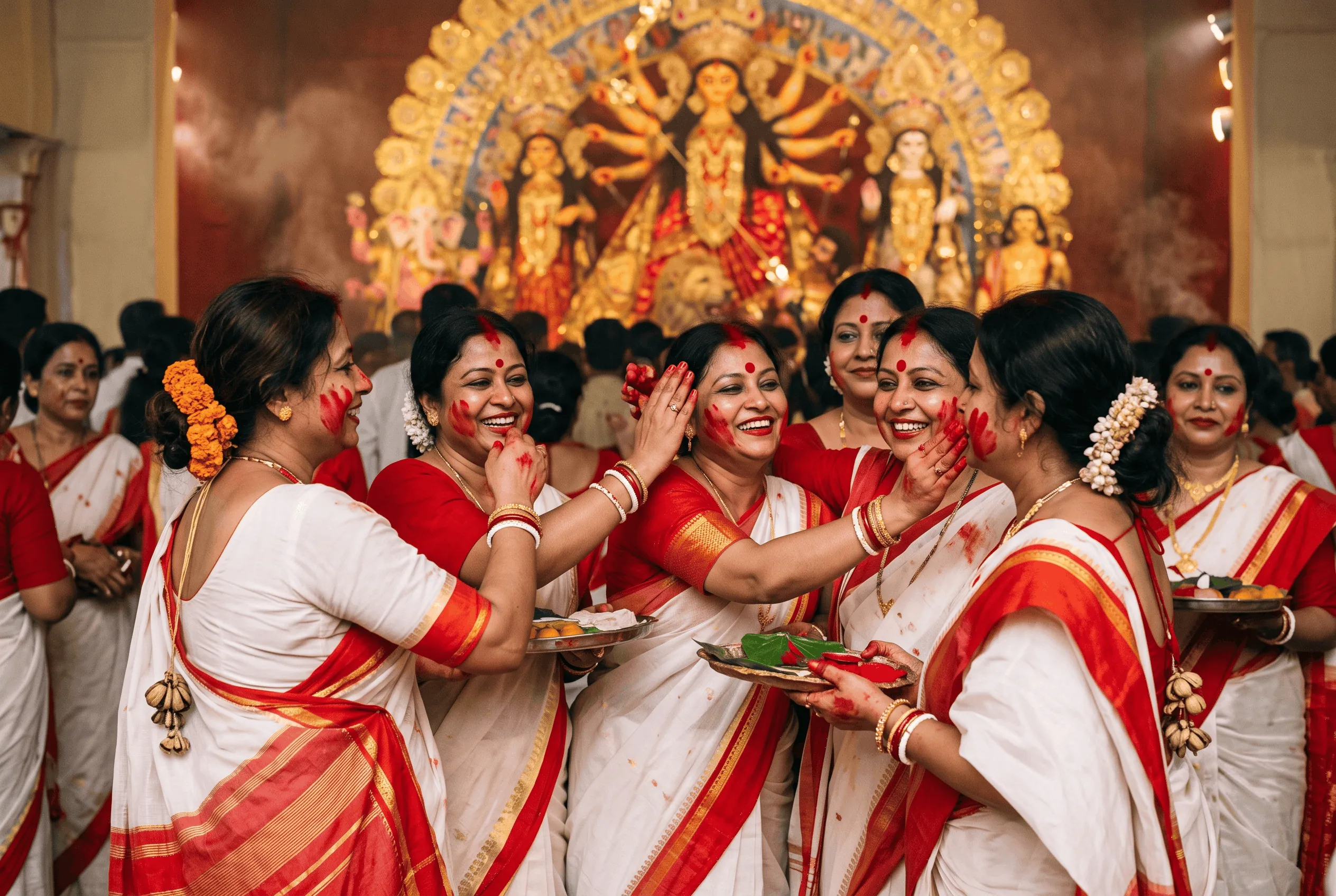
Laal paar sada saree: white or off-white with a red border, the classic choice for Durga Puja, especially Sindoor Khela on Vijaya Dashami.
Tant cotton: crisp, light and comfortable, ideal for everyday and festive daywear.
Garad and korial silk: white or cream silk with red borders, traditionally worn for pujas and weddings.
Jamdani: fine, sheer muslin with woven motifs. See our Jamdani saree guide.
Baluchari: silk with narrative pallus, beautiful for weddings. See our Baluchari silk guide.
Dhakai and Shantipuri cotton: soft and graceful for festivals.
Crisp handloom cottons and silks hold the box pleats best.
Step-by-Step: Traditional Bengali Drape
Step 1: Tuck and wrap
Tie a firm cotton petticoat.
Tuck the plain end of the saree at your right hip and wrap it once around your waist, tucking it in as you go. Check the hem is level.
Step 2: Make the box pleats
Instead of the narrow Nivi pleats, make two or three wide pleats at the front, each about 6–8 inches.
Tuck them at the centre of the waist, with the folds facing left. The pleats should look broad and relaxed.
Step 3: Wrap again without pleating
Take the remaining fabric around your body once more, from right to left at the back and then across the front, tucking it in at the waist.
Step 4: Pallu over the left shoulder
Bring the pallu across the front and over your left shoulder, letting it fall at the back. Keep it fairly long.
Step 5: Bring the pallu around to the right shoulder
Take the lower part of the pallu from behind, bring it under the right arm to the front and place it over the right shoulder.
The pallu now drapes over both shoulders, framing the upper body.
Step 6: Add the key bunch
Tie a bunch of keys, or a decorative key ring (chabi gochha), to the corner of the pallu, which now hangs over the right shoulder.
Step 7: Adjust and pin
Pin the pallu lightly at the left shoulder.
Adjust the box pleats so they fall straight and wide.
Modern Bengali Drape
Many women today wear a simpler version.
Drape the saree in Nivi style with front pleats.
Bring the pallu over the left shoulder and spread it wide, without bringing it around to the right shoulder.
Add a key bunch or a decorative brooch for a Bengali touch.
This version is easier for long events and modern venues while keeping the Bengali look.
Bengali Bridal Drape
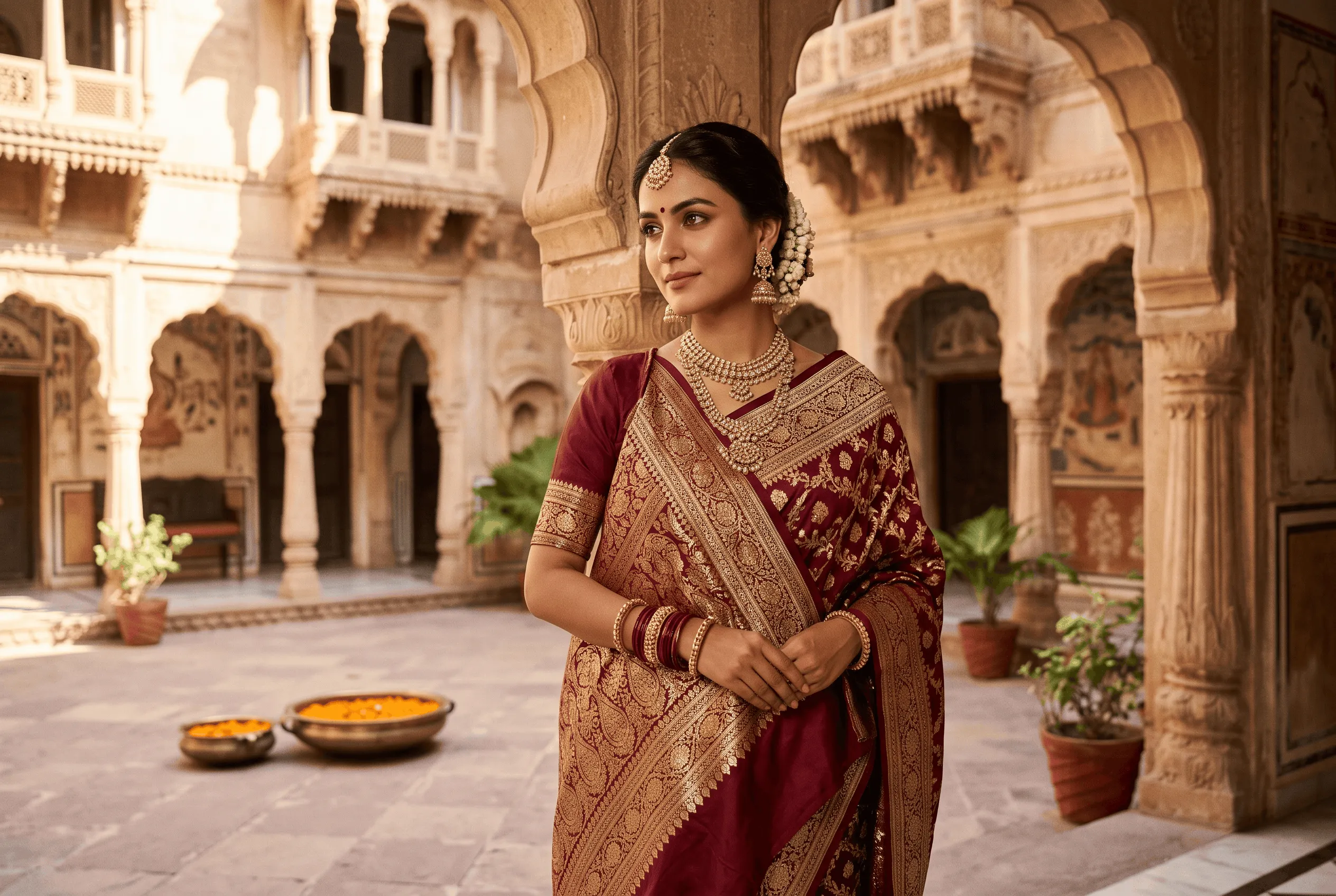
Bengali brides traditionally wear a red Banarasi saree.
The saree is often draped in the Bengali style, and a separate red or gold dupatta or the saree pallu is placed over the head.
Bridal jewellery, a sandalwood design (chandan) on the forehead, a topor (crown) and alta on the feet complete the look.
Styling the Bengali Look
Jewellery
Shankha and pola: white conch and red coral bangles worn by married Bengali women.
Loha: an iron bangle, often gold-plated.
Gold jewellery: chik (choker), sita haar (long necklace), jhumkos and kaan bala.
Terracotta and silver: for a casual or artistic look.
Bindi and sindoor
A large round red bindi is the signature of the Bengali look.
Married women wear sindoor in the hair parting.
Alta
Red alta on the feet adds a festive touch, especially for Durga Puja and weddings.
Flowers
A simple bun with white jasmine or red hibiscus flowers completes the look.
Bengali Drape for Festivals
Durga Puja: laal paar saree in traditional aath poure style. On Vijaya Dashami, married women wear red-bordered white sarees for Sindoor Khela.
Poila Baisakh: tant or handloom cotton in bright colours.
Lakshmi Puja: white or cream silk with red border.
Weddings: Banarasi, Baluchari or garad silk.
Saraswati Puja: yellow or basanti sarees, especially for young girls and students.
Blouse Ideas
Traditional: elbow-length or three-quarter sleeve blouses in red, black or contrast colours.
Puff-sleeve blouses: a classic, nostalgic Bengali style.
High-neck and collared blouses: elegant with tant and jamdani.
Modern: boat-neck or backless blouses for receptions.
Tips for a Perfect Bengali Drape
Choose crisp fabric: starched tant or silk holds the box pleats.
Starch cotton sarees lightly and iron the pleats.
Keep the pallu long so it can go over both shoulders.
Use a firm cotton petticoat.
Keep pleats wide: the box pleat is the signature.
Common Mistakes
Narrow Nivi-style pleats: the drape loses its Bengali look.
Short pallu: it cannot reach the right shoulder.
Soft, slippery fabric: chiffon and georgette do not hold the shape.
Too much jewellery: the Bengali look is regal but balanced.
Choosing the Right Laal Paar Saree
The red-bordered white saree comes in many versions, and the right one depends on the occasion.
Cotton tant laal paar: light and crisp, perfect for Ashtami anjali, daytime pandal visits and long hours on your feet.
Garad silk: a soft white or cream silk with a red border, traditionally worn for pujas and Sindoor Khela.
Korial silk: a richer silk with a wider red border and often some zari, popular for weddings and Vijaya Dashami.
Laal paar with small buttis: adds a little festive detail without losing the classic look.
Look at the border width too: wide borders feel traditional and grand, while narrow borders look lighter and more modern.
The Bengali Look at Different Ages
Young girls and students: a basanti (yellow) or light cotton saree in the modern Bengali drape for Saraswati Puja, with minimal jewellery and fresh flowers.
Young women: tant or jamdani in bright colours, with silver or terracotta jewellery for a fresh, artistic look.
Married women: the traditional aath poure in laal paar, with shankha-pola, sindoor, a large red bindi and the key bunch.
Older women: soft white or cream garad with a thin border, worn with simple gold jewellery, is graceful and timeless.
Coordinating the Family
Bengali families often coordinate outfits for Durga Puja and weddings.
Men usually wear a dhoti and panjabi (kurta), often in white, cream or a colour that matches the women's sarees. A tussar or silk panjabi with a laal paar dhoti looks especially festive.
Children can wear tant cotton sarees, frocks or small panjabis in matching colours, which makes for beautiful family photographs.
Practising the Drape
The aath poure feels unfamiliar at first, especially bringing the pallu around to the right shoulder.
Practise with a crisp cotton tant saree before trying silk, because cotton is easier to handle and holds the box pleats well.
Ask an elder in the family to help you the first time; many Bengali women learn the drape this way before their first Durga Puja in a saree.
Caring for Bengali Handloom Sarees
Tant cotton: hand wash in cold water, starch lightly and dry in shade.
Garad and korial silk: dry-clean and store in muslin.
Jamdani: hand wash gently or dry-clean, and avoid wringing.
Baluchari: dry-clean only.
See our silk saree care guide for more.
Wearing the Bengali Drape With Pride
The Bengali saree drape is more than a style. It carries the memories of Durga Puja mornings, family weddings and generations of Bengali women.
Whether you wear the traditional aath poure with a key bunch or a modern version with an open pallu, choose a crisp handloom saree, make wide box pleats and complete the look with a red bindi, shankha-pola and alta.
Explore more in our guides to East India weaves: Jamdani, Baluchari and Kantha, saree draping styles: Nivi, Bengali and Gujarati and the Nivi drape tutorial, and discover the region on our East India page.
Comments (0)
Leave a Thought
No comments yet. Be the first to share your thoughts!