North India has a rich saree culture shaped by Varanasi's silk looms, Lucknow's chikankari, Rajasthan's leheriya and the ceremonial traditions of Uttar Pradesh, Bihar, Rajasthan and Punjab.
Many women associate North Indian saree wearing with the seedha pallu, where the pallu comes over the right shoulder and spreads across the front. Others wear the Nivi drape every day and switch to the seedha pallu for weddings, pujas and festivals such as Karwa Chauth and Teej.
This guide explains the most popular North Indian saree draping styles, step by step, along with which sarees suit each drape, how to adapt them for heavy Banarasi or light chiffon, and how to choose blouses and jewellery for a complete look.
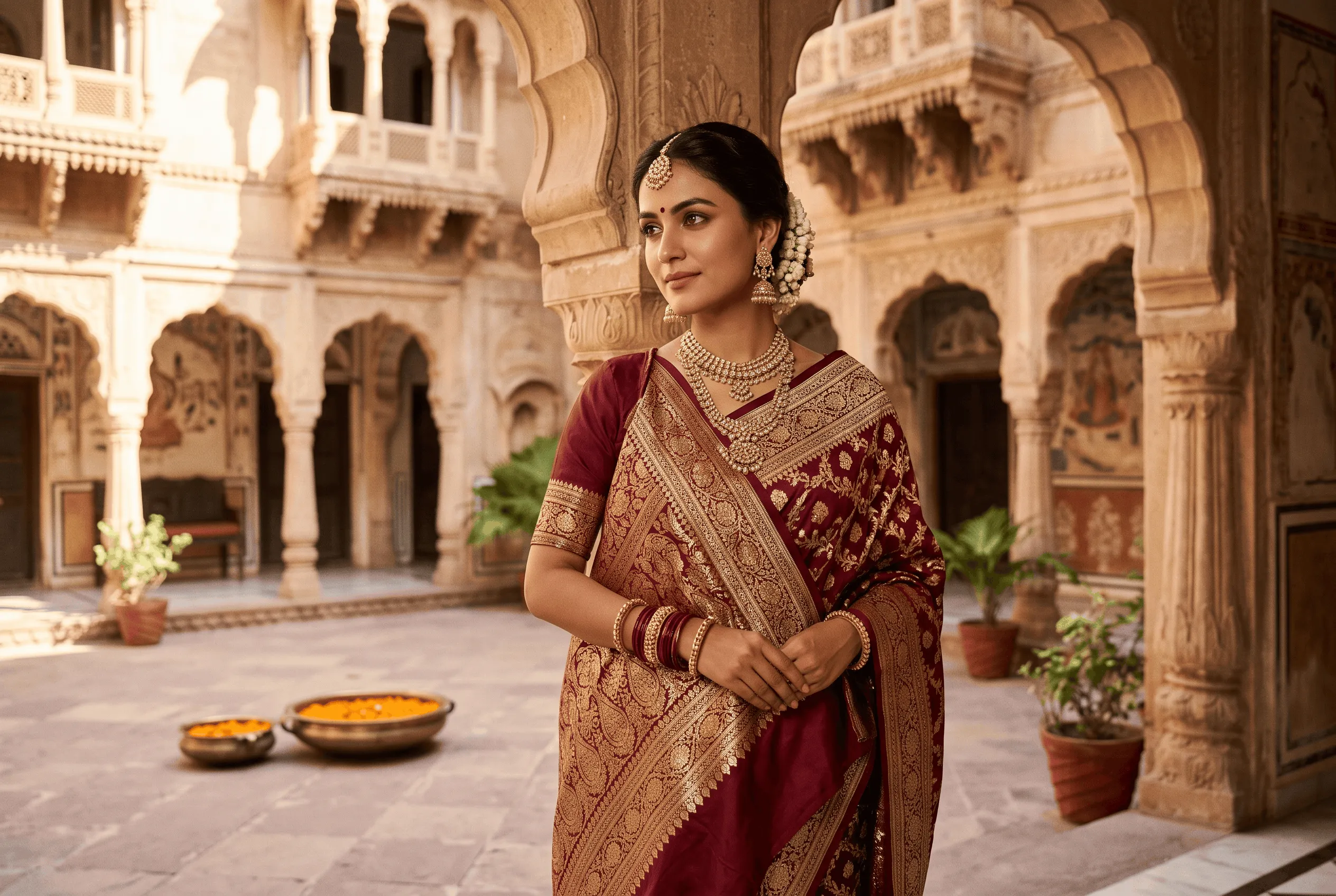
What Makes North Indian Draping Different?
The biggest difference is where the pallu goes.
In the common Nivi drape, the pallu goes over the left shoulder and falls behind.
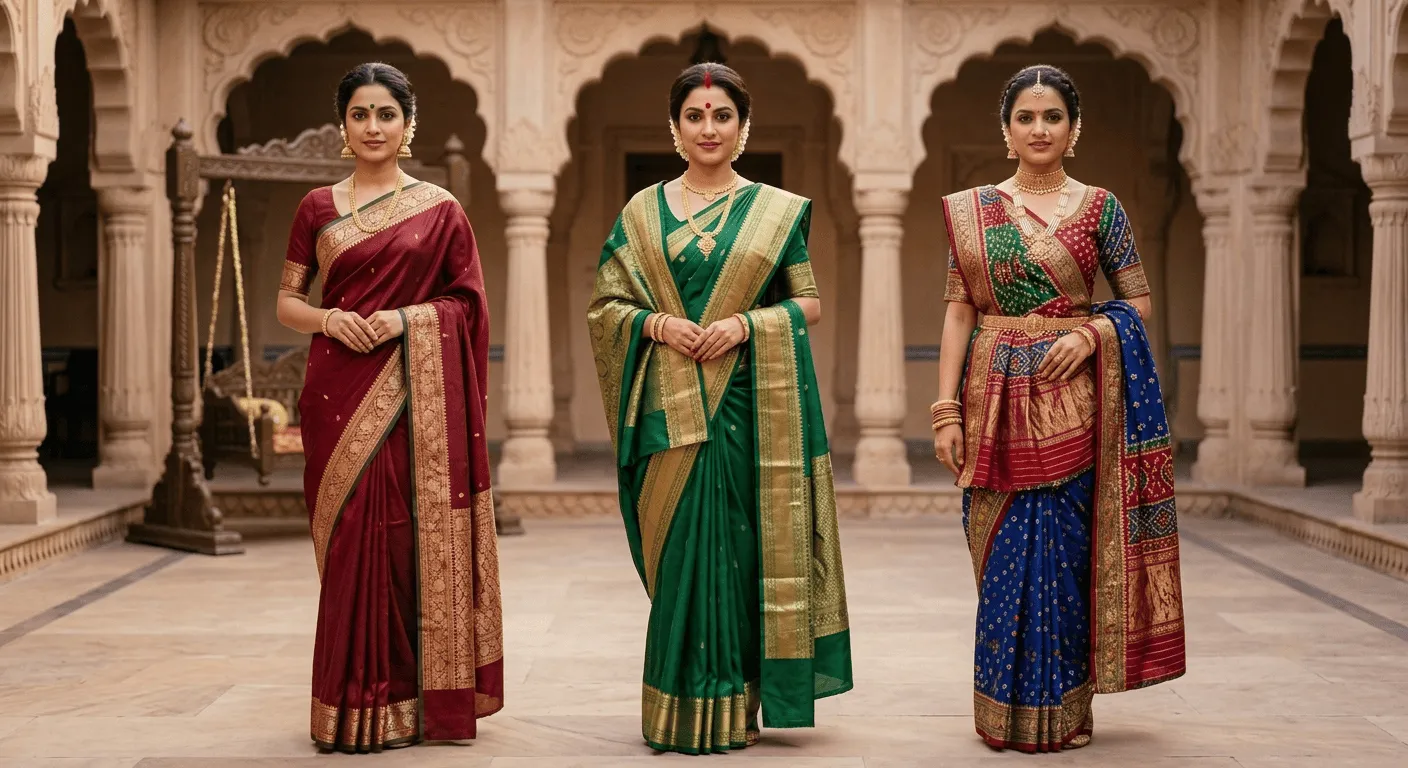
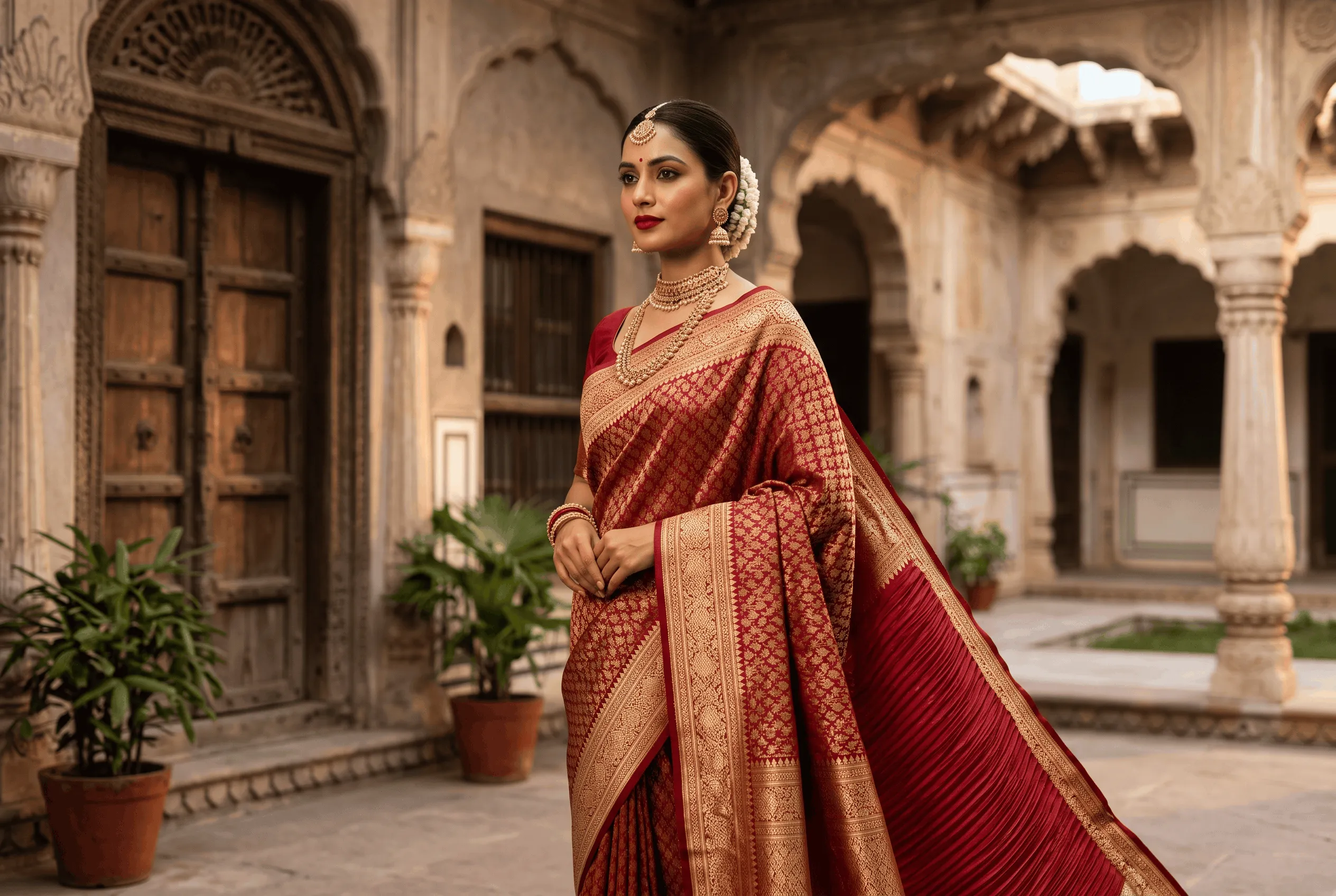
In the North Indian seedha pallu (also called the "sidha pallu" or Gujarati-style drape), the pallu goes over the right shoulder and falls in front, so the most decorated part of the saree is fully on display.
This makes the seedha pallu especially popular for occasions where the pallu design matters, such as weddings, religious ceremonies and festivals.
North Indian women also commonly cover the head with the pallu or a dupatta during rituals, which affects how the pallu is arranged.
1. Seedha Pallu (Sidha Pallu)
Who wears it
Seedha pallu is traditionally worn in Uttar Pradesh, Bihar, Rajasthan, Madhya Pradesh and Gujarat, especially for weddings, pujas and festivals.
Best sarees for this drape
Banarasi silk, Kota Doria, leheriya, bandhani, chanderi and georgette with a decorated pallu.
Step-by-step
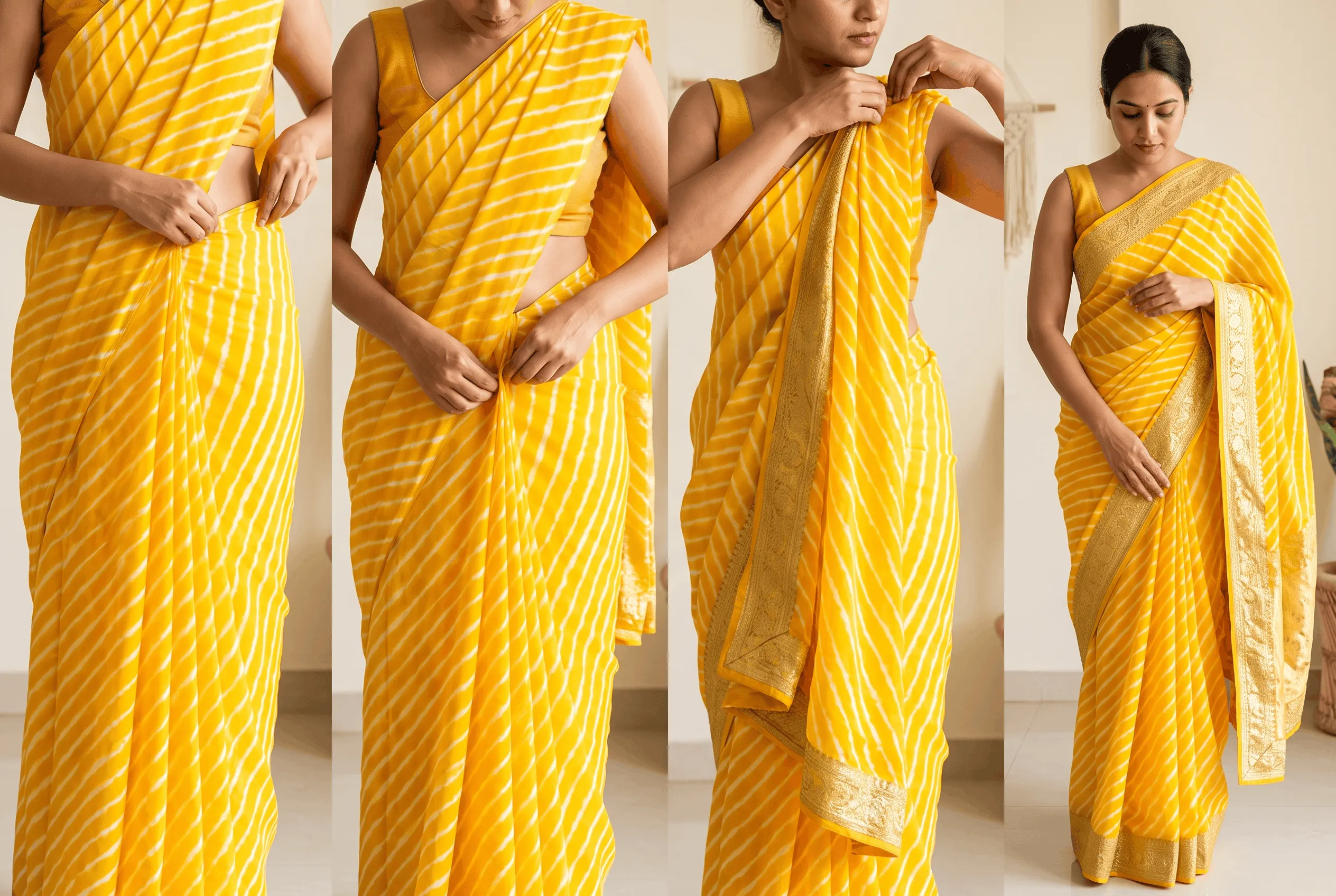
Step 1: Tuck the plain end of the saree at the right hip and wrap it once around the waist, tucking as you go. Check that the hem just touches your footwear.
Step 2: Make five to seven pleats of about 4–5 inches and tuck them at the centre of the waist, slightly to the left, with the folds facing left.
Step 3: Take the remaining fabric around your back from left to right.
Step 4: Bring the pallu over your right shoulder from behind, so it falls across the front of your body.
Step 5: Spread the pallu across the chest and tuck or pin the lower left corner at the left side of the waist.
Step 6: Pin the pallu at the right shoulder from the inside of the blouse.
Step 7: Adjust the pallu so the design sits evenly across the front.
Tips
Let the pallu fall to around knee length at the front.
Pleat the top of the pallu slightly at the shoulder for neatness.
For heavy Banarasi pallus, pin the corner at the waist securely so the weight does not pull the shoulder.
2. Nivi Drape (The Everyday Classic)
The Nivi drape originated in Andhra Pradesh, but it is now the most widely worn drape across North India, especially in cities and offices.
When North Indian women choose it
Office wear, college events, everyday wear, receptions and modern functions.
Quick steps
Tuck the saree at the right hip and wrap it once around the waist.
Make five to seven front pleats and tuck them slightly left of centre.
Take the pallu across the front and over the left shoulder, letting it fall behind.
Pin the pallu at the shoulder.
Read our detailed Nivi drape tutorial for beginners.
3. Head-Covered Drape for Rituals
In many North Indian families, women cover the head with the pallu during pujas, weddings and visits to elders or temples.
How to do it
Drape the saree in seedha pallu or Nivi style.
Leave the pallu slightly longer than usual.
Bring the pallu gently over the head from the back and pin it to the hair with a small U-pin or hairpin.
Let the edge frame the face naturally.
Tips
Use a light saree or a separate dupatta for long ceremonies if a heavy pallu feels uncomfortable on the head.
Brides often wear a separate heavy dupatta over the head instead of the saree pallu.
4. Rajasthani-Style Drape With Odhni
In Rajasthan, women traditionally wear a ghagra, kanchli and odhni, but saree wearers often borrow the look by draping the pallu like an odhni.
How to create the look
Wear a leheriya, bandhani or gota patti saree.
Drape it in seedha pallu style, leaving a longer pallu.
Bring the pallu over the head and tuck one corner at the waist, like an odhni.
Add silver or kundan jewellery, a borla (maang tikka) and bangles for a traditional finish.
5. Bihari and Purvanchal Wedding Drape
In Bihar and eastern Uttar Pradesh, the seedha pallu is common for weddings and festivals such as Chhath Puja.
Women often choose bright yellow, red or orange sarees with a long pallu brought over the head during rituals.
The drape is the same as the seedha pallu, with the pallu kept longer so it can cover the head comfortably.
6. Modern Seedha Pallu for Receptions
The seedha pallu also works for modern events.
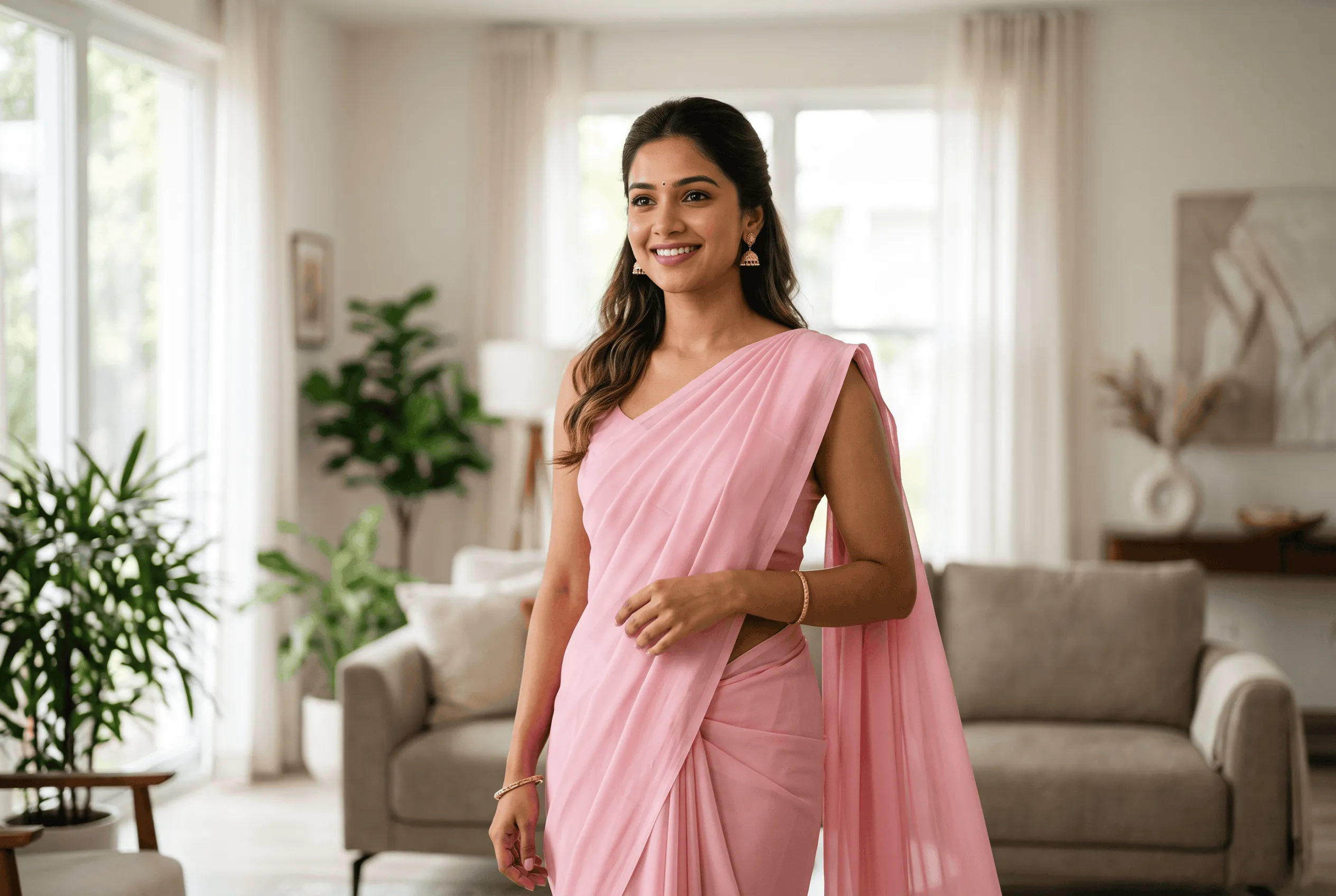
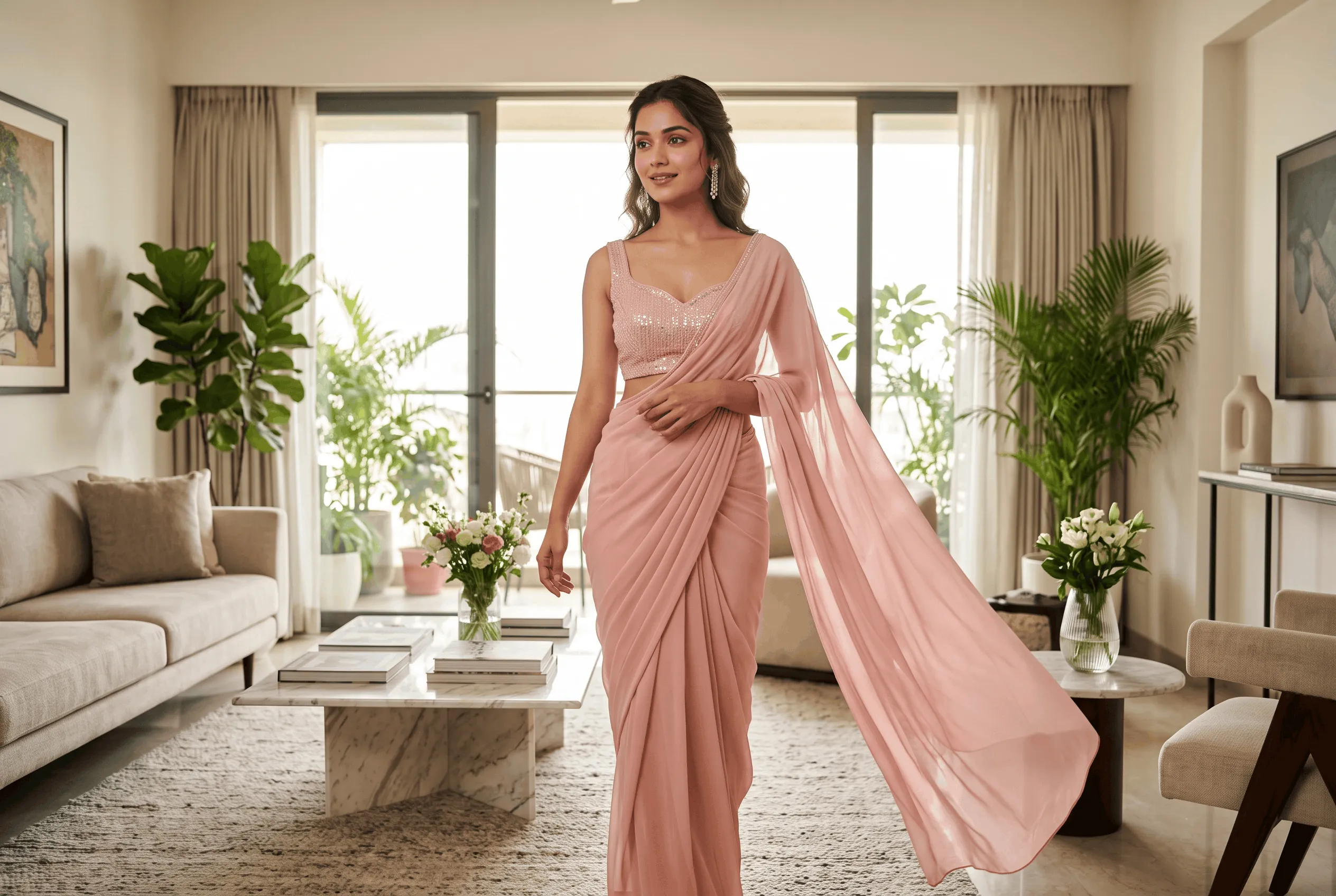
Pre-pleat the pallu into narrow pleats and pin them on the right shoulder.
Pair it with a modern blouse such as a sweetheart or corset style.
Add a slim waist belt to keep the pallu in place.
This gives the traditional drape a polished, contemporary look.
Which Sarees Suit North Indian Drapes?
Banarasi silk: perfect for seedha pallu at weddings. Read how to drape a Banarasi saree.
Chanderi: light and elegant for day functions. See our Chanderi fabric guide.
Leheriya and bandhani: bright and festive for Teej and Navratri. See our bandhani vs leheriya vs patola guide.
Chikankari georgette: graceful for summer weddings and day events. See our chikankari guide.
Kota Doria: airy and light for summer.
Chiffon and georgette: easy to drape for parties and receptions.
Blouse Ideas for North Indian Drapes
Seedha pallu: elbow-sleeve or three-quarter sleeve blouses in brocade or contrast silk look traditional.
Nivi drape: boat-neck, sweetheart and high-neck blouses all work well.
Rajasthani look: mirror work or gota patti blouses with full sleeves.
Modern events: corset, off-shoulder or cape-style blouses.
Jewellery and Accessories
Kundan and polki: classic for weddings and Rajasthani looks.
Gold jhumkas and a maang tikka: traditional for pujas and festivals.
Silver and oxidised jewellery: for leheriya, bandhani and Kota Doria sarees.
Bangles and chooda: an important part of married women's looks in many North Indian communities.
Waist belts: help hold a heavy seedha pallu in place.
Draping Tips for Different Fabrics
Heavy silk: fewer, wider pleats and two pins for the pallu.
Light georgette and chiffon: more pleats and careful pinning, as the fabric slides.
Cotton and Kota Doria: starch lightly and iron the pleats so they hold their shape.
Organza: iron gently and use small pins to avoid marks.
North Indian Draping for Festivals
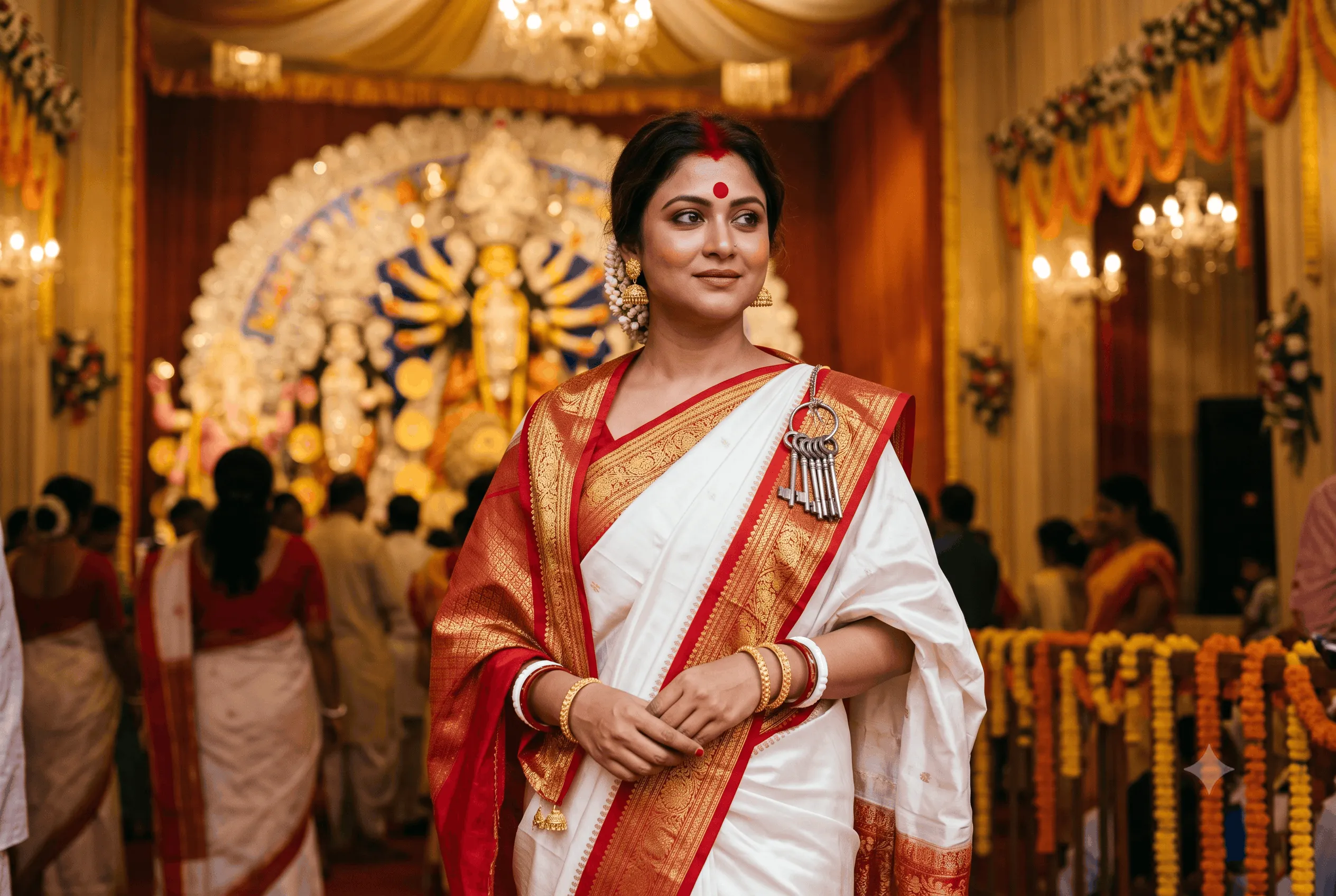
Karwa Chauth: seedha pallu with a red or maroon Banarasi or georgette saree and the pallu over the head during puja. See our Karwa Chauth saree ideas.
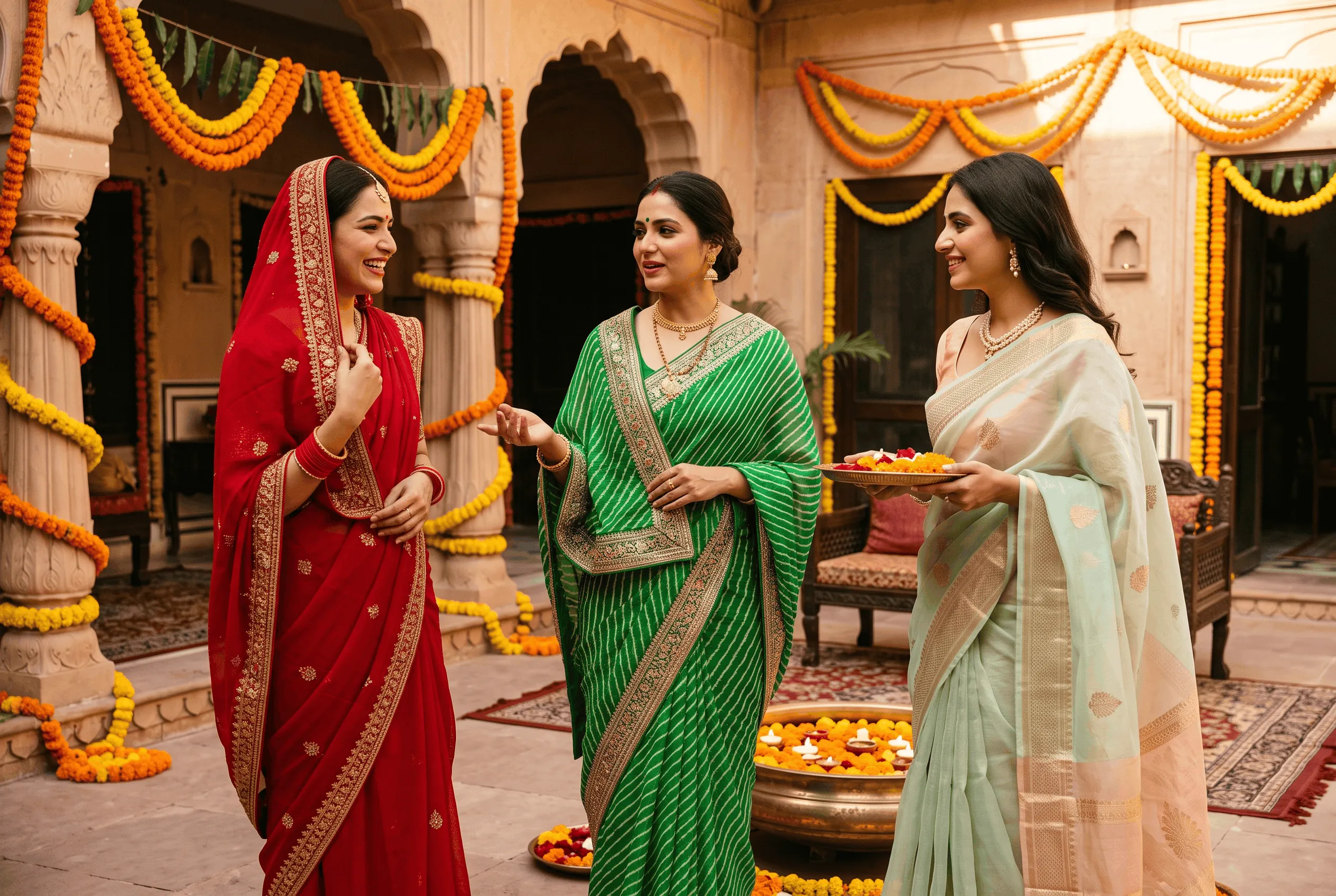
Teej: green leheriya or bandhani in seedha pallu style.
Diwali: Banarasi or silk in Nivi or seedha pallu. See our Diwali outfit ideas.
Chhath Puja: bright yellow, orange or red sarees with the pallu covering the head.
Common Mistakes
Short pallu: the seedha pallu needs enough length to spread across the front.
Loose corner at the waist: the pallu slides if the corner is not tucked or pinned.
Too many pleats with heavy silk: the front looks bulky.
Heavy pallu over the head: uncomfortable for long rituals; use a dupatta instead.
Seedha Pallu for Different Body Types
Petite women: keep the pallu slightly shorter at the front and choose sarees with narrow borders, so the drape does not overwhelm the frame.
Tall women: a longer pallu and wide borders look regal and balanced.
Curvy women: pleat the pallu neatly at the shoulder and let it fall straight, which creates a long vertical line.
Fuller bust: pin the pallu flat across the chest rather than gathering it, so the drape stays smooth.
Practising Before the Big Day
The seedha pallu takes a little practice, especially with a heavy pallu.
Try the drape two or three times at home with the same saree, blouse and footwear you plan to wear.
Note the pallu length that works for you, mark it with a small safety pin on the inside and keep your pins ready the night before.
If you will cover your head during the ceremony, practise that too, so you know how the pallu feels when you sit, stand and bow.
Why North Indian Draping Still Matters
Draping styles are part of family and regional identity. Many women learn the seedha pallu from their mothers and grandmothers for their first Karwa Chauth, their wedding or a family puja.
Keeping these drapes alive, even if you wear the Nivi drape most days, connects modern wardrobes with tradition. It also shows off the beautiful pallus that North Indian weavers spend weeks creating.
Choosing the Right Drape
Choose the seedha pallu when you want to show off a decorated pallu at weddings, pujas and festivals.
Choose the Nivi drape for office, college, receptions and everyday wear.
Choose the head-covered drape for rituals and visits to elders.
Choose a Rajasthani odhni-style drape for Teej, Gangaur or a festive Rajasthani look.
Explore more drapes in our guides to saree draping styles: Nivi, Bengali and Gujarati and South Indian saree draping styles, and discover the region's textiles on our North India page.
Comments (0)
Leave a Thought
No comments yet. Be the first to share your thoughts!