South India has some of the most distinctive saree drapes in the country.
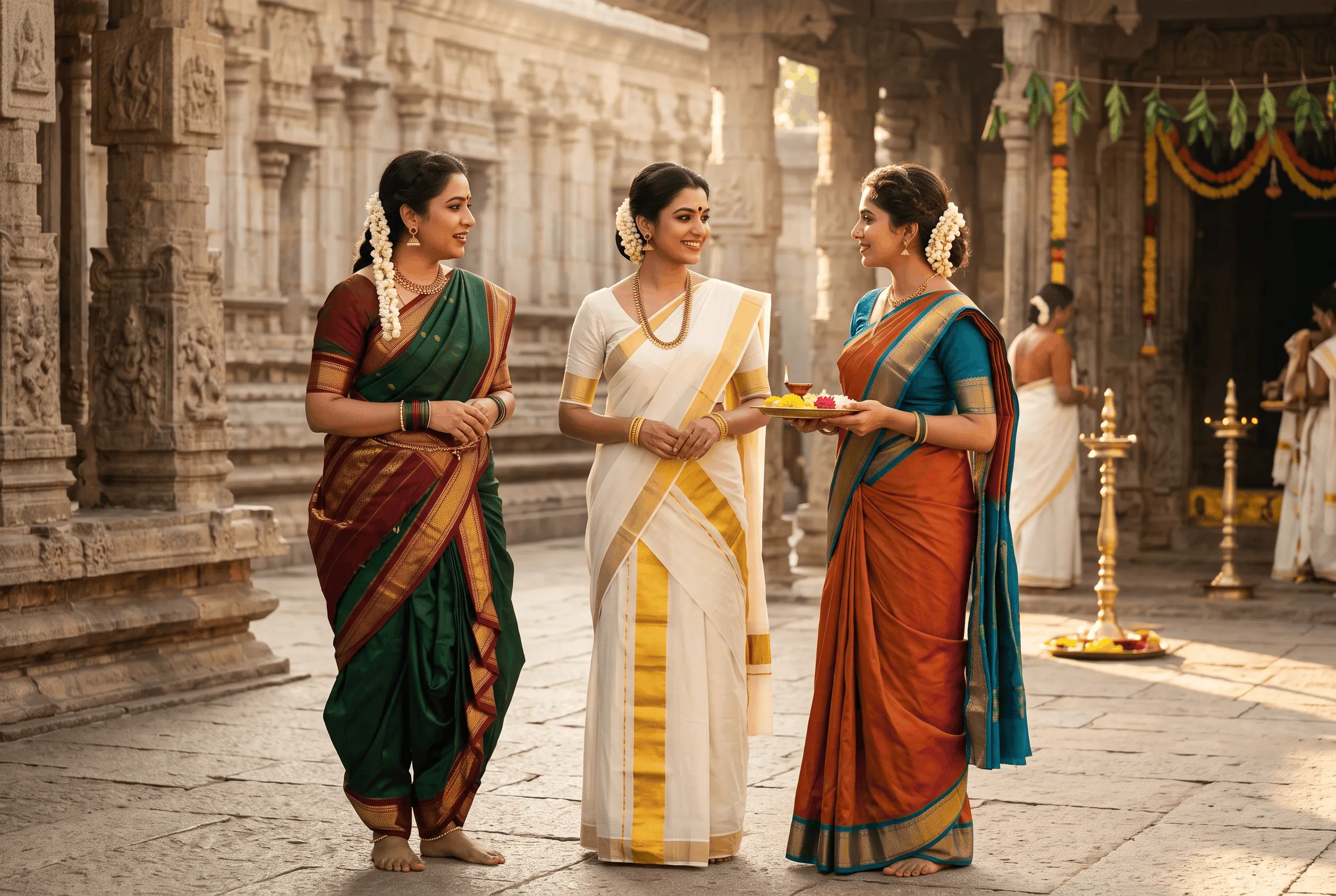
From the nine-yard Madisar worn by Tamil Brahmin women to Kerala's elegant mundum neriyathum, the Kodava drape of Coorg with its pleats at the back and Andhra's everyday Nivi, each drape reflects the climate, culture and rituals of its region.
These drapes are not only beautiful but also practical. Many were designed for temple rituals, hot and humid weather, farming work or long ceremonies.
This guide explains the most important South Indian saree draping styles, how they are worn, which sarees suit each drape and how you can wear them confidently for weddings, festivals and cultural events.
Why South Indian Drapes Are Unique
South Indian drapes developed around the region's climate, temple traditions and textiles.
Heavy silks such as Kanjivaram are made for ceremonies, while light cottons and Kerala's kasavu are made for heat and humidity.
Some drapes use nine-yard sarees, which are longer than the usual six yards and allow a pant-like tuck between the legs.
Others, like Kerala's mundum neriyathum, use two pieces of cloth rather than one saree.
1. Madisar (Tamil Nadu)
What it is
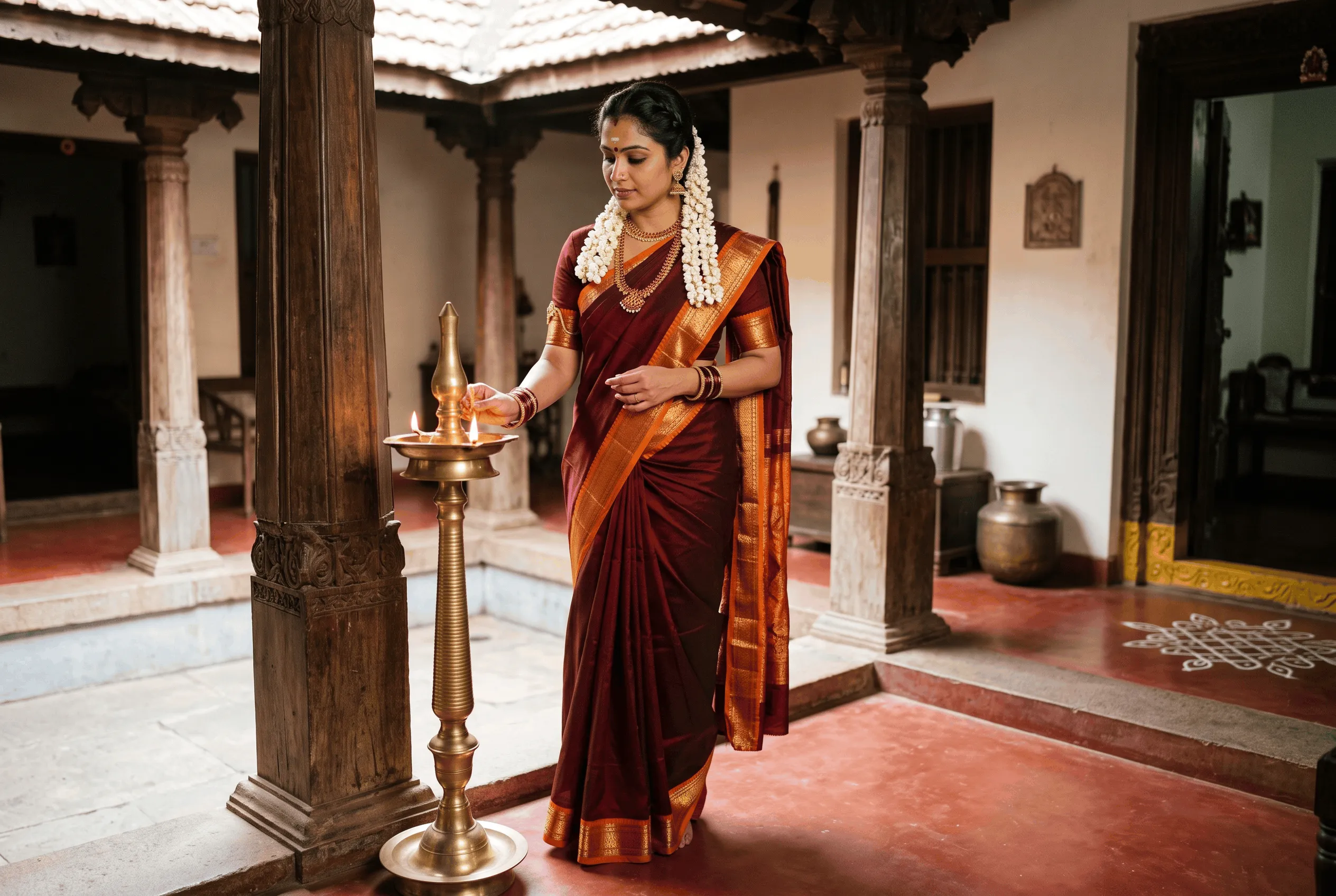
Madisar is a nine-yard drape traditionally worn by Tamil Brahmin women, especially Iyer and Iyengar communities. Married women wear it for weddings, religious ceremonies, festivals and important family rituals.
Iyer and Iyengar styles differ slightly, mainly in how the pleats and pallu are arranged.
Best sarees
Nine-yard Kanjivaram silk, nine-yard cotton or silk-cotton sarees in rich colours such as green, maroon, mustard and peacock blue.
How it is worn (Iyer style, simplified)
Step 1: Tie a knot with the upper corner of the saree at the right side of the waist.
Step 2: Take the saree around the waist and make a set of pleats, tucking them at the centre.
Step 3: Bring a portion of the saree between the legs from the front and tuck it at the back waist, creating the characteristic pant-like shape.
Step 4: Wrap the remaining length around the body and bring the pallu over the left shoulder.
Step 5: Bring the pallu around from the back and tuck it at the right waist.
Tips
Madisar is complex, and many women learn it with the help of an experienced family member.
Ready-to-wear stitched madisar sarees are now available for those who find the drape difficult.
2. Mundum Neriyathum (Kerala)
What it is
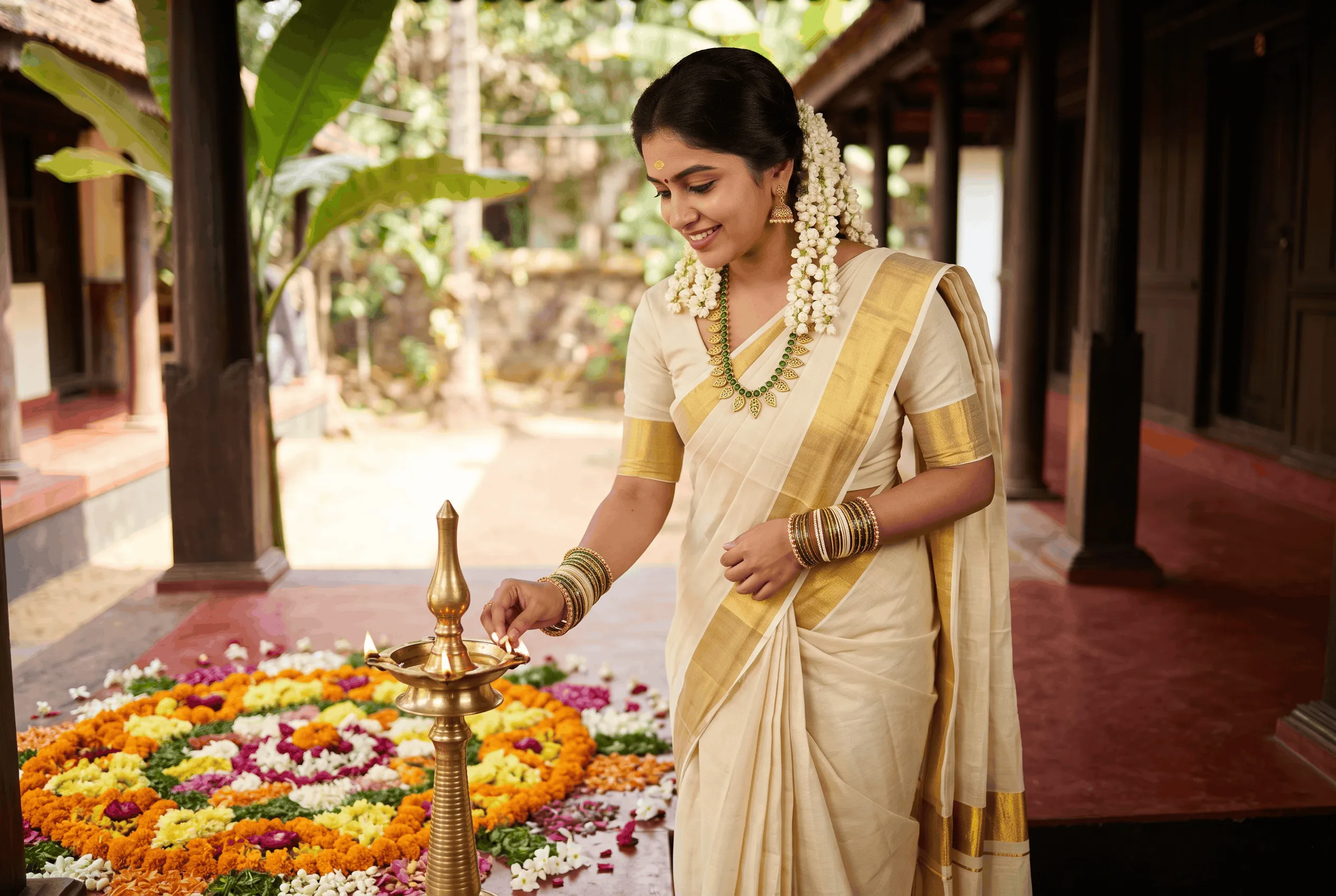
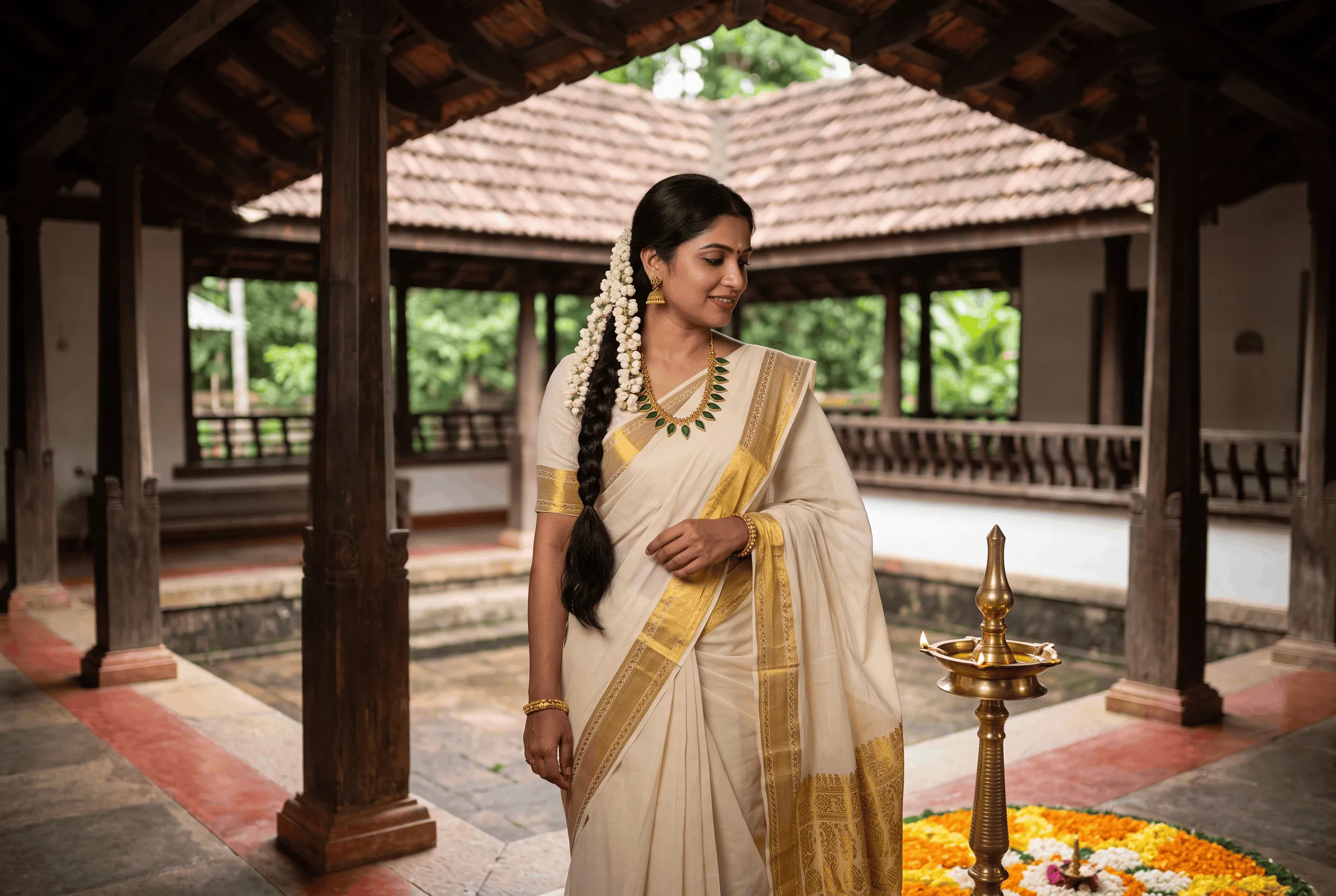
Mundum neriyathum is Kerala's traditional two-piece garment. The mundu is worn as a lower garment and the neriyathu is draped over the upper body.
It is the classic look for Onam and Vishu, and the cream and gold kasavu version is iconic.
How it is worn
Wear the mundu wrapped around the waist like a skirt, tucked at the front.
Drape the neriyathu over the left shoulder and tuck the other end at the waist, or tuck it into the blouse, depending on the style.
The modern set-saree
Many women now wear the set-saree, a single kasavu saree draped in Nivi style that gives the look of mundum neriyathum.
Read our Kasavu saree guide to learn more about Kerala's temple white.
3. Kodava Drape (Coorg, Karnataka)
What it is
The Kodava drape is worn by women of the Kodava community in Coorg.
Its most distinctive feature is that the pleats are tucked at the back rather than the front, and the pallu is brought over the right shoulder and pinned.
How it is worn (simplified)
Tuck the saree at the back and make pleats that face the back.
Bring the remaining fabric around the body, under the left arm and over the right shoulder.
Pin the pallu at the right shoulder, often with a brooch.
Best sarees
Silk sarees with bright borders, especially for weddings.
4. Nivi Drape (Andhra Pradesh)
What it is
The Nivi drape originated in Andhra Pradesh and became the most popular saree drape across India.
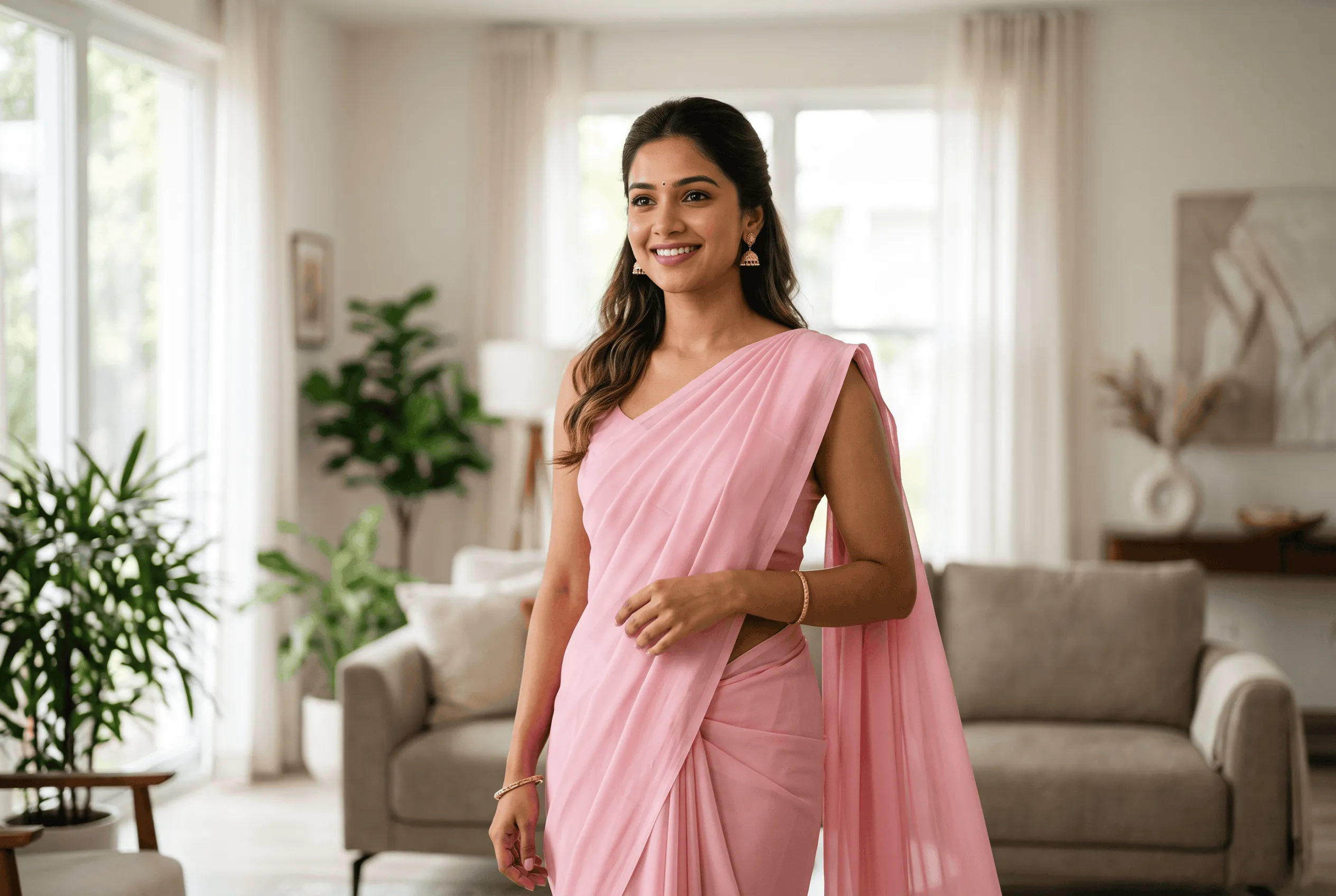
Pleats are tucked at the front, and the pallu goes over the left shoulder and falls at the back.
When to choose it
Office wear, receptions, college events and everyday wear.
Learn it
Follow our step-by-step Nivi drape tutorial.
5. Kaccha Nivi and Gochi Kattu (Andhra & Telangana)
Some traditional Andhra and Telangana drapes, often called gochi kattu or kaccha-style drapes, tuck a portion of the saree between the legs for ease of movement during farm work and rituals.
They are less common today, but are seen at weddings and cultural events where families want to honour older traditions.
6. Half Saree (Langa Voni)
The half saree, also called langa voni or pavadai dhavani, is worn by young girls across South India, especially in Tamil Nadu, Andhra Pradesh and Karnataka.
It includes a long skirt (pavadai or langa), a blouse and a dupatta-like voni draped like a saree pallu.
Read our Pattu pavadai and half saree guide for styling ideas.
Which Sarees Suit South Indian Drapes?
Kanjivaram silk: ideal for madisar, weddings and temple ceremonies. See our Kanchipuram silk guide.
Kasavu: for mundum neriyathum and Onam set-sarees.
Mysore silk: for Kodava and Nivi drapes at weddings. Compare it in Mysore silk vs Kanjivaram.
Pochampally ikat: for Nivi and modern drapes. See our Pochampally ikat guide.
Chettinad cotton: comfortable for everyday and festive daywear.
Silk-cotton: comfortable for long rituals in hot weather.
Jewellery for South Indian Drapes
Temple jewellery: the classic choice for madisar and Kanjivaram looks.
Kasu mala and palakka mala: traditional Kerala necklaces for mundum neriyathum.
Jimikki (jhumkas): popular across South India.
Oddiyanam (waist belt): a gold waist belt that holds a heavy silk drape in place and adds a regal look.
Jasmine flowers: a beautiful finishing touch in the hair.
Blouse Ideas
Madisar: elbow-sleeve silk blouses in contrast colours.
Kerala looks: plain or kasavu-border blouses in matching or contrast colours.
Kodava: full or three-quarter sleeve blouses.
Modern Nivi: boat-neck, high-neck or collared blouses.
Draping South Indian Sarees for Occasions
Weddings: Kanjivaram in Nivi or madisar style, depending on community traditions.
Onam and Vishu: kasavu set-saree or mundum neriyathum.
Pongal and Sankranti: silk or silk-cotton in Nivi or traditional drapes.
Varalakshmi Vratham and pujas: madisar or Nivi with a Kanjivaram.
Cultural events: a traditional drape from your own or another region, worn respectfully.
Tips for Draping Nine-Yard Sarees
Practise a few times before the event.
Ask an experienced family member or professional draper to help.
Use small pins to hold pleats in place.
Consider a pre-stitched nine-yard saree for convenience. Our pre-draped saree guide explains ready-to-wear options.
Common Mistakes
Using a six-yard saree for madisar: traditional madisar needs nine yards.
Over-pinning: too many pins make the drape stiff.
Wrong petticoat: some traditional drapes, such as madisar, are worn without a petticoat.
Heavy silk in hot weather: choose silk-cotton for long daytime rituals.
Choosing a Drape for Your Role at a Wedding
The bride: follow your family and community tradition. Tamil Brahmin brides often wear a madisar for the main muhurtham, Kerala brides usually wear a kasavu or tissue saree, and Kodava brides wear the Kodava drape with a red silk saree and a veil.
The bride's or groom's mother: a rich Kanjivaram in the community's traditional drape is a graceful choice for the rituals, with a Nivi drape for the reception.
Close family: many families coordinate colours, with everyone wearing the same traditional drape for the ceremony.
Guests: a Nivi drape with a South Indian silk is always appropriate. If you would like to wear a regional drape, ask the hosts first.
Six-Yard vs Nine-Yard Sarees
Six-yard sarees are the standard length and work for the Nivi drape, the kasavu set-saree and the Kodava drape.
Nine-yard sarees (around 8–9 metres) are needed for the madisar and some traditional Andhra and Karnataka drapes, because the extra length makes the tuck between the legs possible.
If you are buying for a madisar, always confirm the length with the seller. A six-yard saree cannot be draped as a proper madisar.
Wearing Another Region's Drape Respectfully
South Indian drapes carry religious and community meaning, especially the madisar.
If you are not from that community but want to wear the drape for a friend's wedding or a cultural event, ask the hosts, learn the drape properly and wear it with appropriate jewellery and care.
Done respectfully, wearing a regional drape is a lovely way to honour the people and traditions behind it.
Getting Help From a Professional Draper
For weddings and important rituals, many families book a professional saree draper, especially for the madisar and Kodava drapes.
A good draper can drape a nine-yard saree neatly in 15–20 minutes, pin it securely for long ceremonies and teach you a few tricks for adjusting it during the day. Book early during the wedding season, and share your saree, blouse and jewellery details in advance.
Preserving South Indian Draping Traditions
Many young women now learn traditional drapes through family elders, community workshops and online tutorials. Wearing them for weddings and festivals keeps these traditions alive and supports the weavers who create nine-yard sarees and kasavu.
Choosing Your Drape
Choose madisar for Tamil Brahmin weddings and rituals.
Choose mundum neriyathum or a kasavu set-saree for Onam and Kerala celebrations.
Choose the Kodava drape for Coorg weddings and cultural events.
Choose the Nivi drape for everyday wear, offices and receptions.
Explore more in our guides to South Indian silk: Kanjeevaram, Kasavu and Pochampally and North Indian saree draping styles, and discover the region on our South India page.
Comments (0)
Leave a Thought
No comments yet. Be the first to share your thoughts!