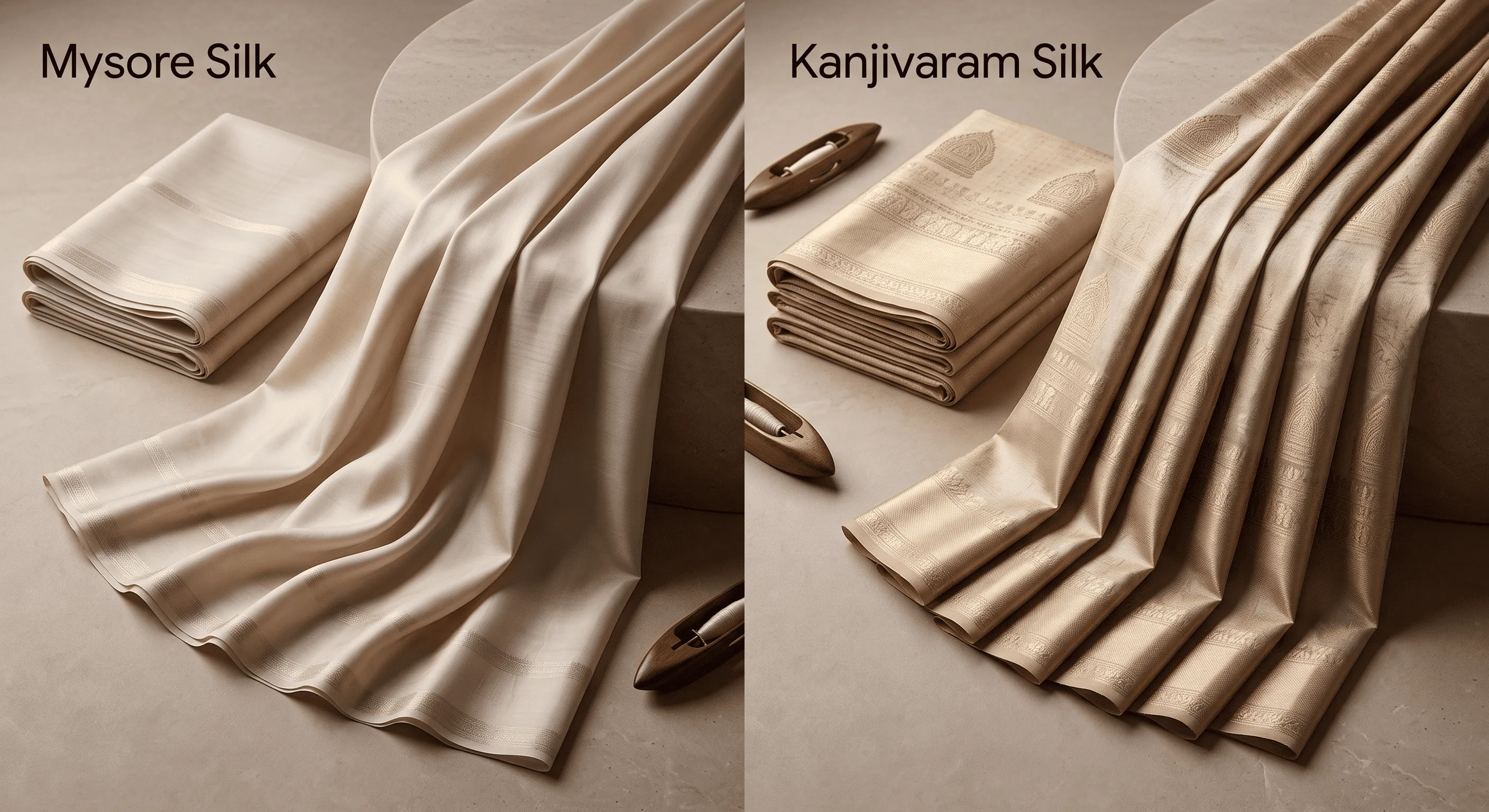
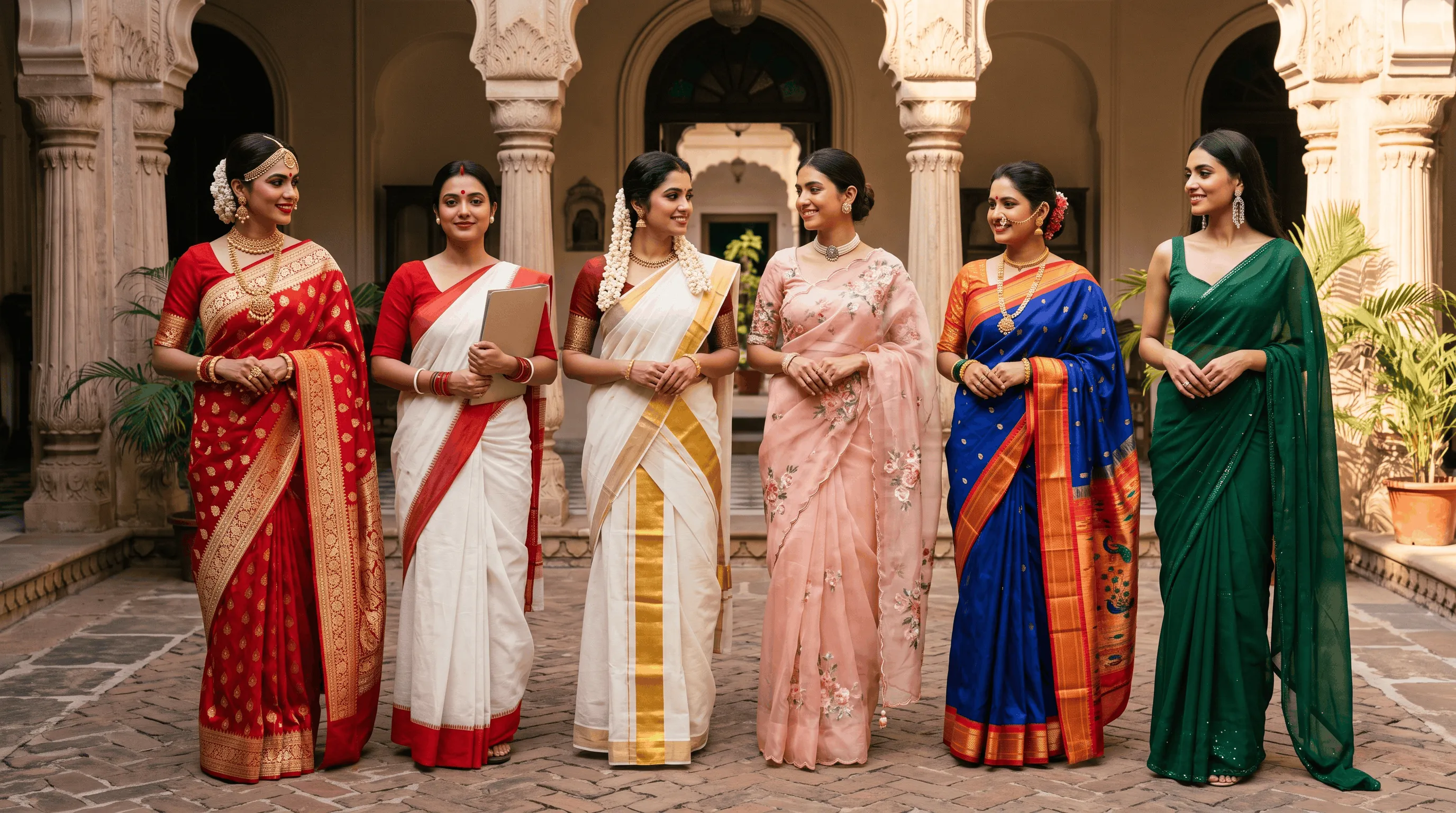
Mysore silk and Kanjivaram silk are two of South India’s most admired saree traditions, but they create very different looks.
Mysore silk is generally known for its smooth texture, fluid drape and understated elegance, while Kanjivaram is recognized for its structured silk, bold borders, contrasting colours and ceremonial richness.
Both are worn for weddings, festivals and important occasions, but choosing between them depends on how you want the saree to feel, drape and look.
This guide explains the essential differences without reducing either textile to simply “light” or “heavy.”
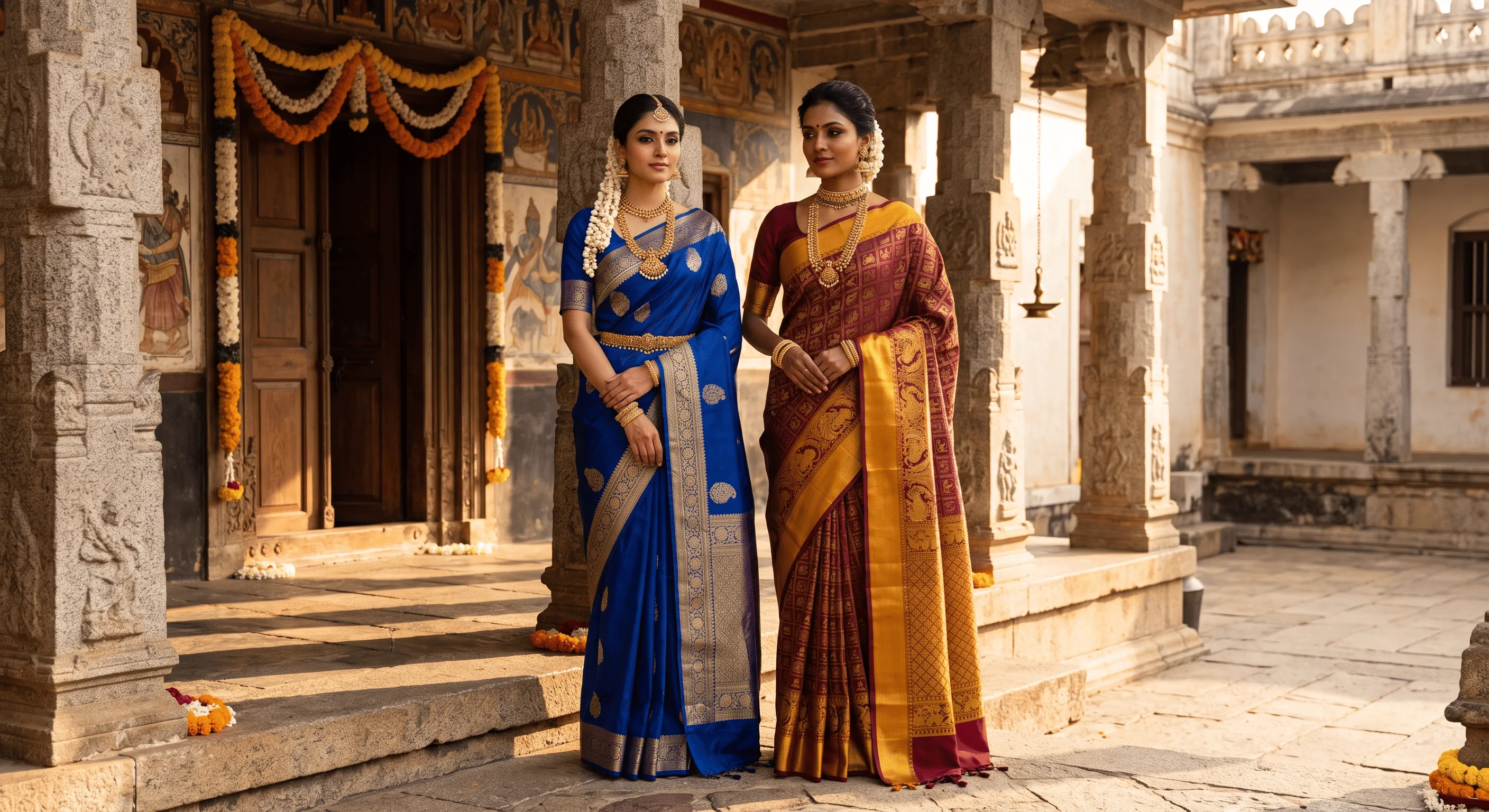
Mysore Silk vs Kanjivaram at a Glance
| Feature | Mysore Silk | Kanjivaram Silk |
|---|---|---|
| Origin | Karnataka | Tamil Nadu |
| Traditional centre | Mysuru | Kanchipuram |
| Fabric feel | Smooth and fluid | Firm and structured |
| Overall appearance | Elegant and restrained | Rich and ceremonial |
| Borders | Usually refined | Often broad and contrasting |
| Motifs | Often minimal | Frequently more elaborate |
| Draping | Soft and flowing | Defined and structured |
| Best suited for | Festivals, receptions, formal occasions | Weddings and ceremonial occasions |
| Styling character | Minimal elegance | Traditional grandeur |
What Is Mysore Silk?
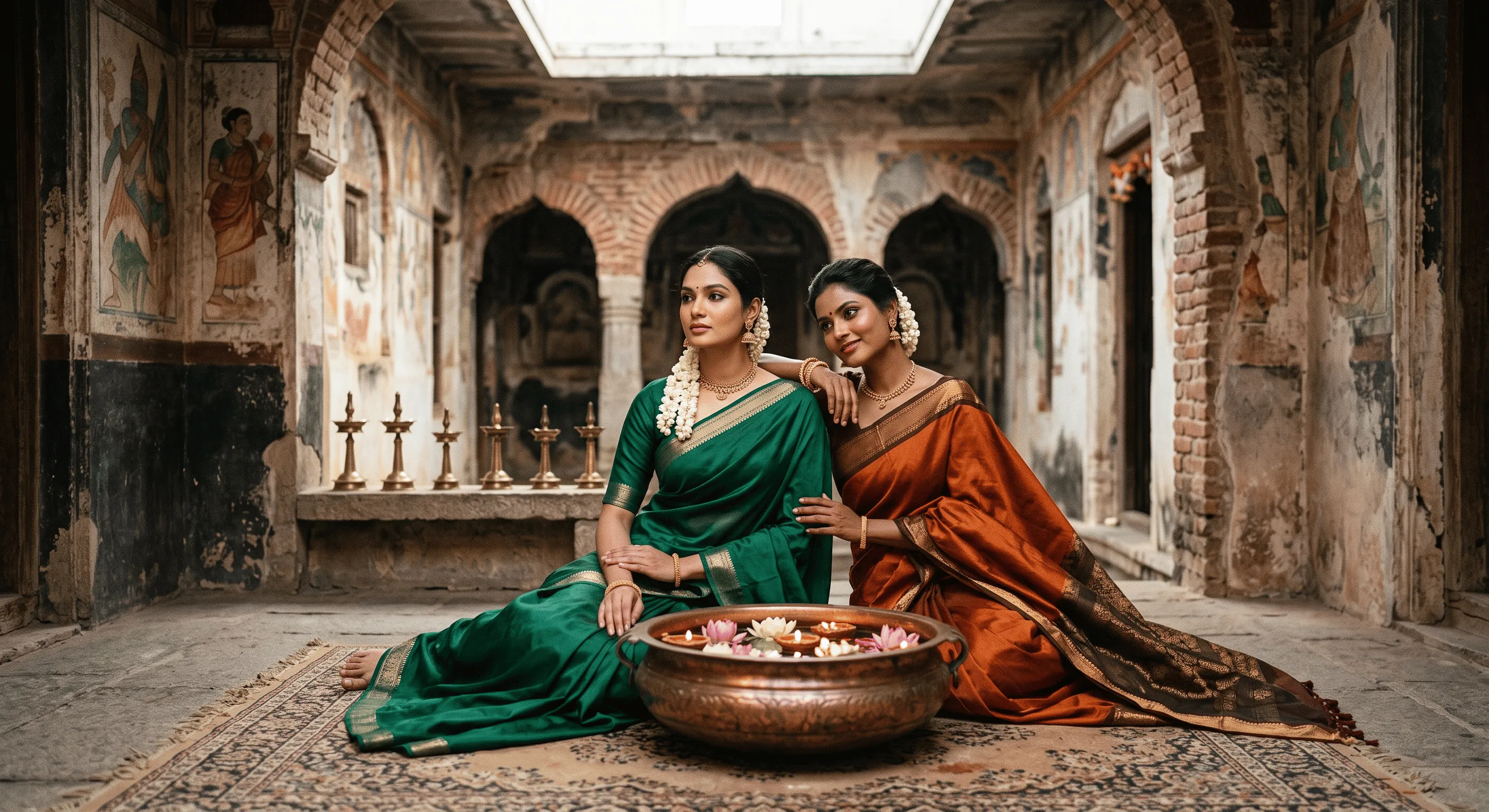
Mysore silk is closely associated with Karnataka and the silk traditions of Mysuru.
Its most recognizable characteristic is a smooth, lustrous surface.
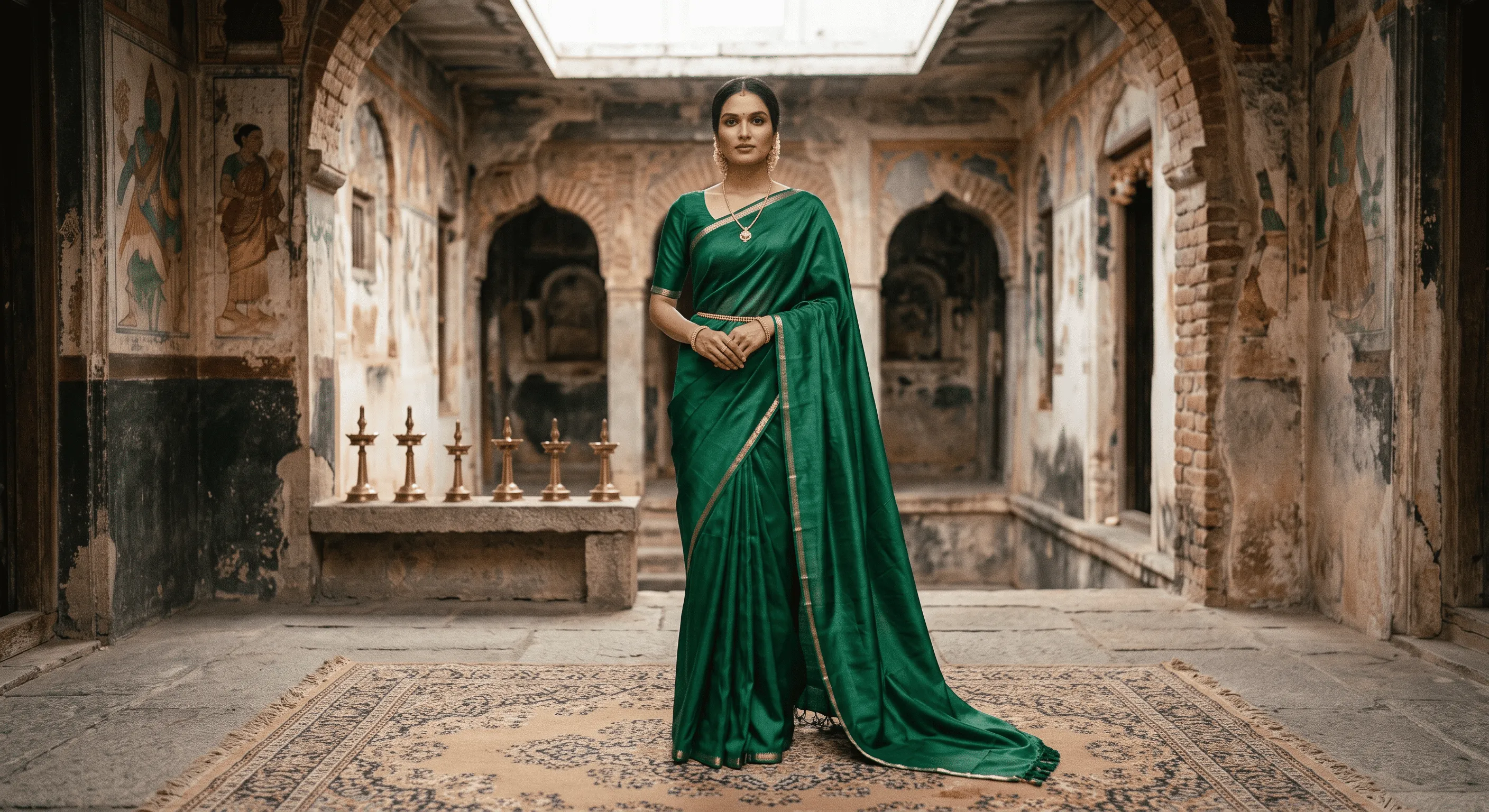
Many classic Mysore silk sarees use rich solid colours with relatively restrained zari borders, allowing the quality and sheen of the silk itself to become the main attraction.
The fabric often falls closer to the body and feels less bulky than many heavily woven ceremonial sarees.
This makes Mysore silk particularly versatile.
A deep emerald, royal blue or wine Mysore silk saree can look formal enough for a wedding while remaining simple enough to rewear for festivals or family functions.
What Is Kanjivaram Silk?
Kanjivaram, or Kanchipuram silk, is associated with Kanchipuram in Tamil Nadu.
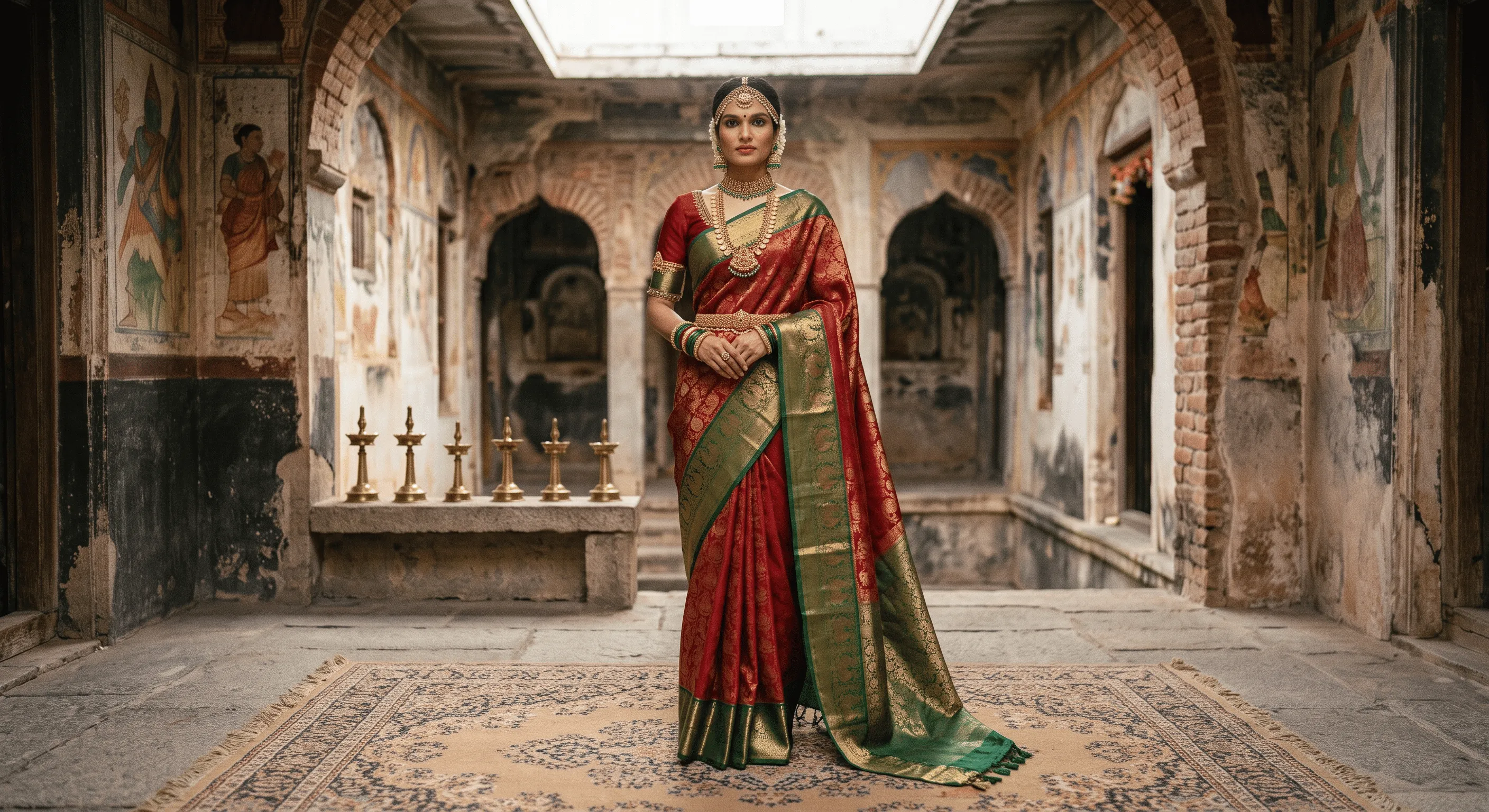
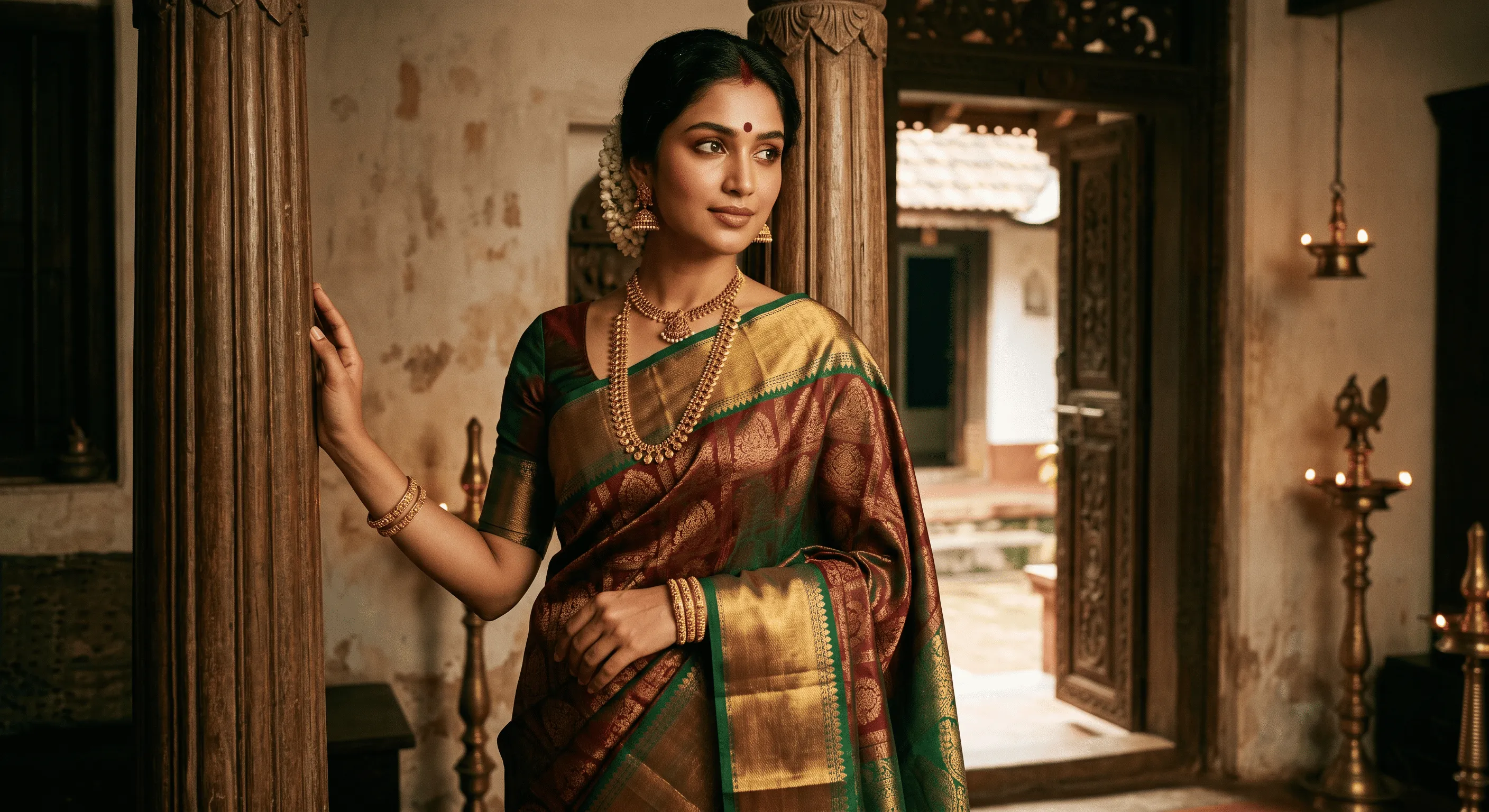
Traditional Kanjivaram sarees are known for strong silk construction, contrasting colours and prominent borders.
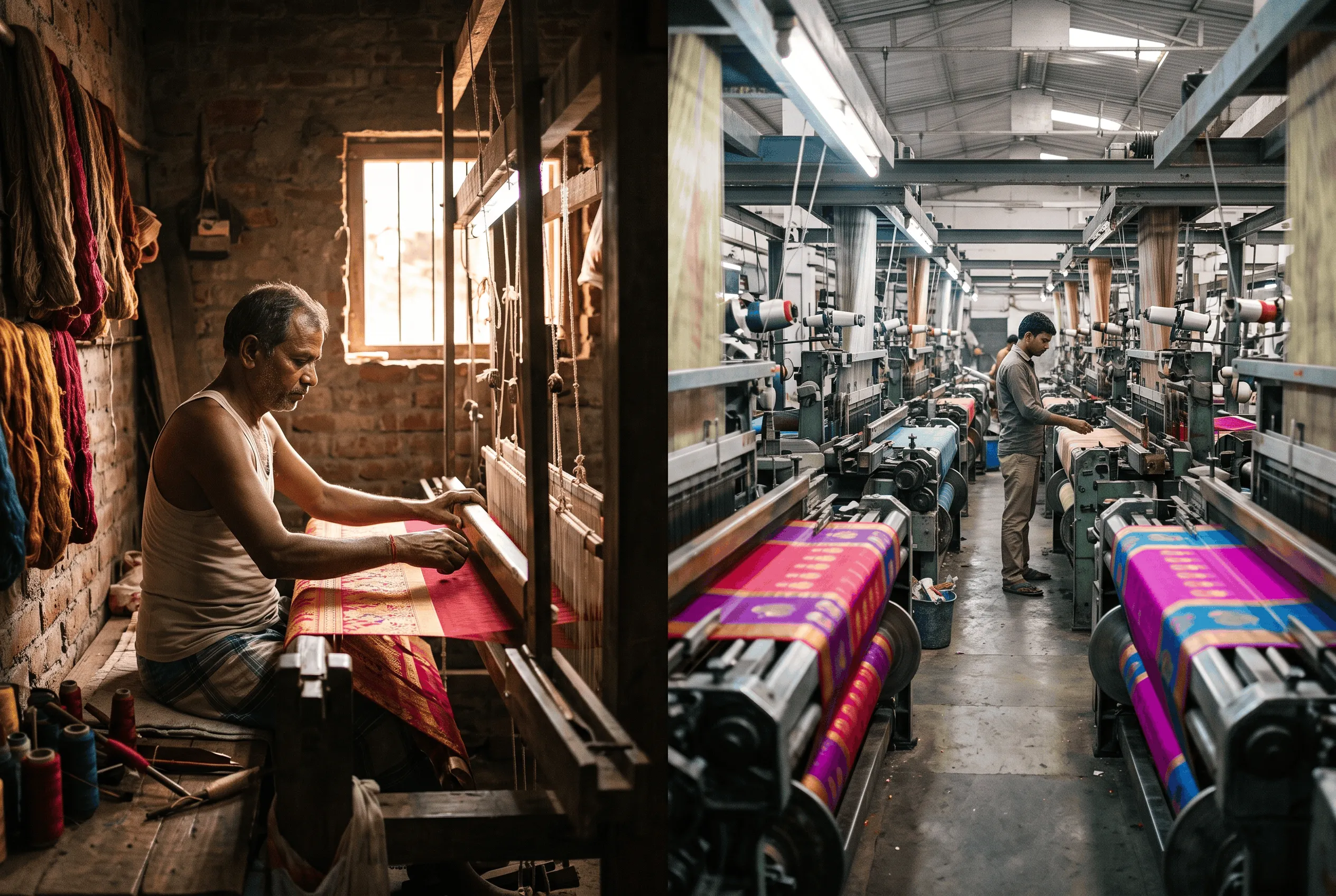
One of the best-known traditional techniques is korvai, in which a contrasting border is interlocked with the saree body during weaving.
This construction contributes to the distinctive visual separation between the main body and border.
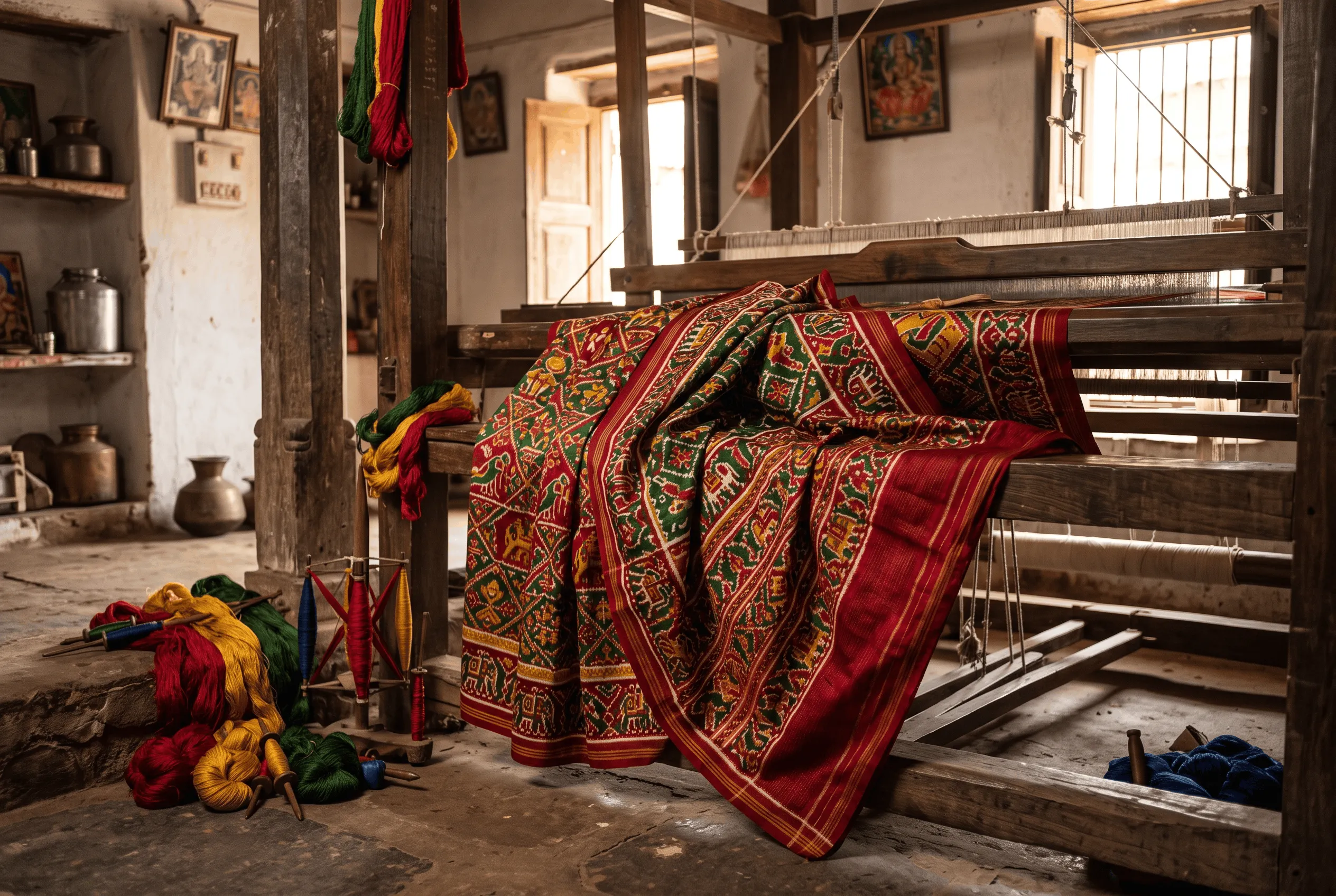
Kanjivaram sarees may also feature temple motifs, peacocks, checks, florals, geometric forms and richly woven pallus.
Where Mysore silk often allows colour and surface lustre to take the lead, Kanjivaram frequently uses contrast and woven detail to create impact.
The Biggest Difference: Feel, Structure and Drape
If you handle both sarees, this is usually where the distinction becomes easiest to understand.
Mysore Silk
Mysore silk typically feels smoother and more fluid.
Its softer fall creates clean pleats without adding too much visual volume.
The saree tends to move naturally with the wearer, making it comfortable for long events.
Kanjivaram
Traditional Kanjivaram generally has more body.
Its denser construction helps pleats remain structured and gives the pallu a stronger visual presence.
This makes it especially effective for ceremonial styling where the saree itself needs to make a statement.
Neither effect is better.
They simply suit different preferences.
If you prefer a saree that feels elegant and easy-flowing, Mysore silk may appeal more.
If you prefer structure and stronger textile presence, Kanjivaram may feel more suitable.
Borders, Motifs and Zari: Where the Visual Difference Appears
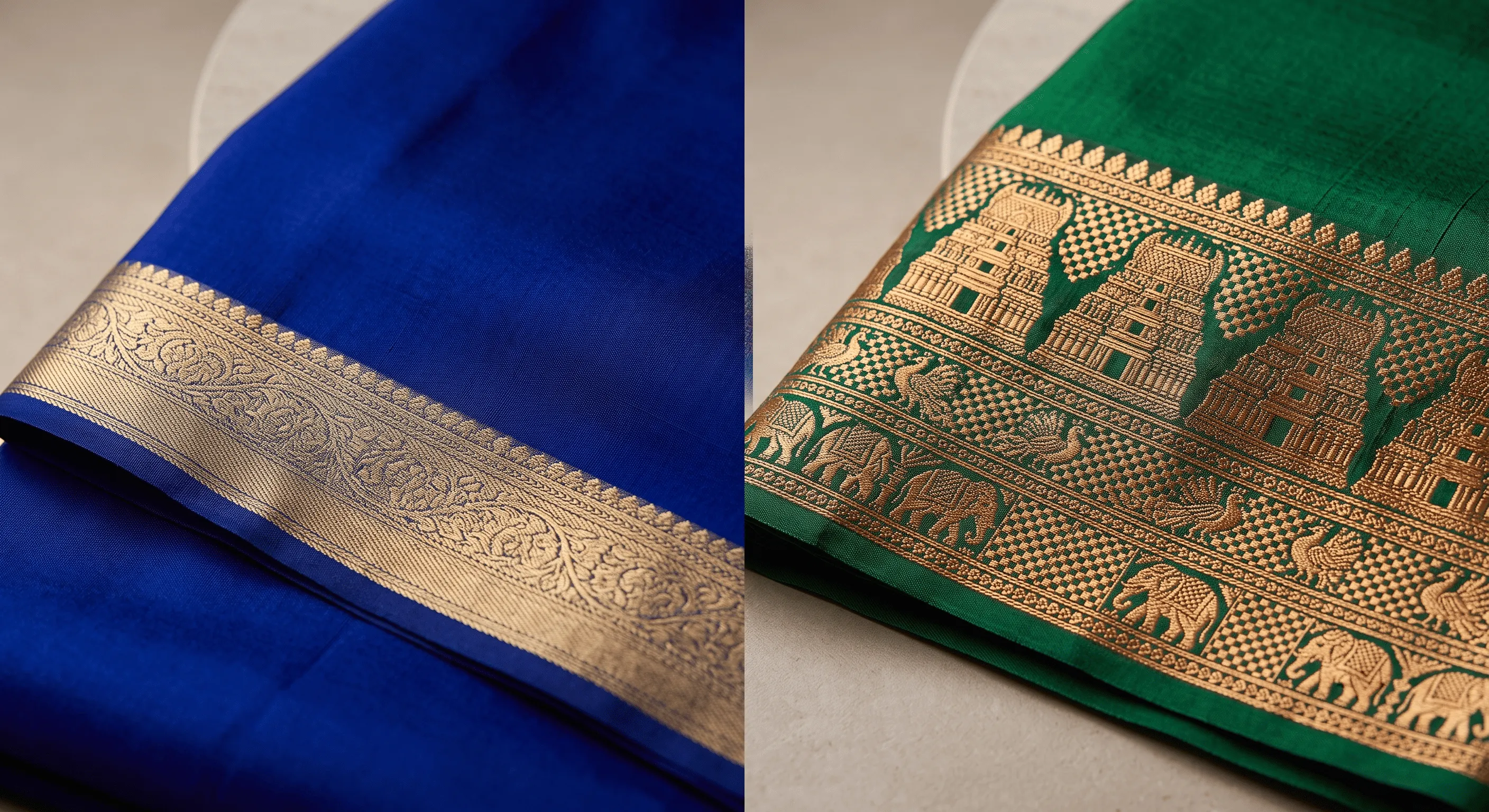
The borders often tell you immediately which aesthetic you are looking at.
Mysore silk commonly uses a simpler gold zari border against a relatively clean saree body.
The beauty may come primarily from the depth of colour and smooth silk finish.
Kanjivaram often takes the opposite approach.
Borders can be wider, more decorative and strongly contrasted against the body.
A purple saree might feature a magenta border, while a red body may be combined with green and gold.
The motifs can also be more prominent.
Traditional Kanjivaram vocabulary includes temple-inspired designs, peacocks, paisleys, checks, stripes and floral forms.
Zari appears in both textiles, but it often plays a larger visual role in elaborate Kanjivaram pallus and borders.
Which One Should You Choose for a Wedding?
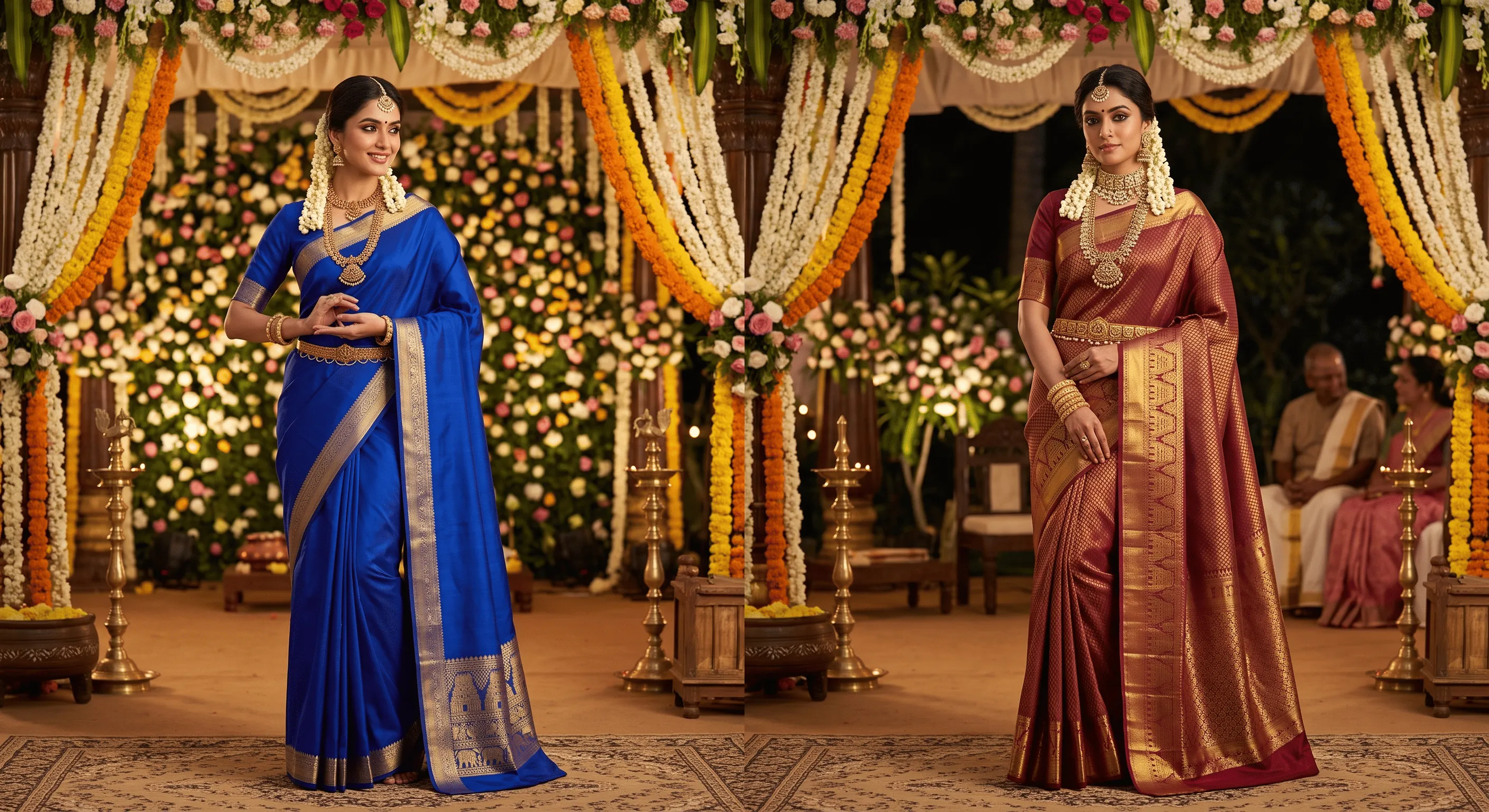
Both are suitable for weddings, but the final effect is different.
Choose Mysore Silk When You Want:
- understated elegance,
- easier movement,
- lighter-looking silk,
- a saree you can restyle frequently,
- or a refined wedding guest look.
Mysore silk works especially well for receptions, engagement ceremonies, festive lunches and family events.
Choose Kanjivaram When You Want:
- stronger ceremonial impact,
- traditional South Indian styling,
- bold borders,
- structured pleats,
- or an elaborate pallu.
Kanjivaram is particularly associated with bridal and wedding ceremony dressing.
A wardrobe can easily include both: a Kanjivaram for a major ceremony and Mysore silk for another wedding function.
Which Is Easier to Rewear?
Mysore silk often fits more easily into a repeat-wear wardrobe because of its simpler surface.
Changing the blouse, jewellery or draping style can quickly alter the look.
A plain jewel-toned Mysore silk saree can work with:
- a matching blouse for formal dressing,
- brocade for weddings,
- contrast silk for festivals,
- or a contemporary blouse for evening wear.
Kanjivaram can also be restyled, but highly elaborate sarees tend to retain a stronger ceremonial identity.
Minimal Kanjivarams, however, can be surprisingly versatile.
Mysore Silk vs Kanjivaram for Warm Weather
Mysore silk often feels easier for long events because it generally creates less bulk.
Traditional Kanjivaram may feel warmer because of its denser construction and heavier zari.
However, fabric comfort cannot be judged by the saree name alone.
A lighter Kanjivaram may feel more comfortable than a densely decorated Mysore silk saree.
Blouse material, petticoat, event duration and venue conditions also matter.
For summer weddings, look at the actual saree rather than relying only on the category.
How to Identify Good Mysore Silk
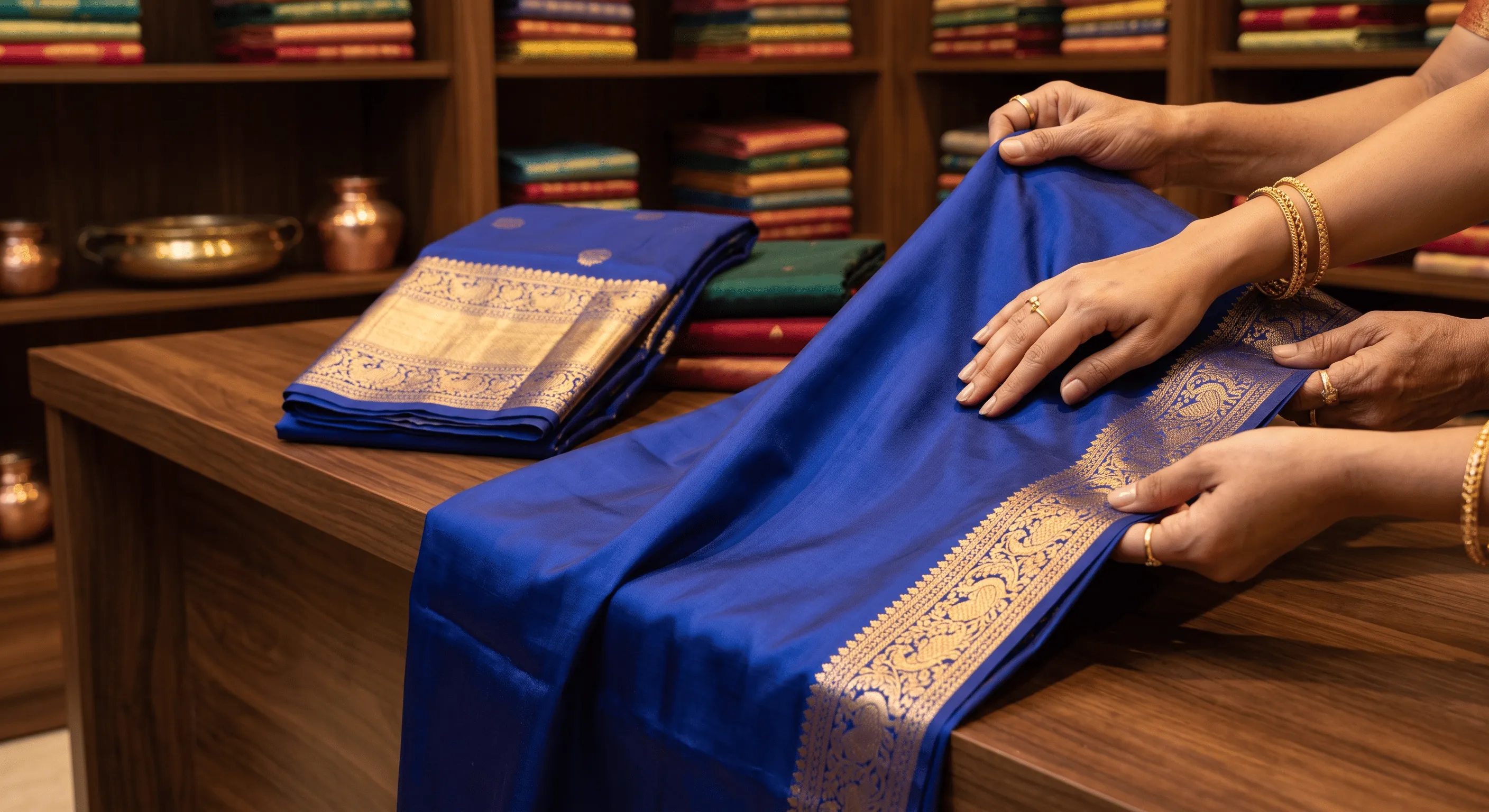
When buying Mysore silk, check more than colour and shine.
Look for:
- clear fibre information,
- smooth silk texture,
- balanced lustre rather than plastic-like shine,
- neatly finished zari borders,
- seller information about origin,
- and relevant authentication or certification where applicable.
If a seller claims a product belongs to a specific protected or branded Mysore silk tradition, ask what evidence supports that claim.
How to Identify Good Kanjivaram Silk
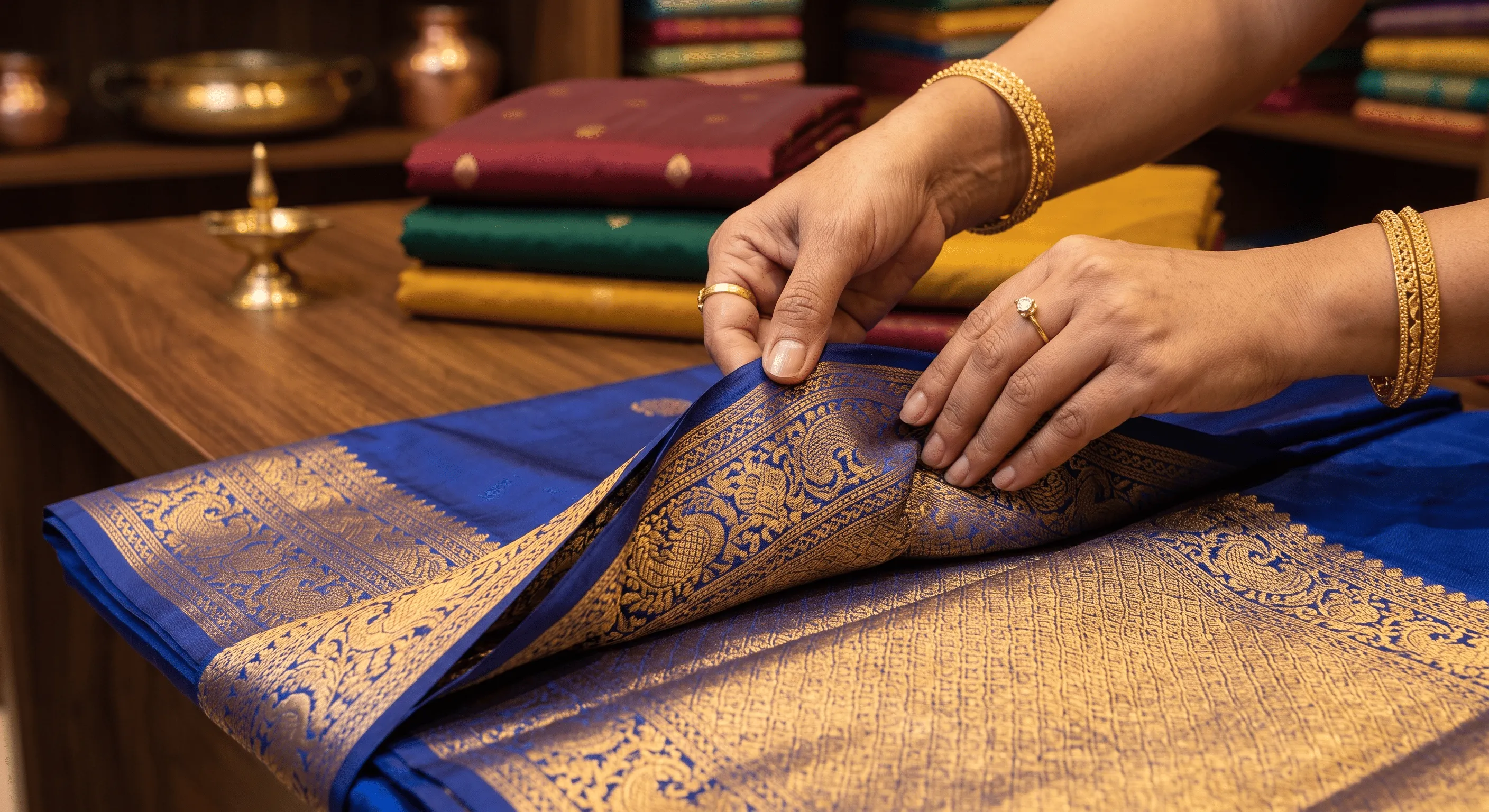
With Kanjivaram, inspect the construction closely.
Look at:
- silk texture,
- overall structure,
- border weaving,
- pallu quality,
- reverse-side thread movement,
- zari workmanship,
- and weaving origin.
If a saree is specifically described as traditional korvai, examine the body-border transition.
A genuine woven construction should look integrated rather than simply applied as surface decoration.
Do not rely solely on weight or shine.
Synthetic fibres and metallic threads can imitate both.
How to Style Mysore Silk
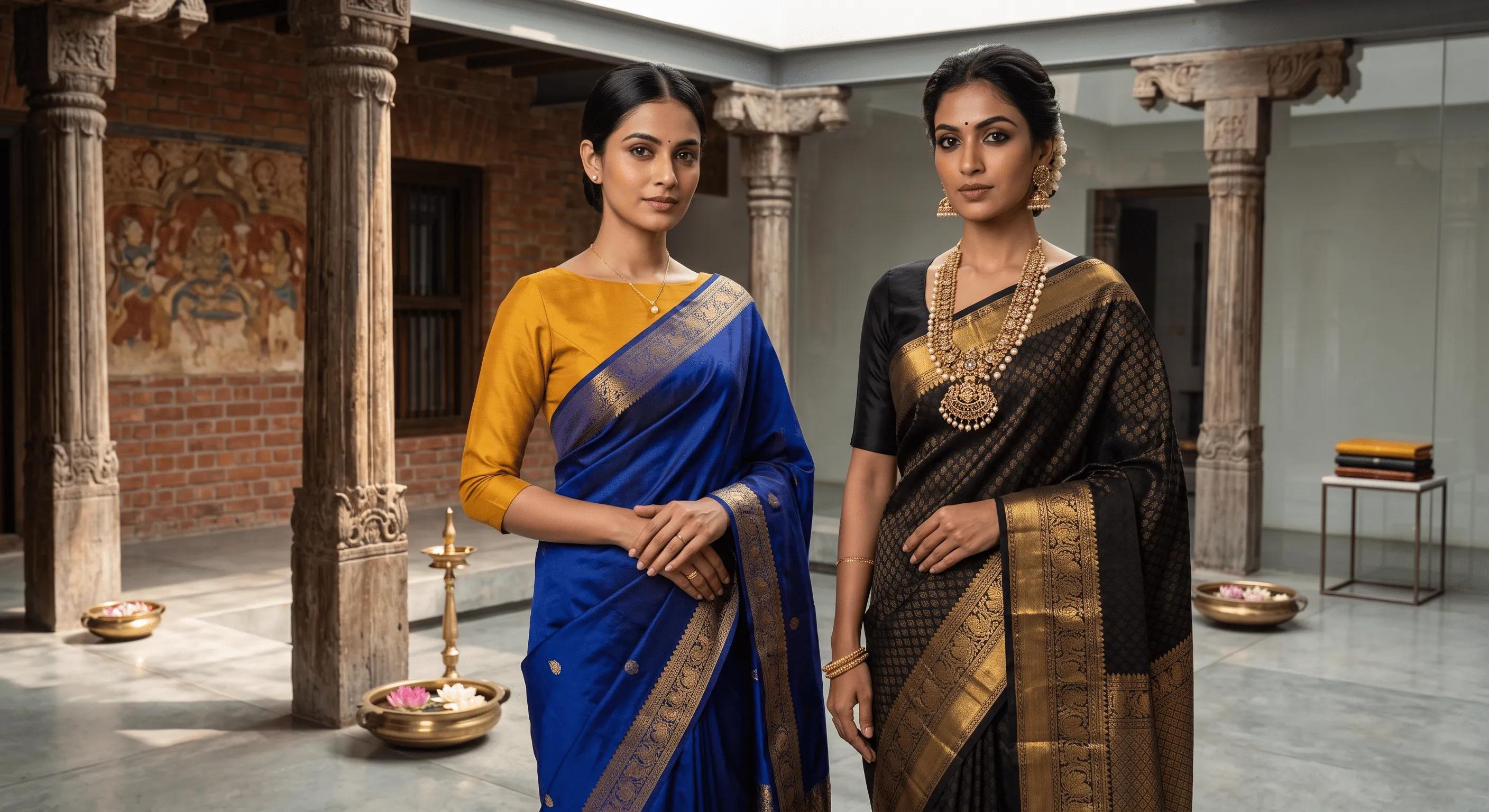
Because Mysore silk can be visually simple, accessories can strongly influence its character.
For a traditional look, pair it with:
- gold jewellery,
- jasmine flowers,
- temple-style earrings,
- and a brocade blouse.
For a contemporary look, try:
- a contrast blouse,
- clean statement earrings,
- a belt,
- or minimal jewellery.
Solid-colour Mysore silk also works particularly well when the blouse carries the main decorative detail.
How to Style Kanjivaram
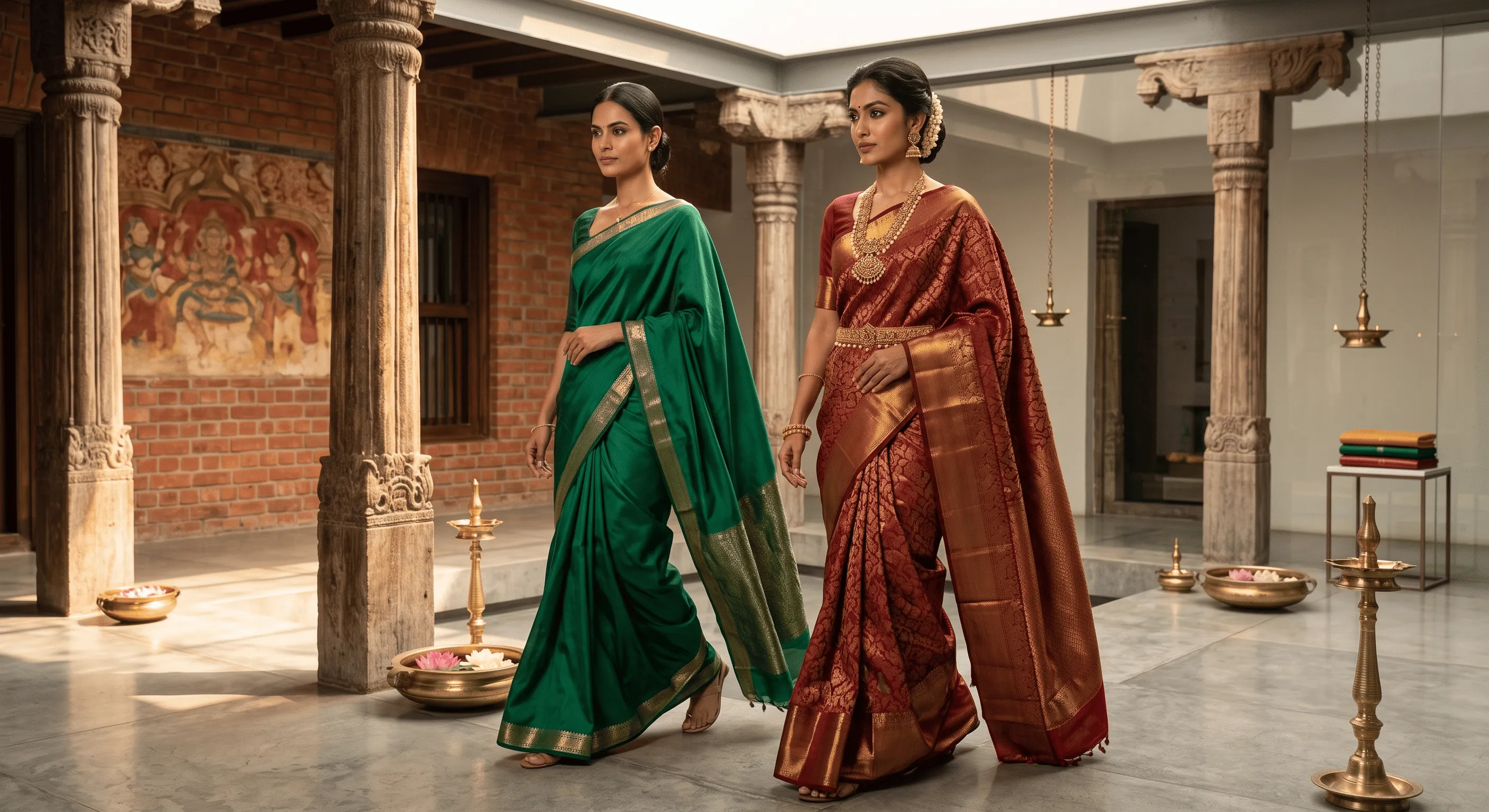
With Kanjivaram, the saree itself often provides much of the ornamentation.
Traditional gold jewellery works naturally with bold zari borders.
Temple jewellery, layered necklaces and jasmine flowers can create a classic wedding look.
For a modern interpretation, reduce the number of accessories.
A strongly woven Kanjivaram paired with a simple blouse and one statement necklace can look just as striking as a heavily layered bridal style.
Care and Storage
Both sarees should be treated as valuable silk textiles.
Store them folded in breathable cotton or muslin rather than keeping them hanging for long periods.
Protect them from:
- moisture,
- direct sunlight,
- harsh perfume,
- and excessive pressure from heavy garments.
Refold them periodically so permanent crease lines do not develop in exactly the same position.
Extra care is especially useful with Kanjivaram because heavier borders and pallus can place more pressure on folded areas.
Professional cleaning is generally preferable for expensive silk sarees with zari.
Common Misconceptions
“Mysore Silk Is Just a Lighter Kanjivaram”
No. They belong to different regional textile traditions and have distinct visual and structural identities.
“Every Kanjivaram Must Be Extremely Heavy”
No. Contemporary versions vary considerably in weight and motif density.
“Mysore Silk Is Not Suitable for Weddings”
It can be an elegant wedding saree, particularly for receptions, smaller ceremonies and guests.
“Weight Proves Silk Purity”
It does not. Construction, zari and other materials can all affect weight.
“More Zari Means Better Quality”
Silk quality, weaving skill and zari quantity are separate factors.
Comments (0)
Leave a Thought
No comments yet. Be the first to share your thoughts!