India has hundreds of saree traditions, and almost every state has at least one famous weave.
That variety is wonderful, but it can also be confusing when you are standing in front of your wardrobe wondering what to wear to a wedding, an office event, a puja or a summer lunch.
This guide approaches the types of Indian sarees from a practical angle: by occasion.
Instead of listing sarees region by region, it groups them by when and where they work best, explaining which weaves suit weddings, festivals, office wear, daily wear, summer, winter, travel and special milestones, along with a quick guide to fabrics and budgets.
For a region-by-region overview of India's saree traditions, see our types of sarees guide. This article helps you choose the right one for the day ahead.
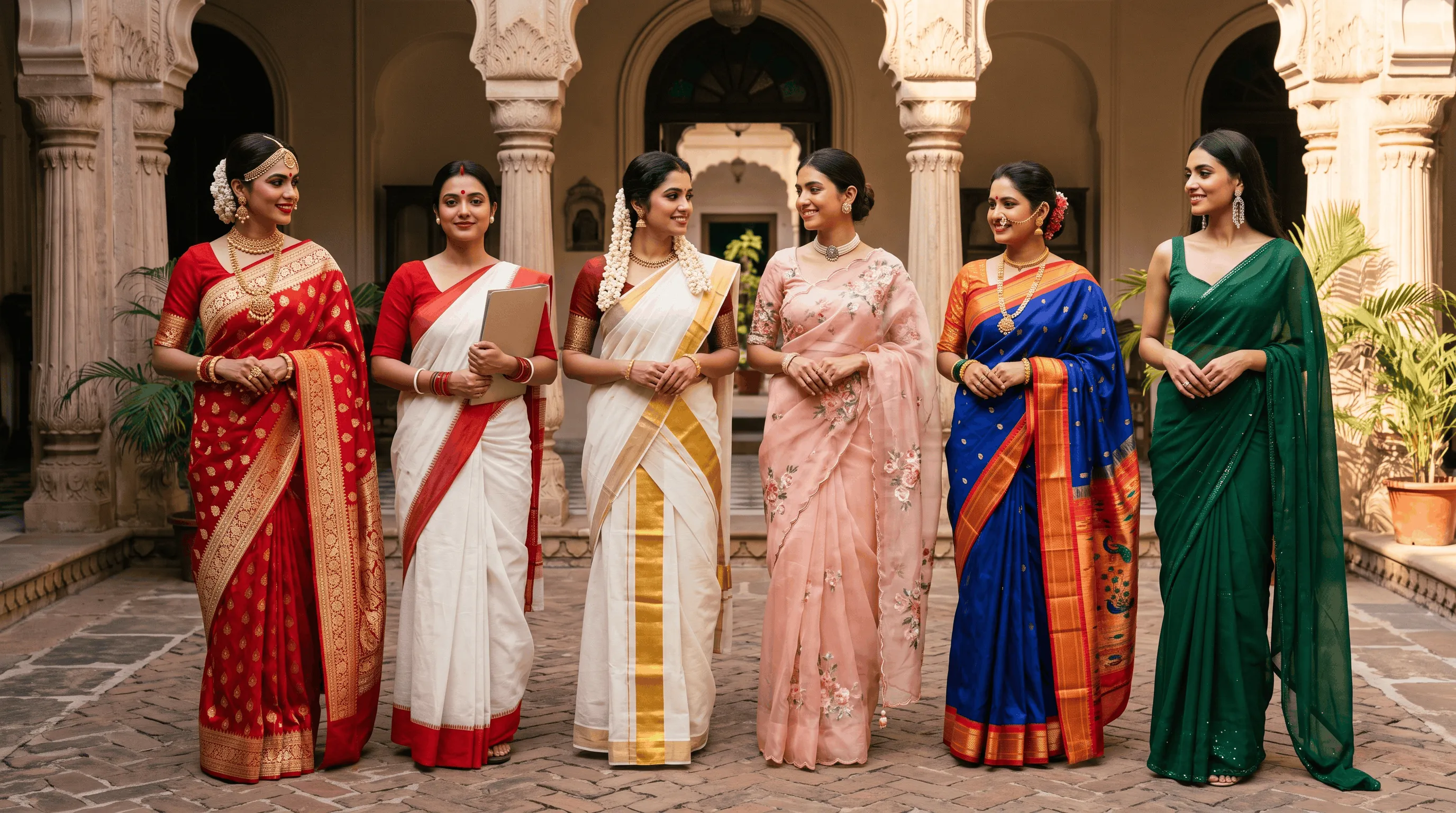
Sarees for Weddings
For Brides
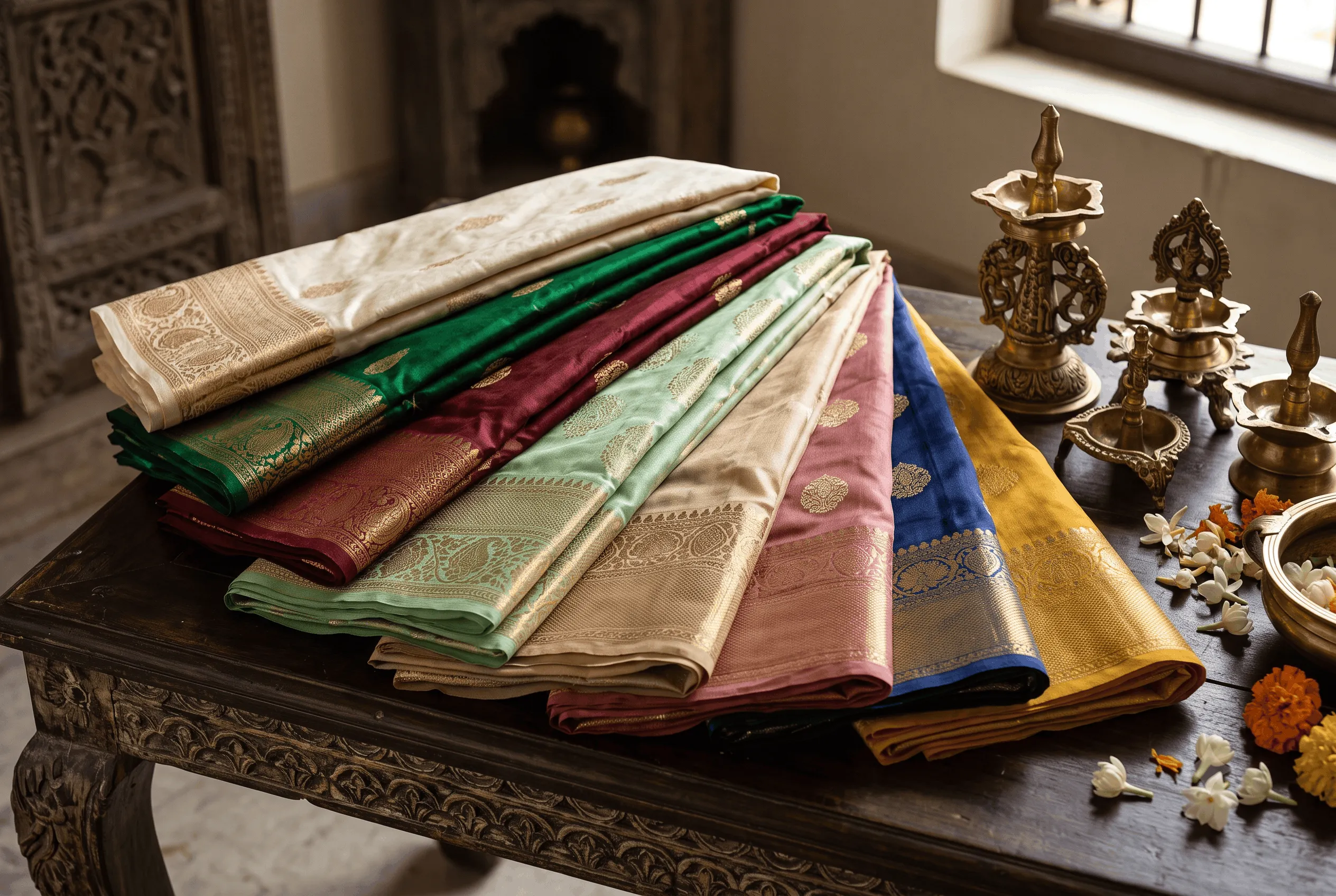
The most traditional bridal sarees are rich silk handlooms.
Banarasi is a classic for North, Central and East Indian brides, with brocade and zari motifs.
Kanjivaram is the classic for South Indian brides, with contrast borders and heavy silk.
Paithani is treasured by Maharashtrian brides.
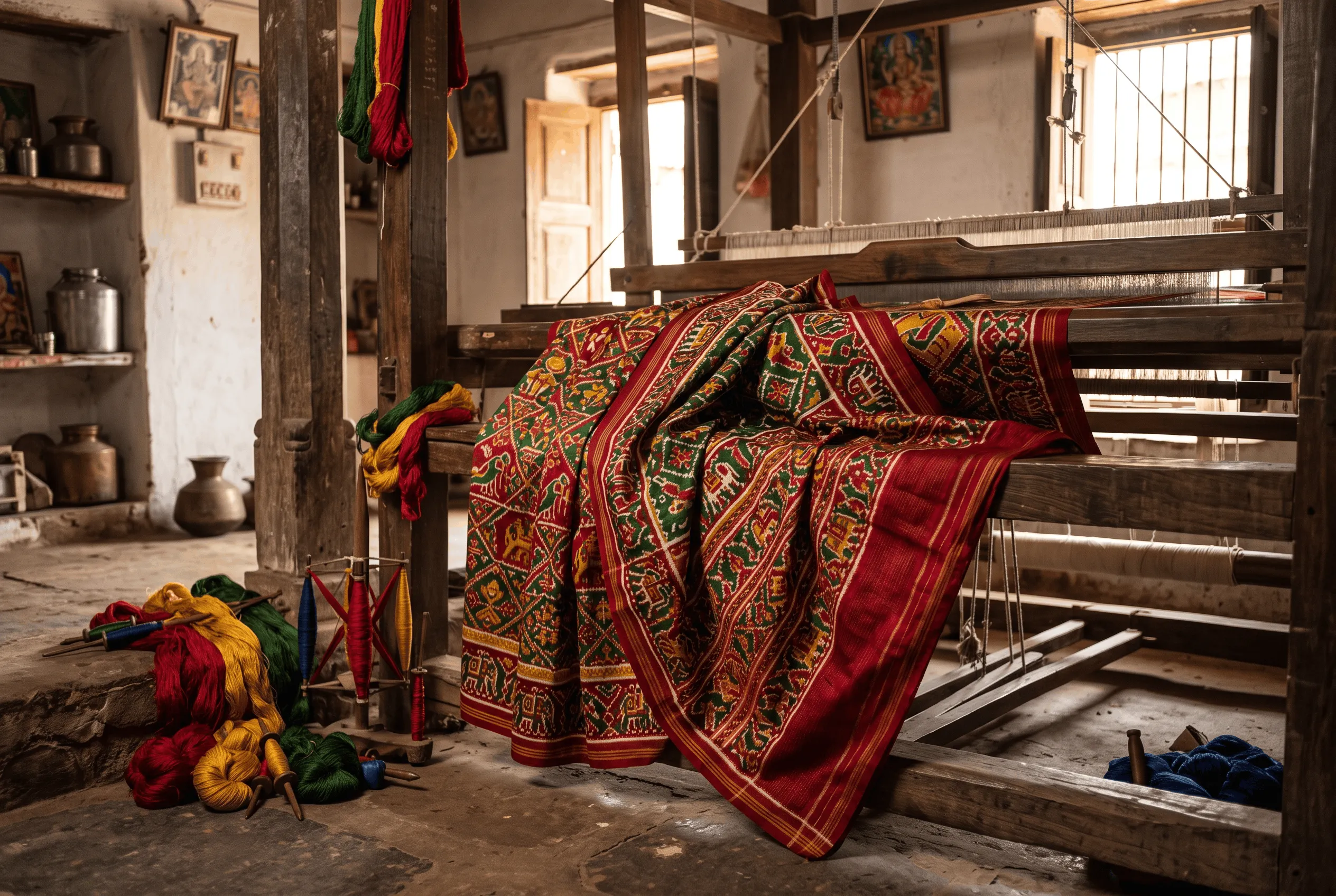
Patola, Gharchola and Panetar are important in Gujarati bridal traditions.
Baluchari and Banarasi are popular with Bengali brides.
Muga and pat mekhela chador are traditional for Assamese brides.
See our Banarasi vs Kanjivaram decision guide.
For Wedding Guests
Lighter Kanjivaram, Mysore silk and Pochampally silk look elegant for the ceremony.
Organza, tissue and embroidered georgette suit receptions and sangeets.
Cotton and Chanderi work for haldi and mehendi.
See our wedding guest saree ideas.
Sarees for Festivals
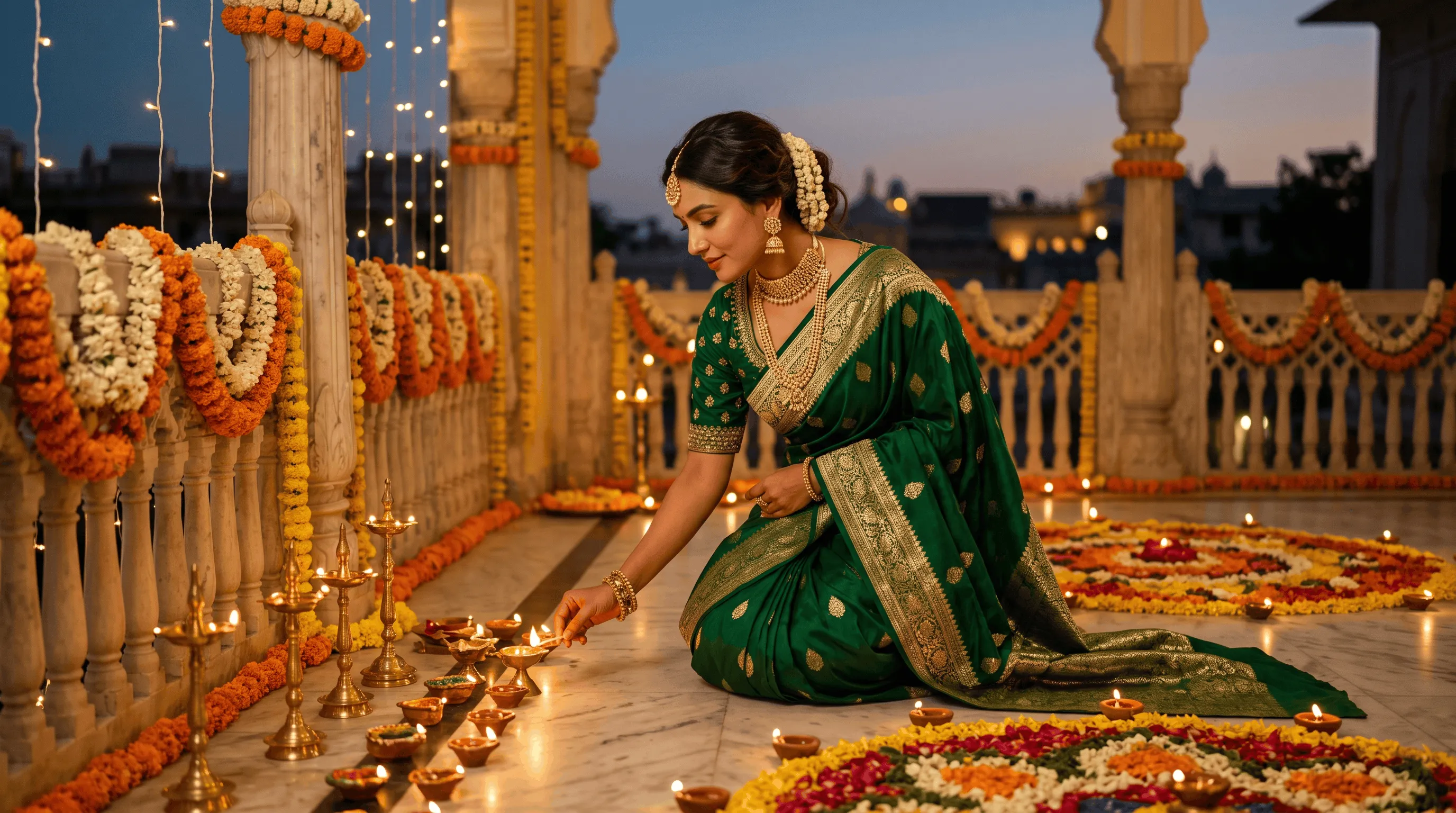
Diwali: Banarasi, Kanjivaram, Paithani and tissue silks in jewel tones.
Navratri and Durga Puja: Bandhani, Patola, Baluchari, Jamdani and tant, depending on the region.
Onam: Kerala Kasavu with a gold border.
Pongal and Sankranti: bright cotton and silk-cotton sarees.
Teej: Leheriya in green and pink.
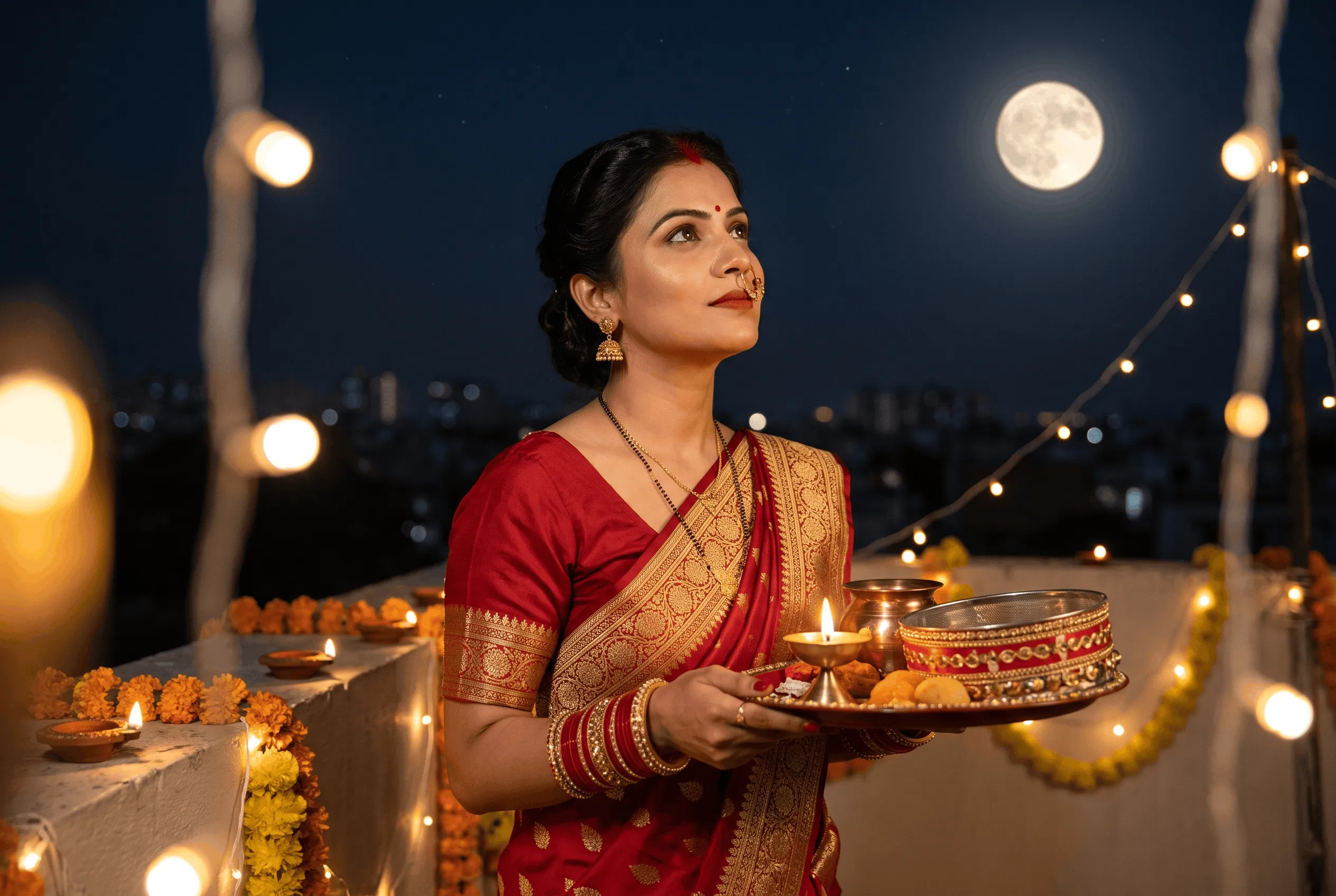
Karwa Chauth: red Banarasi or maroon Kanjivaram. See our Karwa Chauth saree ideas.
Sarees for Office and Work
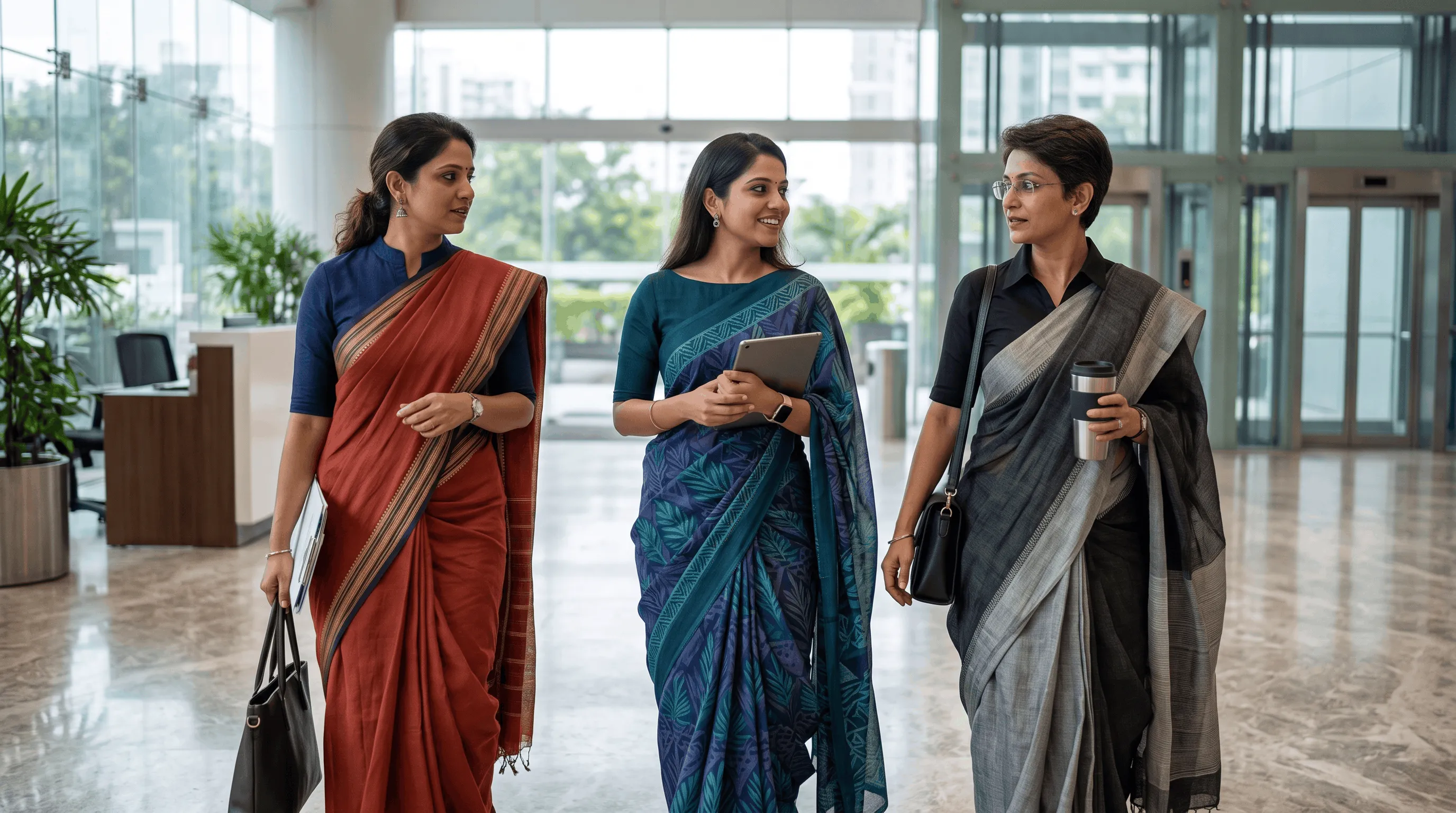
The best office sarees are comfortable, easy to maintain and professional.
Cotton handlooms such as Mangalagiri, tant, Chettinad and Sambalpuri cotton look crisp and polished.
Crepe sarees resist creases and need little ironing. See our crepe saree guide.
Linen sarees are cool and smart in summer. See our linen ethnic wear guide.
Mysore silk and tussar suit formal office events and presentations.
Chanderi cotton is light and elegant for summer offices.
Sarees for Daily Wear
Cotton sarees are the everyday favourite across India.
Printed georgette and crepe are easy to wash and quick to dry.
Mulmul and voile are soft and comfortable for home and casual outings.
Simple handloom cottons offer comfort with character.
Choose sarees that are easy to drape, wash and store for daily use.
Sarees for Pujas and Temple Visits
Silk sarees in auspicious colours such as red, yellow, green and maroon are traditional.
Kasavu is classic for temple visits in Kerala.
Cotton silk and zari-bordered cottons are comfortable for long rituals.
Many families prefer silk or cotton over synthetics for religious occasions.
Sarees for Parties and Evening Events
Chiffon floats beautifully and suits cocktail parties. See our chiffon sarees guide.
Sequinned georgette sparkles under evening lights.
Satin and satin silk look smooth and glamorous.
Tissue silk offers a soft metallic glow. See our tissue silk saree guide.
Pre-draped sarees are practical for dancing. See our pre-draped saree guide.
Sarees for Summer
Cotton, mulmul, Kota Doria and Chanderi keep you cool.
Linen is breathable and smart.
Organza is light and airy for day weddings.
Jamdani is sheer and elegant.
Avoid heavy silks and velvets during hot daytime events.
Sarees for the Monsoon
Georgette, chiffon and crepe dry quickly and resist water marks.
Leheriya and Bandhani suit monsoon festivals such as Teej.
Avoid delicate silks, heavy zari and light colours that show splashes.
Sarees for Winter
Kanjivaram, Banarasi brocade and raw silk feel rich and substantial.
Velvet-bordered sarees look luxurious.
Tussar and eri add gentle warmth.
Pair sarees with velvet blouses and Pashmina or eri shawls for warmth.
Sarees for Travel
Crepe and georgette resist creases.
Printed sarees hide travel marks.
Pre-draped sarees are quick to wear in hotel rooms.
Roll sarees instead of folding them to reduce creases.
Sarees for Milestones
First saree or farewell: georgette, chiffon or a pre-draped saree. See our farewell saree ideas.
Half saree function: silk pattu pavadai and half sarees. See our pattu pavadai and half saree guide.
Baby showers (godh bharai, seemantham): light silks and cottons in soft or auspicious colours.
Anniversaries: a favourite silk, often the wedding saree.
Regional Sarees Worth Knowing
Beyond the famous bridal silks, India has many regional sarees that suit specific occasions beautifully.
Chanderi and Maheshwari from Madhya Pradesh are light and elegant for summer functions and office wear.
Sambalpuri and Bomkai from Odisha suit festive daywear and cultural events.
Ilkal from Karnataka is a traditional choice for festivals and daily wear.
Gadwal from Telangana combines cotton bodies with silk borders, ideal for pujas.
Kota Doria from Rajasthan is perfect for hot summers.
Bhagalpuri tussar from Bihar suits formal and artistic occasions.
Exploring these weaves gives you more choices for every occasion while supporting weavers across India.
Planning Sarees for a Multi-Day Wedding
Indian weddings often last several days, so planning helps.
Start with the main ceremony and choose your richest silk for it.
Pick lighter, washable sarees for haldi and mehendi.
Choose a saree you can dance in for the sangeet.
Select a glamorous but comfortable saree for the reception.
Lay out blouses, jewellery and footwear for each day in advance, so getting ready is quick.
Sarees for Different Ages
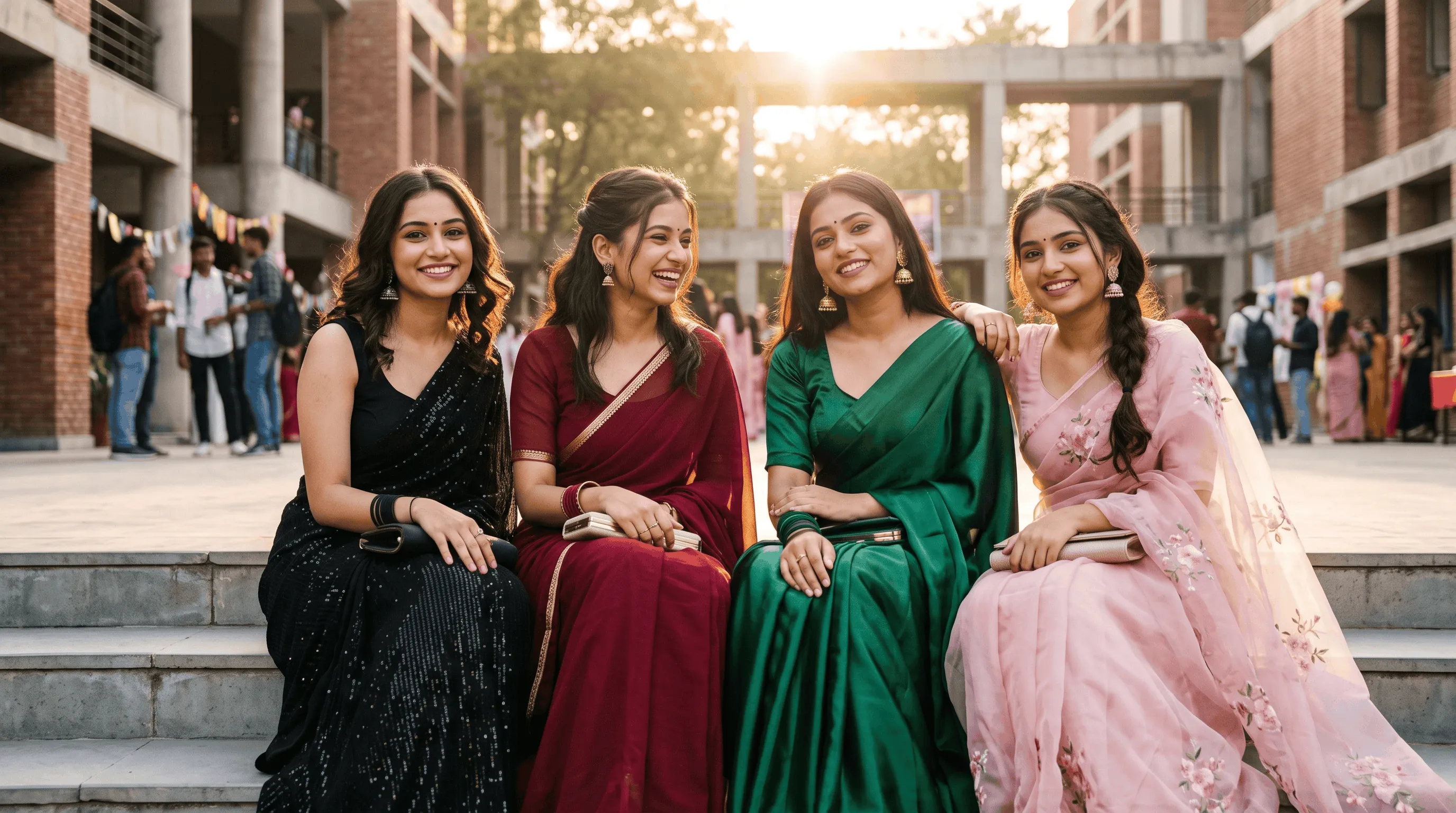
Teenagers and young women often enjoy chiffon, organza, pre-draped and pastel sarees.
Women in their thirties and forties frequently choose handloom silks, jewel tones and elegant cottons for work and occasions.
Older women often prefer soft silks, light Kanjivarams, tussar and comfortable cottons in rich or muted shades.
These are only tendencies. Any saree can be worn at any age if it feels right to you.
Sarees for Cultural and Professional Events
Conferences and award functions: Mysore silk, tussar or a crisp handloom with a structured blouse.
Cultural evenings and art exhibitions: Kantha, hand-painted tussar, Jamdani and block-printed sarees.
Interviews and formal meetings: solid cotton, crepe or linen in muted colours.
Classical dance and music performances (as a guest): handloom silks or cottons with traditional jewellery.
Quick Fabric Guide by Occasion
| Occasion | Best fabrics |
|---|---|
| Bridal | Banarasi, Kanjivaram, Paithani, Patola, Baluchari |
| Wedding guest | Light silk, organza, tissue, embroidered georgette |
| Office | Cotton handloom, crepe, linen, Mysore silk |
| Daily wear | Cotton, georgette, crepe, mulmul |
| Party | Chiffon, sequinned georgette, satin, tissue |
| Summer | Cotton, Chanderi, linen, organza |
| Winter | Heavy silk, brocade, velvet borders, tussar |
Choosing a Saree by Budget
Under ₹2,000: printed cotton, georgette, crepe and chiffon.
₹2,000 to ₹8,000: handloom cotton, Chanderi, linen, organza and light silk blends.
₹8,000 to ₹25,000: Mysore silk, tussar, Pochampally silk and entry-level Kanjivaram or Banarasi.
₹25,000 and above: bridal Kanjivaram and Banarasi, Paithani, Patola and heavy brocade.
Prices vary by city, seller and workmanship. See our saree price guide.
Saree Etiquette Worth Knowing
A few simple customs help you choose respectfully.
Avoid bridal red with heavy bridal jewellery when you are a wedding guest.
In some families, plain white or black is avoided at weddings and festivals, while in others white with a coloured border is traditional. Ask if you are unsure.
For religious ceremonies, many families prefer natural fabrics such as silk or cotton.
When in doubt, choose a jewel tone in a regional weave, which suits almost any celebration.
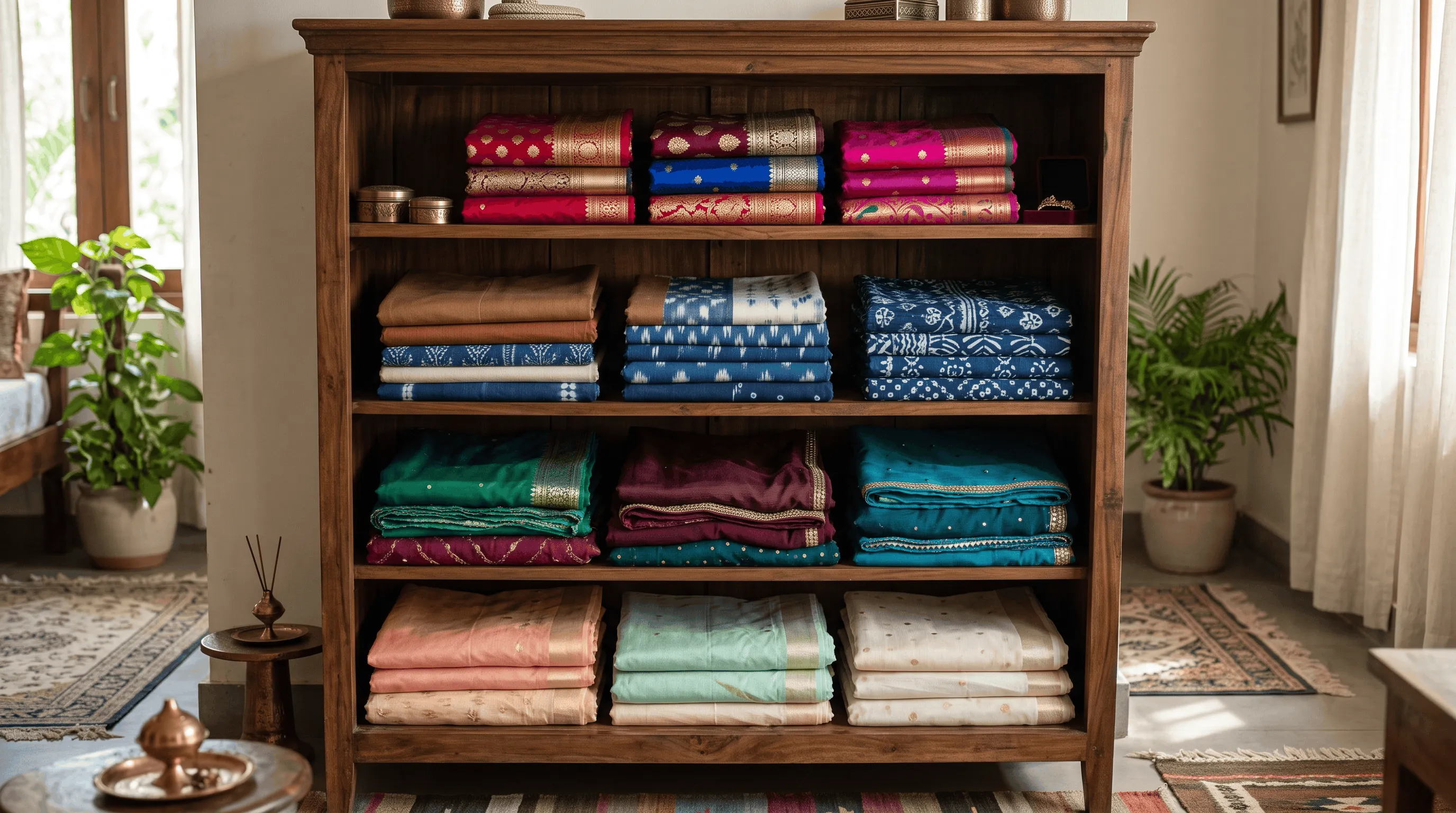
Building a Saree Wardrobe for Every Occasion
One rich silk saree for weddings and festivals.
Two office sarees in cotton, crepe or linen.
Two daily-wear sarees in cotton or georgette.
One party saree in chiffon, sequinned georgette or tissue.
One summer saree in Chanderi or organza.
Add regional weaves over time to build a collection that tells India's textile story.
Common Mistakes When Choosing a Saree
Wearing heavy silk to a hot daytime event is a common mistake.
Another is choosing delicate silk for the monsoon.
Some people also wear very casual sarees to formal ceremonies, or heavy bridal-style sarees as wedding guests.
Finally, avoid choosing a saree only for its colour without considering fabric and comfort.
Finding the Right Saree for Every Day
The types of Indian sarees are as varied as the occasions we wear them for.
By matching the weave and fabric to the event, the weather and your comfort, you can always choose a saree that feels right and looks beautiful.
Explore India's regional weaves in our types of sarees guide and the season's looks in the traditional wear trends 2026 guide.
Sarees for Different Body Types
Petite women look elegant in light fabrics such as chiffon, georgette and Mysore silk, with narrow borders.
Tall women carry heavy Kanjivaram, wide borders and bold prints especially well.
Curvy women often prefer fluid fabrics such as crepe, georgette and soft silk that drape smoothly.
A well-fitted blouse and neat pleats matter more than any single fabric.
Draping Styles by Occasion
Most occasions suit the classic Nivi drape, but regional drapes add meaning.
The Bengali drape suits Durga Puja, the Gujarati seedha pallu suits Gujarati weddings and Navratri, and the nauvari suits Maharashtrian ceremonies.
See our saree draping styles guide for step-by-step help.
Comments (0)
Leave a Thought
No comments yet. Be the first to share your thoughts!