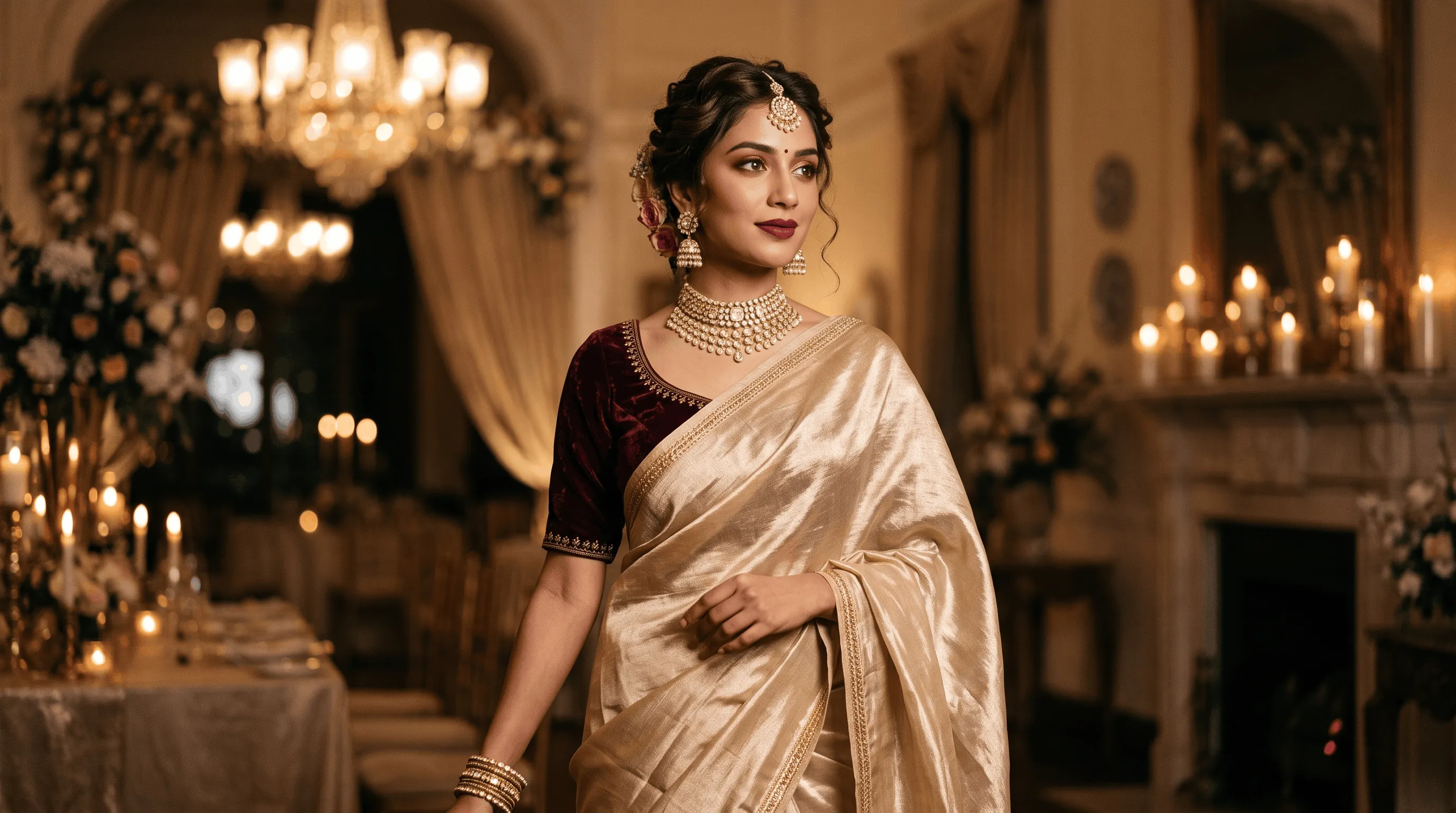
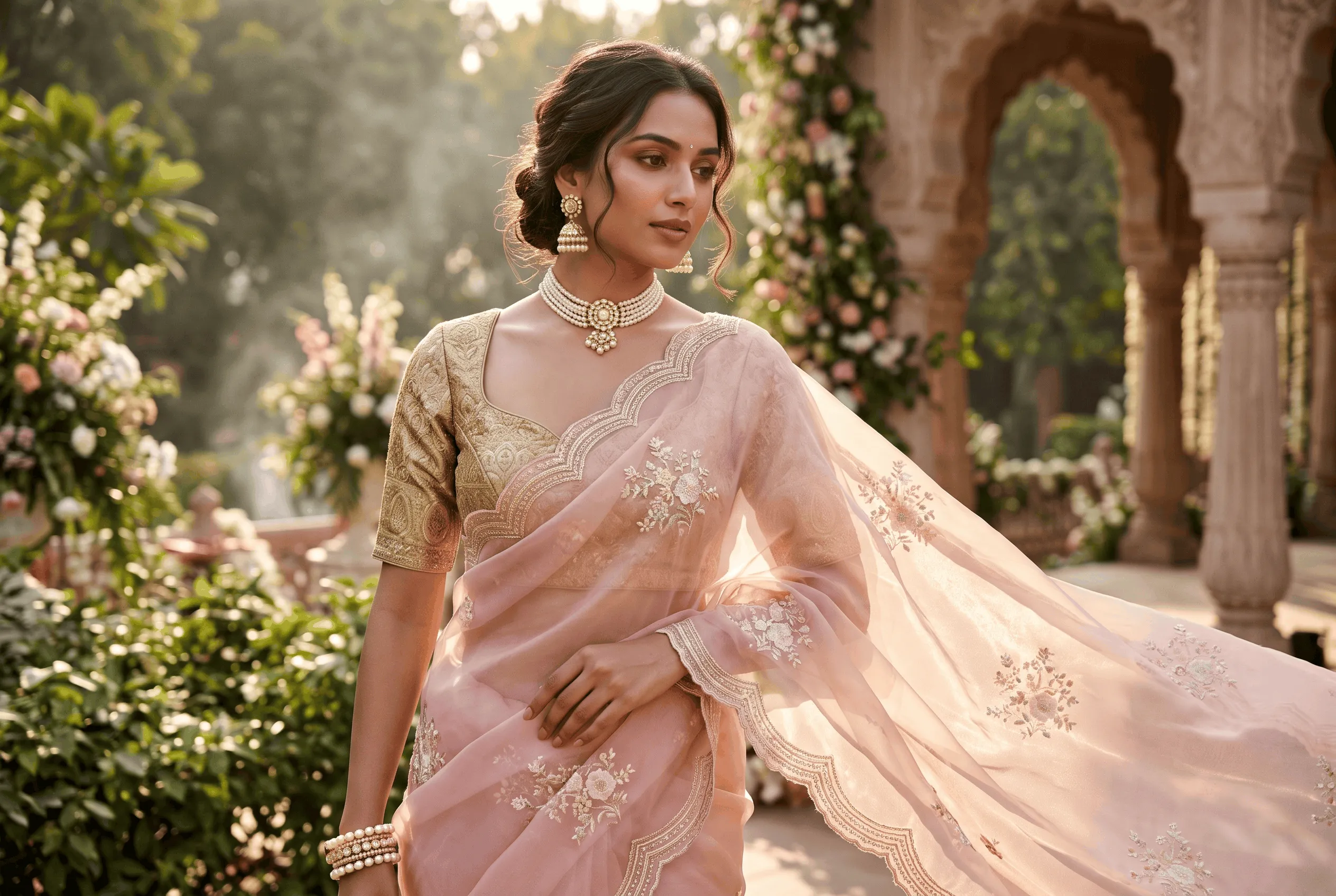
A tissue saree has a soft, glowing shine that looks like liquid gold or silver in the light.
It is not sequinned or printed. The shimmer comes from metallic zari threads woven directly into the fabric.
That is why tissue sarees have become a favourite for weddings, receptions, Diwali, Onam and festive evenings.
They look luxurious and celebratory, yet they are often much lighter than heavy brocade.
At the same time, tissue is often confused with organza, and quality varies widely depending on the base fabric and the type of zari used.
This guide explains how tissue fabric is made, how it differs from organza, the main types of tissue silk sarees, how to style the shine, when to wear it, how to judge quality, price ranges and how to care for it so the zari stays bright.
What Is a Tissue Saree?
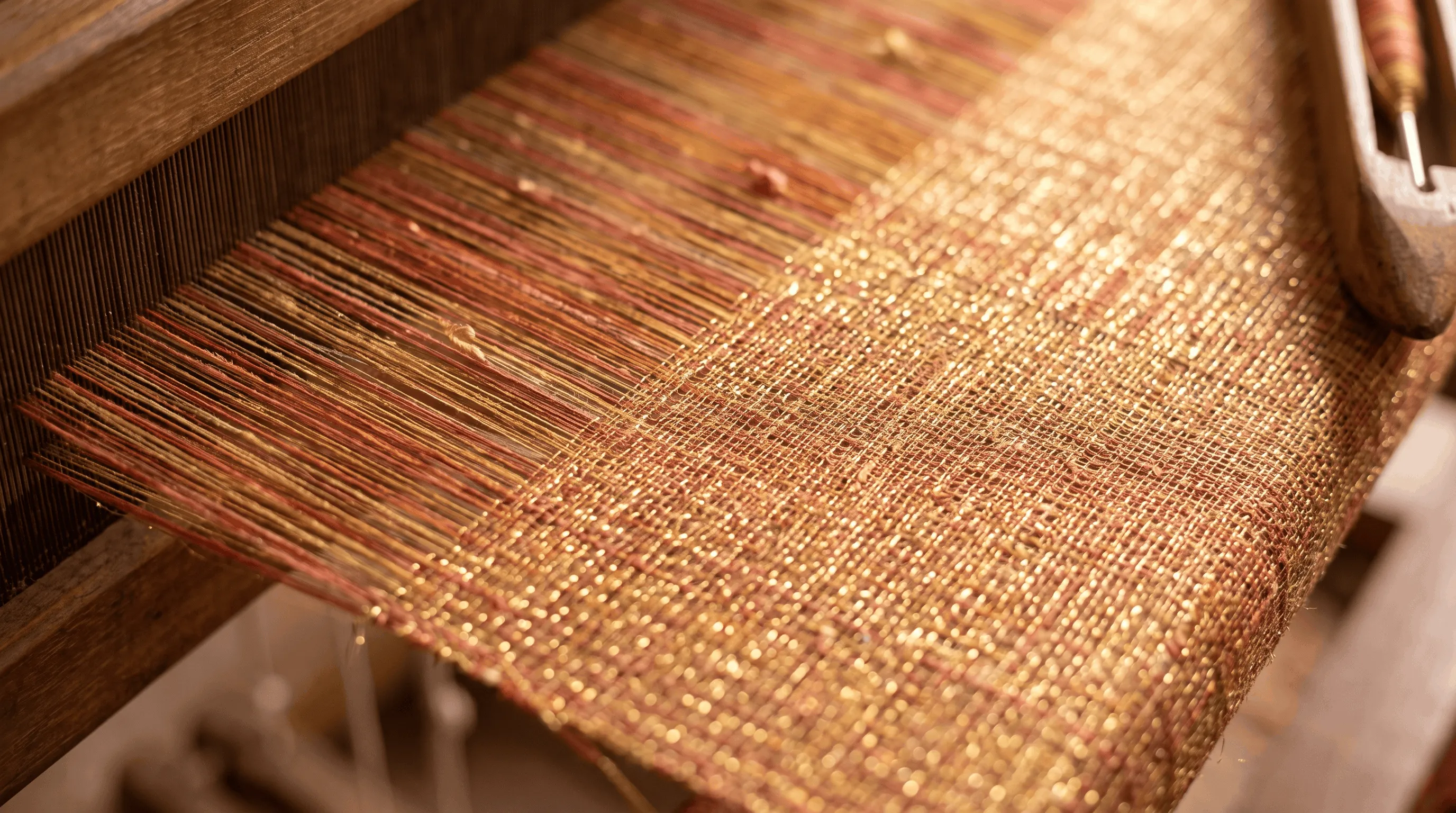
Tissue is a fabric woven with metallic zari threads, usually in the weft (the crosswise threads), on a base of silk or cotton.
Because the metallic thread runs through the whole fabric, the saree has an all-over sheen rather than shine only on the border or motifs.
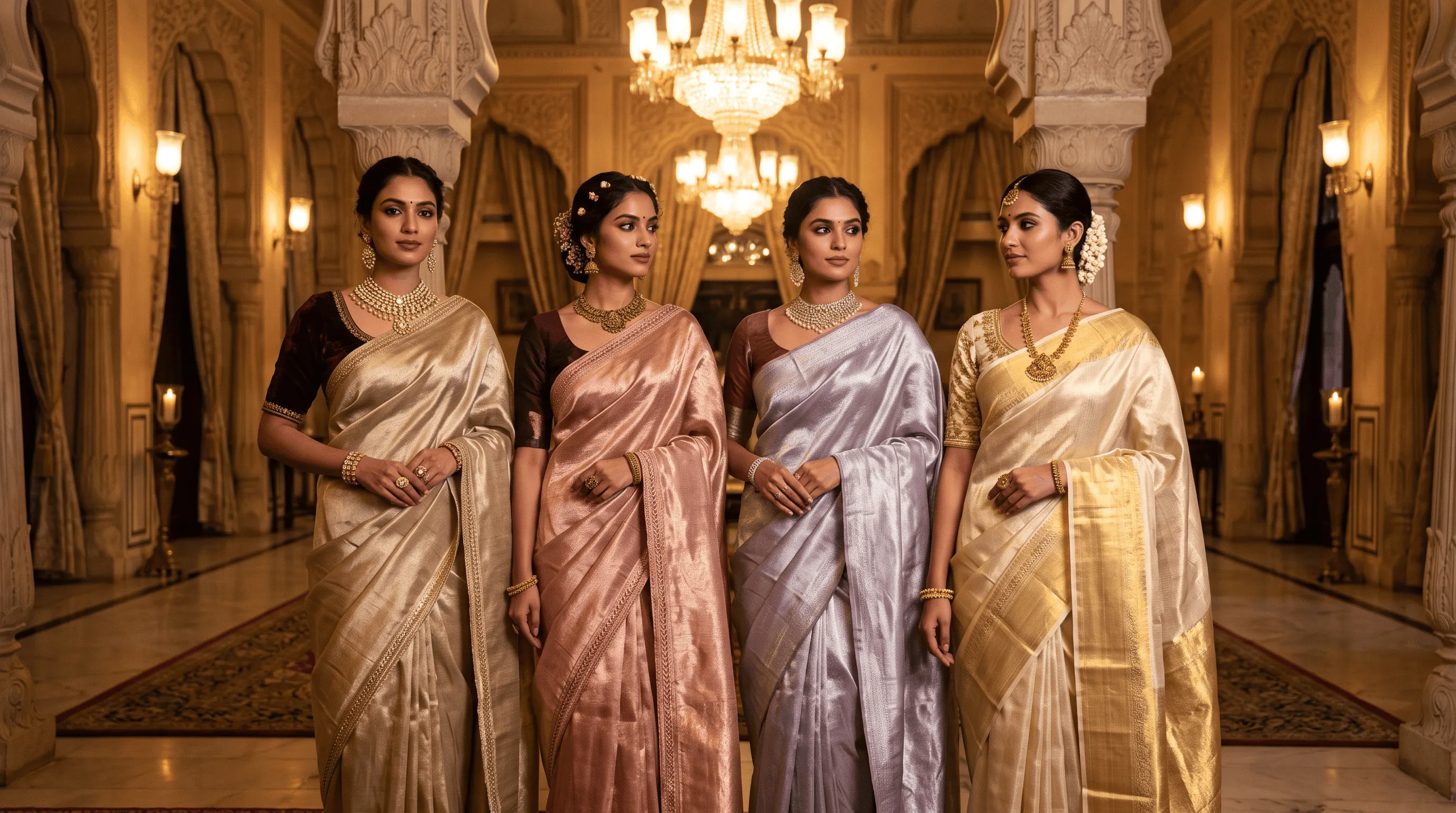
Depending on the zari and the base colour, tissue can appear as warm gold, cool silver, soft rose gold, copper or a mix of a coloured warp with a metallic weft.
How Tissue Fabric Is Made
On the loom, the warp is usually silk or cotton in a chosen colour.
The weft includes metallic zari threads, either alone or combined with silk.
When the two are woven together, the metallic weft catches the light across the entire surface of the fabric.
The combination of warp colour and zari colour creates the final shade, which is why tissue can look champagne-pink, mint-gold or lilac-silver.
Types of Zari Used in Tissue
Pure zari is made with fine silver thread, sometimes coated with gold. It is the most expensive and the most traditional.
Tested zari uses a copper-based core with a metallic coating. It is more affordable and widely used in good-quality sarees.
Synthetic metallic yarn is made from metallised polyester film. It is the cheapest option and is common in budget tissue sarees.
The type of zari affects the price, the weight, the feel and how the saree ages over time.
Tissue vs Organza: What Is the Difference?
| Feature | Tissue | Organza |
|---|---|---|
| What gives it shine | Metallic zari threads woven in | Tight twist of the yarn; no metal |
| Look | Metallic, glowing | Crisp, sheer, softer sheen |
| Feel | Smooth, slightly crisp | Crisp and light |
| Transparency | Light to sheer, depends on weave | Usually sheer |
| Base | Silk or cotton with metallic weft | Silk, nylon or polyester |
| Best for | Evening events, weddings, festivals | Day weddings, engagements |
There is also tissue organza, which combines organza with metallic yarn for a sheer, shimmering look.
Read our organza saree guide for more on organza itself.
1. Banarasi Tissue Saree
Banarasi tissue sarees are woven in Banaras with a silk base and metallic zari, often with additional zari or coloured motifs on the tissue ground.
They feel rich and regal but are lighter than a full brocade.
See our Banarasi silk saree buying guide.
2. Kanjivaram Tissue Saree
A Kanjivaram tissue saree has a tissue body or tissue pallu woven with the structure and weight of Kanjivaram silk.
It is very popular for South Indian weddings and receptions.
Learn how to identify pure Kanjivaram silk before investing in one.
3. Chanderi Tissue Saree
Chanderi tissue combines the light silk-cotton base of Chanderi with metallic zari.
It is delicate and airy, ideal for festive daytime events. Read our Chanderi fabric guide.
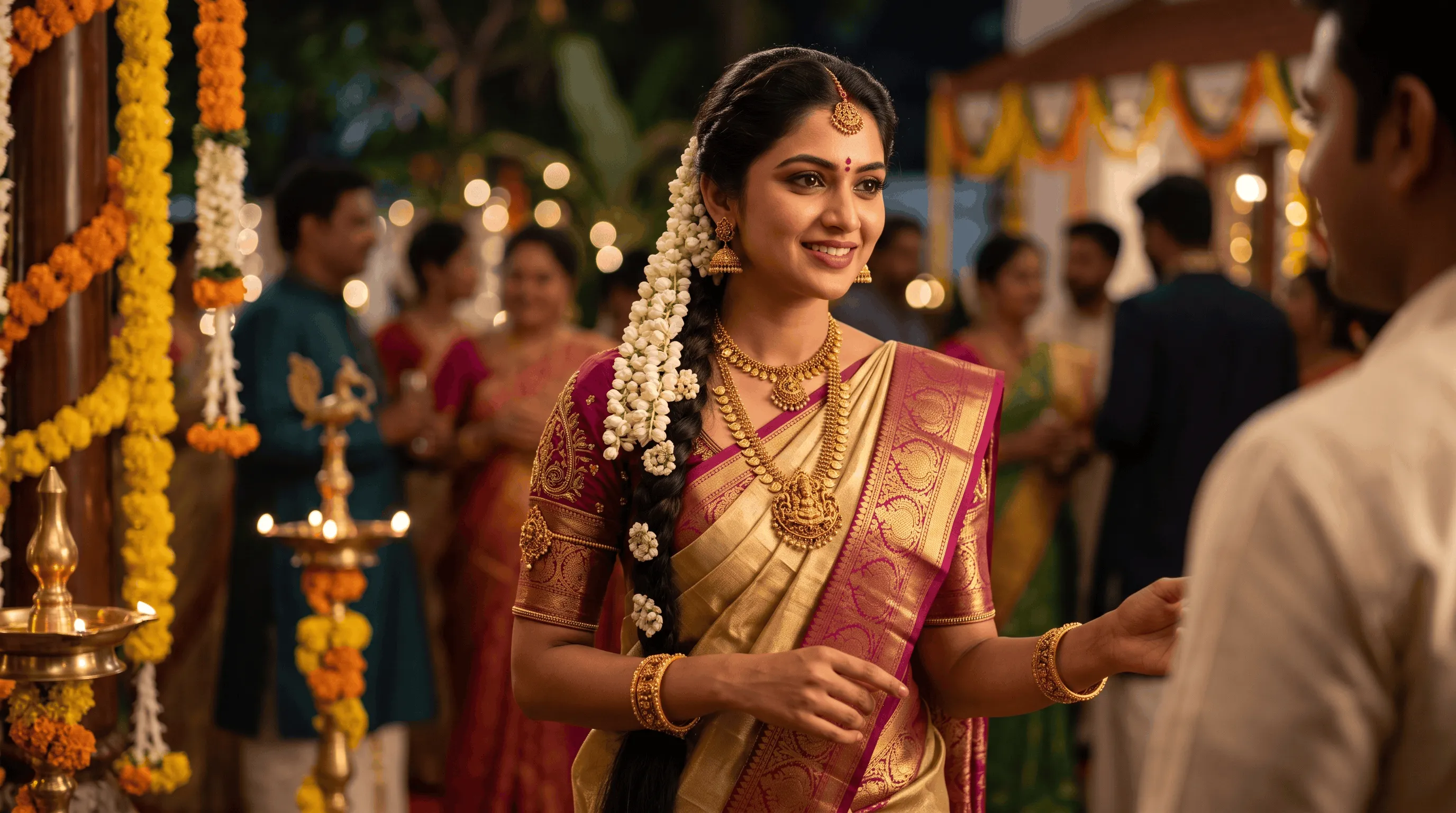
4. Kerala Tissue Saree (Tissue Kasavu)
Cream or off-white Kerala sarees with a golden tissue body or border are much loved for Onam and Kerala weddings.
They pair beautifully with temple jewellery and jasmine flowers.
5. Synthetic Tissue Saree
Polyester or blended bases with metallic yarn are affordable and very shiny.
They are fine for parties and occasional wear but are less breathable than silk.
Popular Tissue Colours for 2026
Champagne gold is elegant and flatters most skin tones.
Rose gold feels romantic and modern.
Silver with pastels such as mint-silver, lilac-silver and powder blue-silver looks fresh and contemporary.
Copper is warm and rich, and beautiful on wheatish and dusky skin.
Ivory-gold is a classic for weddings. See our guide to ivory and white sarees for weddings.
For help choosing the right shade, read trending saree colours 2026.
How to Style a Tissue Silk Saree
Tissue has a strong sheen of its own, so the key is balance.
Blouse
A matching tissue blouse creates a sleek, all-over metallic look.
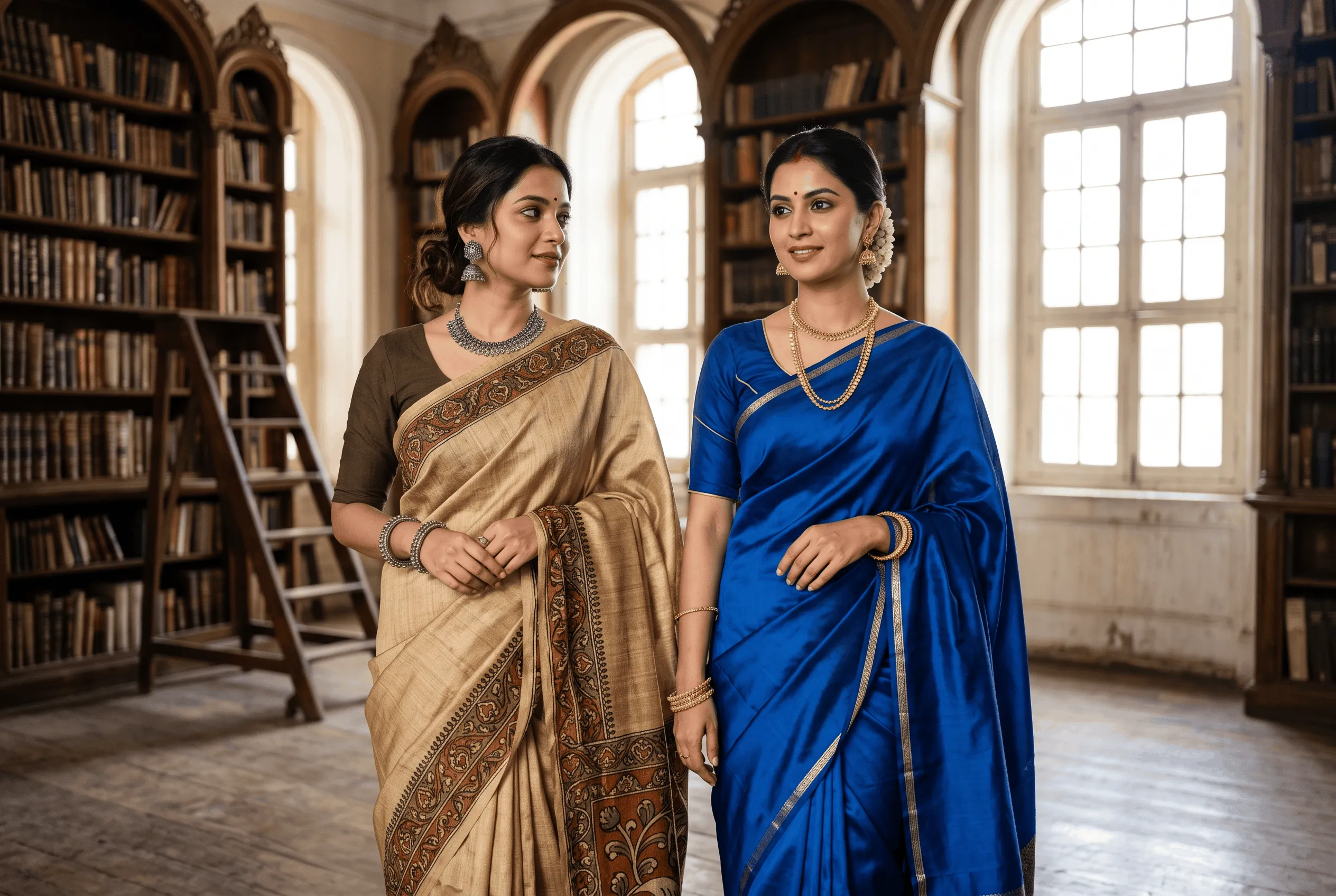
A contrast silk or velvet blouse in emerald, wine or navy adds depth.
An embroidered or brocade blouse adds texture.
A corset or structured blouse suits modern reception looks. See our corset blouse design guide.
Jewellery
Gold tissue pairs with polki, kundan, temple or antique gold.
Silver tissue pairs with diamonds, silver and pearls.
Rose-gold or champagne tissue pairs with pearls, rose-gold pieces or delicate diamonds.
Keep to one statement piece when the saree has heavy zari.
Makeup and Hair
Choose a soft glow rather than heavy shimmer so you do not compete with the saree.
A sleek bun or soft waves completes the look.
Drape
A neat Nivi drape with a pinned pallu shows off the sheen, while an open pallu catches the light beautifully in photographs.
When to Wear a Tissue Saree
Weddings and Receptions
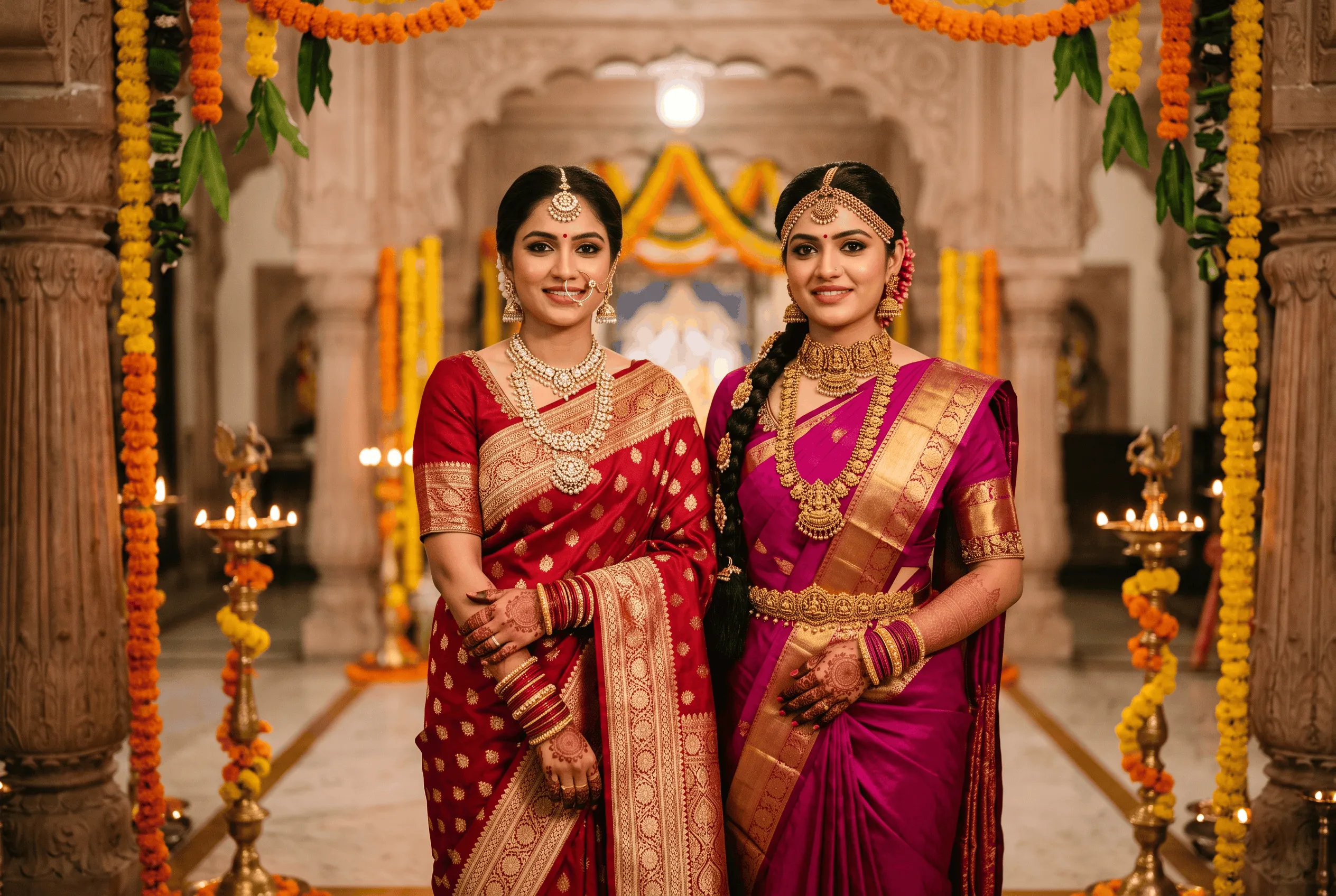
Gold or champagne tissue sarees look elegant and festive. Many brides choose tissue for the reception. See our wedding guest saree ideas.
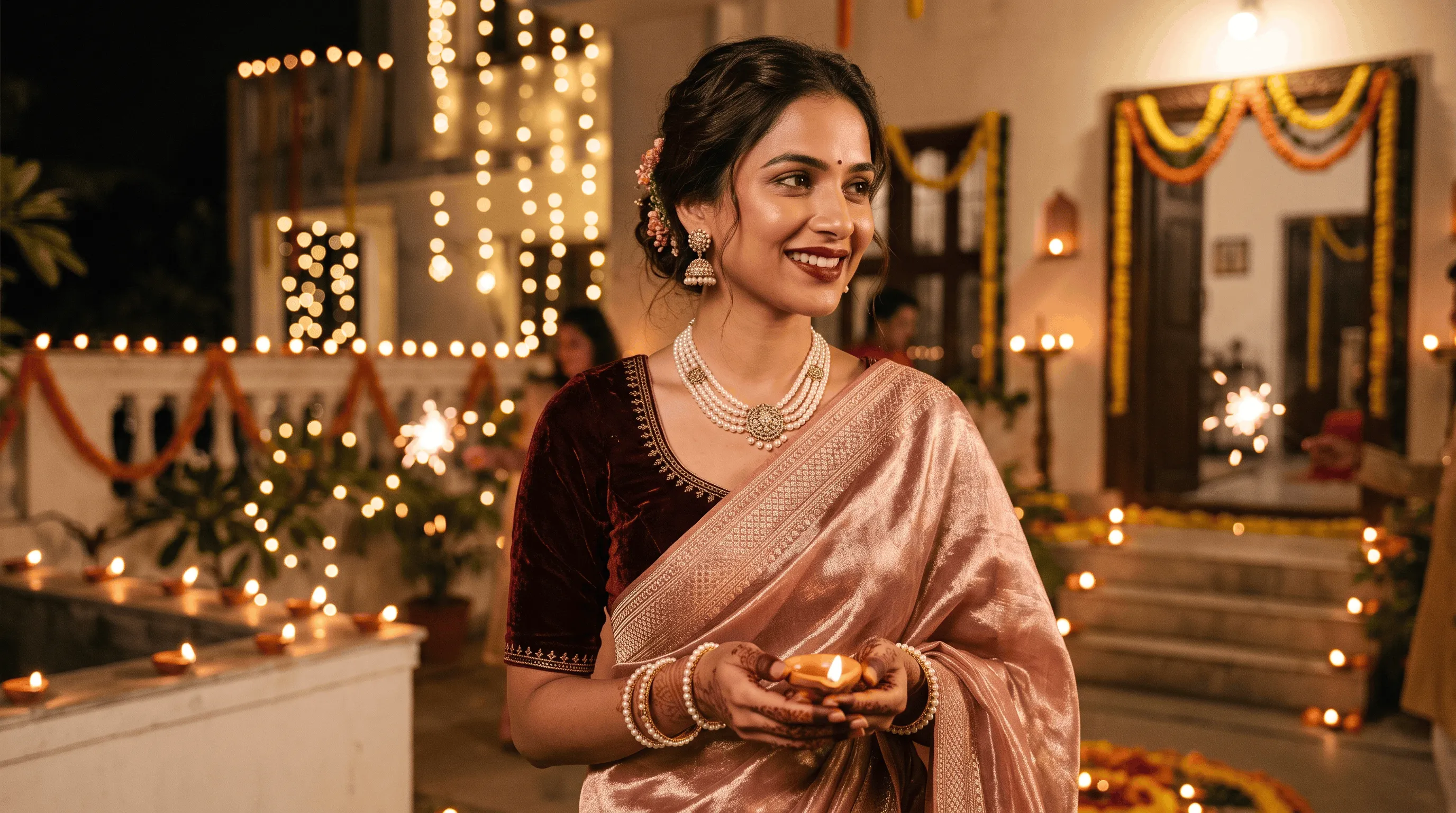
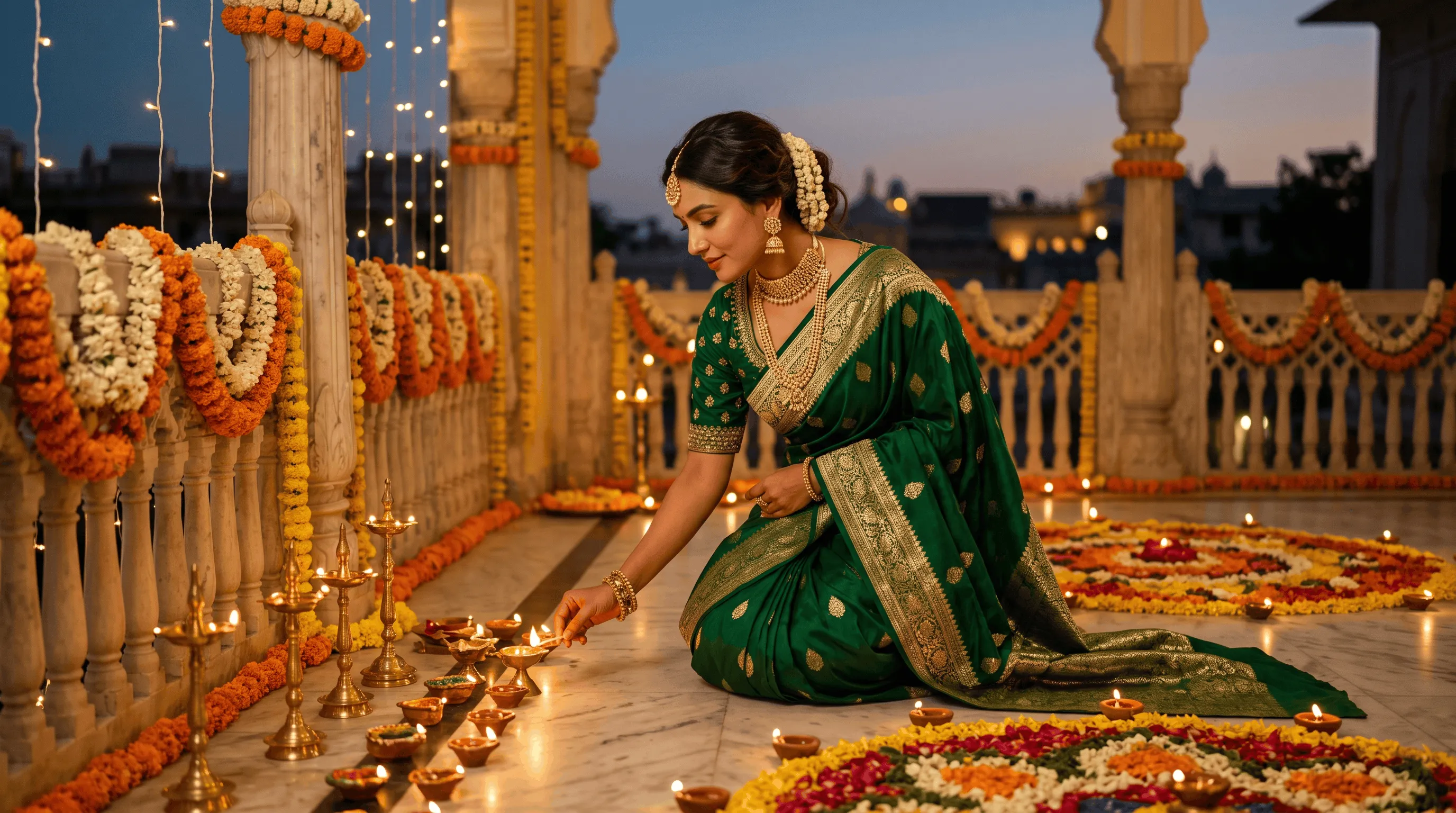
Diwali and Evening Festivals
Tissue glows beautifully in diya light. See our Diwali outfit ideas.
Onam and Kerala Celebrations
Tissue kasavu is a classic choice for Onam.
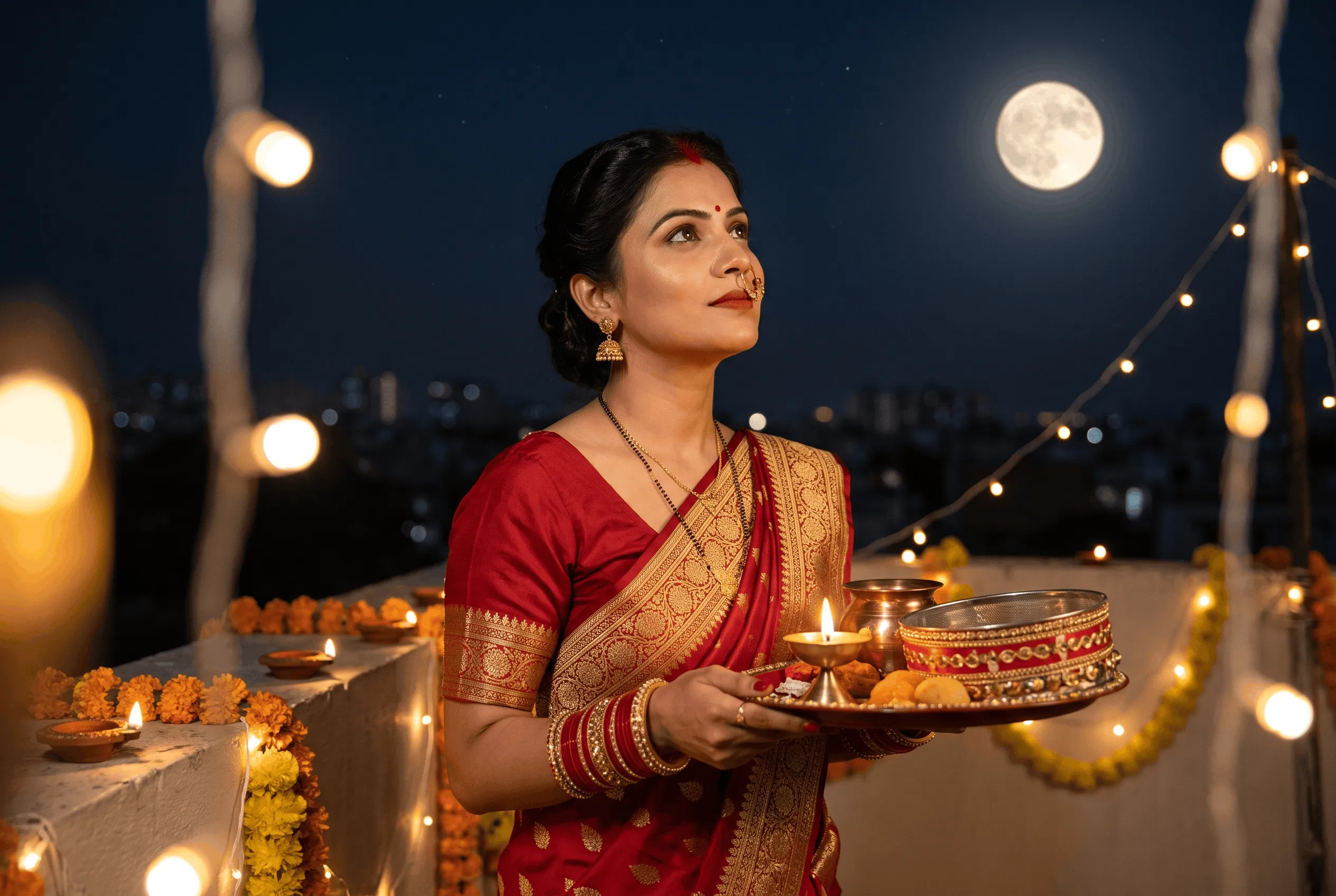
Karwa Chauth
Rose-gold or copper tissue looks lovely in lamp light. See our Karwa Chauth saree ideas.
Engagements and Cocktail Parties
Silver or pastel tissue looks modern and chic.
Tissue is usually best for evening events. For hot daytime functions, a lighter Chanderi tissue or a pastel organza is more comfortable.
Tissue Sarees for Brides
Many brides now include a tissue saree in their wedding wardrobe.
A gold or ivory-gold Kanjivaram tissue is a beautiful choice for a South Indian muhurtham or reception.
A champagne or rose-gold Banarasi tissue looks glamorous for a North Indian reception or engagement.
A tissue kasavu with temple jewellery creates a classic Kerala bridal look.
Because tissue is lighter than heavy brocade, it is also comfortable for long evening functions, and it can be worn again at family weddings and festivals.
Buying a Tissue Saree Online
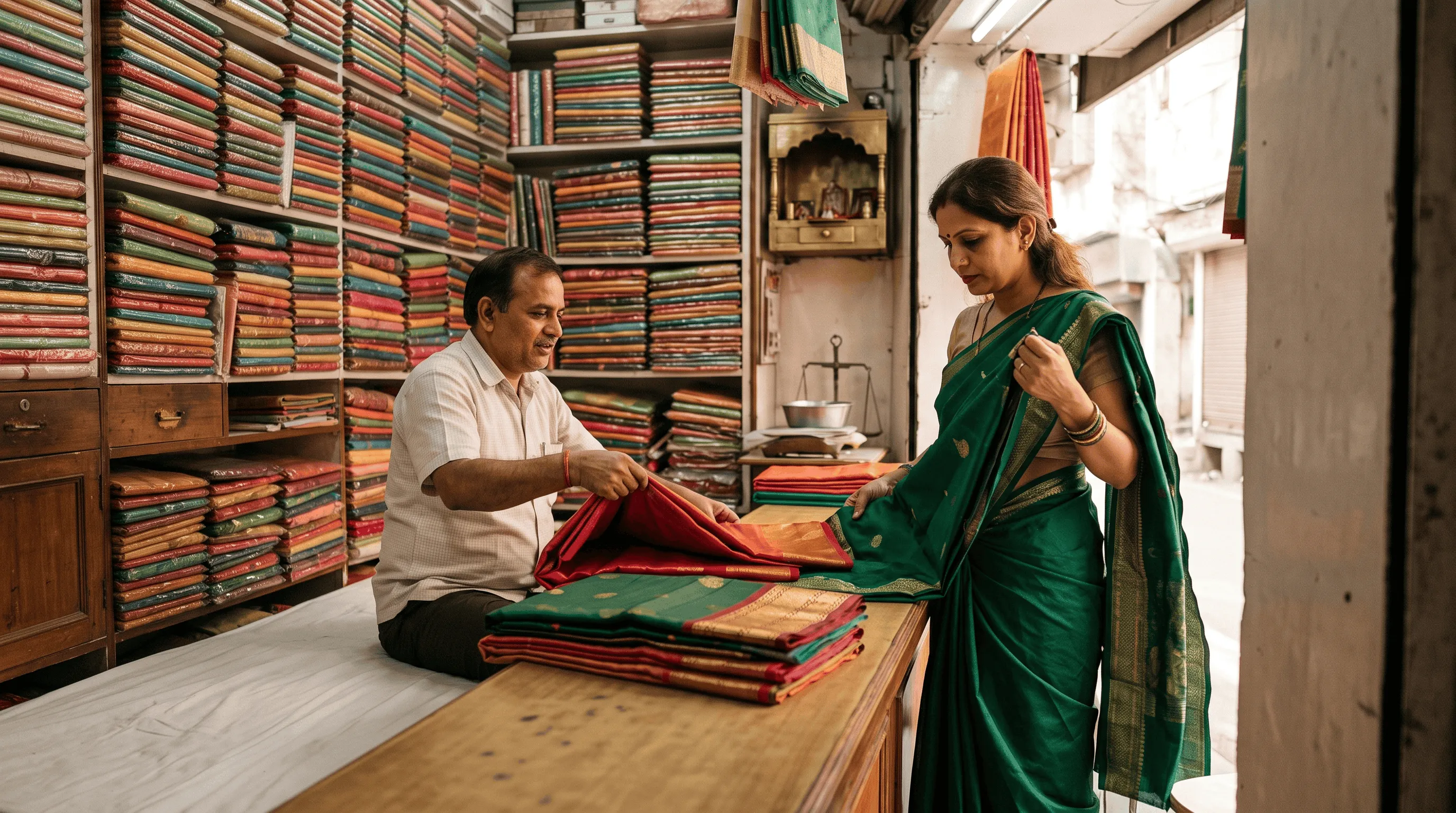
Ask for photographs in natural daylight, because studio lighting can exaggerate metallic shine.
Check the listing for the base fabric, the type of zari and whether the saree is handloom or powerloom.
Look for clear return policies, since the real shade of metallic fabric can differ from what you see on screen.
How to Judge the Quality of a Tissue Saree
1. Check the Base Fabric
Ask whether the base is pure silk, silk-cotton or synthetic, and look for the Silk Mark on pure silk.
2. Ask About the Zari
Find out whether the saree uses pure zari, tested zari or synthetic metallic yarn.
3. Look at the Shine in Daylight
Good tissue has a soft, even glow. Synthetic tissue can look harsh or glassy.
4. Check the Reverse Side
Handwoven pieces usually look neater on the back, without loose floats or rough patches.
5. Feel the Drape
Good tissue is smooth and drapes well. Scratchy or plasticky fabric suggests a lower-quality yarn.
Tissue Saree Price in 2026
These are indicative ranges. Prices vary by base fabric, type of zari, weave and seller.
| Type | Indicative price range |
|---|---|
| Synthetic tissue saree | ₹1,500 – ₹4,000 |
| Kerala tissue kasavu (cotton base) | ₹2,000 – ₹8,000 |
| Chanderi tissue | ₹3,000 – ₹12,000 |
| Banarasi tissue silk | ₹6,000 – ₹30,000+ |
| Kanjivaram tissue silk | ₹15,000 – ₹70,000+ |
Compare more saree prices in our saree price guide.
What Makes One Tissue Saree More Expensive Than Another?
Base fabric: pure silk costs more than silk-cotton or synthetic.
Zari: pure zari is far more expensive than tested zari or synthetic metallic yarn.
Weave: handloom pieces cost more than powerloom.
Extra motifs: woven zari motifs and heavy pallus add time and cost.
How to Care for a Tissue Silk Saree
Metallic zari needs gentle care to stay bright.
Dry-clean only, because water and detergent can dull or tarnish zari.
Keep away from perfume, deodorant and hairspray. Apply them before draping and let them dry.
Store in muslin or soft cotton, never plastic, and away from damp.
Wrap the zari in tissue paper before folding to prevent rubbing and tarnishing.
Roll or fold loosely and refold every few months, because sharp folds can crack metallic threads.
Iron on low with a cotton cloth between the iron and the saree, on the reverse side.
See our silk saree care guide for more detail.
Common Misconceptions About Tissue Sarees
"Tissue and Organza Are the Same"
No. Tissue gets its shine from metallic zari, while organza's sheen comes from tightly twisted yarn.
"All Tissue Sarees Are Pure Silk"
Many tissue sarees use cotton or synthetic bases. Always ask about the base fabric.
"Tissue Is Too Shiny for Traditional Events"
Tissue kasavu and Kanjivaram tissue are deeply traditional, and soft champagne or ivory-gold tissue looks elegant at any ceremony.
"More Shine Means Better Quality"
A harsh, glassy shine often indicates synthetic metallic yarn. Good tissue has a soft, even glow.
Why a Tissue Saree Belongs in Your Festive Wardrobe
A tissue saree brings a soft, metallic glow that few other weaves can match, without the weight of heavy brocade.
It moves easily from weddings to Diwali, Onam and receptions, and it can be styled traditionally or with a modern edge.
Understand how it differs from organza, choose the right base and zari for your budget, balance the shine with a contrast blouse and one statement piece of jewellery and treat the zari gently.
For more festive and wedding ideas, explore our traditional wear trends 2026 guide.
Comments (0)
Leave a Thought
No comments yet. Be the first to share your thoughts!