A Banarasi silk saree is rarely bought as just another outfit.
For many families, it marks a wedding, a milestone, a festival, or a piece of clothing meant to remain in the wardrobe for years. Its richness comes not only from silk and zari, but from the weaving tradition of Varanasi, where generations of artisans have created sarees known for elaborate motifs, brocade work, and ceremonial appeal.
That reputation, however, also makes Banarasi sarees one of the most confusing categories for buyers.
Prices can vary dramatically. Some sarees are handwoven, while others are power-loomed. Some use pure silk and traditional zari, while others rely on blended fibres and imitation metallic yarns. Two sarees may look almost identical in photographs but feel completely different when handled.
This buying guide explains what to look for before purchasing a Banarasi silk saree, how to understand the major varieties, what affects the price, and how to avoid choosing a saree simply because it looks expensive.
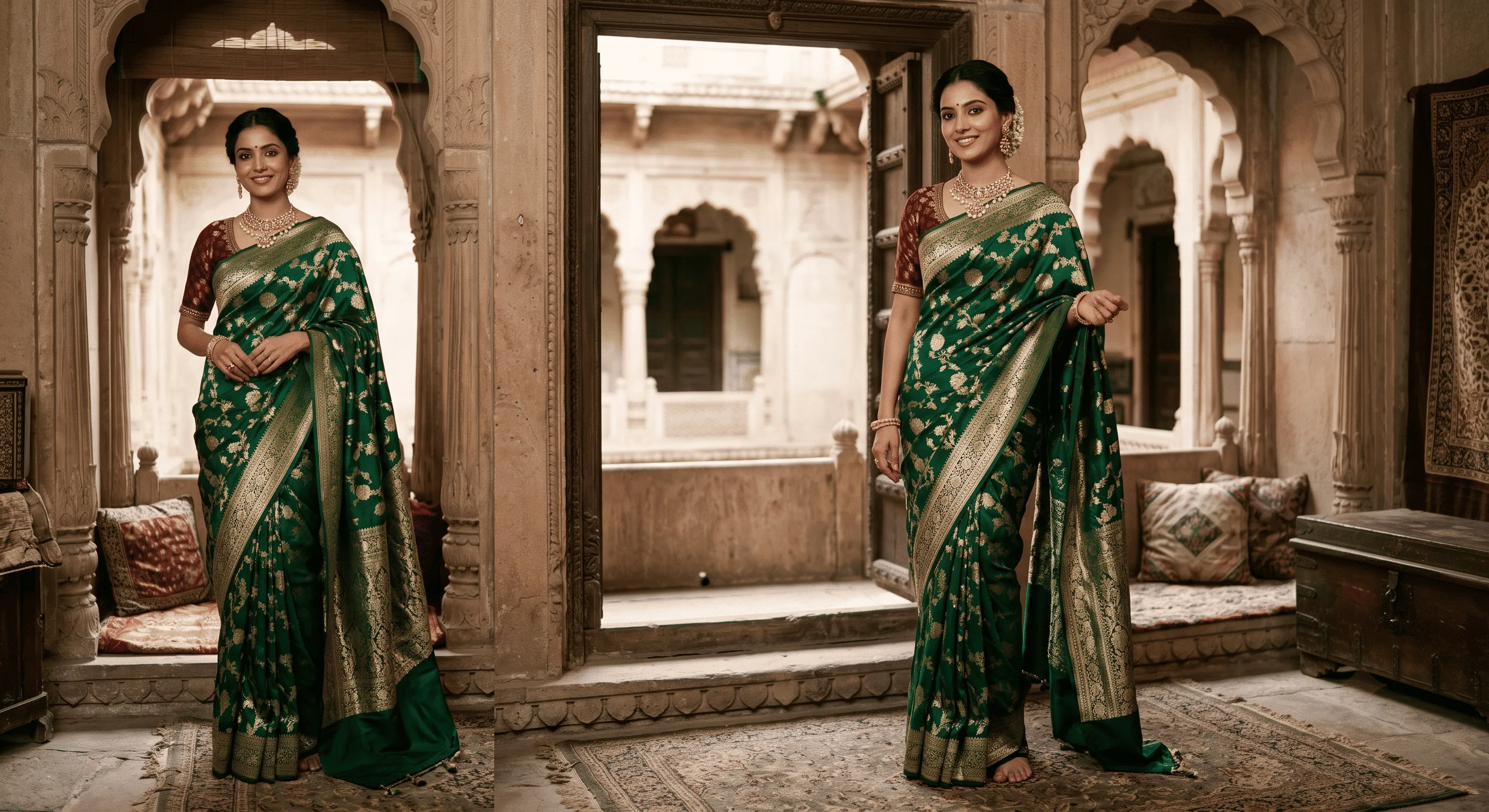
What Makes a Banarasi Silk Saree Special?
Banarasi sarees are associated with the weaving traditions of Varanasi, historically known as Banaras.
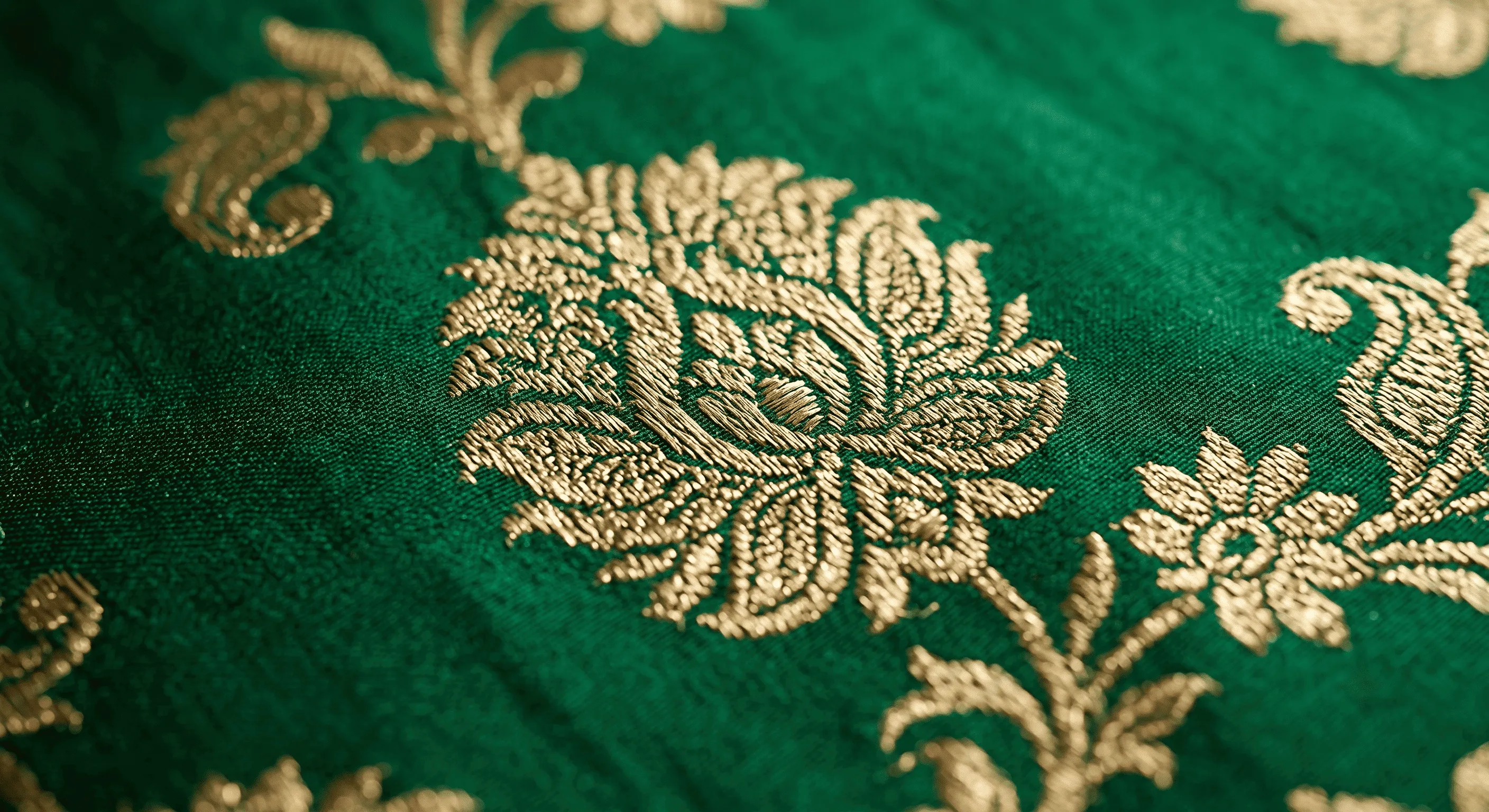
Their most recognizable feature is the use of elaborate woven decoration.
Instead of relying only on printed or surface-embroidered designs, many traditional Banarasi sarees create motifs directly during weaving. Floral forms, paisleys, jaal patterns, creepers, geometric borders, and Mughal-inspired motifs are commonly seen.
The richness of a Banarasi saree usually comes from three elements:
- the silk base,
- the woven pattern,
- and the zari or metallic yarn used in the design.
A high-quality Banarasi saree often has depth when viewed closely. The motifs appear integrated into the fabric rather than simply sitting on the surface.
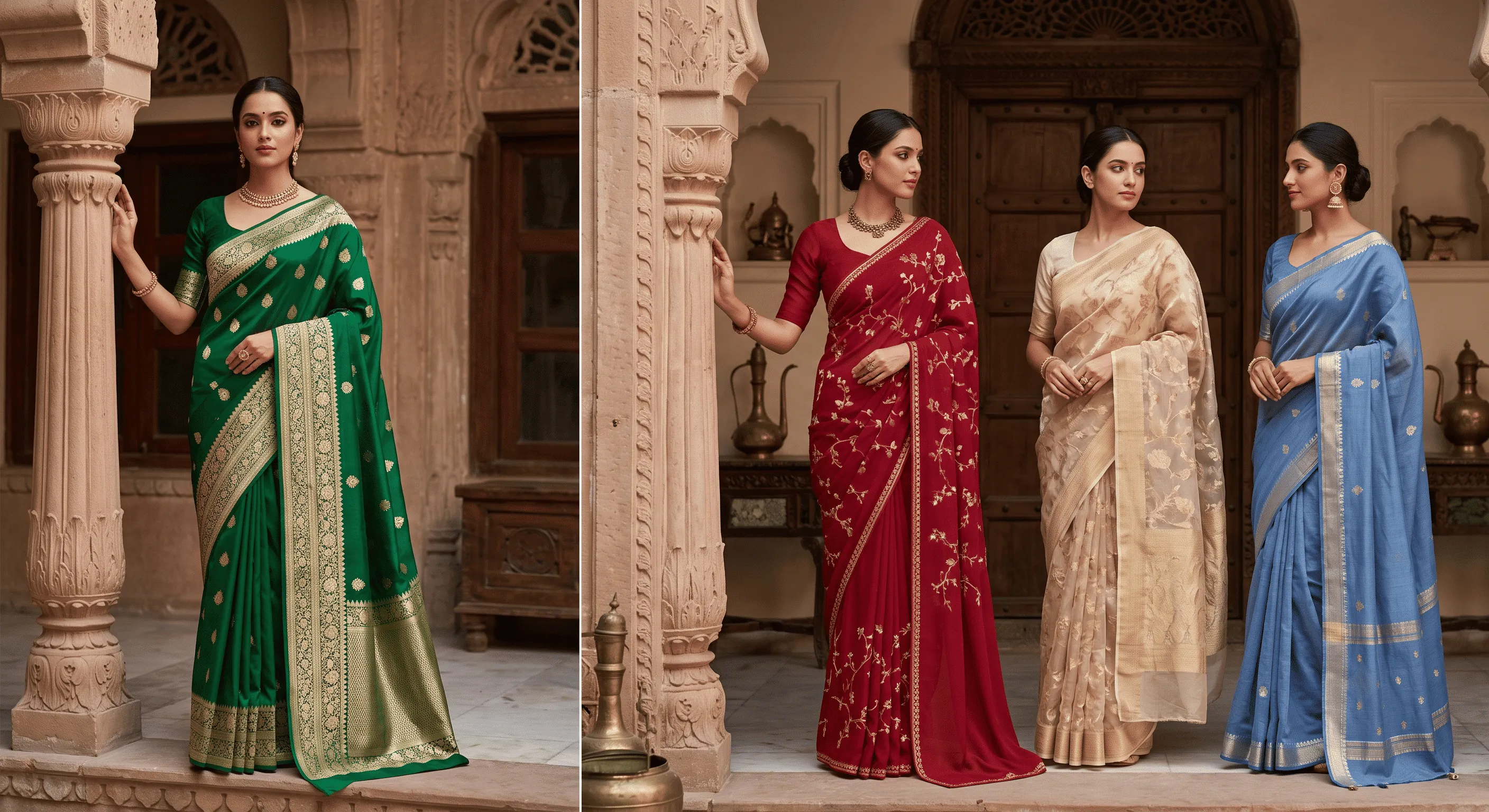
Know the Main Types Before You Buy
Not every Banarasi saree looks heavy or heavily metallic.
Understanding the major categories helps you buy according to occasion rather than assuming all Banarasi sarees are similar.
Katan Banarasi Silk
Katan traditionally refers to a fine silk fabric made using twisted silk yarn.
It is known for a smooth, rich surface and is commonly used for classic Banarasi sarees.
Katan sarees are especially suitable for weddings, formal occasions, and heirloom purchases because the silk has good structure and drapes elegantly.
Organza or Kora Banarasi
Organza Banarasi sarees feel lighter and more transparent.
They may still feature zari motifs, brocade, or woven borders, but the overall look is airier than dense Katan silk.
This makes them a strong choice for daytime weddings and festive events.
Georgette Banarasi
Banarasi georgette sarees combine the traditional woven aesthetic with a softer, more fluid drape.
They are easier to carry for long functions and work well for receptions, engagement ceremonies, or festive evening events.
Shattir and Blended Varieties
Some Banarasi-style sarees use blended or alternative fibres.
These can be more affordable and practical, but buyers should not confuse them with pure silk versions.
The important thing is not whether one category is better, but whether the fabric and price are described accurately.
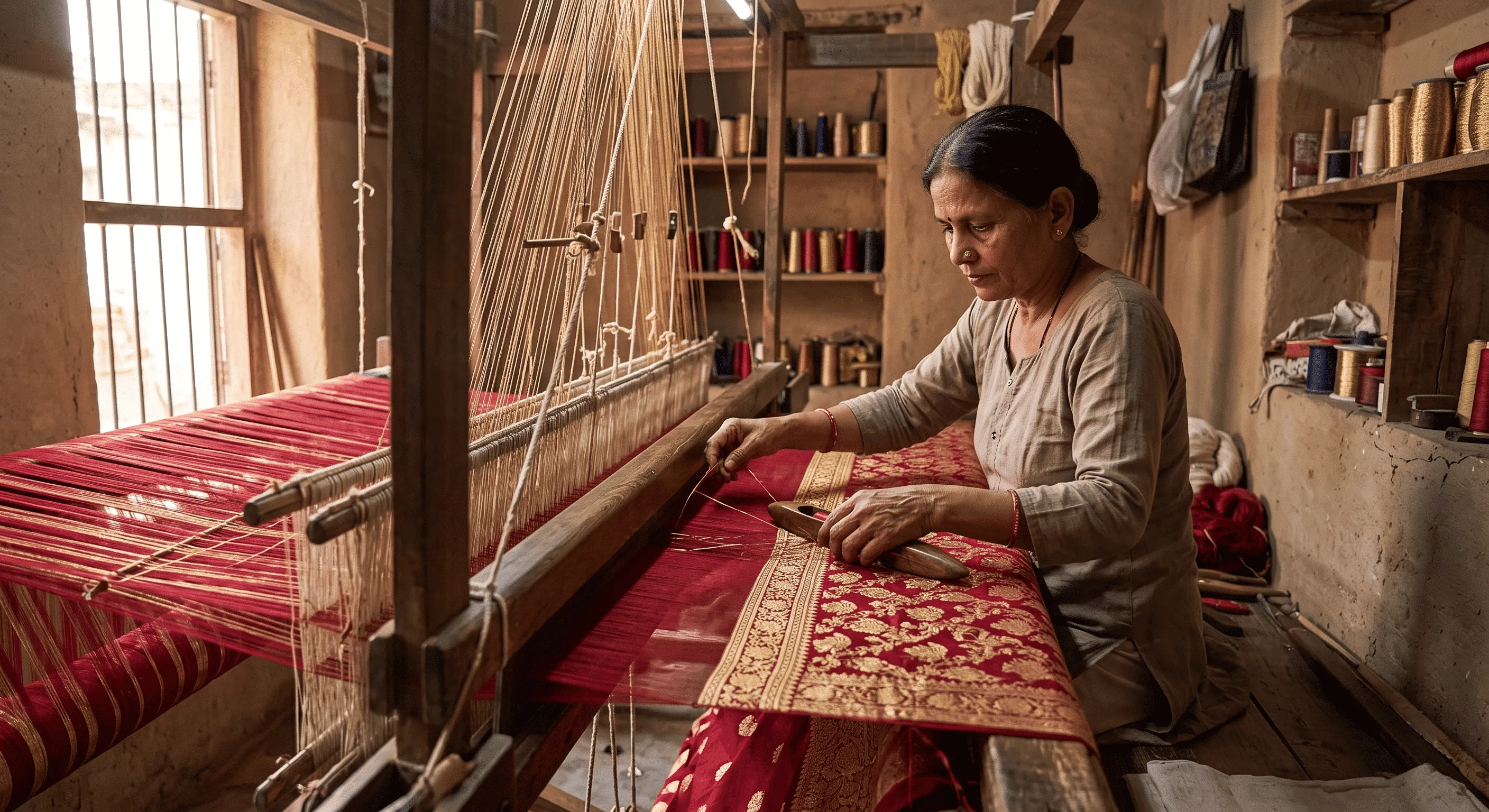
Handloom vs Power Loom: Why the Difference Matters
One of the most important buying decisions is whether you want a handloom or power-loom Banarasi saree.
Handloom sarees are woven manually and usually involve more labour, time, and variation.
This can create slight irregularities that are not necessarily defects. In fact, small differences in motif alignment or tension may reflect the handwoven nature of the textile.
Power-loom sarees are produced mechanically and can be made faster and more consistently.
They are often more affordable and can still look beautiful, especially for buyers looking for appearance rather than artisan provenance.
The problem begins only when a power-loom saree is sold as handloom.
Before buying, ask the seller directly whether the saree is handwoven, power-loomed, or machine-assisted.
Pure Silk vs Silk Blend: What Should You Choose?
Pure silk Banarasi sarees generally feel richer and may have greater long-term value, but they are also more expensive.
Blended sarees can be lighter, easier to maintain, and more budget-friendly.
Neither should be treated as automatically inferior or superior for every buyer.
If you are buying for a wedding or as an heirloom, pure silk may make sense.
If you want a Banarasi look for occasional wear without a high investment, a silk blend may be perfectly suitable.
What matters is transparency.
A seller should clearly state whether the saree is pure silk, silk blend, art silk, or another fibre composition.
Understanding Zari Before Buying
Zari is one of the biggest factors affecting the appearance and price of a Banarasi saree.
Traditional zari uses metallic materials wrapped around a core yarn, while contemporary alternatives may use metallic polyester or imitation threads.
Pure or high-quality zari tends to increase the saree's cost considerably.
Imitation zari can still create a festive appearance but is generally less valuable.
When shopping, do not assume that all gold-looking thread is the same.
Ask whether the saree uses real zari, tested zari, imitation zari, or metallic yarn.
If you are purchasing an expensive piece, request documentation or certification wherever available.
Look Closely at the Weave
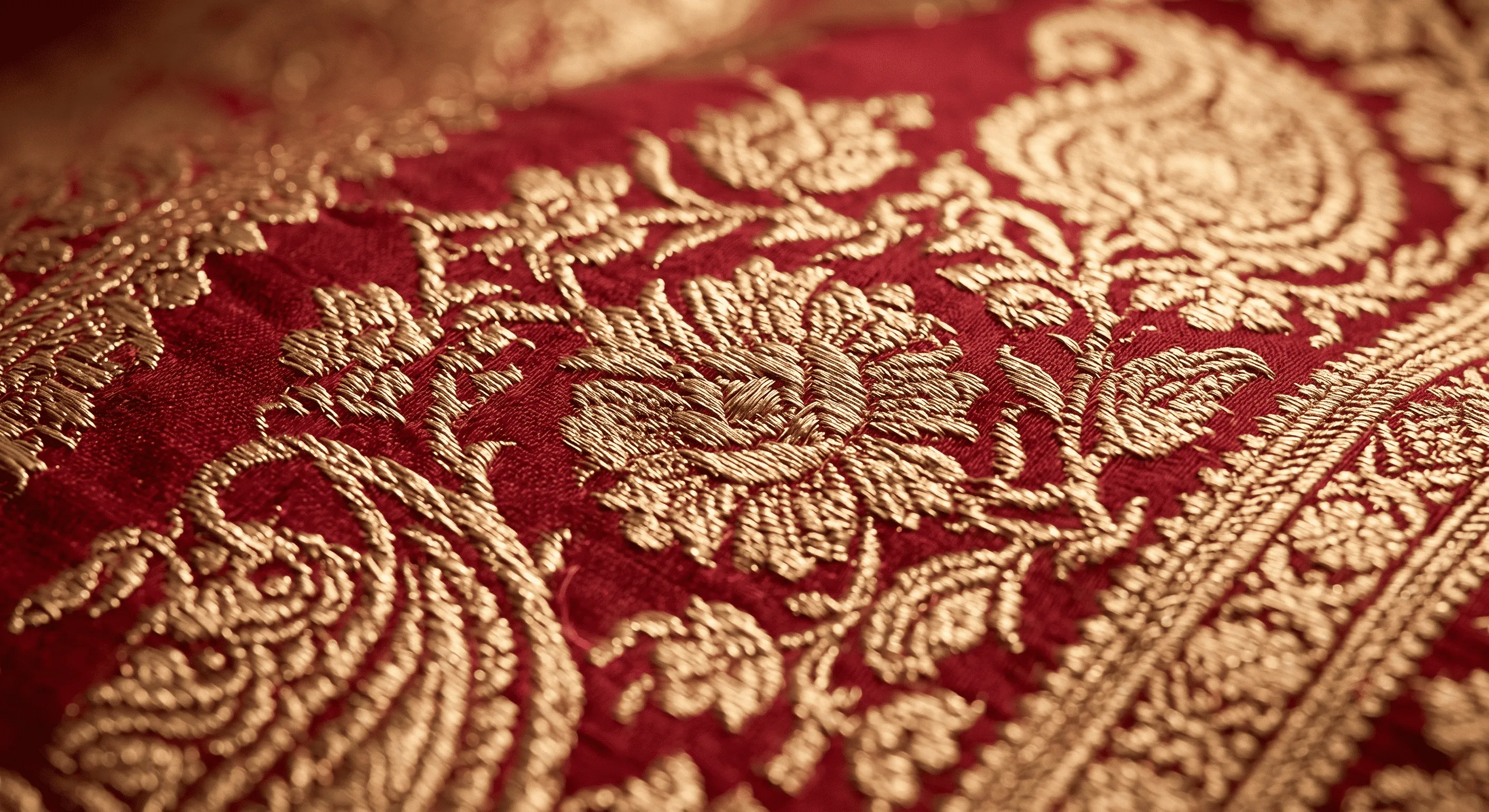
A Banarasi saree should reward close inspection.
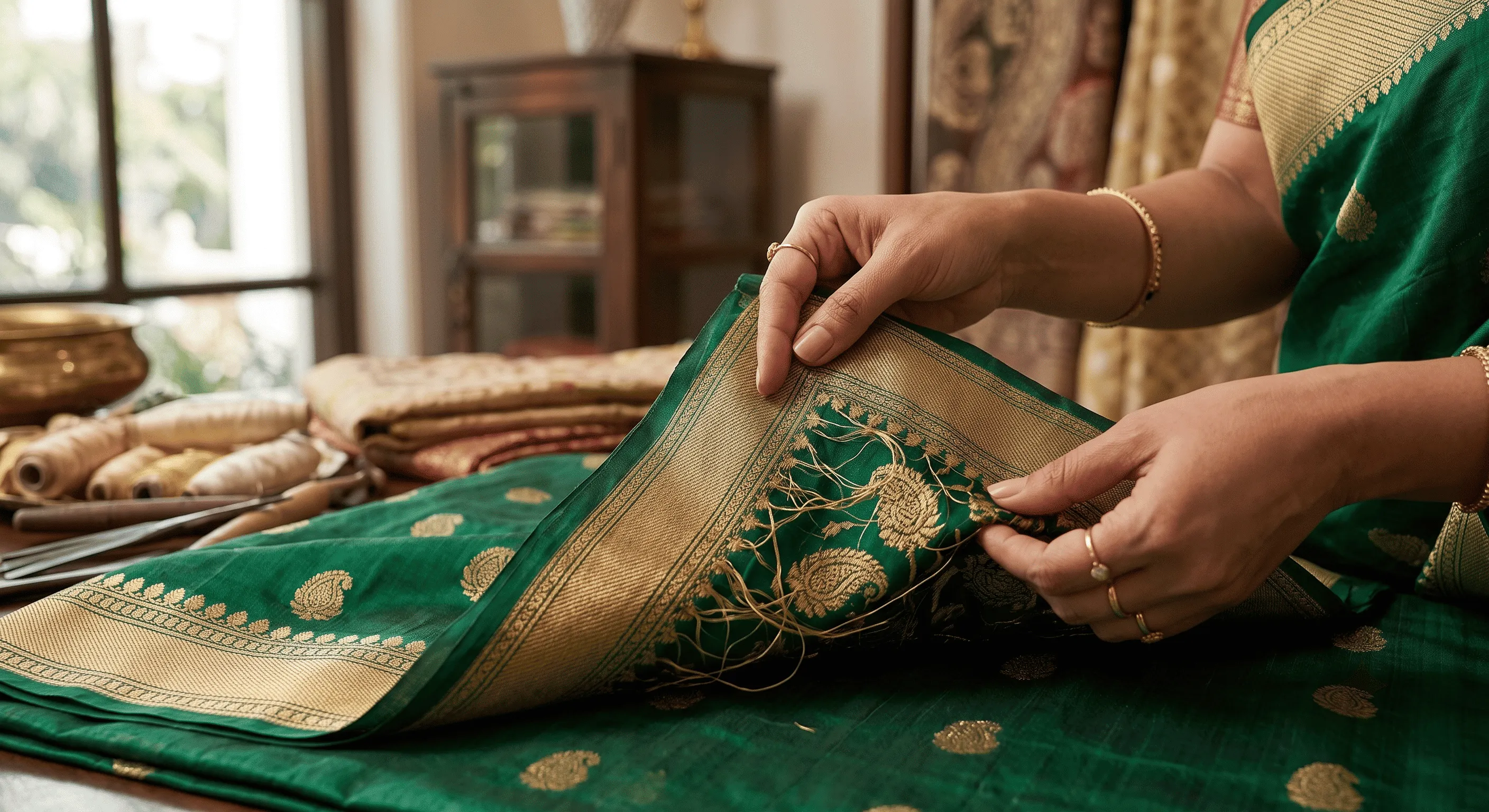
Look at the back of the fabric as well as the front.
Woven motifs often leave thread movements or floats on the reverse side, depending on the weaving technique.
A perfectly flat printed-looking back can sometimes indicate that the design is not woven in the way you expect.
Also examine:
- motif edges,
- border alignment,
- pallu construction,
- thread consistency,
- and finishing.
Do not expect handmade textiles to look mechanically perfect.
However, loose threads, weak joins, damaged zari, or poorly finished edges are different from natural handloom variation.
Popular Banarasi Motifs to Recognize
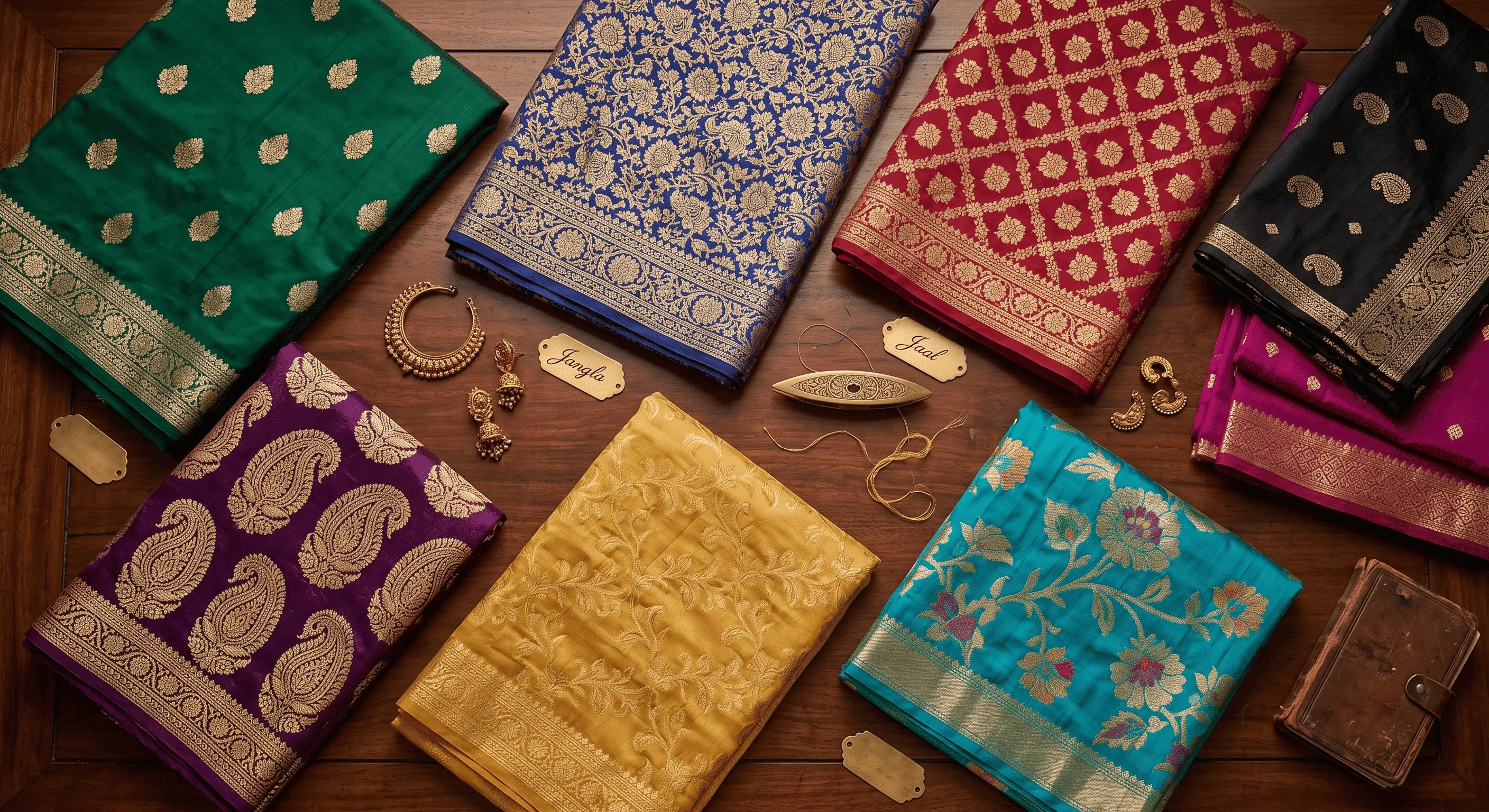
Motifs are one of the easiest ways to understand Banarasi design vocabulary.
Common patterns include:
Butidar
Small repeating motifs distributed across the saree body.
These may be floral, paisley-based, or geometric.
Jangla
Dense creeper and floral motifs spread across the fabric.
Jangla sarees often feel elaborate and ceremonial.
Jaal
An all-over lattice or network-like pattern covering much of the saree.
Kalga and Bel
Kalga refers to paisley-like decorative forms, while bel describes trailing floral or vine patterns.
Floral Mughal-Inspired Motifs
Banarasi weaving frequently reflects stylized flowers, leaves, and garden-inspired compositions.
These designs can feel traditional without appearing overly heavy.
How to Choose a Banarasi Saree for a Wedding
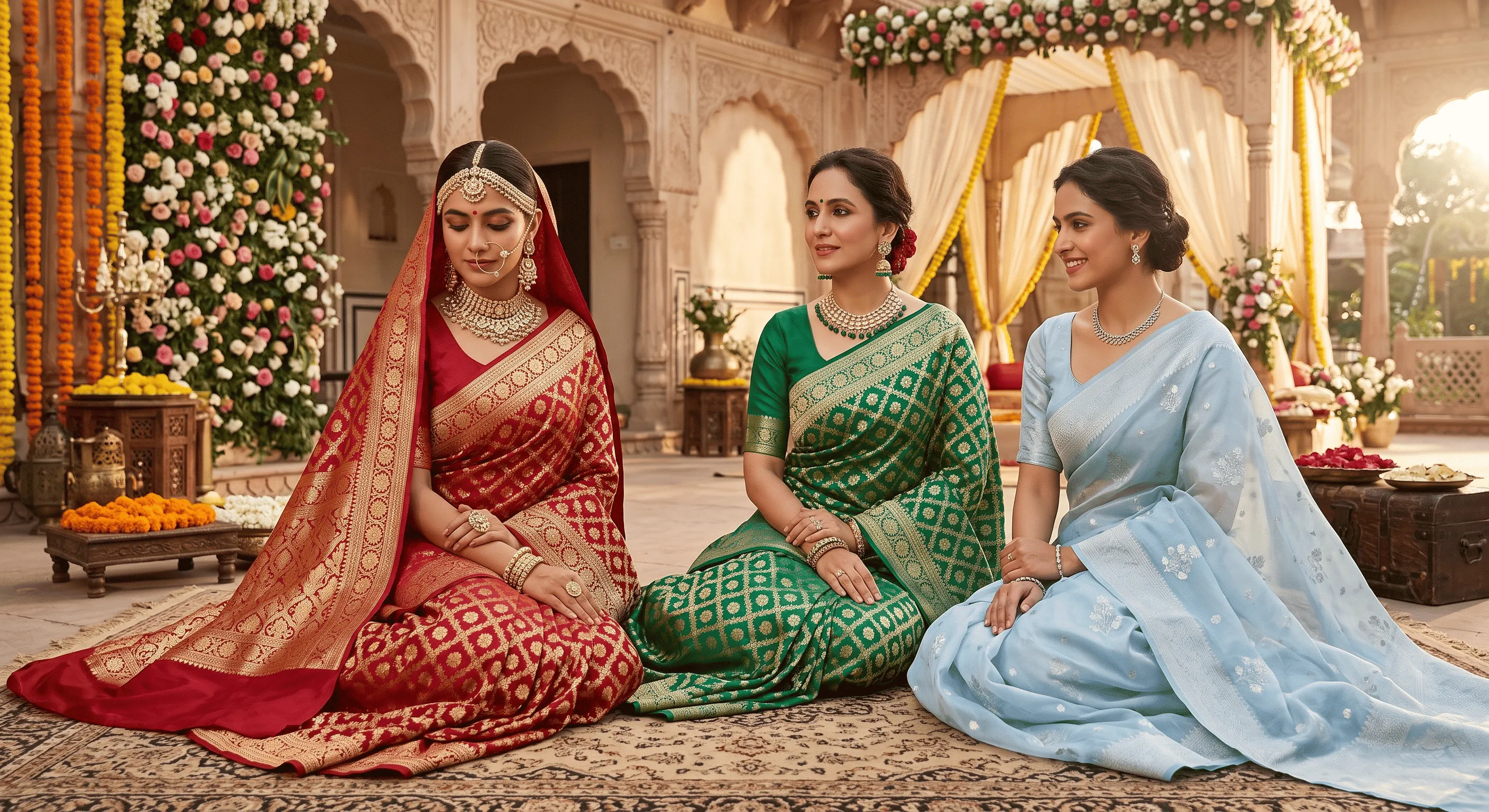
For weddings, the ideal saree depends on whether you are the bride, close family member, or guest.
For Brides
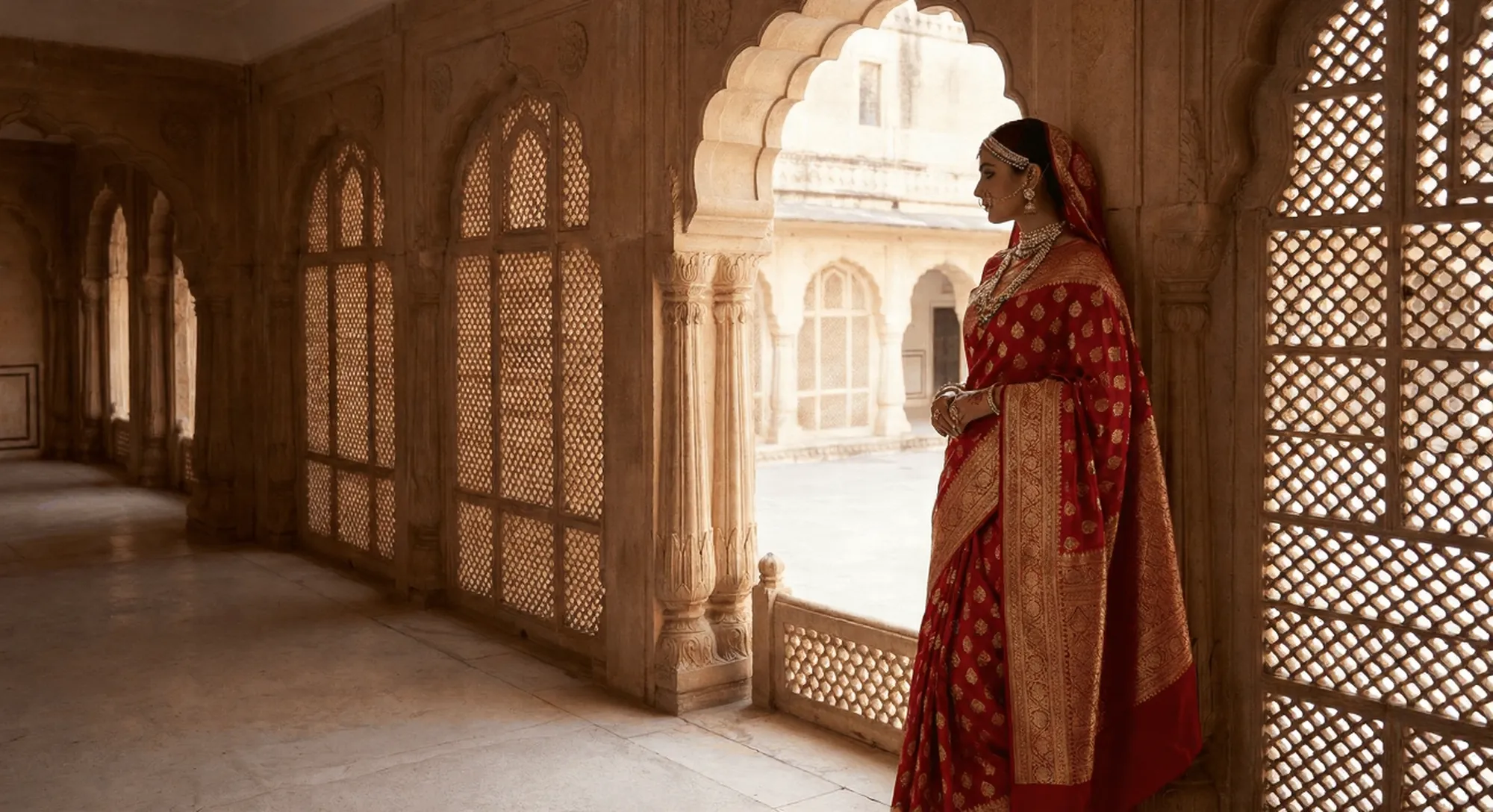
A richer Katan silk saree with detailed zari, traditional red, maroon, rani pink, deep green, or gold tones can create a classic bridal look.
Large borders, elaborate pallus, and all-over motifs add ceremonial impact.
For Close Family
Choose rich silk with strong borders but slightly less density than a bridal saree.
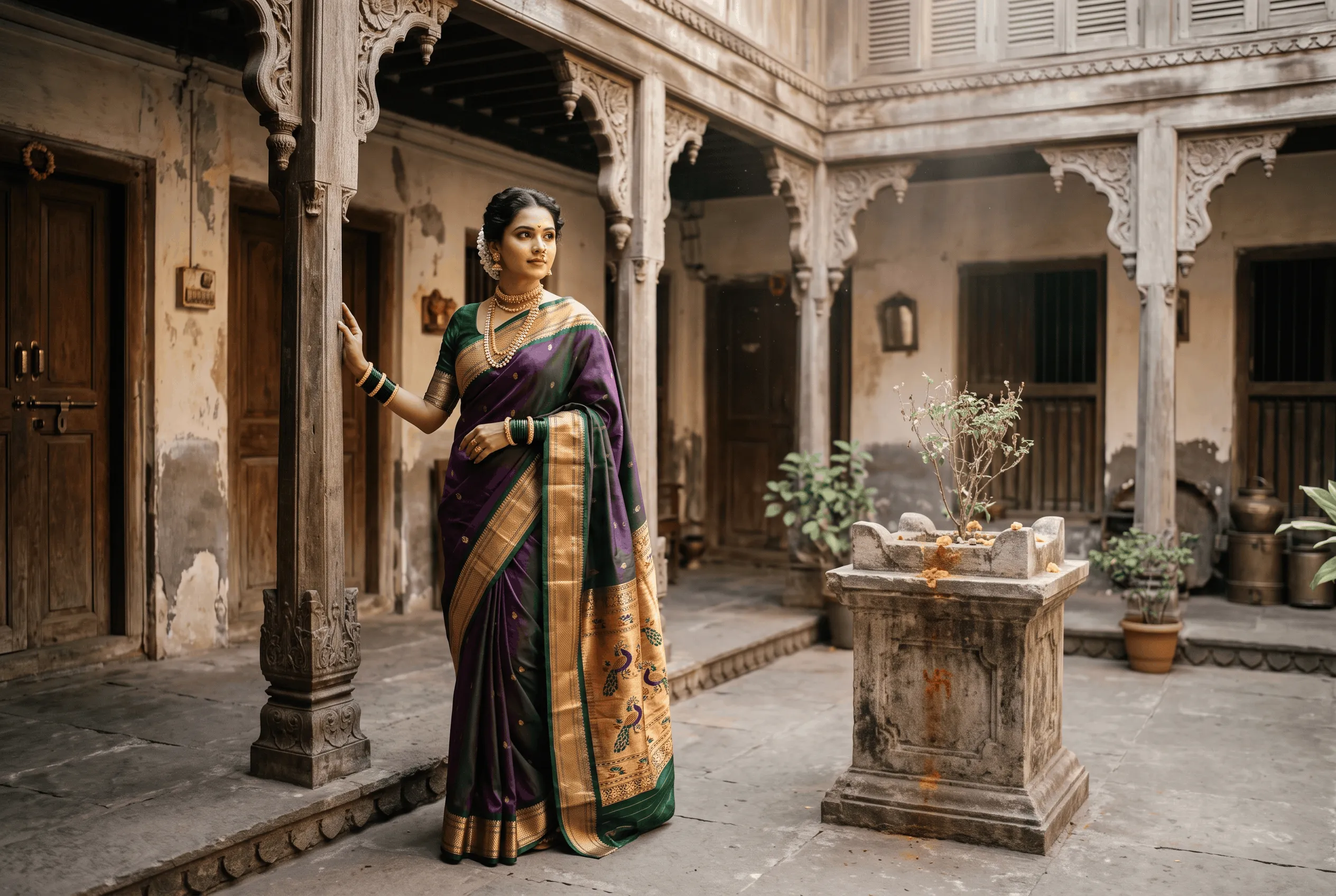
Jewel tones such as emerald, plum, wine, navy, and rust work beautifully.
For Wedding Guests
Lighter Banarasi sarees in organza, georgette, or softer silk can feel festive without becoming overly heavy.
Pastels, muted metallics, and smaller motifs are especially suitable for daytime weddings.
What Colour Should You Choose?
Traditional Banarasi sarees often appear in rich reds, maroons, greens, pinks, and purples.
These remain popular because they complement gold zari beautifully.
However, contemporary Banarasi collections now include ivory, champagne, powder blue, lavender, beige, mint, and muted pastels.
For daytime functions, softer colours can feel lighter and more modern.
For evening weddings, deeper jewel tones generally create stronger contrast under artificial lighting.
If you want maximum rewear value, choose a colour that can work with more than one blouse and jewellery style.
What Makes One Banarasi Saree More Expensive Than Another?
Price differences can be substantial.
A Banarasi saree's cost is usually influenced by:
- fibre quality,
- handloom or power-loom production,
- zari quality,
- complexity of design,
- weaving time,
- motif density,
- and finishing.
A saree with elaborate handwoven motifs and high-quality zari can require much more labour than a simpler design.
Do not judge price only by how shiny the saree looks.
Heavy shine can come from synthetic metallic yarns, while a more subtle saree may actually involve better materials and more skilled weaving.
How to Identify a Genuine Banarasi Saree
There is no single home test that guarantees authenticity.
Instead, use several indicators together.
Check the Seller
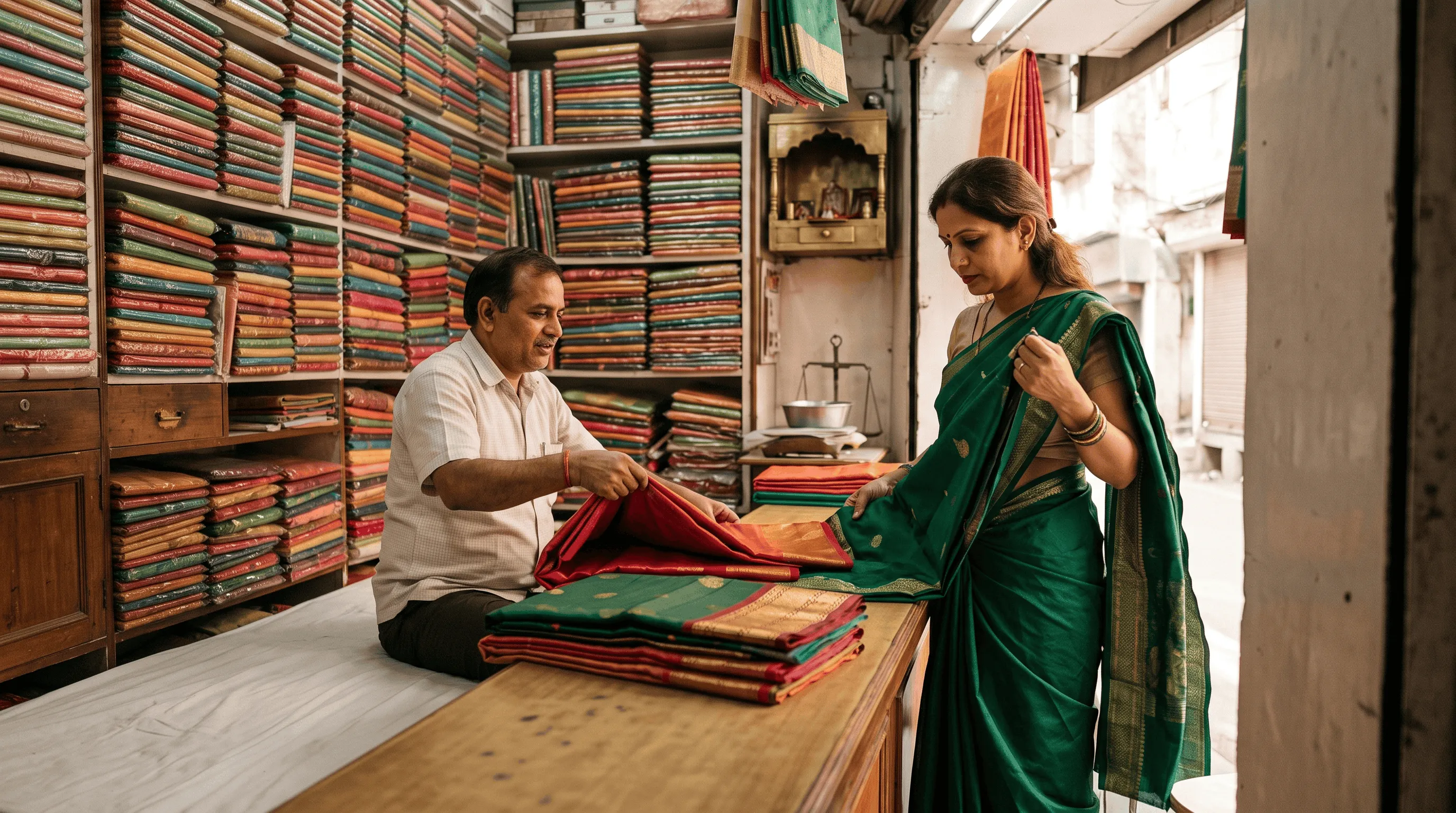
Buy from a reliable retailer, cooperative, recognized artisan source, or established handloom seller.
Ask About Fibre
Request clear information on whether the saree is pure silk or blended.
Ask About Loom Type
Confirm whether it is handloom or power loom.
Look at the Reverse Side
Woven designs often reveal thread movement on the back.
Inspect the Border and Pallu
Look for construction consistency and detailed weaving.
Check for Certification
For higher-value purchases, ask whether the product carries relevant silk or handloom certification.
Avoid making a decision based on one viral authenticity trick alone.
Common Buying Mistakes
One of the biggest mistakes is assuming that a heavier saree must be better.
Weight can come from fabric construction, dense metallic yarn, or additional materials. It does not automatically indicate purity.
Another mistake is buying only by photograph.
Lighting can exaggerate zari and colour, making synthetic fibres look more luxurious than they do in person.
Buyers also sometimes focus too much on the label "pure Banarasi" without asking what exactly is pure: the silk, the zari, the weaving method, or simply the design style.
Always ask detailed questions.
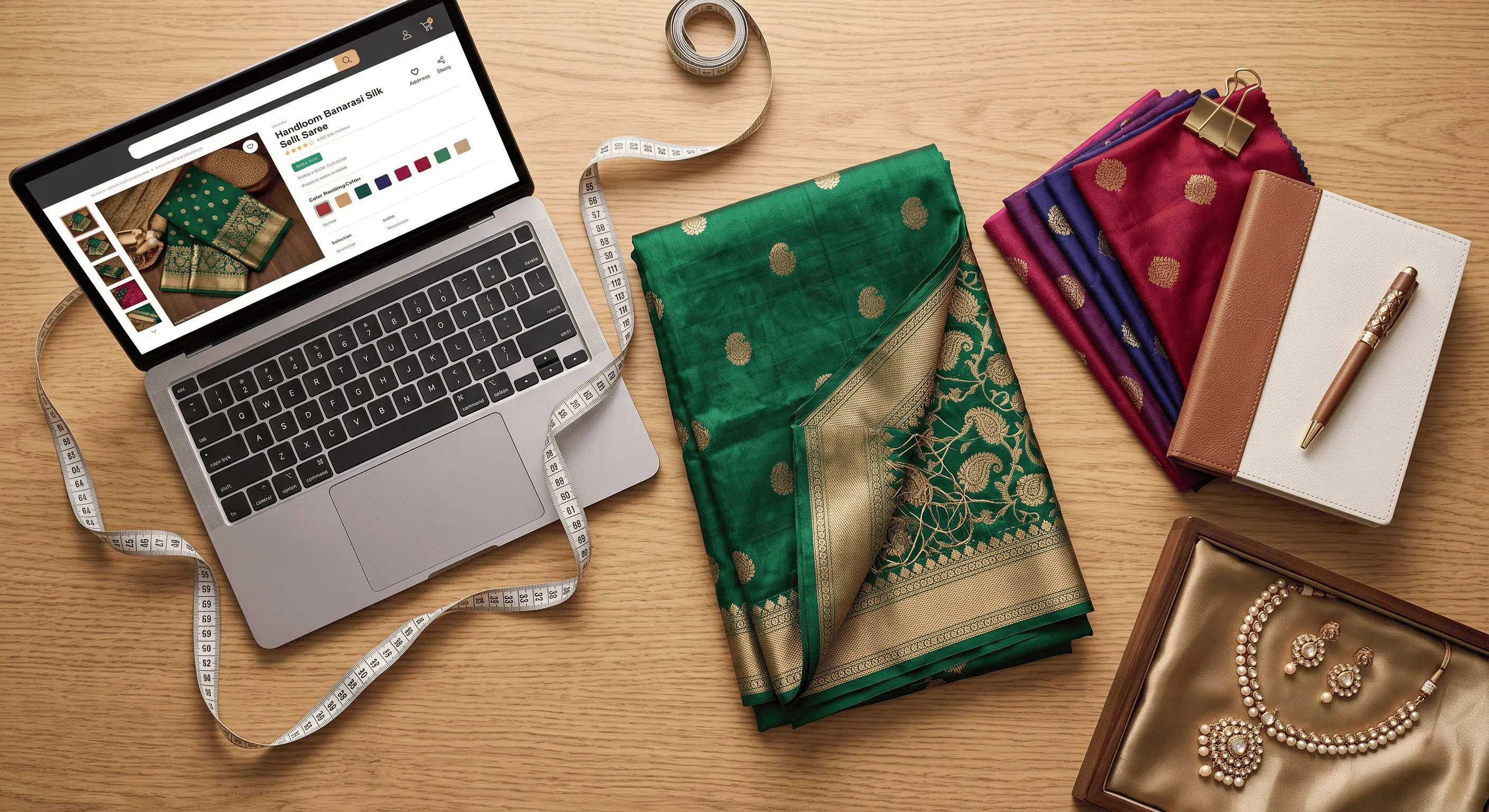
Buying Banarasi Sarees Online
Buying online can be convenient, but product descriptions matter more than ever.
Before purchasing, check whether the listing clearly states:
- fibre composition,
- weaving technique,
- zari type,
- saree length,
- blouse piece details,
- care instructions,
- return policy,
- and certification if relevant.
Look at close-up photographs rather than only styled model images.
A trustworthy listing should show the texture, border, pallu, and ideally the reverse side.
Be cautious with descriptions that rely only on words such as "premium," "royal," or "luxury" without giving material details.
How to Choose the Right Blouse
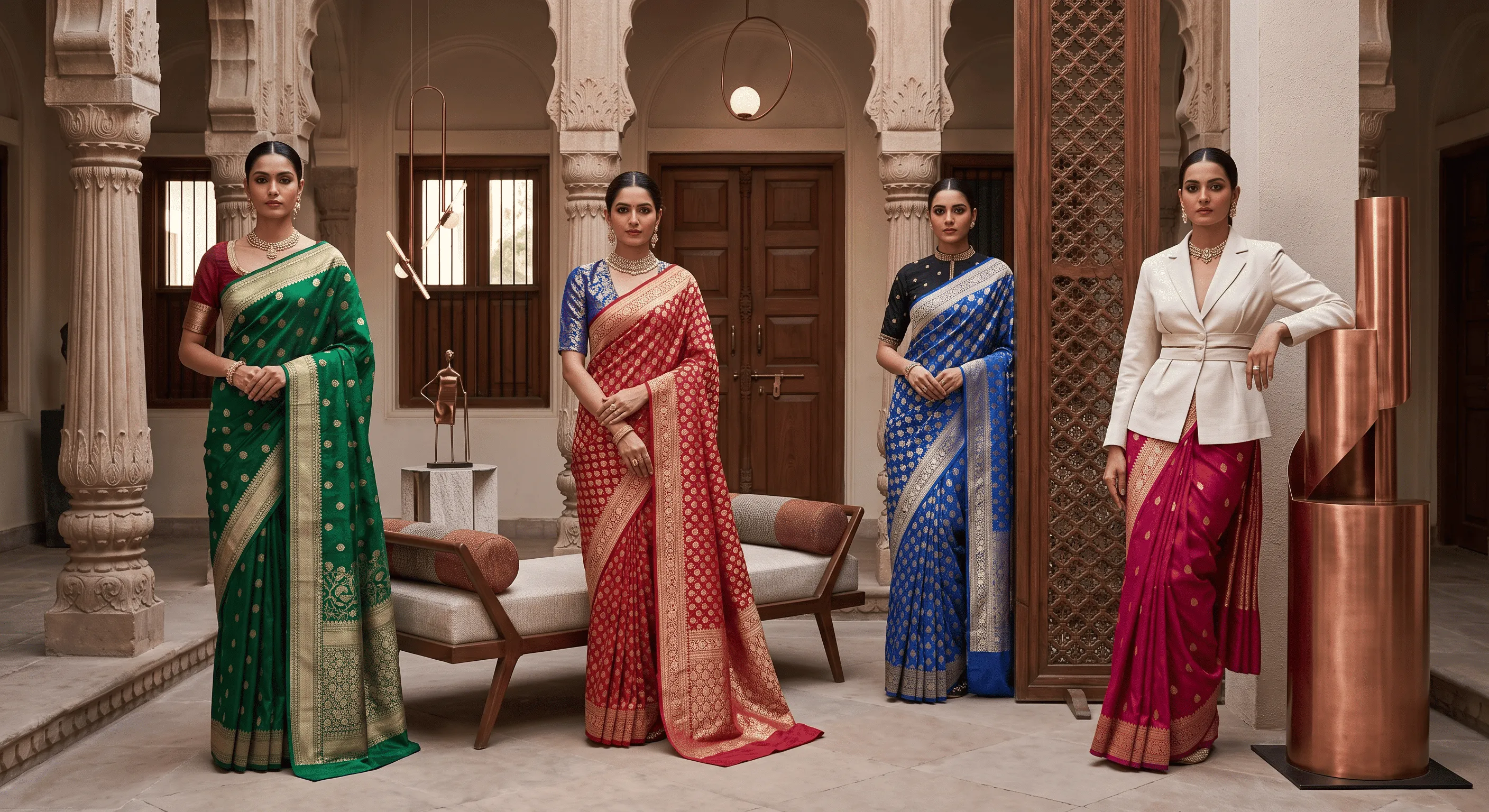
The blouse can make a traditional Banarasi saree look classic or contemporary.
For a traditional look, choose:
- matching silk,
- brocade,
- elbow-length sleeves,
- or contrast jewel tones.
For a modern look, consider:
- velvet,
- raw silk,
- high-neck cuts,
- structured blouses,
- or simple solid-coloured designs.
If the saree is heavily patterned, a cleaner blouse often creates better balance.
If the saree body is minimal, the blouse can carry more detail.
Care and Storage After Buying
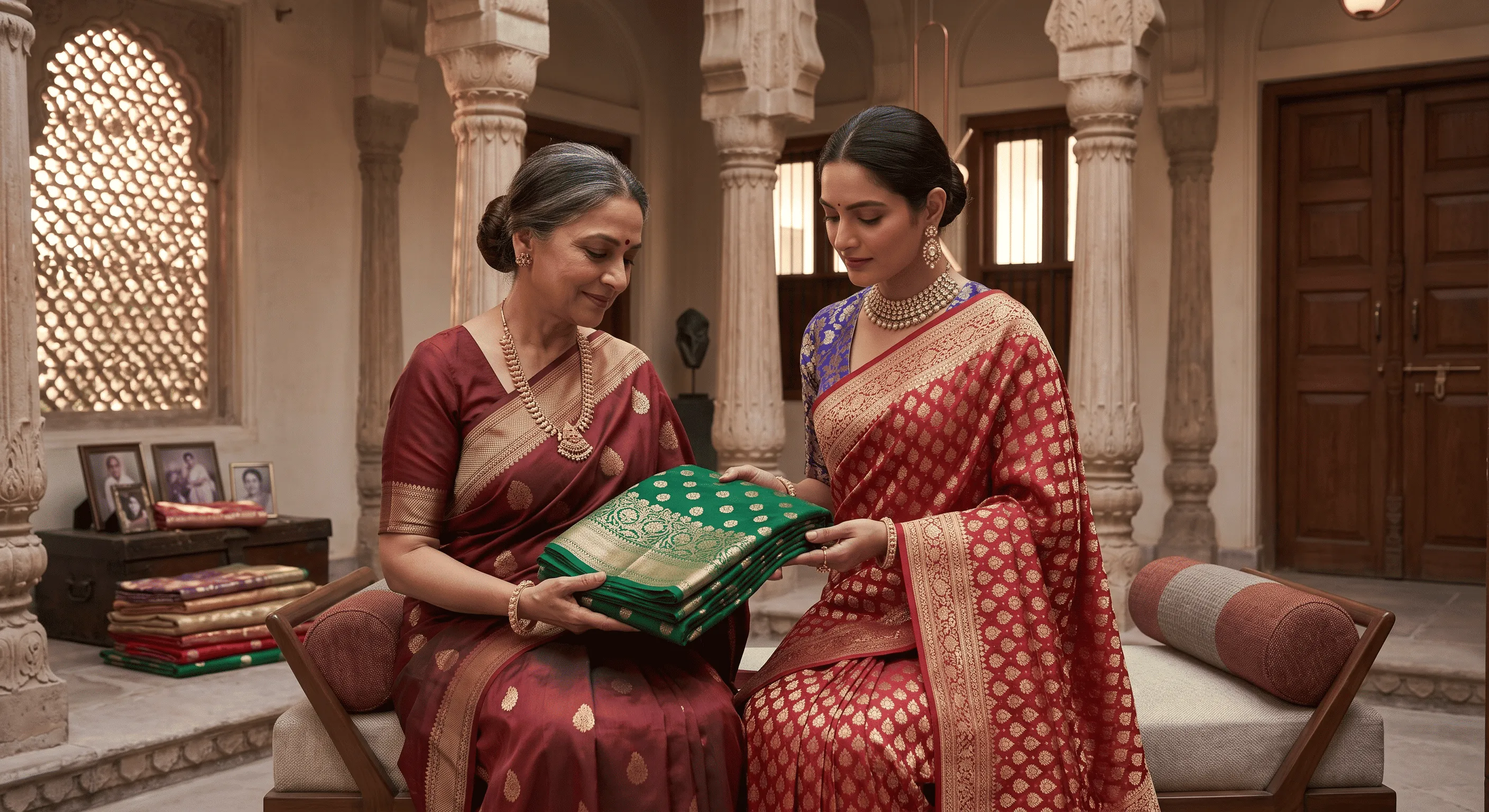
Banarasi sarees should be stored carefully, especially when they include metallic zari.
Avoid leaving them hanging for long periods because the weight may stress the fabric.
Fold the saree and wrap it in a breathable cotton or muslin cloth.
Refold it occasionally so the same creases do not remain under pressure for years.
Keep it away from moisture, direct sunlight, and harsh perfumes.
For cleaning, professional dry cleaning is generally safer for heavily woven silk and zari sarees.
Always check the care recommendations provided by the seller.
Is a Banarasi Saree Worth the Investment?
For buyers who appreciate Indian textiles, a well-chosen Banarasi saree can offer far more value than a one-season fashion purchase.
It can be reworn, restyled, passed down, and paired with different blouses over time.
However, investment does not necessarily mean buying the most expensive saree available.
The best purchase is one where the material, workmanship, price, and intended use all make sense together.
A saree you genuinely enjoy wearing is usually a better purchase than an extremely expensive piece that remains untouched in storage.
Comments (0)
Leave a Thought
No comments yet. Be the first to share your thoughts!