Introduction: Why This Blog Matters to You
When people talk about Indian ethnic wear, especially silk sarees, Banarasi silk often comes first to mind. But for serious buyers, designers, and textile learners, the real understanding begins when we see Banarasi silk in the larger context of Indian handloom traditions, including Central India’s rich weaving heritage from Madhya Pradesh and Chhattisgarh.
This blog is written for:
- Brides and families investing in heirloom sarees
- Boutique owners and designers sourcing authentic handlooms
- Textile learners and handloom lovers who want real, ground-level knowledge
As someone who has worked closely with weavers, traders, and handloom clusters in Maheshwar, Chanderi, Bastar, and Kosa silk belts, I often see buyers confused between Banarasi look-alikes, mixed silk claims, and powerloom products sold as handloom.
This blog solves:
- How Banarasi silk fits into India’s royal textile legacy
- How Central Indian silks compare and complement Banarasi sarees
- How to identify quality, authenticity, and right usage
- How to avoid costly buying mistakes
History & Origin: Royal Roots Beyond One City
Banarasi Silk: A Legacy of Royal Courts
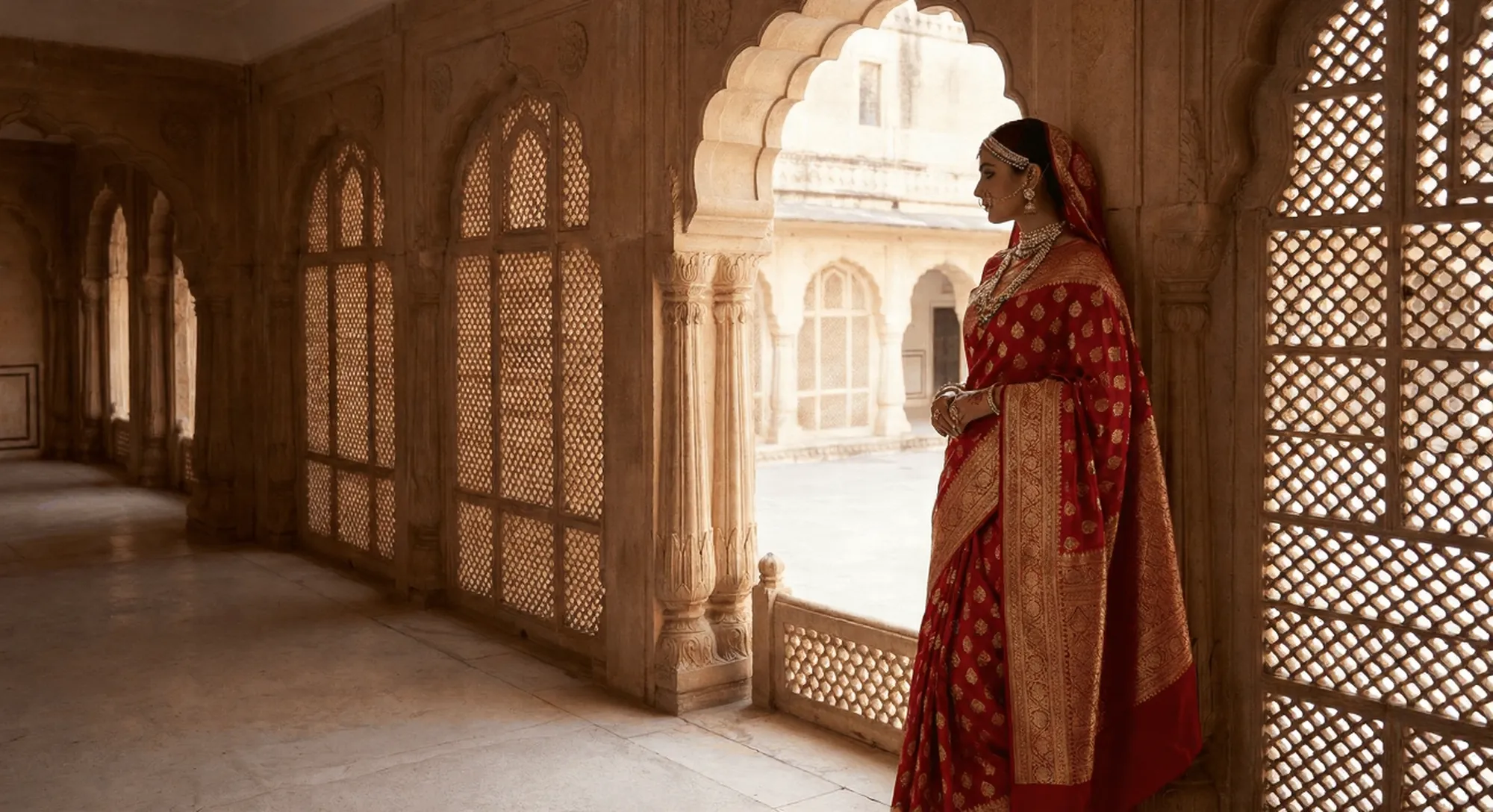
Banarasi silk sarees originated in Varanasi, flourishing under Mughal patronage. Rich zari work, heavy silk base, and intricate motifs like kalga, bel, jaal, and floral vines made Banarasi sarees the fabric of queens and brides.
But royalty in India was not limited to the Gangetic plains.
Central India’s Textile Heritage (Madhya Pradesh & Chhattisgarh)
Central India has its own quiet but powerful royal textile culture, focused more on elegance, comfort, and climate suitability.
Maheshwar (Madhya Pradesh)
Developed under Rani Ahilyabai Holkar, Maheshwari sarees were woven for royal households. Unlike Banarasi heaviness, Maheshwari silks focus on:
- Light silk-cotton balance
- Strong borders inspired by temple architecture
- Everyday royalty, not ceremonial weight
Chanderi
Once worn by queens of Malwa, Chanderi sarees are known for:
- Sheer texture
- Lightweight silk and silk-cotton blends
- Handwoven motifs like coins, peacocks, and floral butis
Bastar & Tribal Weaves (Chhattisgarh)
Bastar cottons and Kosa silk represent tribal royalty:
- Earthy colors
- Natural textures
- Deep cultural symbolism rather than shine
Types & Variations: Understanding the Spectrum
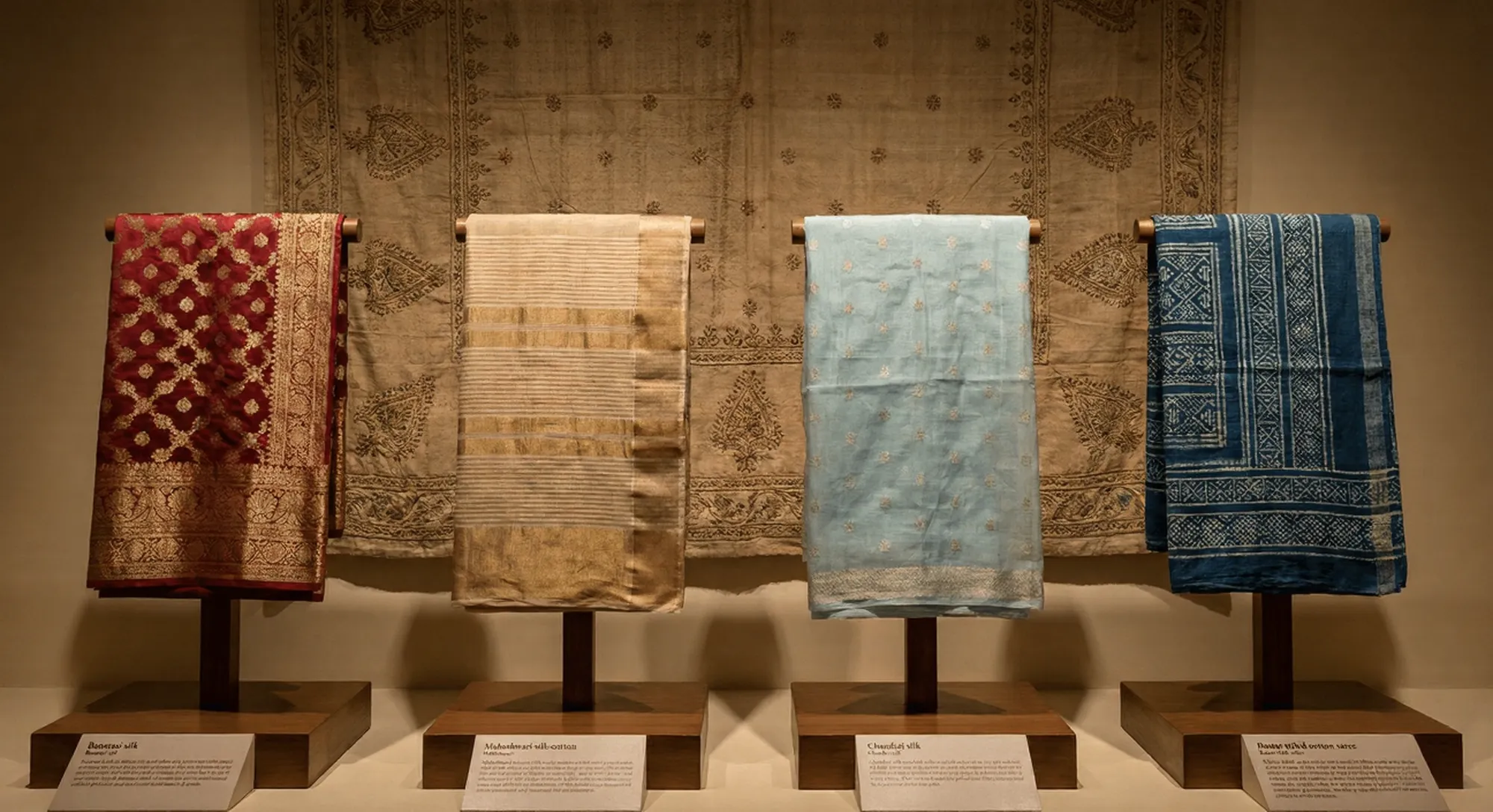
While Banarasi silk stands as a symbol of grandeur, Central Indian fabrics offer practical luxury.
1. Chanderi Sarees
- Types: Pure silk, cotton, silk-cotton
- Texture: Ultra-light, airy
- Best For: Summer weddings, day functions, office wear
- Difference from Banarasi: No heavy zari, more breathable
2. Maheshwari Sarees
- Fabric: Silk-cotton or pure silk
- Identity: Bold borders, reversible pallus
- Best For: Festive wear, formal occasions
- Compared to Banarasi: Structured elegance vs ornate luxury
3. Kosa Silk (Chhattisgarh)
- Source: Tussar silk from forest silkworms
- Texture: Slightly coarse, rich natural sheen
- Best For: Ethical fashion, winter weddings
- Difference: Raw luxury vs polished Banarasi shine
4. Bastar Tribal Cottons
- Fabric: Handspun cotton
- Motifs: Tribal geometry, nature-inspired
- Use: Daily ethnic wear, sustainable fashion
How to Identify Quality & Authenticity (Ground Reality)
Handloom vs Powerloom: Practical Signs
- Reverse side: Handloom zari looks slightly uneven
- Edges: Powerloom edges are too perfect
- Touch: Handloom silk feels warmer and softer
Yarn & Weave Density
- Banarasi silk uses tightly twisted silk yarn
- Chanderi and Maheshwari use finer counts
- Kosa silk feels heavier due to natural gum
Zari Check
- Real zari tarnishes slowly over years
- Plastic zari looks shiny but cracks fast
Common Market Tricks
- “Banarasi-style” is not Banarasi
- “Silk blend” often means polyester mix
- Weight added with starch to fake richness
Uses & Occasions: Choosing the Right Saree
Weddings
- Banarasi Silk: Bridal main saree
- Kosa Silk: Sustainable bridal option
Festive Wear
- Maheshwari and Chanderi for comfort + elegance
Office & Daily Ethnic Wear
- Chanderi cotton-silk
- Bastar cotton sarees
Summer Wear
- Chanderi cotton
- Lightweight Maheshwari
Care & Maintenance (Indian Climate Friendly)
- First wash: Always dry clean
- Storage: Cotton cloth wrapping, neem leaves
- Avoid plastic covers for silk
- Ironing: Low heat, reverse side
- Monsoon care: Air sarees every 2–3 months
Common Myths & Buying Mistakes
- Heavy means pure – ❌
- Shine equals quality – ❌
- All Banarasi sarees are same – ❌
- Online photos show real color – ❌
- Cheap silk saree is a good deal – ❌
Comments (0)
Leave a Thought
No comments yet. Be the first to share your thoughts!