Diwali 2026 falls on Sunday, 8 November (Lakshmi Puja), with Dhanteras on Friday 6 November, Kali Chaudas on the night of Saturday 7 November, the Gujarati New Year and Govardhan Puja on Tuesday 10 November, and Bhai Dooj on Wednesday 11 November. Monday 9 November is a quiet gap day this year, because the Amavasya continues.
Diwali—the festival of lights, prosperity, and joy—demands a wardrobe that balances timeless heritage with celebratory splendour. In 2026, festive ethnic fashion marks an emphatic return to pure handloom silks, authentic metallic zari weaves, and thoughtful heirloom styling. Discerning festive dressers are bidding farewell to polyester and flimsy synthetics in favour of the unmatched lustre, drape, and fire-resistant safety of pure natural mulberry silk, Chanderi, and Banarasi Katan.
From the auspicious golden shimmer of Dhanteras to the intimate celebratory gatherings of Bhai Dooj, each of Diwali's five sacred days carries its own distinct spiritual energy and dress aesthetic. This definitive master guide, curated by our master textile specialists at Vastra Heritage in Surat, provides your complete 5-day outfit calendar, handloom fabric insights, accessory rules, Diya safety practices, and garment preservation tips for Diwali 2026.
Top Diwali 2026 ethnic fashion & fabric trends at a glance
Festive celebrations this year prioritise rich artisanal textures, jewel tones, and vintage metallic highlights. Here is how key handloom styles compare for the 2026 festive calendar:
| Fabric & Craft | Signature Weave Detail | Best Festive Occasion | Recommended Colour Palette | Styling Pairing |
|---|---|---|---|---|
| Pure Banarasi Katan Silk | Kadhwa floral jaal & real gold-silver zari border | Lakshmi Puja / Diwali Night | Vermilion Red, Rani Pink, Royal Purple | Polki choker, temple jhumkas & gajra |
| Kanjivaram Silk (Korvai) | Interlocked contrast border & heavy gold zari pallu | Lakshmi Puja & Diwali Morning | Mustard Yellow, Peacock Green, Deep Maroon | Traditional 22K antique gold jewellery |
| Handspun Chanderi Silk-Cotton | Feather-light sheer drape with delicate zari butis | Dhanteras Shopping & Day Pujas | Warm Ochre, Honey Gold, Mint Green | Oxidised silver or pearls & block heels |
| Pure Gajji Silk Bandhani | Intricate hand-tied Rai Bandhej with Zari lagdi patto | Choti Diwali & Pre-Diwali Parties | Flame Orange, Sunset Yellow, Emerald | Kundan chandbalis & mirror-work clutch |
| Heirloom Paithani Silk | Oblique square borders & kaleidoscopic peacock pallu | Govardhan Puja / Nutan Varsh | Royal Blue, Ruby Red, Bottle Green | Traditional Maharashtrian Nath & kolhapuri flats |
The 5-day Diwali 2026 outfit schedule: from Dhanteras to Bhai Dooj
Navigating five consecutive days of festivities requires seamless planning. Here is your day-by-day sartorial roadmap:
- Day 1: Dhanteras, Fri 6 Nov (Auspicious Gold & Opulence): Symbolising prosperity and the purchase of precious metals, Dhanteras calls for warm, metallic shades—honey gold, turmeric yellow, amber, and molten bronze. Opt for a shimmering Chanderi silk saree with gold tissue borders, or an elegant raw-silk kurta suit with intricate Zardozi embroidery that allows easy movement while shopping for gold, silver, or home brassware.
- Day 2: Choti Diwali / Kali Chaudas, night of Sat 7 Nov (Vibrant Bandhej & Playful Silhouettes): The eve of Diwali is filled with card parties, laughter, and gifting visits. Choose vibrant, breathable ensembles like a fluid Gajji silk Bandhej saree, an organza floral drape with gota patti work, or an asymmetric Anarkali dress in bright jewel tones like fuchsia, turquoise, or sunset orange.
- Day 3: Diwali & Lakshmi Puja, Sun 8 Nov (Regal Heirlooms & Traditional Splendour): The crown jewel of the festive calendar requires solemn splendour. For the sacred evening Lakshmi Puja, dress in auspicious red, vermilion, deep rani pink, or emerald green. A pure Banarasi Katan silk saree with intricate Kadhwa motifs or an authentic Silk Mark certified Kanjivaram radiates divine grace and photographs magnificently in the warm glow of candlelight.
- Day 4: Govardhan Puja & Nutan Varsh, Tue 10 Nov (Cultural Heritage & Grace): Marking the start of the Gujarati New Year and the honouring of nature's bounty, Day 4 suits earthy yet opulent weaves. A traditional Paithani with an Asawali border, an authentic double Ikat Patola, or a rich Tussar silk saree in peacock green, midnight blue, or mustard sets an understated, aristocratic tone for family visits.
- Day 5: Bhai Dooj, Wed 11 Nov (Lightweight Elegance & Effortless Comfort): The festive finale celebrates sibling bonds. Keep your look breezy and relaxed with lightweight Maheshwari silk-cottons, pastel organzas, or modal silk printed co-ord sets that ensure comfort through a full day of feasting, rituals, and travel.
Each day has its own full guide: Dhanteras 2026, Kali Chaudas & Narak Chaturdashi, Gujarati New Year (Bestu Varas) and Bhai Dooj.
Why pure handloom silks reign supreme for Diwali
While synthetic fabrics like polyester and georgette flood the market, pure handloom silks remain incomparable for Diwali for three crucial reasons:
- Natural Lustre That Reflects Diya Light: The triangular prism-like structure of natural silk fibres refracts ambient candlelight, casting a soft, luminous glow that synthetic fabrics simply cannot replicate.
- Inherent Fire Resistance: Unlike nylon and polyester, which melt rapidly and stick dangerously to human skin when exposed to sparks, pure silk is a protein fibre with high ignition temperatures that chars slowly rather than bursting into flames. This makes natural silk vastly safer around oil diyas and festive fireworks.
- Enduring Investment Value: A genuine handloom silk saree bought for Diwali is not single-use fast fashion; it is an heirloom that retains sentimental and financial value across generations. Review our saree price guide to understand how weaving hours and zari purity impact true textile value.
Festive jewellery, footwear & accessories styling rules
A masterclass outfit requires deliberate styling touches to complete your festive presence:
- Jewellery Selection: Pair Banarasi and Kanjivaram silks with antique 22K yellow gold, temple motifs, or uncut Polki chokers. For sheer Chanderi and Organza, delicate South Sea pearls or minimalist diamond sets maintain an airy, sophisticated balance.
- Hairstyles & Fresh Flowers: Sleek, low braided buns decorated with fresh fragrant jasmine (gajra) or red roses accentuate high-neck blouse cuts and keep long hair safely secured away from oil lamps and diyas.
- Footwear Comfort: Diwali involves standing for long pujas, cooking festive sweets, and welcoming guests. Skip precarious stilettos in favour of cushioned handcrafted leather mojris, juttis with memory foam padding, or block-heeled sandals that give height without agony.
- Potli Bags & Clutches: Complete your ensemble with a matching Zardozi embroidered potli or a raw-silk envelope clutch spacious enough to carry your phone, car keys, and festive cash gifts.
Diwali garment safety: protecting silk around diyas & fireworks
Every festive season, beautiful heirlooms are ruined by careless burns and oil spills. Follow these practical safety rules:
- Pin the Pallu Firmly: Never leave a flowing pallu or loose dupatta trailing freely while performing Lakshmi aarti or lighting floor diyas. Secure the pallu neatly with a brooch at your left shoulder and tuck the excess drape into your waist pleats.
- Maintain a 3-Foot Clearance: Keep flowing skirts, ghagras, and saree pleats clear of floor-level clay diyas placed along pathways, doorsteps, and rangolis.
- Strictly Avoid Synthetics: Never wear polyester, nylon, chiffon, or acrylic near fireworks or sparklers. These synthetic materials ignite instantly and cause severe burn injuries. Stick to pure cotton, khadi, or heavy pure silk.
- Keep an Emergency Cotton Stole Ready: If assisting children with sparklers, keep a dense, unstitched wet cotton towel nearby in case of accidental embers.
Post-Diwali care: removing wax, ghee stains & storing pure silk
Festive celebrations frequently leave their mark on expensive weaves. Treat them promptly using these textile conservator techniques:
- Pooja Ghee & Oil Stains: Never rub an oil stain with water or soap, which forces grease deeper into silk protein fibres. Immediately sprinkle pure talcum powder or cornstarch over the grease spot. Allow it to absorb the oil for 4 to 6 hours, then gently brush away the powder before sending the garment to a professional dry cleaner.
- Candle & Diya Wax Spills: Place a clean sheet of unprinted brown paper or blotting paper directly over the hardened wax, then gently press with a warm (not hot) iron on the silk setting. The paper will absorb the melted wax without damaging the zari or fabric.
- Storage Essentials: Never store your Diwali silks in synthetic plastic covers, which trap moisture and cause zari to oxidise and turn black. Wrap each saree in pure unbleached muslin cloth and store flat with natural cedarwood balls. Explore our comprehensive silk saree care guide for step-by-step preservation routines.
Visiting Gujarat for festive shopping? Visit our showroom in Kathodara, Surat to explore authentic festive silk sarees and handloom textiles.
Diwali season 2026 calendar
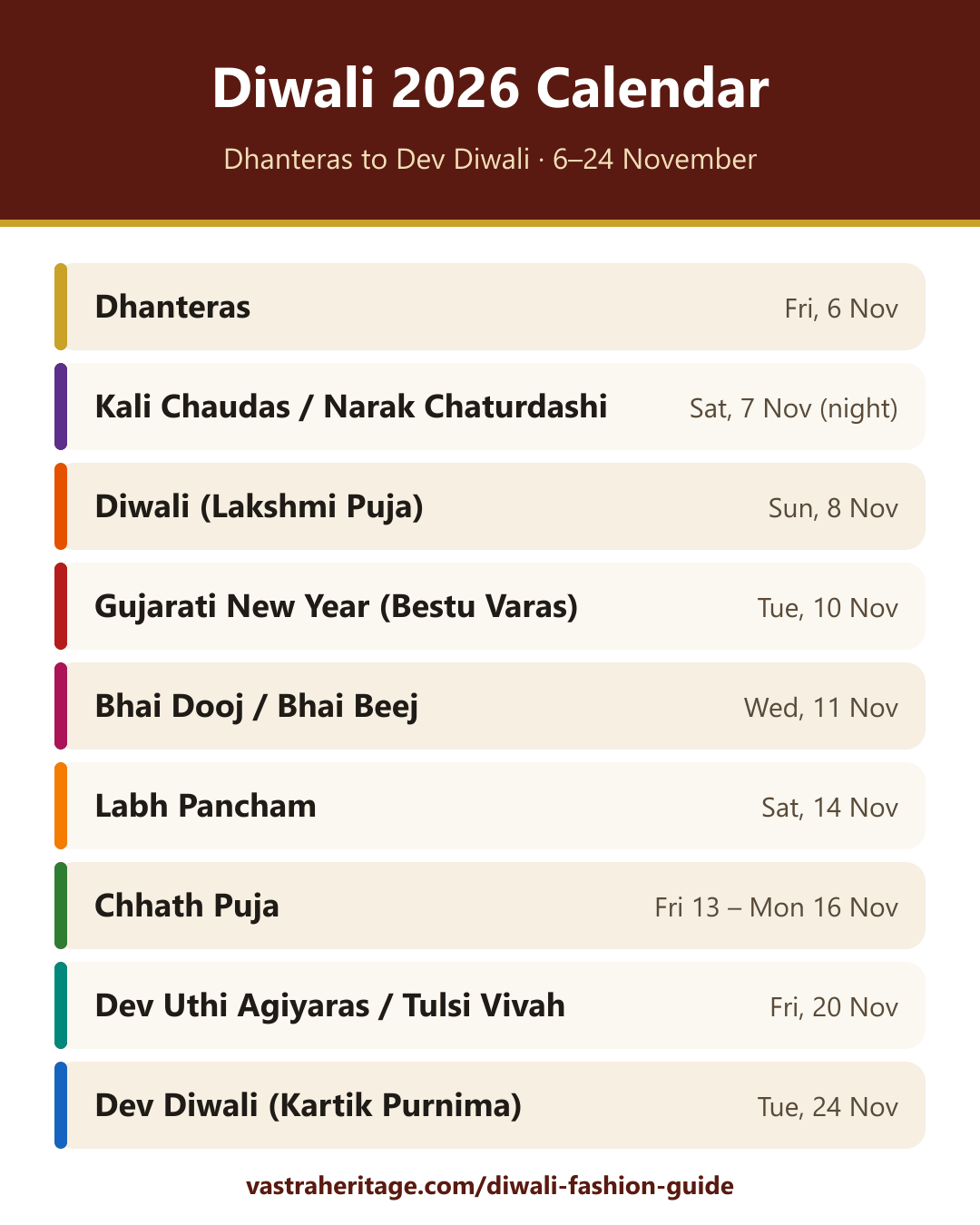
| Fri, 6 Nov | Dhanteras |
| Sat, 7 Nov (night) | Kali Chaudas / Narak Chaturdashi |
| Sun, 8 Nov | Diwali (Lakshmi Puja) (you are here) |
| Tue, 10 Nov | Gujarati New Year (Bestu Varas) |
| Wed, 11 Nov | Bhai Dooj / Bhai Beej |
| Sat, 14 Nov | Labh Pancham |
| Fri 13 – Mon 16 Nov | Chhath Puja |
| Fri, 20 Nov | Dev Uthi Agiyaras / Tulsi Vivah |
| Tue, 24 Nov | Dev Diwali (Kartik Purnima) |
Dates are for India; check your local panchang, as some festivals shift by a day in other cities and abroad.
Frequently asked questions
What are the key ethnic fashion trends for Diwali 2026?
Diwali 2026 is defined by a return to pure handloom silks—particularly Banarasi Katan, Kanjivaram Korvai, and Paithani—in rich jewel tones like vermilion red, royal purple, and emerald green. Accompanying trends include Kadhwa zari borders, vintage tissue blouses, minimal temple jewellery, and sustainable festive capsule styling.
Which saree is best to wear for Diwali Lakshmi Puja?
An auspicious pure red, magenta, or yellow Banarasi Katan silk or Kanjivaram silk saree with authentic gold zari is the traditional and most auspicious choice for Lakshmi Puja. The natural sheen of real silk reflects diya light beautifully and carries high cultural reverence.
What should I wear on Dhanteras 2026?
Dhanteras celebrates prosperity and gold, making metallic hues like honey gold, mustard, ochre, and warm bronze ideal. A lightweight Chanderi silk saree with gold zari butis or an embellished raw-silk kurta suit allows effortless movement for jewellery shopping and evening home pujas.
How can I dress comfortably for Diwali family card parties and get-togethers?
For Diwali card parties and social dinners, choose fluid, lightweight fabrics such as pure Gajji silk Bandhej, modal silk co-ord sets, or tissue organza sarees. Pair them with block heels or padded mojris so you can mingle, host, and sit cross-legged comfortably for hours.
What is the safest way to drape a saree around Diwali diyas and candles?
Pin the pallu securely at the shoulder and pin or tuck the loose pleated end into the waist waistband. Avoid loose fluttering dupattas or trailing pleats when walking past floor rangolis and clay lamps. Ensure your saree hem sits at least 1.5 inches above floor level.
How do I remove ghee or oil stains from a pure silk saree after puja?
Do not apply water, detergent, or soap directly onto silk oil stains. Dust pure talcum powder or cornstarch liberally over the spot and let it sit for 4–6 hours to absorb the grease. Gently brush off the residue, then hand the garment to a professional dry cleaner noting the stain.
How can I style a single heavy silk saree differently across multiple festive events?
You can restyle a heavy silk saree by switching the blouse—pairing it with a high-neck raw-silk blouse for a traditional look, or an elbow-length organza puffed sleeve for a contemporary vibe. Altering jewellery (temple gold vs oxidised silver) and drape style (Nivi vs Gujarati front-pallu) also completely reinvents the ensemble.
What jewellery pairs best with pure Banarasi and Kanjivaram sarees for Diwali?
Banarasi and Kanjivaram silks pair exquisitely with antique 22K gold, temple motifs, Kundan, and uncut Polki jewellery. Finish the look with classic jhumkas, a delicate maang tikka, glass or gold bangles, and a fragrant jasmine gajra.
Why should synthetic fabrics be strictly avoided during Diwali celebrations?
Synthetic fibres like polyester, nylon, chiffon, and acrylic melt when exposed to heat and stick directly to skin, causing severe, deep burns. Pure silk, cotton, and linen are natural protein and cellulose fibres that resist burning and char rather than melting, making them significantly safer around fire.
Where can I buy authentic handloom silk sarees for Diwali in Surat?
Visit Vastra Heritage in Kathodara, Surat, Gujarat. We offer an exclusive collection of genuine Banarasi Katan, pure Kanjivaram Korvai, Chanderi, and Bandhani silk sarees with Silk Mark certification and expert personal styling assistance.