The second day of Diwali goes by many names: Kali Chaudas in Gujarat, Narak Chaturdashi or Choti Diwali in much of India, Roop Chaudas in Rajasthan, and in Tamil Nadu and much of the South, simply Deepavali. In 2026 the Kali Chaudas night worship falls on Saturday, 7 November, and the Narak Chaturdashi early-morning oil bath falls on Sunday, 8 November, the same day as Diwali Lakshmi Puja.
Because the Chaturdashi tithi runs from Saturday evening into Sunday morning this year, many families are confused about which day to observe. The simple answer: rituals done at night (Kali and Hanuman worship) belong to Saturday night, and the pre-dawn oil bath (Abhyang Snan) belongs to Sunday morning. Local panchangs can differ by a few hours, so confirm with yours.
Quick answers:
- Kali Chaudas (Gujarat): night of Saturday, 7 November 2026: worship of Mahakali and Hanuman, and rituals to remove negativity.
- Narak Chaturdashi / Abhyang Snan: before sunrise on Sunday, 8 November 2026.
- Roop Chaudas (Rajasthan, North India): self-care and beauty rituals with ubtan, the day before Lakshmi Puja.
- South India: the Naraka Chaturdashi morning is Deepavali itself, with an oil bath, new clothes and fireworks at dawn.
- What to wear: fresh, comfortable clothes for the morning rituals; a bright Bandhej, organza or anarkali for evening card parties and visits.
One day, four names: how regions celebrate
Here is how the same festival looks across India, so you can follow your own tradition with confidence:
| Name | Where | When in 2026 | Main ritual |
|---|---|---|---|
| Kali Chaudas | Gujarat, parts of Rajasthan | Night of Sat, 7 Nov | Worship of Mahakali and Hanuman; removing negativity from the home |
| Narak Chaturdashi / Choti Diwali | North and Central India | Sun, 8 Nov (morning bath); lamps in the evening | Oil bath before sunrise, a lamp for Yama, small diyas |
| Roop Chaudas | Rajasthan, Haryana, parts of UP | Sat 7 – Sun 8 Nov | Ubtan, beauty and self-care before Lakshmi Puja |
| Naraka Chaturdashi / Deepavali | Tamil Nadu, Karnataka, Andhra Pradesh, Telangana, Goa | Pre-dawn Sun, 8 Nov | Oil bath, new clothes, sweets and fireworks at dawn |
| Abhyang Snan | Maharashtra | Pre-dawn Sun, 8 Nov | Fragrant oil massage, utane, crushing the bitter karit fruit |
The stories behind the day
Lord Krishna and the defeat of Narakasura
The demon king Narakasura had grown so powerful that he imprisoned thousands of women and troubled both heaven and earth. Lord Krishna, with his wife Satyabhama, fought and killed him on the Chaturdashi before Diwali, freeing the captives. The pre-dawn oil bath remembers Krishna cleansing himself after the battle, and the day celebrates the victory of good over evil. In Goa, giant Narakasura effigies are paraded and burnt before sunrise.
Mahakali and the removal of darkness
In Gujarat, Kali Chaudas night is dedicated to Goddess Mahakali, the fierce form of Shakti who destroys fear and negativity. Devotees visit Kali and Hanuman temples, and many households perform small rituals to clear the evil eye (najar) from the home before welcoming Lakshmi the next day.
Lord Hanuman
Many families in Gujarat and North India worship Hanuman on this night with sindoor, oil and sweets, praying for courage and protection. Some North Indian traditions also observe Hanuman Jayanti on this Chaturdashi.
Roop Chaudas: the beauty day
In Rajasthan the day is called Roop Chaudas, from roop (beauty). Women apply ubtan, wash their hair, apply mehendi and rest, so they look and feel their best for Lakshmi Puja. It is the original Indian "self-care day".
Abhyang Snan: the pre-dawn oil bath, step by step
The oil bath is the heart of Narak Chaturdashi morning in Maharashtra, Goa and South India, and many North Indian families follow it too.
- Wake before sunrise (Arunodaya, the early dawn period). Check the time in your local panchang.
- Massage warm oil (sesame or coconut) into the scalp and body. In many homes an elder applies the oil to children first.
- Apply ubtan or utane, a paste of besan (gram flour), turmeric, sandalwood and a little milk or rose water.
- Crush the karit (a small bitter fruit) under the left foot before the bath in Maharashtra, symbolising the end of Narakasura.
- Bathe and wear fresh or new clothes, light a diya and offer prayers.
- Enjoy faral or sweets with family; in the South, this is the moment for new clothes and the first crackers.
A simple ubtan you can make at home
- 2 tablespoons besan (gram flour)
- A pinch of turmeric
- 1 teaspoon sandalwood powder (optional)
- Raw milk or rose water to make a smooth paste
Apply, leave it for 10 minutes and wash off gently. Do a small patch test first if you have sensitive skin.
Kali Chaudas night in Gujarat: customs and what families do
Kali Chaudas is a quiet, inward night compared with the celebrations around it. Common customs include:
- Temple visits to Mahakali and Hanuman temples, often late in the evening.
- Removing the evil eye: in many homes a small offering (often vada or a similar fried item with a lamp) is taken out of the house at night and left at a crossroads, symbolically carrying away negativity. Practices vary by family and community.
- Lighting a lamp at the entrance and keeping the house clean and lit.
- Final Diwali preparations: the rangoli is designed, torans are hung, and the Lakshmi Puja platform is set for the next evening.
Families follow these customs in different ways, so take guidance from the elders in your home or community.
What to wear on Kali Chaudas and Choti Diwali
The day has two moods: calm, ritual mornings and lively evenings of card parties, sweets and visits. Plan two simple looks.
| Occasion | Outfit idea | Colours |
|---|---|---|
| Morning oil bath and prayers | A fresh cotton saree, a soft mulmul kurta set, or a simple pattu pavadai for girls | White, cream, yellow, light pink |
| South Indian Deepavali morning | A new silk saree (often Kanjivaram) or half saree for girls; veshti and shirt for men | Red, green, mustard, magenta |
| Temple visit at night (Gujarat) | A cotton or silk-cotton saree or suit with a dupatta | Maroon, deep red, saffron |
| Choti Diwali card party or visits | A Bandhej or leheriya saree, an organza drape, or an anarkali | Fuchsia, turquoise, orange, emerald |
| Teenagers and kids | A light lehenga, sharara set or cotton frock with gota details | Bright yellow, orange, pink |
Keep your grandest silk for Lakshmi Puja on Sunday evening. For bright festive drapes, see our guide to Indian saree types, and for South Indian silks, our South India textiles page.
Diwali eve checklist: be ready for Lakshmi Puja
Use the evening of Kali Chaudas to finish everything for Sunday:
- Outfit ready: saree ironed, blouse fitted, fall and pico done, safety pins kept with it.
- Jewellery set out: the pieces you will wear, plus any new Dhanteras purchase for the puja.
- Puja items: diyas, wicks, ghee or oil, flowers, sweets, kumkum, rice and the Lakshmi-Ganesha idols or images.
- Rangoli colours and a design chosen for the entrance.
- Mehendi and hair care done tonight, in the Roop Chaudas spirit.
- Silk care: if you are taking out a stored silk, air it for a few hours; our silk saree care guide explains how.
Safety reminders
- Pin dupattas and pallus near diyas and crackers.
- Prefer cotton and silk; synthetics can melt if they catch a spark.
- Keep a bucket of water or sand nearby when children burst crackers.
Sweets and snacks of the day across India
Food is half the fun of Diwali, and this is the day most homes finish their festive cooking:
- Maharashtra: faral, the Diwali snack platter of chakli, karanji, shankarpali, anarse, besan ladoo and chivda, served after the morning oil bath.
- Gujarat: mathiya, chorafali, ghughra and mohanthal; vada is also made for the Kali Chaudas evening ritual in many homes.
- Tamil Nadu and Karnataka: murukku, athirasam, mysore pak and a spoonful of Deepavali lehiyam, a digestive herbal paste eaten after the oil bath.
- North India: gujiya, kaju katli and besan ladoo, with sweets sent to neighbours and relatives.
Small mistakes to avoid
- Wearing your grandest silk for the morning oil-bath rituals; oil and turmeric stains are hard to remove from silk.
- Leaving diya oil and crackers near saree pleats and dupattas.
- Scheduling the beauty-parlour visit for Sunday afternoon, when Lakshmi Puja preparations peak; finish it today.
Rangoli ideas for Diwali eve
Kali Chaudas evening is when most families draw the rangoli that will greet Lakshmi the next night. Four easy ideas:
- Lakshmi footprints: small white footprints drawn from the door towards the puja room, a traditional welcome for the goddess.
- Diya circle: a round rangoli in red, yellow and orange with a ring of small diyas around it; simple and very photogenic at night.
- Flower rangoli: marigold petals, rose petals and mango leaves; no colours to stain your saree or floor.
- Dot (kolam) designs: the South Indian style, drawn with rice flour around a grid of dots.
Draw it in comfortable clothes and change afterwards, as rangoli powder clings to silk.
Celebrating abroad
Outside India, the Chaturdashi may begin and end at different local times. Families in the US, UK, Canada and Australia often do the oil bath on the weekend morning nearest the tithi and keep the evening for a small lamp and prayers. Use a panchang set to your city for exact timings.
Diwali season 2026 calendar
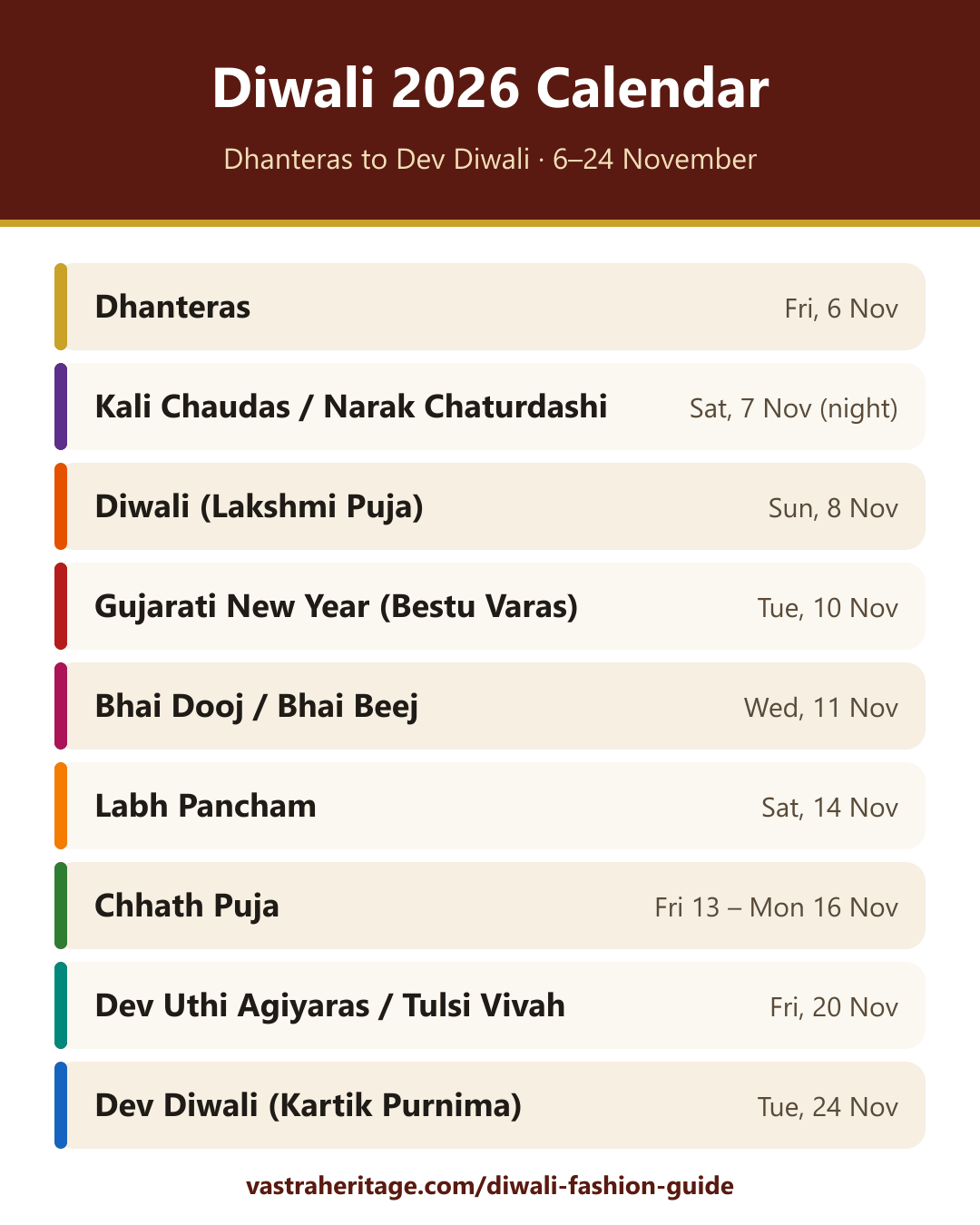
| Fri, 6 Nov | Dhanteras |
| Sat, 7 Nov (night) | Kali Chaudas / Narak Chaturdashi (you are here) |
| Sun, 8 Nov | Diwali (Lakshmi Puja) |
| Tue, 10 Nov | Gujarati New Year (Bestu Varas) |
| Wed, 11 Nov | Bhai Dooj / Bhai Beej |
| Sat, 14 Nov | Labh Pancham |
| Fri 13 – Mon 16 Nov | Chhath Puja |
| Fri, 20 Nov | Dev Uthi Agiyaras / Tulsi Vivah |
| Tue, 24 Nov | Dev Diwali (Kartik Purnima) |
Dates are for India; check your local panchang, as some festivals shift by a day in other cities and abroad.
Frequently asked questions
When is Kali Chaudas in 2026?
Kali Chaudas night worship falls on Saturday, 7 November 2026, the night before Diwali. The Narak Chaturdashi oil bath (Abhyang Snan) is before sunrise on Sunday, 8 November 2026.
Are Kali Chaudas and Narak Chaturdashi the same?
They fall on the same Chaturdashi tithi but focus on different rituals. Kali Chaudas, mainly in Gujarat, centres on night worship of Mahakali and Hanuman; Narak Chaturdashi centres on Krishna's victory over Narakasura and the pre-dawn oil bath.
Why is Narak Chaturdashi also called Choti Diwali?
It is the day before the main Diwali Lakshmi Puja, so in North India it is called Choti (small) Diwali. Families light a few diyas in the evening and finish their preparations.
What is Roop Chaudas?
Roop Chaudas is the Rajasthani name for this day, from roop (beauty). Women apply ubtan, mehendi and hair oil and rest so they look their best for Lakshmi Puja.
What is Abhyang Snan?
It is the ritual oil bath taken before sunrise on Narak Chaturdashi. Warm oil is massaged into the body, followed by ubtan and a bath, symbolising purification.
Why is Deepavali celebrated on Naraka Chaturdashi in South India?
In Tamil Nadu and much of South India, the main Deepavali celebration marks Krishna's victory over Narakasura, so it is celebrated on the Naraka Chaturdashi morning with an oil bath, new clothes and fireworks.
What should I wear on Kali Chaudas?
Comfortable fresh clothes for the morning rituals, a cotton or silk-cotton saree or suit for temple visits, and a bright Bandhej, organza or anarkali for evening card parties or visits.
Which god is worshipped on Kali Chaudas?
Goddess Mahakali and Lord Hanuman are worshipped on Kali Chaudas night, especially in Gujarat, for protection and to remove negativity.
Can I do the oil bath on Saturday instead?
Tradition places the oil bath before sunrise during the Chaturdashi tithi, which in 2026 means Sunday, 8 November in India. Check your local panchang, as timing differs by location.
Is it safe to wear silk near diyas and crackers?
Pure silk and cotton are safer than synthetics, which can melt when they catch a spark. Still pin loose pallus and dupattas and keep distance from crackers.
What comes after Kali Chaudas?
Diwali Lakshmi Puja on Sunday, 8 November 2026, then the Gujarati New Year (Bestu Varas) and Govardhan Puja on Tuesday, 10 November, and Bhai Dooj on Wednesday, 11 November.