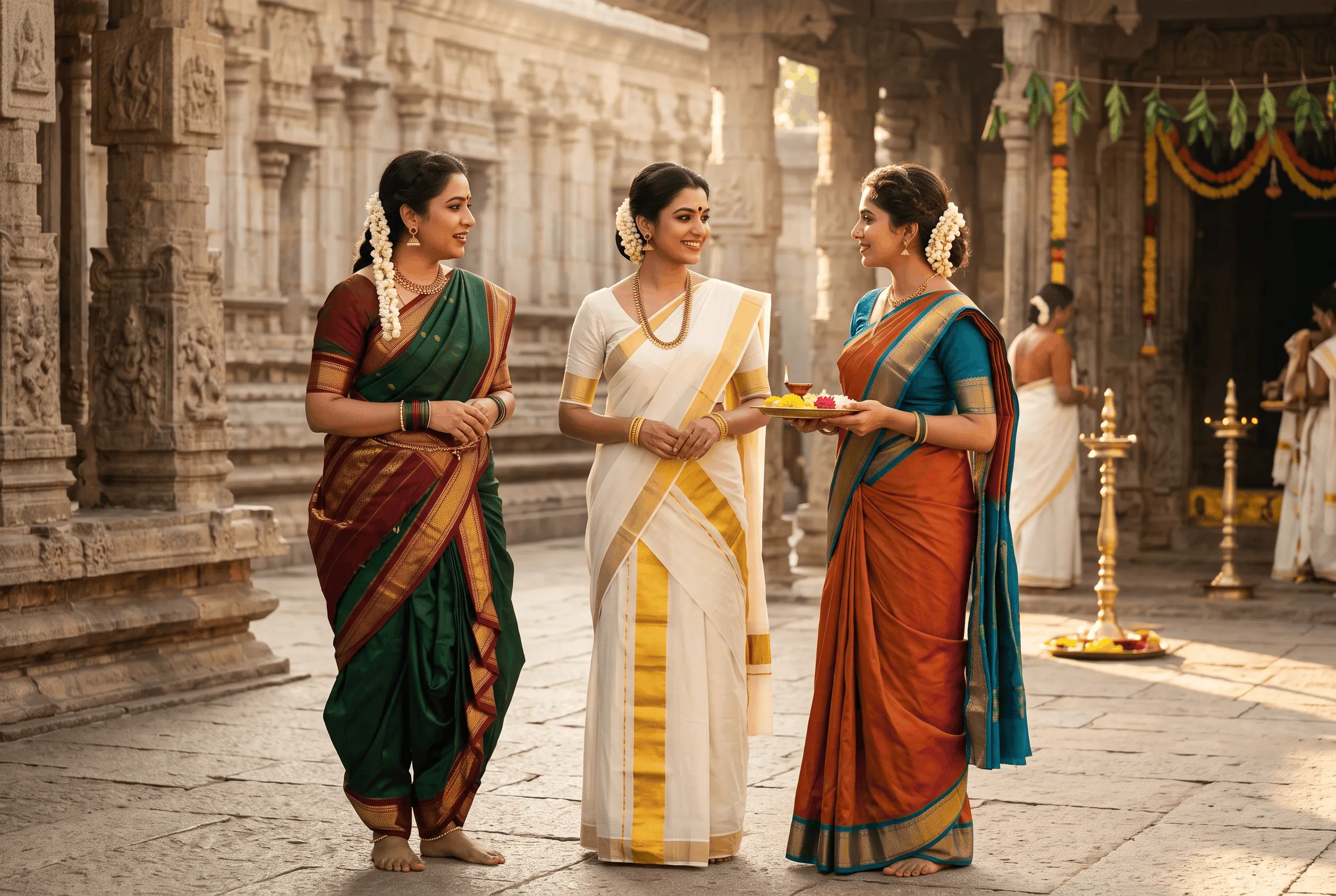
Cream cotton, a shining gold border and nothing else. The Kasavu saree is one of the simplest sarees in India, and one of the most elegant.
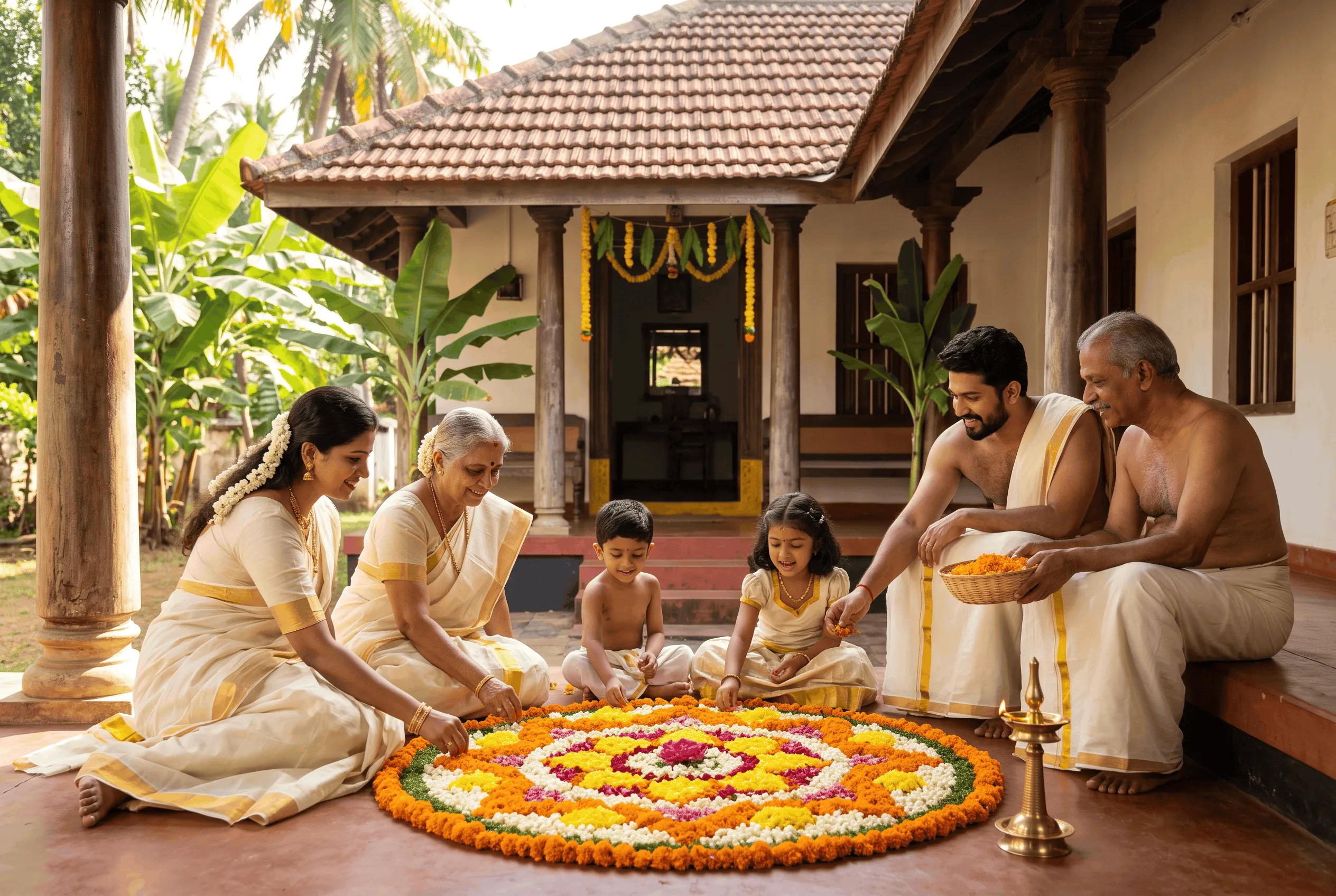
It is the saree of Onam and Vishu, of temple visits and Kerala weddings, of Malayali women gathered around a pookalam on a festival morning. Its quiet beauty comes from fine handwoven cotton and the glow of kasavu, the gold zari that gives the saree its name.
This guide explains what makes a Kasavu saree special, its history, the difference between the traditional mundum neriyathum and the set-saree, the main weaving centres, how to choose a genuine handloom Kasavu, and how to style and care for it.
What Is a Kasavu Saree?
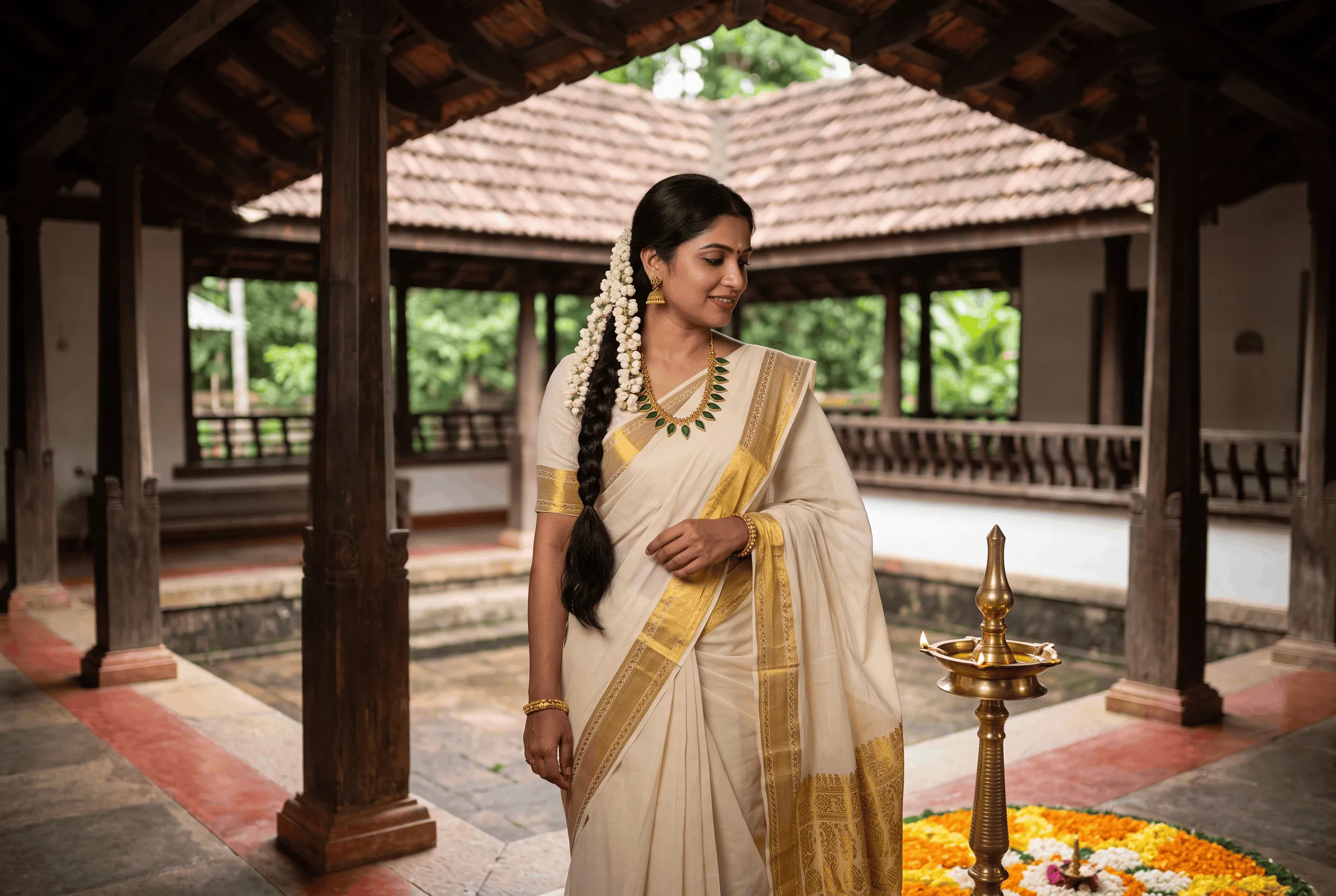
A Kasavu saree is a handwoven cream or off-white cotton saree with a gold zari border, traditionally from Kerala.
Kasavu refers to the zari border itself. Traditionally the zari was made with real gold; today, most Kasavu sarees use tested or imitation zari, while pure zari versions are still made for special occasions.
The saree's plain cream body and gold border reflect Kerala's love of simplicity, purity and understated elegance.
Mundum Neriyathum vs Set-Saree
Mundum neriyathum
The traditional Kerala garment is a two-piece set:
Mundu: a lower garment worn around the waist.
Neriyathu: a cloth draped over the upper body, over the left shoulder, and tucked at the waist or into the blouse.
It is considered the oldest form of the saree in Kerala.
Set-saree (set-mundu)
The set-saree is a single six-yard Kasavu saree draped in the Nivi style, designed to give the look of mundum neriyathum.
Most women today wear the set-saree for Onam and weddings because it is easier to drape.
Read our South Indian saree draping styles for how both are worn.
Where Kasavu Is Woven
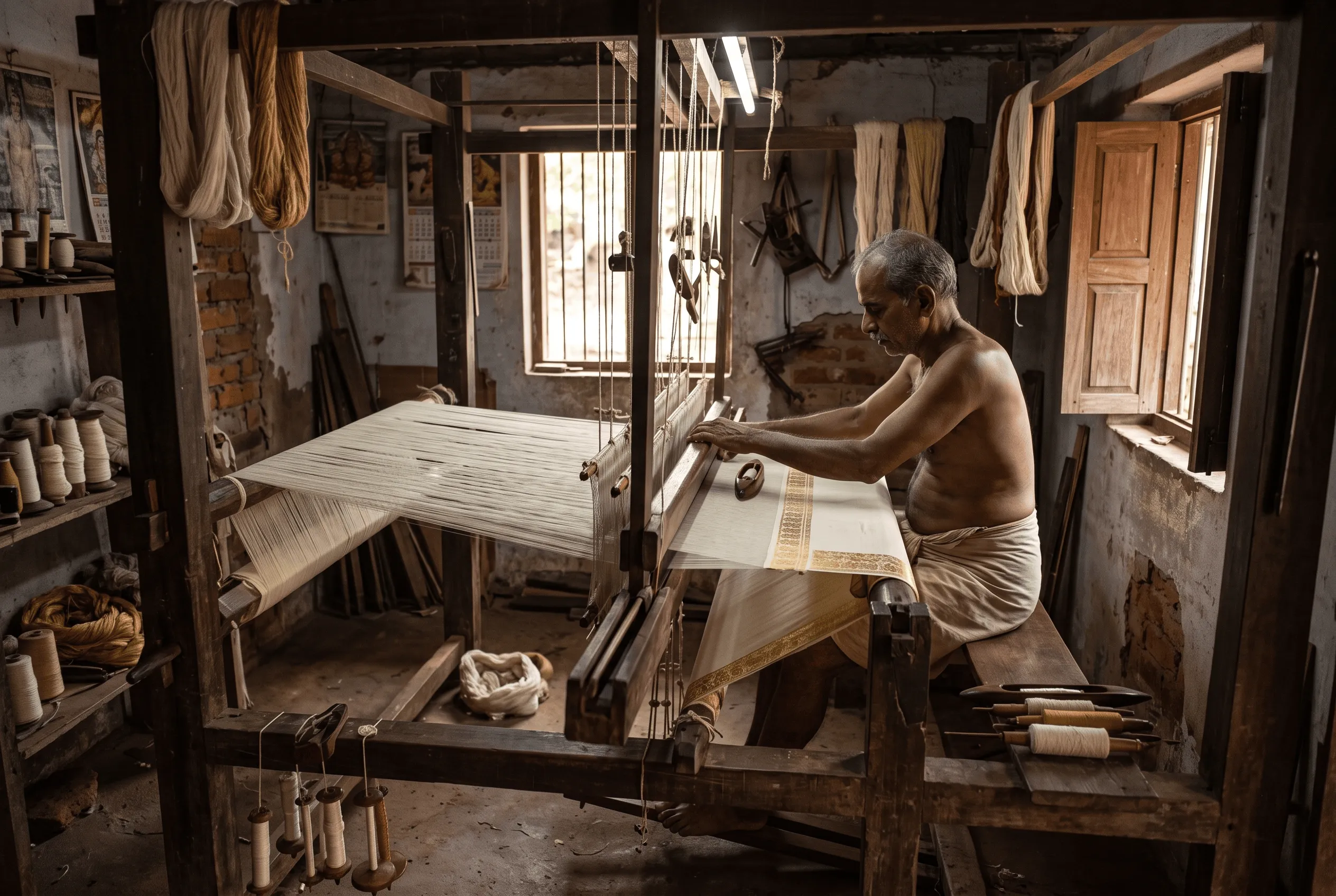
Balaramapuram (Thiruvananthapuram): famous for very fine cotton and fine zari borders. Balaramapuram sarees and fabrics are protected by a Geographical Indication.
Kuthampully (Thrissur): known for Kasavu sarees and set-mundus, also GI-protected.
Chendamangalam (Ernakulam): known for handloom dhotis and sarees, also GI-protected.
Each centre has its own character, from the very fine, light cotton of Balaramapuram to the more decorative borders of Kuthampully.
A Short History
Kerala's tradition of plain cream cotton garments goes back centuries, and the mundum neriyathum is often traced to early Kerala dress.
Gold borders became associated with status and celebration, and the Kasavu saree became the signature festive garment of Malayali women.
Paintings by Raja Ravi Varma famously show women in mundum neriyathum, helping the style become an iconic image of Kerala.
Types of Kasavu Sarees
Plain Kasavu: cream body with a gold border, the classic Onam saree.
Coloured border Kasavu: gold border with a thin coloured line in red, green, maroon or blue.
Kasavu with motifs: woven or embroidered peacocks, temples, mango or floral motifs on the pallu and border.
Tissue Kasavu: a shimmering gold tissue body for weddings and receptions.
Painted Kasavu: hand-painted Krishna, Kathakali or mural designs.
Kerala silk Kasavu: silk or silk-cotton versions for weddings.
When to Wear Kasavu
Onam: the most iconic occasion, especially for Thiruvonam.
Vishu: a set-saree with a coloured border.
Temple visits: plain Kasavu for its purity and simplicity.
Weddings: Kerala brides often wear a Kasavu or tissue Kasavu, especially for Hindu weddings, sometimes along with a Kanjivaram for other ceremonies.
Cultural events and office celebrations: Kasavu is a popular choice for Kerala Piravi and Onam celebrations at work.
Styling a Kasavu Saree
Blouses
Contrast blouses: green, red, maroon, mustard or bottle green look classic.
Matching gold tissue blouses: for weddings and receptions.
Mural-painted or embroidered blouses: for a modern twist.
High-neck and collared blouses: for office celebrations.
Jewellery
Palakka mala: a green-stone necklace associated with Kerala.
Kasu mala: a coin necklace.
Nagapadam: a necklace with a cobra-hood pendant.
Jimikki kammal: bell-shaped earrings.
Temple jewellery: for weddings.
See our jewellery pairing guide for silk sarees.
Hair and finishing touches
A braid or bun with jasmine flowers, a small bindi and a sandalwood mark complete the classic Kerala look.
Kasavu for Men
Men wear the mundu (dhoti) with a gold Kasavu border and a shirt or a neriyathu draped over the shoulder.
Coordinating the family in Kasavu mundus and sarees is a popular Onam tradition.
How to Choose a Genuine Handloom Kasavu
Feel the cotton: handloom Kasavu is soft, fine and breathable.
Check the border: the zari border should be woven, not printed.
Look for slight irregularities, a sign of handweaving.
Ask about the weaving centre and GI details.
Compare prices: pure handloom Kasavu costs more than powerloom.
Read our authentic handloom red flags before buying.
Price Guide
These are indicative 2026 ranges.
| Kasavu type | Indicative price range |
|---|---|
| Powerloom Kasavu saree | ₹800 – ₹2,500 |
| Handloom Kasavu set-saree | ₹2,500 – ₹8,000 |
| Fine Balaramapuram handloom | ₹6,000 – ₹20,000 |
| Tissue or pure zari Kasavu | ₹10,000 – ₹50,000+ |
Caring for Kasavu Sarees
First wash: soak in salted cold water to help set the colour of coloured borders.
Hand wash gently in cold water with mild detergent, or dry-clean pure zari sarees.
Starch lightly for a crisp drape.
Dry in shade to keep the cream colour from yellowing.
Iron on the reverse and avoid pressing zari directly.
Store in muslin with the zari folded inward.
Common Mistakes
Over-starching: makes the saree stiff.
Drying in direct sunlight: can yellow the cream body.
Heavy jewellery overload: Kasavu looks best with balanced, traditional jewellery.
Mixing up set-saree and mundum neriyathum: they are draped differently.
Choosing the Right Kasavu
Border width: narrow borders look delicate and suit everyday temple visits and office celebrations; wide borders look grand and suit weddings and Thiruvonam.
Coloured lines: a thin red, green or maroon line along the gold border adds a festive touch and pairs with a matching blouse.
Fineness of cotton: finer counts feel lighter and softer and drape beautifully; heavier cotton holds starch and pleats better.
Pallu design: a plain pallu with a gold band is classic, while woven peacocks, temple motifs or mural paintings make the saree a statement piece.
Zari type: tested zari is practical for regular wear; pure zari is best kept for weddings and heirloom pieces.
Kasavu for Kerala Brides
Many Kerala Hindu brides wear a Kasavu or tissue Kasavu saree for the wedding ceremony, often with a contrast blouse in red, green or gold.
Jewellery: layered gold necklaces such as palakka mala, kasu mala, mullamottu mala and a long haram, with a matching vanki (armlet) and jimikki earrings.
Hair: a long braid decorated with jasmine flowers.
Second look: many brides change into a Kanjivaram or another silk saree for the reception or for other ceremonies.
Kasavu bridal looks are understated compared with heavily embroidered bridal wear, but the gold jewellery and fresh flowers make them radiant.
Modern Ways to Wear Kasavu
Kasavu half saree: a Kasavu skirt and dupatta with a contrast blouse for young women.
Kasavu lehenga or skirt set: a festive alternative for Onam celebrations at college or work.
Kasavu dress or kurta: comfortable for casual festive wear.
Kasavu with a modern blouse: puff sleeves, collars, or a printed mural blouse add a contemporary twist.
Kasavu dupatta: pairs beautifully with a plain kurta.
These options let younger wearers enjoy Kasavu in a style that suits them.
Kasavu for Office Onam Celebrations
Office Onam celebrations are one of the busiest times for Kasavu.
Choose a lightweight set-saree that is easy to drape and comfortable to sit in for the Onam sadhya.
Pin the pleats and pallu securely, because you will be moving around for games and pookalam.
Keep jewellery simple and comfortable, and carry a small towel or tissue, because the cream fabric shows stains easily.
Kasavu at Different Ages
Little girls: pattu pavadai or a Kasavu frock with a gold border. See our pattu pavadai and half saree guide.
Teenagers: Kasavu half saree or skirt sets.
Young women: set-saree with a modern blouse.
Married women: set-saree or mundum neriyathum with traditional jewellery.
Older women: fine handloom mundum neriyathum with a narrow border, worn with simple gold.
Kasavu Through the Festival Year
Vishu (April): a set-saree with a coloured border, often worn after viewing the Vishukkani on the morning of the festival.
Thiruvathira (December–January): women traditionally wear Kasavu or mundum neriyathum for the Thiruvathirakali dance.
Onam (August–September): the most important Kasavu occasion, especially for Thiruvonam day, office celebrations and the Onam sadhya.
Navaratri and Vidyarambham: Kasavu with gold or coloured borders for temple visits and the ceremony where children begin learning.
Temple festivals (utsavams): plain Kasavu for its simplicity and traditional feel.
Weddings: throughout the wedding season, Kasavu and tissue Kasavu for brides, families and guests.
A Kasavu collection with one plain set-saree, one coloured-border set-saree and one tissue Kasavu covers almost every occasion in the Malayali calendar.
Gifting a Kasavu
A Kasavu set-saree is a classic Onam and Vishu gift for mothers, grandmothers, sisters and friends.
A handloom Kasavu from Balaramapuram or Kuthampully shows thought and care, while a tissue Kasavu makes a special wedding gift. Many families also give Kasavu mundus to men, so the whole family can dress together for the festival.
Celebrating With Kasavu
The Kasavu saree is Kerala's quiet masterpiece: simple, pure and glowing with gold.
Choose a handloom set-saree for Onam and Vishu, a tissue Kasavu for weddings and a plain Kasavu for temple visits. Pair it with palakka mala and jasmine for the classic look, care for it gently, and it will stay beautiful for years.
Explore more in our guide to South Indian silk: Kanjeevaram, Kasavu and Pochampally and on our South India page.
Comments (0)
Leave a Thought
No comments yet. Be the first to share your thoughts!