A beautiful silk saree deserves jewellery that complements its colour, craftsmanship and elegance. Whether it is a richly woven Kanjivaram, a traditional Banarasi or a lightweight Chanderi, the right accessories can completely transform the appearance of an outfit.
Indian ethnic jewellery offers endless styling possibilities. Traditional temple necklaces, intricate kundan sets, elegant pearls, antique gold earrings and oxidized silver pieces each bring a different character to a silk saree.
However, jewellery styling is not simply about choosing the heaviest necklace or matching every accessory to the saree's colour. The weave, border, blouse neckline, occasion and overall silhouette all influence which pieces work together.
A heavily embellished silk saree may need only a pair of statement earrings, while a relatively simple handloom saree provides the perfect canvas for an elaborate necklace.
This guide explores ethnic jewellery combinations for different silk sarees, traditional and contemporary styling ideas, and practical tips for creating a balanced look for weddings, festivals and formal celebrations.
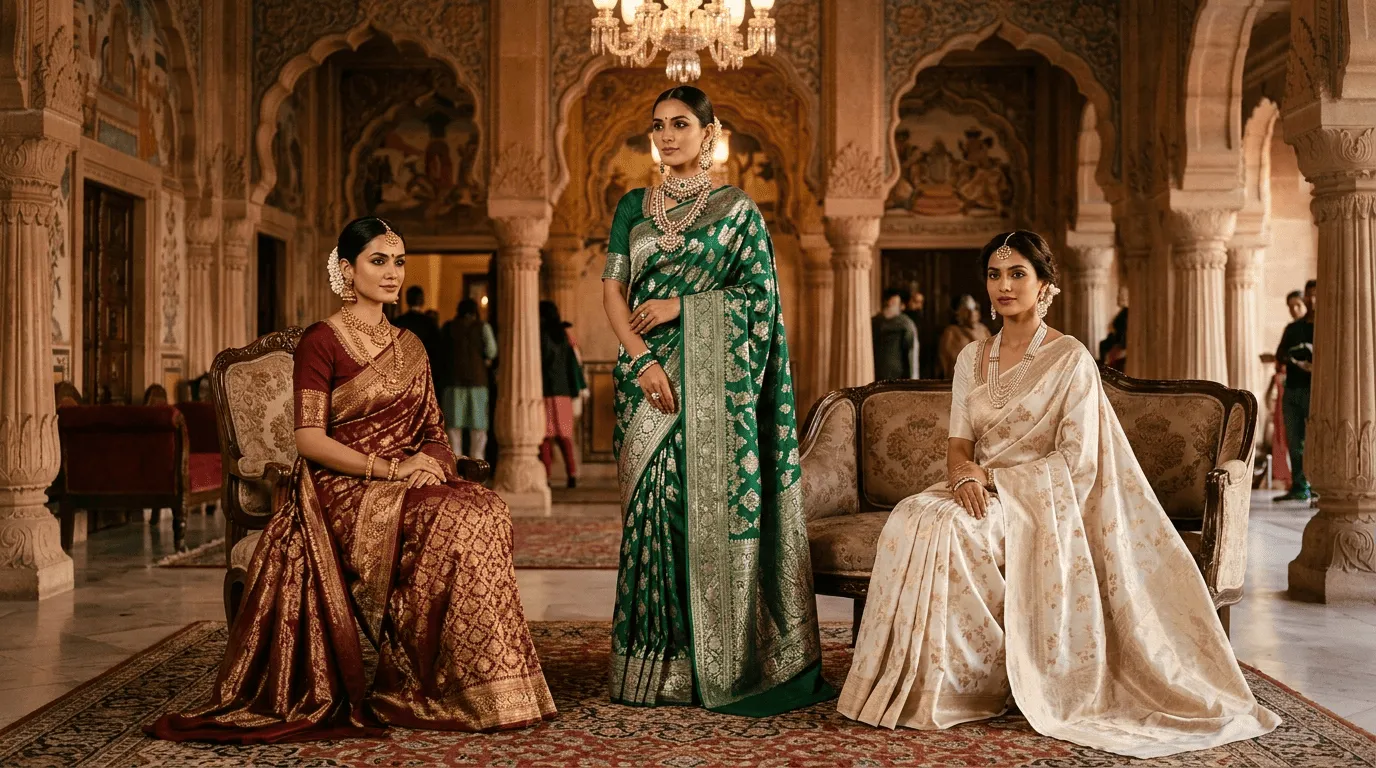
Why Jewellery Matters When Styling Silk Sarees
Silk sarees are admired for their natural lustre, rich colours and intricate woven designs. Jewellery adds another layer of visual interest, helping highlight the face, neckline and overall silhouette.
The most effective combinations create a relationship between the saree and its accessories.
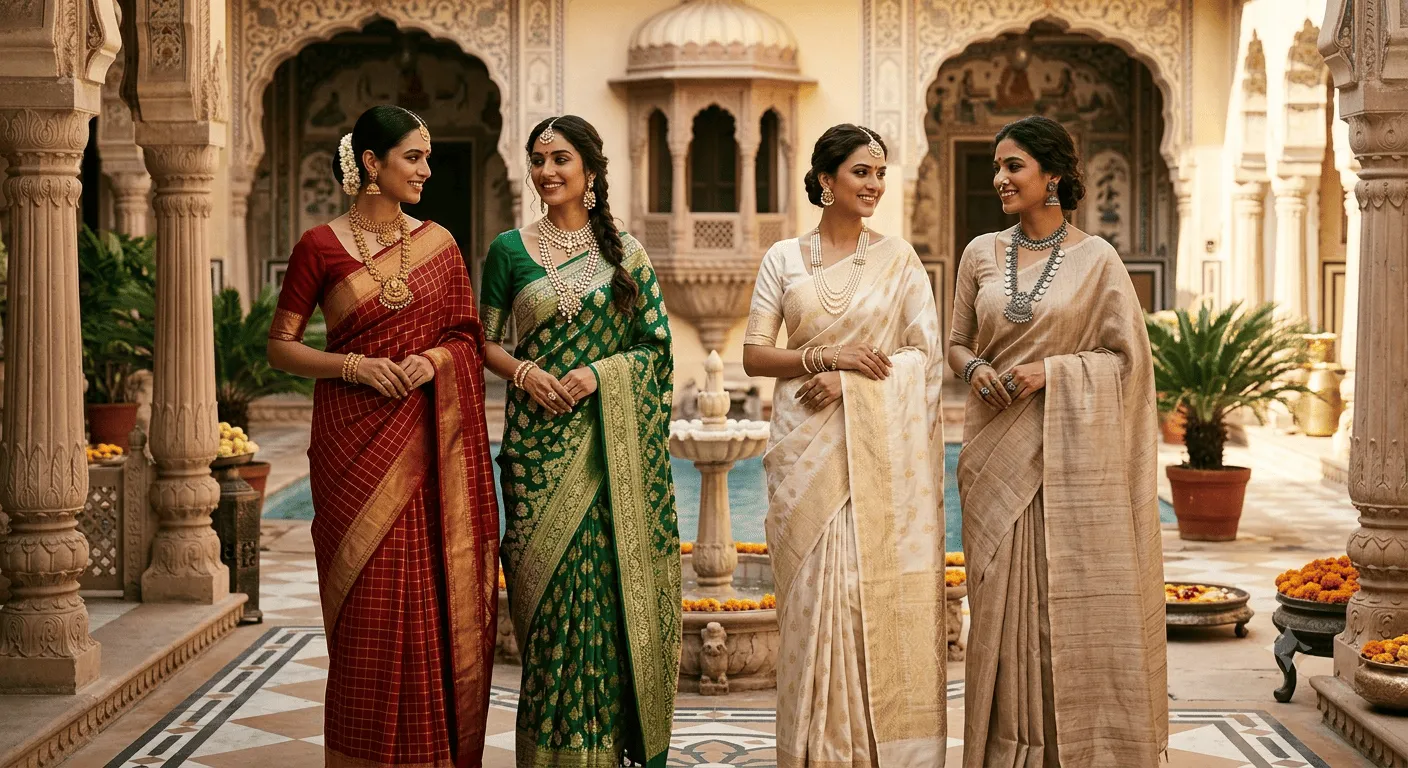
For example, traditional gold jewellery beautifully complements the warm zari borders of a Kanjivaram saree. Pearls introduce softness to pastel silk, while kundan necklaces create a regal appearance when paired with richly woven Banarasi sarees.
Jewellery also allows the same saree to be styled differently for multiple occasions.
A classic silk saree worn with simple earrings may feel appropriate for a family gathering. Pairing it with a traditional necklace, matching bangles and an elegant hairstyle can transform it into a wedding-ready outfit.
The key is to let the saree and jewellery complement each other rather than compete for attention.
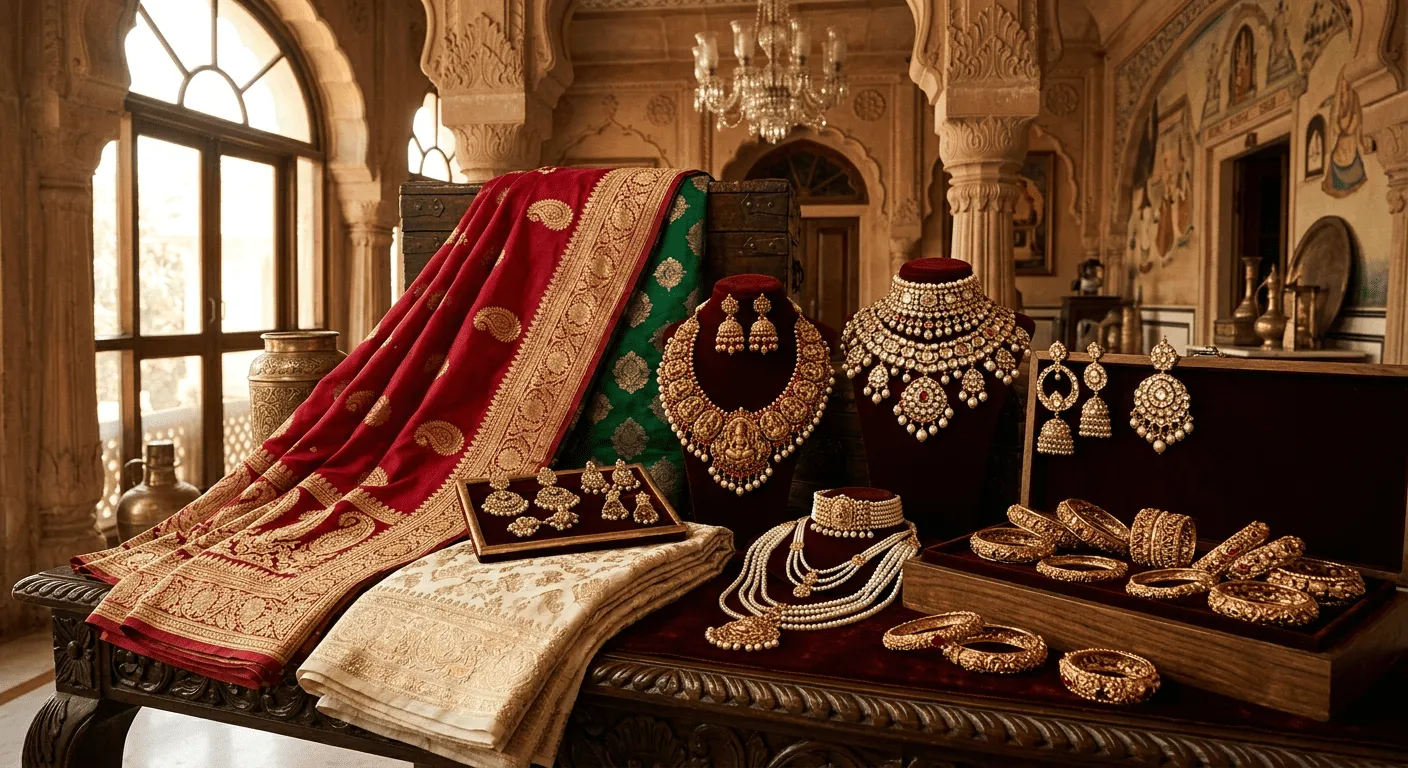
1. Temple Jewellery with Kanjivaram Silk Sarees
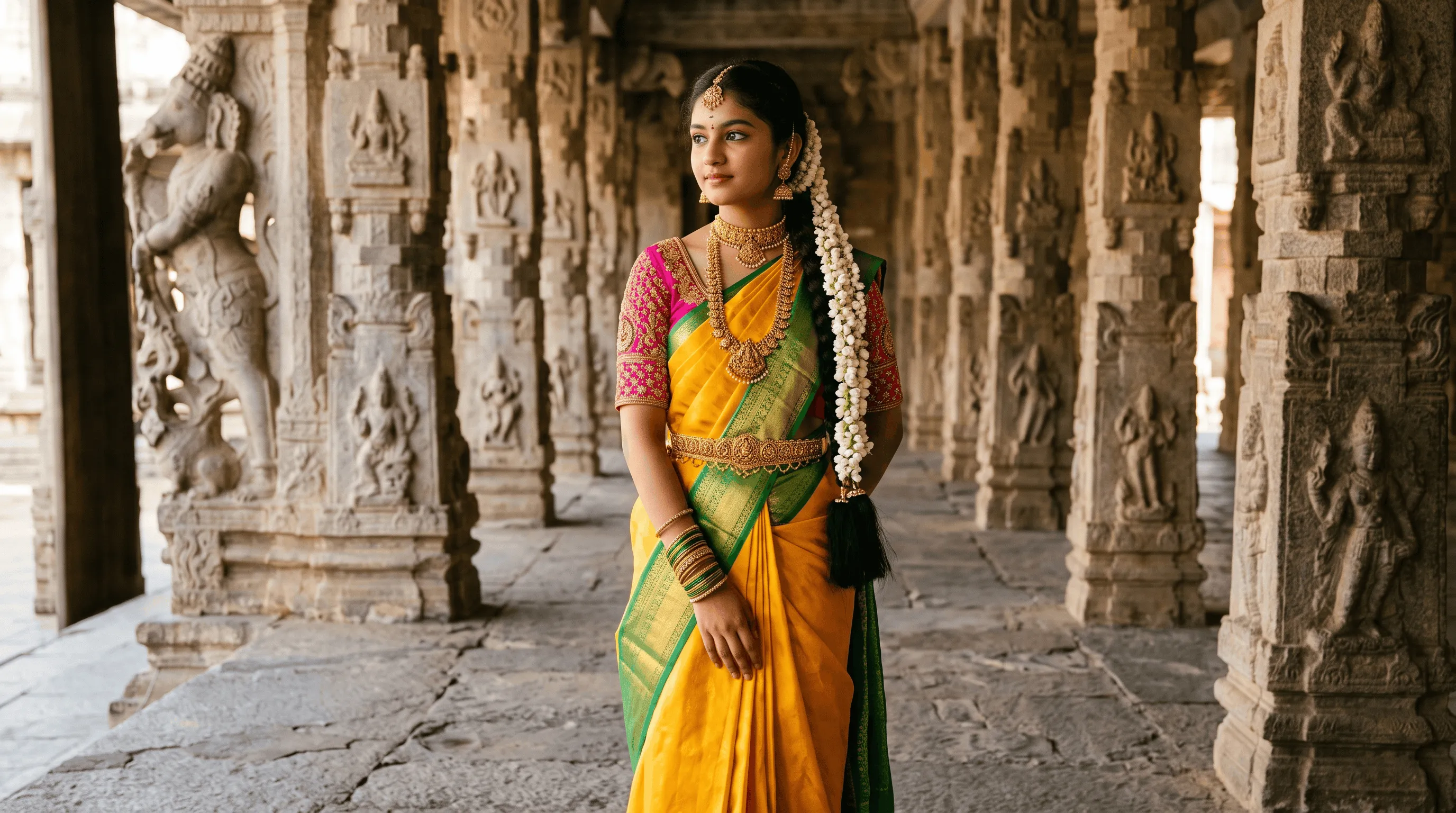
Temple jewellery and Kanjivaram silk are a traditional combination particularly associated with South Indian wedding and ceremonial dressing.
Kanjivaram sarees are known for their lustrous silk, contrasting borders and elaborate zari designs. Traditional temple jewellery complements these characteristics through sculpted gold-toned motifs, decorative forms and intricate craftsmanship.
A richly woven red, green or maroon Kanjivaram saree looks beautiful with an antique-finish temple necklace, matching jhumkas and traditional bangles.
For brides, layered jewellery can create a more elaborate appearance. A shorter necklace paired with a longer haram adds depth without concealing the saree's decorative border.
Temple jewellery also works particularly well with traditional hairstyles. A neatly styled bun decorated with jasmine flowers allows the earrings and necklace to remain visible.
If your saree has exceptionally elaborate zari work, consider choosing one prominent necklace rather than layering several heavy pieces.
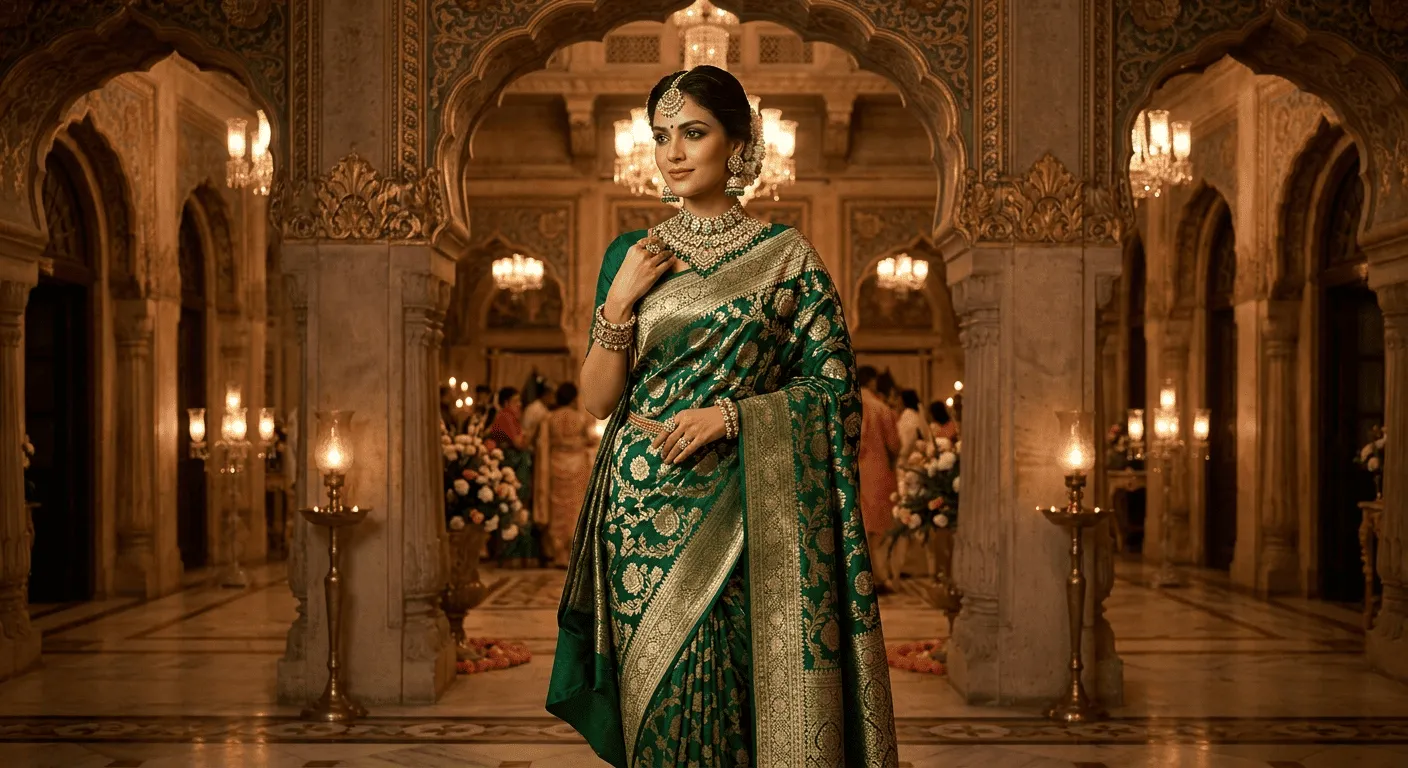
2. Kundan and Polki Jewellery with Banarasi Silk
Banarasi silk sarees have a naturally regal appearance because of their elaborate brocade weaving, floral motifs and decorative zari borders.
Kundan and polki jewellery can complement their intricate designs, making this combination particularly attractive for weddings and formal celebrations.
Kundan jewellery uses a traditional gemstone-setting technique, while polki jewellery features uncut diamonds. Both appear in elaborate Indian bridal and occasion-wear designs.
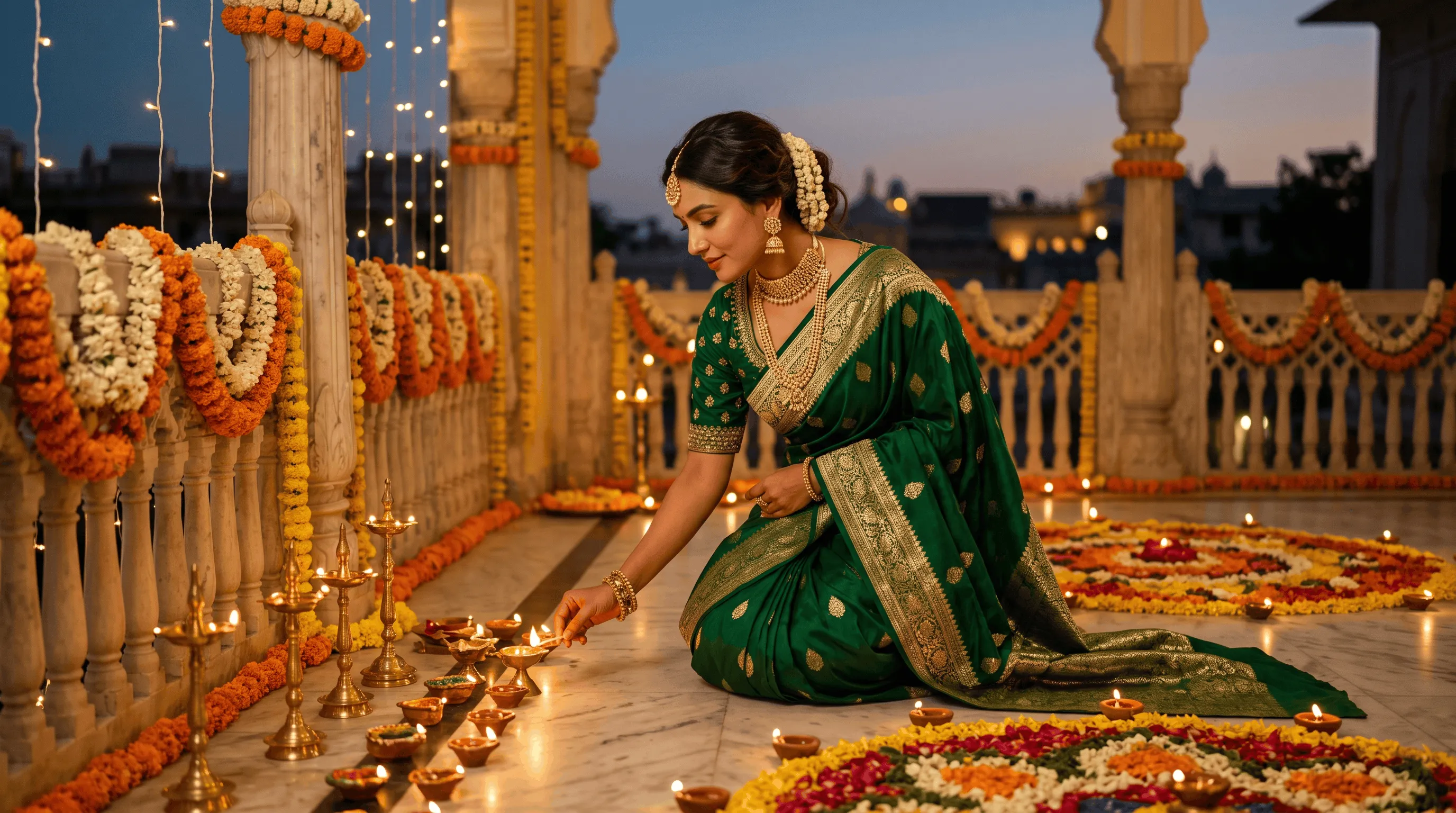
A deep green Banarasi saree with gold zari can be styled with a kundan necklace featuring emerald-toned stones. Similarly, a wine or maroon Banarasi saree pairs beautifully with traditional pearl-accented jewellery.
For a wedding reception, an ivory or champagne Banarasi saree combined with a refined polki-style necklace creates an elegant appearance.
When selecting jewellery, consider the neckline of your blouse. A deep neckline can accommodate a shorter statement necklace, while a high-neck blouse may look more balanced with elaborate earrings and no necklace.
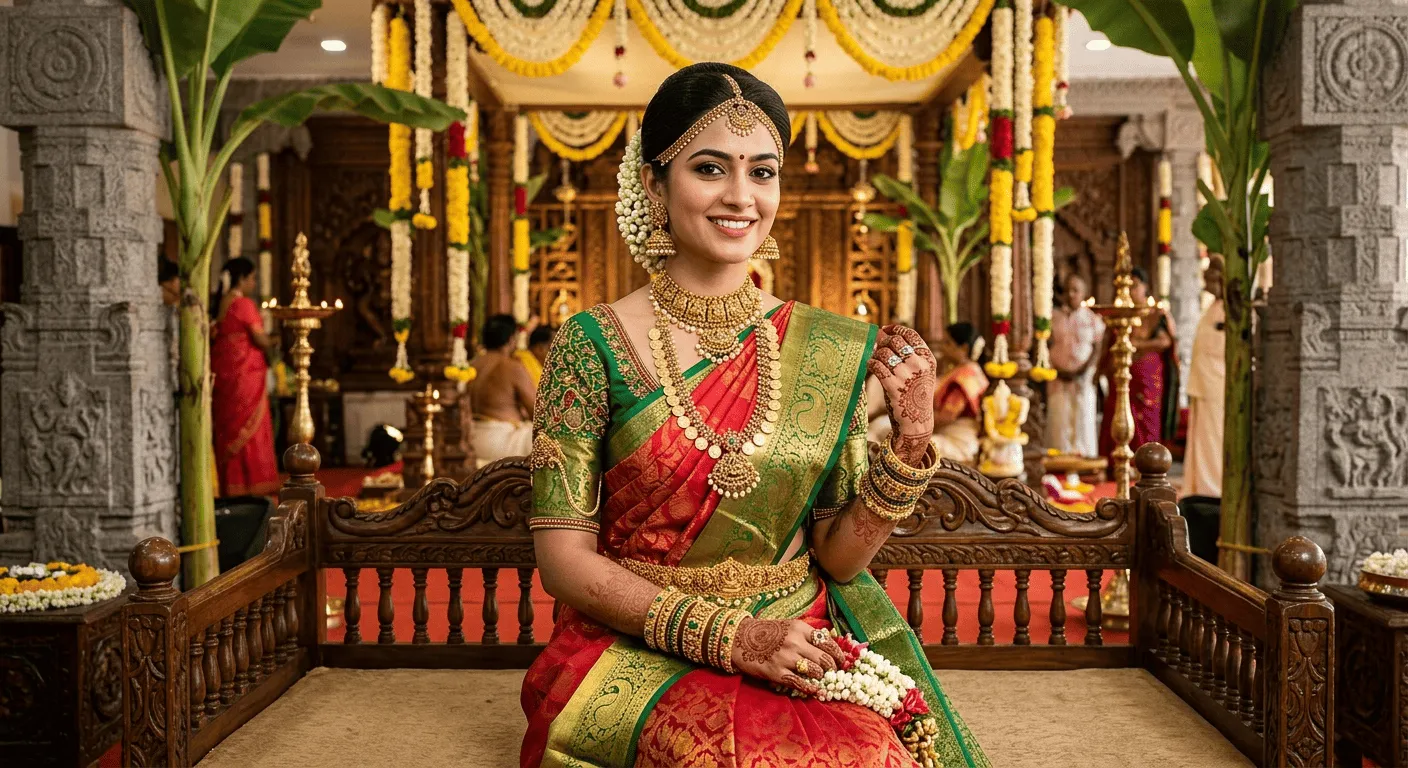
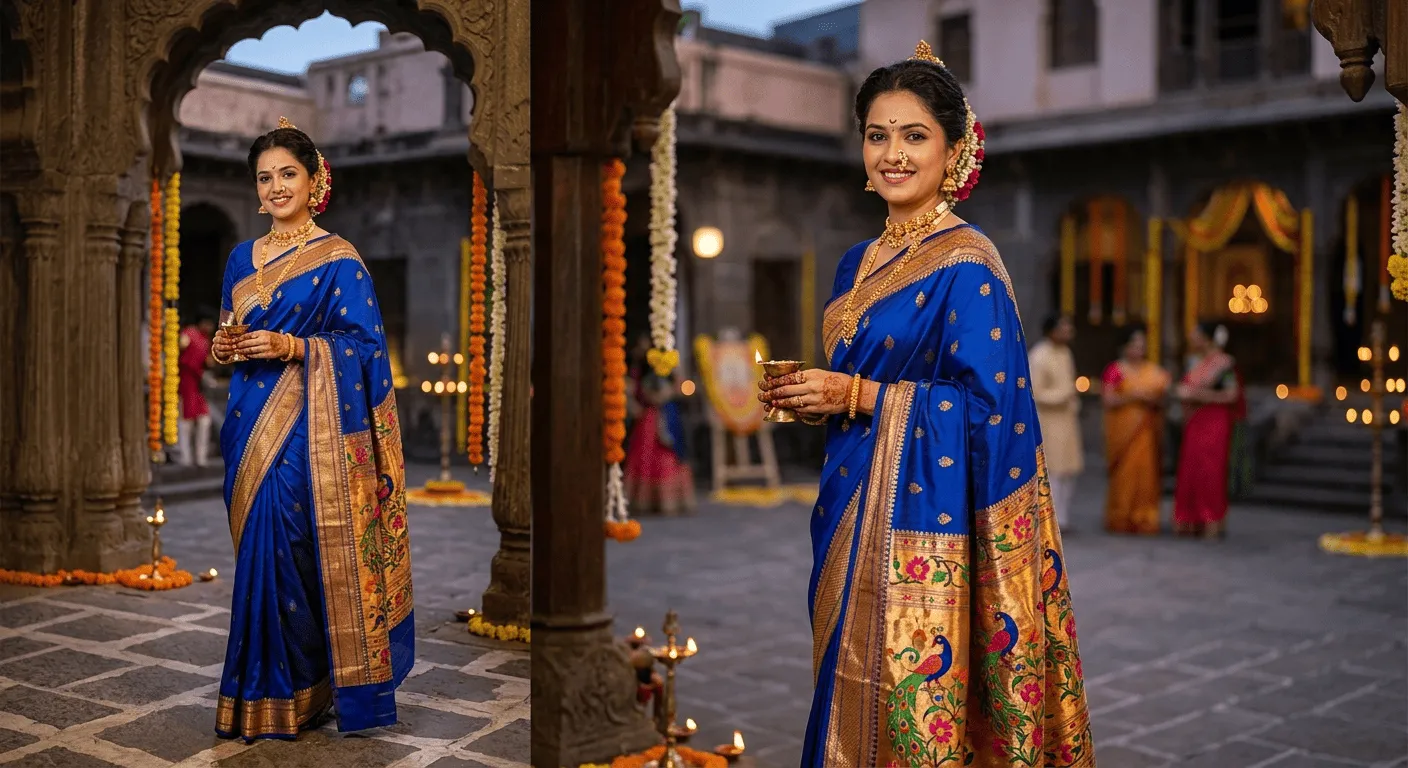
3. Traditional Maharashtrian Jewellery with Paithani Sarees
Paithani sarees have a distinctive place in Maharashtra's textile heritage. Their richly coloured silk, decorative borders and intricate pallus make them particularly suitable for festive and ceremonial dressing.
Traditional Maharashtrian jewellery complements this regional identity.
A gold thushi necklace, traditional nath, gold bangles and distinctive earrings can create a classic festive appearance when paired with a Paithani saree.
For a wedding, an elaborate necklace may be combined with a traditional nath and carefully selected bangles.
For festivals such as Gudi Padwa or family celebrations, a simple thushi necklace and gold earrings may be sufficient.
The saree's pallu often carries elaborate peacock, floral or geometric motifs. Keep this decorative section visible when draping so the textile craftsmanship remains an important part of the outfit.
4. Pearl Jewellery with Mysore Silk and Pastel Sarees
Not every silk saree needs elaborate gold jewellery.
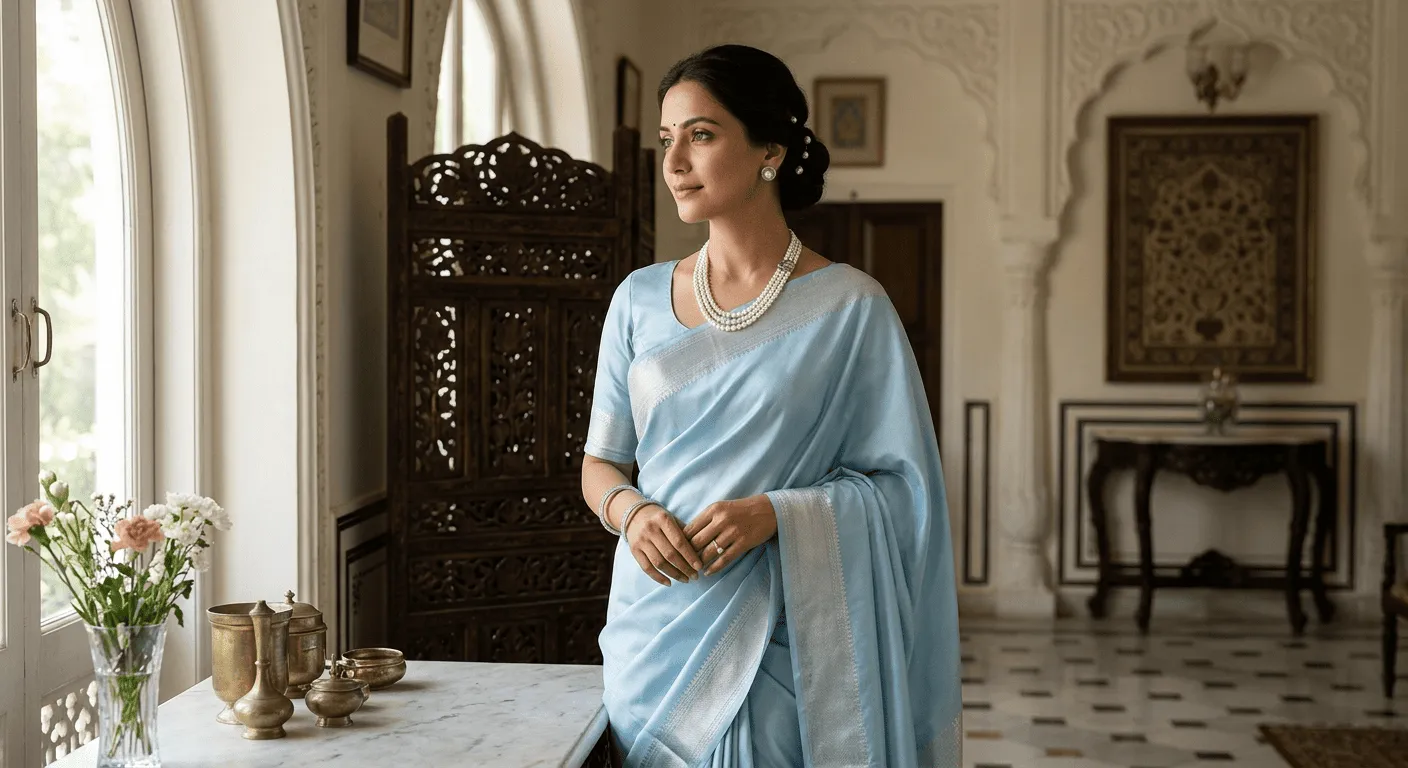
Pearls create a softer appearance and work particularly well with smooth Mysore silk, pastel Banarasi sarees and delicate silk-cotton fabrics.
Mysore silk is often admired for its smooth surface, graceful drape and relatively restrained borders. Pearl jewellery complements this understated aesthetic without overwhelming the fabric.
An ivory silk saree paired with a pearl necklace creates an elegant formal look. Similarly, blush pink, powder blue and sage green silk sarees work beautifully with delicate pearl earrings.
For a contemporary interpretation, consider combining pearls with a structured blouse and a sleek hairstyle.
A single pearl strand can be enough for a minimal outfit, while a layered necklace introduces a richer appearance for evening celebrations.
5. Oxidized Silver Jewellery with Tussar and Handloom Silk
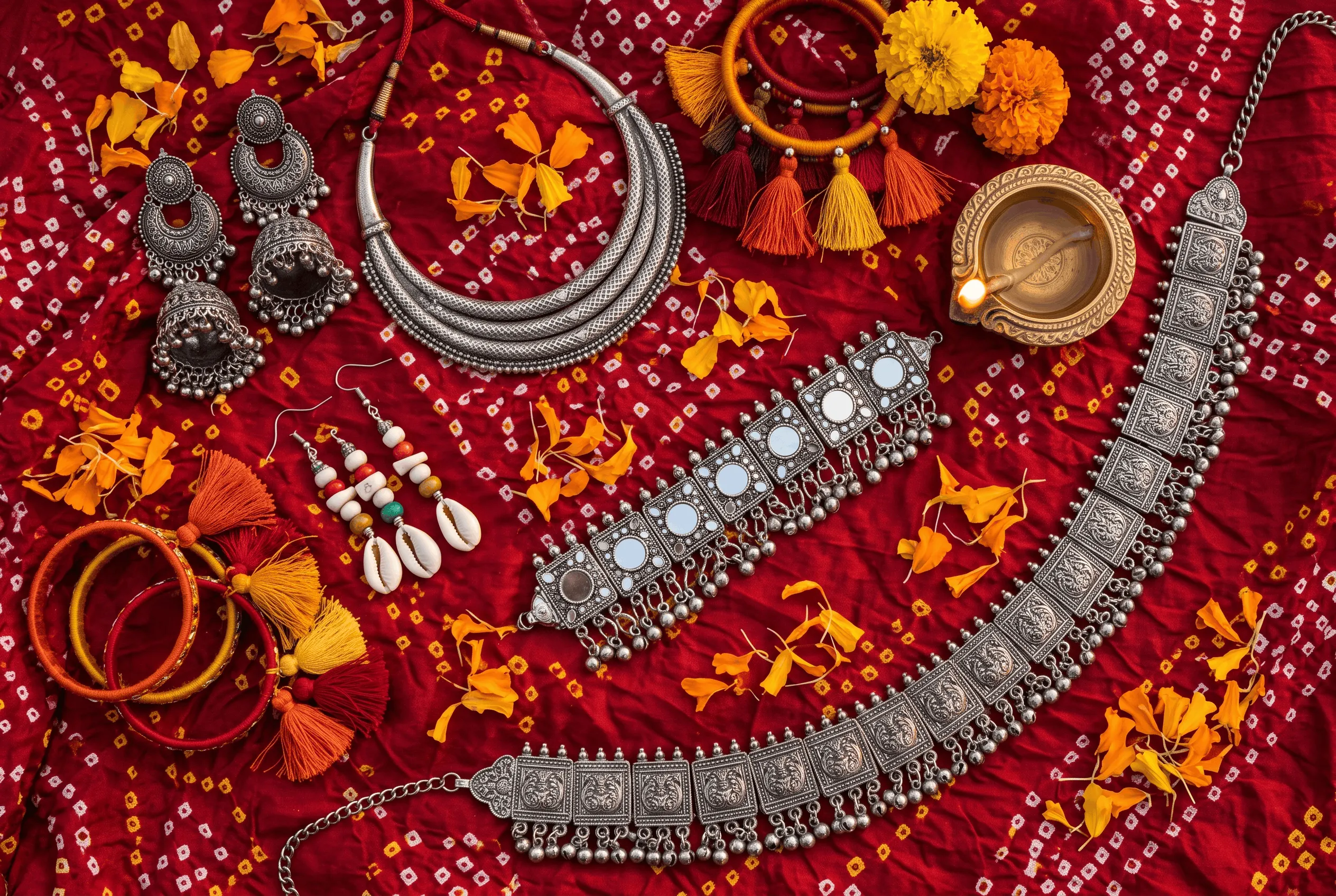
Oxidized silver jewellery offers a distinctive alternative to traditional gold.
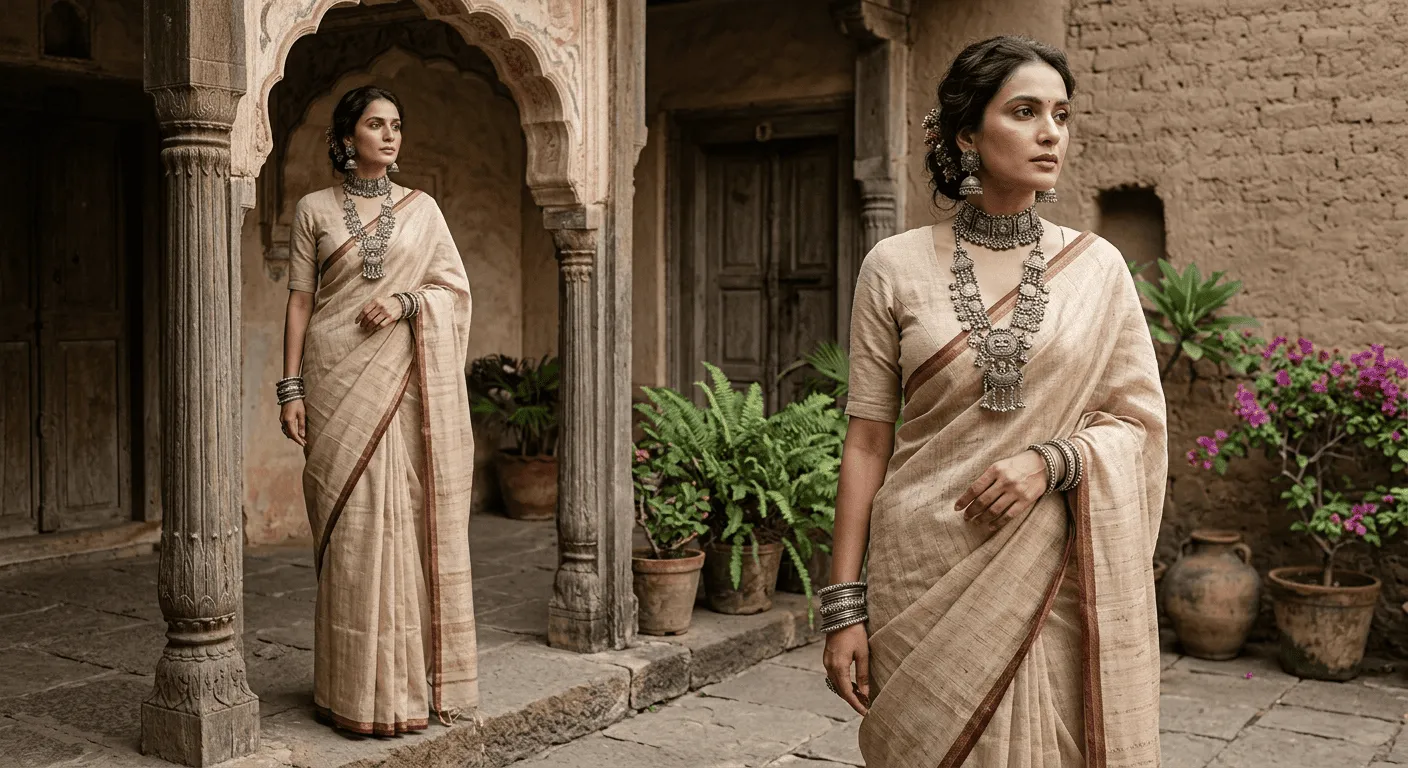
Its darker metallic finish pairs beautifully with the natural textures and earthy colours of Tussar silk and understated handloom sarees.
A beige or natural-gold Tussar saree styled with a bold oxidized silver necklace can create an elegant contemporary ethnic look.
Silver jewellery also works well with indigo, mustard, rust, olive green and charcoal-coloured handloom fabrics.
For daytime events, choose a statement silver necklace with simple earrings. Alternatively, oversized oxidized jhumkas can become the focal point when paired with a minimal blouse.
This combination is especially attractive for cultural events, exhibitions, formal daytime gatherings and festivals where you prefer something different from heavily embellished wedding jewellery.
6. Antique Gold Jewellery for Traditional Festive Looks
Antique gold jewellery offers a warm, traditional appearance that complements many Indian silk sarees.
Its muted finish can work particularly well with zari borders, deep jewel tones and richly coloured traditional fabrics.
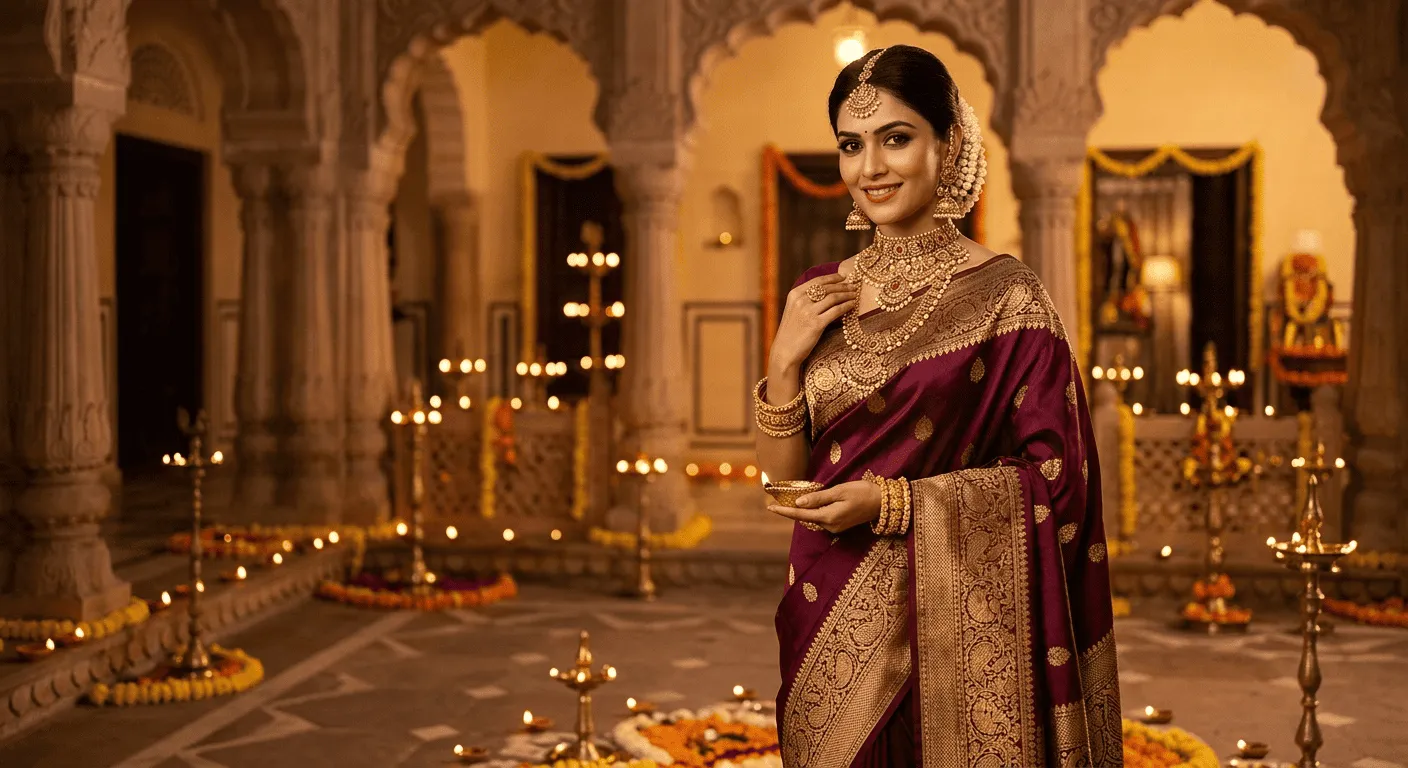
A deep maroon saree paired with antique gold earrings creates an elegant evening look. Emerald green, mustard, navy and rust also complement antique-finish jewellery beautifully.
For festive celebrations, a traditional necklace with detailed gold-toned bangles can make a simple silk saree feel more elaborate.
If the saree already features a broad zari border and densely decorated pallu, consider a shorter necklace or statement earrings rather than a heavily layered jewellery set.
The goal is to preserve the beauty of the textile while adding warmth and traditional character.
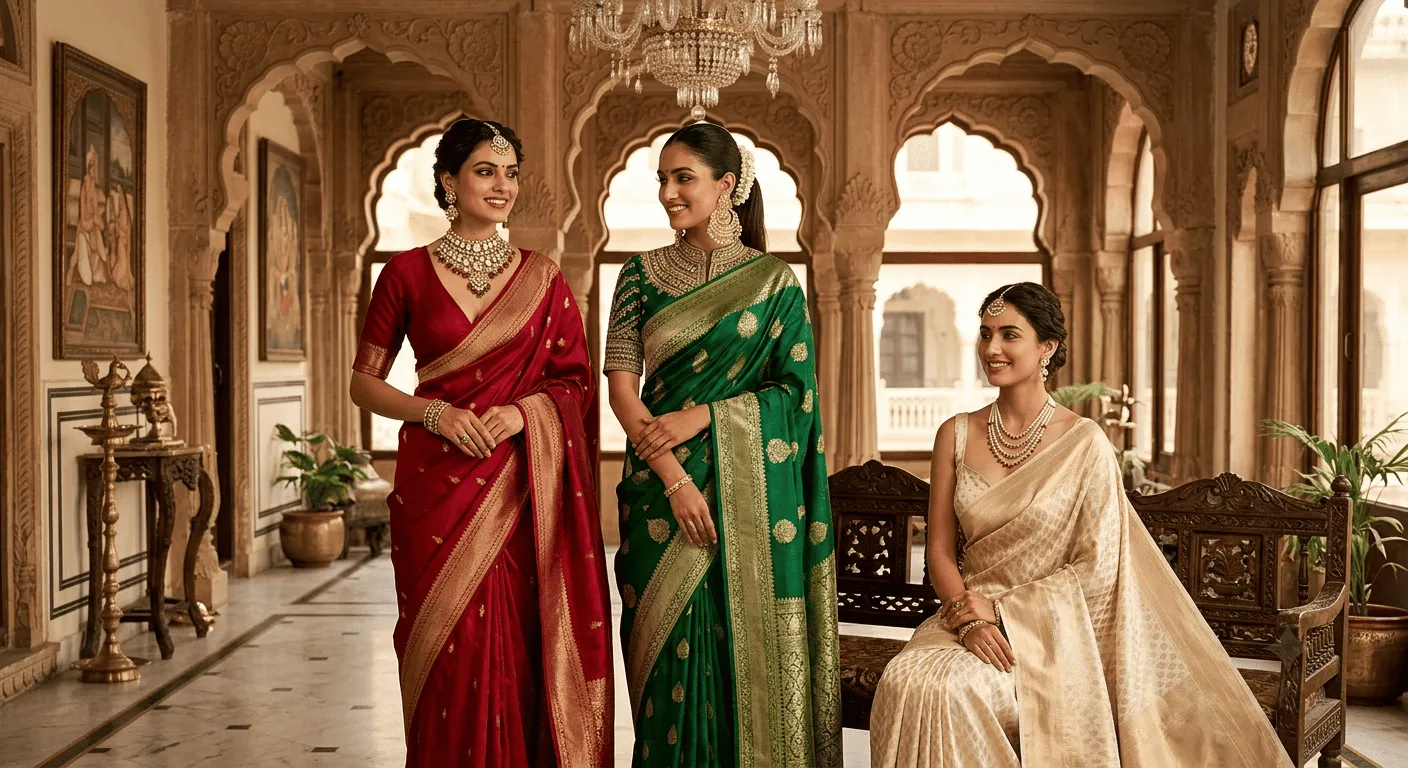
Choosing Jewellery According to Your Blouse Neckline
The neckline of your blouse plays an important role in determining which jewellery will look most balanced.
A deep V-neck blouse creates enough space for a statement necklace, while a sweetheart neckline complements kundan, pearl and traditional gold necklaces.
High-neck blouses can look elegant with statement earrings and minimal neck jewellery.
For boat-neck blouses, consider longer necklaces or distinctive earrings that do not crowd the upper neckline.
Sleeveless blouses provide additional room for statement necklaces and traditional bangles.
When the blouse itself is heavily embroidered, keep jewellery relatively restrained so that the embroidery remains visible.
Matching Jewellery Colours with Silk Sarees
Colour coordination can make a jewellery combination look more intentional.
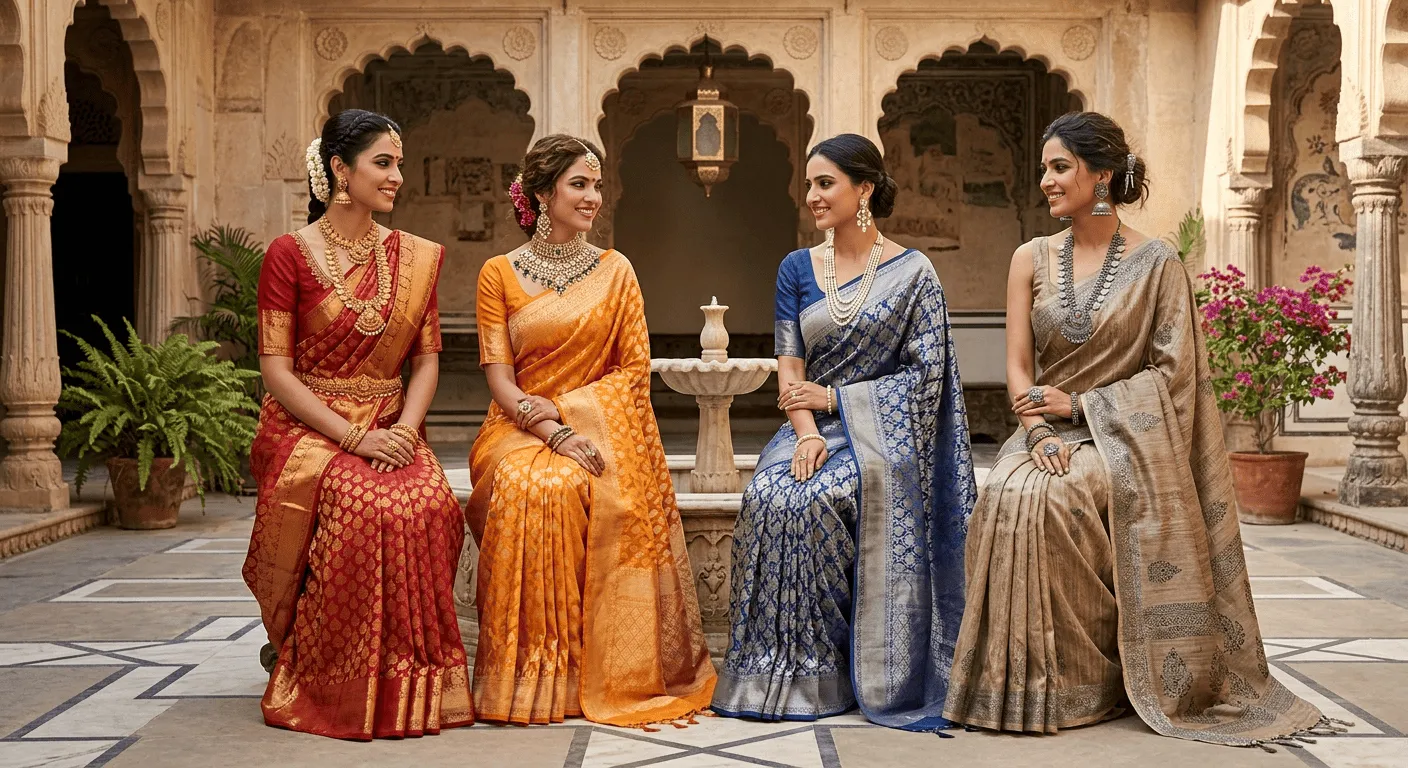
Gold jewellery complements warm shades such as red, maroon, mustard, emerald and deep pink. Silver-toned jewellery works beautifully with navy, lavender, powder blue and cool-toned pastels.
Pearls provide a softer alternative for ivory, champagne and blush pink sarees.
For richly coloured silk sarees, gemstones can introduce additional contrast. Emerald-toned jewellery complements red and pink, while ruby-toned accents look beautiful against green or cream.
You do not always need to match the jewellery exactly to the saree.
A contrasting gemstone colour can create a distinctive look, particularly when it echoes the colour of the border or blouse.
Jewellery Styling for Different Occasions
A silk saree can be styled differently depending on the celebration.
For weddings, elaborate temple jewellery, kundan, polki or traditional gold sets create a ceremonial appearance.
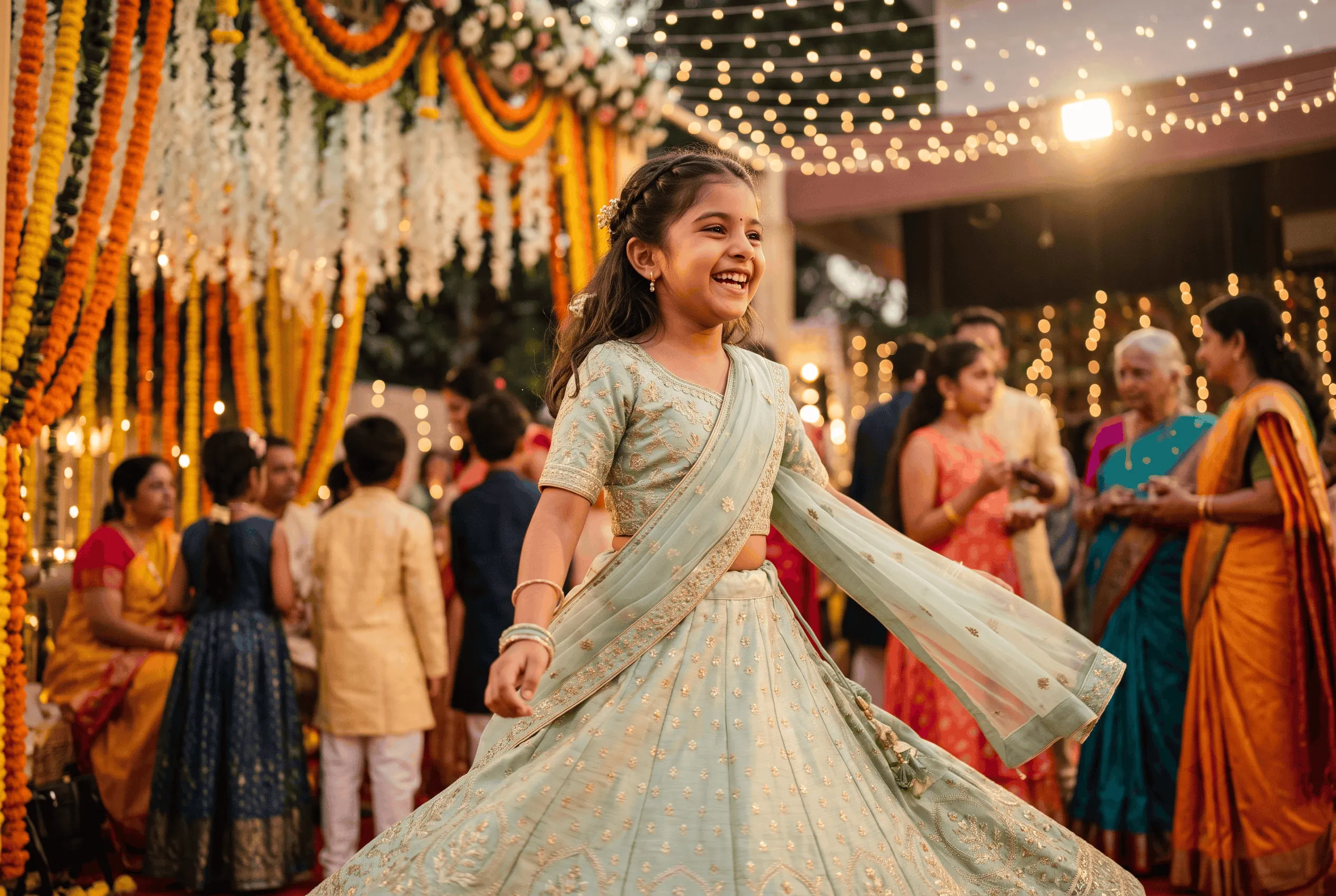
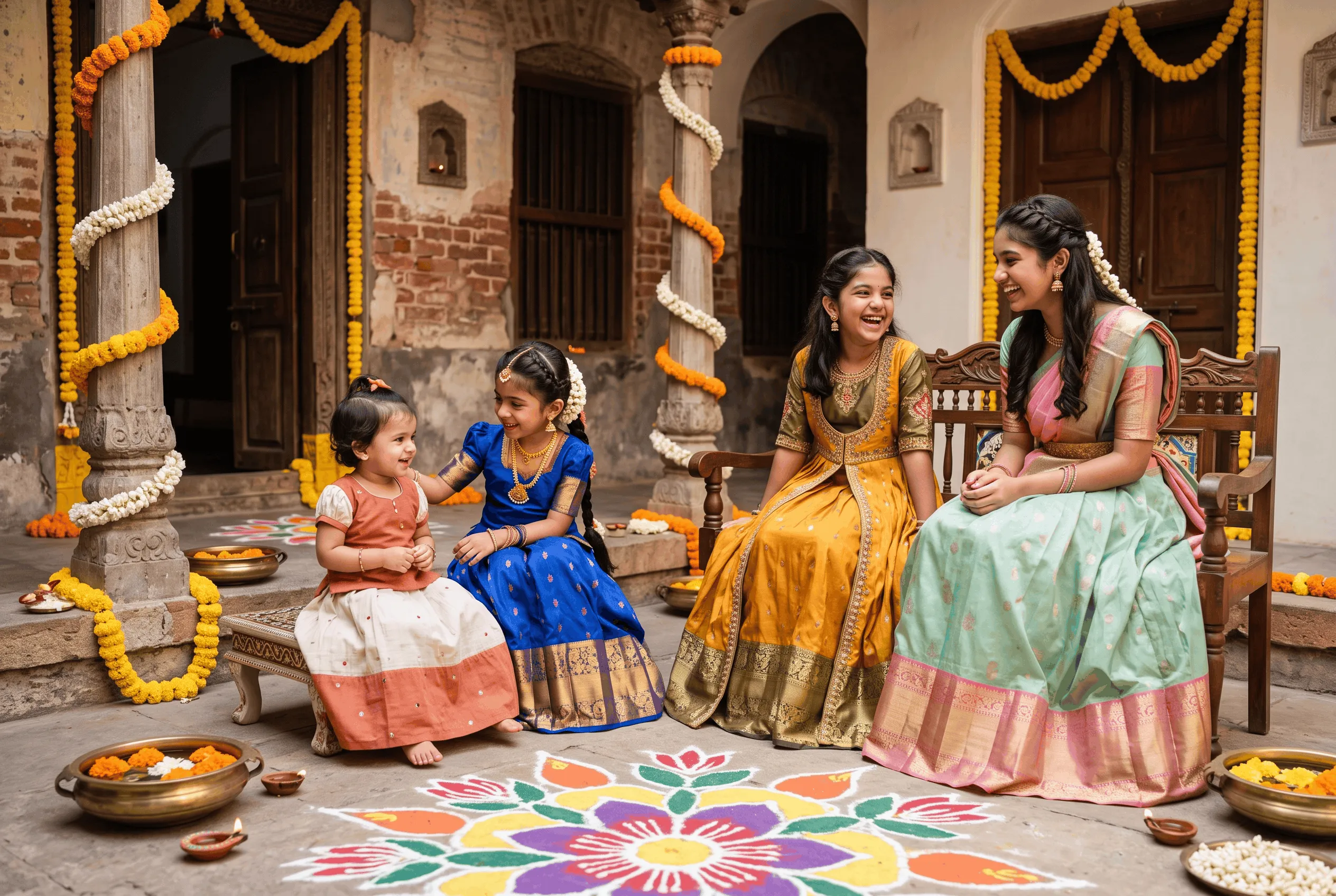
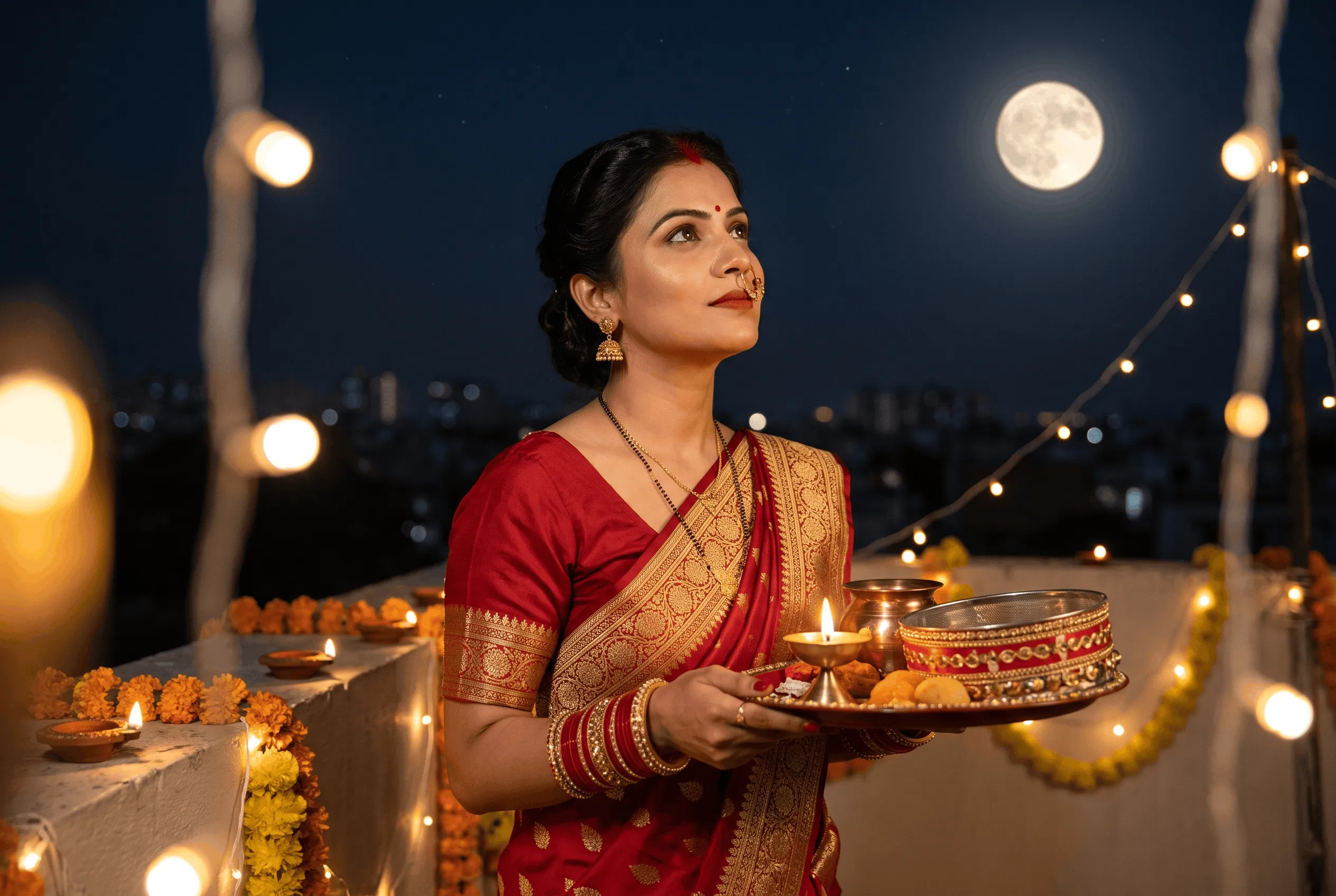
During festivals, antique gold necklaces, traditional jhumkas and colourful bangles offer festive richness without requiring bridal-level ornamentation.
For formal family gatherings, pearl necklaces, delicate gold earrings or minimalist gemstone jewellery create a refined appearance.
At evening receptions, statement earrings or a carefully chosen necklace can complement a contemporary silk saree.
For cultural events and daytime celebrations, oxidized silver jewellery paired with handloom fabrics offers a more relaxed ethnic aesthetic.
Common Jewellery Styling Mistakes to Avoid
One common mistake is wearing every piece from a heavy jewellery set without considering the overall outfit.
If your silk saree has dense zari embroidery and a richly decorated blouse, elaborate jewellery around the neckline can make the upper body appear crowded.
Another mistake is ignoring the saree's border colour when selecting accessories. Jewellery that complements the metallic tone or colour of the border often creates a more cohesive appearance.
Also consider the practical side of jewellery. Heavy earrings may become uncomfortable during long wedding ceremonies, while loosely secured necklaces can interfere with dancing.
When wearing delicate silk sarees, check that jewellery clasps, sharp edges and decorative elements do not snag the fabric.
Choose jewellery that enhances the saree while remaining comfortable throughout the occasion.
How to Care for Ethnic Jewellery and Silk Sarees
Silk and traditional jewellery both require careful handling.
Avoid spraying perfume directly onto silk or jewellery. Perfumes, cosmetics and moisture may affect certain metallic finishes, gemstones and delicate fabrics.
Store jewellery separately in soft pouches or suitable compartments to prevent scratches and tangling.
After wearing a silk saree, check whether any jewellery has caught loose threads or damaged the fabric.
Store expensive silk sarees in breathable cotton or muslin, away from direct sunlight and dampness.
For precious jewellery, follow the jeweller's cleaning recommendations, particularly when pieces contain pearls, polki, delicate gemstones or traditional settings.
Proper care helps preserve both the jewellery and the garments you pair it with.
Comments (0)
Leave a Thought
No comments yet. Be the first to share your thoughts!