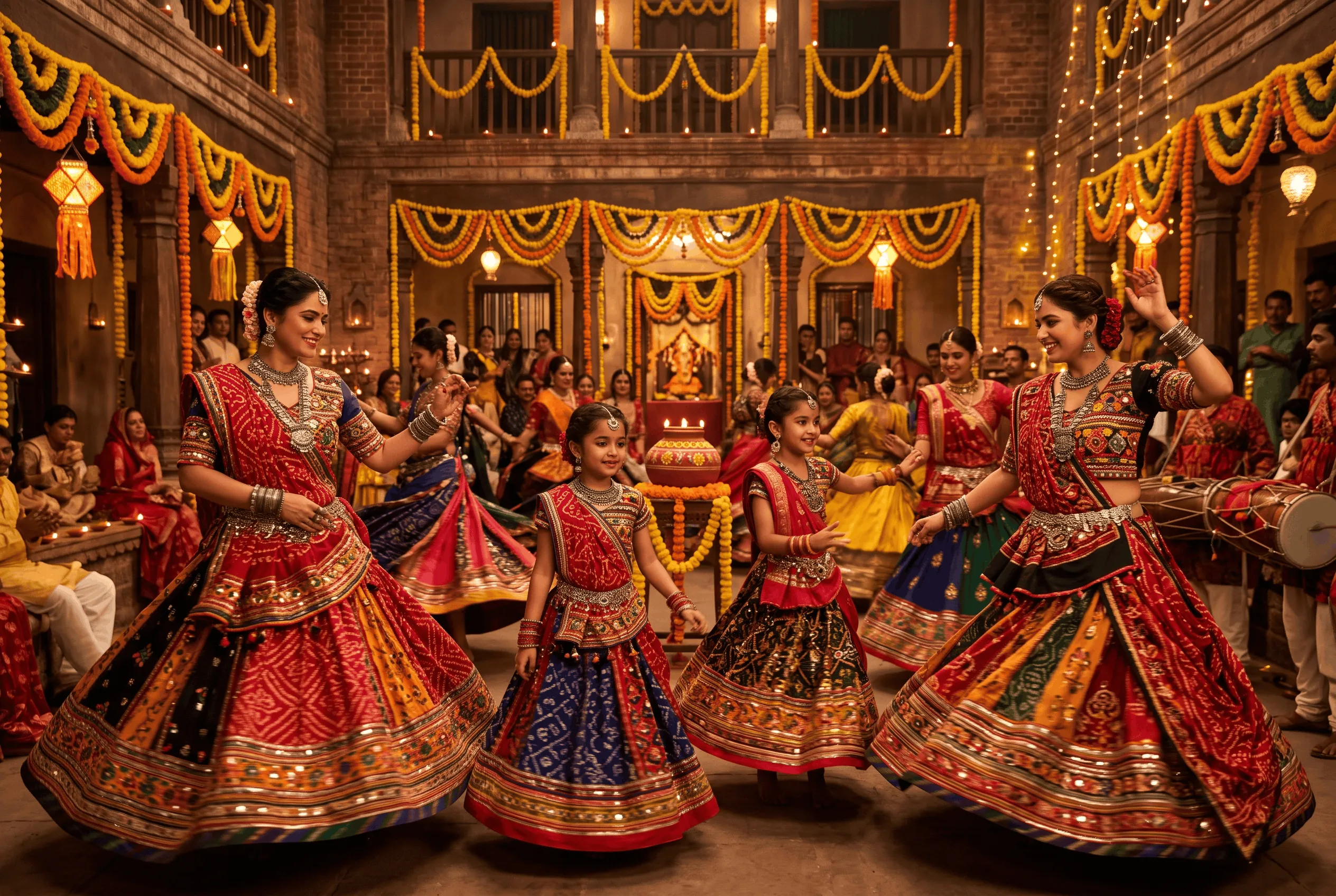
The right Navratri jewellery can make a simple chaniya choli look festive, while the wrong pieces can make a night of garba uncomfortable.
Heavy necklaces swing into your face, sharp earrings catch on the dupatta and tight bangles leave marks after an hour of dancing.
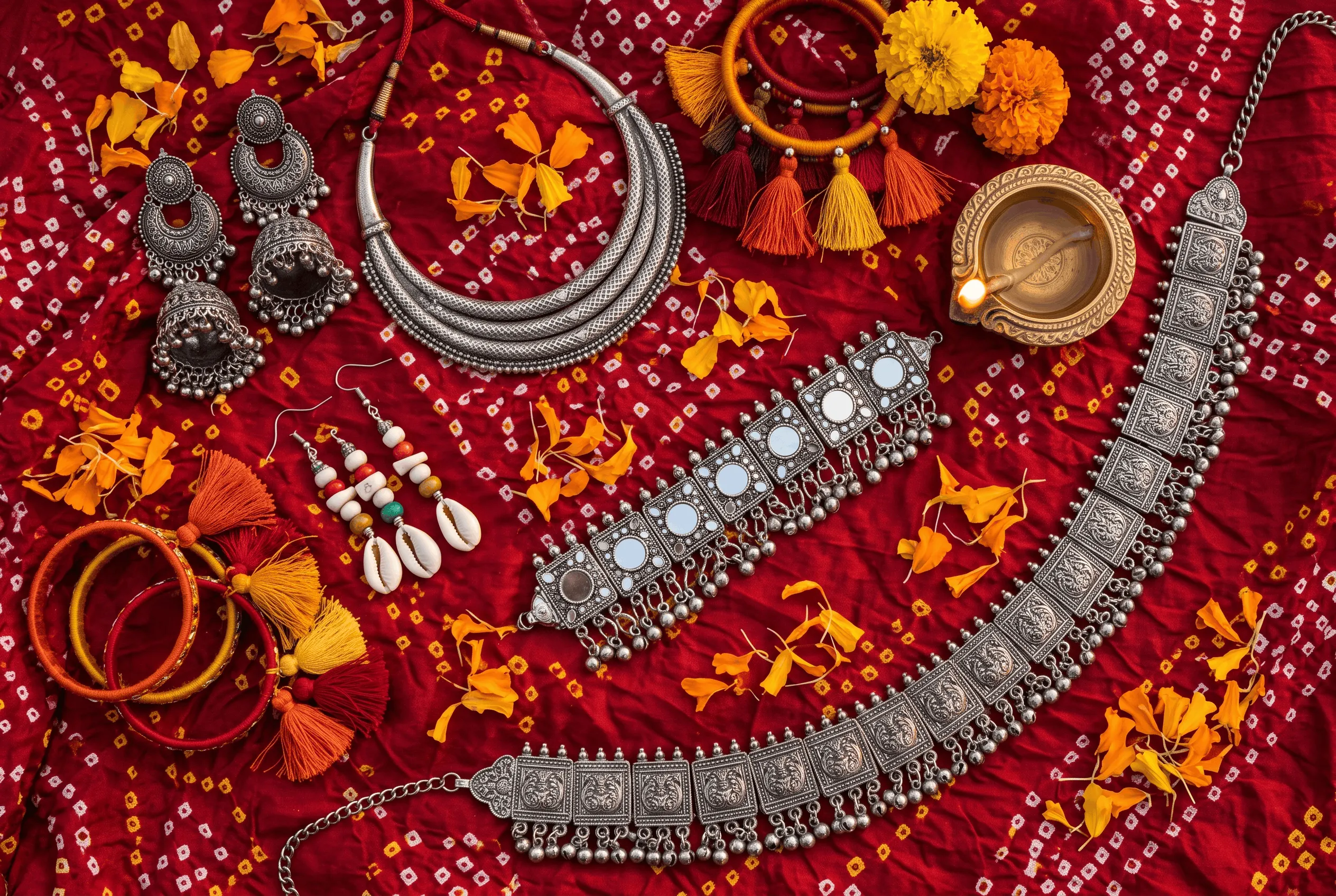
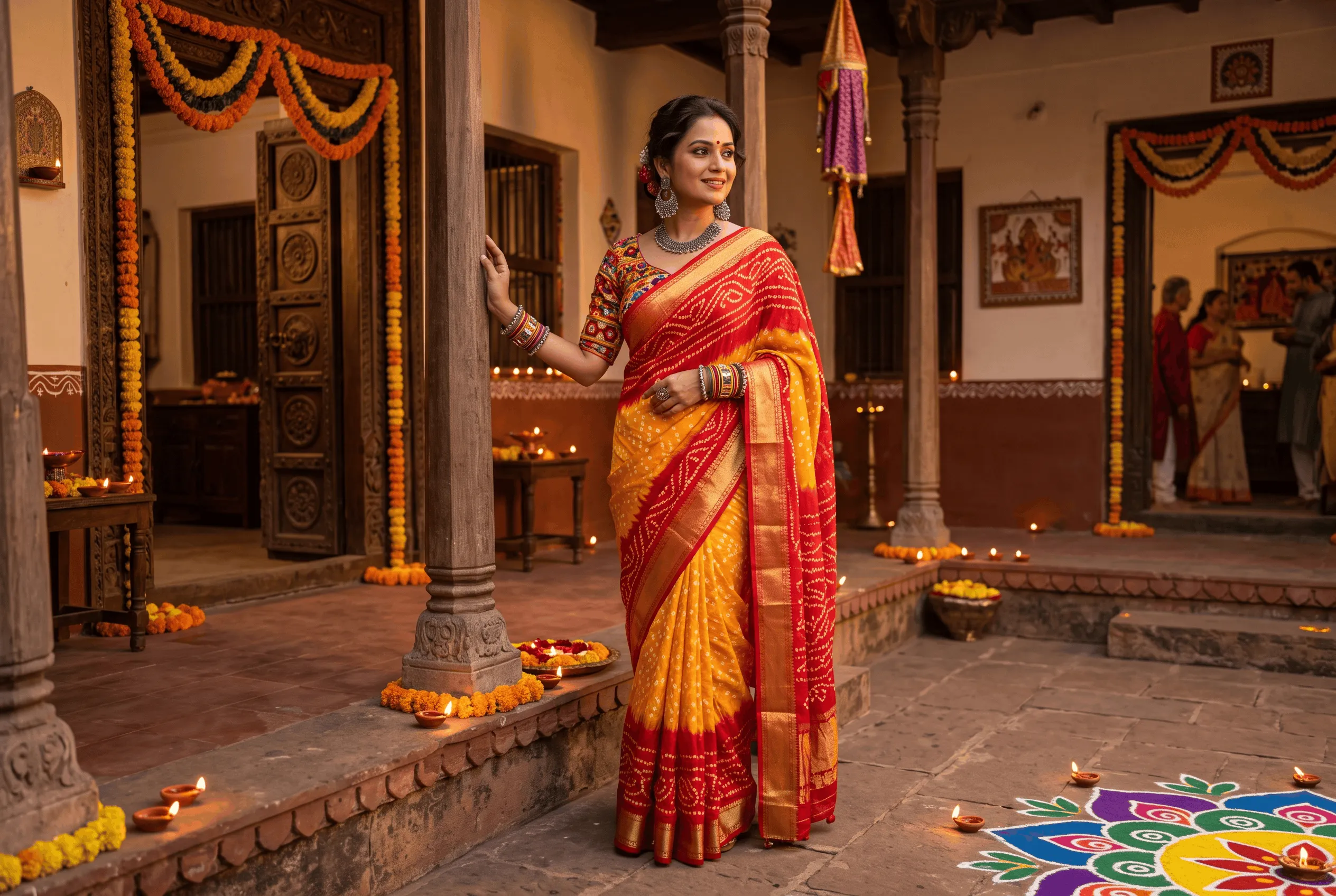
That is why oxidised silver, kodi (cowrie shells), thread, tassels and mirror-work pieces have become the favourite choices for the nine nights.
They are light, colourful, affordable and perfectly suited to the folk spirit of garba and dandiya.
This guide explains the most popular Navratri jewellery styles of 2026, how to match them to each day's colour, what to choose for girls, price ranges and how to care for your pieces after the festival.
Why Lightweight Navratri Jewellery Works Best for Garba
Garba is fast, joyful and long.
You spin, clap, bend and lift your arms again and again for hours.
Gold and kundan sets look beautiful in photographs, but they are heavy, warm and risky to wear in a crowded garba ground.
Lightweight jewellery solves most of these problems.
Oxidised and thread pieces weigh very little, so your earlobes and neck stay comfortable.
They are also inexpensive enough that you will not worry constantly about losing them.
Black-toned silver goes with almost every colour, and folk materials such as cowrie shells and mirrors match the traditional look of Gujarati and Rajasthani outfits.
Keep your gold for the Ashtami puja, family functions and Dussehra, when you will be sitting or standing rather than dancing.
1. Oxidised Silver Jhumkas and Chandbalis
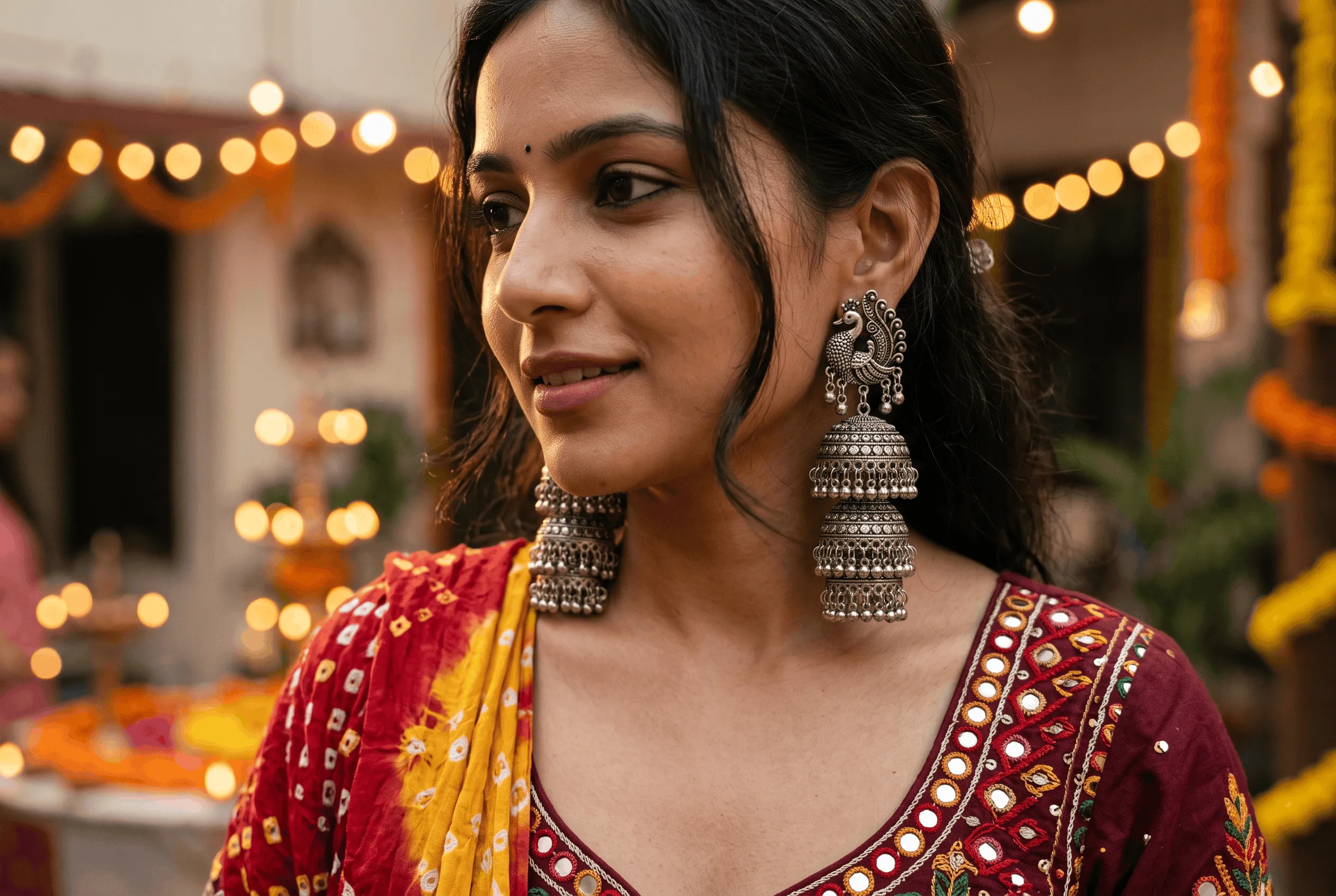
Oxidised jhumkas remain the most popular Navratri earrings.
Large bell-shaped jhumkas, moon-shaped chandbalis and layered drop earrings with tiny ghungroo bells all work beautifully with mirror-work cholis.
Motifs inspired by peacocks, elephants, coins and goddess faces are especially popular in 2026.
Most "oxidised" jewellery is made from a base metal with a dark finish, which keeps it light and affordable.
If you have sensitive skin, look for nickel-free pieces or silver ear hooks.
2. Layered Hasli and Oxidised Necklaces
A hasli is a rigid, collar-style necklace that sits close to the neck.
Oxidised haslis and short layered necklaces are ideal for garba because they stay in place while you move.
Coin necklaces, multi-strand chokers and temple-inspired pendants are all popular choices.
Choose shorter lengths for dancing. Long necklaces swing during spins and can hit your face.
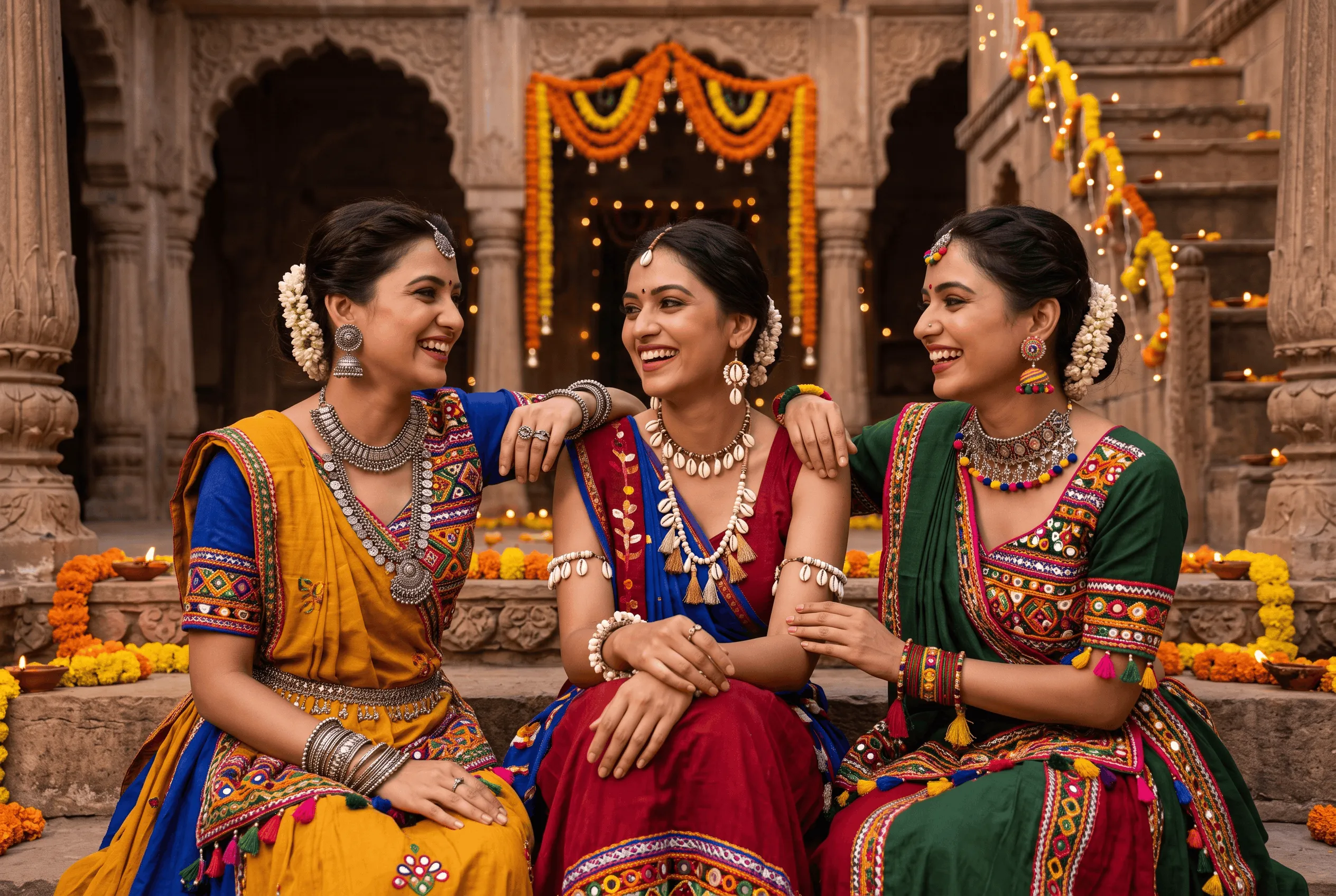
3. Kodi (Cowrie) Jewellery
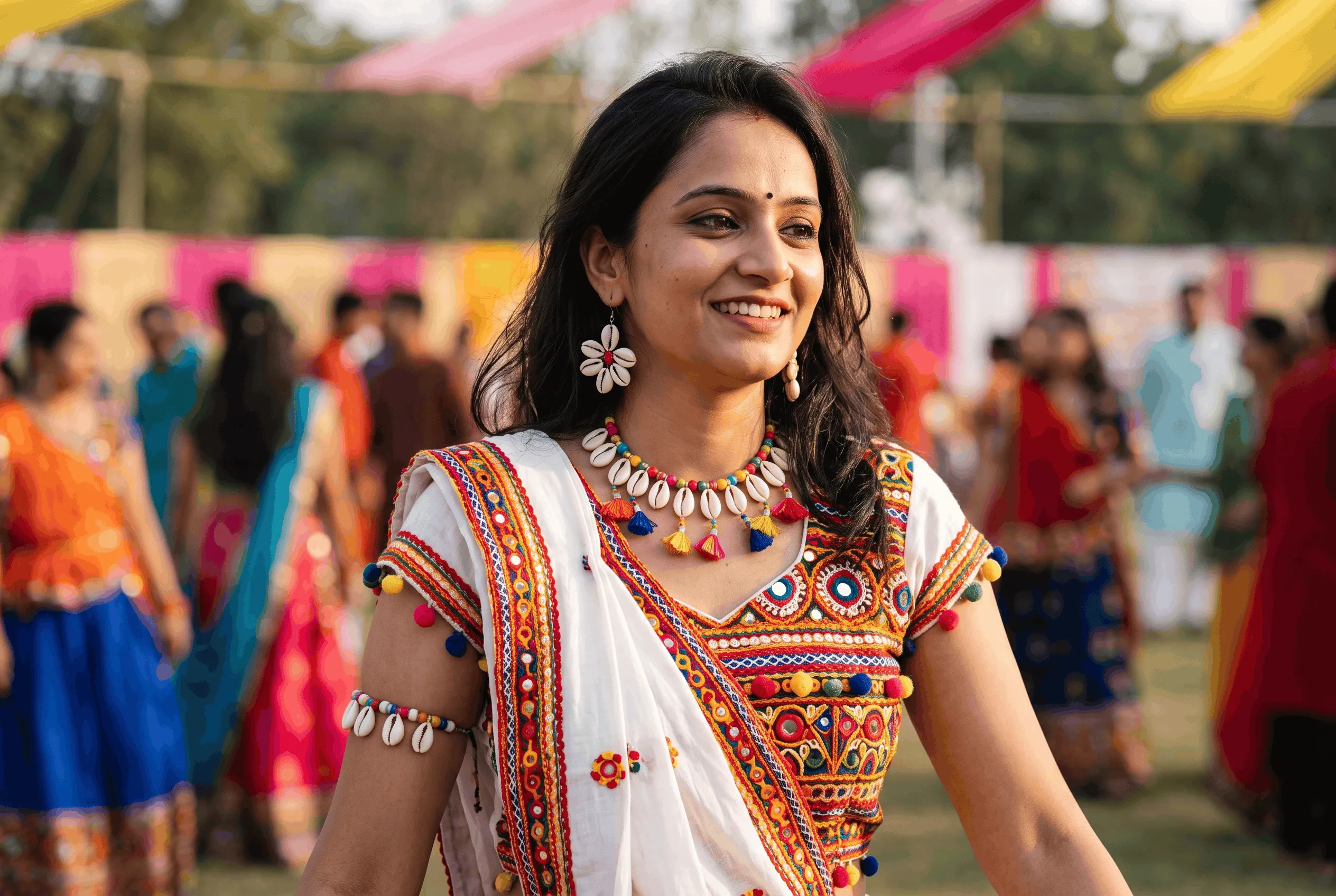
Kodi jewellery uses natural cowrie shells combined with beads, threads and tassels.
It has an earthy, tribal charm that looks fantastic with plain cotton chaniya cholis and Kutchi embroidery.
Kodi earrings, armlets, anklets and waist belts are all trending this year.
Because cowrie shells are light, even large statement pieces remain comfortable.
4. Mirror-Work Jewellery
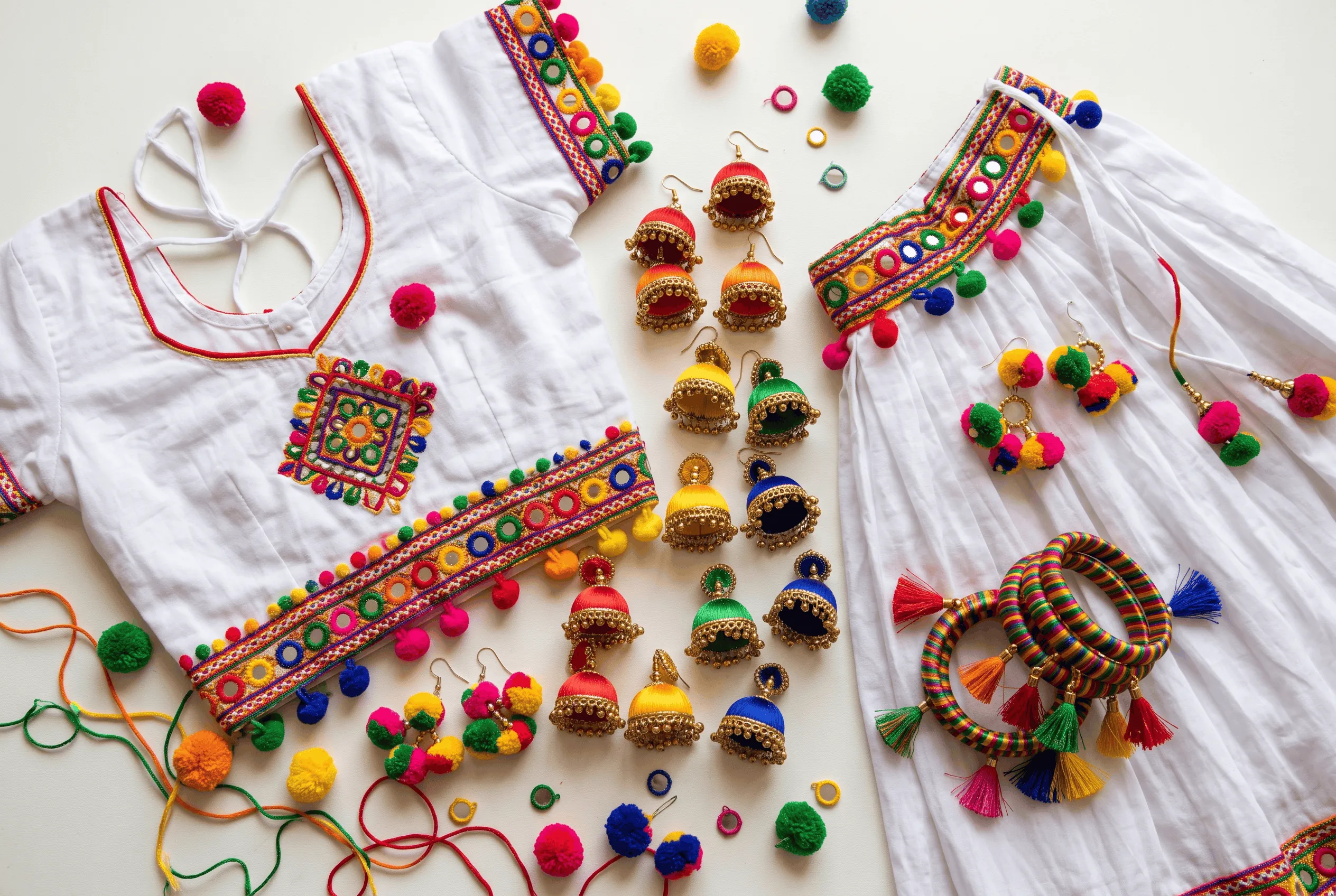
Mirror-work jewellery is made by stitching small mirrors (abhla) onto fabric and shaping it into earrings, chokers, maang tikkas and hair accessories.
It is one of the lightest options available and reflects festival lights beautifully.
These pieces match mirror-work chaniya cholis perfectly and are easy to make at home if you enjoy craft projects.
5. Thread and Tassel Jewellery
Silk-thread jhumkas, pom-pom earrings and tasselled bangles bring colour and movement to any outfit.
They are an inexpensive way to match the colour of the day without buying a new chaniya choli.
Thread jewellery is also soft and safe, which makes it ideal for girls and teens.
6. Kamarbandh and Waist Belts
A kamarbandh (waist belt) instantly makes a chaniya choli look more festive.
Oxidised metal belts, kodi belts and embroidered fabric belts with mirrors all work well.
A belt also helps hold the dupatta in place, which is very useful during energetic garba.
Choose a lightweight belt with an adjustable chain or hook so it sits securely without digging in.
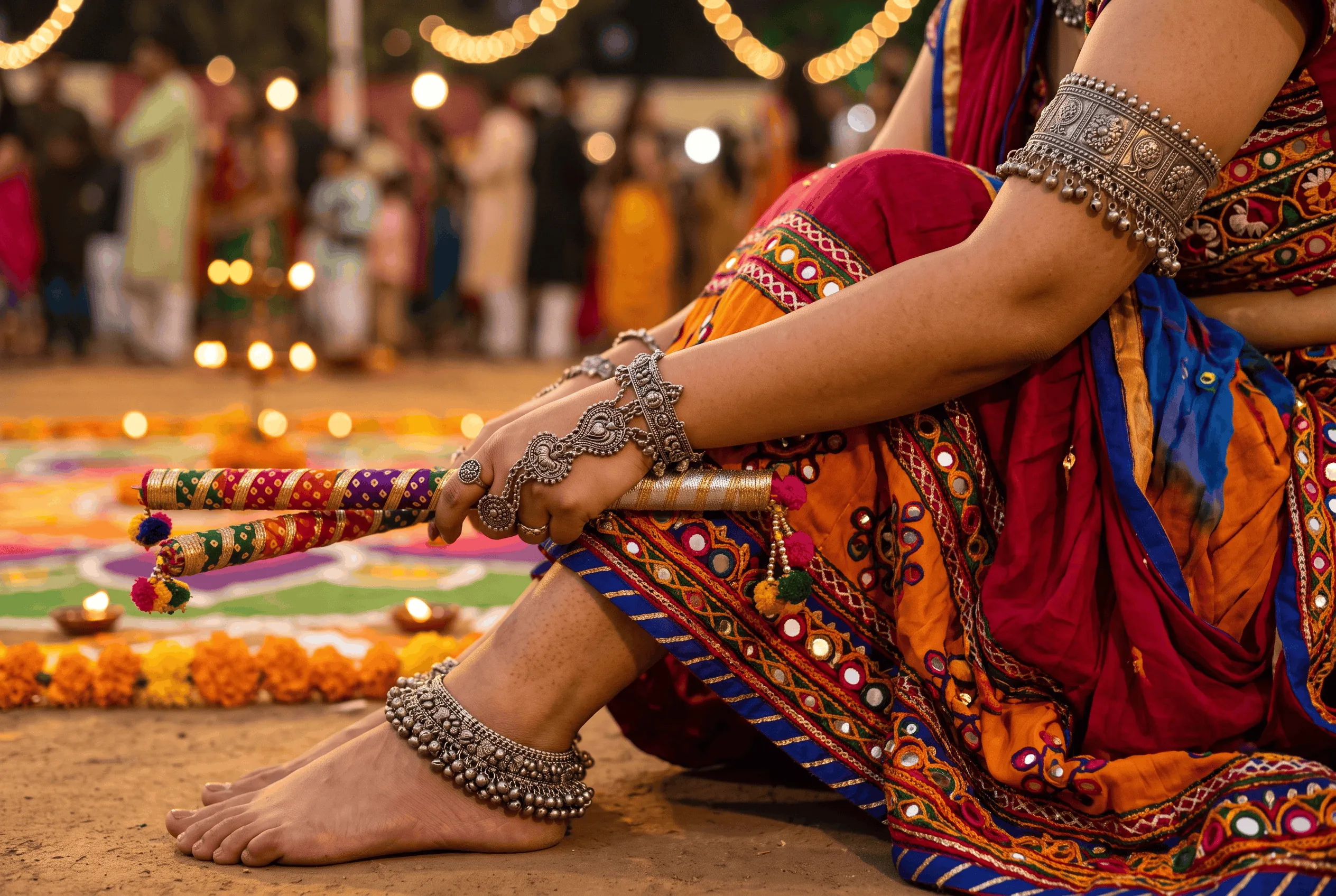
7. Bajuband, Hathphool and Payal
Bajuband (armlets), hathphool (hand harness) and payal (anklets) complete a traditional garba look.
Armlets look especially striking with sleeveless or cap-sleeve cholis.
Anklets with small ghungroo bells add a musical touch to every step.
You do not need all of these accessories at once. One or two statement pieces are enough.
8. Statement Hair Accessories
Oxidised hair pins, mirror-work clips, maang tikkas and passa (side head ornaments) are popular with braided hairstyles and buns.
Fresh or artificial flowers in the braid add a classic festive touch.
Secure every hair accessory with bobby pins. A tikka that slips over your eyes in the middle of garba is no fun.
9. Lightweight Gold-Tone and Brass Pieces
Oxidised silver is not the only option.
Light gold-tone and brass jewellery looks warm and festive on red, orange and yellow days.
Gold-tone jhumkas with a Bandhani outfit are particularly elegant for Ashtami and the evening puja.
How to Match Navratri Jewellery to the Colour of the Day
Many women follow the day-wise Navratri colours 2026.
You do not need a new jewellery set for every colour.
Start with one dependable oxidised set (earrings, necklace and cuff), then add a coloured accent each night.
| Outfit colour family | Jewellery that works well | Accent idea |
|---|---|---|
| White, grey, cream | Oxidised silver, mirror work | Colourful thread tassels |
| Red, orange, yellow | Brass or gold-tone, kodi | Red or green thread bangles |
| Blue, green, peacock green | Oxidised silver, kodi | Silver ghungroo payal |
| Purple, pink | Oxidised silver with coloured stones | Pink pom-pom earrings |
| Black chaniya choli | Almost anything | Multicolour mirror choker |
Silver tones look clean on white, grey and pastel days.
Warm brass or gold tones look rich on red, orange and yellow days.
Choosing Jewellery for Your Chaniya Choli Neckline
The choli neckline affects which jewellery looks best.
Round and high necklines look best with statement earrings and no necklace, or a short choker.
Deep V and sweetheart necklines suit haslis and layered necklaces.
Boat necklines pair well with long jhumkas and a delicate chain.
Halter necks need very little; let the earrings do the talking.
Navratri Jewellery for Girls
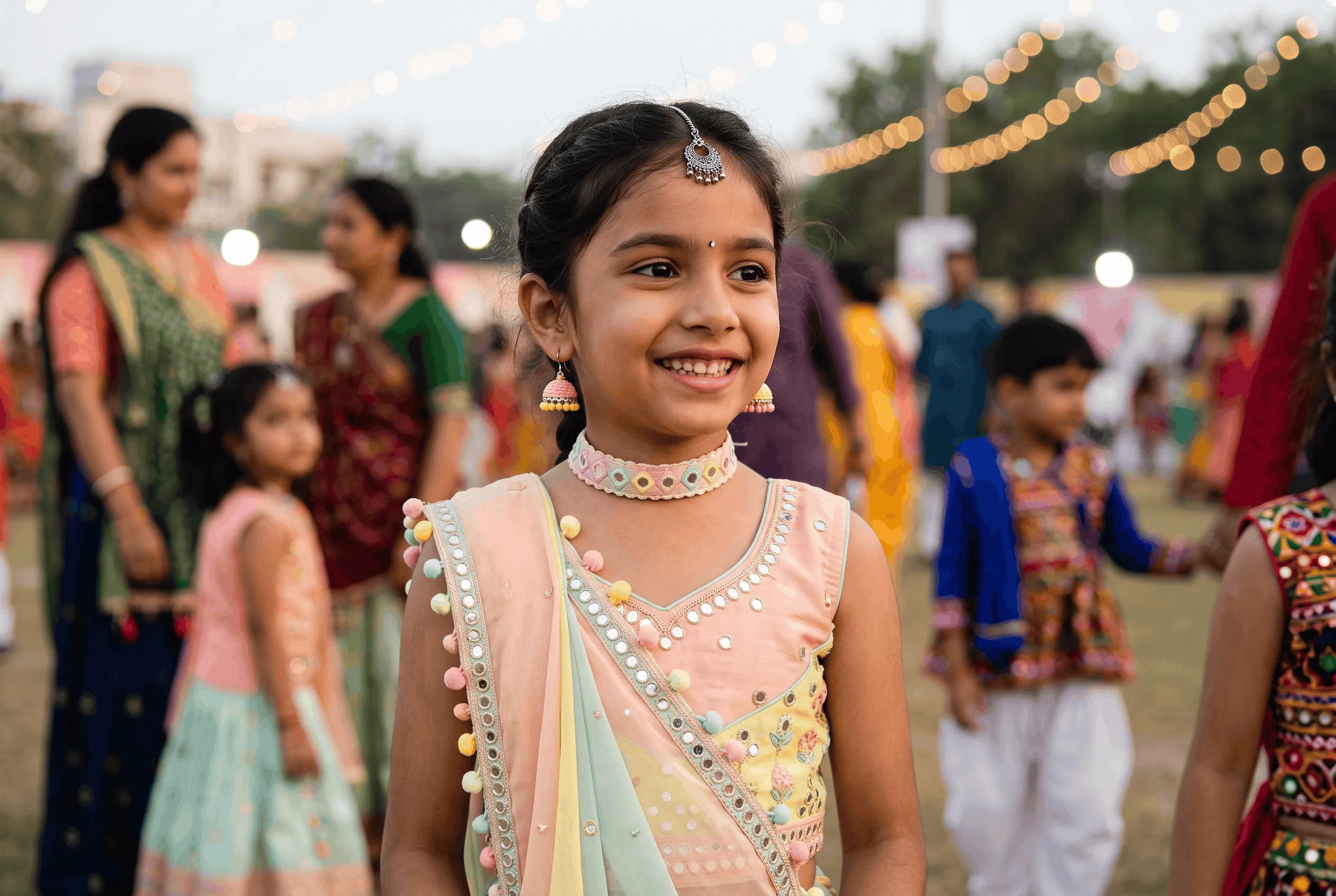
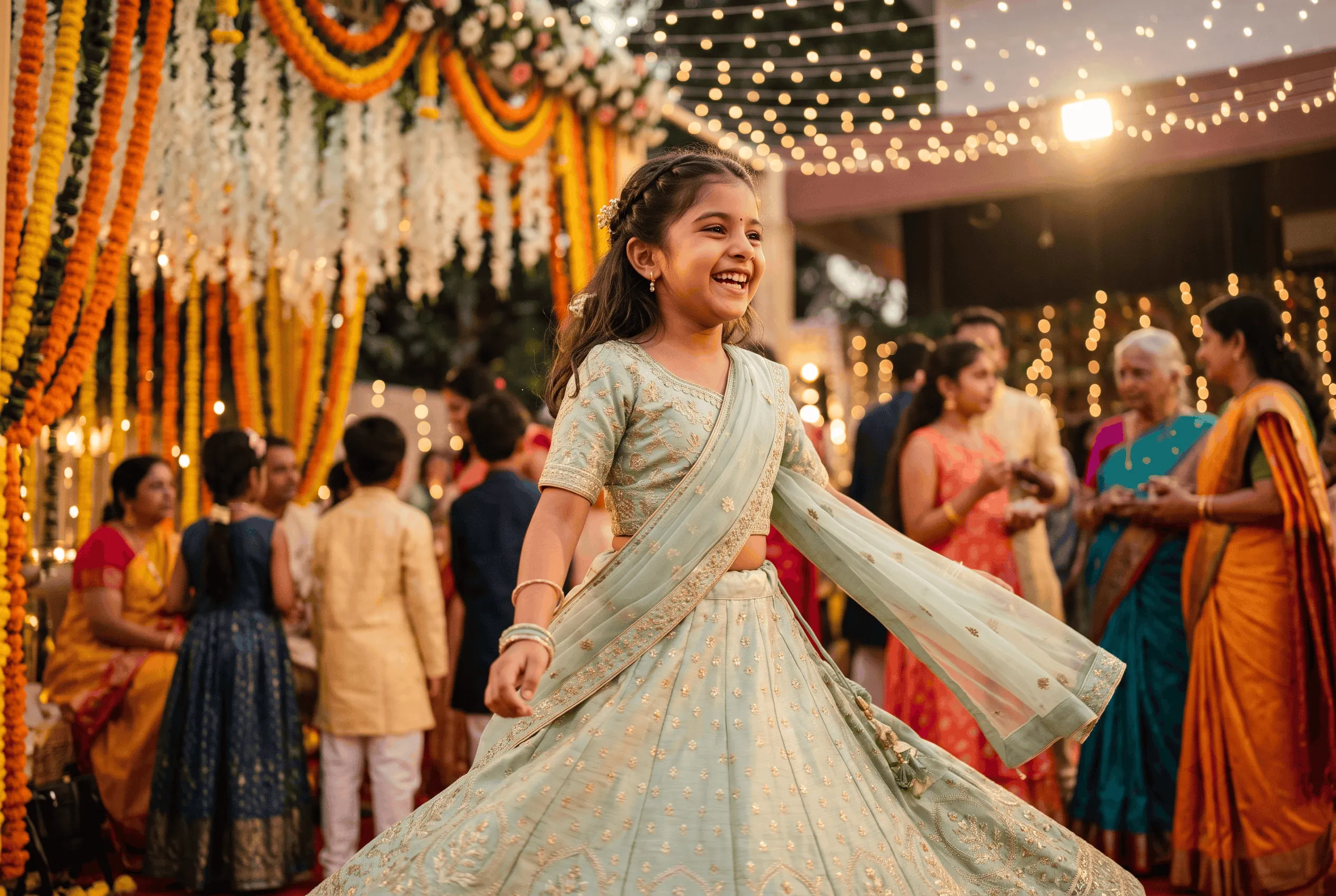
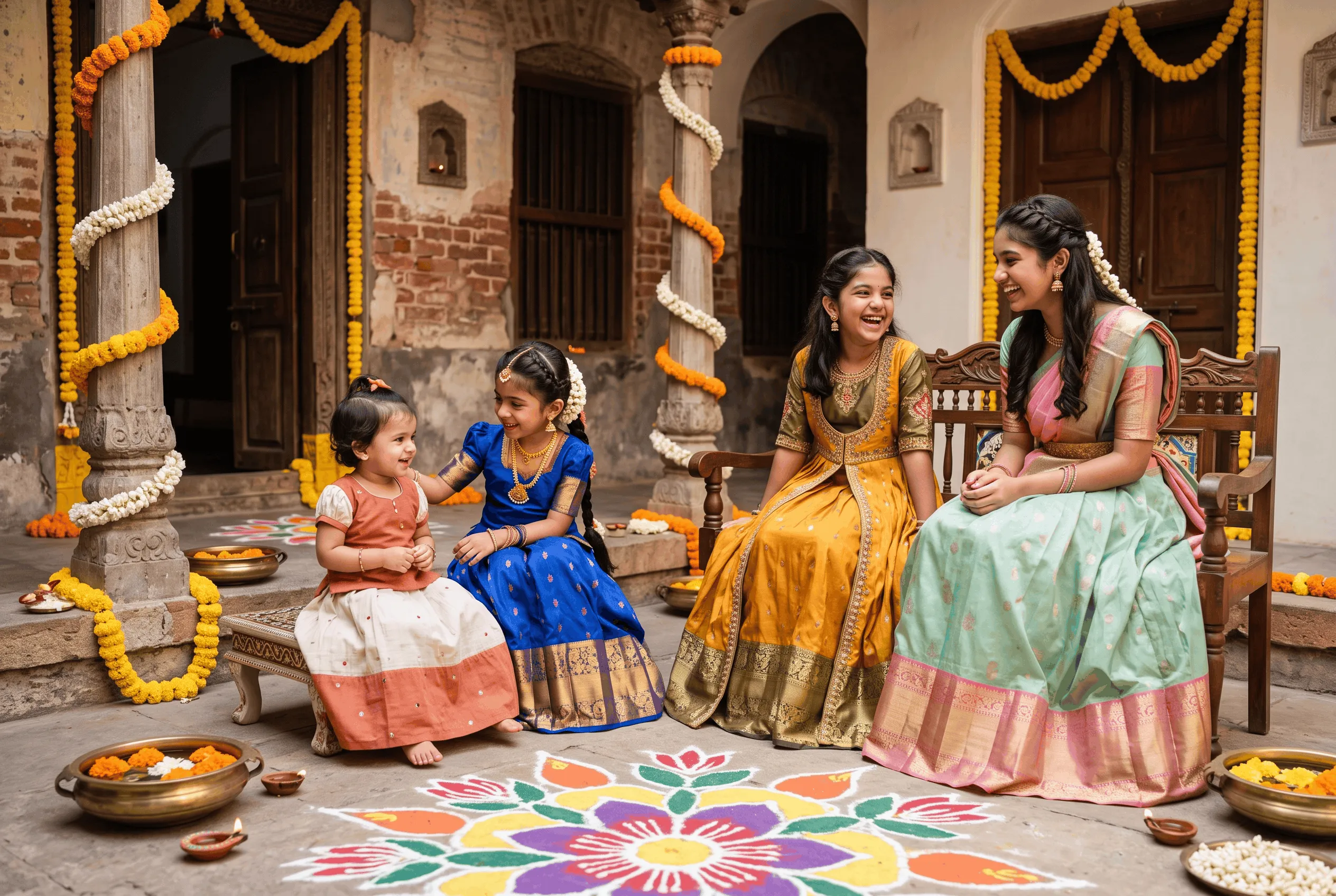
For children, comfort and safety matter more than anything else.
Choose clip-on or very light earrings for girls with newly pierced ears.
Avoid loose small beads and long chains for toddlers.
Thread, fabric and mirror-work jewellery is softer and safer than metal.
Let older girls choose one "big" statement piece, such as a tikka or kamarbandh, and keep everything else simple.
Pair these with a comfortable outfit from our Navratri chaniya choli 2026 guide.
Building a Navratri Jewellery Kit for Nine Nights
A small, well-planned kit is more useful than a drawer full of random pieces.
Start with one pair of oxidised jhumkas and one short hasli or choker that suit most of your chaniya cholis.
Add one kodi set for a folk look on cotton outfits.
Choose five or six pairs of thread or pom-pom earrings in different colours to match the day-wise palette.
Include one kamarbandh, which helps keep the dupatta in place on busy nights.
Finish with a payal with ghungroo and a few hair pins or a maang tikka.
Keep everything together in a small pouch with safety pins, bobby pins and a spare earring back, so getting ready each evening takes minutes instead of an hour.
Handmade vs Machine-Made Oxidised Jewellery
Most oxidised jewellery in markets is cast or machine-made, which keeps it affordable and widely available.
Handmade pieces, often made by small artisan workshops, usually show slightly irregular detailing, hand-finished edges and more depth in the engraving.
Both are perfectly fine for Navratri.
Pay a handmade price only when you can see handmade detail, and ask the seller what metal is used, especially if you want genuine 925 silver.
Real silver pieces cost more, but they can be polished and worn for many years.
Navratri Jewellery Price Guide
These are indicative ranges for 2026. Prices vary by city, seller and finish.
| Piece | Indicative price range |
|---|---|
| Oxidised jhumkas | ₹150 – ₹800 |
| Oxidised necklace or hasli set | ₹400 – ₹2,500 |
| Kodi earrings or armlet | ₹150 – ₹1,000 |
| Mirror-work choker or tikka | ₹200 – ₹1,200 |
| Kamarbandh (waist belt) | ₹300 – ₹2,000 |
| Thread bangle set | ₹100 – ₹500 |
| 925 silver jhumkas | ₹1,500 – ₹6,000+ |
Festival markets become crowded close to Navratri and prices often rise.
Buy your base pieces early and pick up colour accents later.
Comfort Checklist Before You Leave Home
Hold each earring and shake your head. If it pulls, choose something lighter or use sahare (ear chains) to share the weight.
Make sure bangles are slightly loose, because hands often swell in the heat.
Check payal and ghungroo for sharp edges that could scratch your other ankle.
Pin every hair accessory securely.
Apply a thin coat of clear nail polish on the inside of cheap metal pieces to reduce skin reactions.
Common Navratri Jewellery Mistakes
One common mistake is wearing heavy bridal jewellery for garba.
It looks beautiful at first but becomes tiring and uncomfortable within an hour.
Another mistake is combining too many statement pieces at once. Big earrings, a heavy necklace, armlets and a tikka together can overwhelm the outfit.
Many people also forget to test earrings before the event, only to discover painful earlobes halfway through the night.
Finally, avoid storing damp jewellery after garba, which is the quickest way to ruin oxidised pieces.
How to Care for Oxidised and Kodi Jewellery
Oxidised jewellery can rust or lose its finish if it stays damp.
After each night, wipe your pieces with a soft dry cloth to remove sweat.
Let them air-dry completely before putting them away.
Store each piece in a separate zip pouch or cotton cloth to prevent scratches and tangles.
Keep jewellery away from perfume and hairspray.
Clean kodi and thread pieces with a soft dry brush rather than soaking them.
With this care, a good oxidised set can last several festive seasons.
Why Navratri Jewellery Is Worth Planning
Good Navratri jewellery should feel as light as it looks.
A small, well-chosen collection of oxidised, kodi, thread and mirror-work pieces can be mixed and matched across all nine nights and reused every year.
Plan one dependable base set, add inexpensive colour accents, keep heavy gold for the puja and test every piece for comfort.
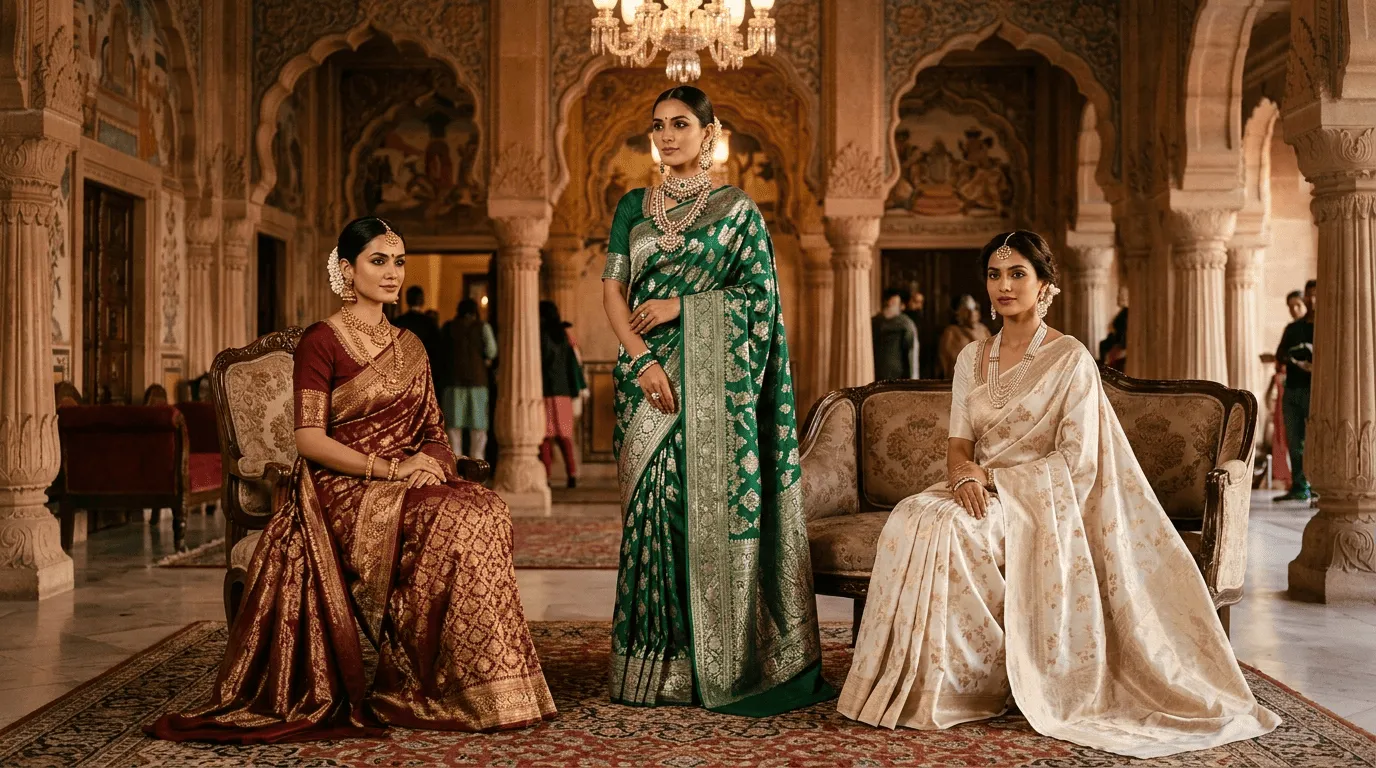
For styling silk outfits later in the festive season, see our guide to ethnic jewellery with silk sarees, and explore more ideas in our traditional wear trends 2026 guide.
Comments (0)
Leave a Thought
No comments yet. Be the first to share your thoughts!