Buying a traditional dress for girls is one of the happiest parts of festival and wedding shopping, but it can also be surprisingly confusing.
A frilly lehenga that looks perfect in the shop can scratch, slip or trip a toddler within minutes.
A pre-teen may feel shy in a short choli, and a teenager may refuse anything that feels too childish.
The right outfit depends on your daughter's age, the occasion, the weather and, most of all, how comfortable she feels wearing it for hours.
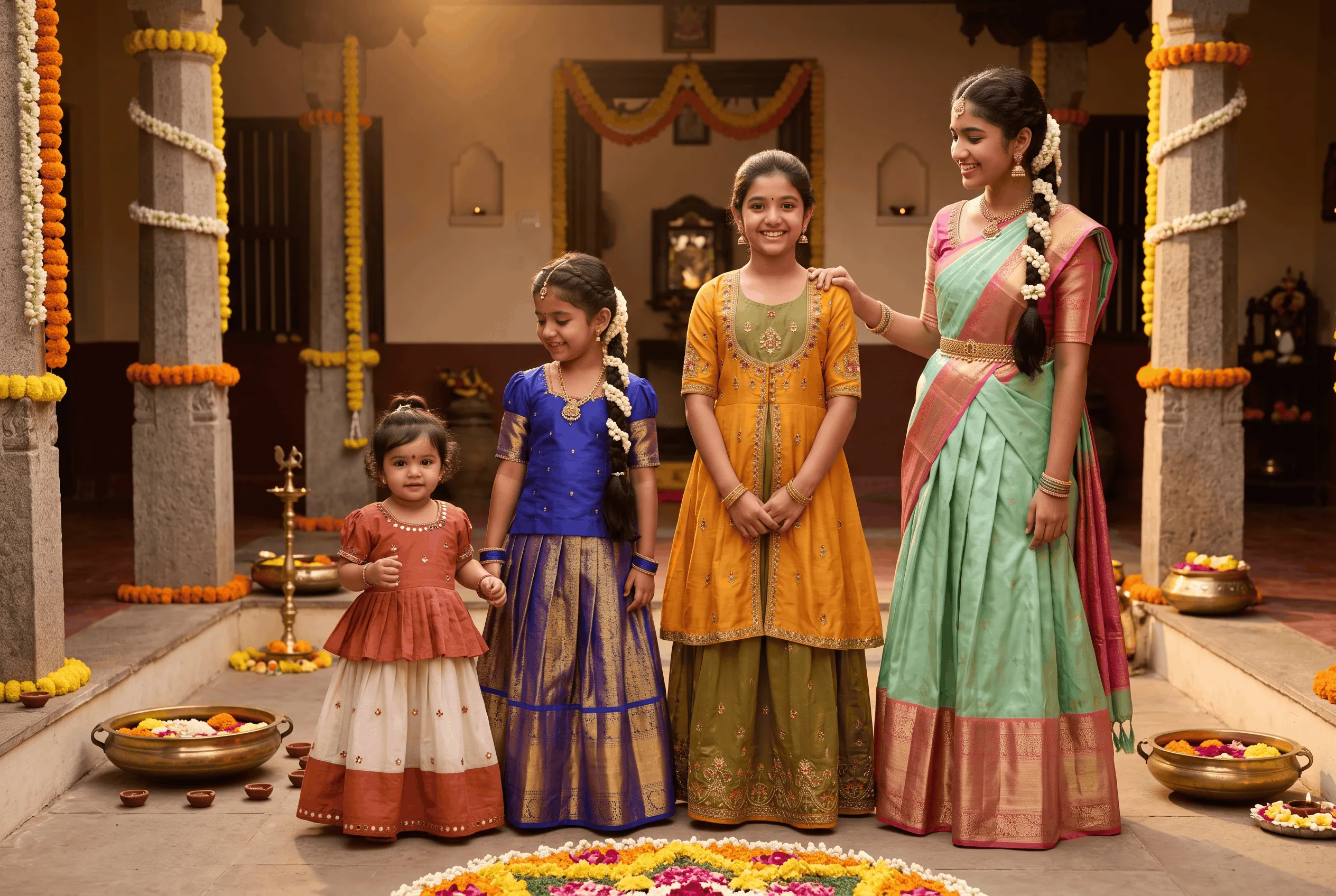
India also offers a wonderful range of regional styles, from the Gujarati chaniya choli to the South Indian pattu pavadai and half saree.
This guide walks you through ethnic outfit ideas age by age, explains the main regional styles and shares practical advice on fabric, sizing, safety, styling and price.
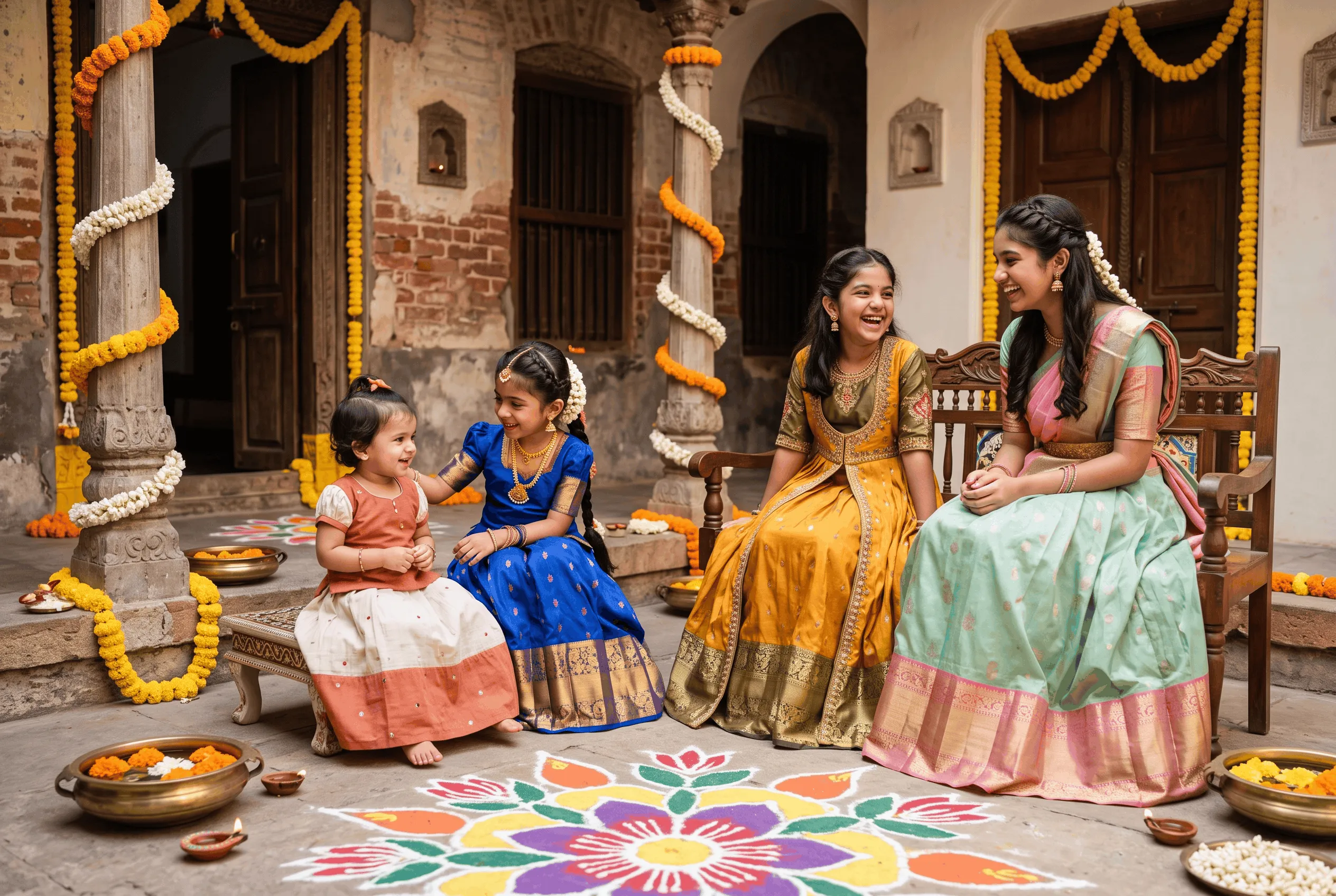
What Matters Most When Choosing Ethnic Wear for Girls
Comfort comes first. Children sit on the floor, run, play and sometimes nap in their outfits. Soft fabric and an easy fit matter more than heavy decoration.
Fabric is the next priority. Cotton, cotton-silk, soft silk, mulmul and lined georgette are the most comfortable. Avoid scratchy net next to the skin.
Safety is essential. Avoid small loose beads for young children, sharp sequins near the neck or underarms and long trailing dupattas near diyas or stairs.
Fit and growth matter. Adjustable waists and a little room to grow help an outfit last more than one season.
The occasion guides the style. A temple visit, a wedding, a school function and Navratri each need something slightly different.
Her opinion counts. Letting your daughter choose the colour or one detail makes her far more likely to wear the outfit happily.
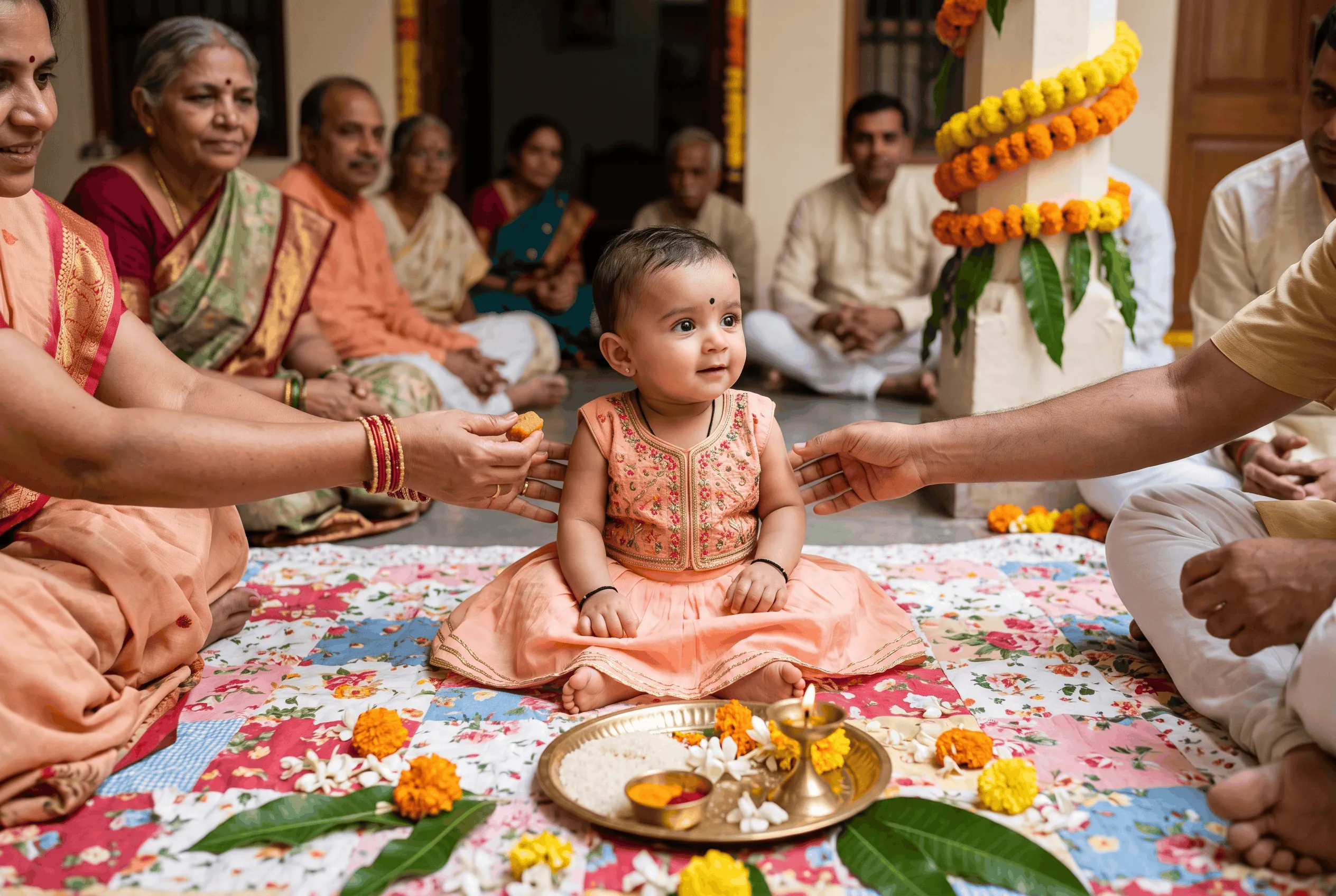
Traditional Dress for Baby Girls (0 to 2 Years)
At this age, a traditional dress for a baby girl should be easy for you to put on and change.
A frock-style lehenga with an attached choli slips on easily and looks festive in photographs.
A cotton jhabla or kurta with soft pyjamas is comfortable for long functions and naps.
A mini pattu pavadai in soft silk-cotton is perfect for South Indian ceremonies such as naming functions and temple visits.
Romper-style ethnic sets with a printed skirt detail are practical for crawling babies.
Choose snap buttons or front openings for nappy changes, fully lined outfits to protect delicate skin and no small beads, stones or loose ribbons.
Always carry a spare outfit, because babies rarely stay clean through a long function.
Ethnic Wear for Toddlers (2 to 5 Years)
Toddlers want to move, so choose outfits that let them run, sit and climb safely.
A cotton or cotton-silk lehenga choli with an elastic waist is the most practical festive choice.
A short Anarkali that ends above the ankle looks graceful without the risk of tripping.
A pattu pavadai with a soft blouse suits South Indian festivals and weddings.
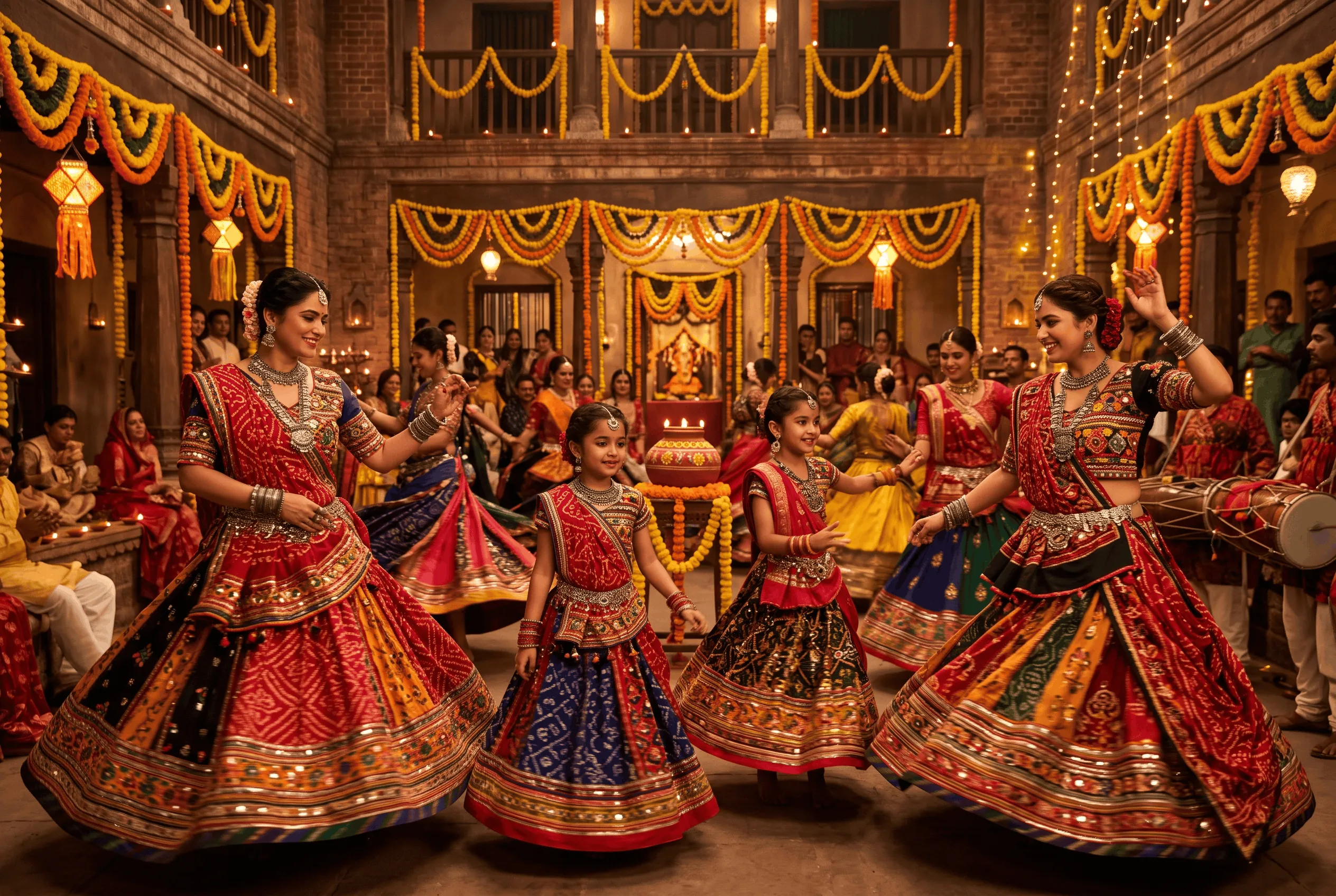
A cotton chaniya choli is ideal for Navratri. See our Navratri chaniya choli 2026 guide.
Keep the skirt at ankle height or above, skip dupattas or use a very short pinned one, and let your child try the outfit at home first to make sure nothing itches.
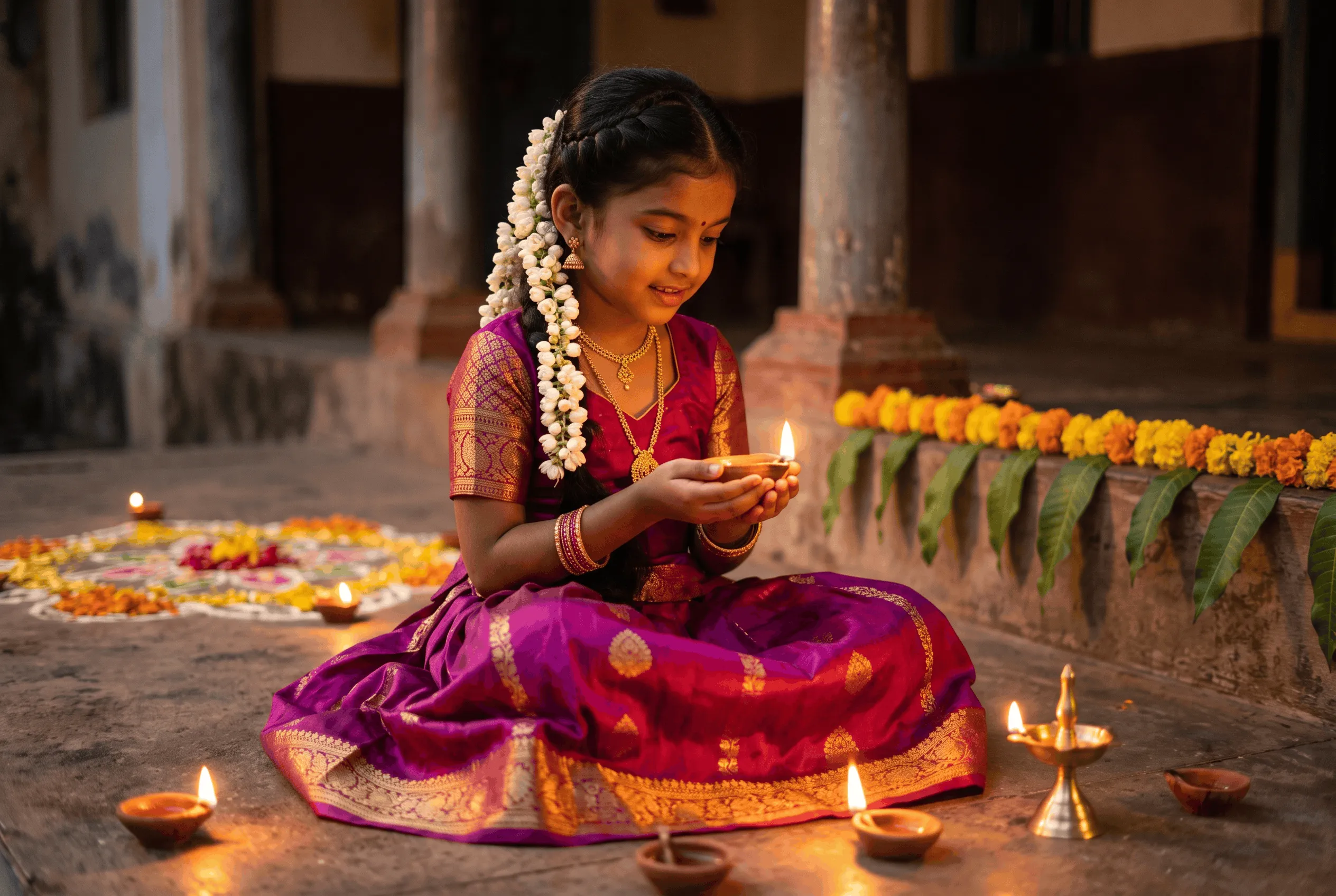
Ethnic Wear for Girls Aged 6 to 10
Girls in this age group often have strong opinions about colours and twirly skirts.
It is a lovely time to involve them in choosing.
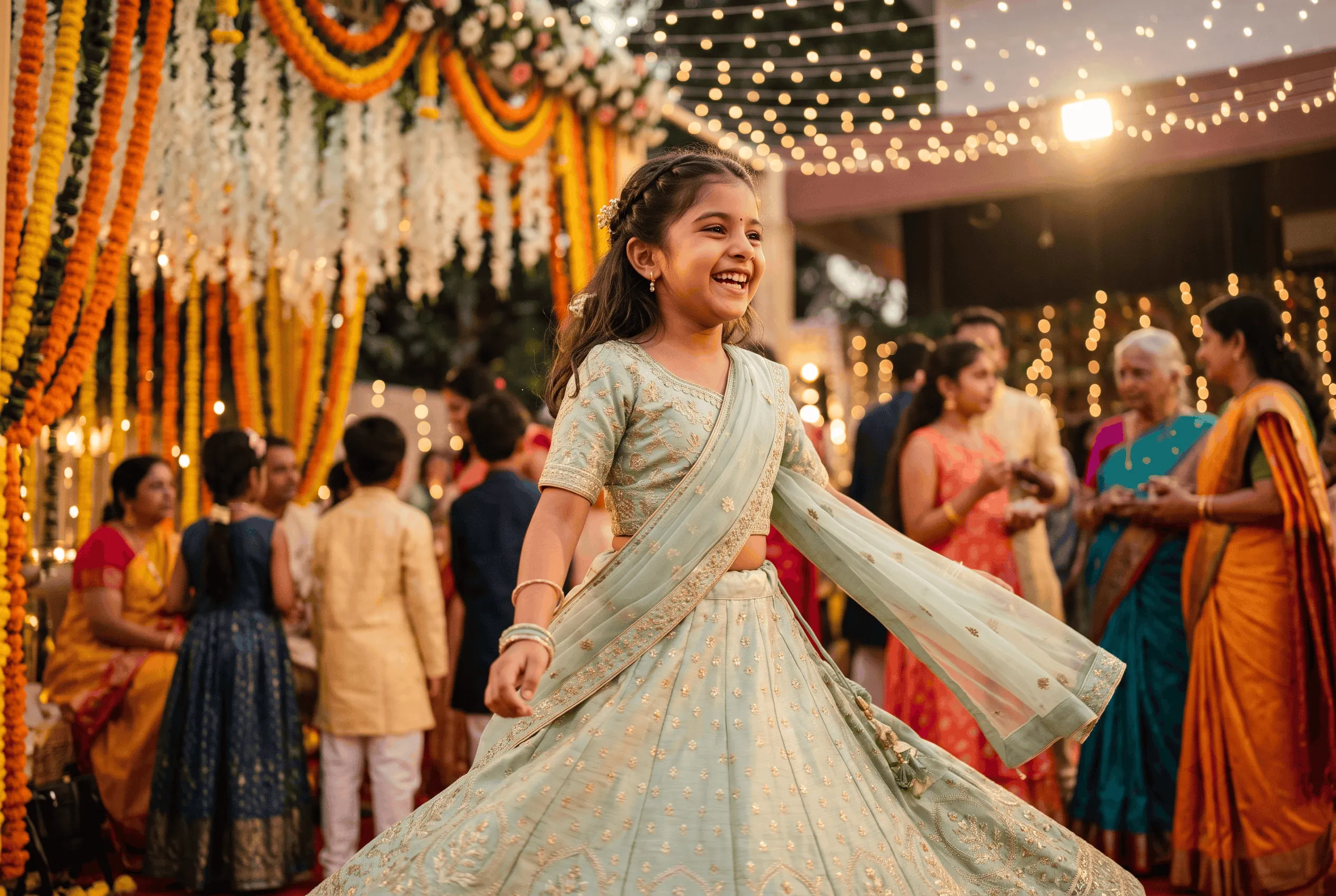
A lehenga choli in silk-blend or georgette with light embroidery is the most popular choice for weddings and festivals. Our lehenga choli for girls guide explains fabrics and sizing in detail.
A pattu pavadai in Kanchipuram or soft silk is perfect for South Indian festivals and family weddings.
A sharara or gharara set is comfortable for weddings, Eid and Diwali gatherings.
An Anarkali with churidar or leggings is graceful and easy to wear.
Choose a lined choli with adjustable dori ties so it lasts longer, and keep embellishment light for long events.
Ethnic Wear for Pre-Teens (11 to 13 Years)
Pre-teens often want something more grown-up but are still growing quickly.
A lehenga with a jacket or cape instead of a short choli offers more coverage and feels stylish.
A long Anarkali in a jewel tone looks elegant at weddings and festivals.
Palazzo and sharara sets with long kurtas are comfortable and modern.
A pattu pavadai with a longer blouse, or a first half saree for South Indian families, marks a lovely transition.
Respect her comfort level around crop lengths and sleeveless blouses, and buy with a little room in the waist and length.
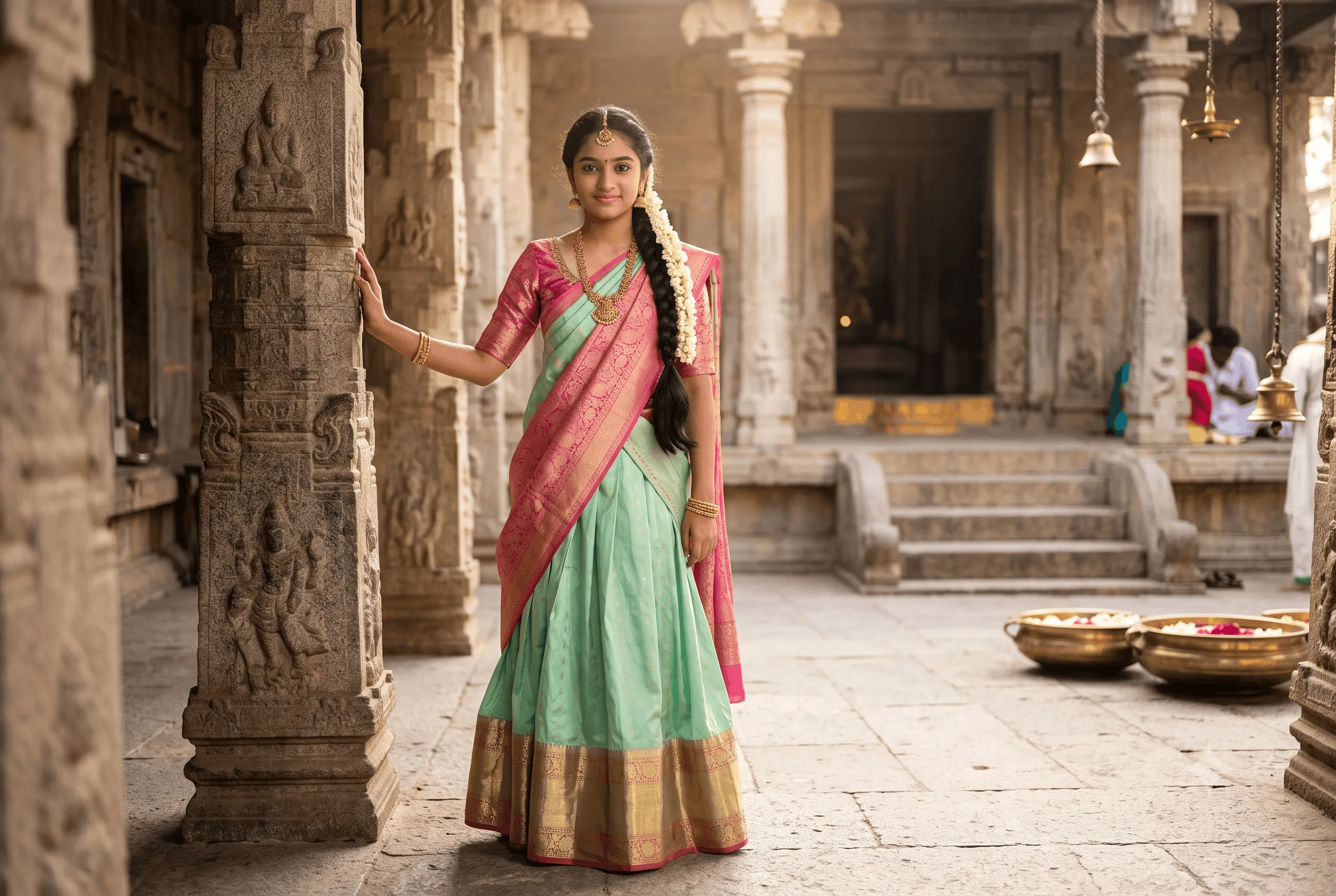
Ethnic Dress for Teenage Girls (14 to 18 Years)
Teens often want the same styles as young women, adapted for comfort.
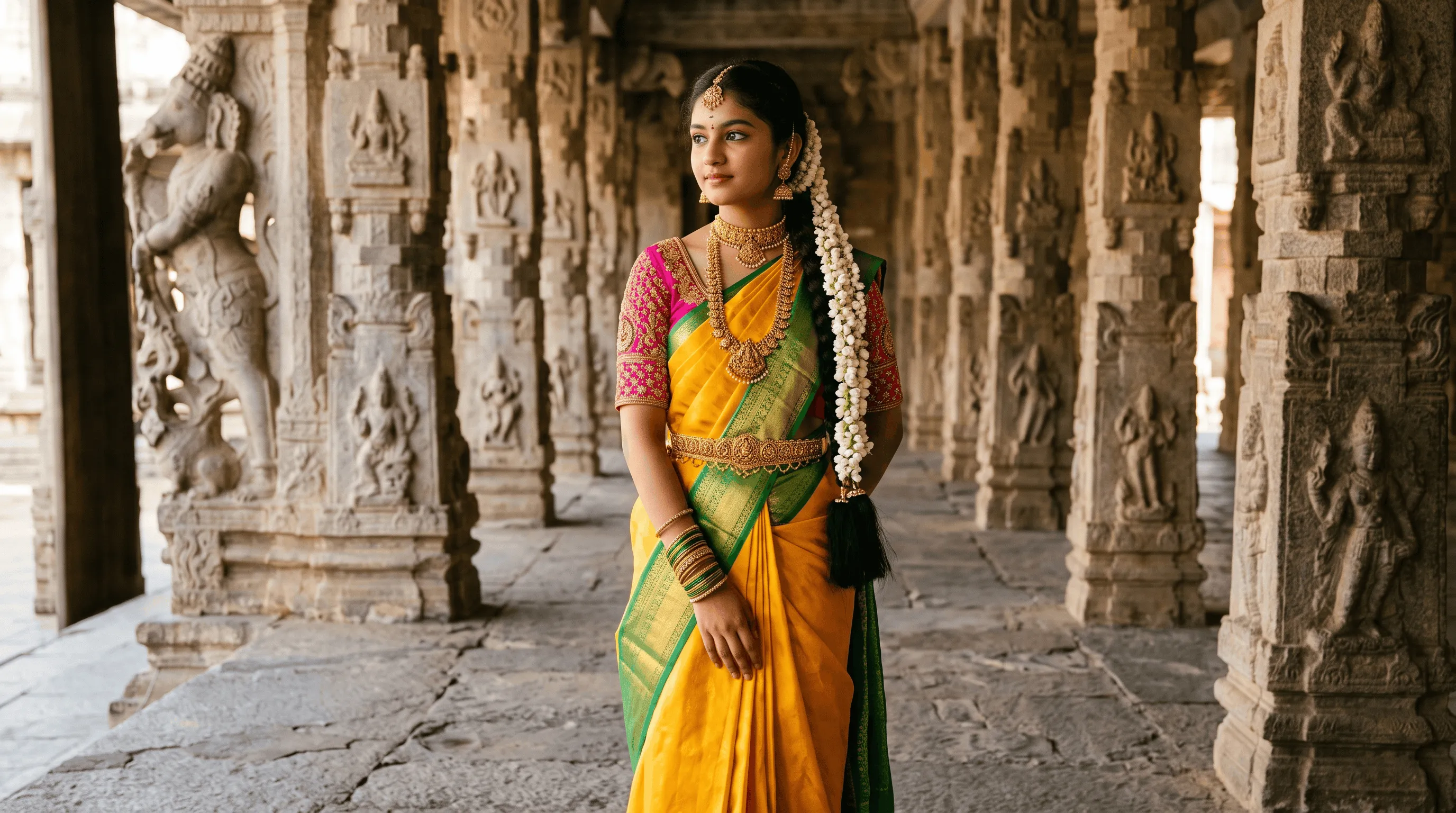
A half saree (langa voni) is a beautiful traditional choice in South India. Read our pattu pavadai and half saree guide.
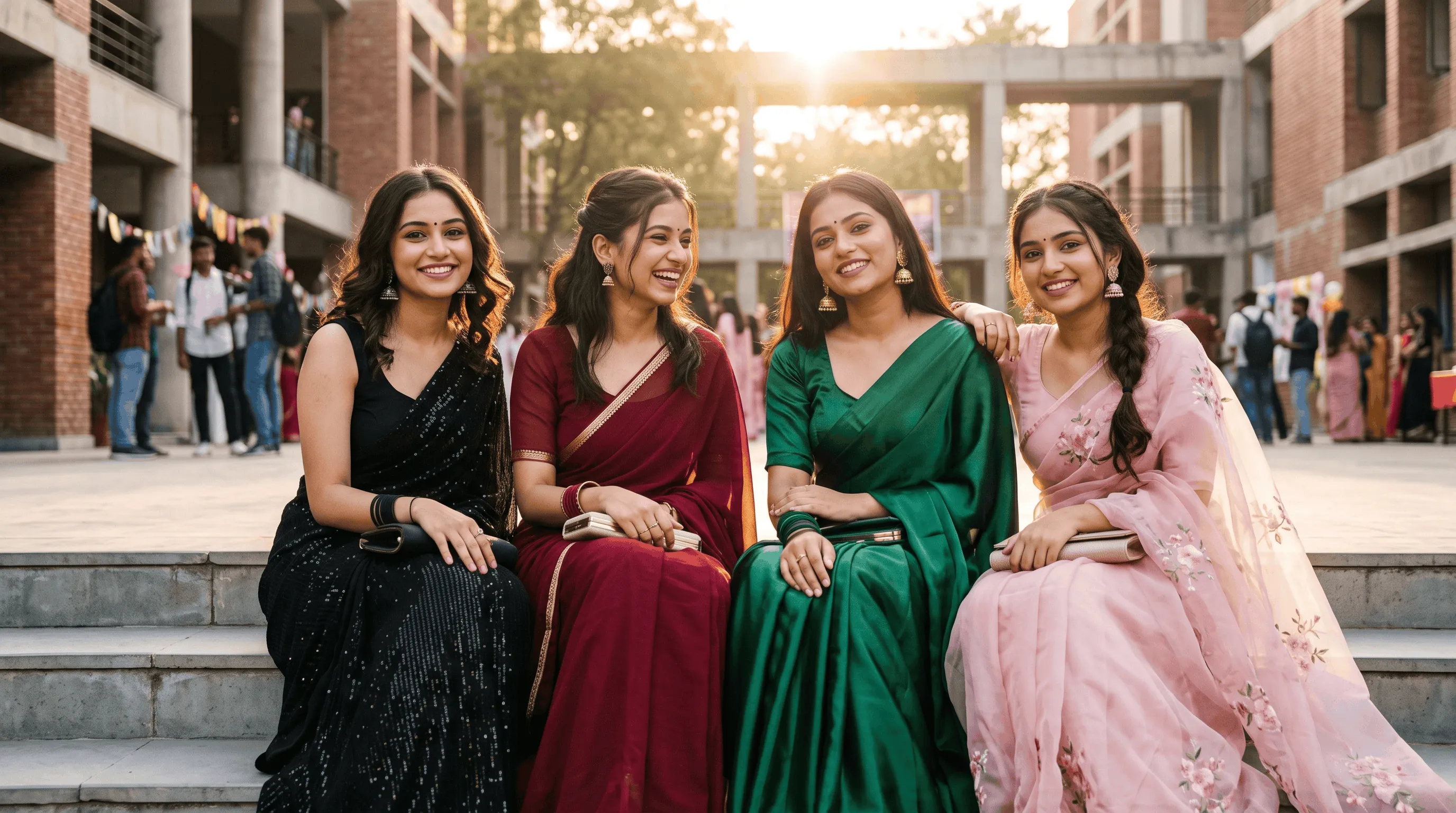
A first saree is a special milestone for school or college farewells. See our farewell saree ideas.
A crop-top lehenga in georgette or organza is popular for weddings and sangeet nights.
Indo-western sets, such as a dhoti skirt with a long jacket, feel modern and comfortable.
A pre-draped saree gives an easy, neat first saree look. See our pre-draped saree guide.
Regional Traditional Styles for Girls
| Style | Region | Description | Best occasion |
|---|---|---|---|
| Lehenga choli | North and West India | Flared skirt, fitted choli, dupatta | Weddings, festivals |
| Chaniya choli | Gujarat | Flared, often mirror-work or Bandhani | Navratri, garba |
| Pattu pavadai | South India | Silk skirt with contrast border and blouse | Temple visits, festivals, weddings |
| Half saree (langa voni) | South India | Skirt, blouse and half-length drape | Coming-of-age functions, weddings |
| Ghagra | Rajasthan | Full skirt, often with gota-patti | Weddings, Teej |
| Mekhela chador (small) | Assam | Two-piece draped outfit | Bihu, festivals |
| Anarkali | Across India | Long flared kurta | Weddings, Eid, Diwali |
| Sharara or gharara | North India | Wide-legged pants with a kurta | Weddings, Eid |
Choosing a regional outfit for a festival from that region, such as a chaniya choli for Navratri or a pattu pavadai for Pongal, is a lovely way to introduce children to their heritage.
Traditional Dress for Girls by Occasion
Temple visits and pujas: pattu pavadai, cotton-silk lehengas or simple Anarkalis in bright, auspicious colours.
Weddings: silk-blend lehengas, Anarkalis or sharara sets, with a lighter option for long ceremonies.
Navratri: cotton or rayon chaniya cholis with flare for dancing.
Diwali: silk-blend lehengas, pattu pavadai or short Anarkalis, with safety in mind near diyas.
School functions: comfortable cotton outfits that are easy to change in and out of.
Sizing Tips for Parents
Measure, do not guess. Check chest, waist, length (waist to ankle) and shoulder.
Use age only as a rough guide. Children of the same age vary a lot in size.
Choose adjustable features. Elastic waists, drawstrings, dori-tie blouses and extra seam allowance all help.
Leave growth room. One to two inches in length and waist is usually enough for a season.
Try before the event. Give yourself time for alterations.
Fabric and Safety Checklist
Choose soft, breathable fabric next to the skin.
Make sure net, sequins and embroidery are fully lined.
Avoid small loose beads for children under five.
Check that sequins and stones are securely stitched and kept away from the neck and underarms.
Keep dupattas short or pinned near diyas and on stairs.
Choose comfortable, non-slip footwear.
Hair and Accessories for Girls
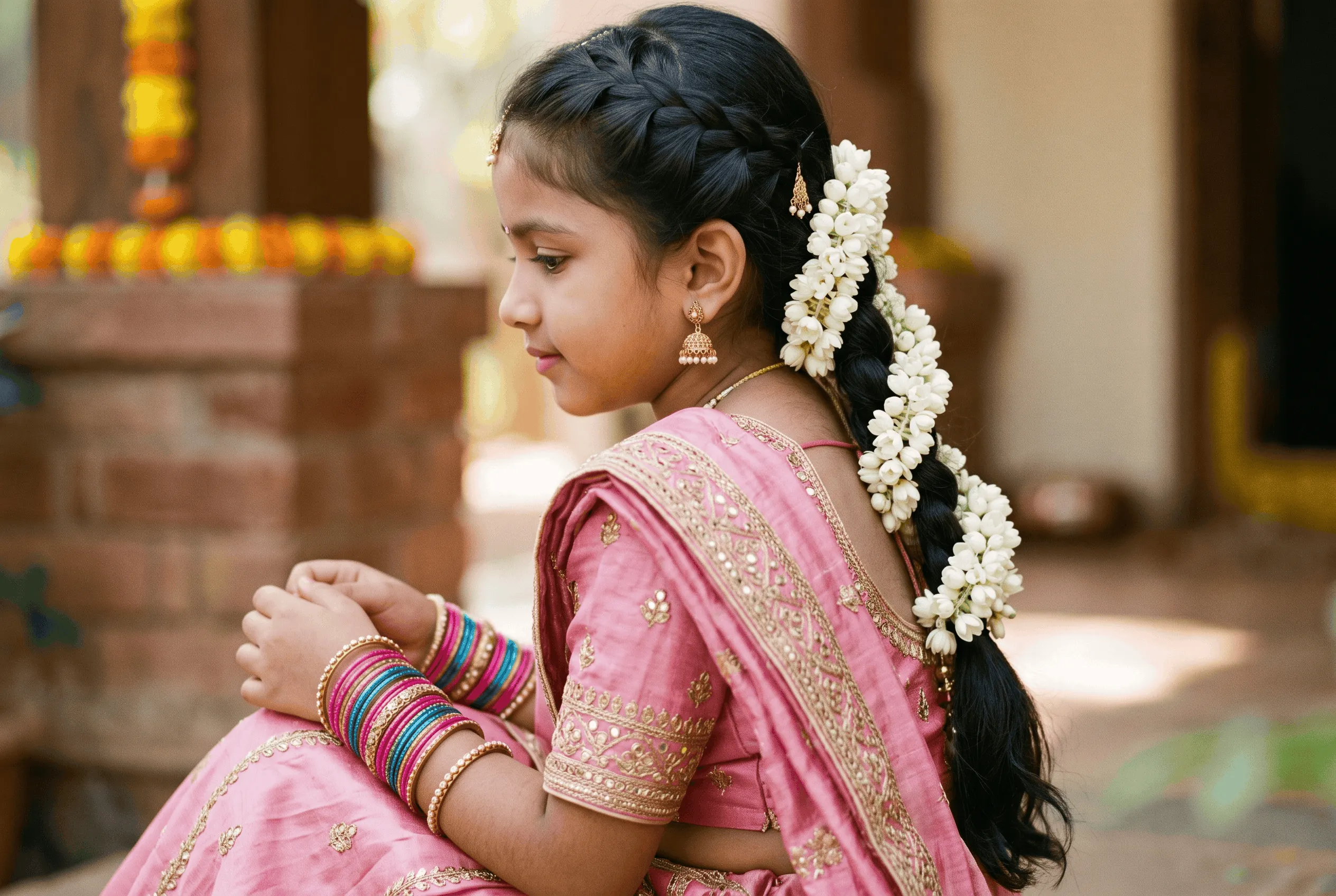
Simple braids with fresh jasmine or a small hair clip look sweet and stay neat.
Light jhumkas, a small maang tikka and a few glass bangles are enough for most girls.
Clip-on earrings are a good choice for girls without pierced ears.
Avoid heavy jewellery that pulls on small earlobes or scratches the neck.
Colour Ideas for Girls' Ethnic Wear
Bright colours suit children beautifully and look joyful in photographs.
Pink, magenta and coral are perennial favourites for younger girls.
Mango yellow, parrot green and peacock blue look lovely in traditional silk outfits, especially pattu pavadai.
Pastels such as mint, lilac, peach and powder blue are popular with pre-teens and teens who want a softer, more grown-up look.
Red and maroon feel festive for weddings and Diwali.
Contrast borders, such as pink with green or yellow with maroon, add a classic Indian touch.
If your daughter has a favourite colour, building the outfit around it is the easiest way to make her excited to wear it.
Mother-Daughter Matching Outfits
Matching outfits remain a favourite for festivals and family weddings.
You can choose the same print or fabric in two sizes, such as matching Bandhani or block-print sets.
A more subtle option is to coordinate colours rather than match exactly, for example a mother in a mustard saree and a daughter in a mustard and green pattu pavadai.
Matching dupattas or jewellery can also tie the looks together without identical outfits.
These looks photograph beautifully and make shopping easier for busy families.
How to Care for Girls' Ethnic Wear
Spot-clean small stains quickly with cold water.
Hand-wash cotton outfits inside out in cold water with mild detergent.
Dry-clean silk, brocade and heavily embroidered outfits.
Dry in the shade to protect bright colours.
Store outfits folded with tissue paper over embroidery, and pass well-kept outfits down to younger siblings or cousins.
Price Guide
These are indicative 2026 ranges. Prices vary by city, seller, fabric and work.
| Outfit | Indicative price range |
|---|---|
| Cotton frock-style lehenga (baby) | ₹500 – ₹2,000 |
| Lehenga choli for girls | ₹800 – ₹5,000 |
| Pattu pavadai (silk-blend to pure silk) | ₹1,500 – ₹15,000+ |
| Anarkali or sharara set | ₹800 – ₹4,000 |
| Half saree (langa voni) | ₹2,500 – ₹20,000+ |
| Chaniya choli for Navratri | ₹700 – ₹3,500 |
Common Mistakes Parents Make
Buying by age label alone often leads to a poor fit.
Choosing heavy embellishment for long events makes children uncomfortable and irritable.
Many parents also buy outfits too long "to grow into", which creates a tripping risk.
Finally, skipping a trial at home means discovering itchy seams or a tight armhole on the day of the event.
Why the Right Traditional Dress Matters
The best traditional dress for girls is one she is happy and comfortable wearing all day.
A comfortable outfit lets her enjoy the celebration, join in rituals and build happy memories of her culture and traditions.
Measure carefully, choose soft fabrics and adjustable fits, keep safety in mind and let your daughter help choose the colour.
For more festive and wedding ideas, see our traditional wear trends 2026 guide.
Comments (0)
Leave a Thought
No comments yet. Be the first to share your thoughts!