A pre draped saree looks like a traditional saree but goes on in a few minutes, with no pleating, no long pinning sessions and no help needed.
The pleats and pallu are stitched in place, so you wear it more like a skirt with an attached drape.
For busy women, first-time saree wearers, NRIs and anyone heading to a sangeet with a lot of dancing, it has become one of the most practical choices in ethnic wear.
But it is not right for every occasion, and not every pre-draped saree is well made.
This guide explains how a pre-draped saree works, the main types, how to wear one in about five minutes, the best fabrics, prices, how to convert a saree you already own and when a regular saree is still the better choice.
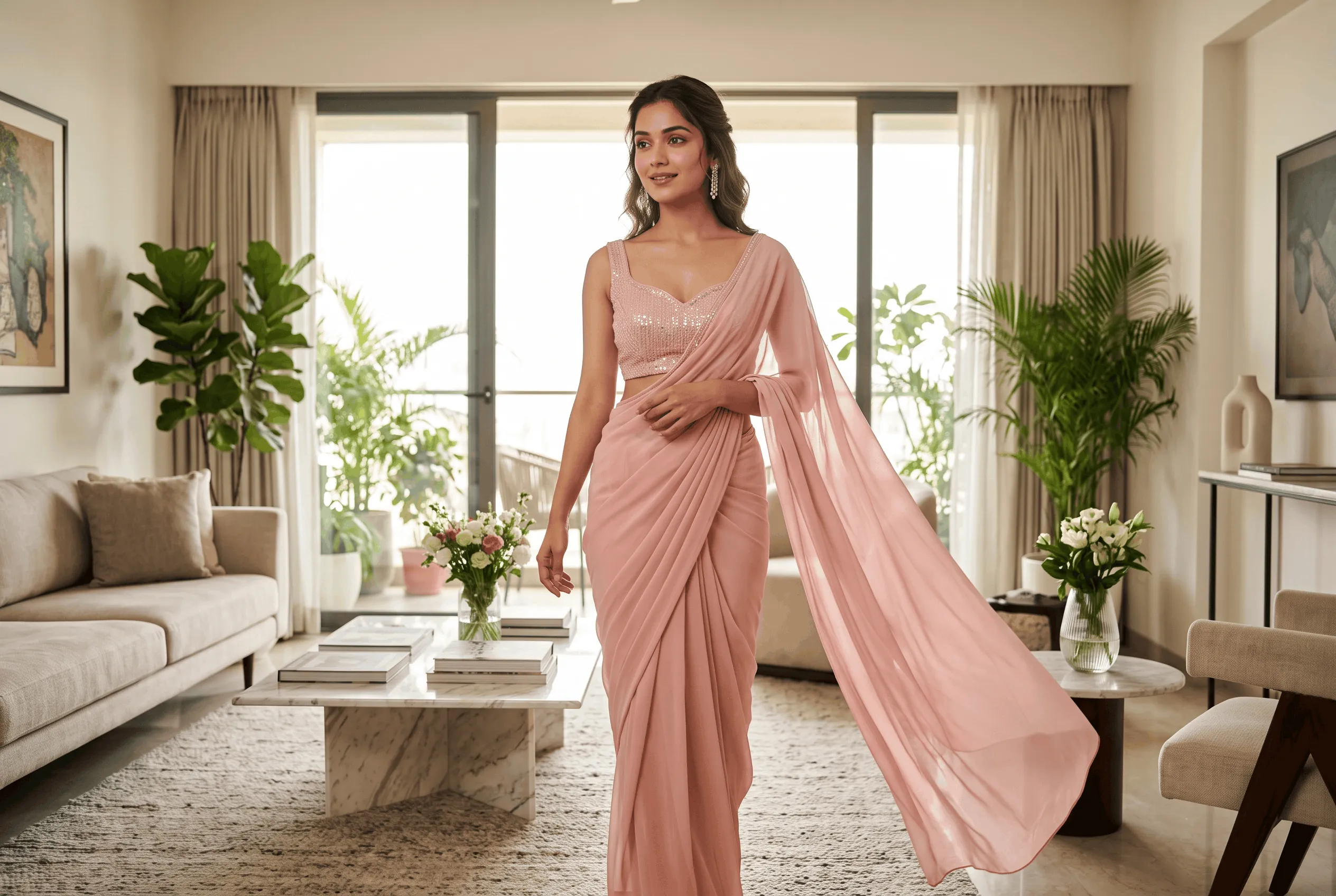
What Is a Pre-Draped Saree?
A pre-draped saree, also called a ready-to-wear saree or stitched saree, is a saree whose main folds are stitched permanently.
Usually, the front pleats are stitched onto a waistband or a skirt-like base.
The pallu is pleated or shaped and attached so it falls neatly over the shoulder.
The waist closes with a hook, zip, drawstring or elastic.
The blouse is usually separate, although some sets include a matching blouse piece or a stitched blouse.
How Does a Pre-Draped Saree Work?
Think of it as a saree that has already been draped once and then sewn into that shape.
Because the structure is fixed, the drape looks the same every time you wear it.
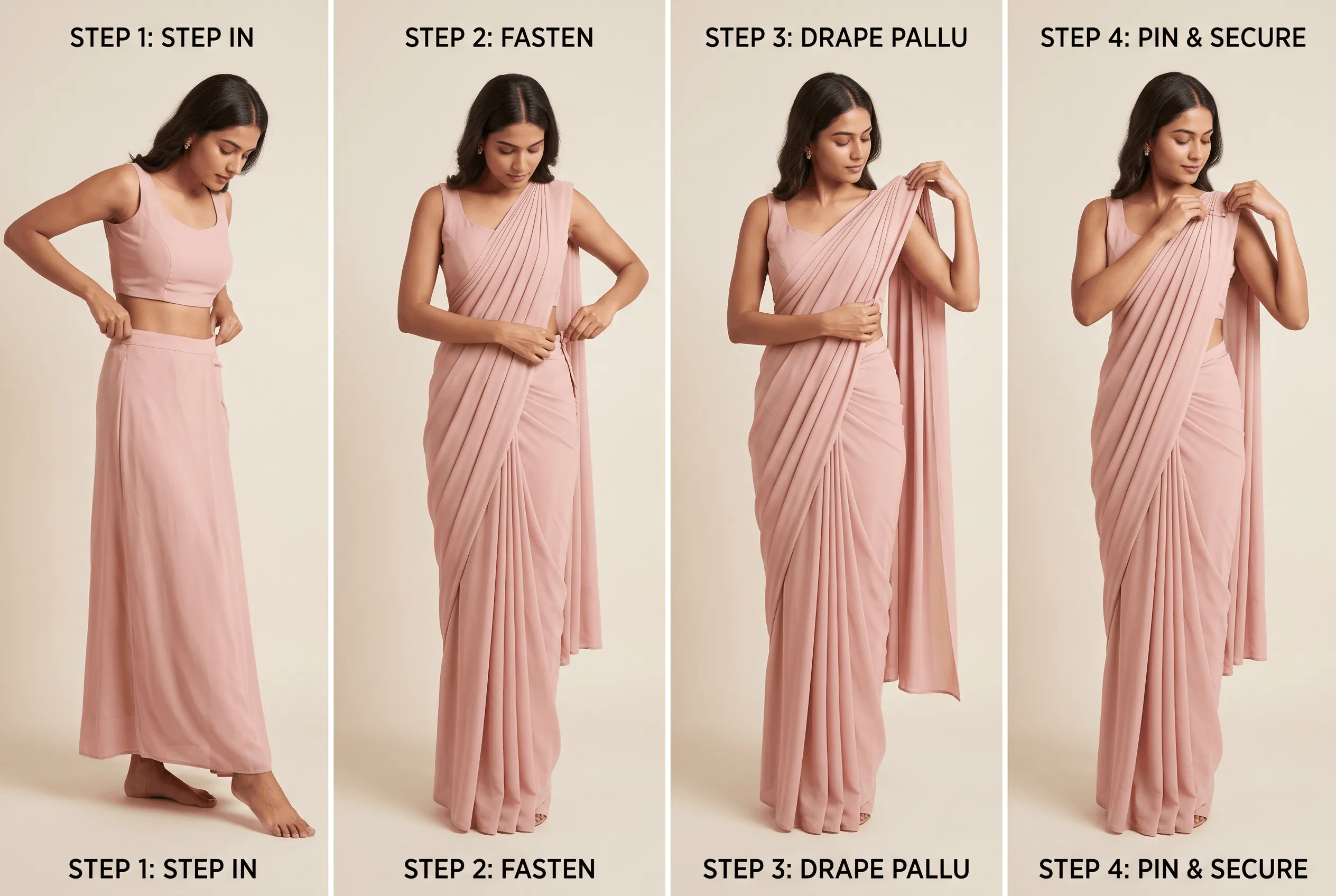
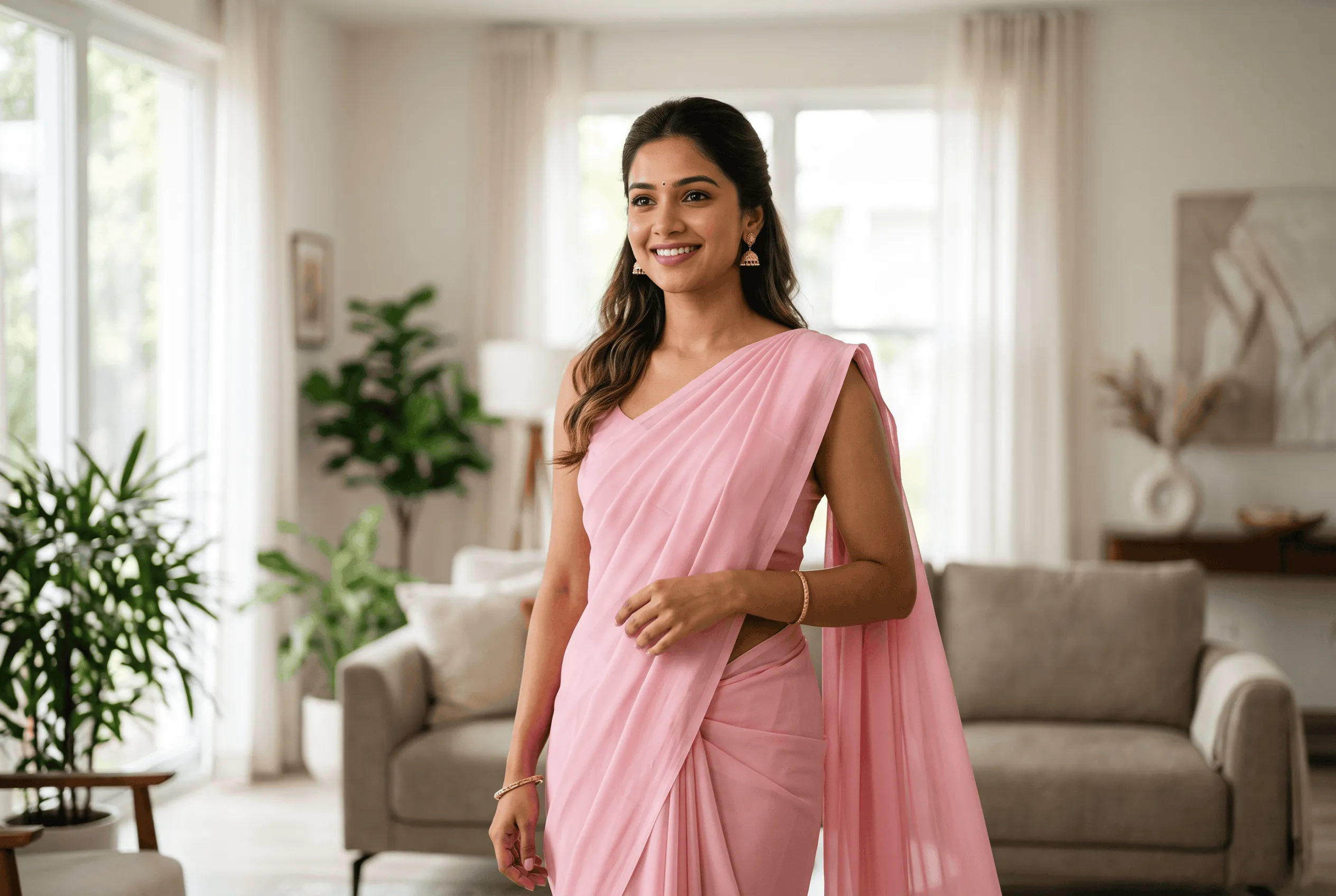
You simply step in, fasten the waist, place the pallu on your shoulder and pin it.
Most designs do not need a separate petticoat because the base acts as one, although a slip or shapewear can help with sheer fabrics.
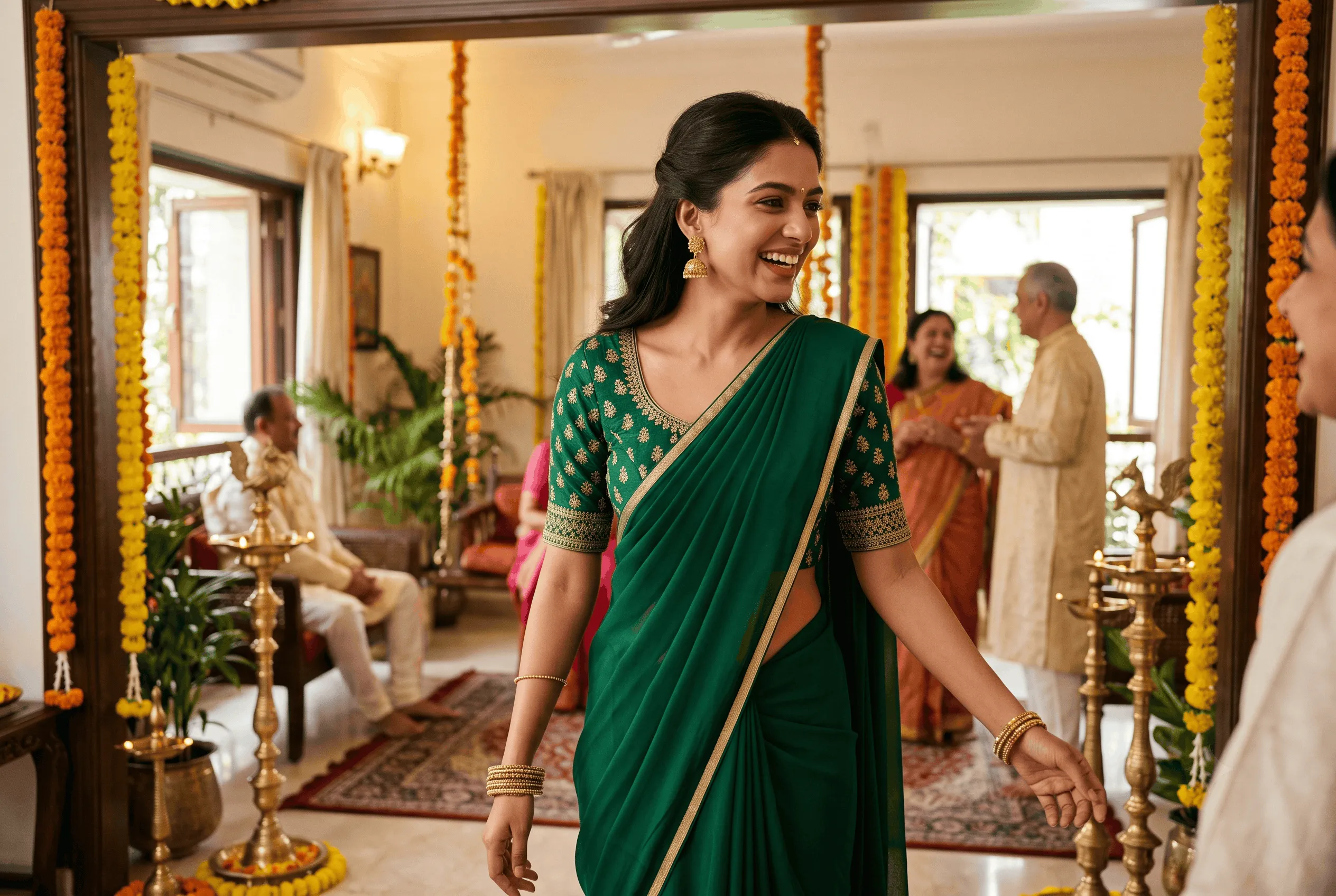
1. Classic Pre-Stitched Nivi Saree
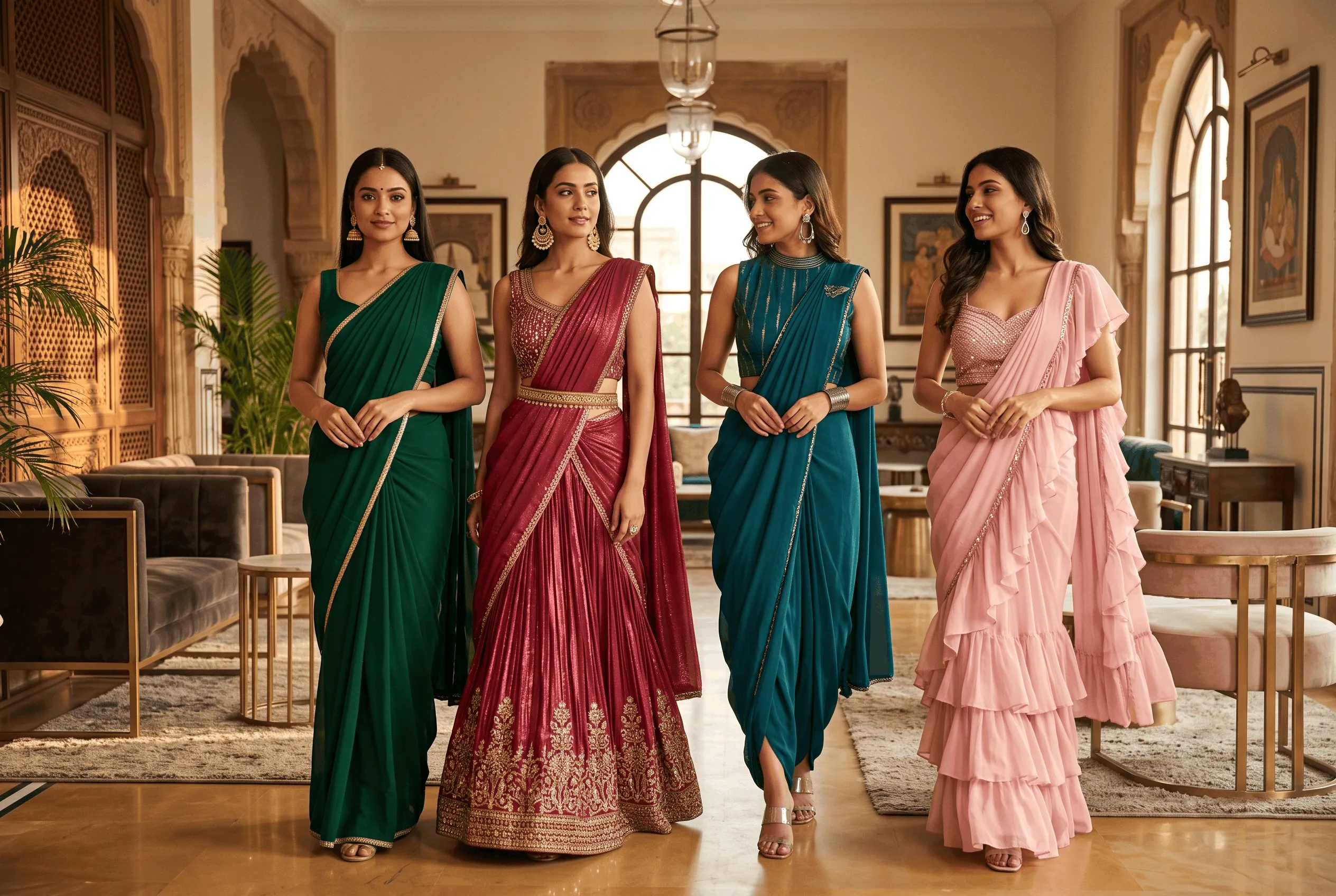
This is the most common type and looks almost exactly like a regular Nivi drape.
It works for weddings, parties, office celebrations and festivals.
2. Lehenga-Style Saree
A lehenga-style saree has a flared skirt with an attached pallu.
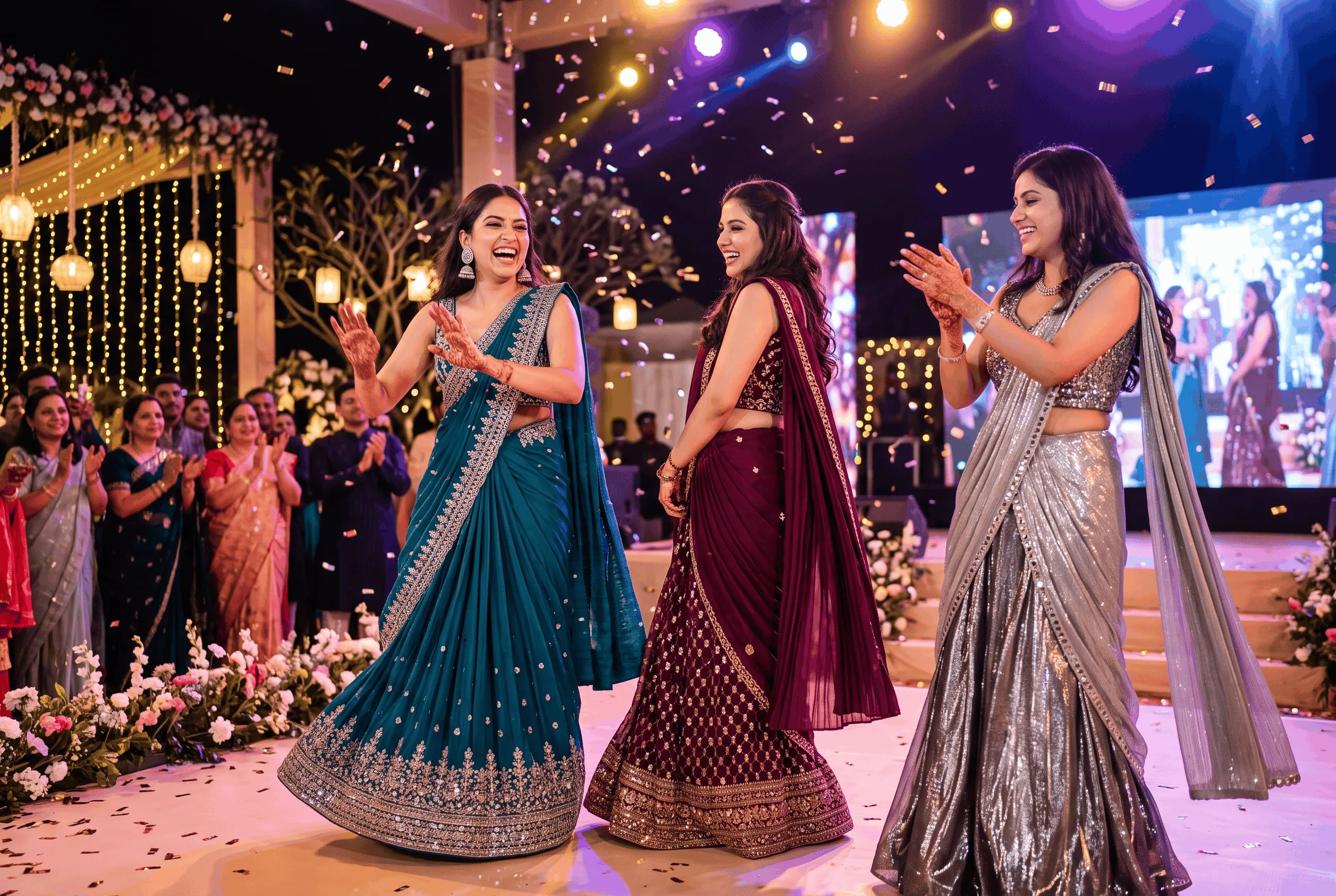
It gives the volume of a lehenga with the grace of a saree drape, which makes it popular for sangeet nights and receptions.
3. Dhoti Saree
A dhoti saree uses a dhoti-style base with a draped pallu.
It feels modern and is very comfortable for dancing and long events.
4. Pant Saree
A pant saree attaches the drape to straight or flared trousers.
It is a fashion-forward option for cocktail parties and Indo-western events.
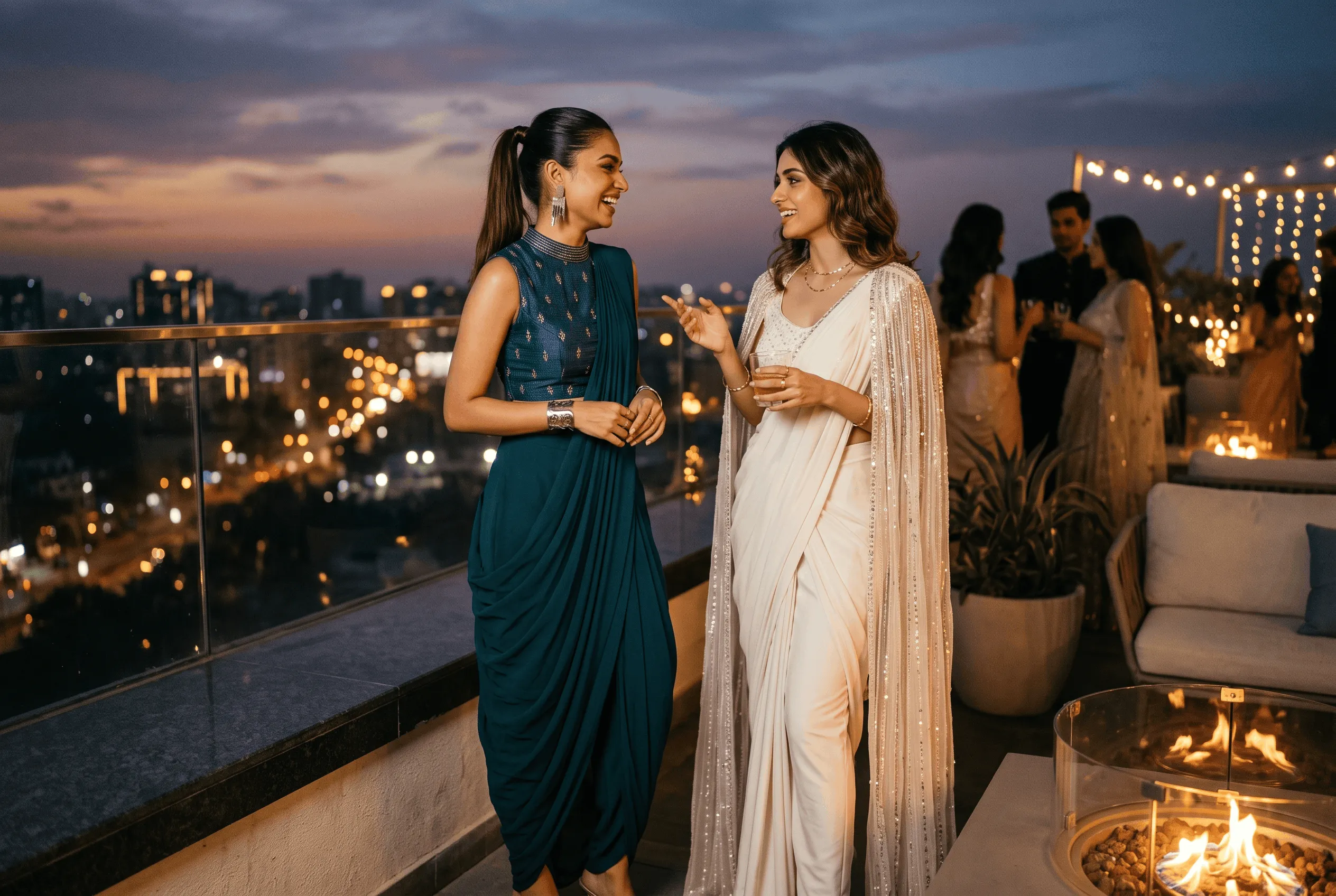
5. Ruffle Pre-Draped Saree
Ruffle sarees have frilled borders that move beautifully.
They look playful and youthful, which makes them popular for farewells, sangeet nights and parties.
6. Pre-Pleated Pallu Only
In this style, only the pallu is stitched.
You still tuck and pleat the front yourself, which gives a more natural fall while saving some time.
7. Your Own Saree, Converted
A tailor can turn a saree you already own into a pre-draped saree.
This is the best value option if you have sarees you rarely wear because draping feels like a chore.
How to Wear a Pre-Draped Saree in 5 Minutes
Step 1: Wear the blouse and the footwear you will actually use, so the length is correct.
Step 2: Step into the saree, holding the waistband with the pleats at the front, slightly left of the navel for a Nivi style.
Step 3: Fasten the hook, zip or drawstring so the waist sits snugly at petticoat height.
Step 4: Bring the pallu over your left shoulder and let it fall to the back at the length you like.
Step 5: Pin the pallu to the blouse at the shoulder. Add a second pin at the waist if you will be dancing.
Step 6: Straighten the pleats, check the hem is just off the floor and you are ready.
Most people get faster after the first one or two tries.
To learn traditional draping too, see our saree draping styles guide and our draping page.
Best Fabrics for a Pre-Draped Saree
| Fabric | Drape | Comfort | Notes |
|---|---|---|---|
| Georgette | Soft, flowing | High | The most popular; looks natural and moves well |
| Chiffon | Very soft and light | High | Great for dancing; can look flat if too thin |
| Crepe | Fluid, heavier fall | High | Hides creases well |
| Satin or satin silk | Shiny and smooth | Medium | Good for receptions and cocktail looks |
| Organza | Crisp and sheer | Medium | Pleats can stand stiffly; choose softer organza |
| Silk (Banarasi, Kanjivaram) | Structured | Medium | Possible, but stitching affects heirloom value |
For a first pre-draped saree, georgette or crepe is the safest choice.
Pre-Stitched Saree for Weddings
A pre-stitched saree for a wedding makes sense in many situations.
Guests at a sangeet or reception can dance and move freely.
Bridesmaids and sisters with several outfit changes in one day save valuable time.
NRIs with little draping practice get a neat look without stress.
Senior family members can look polished without a long dressing session.
For the bride's main ceremony, most families still prefer a traditional silk saree draped by hand. Some brides choose a pre-draped saree for the reception instead.
See our wedding guest saree ideas for function-by-function suggestions.
Pre-Draped vs Regular Saree
| Feature | Pre-draped saree | Regular saree |
|---|---|---|
| Time to wear | About 5 minutes | 15 to 30 minutes, more for beginners |
| Skill needed | Very little | Practice or help |
| Stays in place | Very well | Depends on pinning |
| Flexibility | One drape style | Many drapes possible |
| Fit | Size-specific; may need alterations | One size fits all |
| Heirloom value | Lower once stitched | Higher, especially for handloom silk |
| Travel | Easy to pack and wear | Needs a petticoat and more time |
Who Should Choose a Pre-Draped Saree?
A pre-draped saree is ideal for first-time saree wearers, busy professionals, NRIs, students at farewells and anyone attending a dance-heavy event.
It is also helpful for women with limited mobility or anyone who finds pleating difficult.
If you love draping and enjoy trying different regional styles, a regular saree may suit you better.
Styling Ideas for a Pre-Draped Saree
A pre-draped saree is a blank canvas, and the styling decides whether it looks traditional or modern.
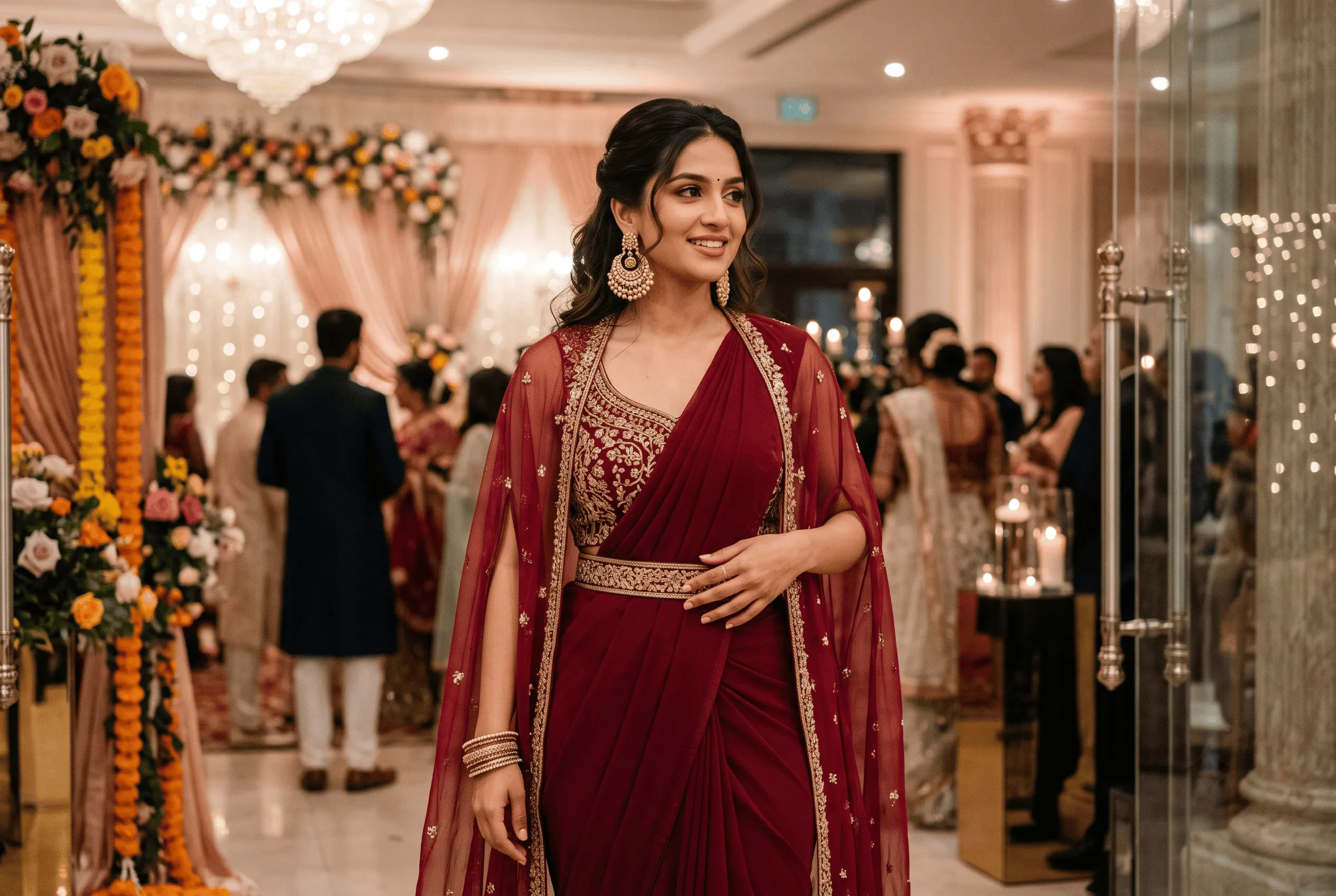
Blouse: a sequinned or embroidered blouse dresses up a plain georgette pre-draped saree for a reception, while a simple silk blouse keeps it elegant for a puja or family function.
Belt: a metal, embroidered or fabric belt over the pallu defines the waist and keeps the drape secure while dancing.
Cape or jacket: a sheer cape or short embroidered jacket turns a pre-draped saree into an Indo-western look.
Jewellery: statement earrings with a high-neck blouse, or a choker with a sweetheart neckline, keep the look balanced.
Footwear: block heels are comfortable for long events, but decide on them before buying so the length is correct.
Pre-Draped Sarees for Travel and NRIs
Pre-draped sarees are especially useful when you travel for weddings or festivals.
They pack easily, need no petticoat and can be worn in a hotel room in minutes without help.
For NRIs attending weddings in India or celebrations abroad, they remove the stress of draping while keeping the traditional look.
Roll them rather than fold them in your suitcase, and carry a small travel steamer for creases.
Choose crease-resistant fabrics such as crepe or georgette for long journeys.
How Much Does a Pre-Draped Saree Cost?
These are indicative 2026 ranges. Prices vary by city, seller, fabric and embellishment.
| Type | Indicative price range |
|---|---|
| Plain or printed georgette or crepe | ₹1,500 – ₹4,000 |
| Embellished or sequinned party saree | ₹3,500 – ₹12,000 |
| Designer pre-draped or lehenga-style saree | ₹10,000 – ₹40,000+ |
| Converting your own saree (tailor charge) | ₹500 – ₹2,500 |
How to Convert Your Own Saree
Choose a soft, flowing saree such as georgette, chiffon or crepe for the best result.
Wear the blouse and footwear to the tailor so the length can be measured correctly.
Discuss where the pleats should sit and how long the pallu should fall.
Ask for removable stitching if you may want to open it back into a regular saree later. This is especially important for precious silks.
Allow at least a week, longer during wedding and festival seasons.
Buying Checklist
Size: check the waist measurement and whether it is adjustable. Elastic with a drawstring offers the most flexibility.
Length: decide whether you will wear heels or flats, because a pre-draped saree cannot be lengthened by tucking less.
Blouse: check whether a blouse is included, stitched or as fabric.
Pallu length: a very long pallu can drag, while a very short one can look odd.
Lining: a lined base feels better and stops sheer fabric from clinging.
Returns: sizing is personal, so buy online only with easy exchanges.
Care and Storage
Dry-clean embellished and silk pre-draped sarees.
Plain georgette and crepe can often be hand-washed gently in cold water, but check the label first.
Hang the saree on a padded hanger or store it folded along the stitched pleats to keep the shape crisp.
Steam rather than iron sequinned or embellished areas.
Common Pre-Draped Saree Mistakes
Buying the wrong length is the most common mistake, especially when heels are added later.
Another is choosing a stiff fabric that makes the stitched pleats stand away from the body.
Some buyers also skip a trial and only discover a tight waist on the day of the event.
Finally, avoid converting a valuable handloom heirloom without removable stitching.
When a Regular Saree Is the Better Choice
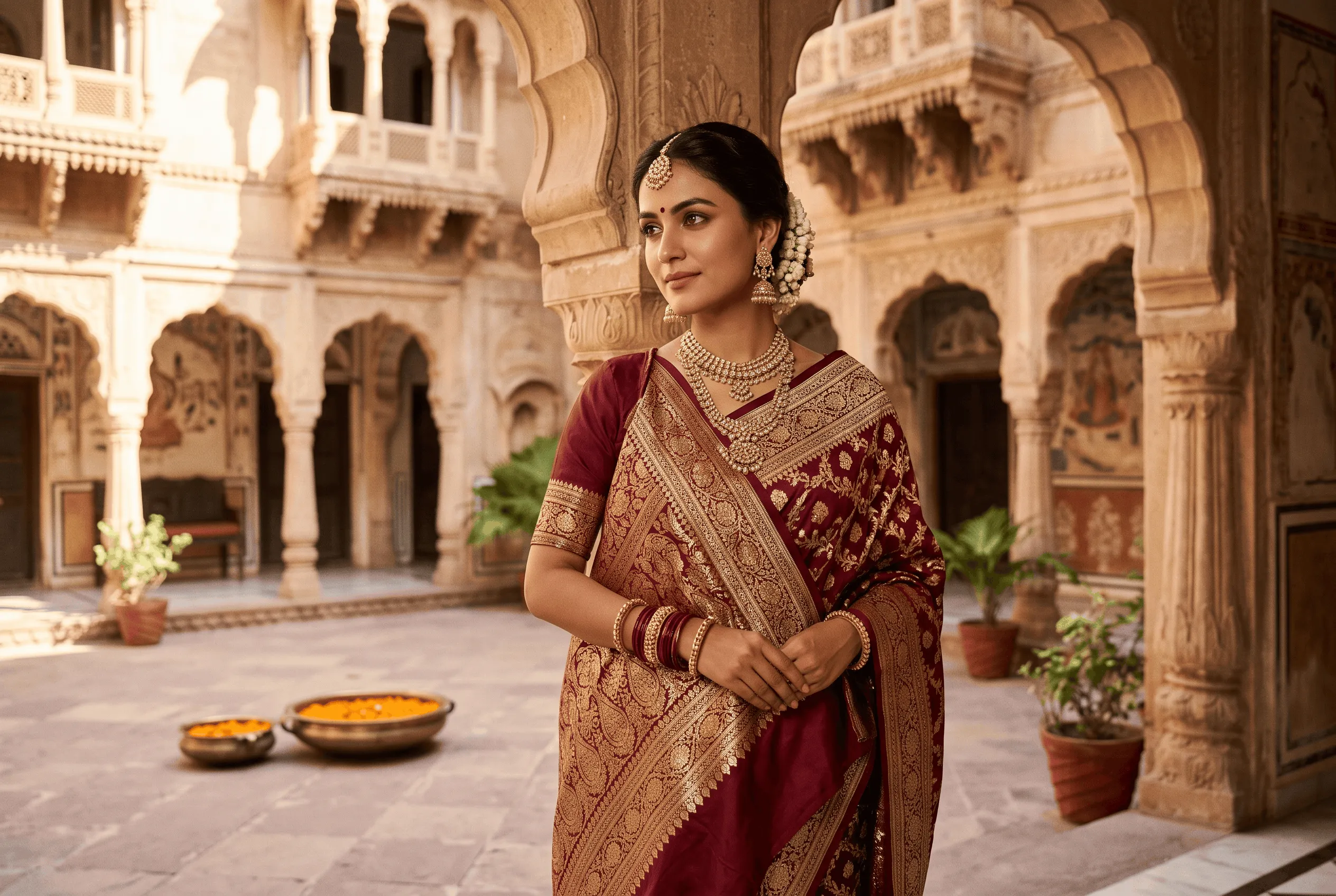
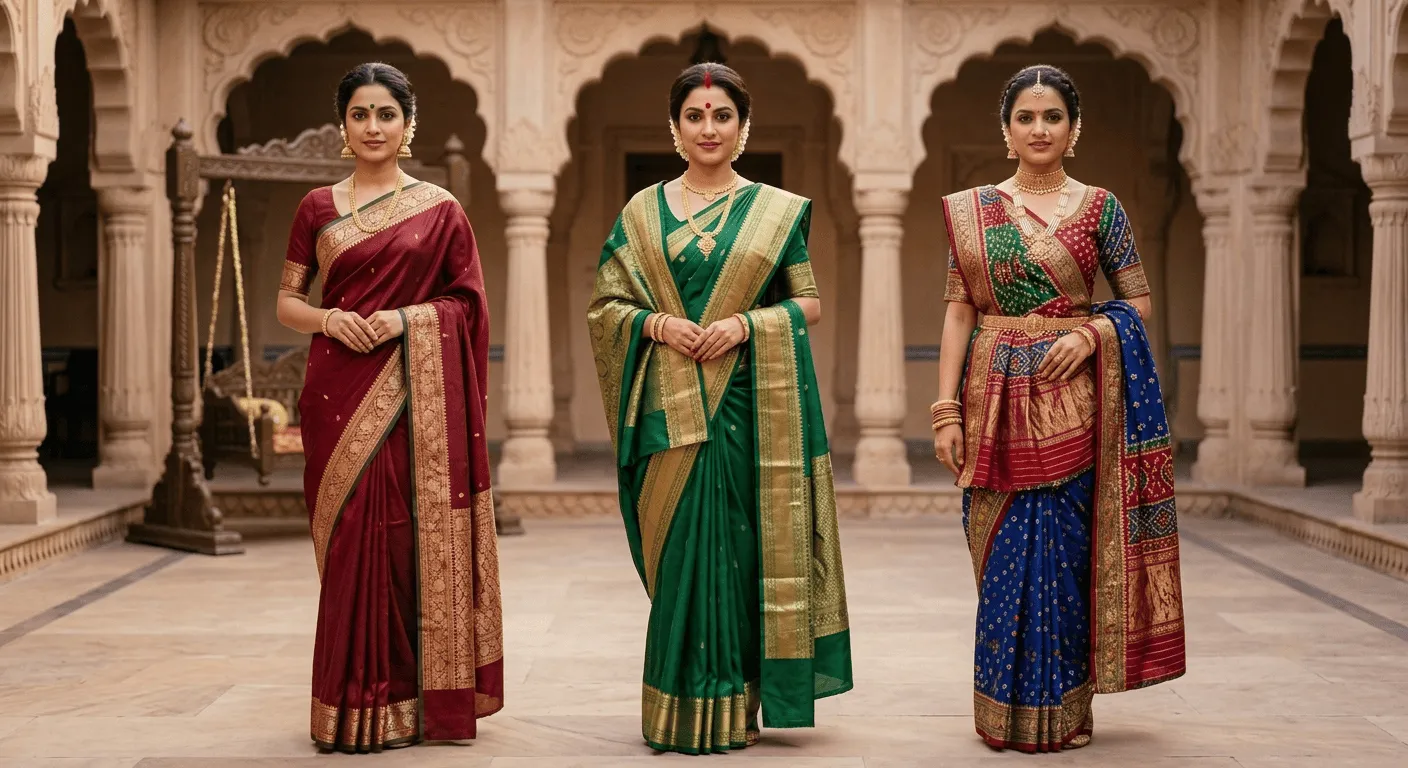
Choose a regular saree for heirloom handloom silks such as Kanjivaram, Banarasi, Paithani or Patola that you may want to pass on.
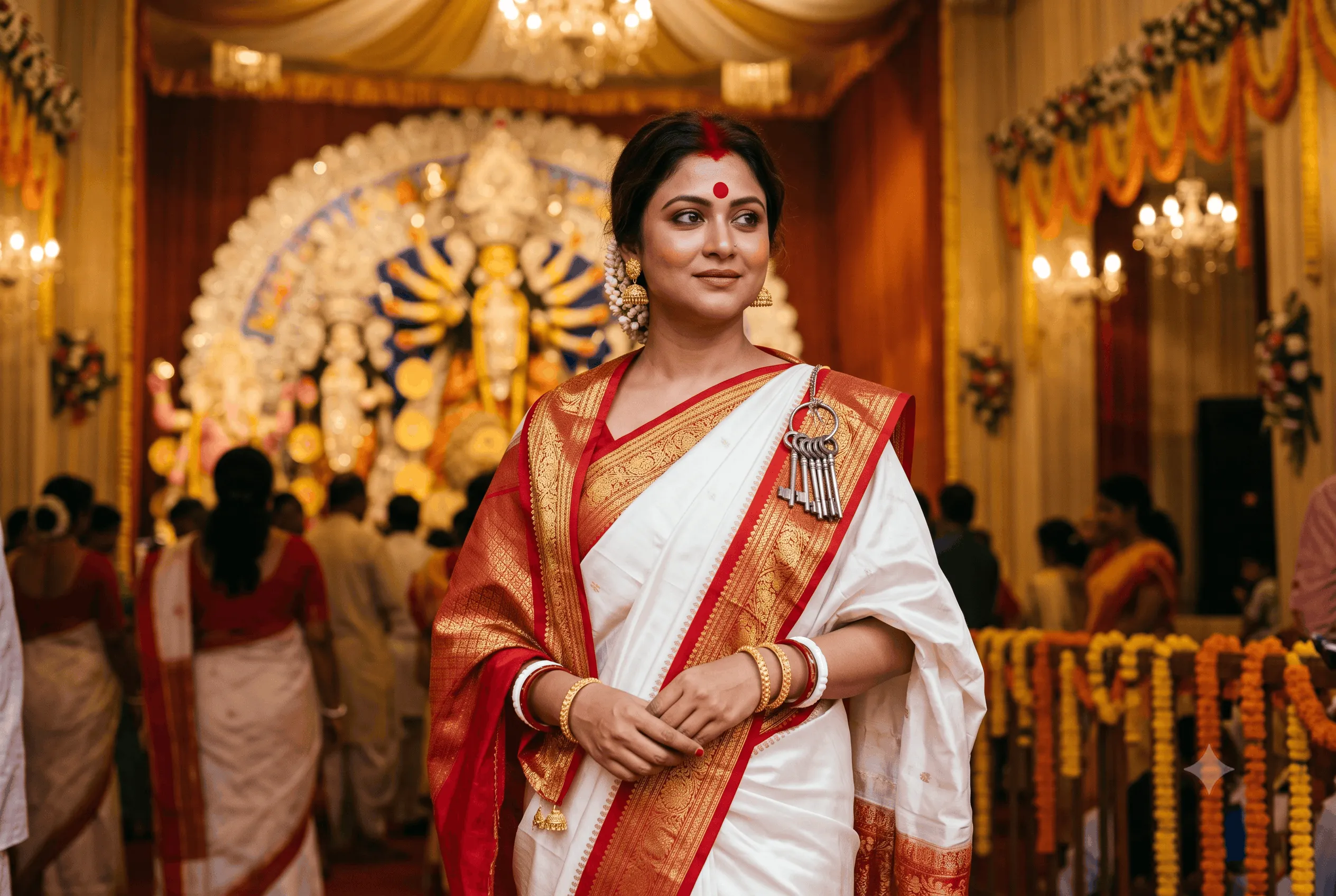
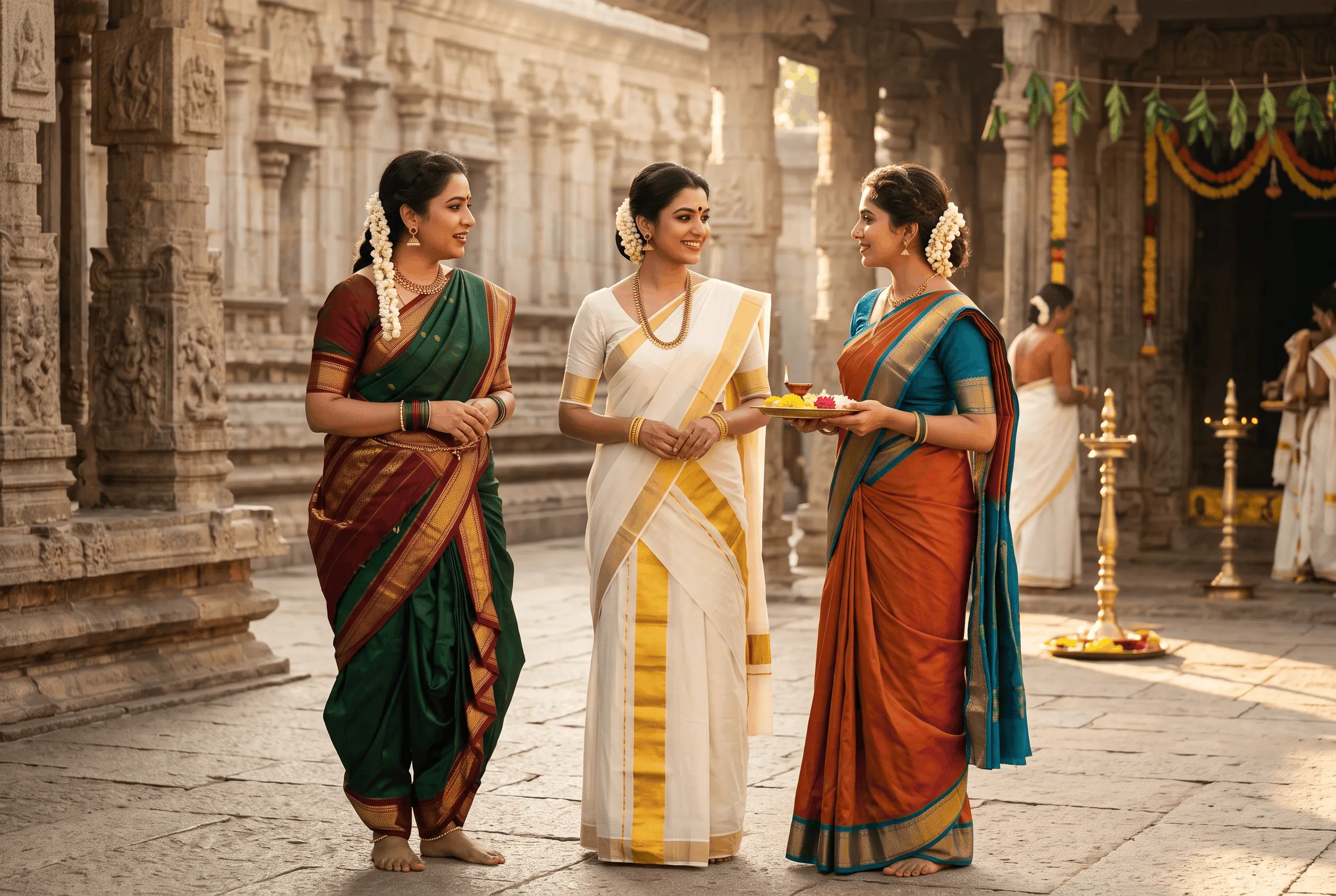
It is also better when you want to try different drapes, such as Gujarati, Bengali or Nauvari.
For formal religious ceremonies where your family prefers a traditional drape, a hand-draped saree is usually expected.
Is a Pre-Draped Saree Worth It?
For many women, yes.
A pre draped saree gives you the saree look with far less time and fuss, which makes it ideal for sangeets, receptions, farewells, travel and first-time wearers.
Converting a saree you already own can be very affordable and brings forgotten pieces back into use.
For handloom heirlooms and traditional ceremonies, a regular saree draped by hand is still hard to beat, and many women now happily own both.
Planning a first saree for school or college? See our farewell saree ideas, and explore more in our traditional wear trends 2026 guide.
Comments (0)
Leave a Thought
No comments yet. Be the first to share your thoughts!