A saree may be one of the simplest garments in construction, yet the way it is draped can completely change its personality.
The same six or nine yards of fabric can look elegant and streamlined in one style, traditional and dramatic in another, or festive and highly decorative depending on how the pleats and pallu are arranged. Across India, saree draping developed differently according to regional customs, climate, movement, occupation and local aesthetics.
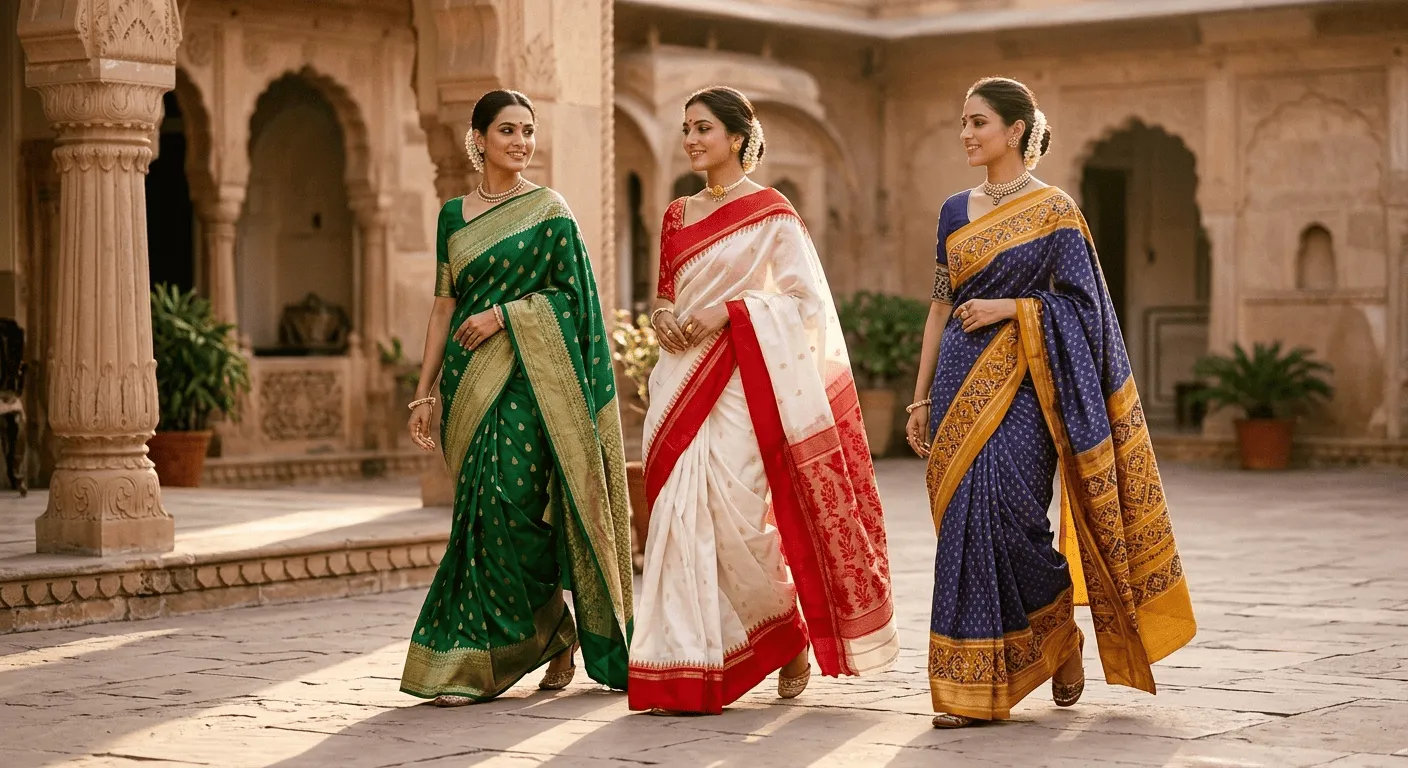
Among the many styles worn today, Nivi, Bengali and Gujarati saree drapes remain some of the most recognizable.
The Nivi drape is graceful, practical and widely used across India. The Bengali style is known for its broad pleats and flowing pallu, while the Gujarati drape brings the decorative pallu to the front, making it especially effective for richly woven and embroidered sarees.
Understanding these draping styles is useful whether you are dressing for a wedding, festival, family celebration or simply want to explore different ways of wearing a saree.
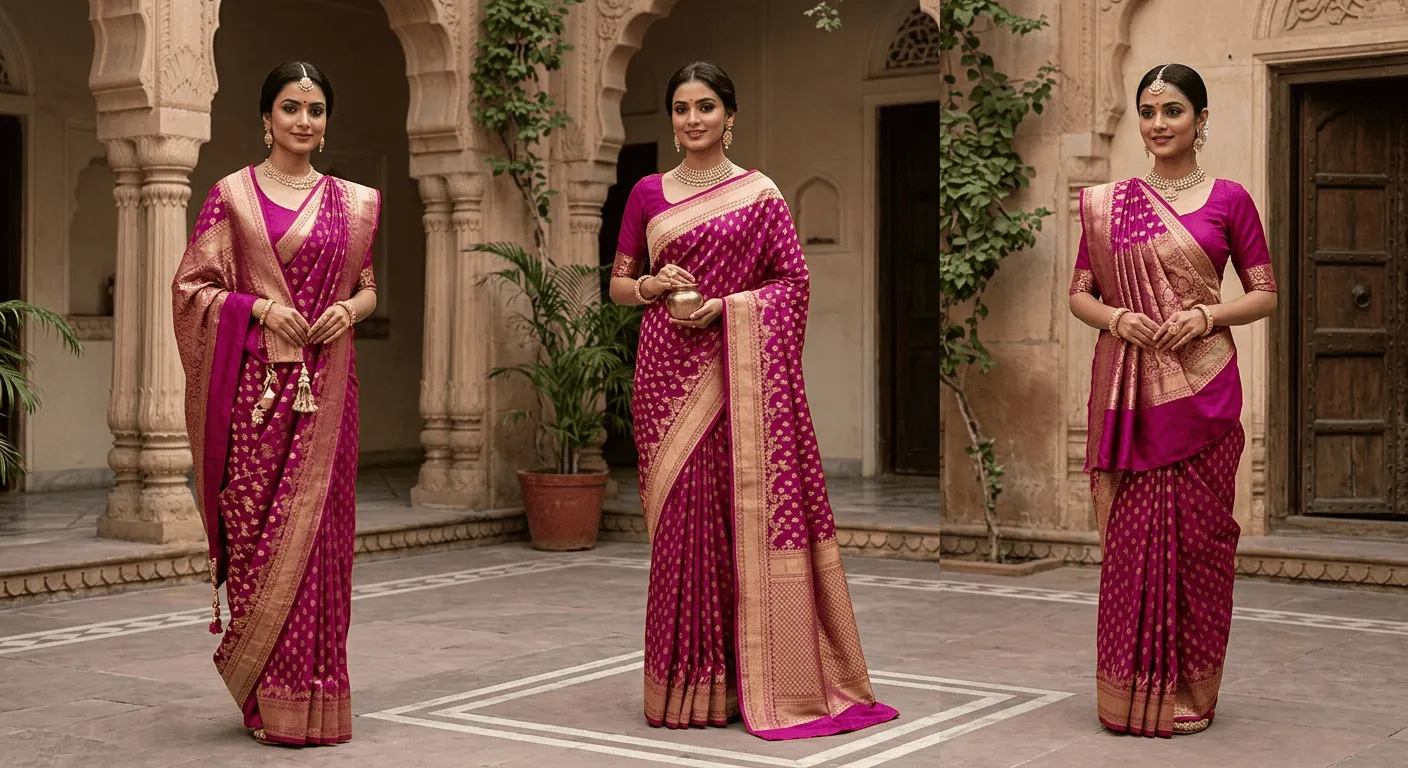
Why Saree Draping Styles Matter
A saree is not defined only by fabric, weave or colour.
Draping determines how the garment falls on the body, where the visual focus sits and how easy it is to move while wearing it.
A saree with an ornate pallu, for example, may look completely different depending on whether that pallu falls over the shoulder at the back or is brought forward across the torso.
Regional draping styles also tell stories about local culture.
Some drapes evolved to allow easier movement during everyday work, while others developed around ceremonial dressing and festive traditions.
Today, many women choose saree drapes based less on strict regional identity and more on personal style, occasion and comfort.
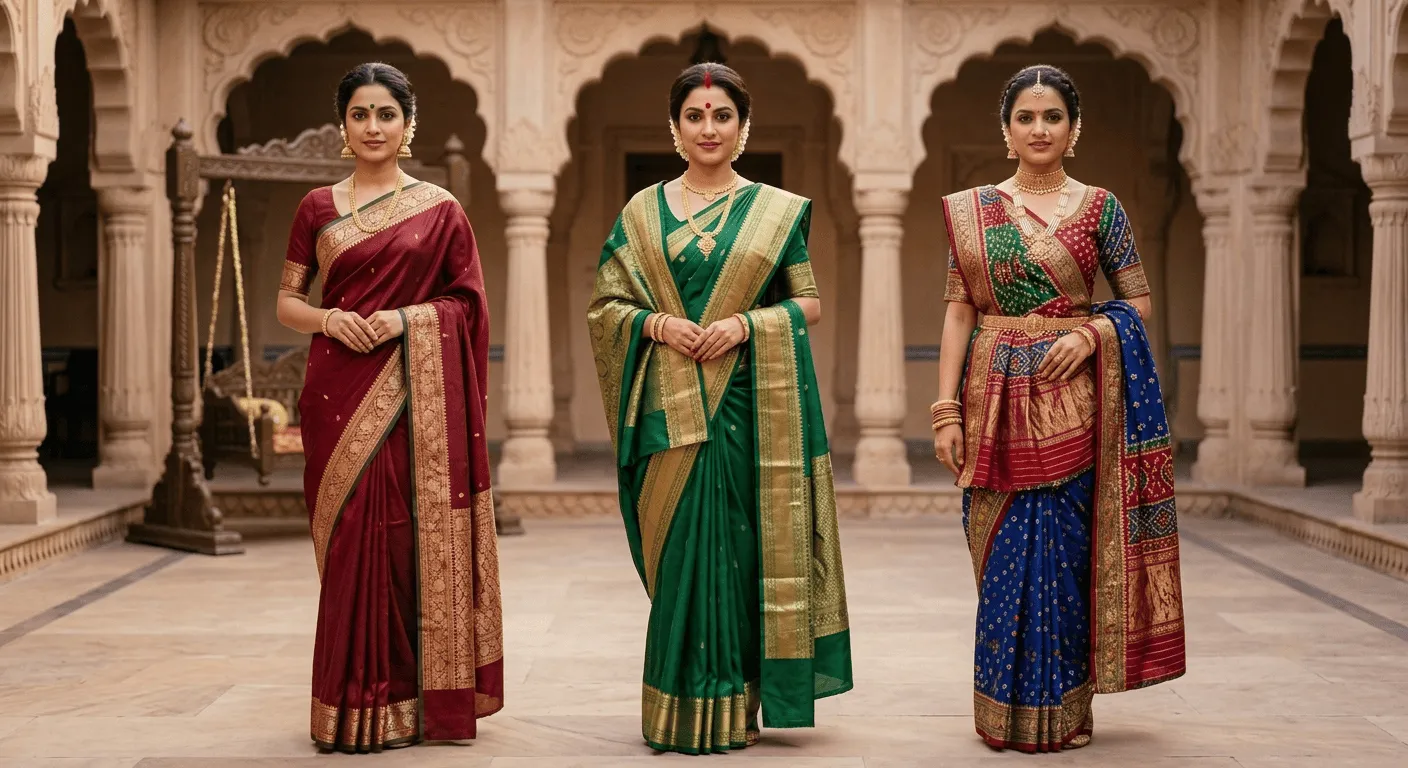
1. Nivi Saree Draping Style
The Nivi drape is the style most people think of when they imagine a saree today.
It is commonly associated with Andhra Pradesh and became widely adopted across India because of its practical structure and flattering silhouette.
In this style, the saree is wrapped once around the waist before several pleats are created at the front. These pleats are tucked neatly into the waistband, while the remaining fabric is brought across the torso and draped over the left shoulder.
The pallu generally falls behind the wearer.
This structure creates a clean vertical line at the front and allows the saree to move naturally while walking.
What Makes the Nivi Drape Distinctive?
The most recognizable feature of the Nivi style is its front pleating.
The pleats are usually centred or positioned slightly toward one side, creating a structured fall from the waist to the floor.
The pallu can be left flowing, pleated neatly over the shoulder or pinned in place depending on the occasion.
A loosely flowing pallu feels softer and more formal, while a pleated and pinned pallu is easier to manage during long events.
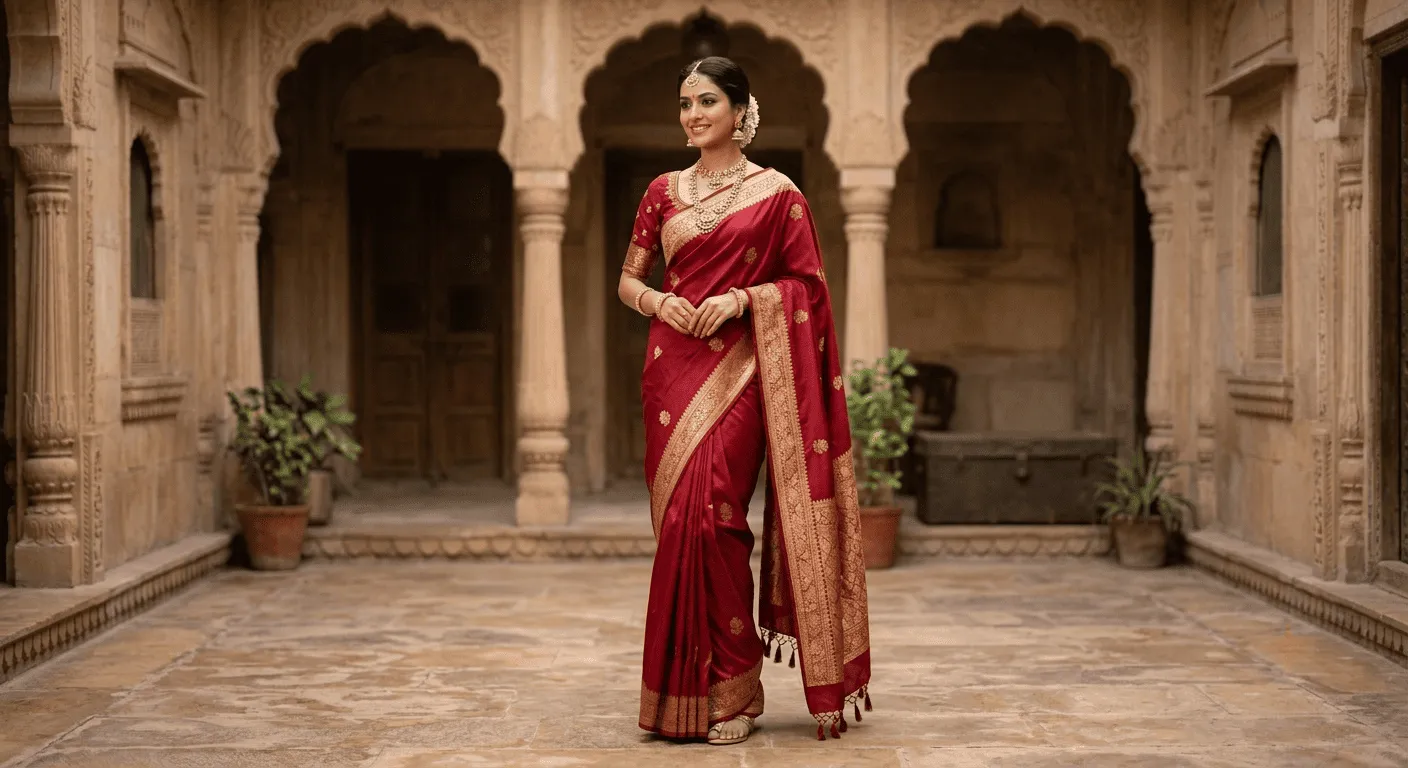
How to Drape a Nivi Saree
Start by tucking the plain end of the saree into the petticoat at the waist.
Wrap the fabric once around the body from right to left.
Bring the remaining fabric to the front and create approximately five to seven even pleats. Align the pleats carefully and tuck them securely into the waistband.
Next, take the remaining length around the body and across the torso.
Bring the pallu over the left shoulder.
You can leave it open for a flowing look or pleat it neatly and secure it with a pin.
The lower edge of the saree should lightly touch the top of your footwear without dragging along the floor.
Best Sarees for the Nivi Drape
The Nivi style works with almost every major saree fabric.
Silk sarees give the drape more structure, while chiffon and georgette create softer pleats.
Cotton works well for everyday or formal daytime wear, although crisp cotton may require a little more attention while creating pleats.
Organza can create a dramatic, fashion-forward silhouette because of its volume.
For weddings, Banarasi, Kanjeevaram, Chanderi, georgette and embroidered sarees all work beautifully in Nivi style.
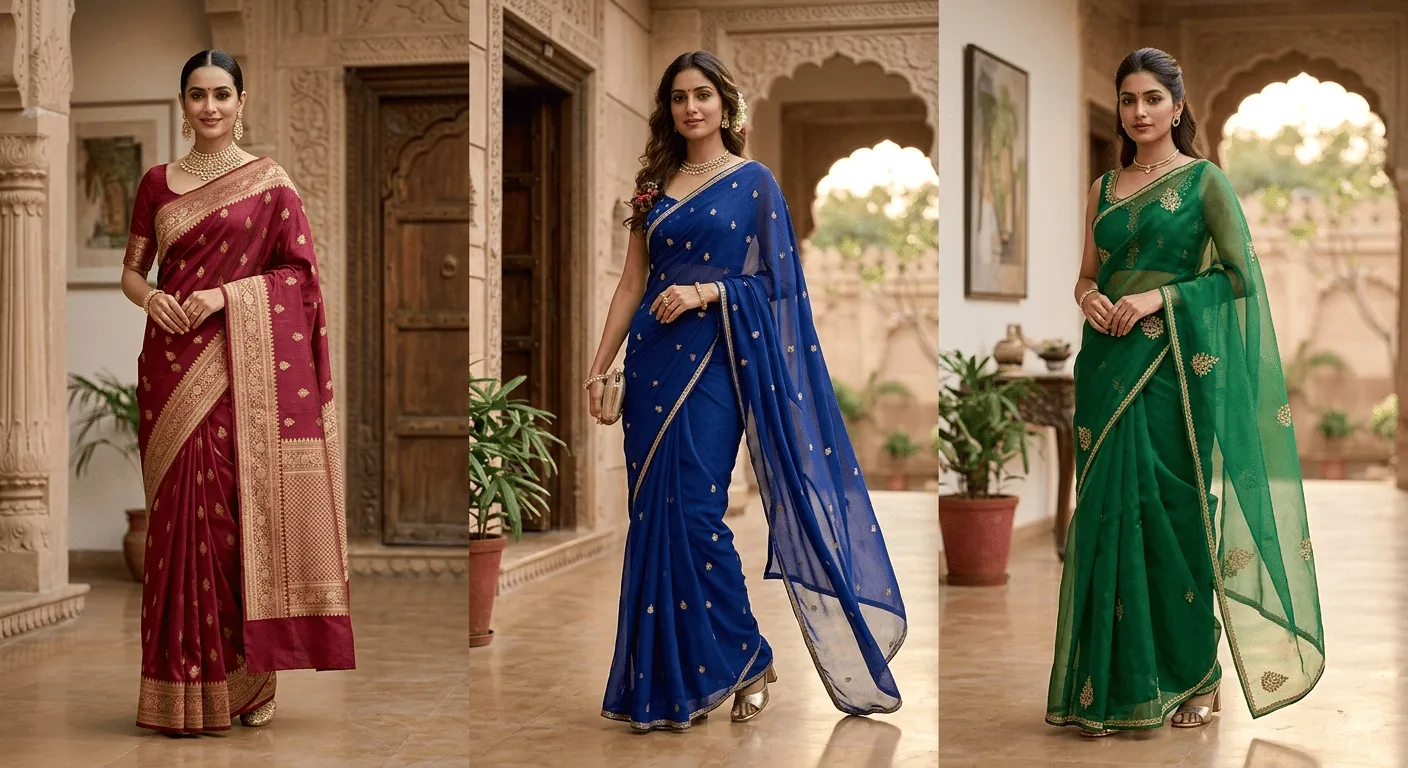
2. Bengali Saree Draping Style
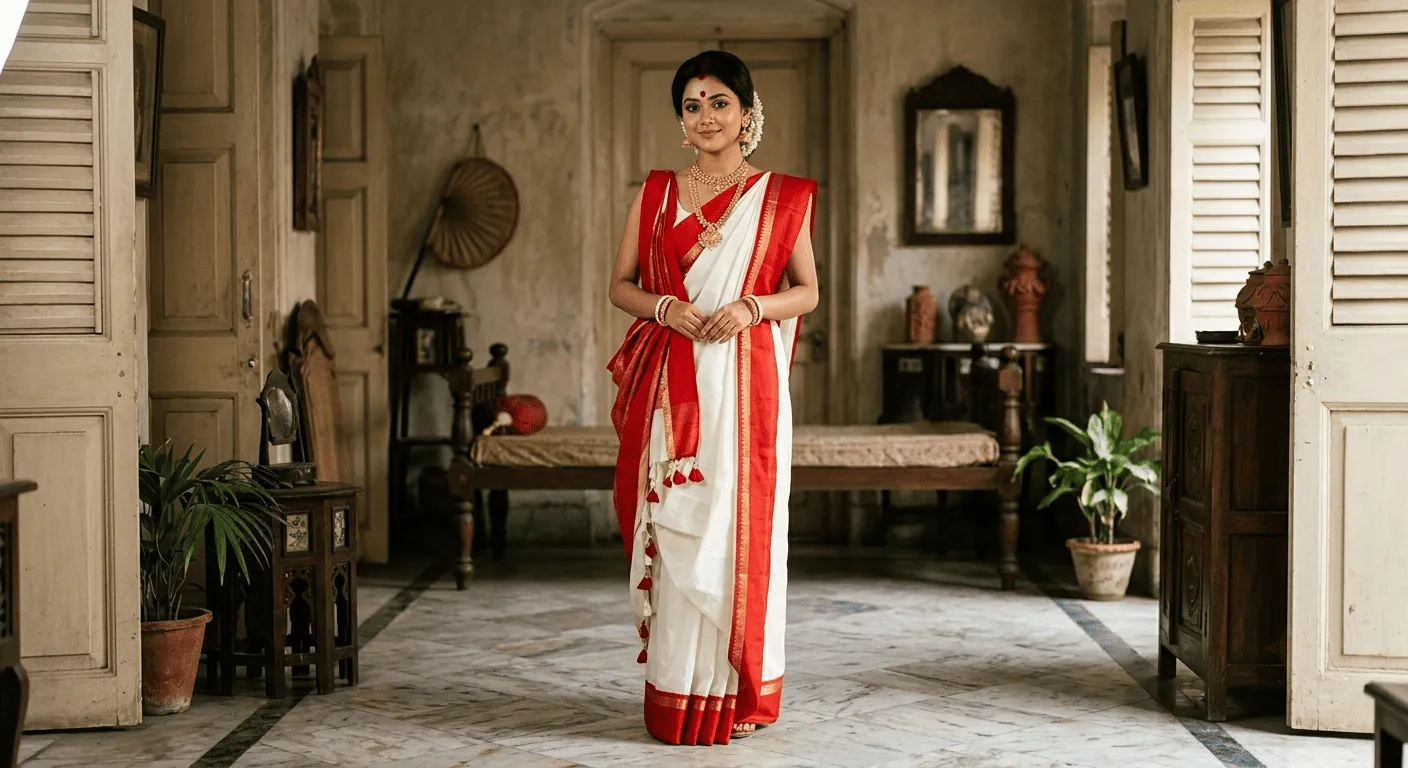
The Bengali saree drape is known for its graceful volume and traditional appearance.
Unlike the Nivi style, the Bengali drape is often worn without tightly structured front pleats. Instead, the saree creates broader folds around the lower body.
The pallu plays an especially important role.
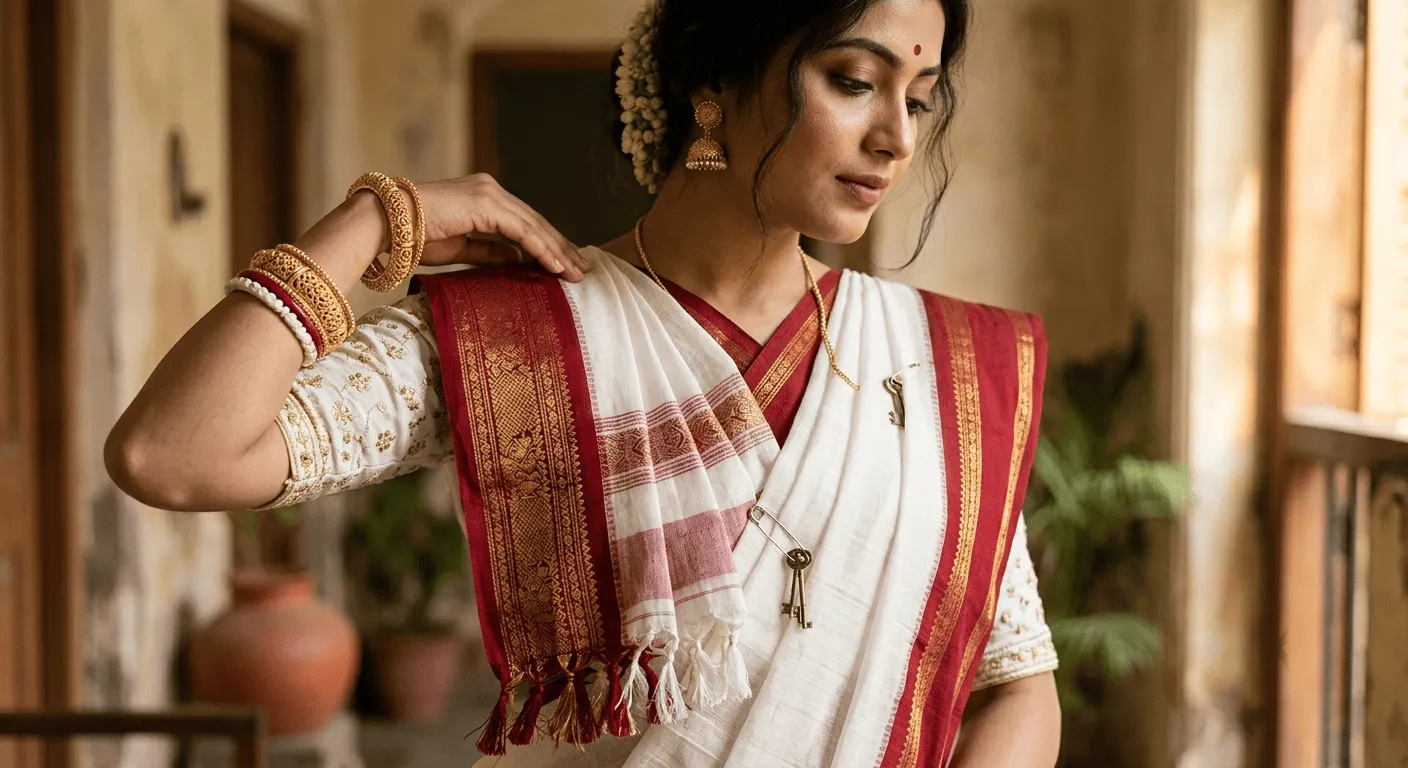
It is traditionally brought over the left shoulder and may then be taken under the right arm and placed again over the shoulder.
This gives the saree a distinctive layered effect.
Historically, Bengali women wore this style with traditional handwoven sarees, especially white or cream sarees with red borders during festive and religious occasions.
Today, the drape is also recreated using cotton, silk, linen and festive sarees.
What Makes the Bengali Drape Unique?
The Bengali style feels more fluid and less structured than the standard Nivi drape.
Instead of many narrow front pleats, the lower portion typically uses fewer and broader folds.
The pallu is usually long and decorative, making it an important visual part of the outfit.
Traditional styling may also include a key ring or decorative ornament attached to the edge of the pallu, although this is optional in modern interpretations.
The result is graceful, dramatic and instantly recognizable.
How to Drape a Bengali Saree
Begin by tucking the saree around the waist and completing one full wrap.
Create broad folds at the front rather than several narrow pleats.
Tuck these folds securely into the waistband.
Bring the remaining fabric across the body and place the pallu over the left shoulder.
For the traditional layered effect, take the end of the pallu under the right arm and bring it back toward the opposite shoulder.
The pallu can remain flowing or be lightly secured depending on how much movement you expect during the event.
Best Sarees for Bengali Draping
Cotton and handloom sarees are especially well suited to this style.
Traditional Bengali sarees such as Tant, Garad, Jamdani and Baluchari naturally complement the drape.
Silk sarees can also be used when dressing for weddings or formal celebrations.
Because the pallu is prominently displayed, sarees with strong borders, woven motifs or detailed pallus are particularly effective.
3. Gujarati Saree Draping Style
The Gujarati saree drape, often called the seedha pallu style, reverses one of the most familiar elements of conventional saree draping.
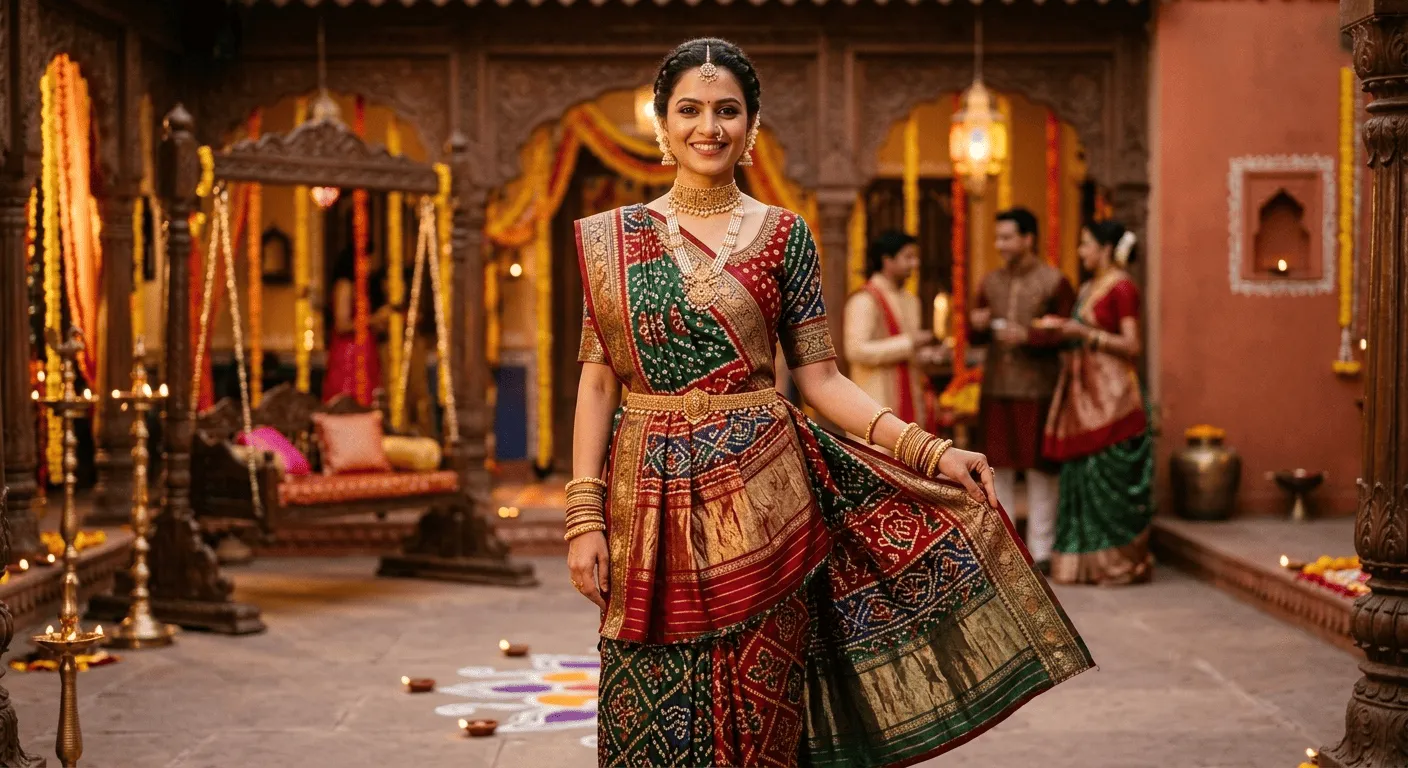
Instead of letting the pallu fall behind the shoulder, it is brought from the back over the right shoulder and spread across the front of the body.
This places the most decorative part of the saree directly in view.
The style is especially popular in Gujarat and is commonly seen during weddings, Navratri, religious celebrations and traditional family functions.
It works beautifully with sarees that have elaborate pallus, embroidery, zari borders or bandhani patterns.
What Makes the Gujarati Drape Different?
The main difference is the direction of the pallu.
In the Nivi style, the pallu normally falls over the left shoulder toward the back.
In the Gujarati style, the pallu comes over the right shoulder and is displayed across the front.
This makes the pallu itself the focal point.
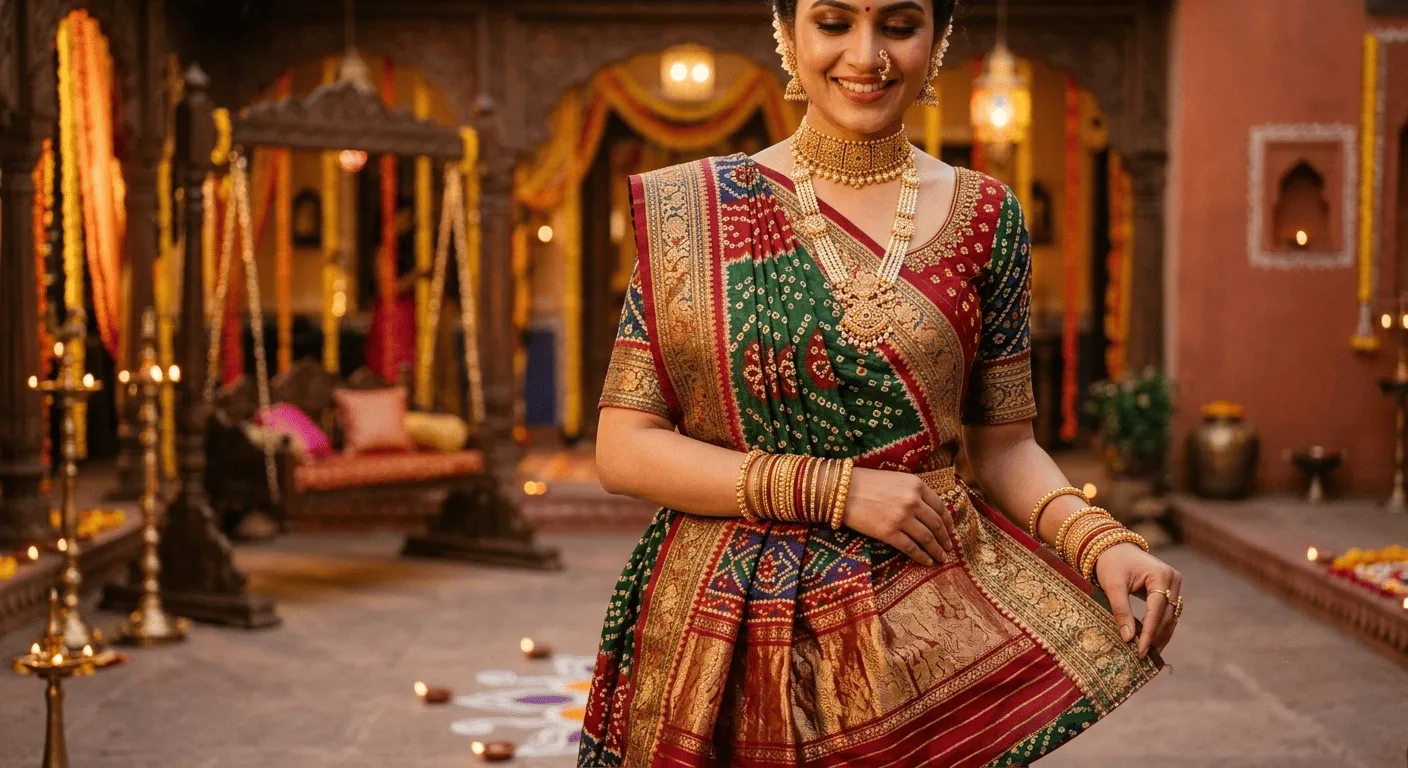
If the saree has detailed embroidery, zari, bandhani, mirror work or woven motifs, the Gujarati drape allows those elements to remain visible throughout the event.
How to Drape a Gujarati Saree
Begin with the basic waist wrap and create front pleats similar to the Nivi style.
After securing the pleats, take the remaining fabric around the back.
Bring the pallu over the right shoulder from behind.
Spread it across the front of the torso and secure one edge near the left side of the waist.
The pallu can either be fully spread to showcase the design or partially pleated for easier movement.
Best Sarees for Gujarati Draping
The Gujarati style works especially well with sarees that have elaborate borders and pallus.
Bandhani sarees are a natural choice because of their cultural connection with Gujarat.
Patola-inspired sarees, Gharchola, Panetar and richly woven silk sarees also look beautiful in seedha pallu style.
For weddings, embroidered georgette and silk sarees can create a more glamorous interpretation.
Nivi vs Bengali vs Gujarati Saree Draping
Each of these drapes creates a very different visual effect.
Feature
Nivi
Bengali
Gujarati
Main pallu position
Over left shoulder
Long layered shoulder drape
Over right shoulder and across front
Pleat style
Neat front pleats
Broad folds
Front pleats
Overall look
Elegant and versatile
Traditional and dramatic
Festive and decorative
Ease of movement
Very good
Moderate
Good
Best for
Everyday, weddings, formal occasions
Festivals and traditional events
Weddings and festive occasions
Best feature to highlight
Silhouette
Flowing pallu
Decorative pallu
None of the three styles is inherently better.
The right choice depends on the saree itself, the occasion and which part of the fabric you want to highlight.
Which Saree Drape Is Best for Weddings?
For weddings, all three styles can work depending on the saree.
The Nivi drape is the easiest choice if you want a polished silhouette that works with almost any textile.
The Bengali drape is ideal when you want a stronger traditional or cultural presence.
The Gujarati style is especially effective when your saree has a heavily decorated pallu that deserves to remain visible.
For a wedding guest, comfort should also influence your decision.
If you expect to move frequently, dance or remain dressed for several hours, secure the pleats and pallu carefully regardless of the style you choose.
Which Draping Style Works Best for Different Body Types?
There is no strict body-type rule for saree draping.
However, small adjustments can influence the overall silhouette.
If you prefer a more streamlined shape, narrower front pleats and a neatly pleated Nivi pallu can create cleaner vertical lines.
For a softer and more voluminous appearance, the Bengali style naturally introduces broader folds.
The Gujarati drape draws attention toward the upper body because the pallu spreads across the front.
Ultimately, fabric weight and pleat placement often have a greater effect than body type alone.
Choosing the Right Fabric for Each Drape
Fabric strongly affects how well a saree drape holds its shape.
Silk works beautifully when you want structure and defined pleats.
Cotton creates crisp folds but may need more careful pinning.
Georgette and chiffon are easier to pleat and create a softer silhouette.
Organza adds volume and can produce a more dramatic appearance.
For Bengali draping, handloom cotton and silk are especially effective.
For Gujarati styling, choose sarees with strong decorative pallus and borders so the front drape becomes visually interesting.
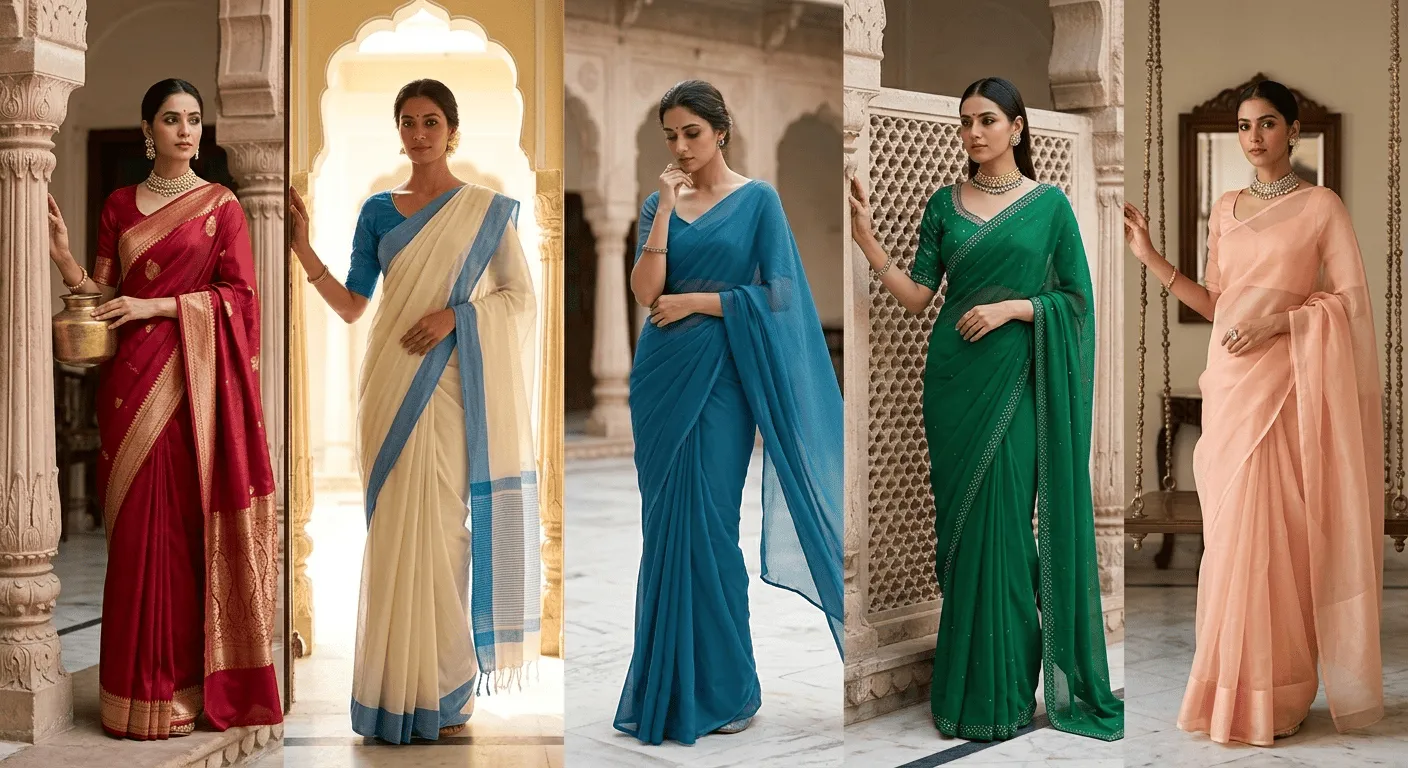
Jewellery and Accessories for Each Saree Style
Accessories can strengthen the regional character of each drape.
For Nivi sarees, almost any jewellery style works—from minimal contemporary pieces to traditional gold, kundan or temple jewellery.
For Bengali styling, red bindis, gold jewellery, traditional bangles and neatly tied hair can create a classic look.
Gujarati saree draping pairs beautifully with statement necklaces, bangles, jhumkas and traditional jewellery styles.
However, there is no need to recreate every regional element at once.
A modern interpretation can combine a traditional drape with simpler accessories for a more contemporary look.
Tips for Keeping Your Saree Drape Secure
A beautifully draped saree should also feel comfortable.
Use a well-fitted petticoat or saree shapewear so the fabric has a secure base.
Pin the main pleats together before tucking them in.
A small pin at the shoulder can prevent the pallu from slipping.
For Gujarati draping, another discreet pin near the waist can keep the front pallu in position.
Always wear your intended footwear before adjusting the saree length.
The hem should sit close to the floor without being long enough to step on.
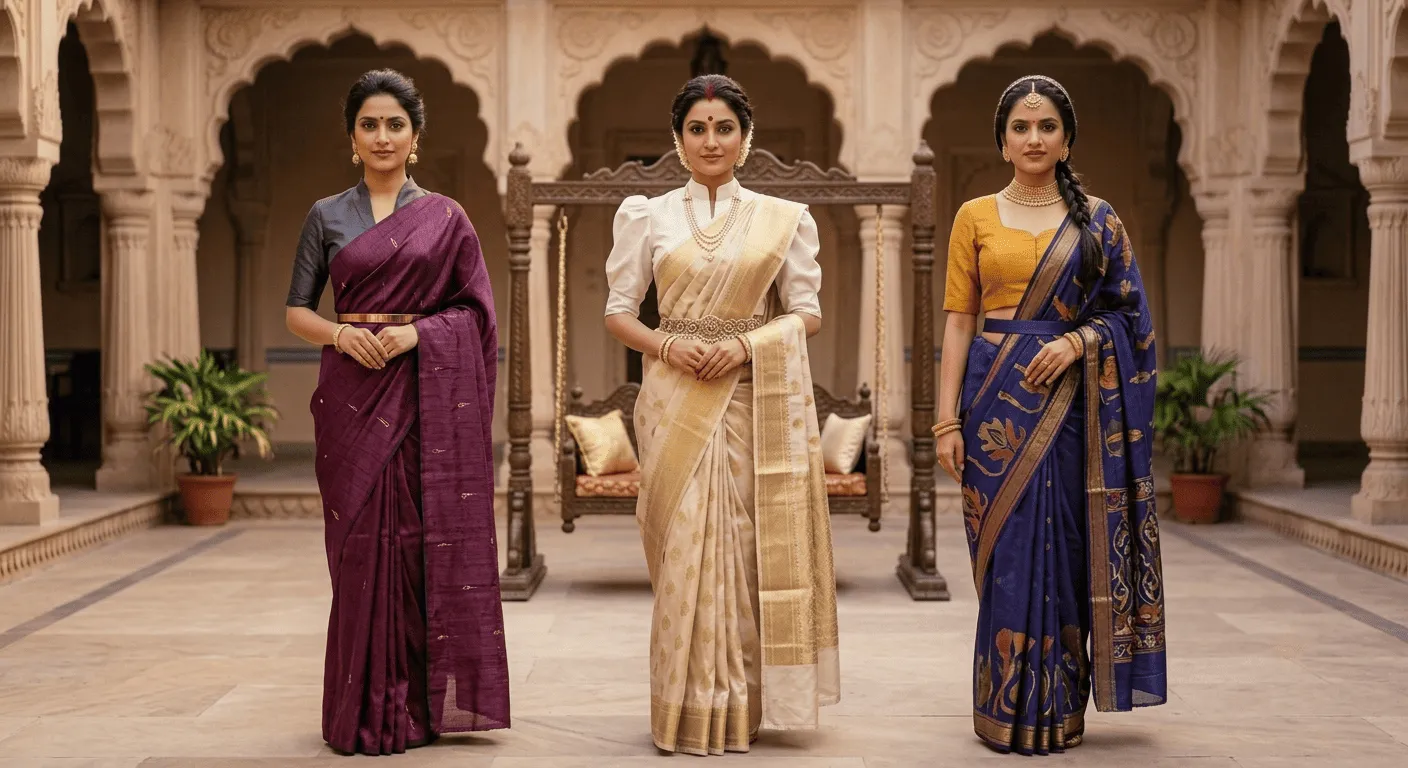
Can You Modernize Traditional Saree Drapes?
Absolutely.
Traditional saree drapes can be adapted without losing their character.
A Nivi saree can be paired with a corset blouse, belt or jacket.
A Bengali drape can be styled with a contemporary blouse while keeping the traditional pallu placement.
A Gujarati saree can use a minimal blouse and lightweight jewellery to balance an ornate front pallu.
You can also experiment with contrasting blouses, metallic belts, statement earrings and structured handbags.
The goal is not necessarily to reproduce an old style exactly, but to understand its structure and reinterpret it in a way that suits you.
Comments (0)
Leave a Thought
No comments yet. Be the first to share your thoughts!