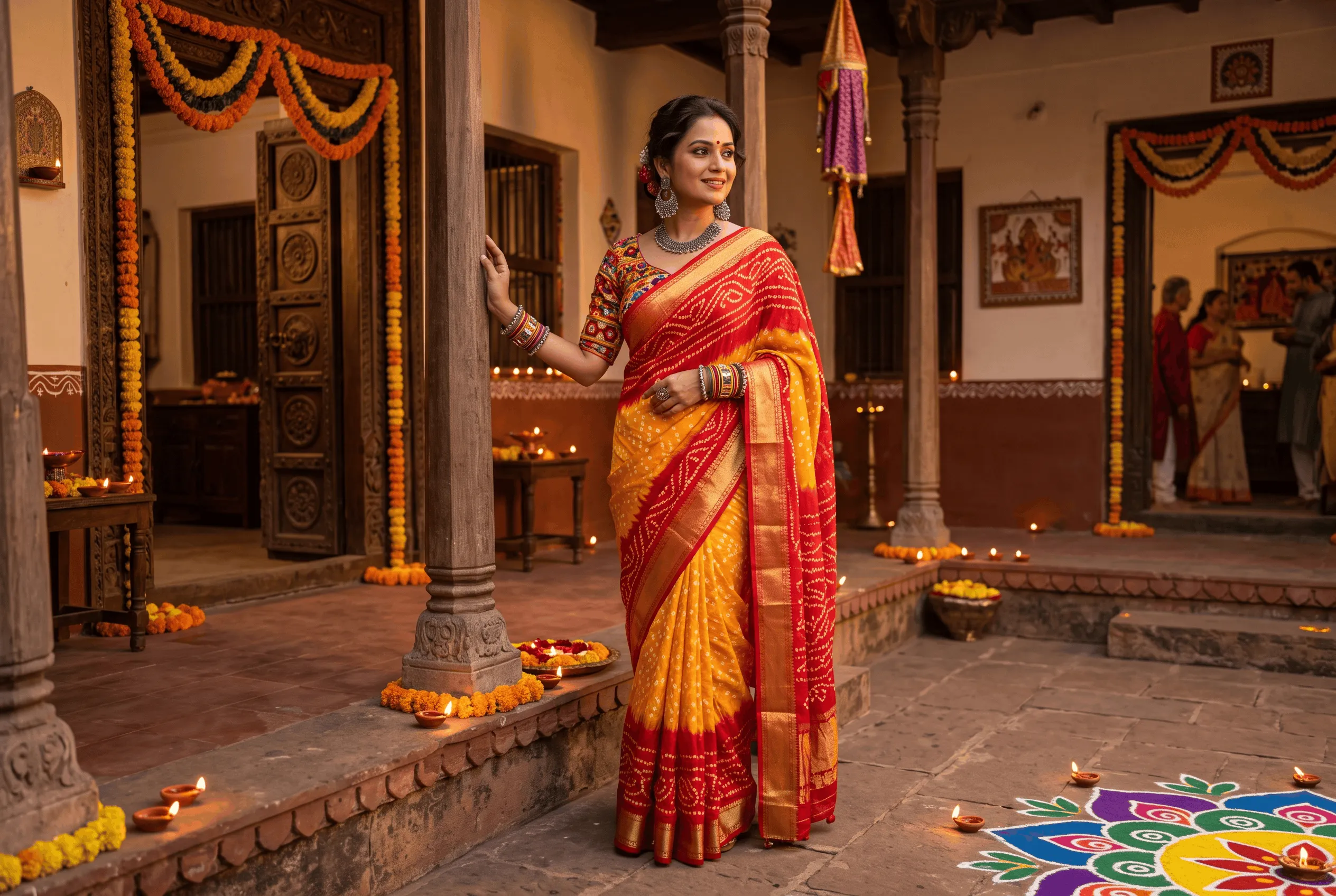
Few textiles say "celebration" quite like Bandhani.
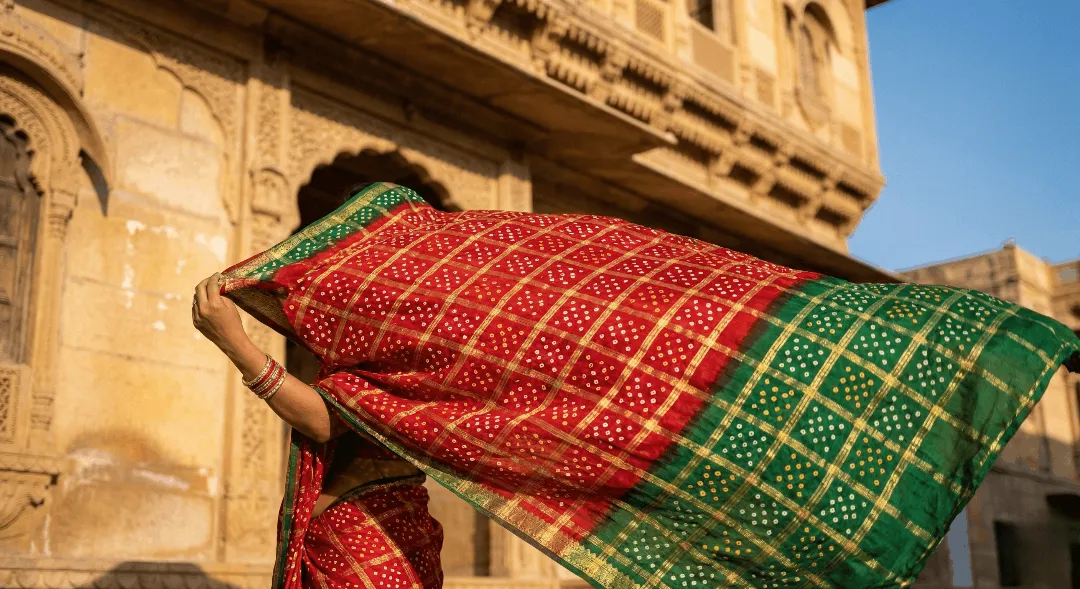
Its tiny dotted patterns, tied and dyed by hand, cover sarees, chaniya cholis and dupattas in the brightest colours of Gujarat and Rajasthan: red, yellow, green, pink and orange. Bandhani is worn for Navratri garba, weddings, Teej, Karwa Chauth and family pujas, and a red Bandhani gharchola or panetar is one of the most important garments a Gujarati bride wears.
This guide explains how Bandhani is made, the main types and patterns, and how to choose and style Bandhani sarees, chaniya cholis and dupattas for every festive occasion. If you want to understand how it differs from leheriya and Patola, read our guide to Bandhani vs Leheriya vs Patola.
What Is Bandhani?
Bandhani (from the Sanskrit "bandh", meaning to tie) is a resist-dyeing technique.
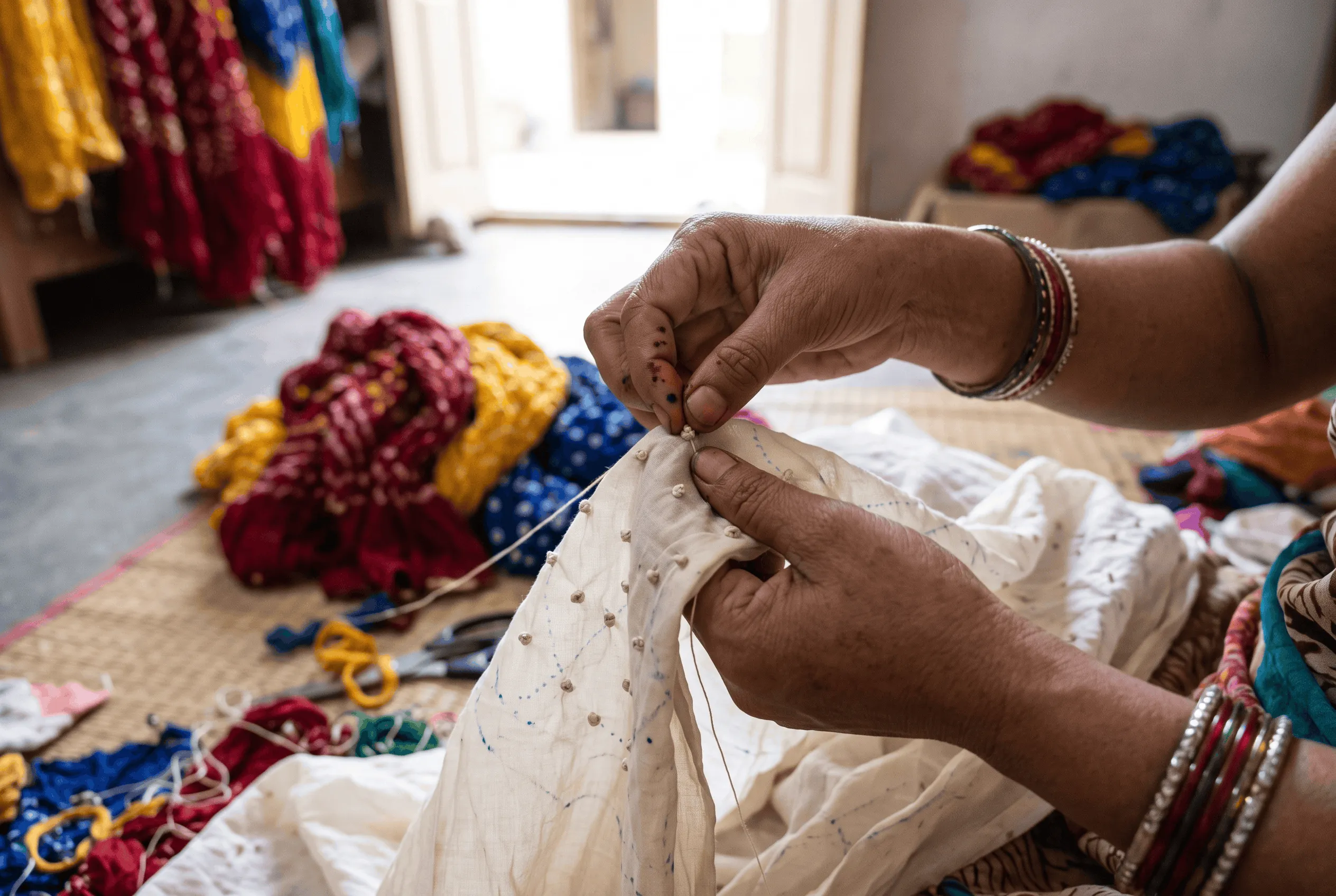
Artisans pinch tiny sections of fabric and tie them tightly with thread. When the fabric is dyed, the tied sections resist the colour, creating small dots. Repeating the process with different colours creates multi-coloured patterns.
Bandhani is made mainly in Gujarat (especially Kutch, Jamnagar and Bhuj) and Rajasthan (especially Jaipur, Jodhpur and Udaipur).
How Bandhani Is Made
1. Marking the design: the pattern is marked on the fabric, often with a temporary dye.
2. Tying: artisans, often women, pinch and tie thousands of tiny points with thread. Some artisans grow a long fingernail or use a small metal ring to lift the fabric.
3. Dyeing: the fabric is dyed, usually from the lightest colour to the darkest.
4. Re-tying and re-dyeing: for multi-coloured designs, sections are tied and dyed again.
5. Opening the ties: once dried, the fabric is pulled to open the knots, revealing the dotted pattern and its characteristic crinkled texture.
A fine Bandhani saree can have tens of thousands of hand-tied dots.
Types of Bandhani Patterns
Ekdali: single dots.
Trikunti: three-dot clusters.
Chaubandi: four-dot clusters.
Shikari: patterns with human and animal figures.
Ghar chola: a grid pattern with motifs in each square, traditionally for brides.
Lehariya-style Bandhani: combinations of waves and dots.
Mothra: a pattern of small diamond-like shapes.
Panetar: a white or ivory base with red Bandhani and a red border, traditionally worn by Gujarati brides.
Bandhani Fabrics
Silk (gaji silk): rich and lustrous for weddings.
Georgette: light and flowing for garba and parties.
Cotton: comfortable for daytime festivals and summer.
Chiffon: soft and easy to drape.
Satin and crepe: modern options for receptions.
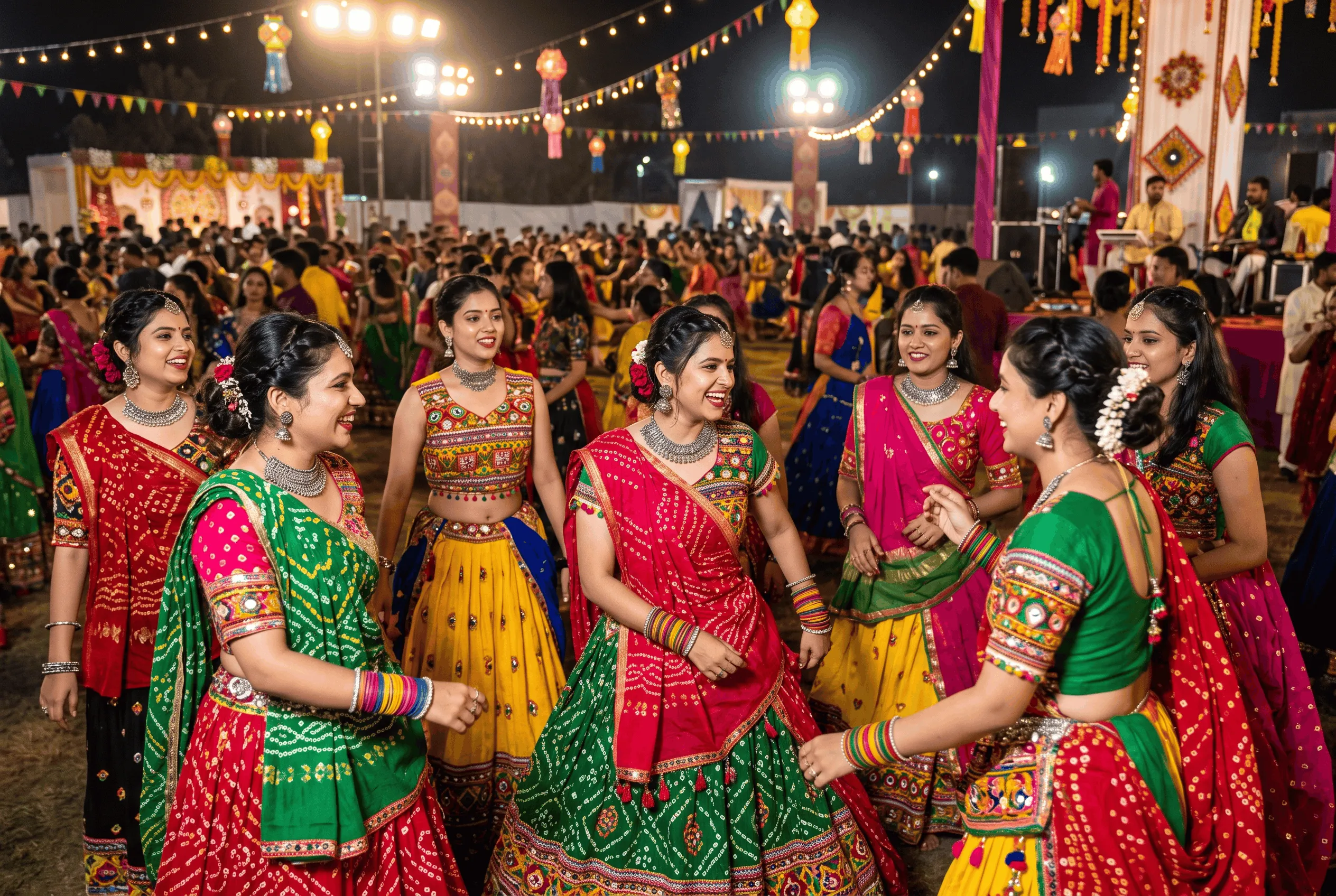
Bandhani for Navratri
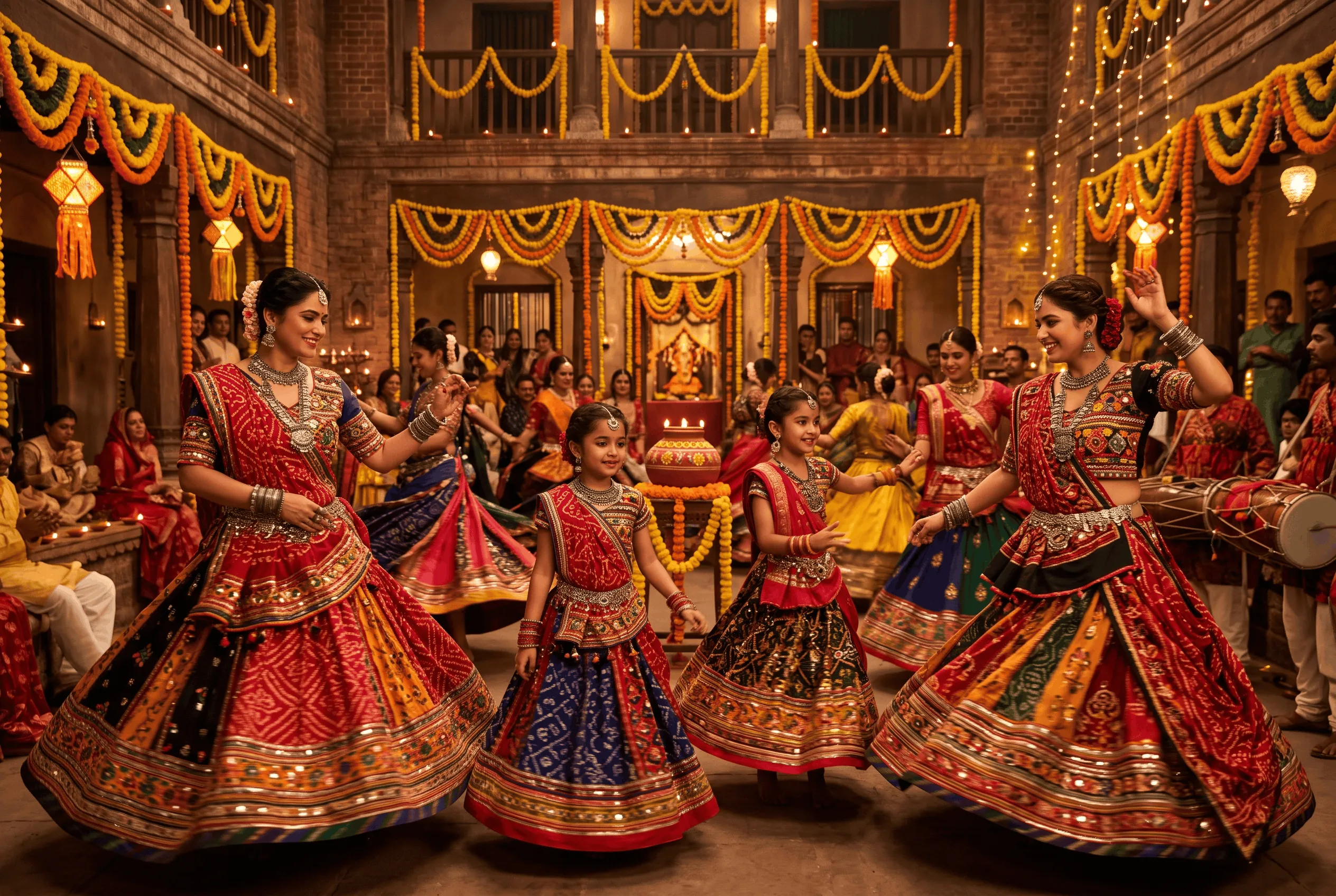
Bandhani is a Navratri favourite because it is colourful, light and full of movement.
Chaniya choli: a Bandhani skirt with a mirror-work choli and contrast dupatta is a classic garba look.
Bandhani dupatta: pair a plain chaniya choli with a bright Bandhani dupatta.
Bandhani saree: a light georgette Bandhani saree in seedha pallu style works for aarti and garba.
Match colours to the nine days using our Navratri colours guide, and find more ideas in our Navratri chaniya choli trends and Navratri jewellery ideas.
Bandhani for Weddings
Gharchola: a red or maroon silk Bandhani with a grid of gold zari, traditionally gifted to Gujarati brides by the groom's family.
Panetar: a white or ivory saree with red Bandhani, traditionally gifted by the bride's family.
Wedding guests: silk or georgette Bandhani sarees in pink, green, yellow or blue.
Mehendi and haldi: yellow, green or orange Bandhani for day functions. See our haldi and mehendi outfit ideas.
Bandhani for Other Festivals
Teej: green Bandhani or leheriya sarees for married women.
Karwa Chauth: red Bandhani sarees with gold jewellery. See our Karwa Chauth saree ideas.
Diwali: silk Bandhani in rich colours. See our Diwali outfit ideas.
Raksha Bandhan and family pujas: cotton or georgette Bandhani in cheerful colours.
Styling Tips
Blouses
Mirror-work blouses: traditional and festive.
Plain contrast blouses: let the Bandhani pattern shine.
Gota patti blouses: for a Rajasthani festive look.
Modern cuts: halter, backless or crop-top style blouses for garba nights.
Jewellery
Oxidised silver: perfect for Navratri and casual festive looks.
Kundan and gold: for weddings and Diwali.
Mirror and kodi jewellery: fun, light pieces for garba.
Drapes
Seedha pallu: shows off the pallu and is traditional in Gujarat and Rajasthan. See North Indian saree draping styles.
Nivi: easy and modern.
Lehenga-style drape: for a garba-ready look.
How to Identify Genuine Bandhani
Look for a raised, crinkled texture when the fabric is new.
Check the dots: hand-tied dots are slightly irregular and often have a tiny coloured centre.
Check the reverse: the pattern is visible on both sides.
Be careful of prints: printed Bandhani is flat, with perfectly uniform dots and a faded reverse.
Before buying, read our authentic handloom red flags.
Price Guide
These are indicative 2026 ranges. Prices depend on fabric, fineness of dots and zari.
| Bandhani item | Indicative price range |
|---|---|
| Cotton Bandhani dupatta | ₹600 – ₹2,500 |
| Georgette Bandhani saree | ₹2,000 – ₹8,000 |
| Silk Bandhani saree | ₹5,000 – ₹25,000 |
| Fine gharchola with zari | ₹15,000 – ₹75,000+ |
Caring for Bandhani
Dry-clean silk Bandhani.
Hand wash cotton Bandhani separately in cold water for the first few washes, as colours may bleed.
Do not iron out the crinkles completely; the texture is part of the charm.
Dry in shade to protect colours.
Store in muslin away from moisture.
Choosing Bandhani by Fineness
The size and density of the dots tell you a lot about the work behind a piece.
Fine Bandhani: very small, closely spaced dots, often thousands across a dupatta. It takes the longest to tie and costs the most, and it looks especially elegant on silk.
Medium Bandhani: the most common for sarees and chaniya cholis, with a good balance of detail and price.
Bold Bandhani: larger dots and motifs that look striking from a distance, perfect for garba and outdoor events.
When comparing two pieces at similar prices, the finer, denser and more even the hand-tied dots, the more skilled the work.
Bandhani for Men
Bandhani is not only for women.
Safas and pagdis: Bandhani turbans are traditional for grooms and male family members at Gujarati and Rajasthani weddings.
Stoles and dupattas: a red or maroon Bandhani stole over a cream sherwani is a classic groom's look.
Kurtas and jackets: Bandhani kurtas and Nehru jackets are popular for Navratri.
Pocket squares: a small, subtle way to add Bandhani to a suit.
Styling for Age and Body Type
Young girls: cotton Bandhani chaniya cholis and frocks in bright, cheerful colours.
College students: georgette Bandhani sarees or chaniya cholis with modern blouses for garba nights.
Brides: silk gharchola or panetar, often with heavy gold jewellery.
Mothers and grandmothers: fine silk Bandhani in deep reds, maroons and greens with traditional jewellery.
Petite women: choose smaller dots and lighter fabrics so the pattern does not overwhelm the frame.
Tall women: bold dots and wide borders look stunning.
Curvy women: georgette and chiffon Bandhani drape smoothly; a darker base with smaller dots looks elegant.
Mixing Bandhani With Other Crafts
Bandhani pairs beautifully with other Indian crafts.
Mirror work: the classic Gujarati combination for chaniya cholis and blouses.
Gota patti: a Rajasthani favourite for festive sarees and dupattas.
Ajrakh: an Ajrakh blouse with a Bandhani saree creates a rich Kutchi look.
Leheriya: Bandhani borders with leheriya bodies for Teej.
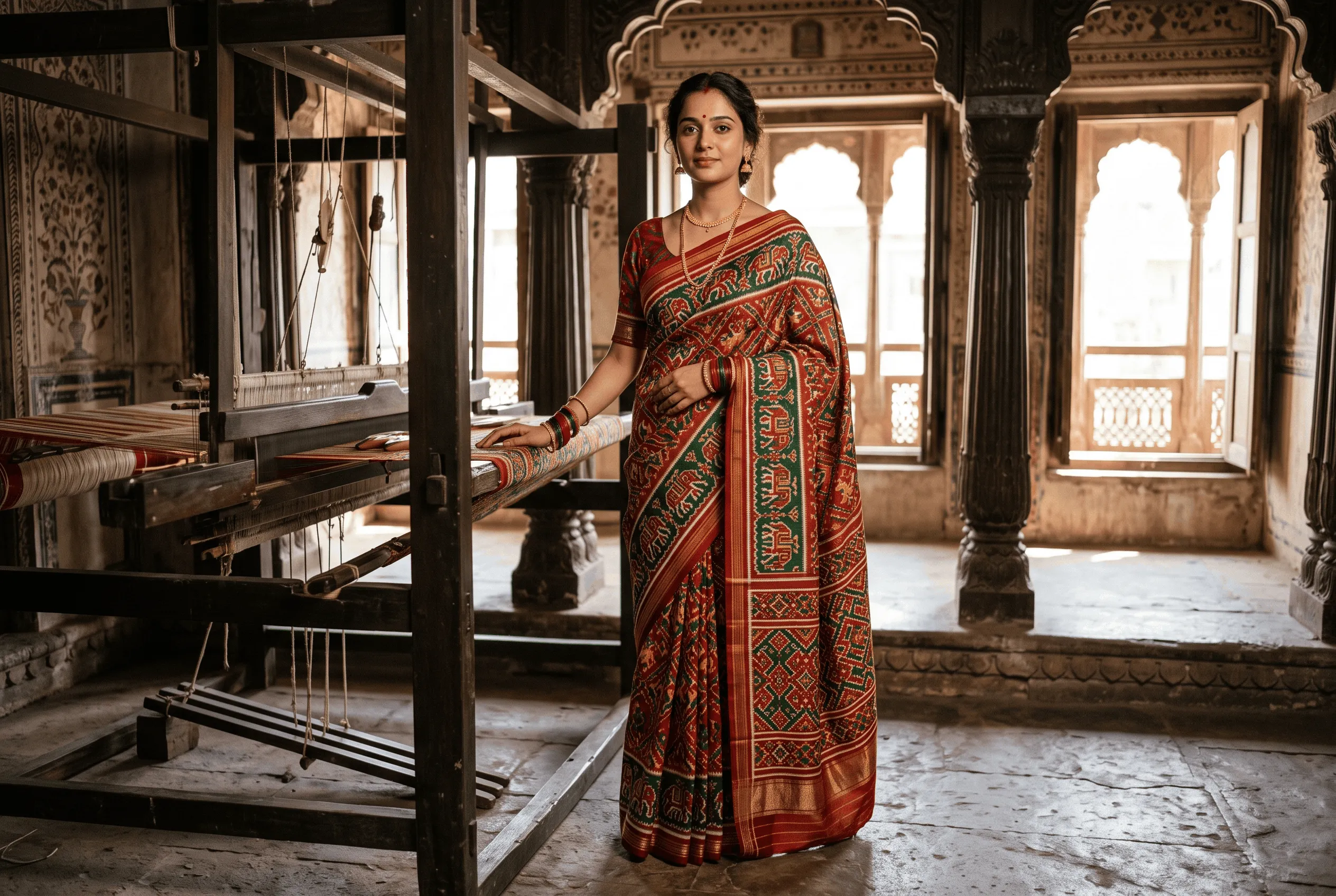
Patola: a Bandhani saree with a Patola dupatta or blouse for a grand Gujarati wedding look. Read our Patola ikat guide.
Keep one piece as the hero and let the other support it, so the look stays balanced.
Building a Festive Bandhani Wardrobe
One silk Bandhani saree for weddings and Diwali.
One georgette Bandhani saree or chaniya choli for Navratri.
Two or three cotton Bandhani dupattas to brighten plain kurtas.
One Bandhani stole for travel and casual festive looks.
This small collection covers most festive occasions in the year.
Common Mistakes
Ironing Bandhani completely flat: the crinkled texture is part of its charm.
Washing new Bandhani with other clothes: natural and bright dyes can bleed.
Too much embellishment: heavy embroidery on a fine Bandhani can hide the hand-tied work.
Paying hand-tied prices for printed Bandhani: always check the dots and the reverse side.
Bandhani Through the Festive Year
Makar Sankranti and Uttarayan: bright cotton Bandhani dupattas and kurtas for kite-flying on the terrace.
Holi: old cotton Bandhani is a cheerful, practical choice, as colours wash out more easily from cotton.
Teej (July–August): green Bandhani or leheriya sarees for married women, with mehendi and bangles.
Raksha Bandhan: light georgette Bandhani sarees or suits for family celebrations.
Navratri (September–October): chaniya cholis, sarees and dupattas in the colours of the nine days.
Karwa Chauth: red Bandhani sarees or suits with gold jewellery.
Diwali: silk Bandhani in rich jewel tones.
Wedding season (November–February): gharchola, panetar and silk Bandhani for guests.
With a few well-chosen pieces, Bandhani can carry you through almost every celebration of the year.
Gifting Bandhani
Bandhani is one of the most loved festive gifts in Gujarat and Rajasthan.
A silk Bandhani saree is a meaningful gift for weddings and Diwali, while a cotton Bandhani dupatta is a cheerful, affordable gift for friends, teachers and colleagues. For new brides, a gharchola or panetar from the family carries special emotional value. Add a small care note, so the recipient knows to wash it separately and dry it in shade.
Celebrate With Bandhani
Bandhani brings joy, colour and heritage to every festive wardrobe.
Choose a georgette Bandhani or chaniya choli for Navratri, a gharchola or panetar for a Gujarati wedding and a cotton Bandhani dupatta for everyday festive looks. Buy hand-tied pieces from trusted artisans, and care for them gently.
Explore more in our guide to West India textiles: Patola, Bandhani and Paithani and on our West India page.
Comments (0)
Leave a Thought
No comments yet. Be the first to share your thoughts!