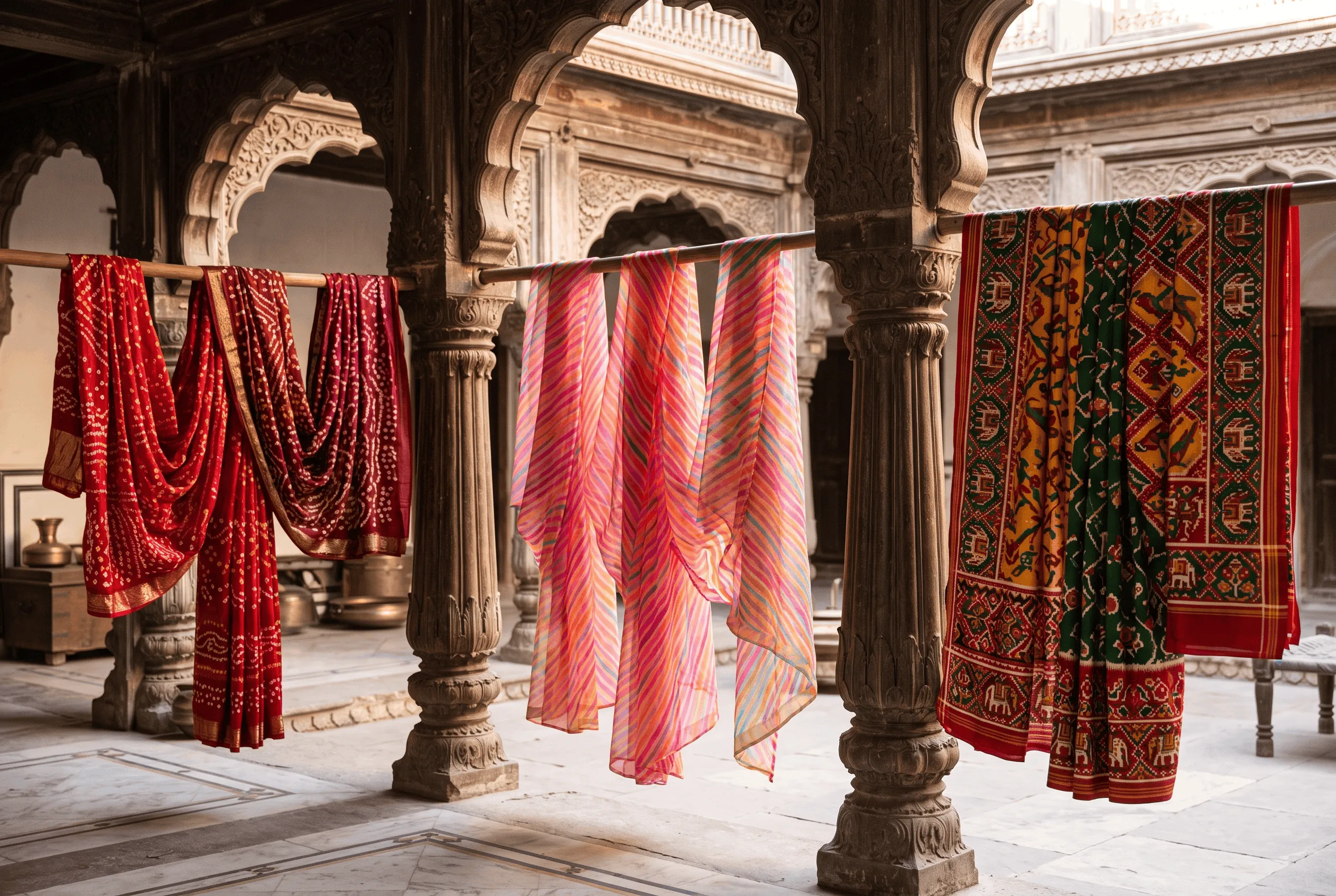
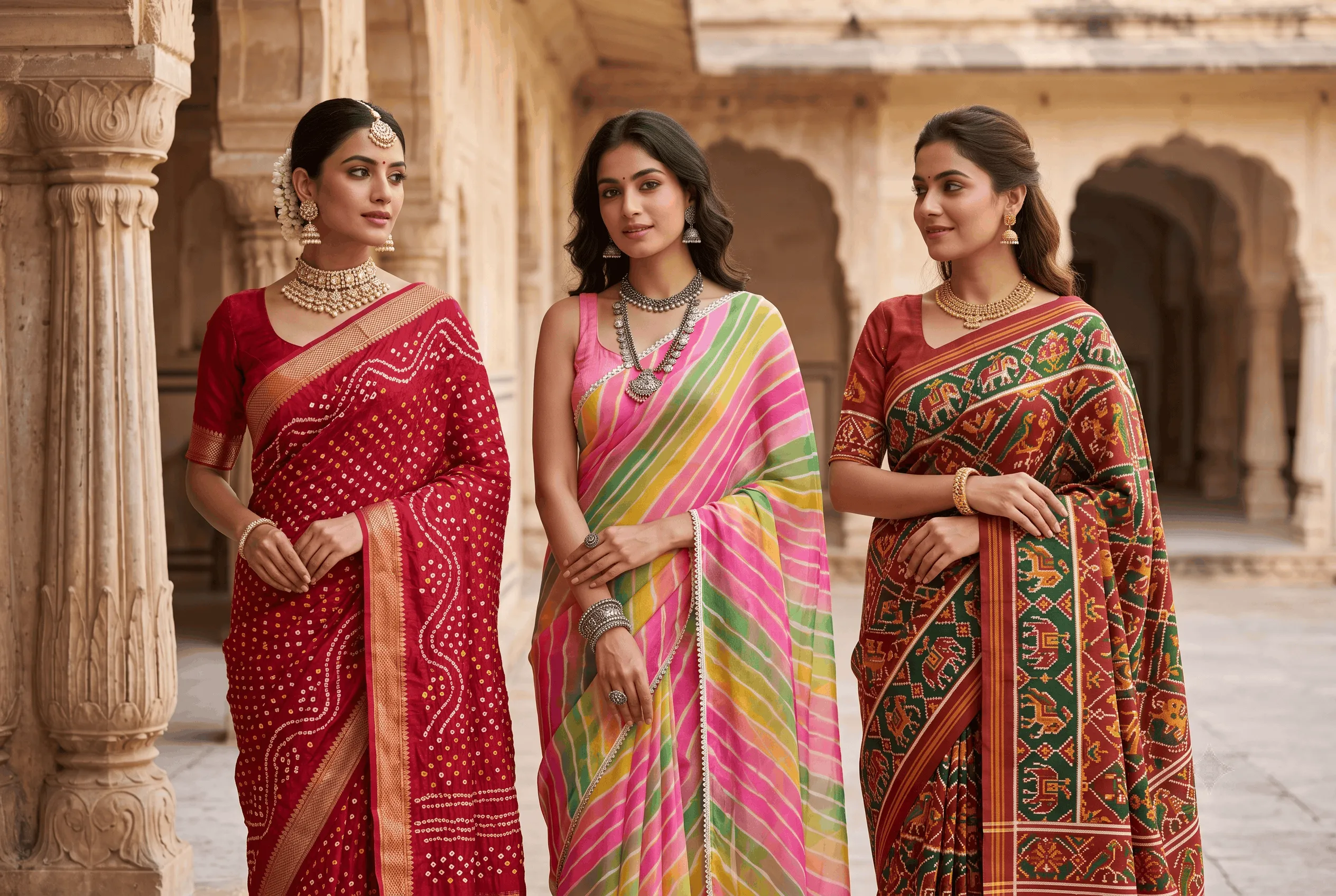
Bandhani, Leheriya and Patola are three of western India's best-loved textiles, and they are often confused in shops and online listings.
All three use the idea of resist dyeing, where parts of the cloth or thread are tied so the dye cannot reach them.
But the way each one is made, the look it creates and the price you pay are very different.
If you have ever wondered about Bandhani vs Patola, or why a Leheriya dupatta costs far less than a Patola saree that looks equally colourful, the answer lies in when and how the dyeing happens.
This guide explains how each textile is made, where it comes from, how to recognise the real thing, what a fair price looks like and how to style each one.
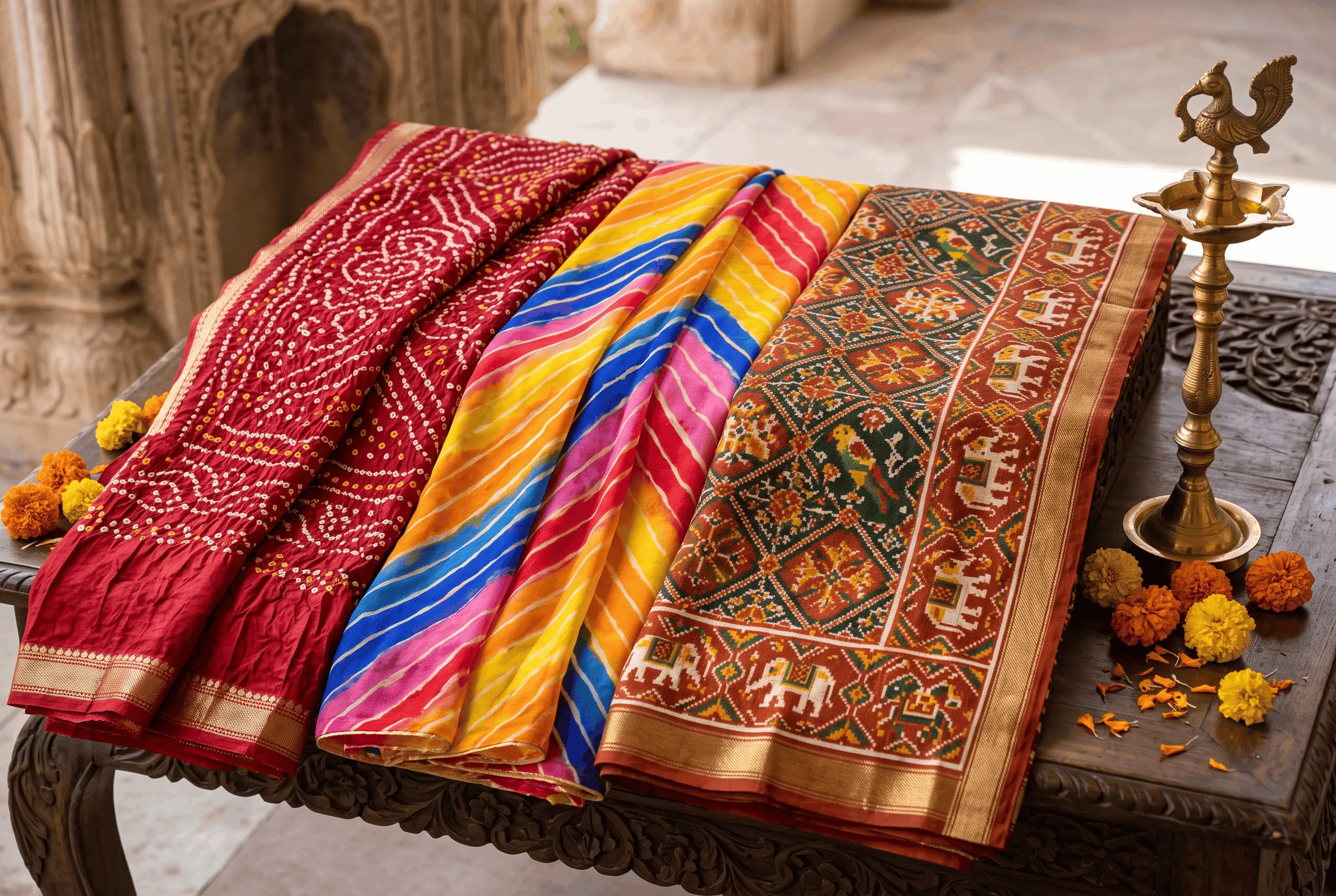
Bandhani vs Leheriya vs Patola at a Glance
| Feature | Bandhani | Leheriya | Patola |
|---|---|---|---|
| Technique | Tie-dye on woven cloth | Roll, tie and dye on woven cloth | Threads tie-dyed before weaving (ikat) |
| Look | Small dots in patterns | Diagonal waves or checks | Sharp geometric and figurative motifs |
| Main region | Gujarat and Rajasthan | Rajasthan | Patan and Rajkot, Gujarat |
| Common fabrics | Cotton, georgette, gaji silk | Chiffon, georgette, cotton | Silk, also cotton and blends |
| Feel | Slightly crinkled when new | Soft and light | Smooth, firm silk |
| Reverse side | Dots visible, colour goes through | Pattern visible, colour goes through | Double ikat looks the same on both sides |
| Typical occasion | Weddings, Navratri, festivals | Teej, monsoon, day events | Weddings, heirloom wear |
| Relative price | Low to high | Low to medium | Medium to very high |
What Is Bandhani?
Bandhani, also called bandhej, comes from the word "bandh", meaning to tie.
Artisans pinch tiny points of fabric and wind thread tightly around each one.
The cloth is then dyed.
When the threads are removed, every tied point stays undyed and appears as a small dot.
A single saree can contain thousands of these knots, and every additional colour means another round of tying and dyeing.
This is skilled, patient work, and much of it is traditionally done by women artisans.
Main centres: Kutch, Jamnagar and other parts of Gujarat, along with Jaipur, Jodhpur and other parts of Rajasthan.
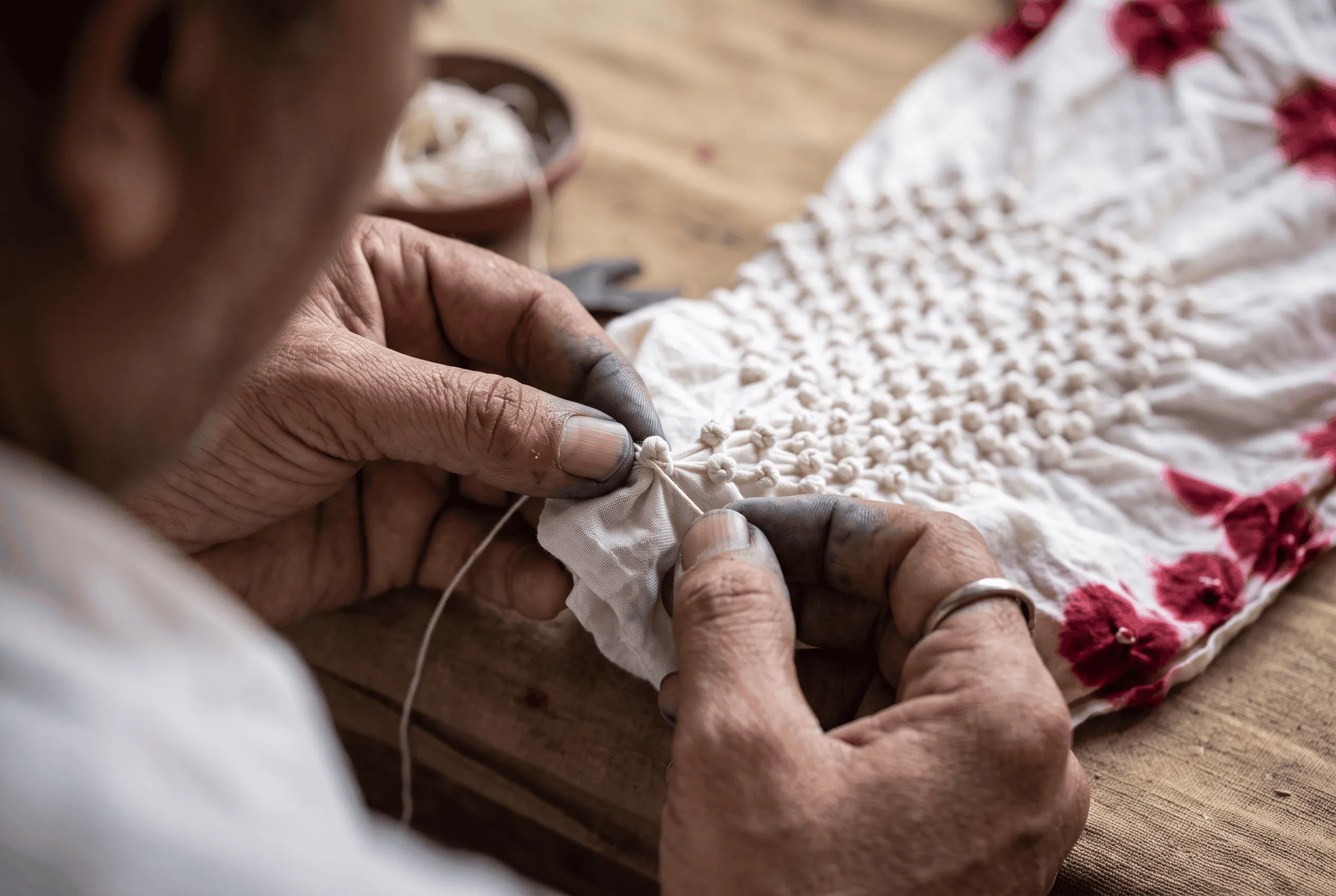
Popular Bandhani Patterns
Ekdali uses single dots spread across the fabric.
Trikunti groups dots in threes.
Chaubundi groups dots in fours.
Gharchola is a grid pattern, often with zari lines, traditionally worn by Gujarati brides.
Panetar is a white or cream saree with a red border and Bandhani dots, also part of Gujarati bridal tradition.
Bandhani is made in cotton, georgette, crepe, modal silk and gaji silk.
What Is Leheriya?
Leheriya means "wave" in Rajasthani.
The fabric is rolled diagonally from one corner to the opposite edge, tied at intervals and then dyed.
When the cloth is opened, diagonal stripes appear like ripples on water.
Repeating the process from a different direction creates more complex designs.
Leheriya is closely linked with the monsoon and the festival of Teej, when bright greens, pinks and yellows feel especially joyful.
Today it is worn throughout the year, particularly as light chiffon and georgette sarees, dupattas and turbans.
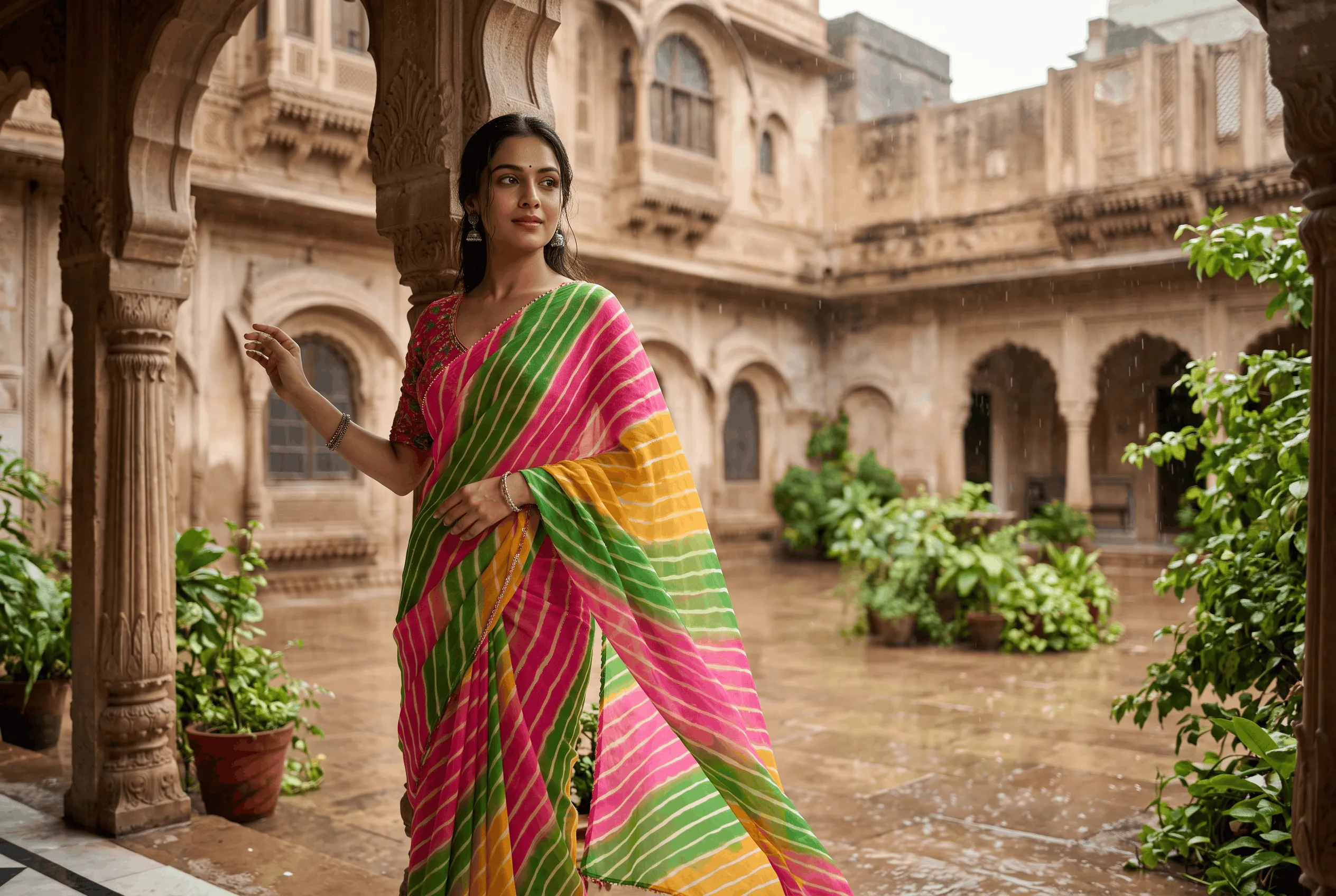
Leheriya and Mothda Patterns
Classic Leheriya shows diagonal stripes in one direction.
Mothda is a close cousin, where the fabric is tied in two directions to create a check or lattice pattern.
Multicolour Leheriya, sometimes called panchranga when it uses five colours, is especially popular for festivals.
Leheriya is usually made in cotton, chiffon, georgette and silk.
What Is Patola?
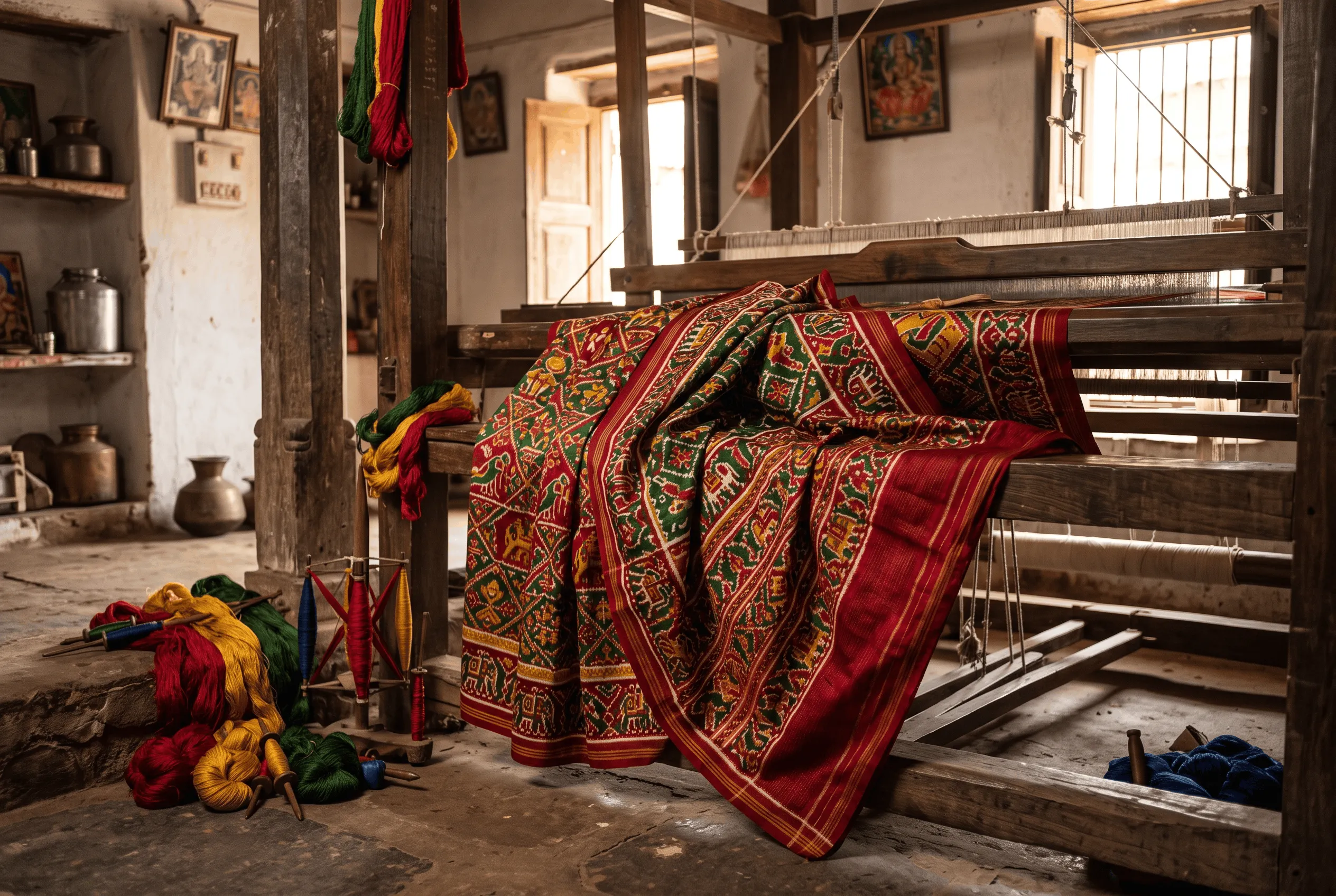
Patola is a silk textile woven using the ikat method.
Before weaving begins, bundles of thread are tied and dyed again and again according to a planned design.
When these pre-dyed threads are placed on the loom, the pattern appears as the cloth is woven.
Because the pattern is built into the threads, the edges of every motif look slightly feathered, which is the signature of real ikat.
Popular Patola motifs include elephants, parrots, dancing women, flowers, baskets and jewel-like geometric grids.
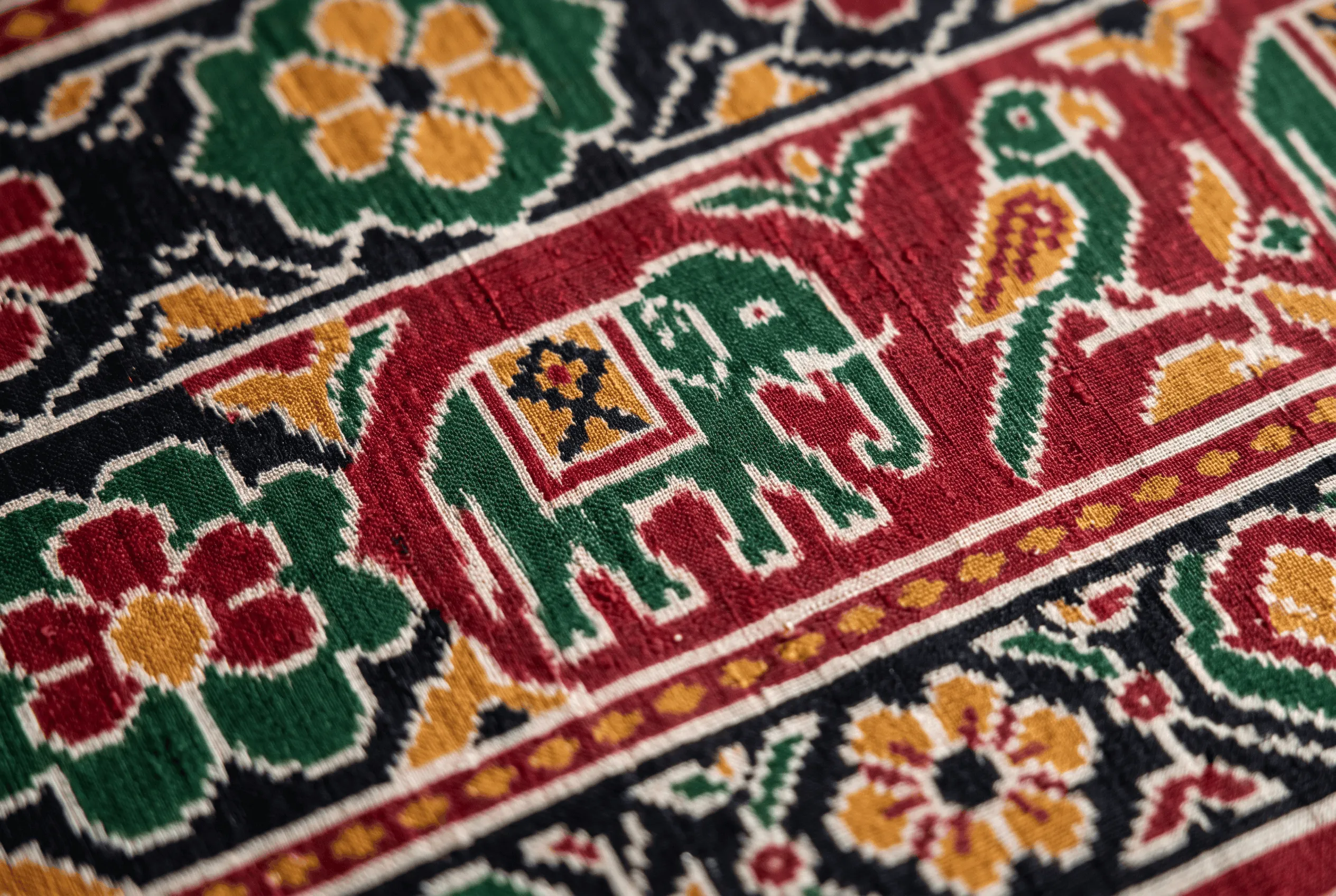
Patan Patola vs Rajkot Patola
Patan Patola is double ikat.
Both the warp (lengthwise threads) and the weft (crosswise threads) are tie-dyed before weaving, and they must meet exactly on the loom.
The design looks almost the same on both sides, and a single saree can take many months to finish.
Rajkot Patola is mostly single ikat, where usually only the weft is tie-dyed.
It is still handwoven and beautiful, but quicker to make and much more affordable.
Our detailed Patola saree guide explains the difference in more depth.
The Biggest Difference: Dyed Before or After Weaving
This single point explains most of the difference in effort and price.
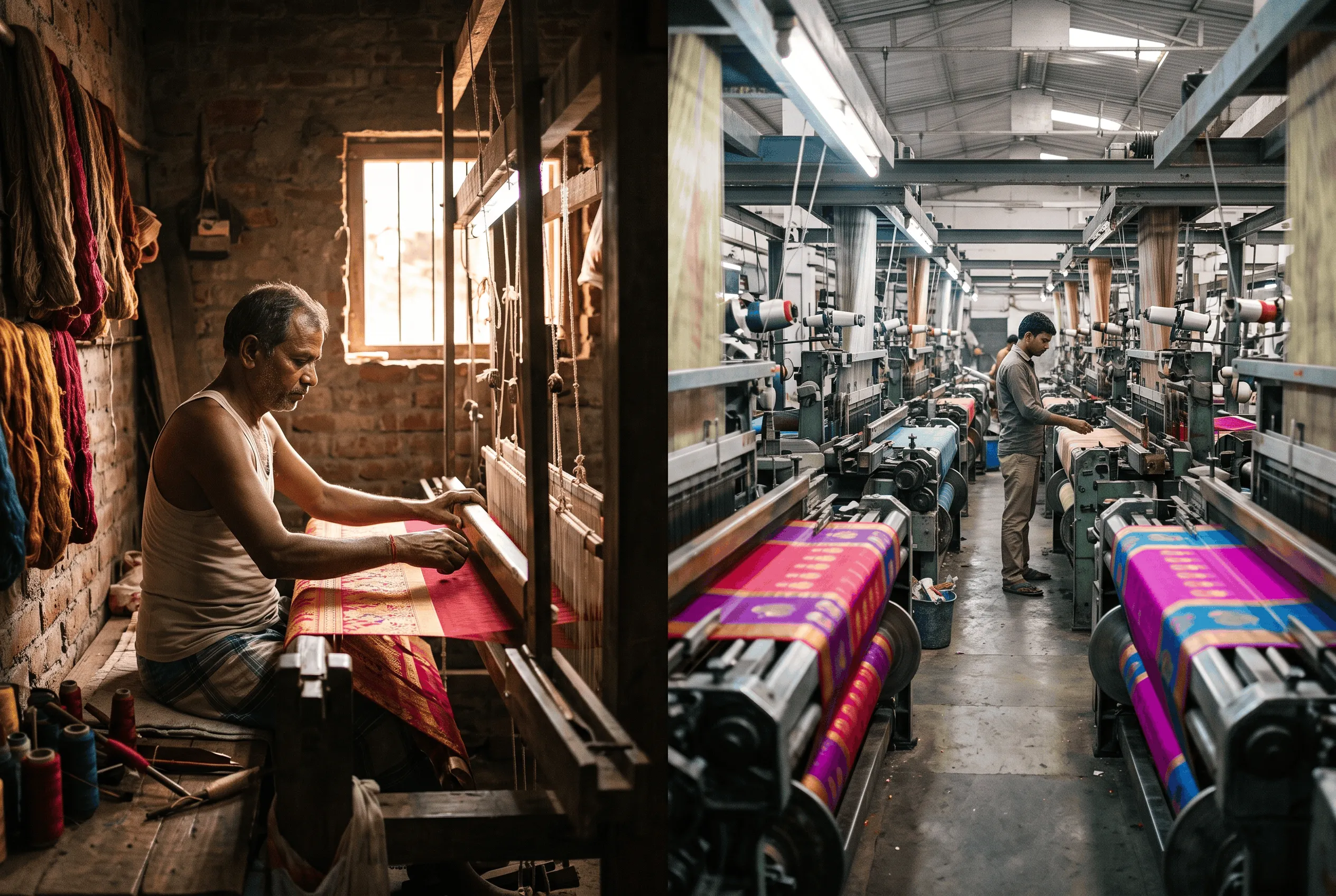
Bandhani and Leheriya are dyed after the fabric is woven.
The pattern sits on the surface of finished cloth, created by tying the fabric itself.
Patola is dyed before the fabric is woven.
The pattern is planned thread by thread and appears only when the weaver brings the dyed threads together on the loom.
That is why a real Patola takes far longer to make and costs much more than Bandhani or Leheriya of similar size.
Bandhani vs Patola for Weddings
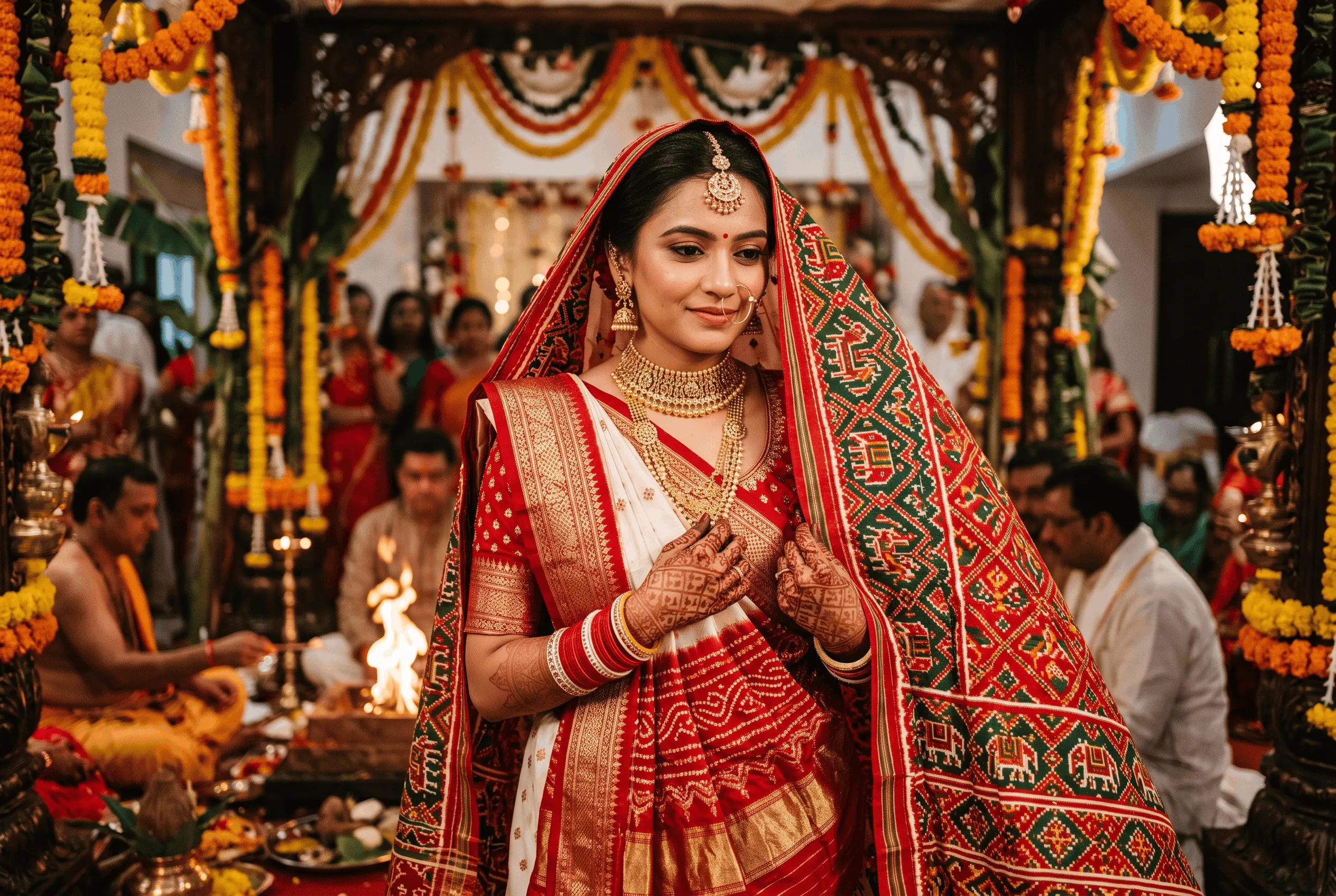
Both textiles have deep roots in Gujarati weddings.
Bandhani appears in bridal Gharchola and Panetar sarees, wedding dupattas and festive lehengas.
It offers a joyful, traditional look across a wide range of budgets.
Patola is often bought as an heirloom for a bride or for the main wedding ceremony.
A Rajkot single ikat Patola is a beautiful entry point, while a Patan double ikat is a once-in-a-lifetime investment.
Many families combine both, with Bandhani for the pre-wedding functions and Patola for the ceremony.
How to Identify Real Bandhani
New Bandhani often has small raised bumps where the knots were tied.
The dots are slightly irregular, and no two are exactly the same.
The colour goes through to the back of the fabric.
A printed copy looks flat, perfectly even and noticeably paler on the reverse side.
How to Identify Real Leheriya
The stripes of real Leheriya have soft, slightly blurred edges where dye seeped under the ties.
The colour is visible on the back of the fabric.
Printed Leheriya has very sharp, perfectly uniform lines and a lighter reverse.
How to Identify Real Patola
Look closely at the edges of each motif. Real ikat shows slightly feathered or stepped edges.
In Patan double ikat, the pattern looks almost identical on both sides.
Printed "Patola" has crisp, clean edges and a plain or faded back.
Genuine Patan Patola is expensive. If a seller offers "Patan Patola" for a few thousand rupees, it is not double ikat.
For general silk checks, see our guide on how to identify pure silk.
Price Guide for 2026
These are indicative ranges for sarees. Prices vary by city, seller, fabric, fineness and the number of colours.
| Type | Indicative price range |
|---|---|
| Printed Bandhani, Leheriya or "Patola" | ₹500 – ₹3,000 |
| Real Bandhani in cotton or georgette | ₹1,500 – ₹8,000 |
| Fine silk Bandhani, Gharchola or Panetar | ₹8,000 – ₹40,000+ |
| Real Leheriya in chiffon, georgette or cotton | ₹1,000 – ₹6,000 |
| Leheriya in pure silk | ₹4,000 – ₹15,000+ |
| Rajkot single ikat Patola in silk | ₹12,000 – ₹60,000+ |
| Patan double ikat Patola | ₹1,50,000 and above |
Compare these with Banarasi, Kanjivaram and other sarees in our saree price guide.
How to Style Each Textile
Bandhani looks wonderful with gold or kundan jewellery for weddings, and oxidised silver for Navratri.
A plain silk blouse in a contrast colour keeps the dots in focus.
Leheriya suits light, fresh styling with silver jewellery, gota-patti details and simple juttis.
It is perfect for day events and the monsoon season.
Patola needs very little.
A plain silk blouse, classic gold jewellery and a neat drape allow the woven pattern to speak for itself.
Why These Textiles Matter to Artisan Communities
Bandhani, Leheriya and Patola are not only beautiful fabrics.
They support communities of tie-dye artisans, dyers and weavers whose skills have often been passed down within families for generations.
Bandhani tying is largely home-based work, and it provides income to many women artisans in Gujarat and Rajasthan.
Patola weaving, especially double ikat, survives through a very small number of families who continue to practise an extremely demanding craft.
Every genuine purchase helps keep these skills alive.
When you choose real handwork at a fair price, you are paying for time, knowledge and a living tradition rather than only a pattern.
Printed versions are perfectly fine for casual use, but it is worth owning at least one genuine piece if you love these textiles.
Bandhani, Leheriya and Patola Beyond Sarees
These textiles are not limited to sarees.
Bandhani is widely used for dupattas, chaniya cholis, kurtas, turbans and stoles.
Leheriya is a favourite for dupattas, safas (turbans) and light summer kurtas.
Patola motifs now appear on dupattas, stoles, jackets and even home décor, although many of these are printed rather than woven.
A Bandhani or Leheriya dupatta is one of the easiest and most affordable ways to bring these crafts into your wardrobe, while a woven Patola dupatta can be a smaller heirloom investment than a full saree.
Care and Storage
Dry-clean silk Bandhani, silk Leheriya and all Patola sarees.
If you hand-wash cotton Bandhani or Leheriya, use cold water and mild detergent, and wash it alone because colours may bleed.
Dry in the shade, as strong sunlight fades bright dyes.
Do not press new Bandhani completely flat with a hot iron. The crinkled texture is part of its charm.
Store silk pieces in muslin or cotton and refold them every few months.
Our silk saree care guide has more detailed tips.
Common Misconceptions
"Bandhani and Leheriya Are the Same"
They are not. Both are tie-dye, but Bandhani creates dots, while Leheriya creates waves or checks.
"Patola Is Just a Printed Pattern"
Real Patola is woven from threads that were dyed before weaving. Printed copies only imitate the look.
"All Patola Is Double Ikat"
Patan Patola is double ikat. Rajkot Patola is mostly single ikat and is still a genuine handwoven textile.
"Crinkled Fabric Means Poor Quality"
New Bandhani often feels crinkled because of the tying process. It is normal and softens with wear.
Which One Should You Buy?
When comparing Bandhani vs Patola vs Leheriya, there is no single winner.
Choose Bandhani for a festive, traditional look for weddings, Navratri and family functions at a moderate budget.
Choose Leheriya for something light, bright and easy to wear, especially for day events and the monsoon.
Choose Patola when you want an heirloom piece that can be passed down for generations.
Learn the simple checks above, pay a fair price for what you are actually buying and you will own a genuine piece of western India's textile heritage.
Explore more regional textiles in our West India guide and our traditional wear trends 2026 guide.
Comments (0)
Leave a Thought
No comments yet. Be the first to share your thoughts!