The Paithani saree is the pride of Maharashtra.
With its glowing silk, gold zari borders and a pallu full of peacocks, lotuses and parrots, it is the saree many Maharashtrian brides dream of and the one families keep for generations.
In recent years, Paithani has also become popular across India for weddings, Diwali and festive functions, often as a rich alternative to Banarasi or Kanjivaram.
Because it is so loved, the market is full of powerloom versions sold under the Paithani name.
Knowing how a real Paithani is woven, what its motifs mean and how to check the pallu can save you from paying a handloom price for a machine-made saree.
This guide explains the history of the weave, the main types and motifs, how a real handwoven Paithani is made, simple checks to tell handloom from powerloom, styling ideas, current price ranges and care tips.
What Is a Paithani Saree?
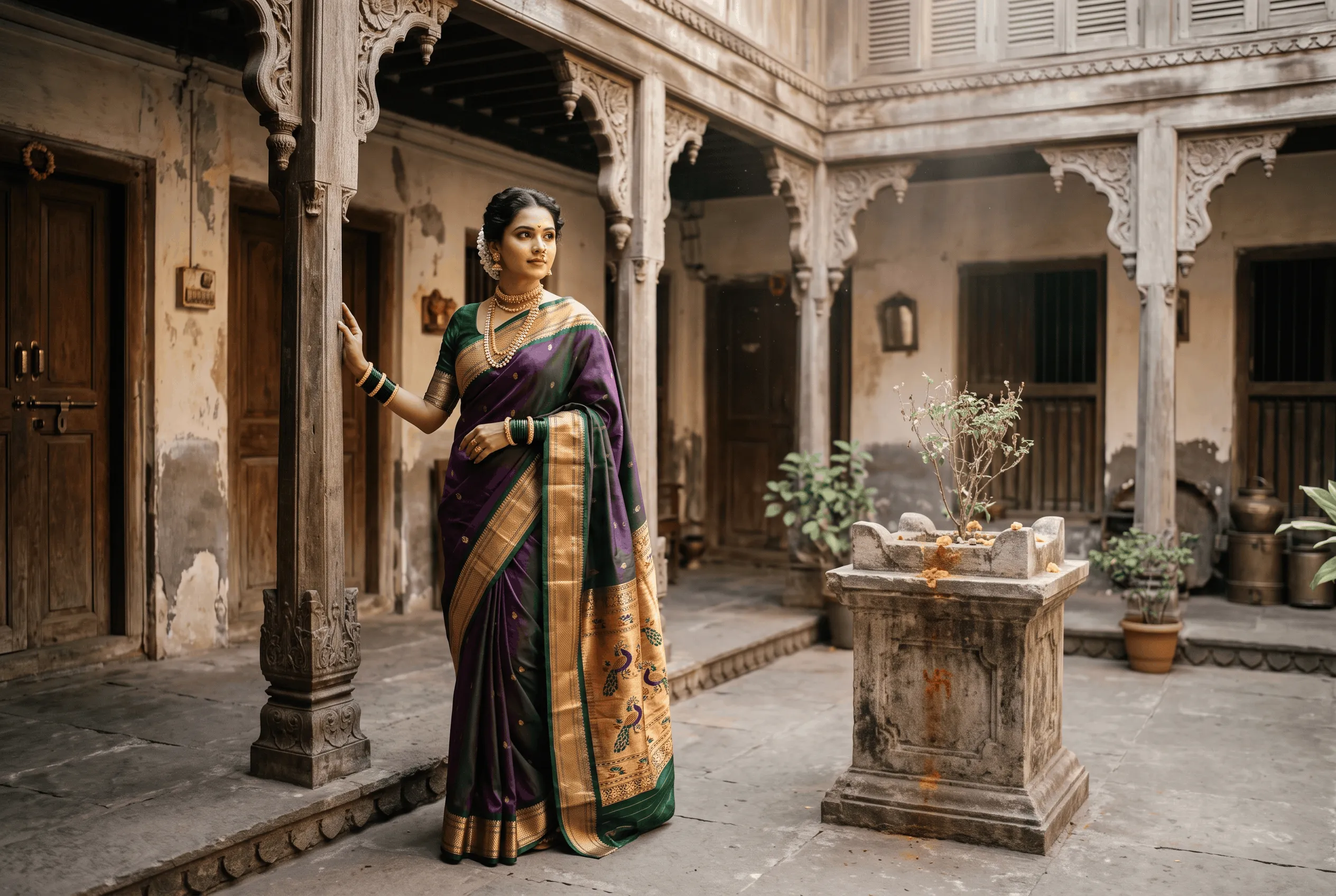
A Paithani is a handwoven silk saree from Maharashtra, known for its zari borders and richly woven pallu.
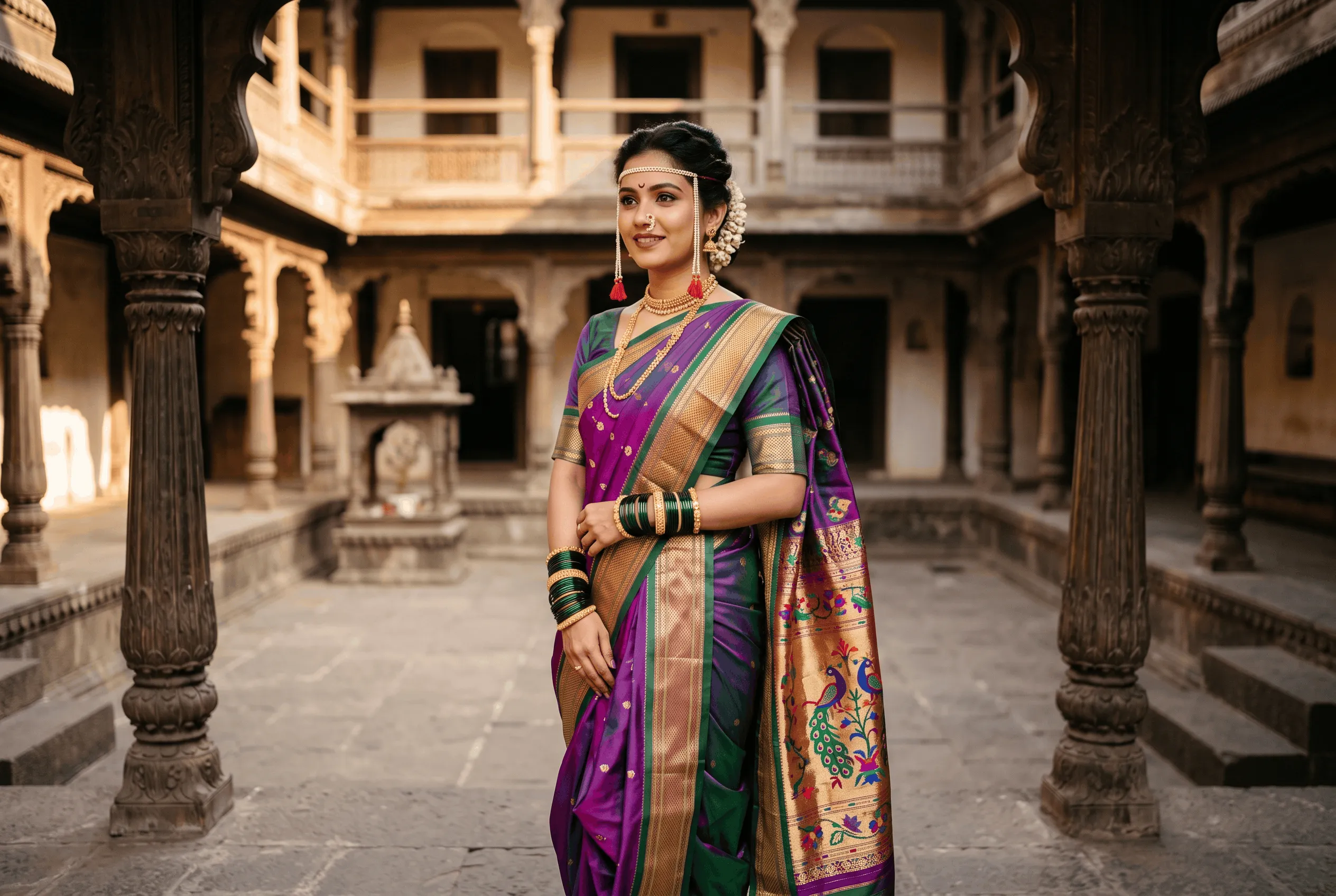
Its most distinctive feature is the tapestry-woven pallu and border, where colourful motifs are created by hand on a zari base.
Paithani sarees are traditionally woven in silk with zari and are worn for weddings, festivals and important family occasions.
A Short History of Paithani
Paithani takes its name from Paithan, a town on the banks of the Godavari in the Chhatrapati Sambhajinagar (formerly Aurangabad) district of Maharashtra.
Paithan was an important trade and cultural centre in ancient times, and its tradition of silk and gold-thread weaving is very old.
Over the centuries, Paithani was patronised by rulers and wealthy families, who prized it for its rich zari and fine silk.
In more recent times, Yeola in Nashik district has become one of the largest centres of Paithani weaving, alongside Paithan itself.
Paithani is protected by a Geographical Indication (GI) tag, and it remains an essential part of Maharashtrian weddings and festivals.
How a Real Paithani Is Woven
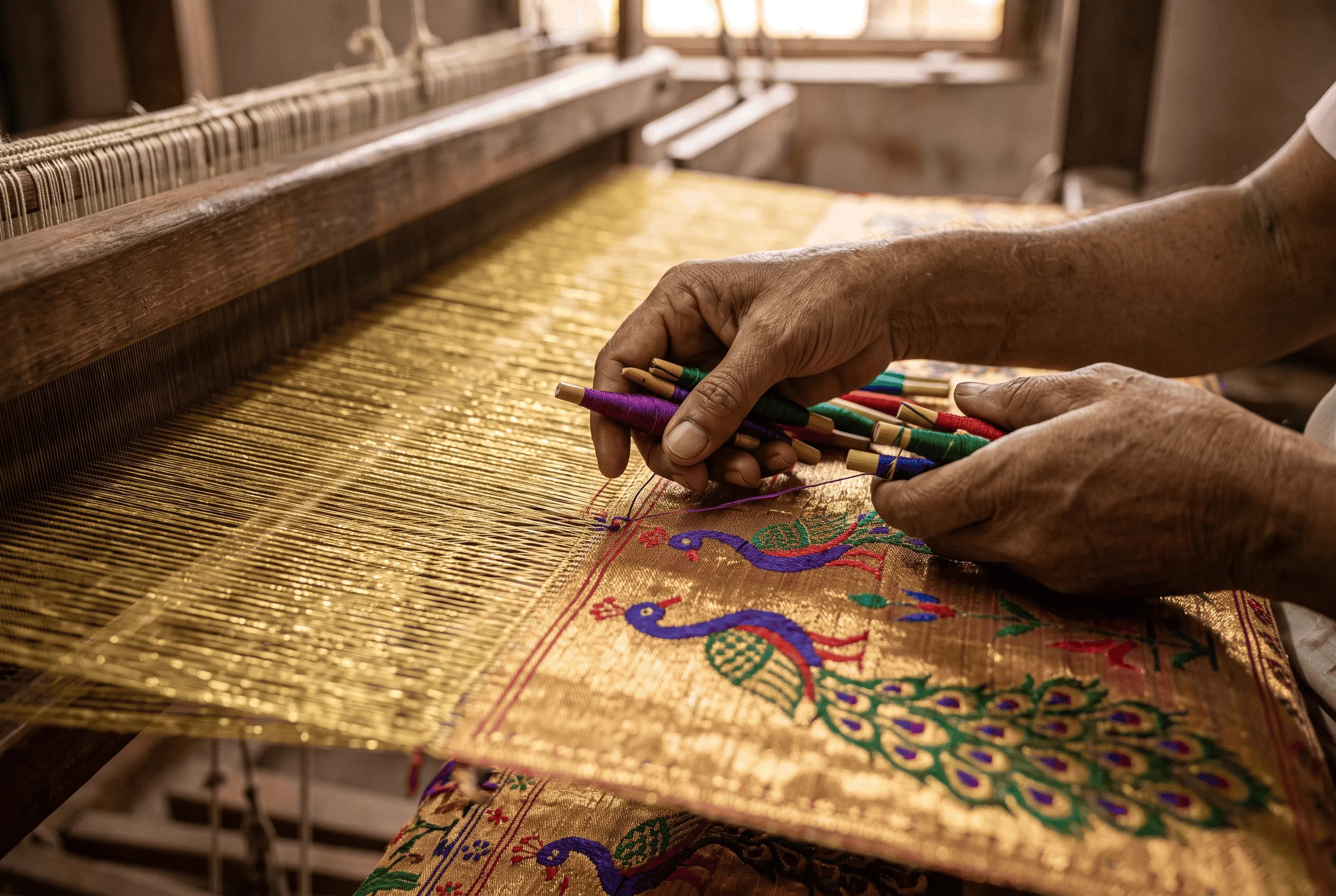
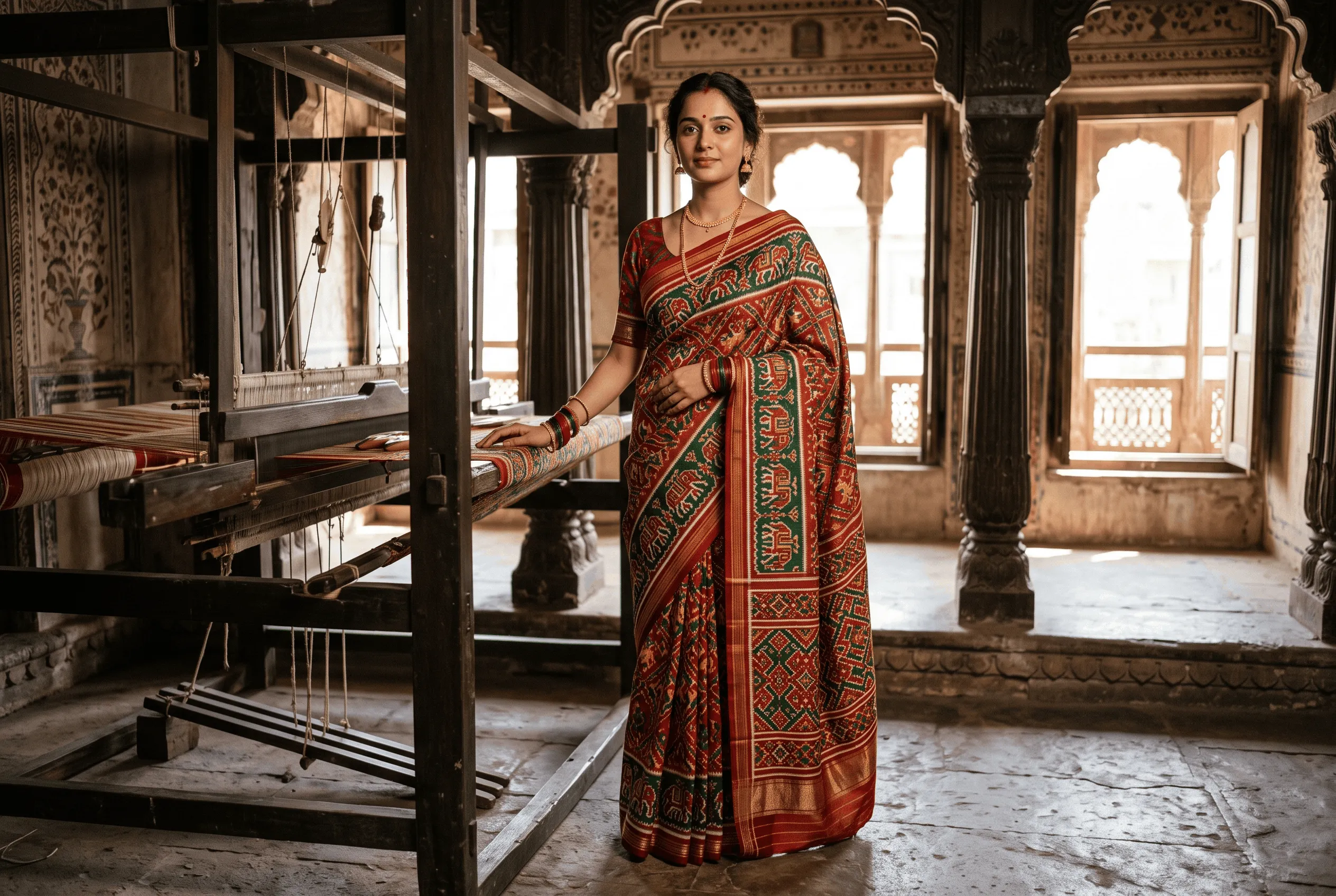
The defining feature of a handwoven Paithani is its tapestry weaving technique, especially in the pallu and border.
The weaver passes small bobbins of coloured silk thread by hand, only across the area where each colour is needed.
Where two colours meet, the threads interlock, creating a neat join without long loose threads across the back.
Because of this technique, the design on the pallu looks almost the same on the back as on the front.
The body of the saree is usually plain or decorated with small motifs (buttis), while the pallu is woven on a zari base with colourful motifs.
This slow, careful work is what makes a Paithani so special. A heavy brocade pallu can take a long time to weave.
Popular Paithani Motifs
Mor (Peacock)
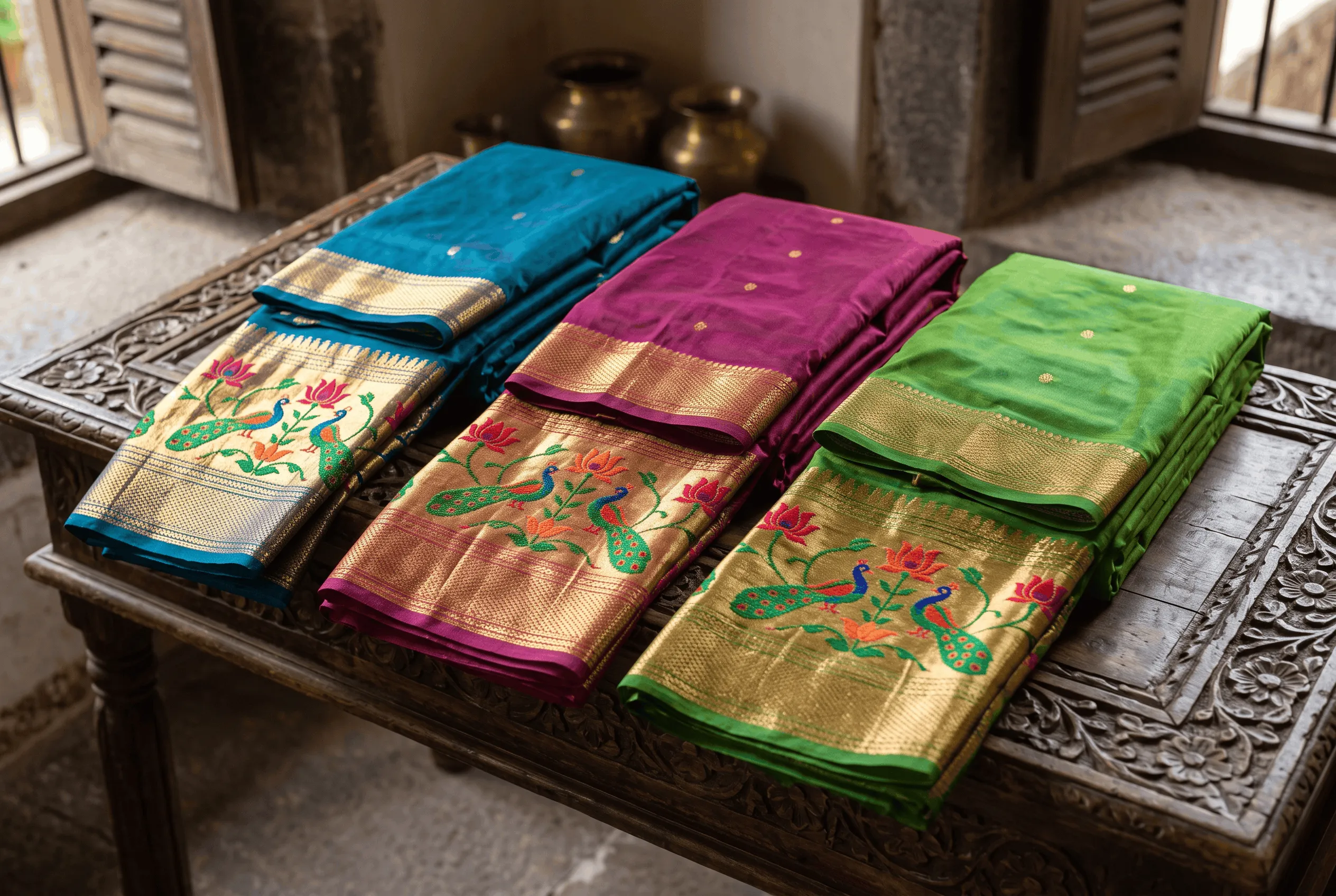
The peacock is the most famous Paithani motif, often woven in large, colourful pallu designs.
Kamal (Lotus)
The lotus is a symbol of purity and appears on both pallus and borders.
Popat or Muniya (Parrot)
Small parrots along the border are especially loved and give their name to the muniya border.
Asavali
Asavali is a flowering vine motif that creates a graceful, detailed look.
Narali
Narali is a coconut-shaped motif often used along borders.
Tota-Maina
A pair of birds, a romantic motif popular for bridal sarees.
Bangdi Mor
A peacock framed inside a bangle-like circle.
Types of Paithani Sarees
| Type | What it means | Look |
|---|---|---|
| Muniya border | Small parrot motifs along the border | Classic and much loved |
| Single and double muniya | One or two rows of parrot motifs | Double is richer and costlier |
| Kadiyal border | Contrast-colour border interlocked with the body | Bold colour contrast |
| Lotus or peacock brocade | Large lotus or peacock motifs on a zari pallu | Rich and bridal |
| Asavali | Flowering vine motifs on border and pallu | Graceful and detailed |
| Narali border | Coconut-like motifs along the border | Traditional |
| Semi-Paithani | Silk-blend or powerloom with Paithani-style design | Affordable and lighter |
Traditional Paithani Colours
Deep purple, peacock blue, parrot green, magenta, mango yellow, red and black are among the classic Paithani colours.
Many Paithanis are woven with a shot or "dhoop-chhaon" effect, where the warp and weft are different colours and the saree appears to change shade as it moves in the light.
Contrast borders, such as a purple body with a green border, add to the drama.
Paithani Saree for Weddings and Festivals
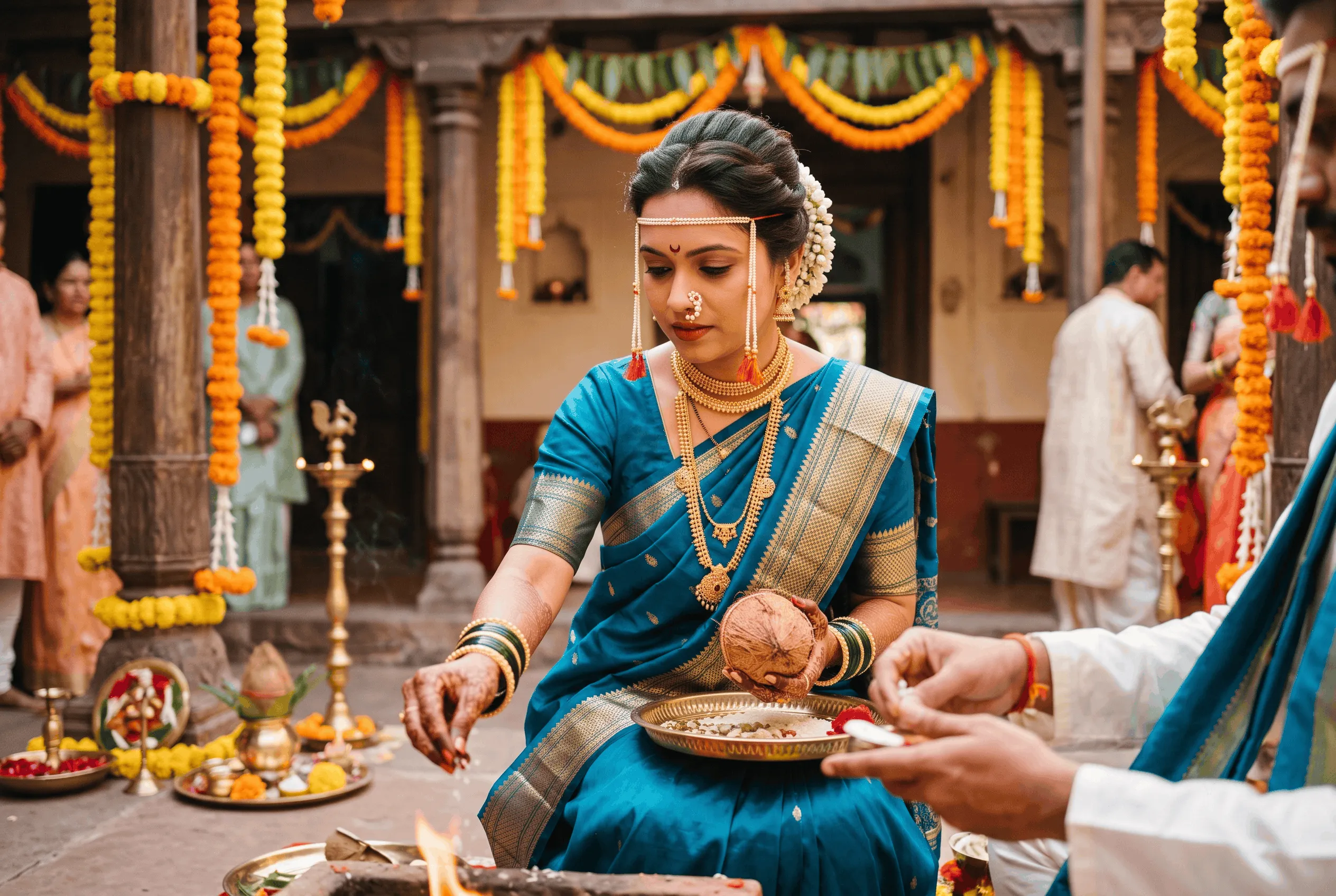
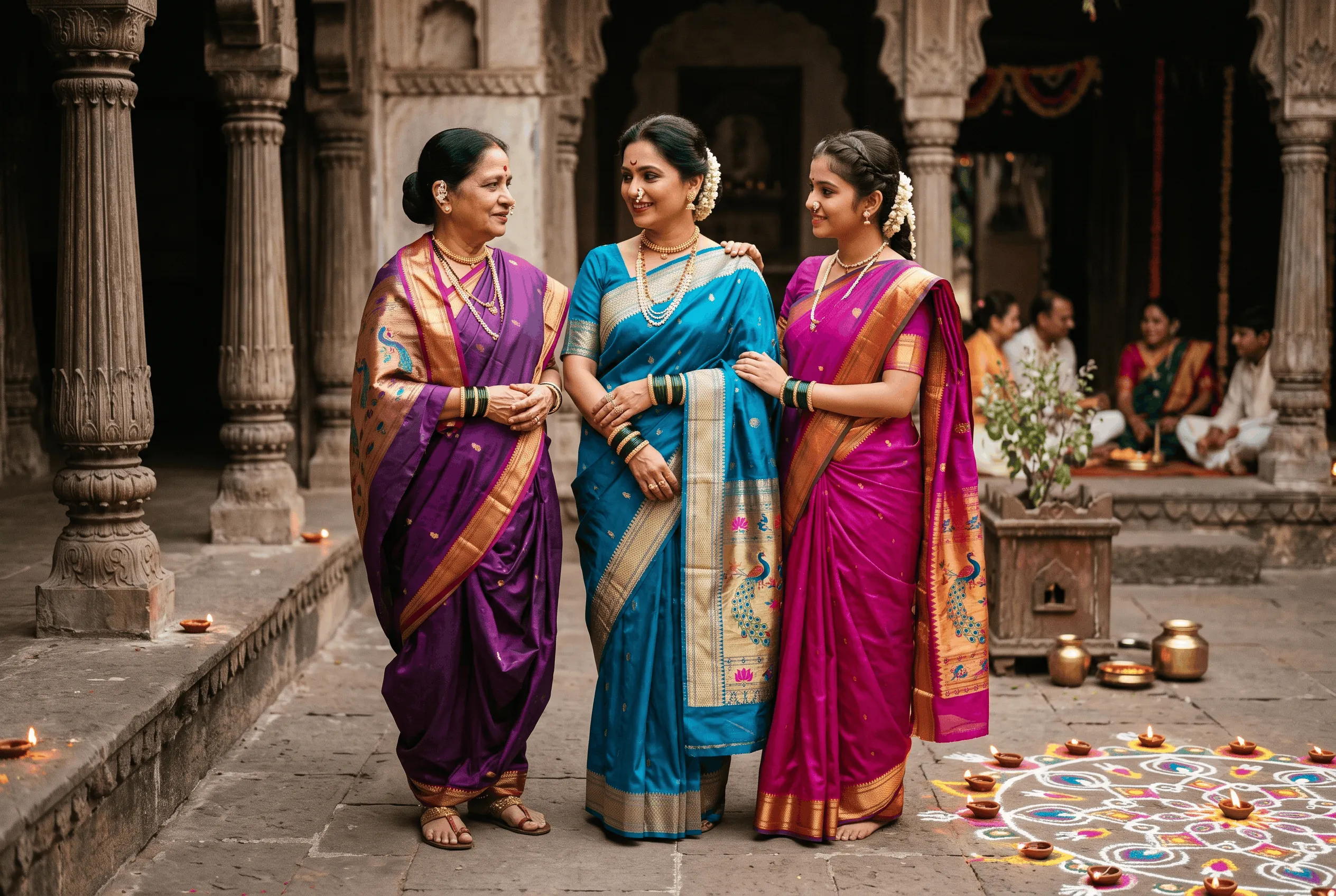
Maharashtrian brides often wear a Paithani for wedding rituals, sometimes in a nauvari (nine-yard) drape.
Mothers and close family members frequently wear Paithani for the main ceremony.
Festivals such as Gudi Padwa, Diwali and Ganesh Chaturthi are popular occasions to wear one.
Wedding guests across India now choose Paithani as a rich alternative to Banarasi or Kanjivaram. See our wedding guest saree ideas.
How to Style a Paithani Saree
Pair a Paithani with traditional Maharashtrian jewellery such as a nath (nose ring), thushi (choker), kolhapuri saaj (necklace) and green glass bangles.
A contrast blouse in the pallu colour, or a blouse made from the pallu itself, looks beautiful.
A neat Nivi drape with an open pallu shows off the motifs, while the nauvari drape creates a striking traditional look for weddings.
For more pairing ideas, see our guide to ethnic jewellery with silk sarees.
Paithani Blouse Ideas
Pallu brocade blouse: many Paithanis come with a blouse piece woven like the pallu, which creates a rich, coordinated look.
Contrast silk blouse: a plain blouse in the border colour, such as green with a purple Paithani, keeps the focus on the pallu.
Elbow sleeves with a zari border: a traditional, graceful choice for weddings and pujas.
High-neck or boat-neck blouse: a modern option that still respects the saree's traditional character. See our high-neck blouse designs.
Paithani-border sleeves: a strip of the border used on the sleeves ties the blouse to the saree beautifully.
Paithani Beyond Sarees
Paithani weaving is also used for dupattas, stoles and lehengas.
A Paithani dupatta paired with a plain silk kurta or lehenga is a beautiful, more affordable way to own the weave.
Brides sometimes have a Paithani pallu converted into a lehenga panel or dupatta. Our guide to saree to lehenga conversion explains how.
Buying a Paithani Online
Ask for clear close-up photographs of the front and back of the pallu and border.
Check whether the listing clearly says handloom, powerloom or semi-Paithani.
Look for the seller's location, certification details and a clear return policy.
Be cautious when a "pure handloom Paithani" is priced like a powerloom saree.
How to Spot a Real (Handloom) Paithani
1. Turn the Pallu Over
In a handwoven Paithani, the back of the pallu looks almost the same as the front, neat and without long loose threads.
In a powerloom or jacquard Paithani, the back usually shows long floating threads and a messier pattern.
2. Look at the Colour Joins
Handwoven tapestry work shows small interlocks where colours meet.
Powerloom designs often have sharp, machine-perfect lines.
3. Check for Small Irregularities
Tiny variations in the motifs are normal in handwoven work.
Perfect repetition across every motif can suggest a machine.
4. Feel the Weight and Silk
A real silk Paithani feels smooth and substantial.
Very light, stiff or slippery fabric is a warning sign.
5. Ask About the Zari
Ask whether the saree uses pure zari or tested zari, and check the colour of the zari threads where they are cut.
6. Look for Labels and Trusted Sellers
Ask about the Silk Mark and GI certification, and buy from trusted weavers, cooperatives or established handloom sellers.
7. Check the Price
A handwoven Paithani with a heavy pallu cannot be sold for the price of a powerloom saree.
Our how to identify pure silk guide explains more general silk tests.
Handloom vs Powerloom Paithani
| Feature | Handloom Paithani | Powerloom Paithani |
|---|---|---|
| Pallu reverse | Neat, almost identical to front | Long floating threads |
| Colour joins | Small interlocks | Sharp machine lines |
| Motifs | Slight natural variations | Perfectly identical |
| Weaving time | Weeks to months | Much faster |
| Price | Higher | Lower |
Powerloom Paithani-style sarees are fine for casual festive wear, as long as they are sold and priced honestly.
Paithani Saree Price in 2026
These are indicative ranges. Prices vary by city, weaver, pallu work, zari type and seller.
| Type | Indicative price range |
|---|---|
| Powerloom or semi-Paithani (silk-blend) | ₹2,500 – ₹8,000 |
| Handloom Paithani, simple single muniya border | ₹12,000 – ₹30,000 |
| Handloom Paithani with brocade pallu | ₹30,000 – ₹80,000 |
| Heavy bridal Paithani with fine zari | ₹80,000 – ₹2,00,000+ |
See our saree price guide to compare Paithani with other silk sarees.
What Makes One Paithani More Expensive Than Another?
Pallu work: a heavy brocade pallu with large peacock or lotus motifs takes far longer to weave.
Border type: double muniya and complex borders cost more than simple ones.
Zari: pure zari is more expensive than tested zari.
Silk quality: finer, denser silk raises the price.
Handloom or powerloom: handloom always costs more because of the time and skill involved.
Caring for a Paithani Saree
Dry-clean only, and not too often.
Wrap it in soft muslin or cotton cloth, never plastic.
Keep the zari pallu wrapped in tissue paper to slow tarnishing.
Refold every two to three months along different lines.
Air it occasionally in the shade, away from direct sunlight.
Our silk saree care guide has more detailed advice.
Common Misconceptions About Paithani
"Every Paithani Is Handwoven"
No. Many sarees sold as Paithani are powerloom or jacquard versions.
"Paithani Is Only for Maharashtrian Weddings"
Paithani is now worn across India for weddings, festivals and receptions.
"A Shinier Pallu Means a Better Saree"
Shine can come from synthetic metallic yarn. Check the weave and the reverse instead.
"Semi-Paithani Is the Same as Paithani"
Semi-Paithani usually refers to silk-blend or powerloom sarees with Paithani-style designs, not handwoven tapestry work.
Why a Paithani Saree Is Worth the Investment
A Paithani saree is more than a beautiful silk; it is a piece of Maharashtra's heritage, woven slowly by hand with interlocking colours and gold.
Learn the main motifs and types, turn the pallu over to check the back, ask about the zari and certification and pay a fair price for real handwork.
Whether you choose a simple muniya border or a heavy peacock brocade, a real Paithani can stay in your family for generations.
For more regional weaves, see our West India guide, and explore this season's styles in our traditional wear trends 2026 guide.
Comments (0)
Leave a Thought
No comments yet. Be the first to share your thoughts!