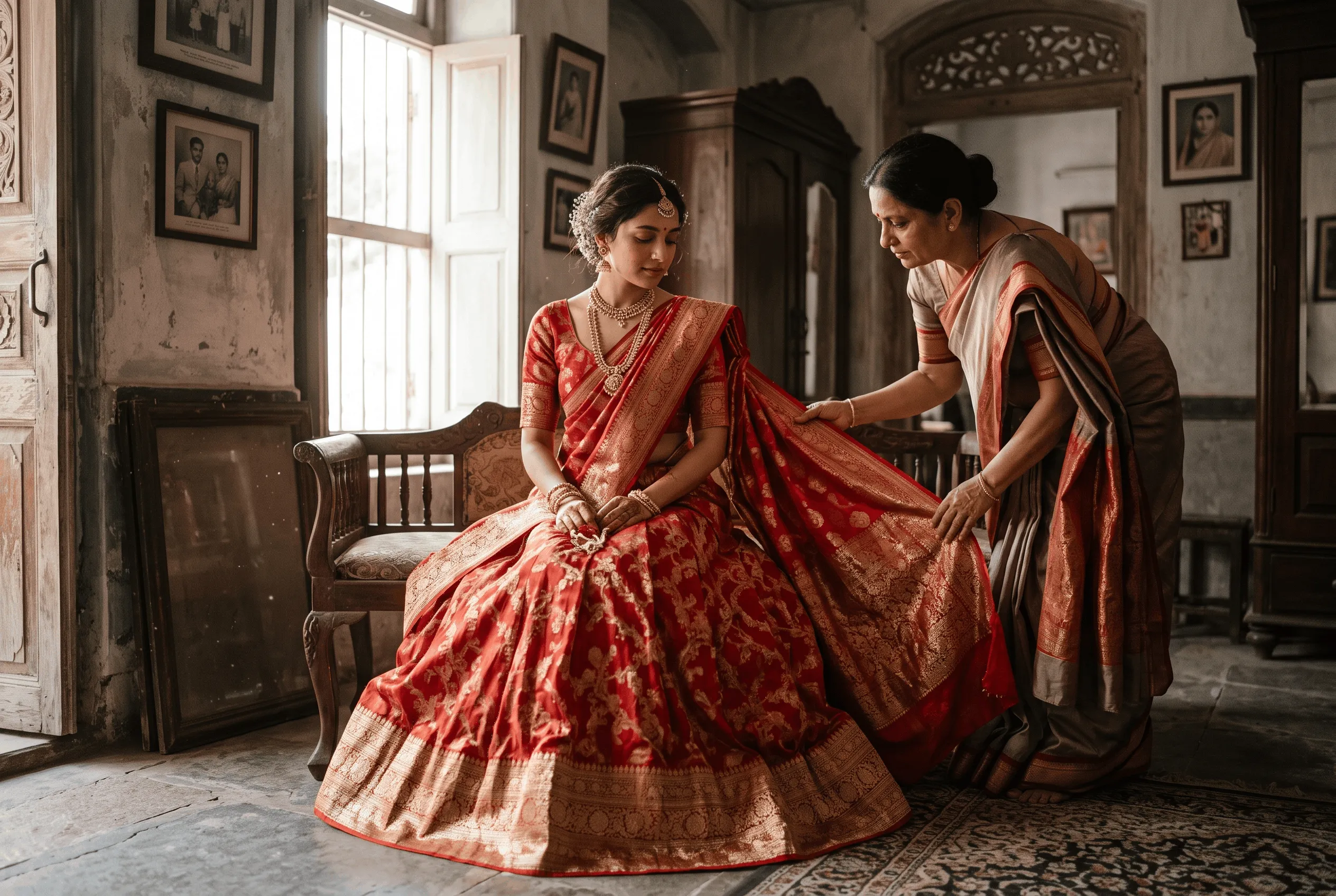
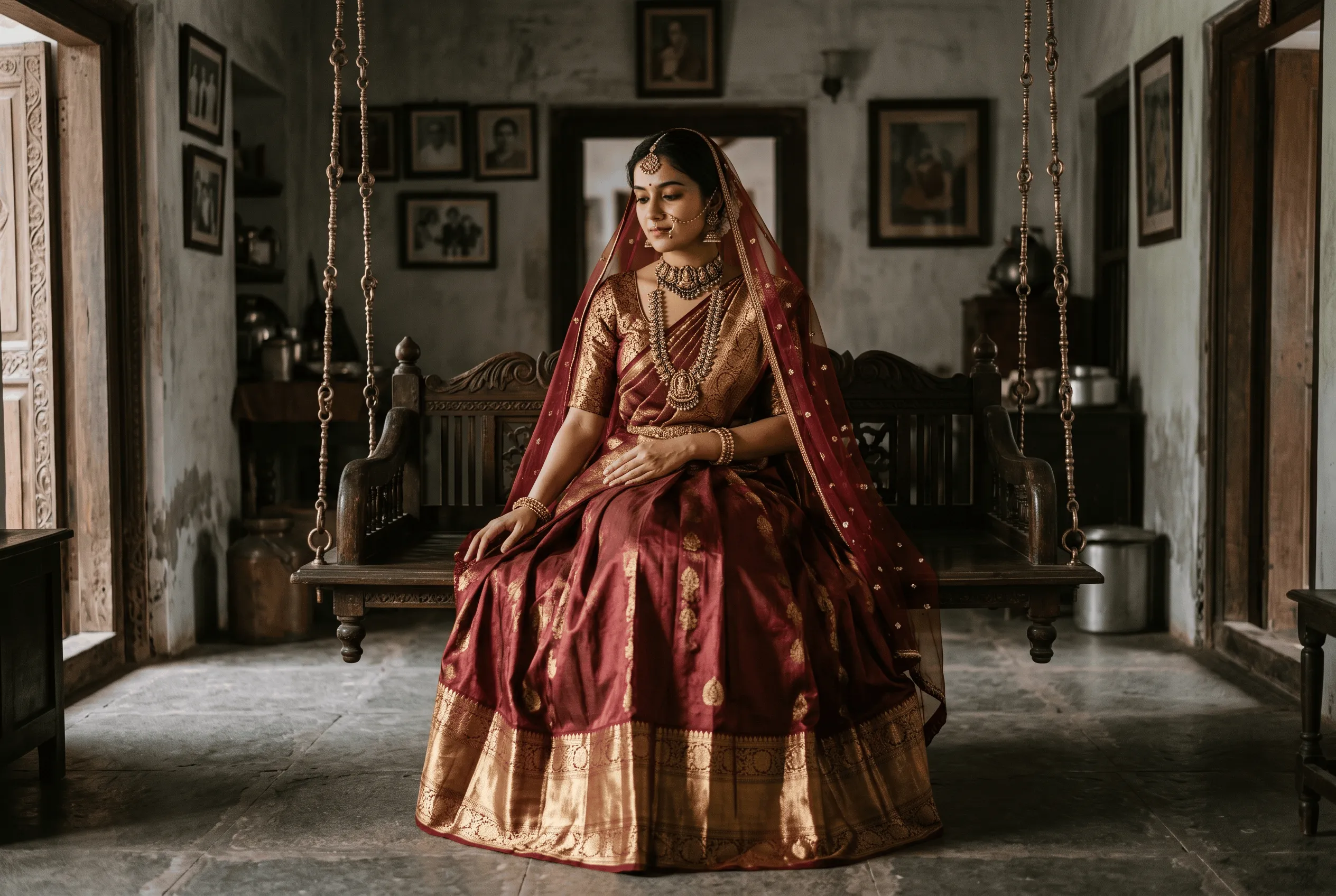
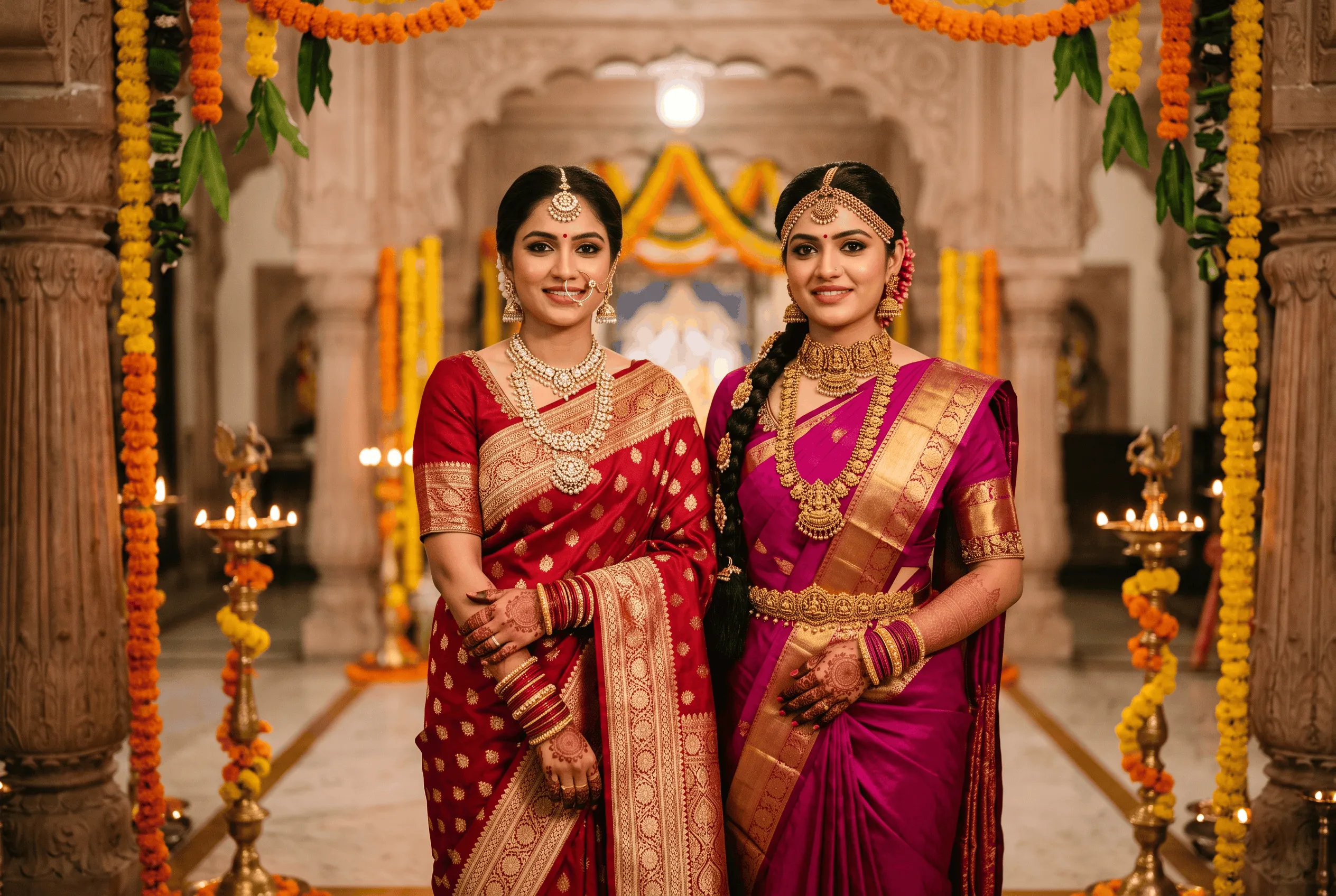
Many families have one special saree folded away in a cupboard: a mother's wedding Banarasi, a grandmother's Kanjivaram or a Paithani from a family celebration long ago.
A saree to lehenga conversion gives that saree a new life.
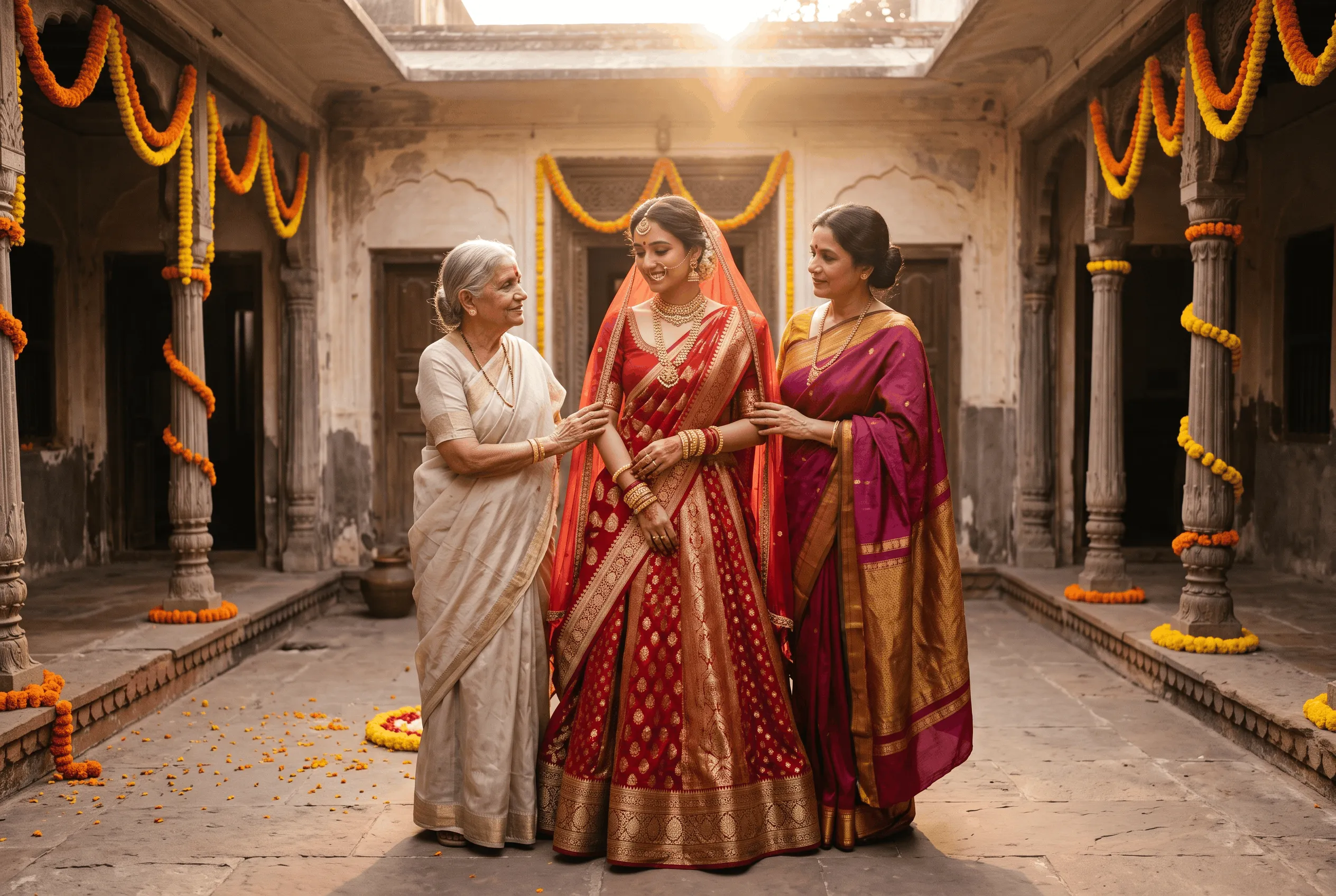
A bride can wear a piece of family history at her own wedding, and the saree is seen and enjoyed again instead of staying in storage for another decade.
It is also one of the most sustainable and cost-effective ways to create a meaningful bridal or festive outfit.
But old silk and zari need care, and not every saree is a good candidate for cutting and stitching.
This guide explains which sarees work best, how much fabric you need, design ideas, the tailoring process, realistic costs and the mistakes to avoid with old silk and zari.
Why Saree to Lehenga Conversion Is Trending
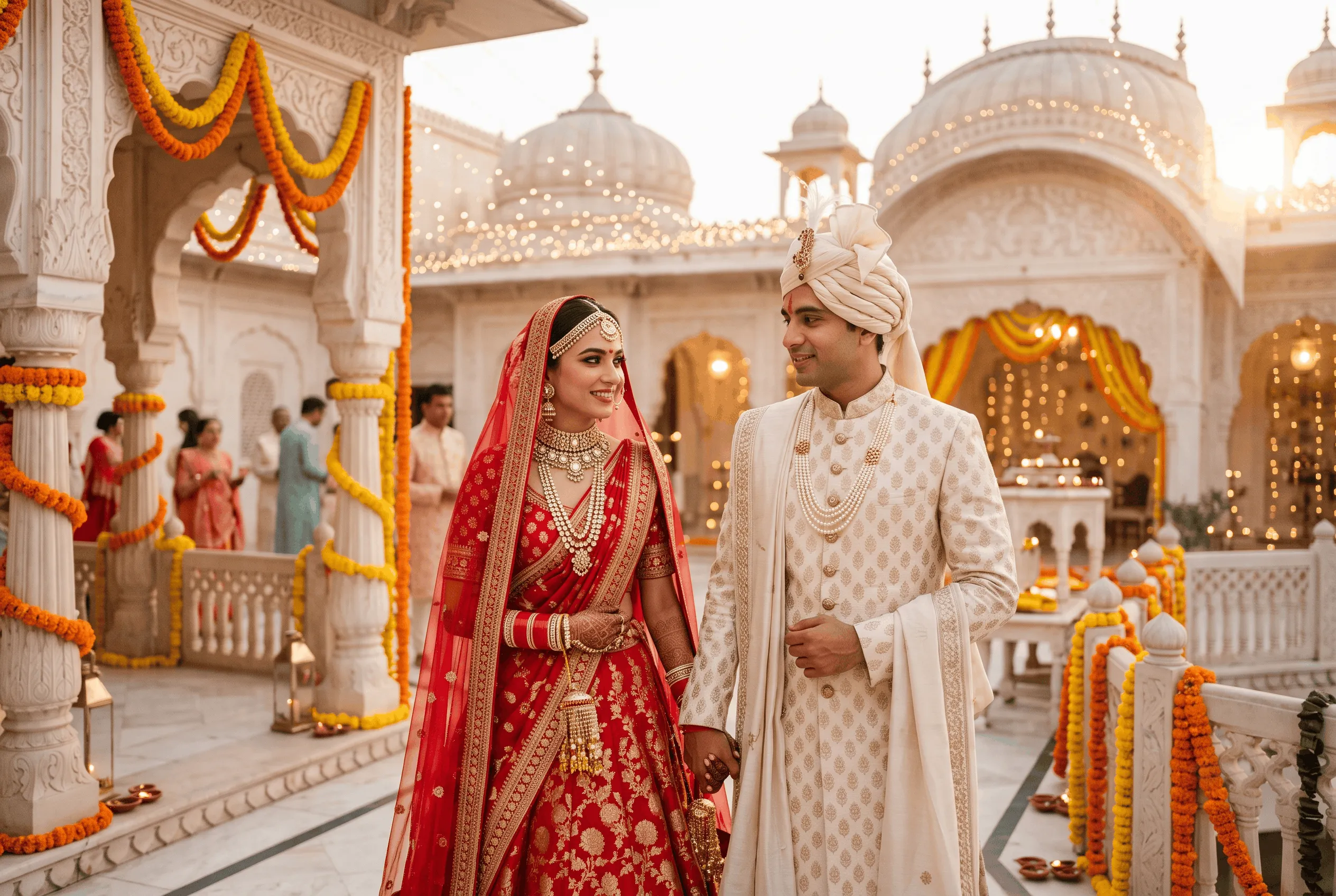
Brides are increasingly looking for outfits with personal meaning rather than only the latest designer trend.
A lehenga made from a parent's or grandparent's saree carries memories, family stories and craftsmanship that cannot be bought new.
It also supports a slower, more sustainable approach to fashion by reusing a beautiful textile that already exists.
Many older handloom sarees were woven with excellent silk and fine zari, so they can make richer lehengas than many new mass-produced outfits.
Finally, a conversion is usually far more affordable than a new bridal lehenga of similar quality.
Which Sarees Work Best for a Lehenga?
A standard saree is about 5.5 to 6.3 metres long and roughly 44 to 48 inches wide, sometimes with an attached blouse piece.
That is usually enough for a lehenga skirt and often a blouse, but the type of saree makes a big difference to the result.
| Saree type | Suitability | Notes |
|---|---|---|
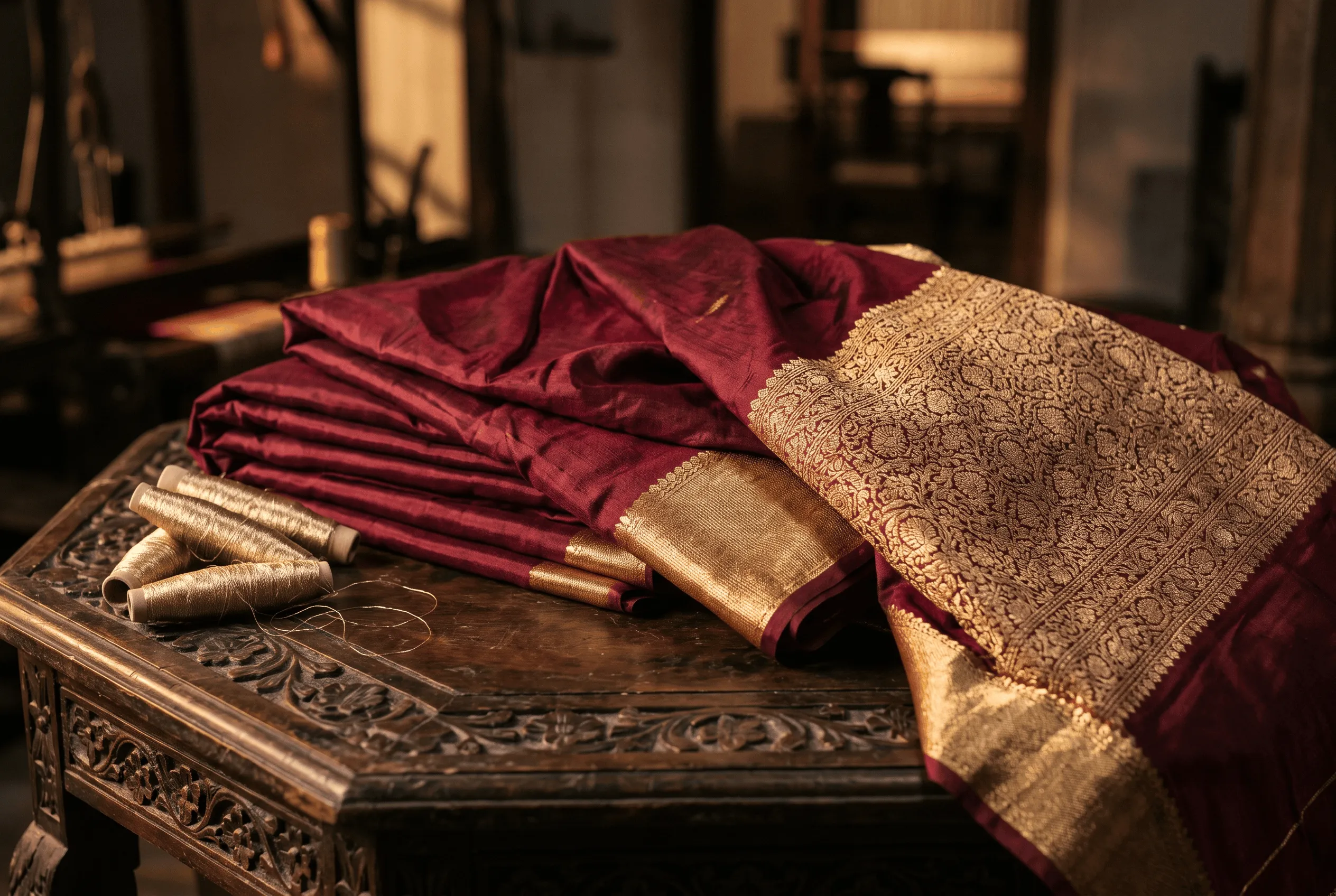
| Banarasi silk or brocade | Excellent | Rich, holds shape, border looks great at the hem |
| Kanjivaram silk | Good | Heavy and stiff; best for A-line or panelled skirts |
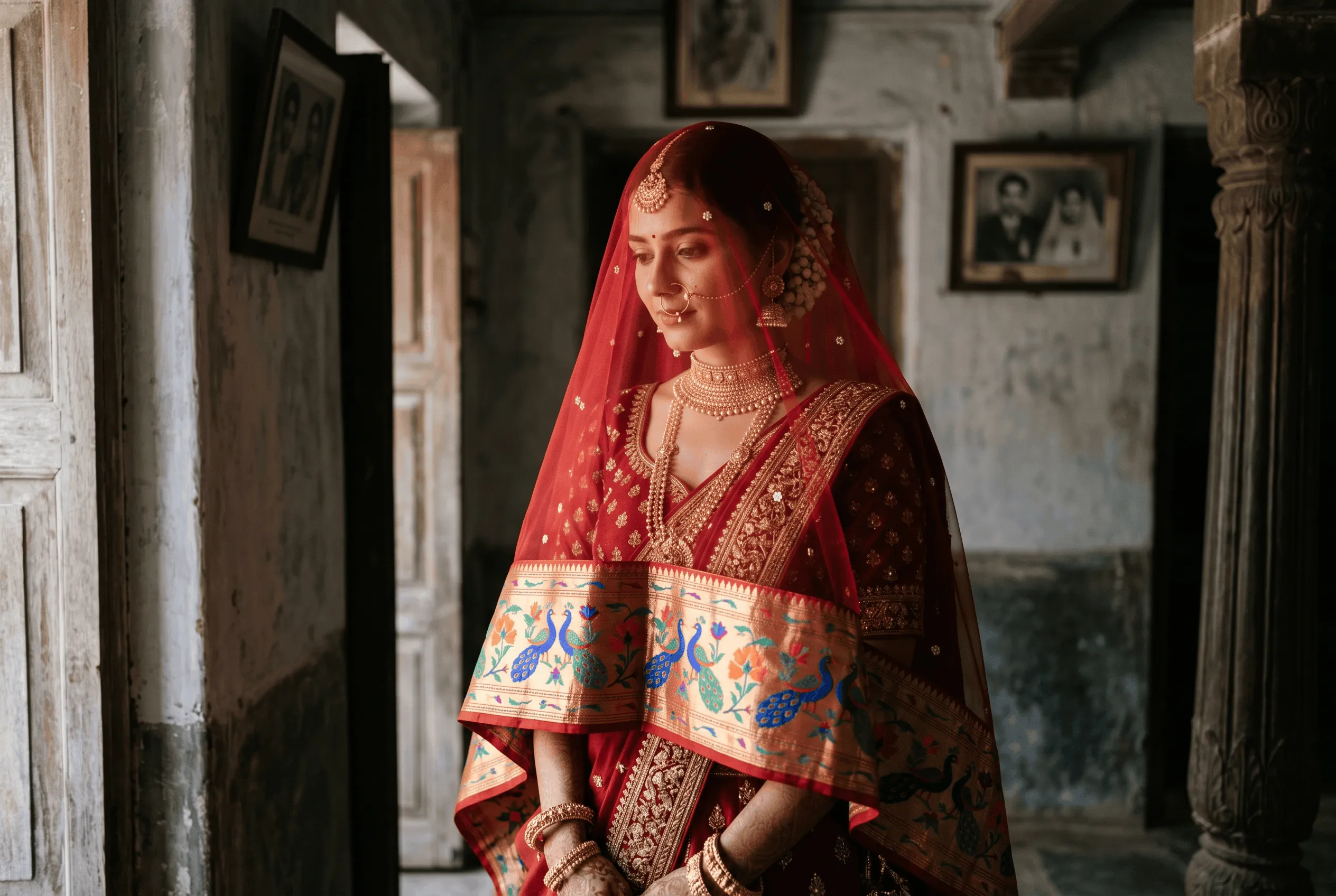
| Paithani | Very good | Pallu makes a stunning dupatta or skirt panel |
| Patola | Good, but think twice | Very valuable; cutting a double ikat is a big decision |
| Georgette or chiffon | Good | Flowy skirt; needs lining and possibly an extra panel |
| Tissue or organza | Good | Light and sheer; needs a full lining |
| Very old, fragile chiffon or crepe | Risky | May tear at seams; consider a dupatta instead |
Banarasi sarees are the most popular choice because the brocade holds its shape and the border looks beautiful running around the hem.
Our Banarasi silk saree buying guide explains how to recognise a good-quality Banarasi.
How to Check the Condition of an Old Saree
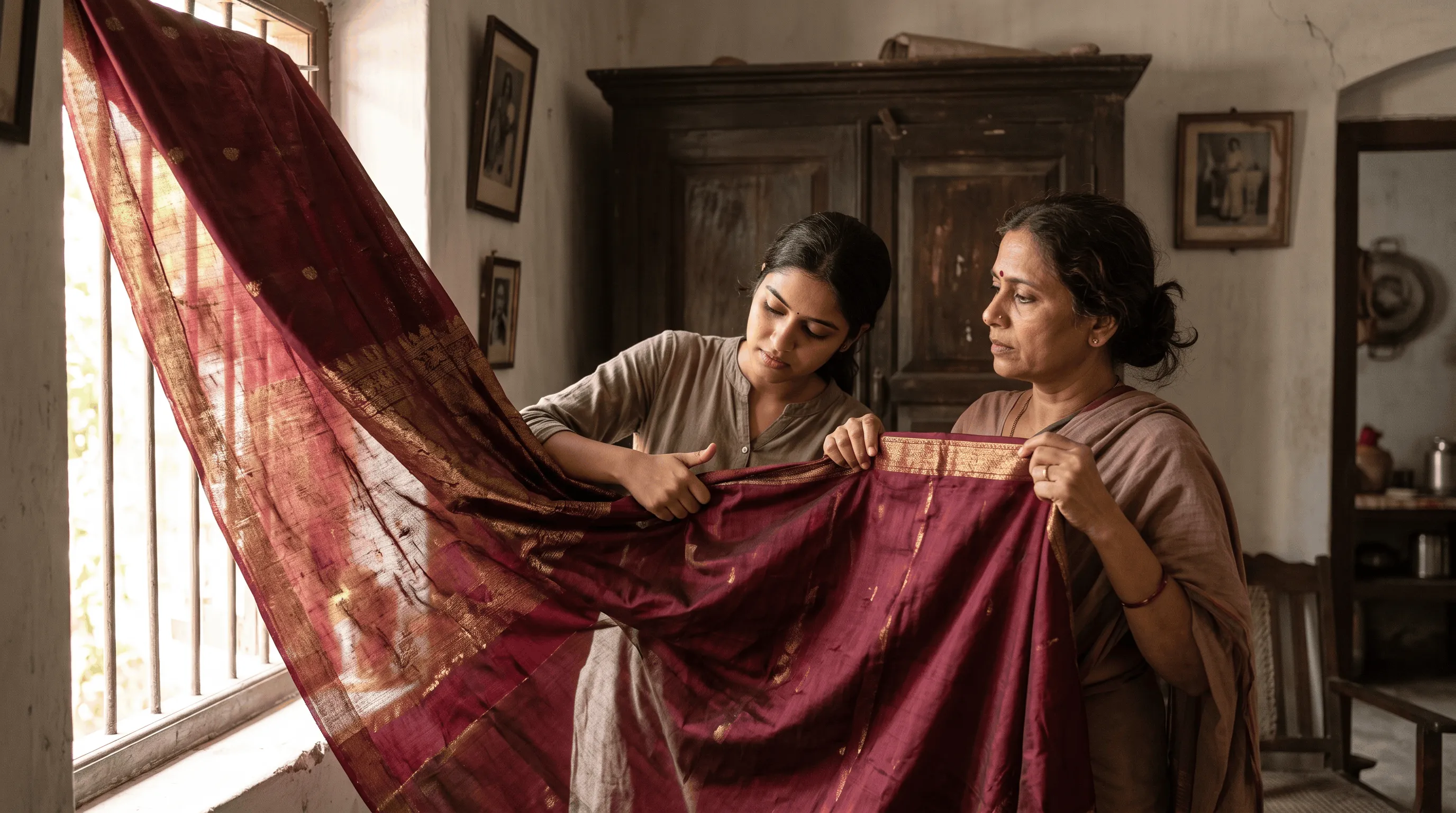
Before any planning begins, check whether the saree can safely be cut and stitched.
Hold the saree up to the light and look for thin patches, small holes, weak folds and areas where the silk looks dry or brittle.
Gently pull a small hidden part of the fabric, such as an inside corner of the pallu. If it tears easily, the silk may be too fragile for a full lehenga.
Look closely at the zari for tarnishing, broken threads or areas where the metallic wrapping has worn away.
Check for stains, especially along old fold lines, because they may need professional cleaning first.
If the saree is fragile, consider turning it into a dupatta, a border or a panel on a new lehenga instead.
How Much Fabric Do You Need?
Lehenga skirt: usually 3 to 5 metres, depending on the flare. A very full kalidar (panelled) skirt can need more.
Blouse: about 0.8 to 1 metre. You can use the attached blouse piece, part of the pallu or a matching fabric.
Dupatta: about 2.25 to 2.5 metres. A single saree rarely has enough left for a full dupatta.
Most families either attach the pallu to a sheer net or organza base to create a dupatta, or buy a matching net, organza or tissue dupatta.
If you want a very full skirt, consider combining two sarees, or adding panels of plain silk, velvet or brocade between the saree panels.
Design Ideas for a Converted Lehenga
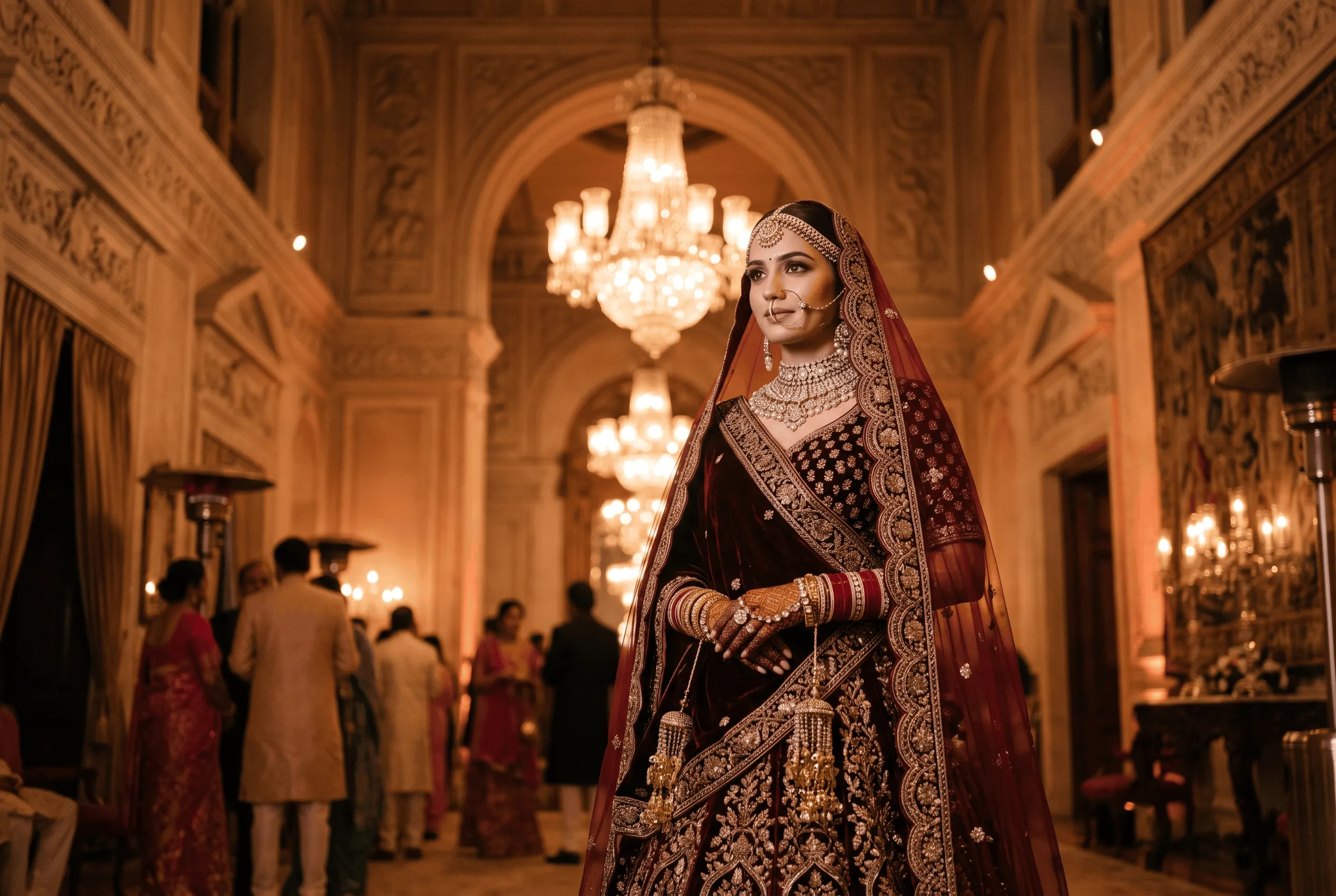
1. Kalidar Lehenga with the Border at the Hem
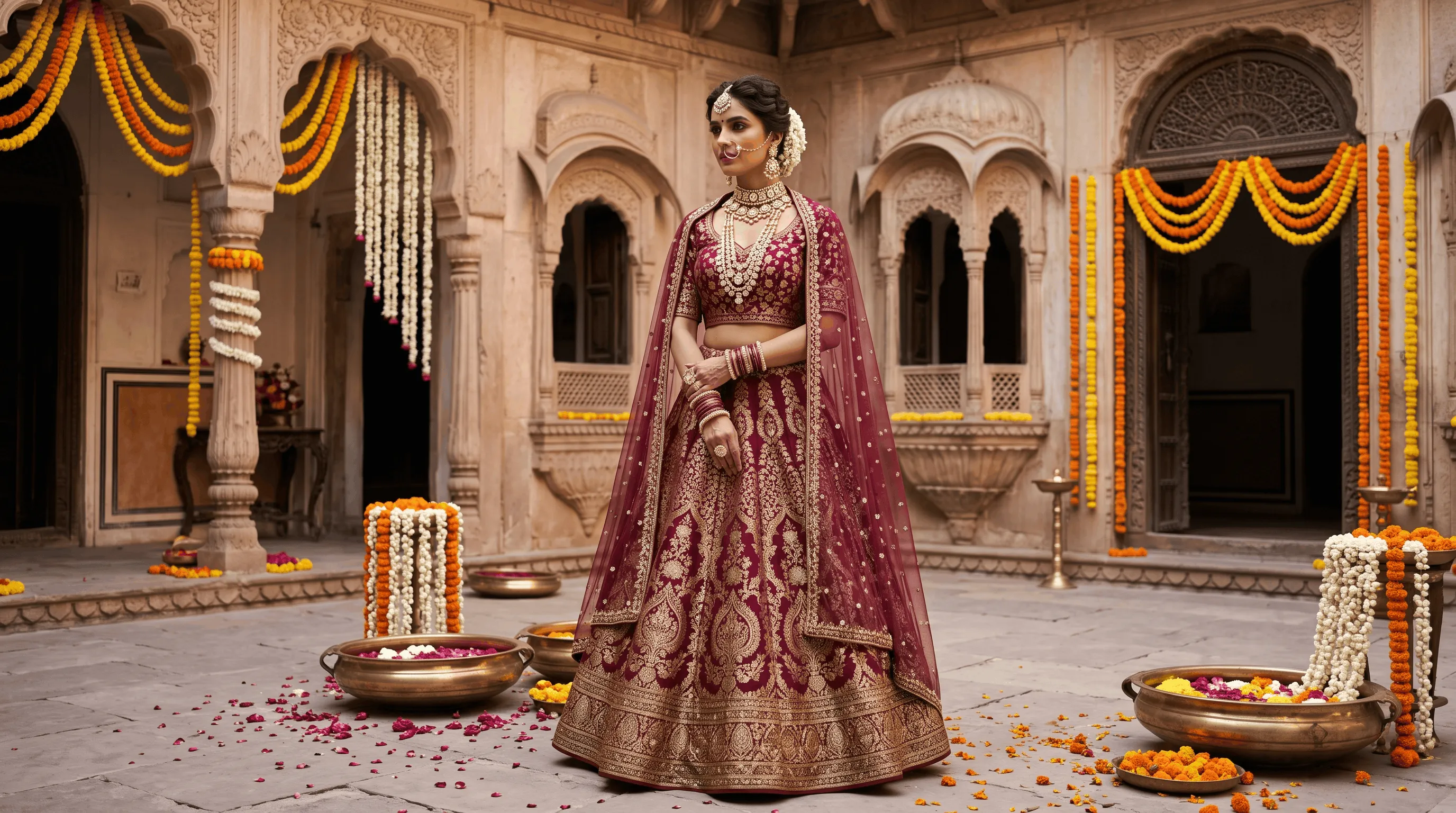
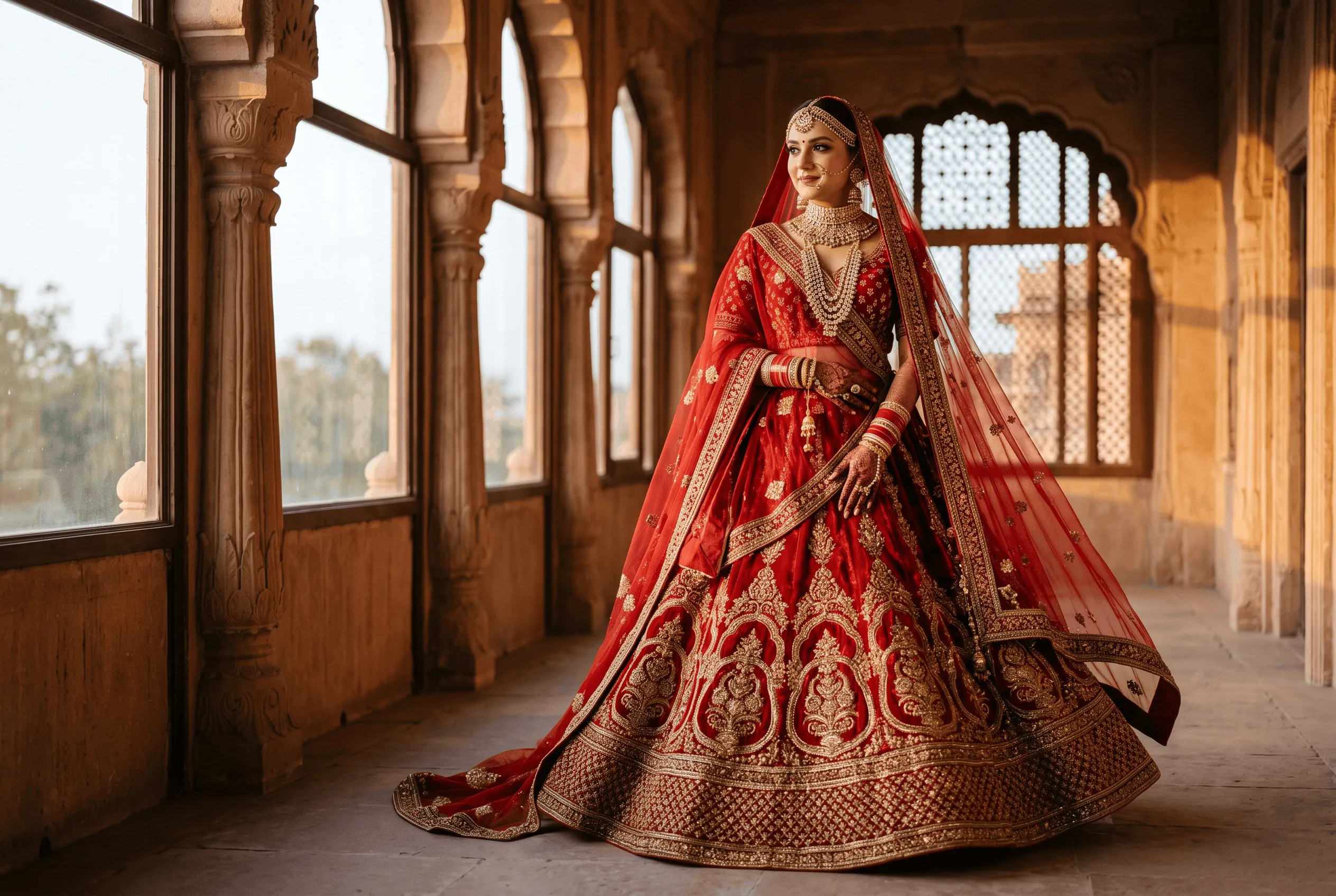
The saree is cut into vertical panels and the zari border runs around the bottom of the skirt.
This is the most classic design and looks very regal in photographs.
2. A-Line Skirt with the Pallu as the Front Panel
The most decorated part of the saree takes centre stage at the front of the skirt.
This works especially well with Paithani and Banarasi pallus.
3. Pallu as the Dupatta
The pallu is attached to a sheer net or organza base so the heirloom motif frames the bride.
This keeps the most precious part of the saree visible and close to the face in photographs.
4. Pallu as the Blouse
A Paithani or Banarasi pallu makes a stunning brocade blouse.
It looks especially modern when stitched as a corset blouse.
5. Two Sarees, One Lehenga
Combine the mother's and grandmother's sarees, alternating panels, for a truly family piece.
Choose sarees with complementary colours and similar fabric weights so the skirt falls evenly.
6. New Borders for Strength and Richness
A velvet or zardozi border at the hem adds weight and richness, and it also protects the edge of older fabric.
7. Cape or Jacket Over a Plain Lehenga
For a lighter, modern look, turn the saree into a long jacket or a cape worn over a plain lehenga.
This uses less fabric and is a good option when the saree is not quite strong enough for a full skirt.
For more silhouette inspiration, see our bridal lehenga trends 2026.
The Process: Working With Your Tailor
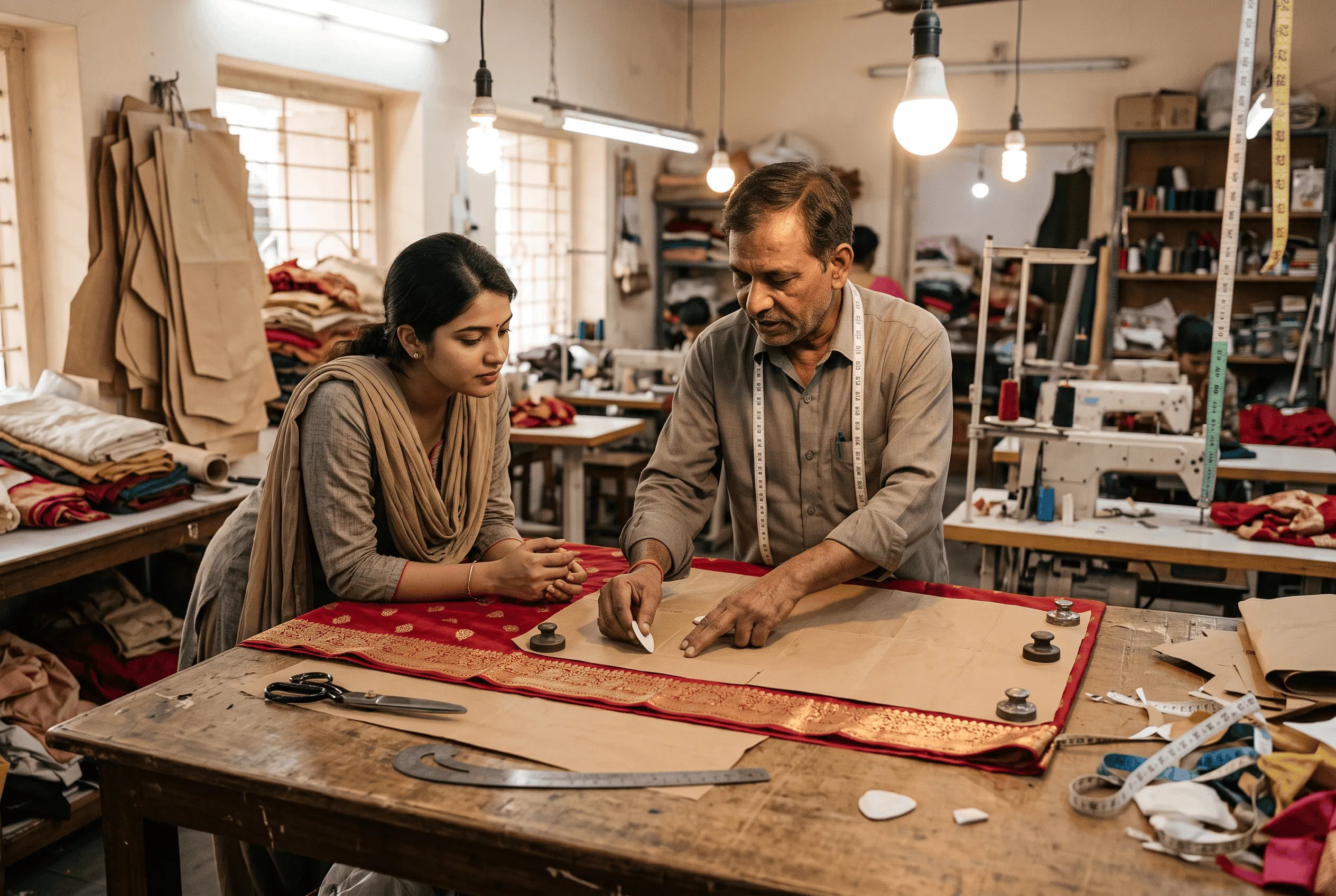
Choose an experienced tailor or designer. Ask to see work they have done with old silk or brocade, and ask how they handle fragile fabrics.
Get a professional dry-clean first. Ask the cleaner specifically about old zari and delicate silk.
Plan the layout before any cutting. Lay the full saree out and decide where the border, pallu and motifs will go. Take photographs so everyone agrees on the plan.
Make a muslin or cotton trial. A good tailor will make a sample skirt and blouse in inexpensive fabric so you can check the fit and flare before the saree is touched.
Use a lining. A soft cotton or silk lining protects the old fabric and makes the lehenga more comfortable.
Keep can-can light. Heavy can-can puts stress on old seams, so use light can-can or none at all.
Plan at least two fittings. Old silk does not forgive many re-stitches, so get the measurements right early.
Blouse Options for a Converted Lehenga
The blouse can either match the heirloom saree or deliberately contrast with it.
Matching blouse from the saree: if there is enough fabric, a blouse from the same saree creates a seamless, traditional look.
Brocade blouse from the pallu: the richest part of the saree becomes the focal point near the face.
Contrast silk or velvet blouse: a plain emerald, maroon or gold blouse lets the heirloom skirt stand out.
Embroidered raw silk blouse: new zardozi or pearl work adds bridal richness without stressing the old fabric.
Choose the neckline and sleeves according to the occasion and your comfort. Our high-neck blouse designs and sweetheart neck styles have plenty of ideas.
Jewellery and Styling for a Heirloom Lehenga
A lehenga made from a family saree often looks best with jewellery that has a similar heritage feel.
Antique gold, temple jewellery, polki and kundan sets suit Banarasi, Kanjivaram and Paithani conversions.
If you also have family jewellery, wearing it with the converted lehenga creates a beautiful story in the wedding photographs.
Keep the dupatta light if the skirt is heavy, and choose a hairstyle that shows off the pallu or dupatta border.
How Much Does Saree to Lehenga Conversion Cost?
These are indicative 2026 ranges. Costs vary by city, tailor, design and extra work.
| Item | Indicative cost |
|---|---|
| Basic stitching of skirt and blouse (local tailor) | ₹3,000 – ₹8,000 |
| Designer or boutique conversion | ₹8,000 – ₹25,000+ |
| Lining and light can-can | ₹500 – ₹2,500 |
| New dupatta fabric (net, organza or tissue) | ₹1,000 – ₹5,000 |
| Attaching the pallu to a dupatta base | ₹800 – ₹3,000 |
| Added zardozi, velvet or embroidered borders | ₹3,000 – ₹30,000+ |
| Professional dry-cleaning of old silk | ₹300 – ₹1,500 |
A simple, well-made conversion usually costs far less than a new bridal lehenga, and it carries much more meaning.
Timeline for a Converted Bridal Lehenga
Start the process at least three to four months before the wedding.
Allow two to three weeks for cleaning and planning, three to six weeks for stitching and any embroidery, and time for at least two fittings.
If you plan to add heavy handwork, allow extra time, because embroidery workshops are very busy during wedding season.
Mistakes to Avoid With Old Silk and Zari
Cutting before planning: once a saree is cut, it cannot be uncut.
Washing old zari at home: water and detergent can tarnish or break old zari threads.
Heavy can-can on fragile silk: it pulls on seams and can tear the fabric.
Skipping the trial garment: every extra re-stitch weakens old silk.
Ignoring the zari type: older sarees may contain real silver or gold zari, so ask a trusted dealer about its value if you are curious before cutting.
Forgetting the family: if the saree belongs to the extended family, make sure everyone is comfortable with the decision.
Caring for the Lehenga After the Wedding
Dry-clean only, and only when needed.
Store the lehenga flat or rolled in muslin rather than hanging it, so the weight does not stretch the seams.
Keep it away from damp and direct sunlight.
Air it every few months and refold it along different lines.
Wrap zari areas in tissue paper to slow tarnishing.
Our silk saree care guide has more tips for storing heirloom silk.
Why a Converted Lehenga Is Worth It
A saree to lehenga conversion is one of the most beautiful ways to carry family history into a new celebration.
It reuses a textile that already holds memories, often costs less than a new lehenga and creates an outfit that no one else will have.
Choose a saree in good condition, plan the layout before cutting, work with an experienced tailor and treat old zari gently.
Done well, your mother's saree can become a lehenga that is worn again by the next generation.
For more bridal and festive inspiration, explore our traditional wear trends 2026 guide.
Comments (0)
Leave a Thought
No comments yet. Be the first to share your thoughts!