Choosing a bridal lehenga is one of the biggest fashion decisions a bride makes, and the options can feel endless.
The bridal lehenga trends 2026 brides are following point in a clear direction: richer heritage fabrics, colours beyond classic red and lighter silhouettes that are easier to wear through long ceremonies.
Brides want to look regal in photographs and still be able to walk, sit, dance and enjoy their own wedding.
Practical details matter more than before, from blouse fit and dupatta weight to how the outfit can be restyled after the wedding.
This guide explains the colours, fabrics, silhouettes, dupatta and blouse styles of the season, and then helps you choose the lehenga that suits your wedding, body type, season and budget.
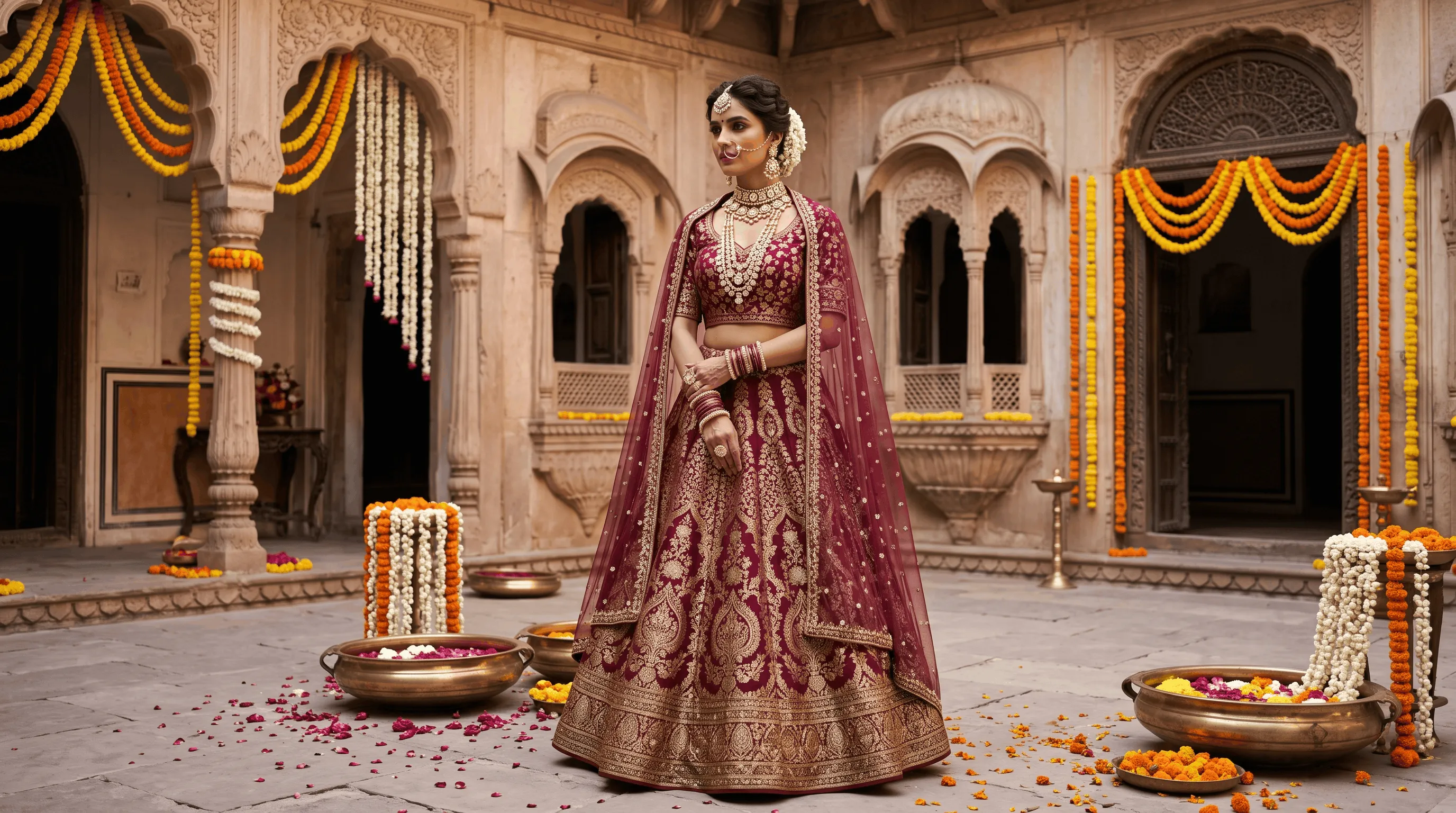
Bridal Lehenga Trends 2026 at a Glance
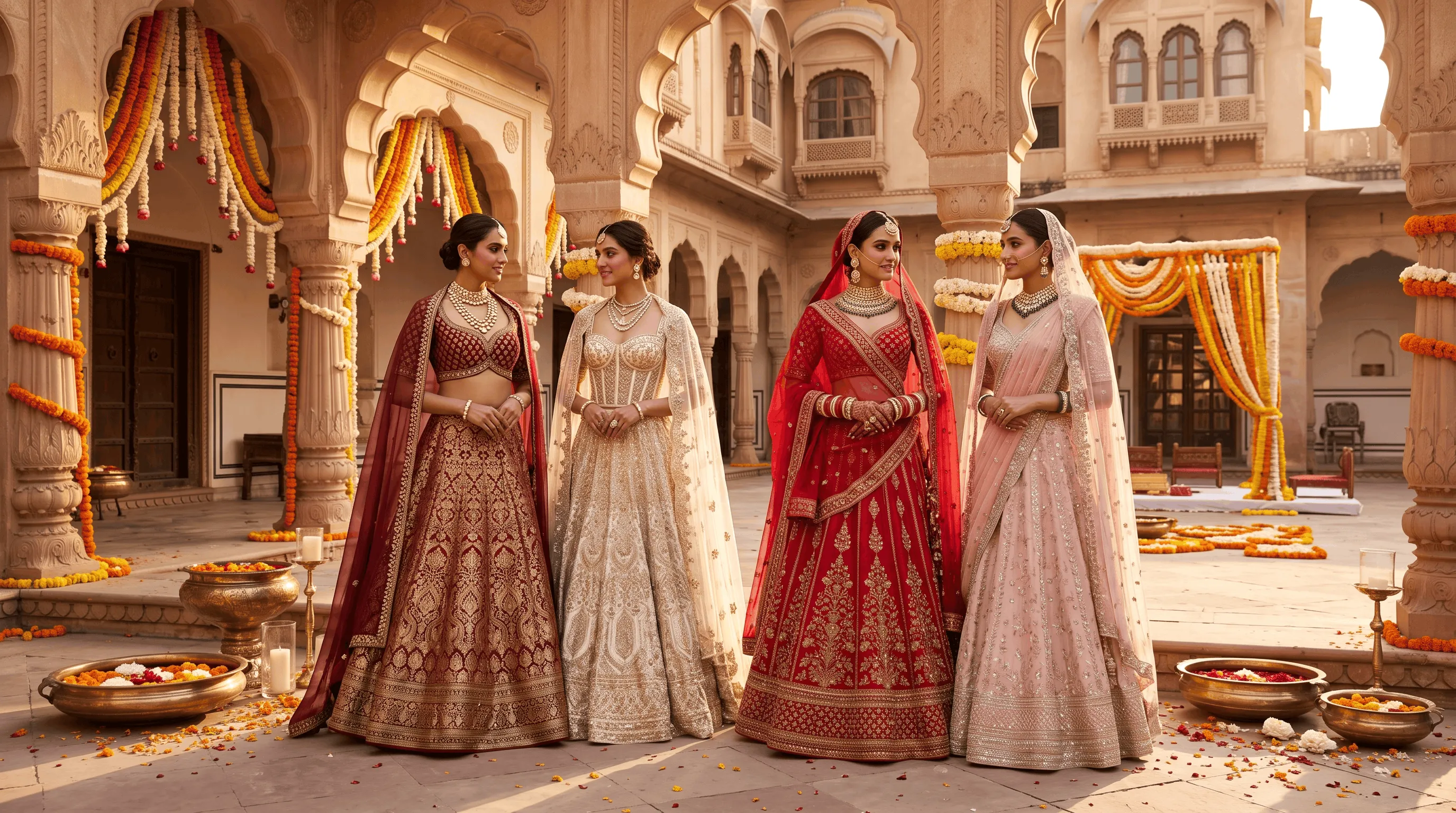
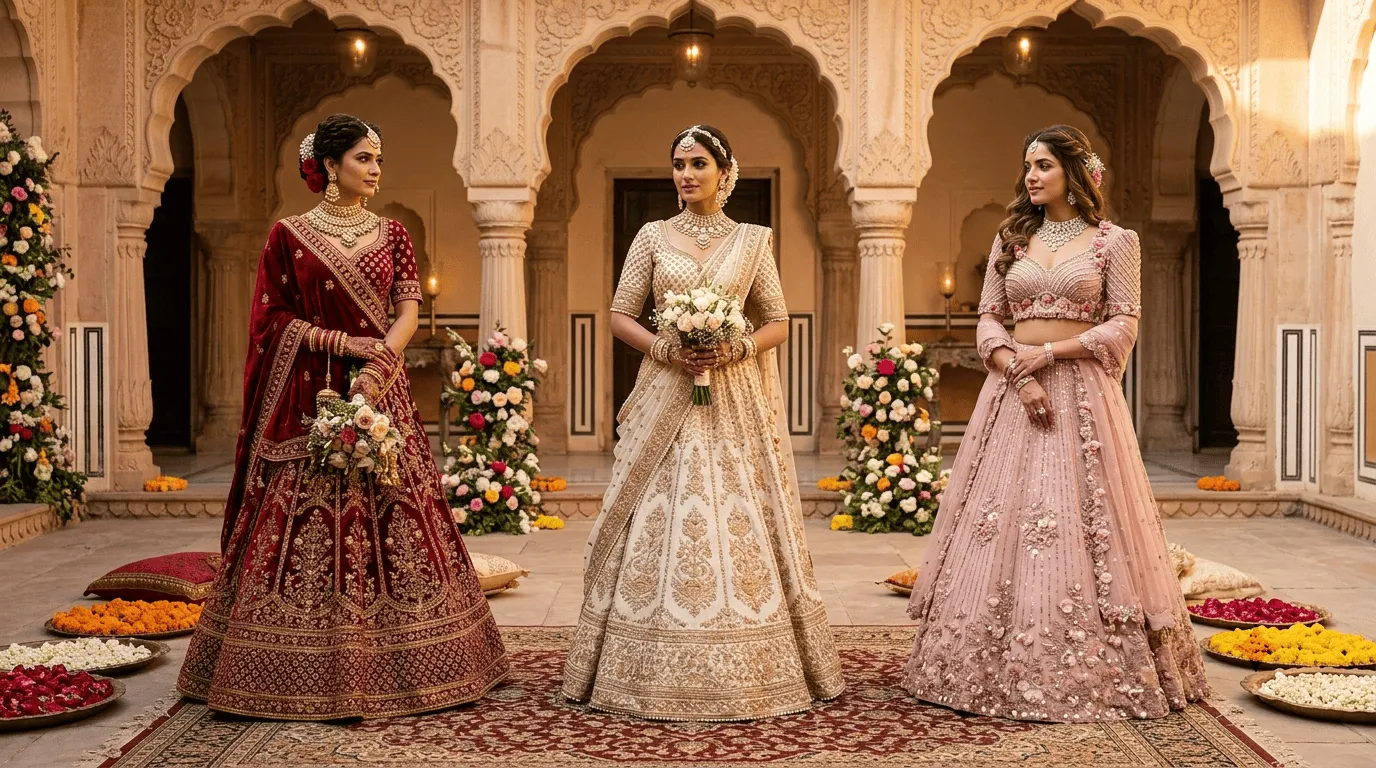
Wine, ivory and deep rose have joined classic red as leading bridal colours.
Banarasi brocade lehengas are back, often with less surface embroidery.
Lighter silhouettes use soft can-can or none at all.
Cape dupattas and double dupattas are replacing the single heavy dupatta.
Corset and structured blouses are taking the place of simple cholis.
Tonal embroidery, where the thread is close to the fabric colour, is replacing all-over contrast sequins.
Heirloom touches, such as a mother's saree reworked into a dupatta, are adding personal meaning.
1. Wine and Burgundy Bridal Lehengas
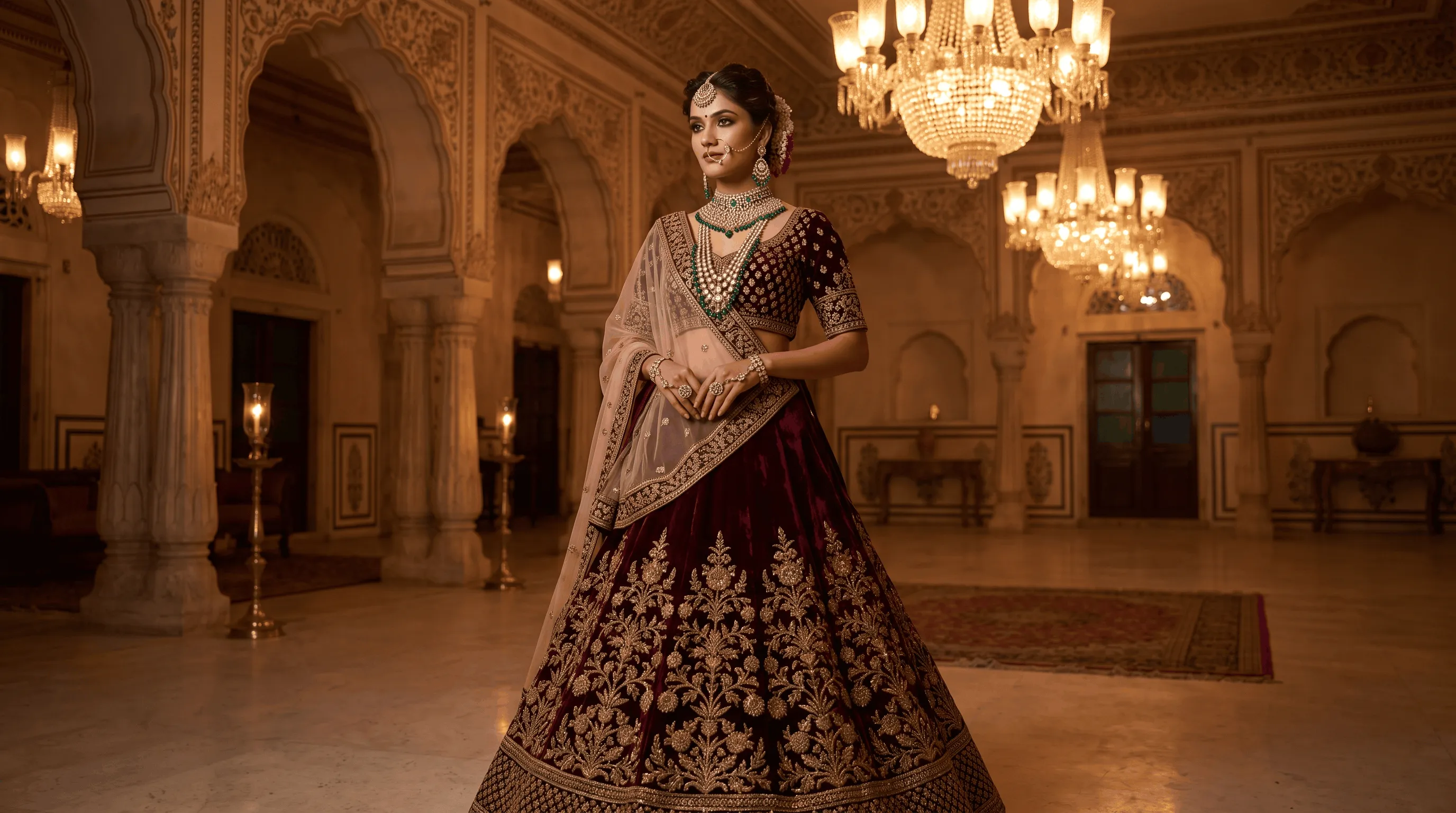
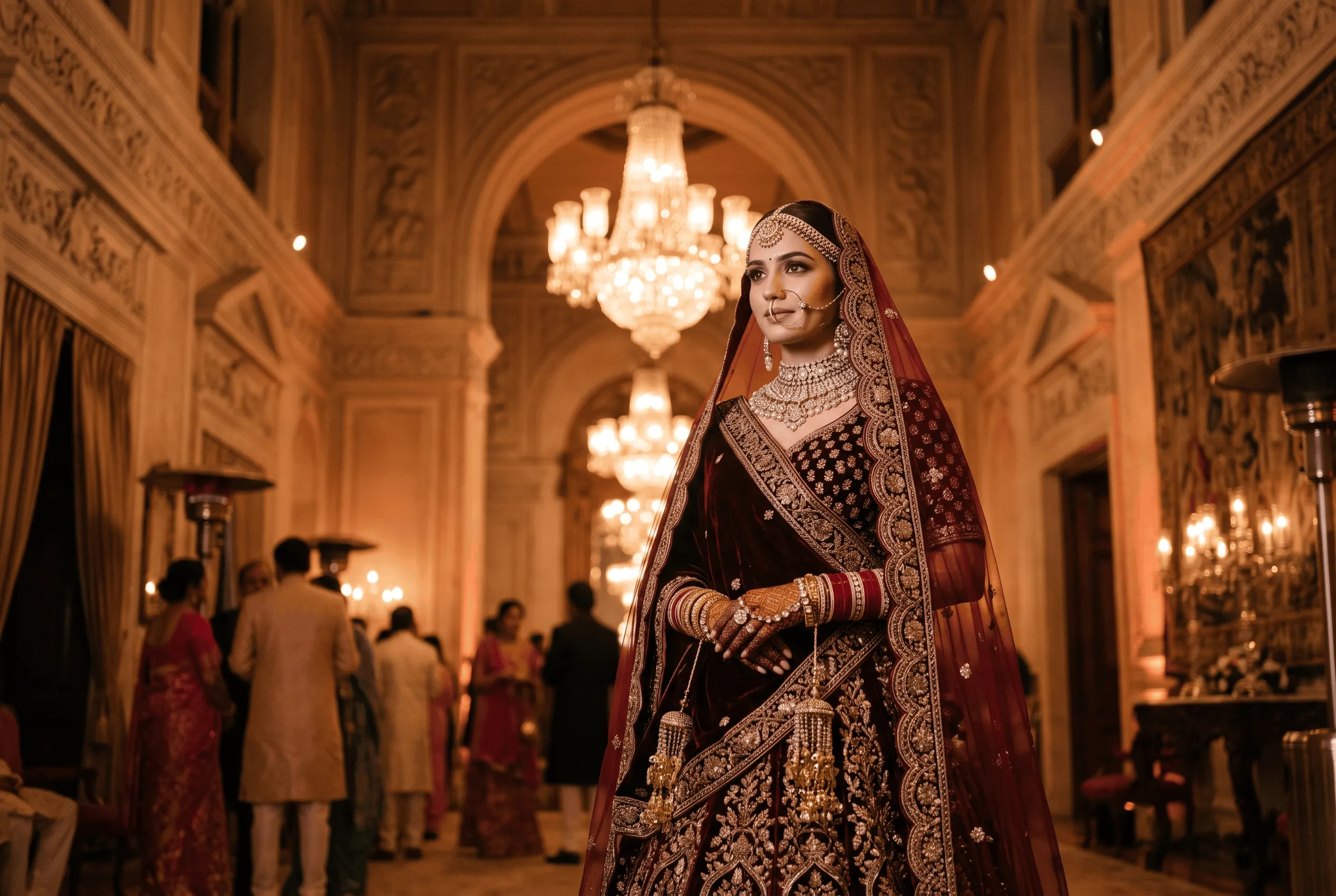
Wine and burgundy are the strongest new bridal colours of 2026.
They feel rich and regal, like a modern take on traditional red.
These shades look especially beautiful at evening and winter weddings, paired with antique gold zari, emerald stones and polki jewellery.
A wine lehenga also tends to be easier to wear again at family weddings than a bright bridal red.
2. Ivory with Red or Gold Accents
Ivory has become one of the most elegant choices for day and temple weddings.
An ivory lehenga with gold zari lets the craftsmanship stand out without strong colour contrast.
If your family prefers red for the pheras, pair an ivory lehenga with a red dupatta or red jewellery.
Our guide to white and ivory sarees for weddings explains when ivory works and when it may not.
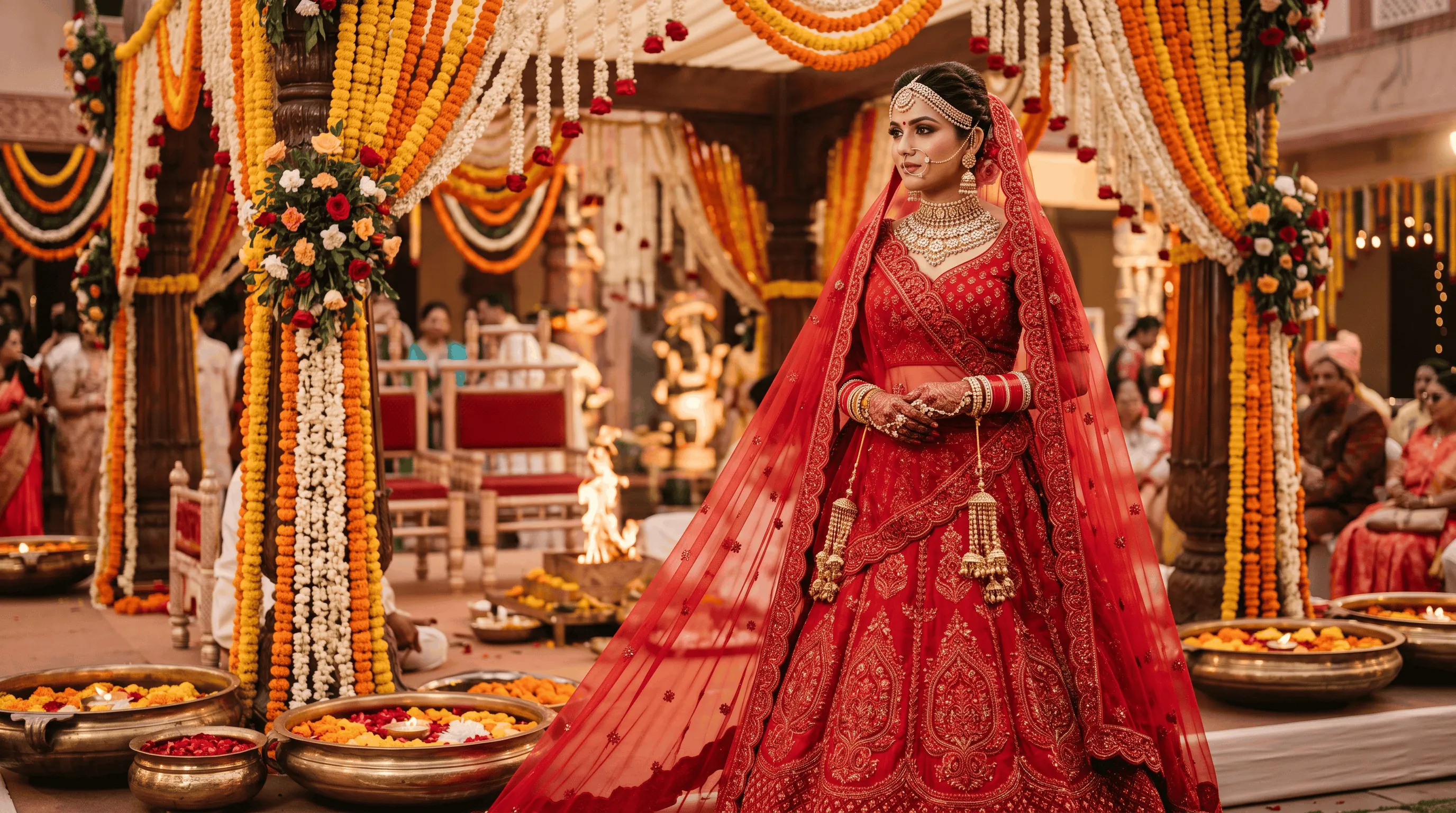
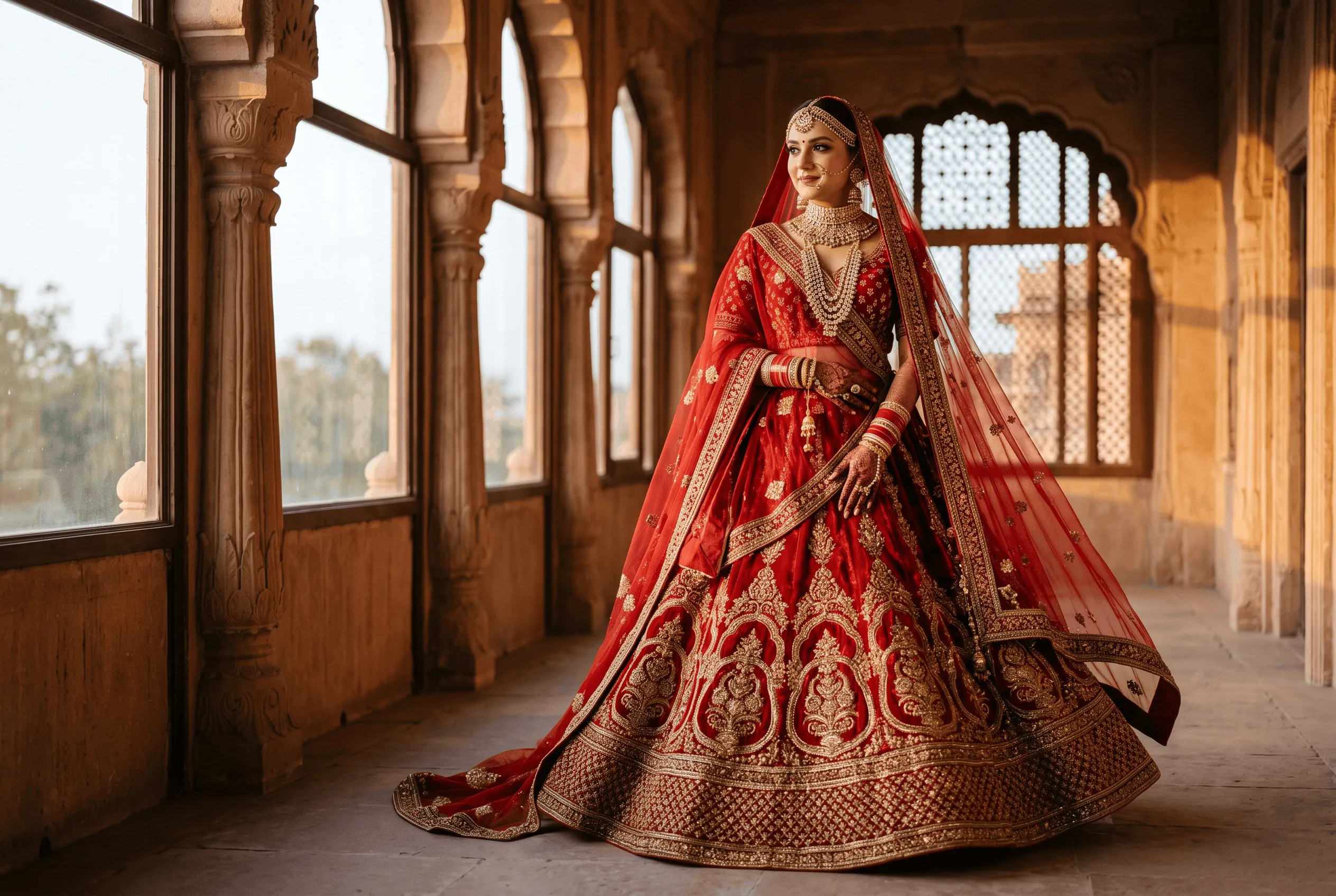
3. Classic Red, Reimagined
Red remains the most chosen bridal colour.
In 2026, brides are updating it with lighter fabrics, structured blouses, tonal embroidery and heritage weaves rather than heavy all-over sequins.
Crimson, vermilion, ruby and brick red all appear this season.
4. Deep Rose and Blush
Deep rose, blush and dusty pink create a romantic bridal look.
These colours suit day weddings, garden venues and receptions.
Pair them with pearls or rose-gold tones for a soft, modern finish.
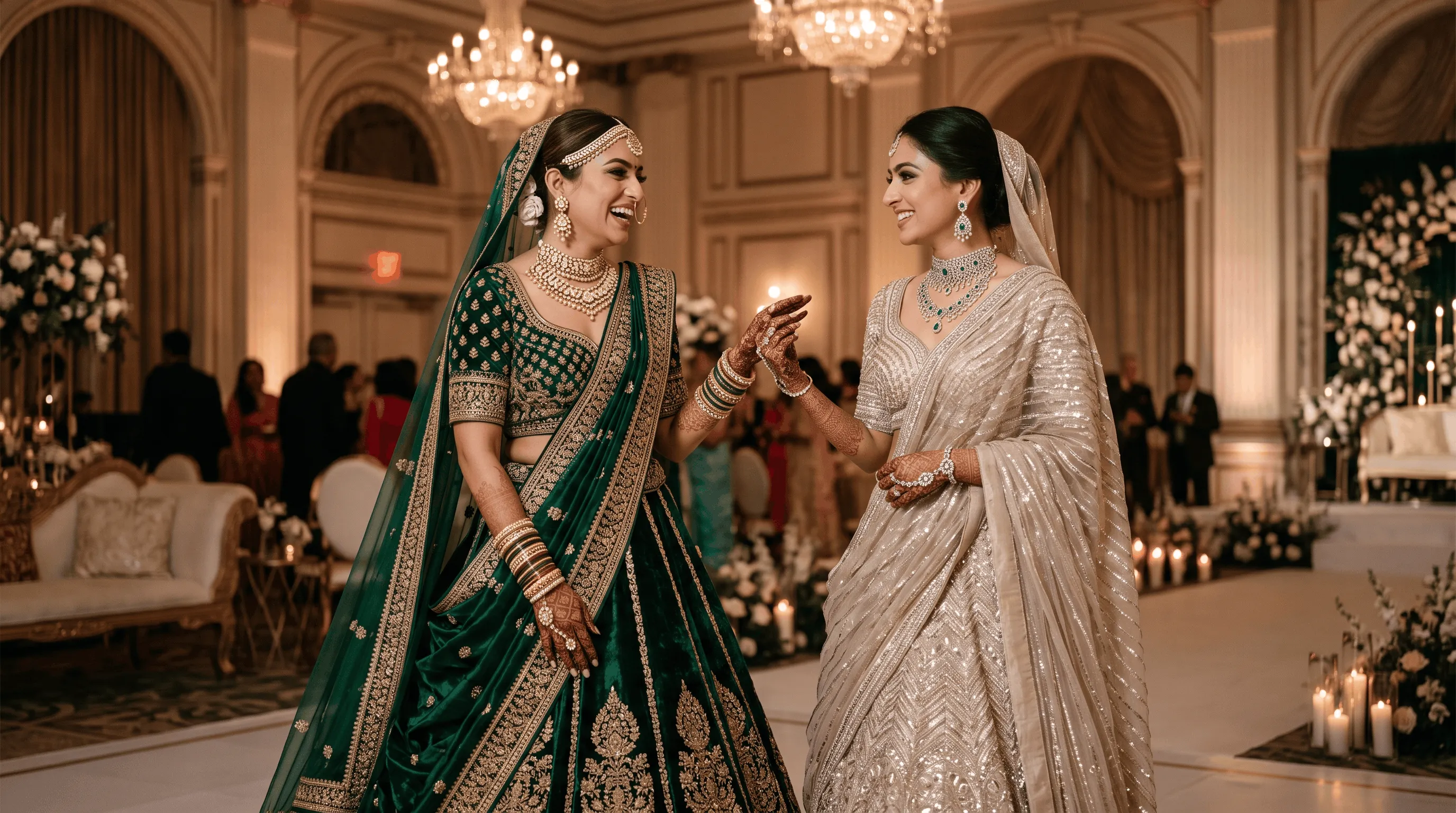
5. Emerald and Bottle Green
Emerald and bottle green feel bold and regal.
They are increasingly chosen for receptions, mehendi functions and winter weddings.
Gold and uncut stone jewellery looks stunning against deep green.
6. Champagne and Soft Gold
Champagne and soft gold lehengas look glamorous without being too bright.
They are especially popular for receptions and cocktail evenings.
Pair them with diamonds or polki for an elegant finish.
Bridal Lehenga Colour Guide
| Colour | Mood | Works best for | Pair with |
|---|---|---|---|
| Classic red | Traditional, auspicious | Pheras, any season | Gold zari, polki or kundan |
| Wine and burgundy | Rich, modern-royal | Evening and winter weddings | Antique gold, emerald stones |
| Ivory with red or gold | Soft, elegant | Day and temple weddings | Red dupatta or gold jewellery |
| Deep rose and blush | Romantic | Day weddings, receptions | Pearls, rose-gold tones |
| Emerald and bottle green | Bold, regal | Reception, mehendi, winter | Gold and uncut stones |
| Champagne and gold | Glamorous, light | Reception, cocktail | Diamonds or polki |
Bridal Lehenga Fabrics Brides Are Choosing
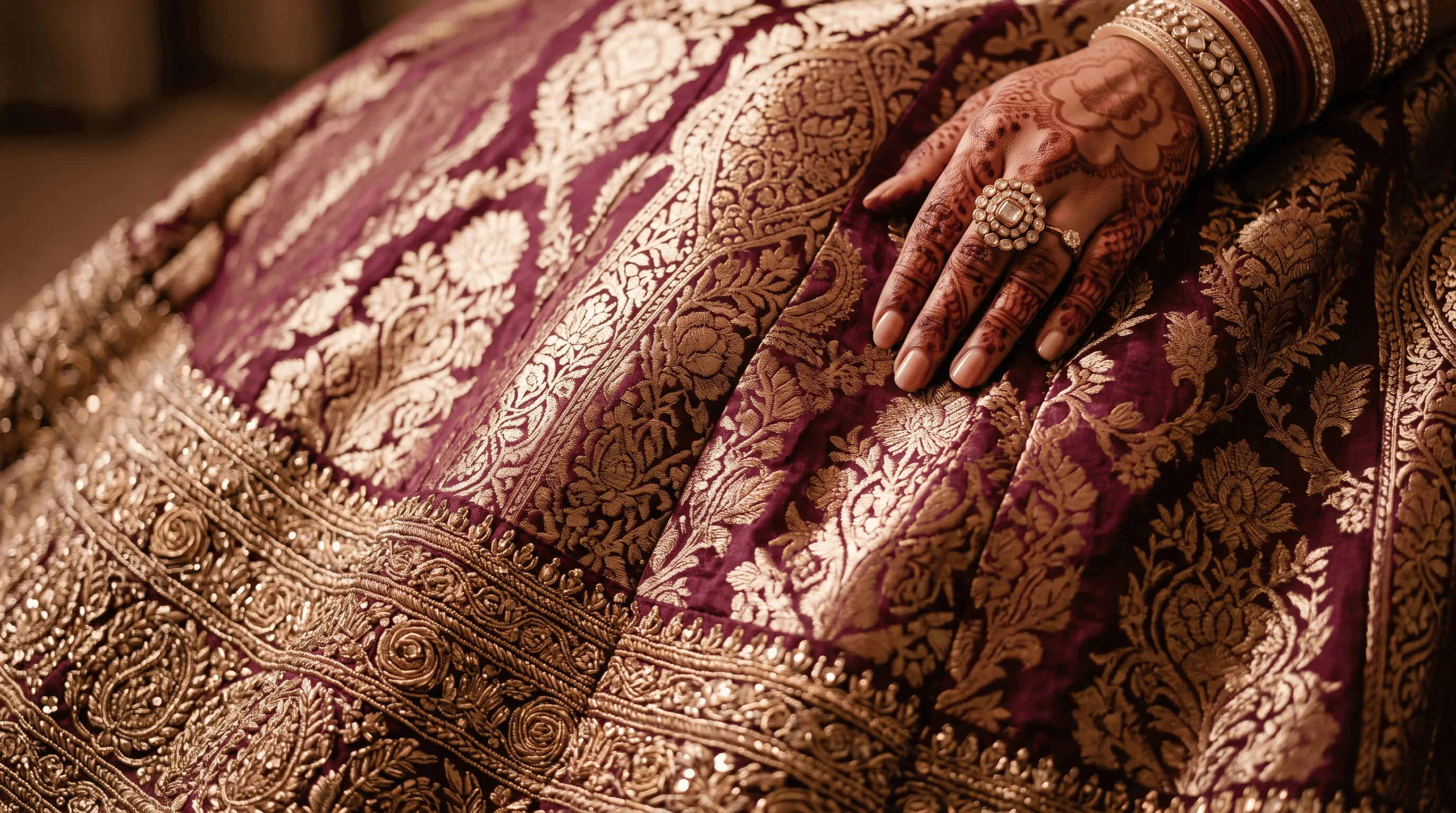
Banarasi Brocade
Handwoven brocade with zari motifs gives a lehenga richness without heavy embroidery.
It feels heritage and can be treasured for generations.
Velvet
Velvet is perfect for winter weddings in North India.
It looks luxurious in deep shades but is warm and heavy for summer or outdoor day ceremonies.
Raw Silk
Raw silk has a gentle texture and holds embroidery well.
It offers a practical middle ground in weight and price.
Organza and Tissue
Organza and tissue are light, sheer and slightly shiny.
They are popular for day weddings, pastel lehengas and receptions.
Georgette and Crepe
Georgette and crepe are soft and flowy.
They are often used for sangeet and reception lehengas because they are easy to move in.
Silhouettes: Lighter and Easier to Wear
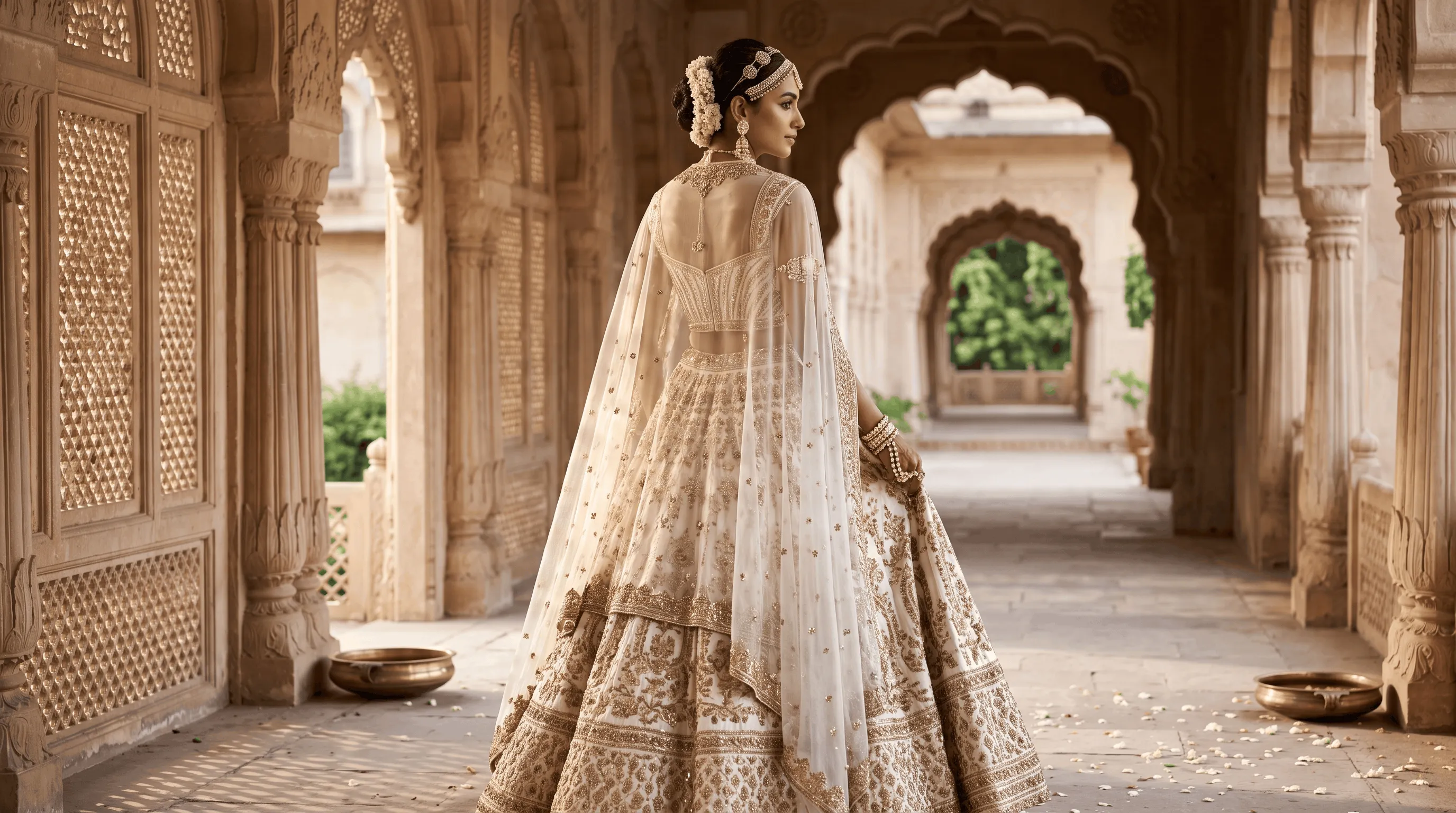
Kalidar (panelled) flare uses many vertical panels for a beautiful twirl without heavy can-can.
A-line skirts are clean, flattering on most body types and easy to walk in.
Fish-cut or mermaid lehengas are fitted to the knee and flared below. They look glamorous for receptions but are less comfortable for long rituals.
Soft can-can or no can-can creates a more natural fall than a stiff, wide skirt.
Pockets are a small detail that many brides now request.
Dupatta Trends for 2026
Cape dupattas attached at the shoulders replace the traditional dupatta for receptions and sangeet nights.
Double dupattas use one dupatta on the shoulder and one on the head for the pheras.
The head dupatta often carries a personal touch, such as embroidered names, family initials or fabric from a parent's wedding outfit.
Lighter dupattas in net or organza with border-only embroidery are easier to manage than fully embellished ones.
Blouse Trends for 2026
Corset blouses are structured, fitted and modern. Our corset blouse design guide explains fits and fabrics.
High-neck blouses create a regal, formal look. See our high-neck blouse designs.
Sweetheart necklines remain a favourite. See our sweetheart neck choli styles.
Sheer sleeves in net or organza balance coverage and comfort.
Embroidery Trends
Zardozi and dabka remain the classic choices for the main bridal lehenga.
Resham (silk thread) work offers a softer, more colourful look.
Tonal embroidery creates quiet richness by using thread close to the fabric colour.
Gota patti is light and festive, especially in Rajasthani-style lehengas.
Brides are generally choosing visible handwork over all-over sequins.
Bridal Jewellery Pairings for 2026 Lehengas
The jewellery should support the lehenga rather than compete with it.
Red and maroon lehengas look timeless with polki, kundan or antique gold sets.
Wine and burgundy lehengas pair beautifully with emerald drops and uncut diamonds.
Ivory lehengas can carry either classic gold or colourful stones, such as rubies and emeralds, to add warmth.
Pastel lehengas suit pearls, rose-gold tones and delicate diamonds.
Emerald lehengas look regal with gold and uncut stones.
When the blouse is heavily embroidered or has a high neckline, consider skipping the necklace and focusing on earrings, a maang tikka and bangles.
For more ideas, see our guide to ethnic jewellery with silk sarees.
Choosing a Bridal Lehenga by Season and Venue
| Wedding setting | Best fabrics | Best colours |
|---|---|---|
| Winter evening, indoors | Velvet, brocade, raw silk | Wine, red, emerald |
| Summer or day wedding | Organza, georgette, light silk | Ivory, blush, pastels |
| Outdoor or destination wedding | Organza, georgette, tissue | Champagne, blush, ivory |
| Temple wedding | Silk, brocade | Red, ivory with red, gold |
| Reception | Tissue, georgette, velvet | Champagne, emerald, wine |
Choosing a Bridal Lehenga for Your Body Type
Petite brides look best in vertical panels, smaller motifs and fitted blouses that lengthen the frame.
Tall brides can carry large motifs, broad borders and fuller flares.
Curvy brides often prefer A-line or kalidar skirts with structured blouses and well-placed embroidery.
Brides with broad shoulders can balance their frame with V or sweetheart necklines.
Above all, choose a silhouette you can move and sit in comfortably.
How to Make Your Bridal Lehenga Personal
One of the most meaningful 2026 trends is personalisation.
Many brides embroider their wedding date, their partner's name or family initials into the dupatta border or the inside of the blouse.
Others add motifs that reflect their home region, such as peacocks, lotuses, paisleys or temple borders.
Some brides use fabric from a mother's or grandmother's saree for the dupatta, the blouse or a panel in the skirt.
Personal touches do not need to be large.
A small detail that only you and your family notice can make the lehenga feel truly yours.
Caring for Your Bridal Lehenga After the Wedding
A bridal lehenga is an investment, so store it carefully.
Have it professionally dry-cleaned soon after the wedding, especially if it has makeup or food marks.
Store it flat or loosely rolled in a breathable cotton or muslin bag, never in plastic.
Wrap embroidered areas and zari in tissue paper to prevent rubbing and tarnishing.
Avoid hanging heavy lehengas for long periods, because the weight can stretch the waistband and seams.
Air the lehenga in the shade every few months and refold it along different lines.
Bridal Lehenga Shopping Timeline
Start browsing four to six months before the wedding.
Finalise your design three to four months ahead.
Plan at least two to three fittings.
Collect the final outfit two to three weeks before the wedding, leaving time for small changes.
If you have a family saree you love, our guide to saree to lehenga conversion explains how to turn it into a lehenga.
Price Guide
These are indicative ranges for 2026. Prices vary by city, designer, fabric and handwork.
| Type | Indicative price range |
|---|---|
| Local boutique bridal lehenga | ₹25,000 – ₹1,00,000 |
| Banarasi brocade lehenga (handloom) | ₹50,000 – ₹2,00,000+ |
| Heavy zardozi or velvet bridal lehenga | ₹60,000 – ₹3,00,000+ |
| Designer label bridal lehenga | ₹1,50,000 and above |
| Rental bridal lehenga (many cities) | ₹10,000 – ₹50,000 |
What to Check Before Buying
Lift the complete outfit, including the dupatta, and check how heavy it really feels.
Sit down in it, walk in your wedding footwear and raise your arms.
Check the waistband, lining, hem, closure and the back of the embroidery.
Ask about fabric composition, embroidery technique and whether the work is hand-done, machine-assisted or fully machine-made.
Confirm alteration timelines and cleaning instructions.
Common Bridal Lehenga Mistakes
Choosing only from photographs is a common mistake, because studio lighting changes colours.
Another mistake is ignoring blouse comfort while focusing only on the skirt.
Many brides also underestimate the weight of the dupatta once jewellery and a hairstyle are added.
Finally, avoid choosing a fabric that does not suit your season and venue.
For more bridal shopping advice, see bridal lehenga trends worth buying and our Indian wedding edit.
Which Bridal Lehenga Trends 2026 Will Last?
The bridal lehenga trends 2026 most likely to last are the ones rooted in craftsmanship.
Banarasi brocade, tonal handwork, wine and ivory palettes and silhouettes that let you move will still look beautiful in your wedding album years from now.
Use trends as inspiration, but choose based on your season, venue, comfort and budget.
The best bridal lehenga is the one you feel completely yourself in, from the first ritual to the last dance.
Explore more wedding ideas in our traditional wear trends 2026 guide.
Comments (0)
Leave a Thought
No comments yet. Be the first to share your thoughts!