Few fabrics feel as regal as velvet.
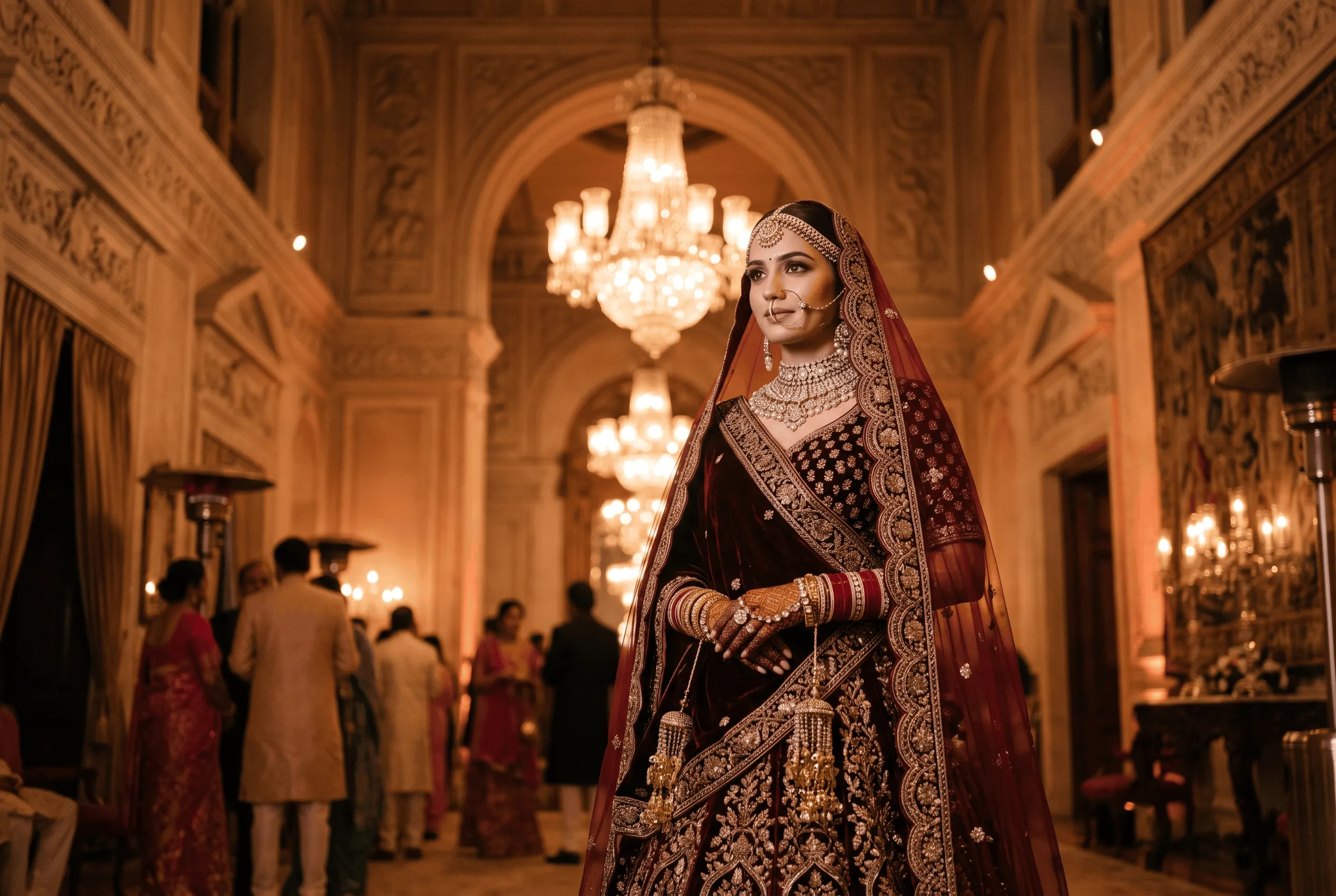
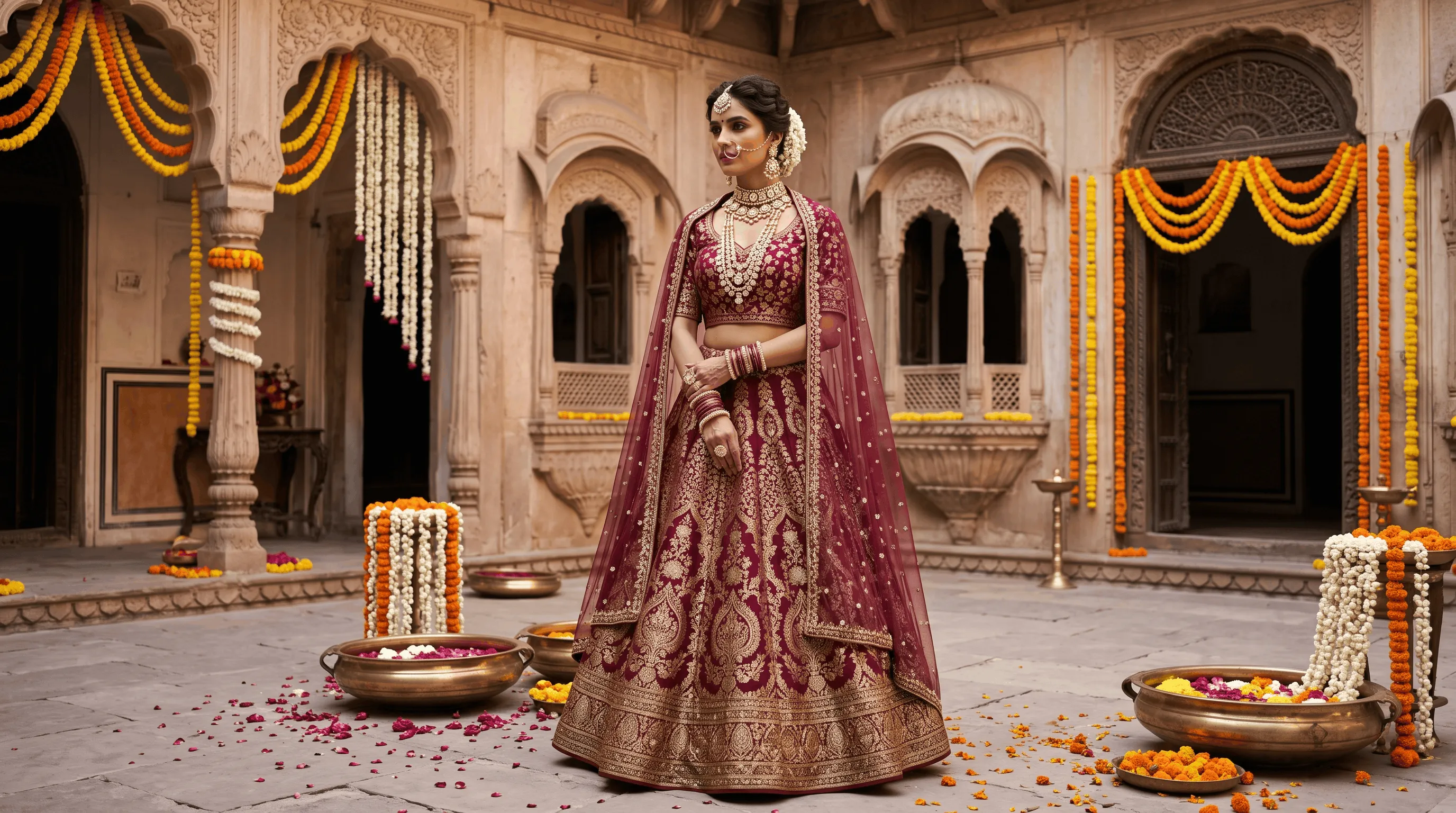
Its deep, plush surface catches light softly, makes colours look richer and gives a bridal lehenga an unmistakably royal presence, especially at a winter evening wedding.
Velvet has become one of the most popular choices for North Indian winter brides, receptions and festive evenings, and it appears in lehengas, blouses, jackets and even sarees.
But velvet is also heavy, warm and demanding to care for, which means it is not the right choice for every bride or every wedding.
This guide to velvet bridal lehengas explains the pros and cons honestly, the types of velvet used in bridal wear, which colours and embroideries look best, how to style a velvet lehenga, how to stay comfortable, what it costs and how to care for it.
Why Brides Love Velvet
Rich colour: velvet's pile makes colours look deeper and more luxurious than flat fabrics.
Regal look: velvet has a long association with royalty and grand occasions.
Beautiful embroidery base: zardozi, dabka, sequins and pearls stand out dramatically on velvet.
Warmth: velvet keeps you comfortable at outdoor winter weddings.
Photogenic texture: velvet looks rich and dimensional in photographs, especially under warm lighting.
The Honest Drawbacks
Weight: velvet lehengas, especially with heavy embroidery, can be very heavy.
Heat: velvet is warm, so it can feel uncomfortable in summer or in crowded indoor venues.
Care: velvet crushes easily and needs careful storage and professional cleaning.
Cost: silk velvet and heavily embroidered velvet lehengas can be expensive.
Movement: a heavy velvet lehenga may restrict dancing and long ceremonies.
Knowing these drawbacks helps you decide whether velvet suits your wedding.
Types of Velvet Used in Bridal Wear
Silk velvet: the most luxurious, soft and fluid, with a beautiful sheen. It is also the most expensive and delicate.
Micro velvet: a lighter, smoother velvet that is popular for lehengas because it is easier to wear.
Polyester or synthetic velvet: more affordable and durable, but warmer and less breathable.
Stretch velvet: has some elasticity, sometimes used for blouses.
Crushed velvet: has a deliberately crumpled texture for a dramatic, modern look.
For bridal lehengas, many designers use micro velvet or silk-blend velvet to balance richness and comfort.
Is Velvet Right for Your Wedding?
Choose velvet if: your wedding is in winter, the main events are in the evening, the venue is cool or outdoors at night and you want a royal, rich look.
Reconsider velvet if: your wedding is in summer or monsoon, the main ceremony is outdoors during the day or you want a light, easy-to-move-in lehenga.
A popular compromise is to wear velvet for the reception or a winter night ceremony and a lighter fabric for daytime events.
Best Colours for Velvet Bridal Lehengas
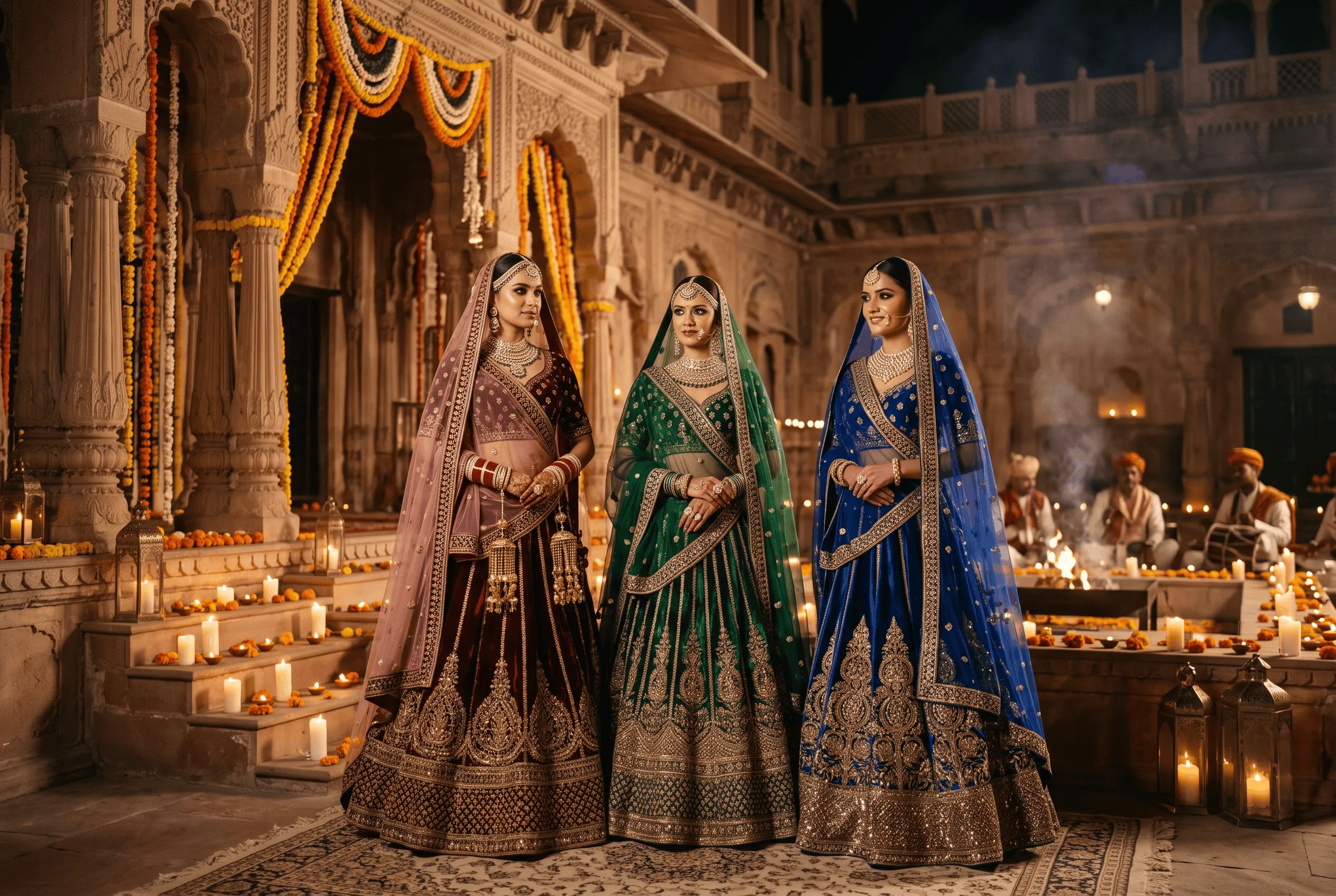
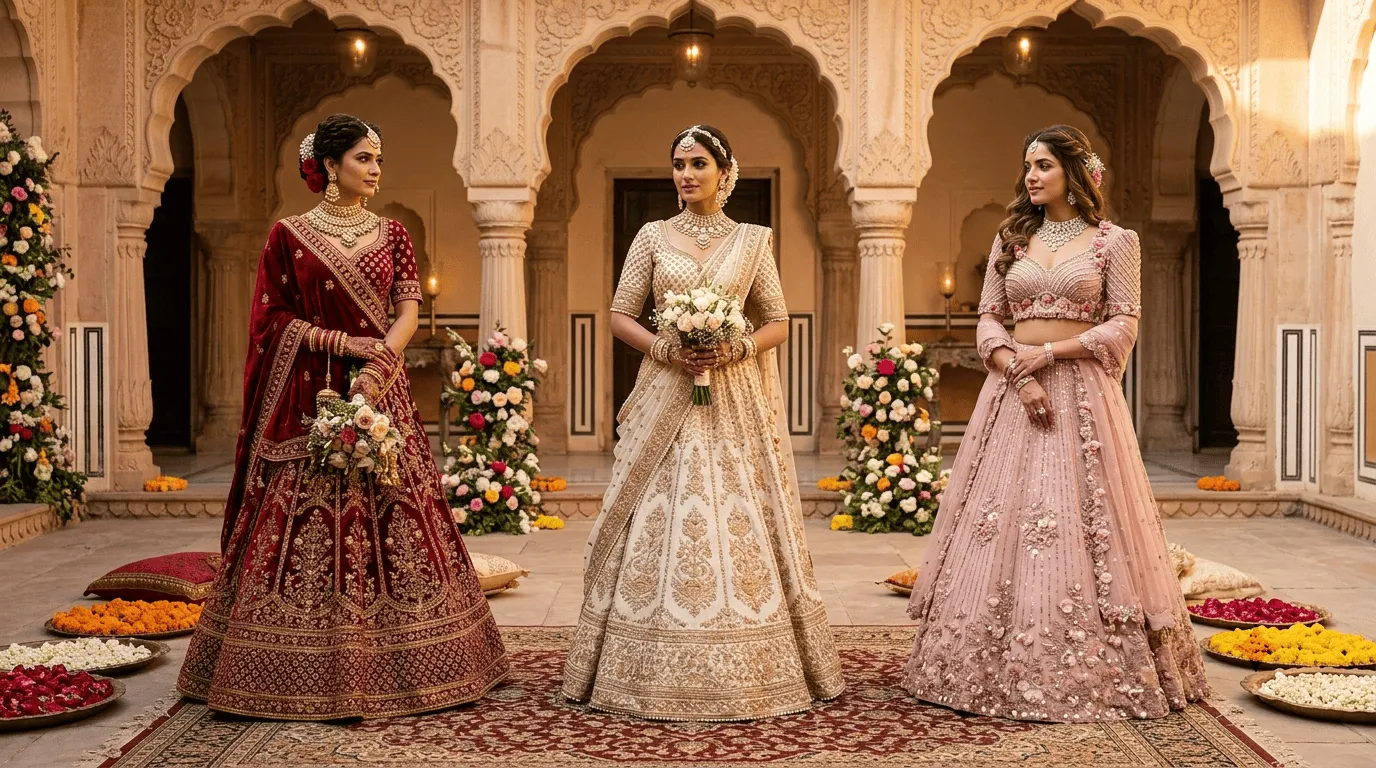
Wine and burgundy: deep, romantic and modern-royal.
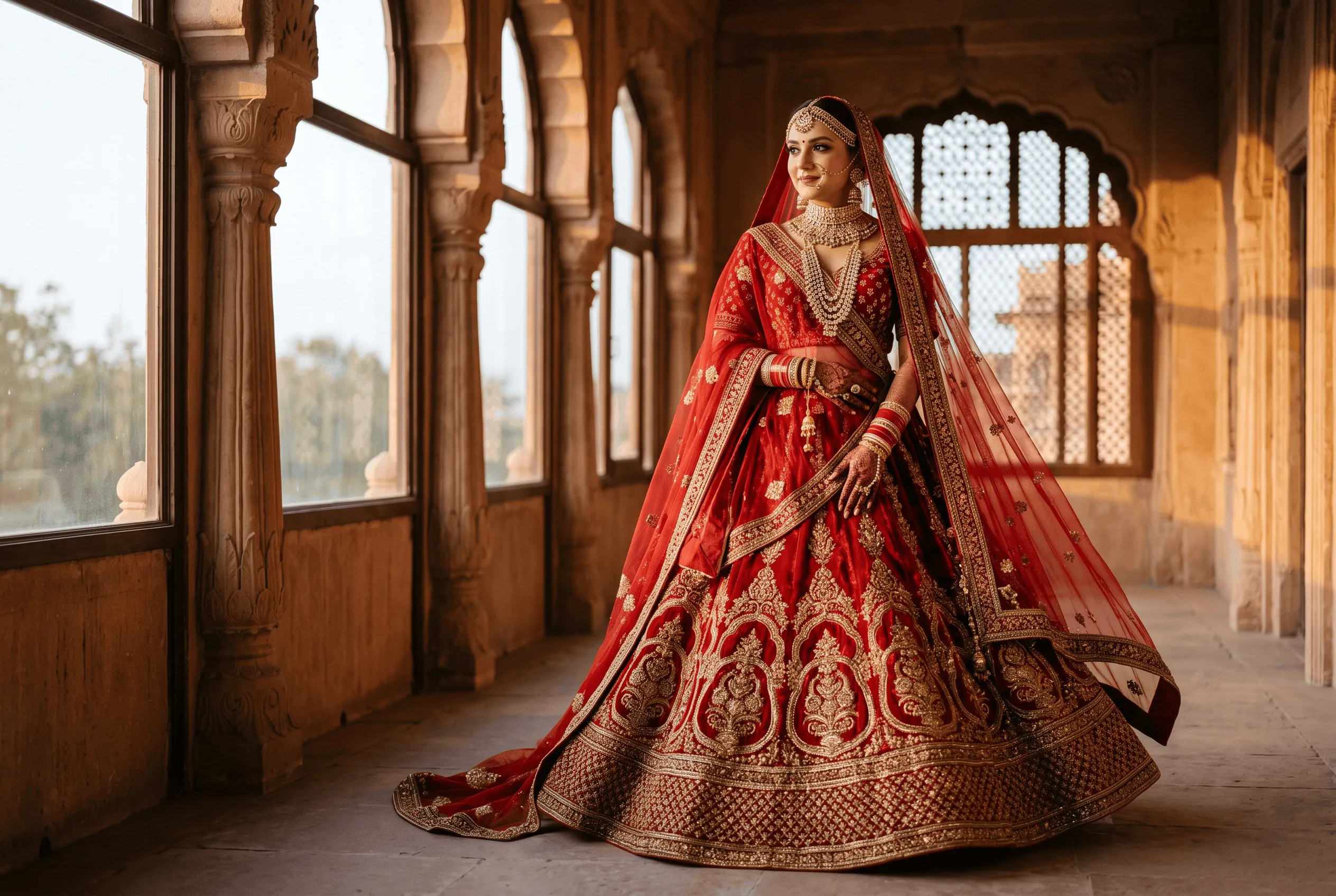
Classic red and maroon: traditional bridal colours made even richer in velvet.
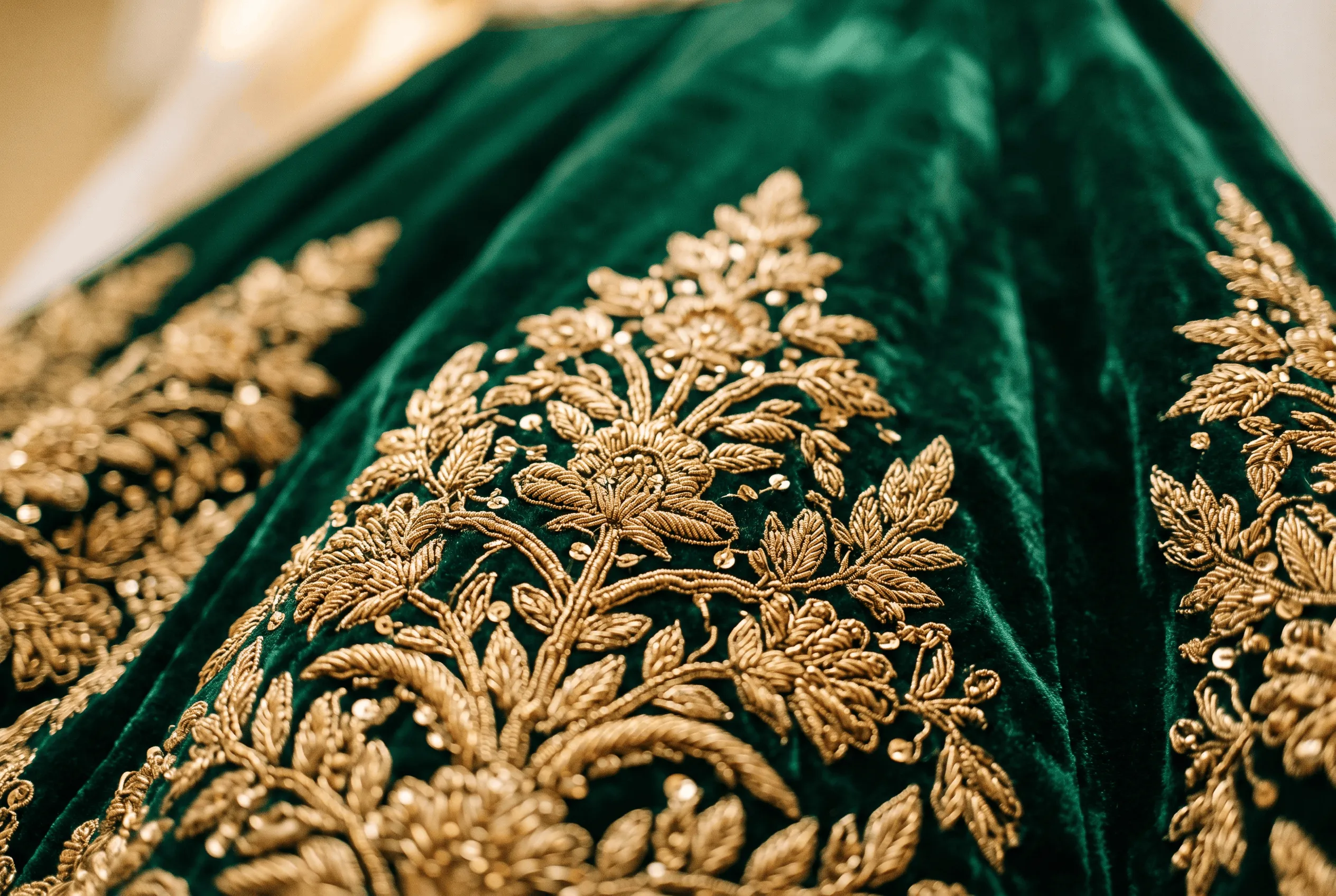
Emerald and bottle green: regal and striking, especially with gold.
Royal blue and navy: bold and elegant for receptions.
Black and midnight shades: dramatic choices for cocktail and reception looks.
Dusky rose and mauve: softer options for brides who prefer muted tones.
Deep colours suit velvet best because the pile enhances their richness and makes gold embroidery glow.
Embroidery That Shines on Velvet
Zardozi: metallic thread embroidery that looks spectacular on velvet.
Dabka and nakshi: coiled metal thread work that adds texture and dimension.
Pearls and stones: add sparkle and depth.
Tonal embroidery: thread close to the velvet colour for understated richness.
Border-focused work: concentrating embroidery on borders keeps the lehenga lighter.
Velvet Lehenga Silhouettes
A-line: classic and flattering, with a natural fall.
Kalidar (panelled): many panels give a full twirl without too much weight.
Fish-cut: a glamorous option for receptions.
Because velvet is heavy, softer flares and limited can-can usually work better than very wide, stiff skirts.
Styling a Velvet Bridal Lehenga
Dupatta
A light net, organza or tissue dupatta balances the heaviness of velvet.
A velvet dupatta is very heavy, so many brides use velvet only for the skirt and blouse.
Blouse
A matching velvet blouse creates a cohesive look, while a brocade or tissue blouse adds contrast.
Structured styles such as sweetheart and corset blouses look elegant with velvet. See our corset blouse design guide.
Jewellery
Polki, kundan and antique gold jewellery look magnificent with velvet.
Emerald and ruby stones complement deep velvet colours.
Hair and Makeup
A classic bun with fresh flowers and warm, defined makeup suit velvet's rich look.
Questions to Ask Your Designer
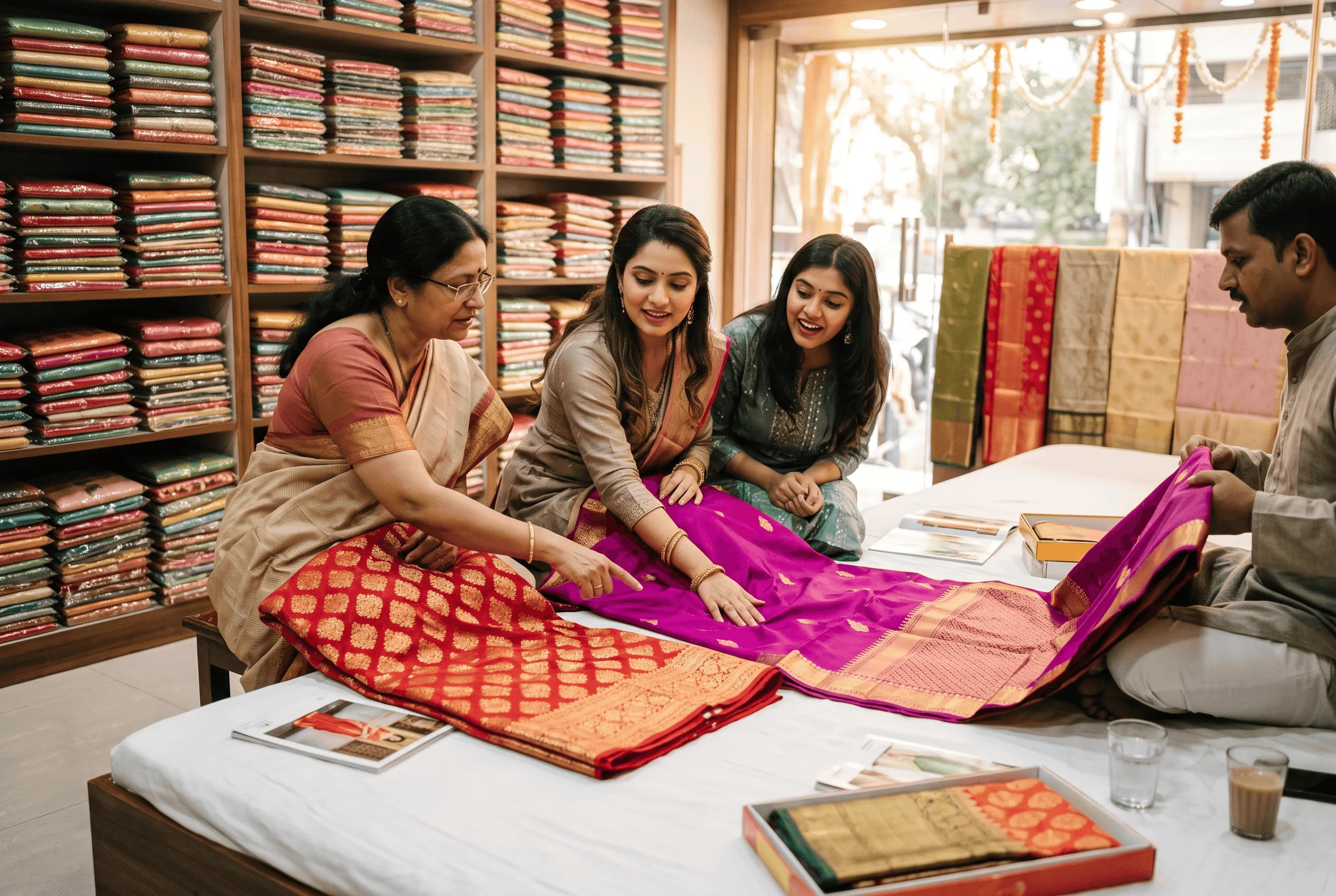
What type of velvet is this: silk, micro, silk-blend or synthetic?
How much does the complete lehenga weigh, including the blouse and dupatta?
Is the embroidery hand-done, and what materials are used?
Can the embroidery be concentrated on borders to reduce weight?
Is the lehenga lined with breathable cotton?
How many fittings are included, and when?
How should the lehenga be cleaned and stored after the wedding?
Clear answers help you avoid surprises and make sure your lehenga is both beautiful and wearable.
Velvet Bridal Lehenga Timeline
Velvet lehengas with heavy handwork take time.
Start exploring designs four to six months before the wedding.
Finalise the design and colour three to four months ahead, so artisans have enough time for embroidery.
Plan at least two fittings, especially for the blouse, which needs to fit perfectly under heavy velvet.
Collect the lehenga two to three weeks before the wedding, leaving time for small adjustments.
Velvet Beyond the Bridal Lehenga
Velvet blouses are a stylish way to add richness to silk sarees in winter.
Velvet jackets and capes add warmth over lehengas and sarees at outdoor events.
Velvet sarees and borders are popular for receptions and festive evenings.
Velvet shawls with embroidery make elegant winter accessories.
These options let you enjoy velvet without wearing a full velvet lehenga.
They are also easier to rewear. A velvet blouse or jacket can be paired with different silk sarees and lehengas for several winter seasons, which makes it a practical investment for brides, mothers and wedding guests alike.
Staying Comfortable in Velvet
Choose micro velvet or lighter velvet blends.
Keep embroidery focused on borders and the blouse to reduce weight.
Ask for a soft cotton lining to improve breathability.
Plan breaks during long ceremonies.
Stay hydrated and keep the venue cool if possible.
Try the lehenga for at least 30 minutes before finalising it.
Price Guide
These are indicative 2026 ranges. Prices vary by city, designer, velvet type and embroidery.
| Item | Indicative price range |
|---|---|
| Synthetic velvet lehenga (light work) | ₹15,000 – ₹40,000 |
| Micro velvet bridal lehenga | ₹40,000 – ₹1,20,000 |
| Heavy zardozi velvet bridal lehenga | ₹80,000 – ₹3,00,000+ |
| Silk velvet designer lehenga | ₹1,50,000 and above |
| Velvet blouse (stitching and embroidery) | ₹3,000 – ₹20,000+ |
| Velvet jacket or cape | ₹4,000 – ₹25,000 |
How to Care for a Velvet Lehenga
Dry-clean only with a cleaner experienced in bridal velvet.
Avoid crushing: store the lehenga flat or rolled with tissue paper, never folded tightly.
Do not iron directly: steam gently from the reverse if needed.
Keep away from damp and heat.
Store in a breathable cotton bag, not plastic.
Brush gently with a soft brush to restore the pile if it gets flattened.
Velvet for Different Wedding Functions
Reception: velvet is ideal for glamorous evening receptions.
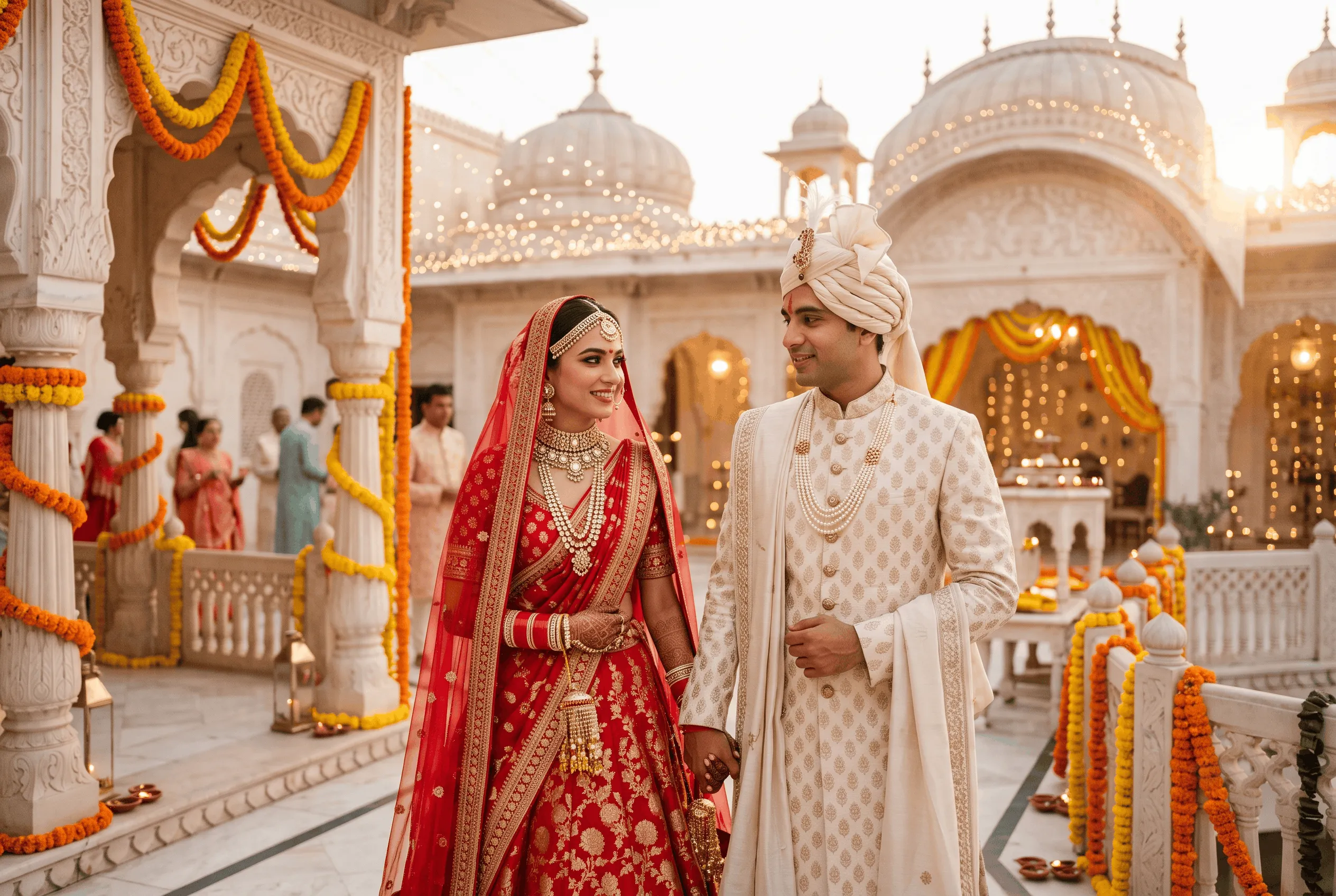
Winter night wedding: a velvet bridal lehenga suits late-night pheras in cold weather.
Engagement: a lighter velvet lehenga or velvet blouse with a silk saree works well.
Mehendi and haldi: velvet is usually too heavy and warm; choose lighter fabrics.
See our bridal lehenga trends 2026 for more ideas.
Velvet for Mothers and Wedding Guests
Velvet is not only for brides.
Mothers of the bride and groom often wear velvet blouses with silk sarees, or velvet-bordered sarees, for winter ceremonies.
Guests can wear velvet lehengas or sarees to receptions, avoiding bridal red and heavy bridal jewellery.
Common Mistakes With Velvet
Choosing velvet for a summer or daytime outdoor wedding is the most common mistake.
Another is pairing a heavy velvet lehenga with a heavy velvet dupatta, which becomes exhausting.
Some brides also store velvet folded tightly, which crushes the pile permanently.
Finally, avoid ironing velvet directly.
Is Velvet Right for You?
A velvet bridal lehenga offers unmatched richness, warmth and royal elegance, which makes it a stunning choice for winter evening weddings and receptions.
Its weight, warmth and care needs mean it suits some weddings better than others.
Choose the right type of velvet, keep embroidery balanced, pair it with a light dupatta and care for it carefully, and your velvet lehenga will look magnificent on your wedding day and for years to come.
Explore more bridal fabrics in our Banarasi brocade for weddings guide and the traditional wear trends 2026 guide.
Velvet and Body Types
Petite brides look best in velvet with vertical panels, smaller motifs and a fitted blouse.
Tall brides carry heavy velvet and wide borders beautifully.
Curvy brides can choose A-line velvet lehengas with a structured blouse and border-focused embroidery.
Because velvet adds visual richness, balanced proportions matter more than with lighter fabrics.
Velvet for Destination and Hill Weddings
For winter destination weddings in the hills or in cold desert cities, velvet is a practical and beautiful choice.
It keeps you warm at outdoor evening functions and photographs richly against palace and mountain backdrops.
Pack velvet carefully, rolled with tissue paper, and steam it gently on arrival.
Comments (0)
Leave a Thought
No comments yet. Be the first to share your thoughts!