Choosing a silk saree for a wedding is exciting, but it is also a big decision.
Whether you are the bride, the mother of the bride or groom, a sister or a guest, the right silk saree needs to suit the ceremony, the season, your comfort, your budget and the way you want to look in photographs that will be kept for decades.
There is no single best silk saree for a wedding. The right choice depends on who you are in the wedding and what the day involves.
This buyer's checklist walks you through every decision step by step: your role, the ceremony, the season, the type of silk, colour, zari, weight, authenticity, budget, blouse, timeline and care.
Use it before you shop, and again at the counter, and you will buy with confidence.
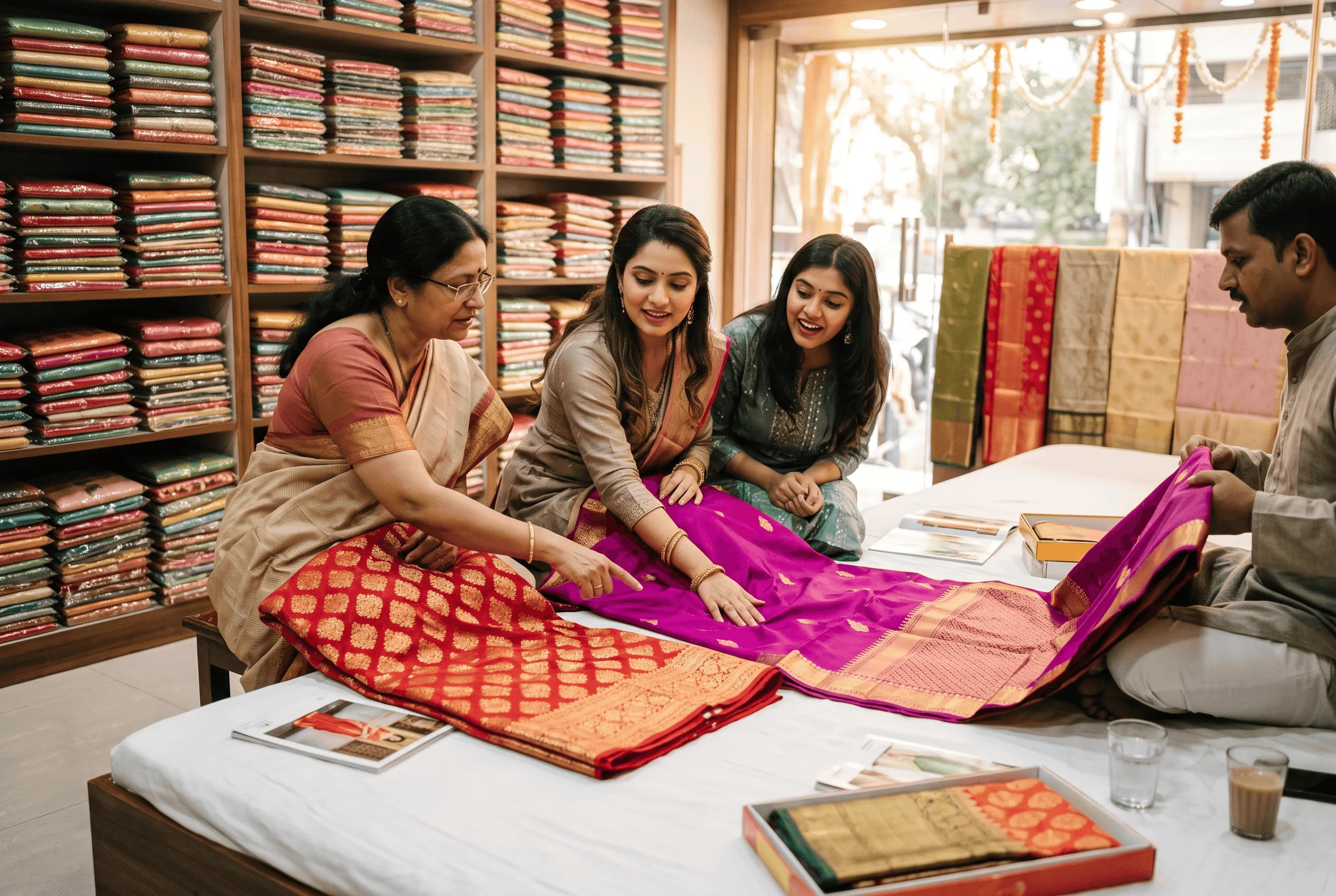
Checklist Step 1: Know Your Role in the Wedding
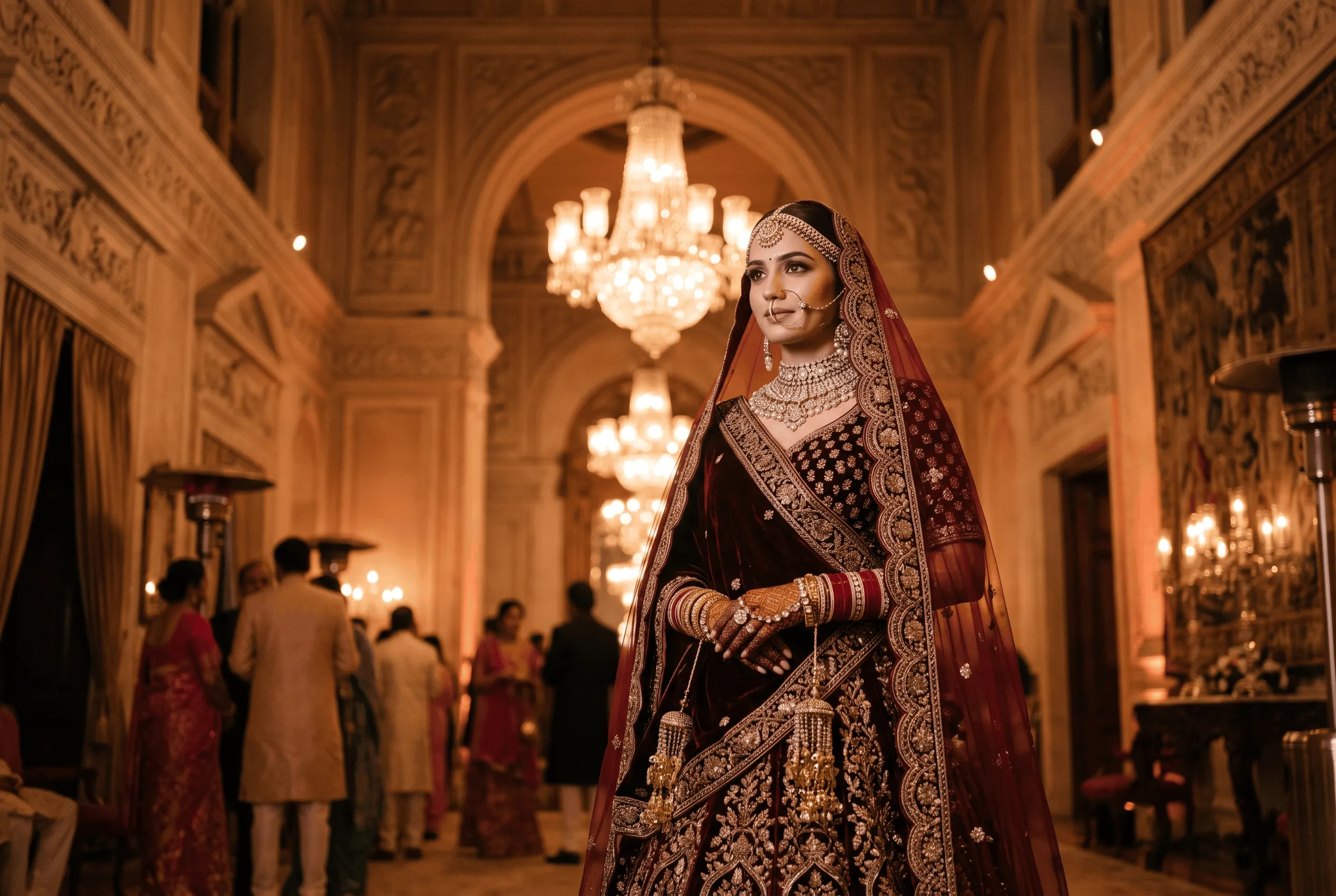
Bride: you need a saree that feels truly special, suits the rituals and looks magnificent in photographs.
Mother of the bride or groom: a rich, elegant silk that complements the bride without matching her.
Sister or close family: a festive silk that coordinates with the family's colour plan.
Guest: an elegant silk that respects the occasion and does not compete with the bride.
Your role decides how rich, heavy and traditional your saree should be.
Checklist Step 2: Match the Saree to the Ceremony
Main wedding ceremony: the richest silk, such as Banarasi, Kanjivaram or a regional bridal weave.
Engagement: a lighter silk, such as Mysore silk, light Kanjivaram or organza silk.
Reception: tissue silk, organza silk or a silk with a modern blouse.
Pujas and pre-wedding rituals: a comfortable silk or silk-cotton in auspicious colours.
Haldi and mehendi: usually not silk at all; choose cotton or light fabrics.
Checklist Step 3: Consider the Season and Venue
Summer and daytime: lighter silks such as Mysore silk, Chanderi silk, Uppada or light Kanjivaram.
Winter and evening: heavier Kanjivaram, Banarasi brocade or raw silk.
Outdoor venues: avoid very heavy silk for long outdoor ceremonies in the heat.
Air-conditioned halls: heavier silks are more comfortable.
Checklist Step 4: Choose the Right Silk
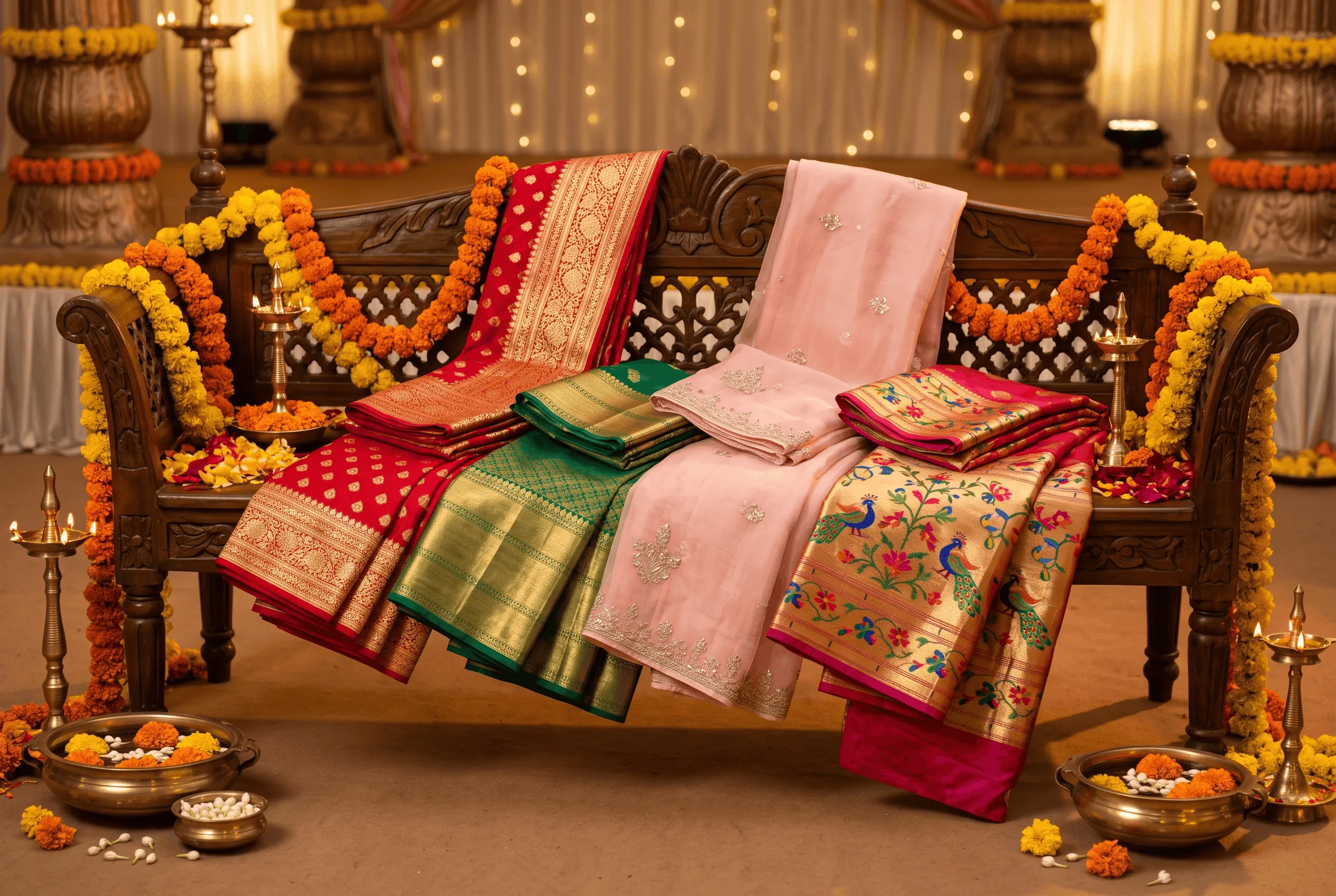
Banarasi: brocade and zari, regal and ornate. See our Banarasi buying guide.
Kanjivaram: contrast borders and heavy silk, bold and ceremonial. See how to identify pure Kanjivaram silk.
Mysore silk: smooth and light, elegant for guests and receptions.
Paithani: peacock and lotus pallus, ideal for Maharashtrian weddings. See our Paithani saree guide.
Patola: ikat heirloom for Gujarati weddings. See our Patola saree guide.
Baluchari: narrative pallus, loved at Bengali weddings.
Tissue and organza silk: glamorous and light for receptions.
For a full comparison, read Banarasi vs Kanjivaram for your wedding.
Checklist Step 5: Pick the Colour
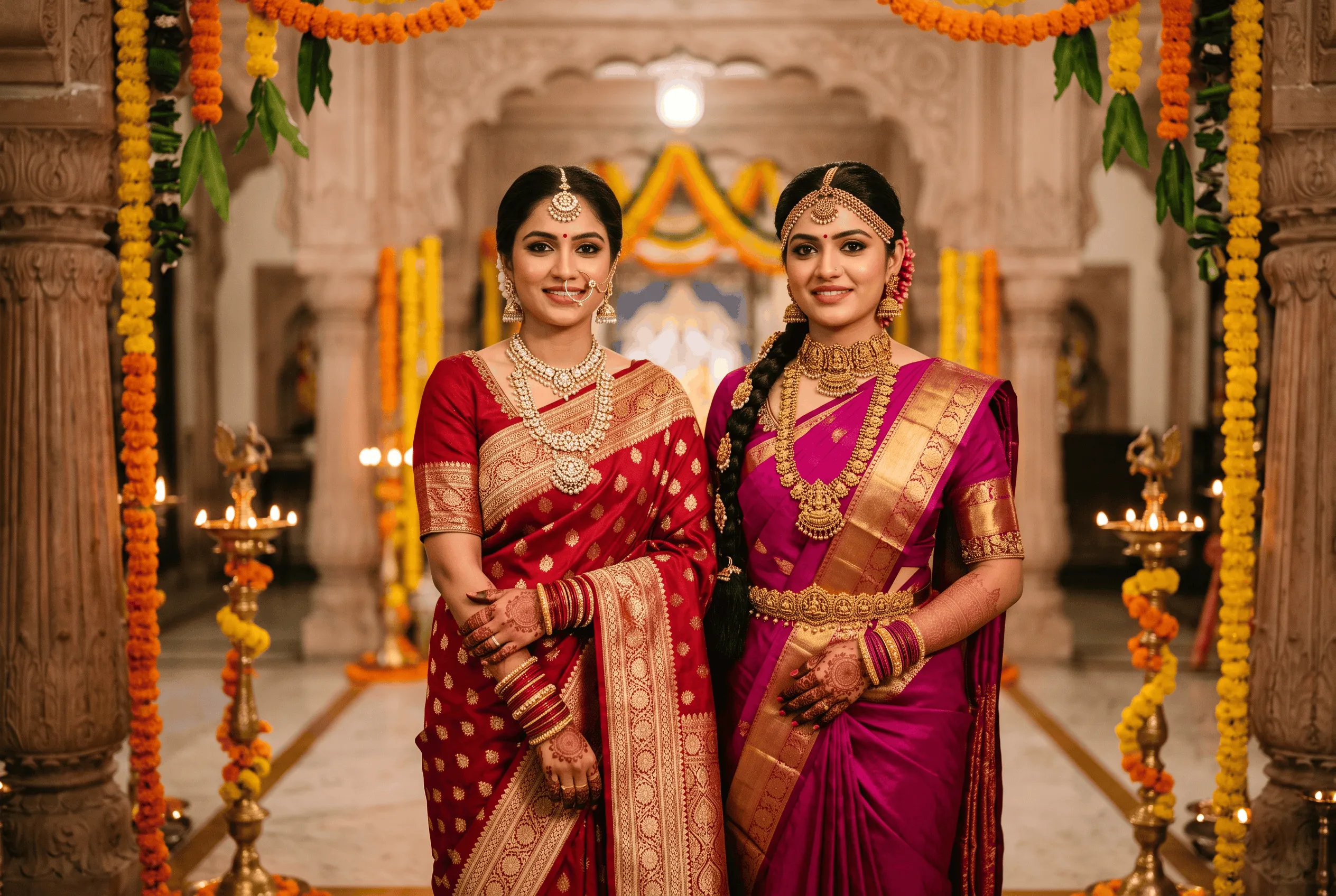
Brides: red, maroon, wine, pink and gold are classic; ivory with red or gold is a modern option.
Mothers: jewel tones such as emerald, royal blue, magenta and mustard look elegant.
Guests: avoid bridal red with heavy bridal jewellery; choose jewel tones or pastels.
Check colours in daylight and near your face. See our trending saree colours guide.
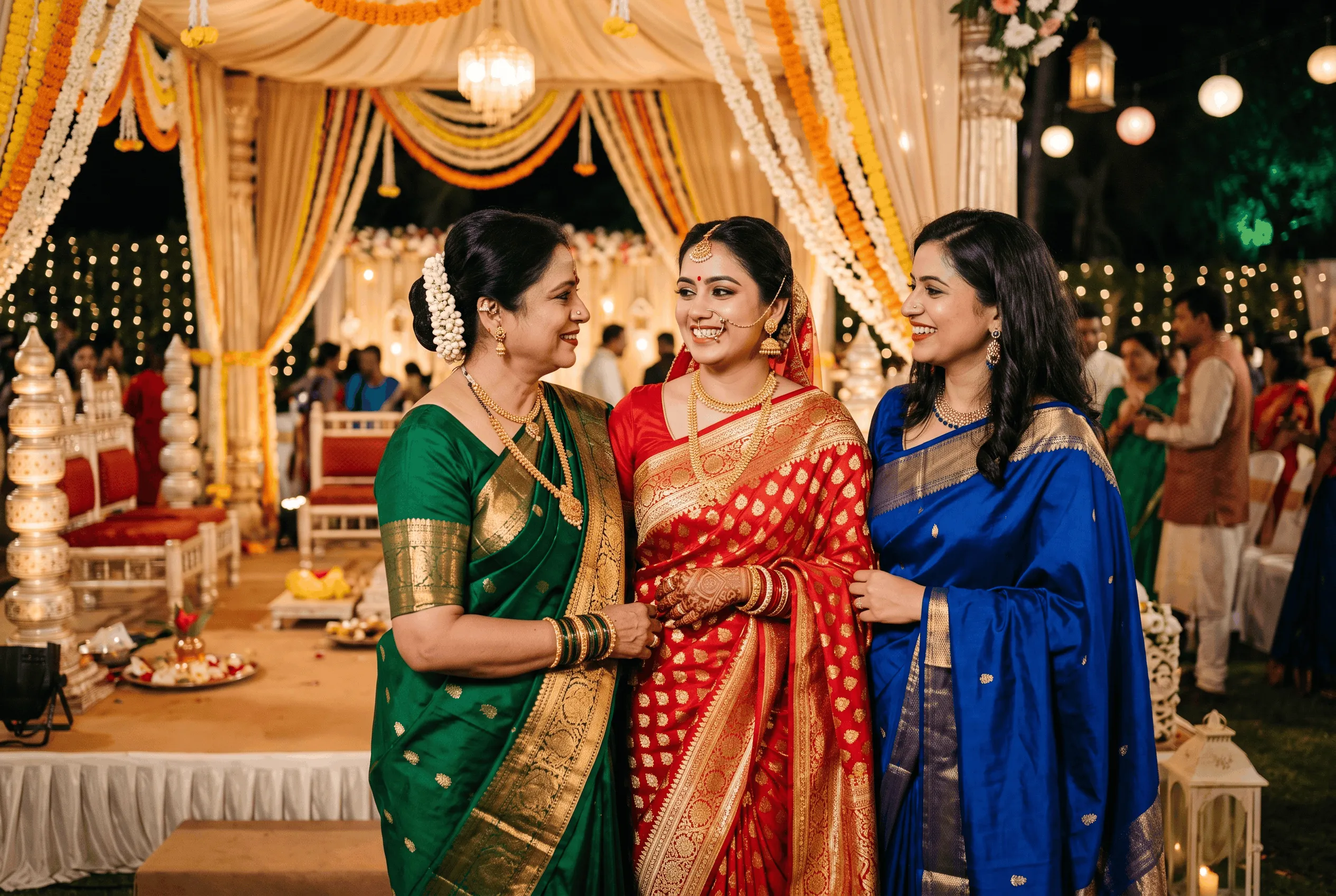
Checklist Step 6: Understand the Zari
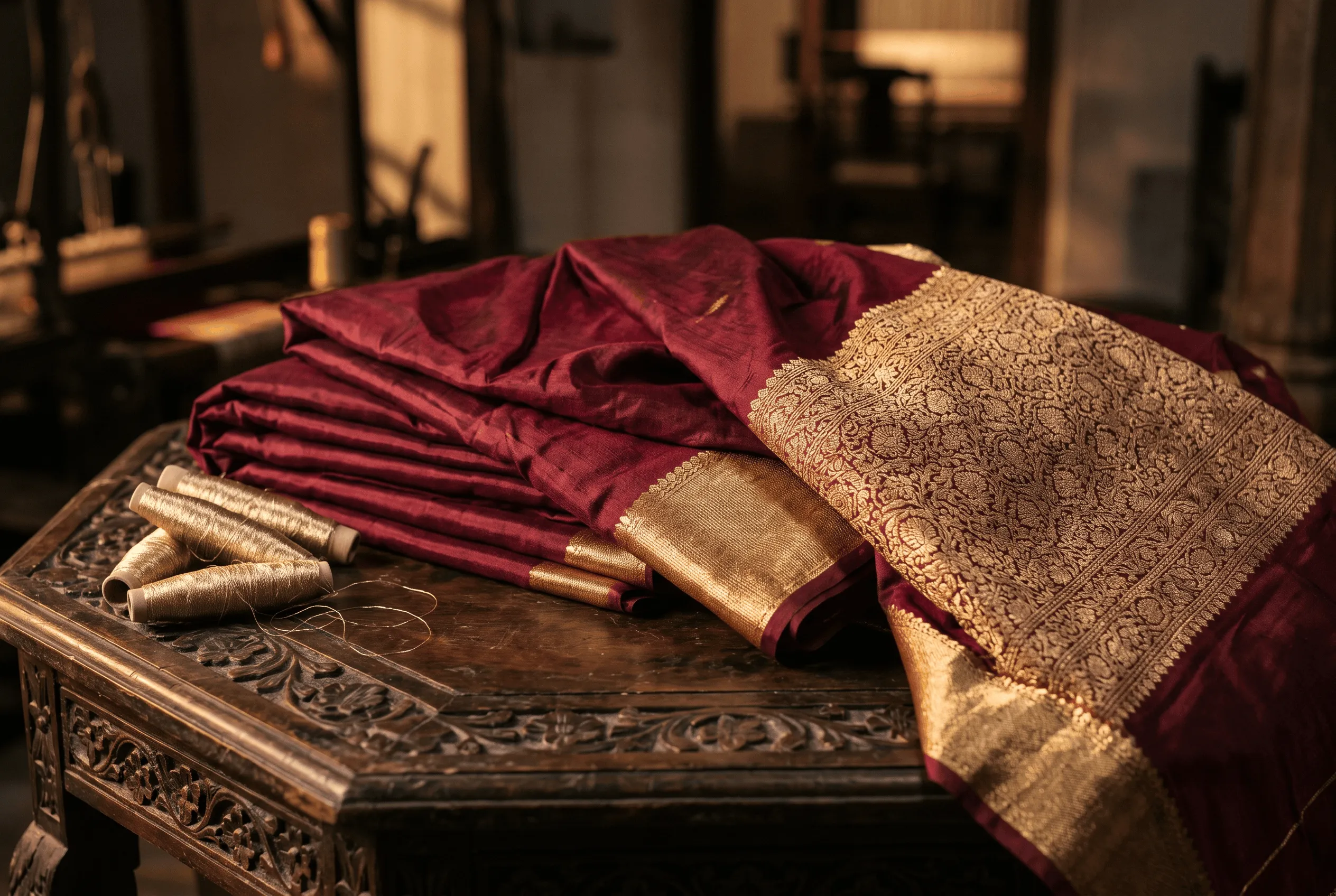
Pure zari: silver-based, often gold-plated, the most expensive and long-lasting.
Tested zari: copper-based with a metallic coating, more affordable and widely used.
Imitation zari: synthetic, the least expensive and may lose shine.
Ask which zari is used before comparing prices. See our zari silk guide.
Checklist Step 7: Test the Weight and Comfort
Hold the saree, drape the pallu over your shoulder and walk a few steps.
If you will wear it for many hours, try it for at least 20 to 30 minutes.
Heavy Kanjivaram and brocade look grand but can be tiring during long rituals.
Consider a lighter saree or an outfit change if the ceremony is long.
Checklist Step 8: Check Authenticity
Silk Mark: ask for the Silk Mark label on pure silk.
Handloom: check for weave irregularities, uneven selvedges and a neat reverse. See our handloom vs powerloom guide.
Weave-specific checks: korvai borders for Kanjivaram, kadhwa brocade for Banarasi, tapestry pallus for Paithani.
Bill: ask for a bill stating pure silk and, where relevant, handloom and weave.
See our quick pure silk saree checklist.
Checklist Step 9: Set Your Budget
| Role | Typical budget for a pure silk saree |
|---|---|
| Bride (main ceremony) | ₹30,000 – ₹1,00,000+ |
| Mother of the bride or groom | ₹20,000 – ₹60,000 |
| Close family | ₹12,000 – ₹35,000 |
| Guest | ₹8,000 – ₹25,000 |
These are indicative 2026 ranges. Prices vary by city, weave, zari and seller. See our saree price guide.
Checklist Step 10: Plan the Blouse
Classic elbow sleeves suit heavy Banarasi and Kanjivaram.
High-neck and brocade blouses look regal. See our high-neck blouse designs.
Corset and sweetheart blouses modernise lighter silks. See our corset blouse design guide.
Contrast blouses add depth to single-colour silks.
Allow time for at least one trial fitting.
Checklist Step 11: Plan the Timeline
Brides: start three to six months ahead; custom weaves take longer.
Family members: start two to three months ahead.
Guests: start at least four to six weeks ahead, especially in wedding season when tailors are busy.
Checklist Step 12: Think About Rewear
Choose a colour and design you will wear again for festivals and family weddings.
Lighter silks and versatile colours are easier to restyle.
Brides can rewear their wedding saree for anniversaries, Karwa Chauth and family celebrations.
Heavier bridal silks can also be reworked later into a lehenga or dupatta for a daughter's or niece's wedding, so the saree keeps its place in family celebrations for decades. See our saree to lehenga conversion guide for ideas.
Checklist Step 13: Plan the Jewellery
Banarasi: kundan, polki and antique gold.
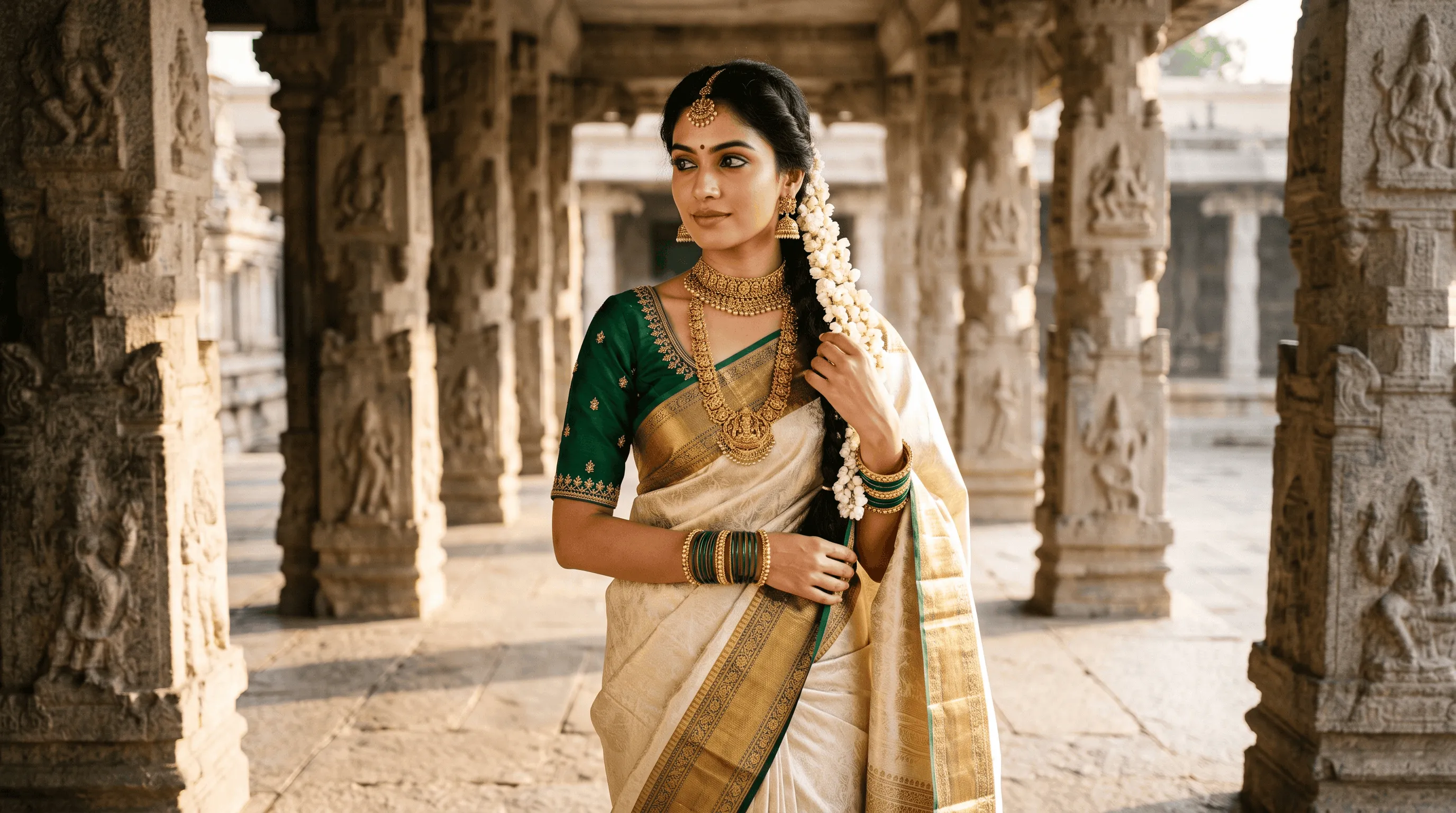
Kanjivaram: temple jewellery, layered necklaces and a vaddanam.
Paithani: nath, thushi and green glass bangles.
Light silks: pearls, diamonds or delicate gold.
See our guide to ethnic jewellery with silk sarees.
Checklist Step 14: Plan the Drape
A neat Nivi drape suits most silk sarees.
Regional drapes, such as the Gujarati seedha pallu or Maharashtrian nauvari, add meaning to the ceremony.
Consider a professional draper for heavy bridal silk. See our saree draping styles guide.
Checklist Step 15: Plan Care After the Wedding
Dry-clean the saree after the wedding, store it in muslin, wrap zari in tissue paper and refold every few months.
See our silk saree care guide.
Silk Sarees by Regional Wedding Tradition
North Indian weddings: red or maroon Banarasi is a classic for brides, with jewel-toned silks for family.
South Indian weddings: Kanjivaram is traditional for the muhurtham, often in red, mustard, maroon or magenta with gold.
Bengali weddings: red Banarasi for the bride and Baluchari or Banarasi for receptions.
Maharashtrian weddings: Paithani, often in a nauvari drape for the bride.
Gujarati weddings: Panetar and Gharchola for the bride, with Patola dupattas.
Assamese weddings: muga or pat mekhela chador.
Respecting these traditions adds meaning, and you can still express personal style through colour, blouse and jewellery.
Buying a Wedding Silk Saree Online
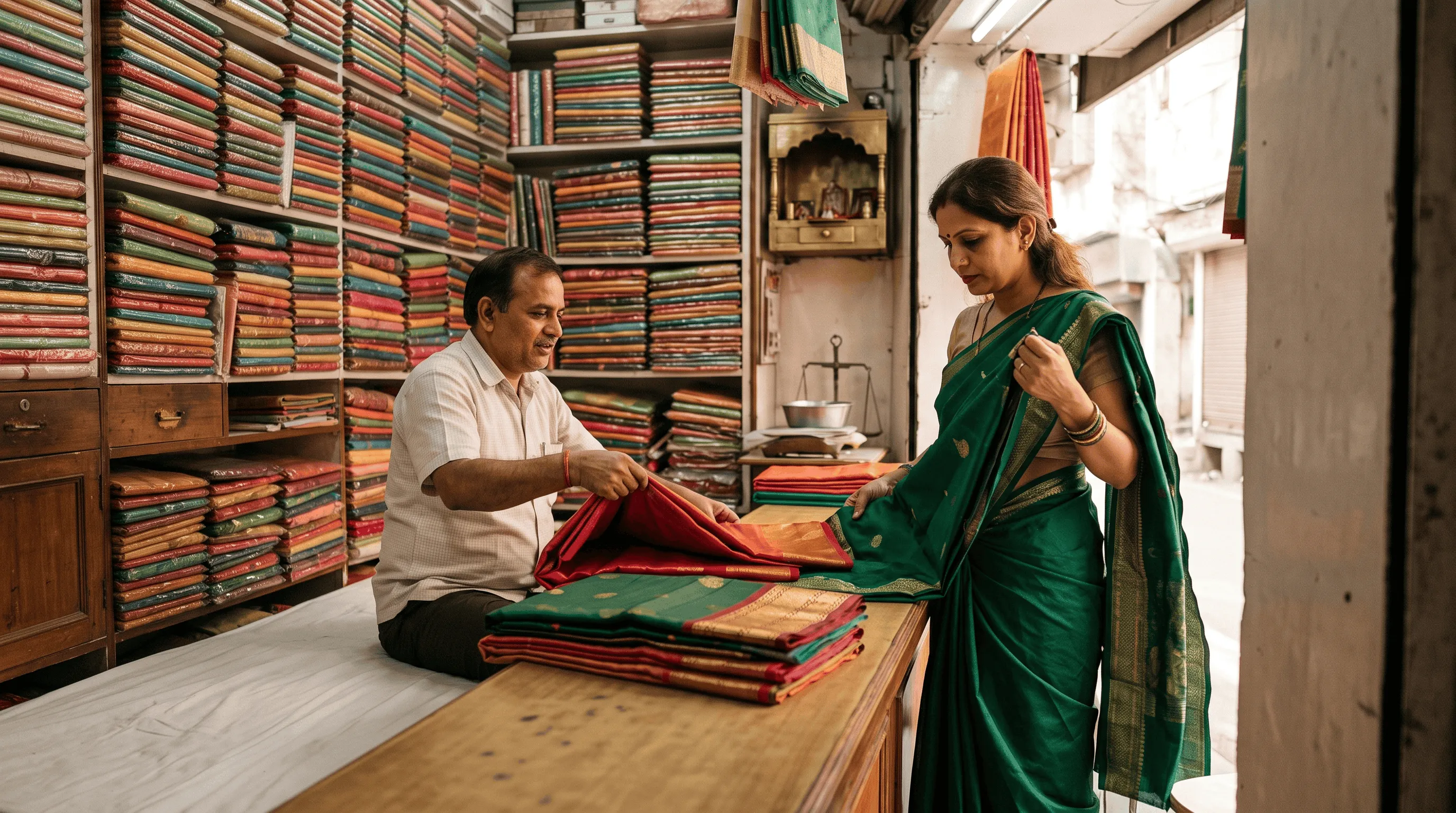
Ask for daylight photographs of the front, back, border, pallu and zari.
Confirm the silk type, handloom status, zari type and Silk Mark details.
Check the return and exchange policy carefully.
For bridal sarees, consider a video call with the seller to see the drape and colour in natural light.
Common Mistakes When Buying a Wedding Silk Saree
Choosing only from photographs, where colours and zari look different from reality.
Not checking weight and comfort for long ceremonies.
Paying pure silk or handloom prices without checking authenticity.
Leaving blouse stitching to the last minute.
Choosing a colour that clashes with family coordination or competes with the bride.
Your Quick Wedding Silk Checklist
Role and ceremony decided.
Season and venue considered.
Silk type chosen.
Colour checked in daylight.
Zari type confirmed.
Weight and comfort tested.
Silk Mark and handloom checked.
Bill with details received.
Blouse planned and trial booked.
Jewellery and drape planned.
Finding Your Best Silk Saree for the Wedding
The best silk saree for a wedding is the one that suits your role, the ceremony, the season, your comfort and your budget, and that you will treasure long after the celebrations.
Work through this checklist, check authenticity carefully and give yourself time, and you will choose a saree that looks beautiful and feels right.
Explore more bridal ideas in our bridal lehenga trends 2026 and the traditional wear trends 2026 guide.
Shopping Tips for Busy Wedding Families
Make a list of everyone who needs a silk saree and the function each one is for.
Agree on colour themes in advance, so family members coordinate without matching exactly.
Shop together for the most important sarees, and let others shop separately with the agreed palette.
Keep bills, Silk Mark labels and blouse pieces together in labelled bags, so nothing gets misplaced during the busy weeks before the wedding.
Silk Sarees as Wedding Gifts
Silk sarees are among the most traditional wedding gifts, especially for the bride, mothers and close relatives.
Choose versatile colours and reputable sellers, and include a care note and the bill for exchanges.
If you are unsure of the recipient's taste, a jewel-toned Mysore silk or a light Kanjivaram with a classic border is a safe, elegant choice that suits most ages and occasions.
Comments (0)
Leave a Thought
No comments yet. Be the first to share your thoughts!