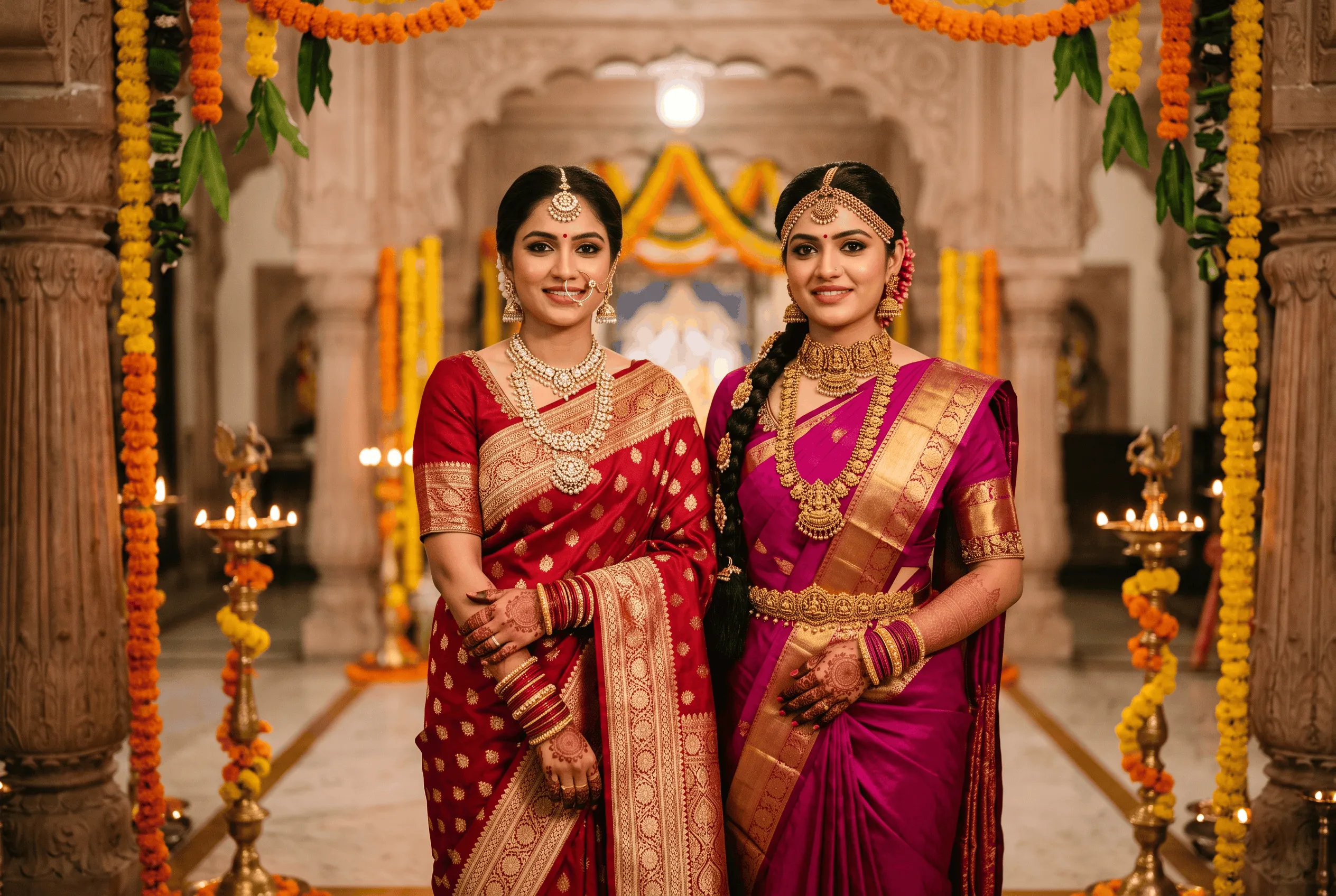
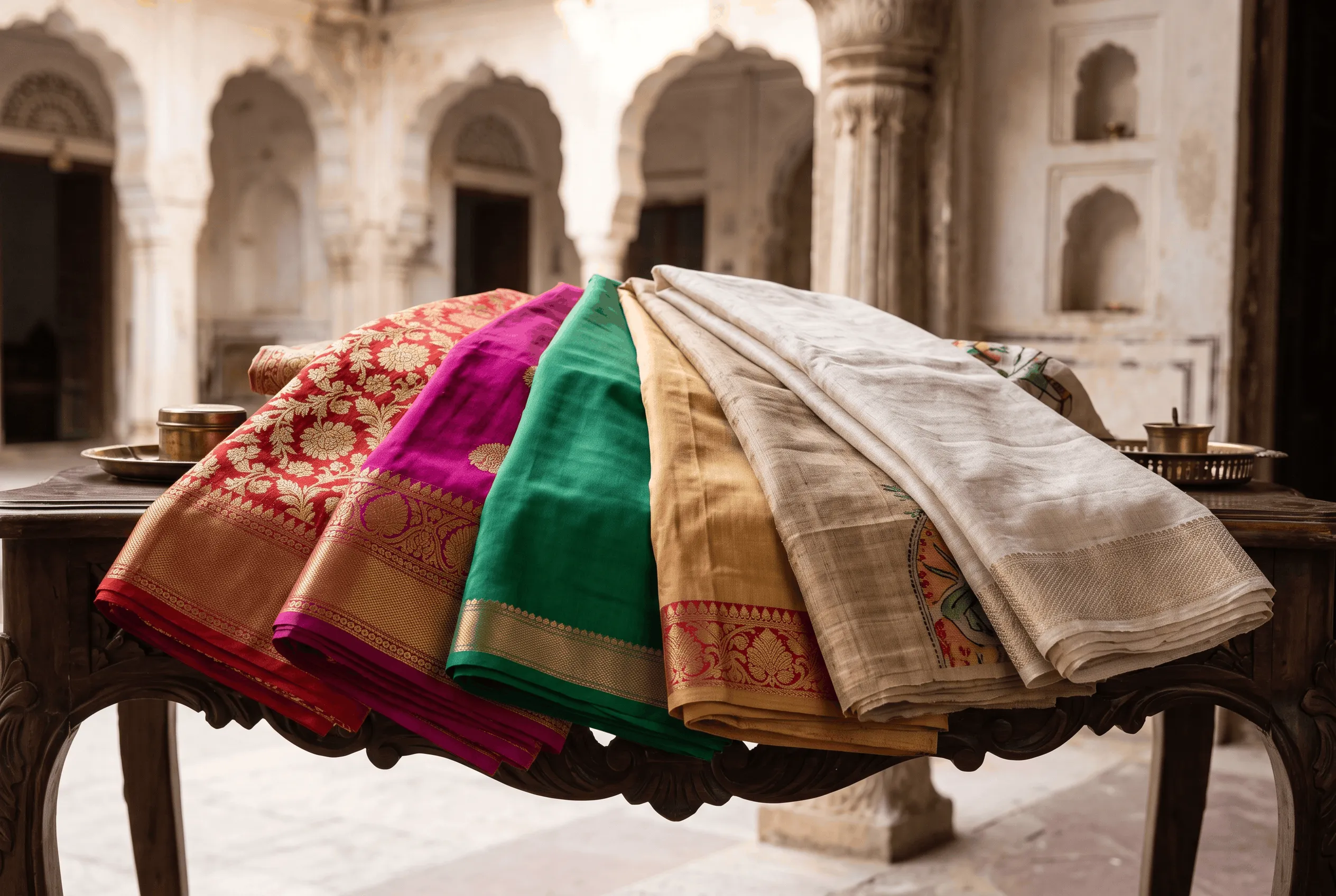
The glow of a bridal Banarasi, the shimmering border of a Kanjivaram and the golden pallu of a Paithani all come from one thing: zari.
Zari is the metallic thread woven or embroidered into Indian silk to create gold and silver designs, and it is one of the main reasons silk sarees look so festive and feel so precious.
It is also one of the main reasons two similar-looking silk sarees can have very different prices.
This zari silk guide explains what zari is, how it is made, the difference between pure, tested and imitation zari, how to judge zari quality, how zari affects price and resale value, which weaves use it, how to style zari silk and how to care for it so it does not tarnish.
Surat, where our showroom is based, has long been one of India's best-known zari-making centres, so this is a craft close to our hearts.
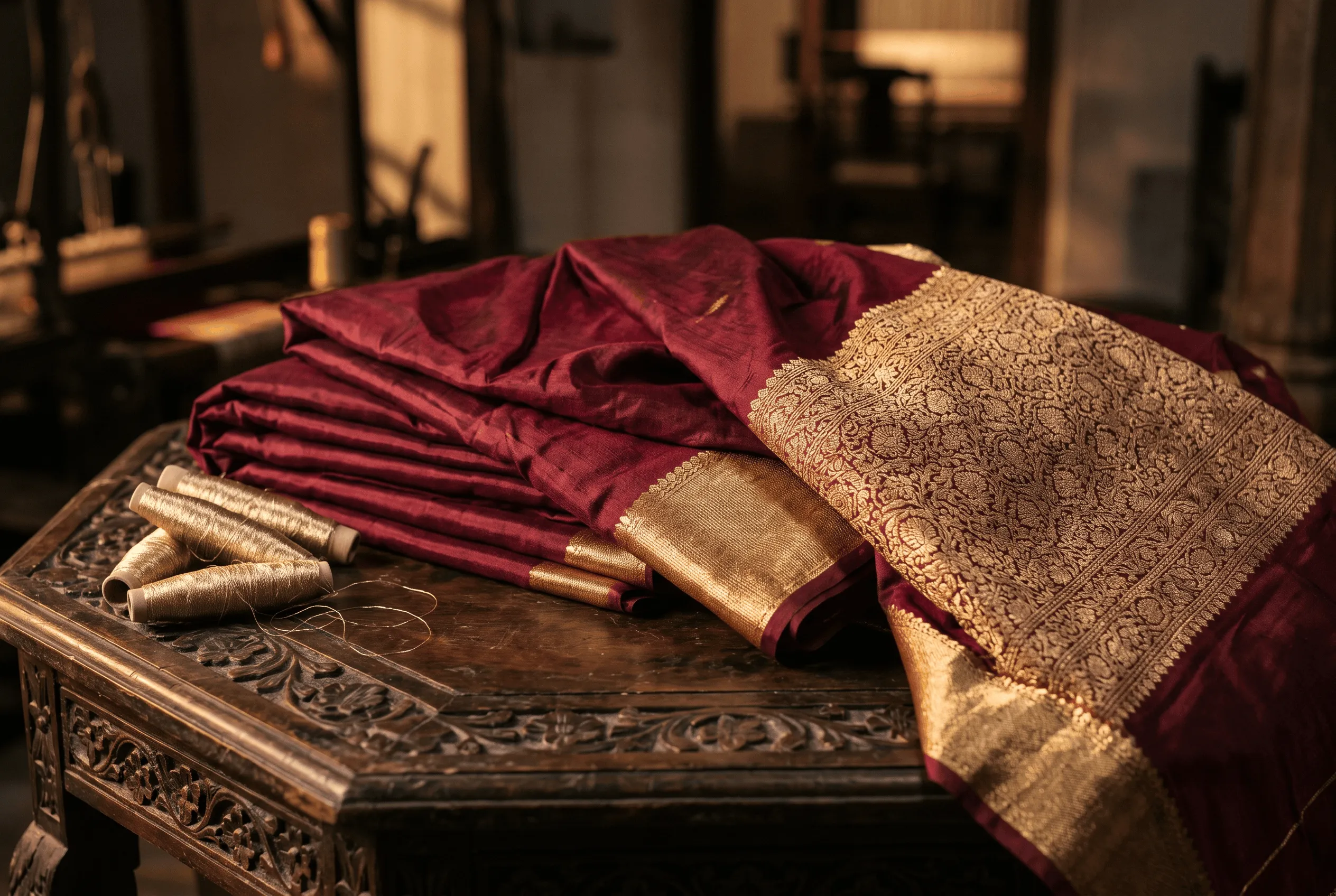
What Is Zari?
Zari is a fine metallic thread used for weaving and embroidery.
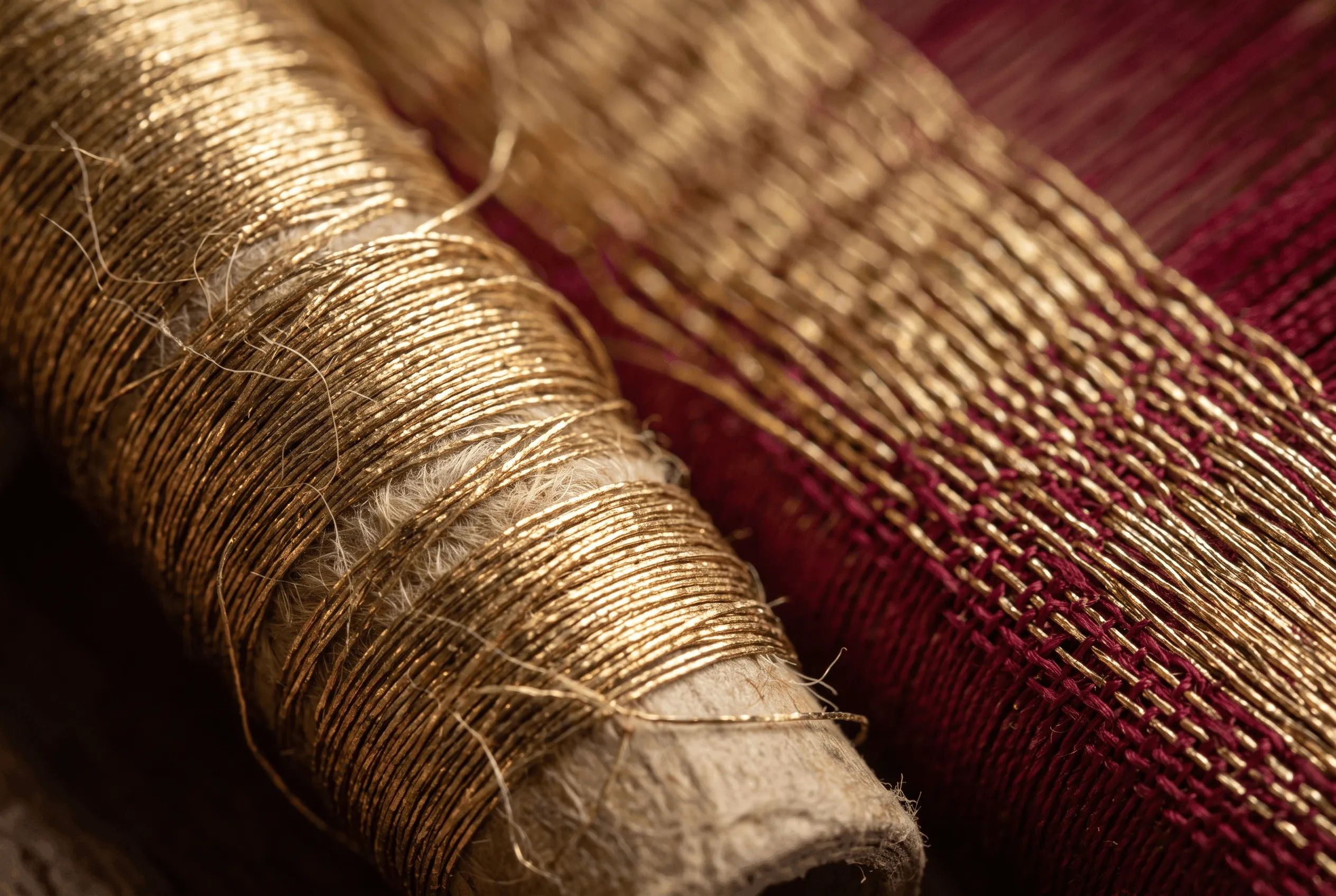
Traditionally, it was made by wrapping a very thin flattened metal wire around a silk or cotton core thread.
When woven into silk, zari creates borders, motifs, buttis, brocades and pallus that shimmer with a gold or silver glow.
When used in embroidery, as in zardozi, it creates raised, sparkling designs on lehengas, blouses and sarees.
A Short History of Zari
Metallic thread work has been used in Indian textiles for centuries, particularly for royal, religious and ceremonial garments.
Zari became closely associated with luxury silk weaving centres such as Varanasi, Kanchipuram and Paithan.
Surat in Gujarat developed into one of the most important centres for making zari thread itself, supplying weavers across India, and Surat zari craft is recognised with a Geographical Indication.
The Three Main Types of Zari
Pure (Real) Zari
Pure zari is made from fine silver wire, often electroplated with gold, wrapped around a silk core.
It has a soft, rich glow and tends to age gracefully, sometimes developing a gentle antique tone over time.
It is the most expensive type and is found in high-end handloom and heirloom sarees.
Tested Zari
Tested zari uses a copper wire core coated with silver and gold.
It looks bright and rich, costs less than pure zari and is widely used in good-quality silk sarees today.
Imitation or Synthetic Zari
Imitation zari is made from metallised polyester or plastic film.
It is the least expensive, can look very shiny at first and may lose its shine or become brittle over time.
How to Judge Zari Quality
Look at the glow: pure and good tested zari have a soft, warm sheen, while imitation zari often looks glassy or plasticky.
Feel the thread: good zari feels fine and pliable, not stiff or scratchy.
Check the reverse: in handwoven sarees, zari floats on the back should be neat.
Ask the seller: a genuine seller can tell you whether the zari is pure, tested or imitation.
Look at old pieces: pure zari usually ages to a soft antique tone rather than peeling or flaking.
Ask for certification: for high-value sarees, ask about the Silk Mark for the silk and any documentation about the zari.
How Zari Affects Price
Zari is often one of the biggest factors in a silk saree's price.
A saree with dense pure zari can cost several times more than a similar saree with tested or imitation zari.
The amount of zari also matters: a full zari pallu, wide zari borders and all-over brocade use far more metal than small buttis.
This is why it is important to ask about zari type before comparing prices.
Zari and Resale Value
Because pure zari contains real silver, old pure zari sarees have historically held some resale value for their metal content.
Tested and imitation zari do not carry the same metal value.
Most people buy zari sarees for their beauty and heirloom value rather than resale, but it is one more reason pure zari is considered an investment.
Weaves Famous for Zari
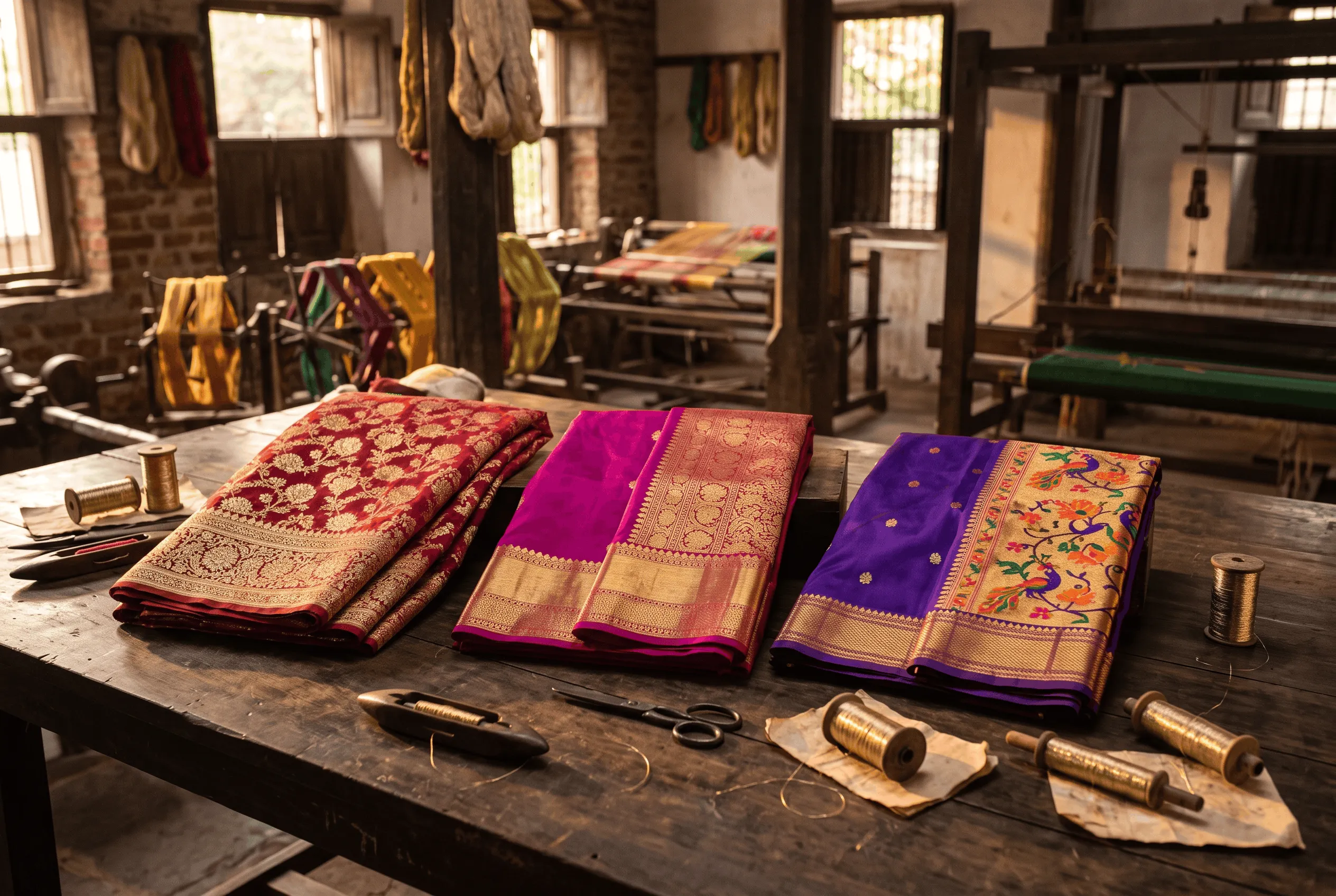
Banarasi: famous for brocade and zari motifs. See our Banarasi brocade guide.
Kanjivaram: known for rich zari borders and pallus. See how to identify pure Kanjivaram silk.
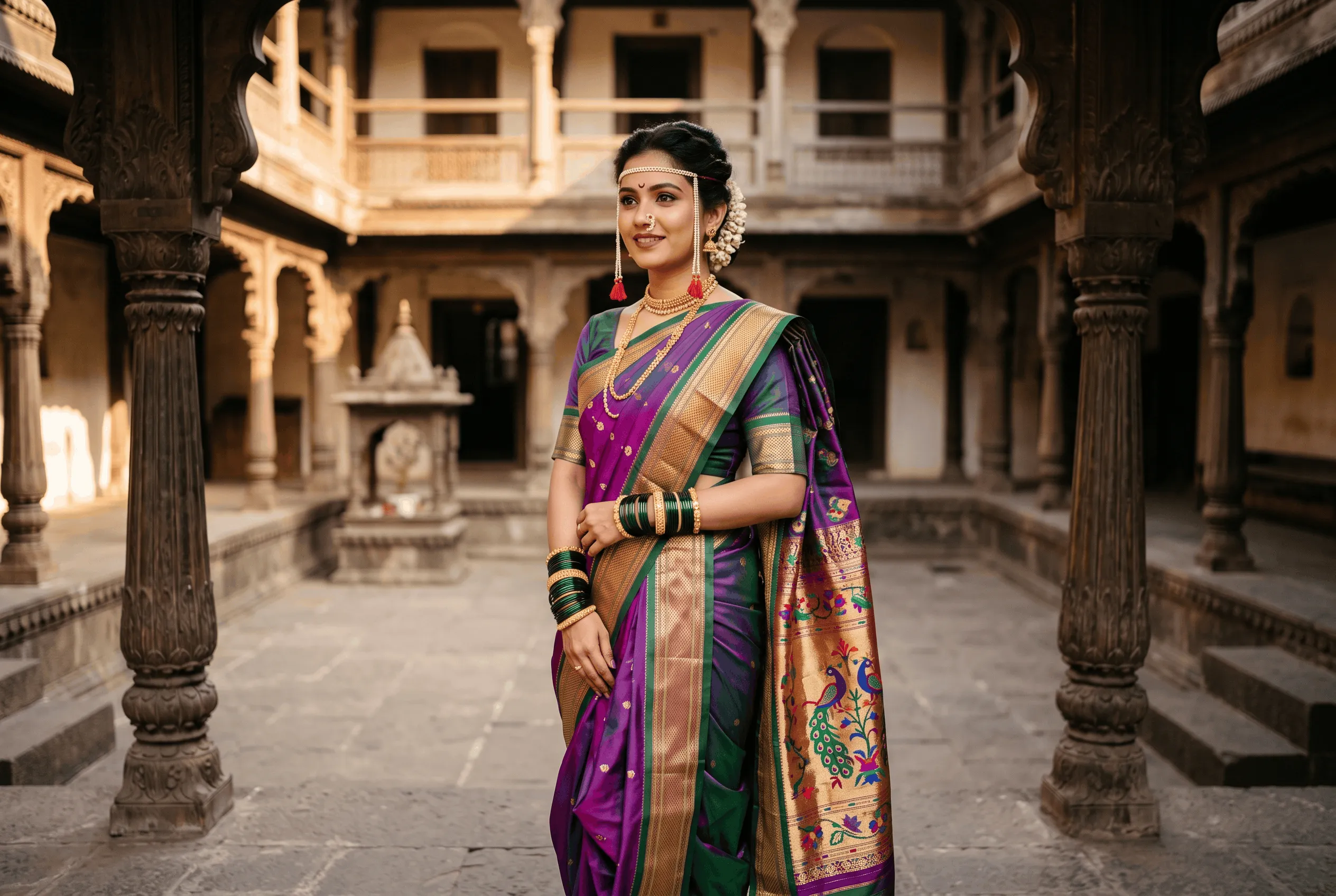
Paithani: known for zari pallus with colourful motifs. See our Paithani saree guide.
Tissue silk: woven with metallic zari throughout. See our tissue silk saree guide.
Gharchola and Panetar: Gujarati bridal sarees with zari grids and borders.
How Zari Thread Is Made
Making zari thread is a skilled, multi-step process.
First, metal is drawn into an extremely fine wire.
The wire is then flattened into a thin ribbon-like strip.
This strip is carefully wound around a core thread, traditionally silk, to create a flexible metallic yarn.
For gold-toned zari, the wire may be electroplated with a thin layer of gold.
The finished thread is wound onto spools, ready for weavers and embroiderers. The fineness and evenness of this winding have a big effect on how smoothly the zari weaves and how beautifully it shines.
Zari vs Zardozi
Zari usually refers to metallic thread woven into fabric.
Zardozi is a form of embroidery that uses zari, metal wire, sequins and beads to create raised designs.
Zardozi is common on bridal lehengas, blouses and velvet garments. See our velvet bridal lehengas guide.
Choosing Zari Silk for Your Occasion
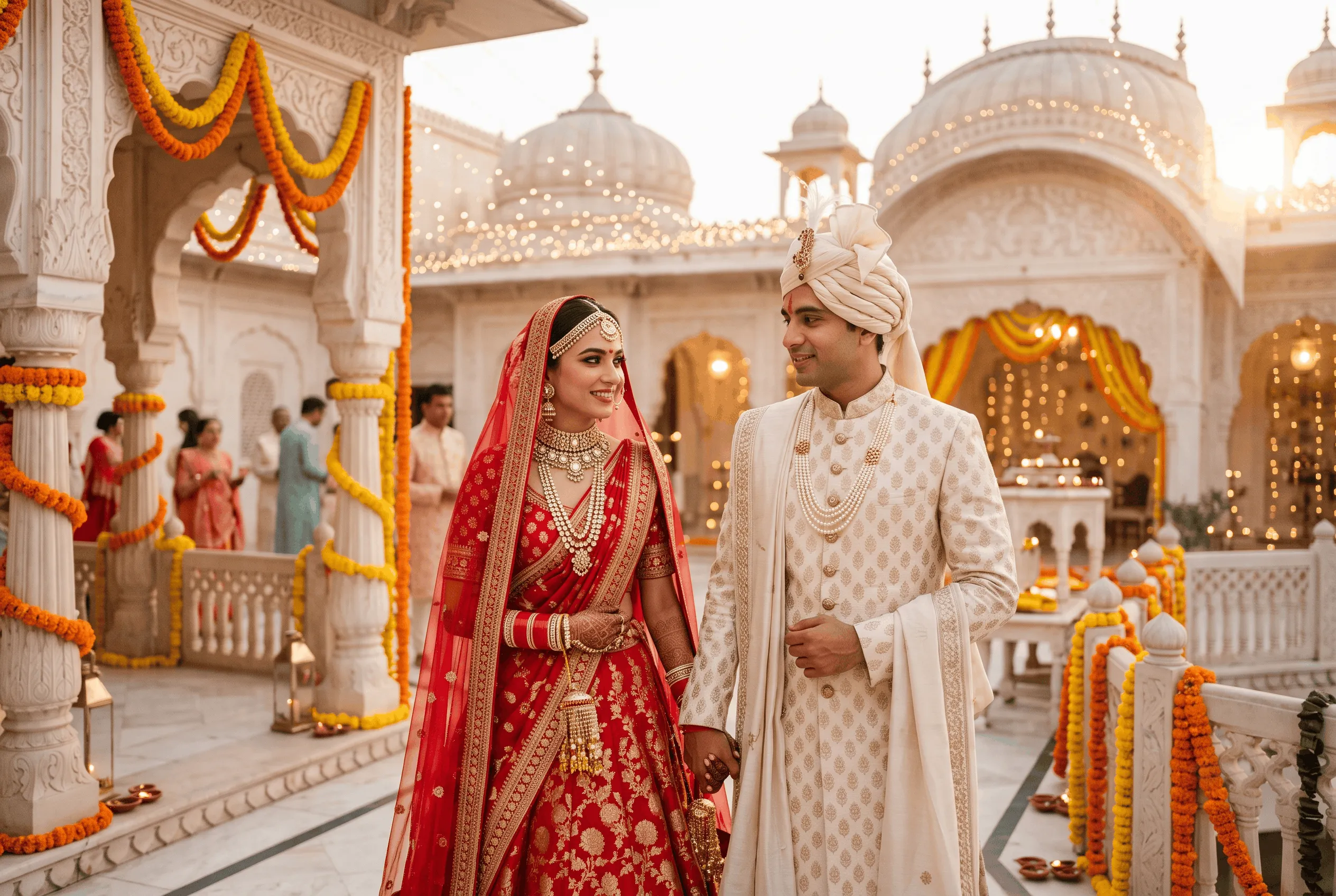
Bridal wear: heavy zari borders and pallus in Banarasi, Kanjivaram or Paithani.
Wedding guest: moderate zari, such as buttis and a medium border, so you look festive without competing with the bride.
Festivals: zari-bordered silks in jewel tones glow beautifully in diya light.
Office celebrations: light zari borders on Mysore silk, Chanderi or tussar.
Everyday elegance: cotton or silk-cotton with thin zari borders.
How to Style Zari Silk Sarees
Let the zari lead: with heavy zari sarees, choose a simple blouse and jewellery that does not compete.
Match metal tones: gold zari pairs best with gold, kundan or polki jewellery; silver zari pairs with silver, diamonds or pearls.
Contrast blouses: a plain silk blouse in a contrast colour makes zari borders stand out.
Minimal makeup shimmer: let the zari provide the sparkle.
For more ideas, see our guide to ethnic jewellery with silk sarees.
How to Care for Zari Silk
Dry-clean only, with a cleaner experienced in zari.
Keep away from moisture, which speeds up tarnishing.
Avoid perfume and hairspray directly on zari.
Wrap zari areas in tissue paper or muslin before folding.
Store in cotton or muslin, never plastic.
Refold every few months so zari does not crack along the same lines.
Do not iron directly on zari; use a cloth and low heat on the reverse.
Our silk saree care guide has more tips.
Why Zari Tarnishes and How to Slow It
Metallic threads react with moisture, air and chemicals over time.
Humidity, sweat, perfume and plastic storage all speed up tarnishing.
Storing sarees in breathable fabric, keeping them dry and airing them occasionally helps zari stay bright longer.
Some families wrap zari sarees in old cotton saris or muslin for extra protection.
Price Guide
These are indicative 2026 ranges. Prices vary by silk, weave, zari type and density.
| Saree type | Indicative price range |
|---|---|
| Silk saree with imitation zari | ₹2,000 – ₹8,000 |
| Silk saree with tested zari | ₹8,000 – ₹40,000 |
| Handloom silk saree with pure zari | ₹30,000 – ₹1,50,000+ |
| Heavy bridal brocade with pure zari | ₹80,000 and above |
Buying Zari Silk Wisely
Ask whether the zari is pure, tested or imitation before comparing prices.
Inspect the saree in daylight, front and back.
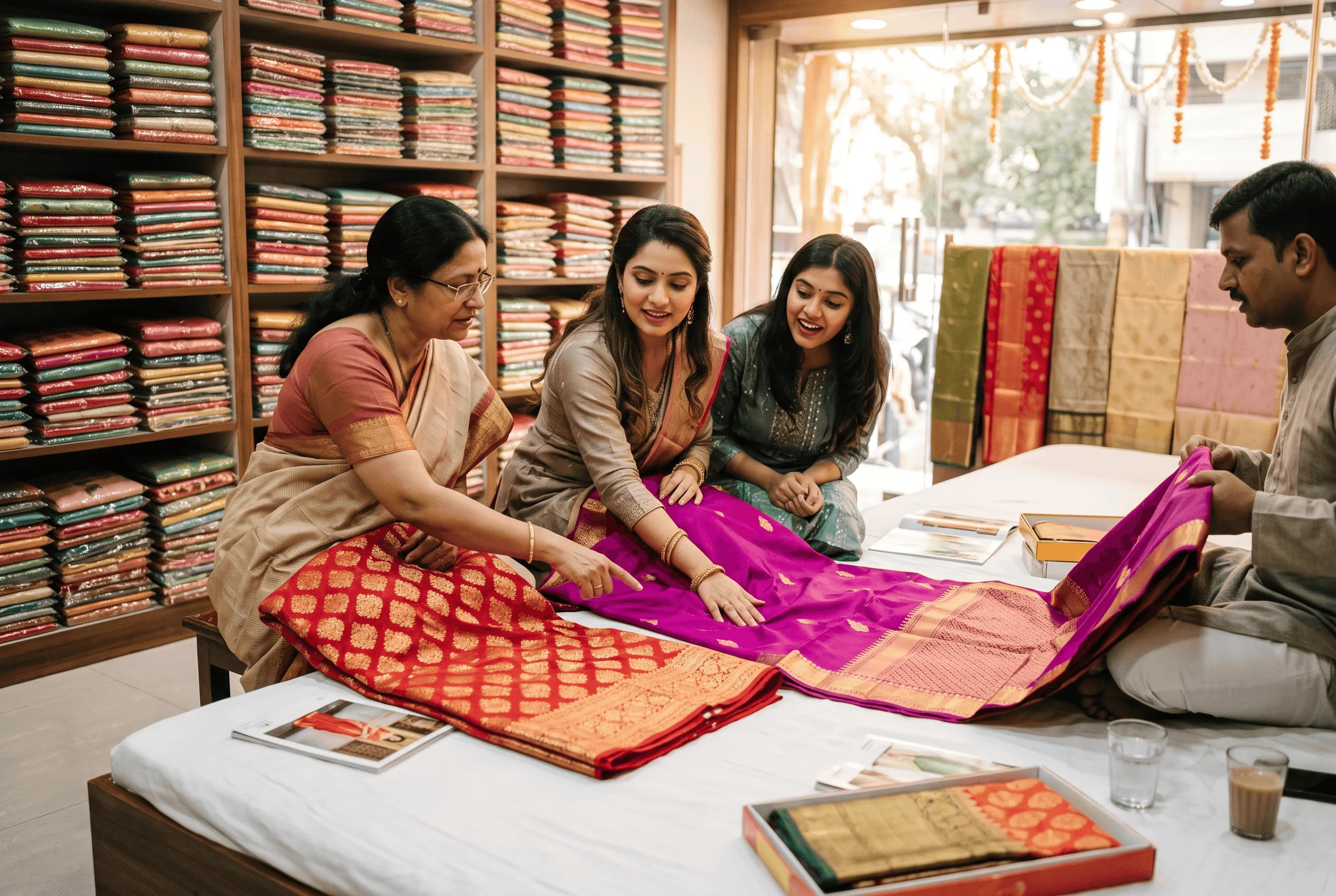
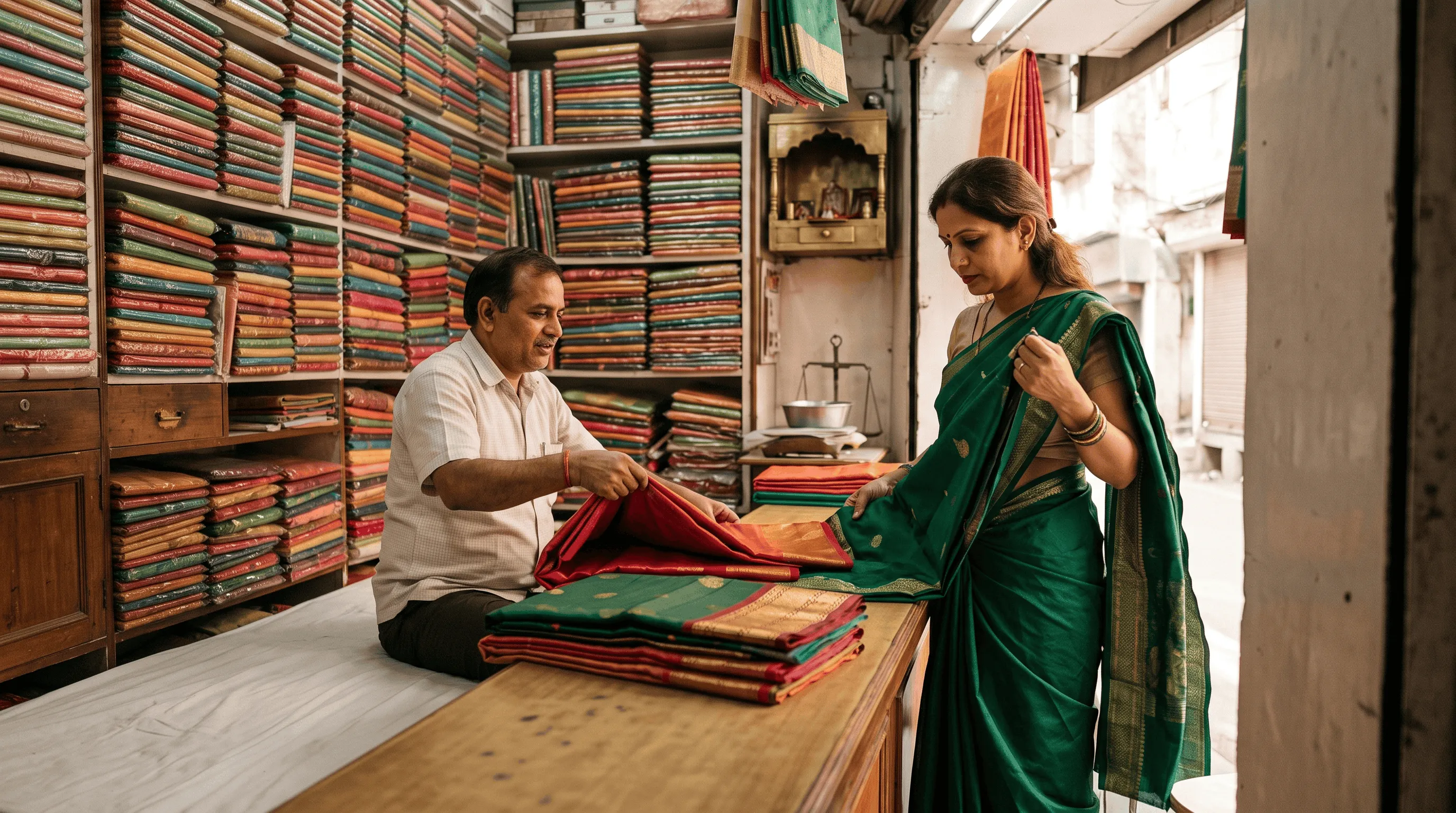
Buy from trusted sellers who can explain the weave and materials.
Check the Silk Mark for the silk.
Be cautious of "pure zari" claims at budget prices.
Supporting Zari Artisans
Zari making and zari weaving support skilled artisans in centres such as Surat, Varanasi and Kanchipuram.
Choosing genuine handwoven zari silk helps sustain these crafts and the families who practise them.
Common Mistakes With Zari Silk
Paying a pure zari price for tested or imitation zari is the most common mistake.
Another is storing zari sarees in plastic, which traps moisture and speeds tarnishing.
Some people also spray perfume directly onto zari or iron it directly.
Finally, avoid folding zari sarees along the same lines for years.
Why Zari Silk Remains Timeless
Zari silk brings the glow of gold and silver to India's finest weaves, from bridal Banarasis to temple-bordered Kanjivarams.
Understanding the difference between pure, tested and imitation zari helps you choose wisely, pay fairly and care for your sarees so they shine for generations.
Explore more in our silk fabric types guide, our handloom silk guide and the traditional wear trends 2026 guide.
Zari Beyond Sarees
Zari is also used in lehengas, dupattas, blouses, sherwanis, turbans and home textiles.
Zari-bordered dupattas add festive richness to simple suits.
Zari brocade blouses dress up plain silk or cotton sarees.
Zari is also used in religious and ceremonial textiles, where its glow symbolises celebration and auspiciousness.
Old Zari Sarees: Reuse and Heirlooms
Many families own old zari sarees that are too fragile to wear.
These can be reworked into dupattas, lehenga borders, cushion covers or framed textile art, preserving the zari and the memories.
Our saree to lehenga conversion guide explains how to give heirloom zari sarees a new life.
Comments (0)
Leave a Thought
No comments yet. Be the first to share your thoughts!