The Paithani is Maharashtra's most treasured saree.
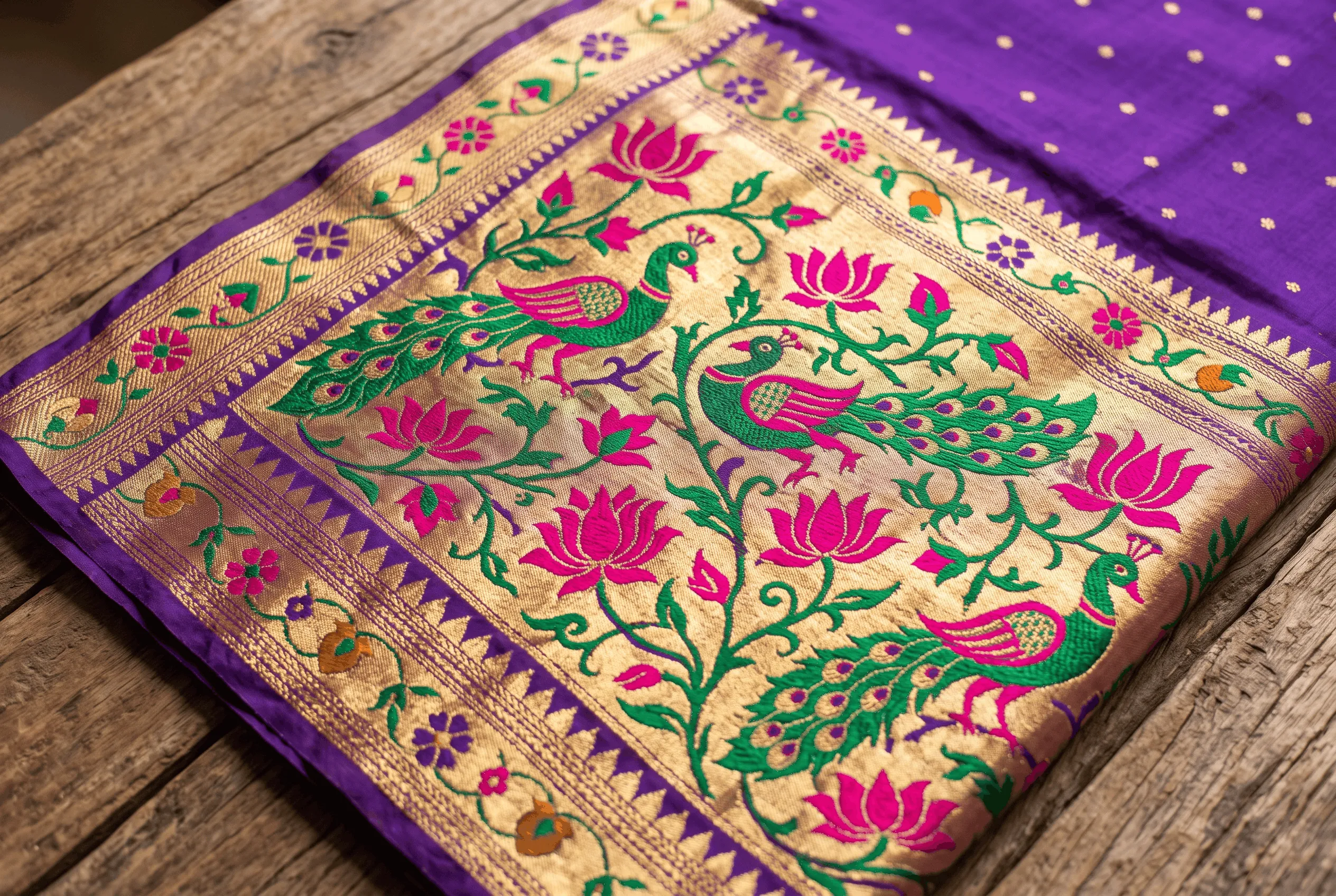
Woven in Paithan and Yeola, it is known for its peacock and lotus pallus, its oblique-square borders and its kaleidoscope colours created by weaving one colour in the warp and another in the weft. A Paithani shimmers between shades as you move, which is why it has been called the "queen of silks".
For many Maharashtrian families, a Paithani is the most important saree a bride receives, worn for her wedding, for Mangalagaur, for Gudi Padwa and handed down as an heirloom.
This guide focuses on how to style a Paithani saree for weddings, festivals and modern events, which blouses, jewellery and drapes suit it, and how to care for it so it lasts for generations. For the history, types and how to spot a genuine piece, read our companion guide to Paithani sarees: history, types and authenticity.
What Makes a Paithani Special?
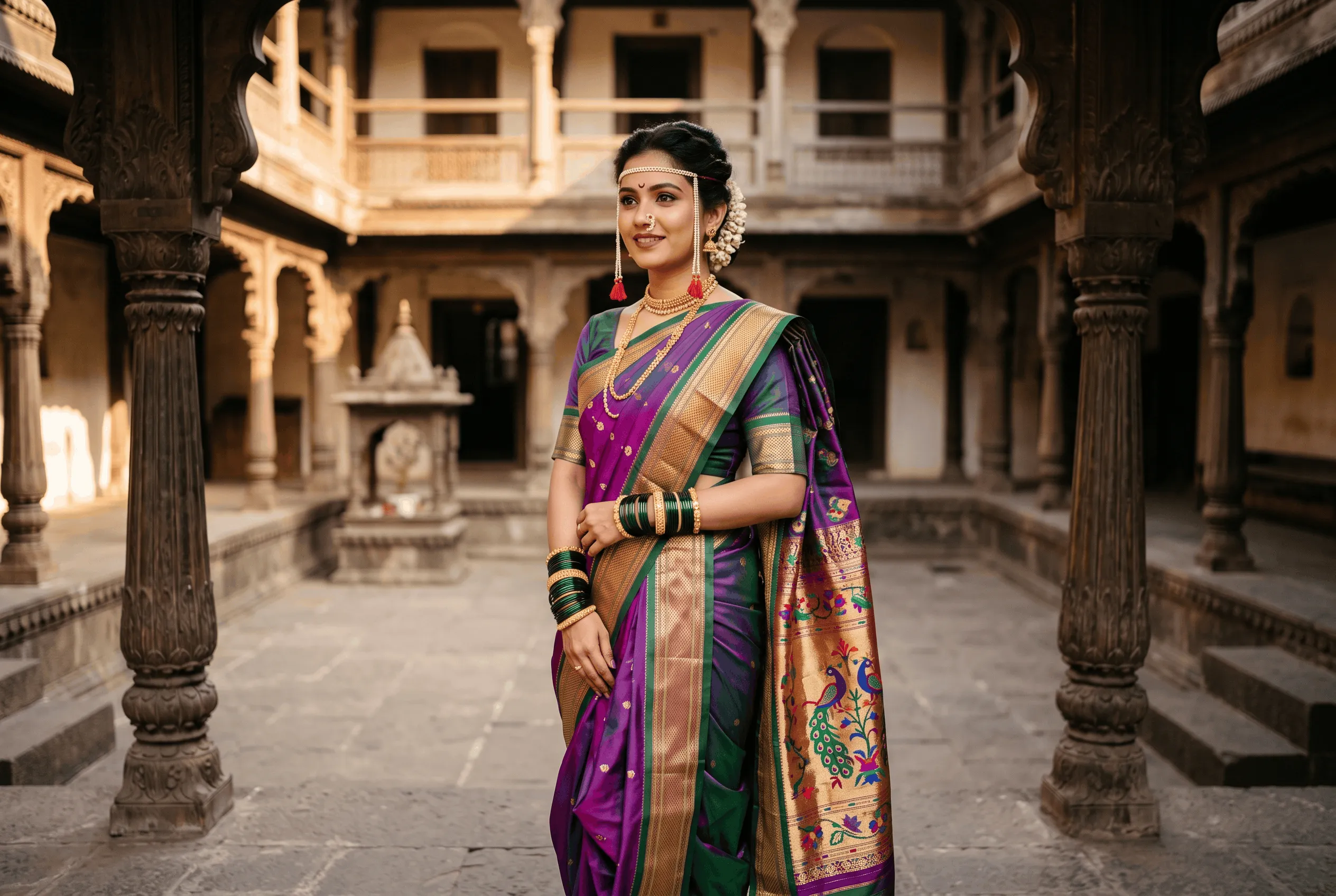
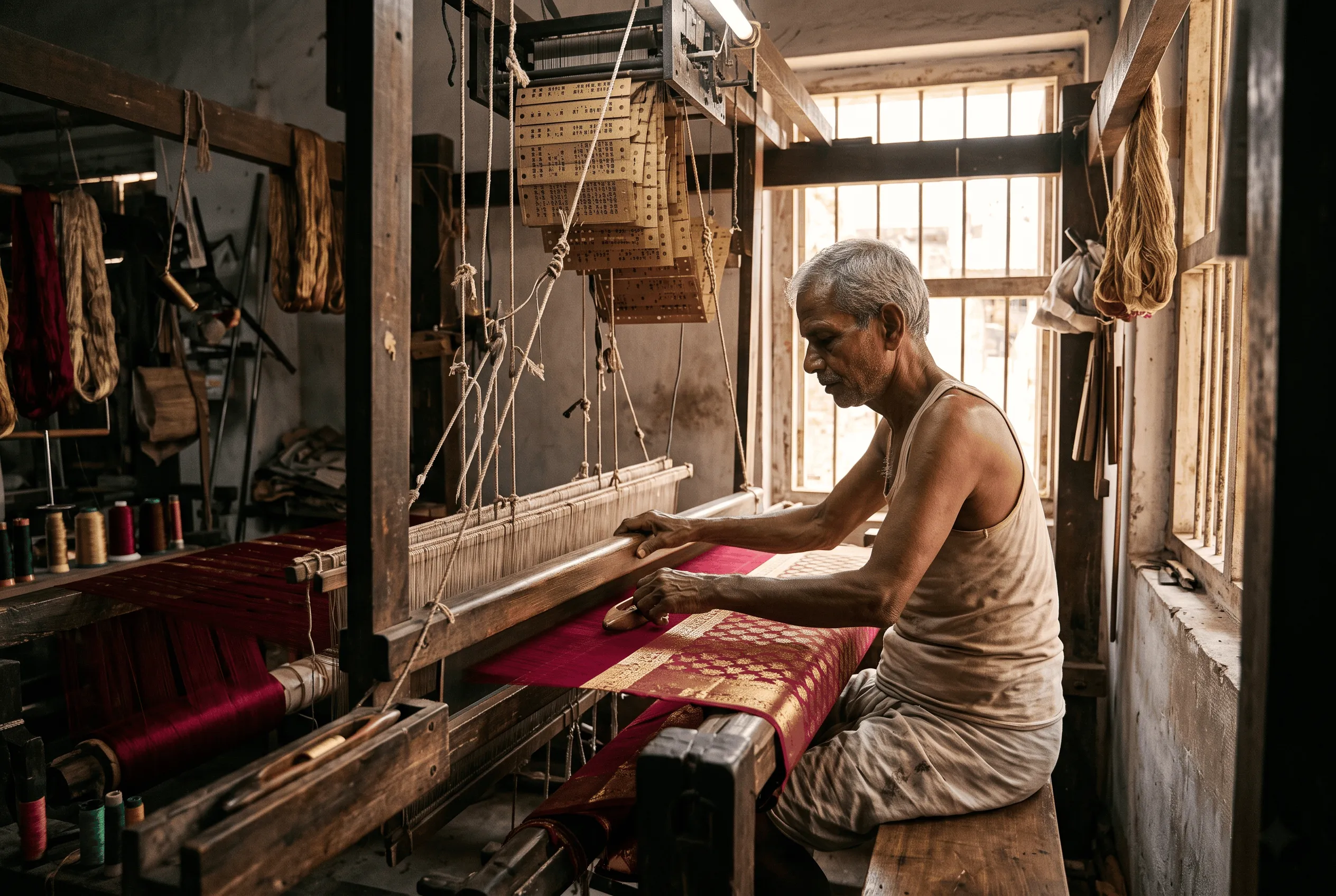
Hand-woven tapestry technique: the pallu and border motifs are woven by hand using a tapestry-like technique, with each colour inserted individually.
Peacock, parrot and lotus motifs: the most iconic Paithani designs.
Kaleidoscope colours: a contrasting warp and weft create shifting shades.
Zari borders: often with oblique-square or narali (coconut) motifs.
GI protection: Paithani sarees from Paithan are protected by a Geographical Indication.
Because the design is woven, a genuine Paithani often looks almost identical on both sides.
Paithani Colours and What They Suit
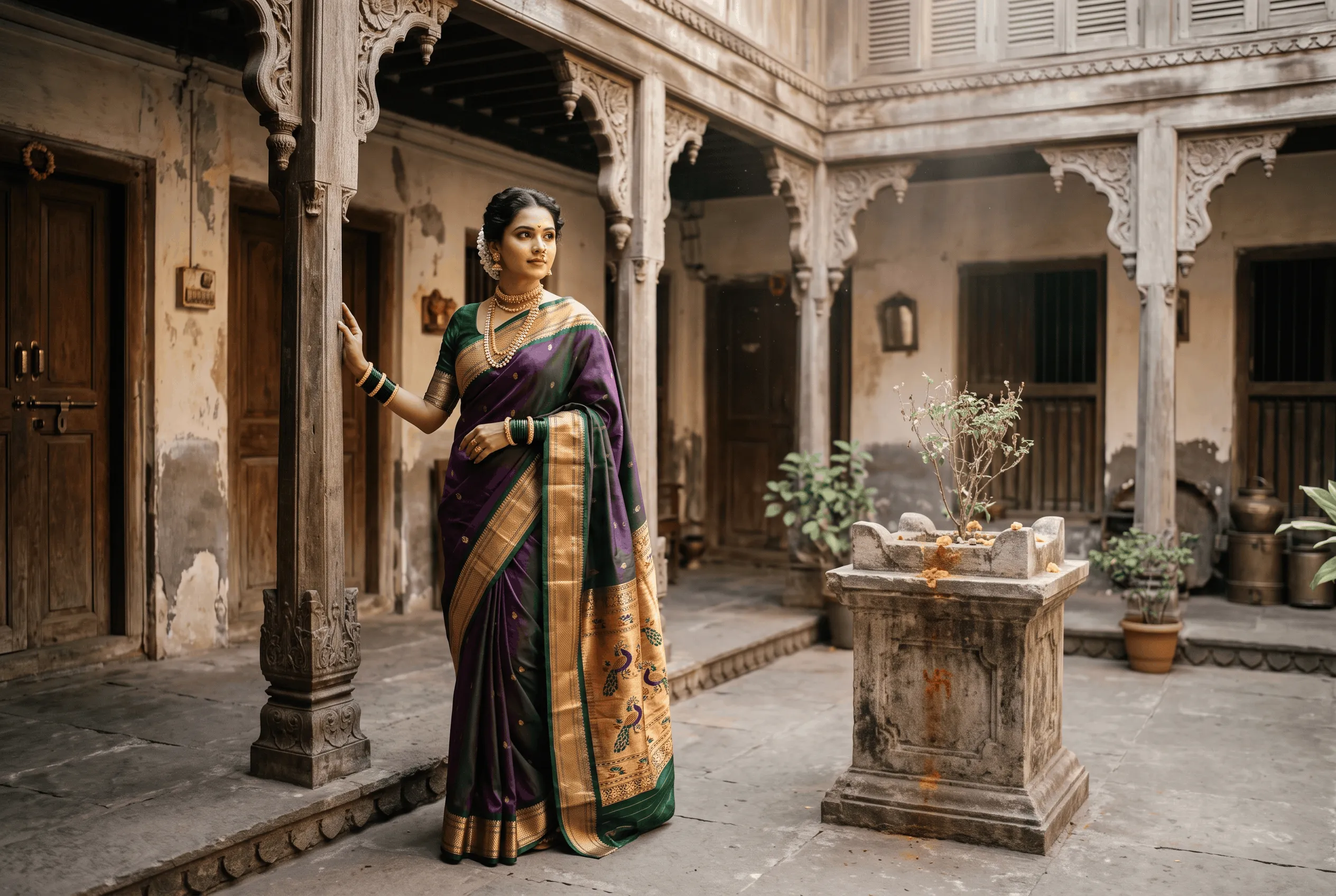
Purple and green: the classic kaleidoscope for brides.
Pink and orange (rani and keshri): festive and joyful for Gudi Padwa.
Yellow and green: traditional for haldi and pujas.
Red and maroon: bridal and auspicious.
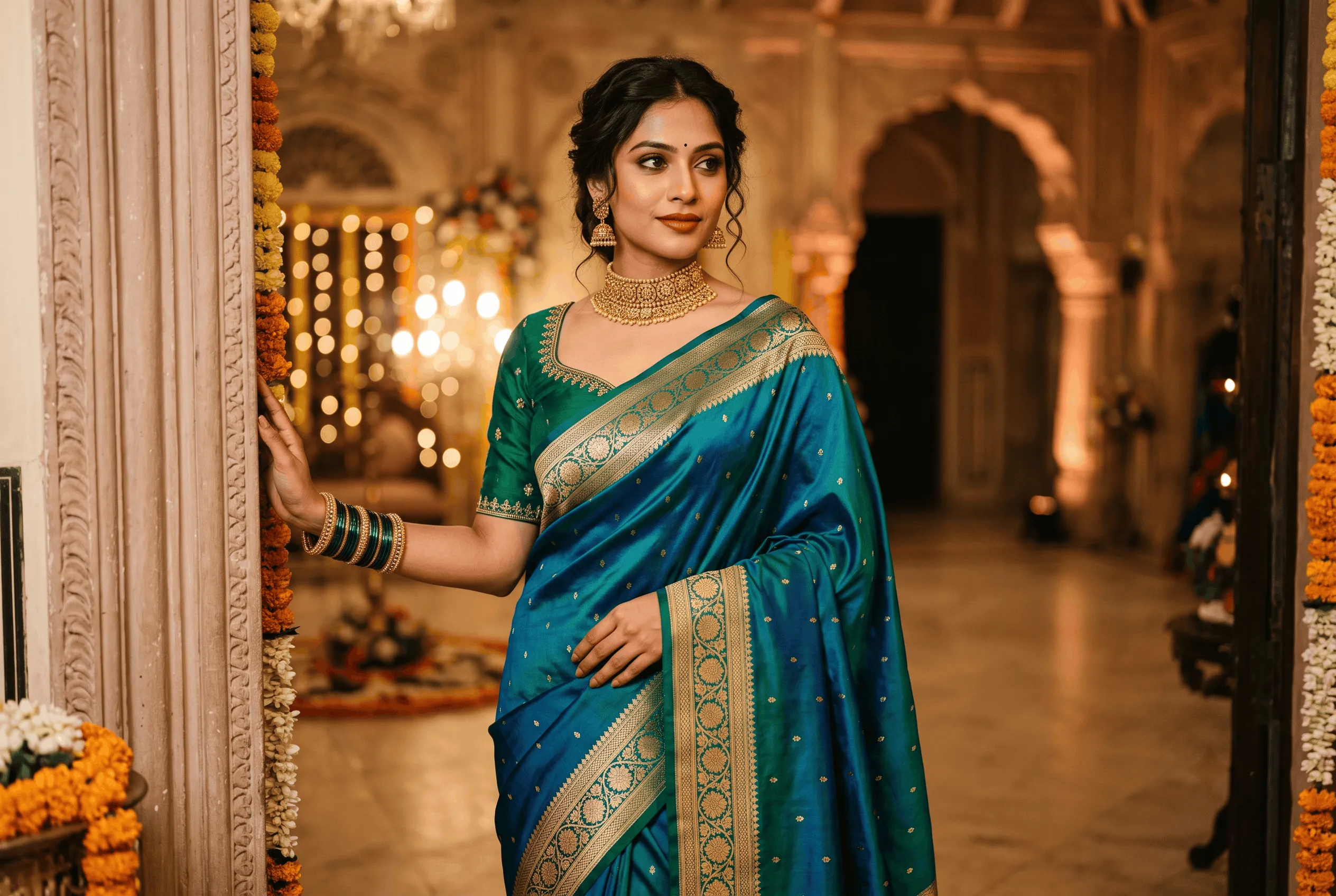
Peacock blue and green: regal for receptions.
Black (chandrakala): traditionally worn for Makar Sankranti in Maharashtra.
Pastels: modern options for day weddings and young brides.
Styling a Paithani for the Wedding
The traditional Maharashtrian bride
Many Maharashtrian brides wear a nauvari (nine-yard) Paithani or a six-yard Paithani draped in nauvari style.
Jewellery: nath (nose ring), thushi (choker), chinchpeti, kolhapuri saaj, mohan maal, green glass bangles (hirva chuda) and tode.
Accessories: mundavalya (the string of pearls tied across the forehead), a flower veni and a kamarpatta (waist belt).
Blouse: elbow-length sleeves with a Paithani border on the sleeves.
The six-yard bridal look
For brides who prefer a simpler drape, a six-yard Paithani in Nivi style with an open pallu shows off the peacock motif beautifully.
Pair it with a contrast blouse, gold temple jewellery and a statement nath.
Styling a Paithani for Festivals
Gudi Padwa: a bright pink, orange or yellow Paithani in nauvari or Nivi style with a nath and green bangles.
Ganesh Chaturthi: classic purple-green or red Paithani with traditional jewellery.
Mangalagaur: newly married women wear Paithani for this Shravan festival.
Makar Sankranti: a black Paithani with halwa jewellery (sugar-crystal jewellery) is a cherished tradition.
Diwali: rich colours with a modern blouse. See our Diwali outfit ideas.
Styling a Paithani for Modern Events
Receptions: pair a Paithani with a sweetheart, corset or off-shoulder blouse. See our corset blouse design guide.
Cocktail and sangeet: a pastel Paithani with a cape blouse or belt.
Office events and conferences: a lighter, simpler Paithani with a narrow border and a collared blouse.
Wedding guest: choose a non-bridal colour such as peacock blue, mustard or emerald, with lighter jewellery.
Blouse Ideas for Paithani
Paithani border sleeves: use the saree's border fabric on the sleeves.
Contrast silk blouse: green with purple, pink with orange.
Brocade blouse: for a grand bridal look.
High-neck blouse: elegant with temple jewellery. See high neck blouse designs.
Boat-neck and sweetheart blouses: for modern looks.
Jewellery Guide
Traditional Maharashtrian: nath, thushi, chinchpeti, kolhapuri saaj, mohan maal, bugadi (ear-top piercings) and tode.
Temple jewellery: a pan-Indian classic that suits Paithani.
Pearls: soft and elegant for daytime functions.
Modern minimal: a single statement nath or necklace with simple earrings.
See our jewellery pairing guide for silk sarees.
Draping Styles for Paithani
Nauvari: the traditional nine-yard drape with a kaccha tuck, worn for weddings and festivals.
Nivi: easy and elegant for six-yard Paithanis. See our Nivi drape tutorial.
Peshwai style: a regal nauvari variation inspired by the Peshwa era.
Pre-stitched nauvari: ready-to-wear options for convenience. See our pre-draped saree guide.
Paithani for Men and Family Coordination
Paithani-inspired kurtas, jackets, stoles and pheta (turbans) are popular for grooms and family members.
Coordinating the groom's stole or the family's outfits with the bride's Paithani colours creates beautiful wedding photos.
Buying a Paithani
Ask whether it is handwoven in Paithan or Yeola.
Check whether the zari is pure, tested or imitation.
Look for nearly identical designs on both sides of the pallu.
Ask for GI or Silk Mark details.
Compare prices: handwoven Paithanis with pure zari are significantly more expensive than powerloom versions.
These are indicative 2026 ranges.
| Paithani type | Indicative price range |
|---|---|
| Powerloom or semi-Paithani | ₹3,000 – ₹12,000 |
| Handwoven Paithani with tested zari | ₹15,000 – ₹60,000 |
| Handwoven Paithani with pure zari | ₹60,000 – ₹3,00,000+ |
See our authentic handloom red flags before you buy.
Caring for Your Paithani
Dry-clean only.
Store in muslin, not plastic.
Refold every few months to avoid permanent creases along the zari.
Keep away from perfume and moisture, which can tarnish zari.
Air it after wearing before you fold it.
Wrap the pallu separately with acid-free tissue to protect the peacock motifs.
See our silk saree care guide for more.
Styling by Pallu Motif
The pallu motif changes how a Paithani feels, and it can guide your styling.
Peacock (mor) and bangdi mor: the most festive and bridal motif. Keep the blouse plain so the pallu stays the focus, and wear an open pallu for photos.
Parrot (munia or tota-maina): playful and youthful, lovely for Mangalagaur, haldi and younger women. Pair with lighter jewellery such as pearls.
Lotus (kamal): calm and auspicious, ideal for pujas and temple visits, with temple jewellery.
Asawali (flowering vine): graceful and elegant for day weddings and festivals.
Plain body with a narali (coconut) border: understated and versatile, perfect for office events and receptions with a modern blouse.
Choosing Your First Paithani
If you are buying your first Paithani, choose something you will wear more than once.
Colour: a classic kaleidoscope such as purple-green, pink-orange or peacock blue works for weddings, festivals and pujas.
Pallu: a medium peacock or lotus pallu is festive without being too bridal.
Border: a medium zari border looks rich but is easier to style than a very wide one.
Zari: tested zari keeps the price manageable; pure zari is worth it for a bridal or heirloom piece.
Weight: handwoven Paithanis are heavier than many silks, so try draping it before buying if you can.
Paithani at Different Ages
Young girls: Paithani-border parkar-polka (skirt and blouse) or a light semi-Paithani for festivals.
College students: a light Paithani with a modern blouse for traditional day or farewell.
Brides: a heavy peacock-pallu Paithani in nauvari or Nivi style.
Mothers of the bride and groom: rich kaleidoscope Paithanis with traditional jewellery for the wedding rituals.
Grandmothers: softer colours, narrow borders and heirloom Paithanis, often worn with the same jewellery for decades.
Paithani for Wedding Guests
A Paithani is a wonderful choice for a Maharashtrian wedding, but guests should avoid looking like the bride.
Choose colours such as mustard, peacock blue, emerald, rani pink or wine rather than the bride's colours.
Pick a lighter pallu and narrower border, and wear the saree in Nivi style rather than nauvari unless the family encourages it.
Keep jewellery traditional but lighter: a single statement nath or a necklace with jhumkas is enough.
Paithani for Office and Cultural Events
A simple Paithani with a narrow border and a small pallu motif suits office celebrations, Marathi Bhasha Din and cultural programmes.
Pair it with a collared or high-neck blouse, small gold or pearl earrings and a neat pleated pallu.
This is also a lovely way to wear an heirloom Paithani more often instead of keeping it only for weddings.
Hair and Makeup With a Paithani
Hair: a traditional ambada (bun) decorated with a gajra (flower string) is the classic Maharashtrian pairing. A long braid with a veni also looks beautiful with a nauvari drape.
Chandrakor bindi: the crescent-moon bindi is a signature Maharashtrian touch, especially with a nath.
Makeup: let the Paithani's colours lead. With a purple-green kaleidoscope, keep eyes soft and choose a rich berry or red lip. With pastel Paithanis, a dewy finish and soft pink lip work well.
Nath placement: the nath is worn on the left nostril in the traditional Maharashtrian style; clip-on versions are available if your nose is not pierced.
These small details turn a beautiful saree into a complete traditional look.
Paithani as an Heirloom
Many families pass Paithanis from grandmother to mother to daughter.
Old Paithanis can be restored by specialist weavers, and worn-out ones can be repurposed into lehengas, jackets or framed pallus. See our saree to lehenga conversion guide.
Wearing Your Paithani With Pride
A Paithani is a celebration of Maharashtra's weaving heritage.
Style it in a traditional nauvari with a nath and green bangles for weddings and festivals, or give it a modern twist with a contemporary blouse for receptions. Care for it carefully, and it will become a treasured heirloom.
Explore more in our guide to West India textiles: Patola, Bandhani and Paithani and on our West India page.
Comments (0)
Leave a Thought
No comments yet. Be the first to share your thoughts!