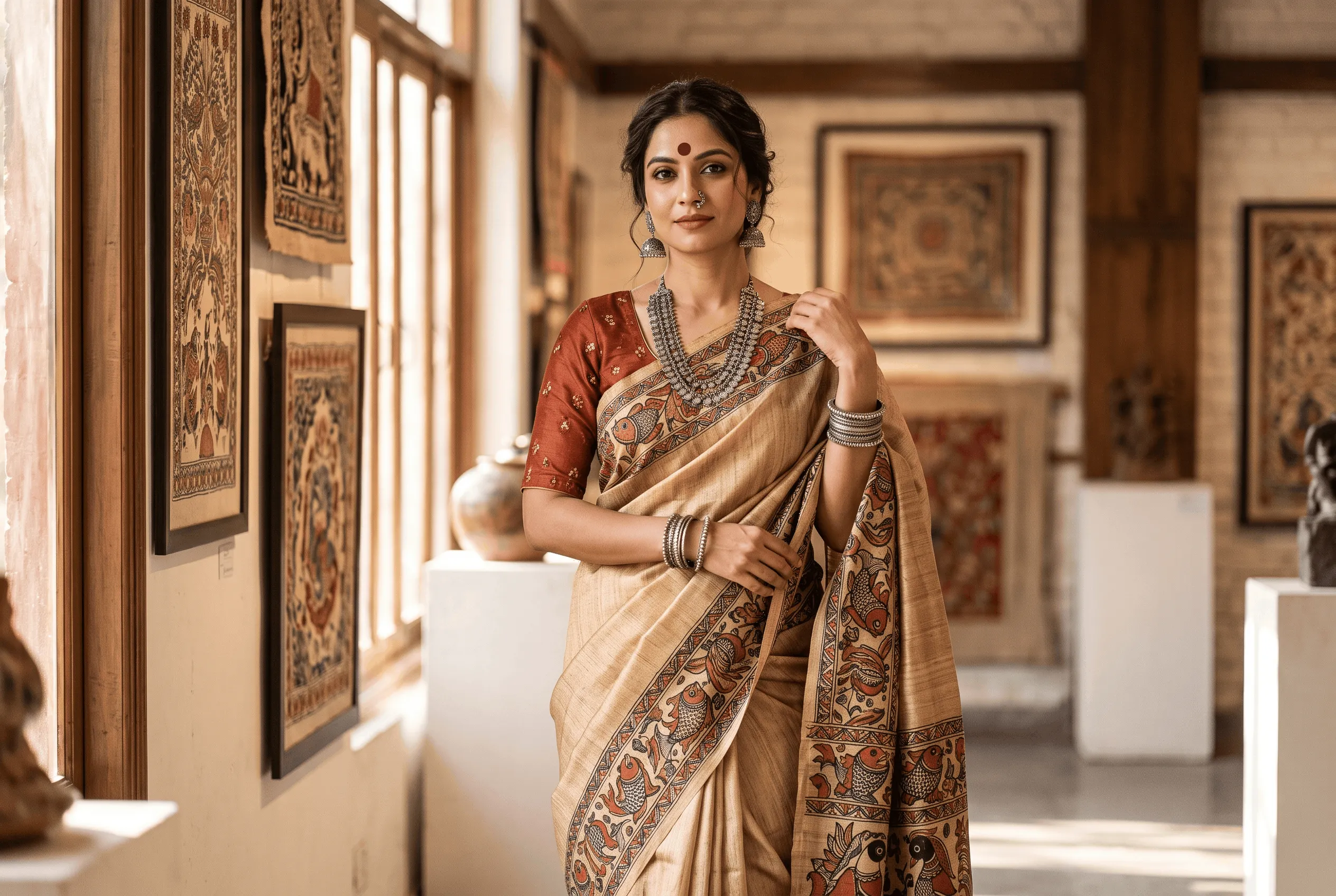
Tussar silk has a beauty that is very different from the high shine of mulberry silk.
It has a soft, natural sheen, a slightly textured surface and a warm golden-beige base colour that looks earthy, sophisticated and quietly luxurious.
Tussar sarees are loved by women who prefer understated elegance, handcrafted textures and artistic designs such as Kantha embroidery, Madhubani painting and block prints.
This tussar silk guide focuses on how to wear tussar: the occasions where it shines, styling ideas for work and festivals, blouse and jewellery pairings, colours, care and how to choose genuine pieces.
For the full history and production story of this wild silk, see our complete guide to tussar silk.
Here, the goal is to help you style tussar confidently and keep it looking beautiful for years.
What Makes Tussar Different
Tussar (also written tasar) is a wild silk produced by silkworms that feed on forest trees such as arjun, asan and sal.
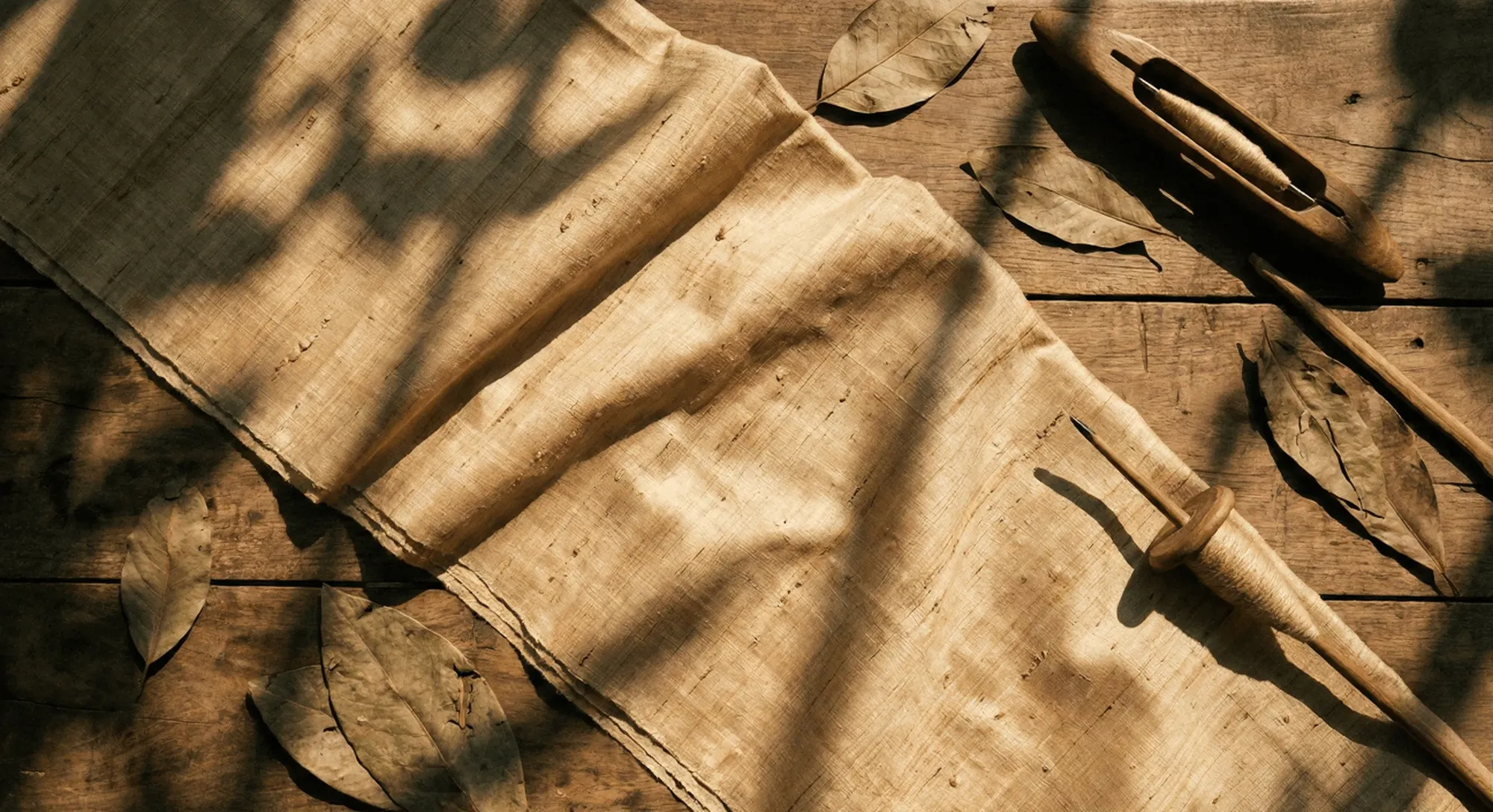
Because the silkworms live in the wild, the silk has a natural golden or beige tone and a slightly uneven, textured surface.
Tussar is produced in states such as Jharkhand, Bihar, Chhattisgarh, Odisha and West Bengal, and Bhagalpur in Bihar is famous for its tussar weaving.
Compared with mulberry silk, tussar is less shiny, more textured and often lighter in feel.
Types of Tussar You Will See
| Type | Feel | Best for |
|---|---|---|
| Plain tussar | Natural golden, smooth to slightly textured | Office events, formal wear |
| Ghicha tussar | Coarser, more textured yarn | Casual and artistic looks |
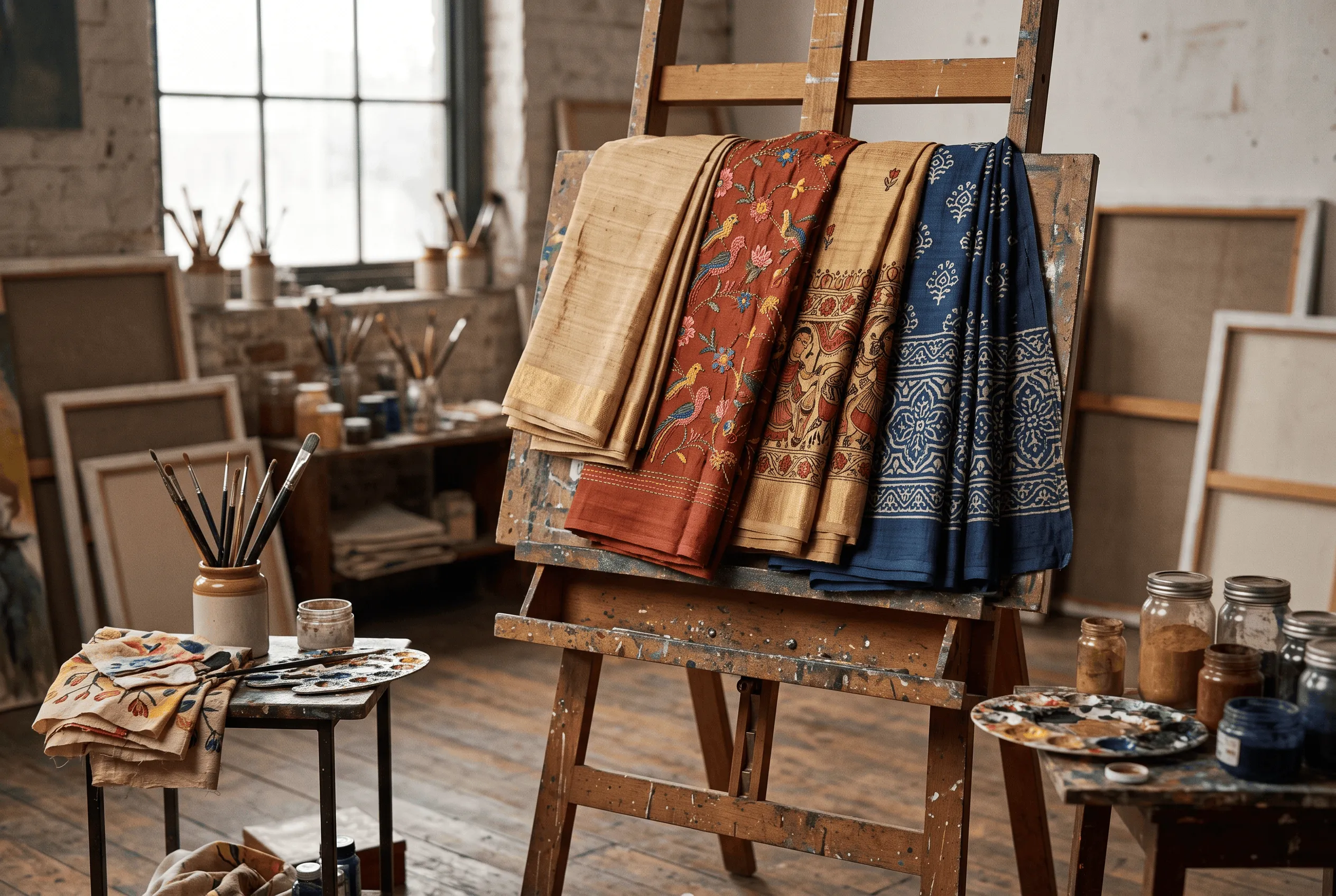
| Tussar with Kantha | Hand running-stitch embroidery | Festive daywear, gifting |
| Hand-painted tussar | Madhubani or Pattachitra art | Cultural events, art lovers |
| Block-printed tussar | Earthy prints | Daywear, office |
| Tussar with zari border | Dressier finish | Weddings, festivals |
Best Occasions for Tussar Sarees
Office Events and Conferences
Tussar's understated sheen and natural colour look polished and professional, especially in solid shades with simple borders.
Cultural Events and Exhibitions
Hand-painted, Kantha and block-printed tussar sarees are perfect for art openings, cultural evenings and literary festivals.
Festive Daywear
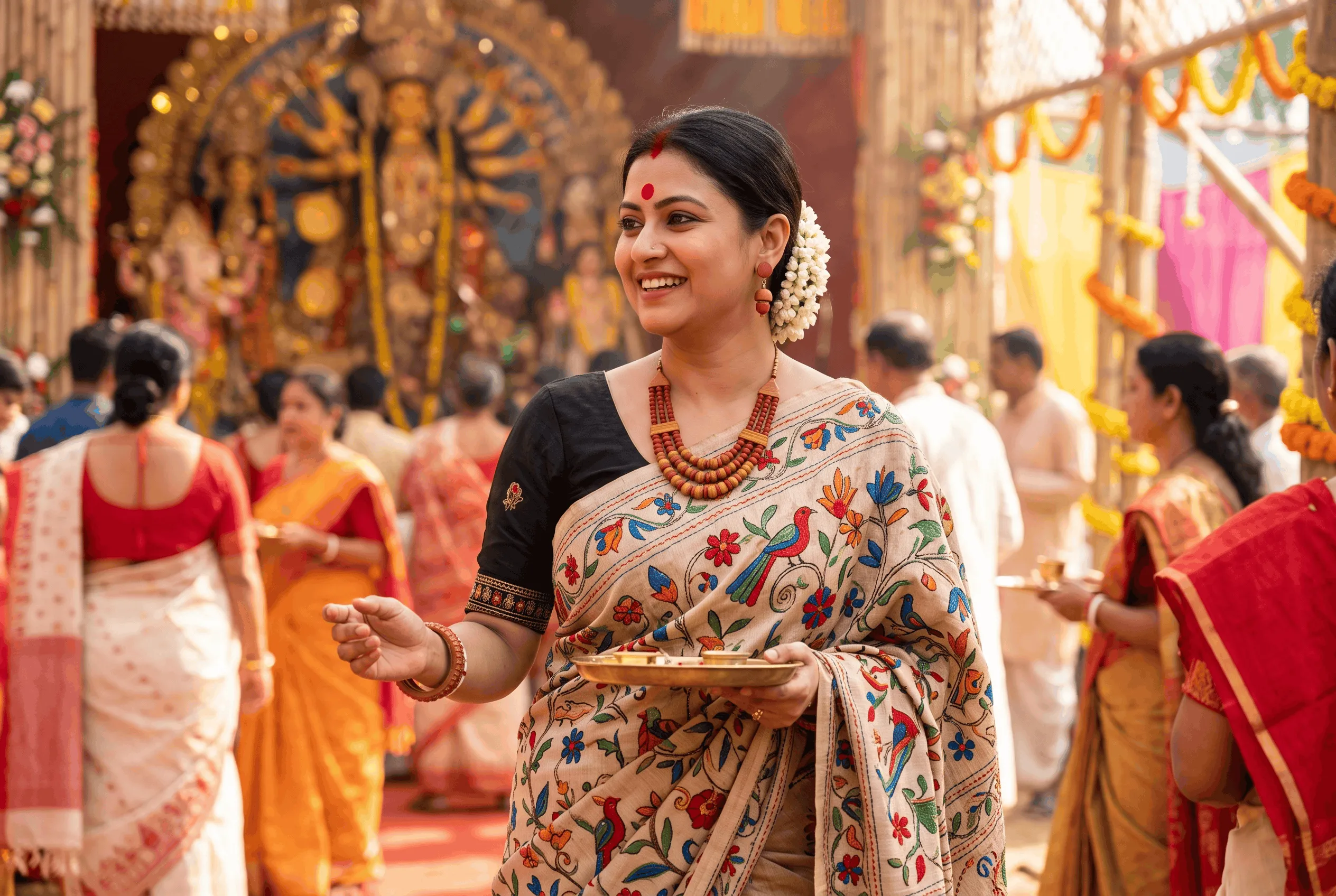
Tussar with zari borders or embroidery works beautifully for Durga Puja mornings, Diwali visits and family pujas.
Wedding Guest Looks
A tussar saree with rich embroidery or a zari border is an elegant, slightly offbeat choice for a wedding guest, especially for day functions.
Winter Days
Tussar has a gentle warmth that makes it comfortable in mild winter weather.
When Tussar May Not Be the Best Choice
Formal bridal ceremonies: brides usually prefer heavier, shinier silks such as Kanjivaram or Banarasi for the main ceremony.
Very hot, humid days: tussar is comfortable, but lighter cotton or Chanderi may feel cooler in extreme heat.
When you want high shine: tussar's matte sheen is subtle, so choose mulberry silk if you want a glossy look.
How to Style a Tussar Saree
For the Office
Choose a solid tussar with a simple border, a structured blouse in a contrast colour and minimal jewellery such as silver studs or a thin chain.
For Cultural Events
Pick a hand-painted or Kantha tussar, pair it with a plain black or rust blouse and add statement oxidised or terracotta jewellery.
For Festivals
A tussar with a zari border looks festive with gold jewellery and a brocade or silk blouse.
For a Modern Look
Try a tussar saree with a collared blouse, a belt or a structured jacket.
Blouse Ideas for Tussar Sarees
Contrast silk blouses in black, maroon, rust, bottle green or indigo bring out tussar's golden tone.
Khadi or cotton blouses create a relaxed, artistic look.
Brocade blouses dress up plain tussar for festivals.
High-neck and collared blouses suit formal events. See our high-neck blouse designs.
Jewellery That Complements Tussar
Tussar's earthy elegance pairs beautifully with handcrafted jewellery.
Oxidised silver jhumkas and chokers.
Terracotta and wooden necklaces and earrings.
Tribal and dokra jewellery for an artistic look.
Antique gold for festive occasions.
Pearls for a soft, formal look.
Colours That Work With Tussar
Tussar's natural golden-beige base is beautiful on its own.
It also takes dyes well, so you will find tussar in deep red, mustard, rust, olive, bottle green, indigo and black.
Contrast borders and pallus in jewel tones add richness to the natural base.
How to Recognise Genuine Tussar
Natural texture: genuine tussar has a slightly uneven, textured surface with small slubs.
Natural colour: undyed tussar has a golden-beige tone.
Matte sheen: tussar's sheen is soft rather than glassy.
Silk Mark: look for the Silk Mark label on pure tussar products.
Burn test (on a loose thread of a saree you own): silk burns slowly, smells like burning hair and leaves crushable ash.
For general checks, see our guide on how to identify a pure silk saree.
Tussar vs Mulberry Silk
| Feature | Tussar | Mulberry silk |
|---|---|---|
| Source | Wild silkworms | Cultivated silkworms |
| Colour | Natural golden-beige | Naturally white, dyed easily |
| Texture | Slightly rough, textured | Smooth |
| Sheen | Soft, matte | High lustre |
| Weight | Light to medium | Light to heavy |
| Look | Earthy, artistic | Classic, rich |
For a direct comparison with another popular silk, read tussar vs Mysore silk.
Price Guide
These are indicative 2026 ranges. Prices vary by city, seller, weave and handwork.
| Item | Indicative price range |
|---|---|
| Plain tussar silk saree | ₹3,000 – ₹8,000 |
| Ghicha tussar saree | ₹2,500 – ₹7,000 |
| Block-printed tussar saree | ₹3,000 – ₹9,000 |
| Kantha embroidered tussar saree | ₹6,000 – ₹30,000+ |
| Hand-painted Madhubani tussar saree | ₹5,000 – ₹25,000+ |
| Tussar silk stole or dupatta | ₹1,500 – ₹5,000 |
How to Care for Tussar Silk
Dry-clean tussar sarees, especially those with embroidery, paint or zari.
Avoid water spots. Tussar can show water marks, so keep it away from spills.
Iron on low heat on the reverse side, with a cotton cloth on top.
Store in muslin or cotton in a cool, dry place.
Refold every few months to prevent permanent creases.
Keep away from direct sunlight, which can fade dyed tussar.
Our silk saree care guide has more tips.
Tussar Across India's Regions
Tussar is woven in several regions, and each has its own character.
Bhagalpur in Bihar is often called a silk city and is especially known for tussar sarees and fabrics, from plain weaves to printed and embroidered pieces.
Jharkhand is a major source of tussar silk, and its forests support many silkworm-rearing communities.
Chhattisgarh is known for Kosa silk, a tussar variety with a rich natural tone.
Odisha and West Bengal combine tussar with local crafts such as Pattachitra painting and Kantha embroidery.
Exploring these regional styles is a wonderful way to build a varied and meaningful tussar collection.
Tussar Through the Seasons
Summer: choose lighter tussar weaves and pastel or natural tones for comfort during the day.
Monsoon: be careful, because tussar can show water marks. Keep it for indoor events or drier days.
Festive season: tussar with zari, Kantha or rich colours looks beautiful for Durga Puja, Diwali and family pujas.
Winter: tussar's gentle warmth makes it comfortable in mild winters, and it layers well with shawls.
Draping Tips for Tussar Sarees
Tussar is slightly crisp, so it holds pleats neatly.
Iron the saree lightly on the reverse before draping for clean pleats.
Make pleats about 5 inches wide and pin them at the top.
An open pallu shows off painted or embroidered designs beautifully.
The Bengali drape also suits tussar, especially Kantha and painted sarees. See our Bengali saree draping guide.
Tussar for Different Body Types
Petite women look elegant in plain tussar or small prints with narrow borders.
Curvy women benefit from tussar's light weight and soft structure, which drapes neatly without adding bulk.
Tall women carry bold Kantha, large painted motifs and wide borders especially well.
Tussar for Men and Family Coordination
Tussar is very popular for men's festive and formal wear.
Tussar kurtas, bandhgalas and Nehru jackets have a refined, textured look that suits weddings, pujas and cultural events.
For family occasions, coordinating tussar outfits in complementary colours creates an elegant, cohesive look in photographs.
Tussar Beyond Sarees
Tussar is also used for dupattas, stoles, kurtas, jackets and men's ethnic wear.
A tussar stole adds texture to a simple cotton suit.
Tussar kurtas and Nehru jackets are popular for men at festive and formal events.
Tussar as a Gift
Tussar sarees and stoles make thoughtful gifts, especially for people who appreciate handcrafted textiles and art.
A hand-painted Madhubani or Pattachitra tussar saree is a meaningful gift for a mother, teacher or mentor.
A tussar stole is an affordable, versatile present that suits almost any outfit.
Include a small note about dry-cleaning and storage, so the recipient can enjoy the piece for many years.
Building a Tussar Collection
One plain tussar saree for office and formal events.
One Kantha or hand-painted tussar for cultural and festive occasions.
One tussar with a zari border for weddings and festivals.
One tussar stole to style with suits and kurtas.
Supporting Tussar Communities
Tussar production supports forest-dwelling and tribal communities who rear the silkworms, as well as spinners and weavers in states such as Jharkhand, Bihar, Chhattisgarh and Odisha.
Buying genuine handloom tussar from cooperatives and trusted sellers helps sustain these livelihoods.
Because tussar silkworms are reared on forest trees, the craft is also closely linked to forest conservation, which gives every genuine tussar saree a connection to the landscapes and people that produce it.
Common Mistakes With Tussar
Expecting tussar to shine like mulberry silk is a common misunderstanding.
Another is washing tussar at home and causing water marks or colour loss.
Some buyers also pay pure tussar prices for blends or printed polyester that imitate its colour.
Finally, avoid storing tussar in plastic or damp places.
Why Tussar Deserves a Place in Your Wardrobe
Tussar silk sarees offer a rare combination of natural texture, earthy elegance and handcrafted artistry.
They are perfect for office events, cultural occasions, festive days and stylish wedding guest looks.
Style them with handcrafted jewellery and contrast blouses, care for them gently and they will remain favourites for years.
Explore more silks in our silk fabric types guide and the traditional wear trends 2026 guide.
Comments (0)
Leave a Thought
No comments yet. Be the first to share your thoughts!