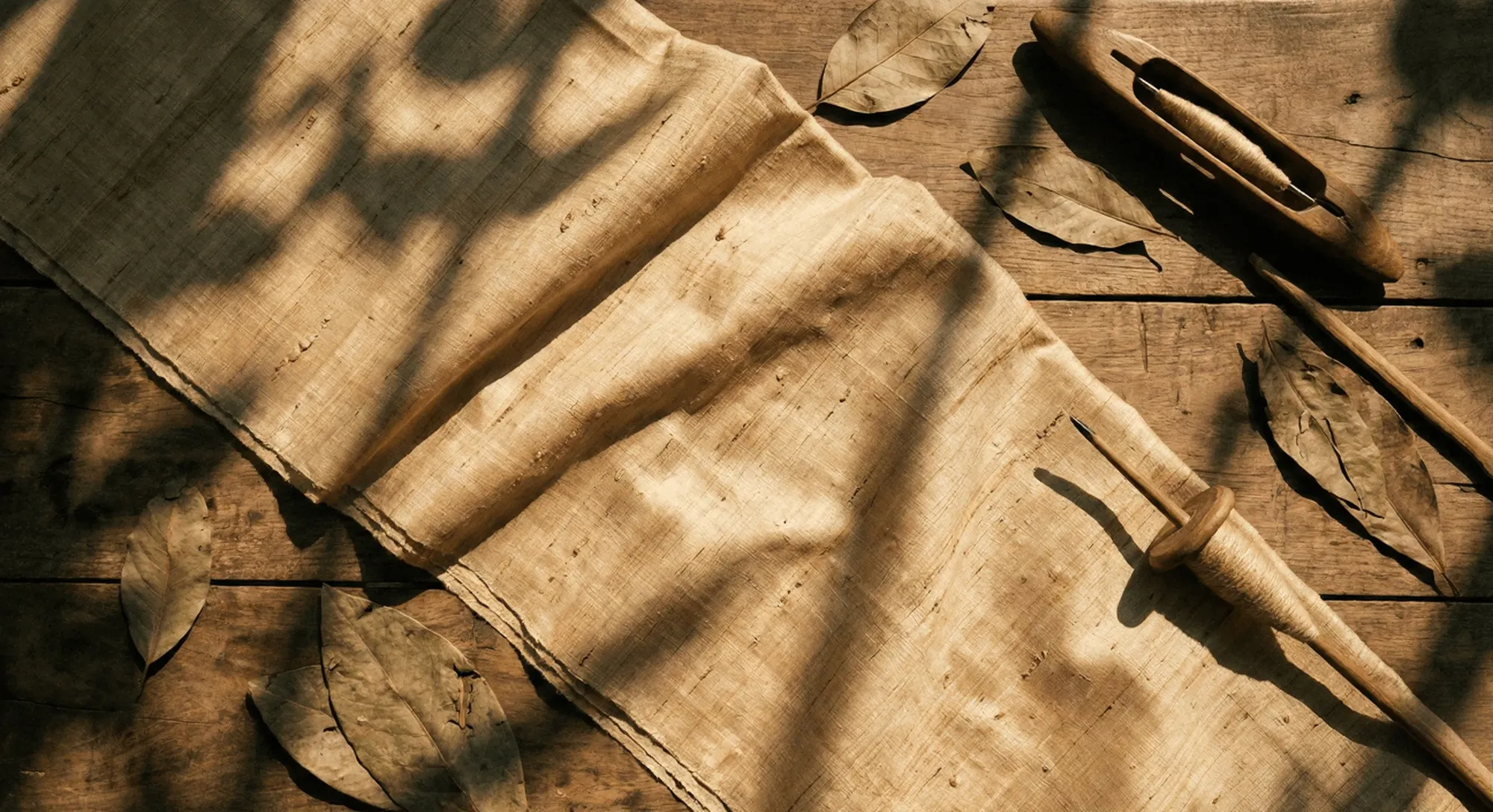
Introduction – The Soul of the Forest in Fabric
Tussar silk is not just a textile. It is a story spun from forests, seasons, and centuries-old wisdom. Known as India’s “wild silk,” Tussar carries an earthy sheen, a raw elegance, and a cultural depth that sets it apart from cultivated silks like Mulberry.
For readers seeking authenticity, sustainability, and heritage in textiles, Tussar silk offers something deeply meaningful. It represents a living relationship between nature and communities, where silk is not farmed in controlled rooms but gathered from forest ecosystems and transformed by hand into fabric that breathes history.
Regional Identity & Communities
Tussar silk is inseparable from Central and Eastern India. The fabric’s identity is rooted in tribal and forest-dwelling communities who have practiced silk rearing and weaving for generations.
The primary Tussar-producing regions include:
- Jharkhand
- Chhattisgarh
- Odisha
- West Bengal
- Parts of Madhya Pradesh
Communities such as the Santhal, Munda, Ho, Gond, and Baiga have historically depended on Tussar for livelihood. For them, silk is not merely an industry but a seasonal rhythm. Cocoons are collected after moths emerge, respecting nature’s cycle, making Tussar one of the most sustainable silks in the world.
History & Evolution of Central Indian Textiles
The story of Tussar dates back over 2,000 years. Ancient Sanskrit texts refer to “Kosa silk,” believed to be early Tussar. Archaeological findings show its use among royalty and ascetics alike, valued for its breathability and natural texture.
During the Mauryan and Gupta periods, Central India became a major silk corridor. Tussar was traded along forest routes and river paths, reaching temples, courts, and later European markets during the colonial era.
Unlike courtly silks, Tussar remained closely tied to rural life. Its evolution was slow, organic, and deeply local. Each generation added subtle changes in motifs, dyeing methods, and loom techniques, creating a textile tradition that resisted industrial uniformity.
Types & Regional Variations
Tussar silk is not a single fabric but a family of silks, each shaped by geography.
1. Kosa Tussar (Chhattisgarh)
- Softest variety of Tussar
- Naturally pale gold
- Often used for sarees and stoles
2. Odisha Tussar
- Known for intricate ikat and temple motifs
- Often combined with cotton
- Rich cultural symbolism
3. Jharkhand Tussar
- Raw texture with prominent slubs
- Preferred for handloom fabrics and furnishing
4. Bengal Tussar
- Finer yarn, closer to mulberry silk feel
- Popular for modern fashion silhouettes
Weaving Techniques & Materials Used
Tussar weaving is a slow craft. Yarn is spun from cocoons of the Antheraea silkworm species, which feed on Arjun, Sal, and Asan trees.
Key techniques include:
- Hand reeling (no machine uniformity)
- Pit looms and frame looms
- Natural dyeing using harad, lac, indigo, and mahua
Because the yarn is uneven, the weaving requires immense skill. Artisans adjust tension constantly, allowing the fabric’s characteristic grain to emerge naturally rather than forcing smoothness.
How to Identify Authentic Tussar Silk
Authentic Tussar can be identified through sensory experience.
Key markers:
- Slightly coarse texture, never glassy smooth
- Natural golden or beige tone (not stark white)
- Visible slubs and irregular yarn thickness
- Absorbs dye softly, never too bright
Burn test (expert only): Tussar smells like burnt hair and leaves ash, not hard residue.
Machine-made “Tussar-look” fabrics lack depth, warmth, and irregularity.
Traditional & Modern Uses
Traditionally, Tussar was used for:
- Sarees and dhotis
- Temple textiles
- Ritual clothing
Today, designers reinterpret it for:
- Contemporary sarees
- Jackets, dresses, and co-ord sets
- Home décor like curtains and cushions
Its breathability makes it ideal for Indian climates, while its texture appeals to global slow-fashion markets.
Care Practices Passed Through Generations
Tussar care traditions emphasize respect for fabric.
- Always dry clean or gentle hand wash in cold water
- Use mild natural soap
- Dry in shade, never harsh sun
- Store wrapped in cotton with neem leaves
Many families believe Tussar “ages gracefully,” becoming softer and richer over time.
Common Misconceptions
- “Tussar is inferior to mulberry silk” – False. It is simply different.
- “Rough texture means low quality” – Texture is Tussar’s identity.
- “All beige silks are Tussar” – Many are synthetic blends.
- “Tussar cannot be worn formally” – Modern tailoring proves otherwise.
Comments (0)
Leave a Thought
No comments yet. Be the first to share your thoughts!