Muga silk is one of India's rarest and most precious textiles.
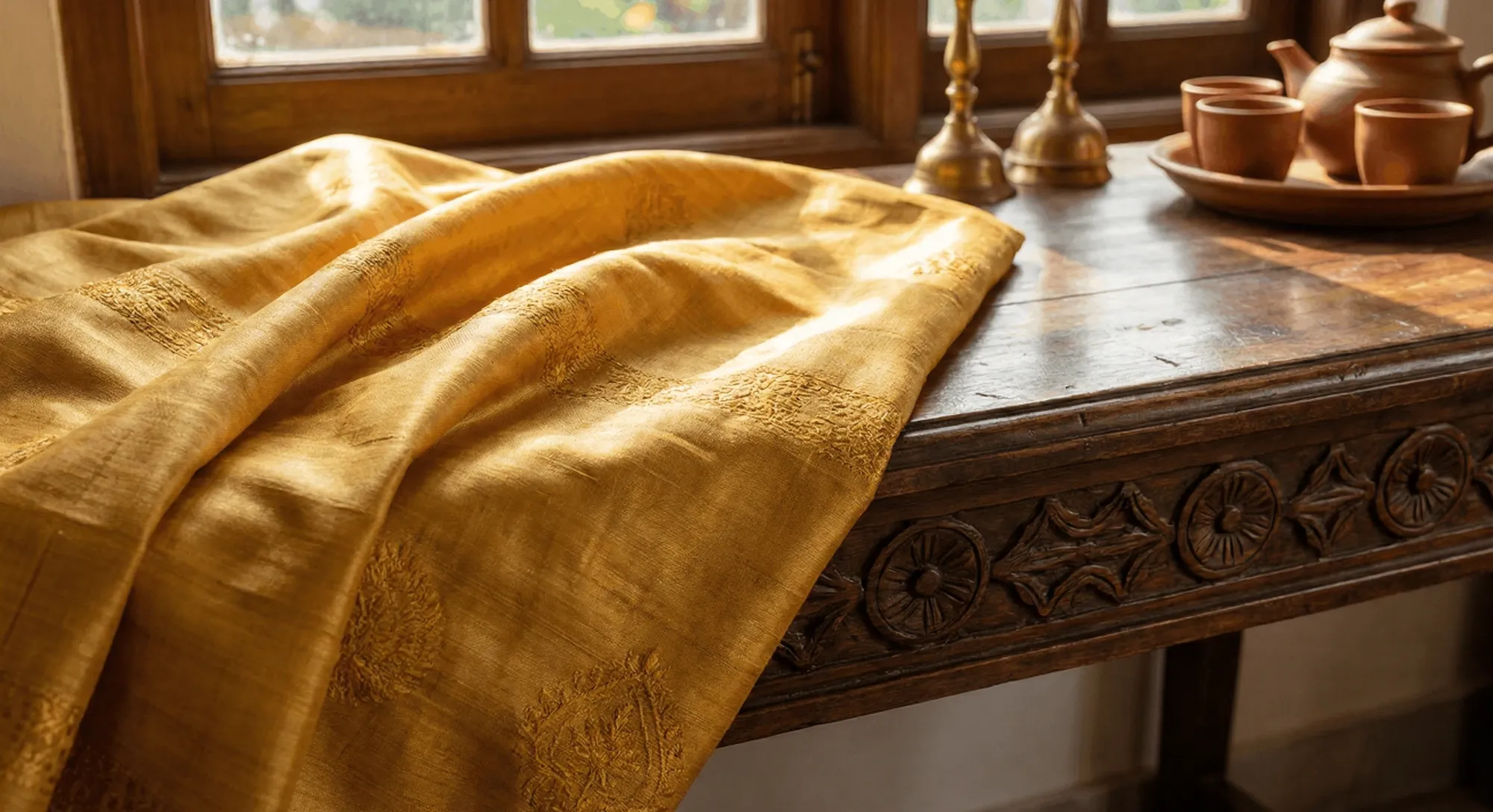
Produced only in Assam, it has a natural golden sheen that no dye can truly copy, and it is famous for becoming even more lustrous with age.
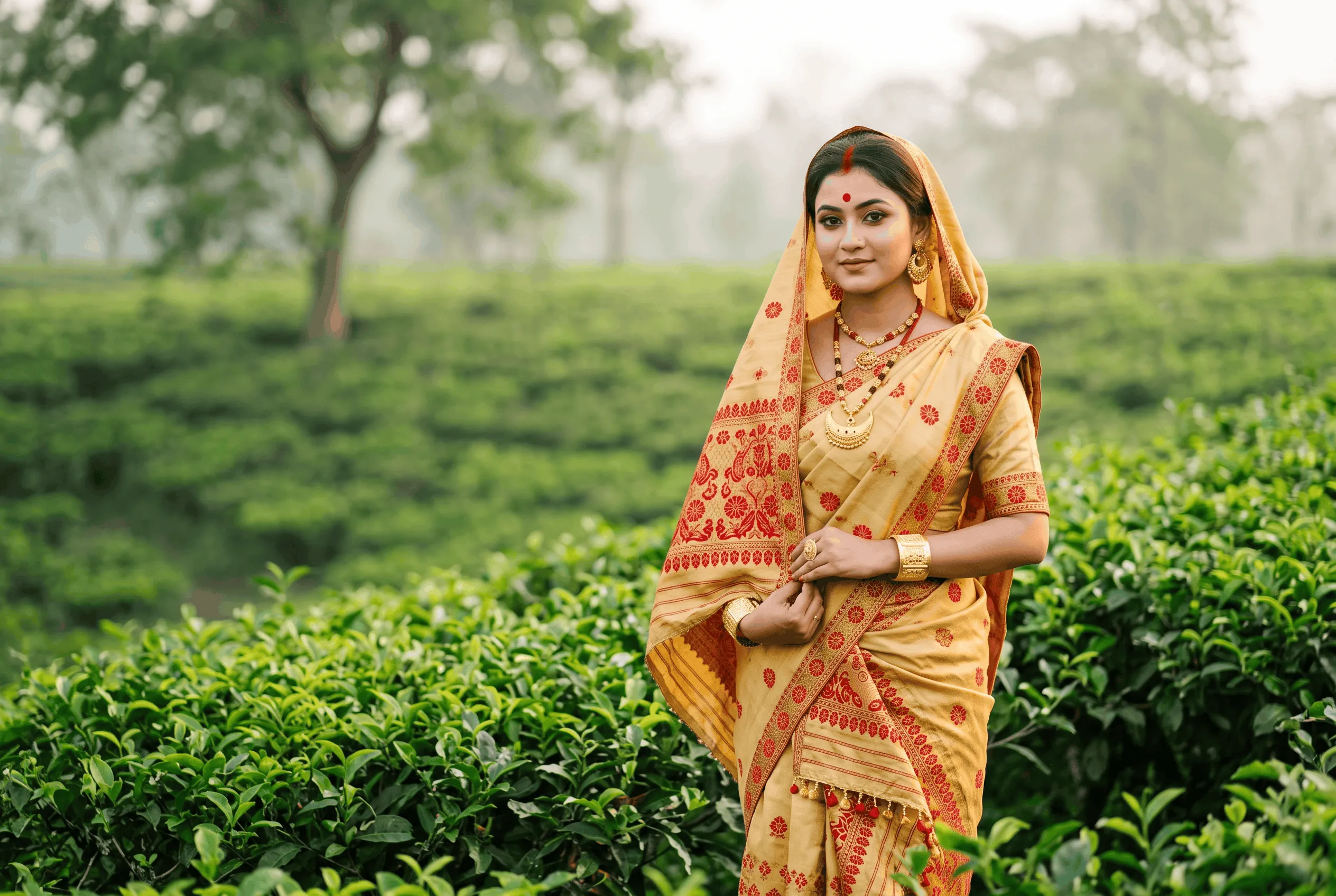
For Assamese families, muga is woven into the most important moments of life, especially weddings, Bihu and religious ceremonies, often in the form of the elegant two-piece mekhela chador.
Because genuine muga is expensive and limited in supply, the market also has many imitations.
This Muga silk buying guide helps you understand what you are paying for, how to recognise genuine muga, how to choose a bridal or festive mekhela chador, what prices to expect and how to care for this heirloom silk.
For the history and production of muga, read our article on Muga silk: history, origin, uses and care.
What Makes Muga Silk So Special
Muga silk comes from silkworms that are native to Assam and feed on the leaves of local trees.
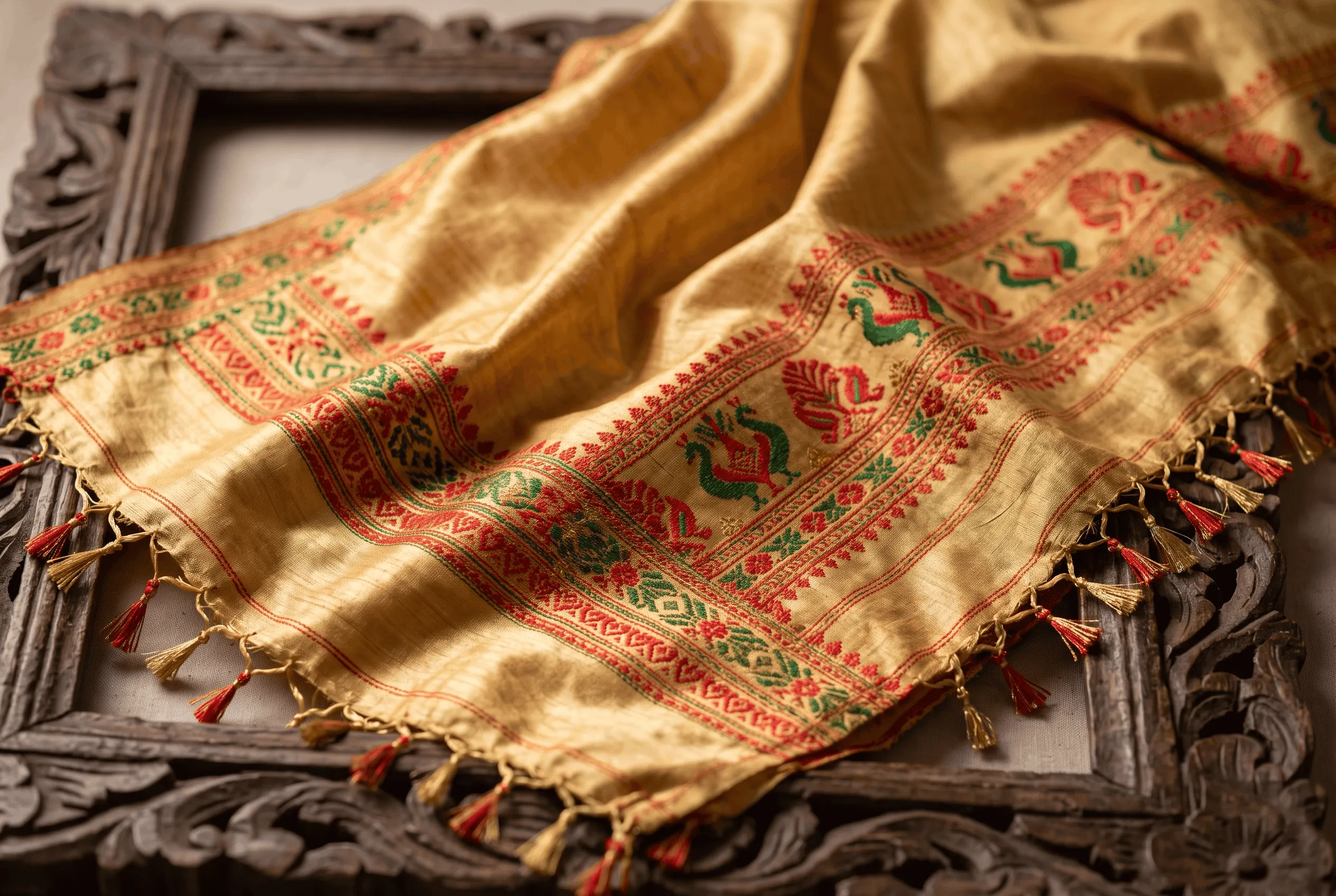
The silk's natural colour ranges from pale gold to deep amber, and this golden tone does not come from dye.
Muga is known for its strength and durability, and many families say a muga garment becomes shinier with every careful wash, which is one reason it is passed down for generations.
Muga silk of Assam is protected by a Geographical Indication (GI) tag, which recognises its unique origin.
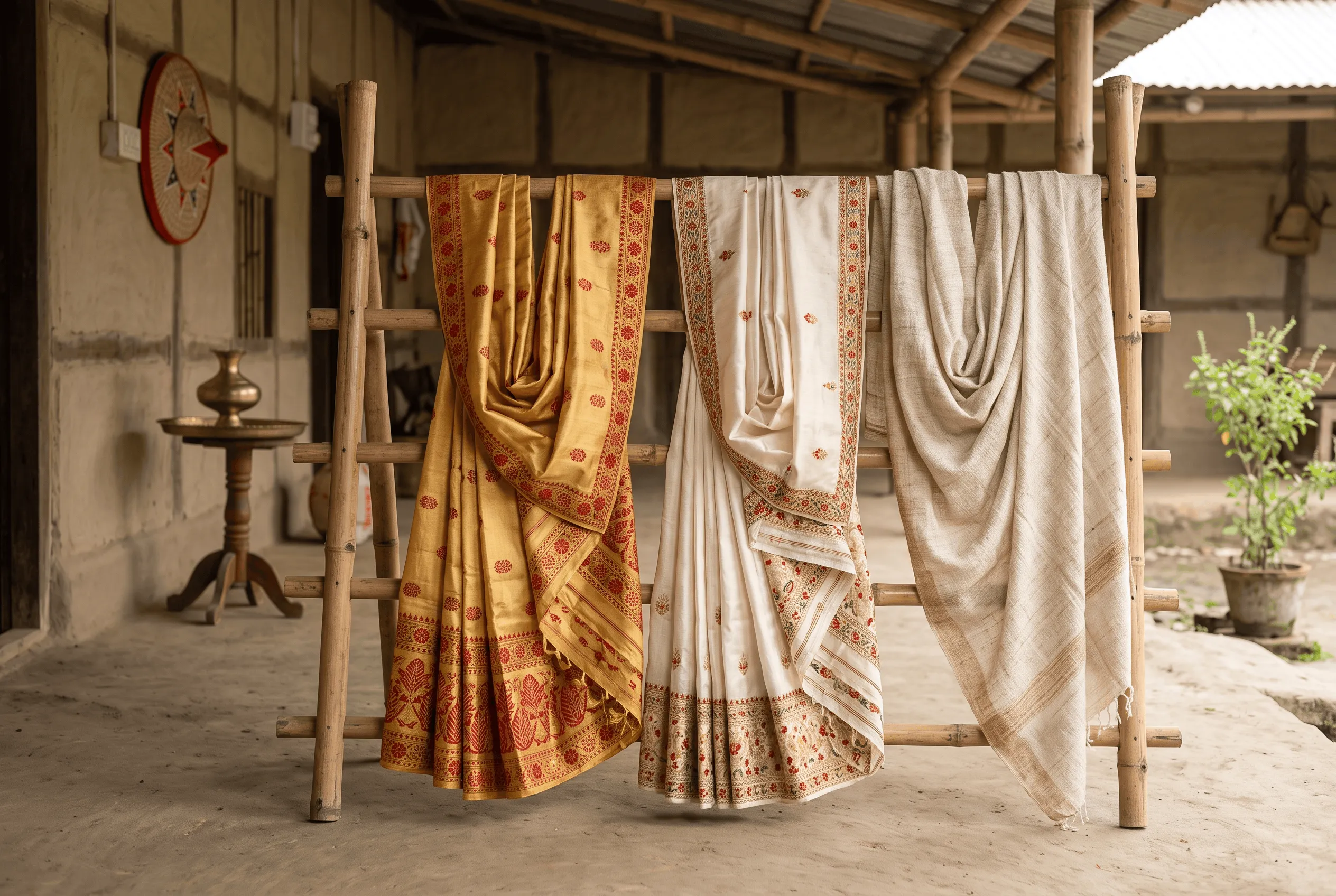
Muga, Pat and Eri: Assam's Three Silks
Assam is famous for three silks, and buyers often confuse them.
Muga has a natural golden colour and is the rarest and most expensive.
Pat is Assam's mulberry silk, usually white or off-white with a soft sheen, and is also used for festive and bridal mekhela chadors.
Eri is a soft, warm silk with a matte, wool-like feel, often used for shawls and winter wear. See our Eri silk guide.
Knowing the difference helps you understand why prices vary so widely.
What Is a Mekhela Chador?
The mekhela chador is the traditional two-piece attire of Assamese women.
The mekhela is the lower garment, wrapped around the waist and pleated at the front.
The chador is a long piece draped over the upper body and shoulder, somewhat like a saree pallu.
It is worn with a fitted blouse, and some women also wear a third piece called a riha in certain traditional settings.
Mekhela chadors are woven in muga, pat, eri and cotton, often decorated with woven motifs in red, gold and other colours.
Choosing a Bridal Muga Mekhela Chador
For many Assamese brides, a muga or pat mekhela chador is the heart of the wedding wardrobe.
Choose the base: muga gives a rich golden look, while pat gives an ivory look. Many brides choose muga for the main ceremony.
Choose the motifs: traditional woven motifs in red, maroon or gold are classic, while modern designs may include floral or geometric patterns.
Check the weight: heavier weaves with dense motifs feel more ceremonial, while lighter weaves are easier to wear for long rituals.
Plan the blouse: a red, maroon or golden blouse complements muga beautifully.
Order early: handwoven bridal mekhela chadors can take weeks to complete, especially with intricate motifs.
Muga for Bihu and Festivals
Rongali Bihu, celebrated in spring, is one of the most joyful times to wear a mekhela chador.
Many women choose muga or pat with red motifs for Bihu, while cotton mekhela chadors are popular for dancing and daytime celebrations.
Muga is also worn for religious ceremonies, family weddings and important cultural events.
Muga Sarees and Modern Muga Wear
Muga is also woven into sarees, stoles, jackets and men's ethnic wear.
A muga saree with woven motifs offers the golden glow of muga in a familiar drape.
Muga stoles and dupattas are a more affordable way to own genuine muga.
Muga kurtas and jackets are worn by men for weddings and formal events.
How to Recognise Genuine Muga Silk
Natural golden colour: genuine muga has a natural golden sheen. Very bright, uniform yellow may indicate dyed silk.
Sheen that deepens: genuine muga is known to grow more lustrous over time with gentle care.
Texture and strength: muga feels firm and strong, with a smooth surface.
Labels: look for the Silk Mark and the GI logo for Muga Silk of Assam where available.
Source: buy from trusted weavers, cooperatives and established sellers, especially in Assam's weaving centres such as Sualkuchi.
Price: genuine muga is expensive. An unusually cheap "muga" is likely a blend or imitation.
Common Imitations
Dyed tussar or mulberry silk coloured to look golden.
Blends that mix a small amount of muga with other fibres but are sold as pure muga.
Synthetic fabrics with a golden shine.
Always ask about fibre content, ask whether the piece is pure muga or a blend and request certification for high-value purchases. Our guide on how to identify a pure silk saree explains more general tests.
Price Guide
These are indicative 2026 ranges. Prices vary by weight, motifs, purity and seller.
| Item | Indicative price range |
|---|---|
| Muga blend stole | ₹2,000 – ₹6,000 |
| Pure muga stole or dupatta | ₹5,000 – ₹15,000 |
| Pat silk mekhela chador | ₹8,000 – ₹40,000+ |
| Pure muga mekhela chador (simple motifs) | ₹20,000 – ₹50,000 |
| Bridal muga mekhela chador with dense motifs | ₹50,000 – ₹1,50,000+ |
| Pure muga saree | ₹20,000 – ₹80,000+ |
Styling a Muga Mekhela Chador
Jewellery: traditional Assamese jewellery such as the jonbiri (pendant), gamkharu (bangle), keru (earrings) and dugdugi (pendant) completes the look beautifully.
Blouse: red, maroon, golden or contrast blouses enhance the golden base.
Hair: a neat bun with flowers is classic for weddings and Bihu.
Footwear: simple flats or embellished sandals keep the focus on the textile.
For general pairing ideas, see our guide to ethnic jewellery with silk sarees.
How to Care for Muga Silk
Wash gently or dry-clean. Many families hand-wash muga gently in cold water with a mild soap, while pieces with delicate motifs are often dry-cleaned. Follow the seller's advice.
Dry in the shade. Avoid direct, harsh sunlight.
Iron on low heat on the reverse side if needed.
Store in cotton or muslin in a cool, dry place.
Refold every few months to avoid weak crease lines.
Keep away from damp and insects.
With proper care, muga can last for generations and become a treasured family heirloom.
Muga Through the Seasons
Muga is comfortable in many seasons because it is a natural silk that breathes well.
Spring and Bihu: muga and pat mekhela chadors are traditional for Rongali Bihu celebrations.
Summer: lighter muga weaves and stoles work for daytime events, though cotton mekhela chadors may feel cooler.
Monsoon: keep muga away from heavy rain and store it carefully in humid weather.
Winter: muga pairs beautifully with eri shawls for warmth at weddings and ceremonies.
Muga for Grooms and Men
Muga is also worn by men for weddings and formal occasions.
A muga kurta or a muga jacket worn over a dhoti or churidar looks regal and complements a bride's muga mekhela chador.
Muga stoles and gamosa-inspired accessories add a traditional Assamese touch to men's festive outfits.
Coordinating the Wedding Family in Assamese Silks
At Assamese weddings, families often coordinate outfits in muga and pat.
The bride may wear muga with red motifs, mothers and close relatives may choose pat or muga with complementary designs and younger family members may wear lighter pat or cotton mekhela chadors.
Choosing a shared motif colour, such as red or maroon, creates a beautiful, unified look in wedding photographs.
Muga as an Investment and Heirloom
Because muga is rare, durable and deeply connected to Assamese culture, many families treat a muga mekhela chador as an investment.
It is often gifted to brides, worn for major life events and passed from mother to daughter.
A well-cared-for muga garment can look beautiful for decades, and its value as a family heirloom often grows with the memories attached to it.
Buying Muga Online
Ask for daylight photographs of both sides of the fabric and the motifs.
Ask whether the piece is pure muga, pat or a blend, and whether it is handwoven.
Look for Silk Mark and GI details and a clear return policy.
For high-value bridal pieces, consider buying in person or through a trusted seller who works directly with weavers.
Supporting Assam's Weavers
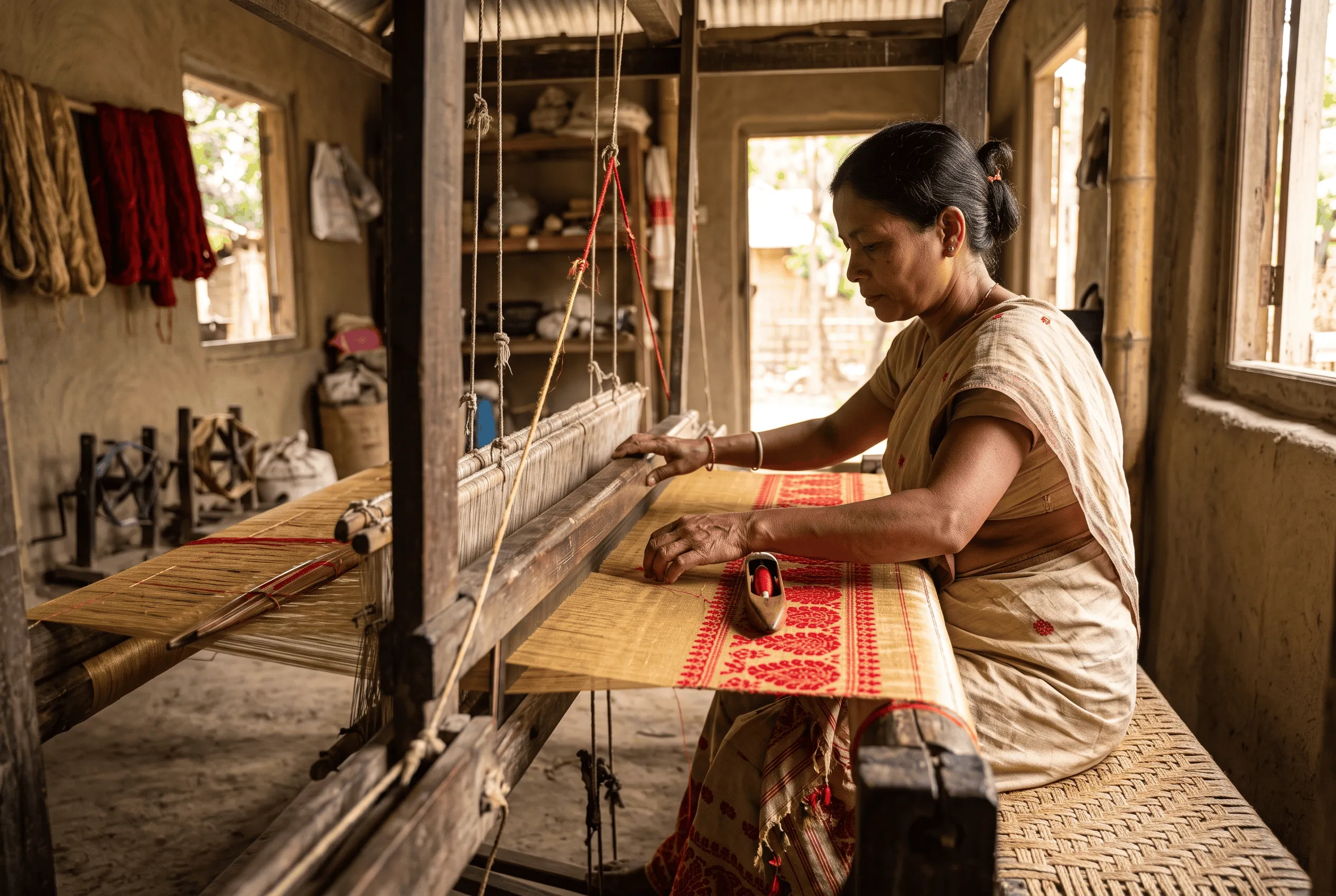
Muga weaving supports silkworm rearers, reelers and weavers across Assam.
Sualkuchi is especially known as a silk weaving centre, where many families weave on traditional handlooms.
Buying genuine muga at fair prices helps sustain these communities and preserves one of India's most distinctive crafts.
Common Buying Mistakes
Paying pure muga prices for dyed or blended silk is the most common mistake.
Another is confusing pat and muga, which are very different in price.
Some buyers also leave bridal orders too late, forgetting that handwoven pieces take time.
Finally, avoid storing muga in plastic or damp cupboards.
Why Muga Is Worth the Investment
Muga silk is a rare treasure of Assam, prized for its natural golden sheen, durability and cultural meaning.
A muga mekhela chador or saree is more than an outfit; it is an heirloom that carries family history and regional pride.
Learn the difference between muga, pat and eri, check for authenticity, buy from trusted sources and care for it gently, and your muga will glow for generations.
Explore more in our East India weaves guide and the traditional wear trends 2026 guide.

Comments (0)
Leave a Thought
No comments yet. Be the first to share your thoughts!