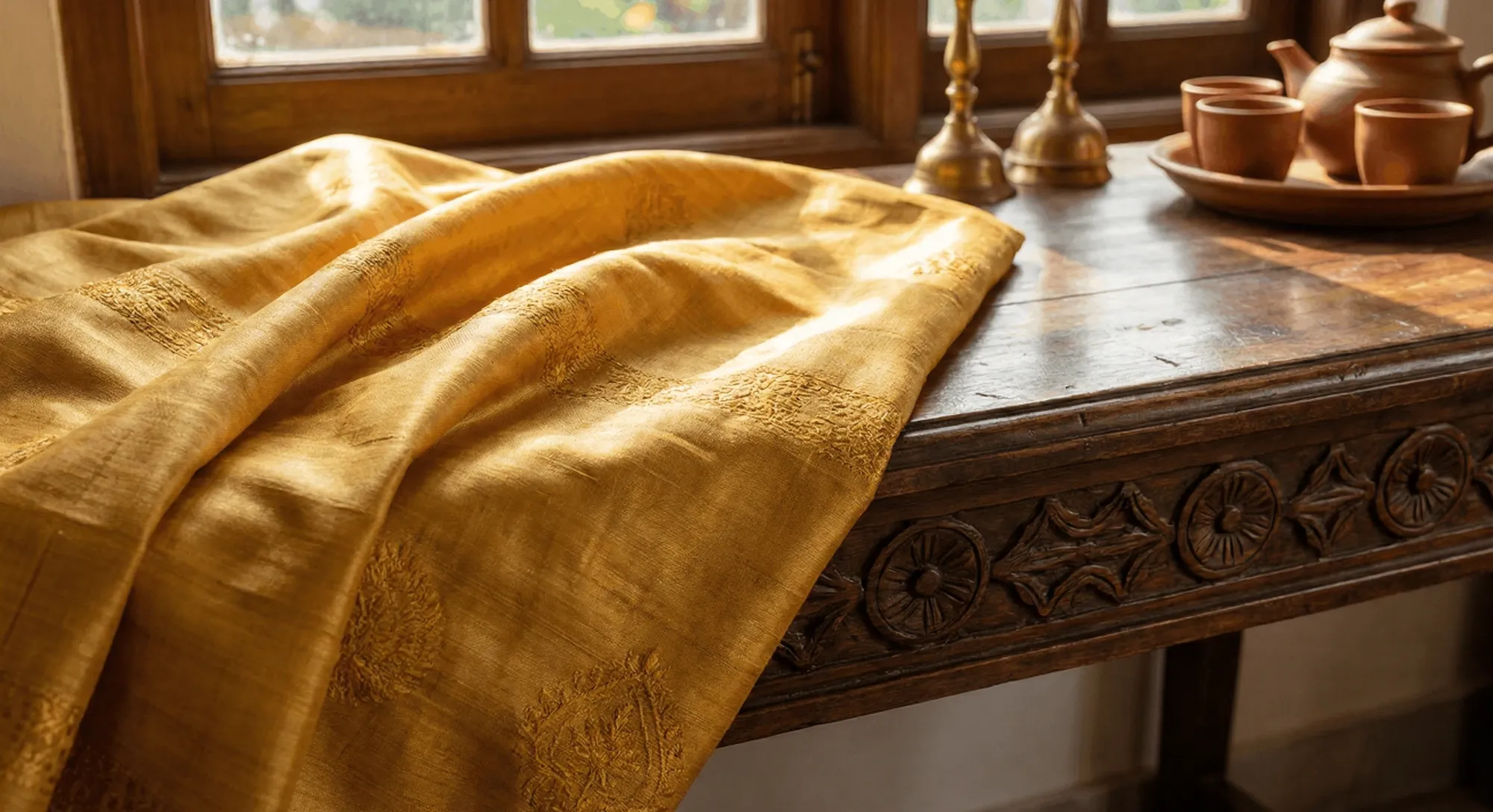
Introduction – The Living Gold of India
Muga silk is not merely worn; it is revered. Known as the Golden Silk of Assam, Muga occupies a sacred space in India’s textile heritage. With its natural golden hue, unmatched durability, and cultural symbolism, Muga silk stands apart from all other silks in the world.
This guide is written for readers who seek authenticity: designers, textile lovers, cultural researchers, and conscious buyers who want to understand why Muga silk is rare, how it is created, and what makes it one of India’s most treasured natural fibers.
Regional Identity & Communities
Muga silk is inseparable from Assam. It is produced almost exclusively in the Brahmaputra Valley, making it one of the most geographically restricted silks in the world.
Key Muga-producing regions include:
- Sivasagar
- Jorhat
- Lakhimpur
- Golaghat
- Kamrup
The craft is sustained by indigenous Assamese communities such as the Ahom, Moran, Motok, and Chutia. Sericulture here is a household tradition, often managed by women, passed down through oral knowledge and lived practice.
Muga is deeply embedded in Assamese identity. It is worn during Bihu, weddings, religious ceremonies, and rites of passage, symbolizing prosperity, purity, and continuity.
History & Origin of Muga Silk
Muga silk has an ancient lineage dating back over 2,000 years. References to golden silk appear in early Assamese chronicles (Buranjis) and ancient Indian texts describing silk tributes from the northeast.
The Ahom dynasty (1228–1826) played a crucial role in protecting and patronizing Muga silk. Royal families wore Muga garments, and strict laws once governed its production and use. Unlike other silks that spread through trade, Muga remained fiercely local, protected by ecology and tradition.
Even during British colonial rule, attempts to replicate Muga outside Assam failed. The silkworm, climate, and host plants formed a natural monopoly that remains unbroken to this day.
The Silkworm & Natural Environment
Muga silk is produced by the Antheraea assamensis silkworm, a semi-domesticated species unique to Assam.
Key ecological factors:
- Host plants: Som (Machilus bombycina) and Soalu (Litsea polyantha)
- Humid subtropical climate
- Seasonal rearing cycles
The silkworm feeds on fresh leaves, and the silk absorbs trace minerals from the soil, contributing to its natural golden luster. Unlike dyed silks, Muga’s color deepens with age, becoming richer over time.
Types & Variations of Muga Silk
While Muga is not divided into many commercial subtypes, it varies based on season and texture.
1. Katia Muga
- Coarser yarn
- Used for traditional mekhela chadors
- Extremely durable
2. Paat-Muga Blend
- Softer texture
- Combines mulberry silk with Muga
- Used in modern garments
3. Seasonal Variations
- Jethua Muga (Summer crop): lighter tone
- Bhodia Muga (Winter crop): deeper golden shade
Weaving Techniques & Materials Used
Muga weaving is meticulous and slow.
Process overview:
- Hand rearing of silkworms
- Sun-drying cocoons
- Hand reeling of yarn
- Traditional throw-shuttle looms
Weaving motifs often include:
- Assamese flora
- Geometric borders
- Temple-inspired patterns
Natural dyes are rarely used, as Muga’s inherent color is considered sacred and complete.
How to Identify Authentic Muga Silk
Authentic Muga silk has unmistakable traits.
Identification markers:
- Natural golden-yellow color (never bright or shiny)
- Stiff yet smooth texture
- Extremely strong yarn
- Gains sheen with age
Unlike synthetic silk, Muga does not fade. If the fabric looks overly glossy or white-based, it is likely imitation.
Traditional & Modern Uses
Traditional Uses
- Mekhela chador
- Royal garments
- Religious offerings
Modern Uses
- Sarees
- Jackets and stoles
- Luxury home décor
Designers value Muga for its regal presence and sustainability.
Care Practices Passed Through Generations
Traditional care methods are simple yet precise.
- Dry clean only
- Avoid frequent washing
- Store in cotton cloth
- Keep away from moisture and perfumes
Assamese households believe Muga silk “lives longer than its wearer” when cared for properly.
Common Misconceptions
- Muga silk is dyed – False. Its color is natural.
- Muga is fragile – It is the strongest natural silk.
- Muga can be produced anywhere – Ecologically impossible.
- Old Muga loses value – It gains value with age.
Comments (0)
Leave a Thought
No comments yet. Be the first to share your thoughts!