Tussar and Mysore silk are both loved for their elegance, but they could hardly be more different.
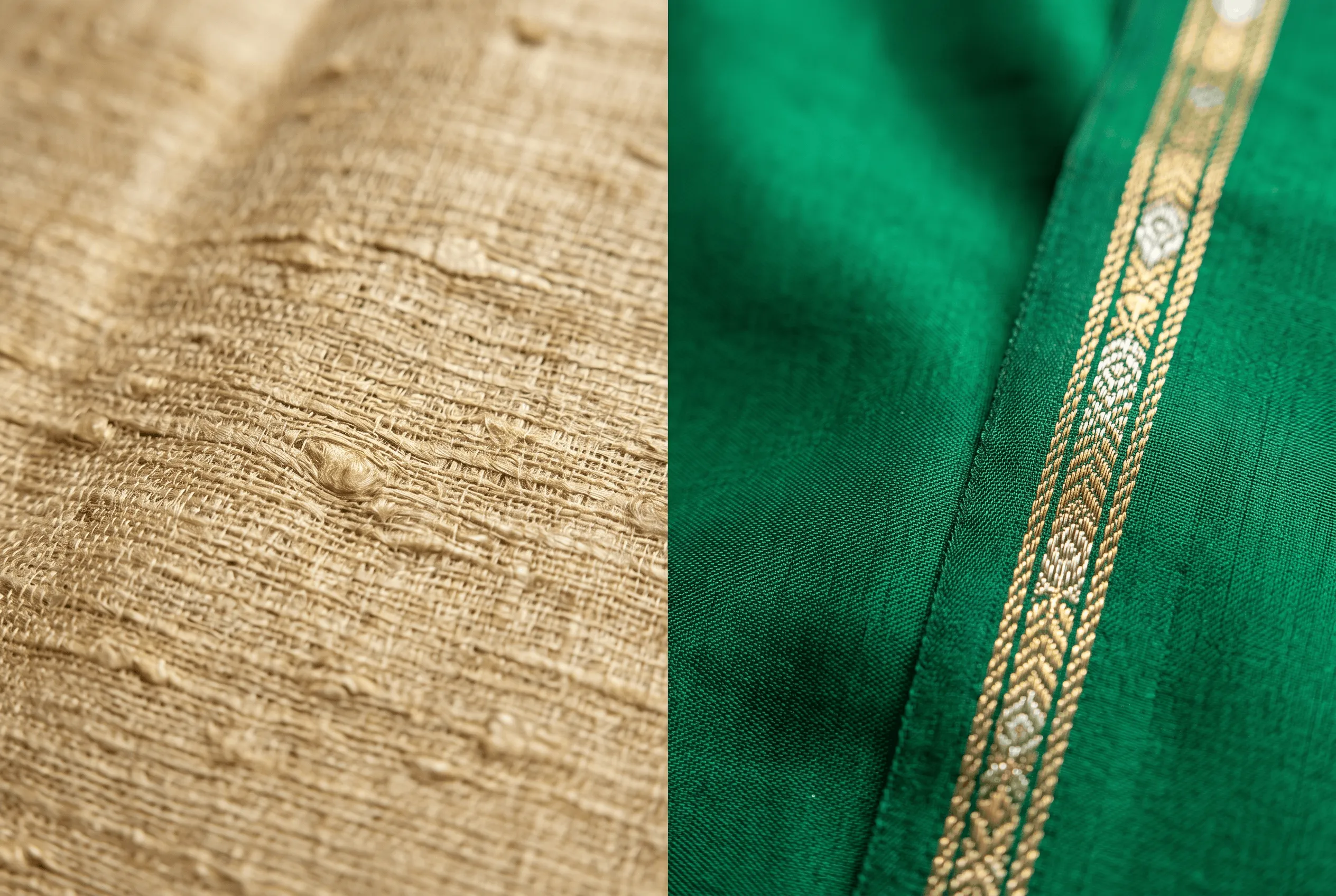
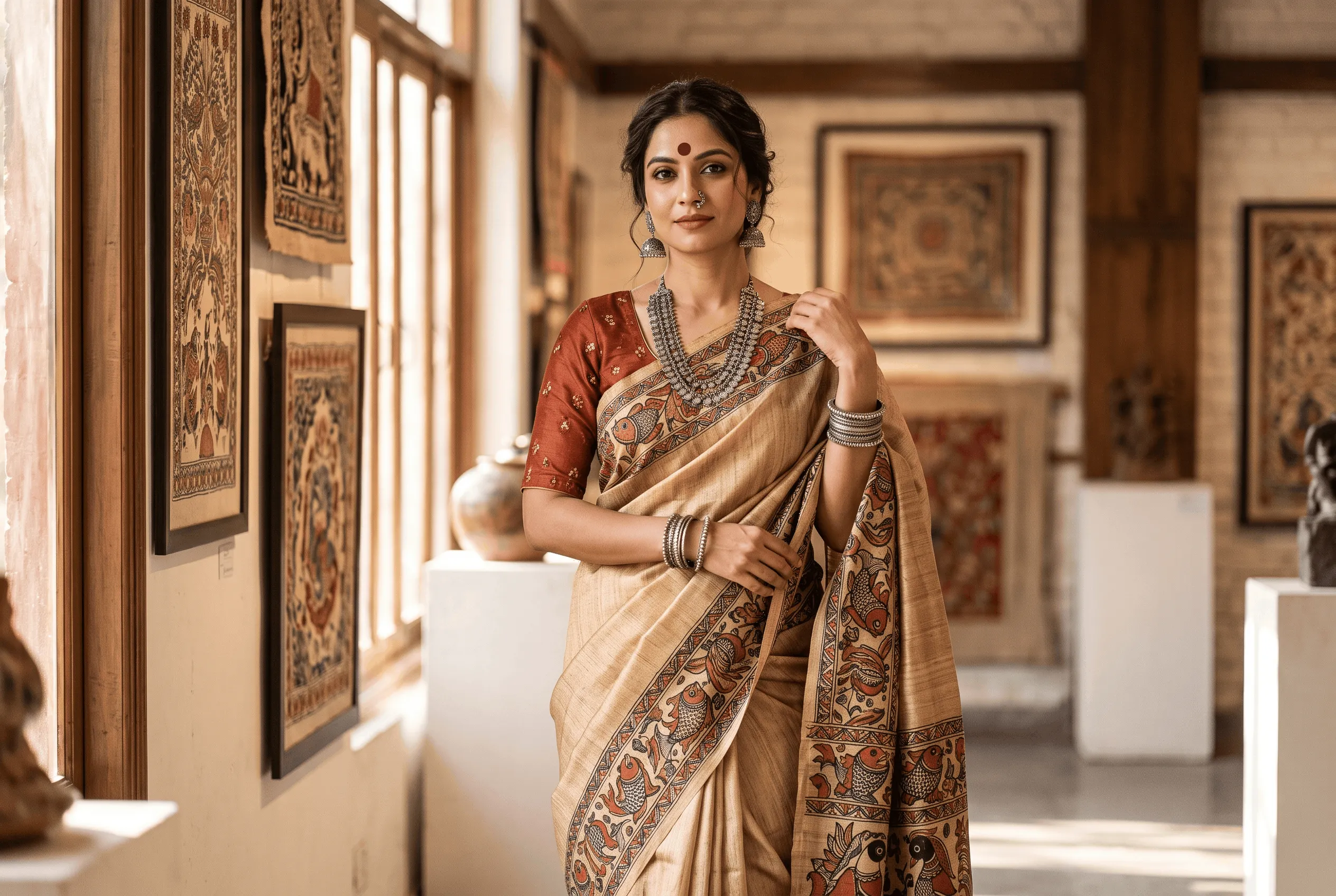
Tussar is a wild silk with a natural golden-beige tone, a soft matte sheen and a gently textured surface that feels earthy and artistic.
Mysore silk is a cultivated mulberry silk from Karnataka, known for its smooth, lustrous surface, rich solid colours and refined zari borders.
Both are lighter and easier to wear than heavy bridal silks, which is why many women consider them for office events, festivals, family functions and weddings as guests.
This guide compares Tussar vs Mysore silk in detail, including look, feel, drape, comfort, occasions, styling, price, authenticity and care, so you can decide which suits you best, or why you might want both.
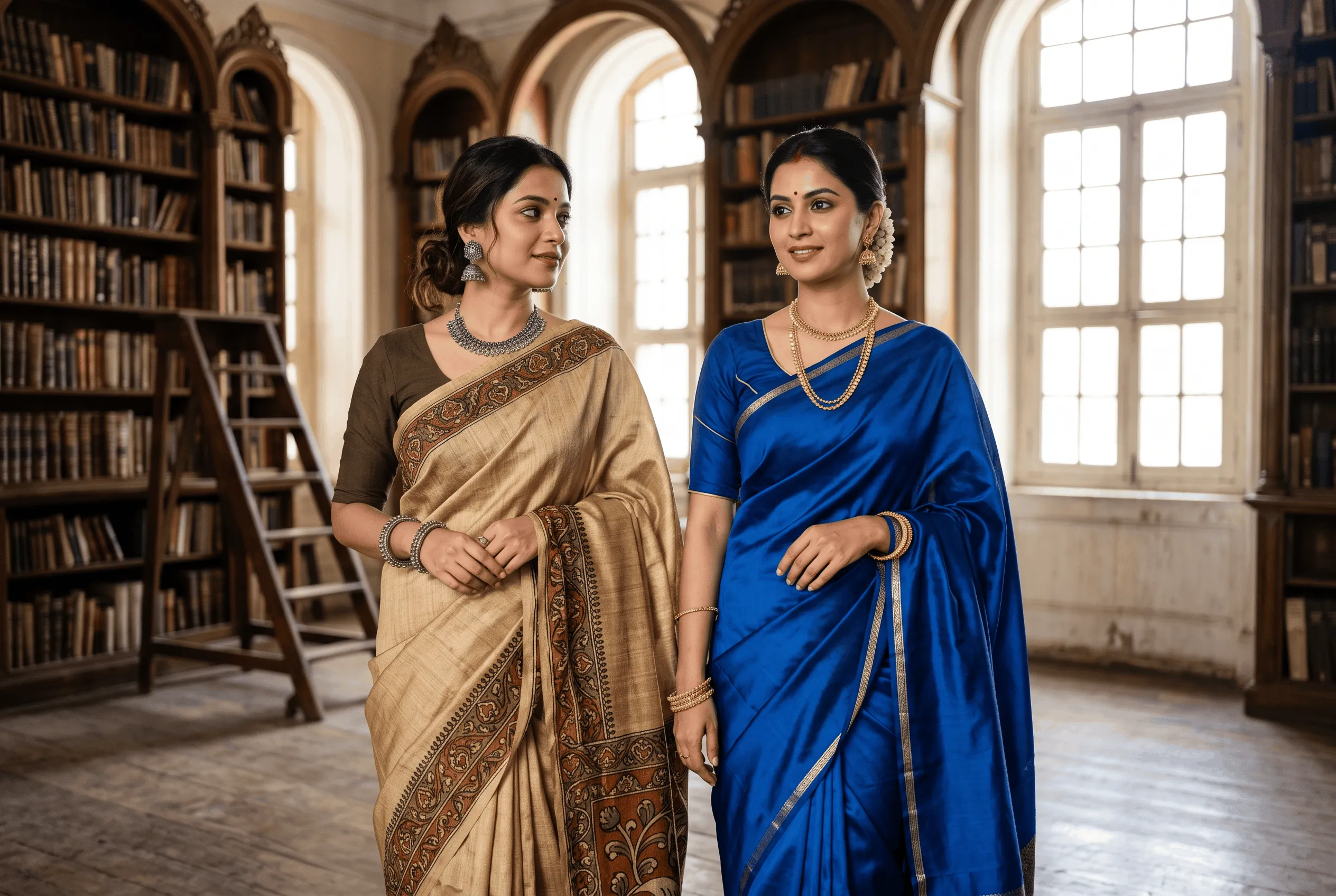
Tussar vs Mysore Silk at a Glance
| Feature | Tussar silk | Mysore silk |
|---|---|---|
| Type of silk | Wild (non-mulberry) | Cultivated mulberry |
| Main regions | Jharkhand, Bihar, Chhattisgarh, Odisha, West Bengal | Karnataka |
| Natural colour | Golden-beige | White, dyed in rich colours |
| Texture | Slightly rough, textured | Smooth, soft |
| Sheen | Soft, matte | High, lustrous |
| Weight | Light to medium | Light |
| Typical look | Earthy, artistic | Classic, refined |
| Best for | Office events, cultural occasions, festive daywear | Weddings as a guest, receptions, festivals, formal events |
What Is Tussar Silk?
Tussar is produced by wild silkworms that feed on forest trees such as arjun, asan and sal.
Its natural golden-beige colour, textured surface and soft sheen give it a distinctive, earthy elegance.
Tussar is often decorated with Kantha embroidery, hand painting, block prints or zari borders.
Read our tussar silk styling guide for more.
What Is Mysore Silk?
Mysore silk is woven in Karnataka from pure mulberry silk.
It is known for its smooth, glossy surface, rich jewel colours and simple, elegant designs, often with a plain body and a thin zari border.
Mysore silk sarees are light, fluid and comfortable, and genuine Mysore silk is protected by a Geographical Indication.
Our comparison of Mysore silk vs Kanjivaram explains how it differs from heavier South Indian silks.
Two Very Different Silk Stories
Tussar and Mysore silk come from very different worlds.
Tussar is closely linked with forest regions and tribal communities in eastern and central India, where silkworms are reared on trees in the wild. The silk carries the colour and character of that natural environment.
Mysore silk grew from Karnataka's long tradition of mulberry sericulture, where silkworms are reared on cultivated mulberry leaves. This controlled process produces the fine, even, lustrous thread that Mysore silk is famous for.
Knowing these origins helps explain why one feels earthy and textured and the other smooth and refined.
Look and Feel
Tussar looks natural and textured, with a soft glow rather than shine. It suits people who love handcrafted, artistic and understated styles.
Mysore silk looks polished and luxurious, with a smooth, mirror-like sheen. It suits people who prefer classic elegance.
Drape and Comfort
Tussar is slightly crisp and holds pleats well, with a relaxed, structured drape.
Mysore silk is fluid and soft, falling gracefully close to the body.
Both are lighter than heavy Kanjivaram or brocade Banarasi, which makes them comfortable for long events.
In hot weather, both feel comfortable, though Mysore silk's smoothness can feel slightly cooler against the skin.
Which Is Better for Each Occasion?
Office events and conferences: tussar or Mysore silk in muted colours both work well. Tussar feels more artistic; Mysore silk feels more formal.
Cultural events and exhibitions: tussar, especially with Kantha or hand painting.
Weddings as a guest: Mysore silk in a jewel tone looks elegant and appropriate. Tussar with zari or embroidery is a stylish, offbeat alternative.
Receptions: Mysore silk with a modern blouse.
Festivals: both work; Mysore silk for a classic look, tussar for an artistic one.
Pujas and temple visits: Mysore silk in auspicious colours, or tussar with a zari border.
Colours
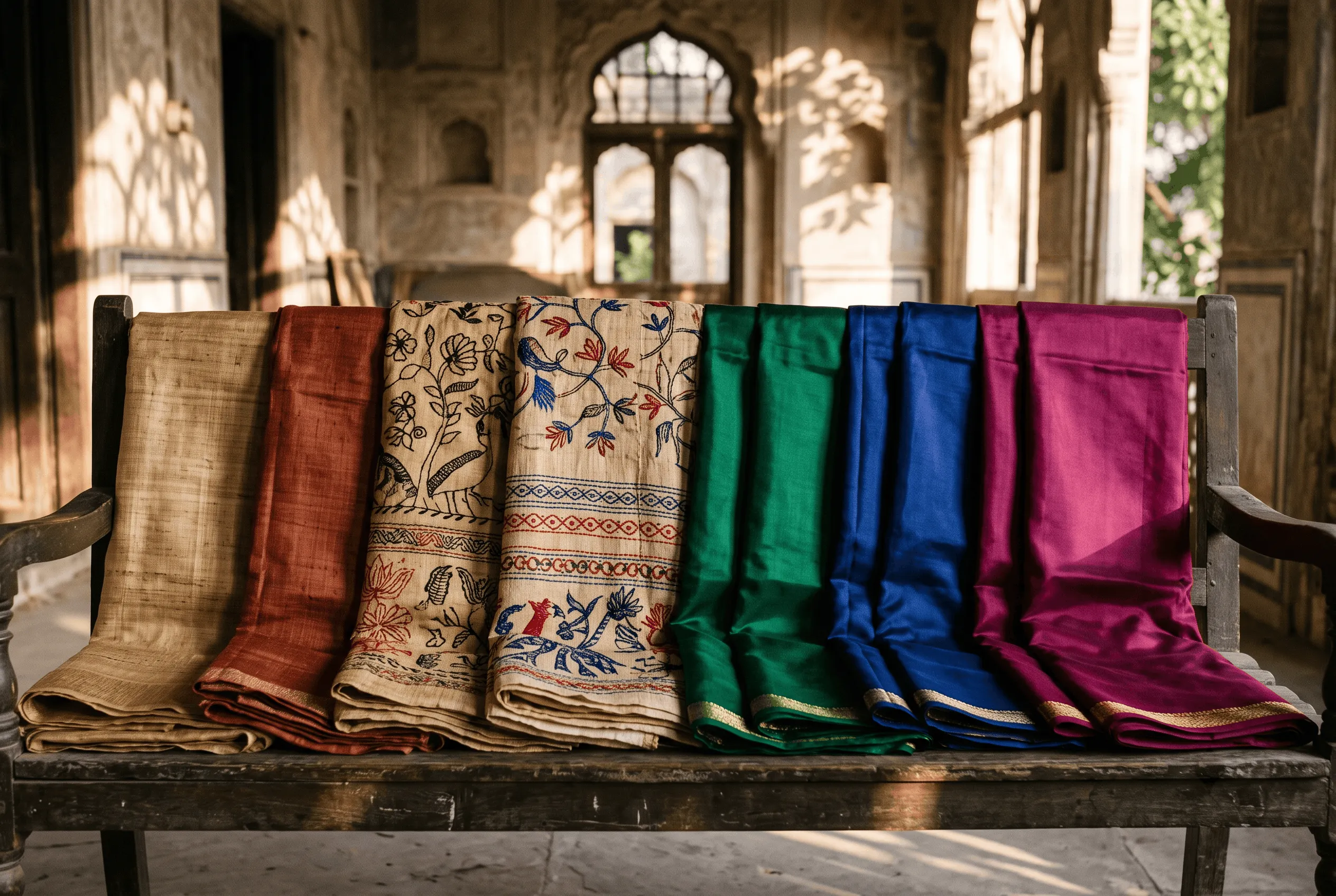
Tussar is beautiful in its natural golden-beige, as well as rust, mustard, olive, indigo, maroon and black.
Mysore silk shines in jewel tones such as emerald, royal blue, magenta, wine, mustard and peacock green, as well as pastels.
Styling Tussar
Pair tussar with oxidised silver, terracotta, wooden or tribal jewellery.
Choose contrast blouses in black, maroon, rust or indigo.
A khadi or cotton blouse creates a relaxed, artistic look.
Styling Mysore Silk
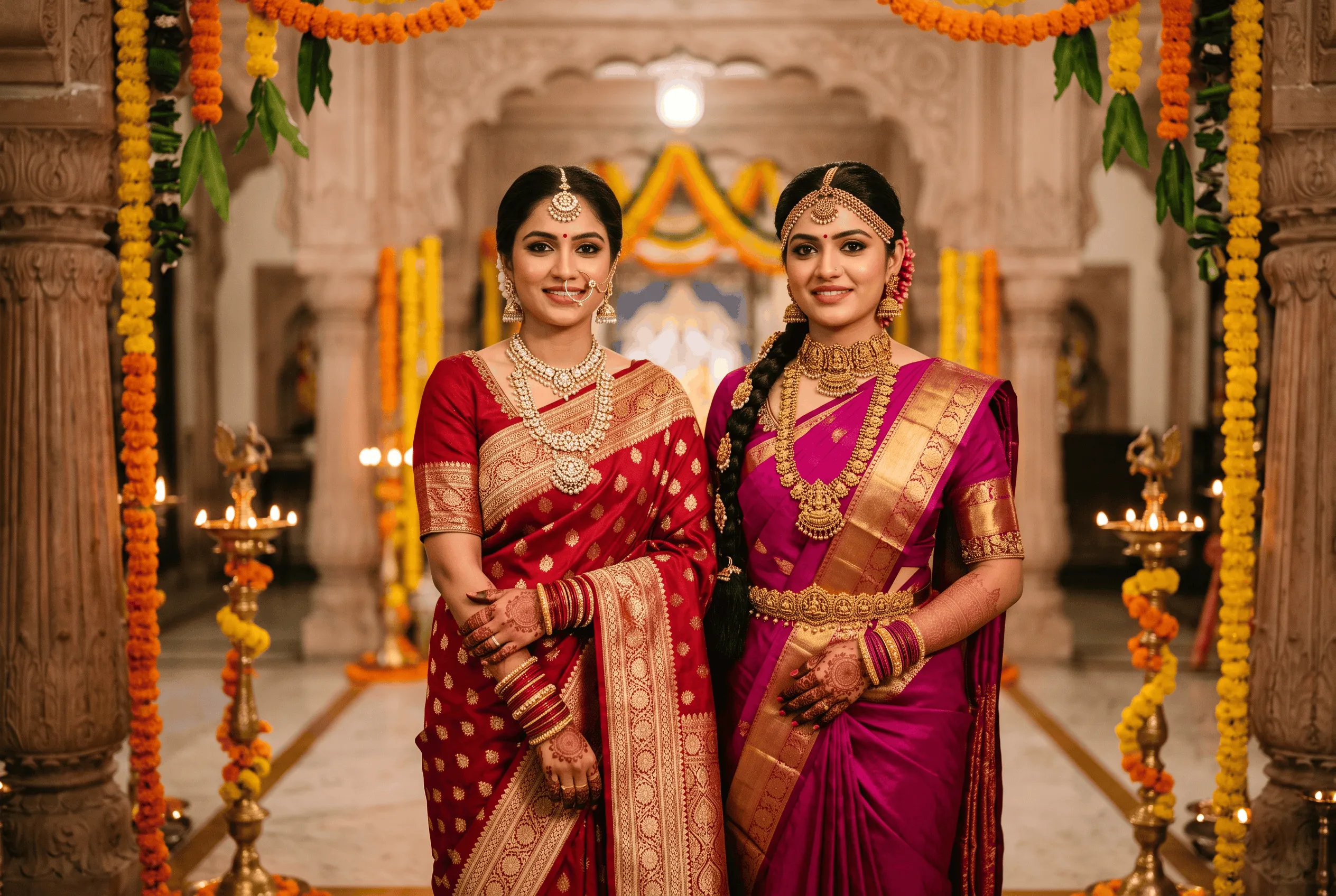
Pair Mysore silk with gold, temple, pearl or kundan jewellery.
Choose a brocade or contrast silk blouse for weddings, or a modern sweetheart or corset blouse for receptions.
Because Mysore silk is often plain, the blouse and jewellery can carry more of the styling. See our corset blouse design guide.
Draping Tussar and Mysore Silk
Tussar is slightly crisp, so it holds neat pleats and an open pallu shows off painted or embroidered designs. Iron it lightly on the reverse before draping.
Mysore silk is soft and fluid, so pin the pleats at the top and the pallu at the shoulder to keep the drape tidy. A pleated pallu looks elegant for formal events, while an open pallu shows off the sheen.
Both work beautifully in the classic Nivi drape. See our Nivi drape tutorial.
Blouse Ideas
For tussar: contrast silk blouses in black, maroon or indigo, khadi or cotton blouses, collared blouses for office and high-neck blouses for formal events.
For Mysore silk: brocade blouses for weddings, elbow-sleeve silk blouses for classic looks and sweetheart, boat-neck or corset styles for receptions.
A well-fitted blouse often makes the biggest difference to how elegant either silk looks.
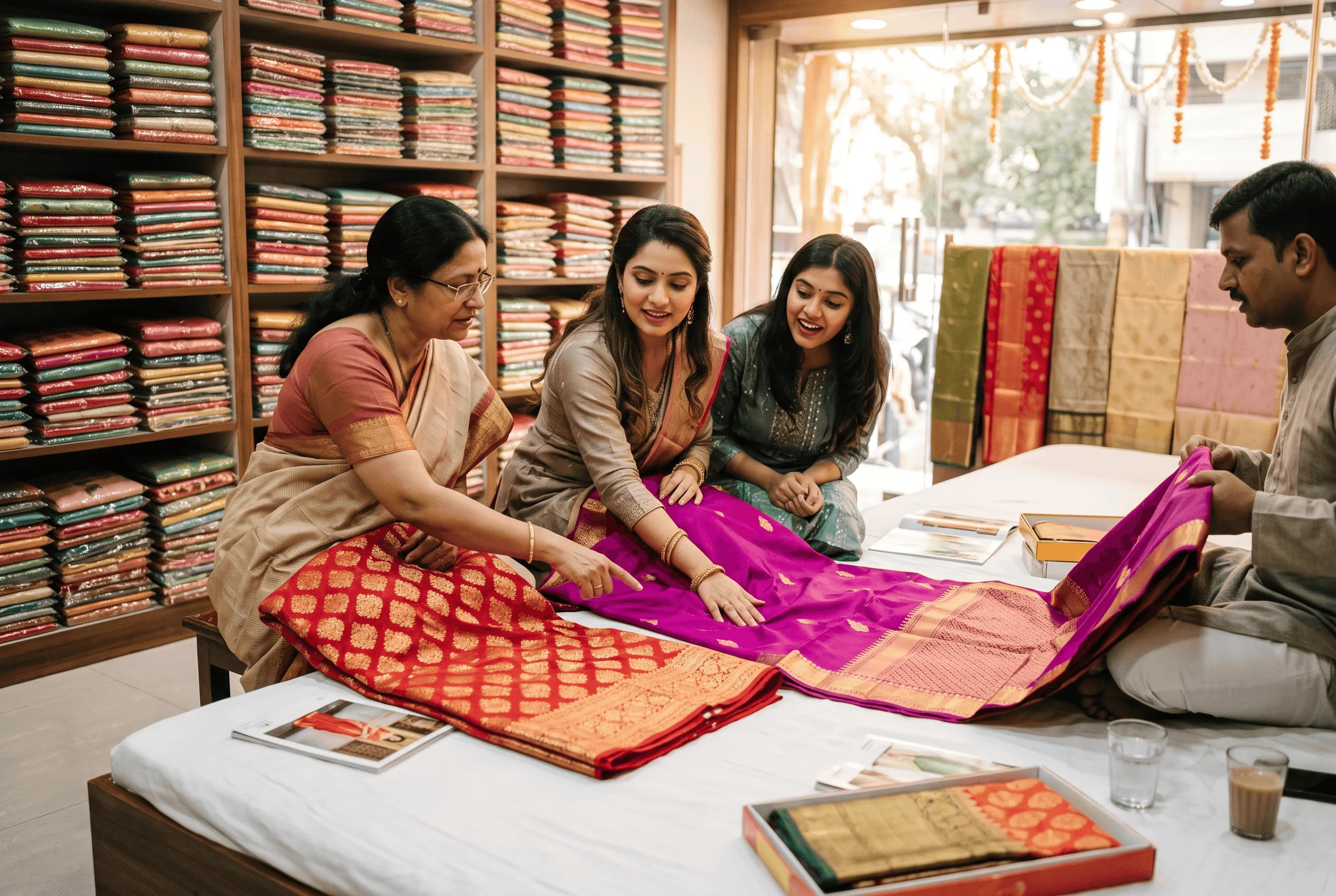
Questions to Ask Before Buying
Is this pure tussar or pure Mysore silk, or a blend?
Does it carry the Silk Mark, and for Mysore silk, GI details?
Is the zari pure, tested or imitation?
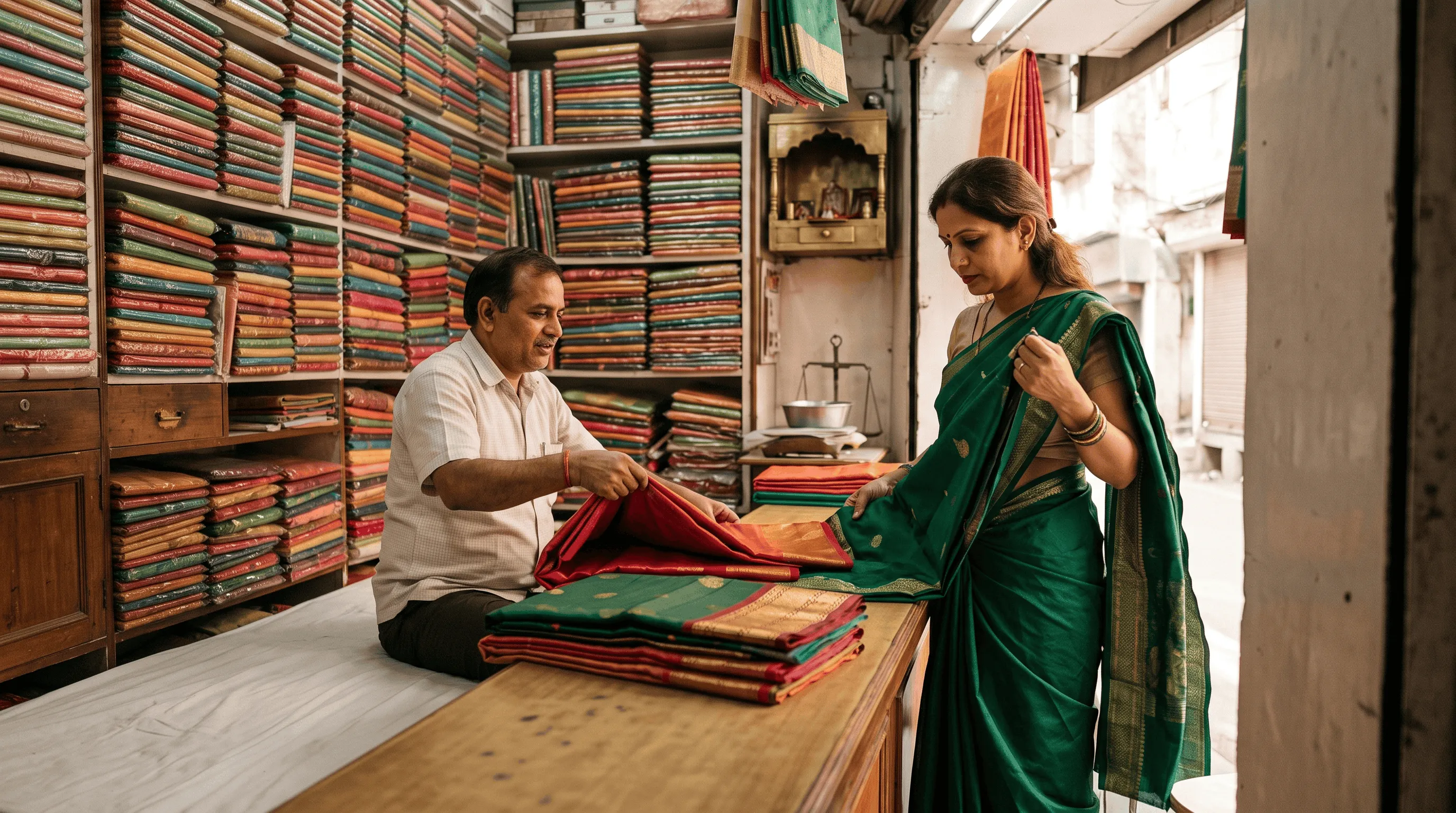
Is the saree handloom or powerloom?
How should it be cleaned and stored?
Clear answers help you compare prices fairly and avoid imitations.
Price Comparison
These are indicative 2026 ranges. Prices vary by weave, zari and seller.
| Saree | Indicative price range |
|---|---|
| Plain tussar silk saree | ₹3,000 – ₹8,000 |
| Embroidered or painted tussar | ₹5,000 – ₹30,000+ |
| Mysore silk saree (plain with zari border) | ₹8,000 – ₹25,000 |
| Mysore silk with heavier zari or designs | ₹20,000 – ₹50,000+ |
See our saree price guide.
How to Identify Genuine Tussar
Look for natural texture, small slubs and a golden-beige base.
Expect a soft, matte sheen rather than shine.
Look for the Silk Mark and buy from trusted sellers.
How to Identify Genuine Mysore Silk
Look for a smooth, lustrous surface and fluid drape.
Ask about the Silk Mark and GI details.
Buy from trusted sellers who can explain the weave and zari.
See our pure silk saree checklist.
Care Differences
Tussar: dry-clean, avoid water spots and store in muslin.
Mysore silk: dry-clean, store in muslin and protect the zari border from moisture.
Both should be refolded every few months and kept away from direct sunlight. See our silk saree care guide.
Which Should You Buy?
Choose tussar if: you love natural textures, earthy colours, handcrafted designs and an artistic look.
Choose Mysore silk if: you want a classic, polished, lustrous silk for weddings, receptions and formal occasions.
Choose both if: you want versatility. Tussar covers artistic and office looks, while Mysore silk covers formal and festive occasions.
Supporting the Weavers Behind Both Silks
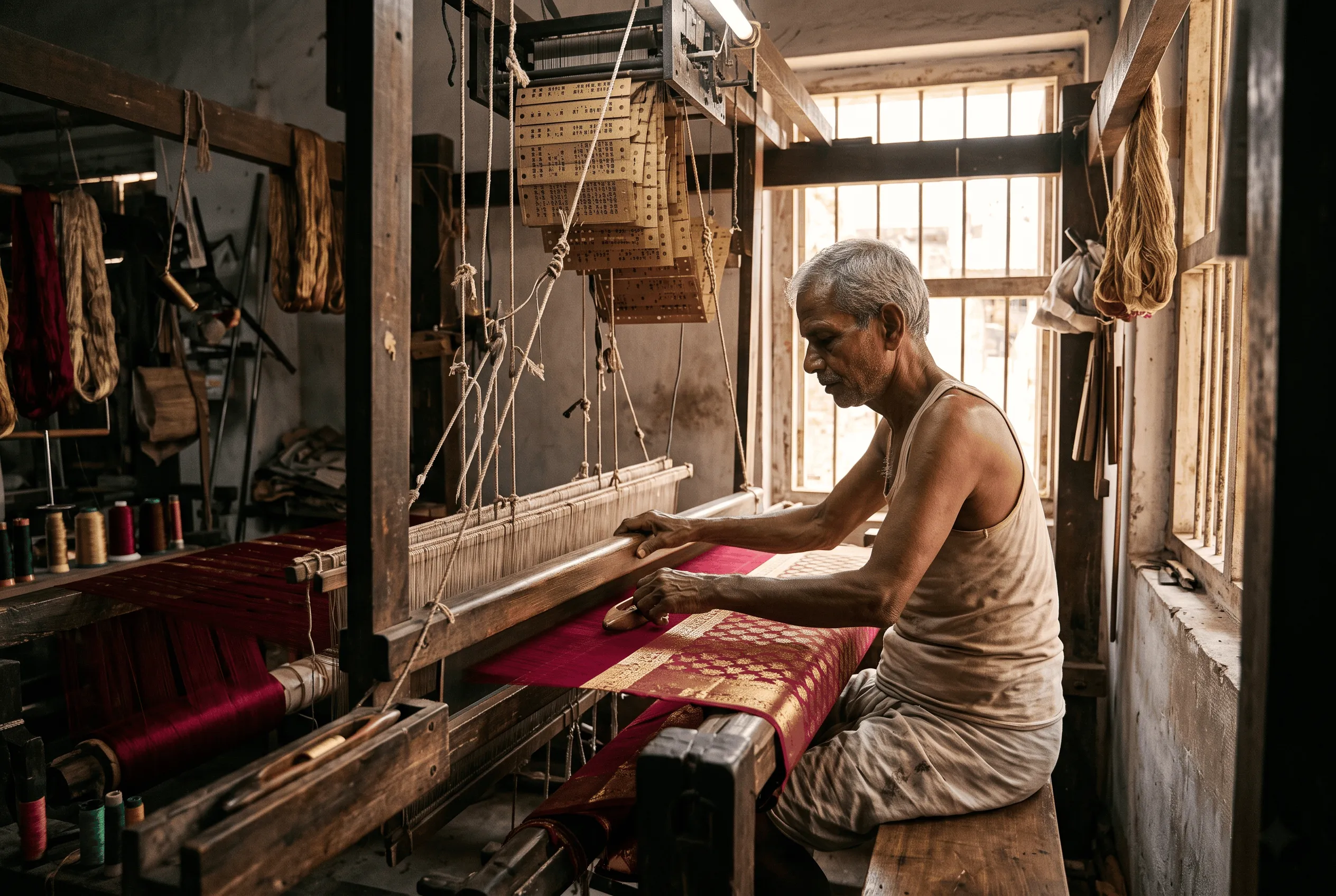
Tussar supports forest-dwelling silkworm rearers, spinners and weavers across eastern and central India, while Mysore silk supports sericulture farmers, reelers and weavers in Karnataka.
Choosing genuine handloom versions of either silk, from trusted sellers and cooperatives, helps sustain these communities and the skills they have built over generations.
Asking where a saree was woven, and choosing pieces with clear origin information, is a simple way to support them.
Building a Silk Wardrobe With Both
One natural tussar for office events and cultural occasions.
One painted or Kantha tussar for artistic festive looks.
One jewel-toned Mysore silk for weddings and receptions.
One pastel Mysore silk for day functions.
Common Mistakes When Choosing
Expecting tussar to shine like Mysore silk is a common misunderstanding.
Another is choosing heavy embellishment on Mysore silk, which hides its natural beauty.
Some buyers also pay pure silk prices for blends that imitate tussar's colour or Mysore silk's shine.
How Each Silk Ages Over Time
Tussar often looks better with age. Its texture softens, the natural golden tone deepens slightly and the fabric develops a relaxed, lived-in elegance, especially in plain or hand-painted pieces.
Mysore silk keeps its smooth sheen for many years when stored well, but the zari border needs protection from moisture and perfume to stay bright.
Both silks stay beautiful for decades if they are dry-cleaned, aired after wearing and refolded every few months, which makes either one a good long-term investment rather than a single-season purchase.
Making Your Choice
The Tussar vs Mysore silk decision comes down to personal style and occasion.
Tussar offers earthy texture and artistic character, while Mysore silk offers smooth, lustrous elegance.
Both are lighter, more versatile alternatives to heavy bridal silks, and both deserve a place in a well-rounded saree wardrobe.
Explore more in our silk fabric types guide and the traditional wear trends 2026 guide.
Tussar and Mysore Silk for Different Body Types
Petite women look elegant in Mysore silk's fluid drape and in light, plain tussar.
Curvy women often prefer Mysore silk's smooth fall, which skims the body.
Tall women carry textured tussar with bold Kantha or painted motifs beautifully.
Tussar and Mysore Silk for Men
Tussar kurtas, Nehru jackets and stoles are popular for men's festive and formal wear.
Mysore silk is also used for men's kurtas, dhotis and angavastrams, especially for South Indian ceremonies.
Seasonal Suitability
Summer: both are comfortable; light colours keep the look fresh.
Monsoon: be careful with water spots, especially on tussar.
Festive season: both look beautiful with gold or oxidised jewellery.
Winter: layer either with a shawl; tussar's texture feels especially cosy.
Gifting Tussar or Mysore Silk
A jewel-toned Mysore silk is a classic, safe gift for weddings and festivals.
A painted or Kantha tussar is a thoughtful gift for someone who loves art and handcrafted textiles.
Comments (0)
Leave a Thought
No comments yet. Be the first to share your thoughts!