Walk into any saree shop and you will see two silk sarees that look almost the same from a distance, one priced at ₹4,000 and the other at ₹25,000 or more.
The difference is often a single word: handloom.
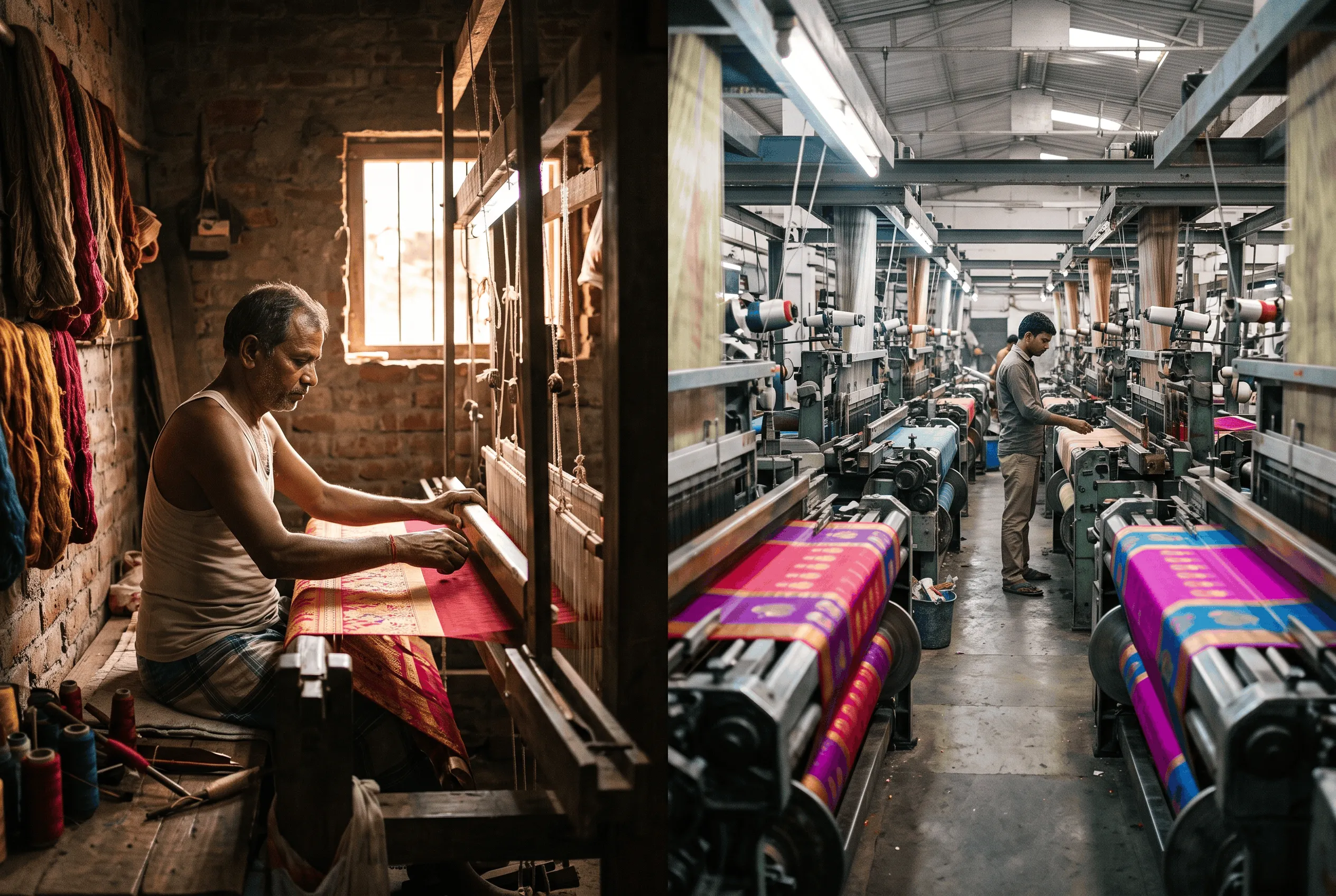
Handloom silk is woven by hand on a loom operated by a skilled weaver, thread by thread, often over days, weeks or even months.
Powerloom silk, by contrast, is woven by machines in a fraction of the time.
This guide explains exactly where the extra cost of handloom silk comes from, how to tell handloom from powerloom, which details justify a higher price and why a genuine handloom silk saree is often a better long-term investment than it first appears.
If you have ever wondered whether a handloom silk saree is really worth the money, this guide will help you decide.
What Is Handloom Silk?
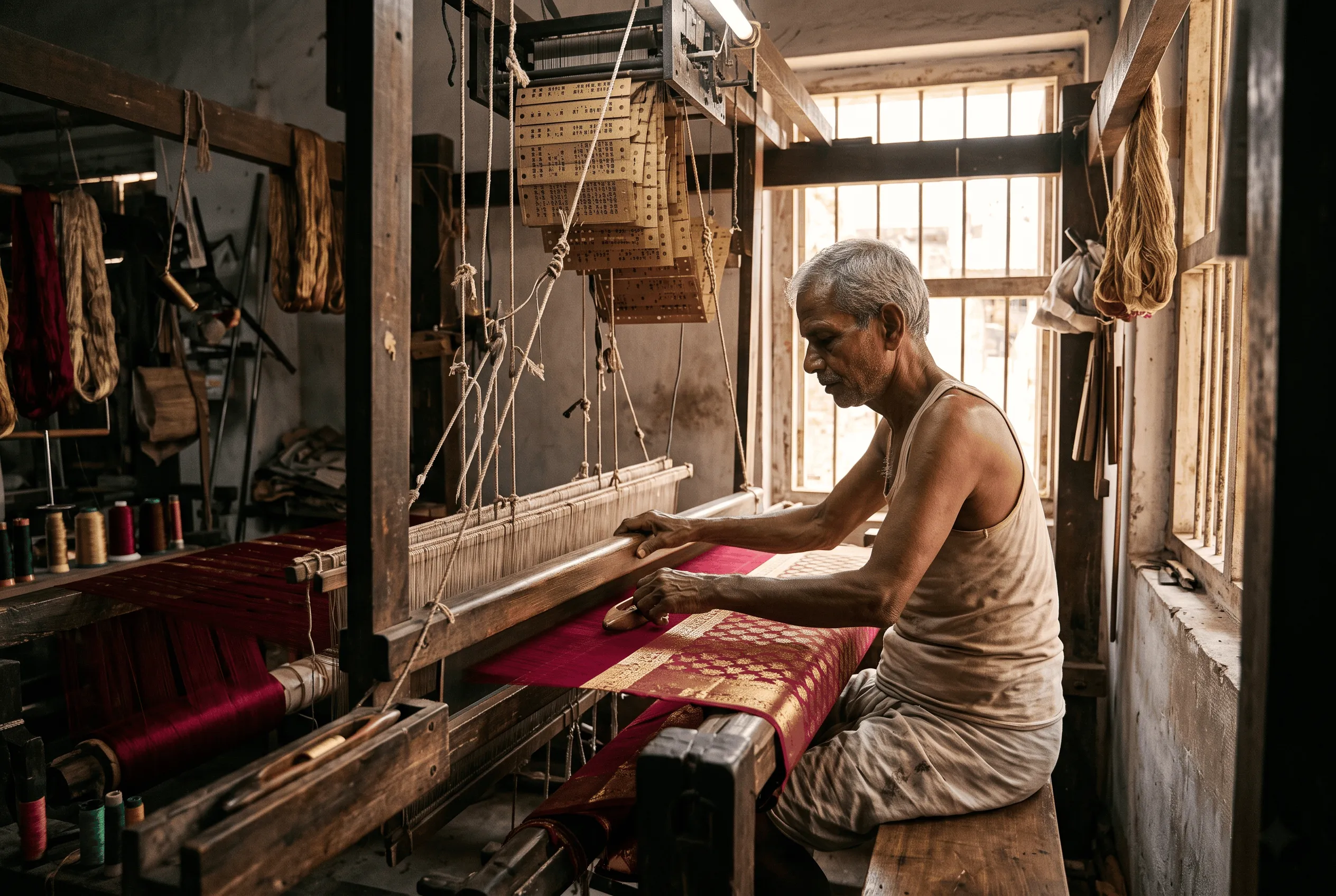
Handloom silk is silk fabric woven on a loom that is operated manually, without electric power.
The weaver controls every movement: lifting the warp threads, passing the weft shuttle, beating the weave and, in patterned sarees, inserting extra threads for motifs.
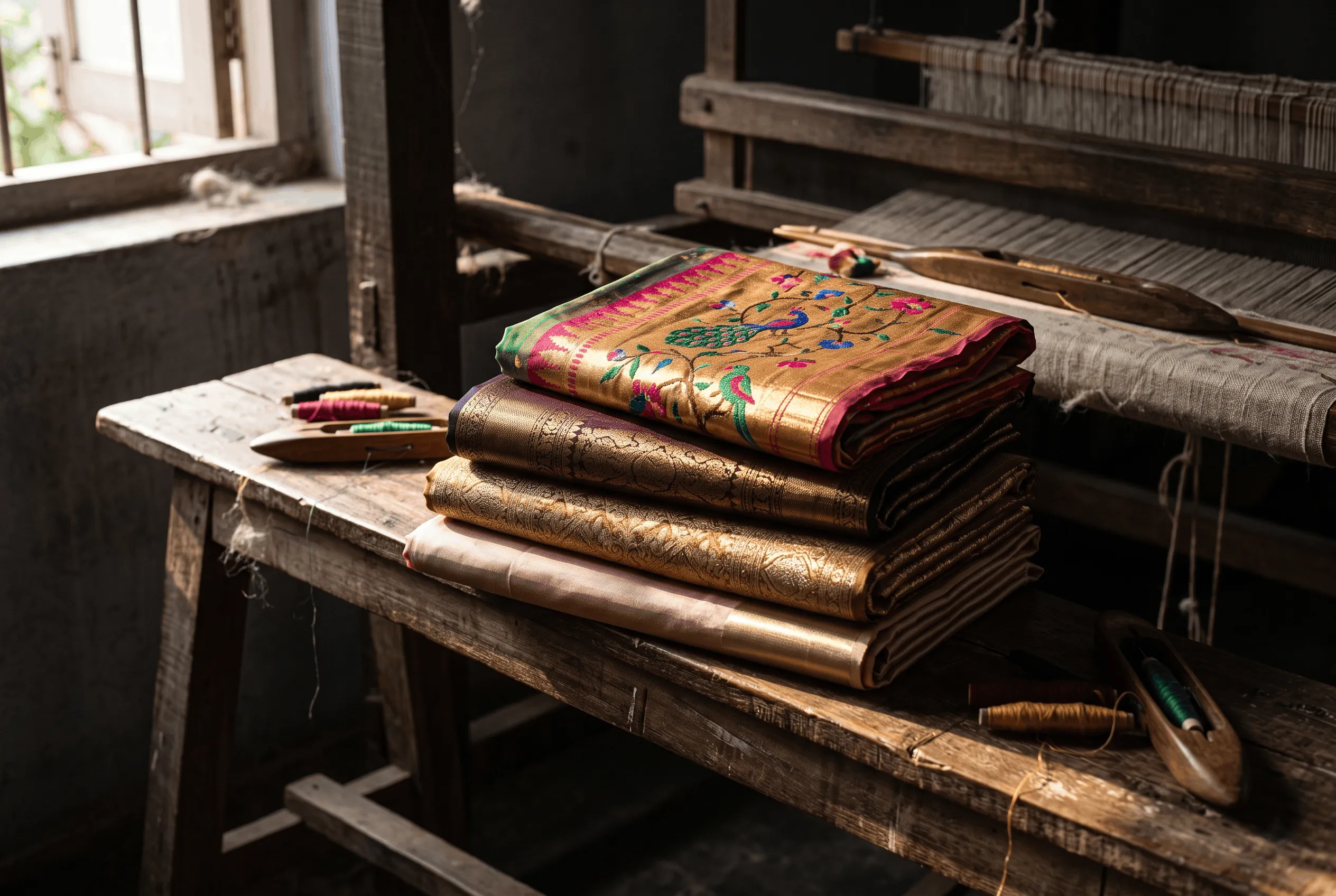
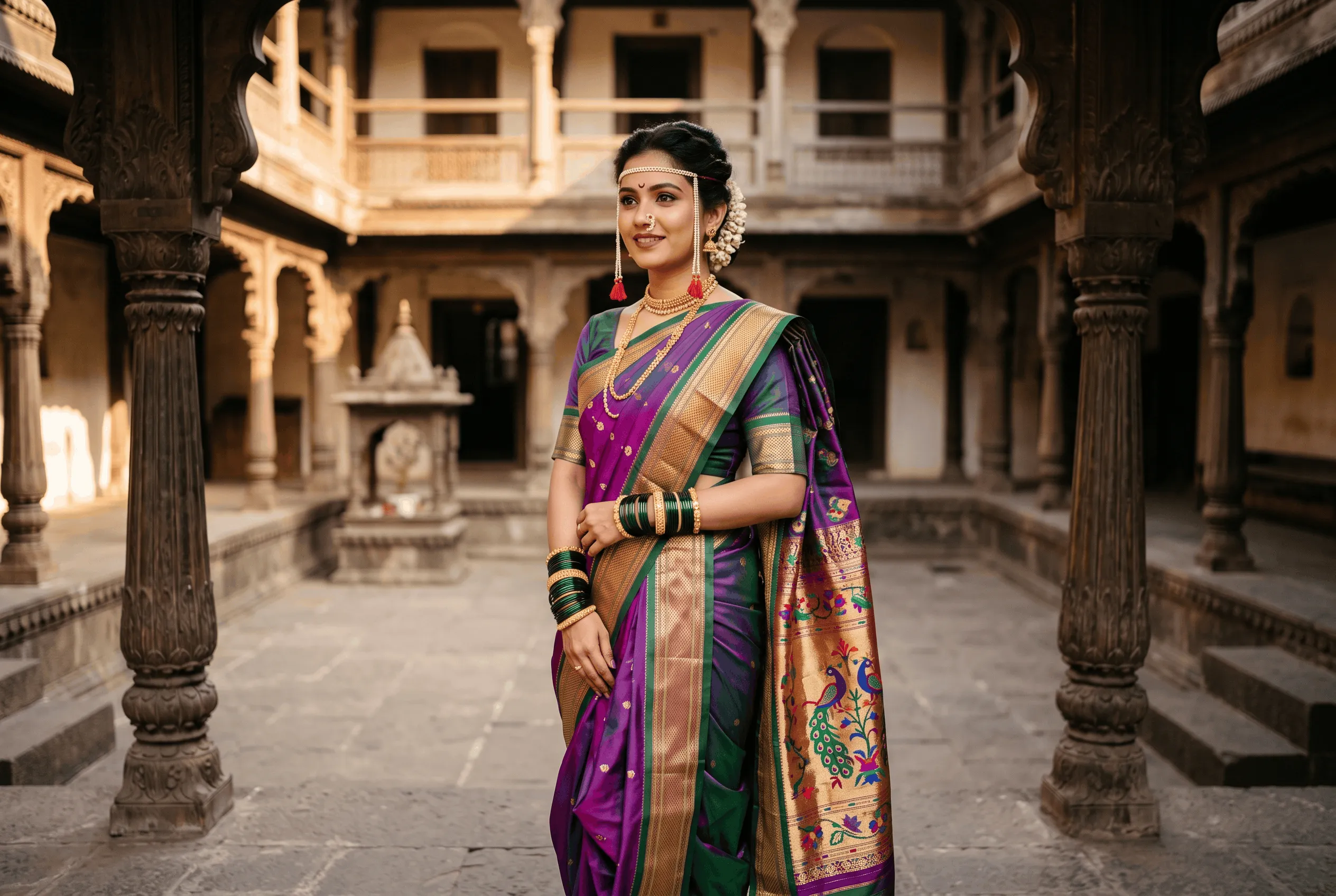
Handloom does not mean simple or plain. Some of India's most intricate sarees, including Banarasi brocades, Kanjivarams, Paithanis and Patolas, are traditionally handwoven.
Where the Cost of Handloom Silk Comes From
1. The Silk Yarn
Pure silk yarn is expensive, and handloom sarees usually use good-quality silk.
Heavier sarees use more yarn, which raises the cost further.
2. The Zari
Many handloom silk sarees use zari, the metallic thread that creates gold or silver designs.
Pure zari contains real silver, often coated with gold, which makes it costly.
Tested zari is more affordable but still adds significantly to the price. See our zari silk guide.
3. Preparation Before Weaving
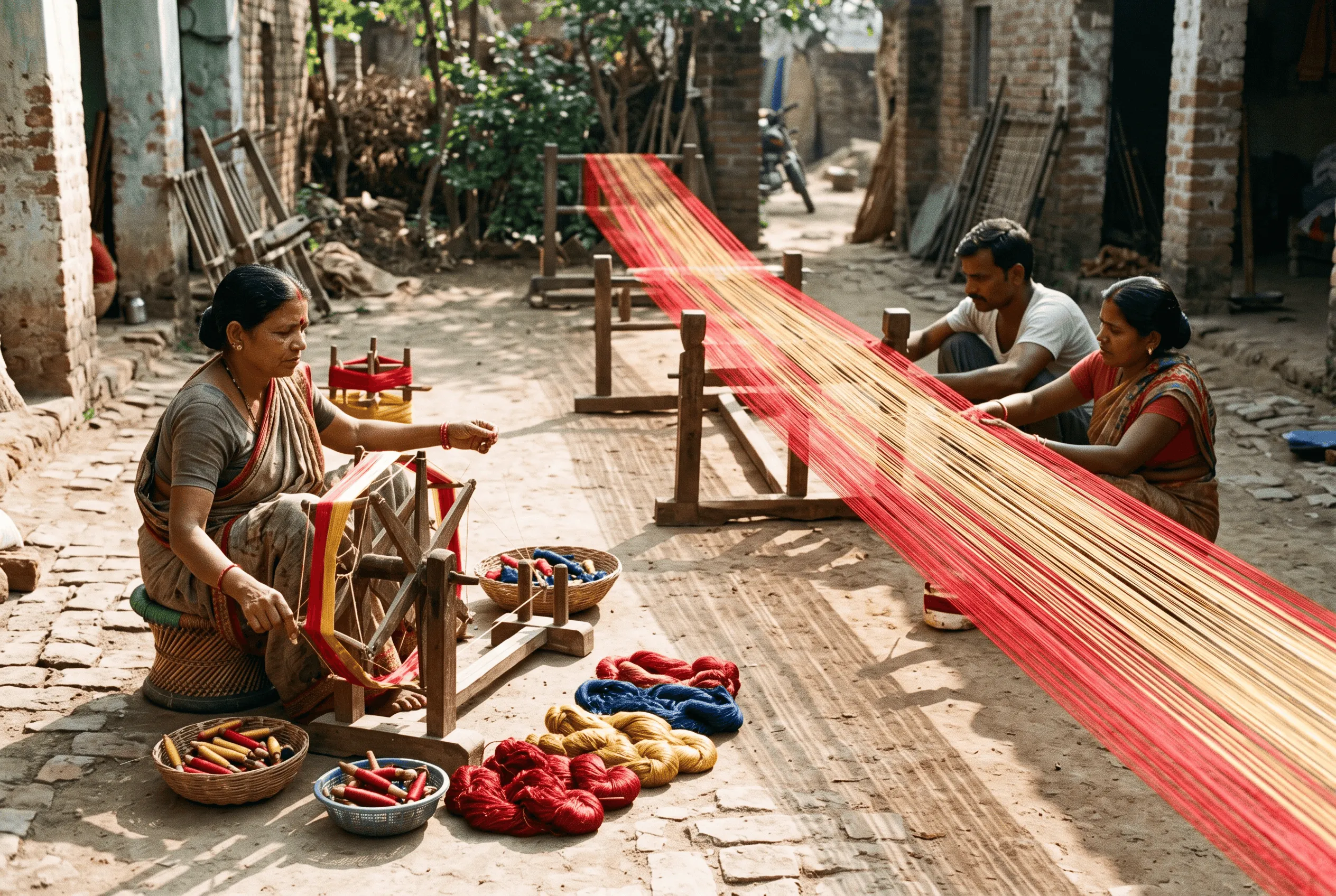
Before a single row is woven, the yarn must be reeled, twisted, dyed, warped and set on the loom.
For patterned sarees, the design may be translated into punch cards or tied threads, which takes skill and time.
4. Weaving Time
This is the biggest cost.
A simple handloom silk saree may take a few days to weave, while a heavy bridal saree with dense motifs can take weeks or months.
Weavers often work in pairs on complex designs, and every hour of skilled labour adds to the final price.
5. Skill and Experience
Handloom weaving is learned over many years, often within families.
Master weavers who can create complex brocades, korvai borders or double ikat patterns are rare, and their expertise is reflected in the price.
6. Finishing, Quality Checks and Distribution
After weaving, sarees are checked, finished and transported to markets, which adds further costs.
Why Powerloom Silk Is Cheaper
Powerlooms weave much faster and need fewer skilled workers.
They can produce many sarees in the time a handloom weaver completes one.
Powerloom sarees may also use cheaper yarns, blended fibres or synthetic zari.
This does not make every powerloom saree bad. Powerloom sarees can be practical and affordable for occasional wear. The issue arises when powerloom sarees are sold at handloom prices.
How to Tell Handloom From Powerloom Silk
Look for small irregularities. Handwoven fabric often shows tiny variations in the weave, which are a sign of human hands at work.
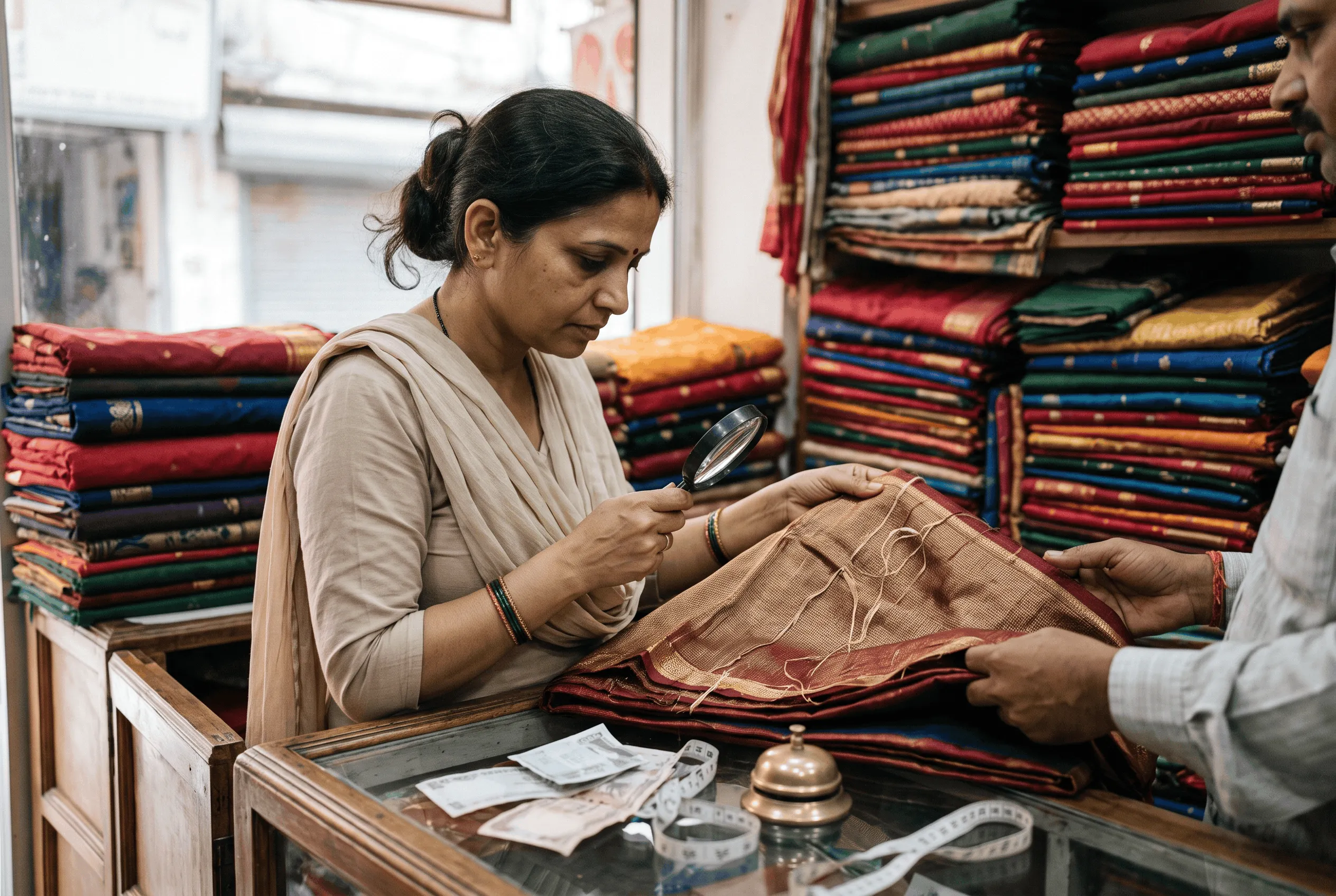
Check the reverse side. In many handloom brocades, the reverse shows neatly managed threads, while powerloom brocades often have long, loose floats cut by machines.
Examine the borders. In handloom sarees, borders are woven as part of the saree. In some techniques, such as Kanjivaram korvai, the border is interlocked with the body.
Check the selvedge. Handloom selvedges may be slightly uneven, while powerloom edges are perfectly straight.
Look for the Handloom Mark. The Handloom Mark and India Handloom Brand labels indicate genuine handloom products.
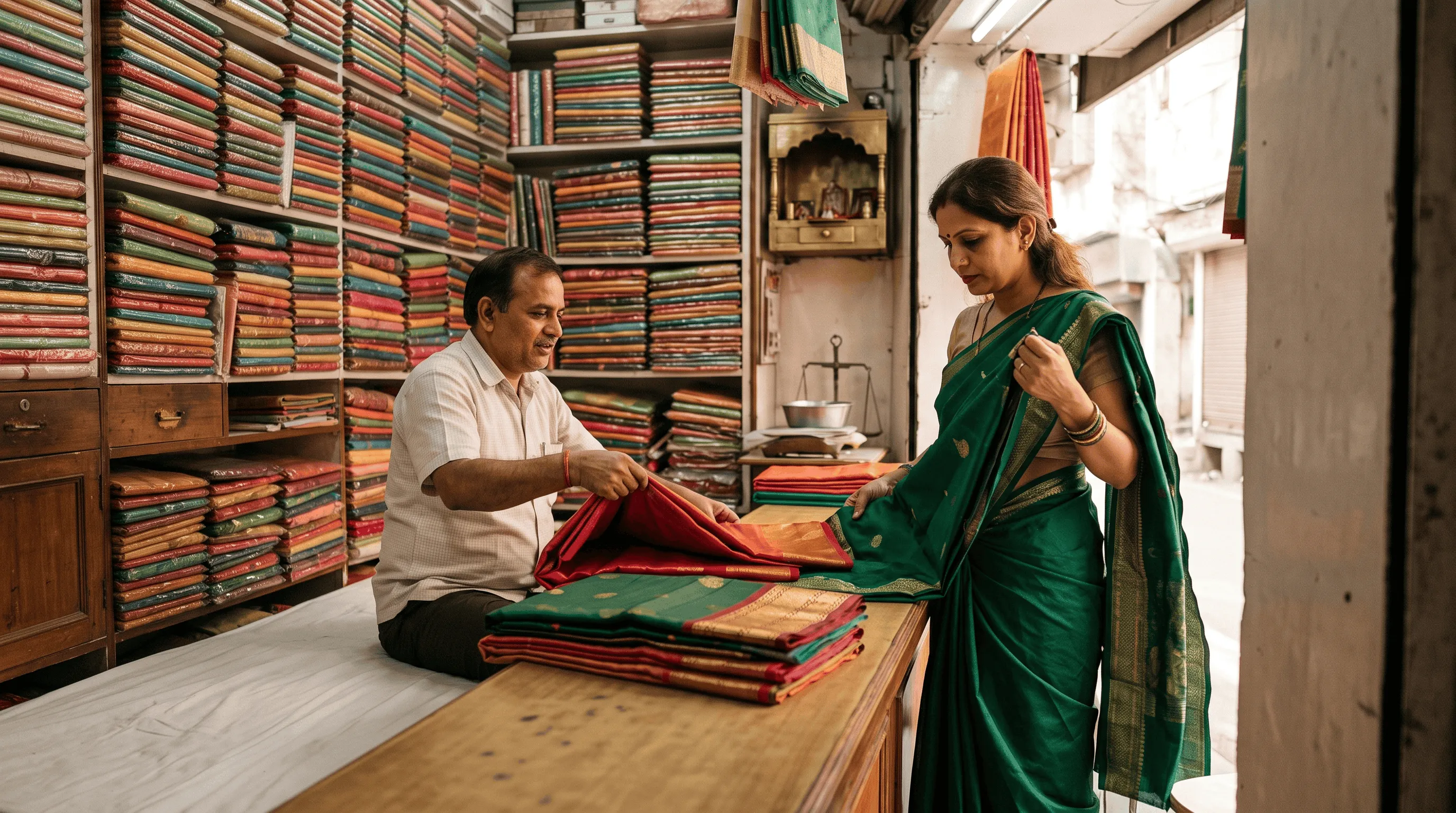
Ask questions. Where was it woven? Is it handloom? How long did it take? A genuine seller will know.
For a detailed comparison, read our guide to handloom vs powerloom sarees.
What Makes One Handloom Silk More Expensive Than Another?
Weight of the silk: heavier silk uses more yarn.
Density of motifs: more motifs mean longer weaving time.
Type of zari: pure zari costs much more than tested or synthetic zari.
Complexity of technique: double ikat, korvai and complex brocades take longer.
Weaver's skill and reputation: master weavers and well-known clusters command higher prices.
Region and GI status: sarees from protected regional traditions often cost more.
Why Handloom Silk Is Worth It
It Lasts for Generations
A well-made handloom silk saree, cared for properly, can last for decades and be passed down through families.
It Has Real Craftsmanship
Each saree carries the skill and time of a weaver. No two handloom sarees are exactly alike.
It Supports Livelihoods
Handloom weaving supports millions of people across India, many in rural areas. Buying handloom helps keep these communities and skills alive.
It Holds Value
Fine handloom silk, especially with pure zari, often retains value far better than powerloom copies.
It Feels Different
Many people find that handloom silk drapes more naturally and feels more alive than machine-made fabric.
It Is More Sustainable
Handlooms use little electricity, and long-lasting sarees reduce the need for frequent replacements.
Cost Per Wear: A Practical Way to Think
A ₹25,000 handloom silk saree worn 30 times over 15 years costs about ₹833 per wear.
A ₹4,000 powerloom saree worn three times before it looks tired costs about ₹1,333 per wear.
When you think about how often and how long you will wear a saree, handloom often turns out to be better value.
Handloom Silk Price Guide
These are indicative 2026 ranges. Prices vary by region, weight, zari and seller.
| Handloom silk | Indicative price range |
|---|---|
| Light handloom silk (simple design) | ₹6,000 – ₹15,000 |
| Mysore silk or Chanderi silk | ₹5,000 – ₹20,000 |
| Kanjivaram (simpler weaves) | ₹12,000 – ₹30,000 |
| Banarasi (handloom) | ₹10,000 – ₹50,000+ |
| Bridal Kanjivaram or Banarasi | ₹30,000 – ₹1,00,000+ |
| Patan double ikat Patola | ₹1,50,000 and above |
Compare more prices in our saree price guide.
How to Buy Handloom Silk Wisely
Set a budget and decide what matters most: weight, zari, design or region.
Buy from trusted sources such as cooperatives, weaver-led brands and established handloom stores.
Ask for certification such as the Silk Mark and Handloom Mark.
Inspect in daylight, front and back.
Ask about care and storage before you buy.
Avoid unrealistically low prices for sarees claimed to be pure handloom silk.
For red flags to watch for, read our guide to authentic handloom saree red flags.
Caring for Your Investment
Dry-clean only, especially sarees with zari.
Store in muslin or cotton, never plastic.
Refold every few months to prevent weak crease lines.
Wrap zari in tissue paper to slow tarnishing.
Air occasionally in the shade.
Our silk saree care guide has more detailed tips.
A Day in a Weaver's Workshop
In many weaving clusters, the working day begins early, when the light is good and the air is cooler.
One family member may prepare bobbins of silk and zari while another sits at the loom, carefully lifting warp threads and passing the shuttle.
For a heavy brocade, progress might be measured in a few centimetres a day.
Understanding this slow, careful rhythm makes it easier to see why a handloom saree carries a higher price.
When Powerloom Might Make Sense
Powerloom silk can be a practical choice for one-time events, travel, very tight budgets or when you want a trendy design you may not wear for years.
The key is to pay a fair powerloom price and know what you are buying.
Common Myths About Handloom Silk
"Handloom Is Always Plain"
No. Many of India's most intricate sarees are handwoven.
"Expensive Means Handloom"
Not always. Some sellers charge handloom prices for powerloom sarees, so check carefully.
"Handloom Is Fragile"
Well-woven handloom silk is durable when cared for properly.
"Imperfections Mean Poor Quality"
Small irregularities are often a sign of genuine handwork, not a defect.
Supporting Weavers Directly
Whenever possible, buy from weaver cooperatives, artisan collectives and brands that work directly with weavers and pay fair wages.
Ask brands how they support weavers and where their sarees are made.
Your choice helps keep a centuries-old craft alive.
Building a Handloom Silk Collection Over Time
You do not need to buy many handloom silk sarees at once.
Start with one versatile piece, such as a jewel-toned Kanjivaram or Banarasi, then add regional weaves such as Paithani, Patola, Baluchari or Mysore silk over the years.
Each saree becomes part of your story and your family's heritage.
The Value Behind the Price
Handloom silk costs more because it represents skill, time, quality materials and a living tradition.
When you understand where the price comes from and learn to recognise genuine handwork, you can buy with confidence and enjoy a saree that lasts for generations.
Explore more in our silk fabric types guide and the traditional wear trends 2026 guide.
Handloom Silk in Changing Fashion
Handloom silk is not old-fashioned.
Designers and young buyers are rediscovering it through lighter weights, pastel colours, modern motifs and contemporary blouses.
Handloom silk sarees are now styled with belts, jackets and minimalist jewellery, which makes them relevant for receptions, office celebrations and festive evenings.
This new interest helps sustain weavers and brings fresh designs to traditional looms.
Gifting Handloom Silk
A handloom silk saree is one of the most meaningful gifts in Indian culture, especially for weddings, milestone birthdays and festivals.
Choose a versatile colour and a reputable seller, and include care instructions so the recipient can enjoy it for many years.


Comments (0)
Leave a Thought
No comments yet. Be the first to share your thoughts!