Two sarees can share the same colours, the same motifs and the same regional name, yet one may be woven by hand over several weeks and the other by machine in a few hours.
The difference matters for price, quality, comfort, value and the livelihoods of weavers.
Unfortunately, powerloom sarees are often sold as handloom, and many buyers only discover the truth after paying a handloom price.
This guide explains handloom vs powerloom sarees in practical terms: what each one is, the clues you can check in a shop, weave-specific signs for popular sarees, labels and certifications, price as a warning sign and what to ask before you buy.
The goal is not to say that powerloom is bad, but to help you pay a fair price for what you are actually buying.
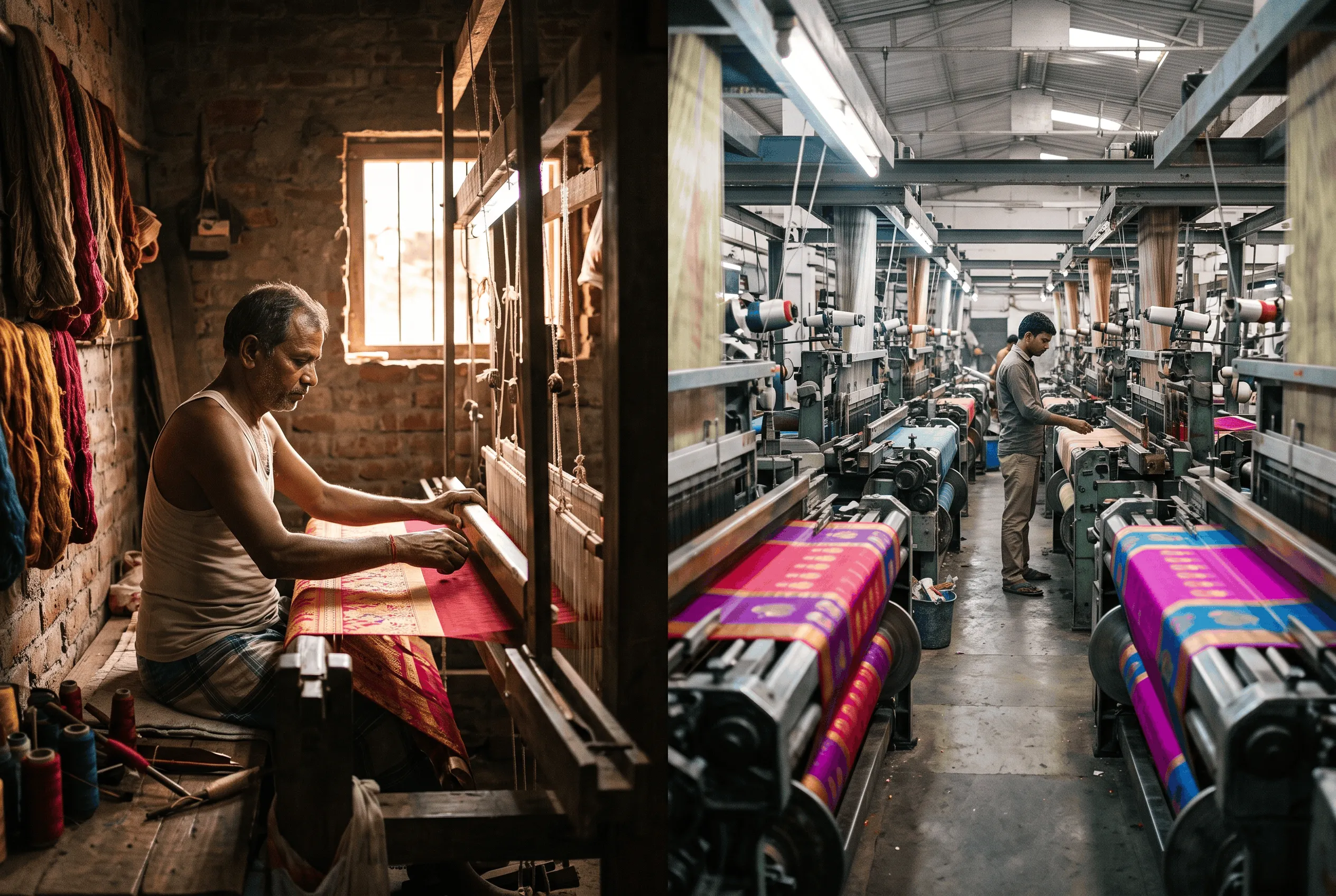
What Is a Handloom Saree?
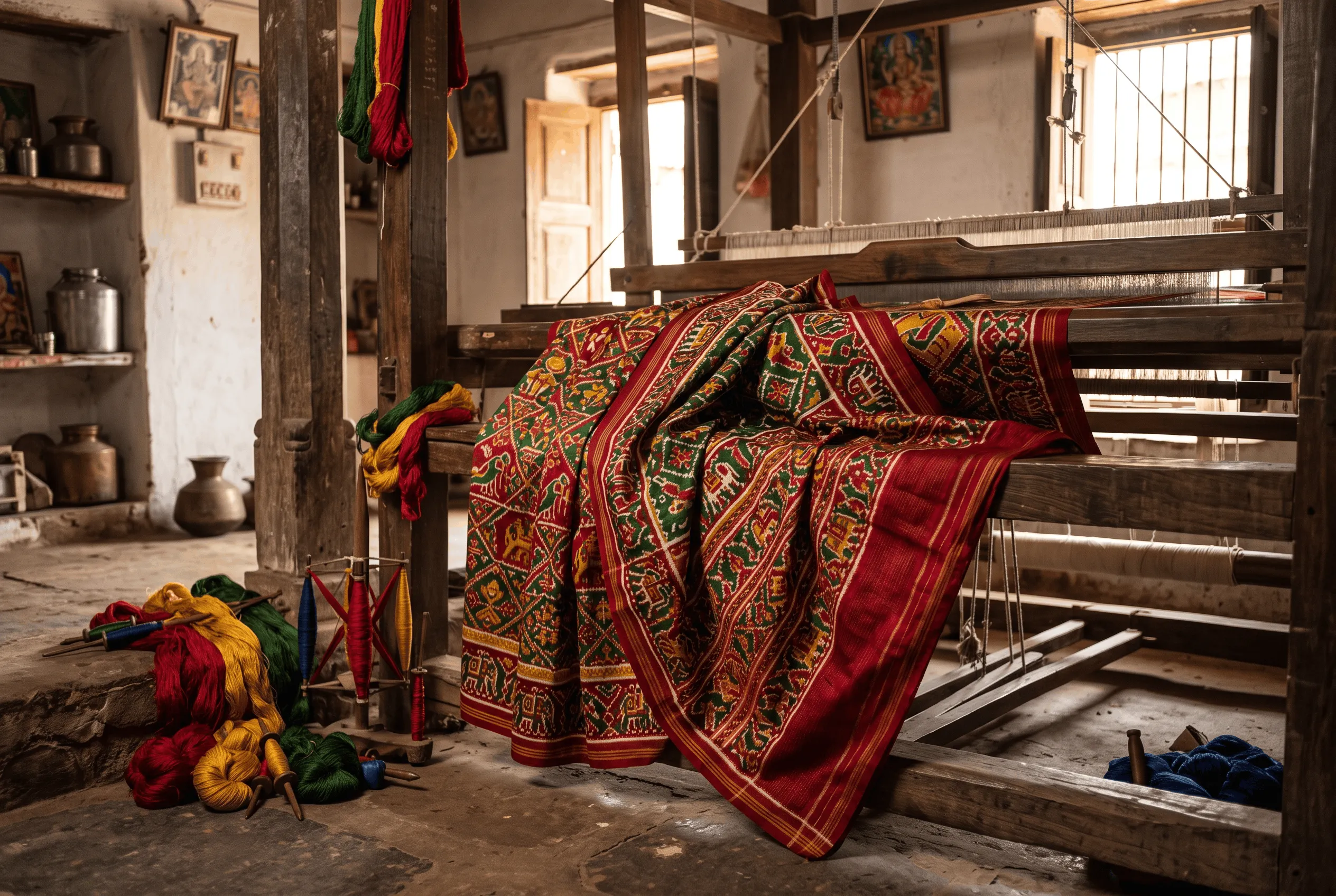
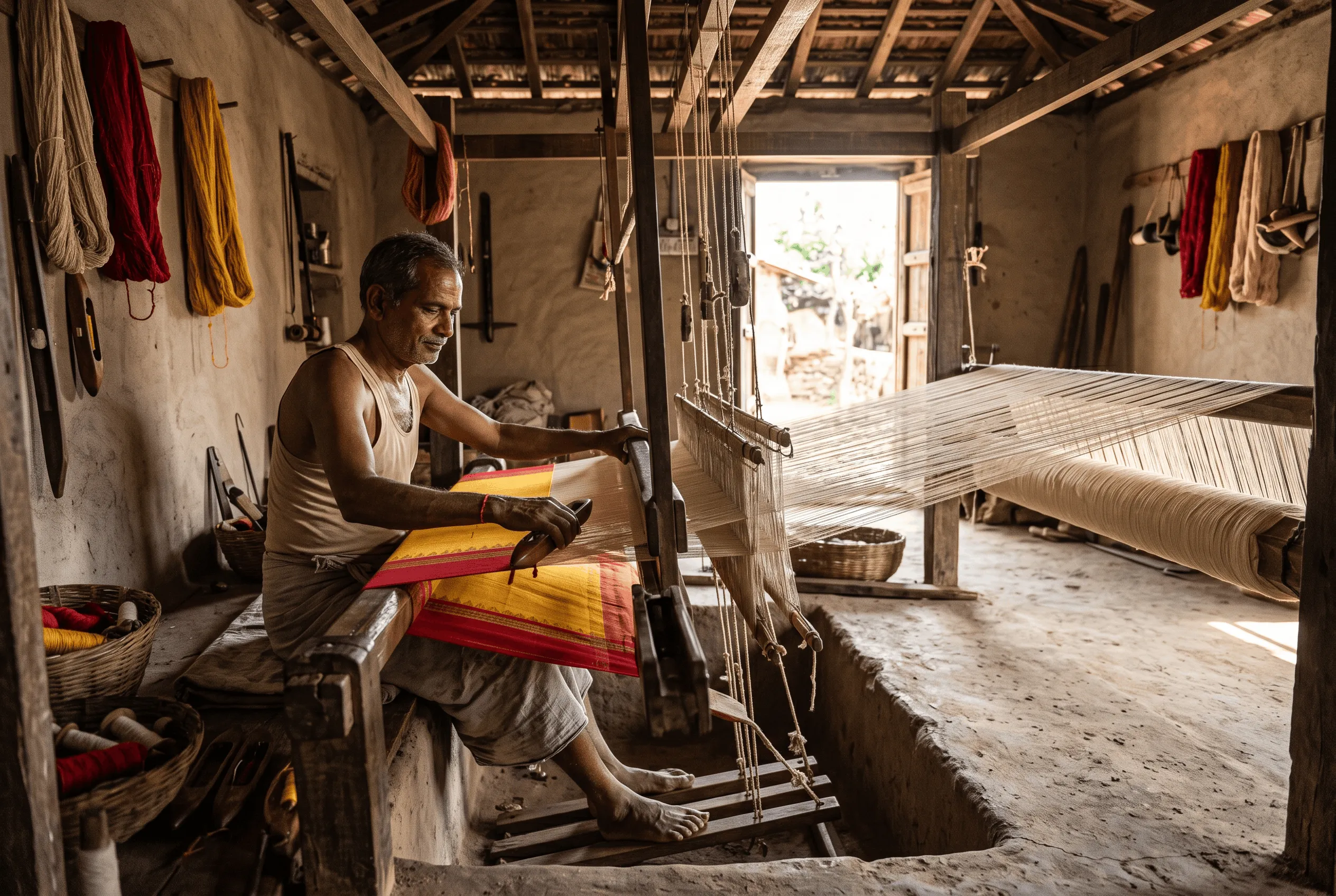
A handloom saree is woven on a loom operated entirely by hand and foot, without electricity.
The weaver lifts the warp threads using pedals, passes the weft shuttle by hand and beats each row into place.
In patterned sarees, the weaver may insert extra threads by hand for motifs, borders and pallus.
Weaving can take from a few days for a simple saree to several weeks or months for a complex bridal piece.
What Is a Powerloom Saree?
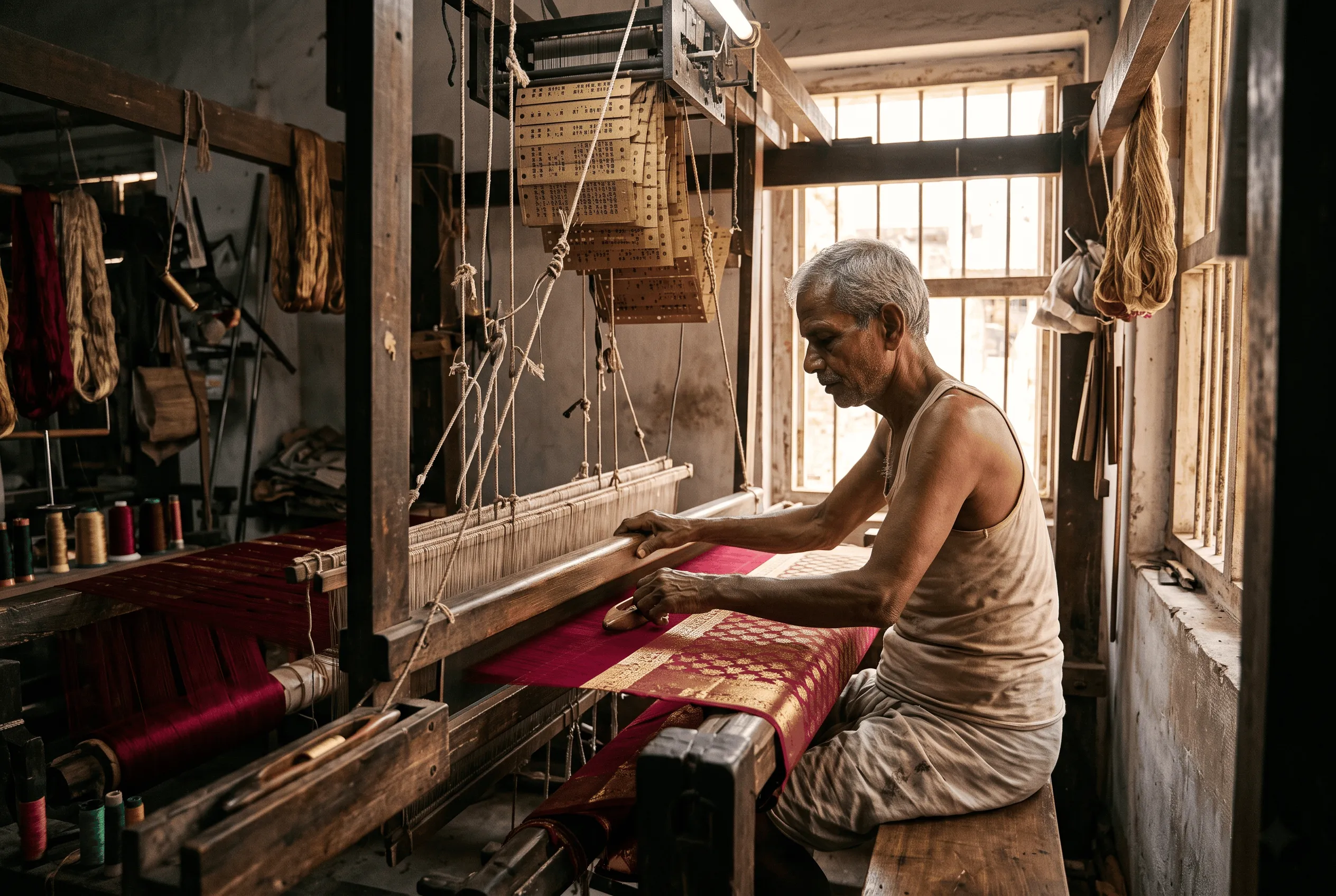
A powerloom saree is woven on an electrically powered loom.
The machine performs the weaving motions automatically, producing fabric much faster and more uniformly.
Powerloom sarees can copy traditional designs, which is why they are often confused with handloom.
Why the Difference Matters
Price: handloom takes far more time and skill, so it costs more.
Feel and drape: many people find handloom softer, more breathable and more natural in drape.
Uniqueness: each handloom saree has small variations; powerloom sarees are identical.
Durability and value: good handloom sarees often last longer and hold value as heirlooms.
Livelihoods: handloom supports millions of rural weavers whose work is threatened by mislabelled imitations.
Law: Indian law reserves certain textile articles for handloom production, which reflects the importance of protecting the handloom sector.
Quick Checks You Can Do in a Shop
1. Look for Small Irregularities
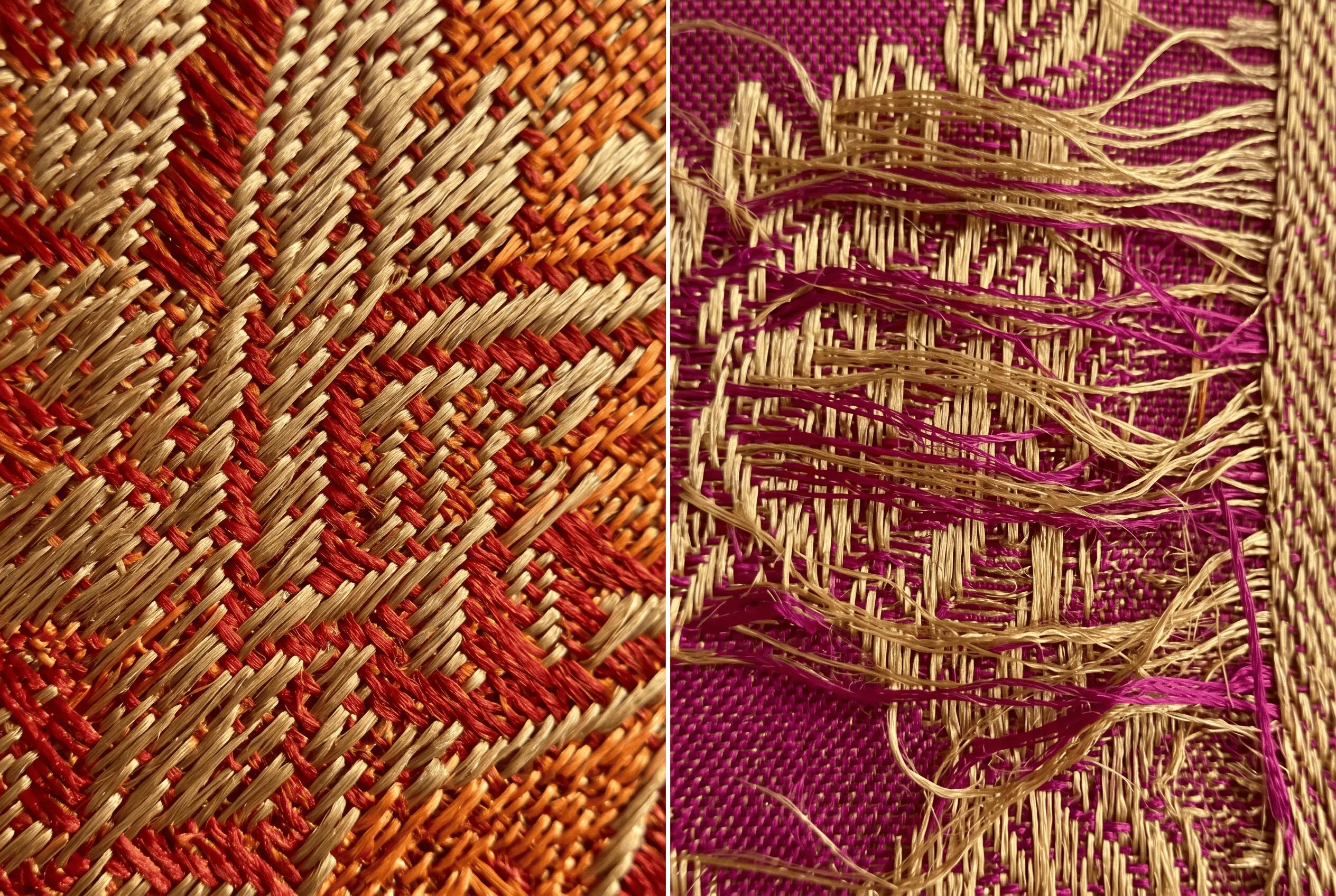
Handloom fabric often has slight variations in the weave, such as small differences in thread tension or spacing.
Powerloom fabric looks perfectly even.
2. Check the Selvedge (Edges)
Handloom selvedges may be slightly uneven or show small loops where the weft turned.
Powerloom selvedges are usually perfectly straight and uniform.
3. Turn the Saree Over
In many handloom brocades, the reverse shows neatly managed threads.
In many powerloom brocades, long floating threads on the back are cut by machine, leaving fringe-like ends.
4. Examine the Motifs
Handwoven motifs vary slightly from one to the next.
Machine-woven motifs are exactly identical across the saree.
5. Check the Border Join
In handloom sarees, borders are woven as part of the fabric. In techniques such as Kanjivaram korvai, the border is interlocked with the body.
In some powerloom sarees, borders may look attached or show a different construction.
6. Feel the Fabric
Handloom fabric often feels softer and slightly more textured.
Powerloom fabric can feel smoother but flatter.
Weave-Specific Signs
Banarasi: kadhwa handloom weaving has no cut floats on the back; powerloom brocades often show cut threads. See our Banarasi brocade guide.
Kanjivaram: look for the korvai join and the weight of the silk. See how to identify pure Kanjivaram silk.
Paithani: handwoven tapestry pallus look almost the same on both sides. See our Paithani saree guide.
Jamdani: handwoven motifs look similar on both sides with small thread ends; powerloom copies show long floats. See our Jamdani saree guide.
Patola and ikat: real ikat shows feathered motif edges; printed or powerloom copies look crisp. See our Patola saree guide.
Chanderi: handloom Chanderi has fine sheerness and slightly irregular buttis.
Handloom vs Powerloom at a Glance
Speed: a handloom weaver may produce a few centimetres to a metre of complex fabric a day, while a powerloom can produce many metres in the same time.
Consistency: handloom has natural variation; powerloom is uniform.
Design flexibility: handloom weavers can adjust designs as they weave, while powerlooms repeat programmed patterns.
Energy: handlooms use human energy; powerlooms use electricity.
Price: handloom usually costs more; powerloom is more affordable.
Value over time: fine handloom sarees often become heirlooms, while most powerloom sarees are used for a shorter period.
Cotton Handloom vs Powerloom
The same principles apply to cotton sarees.
Handloom cotton often feels softer and more breathable, with slight texture and small irregularities.
Powerloom cotton is smoother and more uniform, and often cheaper.
For daily cotton sarees, handloom is a comfortable, affordable way to support weavers. See our handloom cotton guide.
Labels and Certifications
Handloom Mark: a label that indicates a product is genuinely handwoven.
India Handloom Brand: a government-backed brand for high-quality handloom products.
Silk Mark: indicates pure silk, though it does not by itself guarantee handloom.
Geographical Indication (GI): many regional sarees, such as Banarasi, Kanjivaram, Paithani and Pochampally, are protected by GI.
Ask for these labels, especially for expensive purchases.
Price as a Warning Sign
Handloom sarees take far more time to make, so they cannot be sold at powerloom prices.
If a "handloom Banarasi" or "handloom Kanjivaram" is priced like a mass-market saree, it is very likely powerloom.
| Saree type | Typical powerloom price | Typical handloom price |
|---|---|---|
| Cotton saree | ₹500 – ₹1,500 | ₹1,000 – ₹5,000 |
| Silk-cotton saree | ₹1,000 – ₹3,000 | ₹3,000 – ₹12,000 |
| Banarasi silk | ₹2,000 – ₹8,000 | ₹10,000 – ₹50,000+ |
| Kanjivaram silk | ₹3,000 – ₹10,000 | ₹12,000 – ₹1,00,000+ |
These are indicative 2026 ranges and vary by city, seller, silk and zari. See our saree price guide.
Questions to Ask the Seller
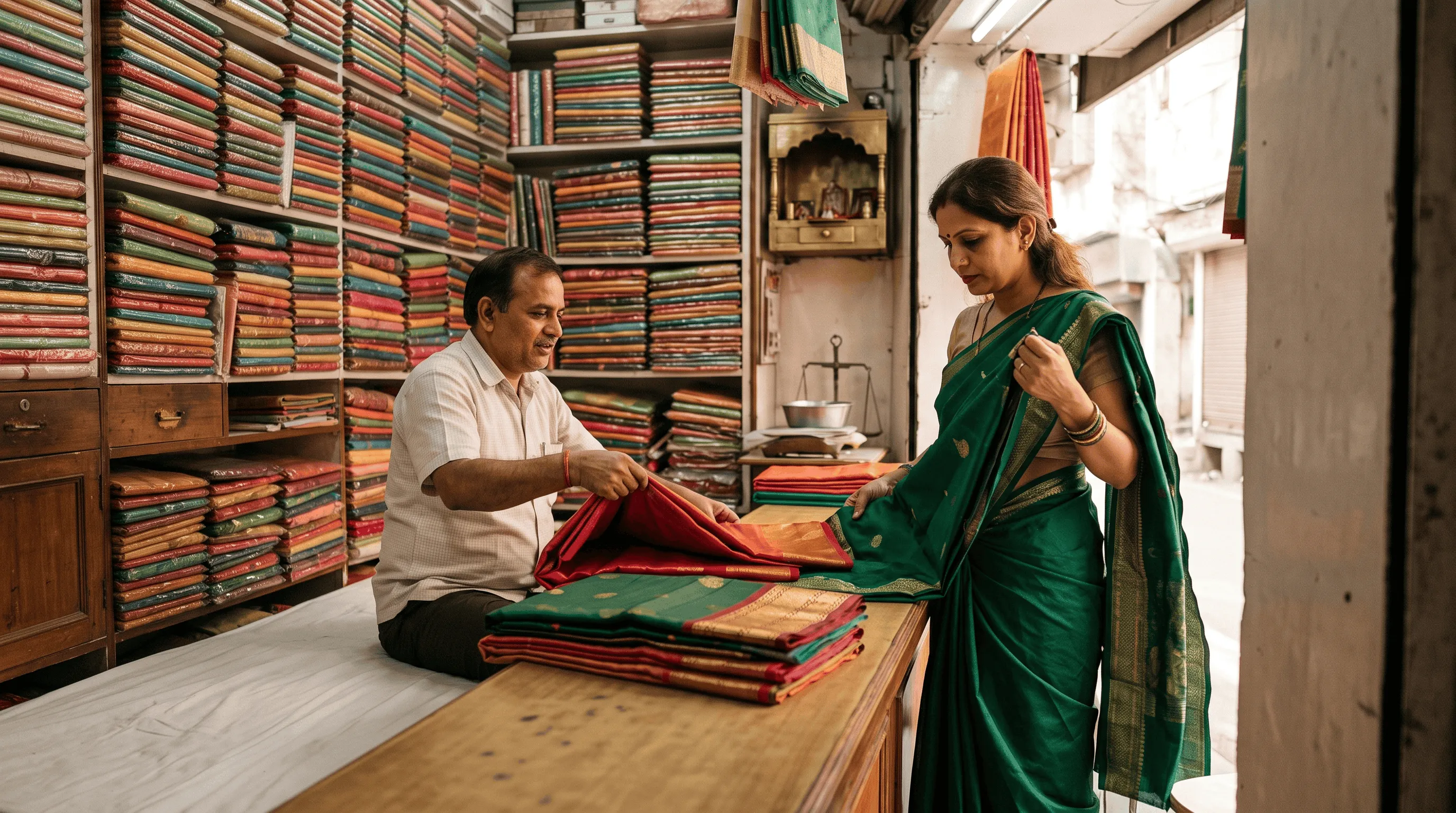
Is this handloom or powerloom?
Where was it woven, and by which cluster or cooperative?
Does it carry the Handloom Mark, Silk Mark or GI label?
How long did it take to weave?
What is the return policy if it turns out to be powerloom?
Ask for the bill to mention "handloom" clearly.
A Simple In-Shop Routine
When you are shown a saree, follow the same steps every time.
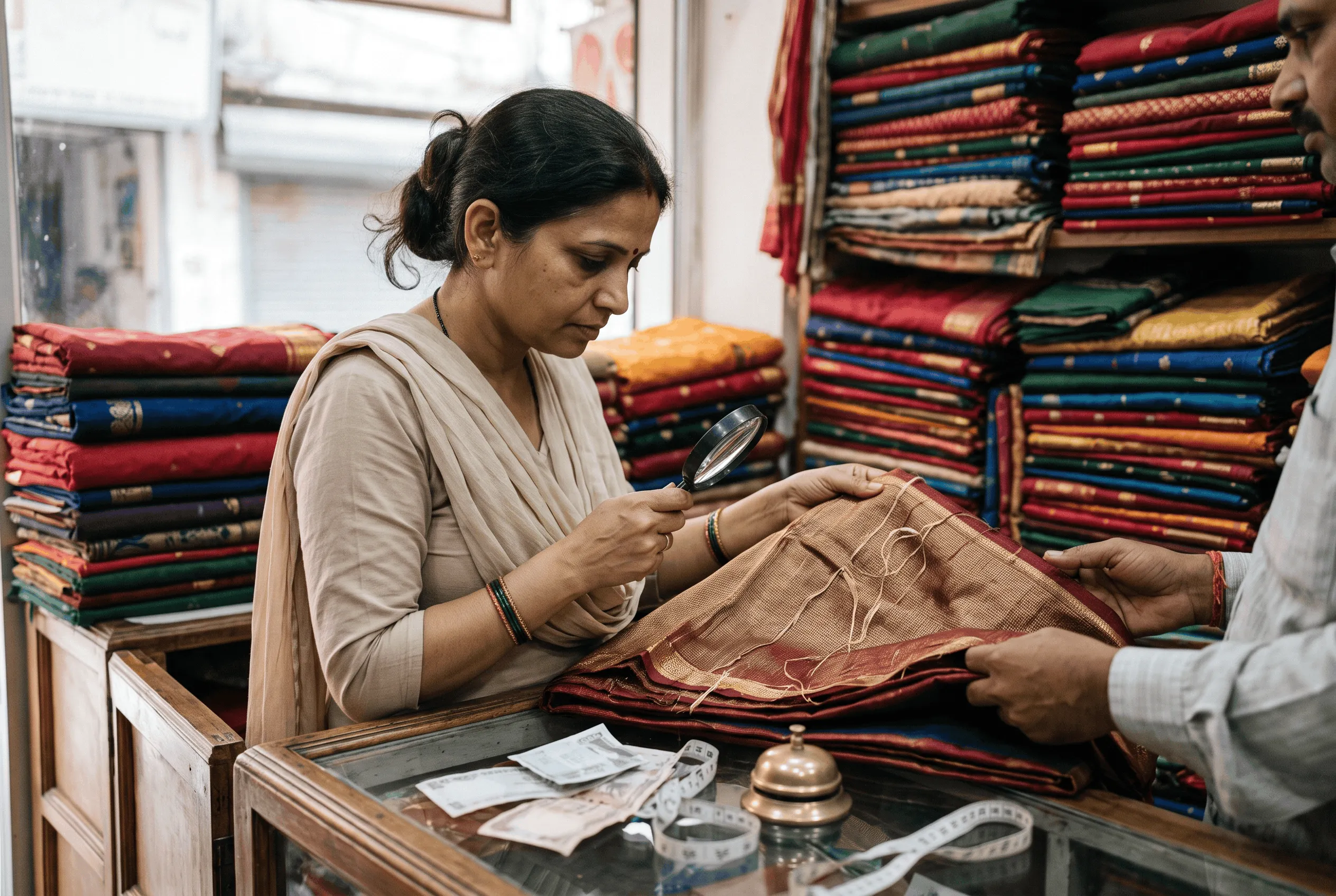
First, take it into daylight and look at the overall weave for small irregularities.
Second, check both selvedges along the length.
Third, turn over the border, pallu and a motif area to see the reverse.
Fourth, ask the seller directly whether it is handloom and request a bill that says so.
Doing this consistently makes it much harder for a mislabelled saree to slip through.
When Powerloom Is a Reasonable Choice
Powerloom sarees can be a sensible option for one-time events, frequent travel, budget constraints, very trendy designs or everyday wear where durability matters more than craft.
There is nothing wrong with buying powerloom when it is sold honestly and priced fairly.
Why Handloom Is Worth Supporting
Handloom weaving supports millions of people, many in rural India, and keeps centuries-old techniques alive.
Every genuine handloom purchase helps weavers compete with cheaper imitations.
Read more in our guide to why handloom silk is worth it.
Buying Handloom Online
Look for clear descriptions that state handloom, the region and the cluster.
Ask for close-up photographs of the reverse side, selvedge and border.
Check for Handloom Mark or Silk Mark details.
Buy from sellers with clear return policies and good reviews.
Common Mistakes Buyers Make
Judging a saree only by its design is the most common mistake, because powerloom can copy designs.
Another is trusting shop lighting and not checking the reverse side.
Some buyers also forget to ask for a detailed bill.
Finally, avoid assuming that an expensive saree must be handloom.
Building Confidence Over Time
The more handloom sarees you see and touch, the easier it becomes to recognise them.
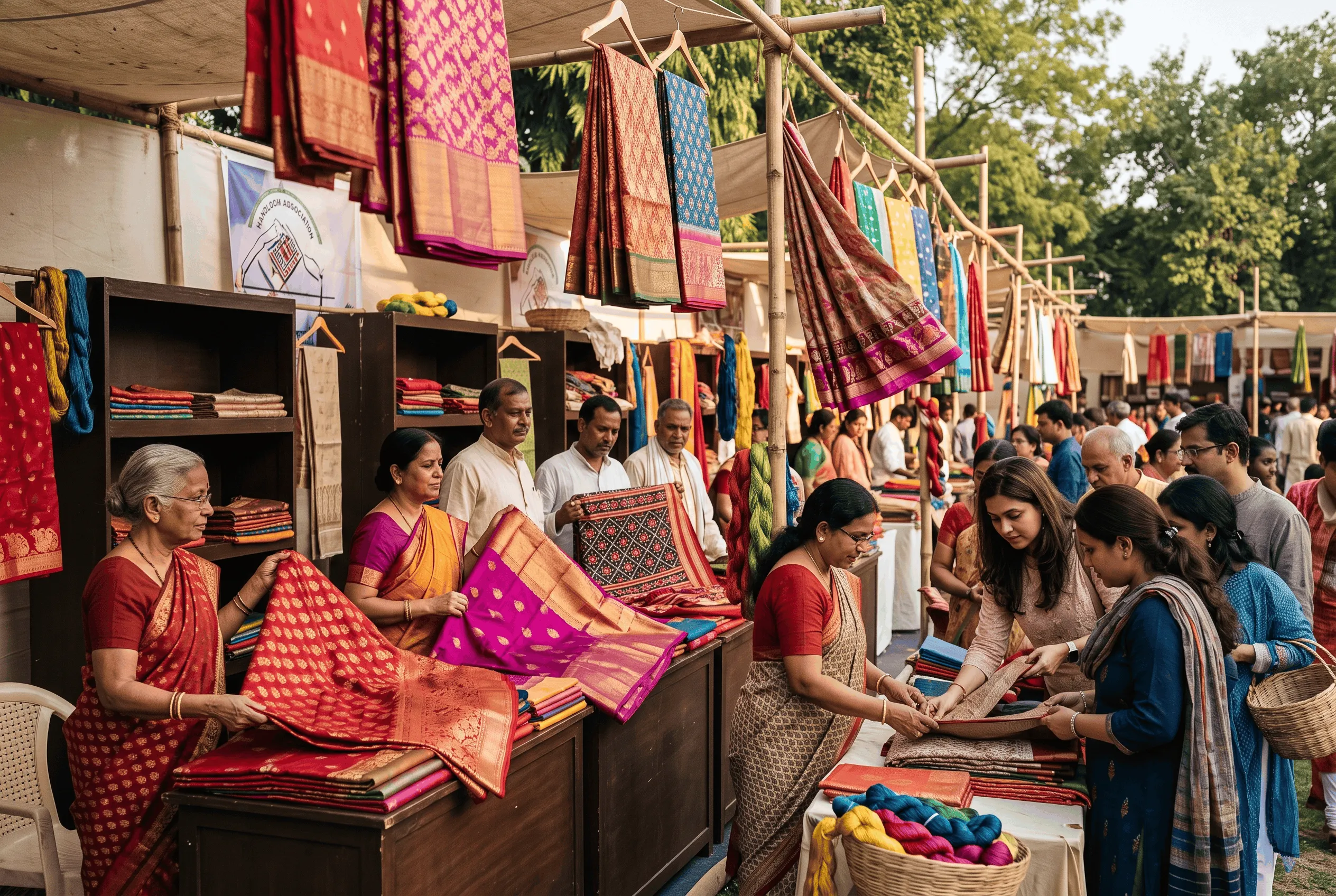
Visit handloom exhibitions, cooperatives and weaver-led stores to compare fabrics in person.
Over time, you will learn to spot handloom quickly by feel and sight.
Know What You Are Buying
The handloom vs powerloom saree question comes down to time, skill and honesty.
Check for irregularities, selvedges, the reverse side and labels, ask clear questions and use price as a warning sign.
Then choose handloom when you want craft and heritage, and powerloom when you need affordability, as long as you pay a fair price for each.
Explore more in our authentic handloom saree red flags and the traditional wear trends 2026 guide.
Handloom, Powerloom and Hybrid Sarees
Some sarees combine methods, such as a powerloom body with a handwoven border, or handloom weaving with machine-made yarn and zari.
These hybrids can be good value, but they should be described honestly.
Ask exactly which parts were handwoven so you understand what you are paying for.
Caring for Handloom Sarees
Handloom sarees deserve gentle care.
Dry-clean silk handlooms and wash cotton handlooms gently in cold water.
Store them in muslin or cotton, refold every few months and keep zari wrapped in tissue paper.
Good care protects your investment and helps the weaver's work last for generations. See our silk saree care guide.
The Role of Weaver Cooperatives
Weaver cooperatives play an important role in the handloom sector.
They help weavers access yarn, design support and markets, and they often sell directly to buyers at fair prices.
Buying from cooperatives is one of the most reliable ways to get genuine handloom and support weavers directly.

Comments (0)
Leave a Thought
No comments yet. Be the first to share your thoughts!