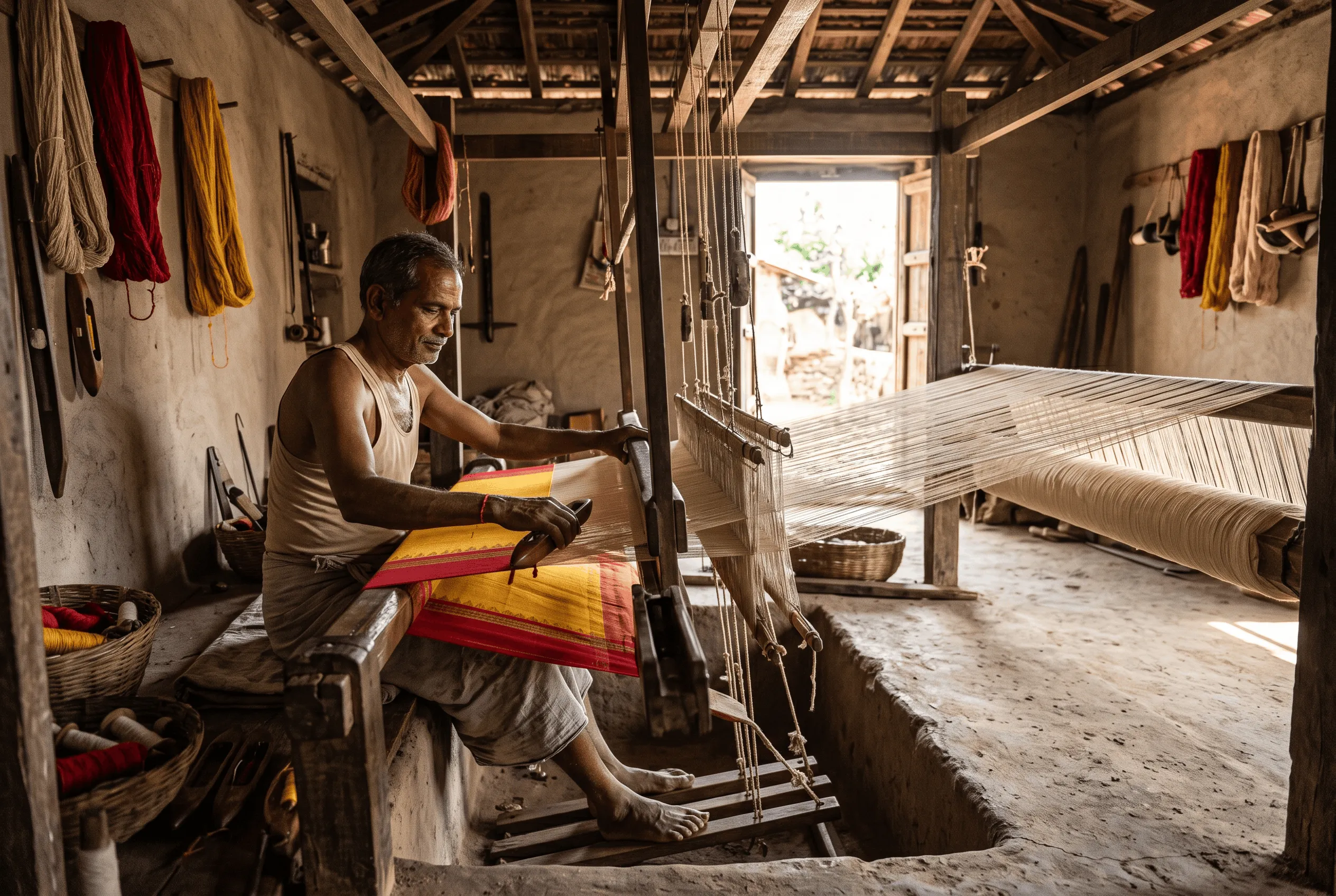
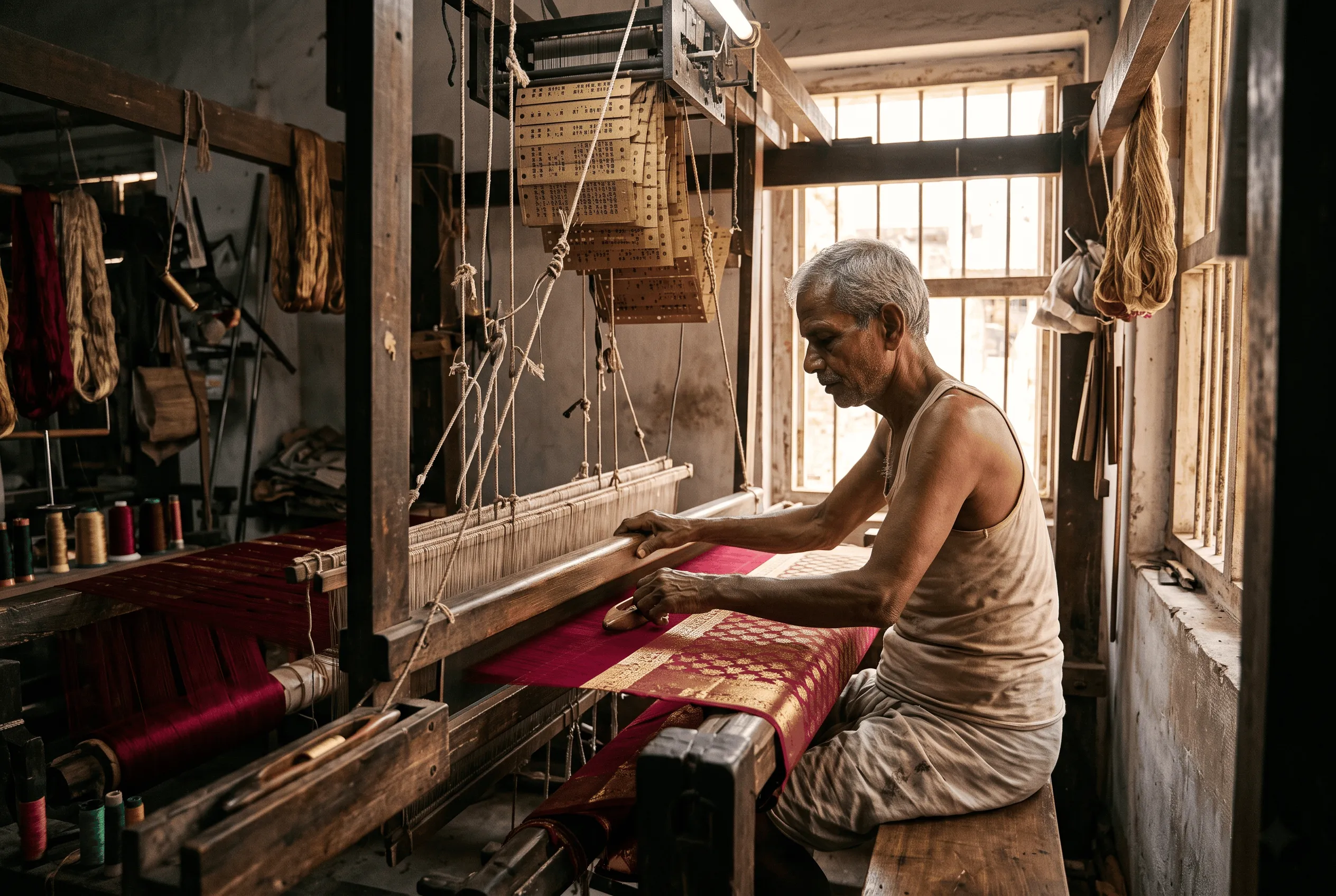
Every handloom cotton saree, dupatta or kurta begins with a weaver sitting at a wooden loom, passing a shuttle back and forth, row by row.
It is slow, rhythmic, skilled work, and it produces fabric with a character that machines cannot quite copy.
Handloom cotton is breathable, comfortable and full of quiet detail, from the slightly uneven texture of the weave to the woven borders and motifs that make each piece unique.
This guide follows handloom cotton from the loom to your wardrobe.
It explains how handloom cotton is made, the major regional traditions, how it differs from mill cotton, how to identify genuine handloom, how to wear and style it, what it costs and how to care for it so it lasts for years.
If you value comfort, craftsmanship and supporting artisans, handloom cotton is one of the best choices you can make.
What Is Handloom Cotton?
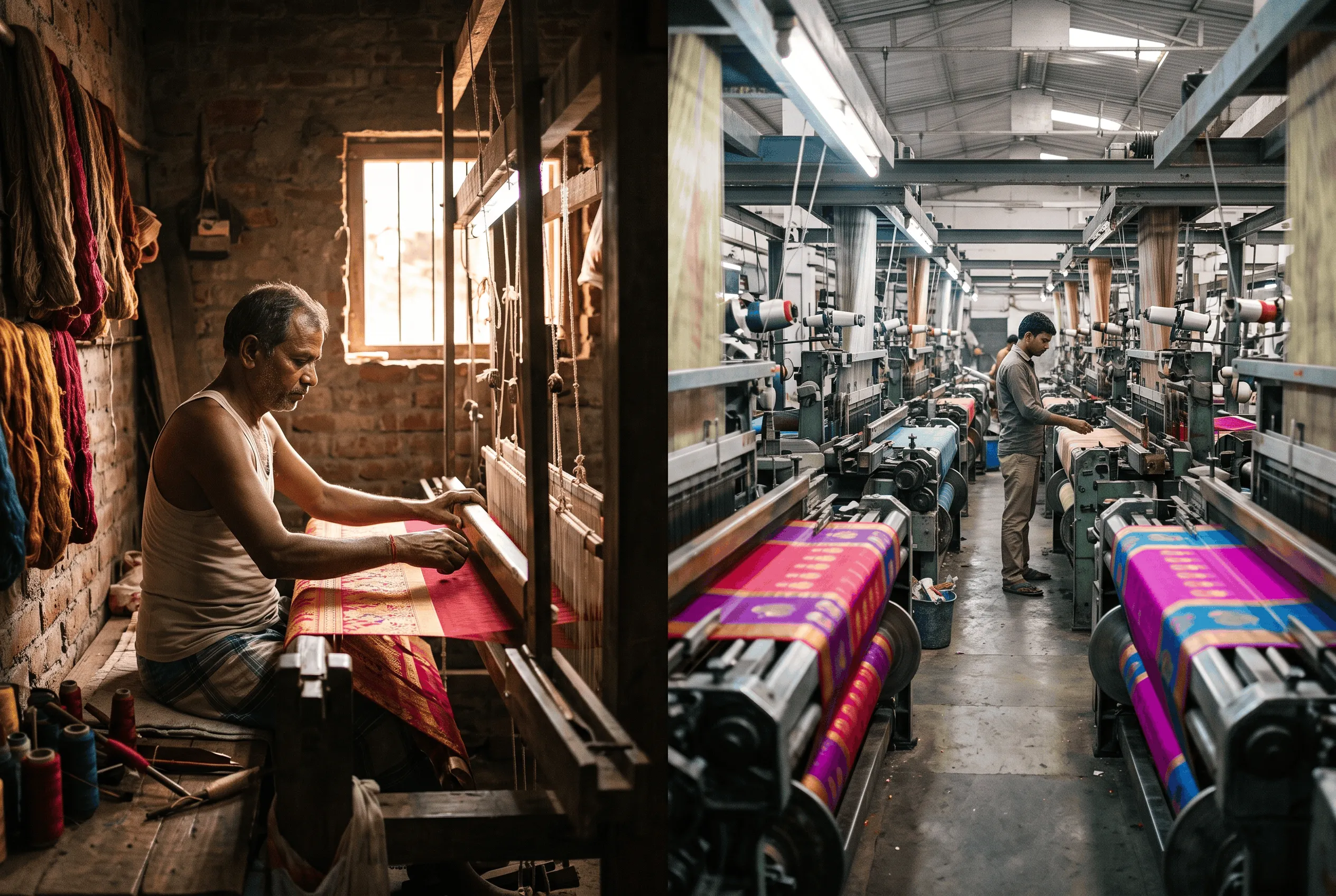
Handloom cotton is cotton fabric woven on a loom that is operated by hand, without electricity.
The yarn itself is usually machine-spun. If the yarn is also hand-spun, the fabric is called khadi. See our khadi fabric guide.
Handloom weaving gives fabric small irregularities, a soft texture and a breathable quality that many people prefer to mill-made cloth.
From Yarn to Fabric: The Journey
1. Preparing the Yarn
Cotton yarn is cleaned, sometimes sized with starch for strength, and wound onto bobbins.
2. Dyeing
Yarn may be dyed before weaving, using natural or synthetic dyes. In ikat traditions, yarn is tie-dyed in patterns before weaving.
3. Warping
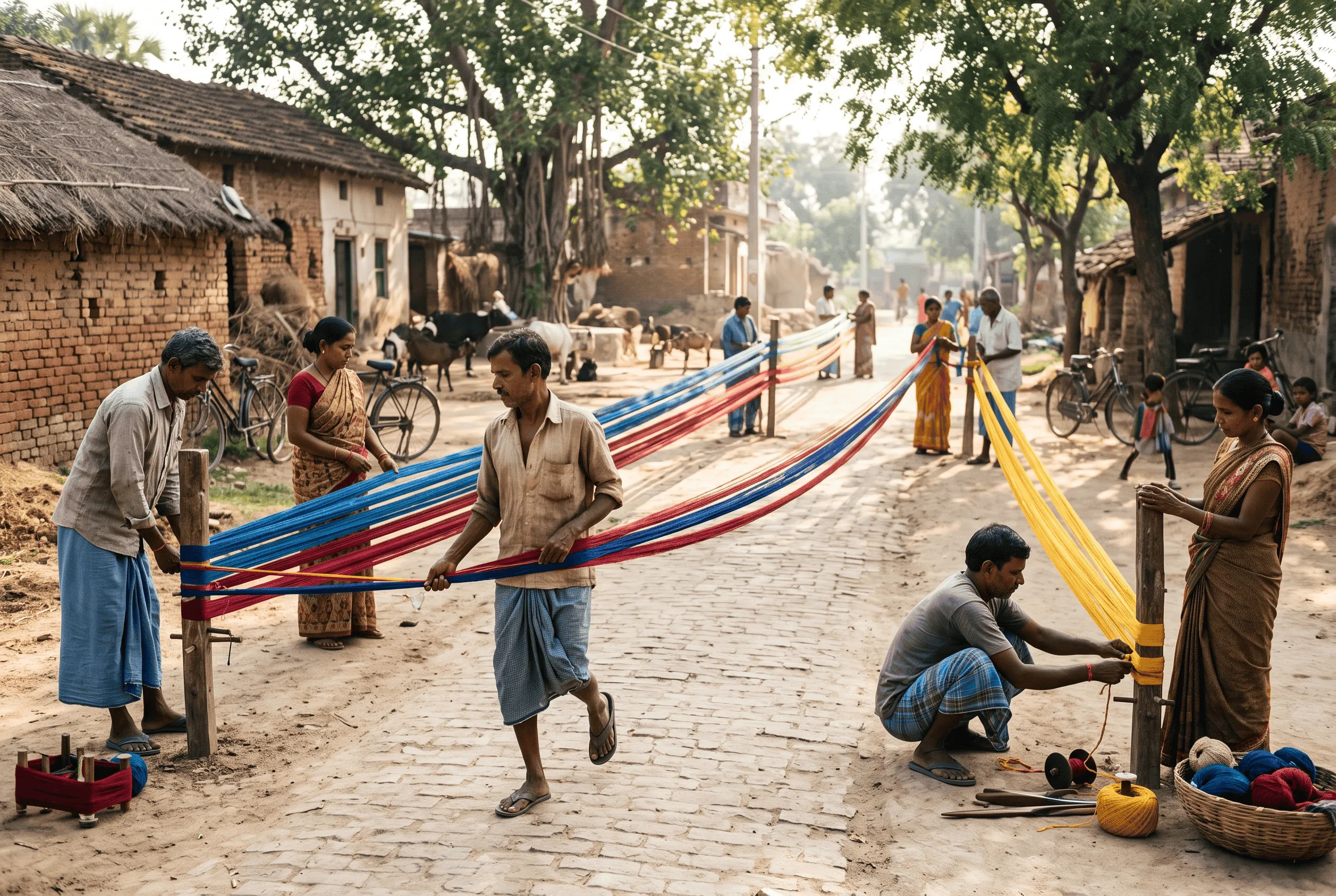
Hundreds or thousands of threads are measured and arranged as the warp, the lengthwise threads on the loom.
4. Setting the Loom
The warp is threaded through the loom's heddles and reed, a careful process that can take a long time.
5. Weaving
The weaver lifts groups of warp threads with foot pedals, passes the weft shuttle across and beats each row into place. Borders and motifs may be added with extra threads.
6. Finishing
The fabric is cut from the loom, checked, washed or finished, and sent to market.
Types of Handlooms
Weavers in India use different kinds of handlooms, depending on the region and the fabric.
Pit looms are set over a shallow pit in the floor, where the weaver sits with legs in the pit to operate the pedals. They are common in many traditional weaving villages.
Frame looms are raised wooden structures that stand on the floor and are often easier to set up in small workshops.
Jacquard attachments use punched cards to lift specific warp threads, which allows weavers to create complex motifs on a handloom.
Each type shapes the width, texture and design possibilities of the fabric.
Natural Dyes in Handloom Cotton
Many handloom cottons are coloured with natural dyes such as indigo, madder, turmeric, pomegranate rind and iron.
Natural dyes give soft, earthy shades and a gentle depth of colour that many people love.
They often fade gradually over time, which adds character rather than looking worn out.
Naturally dyed handloom should be washed separately in cold water and dried in the shade to keep colours longer.
Regional Handloom Cotton Traditions
India has an extraordinary range of handloom cotton traditions.
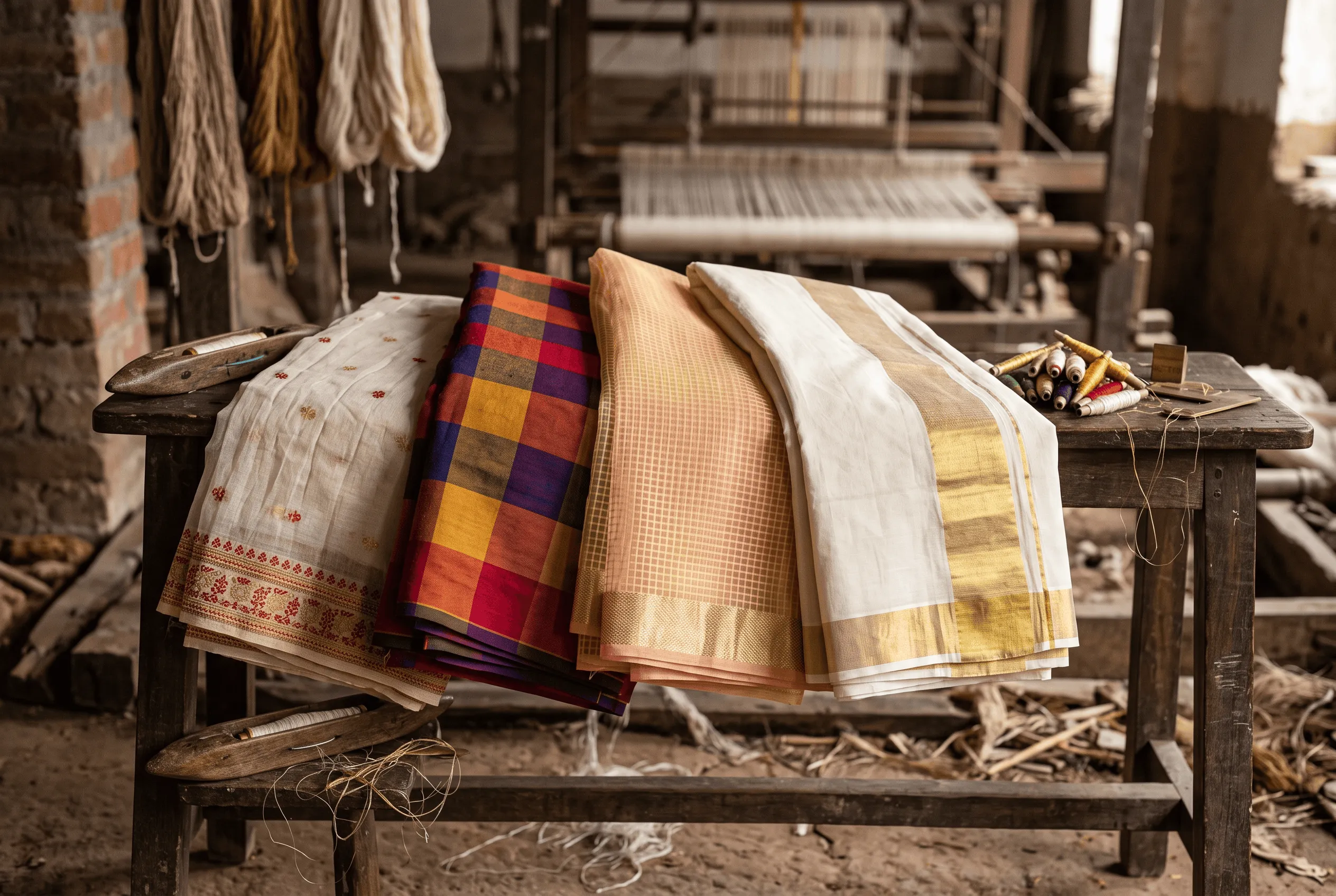
Tant (West Bengal): light, crisp sarees with wide borders, perfect for daily wear and Durga Puja daytime.
Kota Doria (Rajasthan): sheer cotton or cotton-silk with a distinctive square-check weave.
Mangalagiri (Andhra Pradesh): smooth cotton with zari borders and no motifs on the body.
Chettinad (Tamil Nadu): bold checks and stripes with contrast borders.
Ilkal (Karnataka): known for its distinctive joined pallu.
Sambalpuri (Odisha): ikat patterns in cotton and silk.
Kasavu (Kerala): cream cotton with a gold border.
Pochampally cotton (Telangana): geometric ikat in cotton.
Chanderi and Maheshwari (Madhya Pradesh): light, elegant cotton and silk-cotton weaves.
Jamdani (Bengal): fine cotton with hand-inserted motifs. See our Jamdani cotton guide.
Handloom Cotton vs Mill Cotton
Weaving: handloom is woven by hand; mill cotton is woven on power looms.
Texture: handloom has a slightly uneven, textured surface; mill cotton is uniform.
Breathability: handloom weaves are often looser and more breathable.
Uniqueness: each handloom piece has small variations; mill fabric is identical.
Price: handloom usually costs more because of time and skill.
Impact: handlooms use very little electricity and support rural livelihoods.
Why Choose Handloom Cotton
Comfort: breathable and soft, ideal for India's climate.
Character: each piece has a unique, handmade feel.
Durability: good handloom cotton lasts for years and softens with washing.
Sustainability: low energy use and long-lasting garments.
Livelihoods: handloom weaving supports millions of people across India.
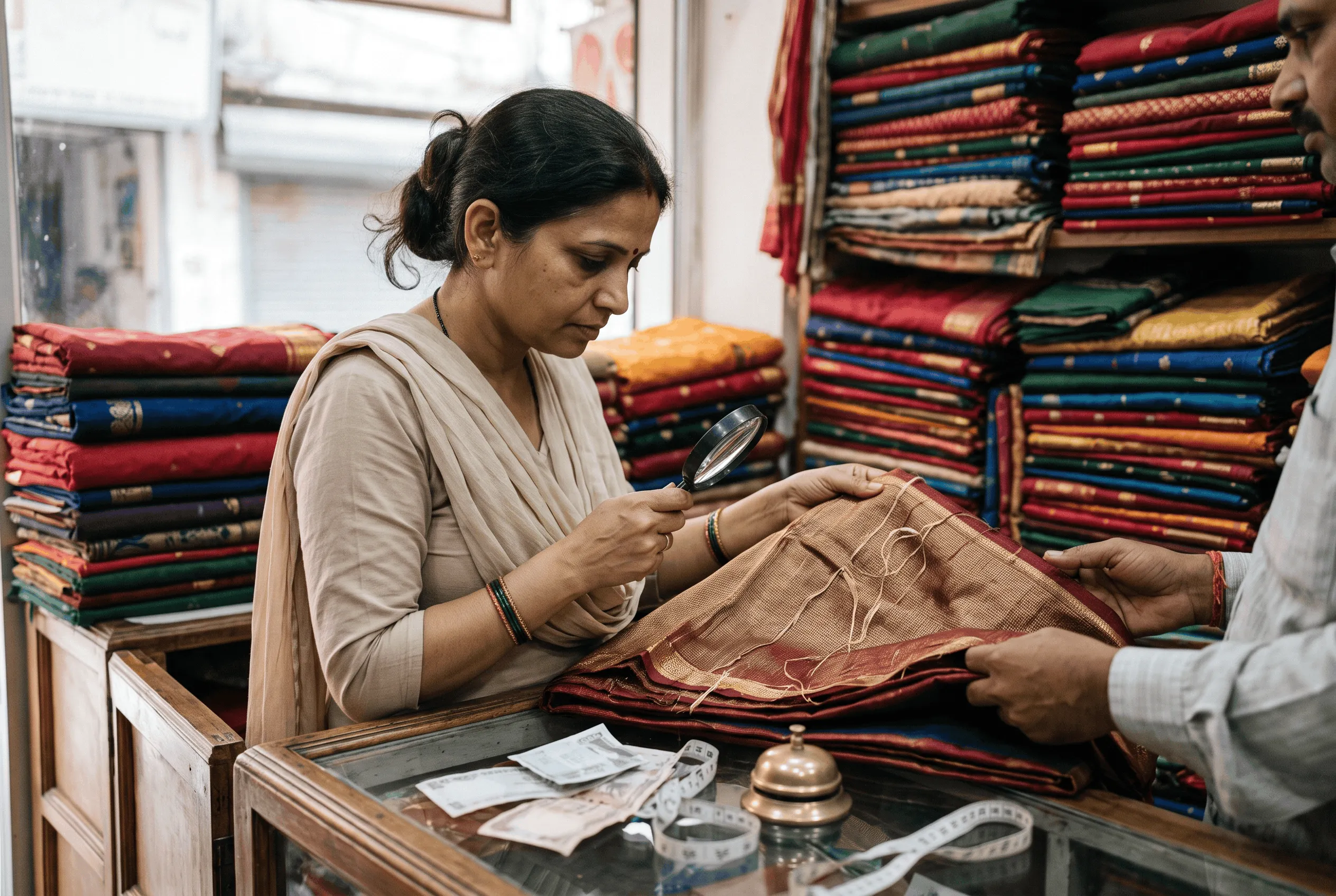
How to Identify Genuine Handloom Cotton
Look for small irregularities in the weave, such as slight variations in thread thickness.
Check the selvedge: handloom edges may be slightly uneven.
Look at borders: woven borders are integrated into the fabric, not stitched on.
Check for the Handloom Mark or India Handloom Brand labels.
Ask the seller where the fabric was woven and whether it is handloom.
Compare prices: very cheap "handloom" may be powerloom.
For a detailed guide, see handloom vs powerloom sarees.
Styling Handloom Cotton
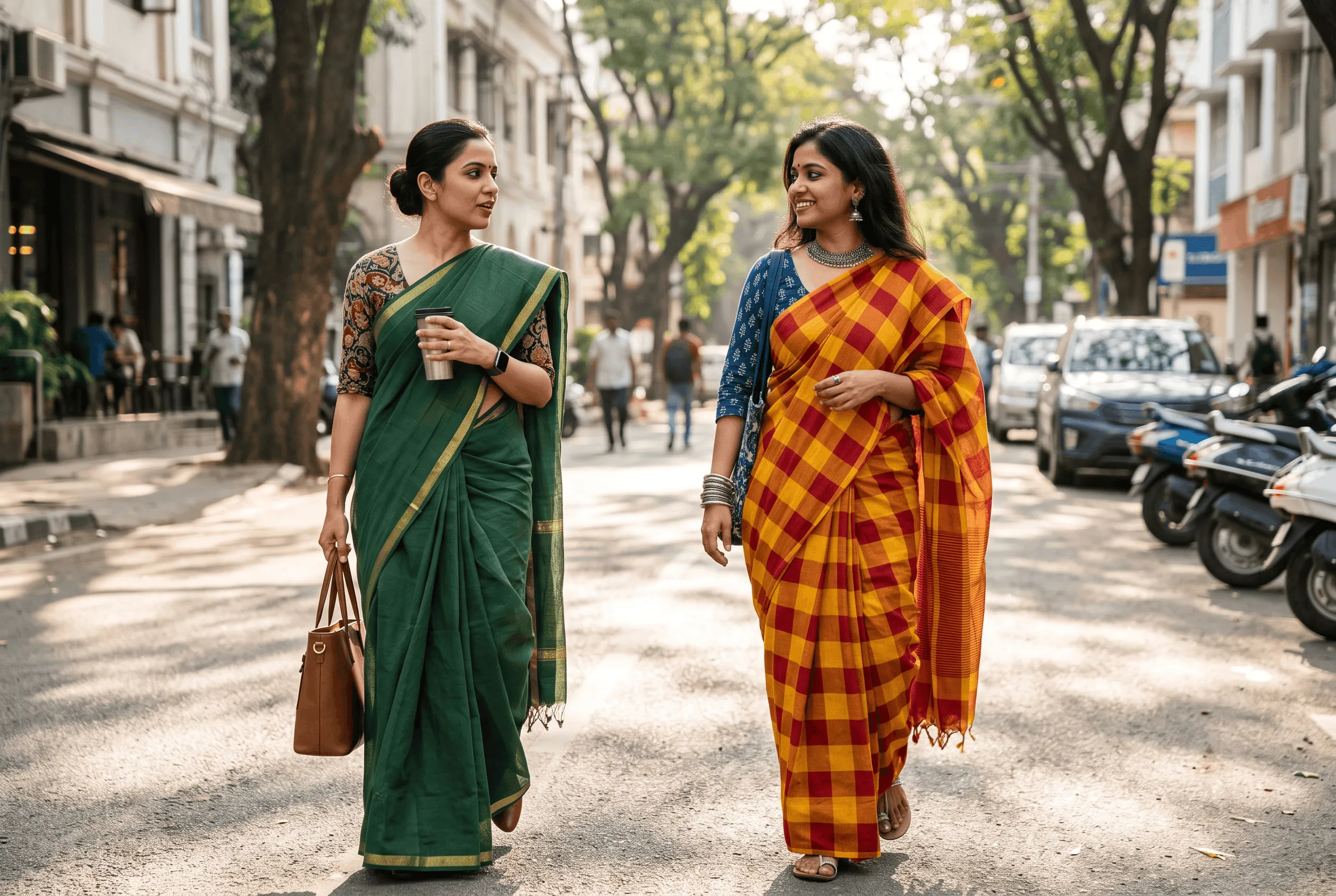
Office: crisp handloom sarees such as Mangalagiri, tant or Chettinad with structured blouses and minimal jewellery.
Casual: handloom cotton kurtas with palazzos, kolhapuris and silver jewellery.
Festive daywear: zari-bordered handlooms such as Kasavu or Venkatagiri with gold jewellery.
Summer: Kota Doria, Chanderi and Jamdani for light, cool elegance.
Handloom Cotton for Weddings and Celebrations
Handloom cotton is increasingly chosen for intimate, sustainable and daytime weddings.
Zari-bordered cottons, Kasavu, fine Jamdani and Chanderi cotton look graceful for haldi, mehendi and temple ceremonies.
Brides who prefer comfort for long morning rituals sometimes choose a fine handloom cotton for one of the ceremonies.
Guests can wear handloom cotton with a silk blouse and gold jewellery for an elegant, breathable look.
Blouses and Jewellery for Handloom Cotton
Blouses: cotton or khadi blouses in contrast colours, high necks, puff sleeves and collared styles suit handloom.
Jewellery: oxidised silver, terracotta, wooden beads, pearls and simple gold complement handloom's natural texture.
Handloom Cotton Price Guide
These are indicative 2026 ranges. Prices vary by region, fineness and design.
| Item | Indicative price range |
|---|---|
| Handloom cotton saree (daily wear) | ₹1,000 – ₹4,000 |
| Kota Doria or Chanderi cotton saree | ₹1,500 – ₹6,000 |
| Zari-bordered handloom cotton saree | ₹2,000 – ₹10,000 |
| Handloom cotton kurta | ₹1,000 – ₹3,500 |
| Handloom cotton dupatta | ₹600 – ₹2,500 |
| Handloom cotton fabric (per metre) | ₹200 – ₹600 |
How to Care for Handloom Cotton
First wash: soak gently in cold water, alone, as dyes may bleed.
Hand-wash with mild detergent in cold water.
Do not wring. Gently squeeze out water.
Starch lightly for crisp weaves such as tant and Kota Doria.
Dry in the shade, inside out.
Iron while slightly damp on medium heat.
Store folded in cotton, away from damp, and refold occasionally.
Handloom Cotton Through the Seasons
Summer: lighter handlooms keep you cool.
Monsoon: handloom cotton takes time to dry; dry it well indoors and avoid heavy rain.
Winter: heavier handloom cottons layer well with shawls.
Festive season: zari-bordered handlooms and silk-cotton weaves look lovely for daytime events.
National Handloom Day
India marks National Handloom Day on 7 August, recognising the importance of handloom weavers and the link between handloom and the Swadeshi movement.
It is a good reminder to buy and wear handloom regularly, not just on special occasions.
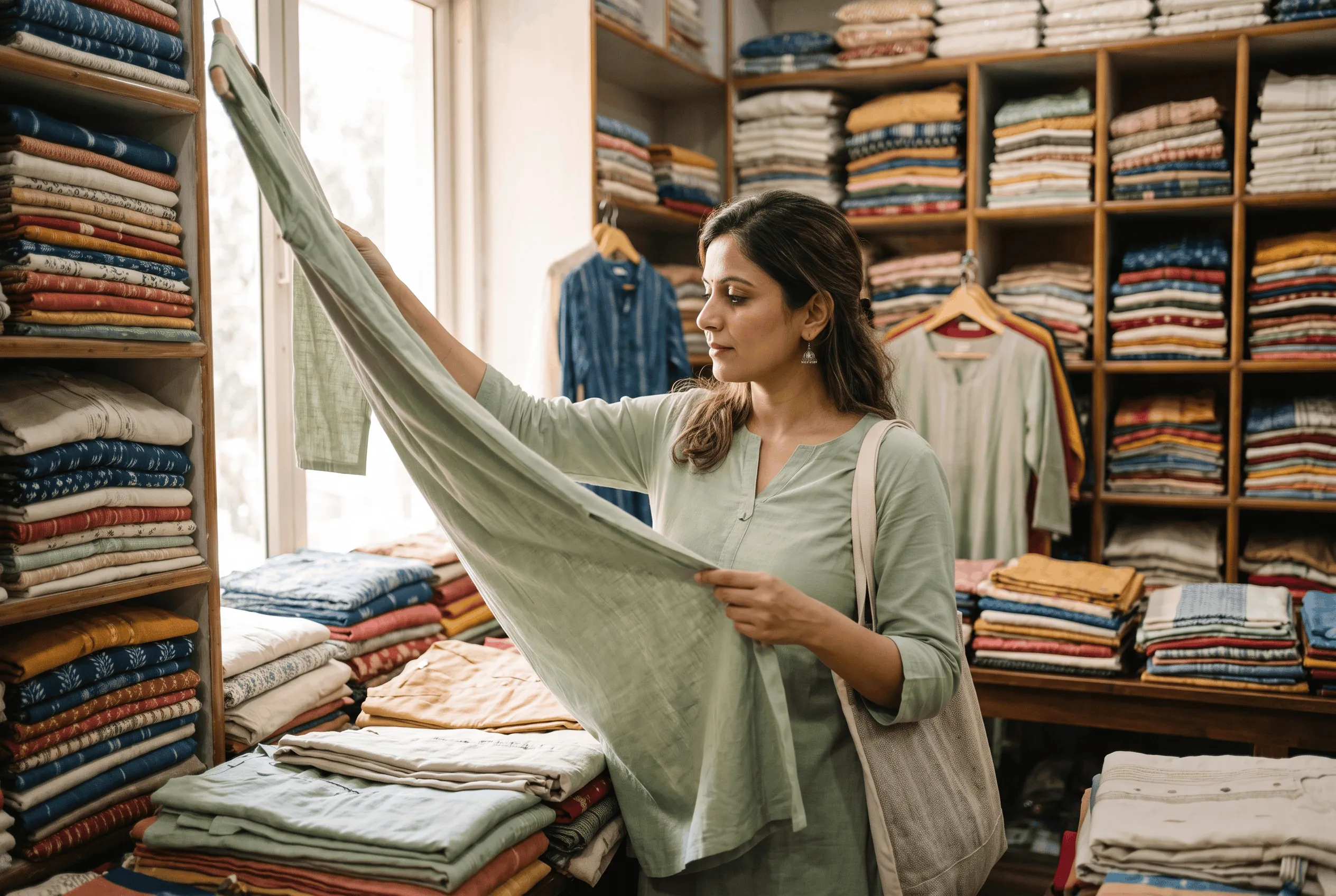
Building a Handloom Cotton Wardrobe
Three handloom cotton sarees from different regions for daily and office wear.
Two handloom cotton kurtas for casual days.
One zari-bordered handloom saree for festivals and pujas.
Two handloom dupattas to pair with plain suits.
Adding one new regional weave each year is a lovely way to explore India's textile heritage.
Supporting Handloom Weavers
Handloom weavers face strong competition from cheaper powerloom imitations.
Buying from cooperatives, weaver-led brands and trusted handloom stores ensures more of your money reaches the weavers.
Ask brands about their weaver partnerships and fair wages. Transparent brands are usually happy to name the cluster or cooperative they work with.
Common Mistakes With Handloom Cotton
Washing new handloom cotton with other clothes and causing colour bleeding is the most common mistake.
Another is mistaking powerloom imitations for handloom because of similar designs.
Some people also over-starch handloom, which makes it stiff and attracts insects in storage.
Finally, avoid drying bright handloom in harsh sunlight.
Why Handloom Cotton Belongs in Your Wardrobe
Handloom cotton carries the skill of weavers, the character of regional traditions and the comfort that India's climate demands.
From the loom to your wardrobe, every piece tells a story of patience and craft.
Choose genuine handloom, care for it gently and wear it often, and you will help keep India's weaving traditions alive.
Explore more in our cotton sarees and suits guide and the traditional wear trends 2026 guide.
Handloom Cotton for Men and Children
Handloom cotton is not only for sarees.
Men's handloom kurtas, shirts and Nehru jackets are breathable, smart and comfortable for summer events.
Children's handloom cotton frocks, kurtas and lehengas are soft and gentle on the skin.
Coordinating family outfits in handloom cotton is a lovely way to support weavers and create cohesive festival photographs.
Gifting Handloom Cotton
Handloom cotton sarees, dupattas and stoles make thoughtful gifts for teachers, colleagues and family.
They are practical, comfortable and meaningful, especially when you share the story of where and how they were woven.


Comments (0)
Leave a Thought
No comments yet. Be the first to share your thoughts!