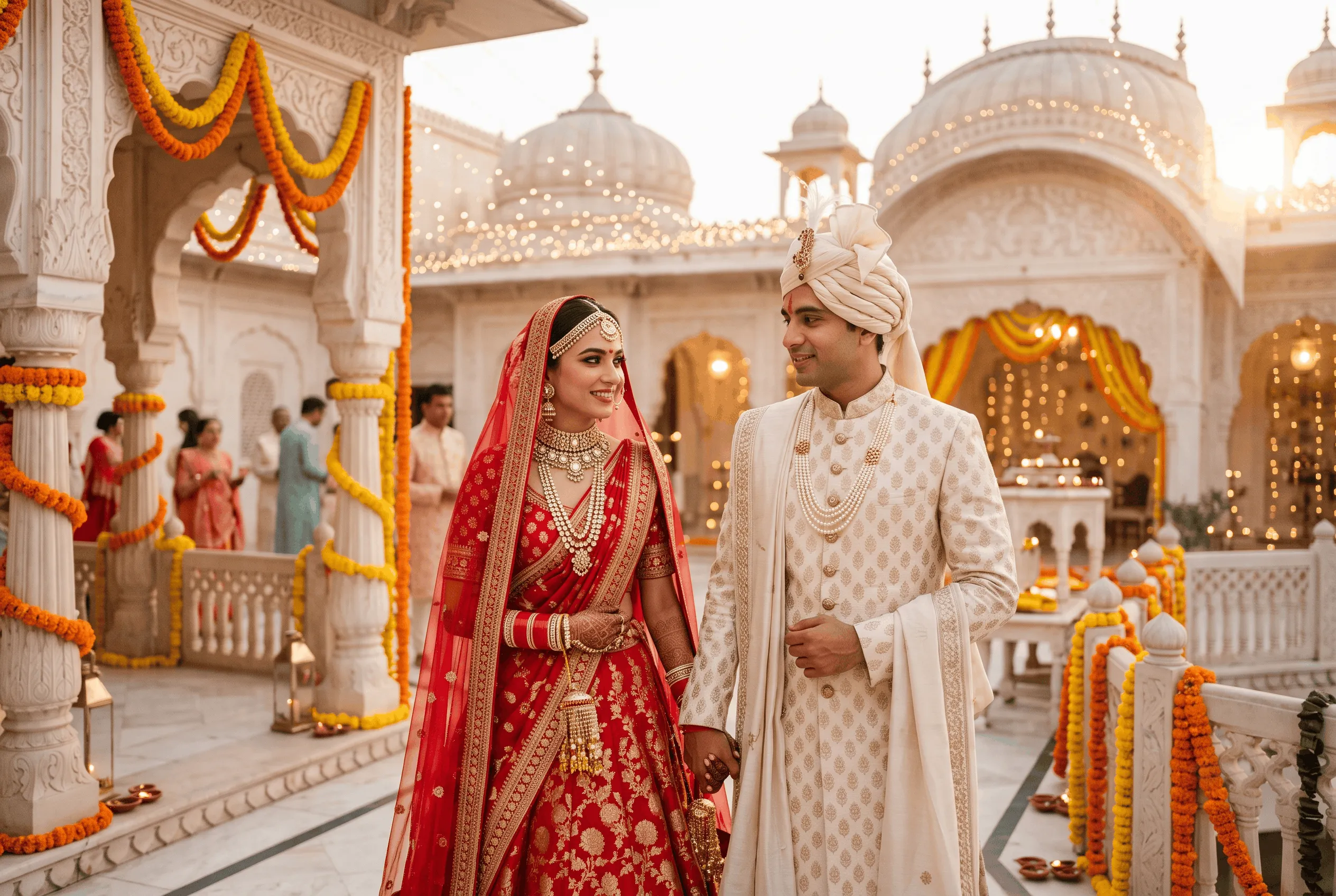
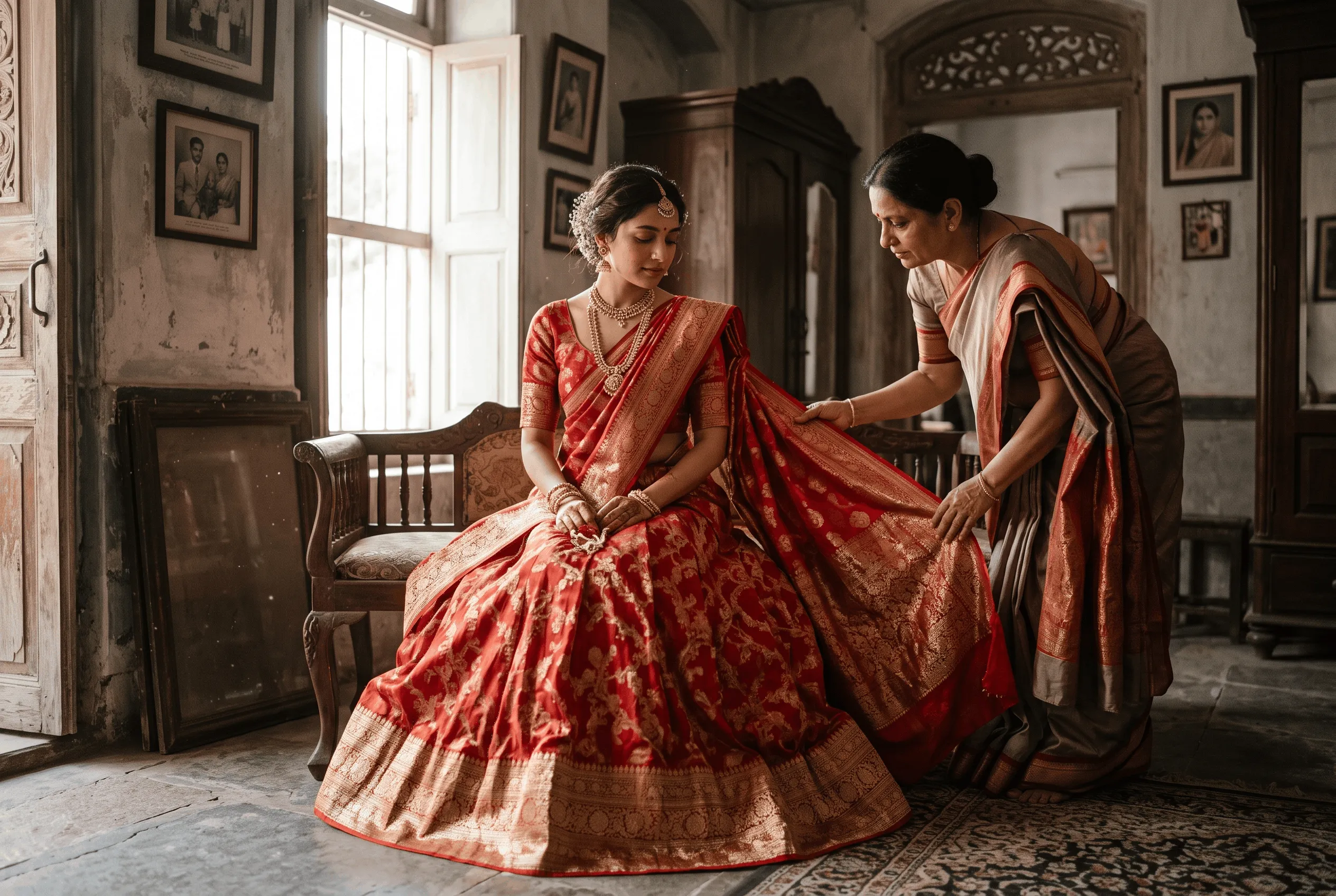
Banarasi brocade is one of the most luxurious fabrics in Indian bridal fashion.
Woven in Varanasi with silk and zari, it creates raised, richly patterned designs that look regal in every light, which is why brides, grooms and families have chosen it for weddings for generations.
While many people know Banarasi through its sarees, Banarasi brocade is also used for bridal lehengas, statement blouses, sherwanis, Nehru jackets, dupattas and even potli bags.
This guide focuses on using brocade across the whole wedding wardrobe.
It explains the main types of Banarasi brocade, how to choose brocade for each garment, colour and motif ideas, styling tips for brides, grooms and guests, how to recognise genuine handwoven brocade, what it costs and how to care for it.
If you are shopping for a Banarasi saree specifically, read our Banarasi silk saree buying guide.
What Is Banarasi Brocade?
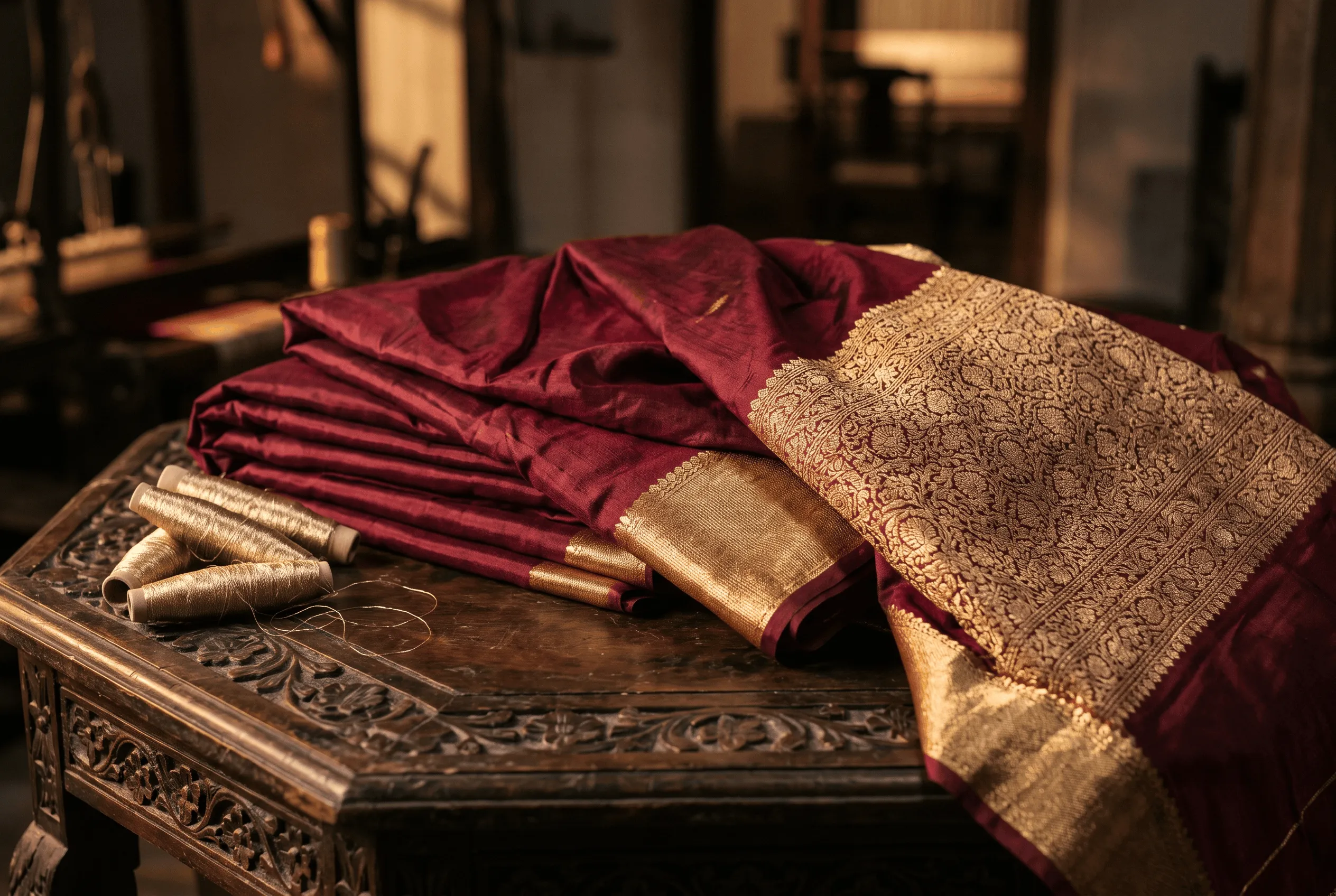
Brocade is a fabric in which patterns are woven into the cloth using extra threads, often zari or coloured silk, so the design appears raised or embossed.
Banarasi brocade is woven in and around Varanasi, a city with a centuries-old silk weaving tradition.
Its motifs often include florals, creepers, paisleys, jaal (net) patterns and Mughal-inspired designs, woven in gold, silver or coloured threads.
Types of Banarasi Brocade
Kimkhab (Kinkhab): a heavy, rich brocade densely woven with zari, historically associated with royalty.
Jamawar: a brocade with intricate woven patterns, often paisleys and florals, sometimes with very little zari.
Tanchoi: a satin-weave brocade with small, densely woven motifs in coloured silk, usually without zari.
Jangla: brocade with vine and floral patterns spread across the fabric.
Katan brocade: brocade woven with pure silk (katan) as the base.
Each type gives a different look and weight, from the heavy glamour of kimkhab to the refined elegance of tanchoi.
Kadhwa vs Fekwa: Why the Weave Matters
In kadhwa weaving, each motif is woven individually, so there are no long loose threads on the back. It takes longer and is considered finer.
In fekwa (cut-work) weaving, the extra threads run across the back and the loose floats are cut afterwards, which is faster.
Kadhwa brocade usually costs more and is a sign of high-quality handwork. It also tends to be lighter and more comfortable to wear, because there are no bundles of cut threads on the reverse.
Banarasi Brocade Bridal Lehengas
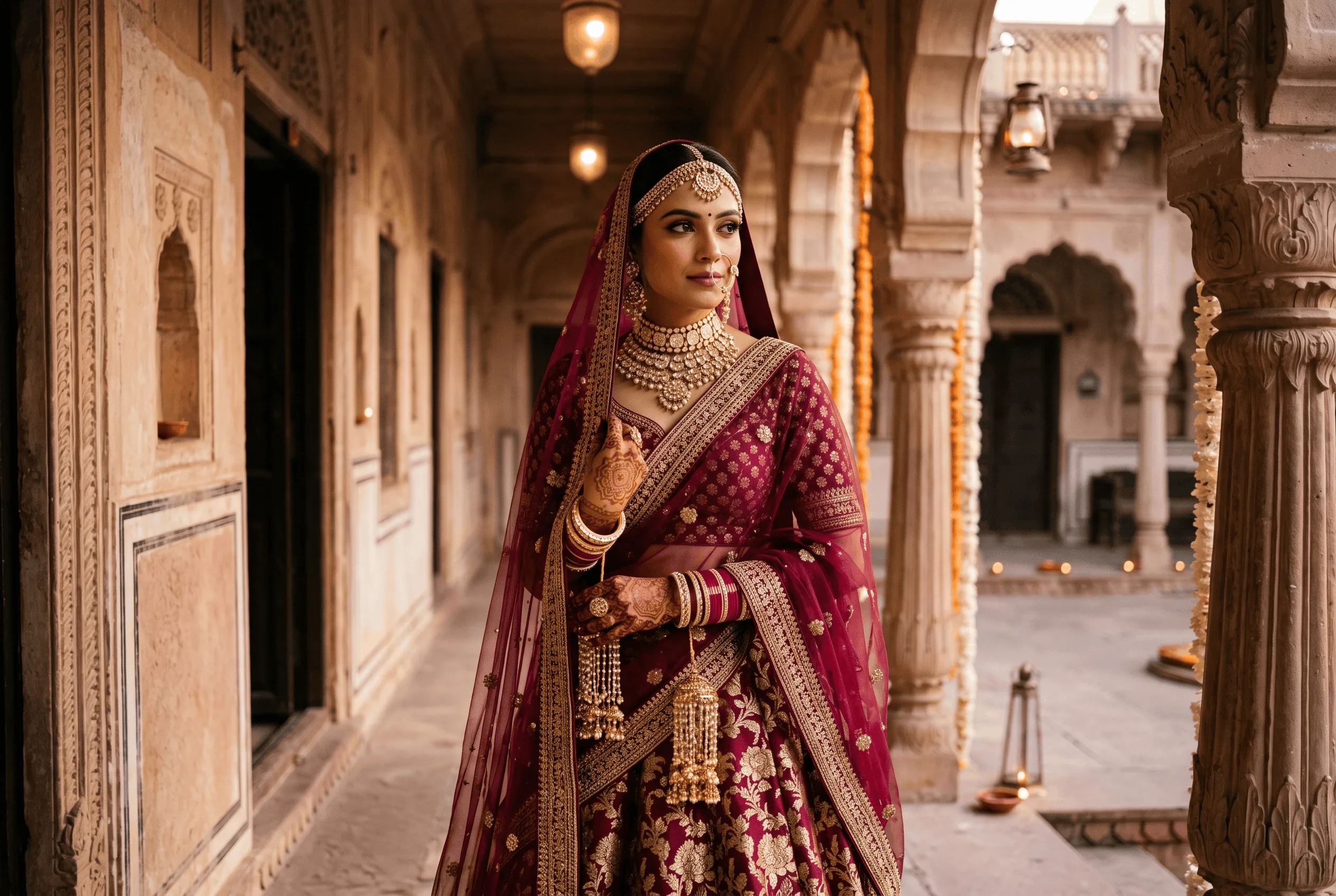
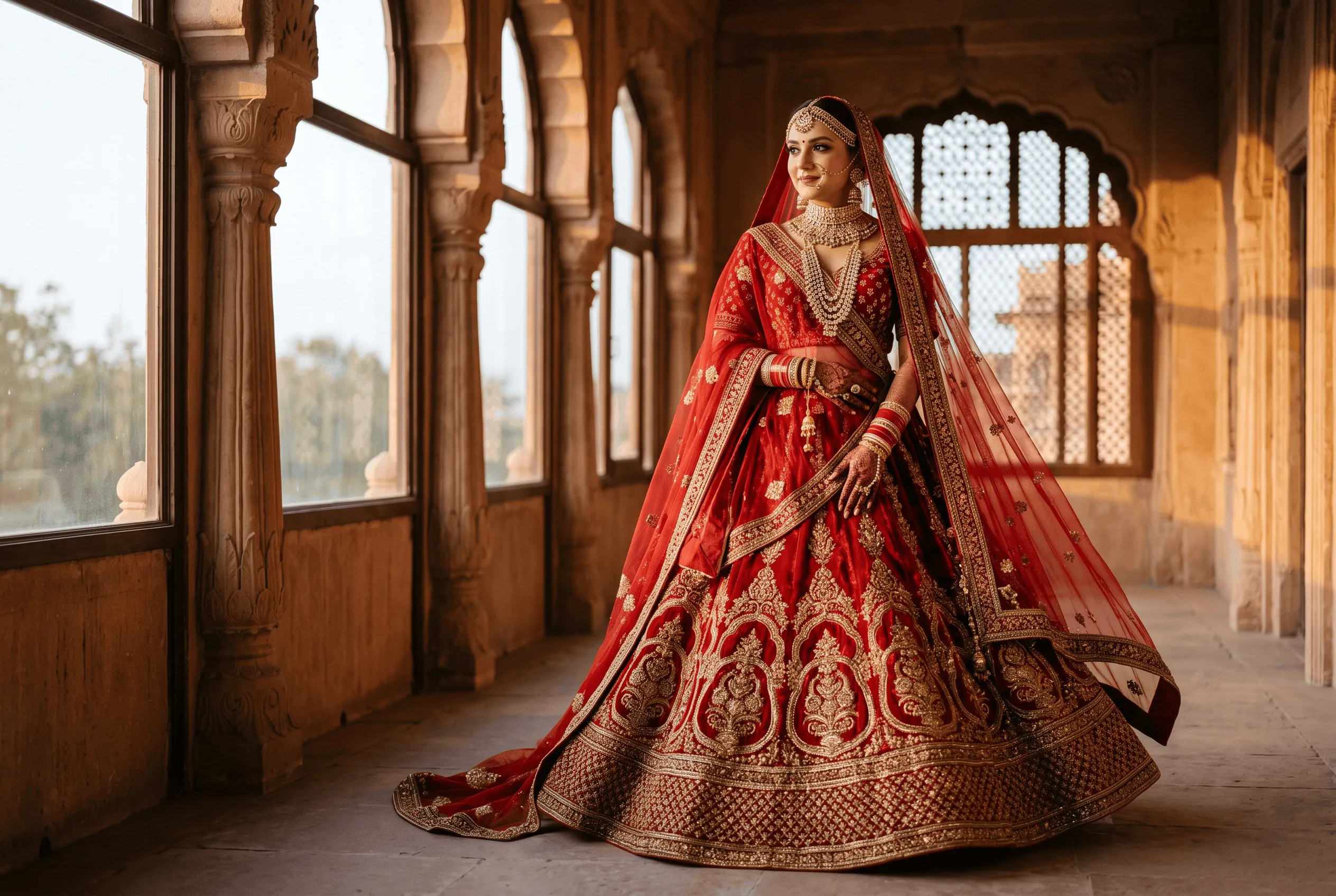
Brocade lehengas are a classic choice for brides who want a heritage look without heavy surface embroidery.
The woven motifs provide richness, so the lehenga can feel luxurious with relatively little added embellishment.
Best for: winter weddings, evening ceremonies and brides who love traditional, regal style.
Tips: choose a kalidar or A-line silhouette, a lighter net or organza dupatta and a fitted brocade or raw silk blouse.
See our bridal lehenga trends 2026 for more.
Brocade Blouses
A Banarasi brocade blouse is one of the easiest ways to add richness to a plain or light saree.
It pairs beautifully with organza, georgette, chiffon, Chanderi and plain silk sarees.
Brocade blouses can be styled as classic elbow-sleeve blouses, high-neck designs, corsets or sweetheart necklines.
See our corset blouse design guide for modern ideas.
Brocade Jackets and Capes
Brocade jackets and capes are popular for winter weddings and receptions.
A short brocade jacket over a plain lehenga or a long brocade cape over a saree creates a regal, modern silhouette.
They also add warmth for outdoor evening events.
Brocade for Grooms
Banarasi brocade is a favourite for grooms' sherwanis, Nehru jackets, bandhgalas and stoles.
Ivory, gold, wine, emerald and navy brocades are popular choices.
Coordinating the groom's brocade with the bride's lehenga or saree creates a cohesive wedding look.
Brocade Dupattas and Accessories
A Banarasi brocade dupatta can transform a simple suit or lehenga into a festive outfit.
Brocade potli bags, clutches and juttis are lovely finishing touches for weddings.
Choosing Colours for Brocade
Red and maroon: classic bridal choices.
Wine and burgundy: rich and modern.
Emerald and bottle green: regal and striking.
Ivory and gold: elegant for day weddings and grooms.
Pastels with gold: soft and contemporary for receptions and engagements.
Gold zari on deep colours looks especially rich, while silver zari suits pastels and cooler tones.
Choosing Motifs
Floral jaal: romantic and timeless, ideal for brides.
Paisley (kairi): traditional and versatile.
Geometric patterns: modern and suited to jackets and menswear.
Animal and bird motifs: traditional motifs with heritage character.
Small buttis: subtle and easy to restyle after the wedding.
Styling Brocade for Brides
Let the brocade lead. With a richly woven lehenga, keep the dupatta lighter and the jewellery balanced.
Polki, kundan and antique gold jewellery complement Banarasi brocade beautifully.
A sheer dupatta draped over the head for the pheras softens the look.
Styling Brocade for Wedding Guests
Guests can wear brocade blouses with plain sarees, brocade jackets with lehengas or a brocade dupatta with a simple suit.
Avoid bridal red brocade lehengas with full bridal jewellery, which can compete with the bride.
See our wedding guest saree ideas for function-by-function tips.
Brocade for Each Wedding Function
Engagement: a pastel brocade lehenga or a brocade blouse with an organza saree looks fresh and elegant.
Mehendi and haldi: brocade is usually too heavy; keep it to accessories such as a potli or a small jacket.
Sangeet: a brocade jacket or cape over a lighter lehenga lets you dance comfortably.
Wedding ceremony: a full brocade lehenga or a Banarasi saree with a brocade blouse creates the classic bridal look.
Reception: a brocade lehenga in wine, emerald or champagne, or a brocade corset with a tissue saree, looks glamorous.
Brocade for Different Body Types
Petite brides look best in brocade with smaller motifs, vertical panels and a fitted blouse.
Tall brides carry large jaal patterns and broad borders beautifully.
Curvy brides can choose A-line brocade skirts with border-focused motifs and a structured blouse.
Because brocade is visually rich, balanced proportions and good tailoring matter more than with plain fabrics.
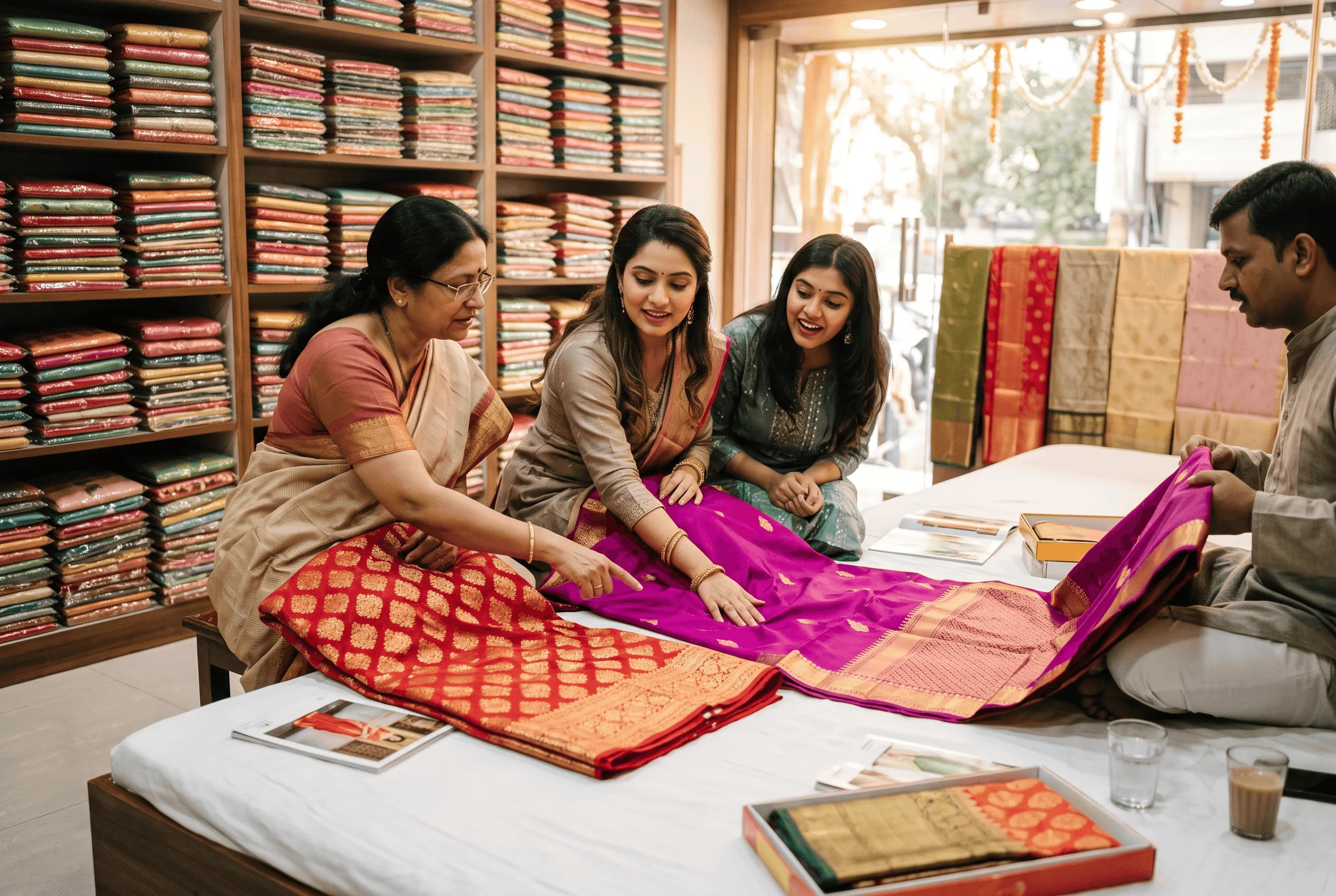
Planning Your Brocade Purchase
Handwoven brocade, especially kadhwa weaves, can take weeks or months to produce.
If you want a custom colour or motif, start at least four to six months before the wedding.
For ready brocade fabric, allow time for stitching, embroidery and at least two fittings.
How to Recognise Genuine Handwoven Brocade
Check the reverse: handwoven kadhwa brocade has no long cut floats, while machine brocade often has loose, cut threads.
Look for small irregularities: handwoven motifs vary slightly.
Feel the fabric: genuine silk brocade feels smooth and substantial.
Ask about zari: pure, tested or imitation zari changes the value. See our zari silk guide.
Look for labels: Banarasi saree and brocade crafts are protected by a Geographical Indication, and pure silk may carry the Silk Mark.
Price Guide
These are indicative 2026 ranges. Prices vary by weave, zari, silk and workmanship.
| Item | Indicative price range |
|---|---|
| Brocade blouse fabric (per metre) | ₹800 – ₹5,000 |
| Brocade blouse (stitched) | ₹2,500 – ₹15,000 |
| Brocade dupatta | ₹3,000 – ₹25,000+ |
| Brocade Nehru jacket | ₹5,000 – ₹25,000 |
| Handloom brocade bridal lehenga | ₹50,000 – ₹2,00,000+ |
| Groom's brocade sherwani | ₹25,000 – ₹1,50,000+ |
Caring for Banarasi Brocade
Dry-clean only.
Store flat or rolled in muslin, especially lehengas.
Wrap zari in tissue paper to prevent tarnishing.
Avoid moisture and perfume.
Do not iron directly on zari; steam gently or iron on the reverse with a cloth.
Refold every few months to avoid permanent creases.
Restyling Brocade After the Wedding
A brocade lehenga skirt can be worn with a simple blouse for family weddings.
A brocade blouse can be paired with many plain sarees.
A brocade dupatta can lift a simple suit for festivals.
A groom's brocade jacket can be worn over kurtas for future celebrations.
Thinking about restyling before you buy helps you choose colours and motifs you will happily wear again, which makes even an expensive brocade piece feel like good value over the years.
Common Mistakes With Brocade
Choosing a very heavy brocade for a hot daytime ceremony is a common mistake.
Another is pairing a heavy brocade lehenga with a heavy brocade dupatta, which becomes exhausting to wear.
Some buyers pay handloom prices for machine-made brocade without checking the reverse.
Finally, avoid storing brocade in plastic or damp conditions.
Why Banarasi Brocade Is a Wedding Classic
Banarasi brocade brings centuries of weaving artistry to the modern wedding wardrobe.
From bridal lehengas and grooms' sherwanis to statement blouses and dupattas, it adds richness that lasts long after the celebrations.
Choose the right type of brocade for each garment, check for genuine handwork and care for it well, and your brocade pieces will become family heirlooms.
Explore more bridal fabrics in our velvet bridal lehengas guide and the traditional wear trends 2026 guide.
Brocade for the Whole Family
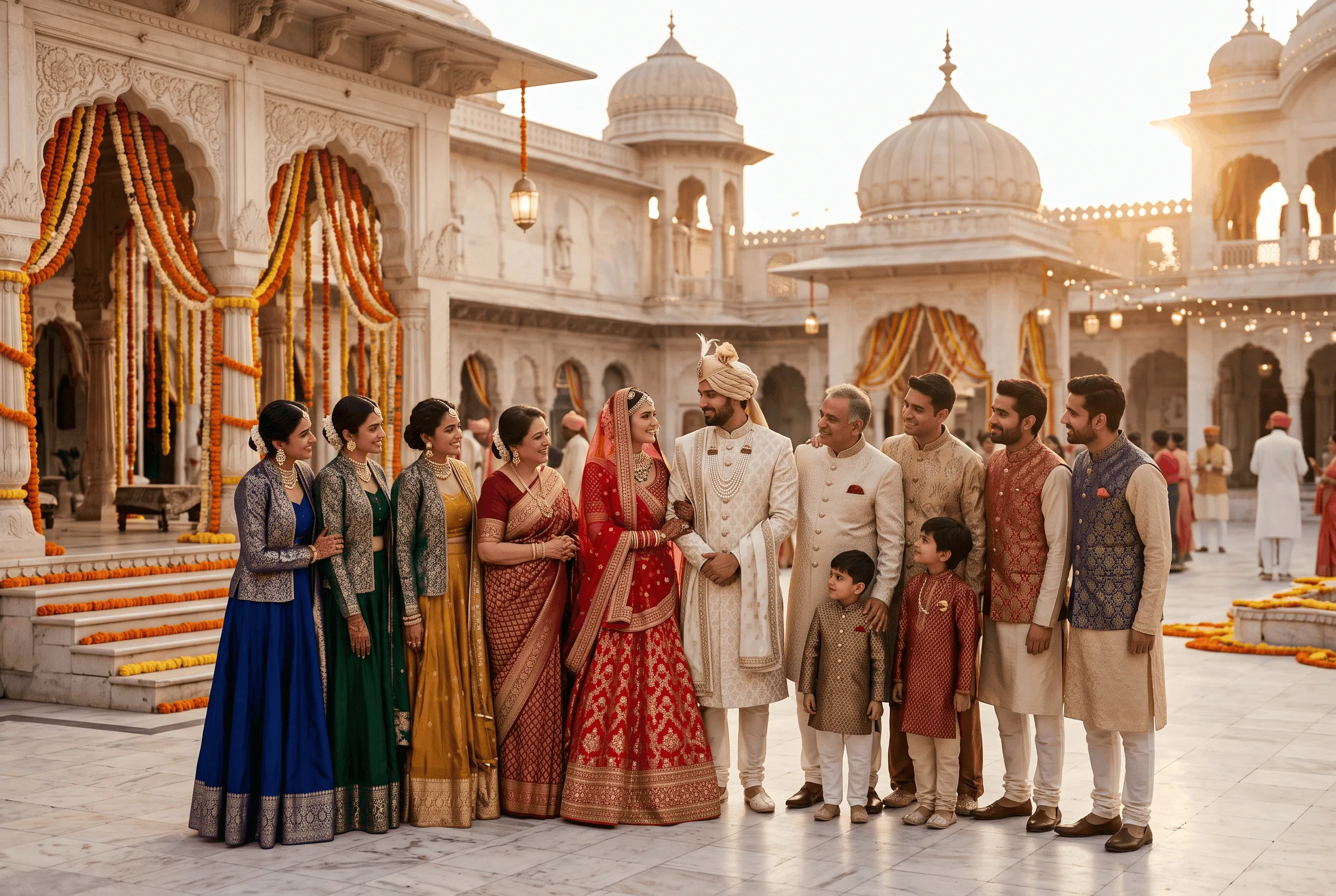
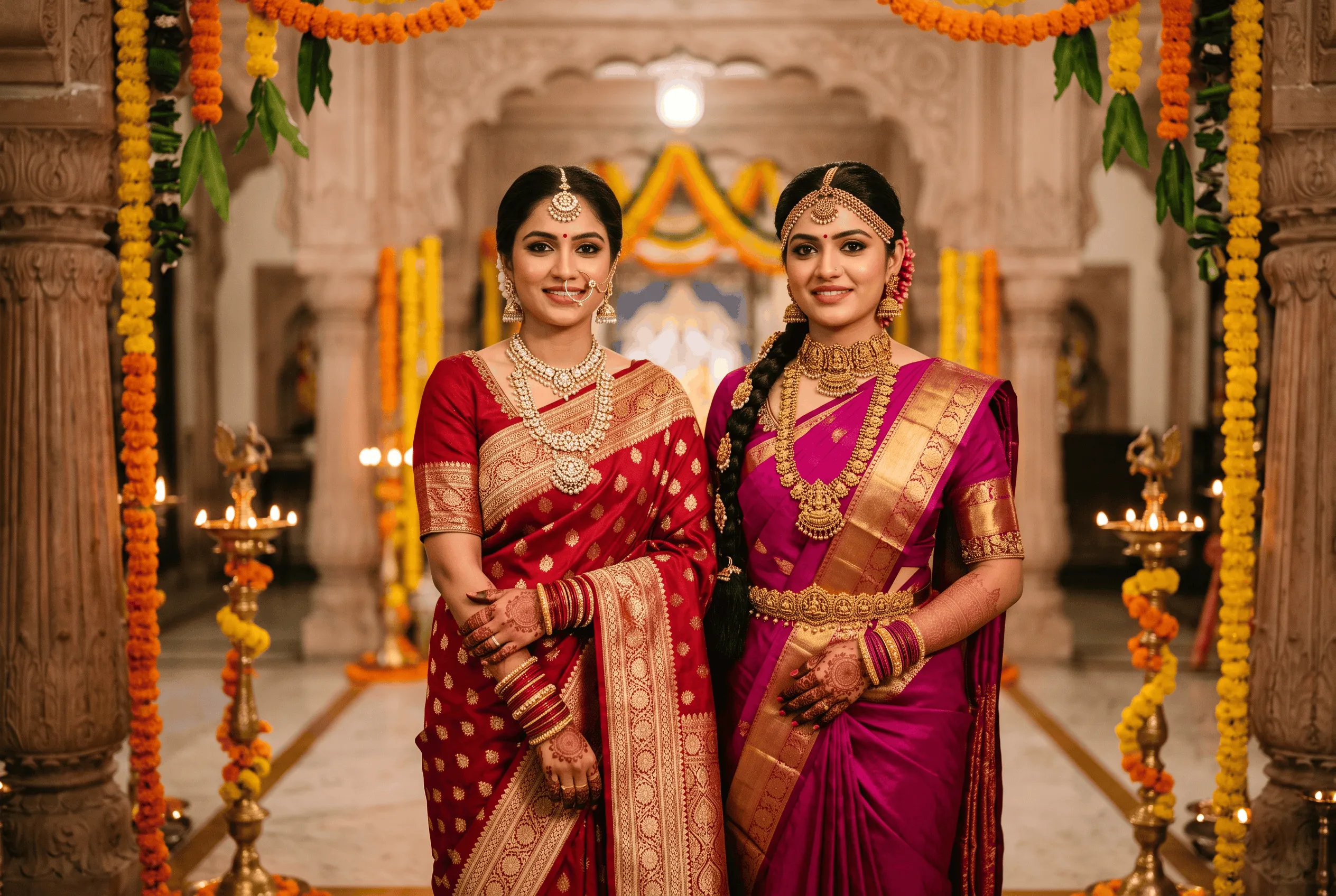
At many weddings, families coordinate brocade across generations.
The bride may wear a brocade lehenga, the groom a matching brocade sherwani, mothers brocade blouses with silk sarees and children small brocade jackets or lehengas.
Choosing one shared colour and motif style creates a beautiful, cohesive look in wedding photographs.
Brocade for Destination and Winter Weddings
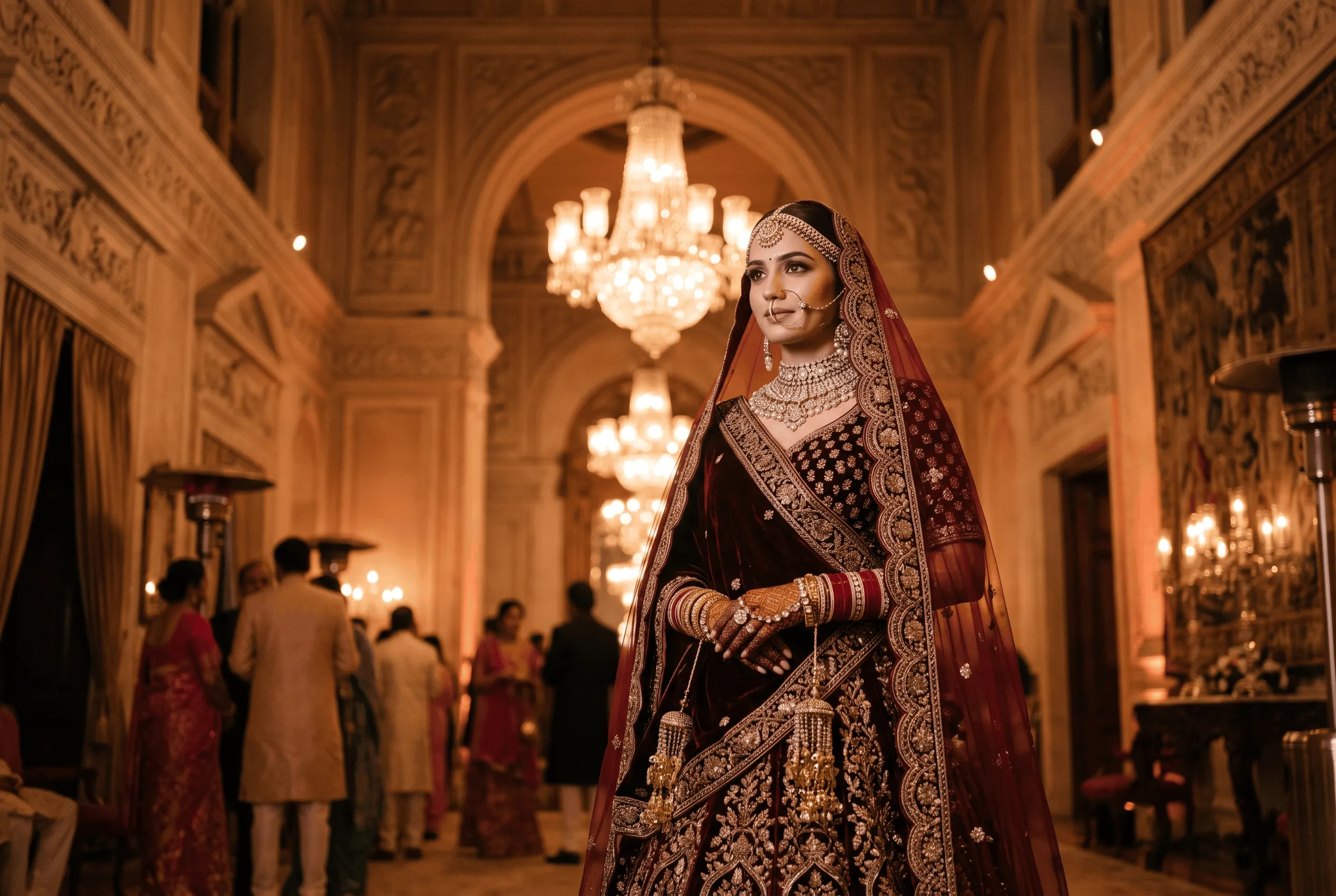
Brocade's rich texture and weight make it ideal for winter and palace weddings.
For destination weddings, pack brocade carefully, rolled in muslin, and steam it gently on arrival.
Pair brocade with velvet or Pashmina for extra warmth at outdoor evening events.
Comments (0)
Leave a Thought
No comments yet. Be the first to share your thoughts!