Banarasi and Kanjivaram are the two most celebrated wedding silks in India, and choosing between them is one of the biggest decisions many brides make.
Both are luxurious, both carry centuries of tradition and both look magnificent in wedding photographs.
But they create very different looks, feel different to wear and suit different ceremonies, climates and family traditions.
This guide is written for brides and their families.
Rather than a technical comparison of weaves, it walks you through the real questions behind Banarasi vs Kanjivaram: your community's traditions, your wedding season and venue, the look you want, your comfort through long rituals, your budget and how you will wear the saree after the wedding.
If you want a side-by-side technical comparison of the two weaves, visit our Banarasi vs Kanjivaram compare page.
The Quick Answer
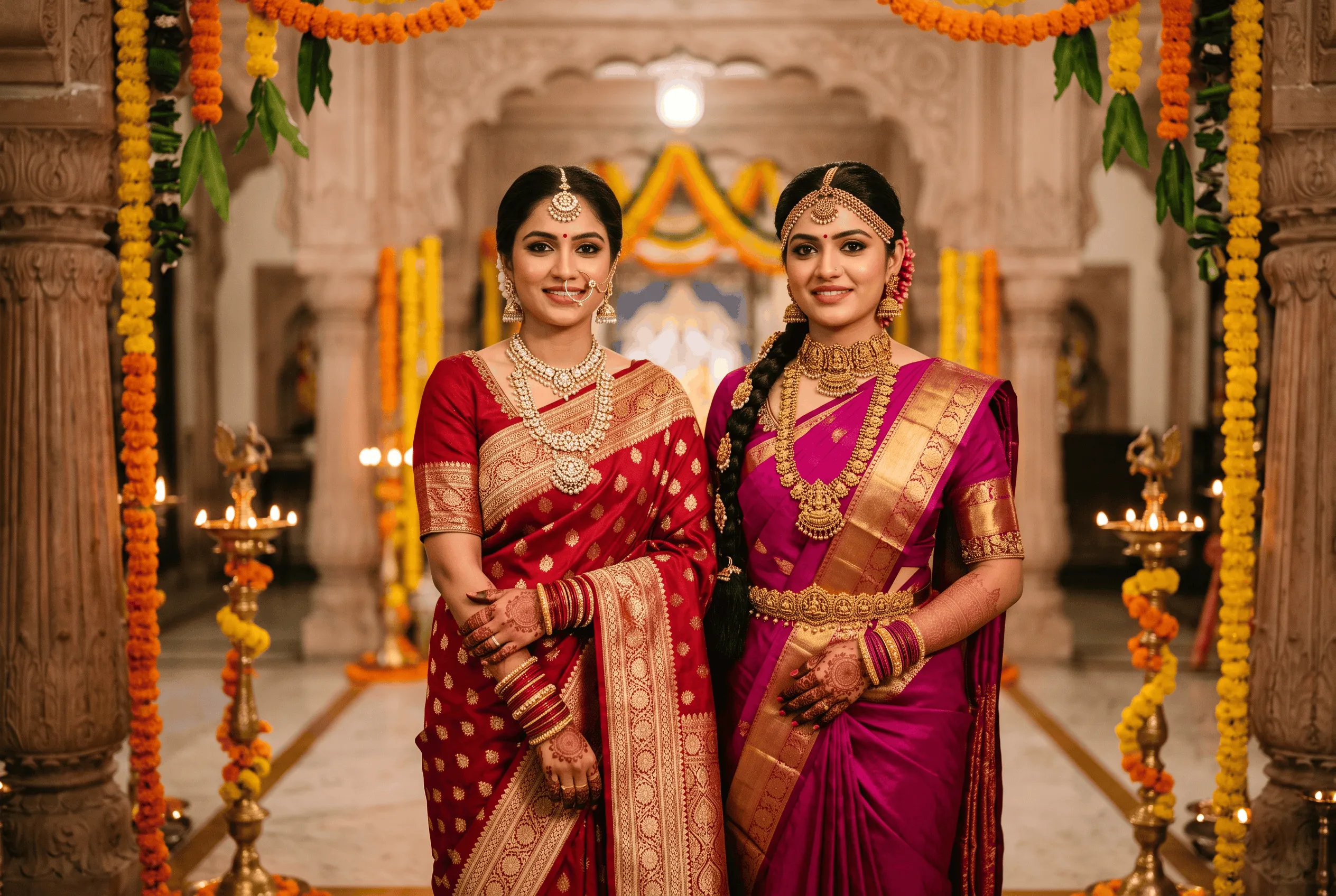
Choose Banarasi if you want a regal, ornate look with intricate brocade, a softer drape and a style traditionally loved in North and East Indian weddings.
Choose Kanjivaram if you want bold contrast borders, a structured drape, rich colour blocking and a style traditionally loved in South Indian weddings.
Both are excellent bridal choices. The best one is the one that suits your traditions, your season and the way you want to look and feel on the day.
Banarasi and Kanjivaram at a Glance
| Feature | Banarasi | Kanjivaram |
|---|---|---|
| Origin | Varanasi, Uttar Pradesh | Kanchipuram, Tamil Nadu |
| Signature look | Brocade motifs, intricate zari, Mughal-inspired florals | Contrast borders, temple motifs, colour blocking |
| Drape | Softer, more fluid | Heavier, structured |
| Weight | Medium to heavy | Heavy |
| Traditional regions | North, Central and East India | South India |
| Feel in photographs | Ornate, regal | Bold, ceremonial |
Question 1: What Does Your Family Tradition Expect?
For many brides, tradition answers the question before anything else.
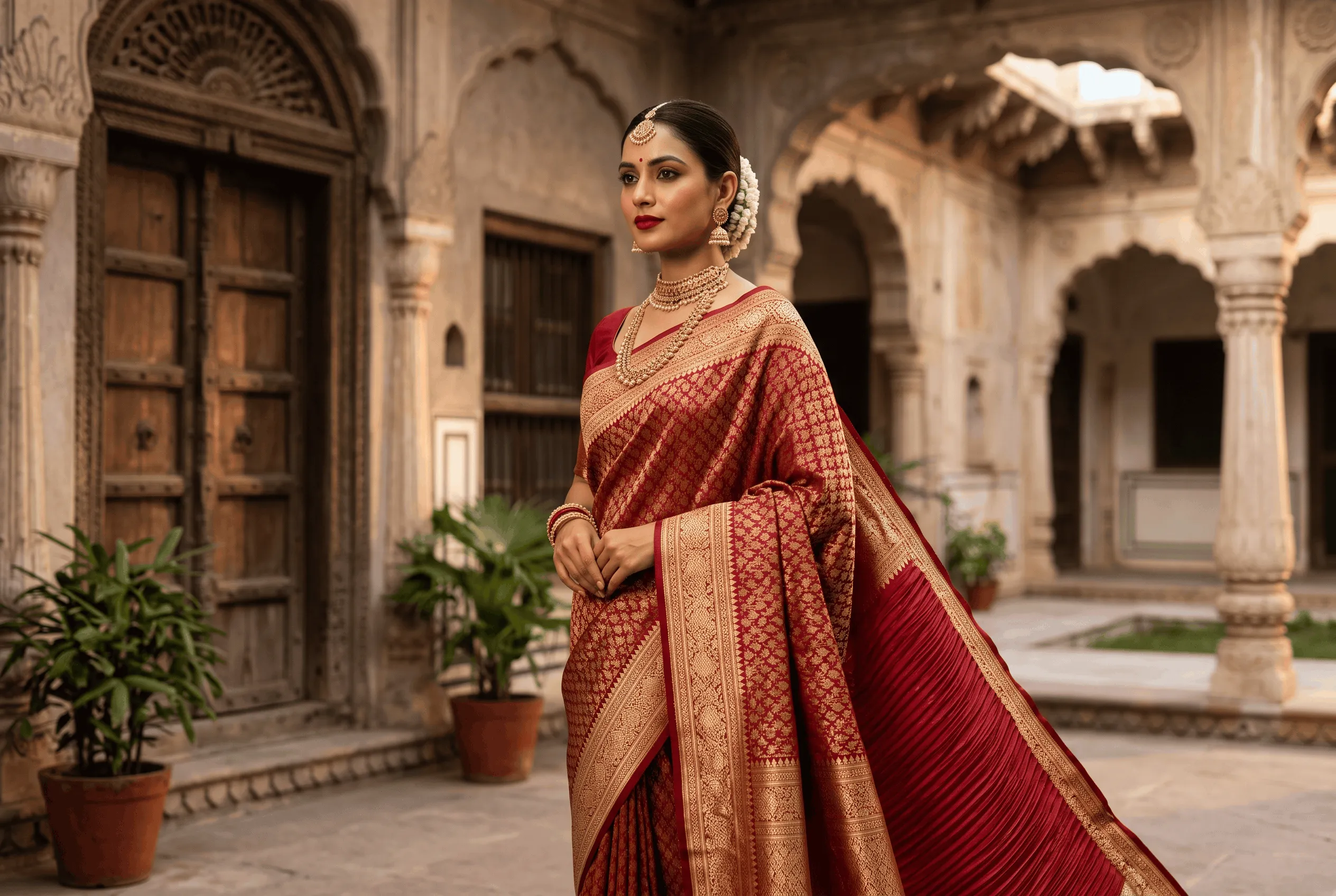
In many North Indian, Bihari, Bengali and Marwari families, a red or maroon Banarasi is the classic wedding saree.
In many Tamil, Telugu, Kannada and Malayali families, a Kanjivaram is the traditional choice for the main ceremony, often in red, maroon, mustard, magenta or green.
If your family has a strong preference, honour it for the main ritual and use the other silk for another function.
Question 2: Which Look Do You Love?
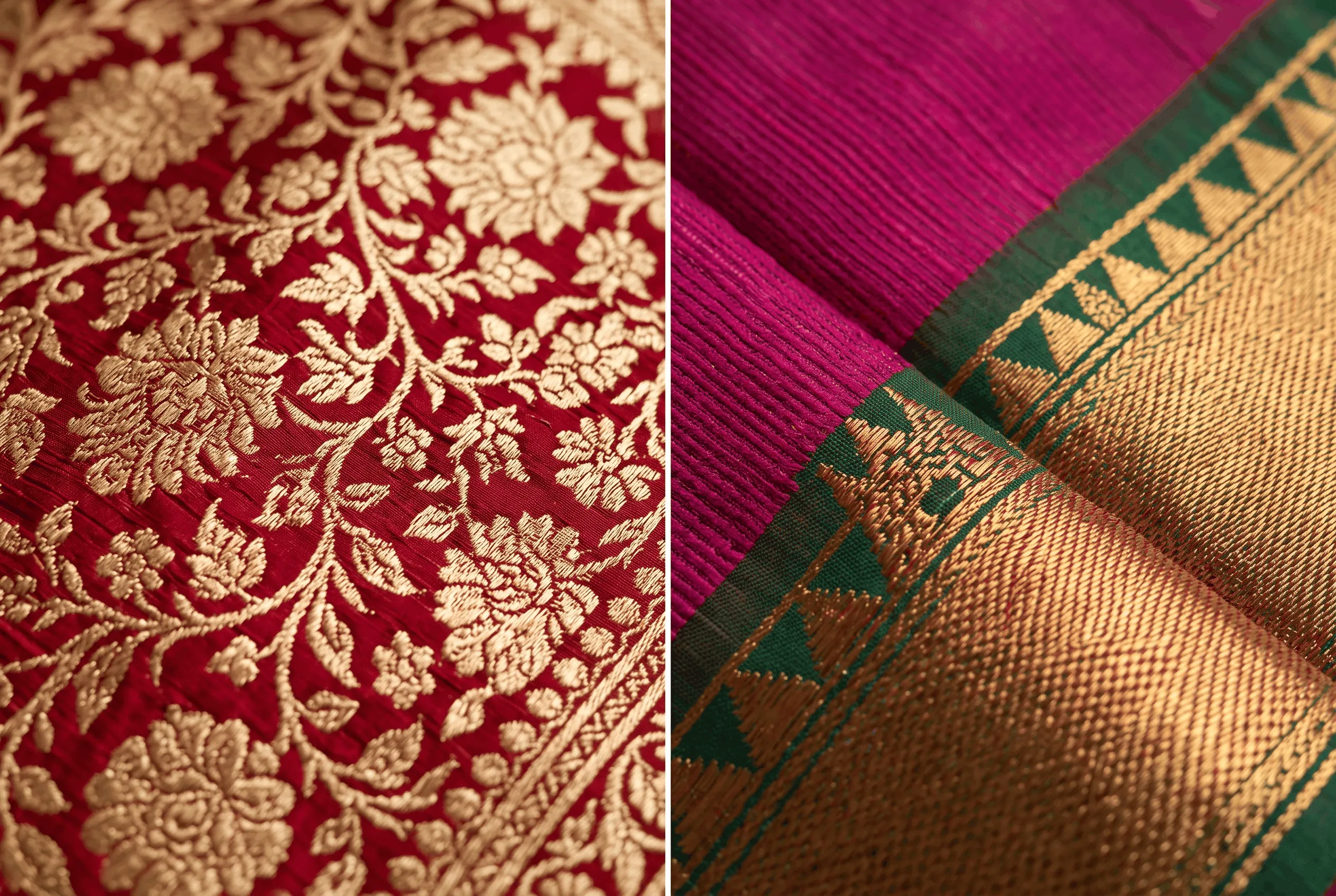
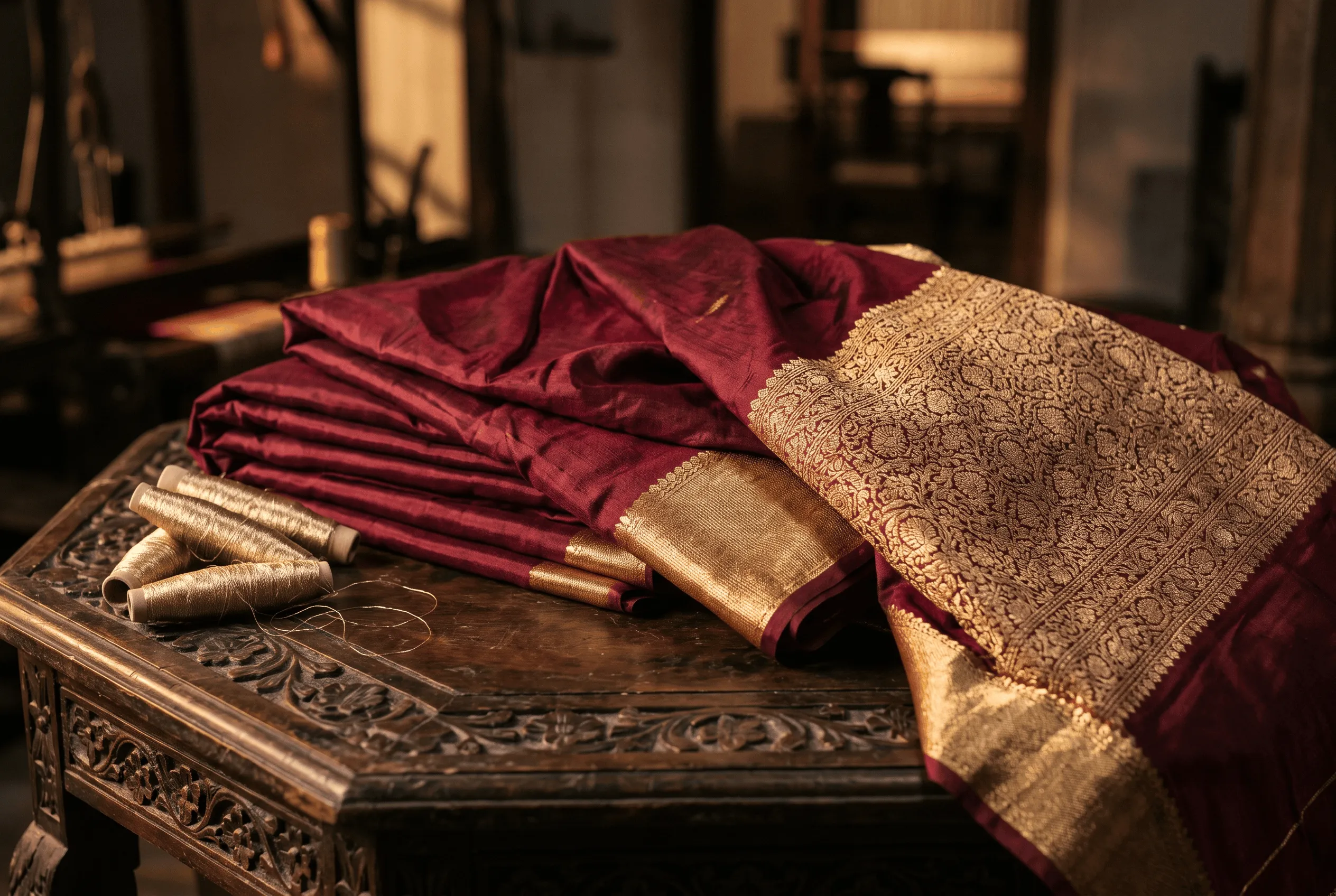
Banarasi is known for intricate brocade, delicate florals, paisleys and jaal patterns woven in zari, often inspired by Mughal design.
Kanjivaram is known for bold contrast borders, temple-inspired motifs, checks, peacocks and dramatic colour combinations such as magenta with green.
Look at photographs of both, then try them on. Many brides know instantly which one feels like them.
Question 3: What Is Your Wedding Season and Venue?
Summer or humid weather: a lighter Banarasi or a lighter Kanjivaram will be more comfortable than a very heavy bridal weave. Banarasi organza and lighter katan weaves also work well.
Winter weddings: heavy Kanjivaram and rich Banarasi brocade both look and feel right.
Outdoor day ceremonies: consider weight carefully, as long hours in the sun can make heavy silk tiring.
Indoor evening receptions: both silks glow beautifully under artificial light.
Question 4: How Long Will You Wear It?
South Indian wedding rituals often begin early in the morning and continue for hours, while North Indian pheras often take place late at night.
Kanjivaram is heavier and more structured, which looks magnificent but can feel tiring over a long ceremony.
Banarasi is generally softer and easier to move in, though heavy bridal Banarasi can also be weighty.
If you will be wearing the saree for many hours, try it on for at least 30 minutes before buying.
Question 5: Which Suits Your Body Type?
Petite brides often look elegant in Banarasi with smaller motifs and narrower borders, which do not overwhelm the frame.
Tall brides carry Kanjivaram's broad borders and bold pallus beautifully.
Curvy brides often enjoy Banarasi's softer drape, though a well-pleated Kanjivaram also looks stunning.
Ultimately, blouse fit and draping matter more than the silk itself.
Question 6: What Is Your Budget?
| Budget | Banarasi options | Kanjivaram options |
|---|---|---|
| ₹10,000 – ₹25,000 | Lighter pure Banarasi, katan with simpler zari | Lighter Kanjivaram with simpler borders |
| ₹25,000 – ₹60,000 | Rich brocade bridal Banarasi | Bridal Kanjivaram with korvai borders |
| ₹60,000 and above | Heavy handwoven bridal brocade with fine zari | Heavy bridal Kanjivaram with dense zari |
Prices vary by city, seller, weight, zari type and handwork. See our saree price guide.
Question 7: How Will You Wear It After the Wedding?
Banarasi is often easier to restyle for festivals, family weddings and Diwali, especially lighter designs.
Kanjivaram works beautifully for pujas, South Indian festivals and family weddings, and lighter Kanjivarams are very versatile.
Choosing a colour beyond bridal red, such as maroon, wine, emerald or mustard, can make either saree easier to wear again.
Choosing Colours for Each Silk
Banarasi bridal favourites: red, maroon, wine, pink and gold.
Kanjivaram bridal favourites: red with gold, maroon with mustard, magenta with green, mustard with maroon and peacock blue with pink.
If you love both looks, consider a Banarasi in a classic red and a Kanjivaram in a bold contrast for different functions.
Styling a Banarasi Bridal Saree
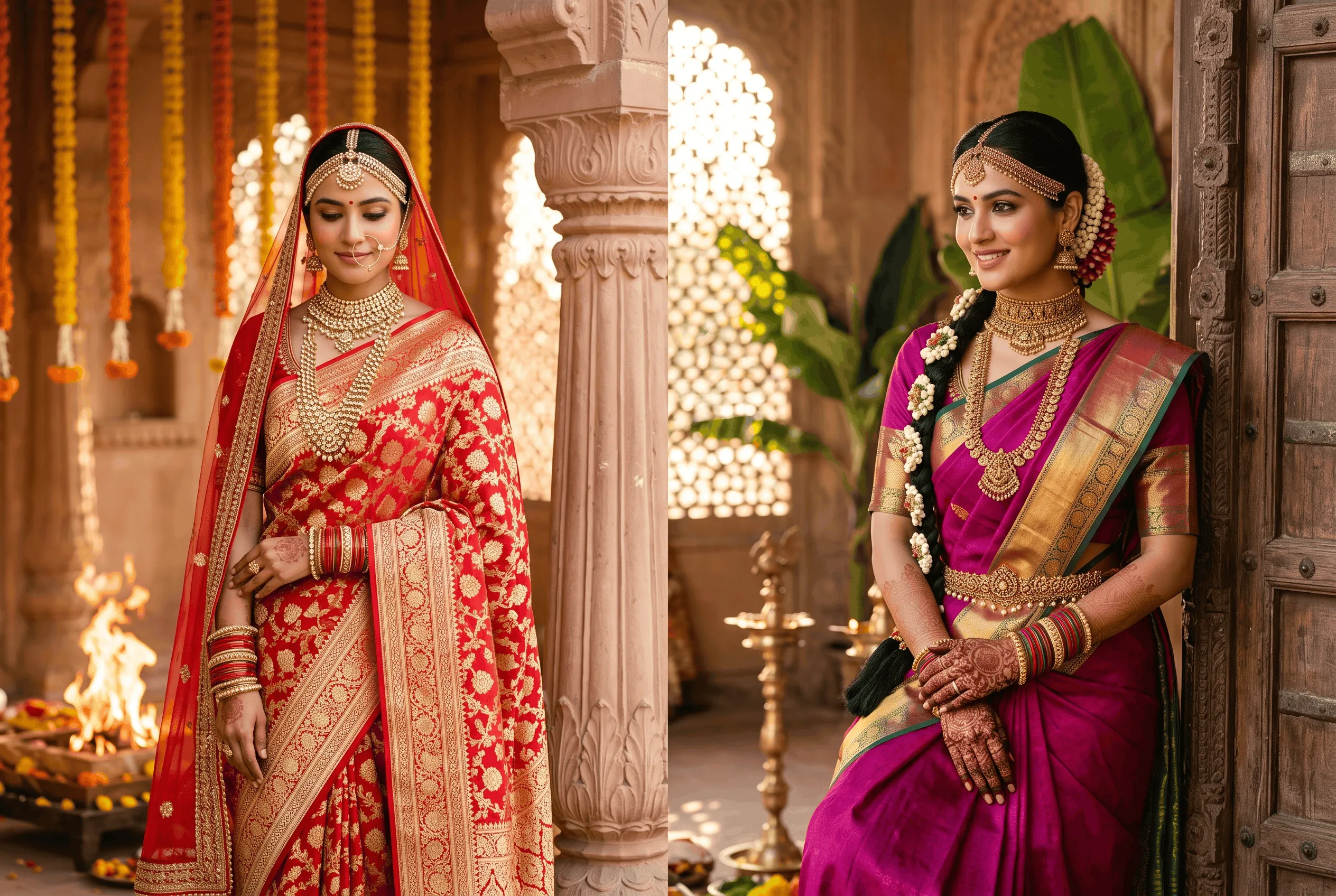
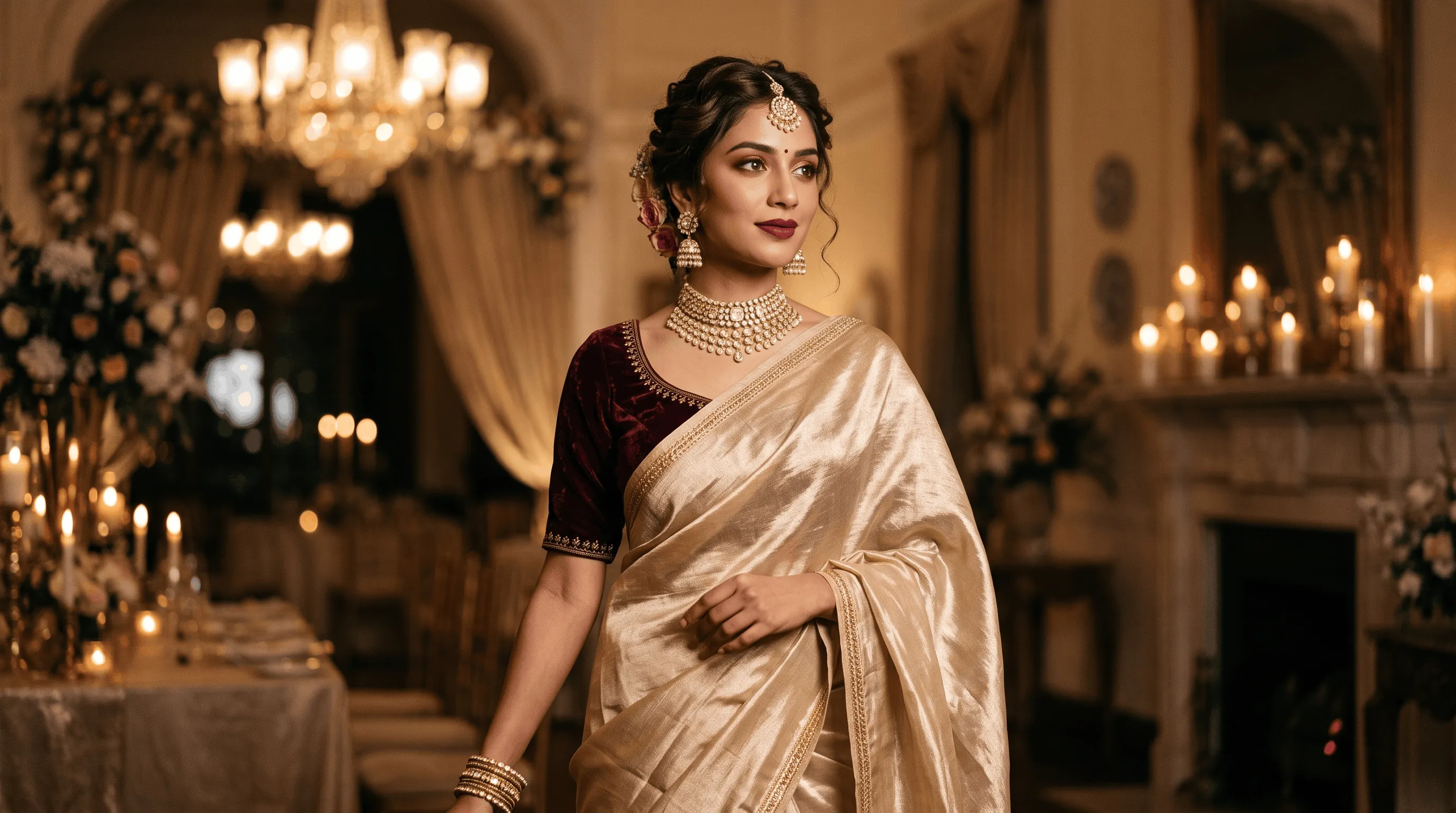
Pair it with kundan, polki or antique gold jewellery for a royal look.
Choose an elbow-sleeve or high-neck blouse in brocade or silk.
A red dupatta over the head for the pheras completes a classic North Indian bridal look.
Styling a Kanjivaram Bridal Saree
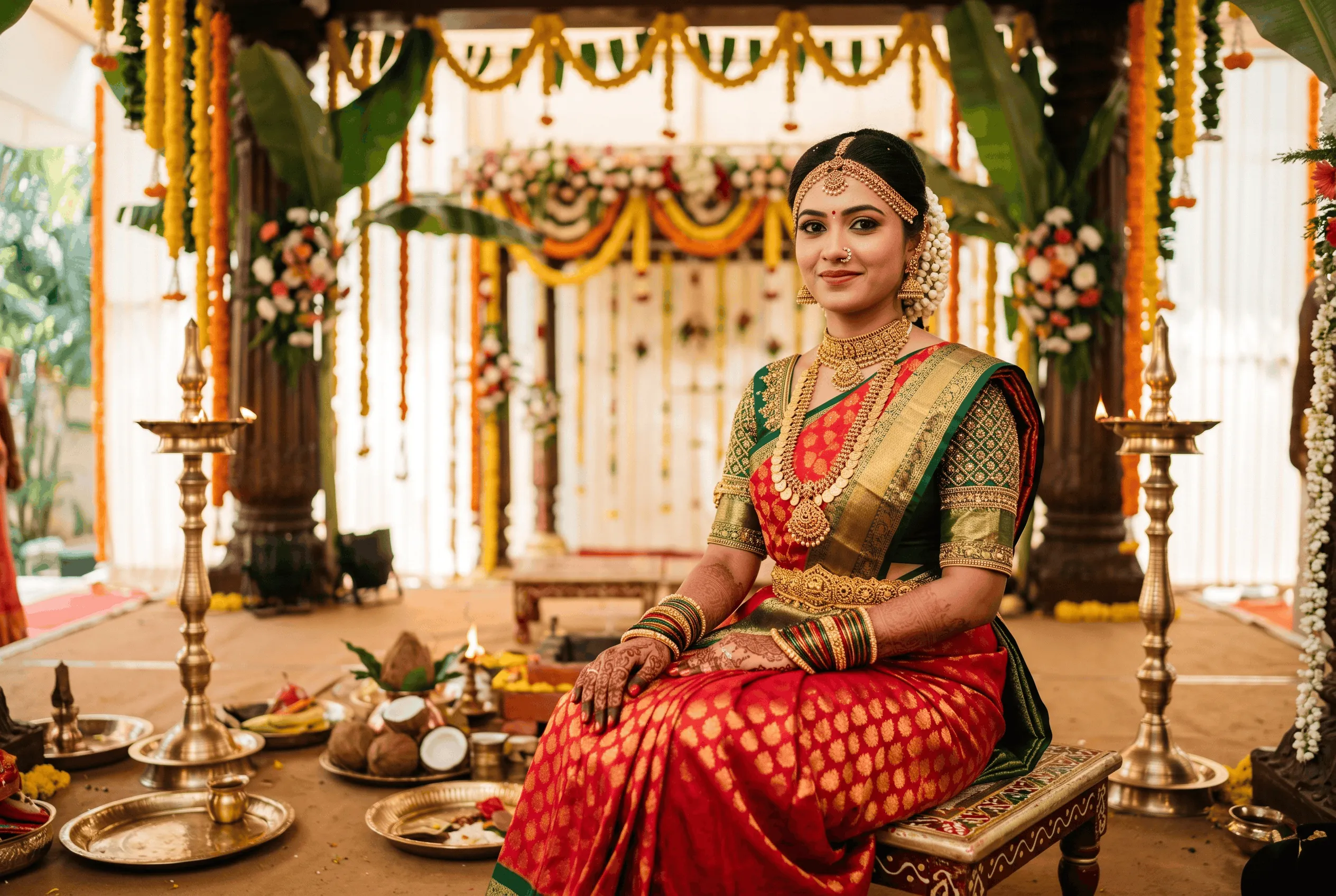
Pair it with temple jewellery, layered necklaces, a vaddanam (waist belt), jhumkas and a jada (hair ornament).
Fresh jasmine flowers in the hair are traditional and beautiful.
A contrast blouse in the border colour enhances the saree's colour blocking.
Blouse Ideas for Each Silk
For Banarasi: brocade blouses with elbow sleeves, high necks with a keyhole back or sweetheart necklines with zari borders all look regal. A contrast blouse in emerald or gold can make a red Banarasi even richer.
For Kanjivaram: traditional elbow-sleeve blouses in the border colour are classic. Puff sleeves, a deep back with latkans or a structured corset-style blouse can modernise the look.
See our corset blouse design guide and high-neck blouse designs for more ideas.
Draping for the Ceremony
Banarasi usually drapes beautifully in the Nivi style, with a dupatta over the head for the pheras.
Kanjivaram is often worn in a neat Nivi drape for weddings, while some South Indian communities use traditional drapes such as the madisar for certain rituals.
A professional draper can help with heavy bridal silk, especially for long ceremonies. Our South Indian saree draping guide explains regional styles.
For Mothers, Sisters and Wedding Guests
The same choice applies to the bride's family and guests.
Mothers and close relatives often choose a Banarasi or Kanjivaram in a colour that complements the bride without matching her exactly.
Guests can choose lighter versions of either silk, avoiding bridal red with heavy bridal jewellery.
See our wedding guest saree ideas for function-wise advice.
Why Not Both?
Many brides choose both silks for different functions.
A Kanjivaram for the muhurtham and a Banarasi for the reception is a popular combination.
A Banarasi for the pheras and a lighter Kanjivaram for a pre-wedding puja also works beautifully.
This way, you enjoy two of India's greatest weaving traditions in one wedding.
It also gives you two heirloom sarees instead of one, each tied to a different memory from your wedding days. Many families later pass one saree to a daughter and the other to a daughter-in-law, keeping both traditions alive in the family.
How to Check Authenticity
Banarasi: check the reverse of the brocade for handloom floats, ask about the zari type and look for GI and Silk Mark details. Read our Banarasi buying guide.
Kanjivaram: check the korvai join between body and border, the weight of the silk and the reverse of the pallu. Read how to identify pure Kanjivaram silk.
For both, ask for the Silk Mark and buy from trusted sellers.
Timeline for Buying Your Bridal Silk
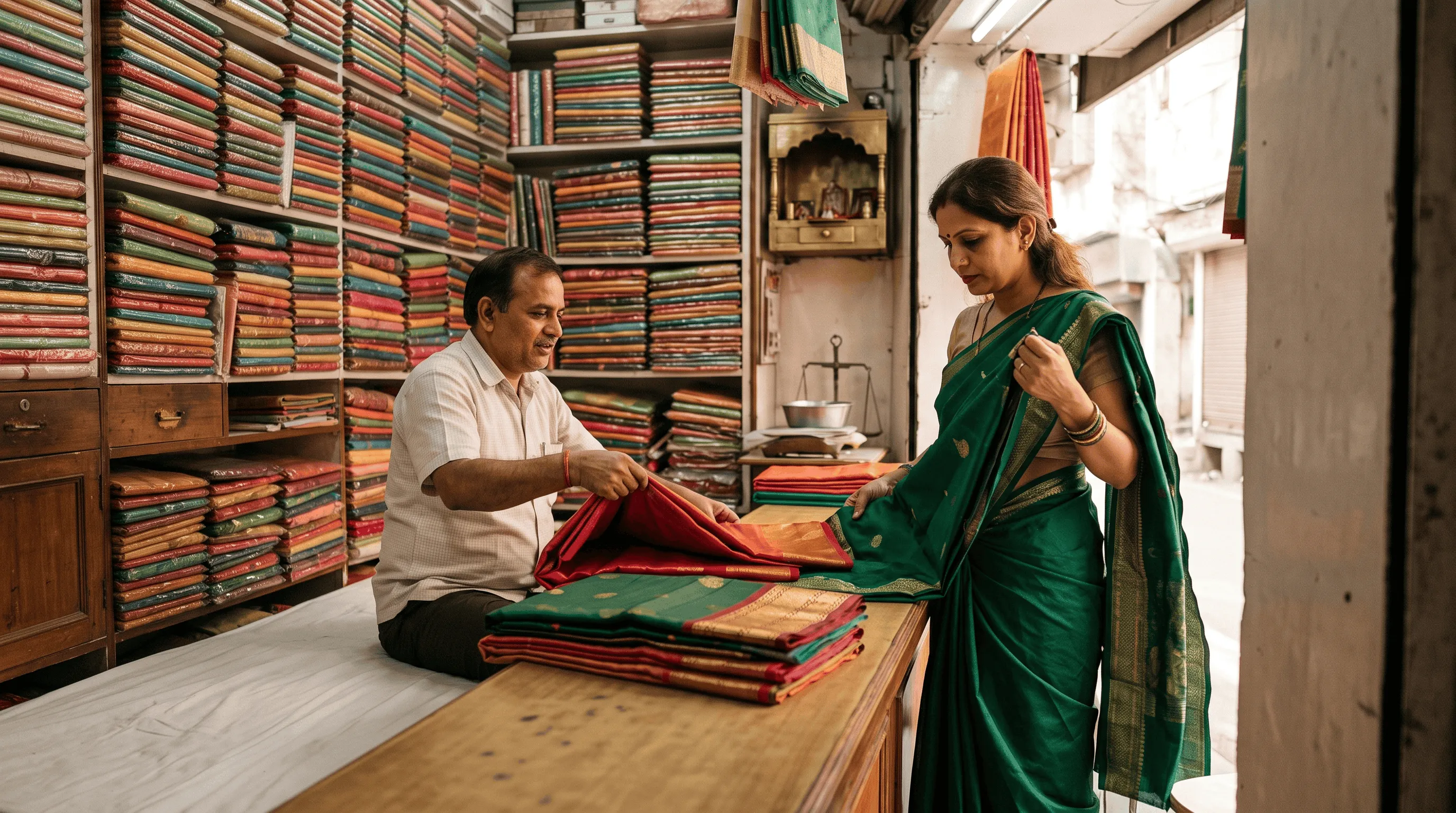
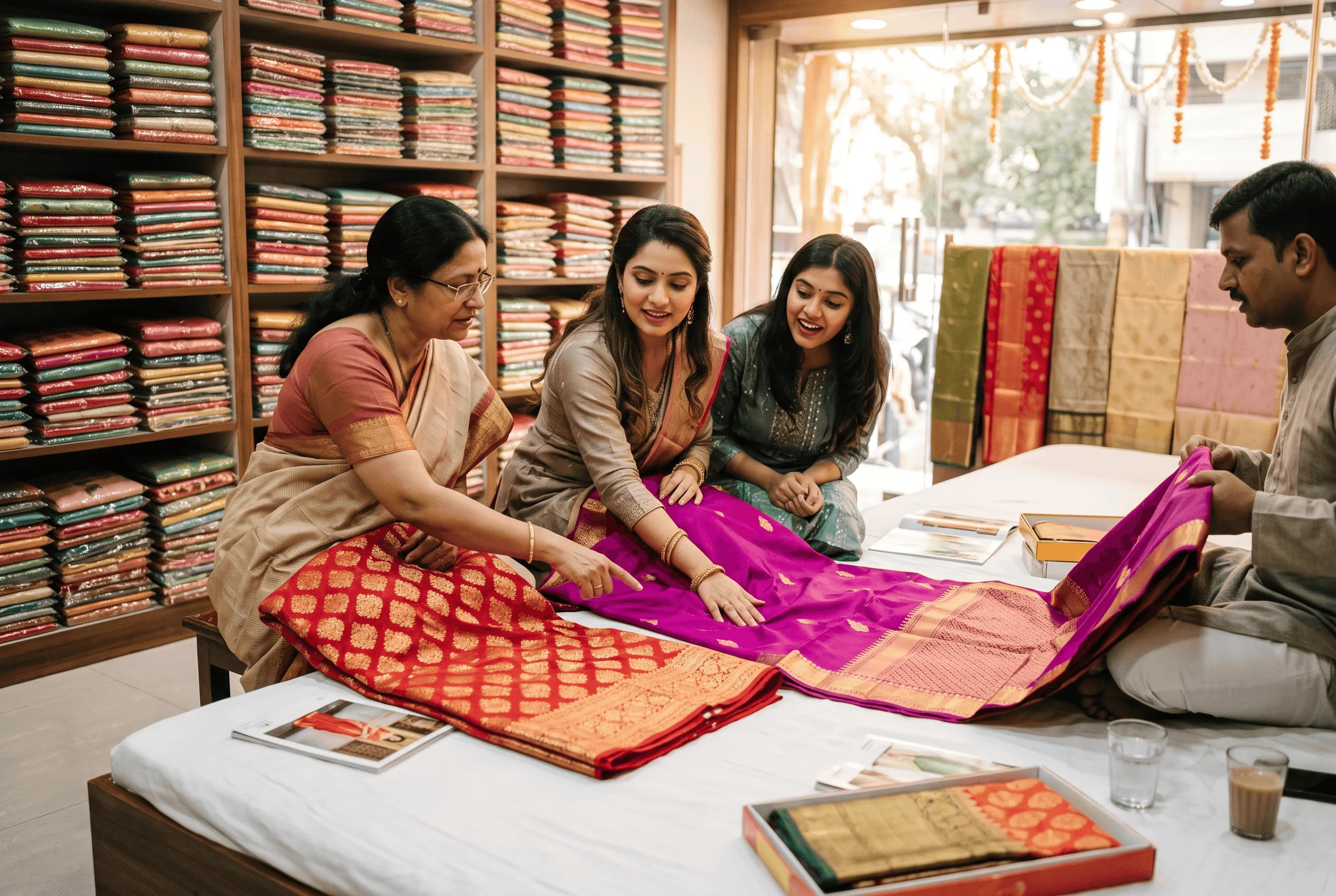
Start looking three to six months before the wedding.
Finalise your saree at least two months ahead so there is time for blouse stitching and fittings.
If you want a custom weave, allow even more time, as handloom bridal sarees can take weeks or months to weave.
Questions to Ask the Seller
Is this pure silk, and does it carry the Silk Mark?
Is it handloom or powerloom?
Is the zari pure, tested or synthetic?
For Kanjivaram, is the border korvai?
For Banarasi, what type of weave is it, such as katan, kadhwa or organza?
What is the return and exchange policy?
Caring for Your Wedding Silk
Dry-clean only, especially sarees with heavy zari.
Store in muslin or cotton, never plastic.
Wrap zari in tissue paper to prevent tarnishing.
Refold every few months to avoid weak crease lines.
Our silk saree care guide has more tips.
Common Mistakes Brides Make
Choosing only from photographs is a common mistake, because zari and colour look different in person.
Another is not testing the weight before buying a heavy Kanjivaram for a long ceremony.
Some brides also leave blouse stitching too late, which causes last-minute stress.
Finally, avoid paying a pure silk price without checking authenticity.
Making the Final Decision
The Banarasi vs Kanjivaram decision is personal.
Think about your family traditions, the look you love, your wedding season, how long you will wear the saree, your budget and how you will reuse it.
Whichever you choose, a genuine handwoven silk will make you feel like a bride and become a treasured heirloom that your family will remember for generations.
Explore more bridal ideas in our best silk saree for wedding guide, our bridal lehenga trends 2026 and the traditional wear trends 2026 guide.
Comments (0)
Leave a Thought
No comments yet. Be the first to share your thoughts!