A Kanjivaram silk saree is known for its rich texture, striking borders, strong colour contrasts, and ceremonial appeal. But when you are shopping in a crowded market or browsing online, identifying genuine Kanjivaram silk can be difficult.
Many sarees use the word “Kanjivaram” because they imitate the visual style, even when the fabric, weaving method, or zari quality is different from what buyers expect from a traditional piece.
That is why identifying pure Kanjivaram silk should never depend on one quick trick.
The best approach is to look at the fibre, weaving structure, border construction, zari, weight, texture, certification, and seller transparency together.
This guide explains what to check before buying and which common “authenticity tests” should be treated with caution.

What Is Pure Kanjivaram Silk?
Kanjivaram, also spelled Kanchipuram silk, is associated with the weaving tradition of Kanchipuram in Tamil Nadu.
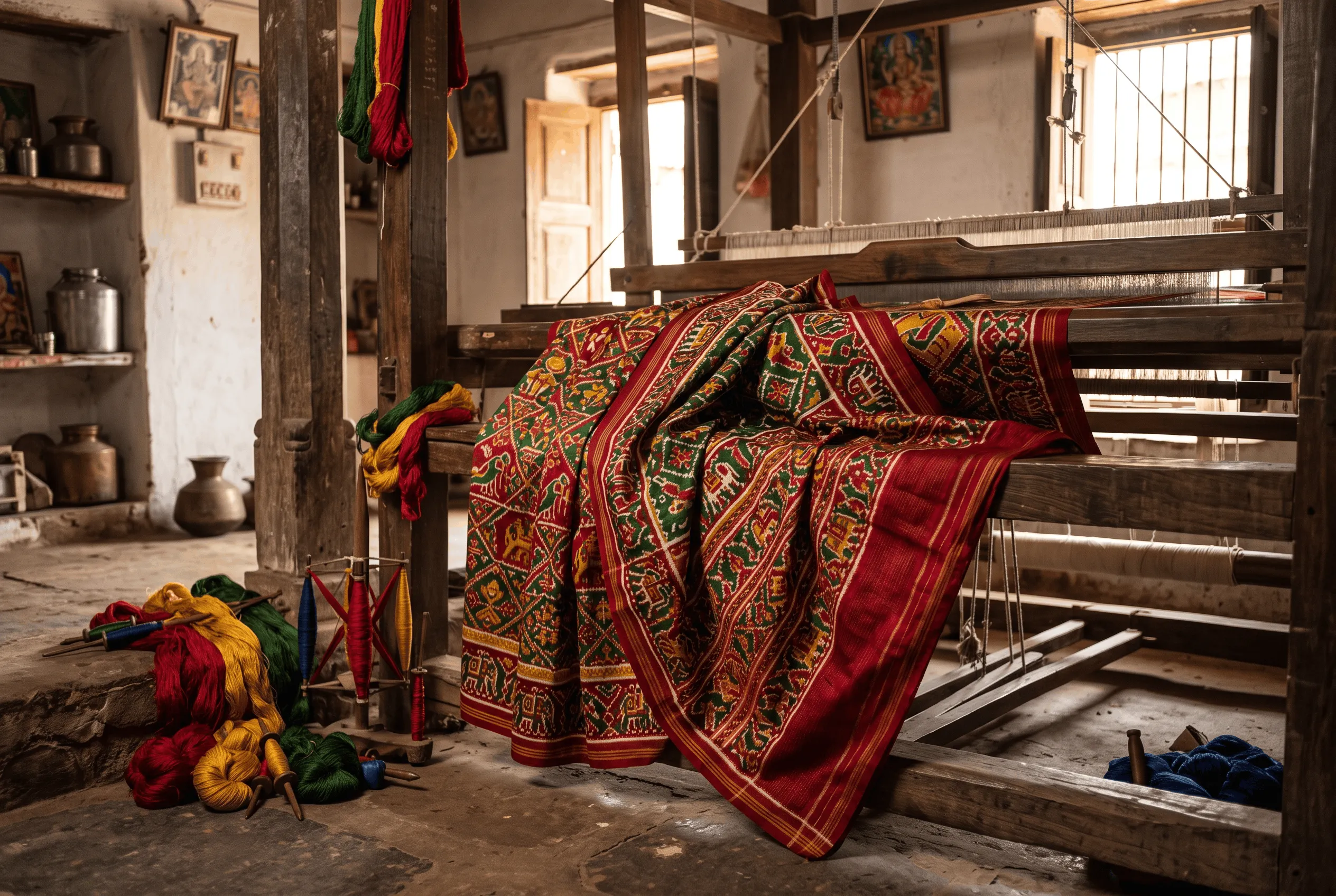
A traditional Kanjivaram saree is known for its use of silk yarn, distinctive borders, rich zari work, and a relatively substantial feel compared with many lighter silk sarees.
One of its most recognizable characteristics is the relationship between the saree body, border, and pallu.
In many traditional pieces, the border and pallu are woven separately from the body and joined using a strong interlocking technique. This creates the bold contrast that Kanjivaram sarees are famous for.
However, not every saree sold as Kanjivaram uses the same materials or weaving methods.
That is why the word on the label is only the beginning of the evaluation.
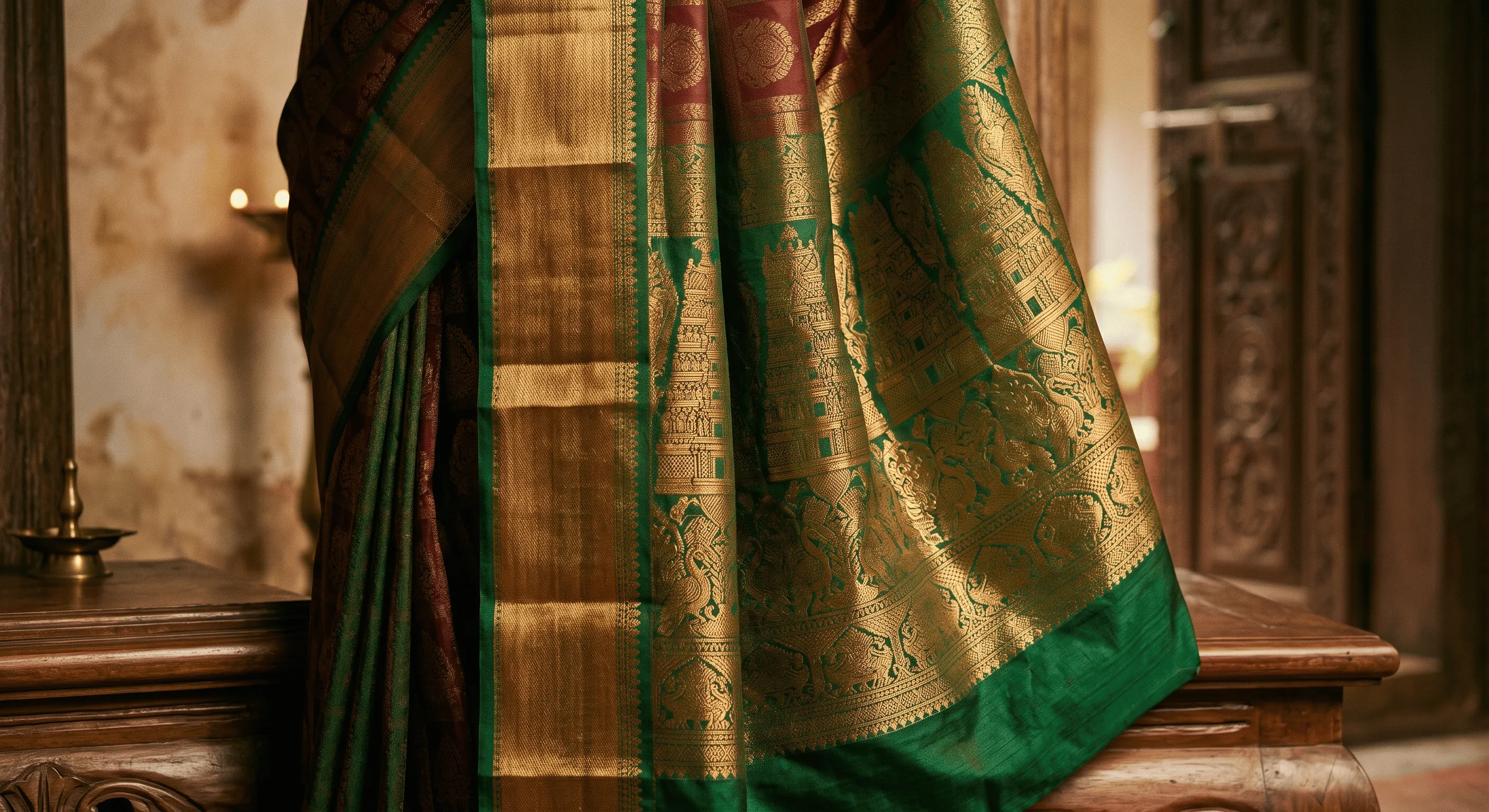
1. Check the Silk Texture First
Pure silk has a characteristic lustre that looks different from synthetic shine.
The surface should appear rich and luminous rather than excessively glossy.
When you move the saree under light, the silk often reflects light in a softer and more complex way than polyester or art silk.
It should also feel smooth but not plasticky.
Traditional Kanjivaram silk usually has some body and structure. It is not generally as fluid as chiffon or georgette.
If a saree feels unusually slippery, extremely lightweight, or excessively shiny, ask more questions about its fibre composition.
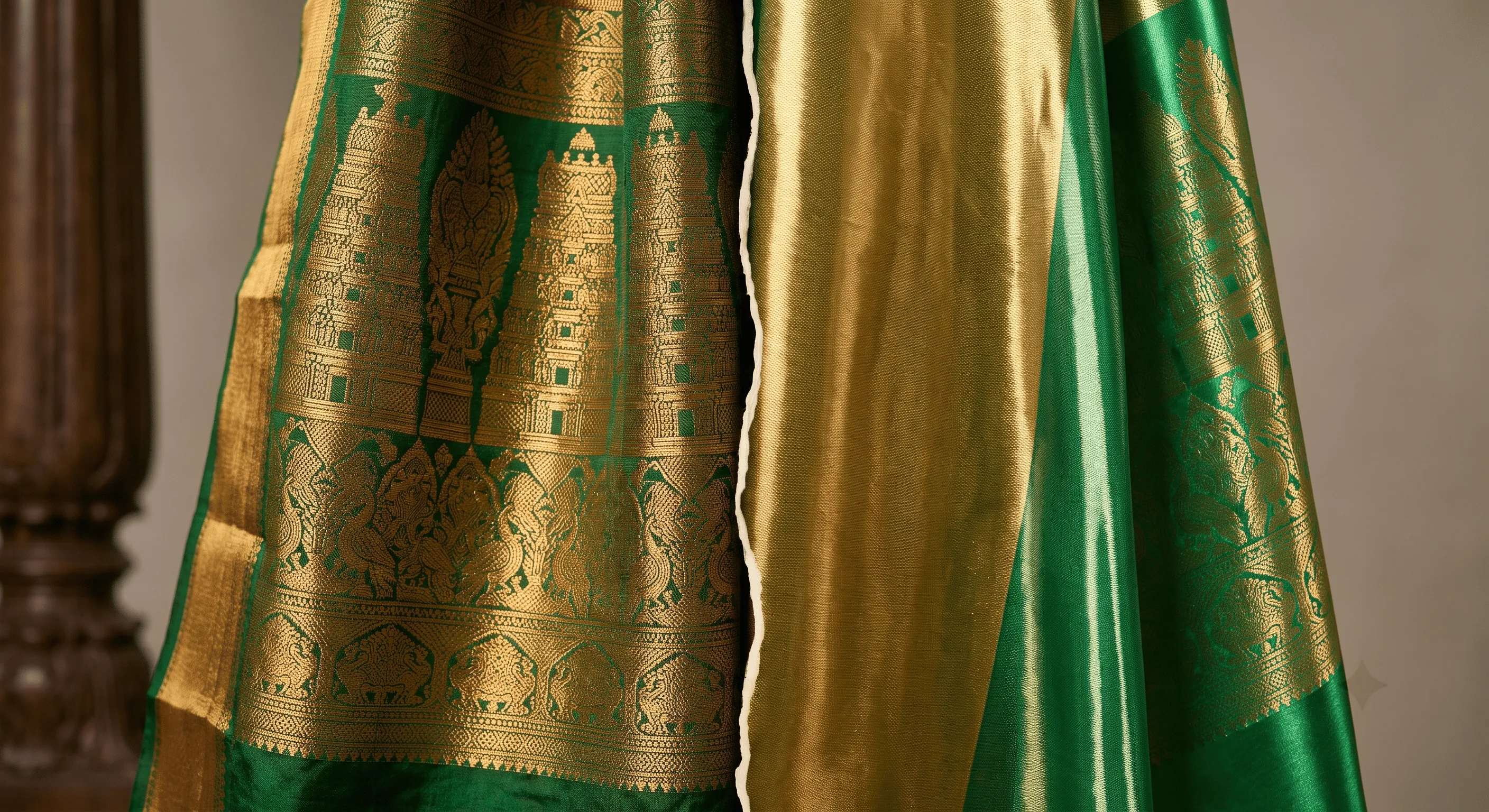
2. Look at the Weight and Structure
Traditional Kanjivaram sarees are often known for a substantial feel.
The silk yarn, dense weave, zari borders, and pallu can give the saree noticeable weight.
That does not mean every genuine saree must feel extremely heavy.
Contemporary weaving variations can be lighter, and different designs use different amounts of zari.
So weight should be treated as one clue, not proof.
If a saree is described as a rich traditional Kanjivaram but feels unusually thin and flimsy, ask whether it is pure silk, blended silk, or a lighter imitation.
3. Examine the Border and Pallu Construction
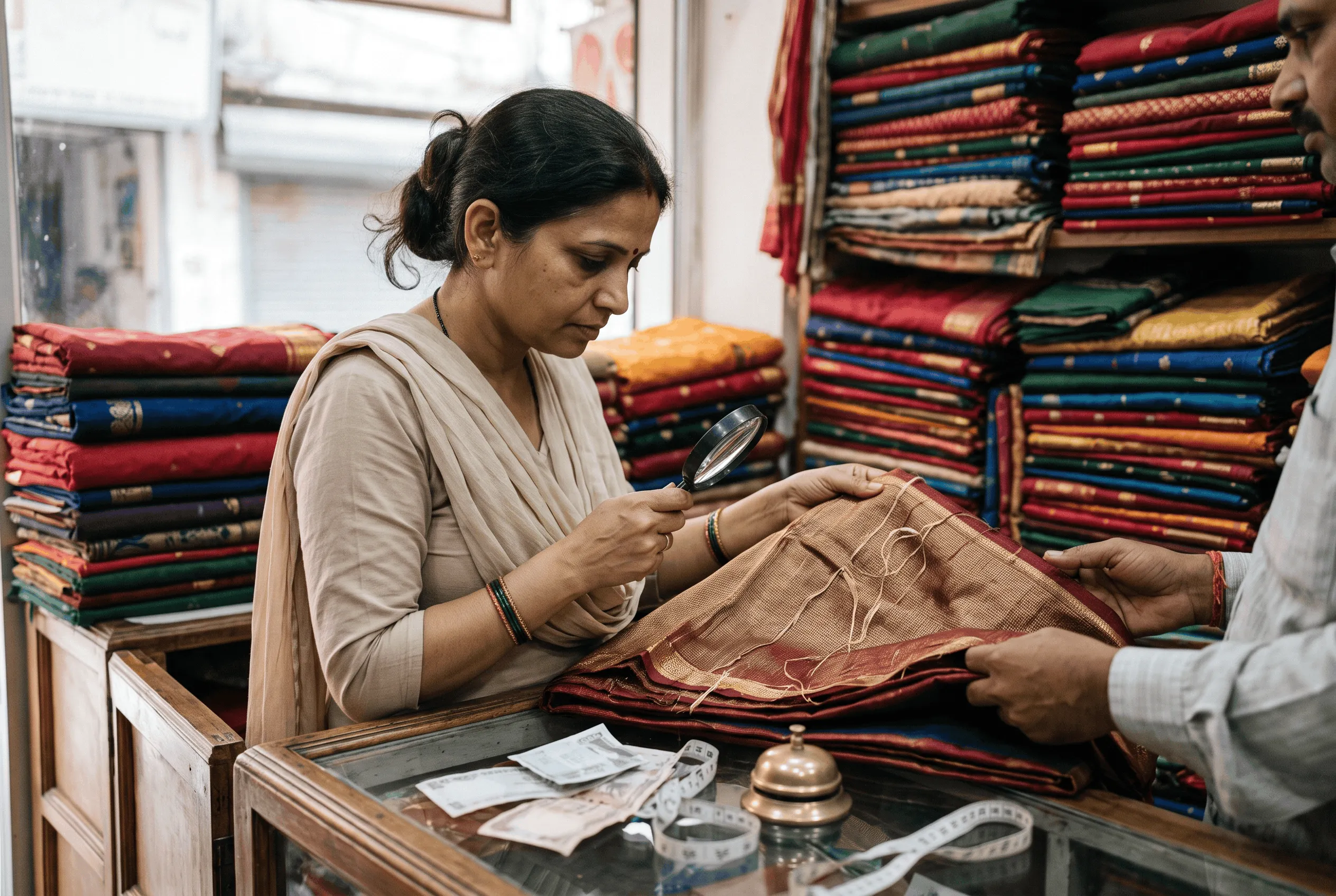
The border is one of the most useful areas to inspect.
Traditional Kanjivaram sarees are famous for contrasting borders and pallus that can appear structurally distinct from the body.
Look closely at the transition between the main body and border.
You may notice a clear woven join rather than a simple printed or surface-applied design.
The pallu should also feel integrated into the weaving, with detailed motifs and substantial construction.
A weakly attached-looking border or design that seems printed onto the fabric should make you inspect the saree more carefully.
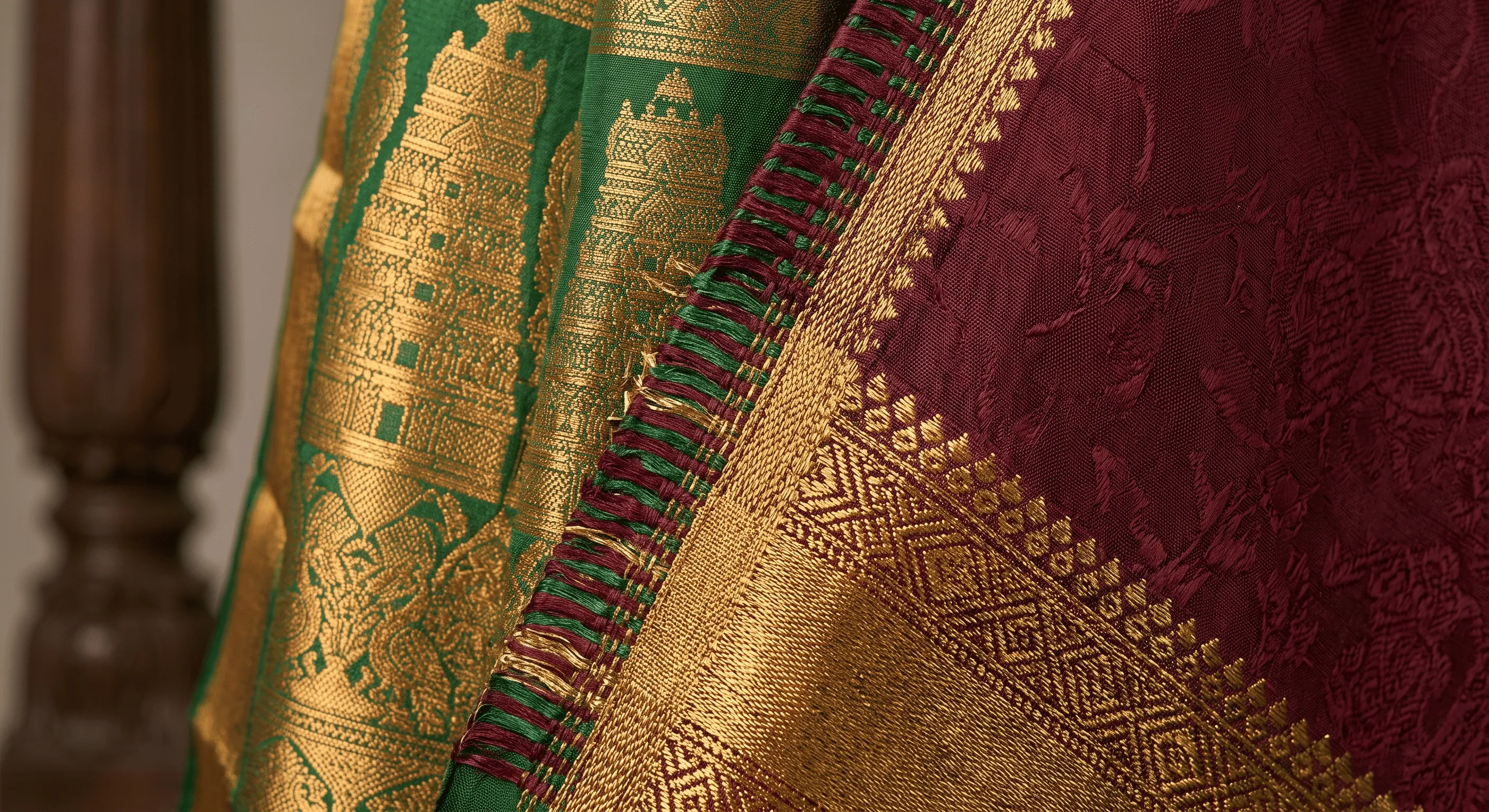
4. Understand the Korvai Technique
One of the terms you may hear when shopping for traditional Kanjivaram sarees is korvai.
Korvai refers to a weaving method used to join a contrasting border with the saree body.
This technique allows the border and body to use different colours while remaining securely connected through the weaving process.
It is valued because it requires more skill and coordination during weaving.
Not every Kanjivaram saree today uses the same korvai construction, so the absence of a dramatic contrast does not automatically mean the saree is fake.
Still, when a seller claims a saree uses traditional korvai weaving, you should be able to see evidence of a real woven join.
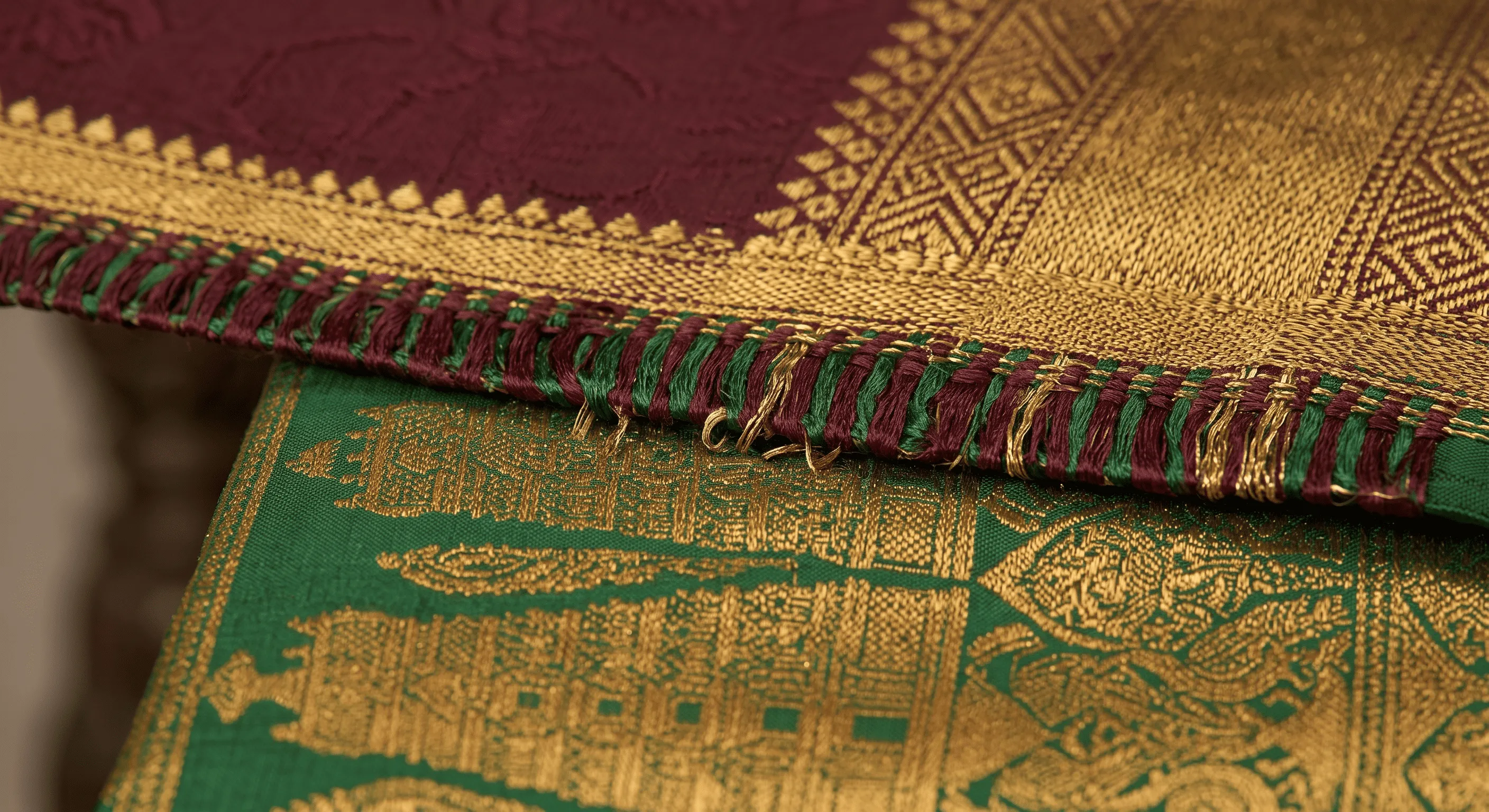
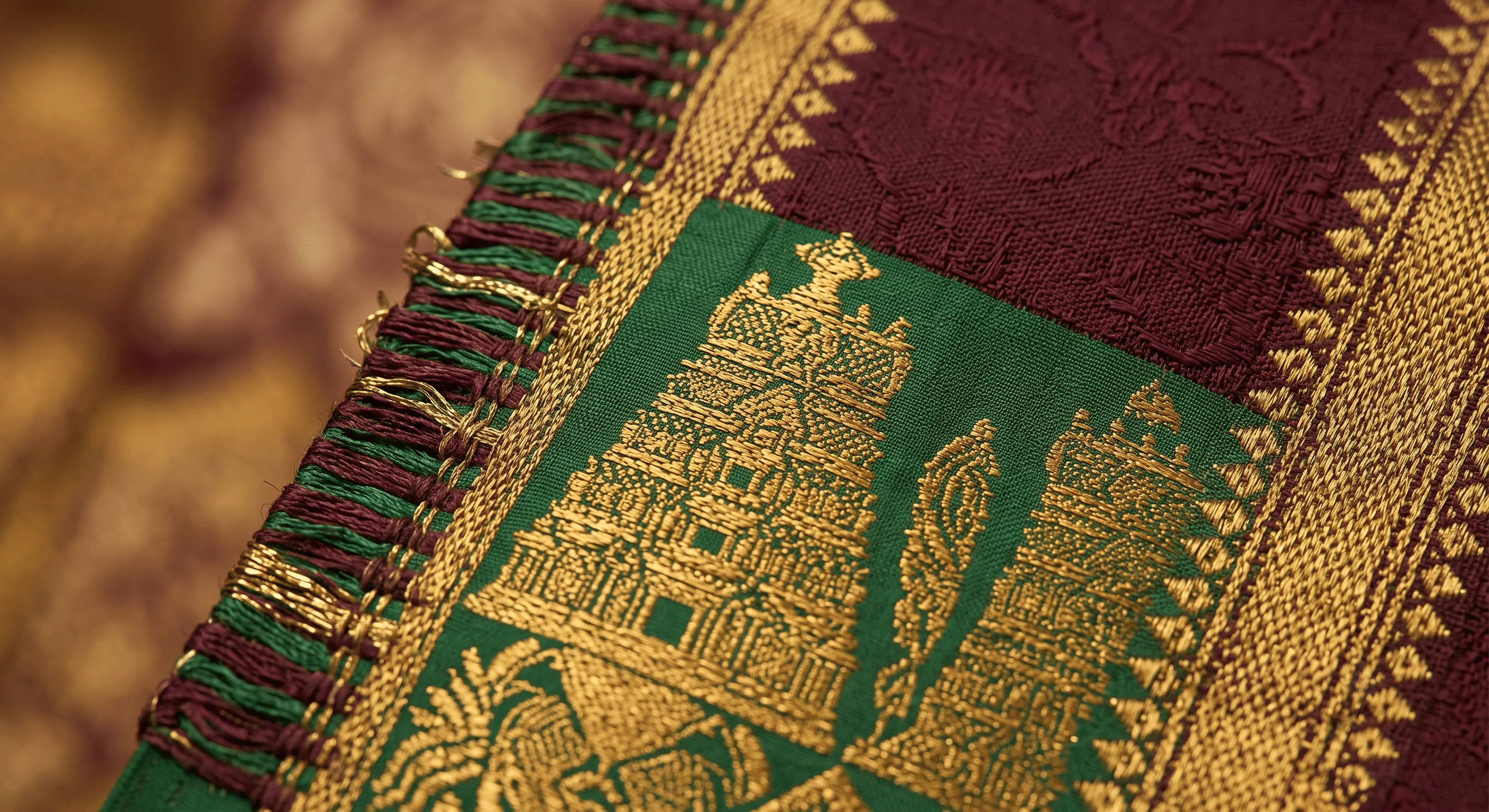
5. Inspect the Zari Carefully
Zari contributes significantly to both the look and price of a Kanjivaram saree.
Traditional zari may use metallic components wrapped around a core yarn, while contemporary and imitation zari can rely on cheaper metallic materials.
Visually, all of them can appear gold from a distance.
That is why colour alone is not enough.
Ask the seller what type of zari has been used.
Terms such as pure zari, tested zari, imitation zari, or metallic zari should be explained clearly.
For a higher-priced saree, request documentation wherever available.
A trustworthy seller should be able to describe the zari rather than simply saying “gold zari.”
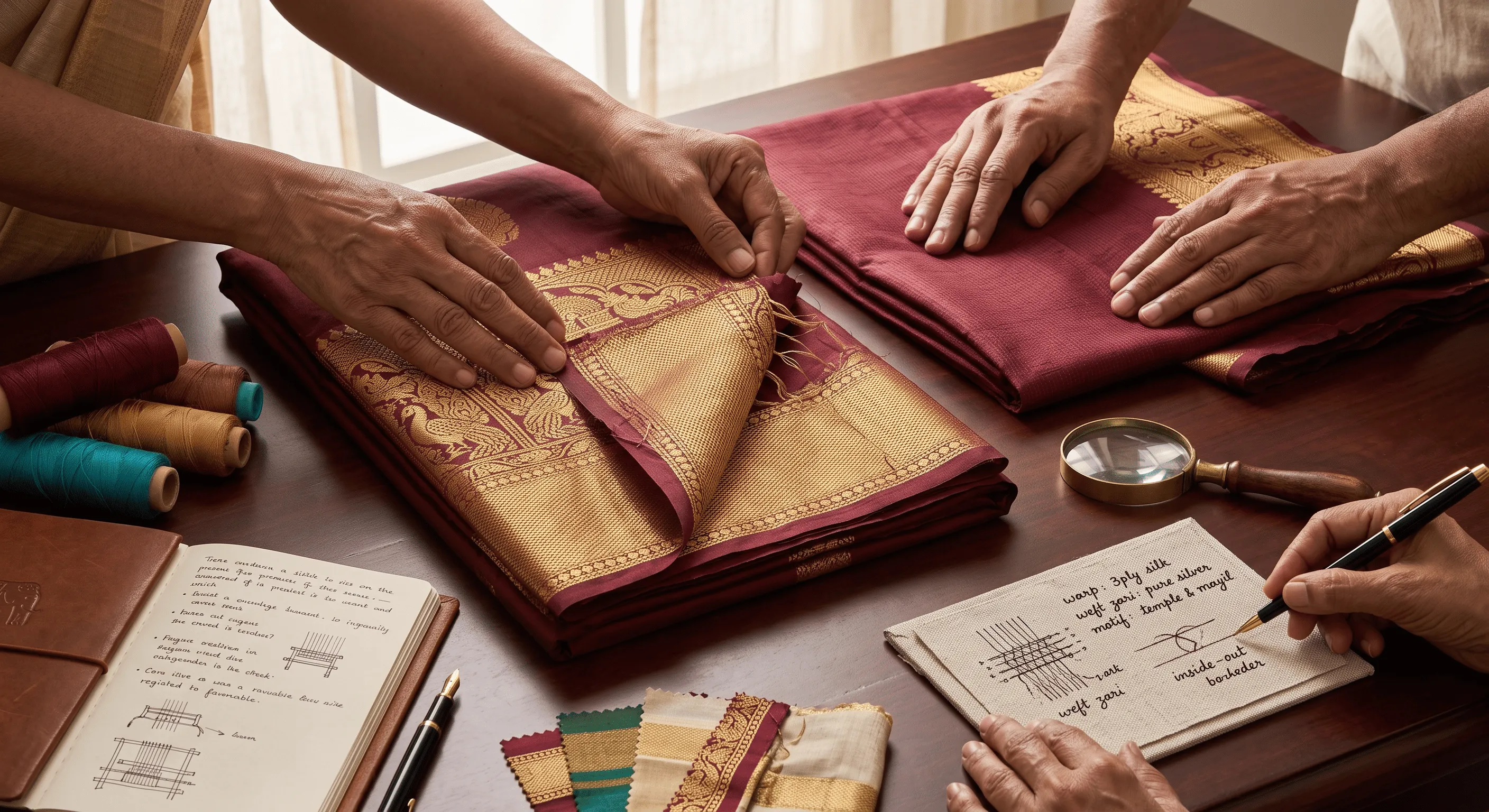
6. Check the Reverse Side of the Saree
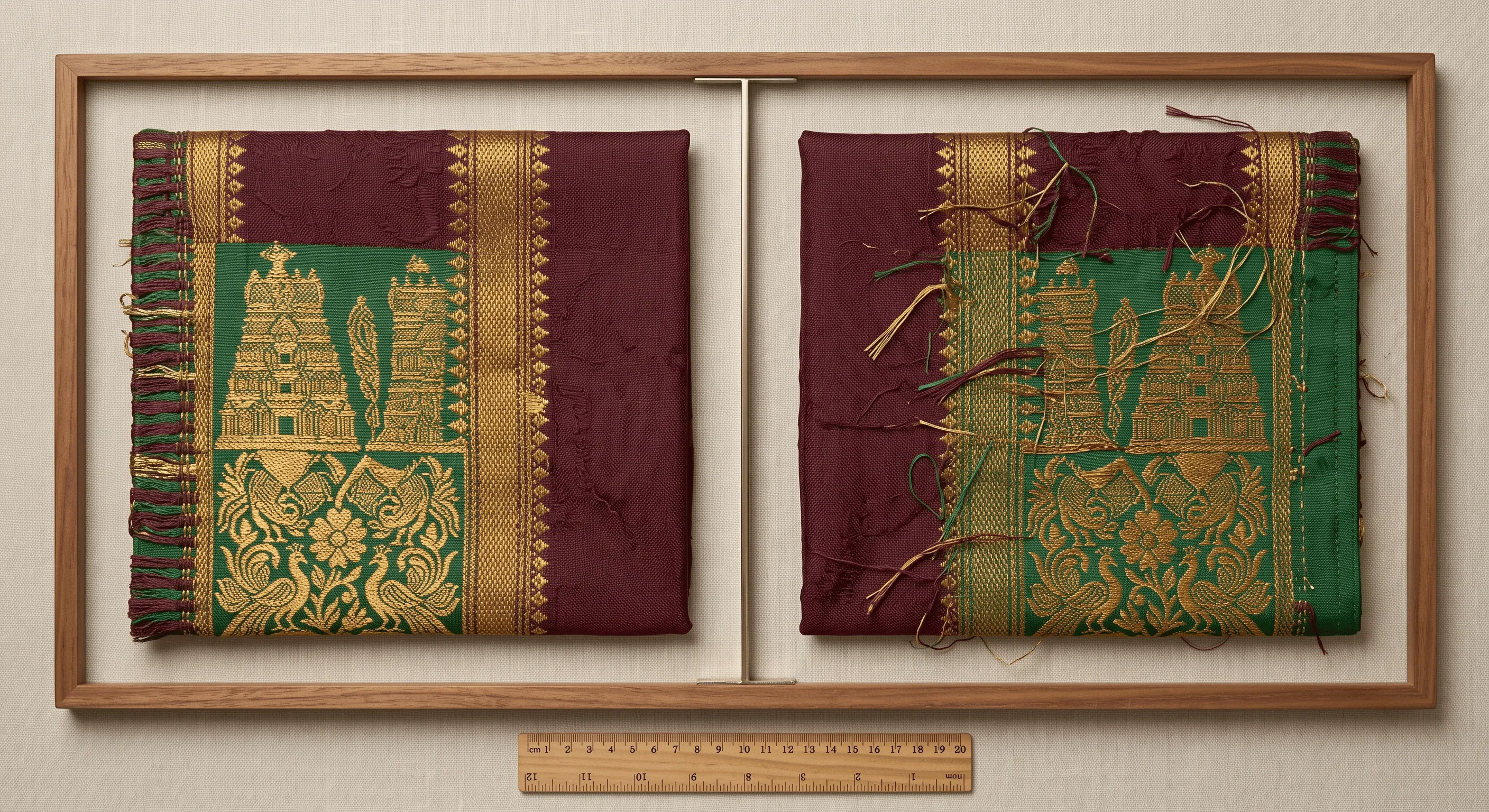
The reverse side can reveal useful information about how the motifs were created.
Woven motifs often show thread movement on the back.
This does not mean the reverse side must look messy. Well-made weaving can still appear neat.
But if a decorative motif looks identical to a printed surface design and there is no sign of woven structure at the back, it may not be what you expect from a traditional woven saree.
Pay particular attention to the pallu and border.
These areas usually contain more complex weaving and can reveal the construction more clearly.
7. Look for Traditional Motifs and Design Language
Kanjivaram sarees often feature motifs rooted in South Indian visual traditions.
Common examples include:
- temple borders,
- peacocks,
- checks,
- stripes,
- floral patterns,
- rudraksha-inspired motifs,
- mythical creatures,
- and traditional geometric forms.
However, motifs alone cannot prove authenticity.
Modern sarees may reinterpret traditional patterns, while imitation sarees can copy them easily.
Treat motifs as part of the overall design identity, not as an authenticity certificate.
8. Check for the Silk Mark
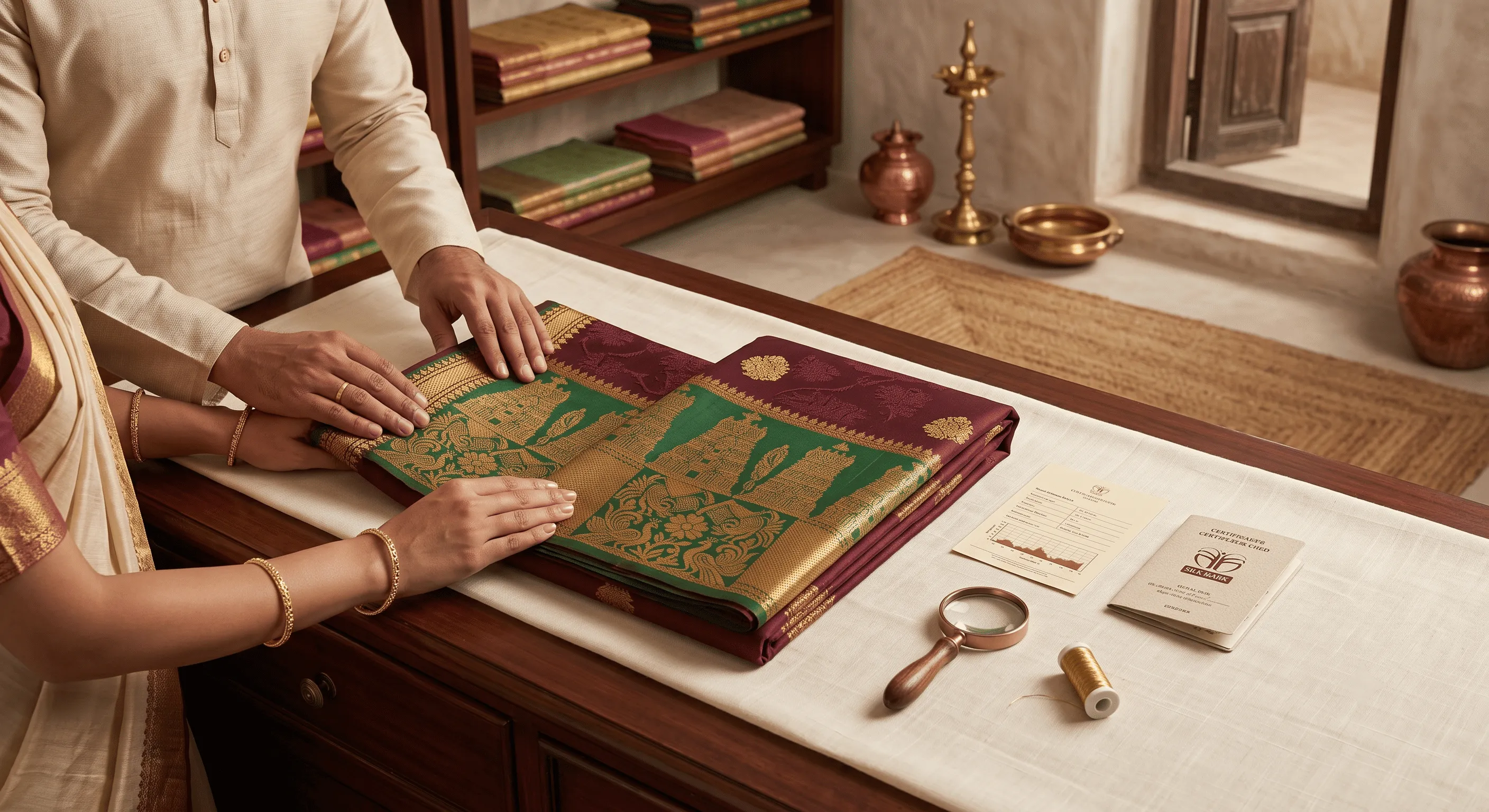
When buying a pure silk saree, one useful indicator is the Silk Mark.
The Silk Mark is intended to help buyers identify products made from natural silk.
However, you should still evaluate the saree as a whole.
A label should support your judgment, not replace it.
For expensive purchases, ask whether the Silk Mark applies specifically to the saree you are buying and whether the retailer can explain the product composition.
9. Ask About the GI Identity
Kanchipuram silk sarees are associated with a geographically specific weaving tradition.
When buying a traditional or high-value piece, ask the seller where it was woven and whether it is represented as coming from the Kanchipuram weaving tradition.
A seller who is confident about provenance should be able to provide more than a vague answer.
That does not mean every beautiful silk saree outside Kanchipuram is inferior.
It simply means that if the product is specifically marketed as authentic Kanjivaram or Kanchipuram silk, its claimed origin matters.
10. Do Not Depend on the Burn Test
One of the most common internet suggestions is to burn a loose thread to test whether it is silk.
While silk and synthetic fibres can behave differently under flame, this method has major limitations.
The thread you test may come from the border, zari, finishing yarn, or another material rather than the main fabric.
It can also damage the saree.
For an expensive textile, deliberately burning fibres is not a good first-line authenticity method.
It is safer to rely on certification, seller transparency, weaving inspection, and fibre information.
11. Be Careful with the Ring Test
Another commonly discussed test is passing the saree through a ring.
This is often presented as proof of genuine silk.
It is not.
Fabric thickness, zari density, stiffness, finishing, and weaving structure all affect whether a saree can pass through a small ring.
A genuine Kanjivaram saree may be too structured or heavily woven to behave the way online demonstrations suggest.
Do not reject or accept a saree based on this test alone.
12. Check the Price Against the Claims
A pure silk, handwoven Kanjivaram saree with high-quality zari, complex weaving, and traditional construction involves significant material and labour.
If a seller makes all of those claims at an unusually low price, ask questions.
A low-priced saree is not necessarily bad.
It may simply use:
- blended silk,
- imitation zari,
- power-loom weaving,
- lighter construction,
- or simplified motifs.
The issue is not affordability.
The issue is whether the product description matches what you are actually buying.
Handloom vs Power Loom Kanjivaram Sarees
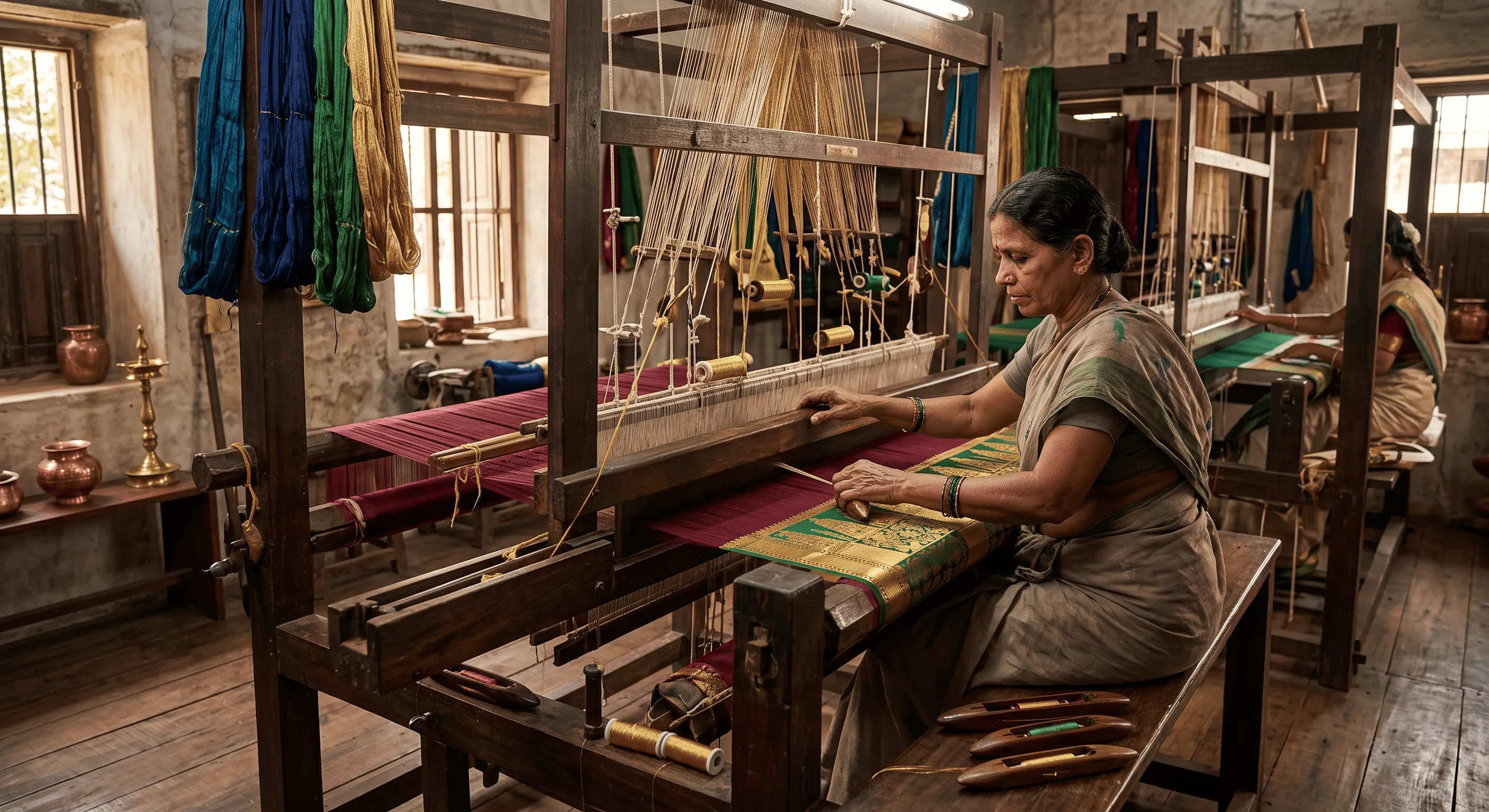
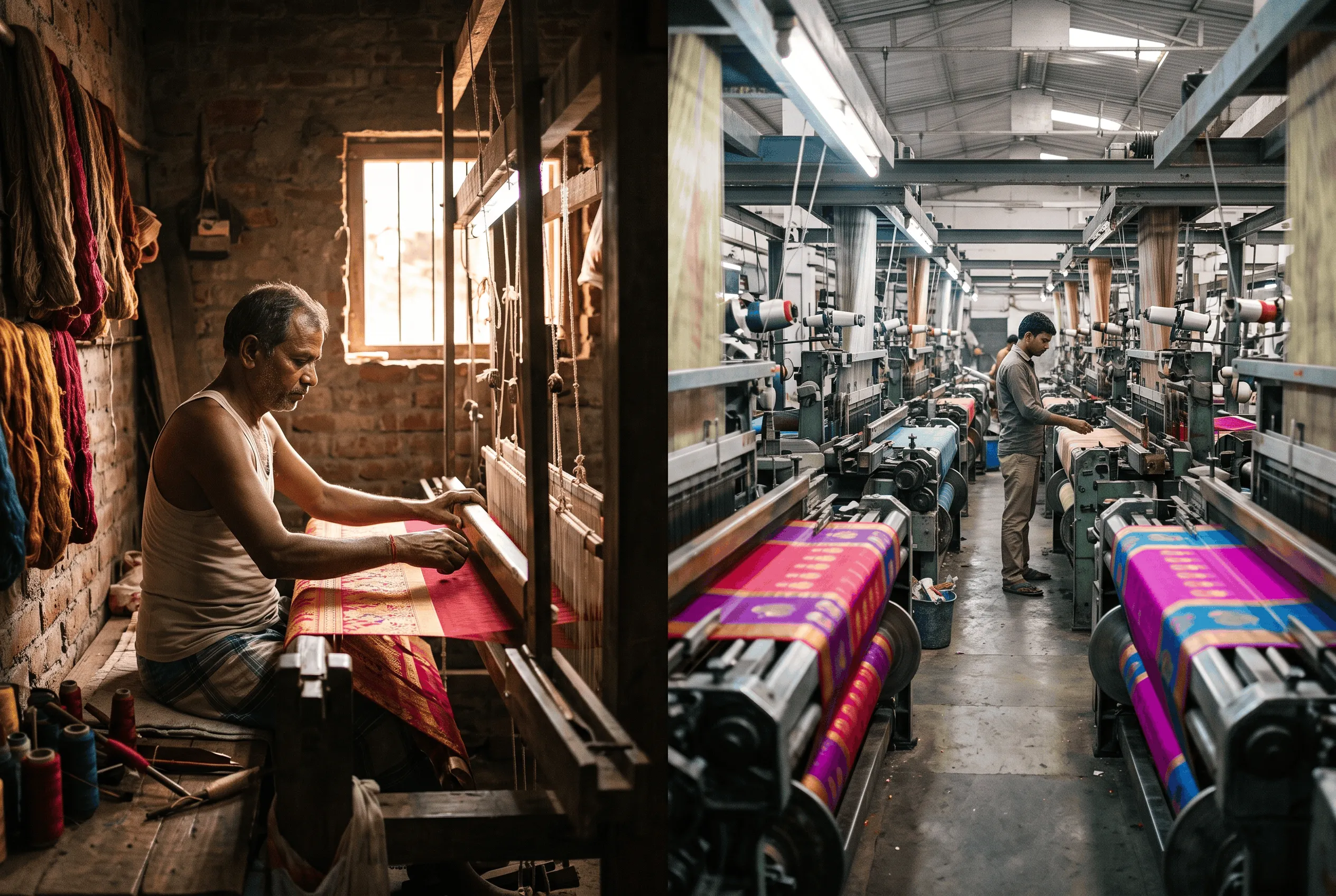
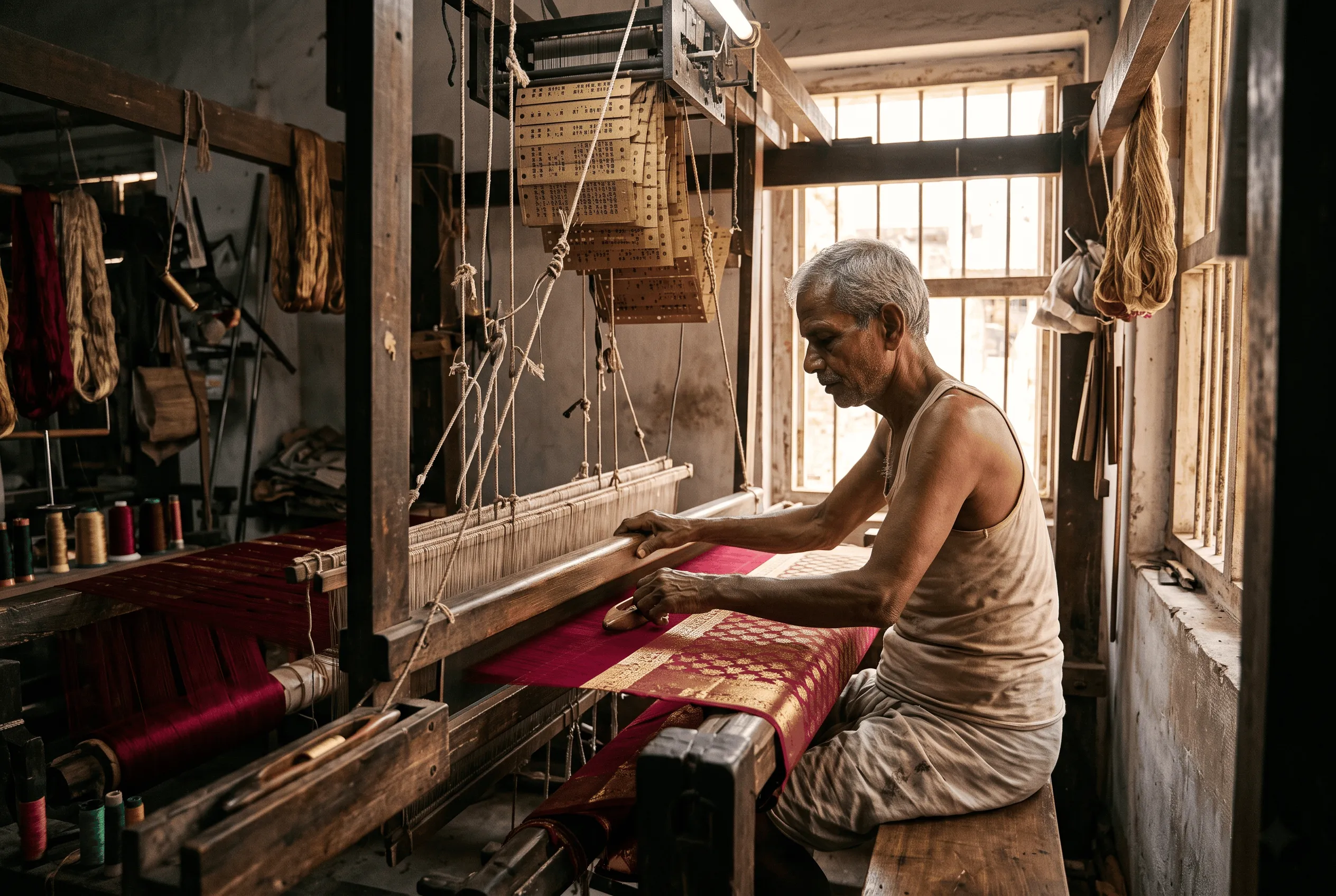
Handloom sarees are woven manually and may show subtle natural variations.
Power-loom versions are produced mechanically and usually offer greater uniformity and lower prices.
Both can be visually attractive.
But a power-loom saree should not be sold as handloom.
Ask the retailer clearly about the production method.
For collectors, bridal purchases, or heirloom sarees, this distinction may be especially important.
Pure Silk vs Art Silk Kanjivaram-Style Sarees
Many Kanjivaram-style sarees use art silk or synthetic blends.
They often imitate the bold borders and bright colours of traditional Kanjivaram designs.
These sarees can be affordable, lightweight, and visually attractive.
The problem only arises when they are sold as pure silk.
Pure silk generally has a more nuanced lustre, richer handle, and different drape.
Art silk may appear shinier, more slippery, or more uniform.
Always check the fibre description before buying.
How to Identify Pure Kanjivaram Silk Online
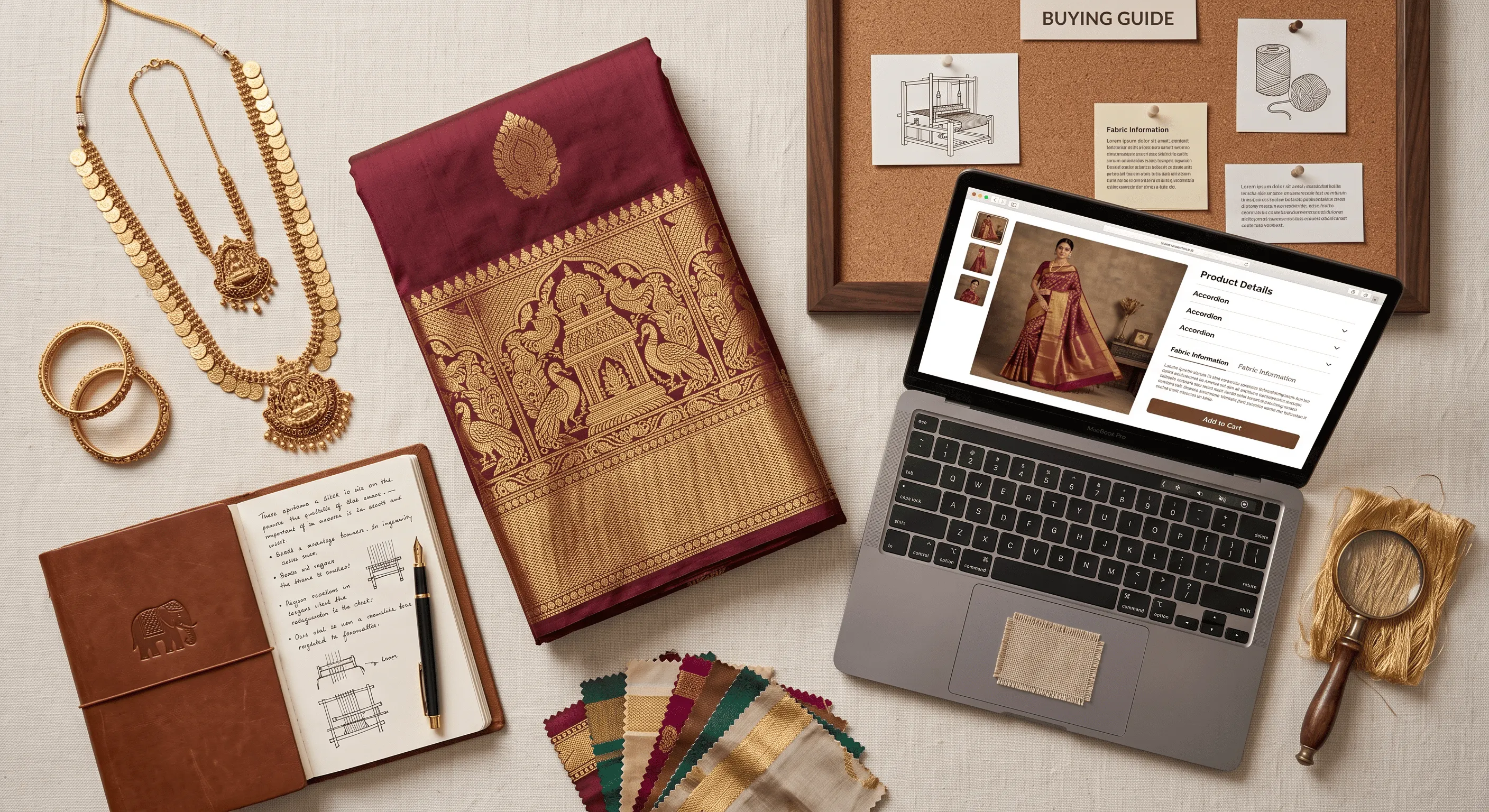
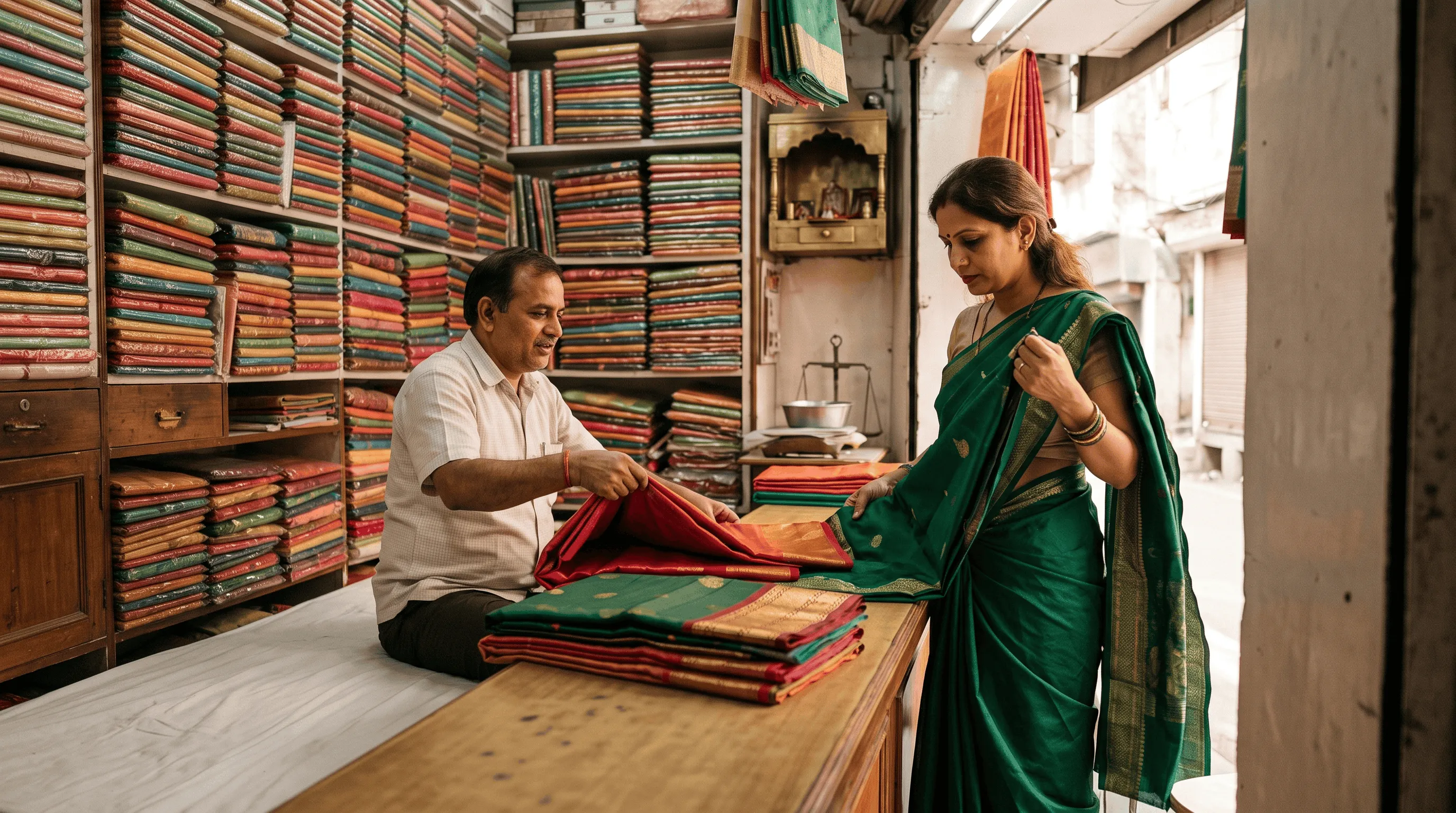
Online shopping makes physical inspection impossible, so the seller's product information becomes critical.
Look for listings that clearly mention:
- fibre composition,
- weaving method,
- zari type,
- saree length,
- blouse piece,
- Silk Mark or certification details,
- place of weaving,
- care instructions,
- and return policy.
High-quality listings should also show close-up photographs of the border, pallu, body, and fabric texture.
Be cautious if a product page uses only heavily edited model photographs and vague phrases such as “premium silk” without explaining what that means.
What to Ask the Seller Before Buying
A few direct questions can save you from confusion.
Ask:
- Is this 100% natural silk?
- Is it handloom or power loom?
- What type of zari is used?
- Was it woven in Kanchipuram?
- Does it carry a Silk Mark?
- Is there any available certification?
- Is the border woven using korvai?
- What is the return policy if the product differs from the description?
A knowledgeable seller should be comfortable answering these questions.
Vague or evasive answers are a warning sign, especially for high-value purchases.
How Pure Kanjivaram Silk Should Feel When Draped
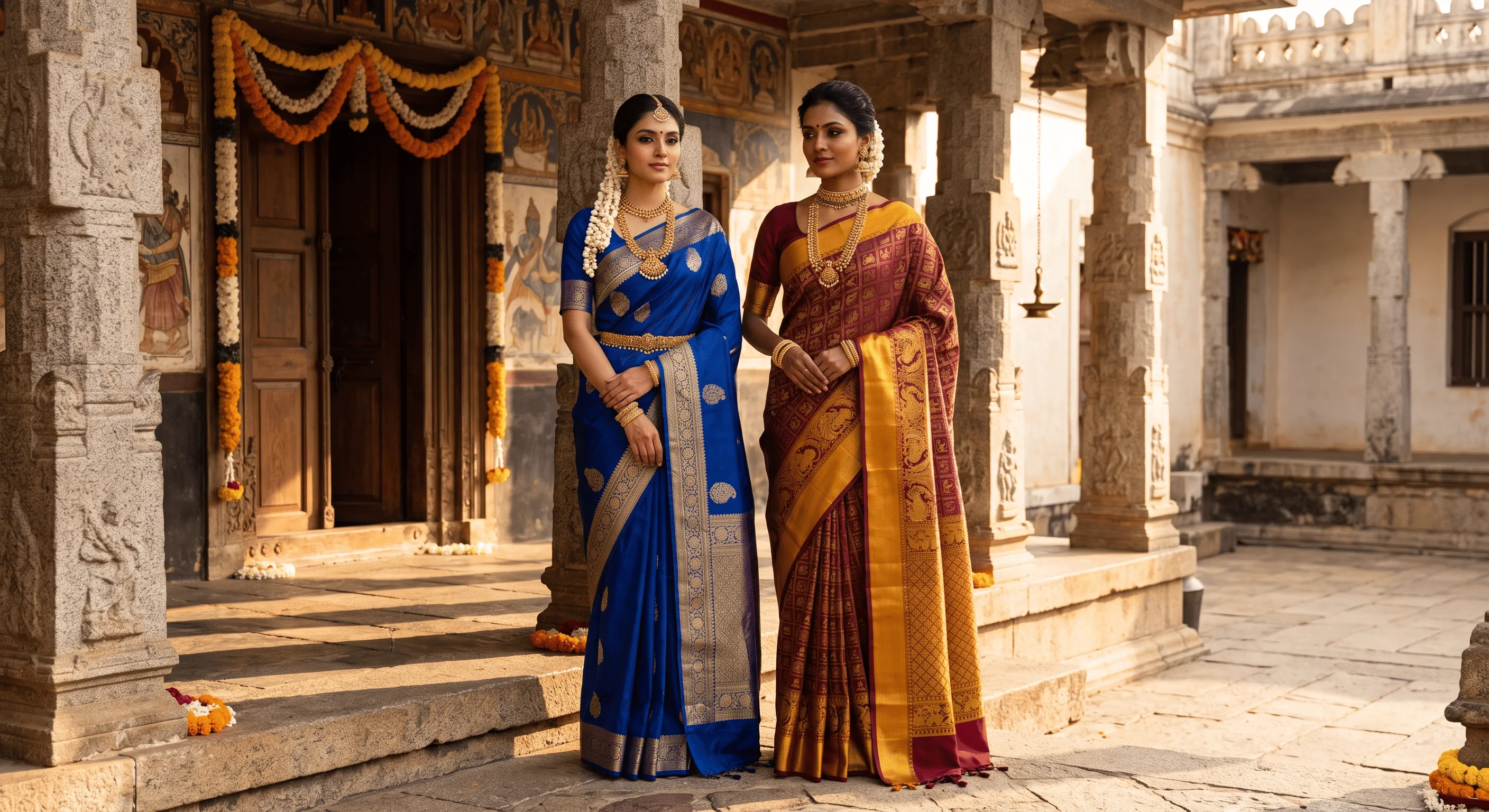
A traditional Kanjivaram saree usually feels structured, rich, and substantial.
The pleats tend to hold shape well.
The pallu often has noticeable weight because of denser weaving and zari.
The fabric should not feel lifeless or excessively floppy.
At the same time, genuine silk should still move naturally and become easier to handle with wear.
The best way to judge a saree is not to ask whether it feels “heavy enough,” but whether its feel matches the materials and construction being claimed.
Common Mistakes Buyers Make
One common mistake is judging authenticity from shine alone.
Synthetic fibres can be extremely glossy.
Another is assuming every heavy saree is pure silk.
Weight can come from metallic yarn, dense synthetic weaving, or other materials.
Some buyers also rely entirely on the burn test or ring test.
Neither is reliable enough on its own.
The strongest buying decision comes from combining material information, loom type, zari details, certification, seller credibility, and physical inspection.
Quick Kanjivaram Authenticity Checklist
Before you buy, check these points:
- Does the saree have a natural silk lustre?
- Does it have appropriate structure and body?
- Is the border genuinely woven?
- Is there a visible traditional join where applicable?
- Does the reverse side show woven construction?
- Has the seller explained the zari type?
- Is the fibre composition clearly stated?
- Is there a Silk Mark or supporting certification?
- Has the weaving origin been explained?
- Does the price make sense for the claims being made?
If several of these points are unclear, ask for more information before purchasing.
How to Care for Pure Kanjivaram Silk
Once you invest in a genuine Kanjivaram saree, careful storage helps protect it.
Keep it folded rather than hanging for long periods.
Wrap the saree in breathable cotton or muslin.
Store it away from dampness, direct sunlight, and strong perfume.
Refold it periodically so the same creases do not remain under pressure for years.
For cleaning, professional dry cleaning is generally recommended for richly woven silk and zari sarees.
Avoid spraying perfume directly onto zari.
Comments (0)
Leave a Thought
No comments yet. Be the first to share your thoughts!