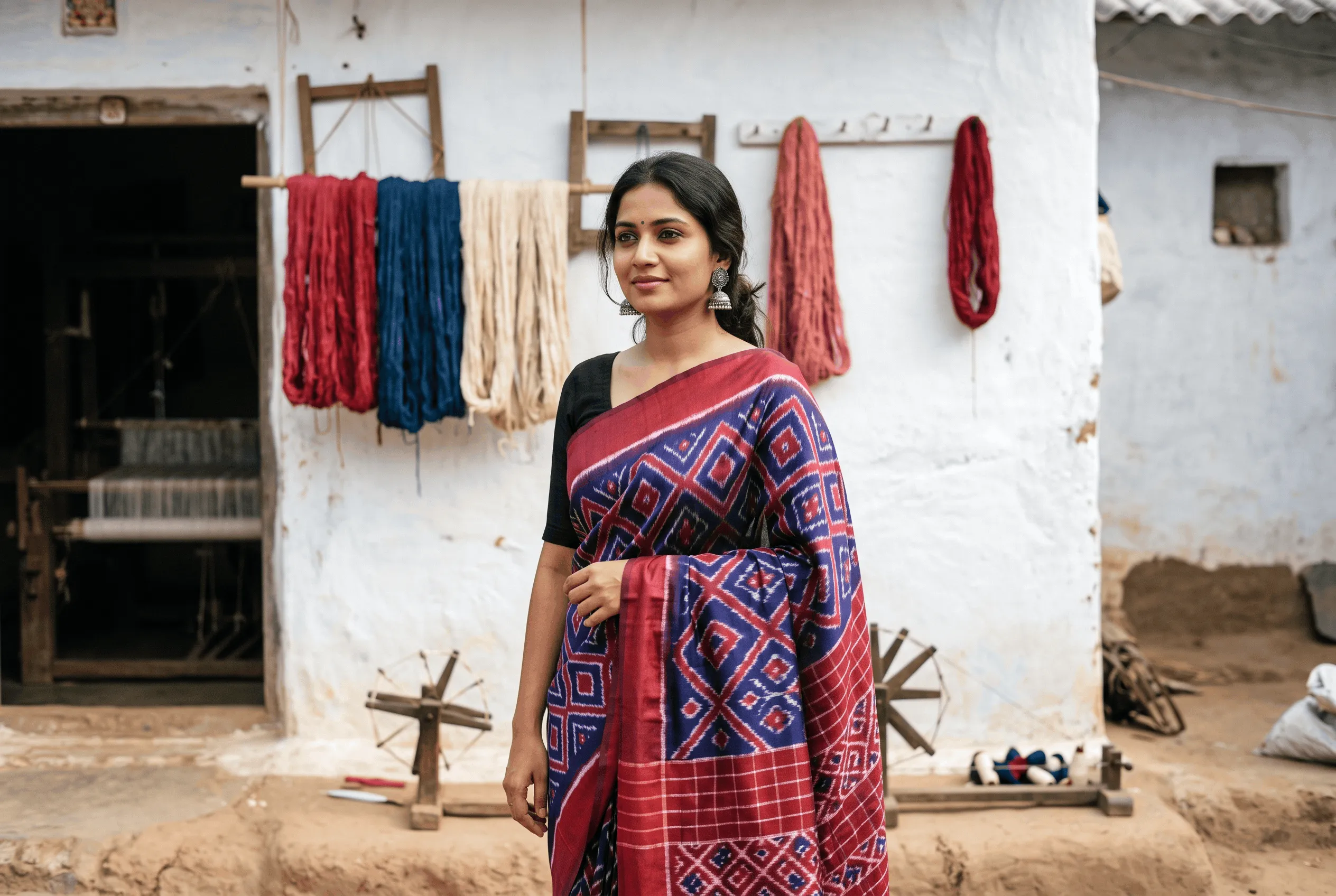
Bold diamonds, zigzags, chevrons and parrots, softly blurred at the edges and repeated in perfect rhythm: this is Pochampally ikat, one of India's most loved handloom weaves.
Woven in and around Pochampally in Telangana, these sarees, dupattas and fabrics are known for their geometric patterns created by tie-dyeing the yarn before it is woven. The result is a design that lives inside the fabric rather than on its surface.
Pochampally ikat is GI-protected, and the village itself has been recognised internationally for its weaving heritage.
This guide explains how Pochampally ikat is made, the difference between single and double ikat, popular patterns and fabrics, how to identify genuine handloom ikat and how to style it for everyday, office and festive wear.
What Is Ikat?
Ikat is a resist-dyeing technique in which threads are tied and dyed before weaving.
The tied sections resist the dye. When the dyed threads are woven, the pattern appears in the fabric.
Because the threads shift slightly on the loom, ikat patterns have soft, "feathered" edges, which is part of their charm.
Single Ikat vs Double Ikat
Single ikat: only the warp or only the weft is tie-dyed.
Double ikat: both the warp and the weft are tie-dyed and must align on the loom.
Pochampally weavers produce both. Double ikat is more complex and expensive. Gujarat's Patan Patola is another famous double ikat; read our Patola ikat guide to compare.
How Pochampally Ikat Is Made
1. Designing
The pattern is planned on graph paper, and weavers calculate which sections of each thread need which colour.
2. Preparing the yarn
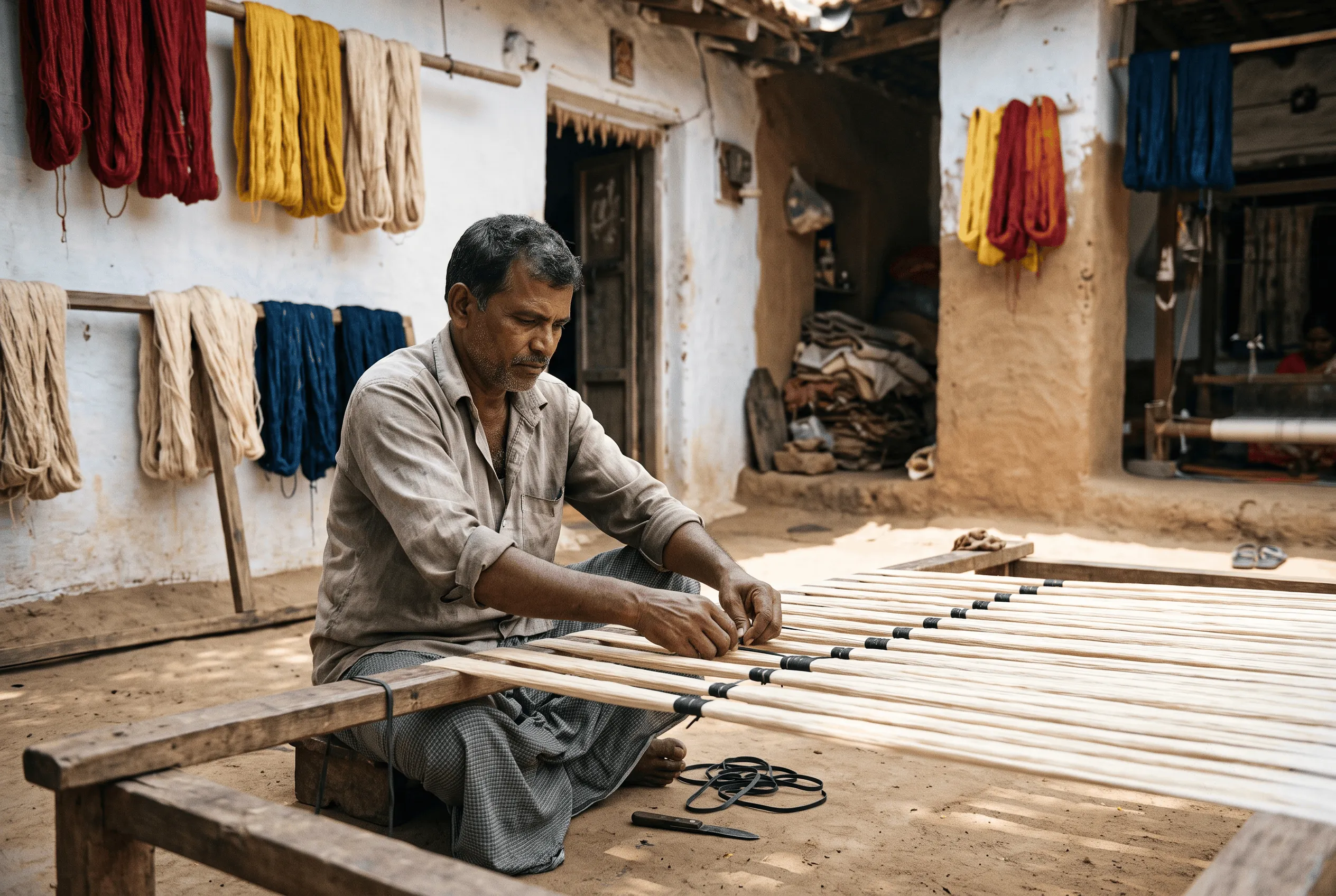
Silk or cotton yarn is wound and arranged in bundles on a frame.
3. Tying
Sections of the yarn are tied tightly with rubber strips or thread to resist the dye.
4. Dyeing
The yarn is dyed, then retied and dyed again for additional colours.
5. Weaving
The dyed threads are set up on the loom, and the weaver carefully aligns them so the pattern forms correctly.
A Pochampally saree can take from several days to a few weeks, depending on the complexity.
A Short History
Ikat weaving in the Pochampally region has a long history, with links to the older telia rumal tradition of oil-treated ikat cloth.
In the twentieth century, Pochampally weavers developed their own distinctive style of bold geometric ikat in silk and cotton, and the craft grew into an important handloom cluster supporting many villages.
Pochampally ikat received a Geographical Indication in the early 2000s, and Pochampally village was later recognised by the UN World Tourism Organization as one of the best tourism villages.
Popular Pochampally Patterns
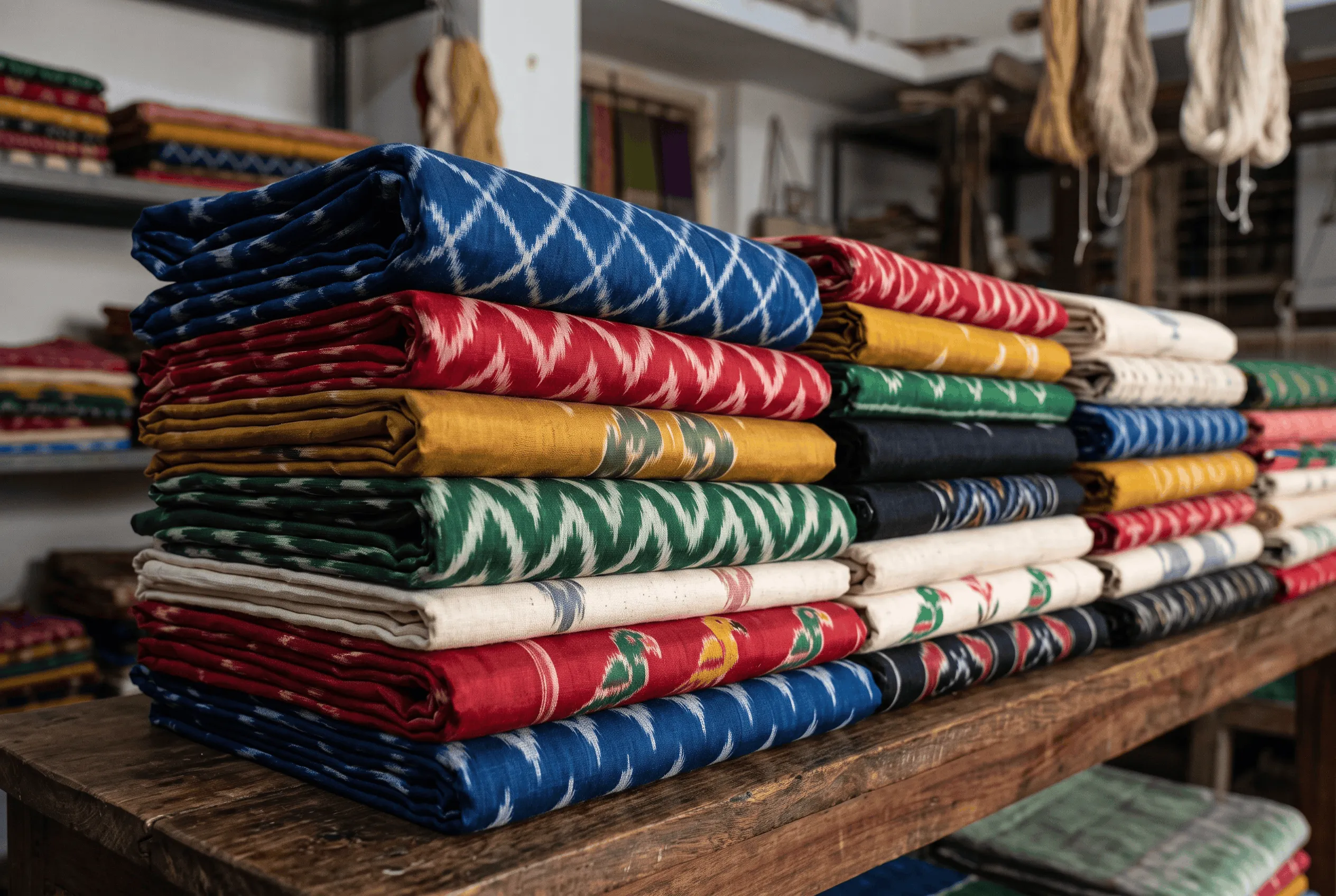
Diamonds and squares: the most classic Pochampally designs.
Zigzags and chevrons: bold and modern.
Parrots, elephants and flowers: traditional figurative motifs.
Checks and stripes combined with ikat: for everyday sarees.
Telia rumal-inspired grids: for heritage designs.
Fabrics
Pure silk: for weddings and festivals.
Silk-cotton (sico): a light, comfortable mix for office and festive wear.
Cotton: breathable and perfect for daily wear and summer.
Dupattas, dress materials and home textiles are also made in Pochampally ikat.
When to Wear Pochampally Ikat
Office wear: cotton or silk-cotton ikat sarees with collared or boat-neck blouses.
Festivals: silk ikat sarees with silver or temple jewellery.
Weddings as a guest: bright silk ikat in red, magenta or green.
College events and farewells: colourful cotton ikat. See our farewell saree ideas.
Everyday wear: cotton ikat kurtas and dupattas.
Styling Pochampally Ikat
Blouses
Plain contrast blouses: black, white, red or mustard let the pattern stand out.
Ikat blouses with plain sarees: a modern way to wear ikat.
Collared and high-neck blouses: smart for office.
Kalamkari blouses: an artistic mix of two Telugu crafts.
Jewellery
Oxidised silver: for casual and office looks.
Temple jewellery: for festive and wedding looks.
Terracotta and beaded jewellery: for an artistic touch.
Drapes
Nivi drape: classic and easy. See our Nivi drape tutorial.
Pleated pallu: neat for office.
Open pallu: shows off the ikat pattern for festive events.
Pochampally Ikat for Men
Ikat kurtas, shirts, Nehru jackets and stoles are popular for festive and casual menswear.
How to Identify Genuine Pochampally Ikat
Feathered edges: genuine ikat patterns have slightly blurred edges.
Both sides: the pattern is visible on both sides of the fabric.
Small irregularities: a sign of handwork.
Printed copies: sharp edges, faded reverse and very low prices.
GI and handloom labels: ask for origin details and handloom marks.
See our authentic handloom red flags and handloom vs powerloom guide.
Price Guide
These are indicative 2026 ranges.
| Pochampally type | Indicative price range |
|---|---|
| Cotton ikat saree | ₹2,000 – ₹6,000 |
| Silk-cotton ikat saree | ₹4,000 – ₹10,000 |
| Pure silk single ikat saree | ₹8,000 – ₹25,000 |
| Pure silk double ikat saree | ₹15,000 – ₹50,000+ |
Caring for Pochampally Ikat
Silk: dry-clean and store in muslin.
Cotton and silk-cotton: hand wash separately in cold water for the first few washes; dry in shade.
Iron on the reverse at a suitable temperature.
Avoid direct sunlight for long periods to protect the colours.
See our silk saree care guide.
Supporting Pochampally Weavers
Pochampally ikat supports thousands of weaving families in Telangana.
Buying genuine handloom ikat from cooperatives, trusted brands and weaver-led initiatives helps sustain the craft. Our guide to sustainable handloom fashion explains why this matters.
Pochampally vs Other Indian Ikats
India has several famous ikat traditions, and each has its own character.
Pochampally (Telangana): bold geometric patterns in silk, silk-cotton and cotton, in both single and double ikat.
Sambalpuri (Odisha): known as bandha, with fine, curved motifs such as conch shells, wheels and flowers, often with a more painterly look.
Patan Patola (Gujarat): the rarest double ikat, with identical patterns on both sides and very long weaving times. See our Patola ikat guide.
Telia rumal (Telangana and Andhra Pradesh): an older oil-treated ikat tradition with grid patterns, now made in small quantities.
If you love crisp geometry and versatile everyday wear, Pochampally is the easiest ikat to start with. If you prefer flowing motifs, Sambalpuri may suit you more. Our East India weaves guide covers Sambalpuri in more detail.
Choosing Colours
Classic combinations: red with black, indigo with white and mustard with maroon show off the geometry beautifully.
Earthy tones: rust, olive and brown look elegant for office wear.
Jewel tones: magenta, emerald and royal blue are ideal for weddings and festivals.
Pastels: newer pastel ikats in mint, peach and lilac suit day events and younger wearers.
Contrast between the pattern colours makes the ikat stand out; tone-on-tone ikat looks more subtle.
Ikat for Different Body Types
Petite: smaller patterns and narrow borders keep the look balanced.
Tall: large diamonds and wide borders look striking.
Curvy: choose silk-cotton or silk, which drape more softly than crisp cotton, and medium-sized patterns.
Slim: crisp cotton ikat adds structure and volume.
Vertical stripes combined with ikat can also create a lengthening effect.
Visiting Pochampally
Pochampally is around 50 km from Hyderabad, and many visitors go to see the weaving process in person.
You can watch yarn being tied and dyed, see weavers at their looms and buy directly from weavers and cooperatives.
Buying at the source is a good way to understand the craft, but still check labels, ask questions and compare prices before purchasing.
Pochampally Ikat for Gifting
Pochampally ikat makes a thoughtful gift.
Silk ikat sarees are lovely wedding and festival gifts.
Cotton ikat sarees and dupattas are practical gifts for colleagues and friends.
Ikat stoles and scarves work for men and women.
Ikat cushion covers and table linen are good housewarming gifts.
Five Easy Office Looks With Ikat
1. Cotton ikat saree with a white collared blouse and small silver studs: crisp and professional.
2. Silk-cotton ikat saree with a black boat-neck blouse and a slim watch: smart for presentations.
3. Ikat kurta with straight pants and a plain dupatta: comfortable for long days.
4. Plain kurta with an ikat dupatta: a subtle way to add pattern.
5. Ikat jacket over a solid saree or dress: modern and polished.
Choose muted colours and smaller patterns for formal offices, and save bold, large patterns for creative workplaces and celebrations.
Common Mistakes
Pairing ikat with a busy printed blouse: the patterns compete; choose a plain blouse instead.
Washing new ikat with other clothes: colours can bleed in the first few washes.
Paying handloom prices for printed ikat: always check the edges of the pattern and the reverse side.
Over-starching cotton ikat: it can become stiff and crease sharply.
Pochampally for Weddings
A bright silk Pochampally in red, magenta, emerald or royal blue is a refreshing choice for weddings, especially for guests who want something different from Kanjivaram or Banarasi.
Pair it with a contrast silk blouse, temple or kundan jewellery and an open pallu to show off the pattern. Double ikat silk Pochampallys with zari borders also work well for the bride's family at sangeet and reception events.
Building an Ikat Wardrobe
One cotton ikat saree for office.
One silk-cotton ikat for festivals.
One silk ikat for weddings.
An ikat dupatta to brighten plain kurtas.
Wearing Ikat With Confidence
Pochampally ikat brings bold geometry and handcrafted warmth to any wardrobe.
Choose cotton for everyday comfort, silk-cotton for office and festivals, and pure silk for weddings. Look for feathered edges and patterns on both sides to identify genuine handloom, and care for it gently.
Explore more in our guide to South Indian silk: Kanjeevaram, Kasavu and Pochampally, our types of Indian sarees guide and on our South India page.
Comments (0)
Leave a Thought
No comments yet. Be the first to share your thoughts!