Fashion is often discussed in terms of trends, colours and silhouettes, but the story of a garment begins much earlier. It begins with the fibre, the loom, the artisan, the dyeing process and the amount of time invested in making the fabric.
This is where sustainable handloom fashion becomes important.
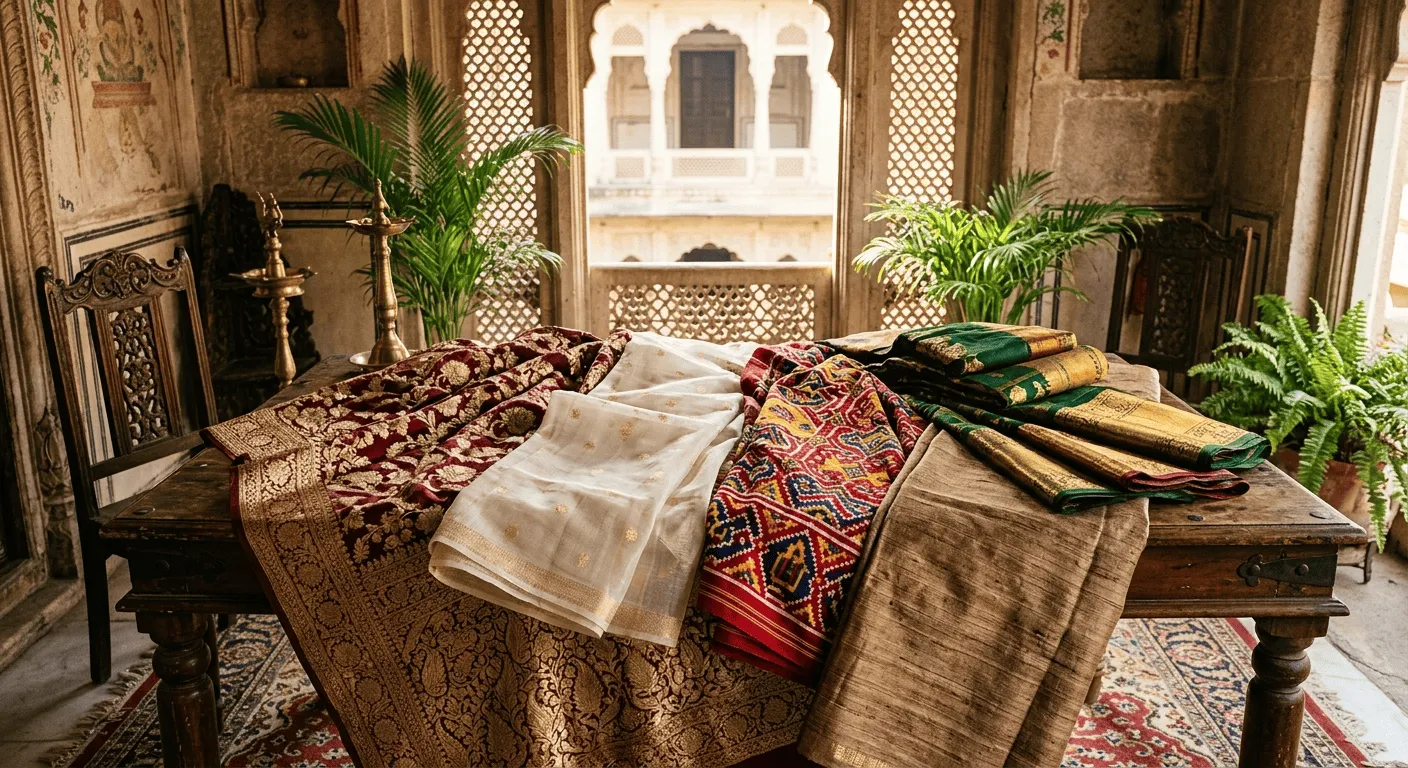
Handloom textiles are woven manually on looms operated by skilled artisans. They are closely connected with India's regional textile traditions, from Chanderi and Maheshwari in Madhya Pradesh to Banarasi weaving in Uttar Pradesh, Kanjivaram in Tamil Nadu and numerous cotton, silk and wool traditions across the country.
But sustainability in handloom fashion is not simply about buying something labelled “handmade.”
A truly thoughtful approach considers how the fibre was produced, how the textile was dyed, whether the artisan was fairly compensated, how durable the garment is and how often it will actually be worn.
Handloom fashion matters because it offers an opportunity to rethink our relationship with clothing—not as disposable products, but as objects of craftsmanship, culture and long-term use.
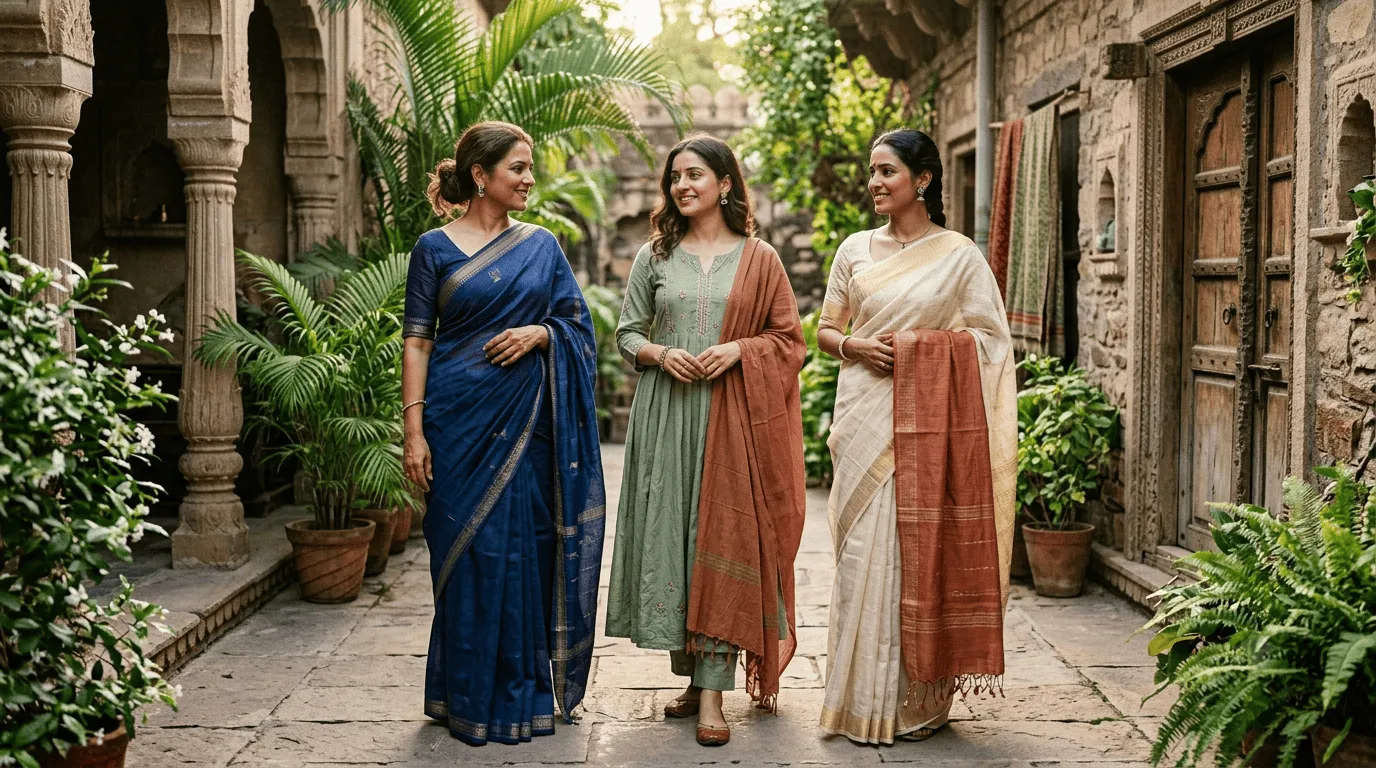
What Is Sustainable Handloom Fashion?
Sustainable handloom fashion brings together traditional handweaving and more responsible ways of producing, purchasing and using clothing.
The weaving stage of handloom production relies primarily on human skill rather than continuously powered industrial machinery.
This can reduce energy use during weaving, but that alone does not make every handloom garment sustainable.
A garment's complete environmental and social impact also depends on:
- the fibre used,
- cultivation or raw-material sourcing,
- dyeing,
- finishing,
- transport,
- artisan wages,
- garment construction,
- durability,
- and eventual disposal.
For example, a handwoven cotton saree may require relatively little electricity during weaving, but poorly managed chemical dyeing can still create environmental problems.
Similarly, a handmade garment cannot truly be considered ethical if the artisan producing it receives unfair compensation.
Sustainable handloom fashion therefore works best when craftsmanship, environmental responsibility and social fairness come together.
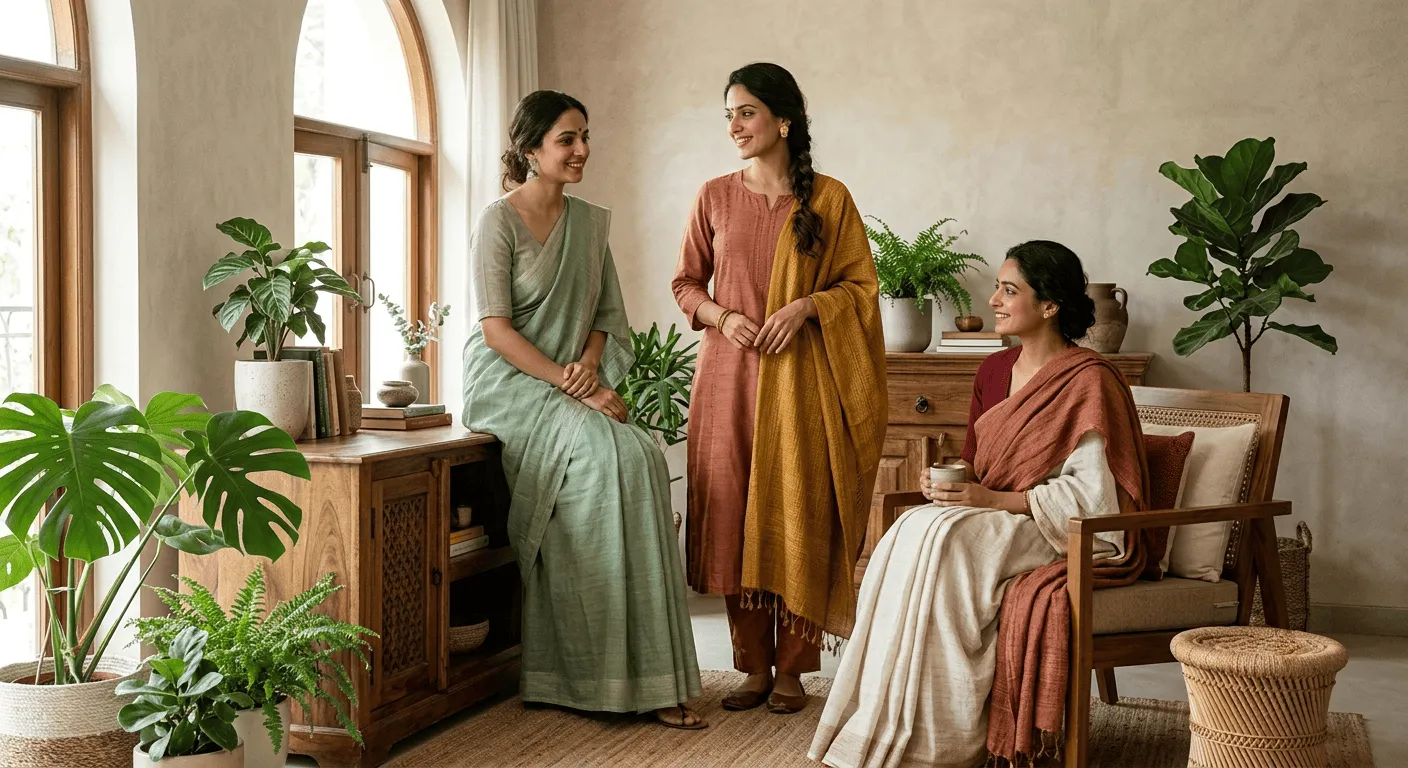
Handloom Fashion Encourages Slower Consumption
One of the biggest differences between handloom and fast-moving fashion is the relationship with time.
Handwoven fabric takes time to produce.
The weaver must prepare the yarn, arrange the loom, maintain thread tension and gradually build the cloth through repeated movement.
Complex motifs, borders and colour changes can make the process even slower.
That time gives the textile a different value.
Instead of treating clothing as something to wear a few times before replacing it, handloom encourages the idea of purchasing fewer, better garments and wearing them repeatedly.
A Banarasi saree can appear at weddings for decades.
A cotton handloom kurta can become a dependable everyday piece.
A carefully woven dupatta can move between several outfits without feeling outdated.
Sustainability is not only about how something was made. It is also about how long it remains useful.
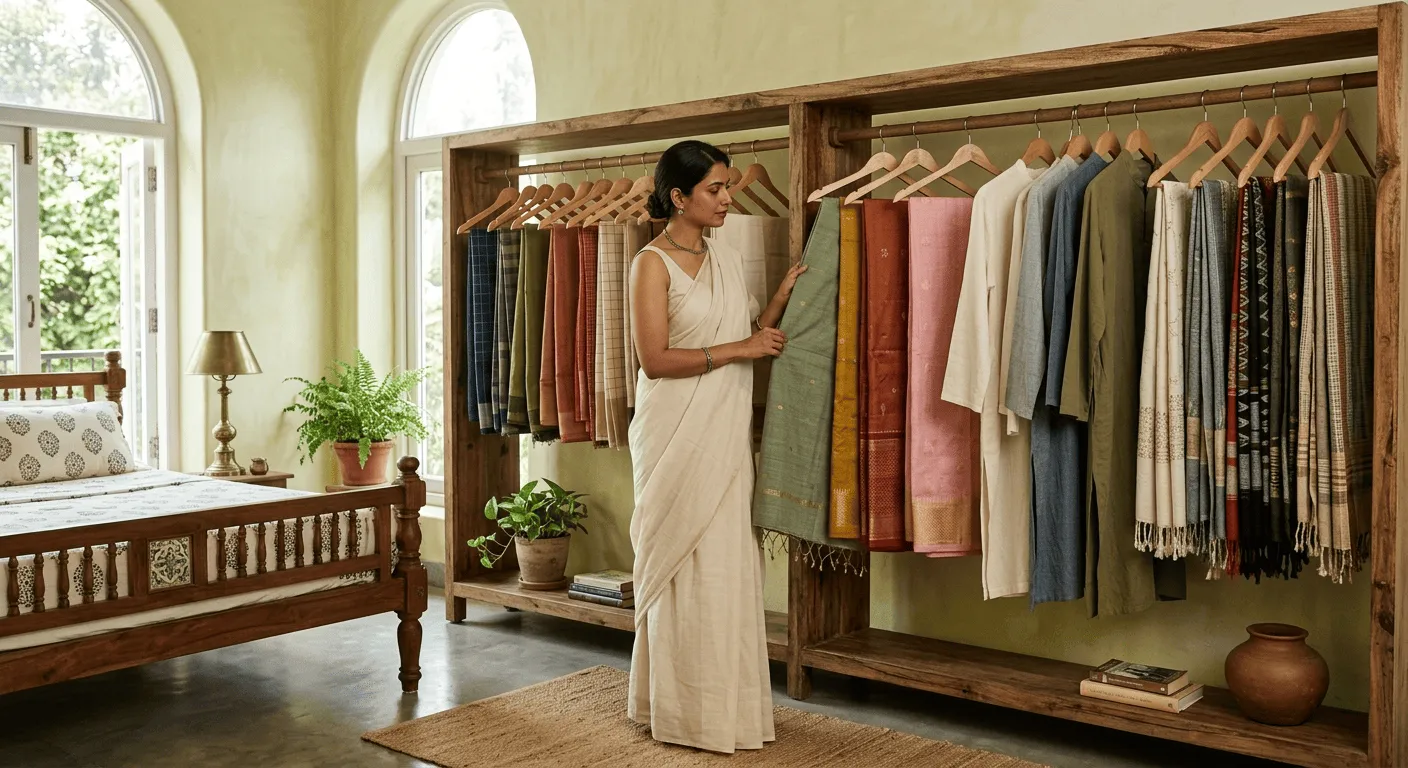
Supporting Artisan Livelihoods
Behind every handwoven textile is a person with highly specialized skills.
Weaving is rarely learned overnight. In many communities, techniques are passed from one generation to the next through observation, apprenticeship and years of practical experience.
The artisan must understand:
- yarn behaviour,
- loom tension,
- colour arrangement,
- border construction,
- motif placement,
- and finishing.
When buyers choose responsibly sourced handloom textiles, they can help sustain demand for these skills.
However, it is important not to romanticize the craft without considering the economic reality of the weaver.
A high retail price does not automatically mean the artisan received fair payment.
Supply chains can include traders, wholesalers, designers and retailers, and the share reaching the original weaver may vary significantly.
That is why transparent sourcing matters.
Brands, cooperatives and sellers that clearly explain where their textiles are woven and how artisan partnerships work can make it easier for buyers to make informed choices.
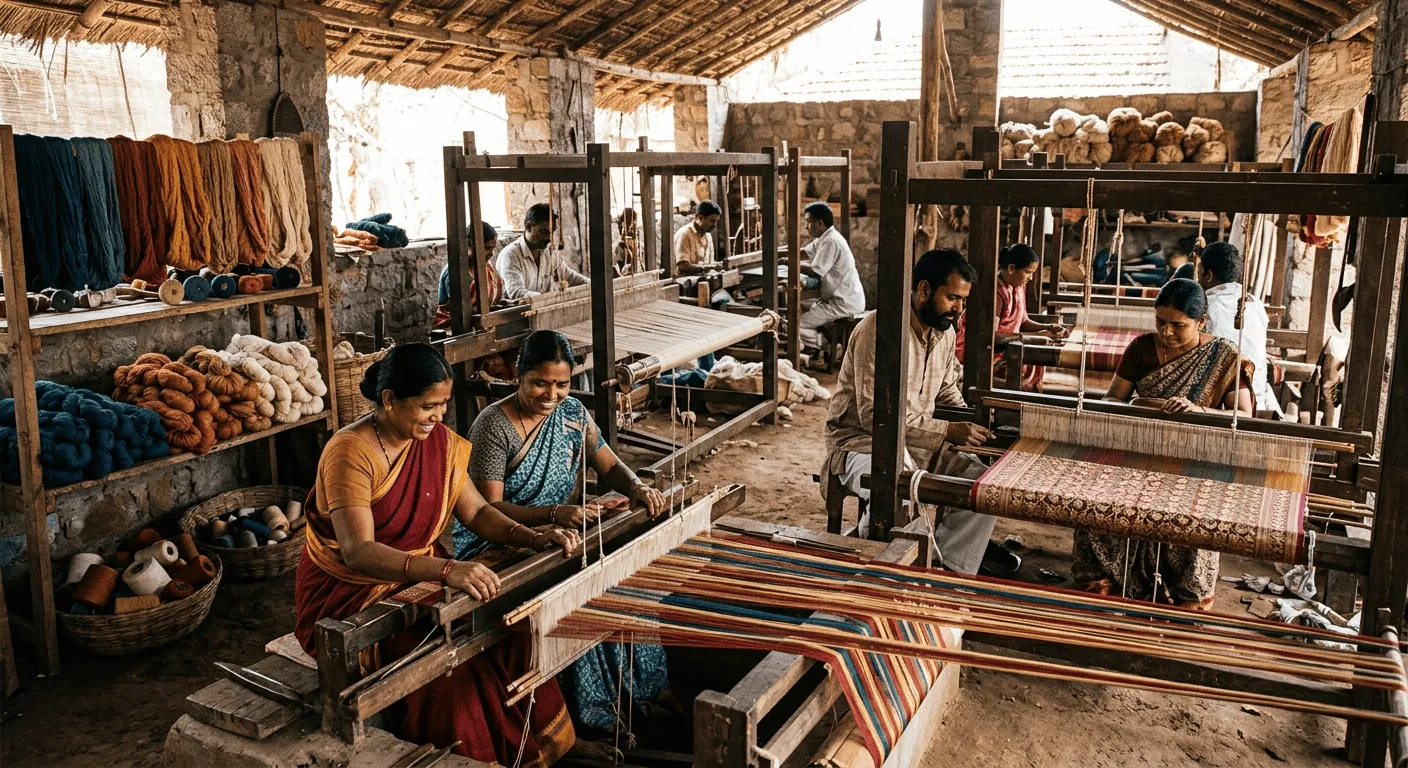
Preserving Regional Textile Traditions
India's handloom heritage is not one single style of weaving.
Each region has developed textiles shaped by local culture, climate, materials and history.
Banarasi weaving is known for elaborate brocades and zari.
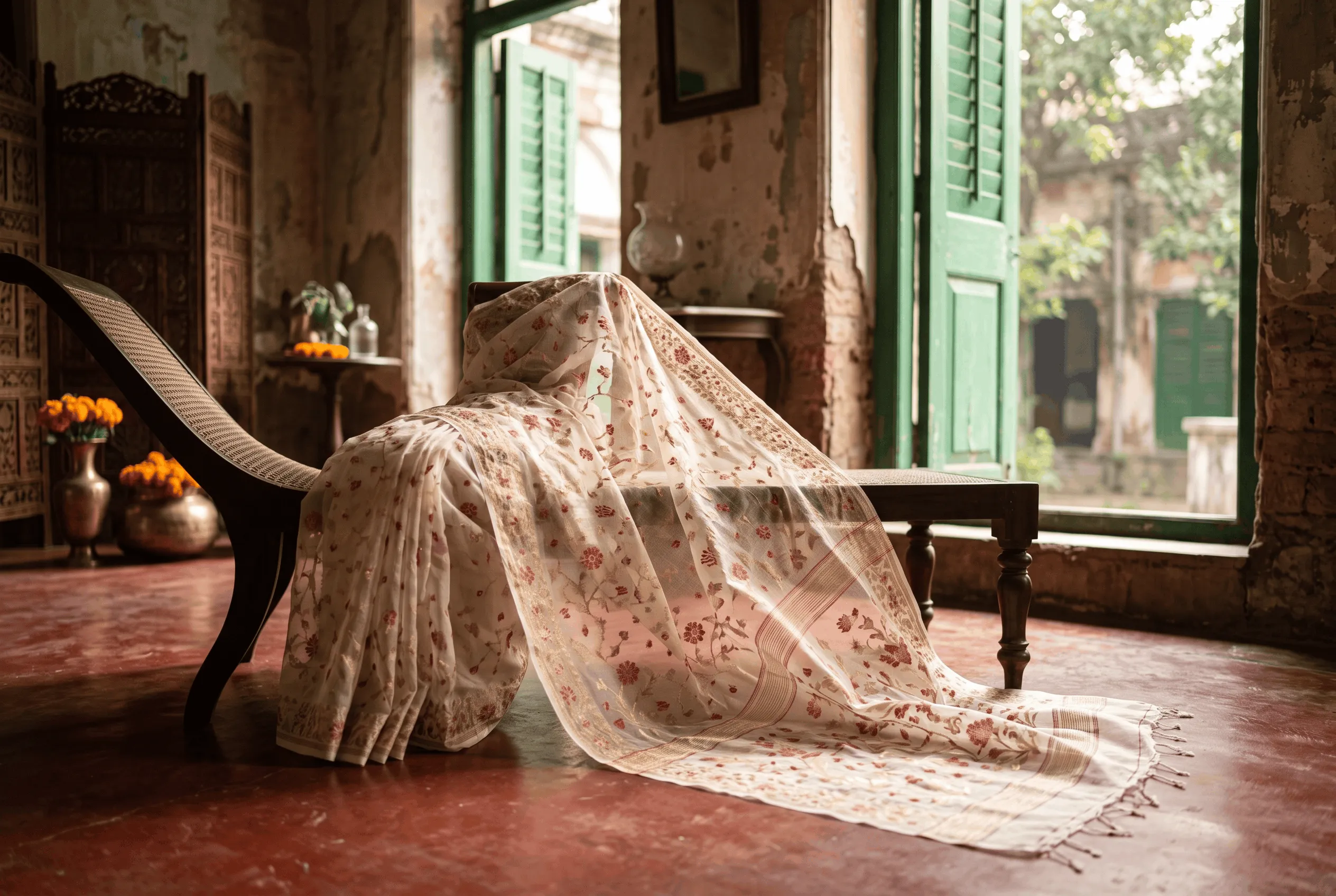
Chanderi is admired for its lightweight, translucent character.
Kanjivaram silk is recognized for bold borders and rich ceremonial presence.
Maheshwari combines distinctive borders, stripes and checks with elegant silk-cotton construction.
Patola uses highly complex resist-dyed yarns to build patterns into the fabric.
Tussar silk reflects another textile identity altogether, with its textured surface and naturally warm appearance.
When these textiles disappear from daily wardrobes, the skills behind them are also placed at risk.
Buying authentic handloom can therefore contribute to the continuation of regional design languages, weaving techniques and artisan knowledge.
But preservation does not mean keeping traditional textiles frozen in the past.
Handloom survives best when it can adapt.
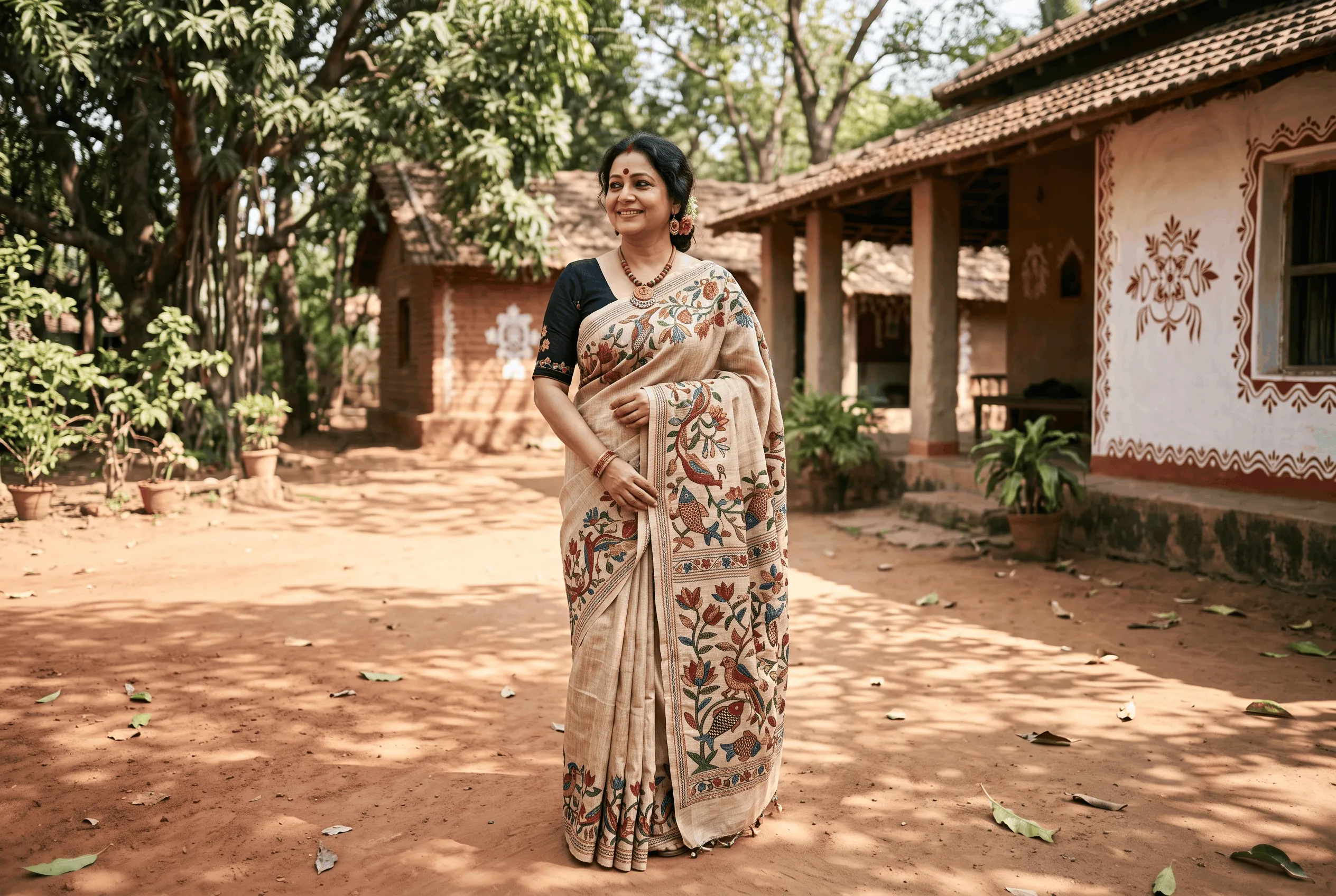
A traditional textile can become a saree, jacket, kurta, blouse, lehenga, dress or contemporary accessory without losing the value of its weaving.
The Environmental Value of Manual Weaving
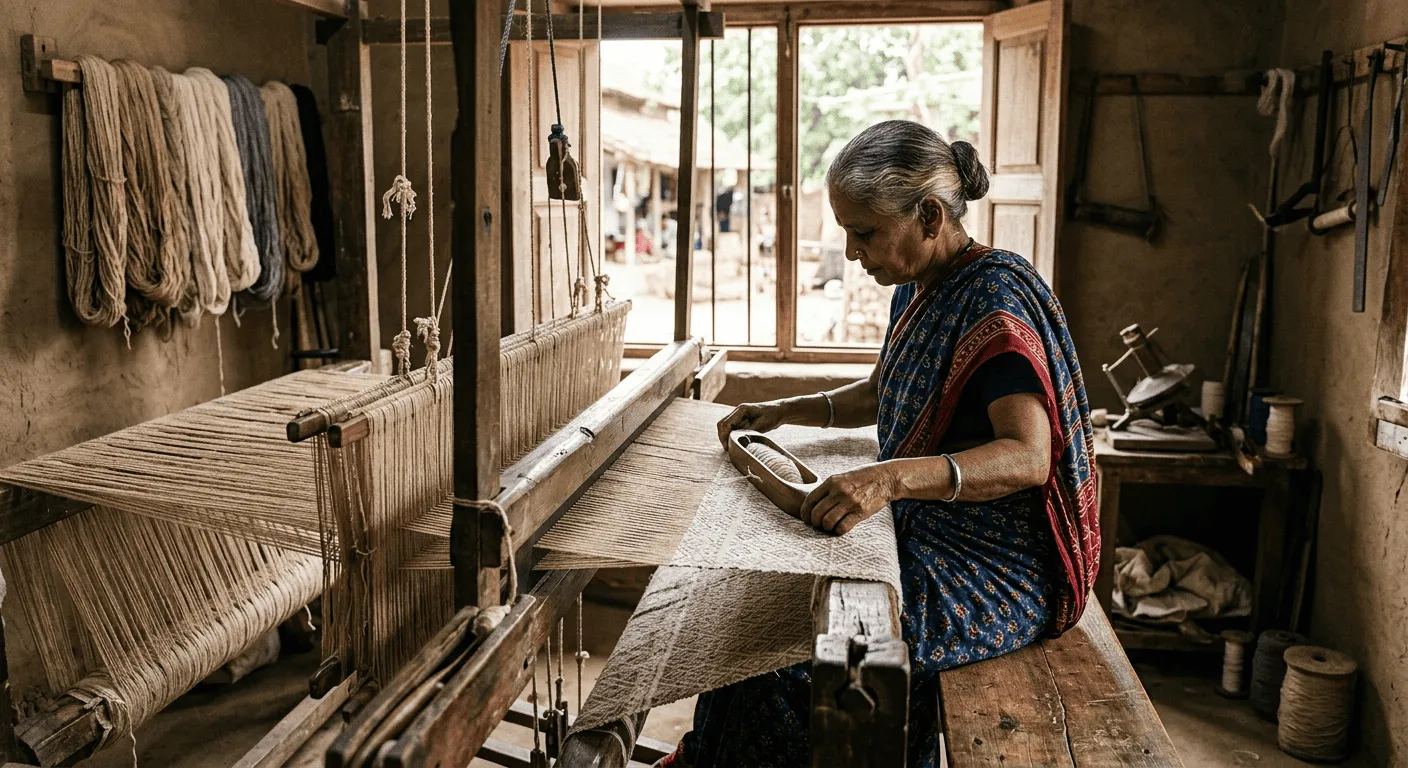
Traditional handloom weaving requires little or no electricity at the loom itself.
The weaver's physical movement operates the mechanism that lifts, separates and interlaces the yarns.
Compared with large motorized looms, this can make the weaving stage less energy intensive.
However, sustainability should always be considered across the entire textile lifecycle.
Fibre cultivation can require land and water.
Silk production has its own resource requirements.
Dyes and finishing agents may affect water systems if they are not managed responsibly.
Transportation and packaging also contribute to environmental impact.
So the most responsible way to describe handloom is not to say that it is automatically “zero impact.”
Its strength lies in the possibility of combining low-energy weaving with durable materials, responsible dyeing and long product life.
Natural Fibres: Useful, but Not Automatically Sustainable
Handloom textiles are often associated with natural fibres such as cotton, silk, wool and linen.
These fibres can offer excellent comfort and beautiful textile characteristics.
Cotton is breathable and versatile.
Silk offers strength, lustre and elegant drape.
Linen creates a crisp, breathable surface.
Wool provides insulation and longevity.
But “natural” should not automatically be treated as another word for sustainable.
Cotton cultivation can use considerable water depending on how and where it is grown.
Silk production involves complex agricultural and processing systems.
Even natural fibres can require intensive dyeing and finishing.
A more useful question is: how was the material sourced and processed?
Look for brands that provide specific information rather than relying only on vague terms such as “green,” “organic-inspired” or “eco.”
Natural Dyes and Responsible Colour
Colour is central to Indian textiles.
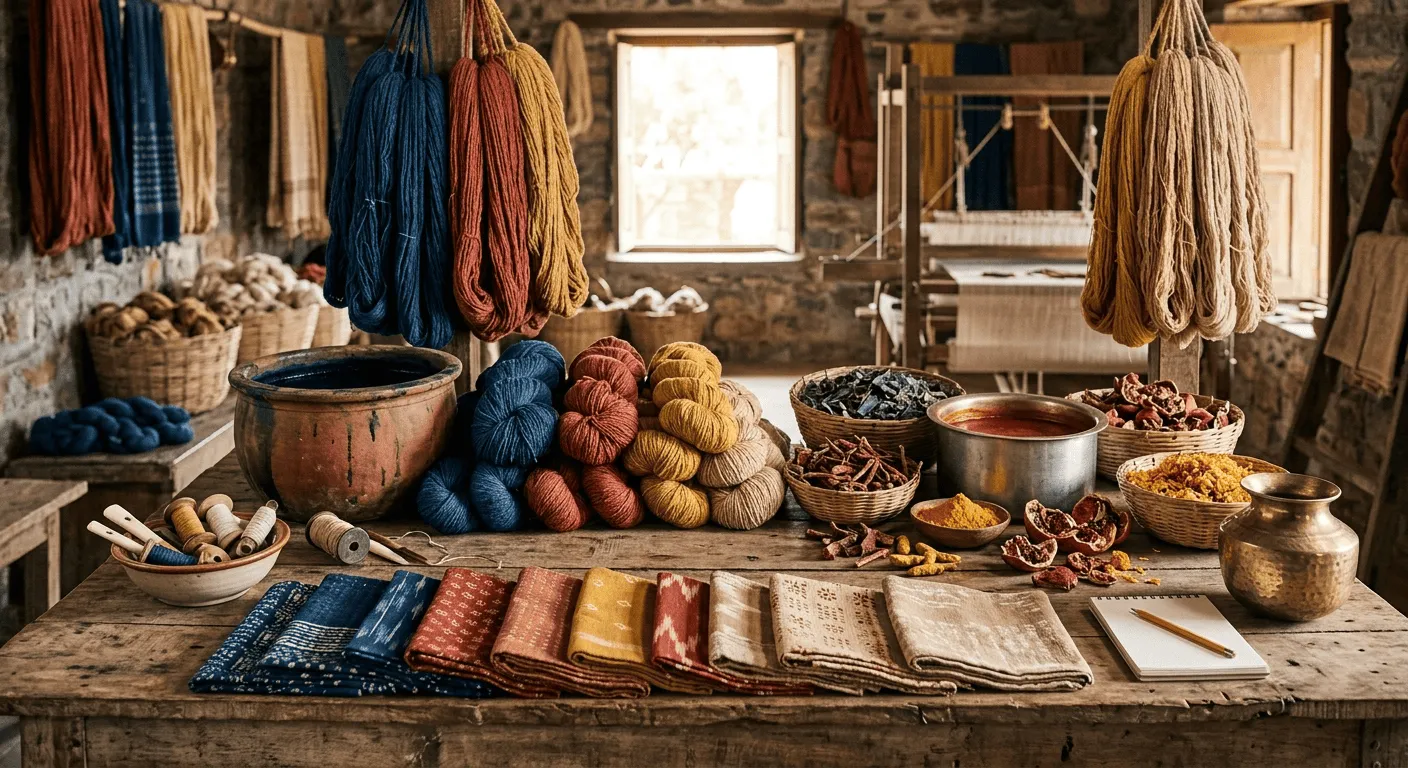
Indigo blue, turmeric-like yellows, madder-inspired reds and earthy browns are often associated with traditional dyeing practices.
Natural dyes can create beautiful, nuanced colours, but they are not automatically harmless.
Some dye processes require mordants to help colour attach to the fibre, and both natural and synthetic dyeing use water.
Responsible dyeing therefore depends on:
- safe ingredients,
- controlled chemical use,
- appropriate water management,
- careful washing,
- and responsible disposal.
Well-managed synthetic dyeing may sometimes be more responsible than poorly managed natural dyeing.
The most useful thing a buyer can look for is transparency.
Handloom Fashion Can Be Surprisingly Versatile
Sustainable fashion does not have to look rustic, traditional or old-fashioned.
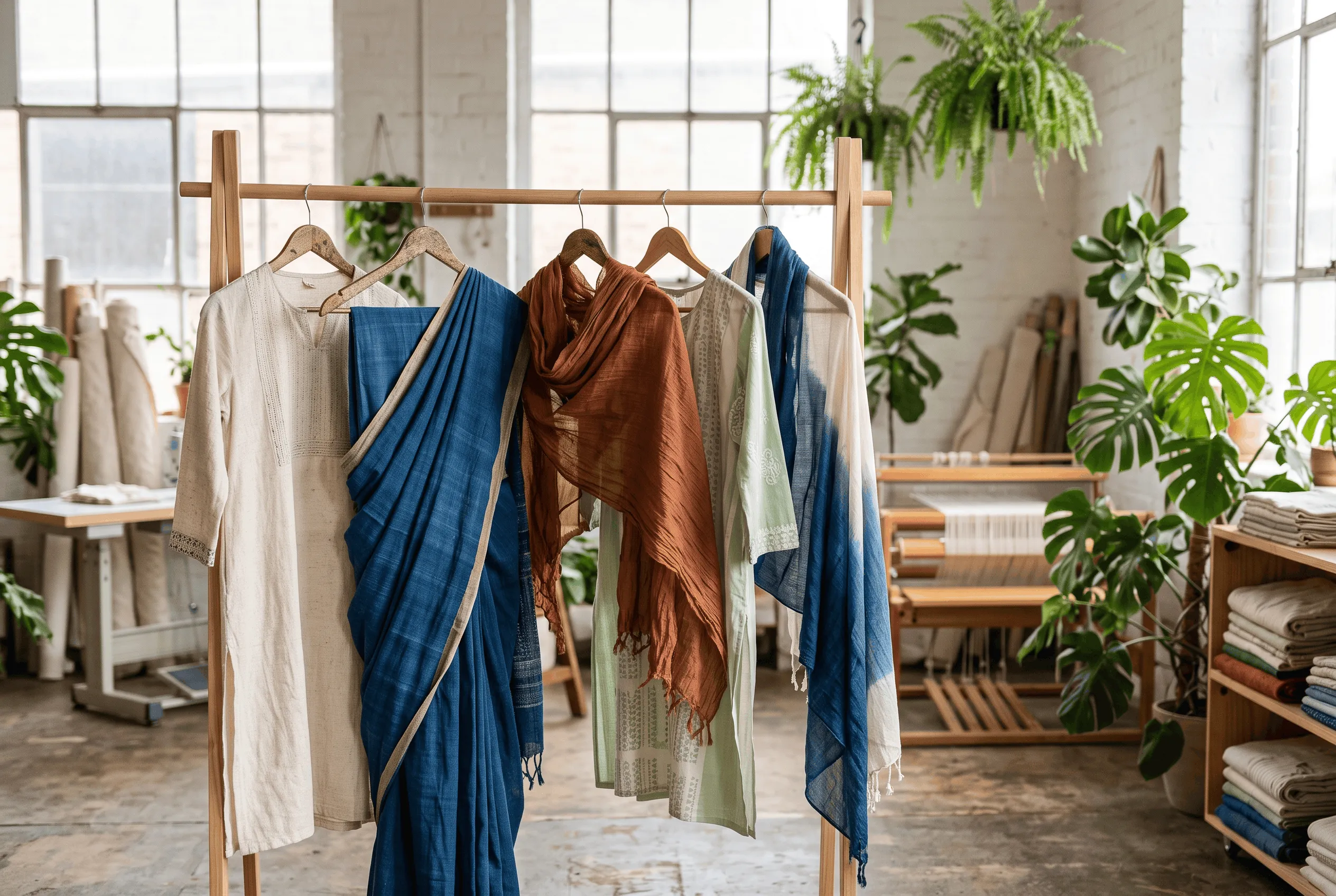
Handloom textiles can be adapted into modern wardrobes without losing their identity.
A Chanderi saree can be paired with a structured blouse.
A handwoven cotton saree can be styled with silver jewellery and a contemporary crop blouse.
A Banarasi textile can become a festive jacket or lehenga.
Silk-cotton fabrics can be used in coordinated sets suitable for weddings, work or evening occasions.
The strength of handloom lies in the fabric itself.
A thoughtful garment does not need excessive decoration when the weave already carries texture and character.
This versatility also improves sustainability because garments that can move between occasions are more likely to be worn often.

Why Durability Matters More Than Trends
Sustainability is closely connected with durability.
A garment that lasts for fifteen years can offer more value than one replaced after a few wears.
Handloom textiles can be highly durable when woven well and cared for correctly.
Traditional sarees are particularly good examples.
A silk saree can be:
- reworn with different blouses,
- draped differently,
- altered,
- passed down,
- or converted into another garment if the fabric remains strong.
The same logic applies to kurtas, dupattas and jackets.
Before buying, consider whether the colour, fabric and silhouette are likely to remain useful beyond the current season.
A thoughtful wardrobe does not need to avoid trends entirely. It simply avoids making trends the only reason to purchase.
How to Buy Handloom More Responsibly
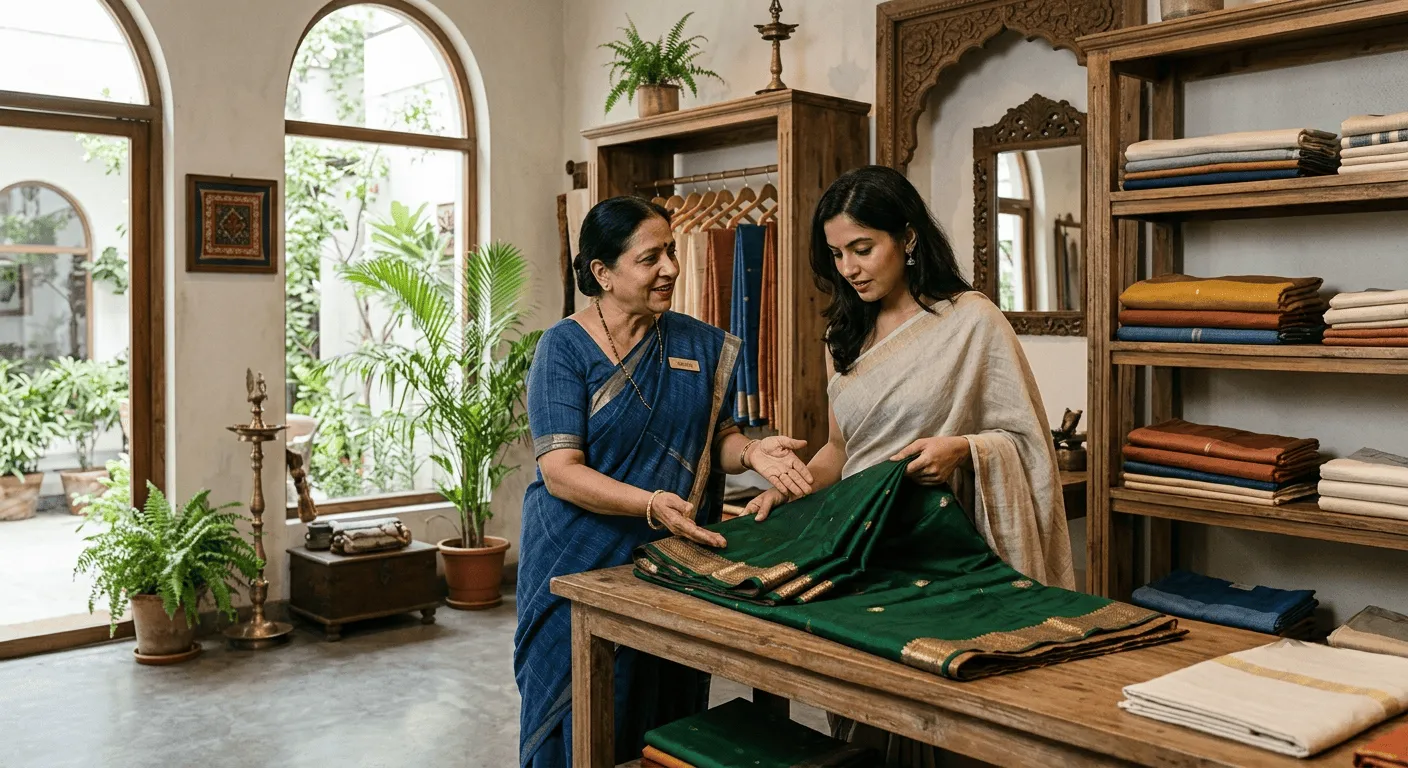
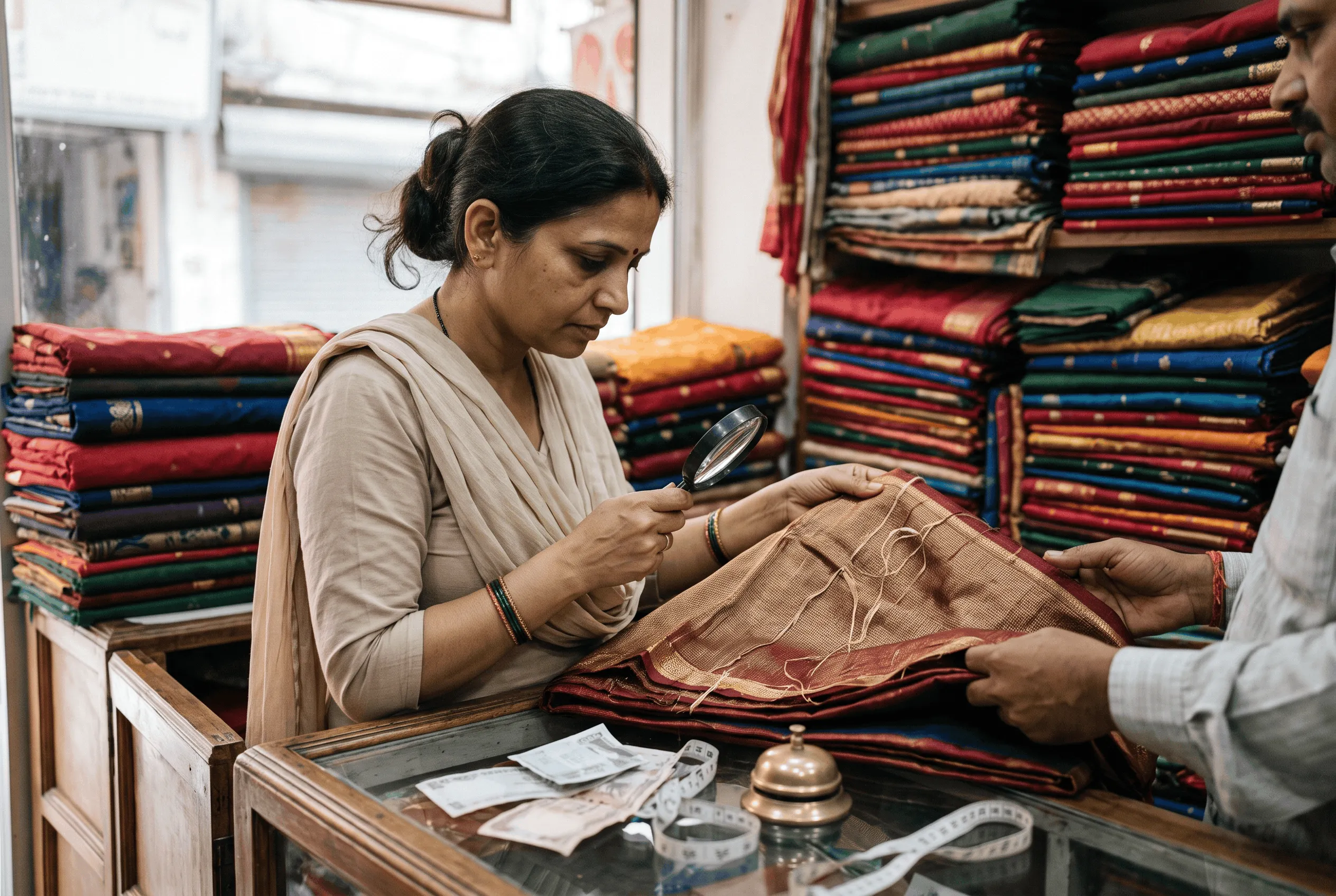
Buying responsible handloom starts with asking better questions.
Instead of simply asking whether something is handmade, find out what the label actually means.
Ask the seller:
Is the fabric handwoven?
Where was it woven?
Which fibres were used?
Is the product pure silk, cotton, a blend or synthetic?
How was it dyed?
Is there information about the artisan or weaving community?
Does the seller provide recognized authentication where relevant?
For Indian handloom products, schemes such as Handloom Mark can provide useful additional identification. Silk Mark can help when verifying natural silk content in relevant products.
Certification should support your judgment, not replace it.
Seller transparency, fabric quality and craftsmanship still matter.
Build a Sustainable Wardrobe Before Buying More
One of the most sustainable things you can do is use what you already own.
A responsible wardrobe does not begin with replacing every garment with a “sustainable” alternative.
Start by looking at your existing sarees, kurtas, dupattas and blouses.
Ask:
Can this saree be styled with another blouse?
Can a dupatta refresh an existing kurta?
Can an old lehenga skirt be paired with a simpler top?
Can damaged clothing be repaired?
Can a saree that is no longer worn become a blouse, jacket or another garment?
Reusing an existing item usually avoids the environmental impact involved in manufacturing a new one.
Handloom textiles often make this easier because their fabrics have enough visual character to remain attractive even when restyled.
Caring for Handloom Clothing
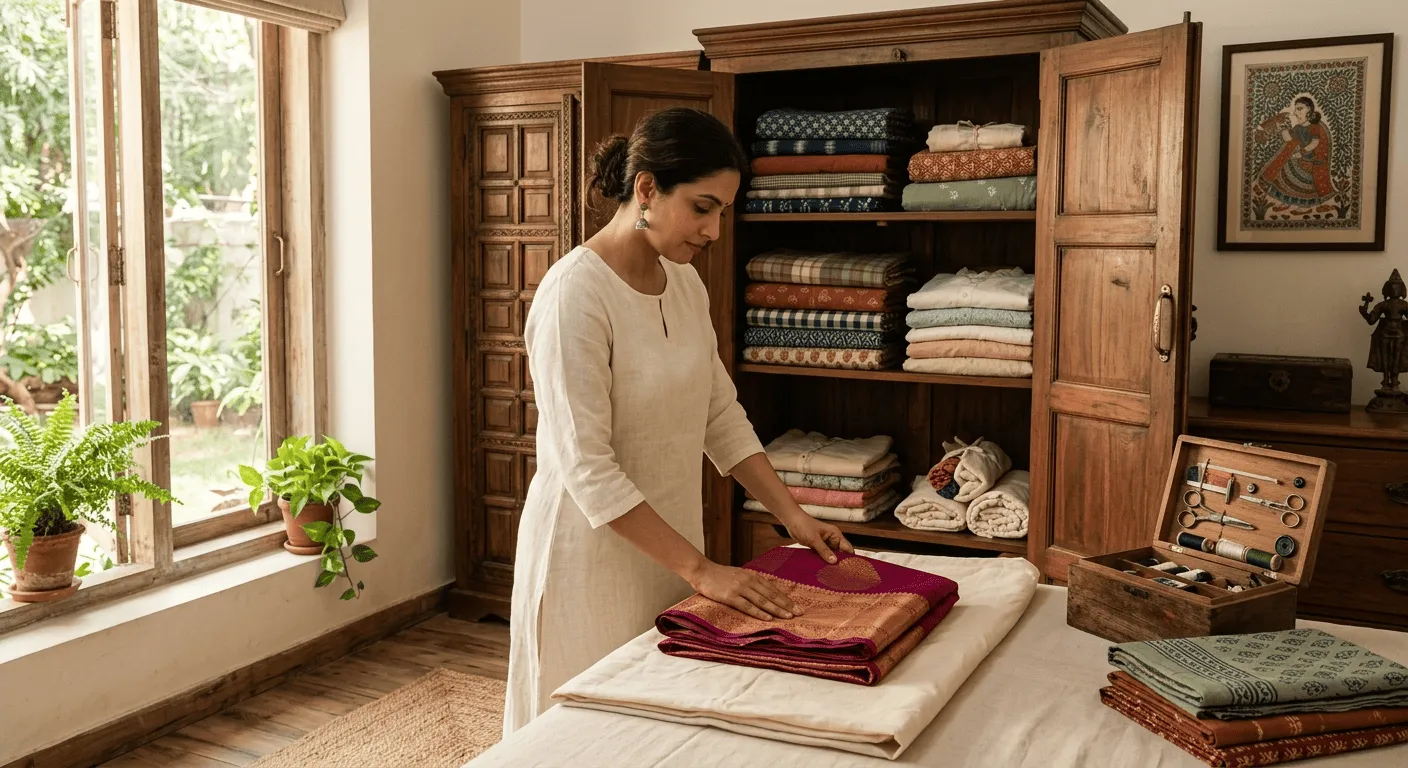
Good care extends the life of the garment and protects the work invested in making it.
Cotton handloom fabrics may be suitable for gentle washing depending on the construction and dye.
Silk, zari and delicate handwoven textiles may require professional cleaning.
Avoid harsh detergents and aggressive wringing.
Store expensive sarees folded in breathable cotton or muslin rather than sealed in plastic for very long periods.
Keep silk away from dampness and strong sunlight.
Refold sarees periodically so the same crease is not under pressure for years.
Repair small tears, loose threads and seams early.
A garment that is cared for properly is far more likely to remain wearable and eventually become an heirloom.
Common Misconceptions About Sustainable Handloom Fashion
“Everything Handwoven Is Automatically Sustainable”
Not necessarily.
Handweaving may reduce energy use during weaving, but fibre production, dyeing, transport and working conditions still need to be considered.
“Sustainable Fashion Means Buying Expensive Clothes”
Sustainability can also mean buying fewer garments, repairing existing clothing and rewearing what you already own.
“Natural Fibres Are Always Eco-Friendly”
Natural fibres have environmental impacts too. The way they are cultivated, processed and dyed matters.
“High Retail Prices Guarantee Fair Artisan Wages”
They do not.
A transparent supply chain is more useful than price alone when understanding whether artisans are fairly compensated.
“Traditional Handloom Cannot Be Modern”
Handwoven textiles can be used in contemporary sarees, jackets, dresses, co-ords, blouses and modern occasion wear.
Why Sustainable Handloom Fashion Matters for the Future
The future of handloom depends on more than nostalgia.
Young artisans need to see weaving as a skill capable of providing meaningful work.
Consumers need access to genuine information about what they are buying.
Designers need to create products that respect traditional craftsmanship while responding to modern lifestyles.
And the textile industry needs to think beyond rapid production and short garment lifecycles.
Sustainable handloom fashion sits at the meeting point of these concerns.
It can support craftsmanship, encourage slower consumption and help preserve regional textile identities.
But its future depends on honesty.
Handloom should not become simply another marketing term.
The value lies in understanding the people, materials and processes behind the cloth.
Comments (0)
Leave a Thought
No comments yet. Be the first to share your thoughts!