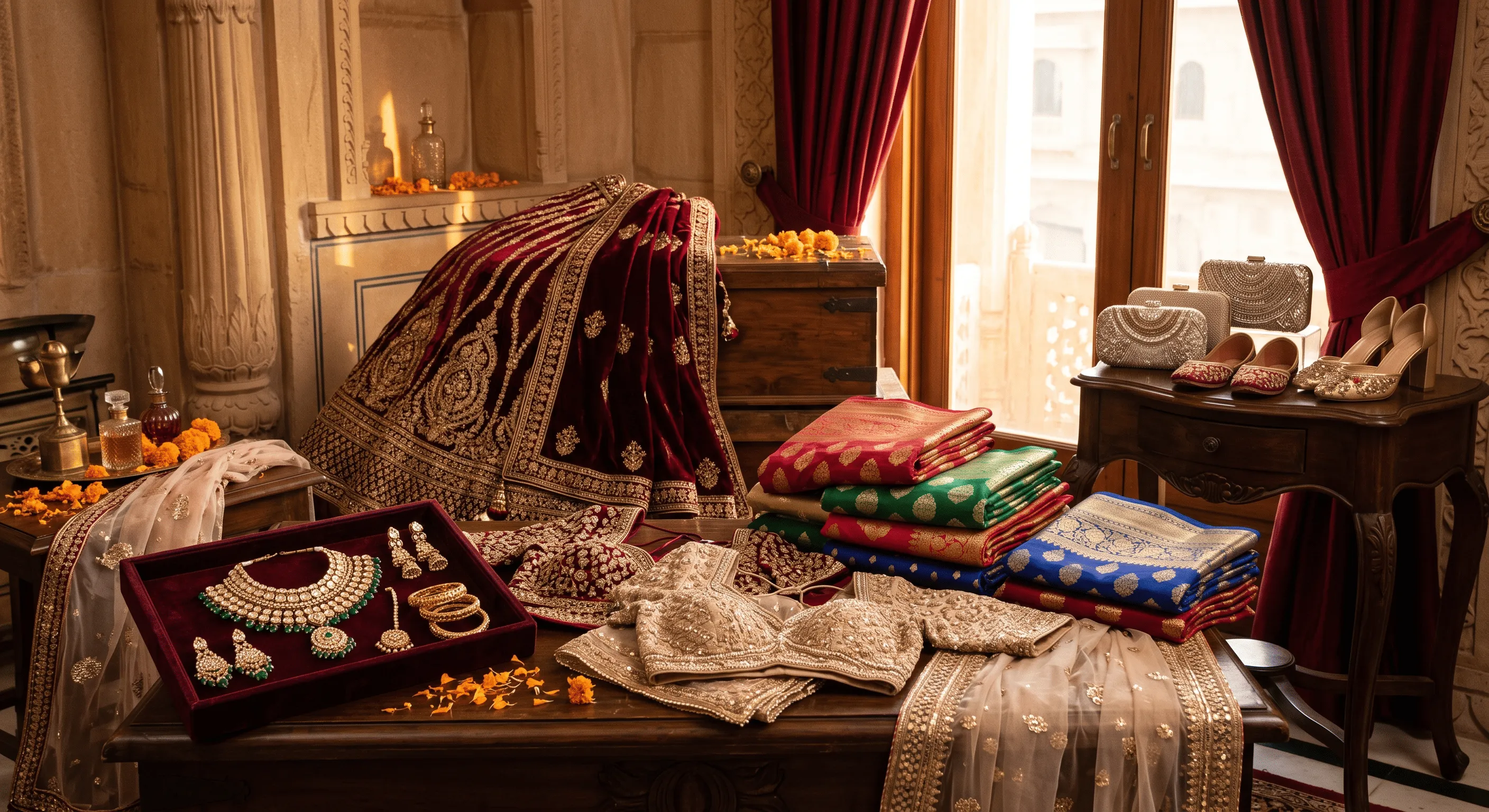
Indian weddings have never been about a single outfit.
They are a sequence of celebrations—an intimate haldi in the morning, a colourful mehendi by afternoon, a glamorous sangeet at night and, finally, the wedding ceremony itself. Every event carries its own mood, traditions and dress code. Naturally, one look rarely works for them all.
That is where two enduring favourites of Indian occasion wear come in: the saree and the lehenga.
A saree can feel graceful, ceremonial and beautifully timeless. A lehenga brings movement, drama and an unmistakable sense of celebration. Both have changed with the times, yet neither has lost its place in the Indian wedding wardrobe.
Whether you are the bride, bridesmaid, sister of the groom, close family member or a wedding guest, choosing between a saree and a lehenga is less about following a rule and more about finding the silhouette that suits the occasion—and feels like you.
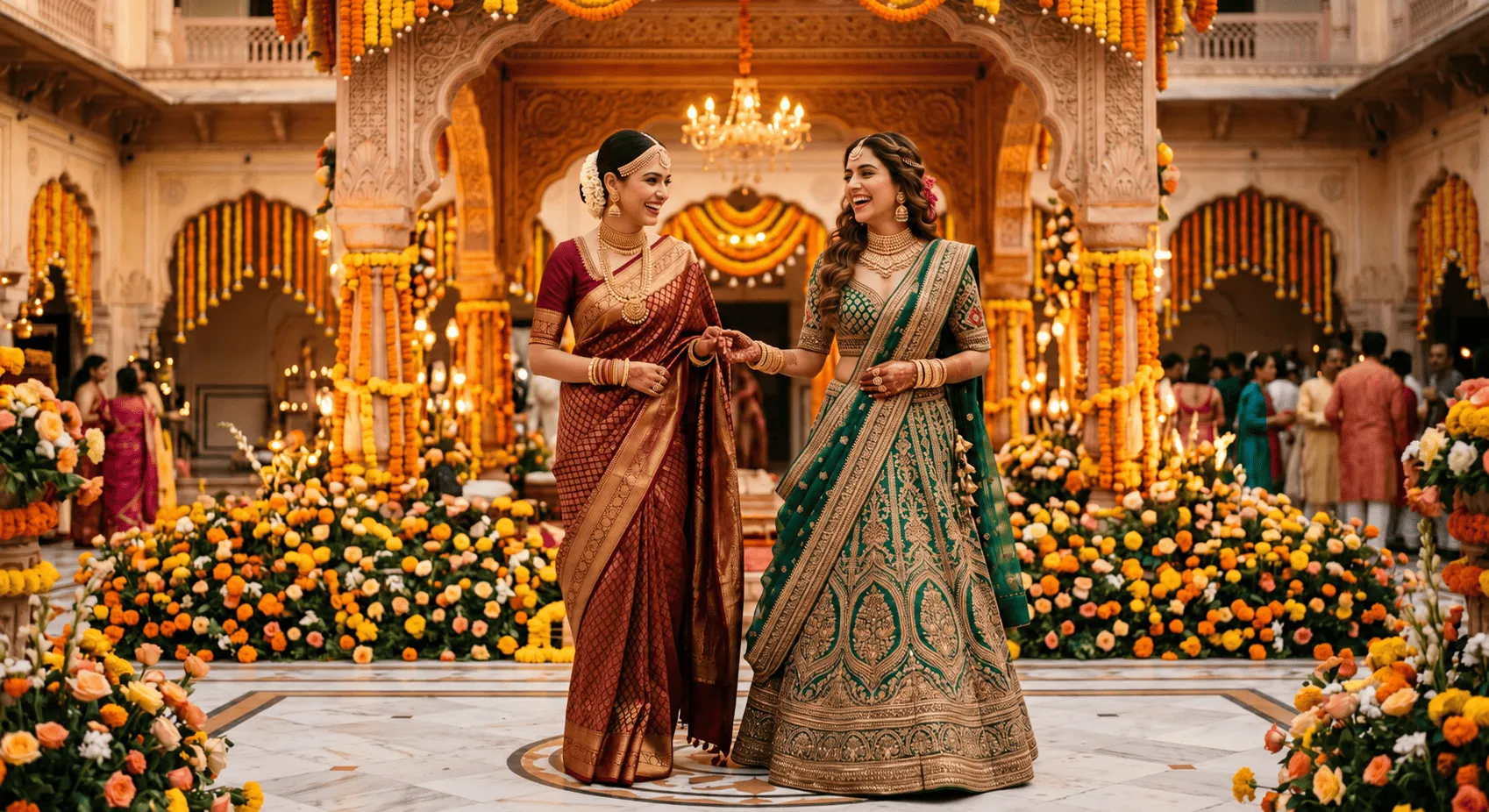
Saree or Lehenga: Which One Belongs in Your Wedding Wardrobe?
The simple answer is: probably both.
Indian wedding dressing has become much more flexible than it once was. Brides are pairing traditional silks with contemporary blouses, wedding guests are choosing lighter lehengas for daytime functions, and bridesmaids are styling classic sarees with statement accessories.
Instead of asking which outfit is better, think about what each silhouette offers.
A saree gives you versatility. The same six yards can look regal, understated, modern or festive depending on its fabric, drape, blouse and jewellery.
A lehenga, on the other hand, offers a ready-made silhouette. The combination of skirt, blouse and dupatta allows room for colour, embroidery, layering and movement without requiring an elaborate drape.
The right choice often comes down to the function, comfort level, fabric and how much ornamentation you want your outfit to carry.
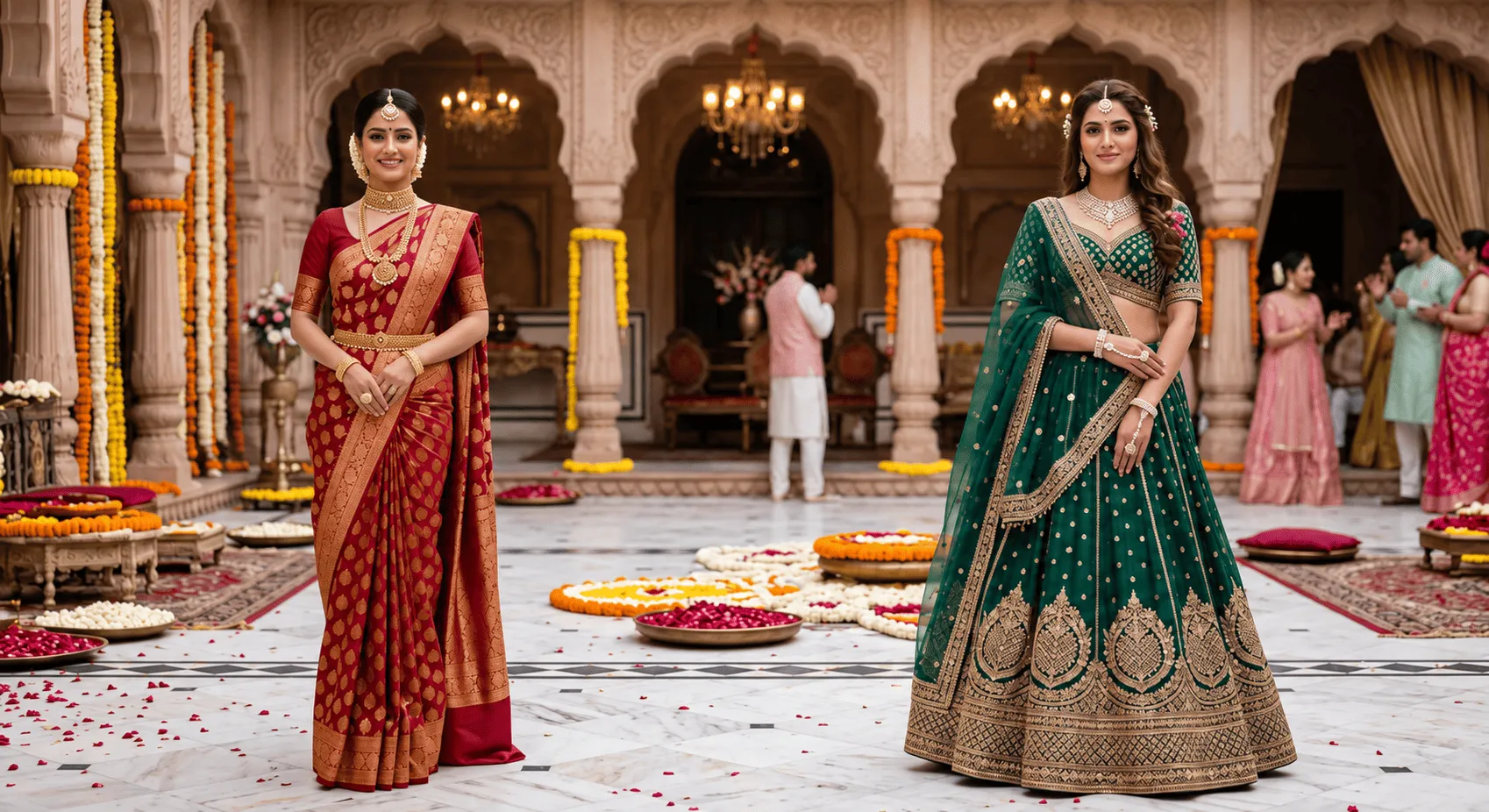
Why Sarees Remain a Wedding Classic
Few garments carry the cultural range of the Indian saree.
From lustrous South Indian silks and Banarasi weaves to lightweight organza, georgette and contemporary embroidered sarees, there is a saree for almost every type of wedding celebration.
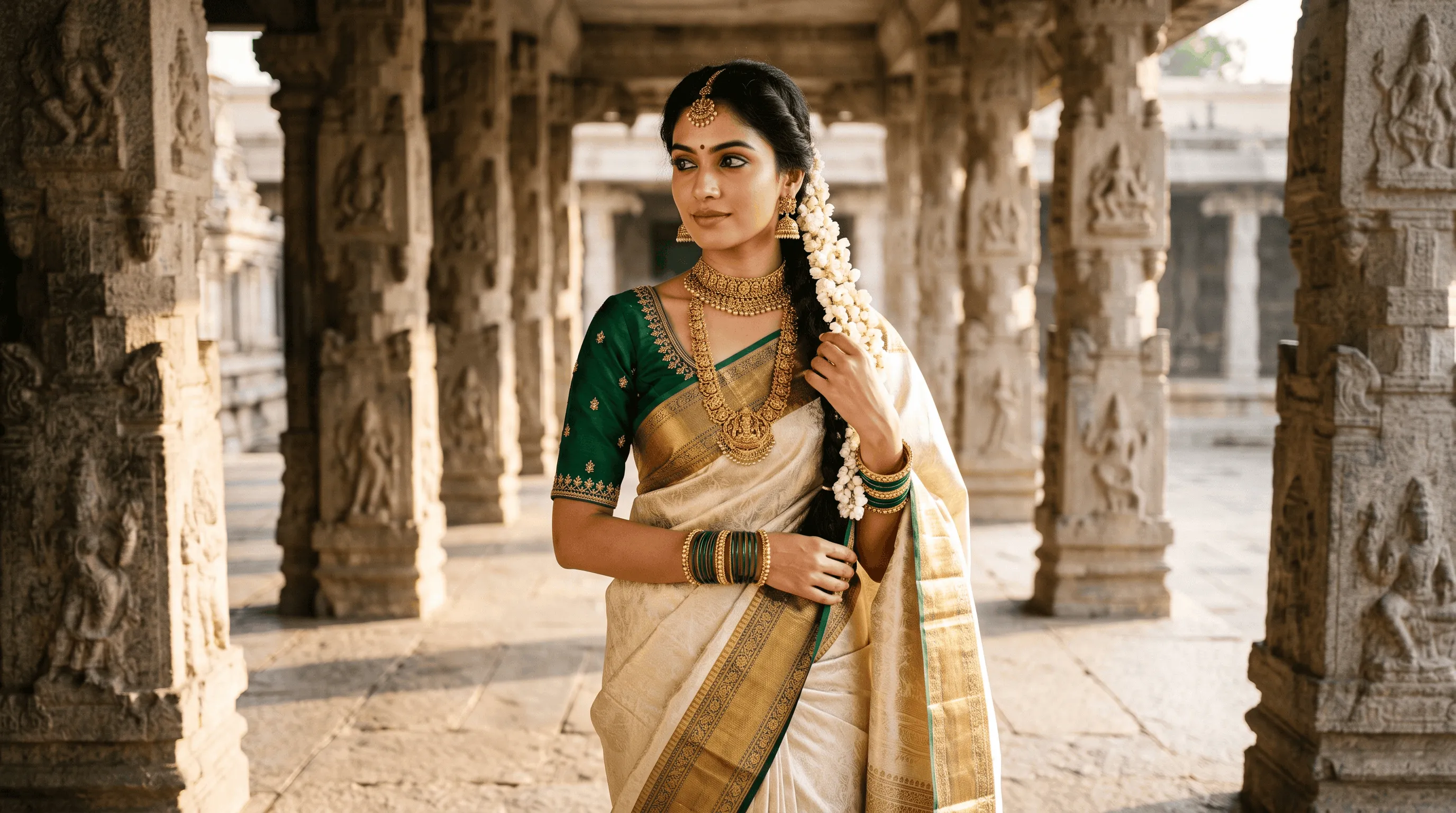
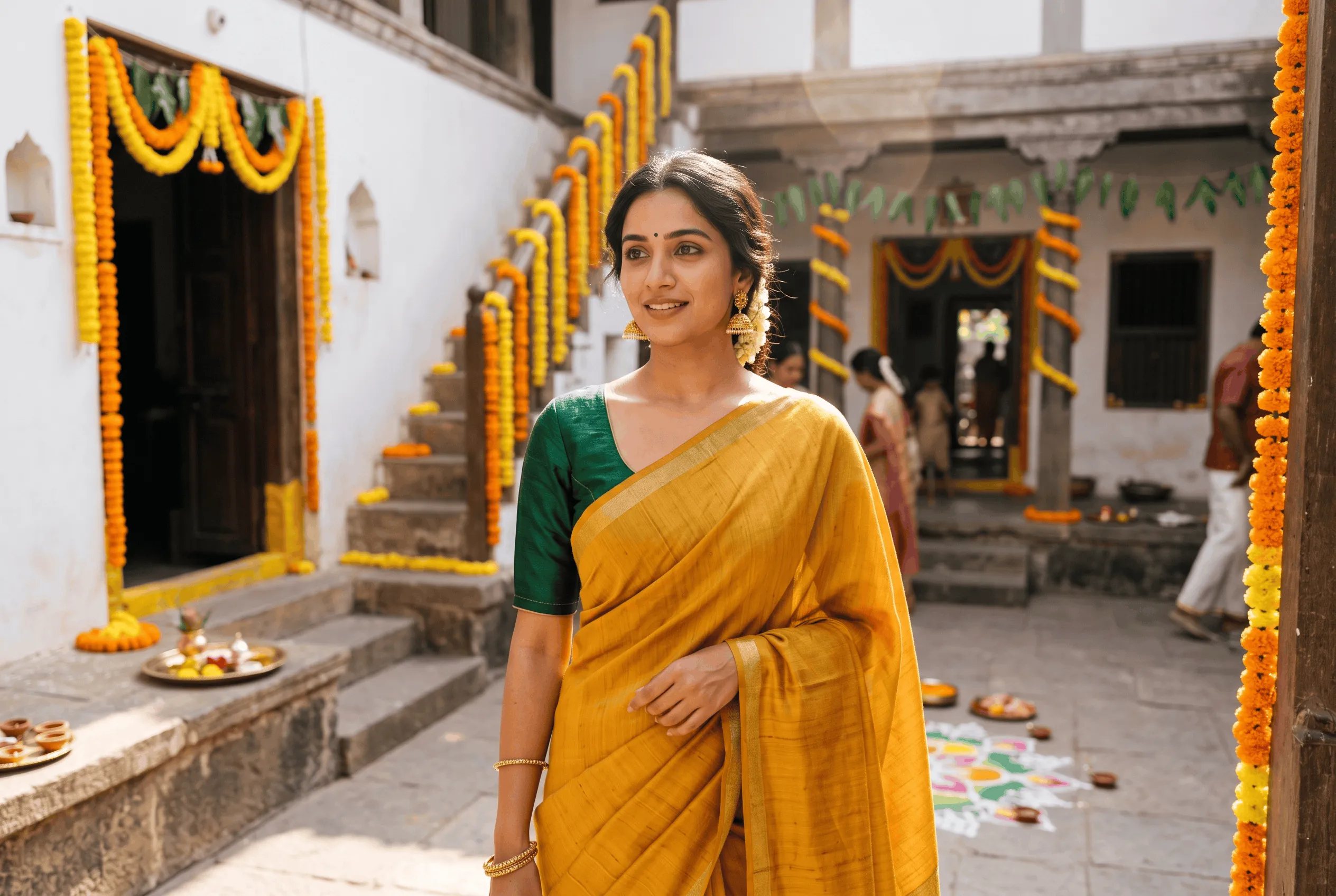
For traditional ceremonies, silk sarees continue to hold a special place because of their richness and structure. Their woven borders, zari details and luminous surfaces naturally complement gold jewellery, temple jewellery and heirloom accessories.
For cocktail evenings or receptions, softer fabrics such as georgette, chiffon and organza create a lighter, more fluid appearance.
The beauty of a saree is that the styling can change dramatically without changing the fundamental garment.
A traditional silk saree with a classic blouse feels rooted and ceremonial. The same concept can be made more contemporary with a sculpted blouse, belt, modern jewellery or softer draping.
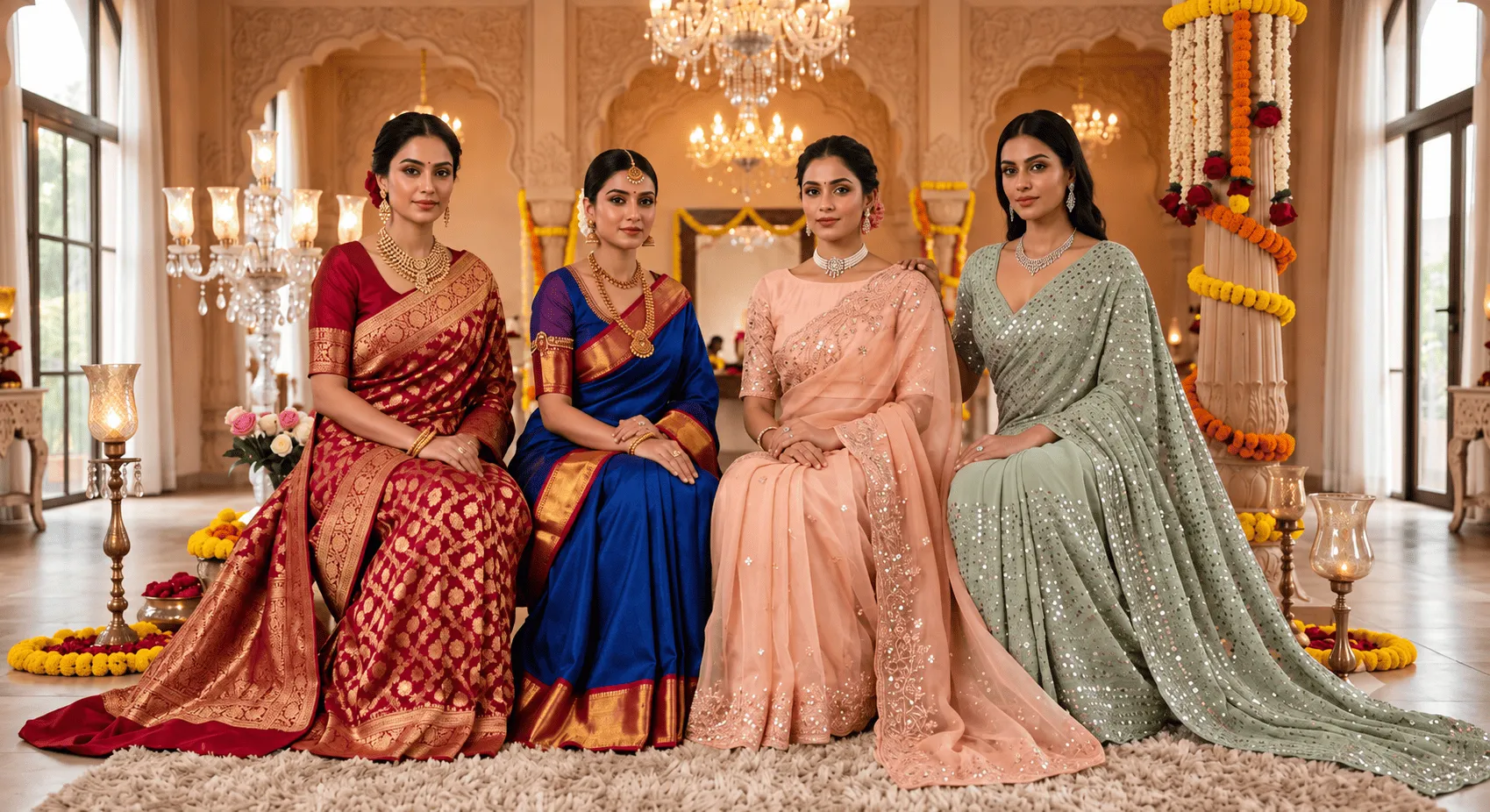
Sarees That Work Beautifully for Weddings
Banarasi Sarees
Known for their rich woven surfaces and intricate motifs, Banarasi sarees are particularly suited to weddings where you want the outfit to feel luxurious without relying heavily on surface embroidery.
Deep reds, jewel-toned greens, royal blues and antique golds create a traditional bridal mood, while pastel Banarasi sarees can feel lighter for daytime events.
Kanjeevaram Sarees
Structured, glossy and unmistakably regal, Kanjeevaram sarees remain one of the strongest choices for traditional wedding ceremonies.
Contrasting borders, temple-inspired motifs and rich silk textures make them especially striking when paired with classic gold jewellery and fresh flowers.
Organza Sarees
For women who prefer something more delicate, organza offers a crisp yet airy alternative.
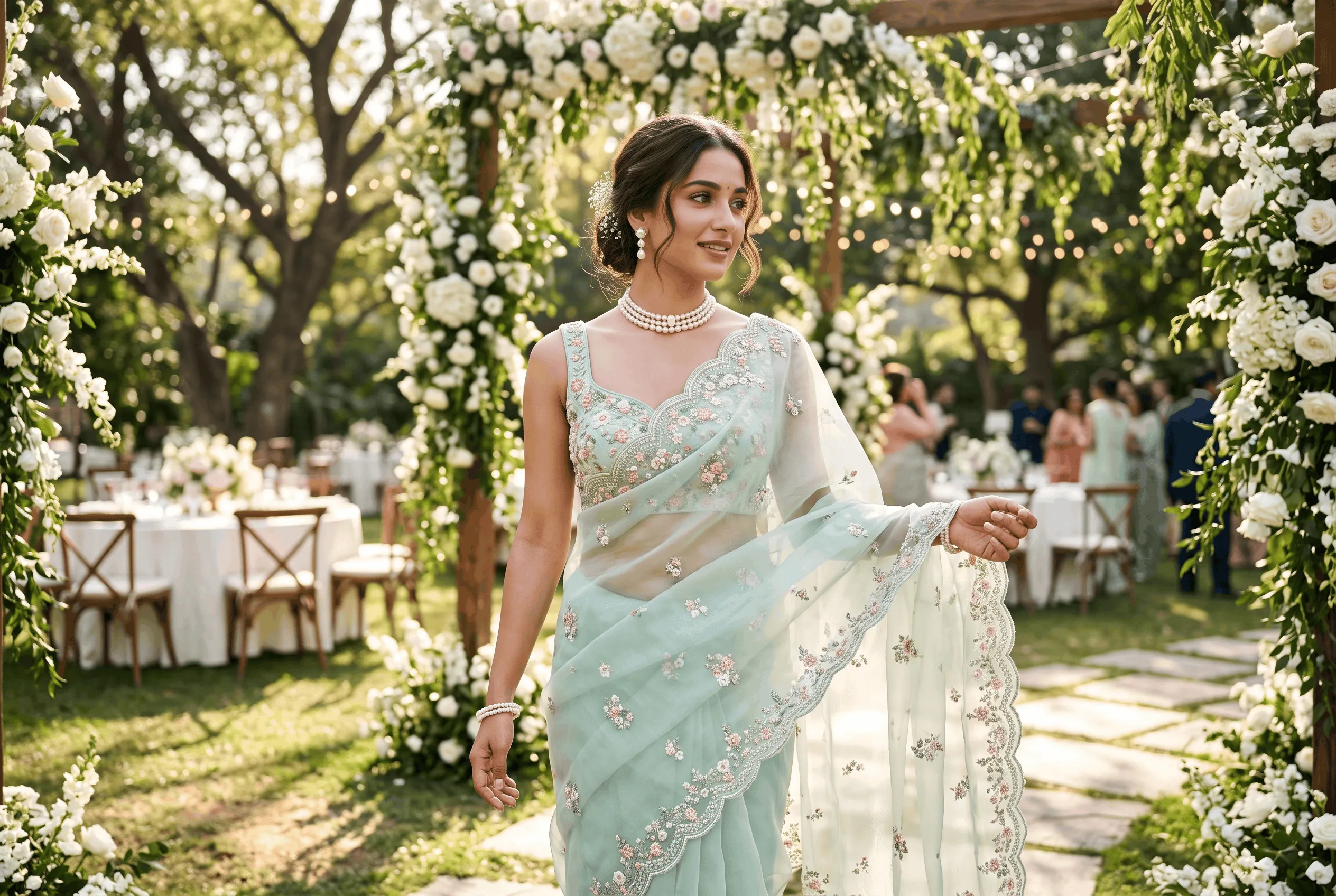
Floral prints, embroidery and subtle embellishments work particularly well for daytime weddings, mehendi functions and elegant outdoor ceremonies.
Georgette and Chiffon Sarees
These fabrics offer easier movement and softer draping, making them a practical choice for receptions, cocktail events and occasions where you expect to spend a lot of time socialising or dancing.
Embroidered and Sequinned Sarees
For evening functions, embellished sarees bring glamour without requiring the volume of a lehenga. Sequins, beads, crystals and thread embroidery can transform a simple drape into a strong reception or sangeet look.
The Lehenga: Made for Celebration
If the saree is about drape, the lehenga is about movement.
A well-designed lehenga comes alive when you walk, dance or turn, which makes it a natural favourite for Indian weddings. The silhouette also provides more freedom to experiment with volume, embroidery and blouse shapes.
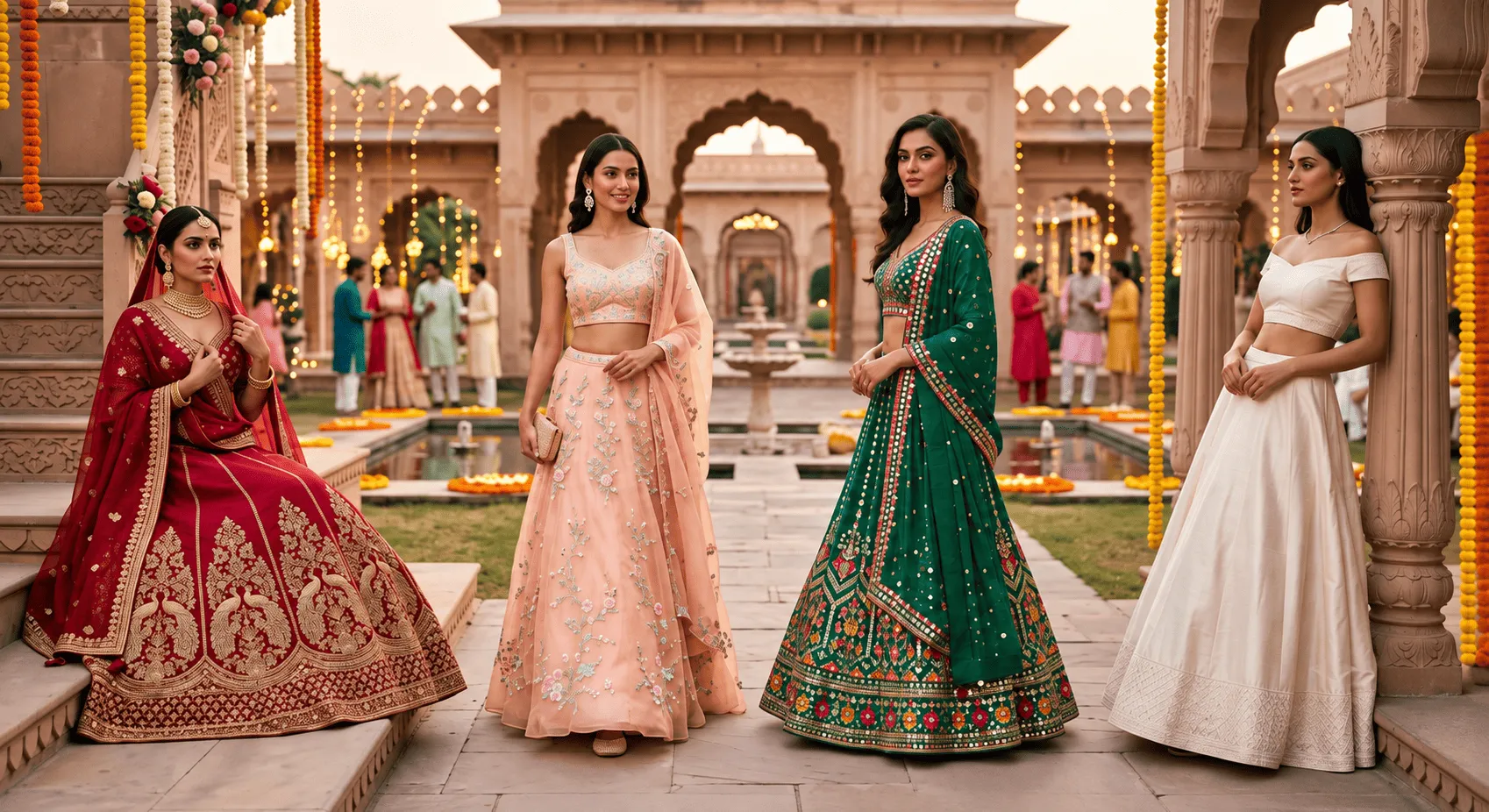
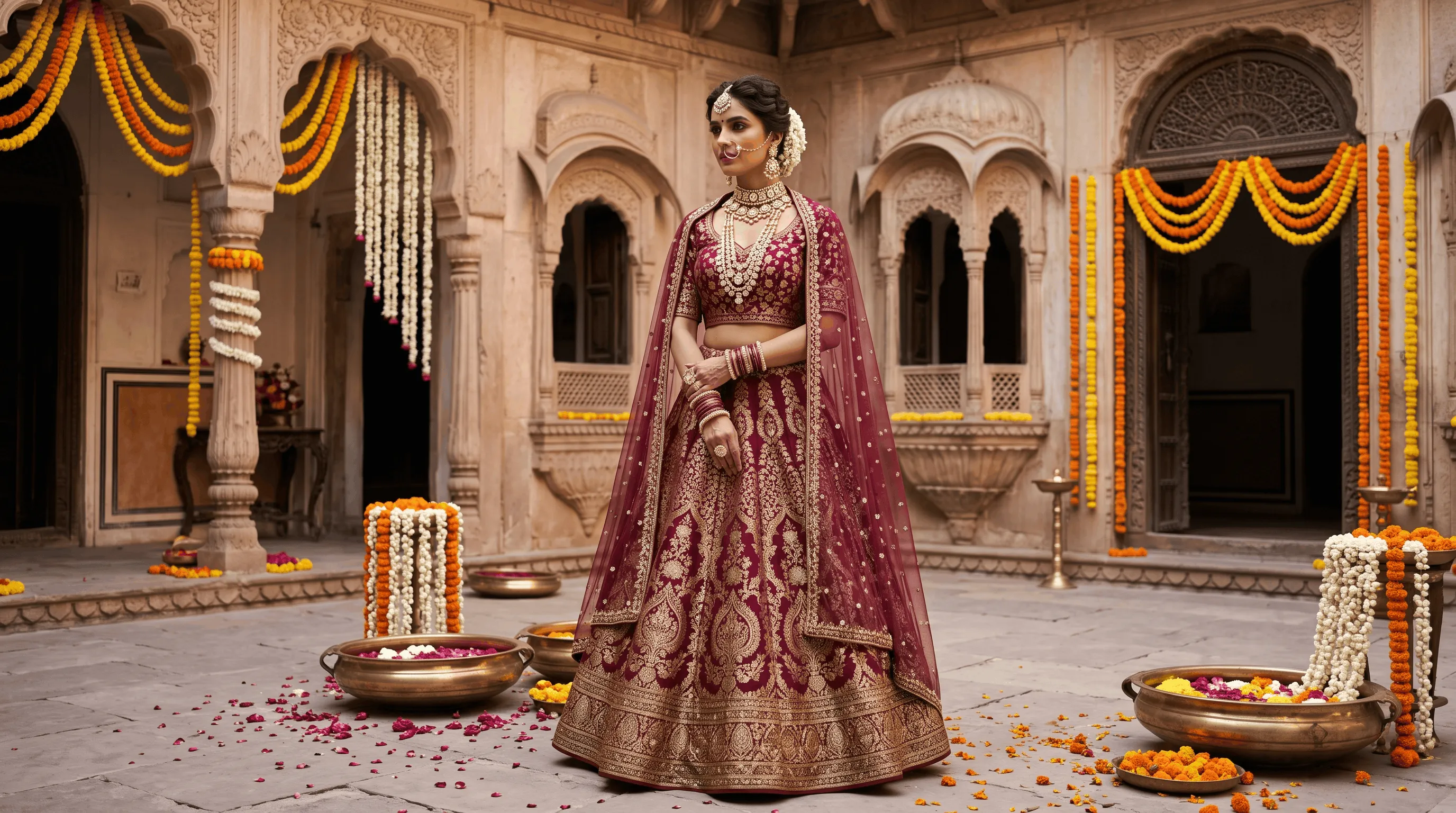
Traditional bridal lehengas are often richly embellished, but modern wedding wardrobes now include everything from minimal pastel skirts to mirror-work lehengas, floral designs and monochrome sets.
That means you do not need to be the bride to wear one.
Bridesmaids, sisters, cousins and wedding guests can all choose lehengas with lighter embroidery, softer colours or simpler silhouettes.
Lehenga Styles Worth Considering
Traditional Embroidered Lehengas
These are the classic wedding showstoppers.
Zardozi, zari, gota patti, resham embroidery, beads and sequins create depth and texture, making them especially suited to weddings, receptions and larger evening celebrations.
Floral Lehengas
Printed or embroidered florals are ideal for mehendi functions, garden weddings and daytime celebrations.
They feel festive without looking excessively formal and pair naturally with fresh jewellery, delicate accessories and lighter makeup.
Mirror-Work Lehengas
Mirror work is particularly effective for garba, sangeet and festive pre-wedding functions.
Because the surface catches light beautifully, these lehengas often need fewer heavy accessories.
Pastel Lehengas
Blush pink, sage, powder blue, ivory, peach and muted lavender continue to work well for modern wedding wardrobes.
Pastels are particularly effective for daytime functions where heavy jewel tones may feel too intense.
Minimal Lehengas
Not every lehenga needs dense embroidery.
Clean skirts with textured fabric, statement blouses or embroidered dupattas can feel equally polished while being easier to wear for long celebrations.
What to Wear for Each Wedding Function
Indian weddings often involve several functions, and each one gives you room to dress differently.
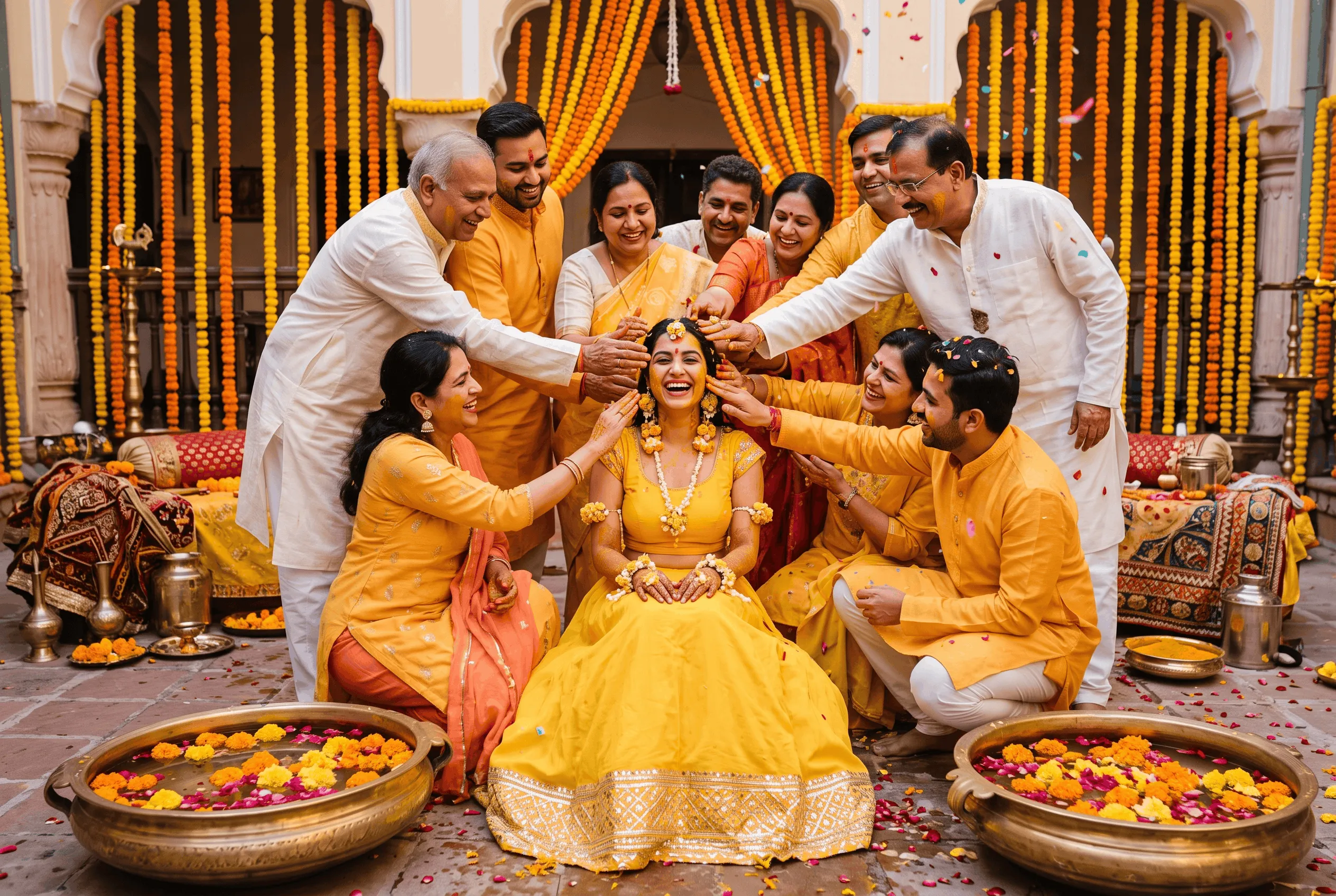
Haldi: Keep It Light and Easy
Haldi functions tend to be energetic, informal and colourful.
This is one occasion where comfort should lead the styling.
Lightweight sarees in cotton blends, organza or georgette can work beautifully. If you prefer a lehenga, choose something with less volume and minimal embellishment.
Yellow remains a classic choice, but ivory, lime, peach, orange and floral combinations can look equally appropriate.
Avoid extremely delicate fabrics or heavy embroidery if you expect actual haldi application.
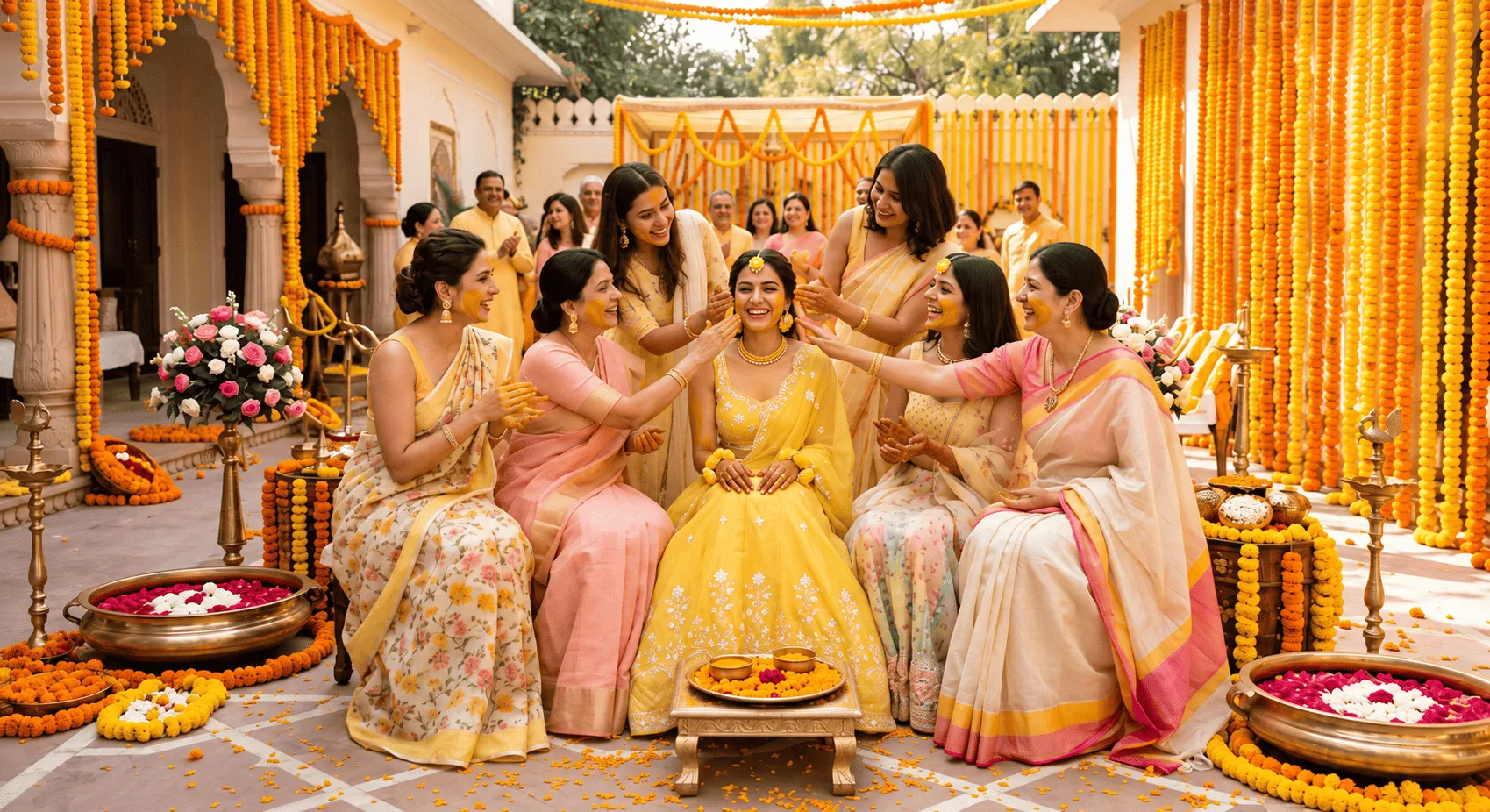
Mehendi: Colour, Print and Playfulness
Mehendi is the perfect setting for a little more experimentation.
Floral lehengas, mirror-work skirts, colourful dupattas and printed sarees all fit the mood.
Greens are always popular, but there is no need to restrict yourself to one shade. Magenta, mustard, coral, turquoise and multicoloured designs can create a vibrant look.
Because mehendi functions usually involve sitting for long periods, avoid sleeves, bangles or overly complicated drapes that interfere with the application.
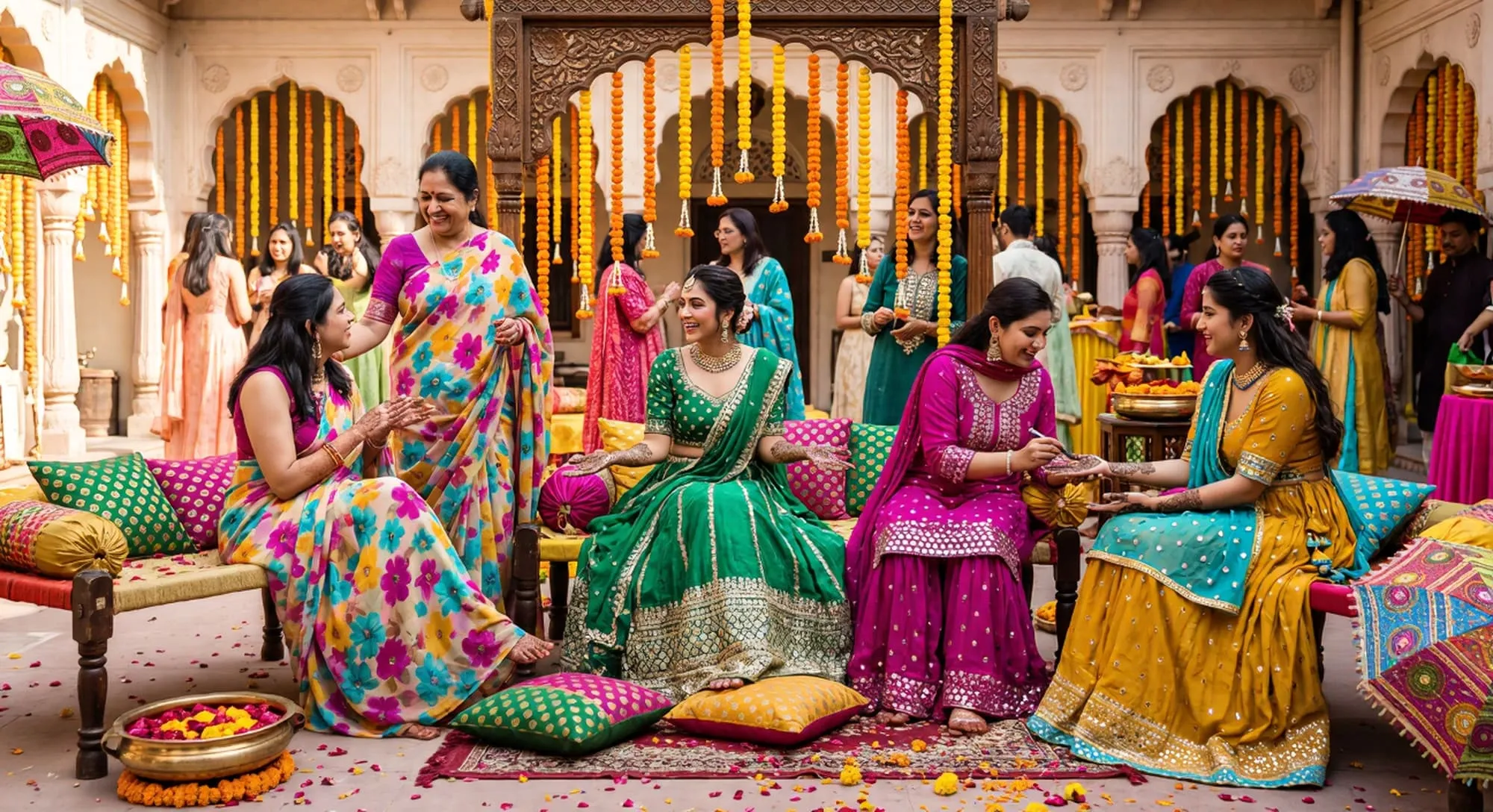
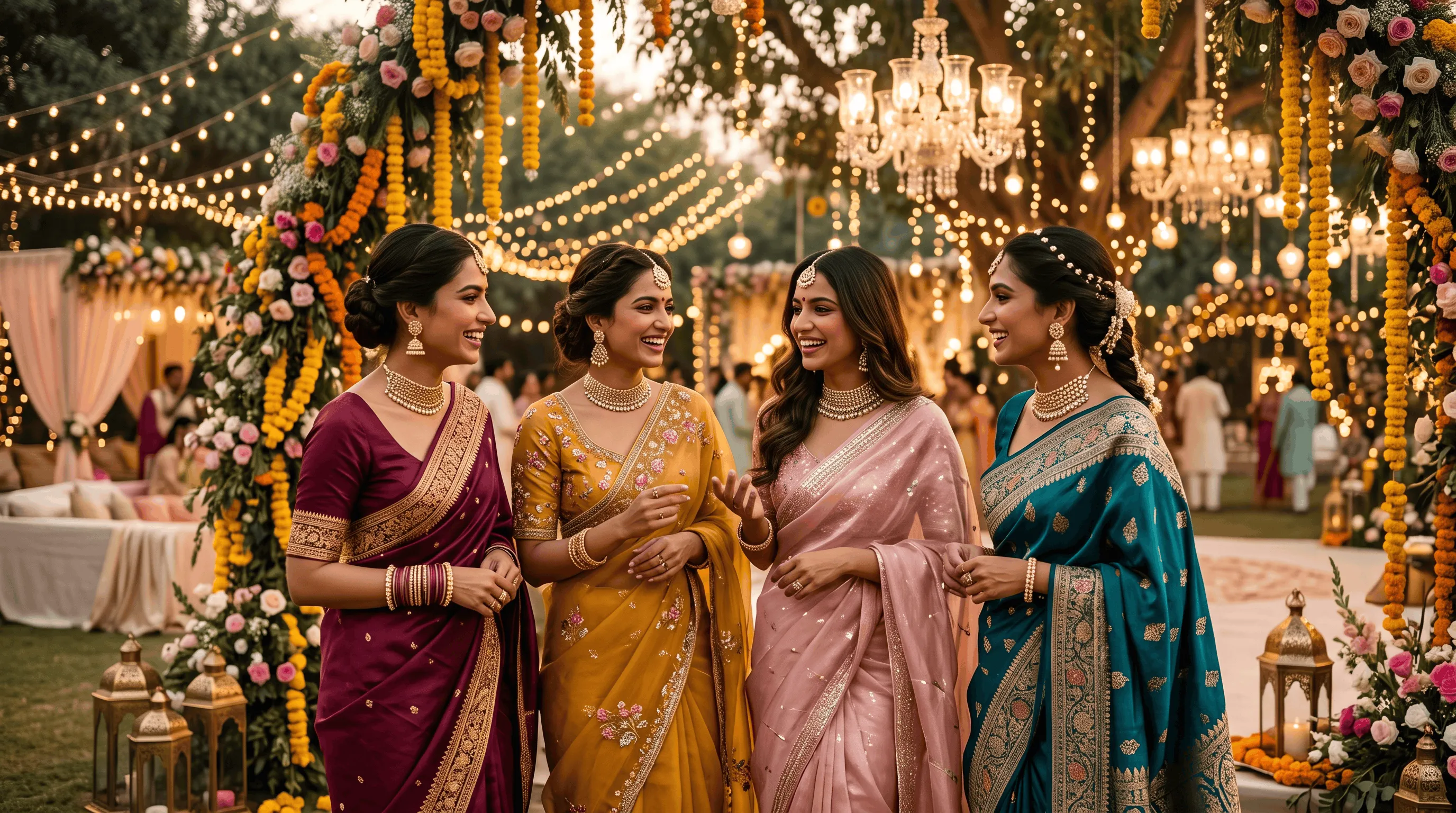
Sangeet: Bring the Glamour
A sangeet is where you can afford to go bolder.
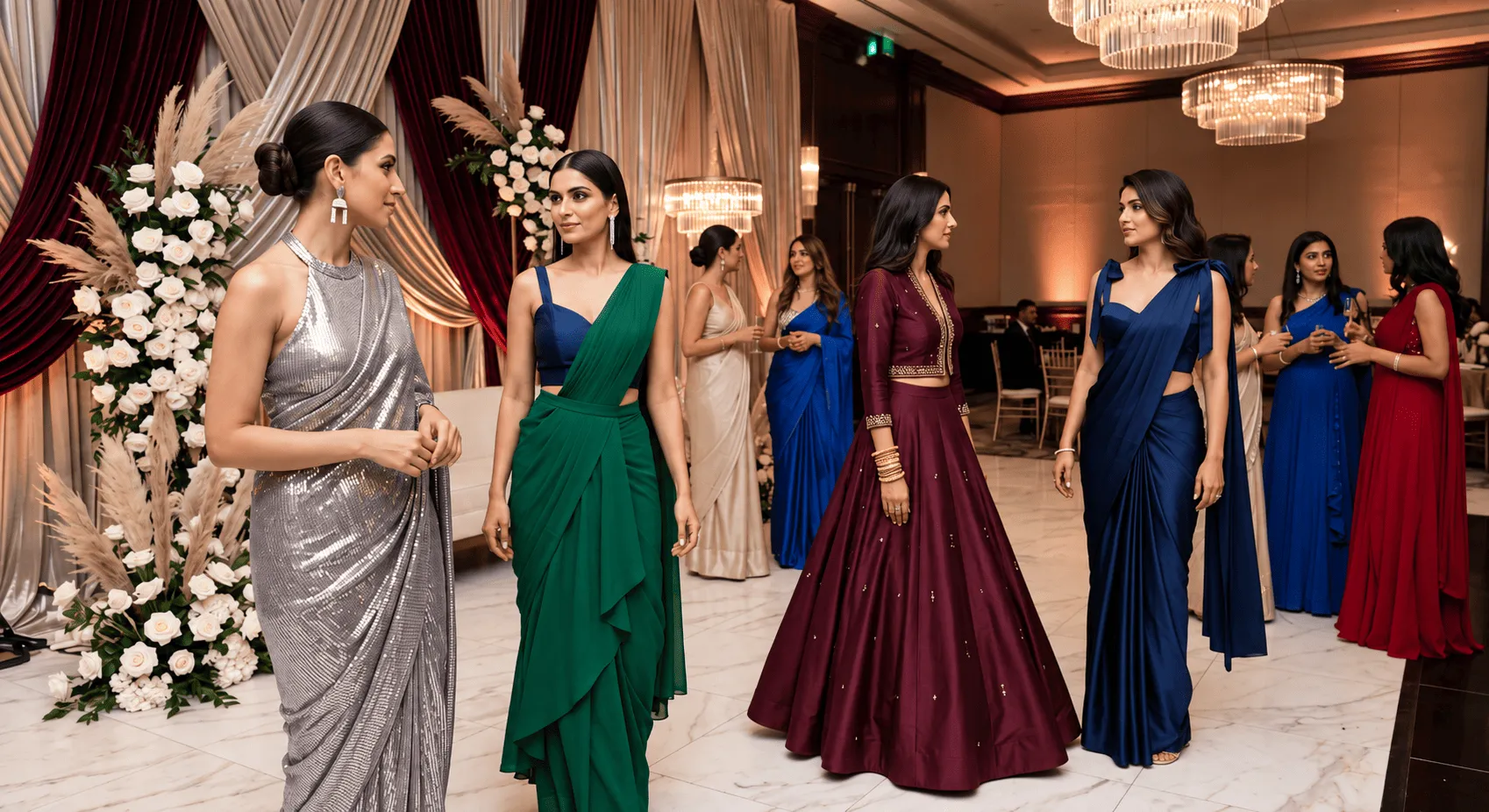
Sequinned sarees, pre-draped sarees, metallic fabrics and embellished lehengas work especially well under evening lights.
If dancing is part of the plan, movement should influence your outfit choice.
A lehenga with manageable volume and a secure blouse often gives you more freedom on the dance floor. If you prefer a saree, a pre-draped or well-pinned silhouette can help keep everything in place.
Statement earrings, glamorous makeup and a small clutch are often enough to complete the look.
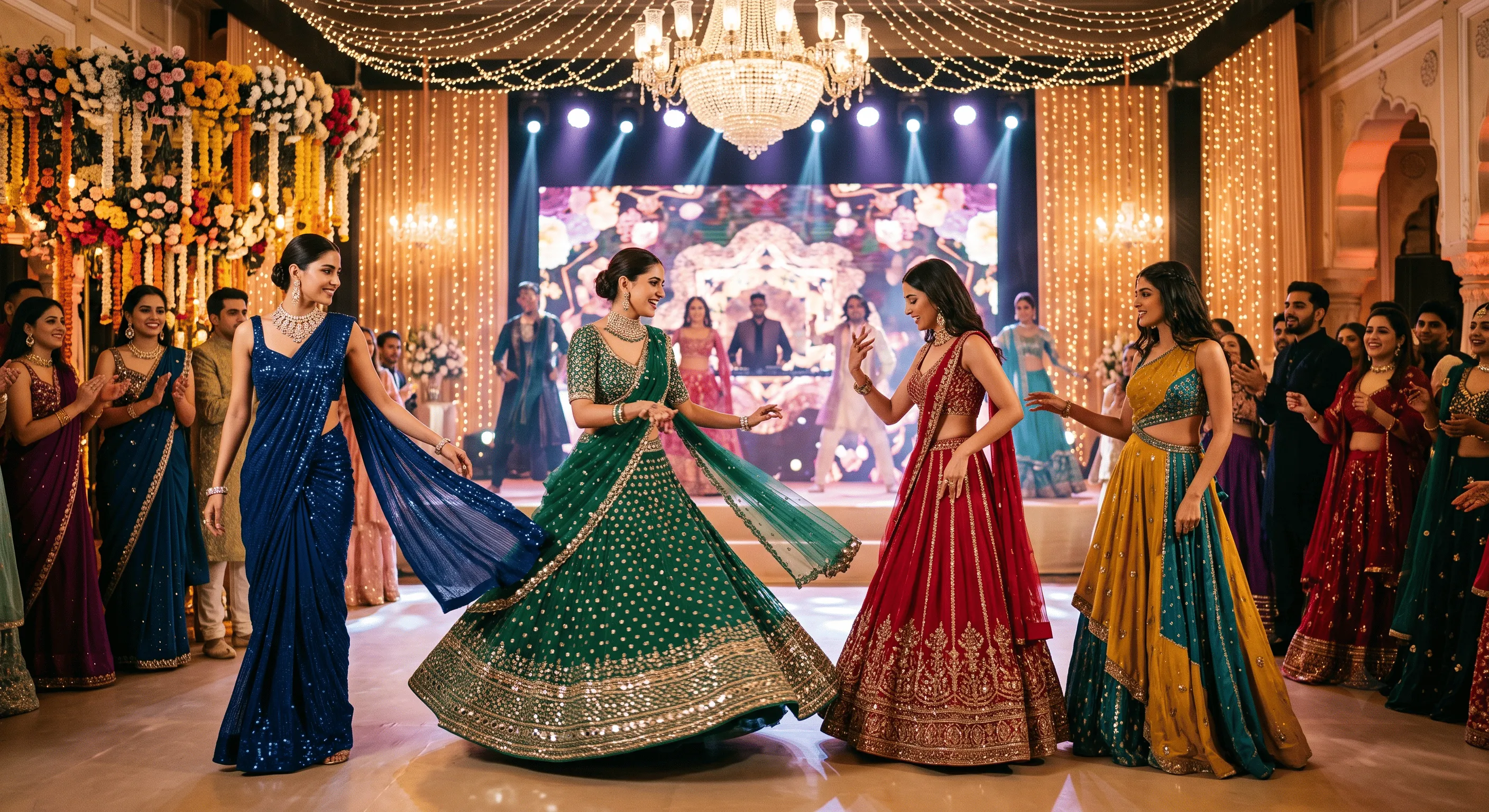
The Wedding Ceremony: Traditional Elegance Takes Centre Stage
The main wedding ceremony is usually the moment to lean into richer textiles and more timeless styling.
Silk sarees, Banarasi weaves and elaborately woven pieces naturally suit ceremonial settings.
For lehengas, deeper reds, maroons, pinks, rust tones and jewel colours remain enduring favourites, although ivory, gold and pastel palettes can also look striking depending on the wedding theme.
If you are attending as a guest, allow the bride's look to remain the focal point. Rich clothing is absolutely appropriate, but balance is important.
Choose one or two statement elements rather than combining a heavily embellished outfit, oversized jewellery and dramatic accessories all at once.
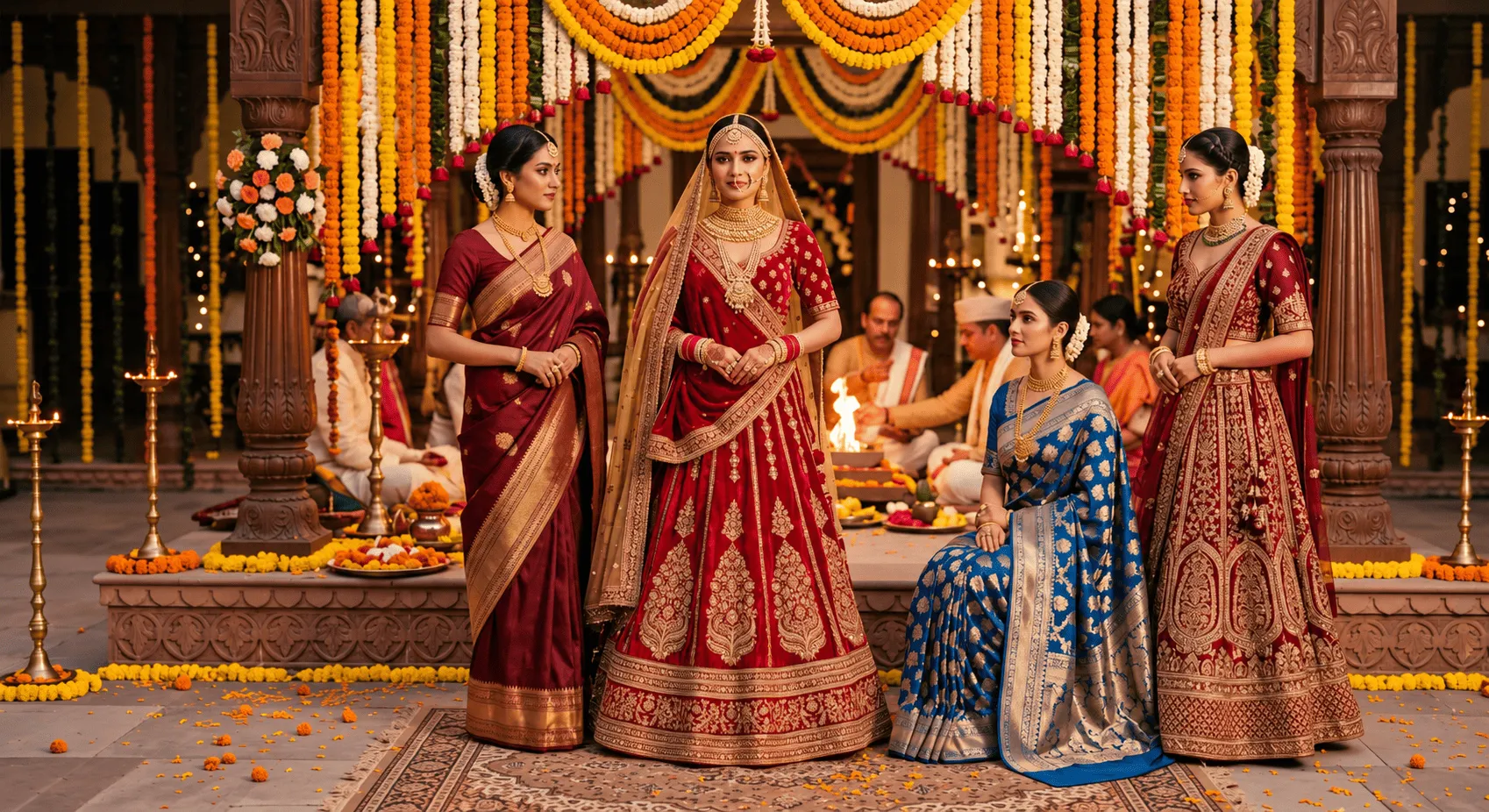
Reception: Refined, Modern and Polished
Receptions tend to allow the most freedom in terms of styling.
This is where contemporary sarees, metallic finishes, structured blouses, sculpted drapes and sleek lehengas can work particularly well.
Deep wine, midnight blue, black, emerald, champagne and metallic tones create a sophisticated evening mood.
For a more understated approach, a monochrome outfit with excellent tailoring can look just as impactful as dense embroidery.
Choosing the Right Fabric Matters More Than You Think
Colour and embroidery often get most of the attention, but fabric has a major influence on how your outfit actually looks and feels.
For sarees, silk gives structure and ceremonial richness. Georgette and chiffon create softer drapes, while organza offers a more architectural shape.
For lehengas, silk-based fabrics give body and volume, while georgette and lightweight blends create more movement.
Velvet can feel luxurious for winter celebrations, although it may become uncomfortable during warmer weddings.
Climate matters too.
For a summer destination wedding, heavily layered velvet or dense embroidery can quickly become exhausting. For a winter evening wedding, ultra-light chiffon may not offer enough warmth or structure.
The most beautiful outfit is still one you can comfortably wear for several hours.
Colour Stories for the Modern Indian Wedding Wardrobe
Traditional reds and maroons have not disappeared, but the Indian wedding palette has expanded dramatically.
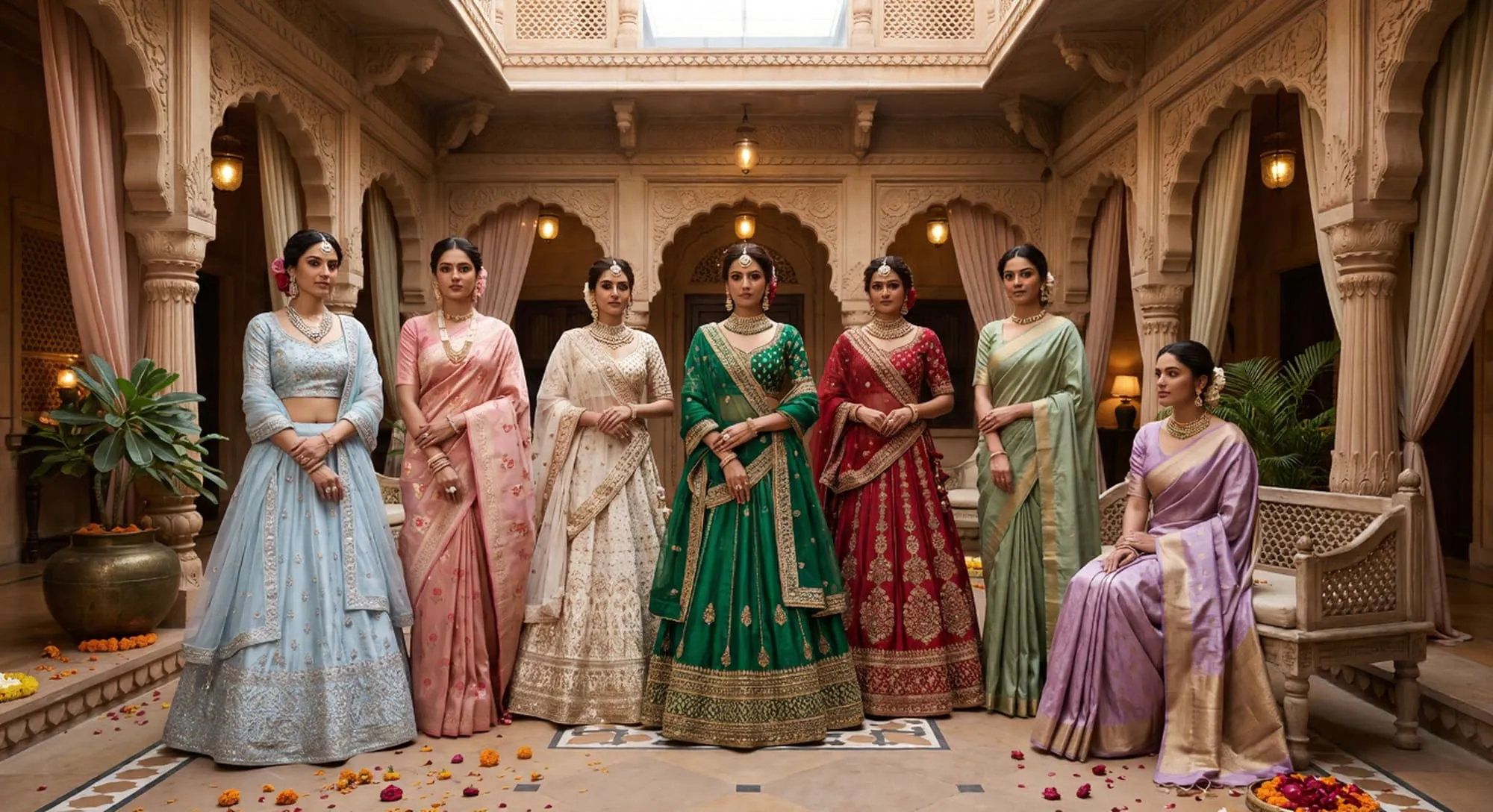
For daytime events, colours such as blush pink, pista green, powder blue, ivory, peach and lavender create a fresh, elegant effect.
For evening events, wine, emerald, navy, plum, rust and deep burgundy bring richness without always falling back on traditional red.
Gold, champagne and antique metallic shades work across both sarees and lehengas and pair especially well with layered jewellery.
When choosing your colour, also think about the venue.
Pastels can look beautiful at outdoor garden weddings, while jewel tones stand out against the dramatic lighting of banquet halls and evening venues.
Blouse Design Can Transform the Entire Look
In modern Indian wedding dressing, the blouse has become almost as important as the saree or lehenga itself.
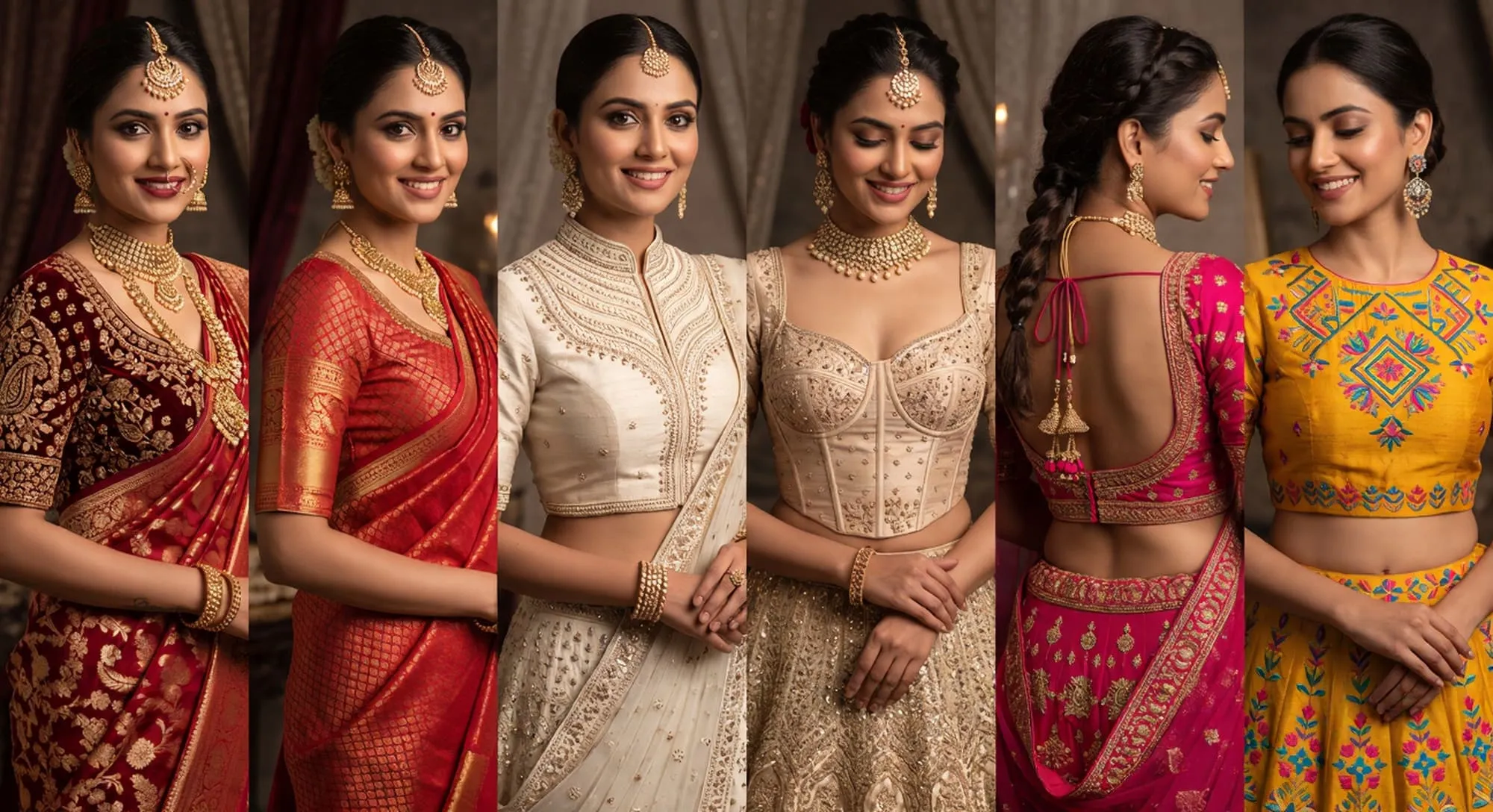
A simple saree can look completely different with a corset blouse, high-neck blouse, embroidered blouse or classic short-sleeved silhouette.
For lehengas, blouse styles range from traditional cholis to cropped jackets, structured bustiers and longer fitted tops.
When choosing one, consider the balance of the complete outfit.
If your saree or lehenga is already heavily embellished, a cleaner blouse may prevent the look from becoming overwhelming.
For a relatively simple outfit, the blouse can become the statement element through embroidery, texture or an interesting neckline.
Most importantly, test the blouse before the event. Wedding outfits are worn for hours, and a design that looks perfect while standing still may feel very different when sitting, dancing or moving.
Jewellery: Let the Outfit Lead
Wedding jewellery does not always need to be oversized.
A richly woven silk saree can be beautifully complemented by traditional gold pieces, temple jewellery or an heirloom necklace.
A pastel lehenga may work better with pearls, kundan, polki or softer-toned jewellery.
For heavily embroidered outfits, consider choosing one focal point.
Statement earrings with a cleaner neckline, for example, can feel more sophisticated than layering every jewellery category at once.
Your hairstyle matters too.
A neat bun can support heavier earrings and traditional jewellery, while soft waves suit lighter, contemporary wedding looks.
Saree vs Lehenga: A Quick Comparison
| Feature | Saree | Lehenga |
|---|---|---|
| Overall feel | Elegant and timeless | Festive and dramatic |
| Movement | Depends on drape | Generally easier for dancing |
| Styling flexibility | Very high | High |
| Traditional appeal | Excellent | Excellent |
| Best for | Wedding ceremonies, receptions and formal events | Sangeet, weddings, receptions and festive events |
| Fabric variety | Extremely wide | Extremely wide |
| Rewear potential | Very high | High when restyled |
| Ease of wearing | Depends on draping skill | Usually easier once fitted |
Neither one wins outright.
A saree works beautifully when you want elegance, heritage and styling flexibility. A lehenga is ideal when you want movement, a defined silhouette and stronger visual drama.
Your wedding wardrobe can easily make space for both.
How to Rewear Wedding Sarees and Lehengas
A wedding outfit should not necessarily disappear into your wardrobe after one event.
Sarees are especially easy to reinvent. Pair the same saree with a contrasting blouse, belt, jacket or different jewellery and the entire mood can shift.
Lehengas can be separated into individual pieces.
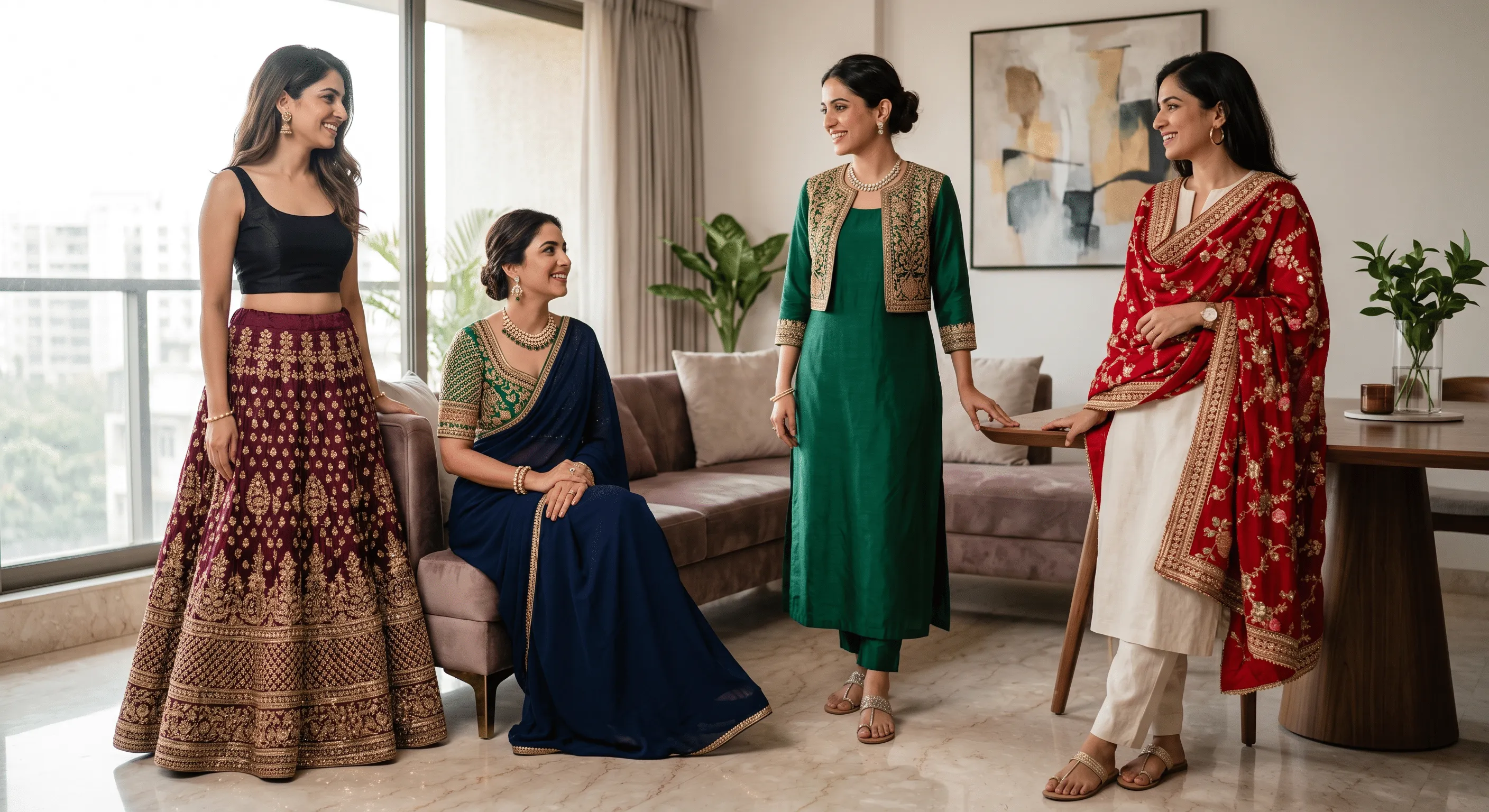
Wear an embroidered lehenga skirt with a simple silk blouse. Pair the blouse with a plain saree. Style the dupatta over a kurta set.
For particularly heavy bridal or occasion wear, removing one ornate element often makes the outfit much easier to repeat.
This approach not only gives your clothes a longer life—it also makes investment pieces more worthwhile.
Small Styling Details That Make a Big Difference
An impressive wedding look is rarely about adding more.
Fit, finishing and proportion usually matter much more.
Make sure your saree petticoat or lehenga waistband fits securely. Keep safety pins, fashion tape and a few emergency essentials nearby during long celebrations.
Choose footwear before finalising your garment length. A lehenga hemmed for five-inch heels will not sit correctly if you later decide to wear flats.
Similarly, saree pleats should be adjusted according to your final footwear.
And while trends can be fun, do not choose an outfit purely because it photographs well online.
You will remember how you felt wearing it long after you stop looking at the trend that inspired it.
Comments (0)
Leave a Thought
No comments yet. Be the first to share your thoughts!