Daytime functions need a special kind of outfit.
You want to look festive, but not as heavily dressed as you would for a night reception. You want comfort in daylight and warmth, colours that glow in natural light and a fabric that photographs beautifully without too much shine.
Raw silk fits this brief perfectly. Its subtle, textured surface, gentle sheen and structured drape make it one of the best fabrics for engagements, pujas, haldi and mehendi, day weddings, naming ceremonies and festive lunches.
This guide explains what raw silk is (and what Indian shops usually mean by the term), how it compares with other silks, which outfits work best, the best colours for daylight, and how to style and care for raw silk sarees, lehengas and kurtas.
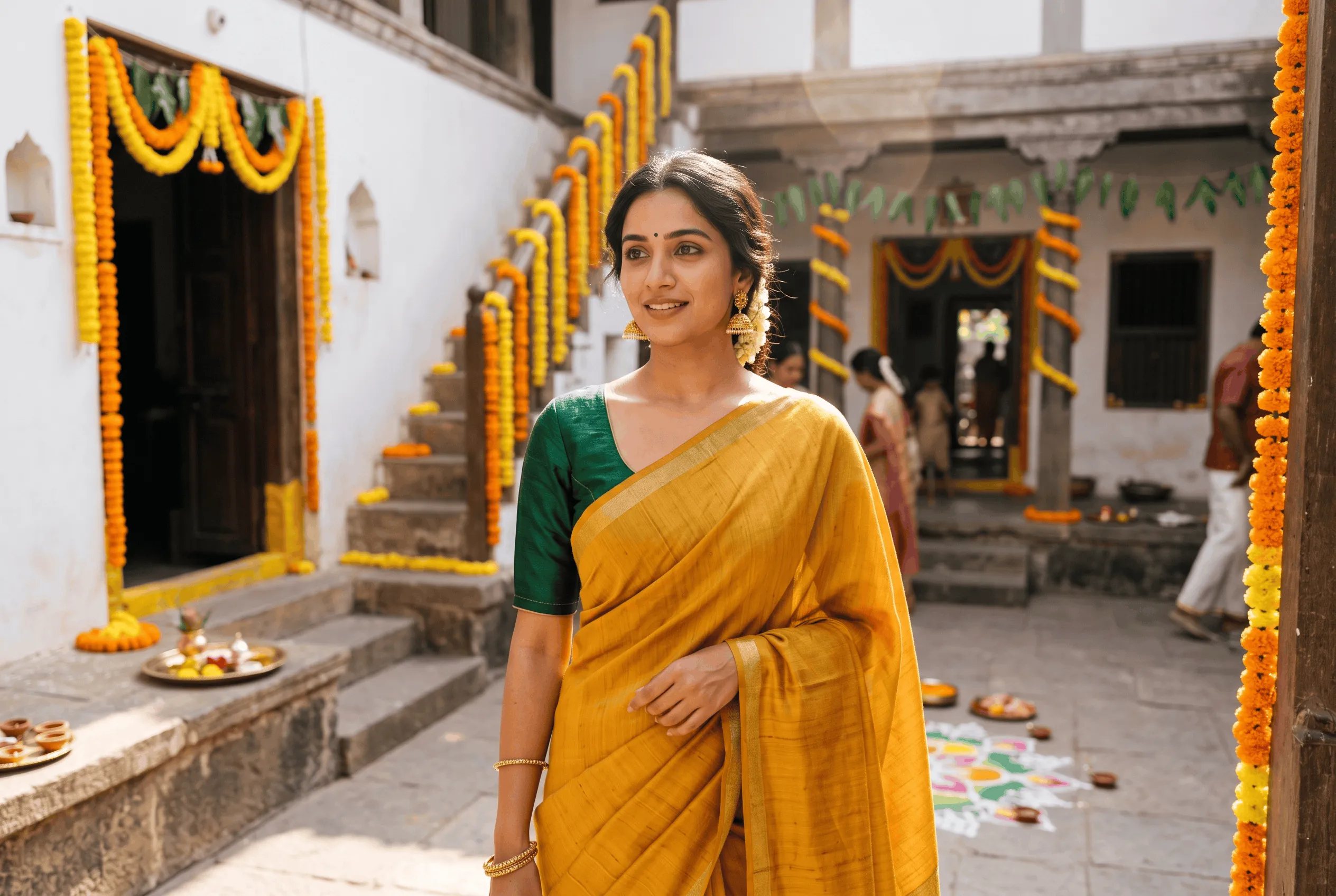
What Is Raw Silk?
The term "raw silk" is used in two ways, and it helps to know both.
The technical meaning
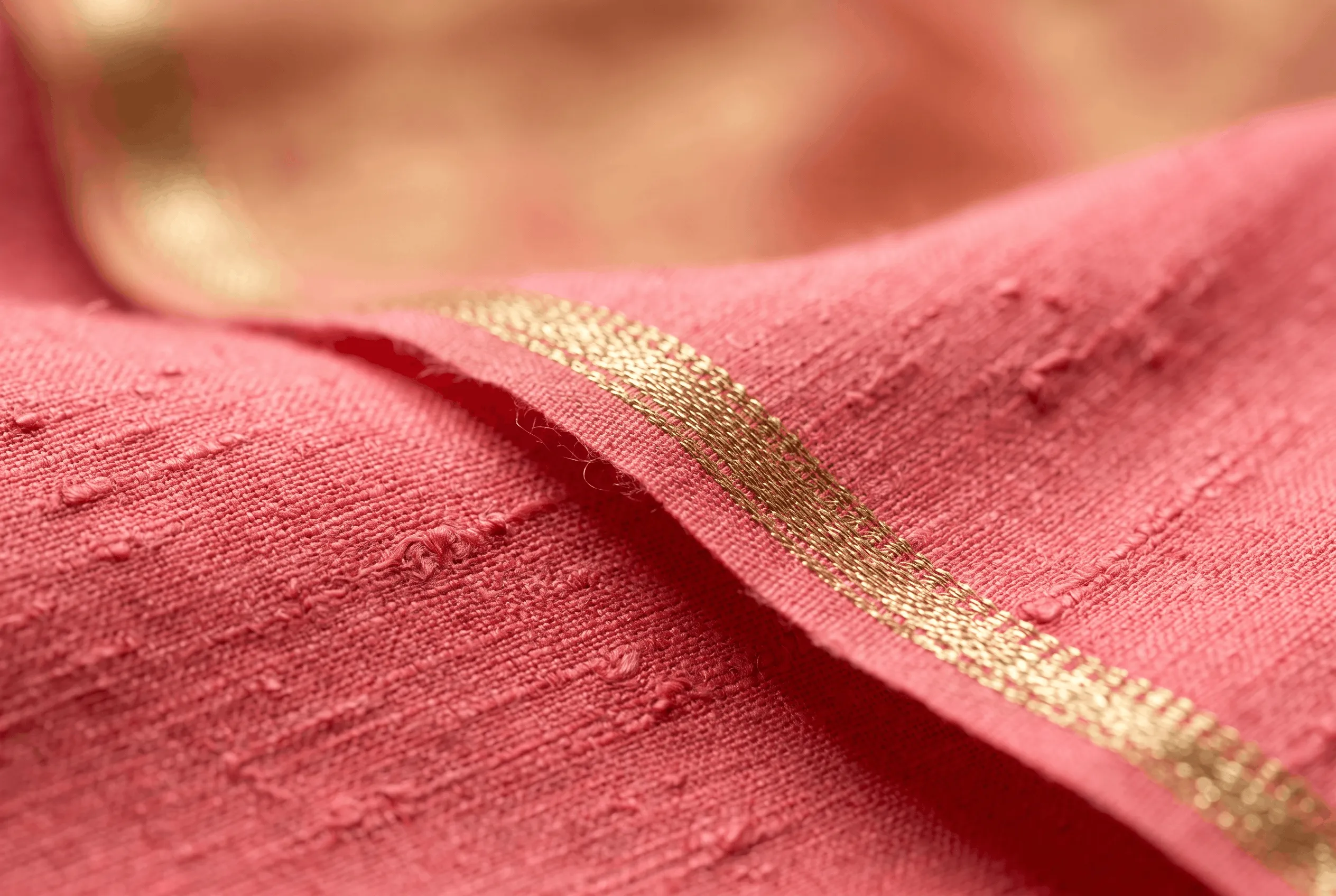
Technically, raw silk is silk that still contains some or all of its sericin, the natural gum that coats silk fibres. Because the sericin is not fully removed, the fabric is stiffer, less lustrous and more textured than degummed silk.
What shops usually mean
In the Indian market, "raw silk" usually refers to a textured, slubbed silk fabric with a matte or soft sheen and a crisp body. It is often woven from silk with natural irregularities, similar to dupion or noil silk, and sometimes blended with other fibres.
Art silk or synthetic "raw silk" also exists: it imitates the slubbed look using polyester or viscose and costs much less.
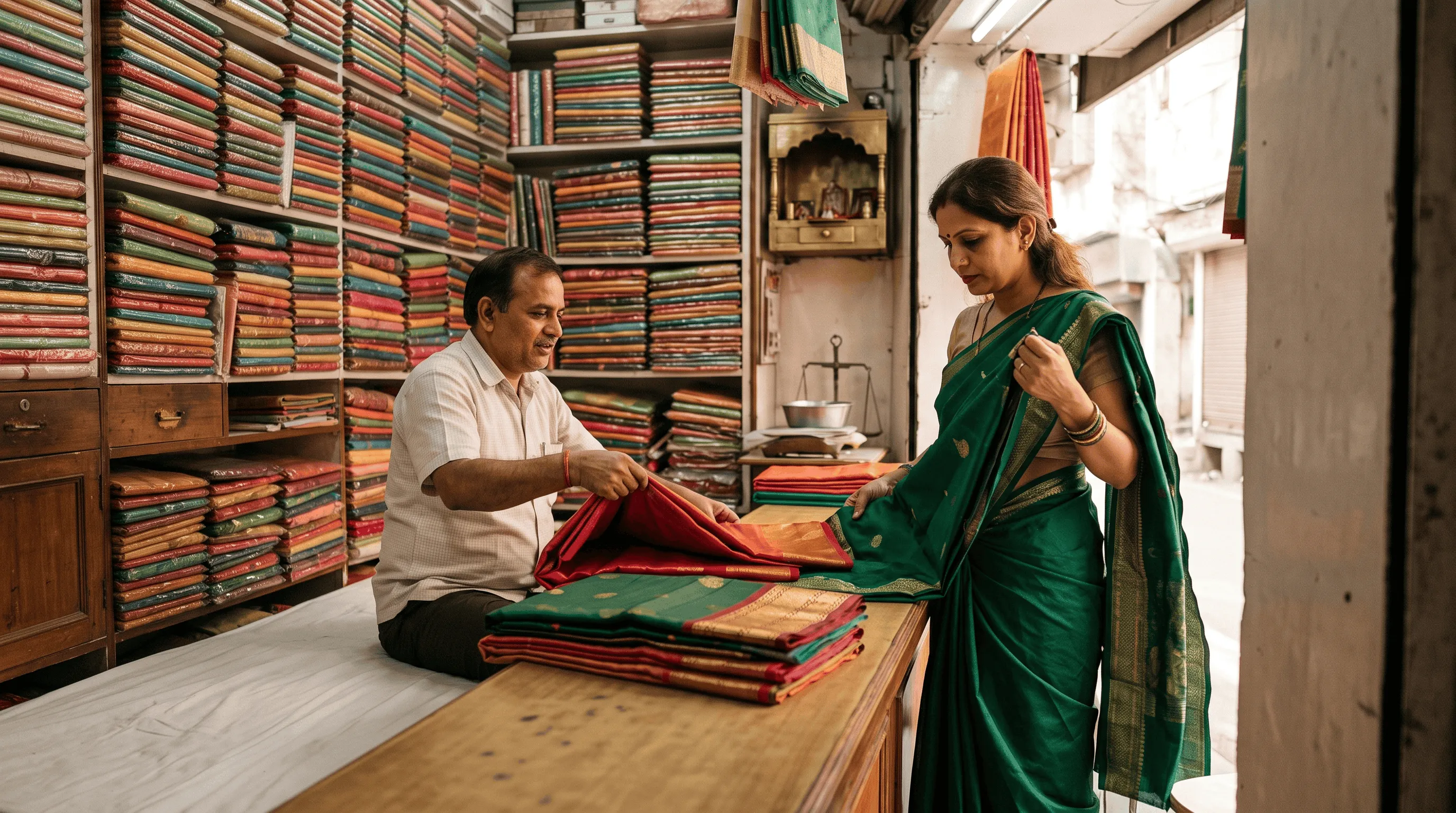
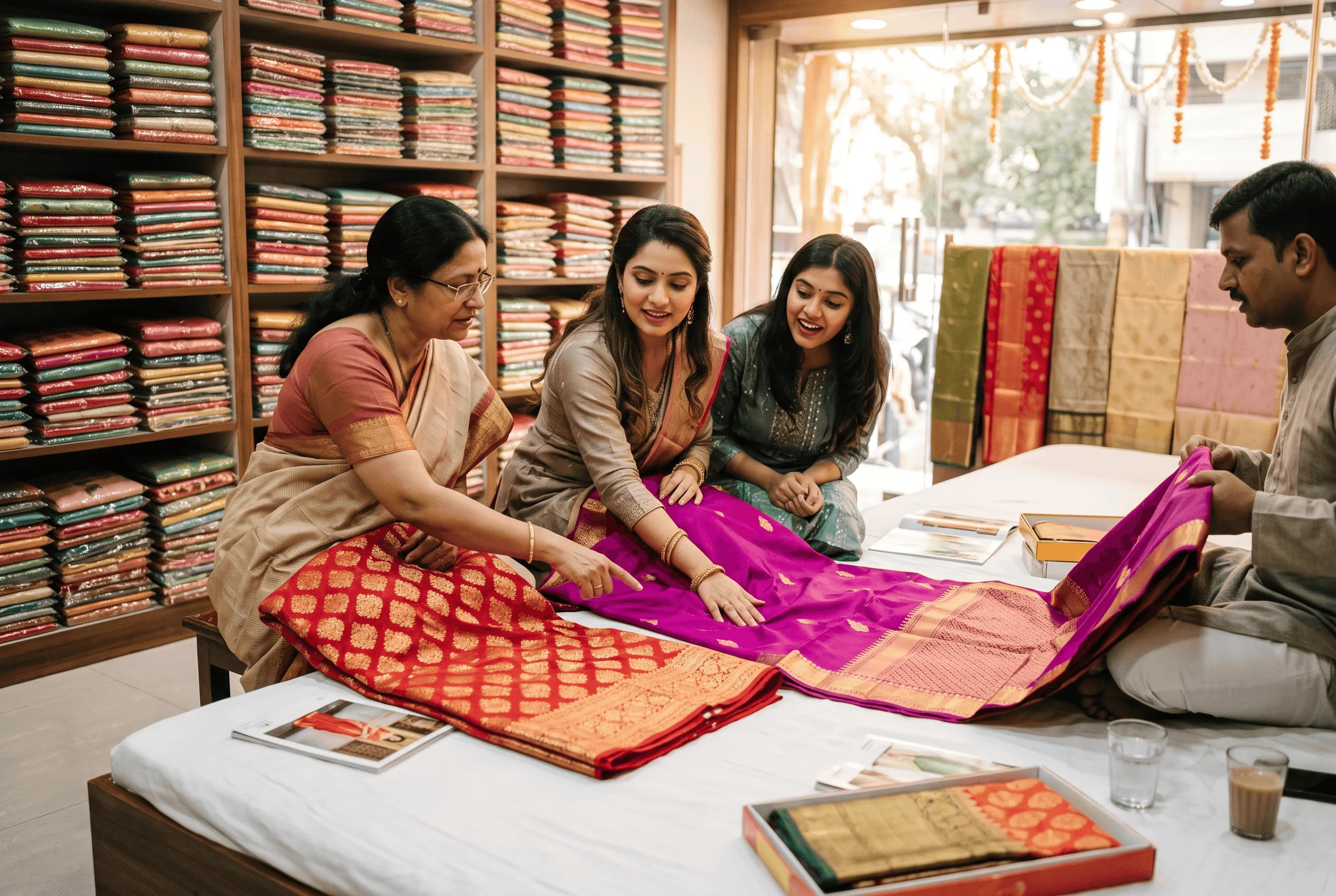
When you shop, ask whether the fabric is pure silk or a blend.
What Raw Silk Looks and Feels Like
Texture: small slubs and irregularities across the surface.
Sheen: soft and matte rather than glossy.
Body: crisp and structured, holding pleats and silhouettes well.
Weight: medium; heavier than chiffon or organza but lighter than brocade.
Colour: absorbs dye beautifully, giving rich, slightly muted tones.
Raw Silk vs Other Silks
| Feature | Raw silk | Mulberry silk | Tussar | Organza |
|---|---|---|---|---|
| Texture | Slubbed, textured | Smooth | Textured, natural | Sheer, crisp |
| Sheen | Soft, matte | High | Soft, golden | Glossy |
| Body | Structured | Fluid | Light, crisp | Very crisp |
| Best for | Day functions, lehengas, kurtas | Weddings, formal wear | Office, cultural events | Summer weddings |
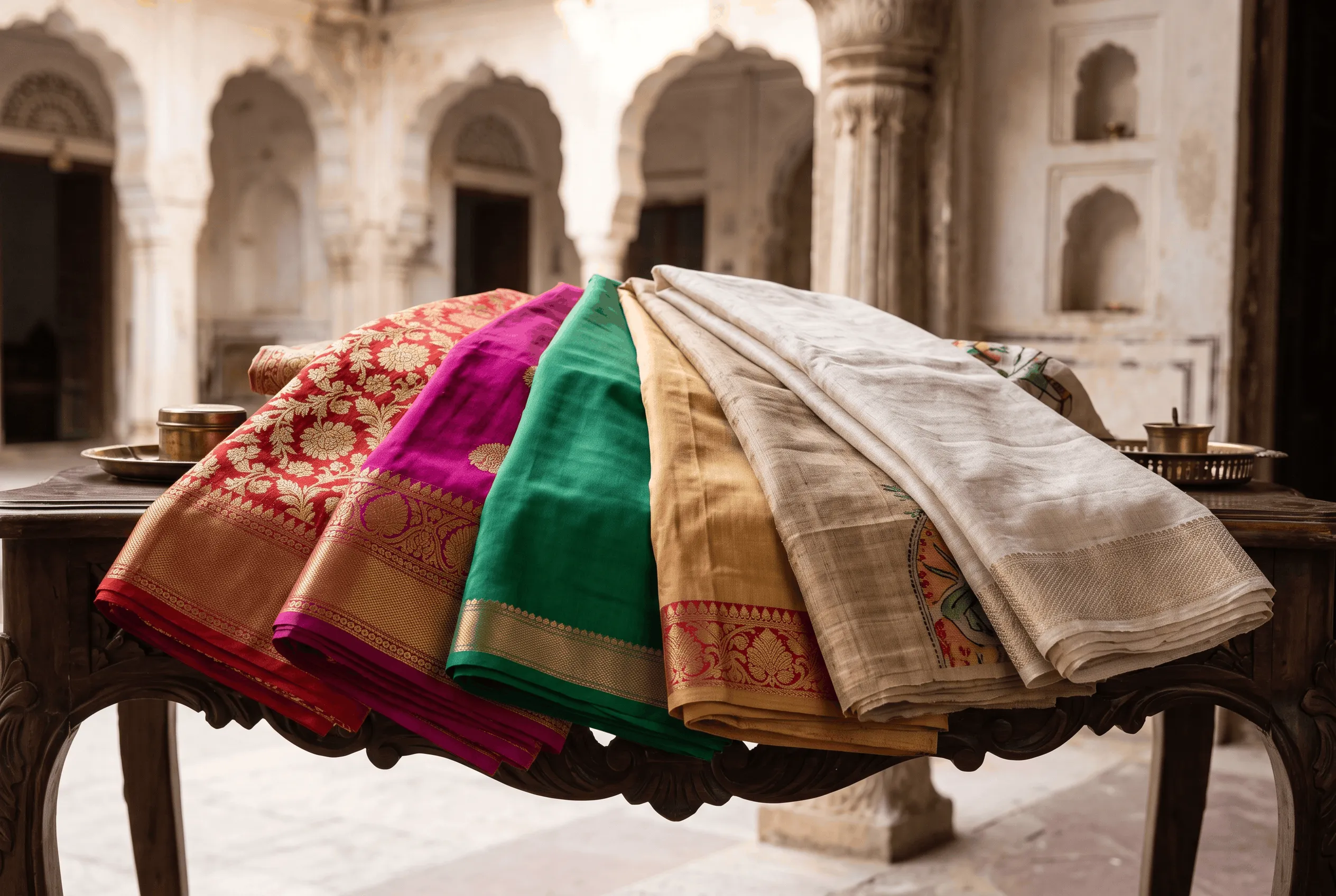
Read more in our silk fabric types guide and tussar silk guide.
Why Raw Silk Works for Daytime
It glows softly in sunlight without looking too shiny.
It holds structure, so lehengas and blouses keep their shape.
It suits bright and pastel colours, which look best in daylight.
It is festive but understated, ideal for functions before the main wedding.
It is versatile, working for women's and men's outfits.
Best Raw Silk Outfits for Day Functions
Raw silk sarees
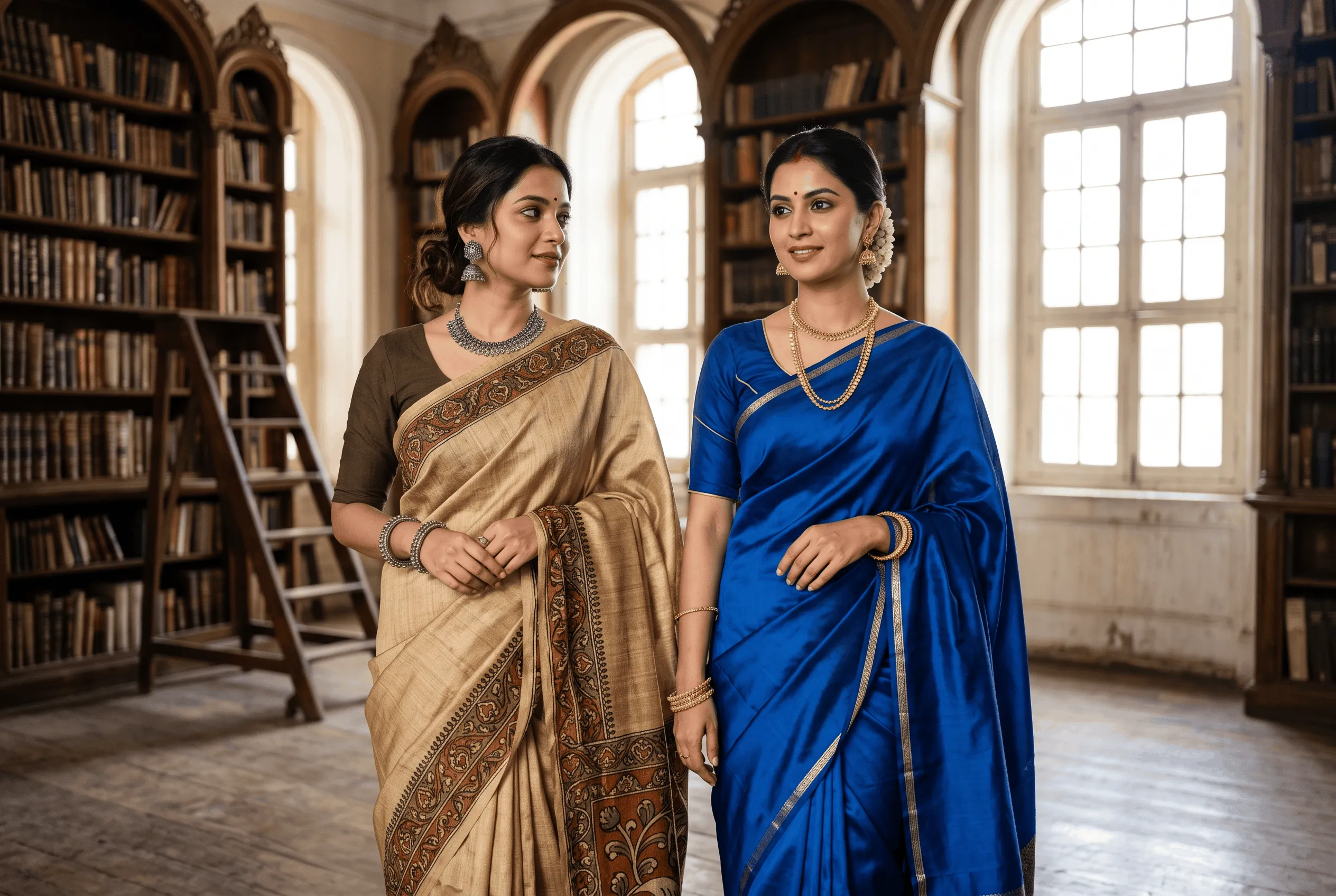
Plain raw silk sarees with contrast borders or light embroidery are elegant for pujas, festive lunches and day weddings.
Raw silk lehengas
Raw silk is a favourite for lighter bridal and bridesmaid lehengas, especially for engagements, mehendi and day ceremonies. Its structure gives a beautiful flare without the weight of velvet or brocade. See our bridal lehenga guide.
Raw silk kurta sets and anarkalis
Raw silk kurta sets with organza or chanderi dupattas are comfortable and festive for family functions.
Raw silk blouses
A raw silk blouse is one of the easiest ways to make a simple saree look festive. It pairs beautifully with cotton, chanderi, organza and tussar sarees.
Menswear
Raw silk kurtas, Nehru jackets and bandhgalas are popular for grooms and male guests at day functions.
Which Function, Which Outfit?
Engagement: a pastel raw silk lehenga or saree with light embroidery.
Puja and griha pravesh: a bright raw silk saree in yellow, orange, red or green.
Haldi: a yellow or mustard raw silk kurta set or saree. See our haldi and mehendi outfit ideas.
Mehendi: green, teal or multicoloured raw silk lehengas.
Day wedding: a rich raw silk saree or lehenga with zari or zardozi.
Naming ceremony or baby shower: soft pastel raw silk sarees or kurta sets.
Festive lunch or Diwali day: jewel-toned raw silk with gold jewellery. See our Diwali outfit ideas.
Best Colours for Daylight
Bright and joyful: marigold, mango, coral, fuchsia and parrot green.
Pastels: mint, blush, powder blue, lilac and peach.
Earthy tones: rust, mustard and olive.
Jewel tones: emerald, teal and wine, toned with lighter jewellery for day.
Avoid very dark colours with heavy shine for daytime; they can look too formal in sunlight.
See our seasonal colour trends in ethnic wear.
Styling Raw Silk
Blouses
Contrast raw silk blouses: mustard with emerald, pink with green.
Collared, high-neck and boat-neck blouses: elegant and modern.
Elbow-sleeve blouses with embroidered borders: traditional.
Jewellery
Gold and temple jewellery: for pujas and day weddings.
Polki and kundan: for engagements.
Pearls: soft and elegant for daytime.
Floral jewellery: for haldi and mehendi.
Dupattas
Pair raw silk lehengas and kurtas with sheer organza, chanderi or net dupattas for a lighter look. See our organza sarees for summer weddings.
Comfort Tips
Choose pure silk over synthetic "raw silk" for better breathability.
Ask for cotton lining in lehengas and blouses.
Choose lighter embroidery for outdoor day events.
Choose comfortable footwear for long ceremonies.
How to Identify Pure Raw Silk
Feel: pure silk feels natural and warms to the touch; synthetics feel slippery or plasticky.
Slubs: natural irregularities in pure silk vary; synthetic imitations often repeat uniformly.
Burn test: pure silk burns slowly, smells like burning hair and leaves crushable ash; polyester melts into a hard bead.
Silk Mark: ask for Silk Mark certification.
Price: pure raw silk costs more than art silk.
See our how to identify a pure silk saree guide.
Price Guide
These are indicative 2026 ranges.
| Raw silk item | Indicative price range |
|---|---|
| Art silk "raw silk" saree | ₹1,500 – ₹4,000 |
| Pure raw silk saree | ₹5,000 – ₹18,000 |
| Raw silk kurta set | ₹3,500 – ₹15,000 |
| Raw silk lehenga (light embroidery) | ₹15,000 – ₹60,000 |
| Designer raw silk lehenga | ₹50,000 – ₹2,00,000+ |
| Raw silk fabric per metre | ₹600 – ₹2,000 |
Caring for Raw Silk
Dry-clean sarees, lehengas and embroidered pieces.
Avoid water spots, as raw silk can mark easily.
Iron on low heat on the reverse, with a cloth in between.
Store in muslin or on padded hangers.
Keep away from perfume and direct sunlight.
See our silk saree care guide.
Raw Silk for Different Body Types
Petite: choose fitted raw silk kurtas, A-line lehengas and sarees with narrow borders, so the structured fabric does not add bulk.
Tall: flared raw silk lehengas and wide-bordered sarees look elegant.
Curvy: raw silk's structure can be very flattering in well-fitted blouses and A-line lehengas; avoid stiff, voluminous skirts if you prefer a streamlined look.
Slim: raw silk adds shape and volume, so flared lehengas and anarkalis work beautifully.
Coordinating the Family
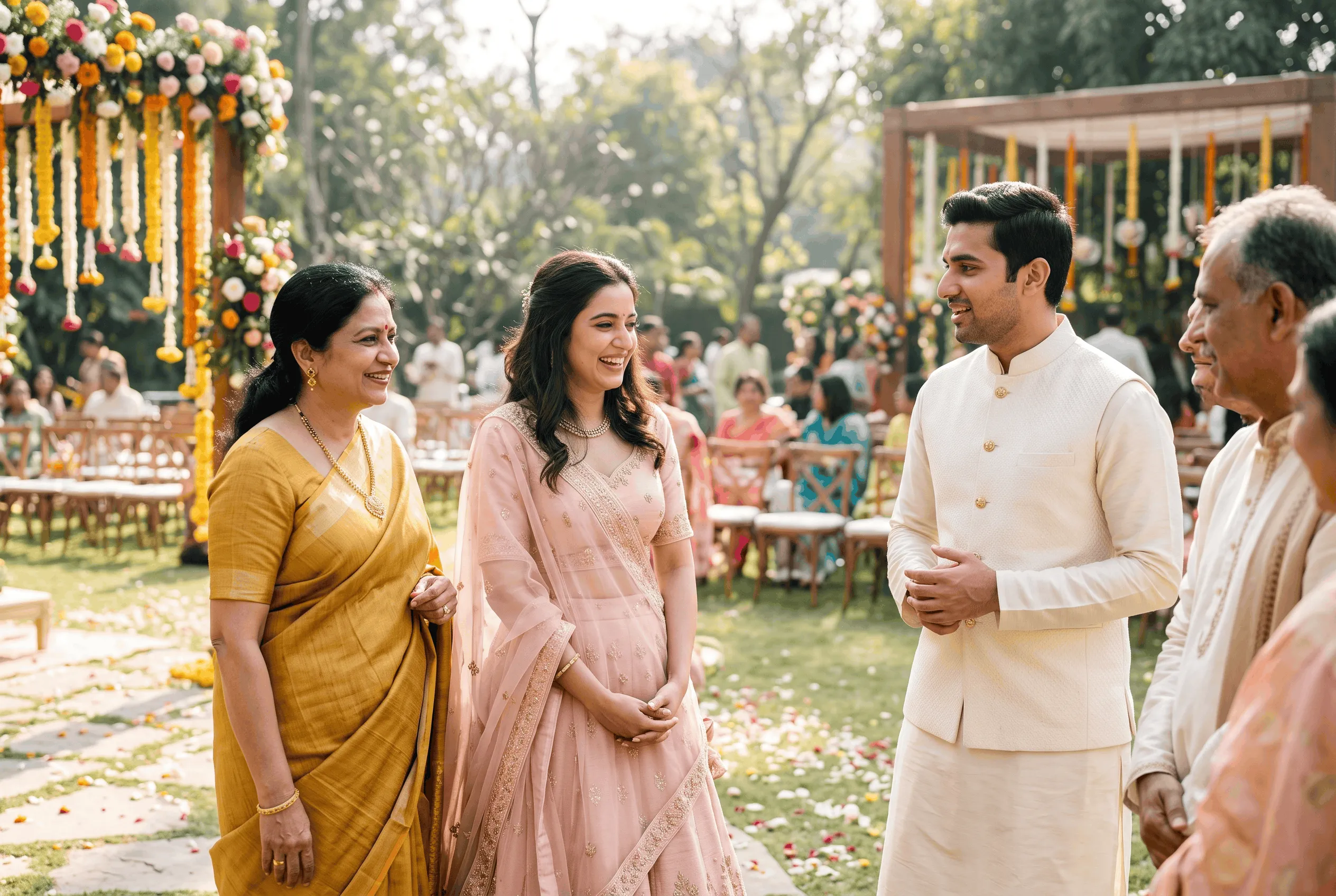
Raw silk is one of the easiest fabrics for coordinated family looks at day functions.
Men: raw silk kurtas in ivory, beige or a colour matching the women's outfits, with a Nehru jacket.
Children: raw silk kurta sets and lehengas in the same colour family.
Women: sarees, lehengas or kurta sets in coordinated shades, such as mustard, rust and ivory for haldi, or blush, mint and lilac for an engagement.
Coordinated raw silk looks photograph beautifully in daylight and feel festive without being too heavy.
Raw Silk Through the Seasons
Spring: pastels and florals for engagements and naming ceremonies.
Summer: lighter raw silk with cotton lining in pale colours; consider organza or cotton for very hot outdoor events.
Monsoon: be careful with water spots; choose darker shades and keep a spare dupatta for drizzle.
Winter: jewel tones and heavier embroidery for day weddings, with a pashmina or shawl. See our Pashmina shawls guide.
Buying Raw Silk Fabric for Custom Outfits
Many families buy raw silk by the metre and have outfits stitched.
Kurta: around 2.5–3 metres for women and 2.5 metres for men, depending on size and style.
Blouse: around 1 metre.
Lehenga skirt: around 4–6 metres, depending on the flare.
Ask whether the fabric is pure silk, check the colour in daylight and buy a little extra for adjustments. Pre-wash or dry-clean a small sample to check for shrinkage and colour bleeding before stitching.
Re-wearing and Restyling Raw Silk
Raw silk outfits are easy to restyle.
Wear a raw silk lehenga skirt with a different blouse or a long jacket for another function, or pair a raw silk blouse with several different sarees.
A raw silk kurta can be worn with churidars for a traditional look and with palazzos or straight pants for a more modern one.
Common Mistakes
Assuming every "raw silk" label means pure silk: always ask for the composition.
Choosing very heavy embroidery for daytime: it can look too formal in sunlight and feel heavy.
Skipping the lining: unlined raw silk can feel stiff and warm against the skin.
Spot-cleaning with water: it can leave marks; take stains to a dry cleaner.
Storing on thin hangers: structured lehengas and blouses can lose shape; use padded hangers or fold them in muslin.
Choosing Raw Silk With Confidence
Raw silk is one of the most practical festive fabrics for daytime: structured, softly glowing, comfortable and beautiful in natural light.
Choose a bright raw silk saree for pujas, a pastel raw silk lehenga for engagements and mehendi, a raw silk kurta set for family functions and a raw silk blouse to lift simpler sarees. Ask whether it is pure silk, and care for it with gentle dry-cleaning.
Explore more in our types of Indian sarees guide, our best silk saree for wedding checklist and the traditional wear trends 2026 guide.
Comments (0)
Leave a Thought
No comments yet. Be the first to share your thoughts!