A genuine Kashmiri Pashmina shawl is feather-light, incredibly warm and soft enough to feel like a whisper against the skin.
It is also one of the most imitated textiles in the world. Shops and websites sell "Pashmina" made from acrylic, viscose, ordinary wool or blends, often at prices that seem like a bargain until the shawl pills, sheds or feels scratchy after a few wears.
Knowing what real Pashmina is, and how to test it, protects your money and supports the Kashmiri artisans who spin, weave and embroider it by hand.
This guide explains how to spot a real Pashmina shawl, from its origin and fibre to practical tests, labels, weaves, embroidery, prices and care.
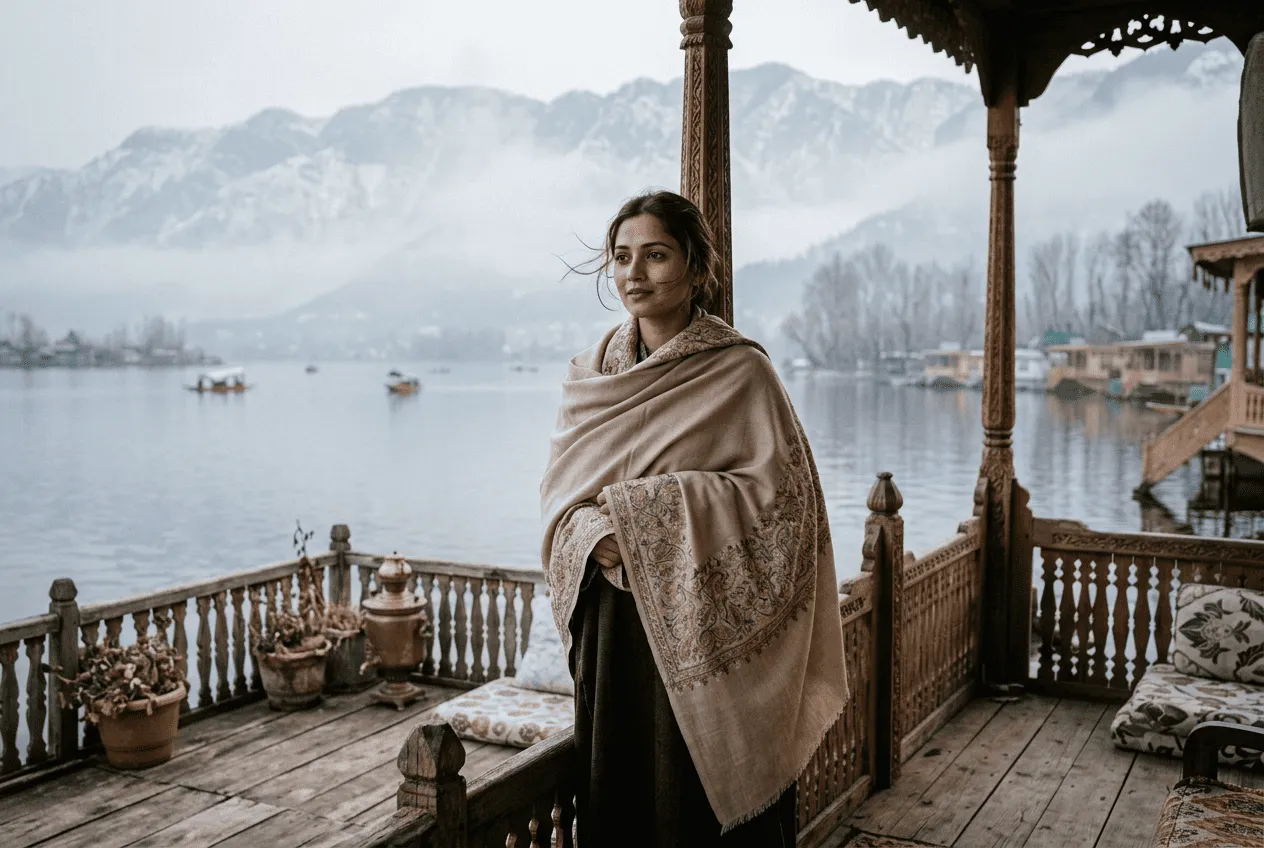
What Is Pashmina?
Pashmina is the fine undercoat fibre of the Changthangi (or Changra) goat, which lives at high altitudes in the Changthang plateau of Ladakh.
To survive harsh winters, the goats grow a very fine, warm undercoat, which they naturally shed in spring. Herders comb this fibre out by hand.
Pashmina fibres are extremely fine, typically around 12–16 microns in diameter, much finer than ordinary sheep's wool and finer than a human hair.
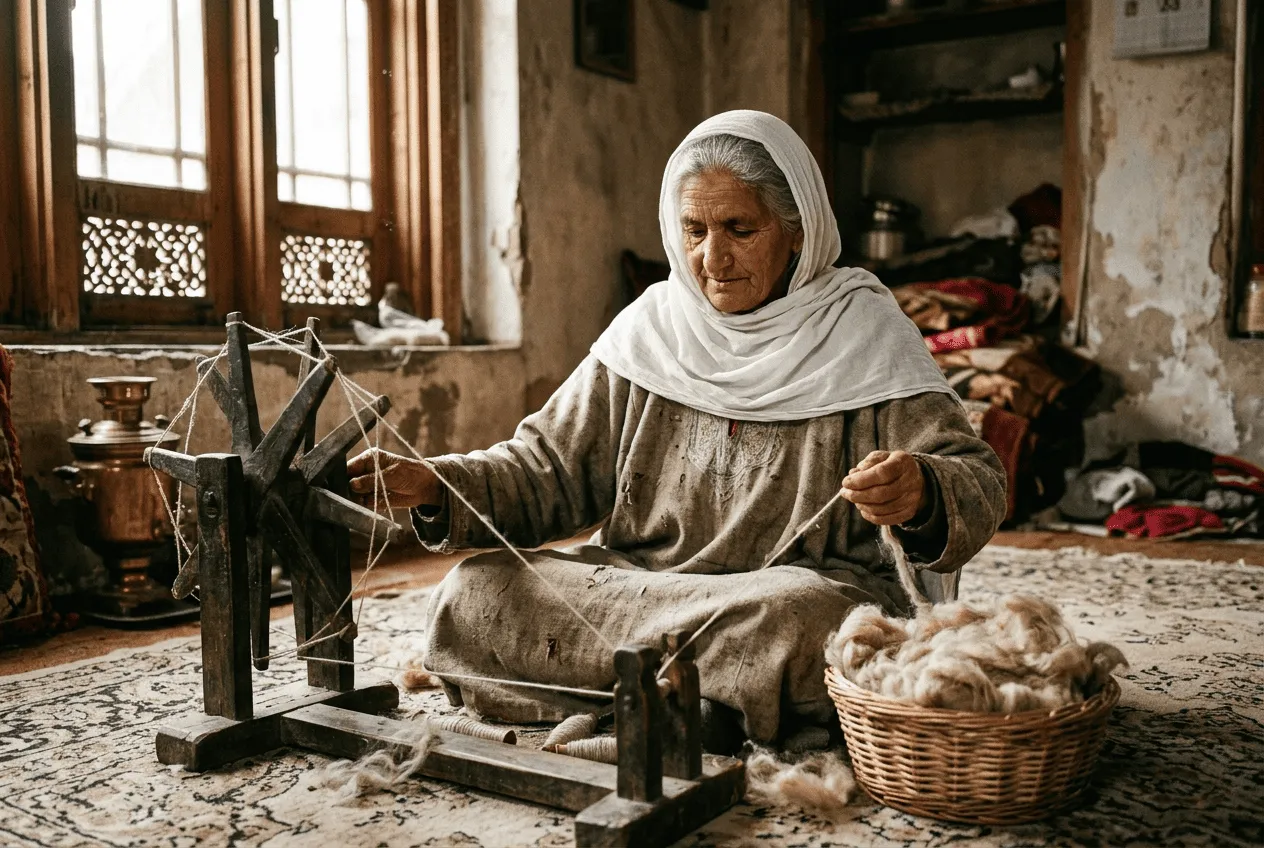
The fibre is then cleaned, hand-spun on a charkha, and hand-woven in Kashmir into shawls, stoles and scarves.
"Kashmir Pashmina" is protected by a Geographical Indication.
Pashmina vs Cashmere
All Pashmina is a type of cashmere fibre, but not all cashmere is Pashmina.
Cashmere is a broad term for fine goat undercoat fibre from many countries, often machine-processed.
Kashmiri Pashmina refers specifically to the fine Changthangi fibre, traditionally hand-spun and hand-woven in Kashmir.
A Note on Shahtoosh
Shahtoosh is made from the wool of the Tibetan antelope (chiru), an endangered species.
Trade in shahtoosh is illegal in India and internationally under wildlife protection laws. Do not buy anything sold as shahtoosh.
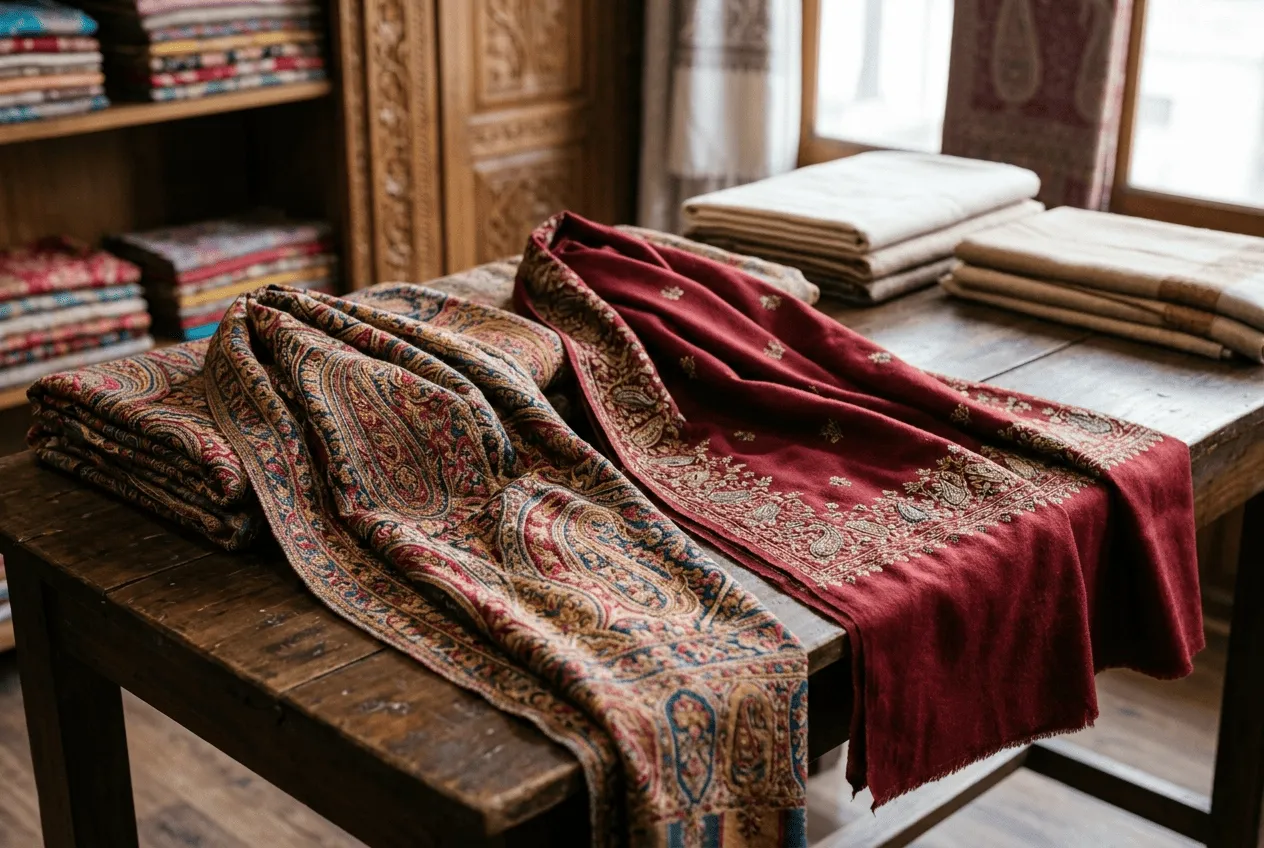
How to Spot a Real Pashmina: 10 Checks
1. Feel
Real Pashmina feels exceptionally soft, light and warm, and warms up quickly against the skin.
Acrylic and viscose often feel slippery, silky or "too smooth"; ordinary wool can feel scratchy.
2. Weight
A pure Pashmina stole is very light for its size. Heavy shawls are usually blends or ordinary wool, unless heavily embroidered.
3. Weave irregularities
Hand-woven Pashmina shows tiny irregularities in the weave when held up to the light.
A perfectly uniform weave suggests a machine-made fabric.
4. Static
Rub the shawl quickly. Acrylic and polyester often create static and may even spark; pure Pashmina generally does not.
5. Pilling
Real Pashmina may form slight pilling with use, but cheap synthetics often pill heavily and quickly.
6. The burn test
Ask the seller for a loose thread from the fringe.
Pure Pashmina burns like hair: it smells of burning hair, burns slowly and leaves a fine, crushable ash.
Acrylic or polyester melts into a hard bead and smells like plastic.
7. The fringe
Hand-woven Pashmina often has hand-twisted fringes, sometimes with slightly uneven lengths.
8. Labels and certification
Ask for GI certification for Kashmir Pashmina. Some government-backed testing and certification facilities label genuine Pashmina products.
Labels saying "Pashmina-like", "Pashmina-feel" or "cashmere-touch" are not genuine Pashmina.
9. Price
Hand-spun, hand-woven Pashmina is expensive because it takes weeks to spin, weave and finish. A "pure Pashmina" shawl sold at a very low price is almost certainly not genuine.
10. Seller knowledge
A trustworthy seller can explain the fibre, spinning, weaving, blend percentage and any embroidery, and can give a detailed bill.
Be Careful With the "Ring Test"
Some sellers pull a shawl through a ring to prove it is pure Pashmina.
This only shows that the shawl is thin and fine. Many fine blends and synthetics can also pass through a ring, and heavily embroidered pure Pashminas cannot. Do not rely on it alone.
Pure vs Blended Pashmina
100% Pashmina: the most luxurious and expensive.
Pashmina-silk blends: often 70:30, with a subtle sheen and slightly lower price.
Pashmina-wool blends: warmer and sturdier, more affordable.
Blends are fine if they are honestly labelled. Ask for the percentage.
Types of Pashmina Shawls
Plain Pashmina: natural or dyed solid colours, the most versatile.
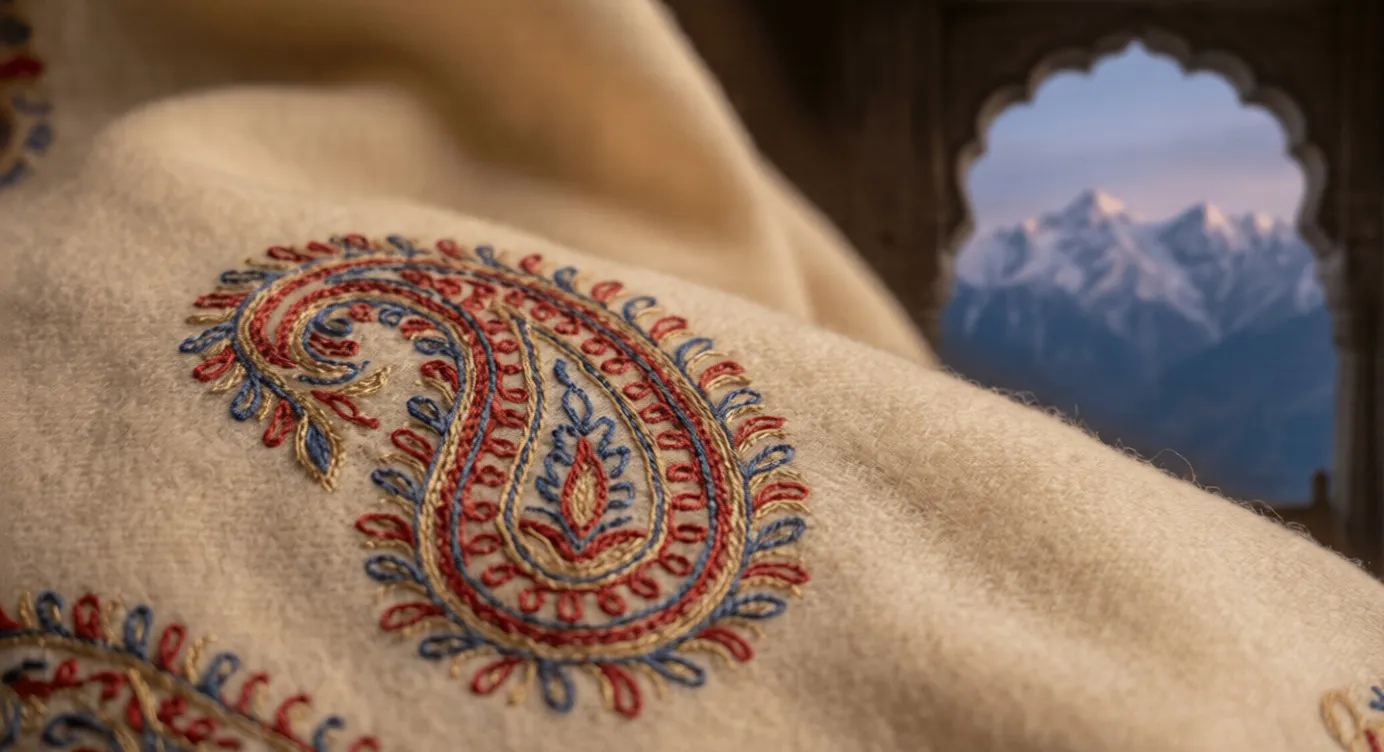
Sozni embroidered: fine needle embroidery, often in paisley and floral designs.
Kani: woven with small wooden bobbins called kanis, creating intricate patterns. Kani shawls take months to weave and are GI-protected.
Jamawar-style: densely patterned, inspired by historic Kashmiri shawls.
Tilla: embroidered with metallic thread for weddings.
Reversible (do-rukha): embroidered so the design looks the same on both sides.
Styling Pashmina With Ethnic Wear
With sarees: drape a Pashmina over a silk saree for winter weddings.
With suits: wear a plain or sozni Pashmina instead of a dupatta.
With lehengas: an embroidered Pashmina shawl adds warmth and elegance to winter bridal looks. See our bridal lehenga guide.
For men: Pashmina shawls and stoles with kurtas, sherwanis and bandhgalas.
Everyday: neutral Pashmina stoles with coats and Western wear.
See our guide to wool in Indian ethnic wear.
Price Guide
These are indicative 2026 ranges. Prices depend on purity, size, weave and embroidery.
| Pashmina type | Indicative price range |
|---|---|
| Pashmina-blend stole | ₹2,500 – ₹8,000 |
| Pure plain Pashmina stole | ₹8,000 – ₹25,000 |
| Pure plain Pashmina shawl | ₹15,000 – ₹45,000 |
| Sozni embroidered Pashmina | ₹25,000 – ₹2,00,000+ |
| Kani Pashmina shawl | ₹50,000 – ₹5,00,000+ |
Caring for Pashmina
Dry-clean or hand wash very gently in cold water with a mild wool shampoo.
Do not wring; press out water with a towel.
Dry flat in shade.
Iron on low with a cloth in between, or steam lightly.
Store folded in a cotton or muslin bag with natural moth repellents such as neem leaves or cedar.
Air it occasionally and avoid storing in plastic.
How a Pashmina Shawl Is Made
Combing: in spring, herders in Ladakh comb the shed undercoat from the goats by hand.
Cleaning and sorting: coarse guard hairs are separated from the fine undercoat, which is slow, careful work.
Hand spinning: the fine fibre is spun on a charkha, traditionally by women in Kashmir. The yarn is so fine that it breaks easily on machines.
Weaving: weavers set up the delicate yarn on handlooms; a plain shawl can take several days to weeks.
Dyeing and finishing: shawls are dyed if needed and washed to soften the fibre.
Embroidery or kani weaving: sozni embroidery can take weeks or months, and kani shawls can take many months or even years for the most complex designs.
Each stage adds time and skill, which is why genuine Pashmina is expensive.
Choosing the Right Size
Stole: around 70 × 200 cm. Easy to wear with sarees, suits and coats.
Shawl: around 100 × 200 cm. Warmer and more traditional, ideal for winter weddings and evenings.
Muffler: around 30 × 160 cm. A practical everyday piece, popular with men.
Large shawl or doshala: around 140 × 280 cm. Very warm and traditionally worn by men or used as a wrap.
If you are buying your first Pashmina, a stole in a neutral colour is the most versatile choice.
Choosing Colours
Natural shades: undyed beige, grey and brown show the fibre's natural beauty and suit everything.
Jewel tones: maroon, emerald and royal blue look elegant with wedding outfits.
Pastels: soft pink, mint and powder blue suit daytime functions.
Black and charcoal: classic for evening wear and menswear.
Buying Pashmina Online
Online listings are where most fake "Pashmina" is sold, so be extra careful.
Look for clear fibre composition (for example 100% Pashmina or 70% Pashmina, 30% silk), GI certification details, close-up photos of the weave and fringe, and a seller with a physical address in Kashmir or a long, verifiable history.
Be wary of very low prices, vague words such as "Pashmina-feel" and listings that call viscose or acrylic shawls "Pashmina". Choose sellers with a clear return policy.
Gifting Pashmina
A Pashmina is one of the most treasured gifts in India, especially for weddings, anniversaries and milestone birthdays.
A neutral stole is a safe choice for most people, while an embroidered shawl makes a memorable wedding or heirloom gift. Include a small care card so the recipient knows how to look after it.
Common Pashmina Myths
"If it passes through a ring, it is pure." Not true. Many fine blends and synthetics pass the ring test, and thick embroidered Pashminas do not.
"Real Pashmina never pills." Not true. Fine natural fibres can pill slightly with friction, especially under bag straps. Heavy, fast pilling is the warning sign.
"Shiny means high quality." Not true. Pure Pashmina has a soft, matte look; a strong shine usually means silk or synthetic content.
"All Pashmina is very expensive." Mostly true for pure, hand-spun Pashmina, but honestly labelled blends offer good value at lower prices.
"Pashmina is too delicate to wear often." Not true. With gentle care, a good Pashmina can be worn for many winters and often lasts for decades.
Supporting Kashmiri Artisans
Pashmina supports herders in Ladakh, spinners (many of them women) and weavers and embroiderers in Kashmir.
Buying genuine, honestly labelled Pashmina from trusted sellers helps sustain this centuries-old craft. Read our guide to sustainable handloom fashion.
Buying With Confidence
A real Pashmina is light, warm, soft and handmade, and its price reflects months of skilled work.
Feel the fabric, check the weave and fringe, ask for a burn test and GI certification, avoid the ring-test trick and buy from sellers who can explain exactly what you are paying for.
Explore more in our guides to North Indian ethnic wear: Pashmina, Phulkari and Chikankari and authentic handloom red flags, and on our North India page.
Comments (0)
Leave a Thought
No comments yet. Be the first to share your thoughts!