Phulkari means "flower work", and few crafts carry as much warmth, colour and family history.
For generations, women in Punjab embroidered phulkaris by hand for their daughters and granddaughters. Bright silk threads in golden yellow, orange, magenta and green were stitched onto handspun cotton to create glowing geometric flowers, and a finished bagh (garden) phulkari, covering almost every inch of the cloth, could take months or even years.
Today, phulkari appears on dupattas, sarees, suits, jackets and bags, and it remains a treasured part of Punjabi weddings and festivals.
This phulkari embroidery guide explains its history, stitches, types, how to recognise hand embroidery and how to style phulkari for weddings, festivals and modern wardrobes.
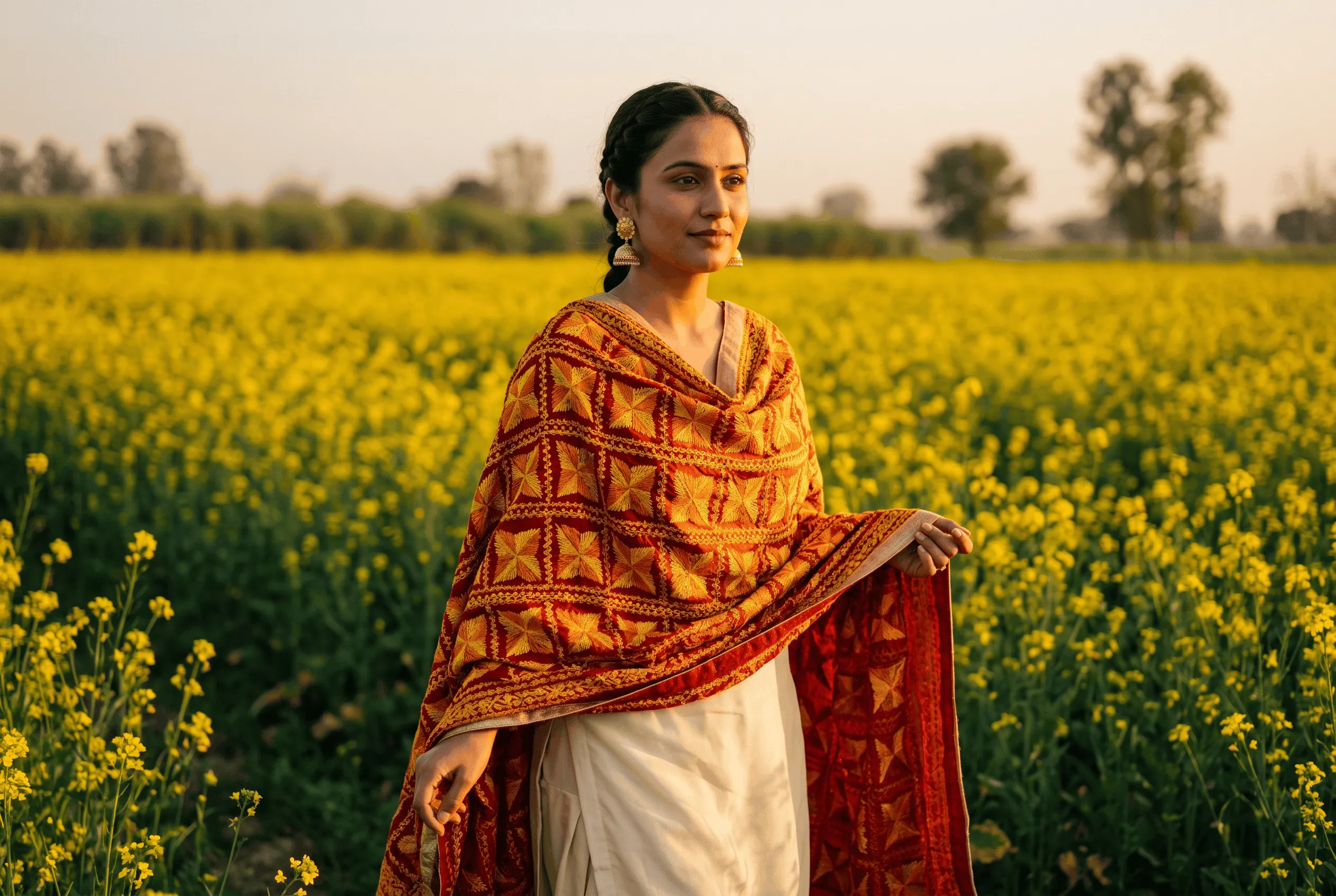
What Is Phulkari?
Phulkari is a traditional embroidery from Punjab (in both India and Pakistan) and parts of Haryana.
It is worked with untwisted silk floss called pat on handspun, hand-woven cotton called khaddar, traditionally in earthy reds, browns, blues and whites.
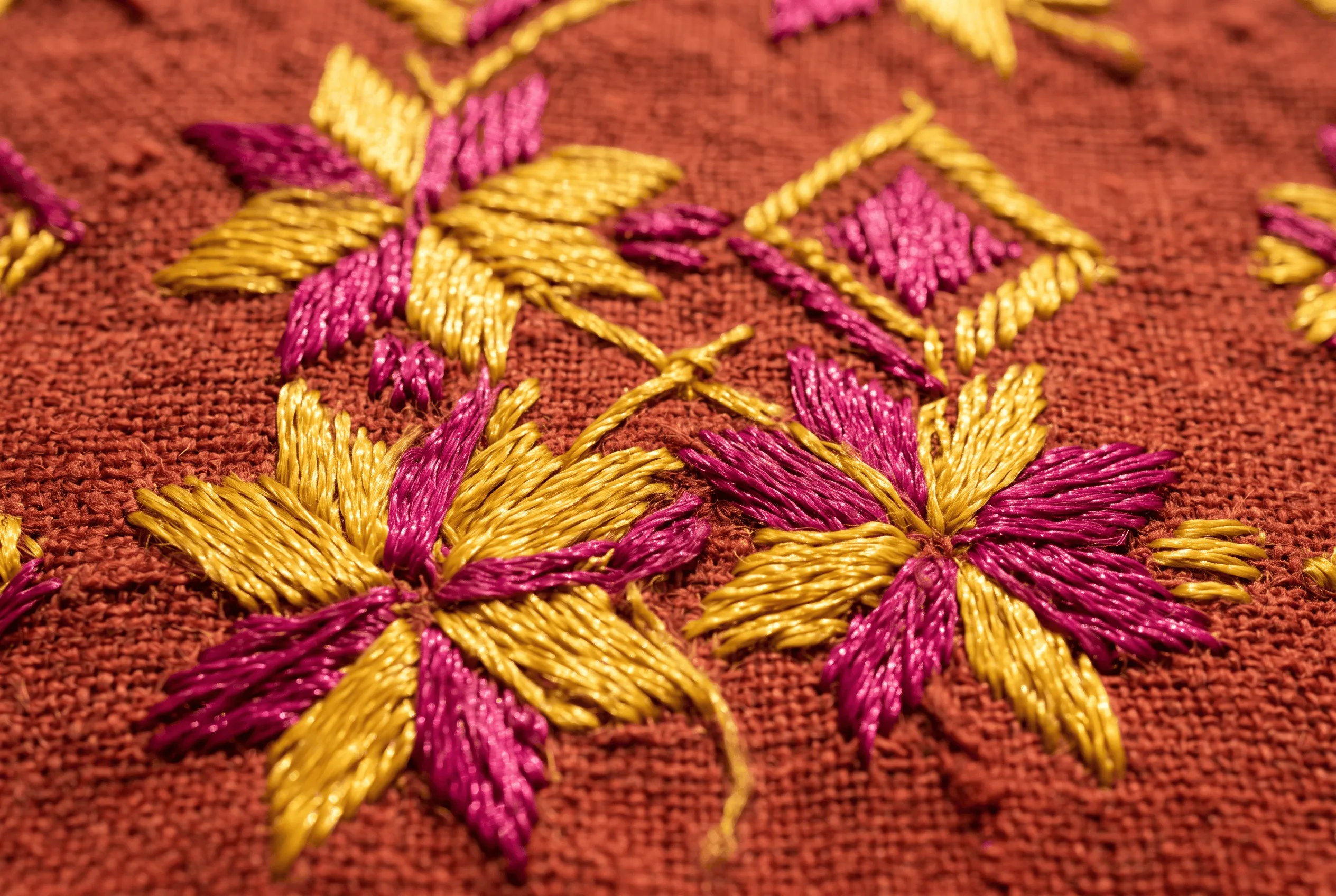
The main stitch is a darning stitch worked from the reverse side of the fabric, which creates long, shiny stitches on the front. By changing the direction of the stitches, embroiderers create the play of light and shade that makes phulkari glow.
Phulkari is protected by a Geographical Indication covering Punjab, Haryana and Rajasthan.
A Short History
Phulkari is believed to have been practised in Punjab for centuries, with strong traditions in the nineteenth and early twentieth centuries.
It was a domestic craft: women embroidered phulkaris at home, often together with friends and relatives, and the pieces were rarely made for sale.
Phulkaris were part of a bride's trousseau. A grandmother might begin a bagh when a granddaughter was born, so it would be ready for her wedding.
After Partition and with industrialisation, hand phulkari declined, but revival efforts by cooperatives, designers and NGOs have brought it back into fashion.
Types of Phulkari
Bagh: the embroidery covers the entire base cloth, so the fabric is barely visible. It is the most elaborate and valuable type.
Phulkari: scattered floral or geometric motifs with the base fabric visible between them.
Chope: embroidered on both sides along the edges with a double running stitch, traditionally gifted by the maternal grandmother to the bride.
Sainchi: includes figurative motifs of people, animals and village life, especially from the Malwa region.
Thirma: white embroidery on a white base, traditionally associated with older women and widows.
Darshan dwar: an embroidered "gateway" design, made as an offering for gurdwaras or temples.
Vari da bagh: a bagh in golden yellow on a red base, traditionally given to the bride by her in-laws.
Sheeshedar: phulkari with small mirrors.
Phulkari Motifs
Phulkari designs are mostly geometric, because they are counted on the threads of the cloth.
Flowers and lotus: the most common motifs.
Wheat and barley stalks: symbols of Punjab's farming life.
Peacocks and birds: especially in sainchi.
Village scenes and everyday objects: combs, jewellery and kitchen utensils.
Diamonds, triangles and lattices: the backbone of bagh designs.
Phulkari for Weddings
Bride's dupatta: a phulkari or bagh dupatta is a beloved part of Punjabi bridal looks, especially for the chooda ceremony, mehendi and anand karaj.
Chooda and haldi: yellow, orange or pink phulkari dupattas with simple suits.
Bridal canopies and decor: phulkari is used for the phulkari canopy held over the bride.
Guests: phulkari dupattas or jackets with plain suits.
See our haldi and mehendi outfit ideas.
Phulkari for Festivals
Lohri: phulkari dupattas with warm suits around the bonfire.
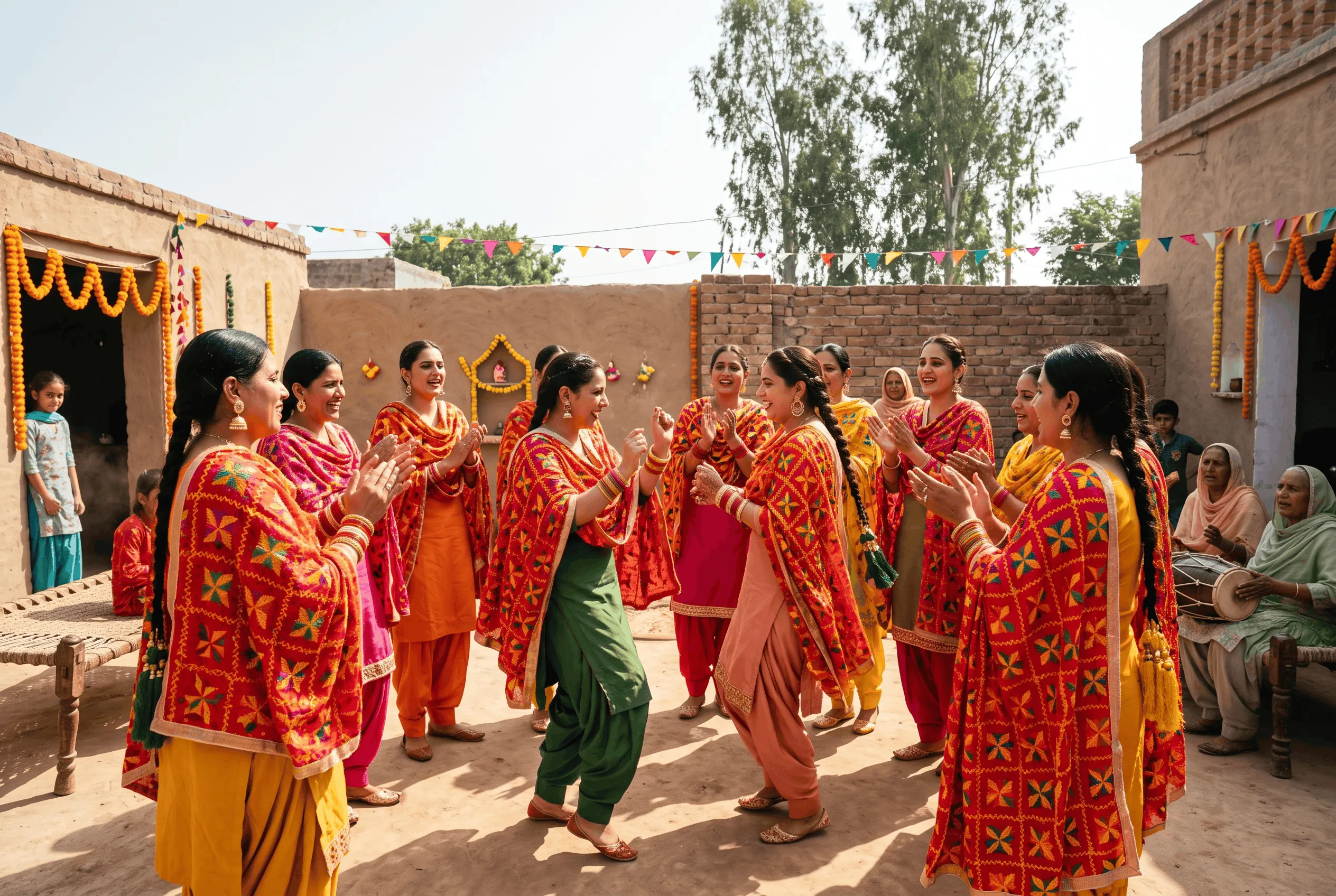
Baisakhi: bright phulkari for gidda dancing and celebrations.
Teeyan: colourful phulkari for the women's monsoon festival.
Diwali and Gurpurab: elegant phulkari dupattas with silk suits.
Styling Phulkari Today
The classic look
A plain suit or salwar kameez in white, cream, black or a solid colour with a heavily embroidered phulkari dupatta.
Phulkari sarees
Georgette or chiffon sarees with phulkari borders or pallus are a modern way to wear the craft. Pair them with a plain blouse.
Phulkari jackets and shrugs
Phulkari jackets over kurtas, dresses or even jeans add a festive touch.
Accessories
Phulkari bags, juttis and stoles are easy ways to include the craft in everyday wear.
Jewellery
Gold jhumkas and passa: traditional Punjabi pieces.
Kundan and polki: for weddings.
Oxidised silver: for casual looks.
Hand vs Machine Phulkari
Machine-embroidered phulkari is widely sold and affordable, but hand phulkari has distinct qualities.
Hand phulkari: stitches are worked from the reverse, slightly uneven, with a soft, raised sheen. The reverse shows small, neat stitches.
Machine phulkari: stitches are perfectly uniform, often denser and flatter, and the reverse shows machine thread patterns.
Price: hand phulkari, especially bagh, is much more expensive because it takes weeks or months.
Read our authentic handloom red flags for more buying tips.
Price Guide
These are indicative 2026 ranges.
| Phulkari item | Indicative price range |
|---|---|
| Machine-embroidered phulkari dupatta | ₹800 – ₹3,000 |
| Hand-embroidered phulkari dupatta | ₹3,000 – ₹15,000 |
| Hand-embroidered bagh dupatta | ₹12,000 – ₹60,000+ |
| Antique or heirloom bagh | Highly variable, collector prices |
Caring for Phulkari
Dry-clean silk-thread phulkari and heirloom pieces.
Hand wash cotton-thread phulkari gently in cold water, inside out.
Do not wring or scrub the embroidery.
Dry flat in shade.
Iron on the reverse with a cloth in between.
Store in muslin, folded with tissue, away from damp.
Phulkari Colours
Traditional phulkaris use a warm, glowing palette.
Golden yellow and orange: the signature phulkari colours, often on a red base, associated with joy and celebration.
Red base cloth: traditionally linked with brides and weddings.
White and cream: used in thirma phulkaris.
Magenta, green and blue: used for contrast in motifs.
Modern phulkaris also come in pastels, black and jewel tones, which work well for contemporary styling while keeping the embroidery's character.
Choosing a Phulkari Dupatta
For weddings: a dense phulkari or bagh in red, orange or magenta, ideally hand-embroidered.
For festivals: a bright, medium-density phulkari with scattered motifs.
For everyday: a lighter phulkari on cotton or georgette, easy to wash and drape.
Base fabric: cotton and khaddar feel traditional and breathable; georgette and chiffon drape more softly.
Size: a full-size dupatta (around 2.25–2.5 metres) works for both shoulders and head-covering.
Hold the dupatta up to the light: fine hand embroidery shows tiny, varied stitches and a soft glow.
Phulkari for Men
Phulkari stoles over kurta pyjamas, phulkari Nehru jackets and phulkari-trimmed safas are increasingly popular for Punjabi weddings and festivals.
A cream kurta with a phulkari stole in orange or magenta is a simple, elegant festive look for men.
Phulkari at Different Ages
Young girls: phulkari dupattas or embroidered kurtis in bright colours for gidda performances and school events.
College students: phulkari jackets and dupattas with modern kurtas or even jeans.
Brides: a bagh or dense phulkari dupatta for the chooda ceremony or anand karaj.
Mothers and grandmothers: heirloom phulkaris for weddings, often passed down to daughters and granddaughters.
Caring for Heirloom Phulkari
Old phulkaris and baghs are precious, and many are decades old.
Handle gently and avoid hanging them for long periods, as the weight can stretch the fabric.
Store flat or rolled around an acid-free tube, wrapped in muslin.
Keep away from damp and direct sunlight, which can fade silk floss.
Use professional textile conservators for repairs rather than local tailors.
Display carefully: if you frame a phulkari, use UV-protective glass and acid-free mounting.
Mixing Phulkari With Other Pieces
Phulkari is bold, so pair it with simple pieces.
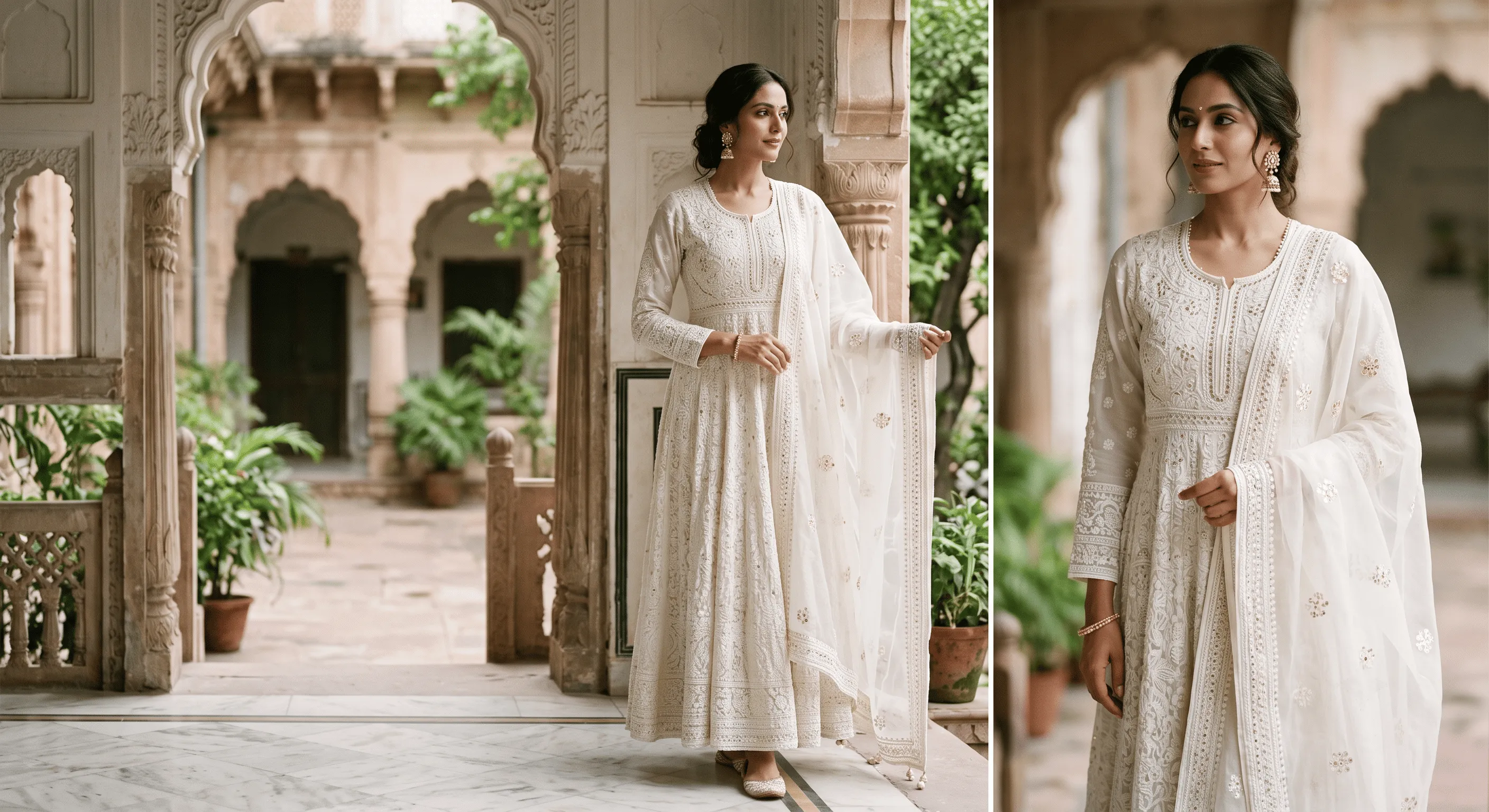
A plain silk suit, a solid chiffon saree or a white chikankari kurta lets the phulkari stand out. Our chikankari guide shows how white chikan and colourful phulkari can be combined for a North Indian festive look.
Phulkari Through the Year
Lohri (January): a warm phulkari dupatta with a woollen or silk suit around the bonfire.
Baisakhi (April): bright yellow and orange phulkari for gidda and harvest celebrations.
Teeyan (July–August): colourful phulkari dupattas for the monsoon festival of swings and songs.
Karwa Chauth: a red phulkari dupatta with a red or maroon suit.
Diwali and Gurpurab: elegant phulkari with silk suits for prayers and family gatherings.
Wedding season: baghs and dense phulkaris for brides, mothers and guests.
Common Mistakes
Pairing a phulkari with a busy suit: the embroidery gets lost; keep the suit plain.
Machine washing hand phulkari: it can damage the silk floss and the base cloth.
Storing phulkari in plastic: trapped moisture can cause mildew and fading.
Paying hand-embroidery prices for machine work: always check the stitches and the reverse.
Gifting Phulkari
A phulkari dupatta is a warm, personal gift for Punjabi weddings, Lohri and Baisakhi.
For a bride, a hand-embroidered bagh or dense phulkari can become an heirloom. For friends and colleagues, a lighter phulkari stole or dupatta is a cheerful, affordable choice. If you buy from a women's cooperative, tell the recipient: knowing who made it adds meaning to the gift.
Supporting Phulkari Artisans
Today, many phulkari artisans are women working from home in Punjab villages through cooperatives and NGOs.
Buying hand phulkari from these groups helps preserve the craft and supports women's livelihoods. Learn more in our guide to sustainable handloom fashion.
Wearing a Piece of Punjab
Phulkari is joyful, colourful and deeply personal, a craft once made by women for the women they loved.
Wear a phulkari dupatta with a plain suit for festivals, choose a bagh for a bridal heirloom, or add a phulkari jacket to modern outfits. Look for hand embroidery when you can, and care for it gently.
Explore more North Indian crafts in our guides to North Indian ethnic wear: Pashmina, Phulkari and Chikankari, Chikankari embroidery and on our North India page.
Comments (0)
Leave a Thought
No comments yet. Be the first to share your thoughts!