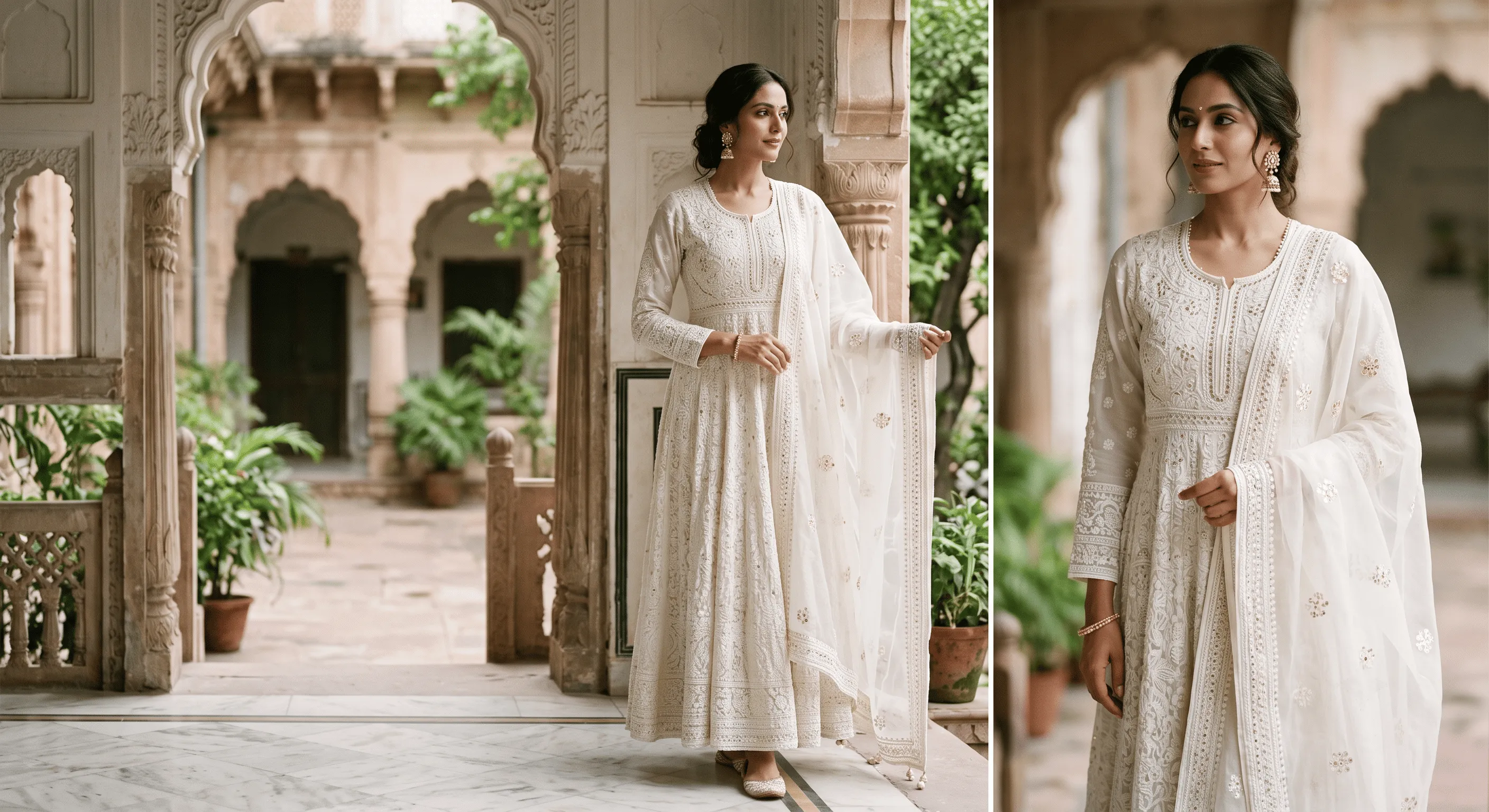
There is something distinctive about chikankari: from a distance, it can look almost effortless. A pale kurta with delicate floral embroidery may seem simple beside heavily embellished festive clothing, yet a closer look reveals dozens of tiny stitches, raised textures, shadow effects and carefully placed motifs.
That quiet intricacy is exactly what has made Lucknow chikankari one of India's most recognizable embroidery traditions.
Traditionally associated with white embroidery on fine white fabric, chikankari has expanded far beyond its early monochrome identity. Today, artisans work on cotton, muslin, silk, chiffon, georgette and other fabrics, while designers use the embroidery across kurtas, sarees, anarkalis, lehengas, dupattas and contemporary fusion wear. India's official handicrafts documentation also identifies Lucknow Chikan Craft as a registered Geographical Indication and describes its traditional association with white embroidery on fine fabrics.
But chikankari is more than a floral pattern.
Its real character lies in how the stitches interact with the cloth—some sit on the surface, some create relief, and others produce a delicate shadow from the reverse.
This guide explores the story, techniques, fabrics, ethnic-wear applications and buying details behind Lucknow's celebrated embroidery.
What Is Chikankari?
Chikankari is a style of embroidery historically associated with Lucknow and the wider craft traditions of Uttar Pradesh.
At its most traditional, the work uses fine white thread to create floral and botanical patterns over lightweight fabric.
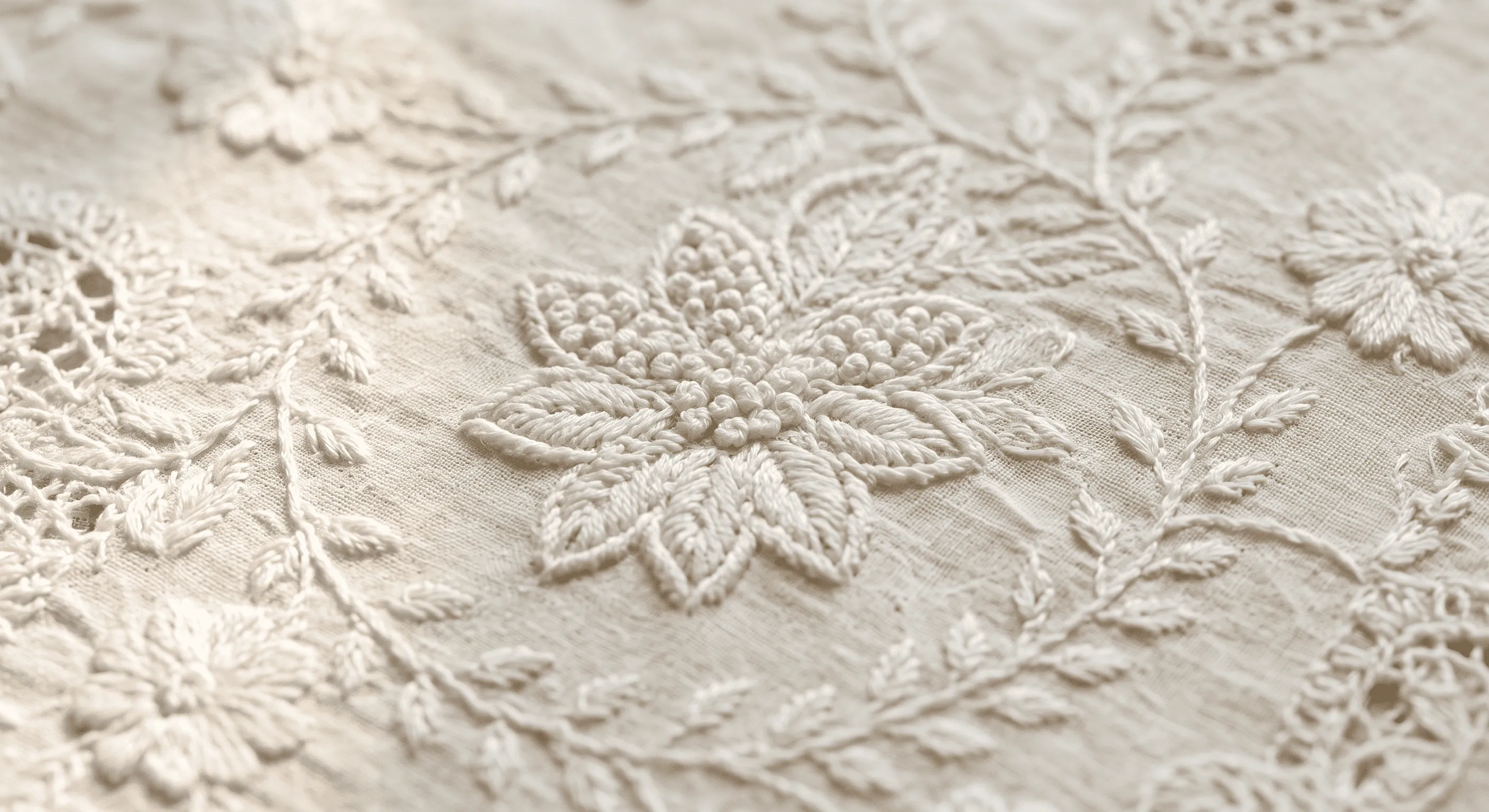
Its appearance can range from almost invisible tonal embroidery to highly textured motifs that stand above the surface.
Unlike embroidery styles that depend primarily on beads, sequins or metallic thread, classic chikankari creates most of its beauty through needlework itself.
A flower may be created with one stitch for its outline, another for the petals and a third technique to give the centre a raised texture.
The result rewards close inspection.
Official Indian handicrafts documentation describes chikankari as having a defined repertoire of stitches and notes that floral designs traditionally formed an important part of the craft.
Lucknow and the Identity of Chikankari
It is almost impossible to separate chikankari from Lucknow.
The city is known for architecture, poetry, cuisine and refined courtly culture, and chikankari fits naturally into that aesthetic world through its delicate, controlled ornamentation.
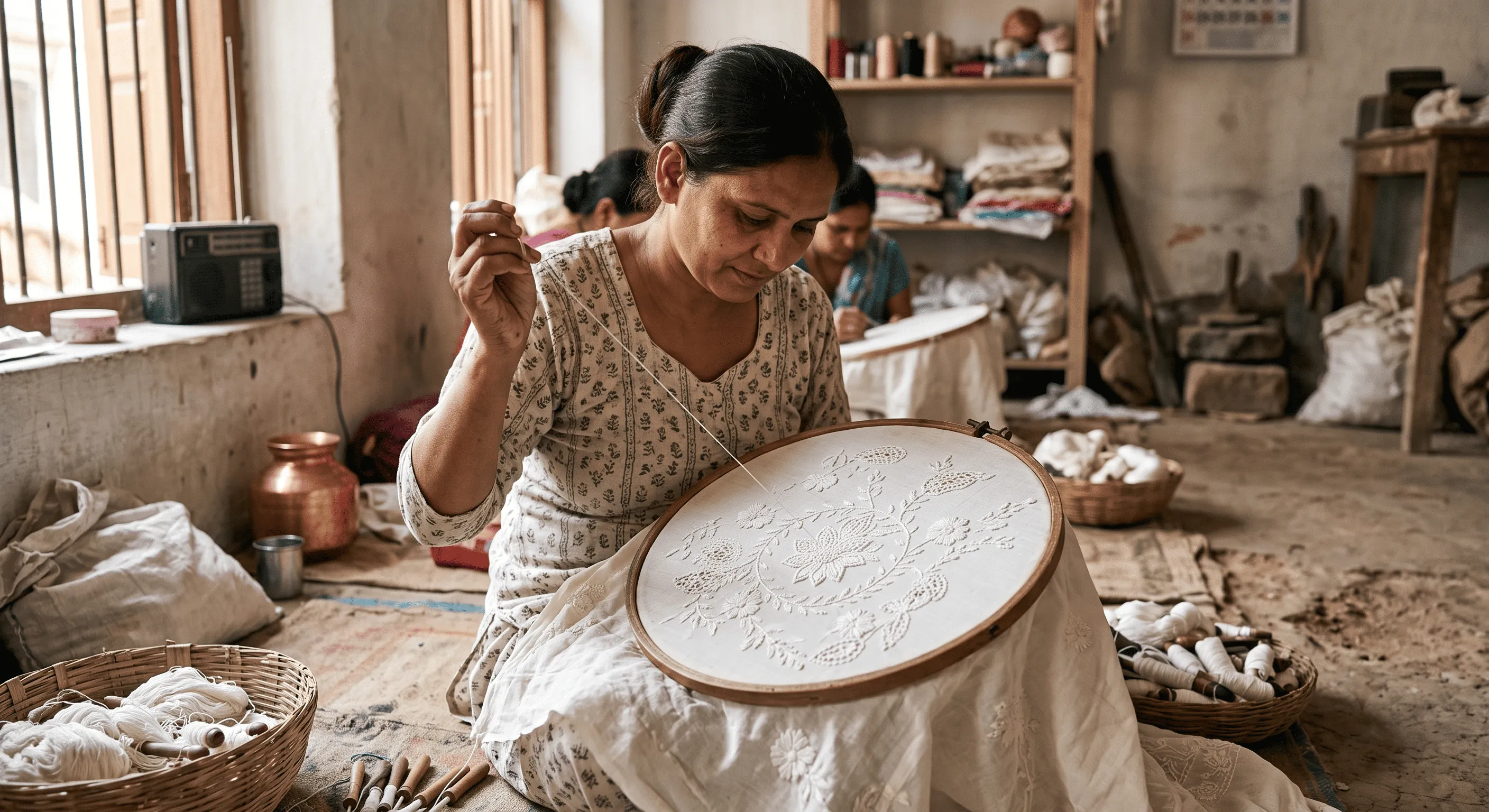
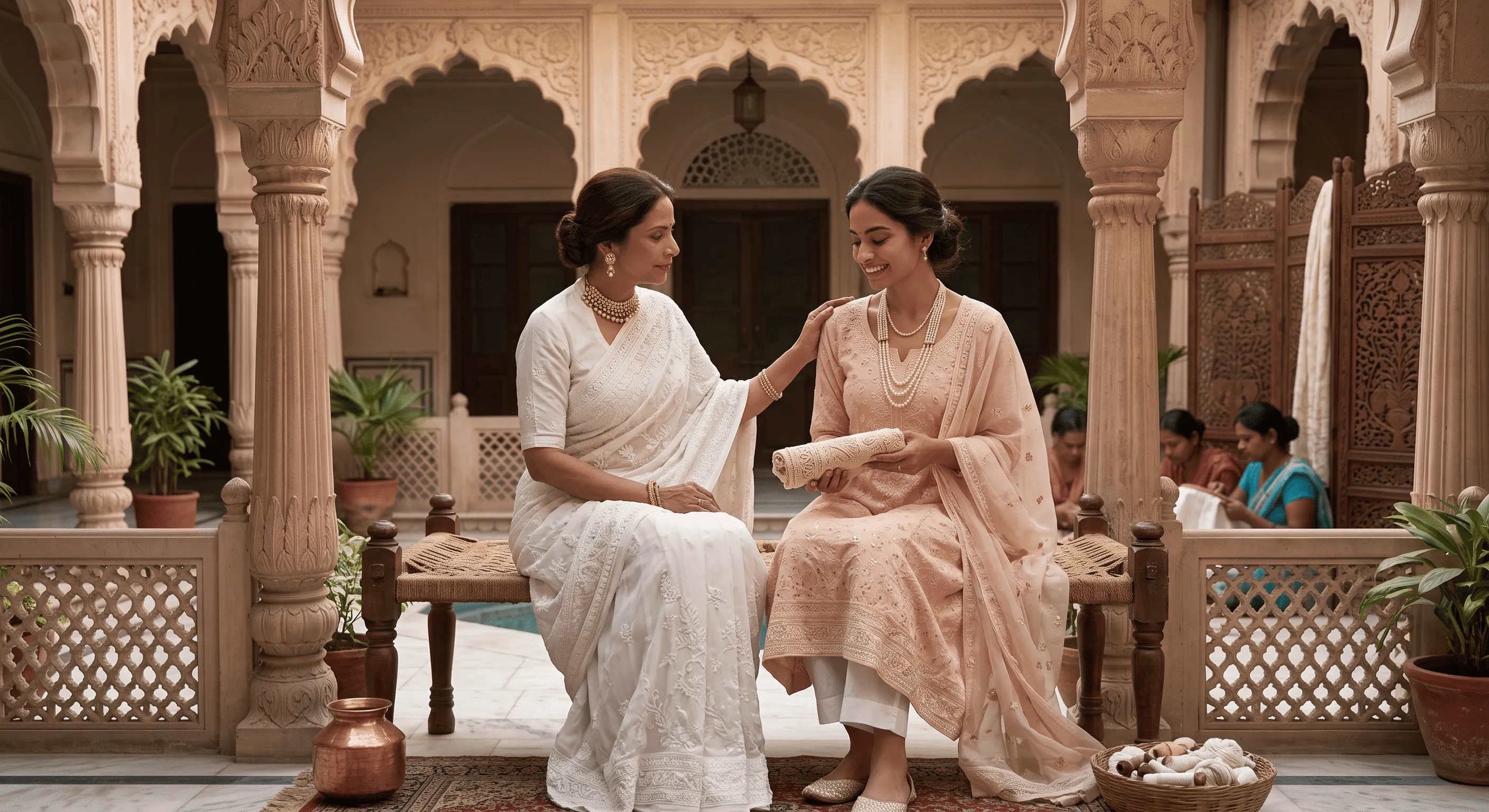
Over generations, the craft became strongly connected with artisan communities in and around the city.
Production does not necessarily happen in one workshop from beginning to end.
Different stages may involve designers, block printers, embroiderers, washers, finishers and garment makers.
Government craft documentation describes the chikankari process as involving stages such as cutting, printing, embroidery, washing and finishing.
That makes a chikankari garment the result of several skills working together—not simply the work of a needle alone.
A Brief History of Chikankari
The exact early history of chikankari includes several traditions and popular stories, some connecting its development with Mughal-era patronage.
Because craft histories are often transmitted through both documentation and oral tradition, it is better to understand chikankari as a technique that evolved over a long period rather than reduce it to a single origin story.
What is clear is that Lucknow became its major centre.
The technique developed a sophisticated vocabulary of stitches and was historically associated with fine cotton and muslin.
Over time, changing fashion and textile availability introduced other materials.
The modern chikankari wardrobe now includes silk, chiffon, georgette, linen and mixed fabrics alongside cotton.
This ability to adapt explains why a centuries-old embroidery technique can still appear completely at home in a contemporary kurta.
How Chikankari Is Made
A completed chikankari garment may look effortless, but the production involves several stages.
1. Designing the Motif
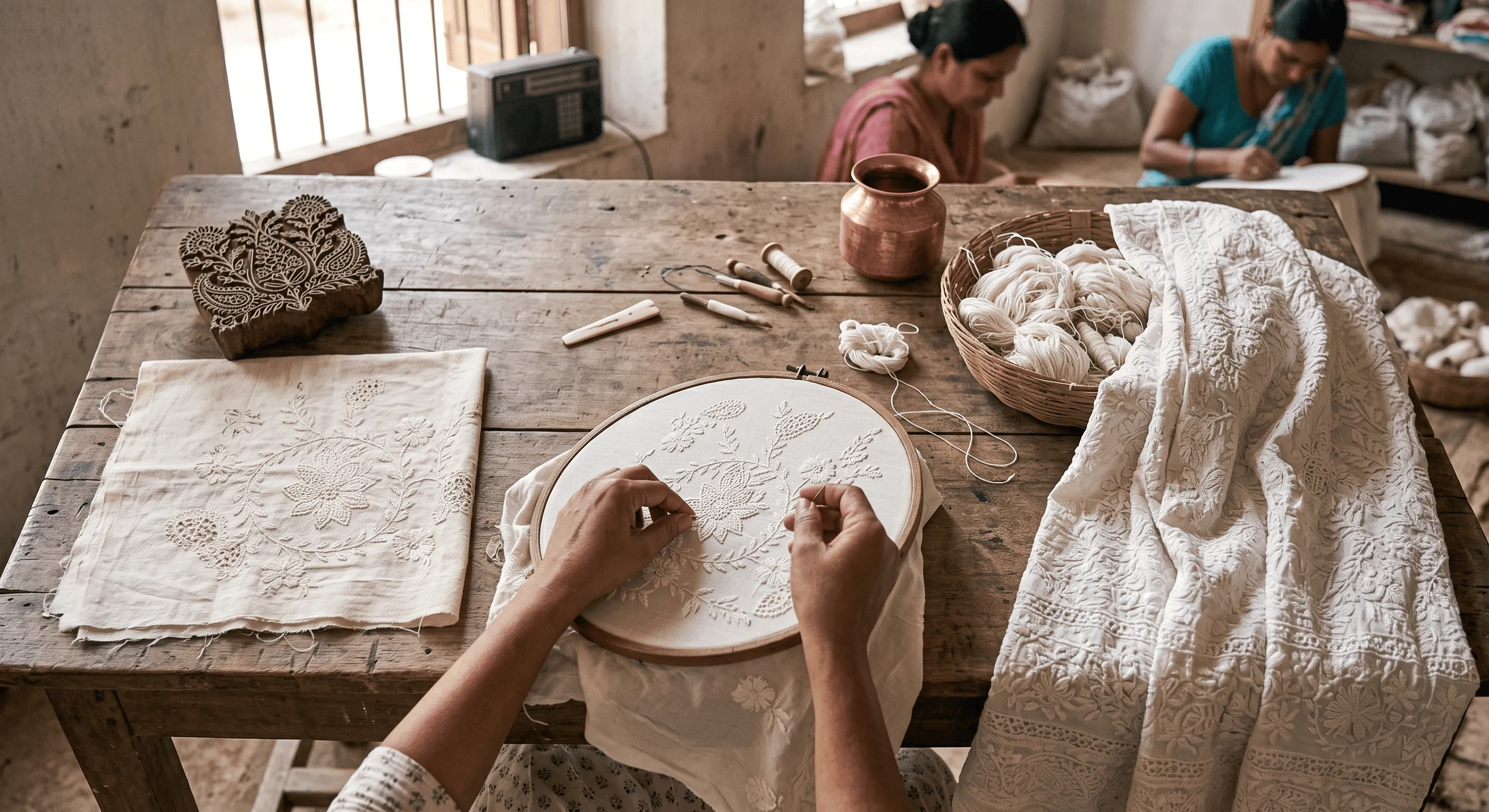
The process begins with deciding where flowers, vines, borders and individual motifs will sit on the cloth.
The pattern has to complement the final garment rather than simply cover every available surface.
2. Block Printing the Design
The embroidery outline is commonly transferred onto fabric using temporary printing.
Wooden blocks help position motifs consistently.
The printed lines act as guides rather than becoming part of the final design.
3. Hand Embroidery
Artisans stitch over and around the printed pattern using different chikankari stitches.
Depending on complexity, a single garment may combine multiple techniques.
4. Washing
After embroidery is completed, the fabric is washed so the temporary printed markings disappear.
This stage allows the white embroidery and fabric surface to emerge cleanly.
5. Finishing
The garment is checked, finished and prepared for use.
The official craft process similarly records block printing, embroidery, washing and finishing among the stages used in Lucknow chikankari.
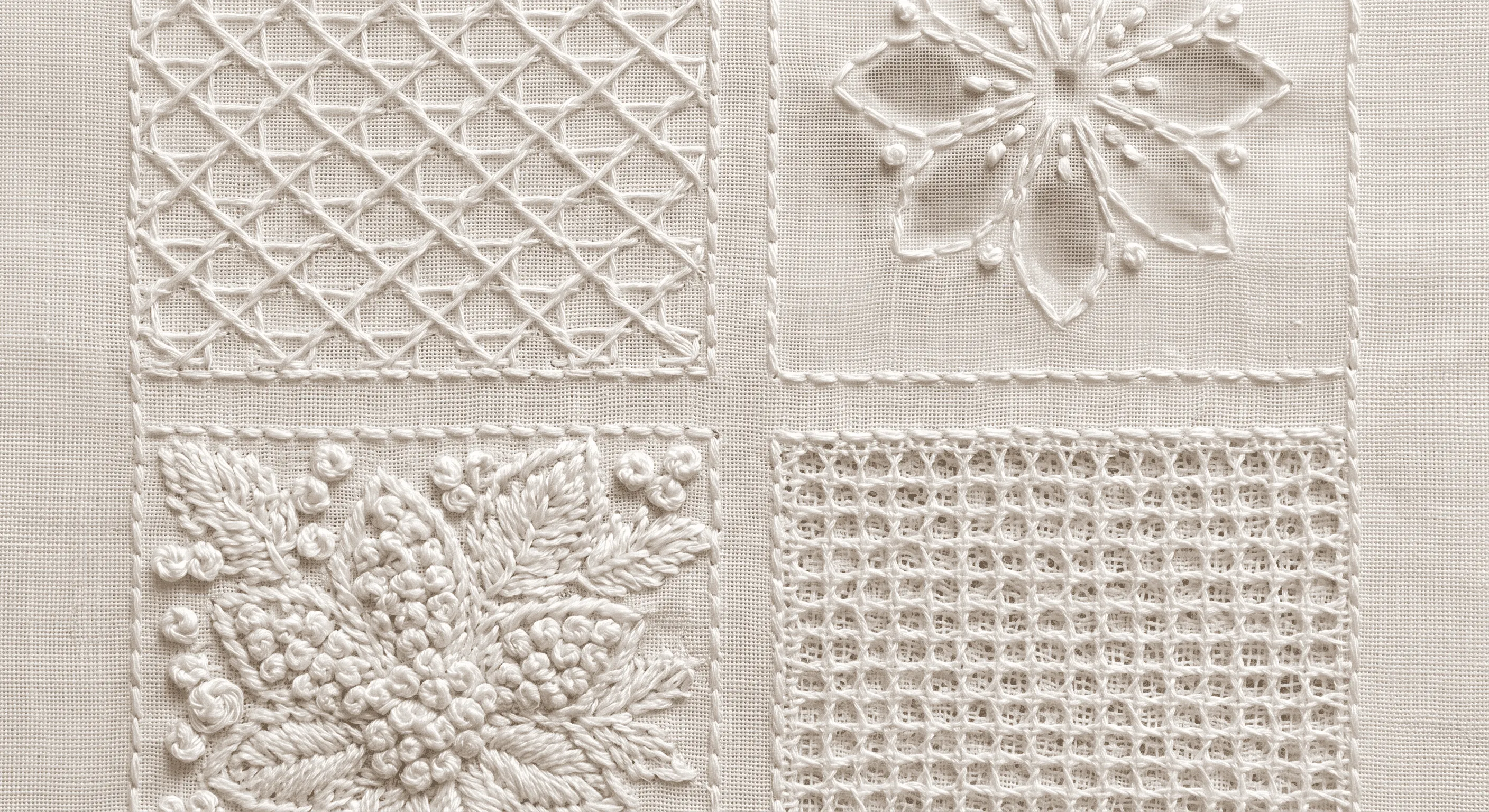
Important Chikankari Stitches
One reason chikankari looks so varied is that it is not based on a single stitch.
Different techniques create different textures.
Tepchi
Tepchi is a relatively simple running stitch and is often used to form outlines or linear details.
Its simplicity allows it to work as a foundation for more elaborate areas.
Bakhiya
Bakhiya is often associated with the beautiful shadow effect seen in chikankari.
The stitching may be worked so that thread on the reverse subtly shows through the fine fabric.
This creates decoration that feels almost embedded within the textile.
Phanda
Phanda creates small raised knots or grain-like details.
It is often used in floral forms where dimensional texture is needed.
Murri
Murri creates tiny raised shapes and is associated with fine, detailed embroidery.
It can add texture to flower centres and small decorative areas.
Jaali
Jaali work creates an open, mesh-like effect without simply cutting large holes in the fabric.
Threads are manipulated carefully to create a delicate lattice appearance.
The effect can resemble fine lace when executed with precision.
Traditional Chikankari Motifs
Nature provides much of chikankari's visual vocabulary.
Floral sprays, leaves, vines, buds and small repeating motifs appear frequently.
Creeper-like designs can travel along necklines, hems and dupatta borders.
Larger floral arrangements may fill kurta fronts, saree pallus and anarkali panels.
The motifs are usually graceful rather than rigid.
Curving stems give embroidery movement while repeated butis provide rhythm across larger areas.
This restrained botanical character is one reason chikankari works so well on light-coloured fabrics.
The texture can remain visible without the garment looking excessively decorated.
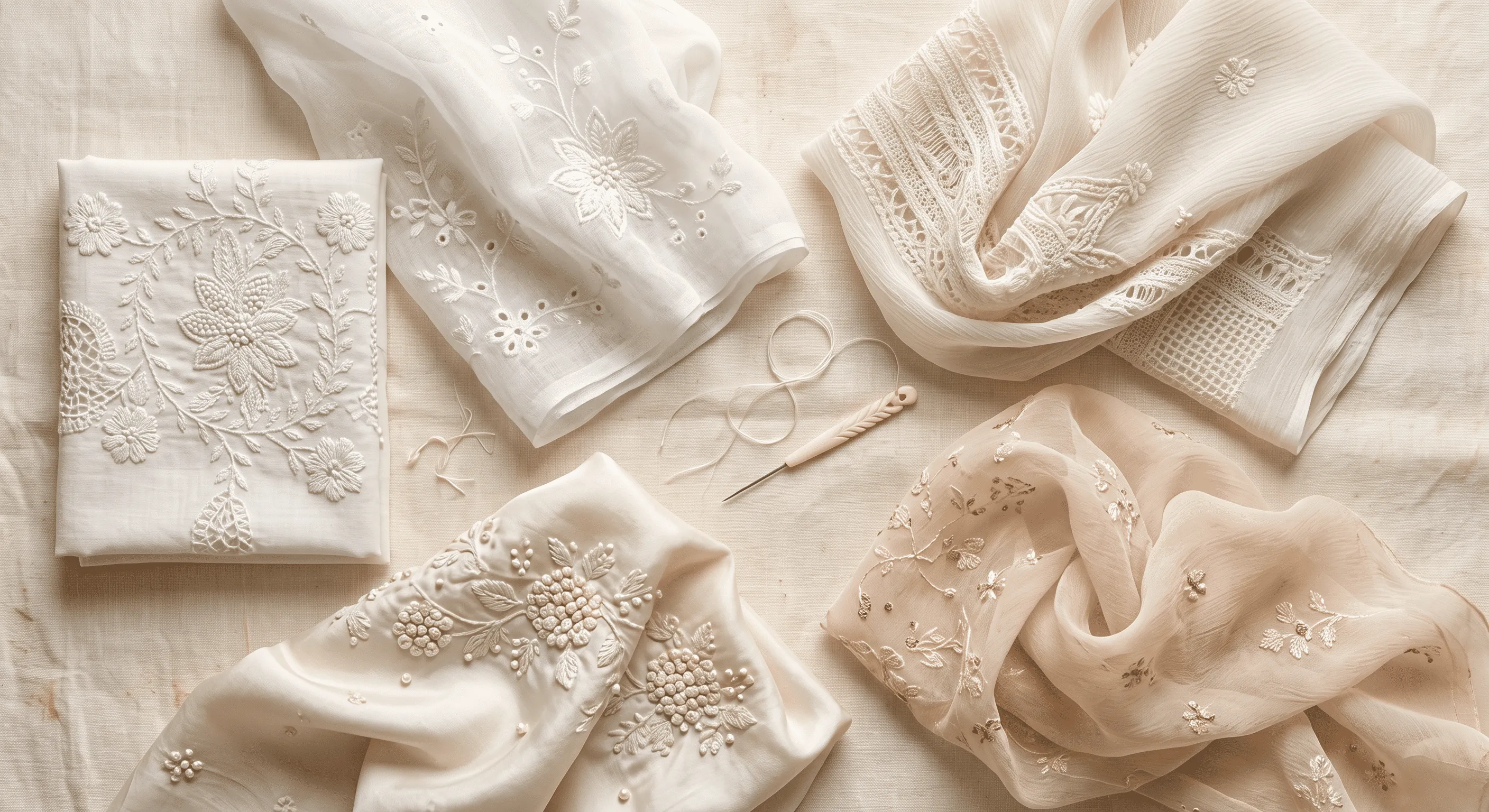
Best Fabrics for Chikankari
Chikankari changes personality depending on the base fabric.
Cotton
Cotton chikankari is among the easiest options for everyday and summer wear.
The matte surface keeps the embroidery understated and makes kurtas particularly versatile.
Mulmul and Fine Cotton
Fine cotton creates a softer, more delicate appearance.
White-on-white embroidery on lightweight cotton remains one of the most recognizable expressions of the craft.
Georgette
Georgette gives chikankari more drape and movement.
It is popular for festive kurtas, anarkalis and sarees.
Chiffon
Chiffon can create a very light, feminine effect, particularly for dupattas and occasion wear.
Silk
Silk introduces greater richness and sheen, making embroidered garments suitable for weddings and evening occasions.
Traditional chikankari was strongly associated with muslin and cotton, while modern production uses a much wider range of materials, including silk, chiffon, linen and georgette.
Chikankari Kurtas: The Everyday Classic
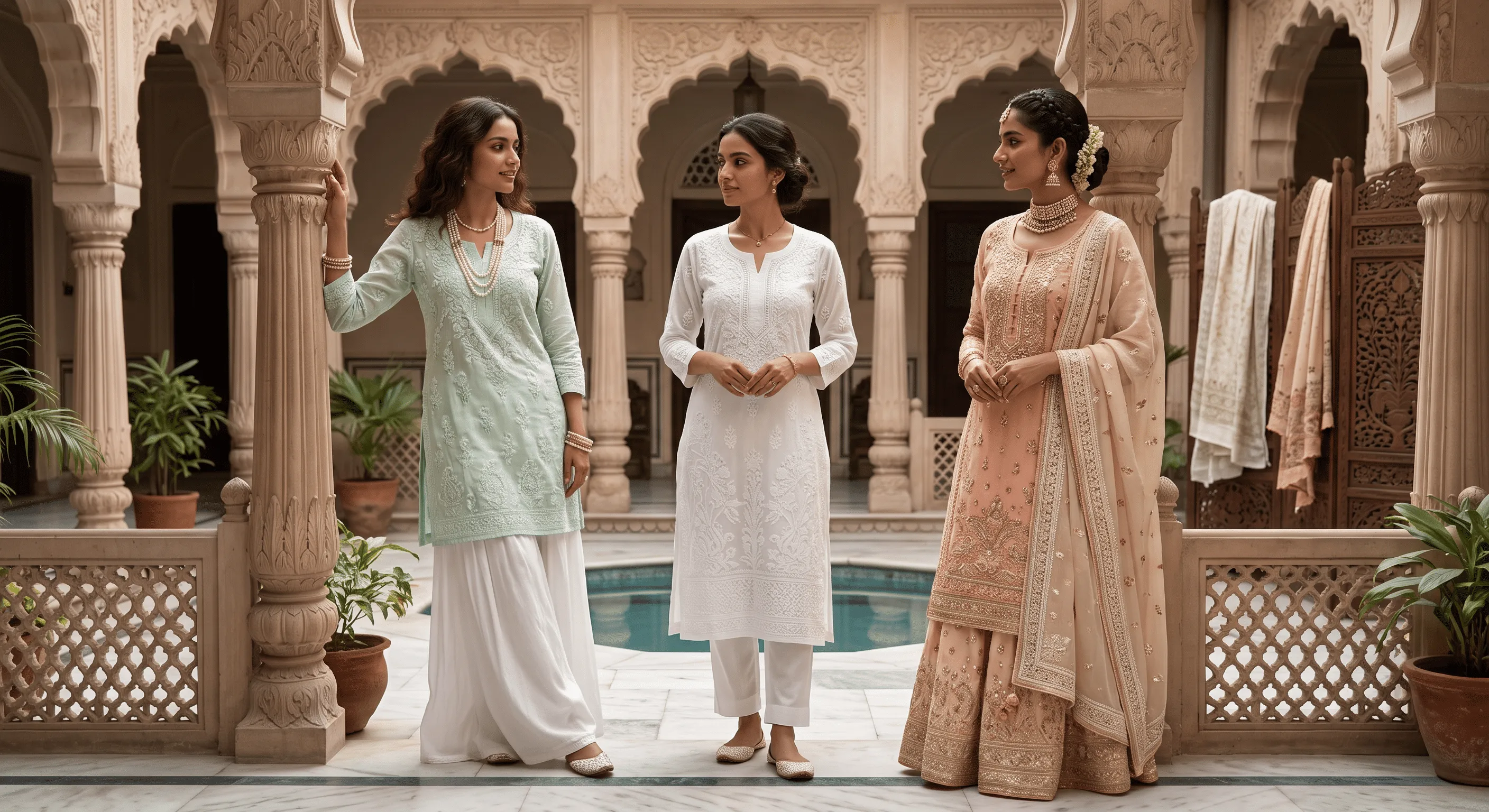
If there is one garment most closely associated with contemporary chikankari, it is the kurta.
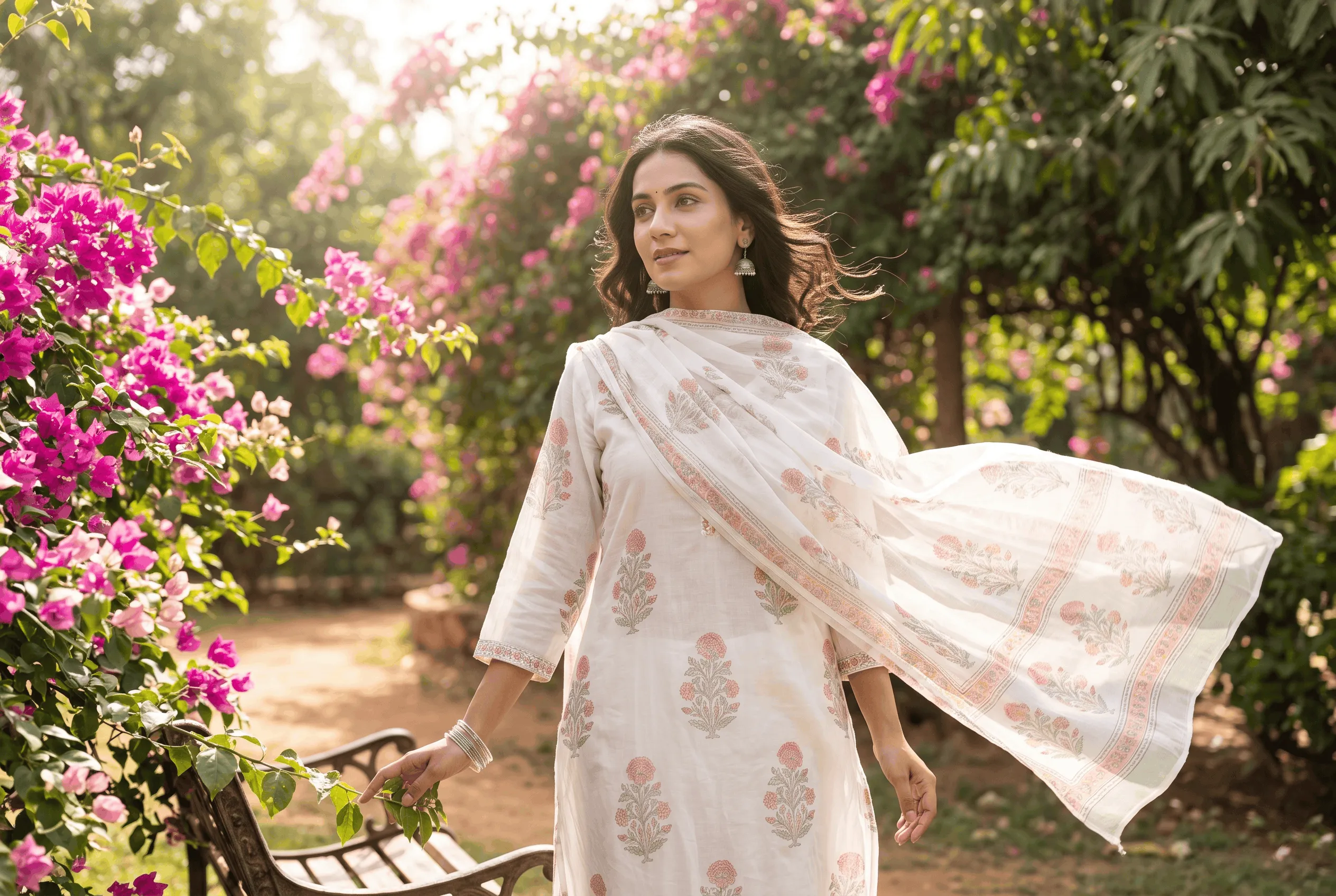
A white chikankari cotton kurta can work with straight trousers for office wear, palazzos for casual dressing or a contrasting dupatta for a more traditional appearance.
Pastel kurtas offer the same versatility while introducing colour.
For festive dressing, denser embroidery, silk blends or additional embellishment can transform the silhouette.
The strength of a chikankari kurta is that it does not always announce itself as occasion wear.
A well-designed piece can move easily between everyday and semi-formal wardrobes.
Chikankari Sarees
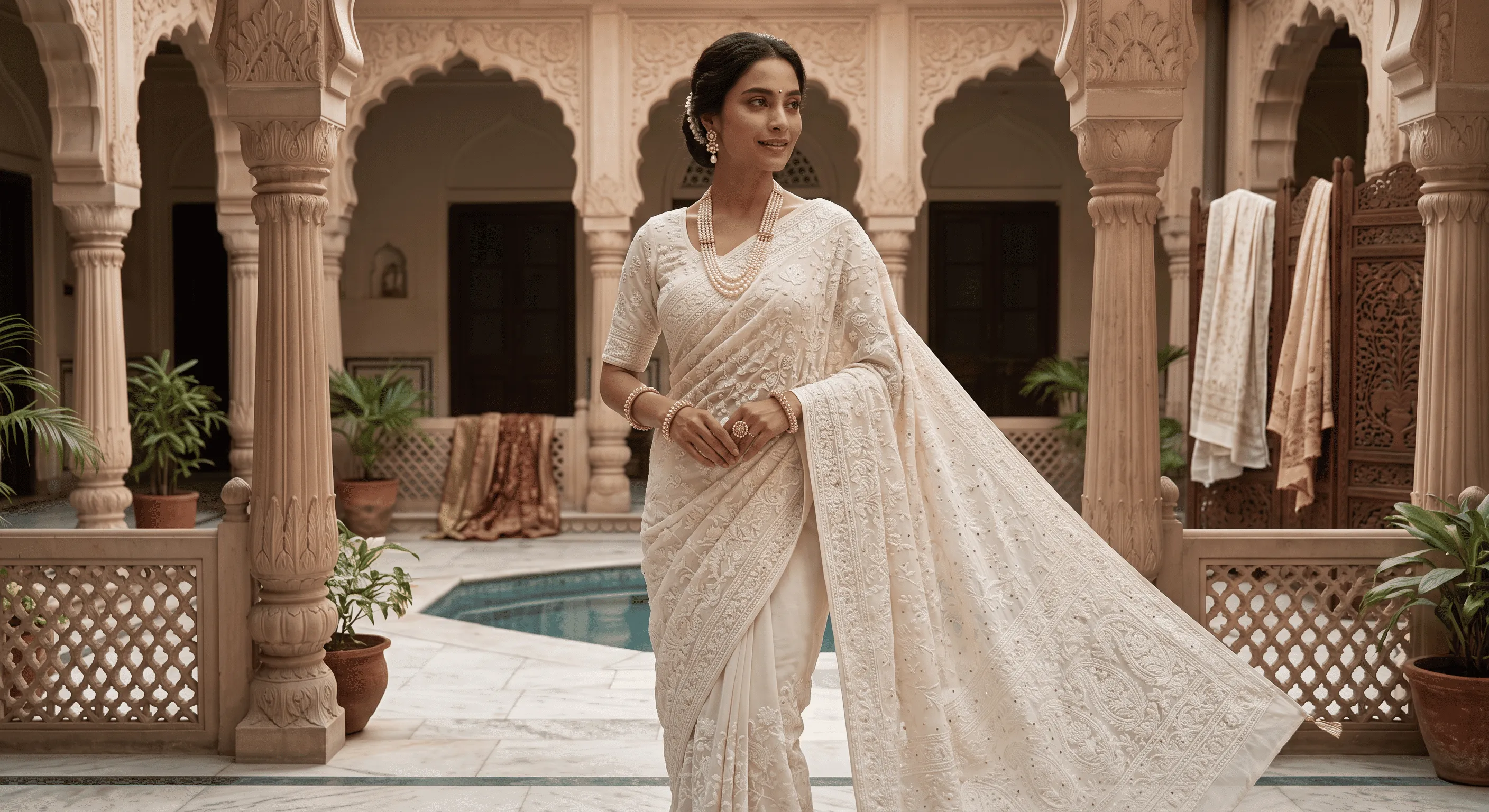
Chikankari sarees offer a very different expression of the craft.
Instead of concentrating embroidery only around a neckline or hem, the large saree surface allows motifs to spread across the body, border and pallu.
Cotton chikankari sarees feel understated and elegant.
Georgette versions create softer drapes and are well suited to festive occasions.
More elaborate sarees may combine chikankari with sequins, beads or mukaish-style metallic accents.
For styling, a plain blouse can allow dense embroidery to remain the focus.
Alternatively, a contrast blouse can make an ivory or pastel saree feel more contemporary.
Chikankari Anarkalis and Festive Suits
The flowing panels of an anarkali provide an ideal surface for chikankari.
Embroidery can begin densely around the bodice and gradually become lighter toward the hem, or spread evenly across the entire garment.
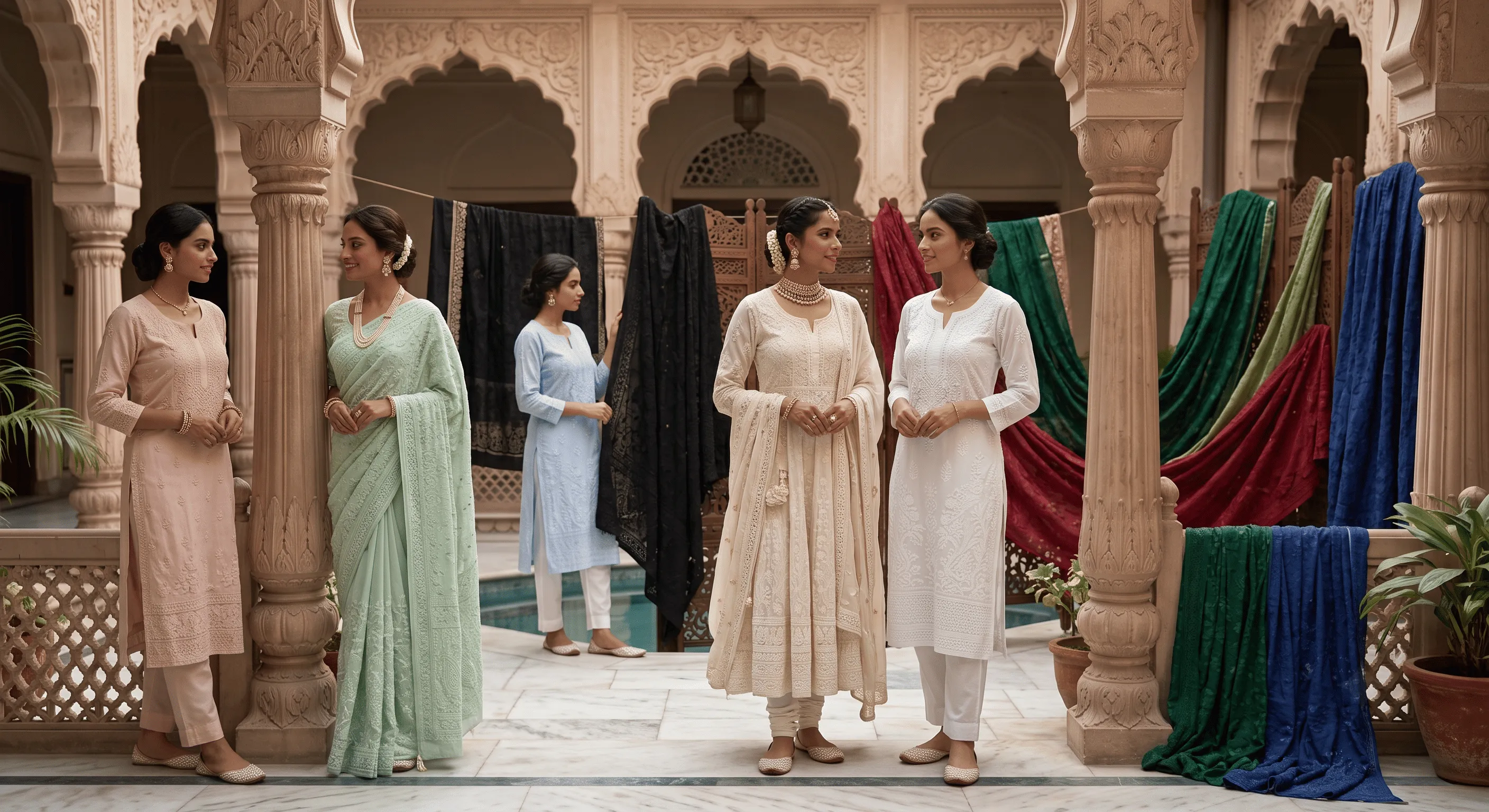
White and ivory remain timeless, but blush pink, mint, powder blue, peach, lavender and sage work beautifully for daytime celebrations.
For evening events, deeper colours with tonal embroidery create a more contemporary effect.
Festive chikankari suits are also frequently paired with embellished dupattas or metallic details.
The key is balance.
When embroidery is very dense, simpler jewellery often creates a more refined result.
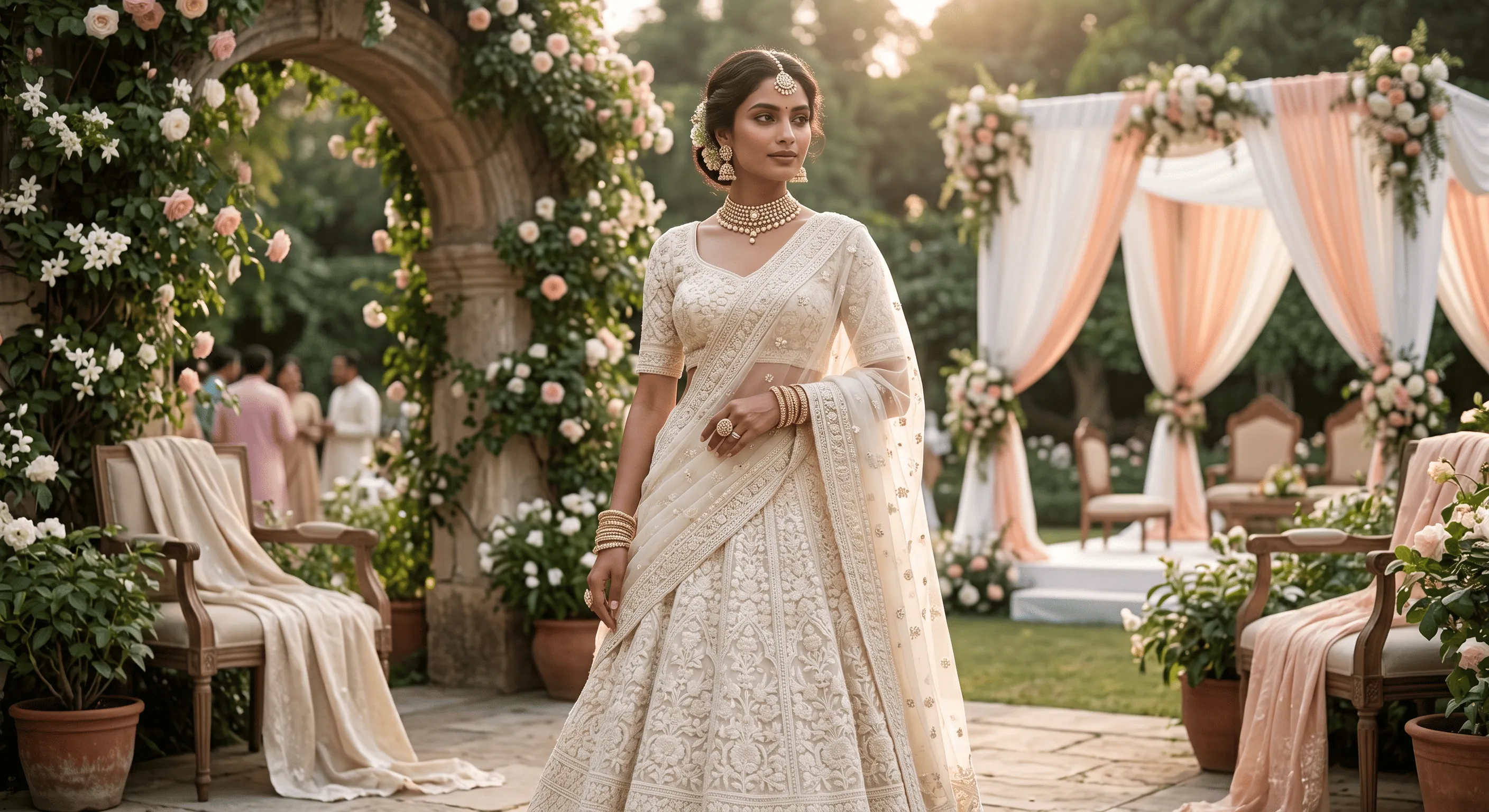
Chikankari Lehengas for Weddings
Chikankari has also become an important option for wedding and pre-wedding dressing.
A chikankari lehenga feels different from a heavily zardozi or brocade outfit.
Its visual appeal comes from texture rather than only metallic shine.
Ivory, cream and pastel chikankari lehengas are particularly suited to daytime weddings, engagement ceremonies and elegant summer functions.
For greater glamour, chikankari may be combined with sequins or metallic accents.
Because the embroidery can already be complex, silhouettes do not always need excessive additional decoration.
Mukaish and Chikankari: Why You Often See Them Together
Modern occasion wear often combines chikankari with mukaish, a metallic embellishment technique that adds tiny points of shine.
The contrast is effective because the two crafts perform different visual roles.
Chikankari contributes soft thread texture.
Mukaish introduces light-catching metallic accents.
Together, they create garments that remain delicate but photograph beautifully at weddings and evening events.
However, not every traditional chikankari piece needs metallic embellishment.
Classic white-on-white embroidery can be just as sophisticated.
White-on-White vs Coloured Chikankari
White thread on white fabric is the most iconic chikankari combination.
It emphasizes shadows and textures rather than colour contrast.
But contemporary chikankari has expanded far beyond that palette.
White embroidery appears beautifully over:
- blush pink,
- powder blue,
- mint,
- peach,
- lavender,
- lemon,
- black,
- navy,
- and jewel tones.
Tonal embroidery, where the thread closely matches the fabric colour, produces a particularly sophisticated look.
Contrast thread creates a more decorative and contemporary effect.
How to Identify Good Chikankari
A heavily embroidered garment is not automatically better.
Quality depends on the precision of the stitches and the relationship between embroidery and fabric.
Look closely at the following.
Stitch Definition
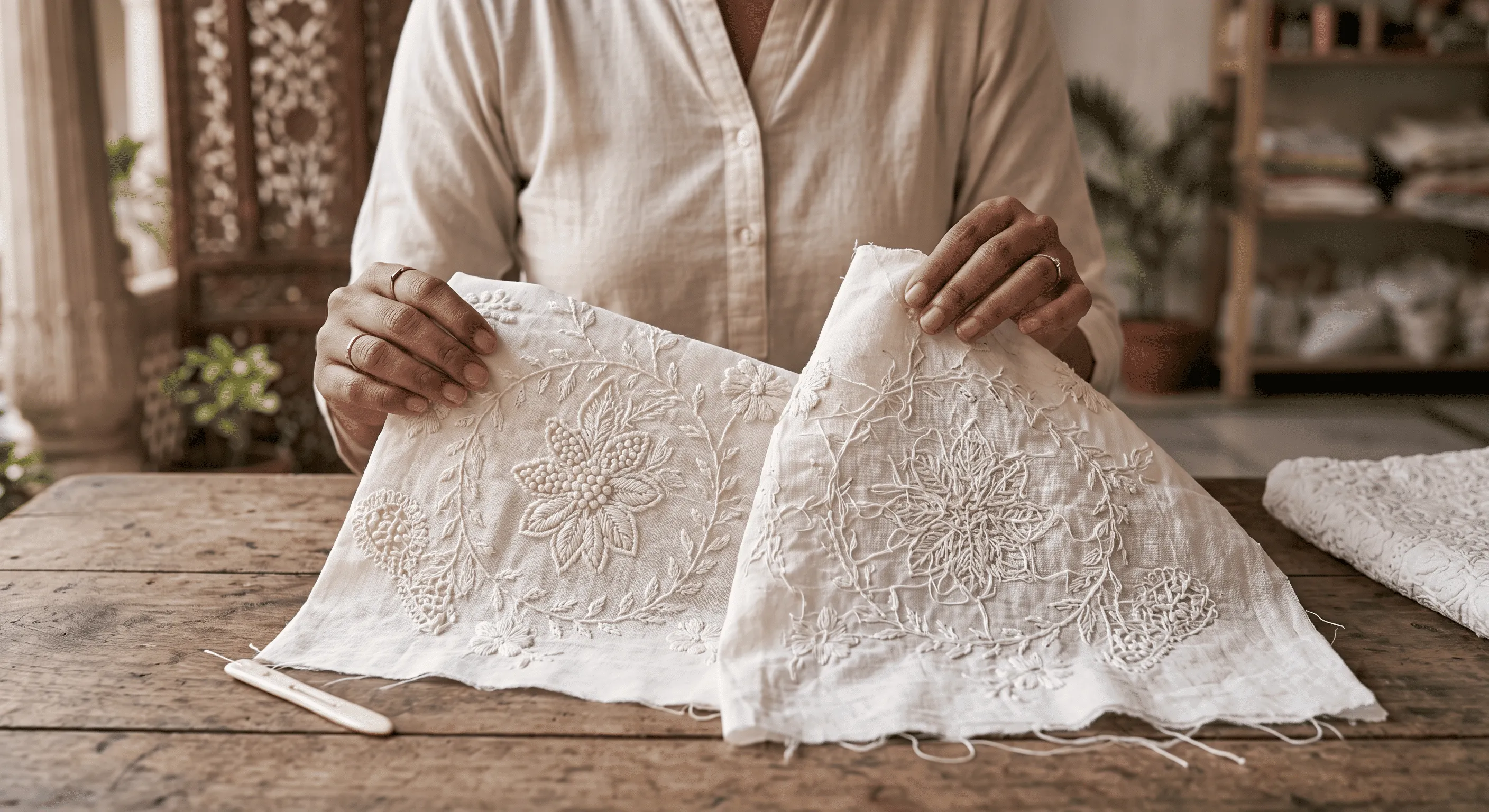
Good embroidery should show recognizable stitch structure rather than loose, fuzzy threadwork.
Reverse Side
The back can reveal how carefully the embroidery has been executed.
Some thread movement is natural in hand embroidery, but excessive knots and untidy finishing may indicate rushed work.
Motif Edges
Flowers and leaves should have reasonably controlled outlines.
Handwork will not look mechanically identical, but it should still appear intentional.
Fabric Quality
Fine embroidery cannot compensate for a poor-quality base fabric.
Check transparency, softness, drape and durability.
Handmade Variation
Small differences between repeated motifs can be a natural feature of hand embroidery.
Mechanical perfection should not be the only standard by which the work is judged.
Hand Chikankari vs Machine Embroidery
Machine-made embroidery can imitate the general floral appearance of chikankari quickly and consistently.
Hand embroidery usually shows greater variation in tension, stitch size and motif character.
Machine embroidery often looks extremely uniform and can have a denser, flatter appearance depending on technique.
Price is another clue but should not be used alone.
A highly complex hand-embroidered garment takes considerably more labour than a quickly produced machine version.
When buying, ask specifically whether the embroidery is handmade, machine-made or a combination.
The important issue is transparency rather than assuming that every affordable chikankari-style garment is handmade.
How to Style Chikankari Ethnic Wear
Chikankari works best when its embroidery remains visible.
For a classic white kurta, pair it with silver jewellery, pearl earrings or colourful juttis.
For a pastel anarkali, kundan or polki-style jewellery can introduce a festive mood.
With an embroidered saree, keep the blouse relatively simple if the pallu already has dense detailing.
For chikankari lehengas, one statement necklace or a strong pair of earrings may be enough.
Footwear can range from traditional juttis to simple heels depending on the occasion.
The same garment can also change dramatically through contrast.
An ivory chikankari kurta with white trousers feels minimal.
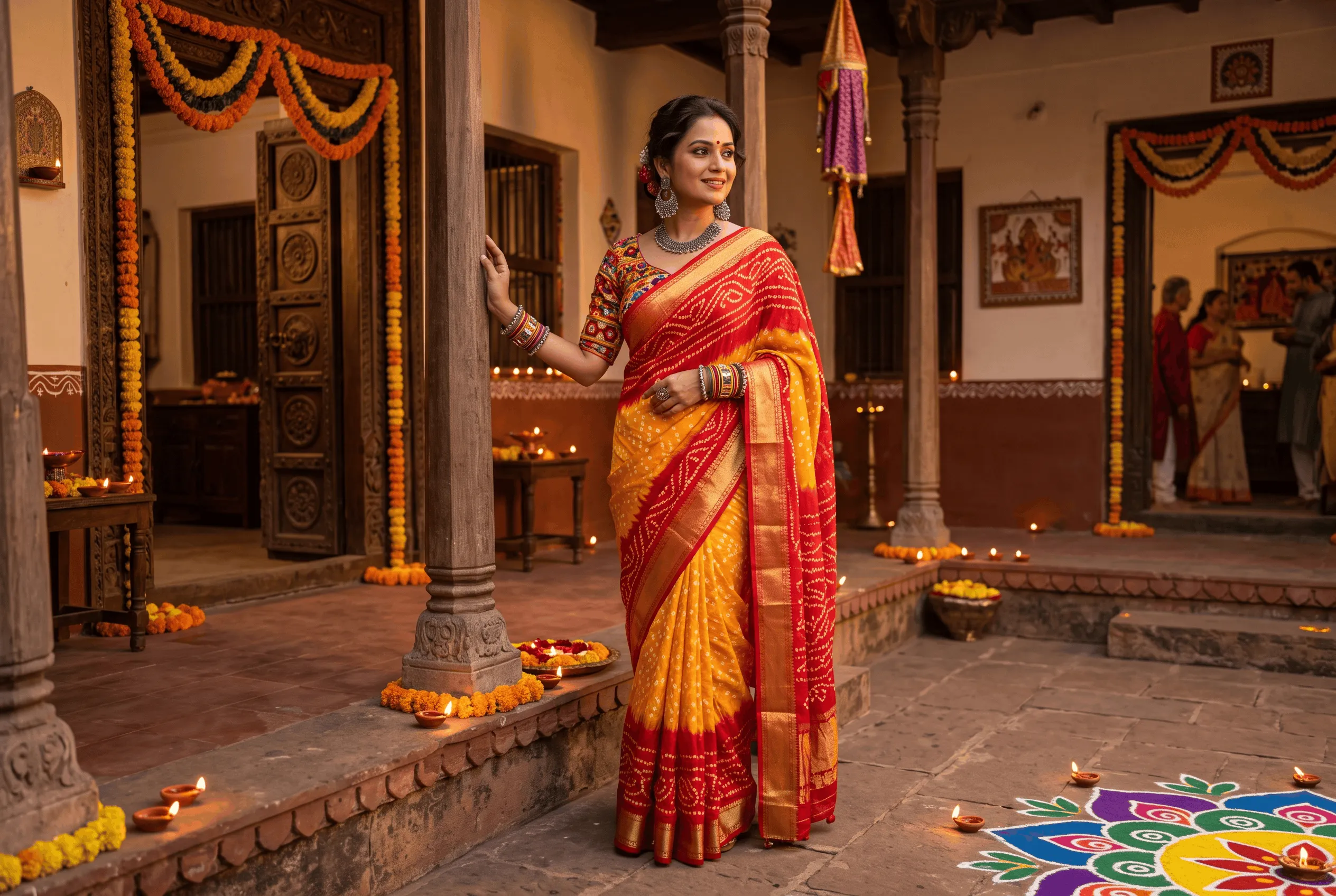
The same kurta with a colourful bandhani or Banarasi dupatta creates a much richer ethnic look.
Chikankari for Summer Ethnic Wear
One reason chikankari remains popular is its association with lightweight fabrics.
Cotton and mulmul chikankari kurtas are particularly useful for warm-weather wardrobes.
The visual softness of white and pastel embroidery also suits daytime dressing.
For summer weddings, choose lighter georgette or cotton-silk options rather than extremely layered outfits.
Remember that comfort depends not just on embroidery but also on the underlying fabric, lining and garment construction.
How to Care for Chikankari
Delicate hand embroidery deserves gentle handling.
For cotton chikankari, mild hand washing may be appropriate if the garment's care label allows it.
Avoid aggressive scrubbing directly over the embroidery.
Silk, georgette, heavily embellished or mukaish-accented pieces are usually better handled through professional cleaning.
Do not wring delicate garments.
Dry them away from harsh direct sunlight when appropriate for the fibre.
Store festive pieces folded in breathable fabric and avoid placing heavy garments directly on top of delicate raised embroidery.
Iron from the reverse side or place a protective cotton cloth over the surface.
This helps preserve dimensional stitches.
Common Misconceptions About Chikankari
“Chikankari Is Always White”
White-on-white is traditional, but modern chikankari appears in a wide range of colours.
“Every Floral Embroidery from Lucknow Is Chikankari”
Chikankari is defined by its stitch vocabulary and technique, not simply by floral motifs.
“All Chikankari Is Hand Embroidered”
Machine-made chikankari-style embroidery is widely available, so buyers should check production details.
“Chikankari Is Only for Casual Kurtas”
The craft appears on sarees, lehengas, anarkalis, dupattas and formal occasion wear as well.
“More Embroidery Always Means Better Quality”
Stitch precision, fabric quality and craftsmanship matter more than simply covering a larger surface.
Why the GI Identity Matters
Lucknow Chikan Craft is officially registered as a Geographical Indication in India. The current IP India record lists the GI as registered and associates it with Uttar Pradesh.
A GI recognizes the geographical association and established identity of a product or craft.
For buyers, this is useful because it reinforces that traditional Lucknow Chikan is not merely a generic floral embroidery style.
It belongs to a specific craft tradition shaped by place, knowledge and artisan practice.
That distinction becomes increasingly important when machine-made imitations enter the market.
Comments (0)
Leave a Thought
No comments yet. Be the first to share your thoughts!