Introduction: Why North Indian Ethnic Fabrics Matter
If you’re searching for North Indian ethnic wear fabrics, your intent is likely very clear—you want to understand which fabrics belong to North India, how they differ, which ones are authentic, and how to choose the right fabric for weddings, festivals, or daily ethnic wear.
As someone who has spent years working with fabric wholesalers, handloom clusters, dyeing units, and ethnic wear designers across Varanasi, Lucknow, Delhi, Jaipur, Amritsar, and local textile mandis, I can confidently say that North Indian fabrics are not just fashion materials—they are cultural assets.
They reflect royalty, climate intelligence, regional craftsmanship, and centuries-old weaving traditions. This guide will help you make informed choices—whether you are a buyer, designer, retailer, or textile enthusiast.
History and Cultural Origins of North Indian Fabrics
North India has always been a cultural and trade crossroads. Persian, Mughal, Rajput, and indigenous Indian influences collectively shaped its textile identity.
Mughal era patronage introduced silk brocades, fine muslins, and floral motifs
Royal courts of Banaras and Lucknow supported intricate weaving and embroidery
Punjab and North-West regions favored bold embroidery on durable base fabrics
Climate diversity—hot plains, dry deserts, and cold northern winters—led to a wide fabric range
Unlike mass-produced modern textiles, these fabrics were woven with purpose—for rituals, royalty, dowries, and everyday dignity.
Major Types of North Indian Ethnic Wear Fabrics
1. Banarasi Silk (Varanasi, Uttar Pradesh)
Banarasi silk is the most iconic North Indian fabric, especially associated with weddings and bridal wear. Traditionally woven on handlooms, it is known for its luxurious silk base and rich zari work.
Key characteristics:
- Pure silk or silk blends
- Gold or silver zari motifs
- Mughal-inspired designs like paisleys, florals, and creepers
Common varieties:
- Katan Banarasi
- Organza Banarasi
- Georgette Banarasi
- Shattir Banarasi
2. Chanderi Fabric (Madhya Pradesh – North Indian cultural belt)
Chanderi fabric is prized for its lightweight feel, sheer texture, and understated elegance. It is ideal for North Indian summers and daytime festivities.
Key characteristics:
- Cotton-silk or pure silk blend
- Translucent appearance
- Traditional butti (coin) motifs
- Soft gold zari borders
3. Lucknowi Chikankari Fabrics (Uttar Pradesh)
Chikankari is a hand-embroidery tradition rather than a fabric itself. It is typically done on breathable and flowy base fabrics.
Common base fabrics:
- Mulmul cotton
- Muslin
- Georgette
- Chiffon
This craft is known for its subtle elegance, making it suitable for both everyday ethnic wear and refined festive outfits.
4. Phulkari Base Fabrics (Punjab)
Phulkari is a vibrant embroidery tradition from Punjab, done on strong base fabrics that can hold heavy threadwork.
Base fabrics used:
- Handwoven cotton (khaddar)
- Silk and silk-blend fabrics
- Phulkari fabrics are bold, colorful, and celebratory—perfect for weddings and Punjabi festivals.
5. Jamdani Fabrics (North Indian weaving influence)
Jamdani is a labor-intensive handwoven fabric where motifs are woven directly into the fabric rather than embroidered.
Key traits:
- Cotton or silk base
- Floating floral or geometric motifs
- Lightweight yet artistic
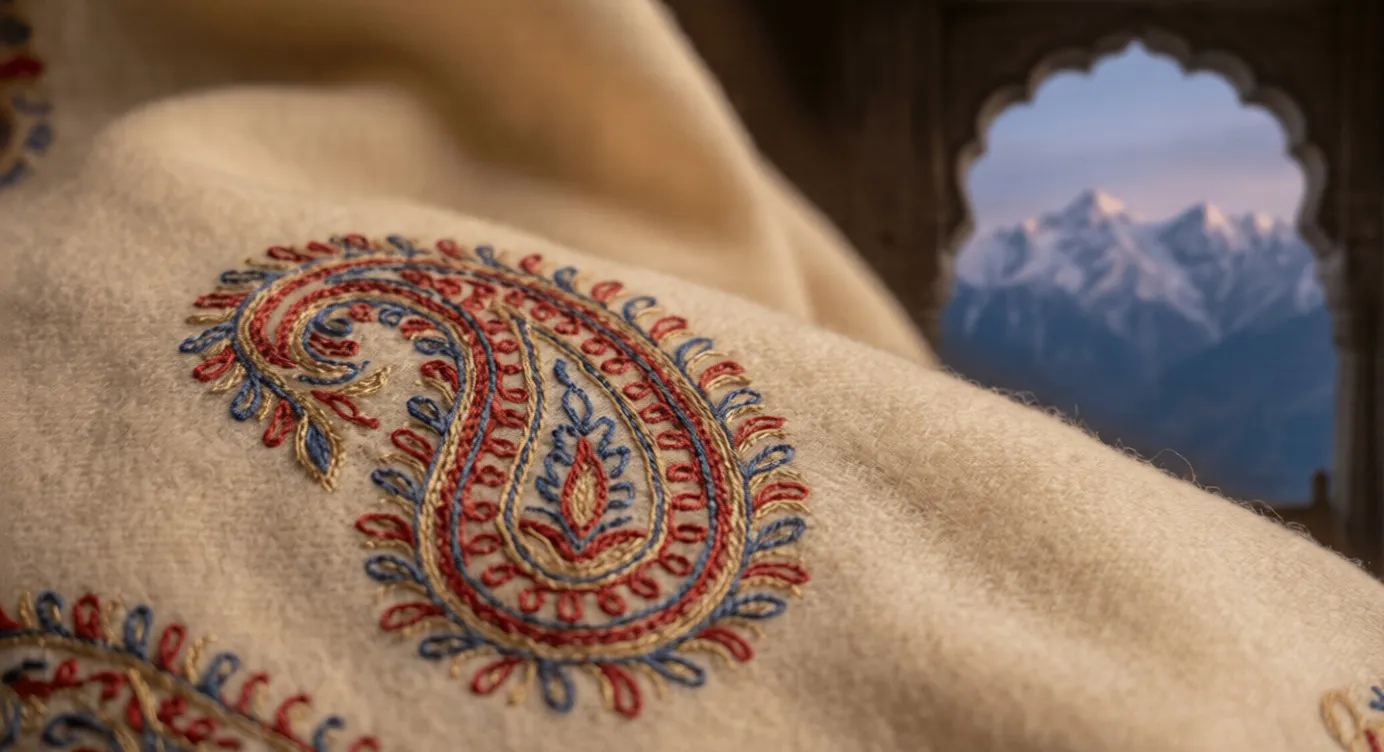
6. Wool & Pashmina Blends (North Indian winter wear)
In colder regions and winter weddings, wool and pashmina blends are commonly used for shawls, dupattas, and layered ethnic wear.
Key traits:
- Warm yet breathable
- Often blended with silk
- Used for formal winter occasion
How to Identify Quality and Authenticity
Knowing how to identify authentic North Indian fabrics can save you from overpaying for imitations.
Key checks:
- Handloom irregularities indicate authenticity
- GI tags for Banarasi and Chanderi
- Zari quality (real zari is never overly shiny)
- Reverse side inspection for hand embroidery
Uses and Occasions
| Fabric | Best Use |
|---|---|
| Banarasi Silk | Weddings, bridal wear, grand functions |
| Chanderi | Summer festivals, pujas, daytime weddings |
| Chikankari | Office wear, casual ethnic, festive evenings |
| Phulkari | Punjabi weddings and celebrations |
| Jamdani | Cultural events, heritage fashion |
| Wool/Pashmina | Winter weddings and formal gatherings |
Care and Maintenance Tips (Expert Advice)
- Always dry clean Banarasi silk
- Store silk wrapped in muslin cloth, not plastic
- Hand-wash cotton Chikankari in cold water
- Never spray perfume directly on silk or zari
- Avoid hanging heavy embroidered garments
Common Myths and Buying Mistakes
Myth 1: “Heavier fabric means better quality”
False. Many premium fabrics like Chanderi and Jamdani are lightweight yet expensive.
Myth 2: “All Banarasi sarees are pure silk”
Most market versions are silk blends or synthetics.
Mistake 1: Choosing fabric only by look
Always consider climate, occasion, and comfort.
Mistake 2: Ignoring fabric origin
Knowing where a fabric comes from helps avoid fakes.
Comments (0)
Leave a Thought
No comments yet. Be the first to share your thoughts!