The organza saree has become a favourite for day weddings, engagements, festive brunches and receptions.
It is sheer, light and crisp, and it catches sunlight beautifully.
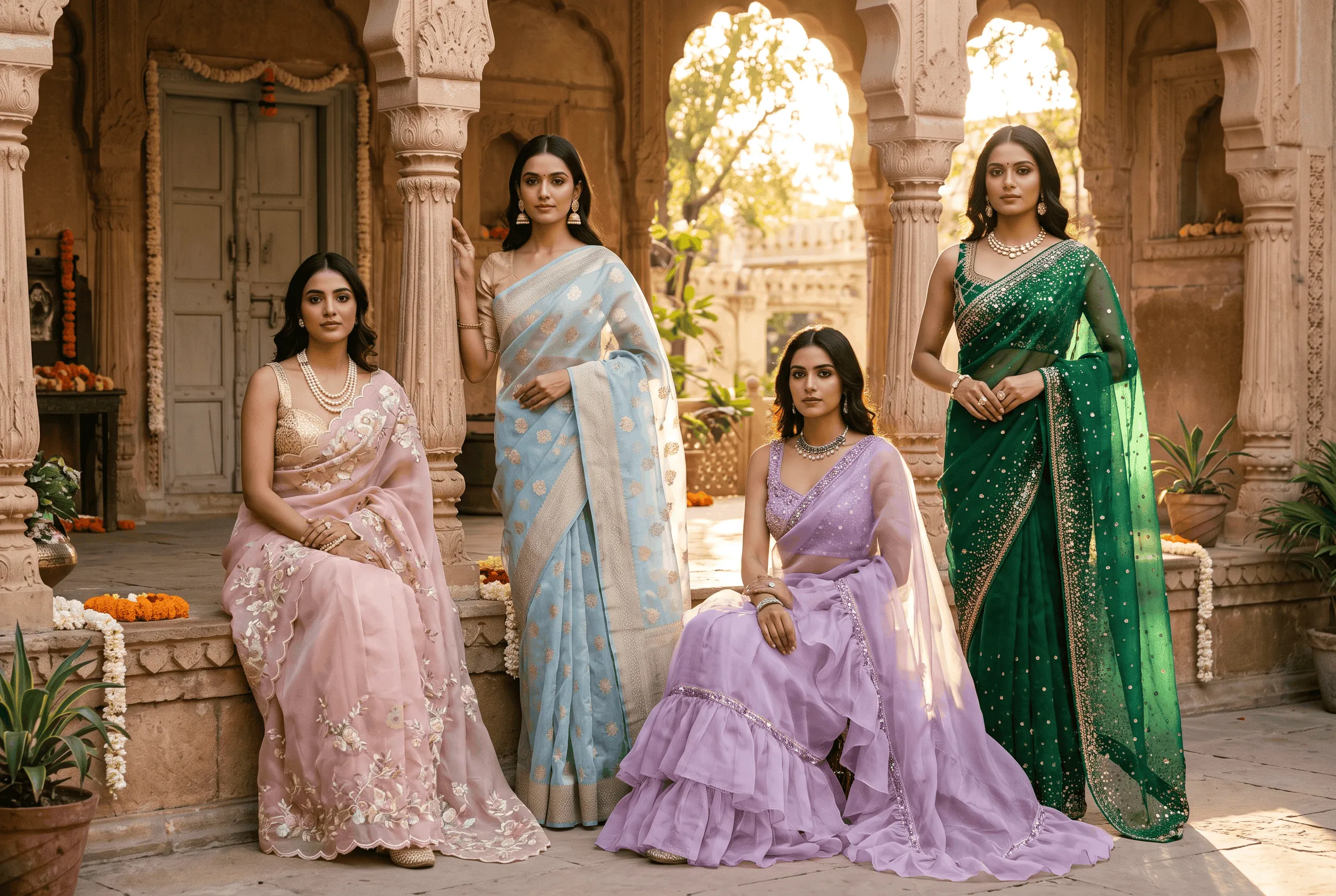
Organza sarees also come in an enormous variety, from plain pastels and floral prints to heavily embroidered designer pieces and Banarasi organza woven with zari.
But not all organza is the same.
A pure silk organza feels very different from a synthetic one, drapes differently and is priced very differently, which leaves many buyers unsure what they are paying for.
This guide explains what organza is, how to tell pure silk organza from synthetic, the most popular styles, how to drape and style it for different occasions, how to wash and store it and what a fair price looks like.
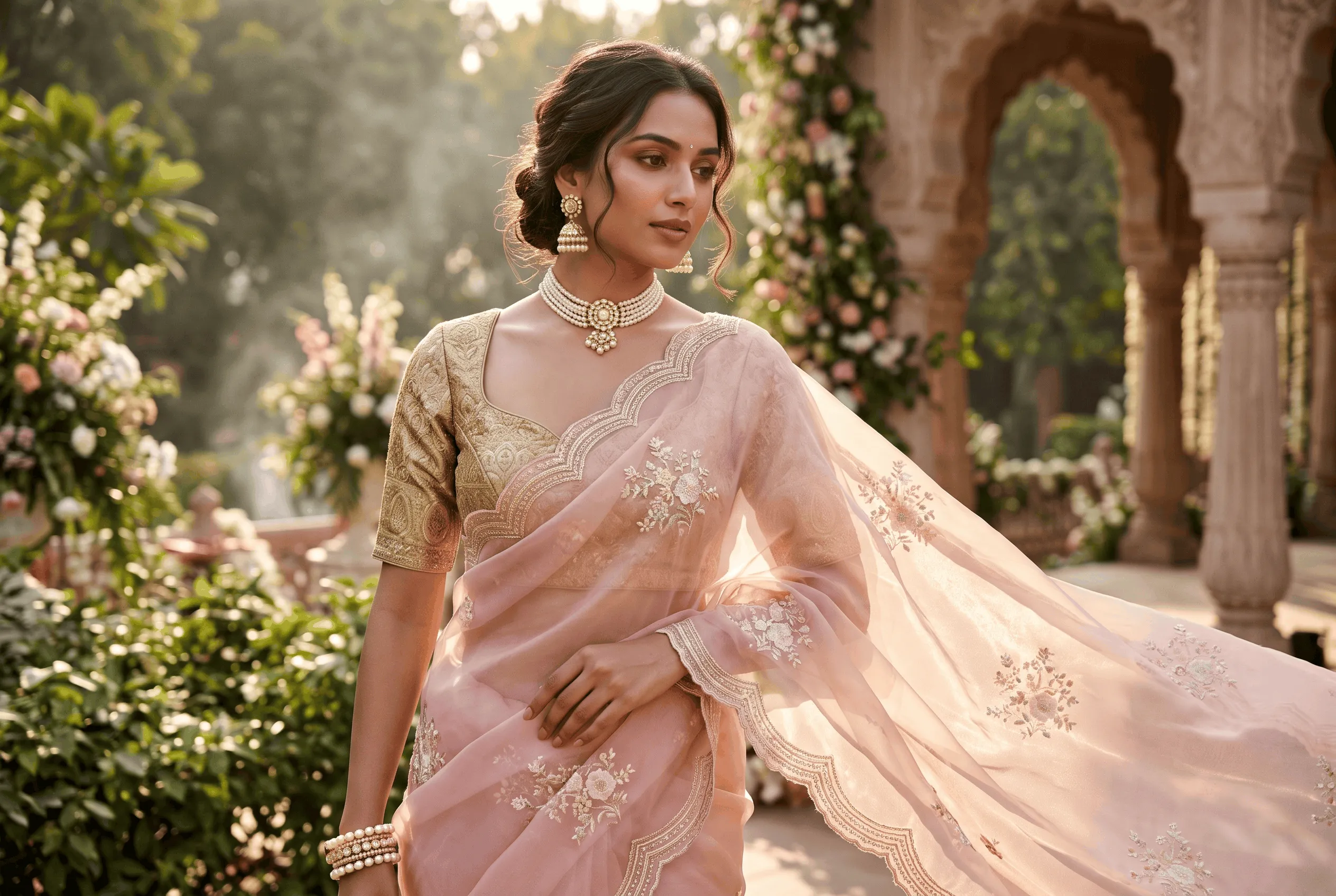
What Is an Organza Saree?
Organza is a thin, sheer, plain-woven fabric made from tightly twisted filament yarns.
The tight twist gives organza its signature crispness and slight stiffness.
It holds its shape rather than clinging to the body, which is why organza sarees look airy and structured at the same time.
Traditionally organza was made from silk.
Today, much of the organza on the market is made from nylon or polyester, which are cheaper and stiffer. Both can look lovely, but they feel, drape and age differently.
Why Is Organza So Sheer and Crisp?
Organza is woven with fine yarns in an open plain weave, which lets light pass through.
The yarns are tightly twisted, and that twist creates a firm, springy hand-feel.
Many organza fabrics are also finished to enhance their crispness.
This combination of transparency and structure is what makes organza look so light in photographs while still holding neat pleats and a defined pallu.
Organza in Indian Saree Tradition
Sheer silk fabrics have long been part of India's textile heritage.
In Banaras, weavers use fine, crisp silk, often called kora, as a base for zari motifs, creating lightweight sarees that are very different from heavy brocades.
In recent years, designers have made organza one of the most fashionable saree fabrics, pairing it with floral embroidery, hand-painted motifs and contemporary blouses.
The result is a fabric that feels both traditional and modern, which explains why organza sarees now appear at everything from temple visits to cocktail receptions.
Pure Silk Organza vs Synthetic Organza
| Feature | Pure silk organza | Synthetic organza (nylon or polyester) |
|---|---|---|
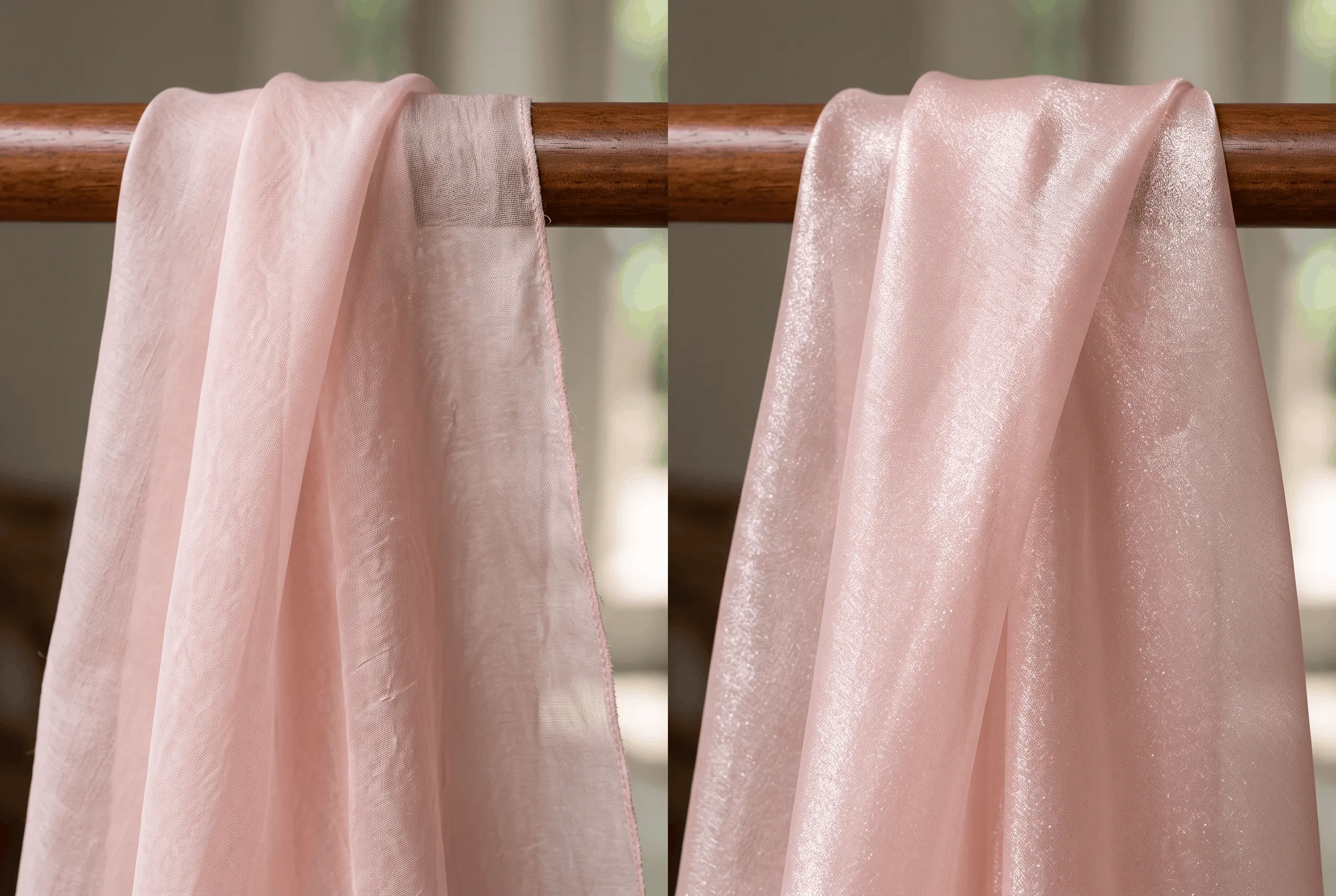
| Feel | Crisp but softer, slightly smooth | Stiffer, sometimes scratchy |
| Sheen | Soft, natural glow | Brighter, sometimes glassy shine |
| Drape | Falls a little more gracefully | Stands away from the body more |
| Breathability | Better in warm weather | Can feel warm |
| Creasing | Creases, but softens with steam | Creases sharply |
| Price | Higher | Lower |
| Burn test (loose thread only) | Burns slowly, smells like burning hair, soft ash | Melts and shrinks, smells like plastic, hard bead |
About the burn test: only try it on a loose thread or a tiny snip from an inside seam of a saree you already own, away from anything flammable.
In a shop, ask whether the saree carries a Silk Mark label, which is a more reliable check for pure silk.
Our guide on how to identify pure silk explains more tests.
Blends are also common, such as silk-organza blends or organza with a satin border. They sit in between on feel and price.
1. Plain Organza with a Contrast Border
Plain organza with a satin, zari or sequin border is minimal and elegant.
It lets the blouse and jewellery take centre stage and is easy to restyle for different events.
2. Floral Embroidered Organza
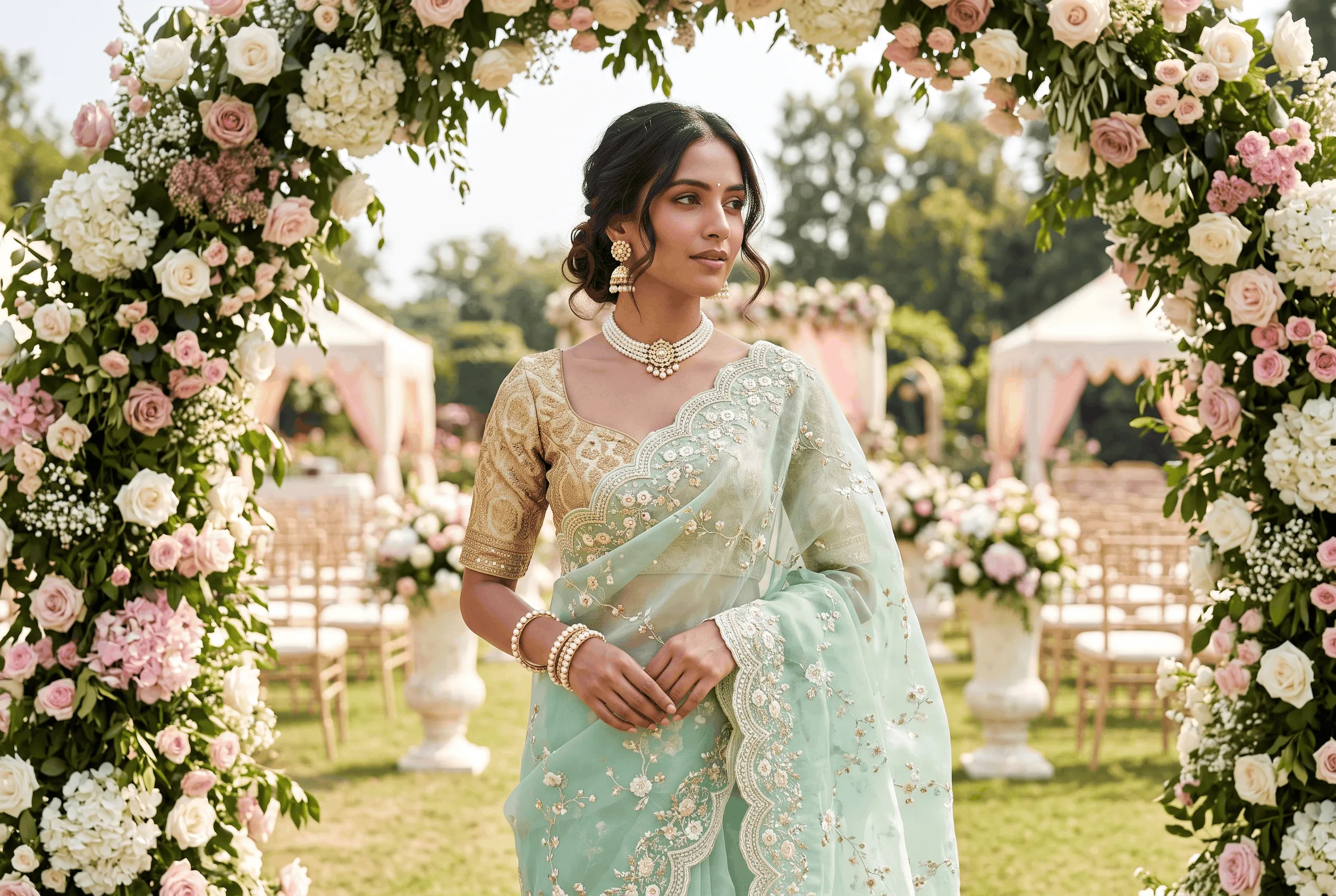
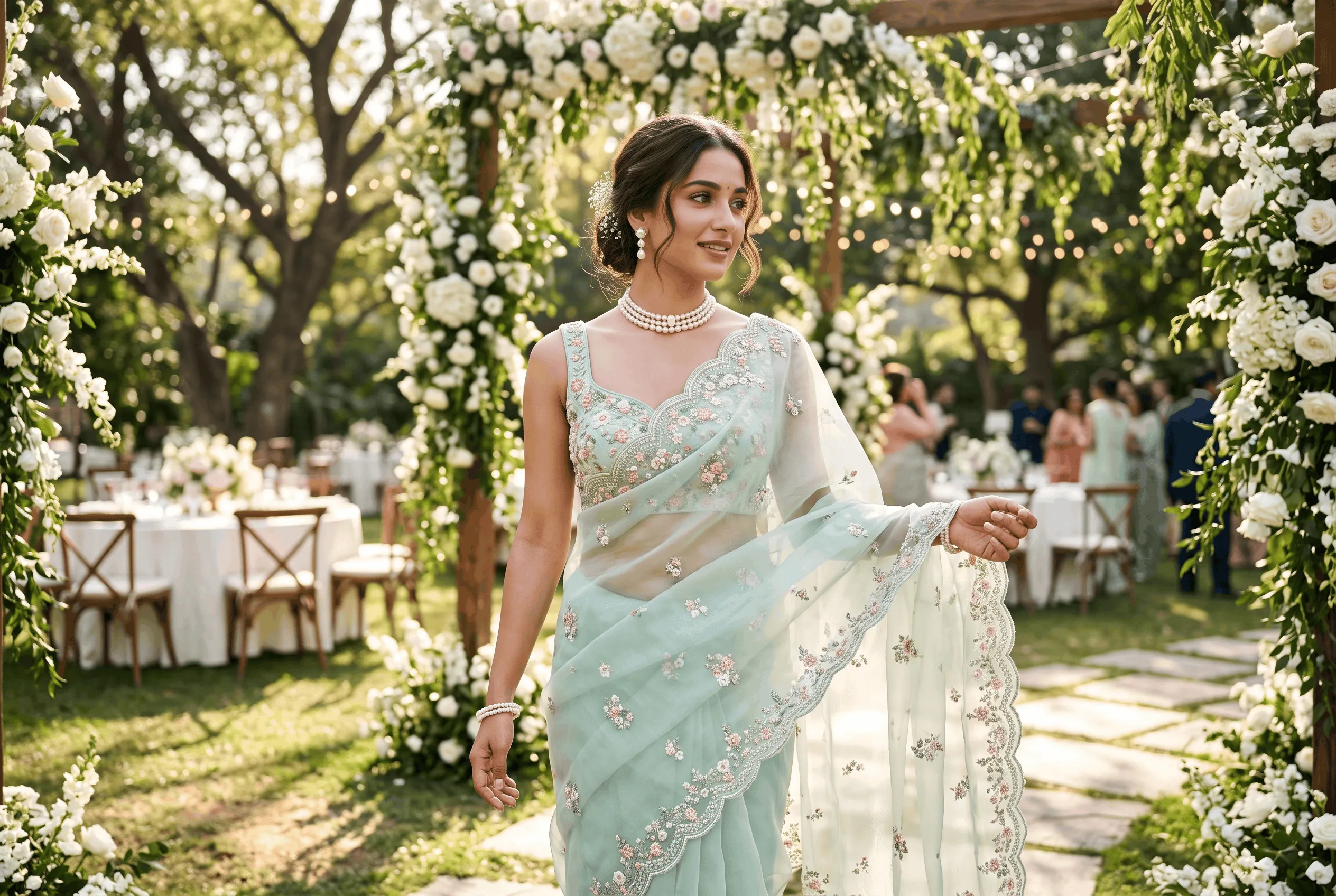
Thread or sequin flowers scattered across the body, or concentrated on the border and pallu, make this the most popular style for day weddings.
Pastel bases with multicolour floral embroidery look especially fresh in daylight.
3. Printed Organza
Watercolour florals and botanical prints in pastel shades are light, affordable and perfect for brunches, engagements and summer functions.
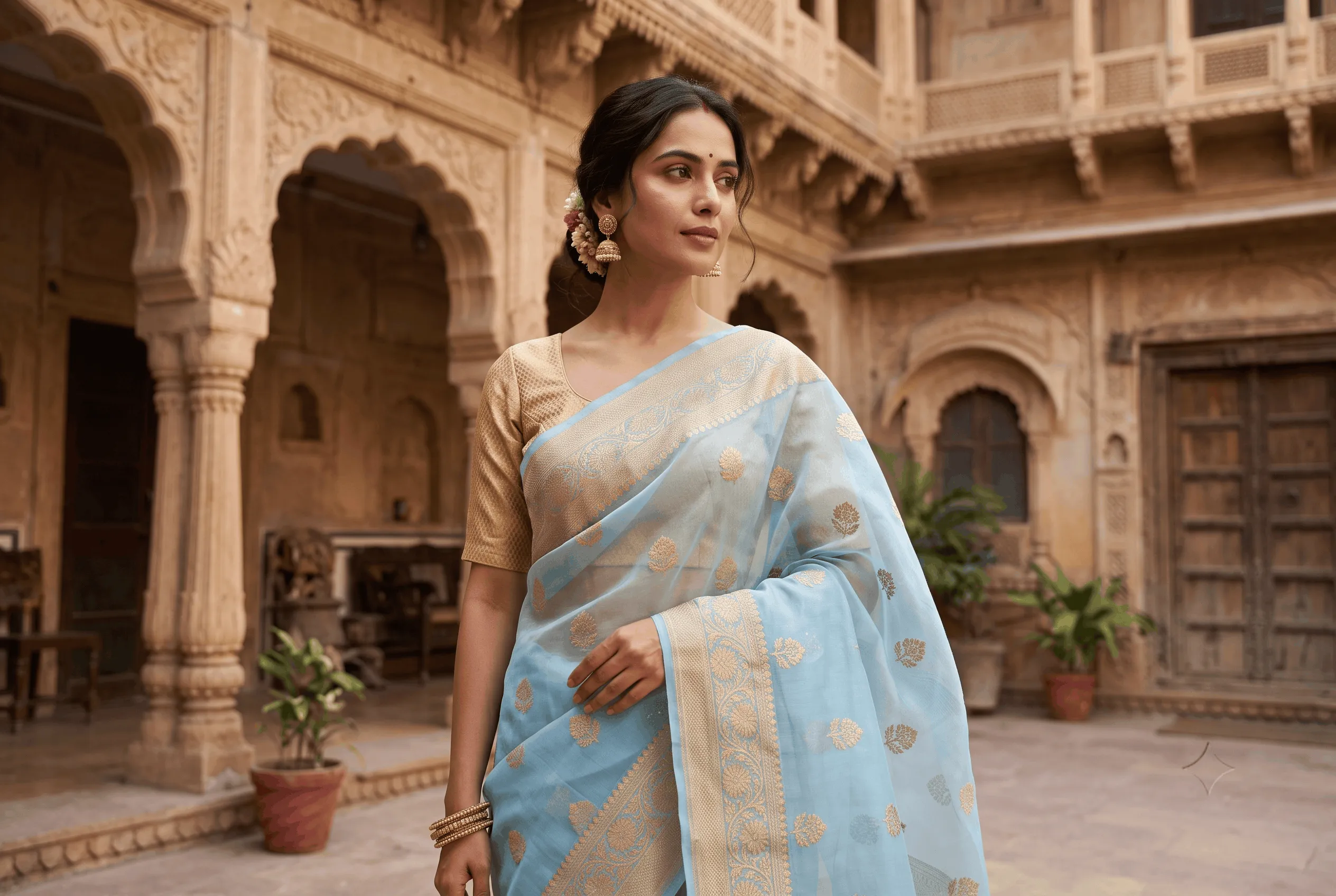
4. Banarasi Organza (Kora)
Organza woven in Banaras with zari motifs is often called kora organza.
It combines the richness of a Banarasi with the lightness of organza and is a beautiful choice for weddings.
See our Banarasi silk saree buying guide to learn what to check.
5. Ruffle Organza
Frilled organza borders create a playful, modern look that is popular with younger women and for sangeet nights.
6. Pearl, Mirror and Sequin Work
Organza with pearls, mirrors or sequins looks glamorous for receptions and evening events.
7. Ombre Organza
Two or more colours that blend into each other create a soft, dreamy effect that photographs beautifully.
Organza vs Chanderi vs Tissue
These three light fabrics are often compared.
Organza is crisp and sheer, with a structured fall.
Chanderi is a fine, lightweight handloom fabric, usually silk-cotton or silk, with a softer drape and subtle zari motifs. See our Chanderi fabric guide.
Tissue is woven with metallic zari threads, giving an all-over metallic sheen. See our tissue silk saree guide.
Choose organza for a crisp, modern, airy look, Chanderi for soft elegance and tissue for glow.
How to Style an Organza Saree for Day Weddings
Organza is made for daytime. It looks fresh in sunlight and never feels heavy.
Colours: blush, mint, powder blue, lavender, peach, ivory and lemon are lovely for day events. See our guide to trending saree colours 2026.
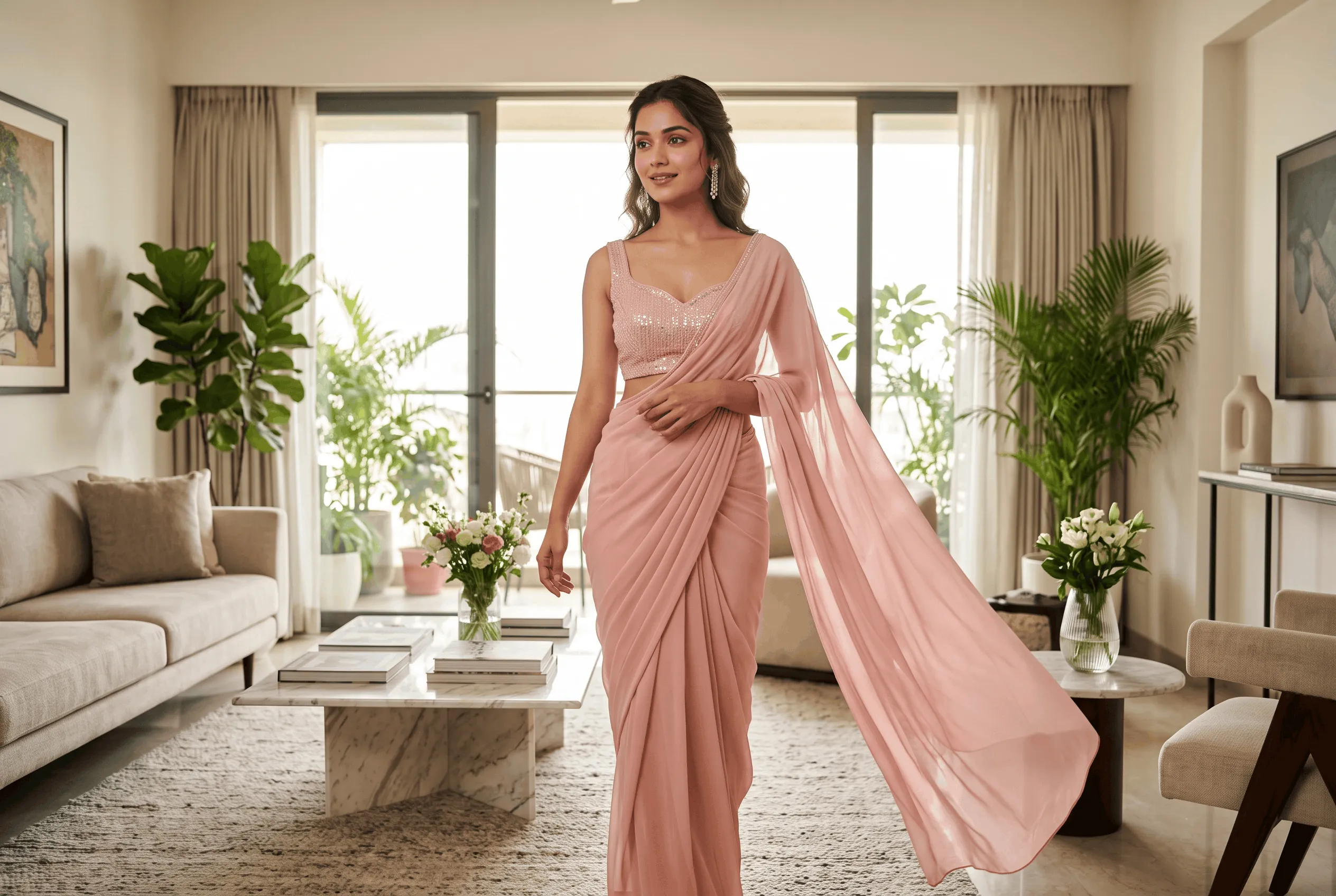
Blouse: because organza is sheer, the blouse is very visible. A brocade or embroidered blouse adds rich contrast, a corset or sweetheart blouse looks modern and a sheer-sleeve blouse creates a soft, tonal look. See our corset blouse design guide.
Petticoat: choose one in the exact colour of the saree, or a shapewear-style petticoat, because it will show through.
Jewellery: pearls, polki, kundan or delicate diamonds suit organza best. Very heavy temple sets can overpower the light fabric.
Hair: a low bun with fresh flowers or soft waves completes the look.
Choosing Organza for Different Occasions
For Day Weddings and Engagements
Floral embroidered organza in pastel shades with a structured blouse is ideal.
For Receptions and Evening Events
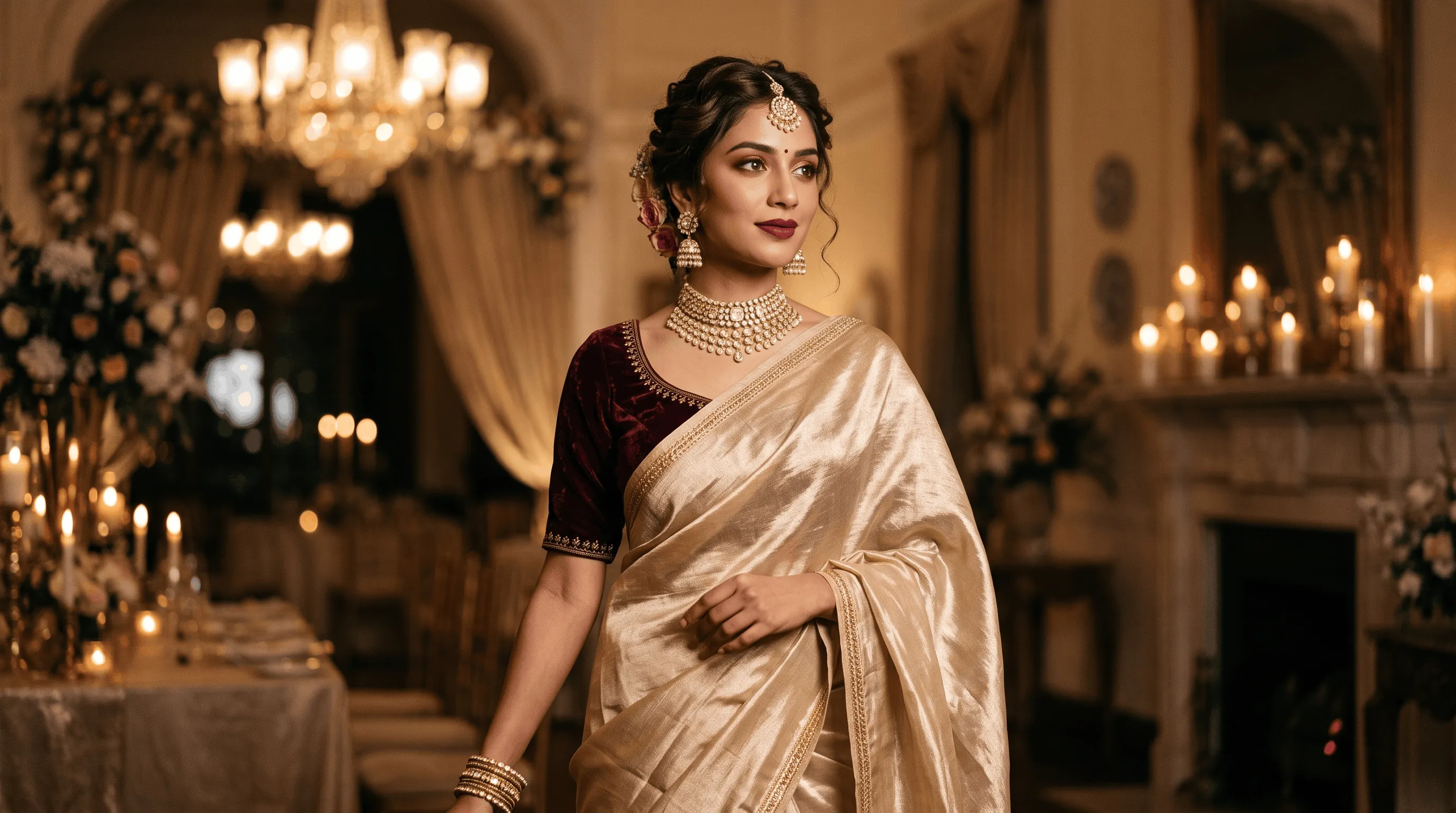
Choose organza with sequins, pearls or zari in deeper shades such as wine, emerald or navy.
For Festivals
Banarasi organza or printed organza in bright colours looks festive without being heavy.
For Brunches and Parties
Printed or ruffle organza with a modern blouse feels relaxed and stylish.
Jewellery Pairings for Organza Sarees
Pearls are the most natural match for pastel organza, because their soft glow echoes the fabric's sheen.
Polki and kundan suit embroidered and Banarasi organza for weddings.
Delicate diamonds or cubic zirconia look elegant with sequinned evening organza.
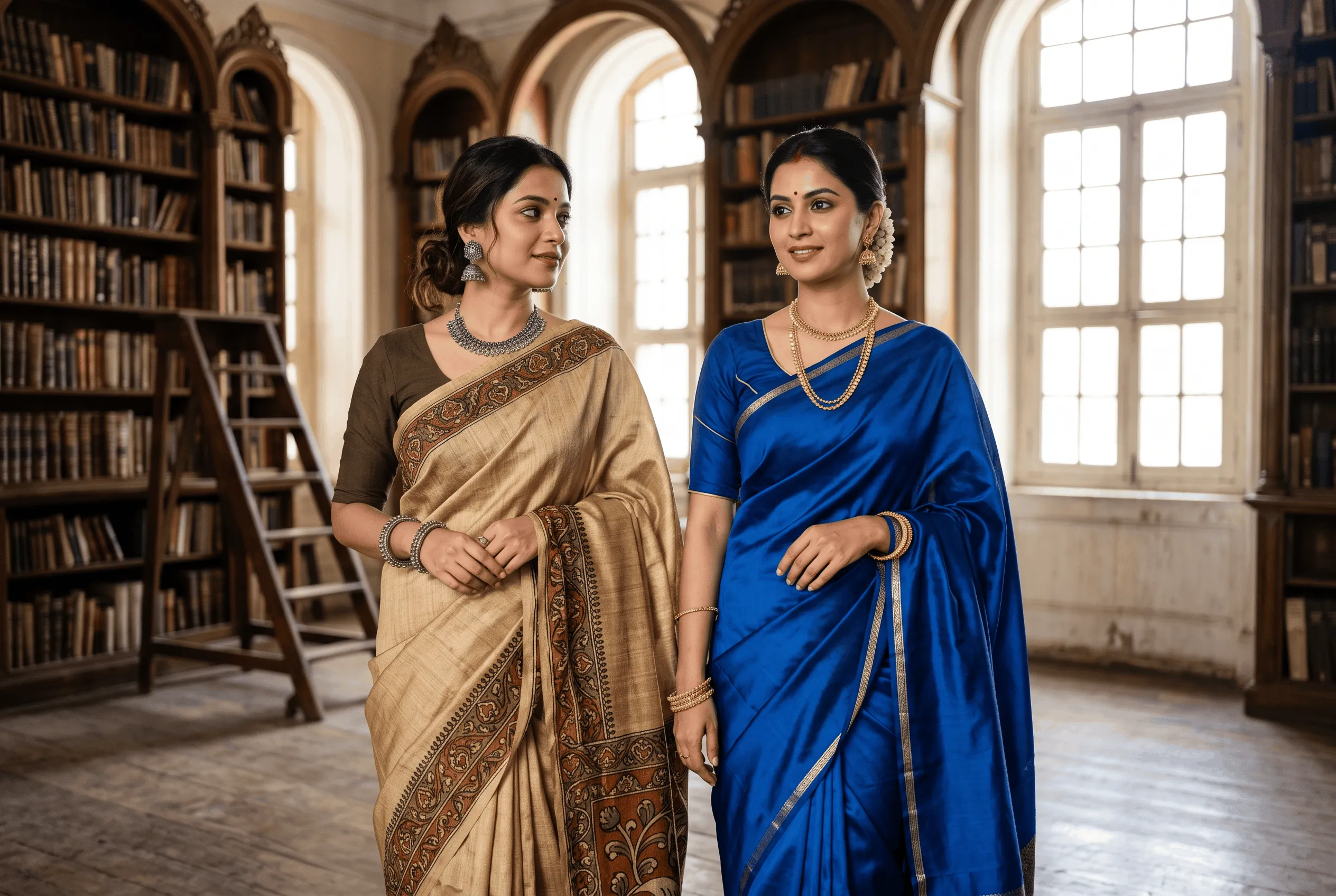
Oxidised silver works well with printed and casual organza for brunches and day events.
Keep the necklace light if the blouse is heavily embroidered, and let statement earrings do the work.
Draping Tips for Organza
Organza is crisp, so it behaves differently from georgette or chiffon.
Make narrower pleats, about 4 inches, so they lie flatter.
Steam the saree before draping to soften fold lines.
Pin generously, because organza can be slippery and the pallu can slide.
Use an open pallu pinned at the shoulder to show off embroidery.
Wear a well-fitted petticoat, because organza can stand away from the body.
If draping organza feels tricky, consider converting it into a pre-draped saree.
How to Wash and Care for an Organza Saree
Pure silk and embroidered organza: dry-clean only, and spot-clean small marks by dabbing gently with a little cold water.
Plain synthetic organza: hand-wash in cold water with mild detergent. Do not wring or twist; gently press out the water and dry flat or on a padded hanger in the shade.
Ironing: use a low setting with a cotton cloth between the iron and the saree. A steamer is even better and avoids shine marks.
Storage: store in a muslin or cotton bag, never plastic. Fold loosely or roll it to avoid sharp creases, wrap embroidered and zari areas in tissue paper and refold every few months.
Our silk saree care guide has more tips for delicate fabrics.
What Is a Fair Price for an Organza Saree?
These are indicative 2026 ranges. Prices vary by city, seller, fabric and work.
| Type | Indicative price range |
|---|---|
| Plain or printed synthetic organza | ₹800 – ₹2,500 |
| Embroidered synthetic organza | ₹2,000 – ₹6,000 |
| Silk-organza blend | ₹2,500 – ₹7,000 |
| Pure silk organza (plain or printed) | ₹4,000 – ₹12,000 |
| Banarasi organza with zari (kora) | ₹5,000 – ₹25,000+ |
| Designer embroidered pure silk organza | ₹12,000 – ₹50,000+ |
If a saree is sold as pure silk organza at a synthetic price, ask more questions. See our saree price guide for comparisons.
Buying Checklist
Ask whether the saree is pure silk, a blend or synthetic, and look for a Silk Mark label on pure silk.
Feel the fabric. Pure silk organza is crisp but softer and less glassy.
Check the embroidery on the reverse. Neat backs usually mean better work.
Check whether a blouse piece is included and whether it matches the colour.
Hold the saree in daylight, because organza colours can look different under shop lights.
Ask about the return or exchange policy, especially online.
Common Misconceptions About Organza
"All Organza Is Silk"
No. Much of the organza on the market is nylon or polyester. Pure silk organza is a premium fabric.
"Organza Is Only for Summer"
Organza is ideal for warm weather, but embroidered and zari organza also works beautifully for evening and winter functions with a heavier blouse.
"Organza Is Too Stiff to Drape"
Narrower pleats, steaming and pinning make organza much easier to manage.
"More Shine Means Better Quality"
A glassy shine often indicates synthetic yarn. Pure silk organza usually has a softer glow.
Why Organza Remains a Wardrobe Favourite
An organza saree is one of the best choices for day weddings, engagements and festive daytime events.
It is light, sheer, elegant and endlessly versatile with different blouses.
Know the difference between pure silk and synthetic organza so you pay the right price, style it with a strong blouse and light jewellery, drape with narrower pleats and plenty of pins and store it loosely in muslin.
For more lightweight fabric ideas, explore our traditional wear trends 2026 guide.
Comments (0)
Leave a Thought
No comments yet. Be the first to share your thoughts!