Light enough to catch the breeze, translucent enough to reveal the layers beneath it, yet structured enough to hold an elegant saree pleat—Chanderi fabric has a character that is difficult to mistake once you have handled the real textile.
Woven in and around the historic town of Chanderi in Madhya Pradesh, this handloom tradition is best known for its lightweight construction, delicate transparency, subtle sheen and finely woven motifs.
Unlike dense ceremonial silks, Chanderi does not rely on heaviness to appear luxurious. Its beauty comes from restraint: a sheer surface, fine yarns, elegant zari borders and small motifs that seem almost suspended in the cloth.
Today, Chanderi appears not only in sarees but also in dupattas, kurtas, lehengas, jackets and contemporary occasion wear.
But what exactly makes Chanderi sheer? Is every transparent Chanderi saree pure cotton? How does silk-cotton differ from pure silk Chanderi? And how can you recognize a well-made piece?
This complete guide explains the fabric from loom to wardrobe.
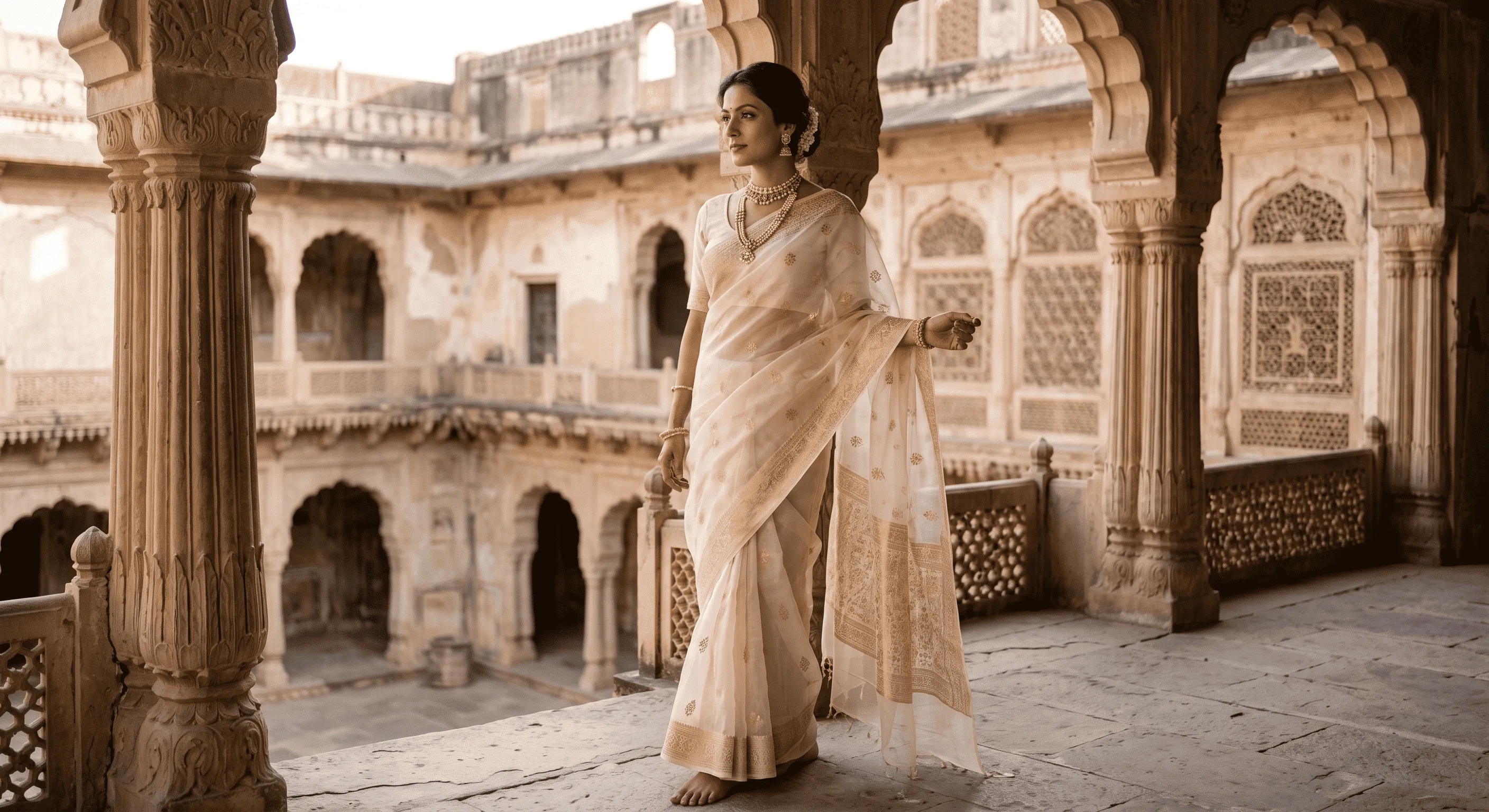
What Is Chanderi Fabric?
Chanderi is a traditional Indian handloom textile associated with the town of Chanderi in Madhya Pradesh.
Its signature qualities are immediately visual: the fabric is usually light, fine and slightly transparent, with a surface that can have a gentle sheen.
Depending on the yarn combination, Chanderi may be woven as:
- Chanderi cotton,
- silk-cotton Chanderi,
- or silk Chanderi.
The weave may remain relatively simple and understated or be embellished through woven zari borders and small motifs known as butis or buttis.
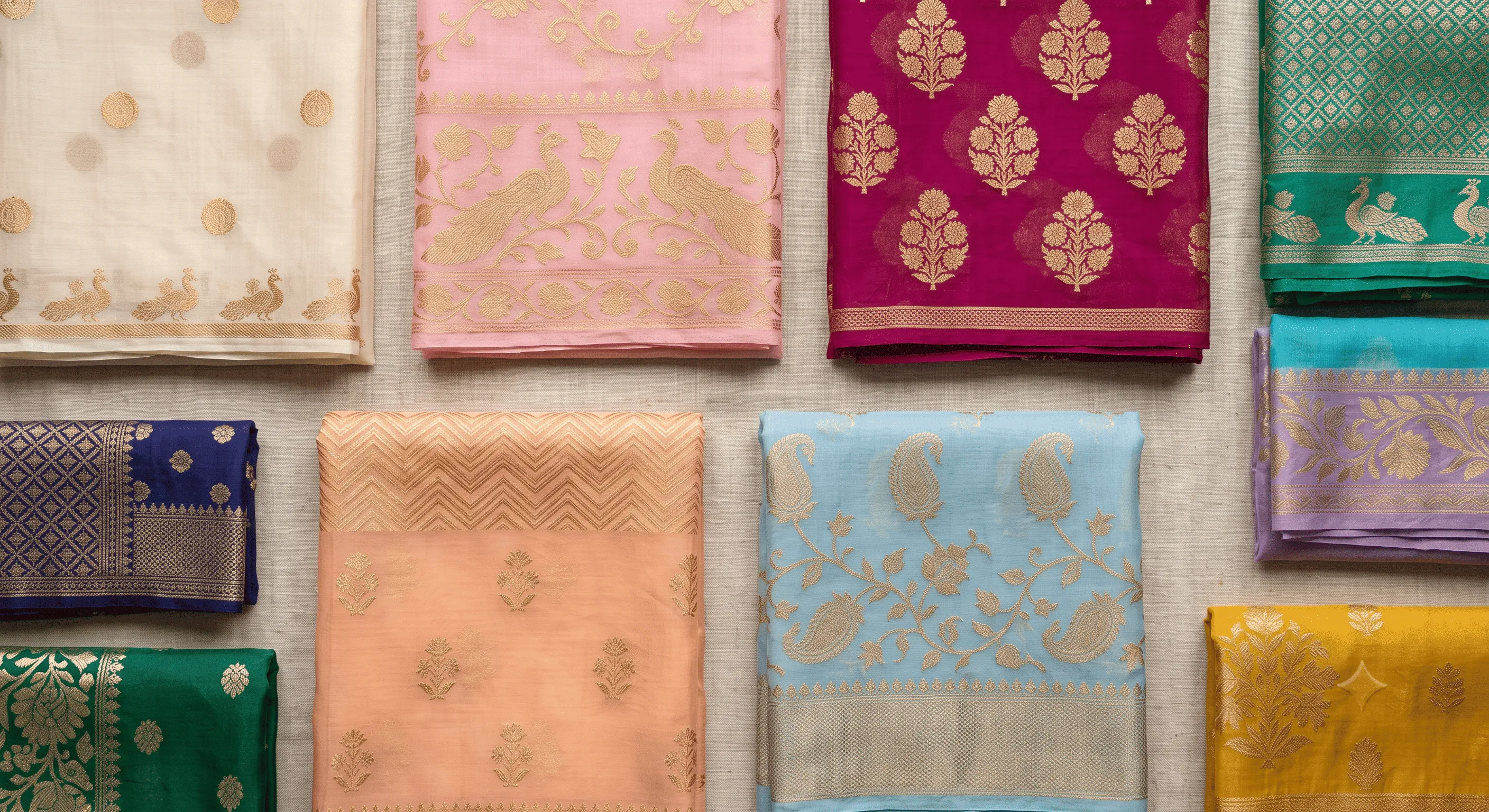
Traditional motifs often draw from flowers, leaves, coins, peacocks and geometric forms.
What makes the textile especially interesting is its balance.
It can appear delicate without feeling visually weak, festive without being overwhelmingly ornate and traditional without being difficult to style in a contemporary wardrobe.
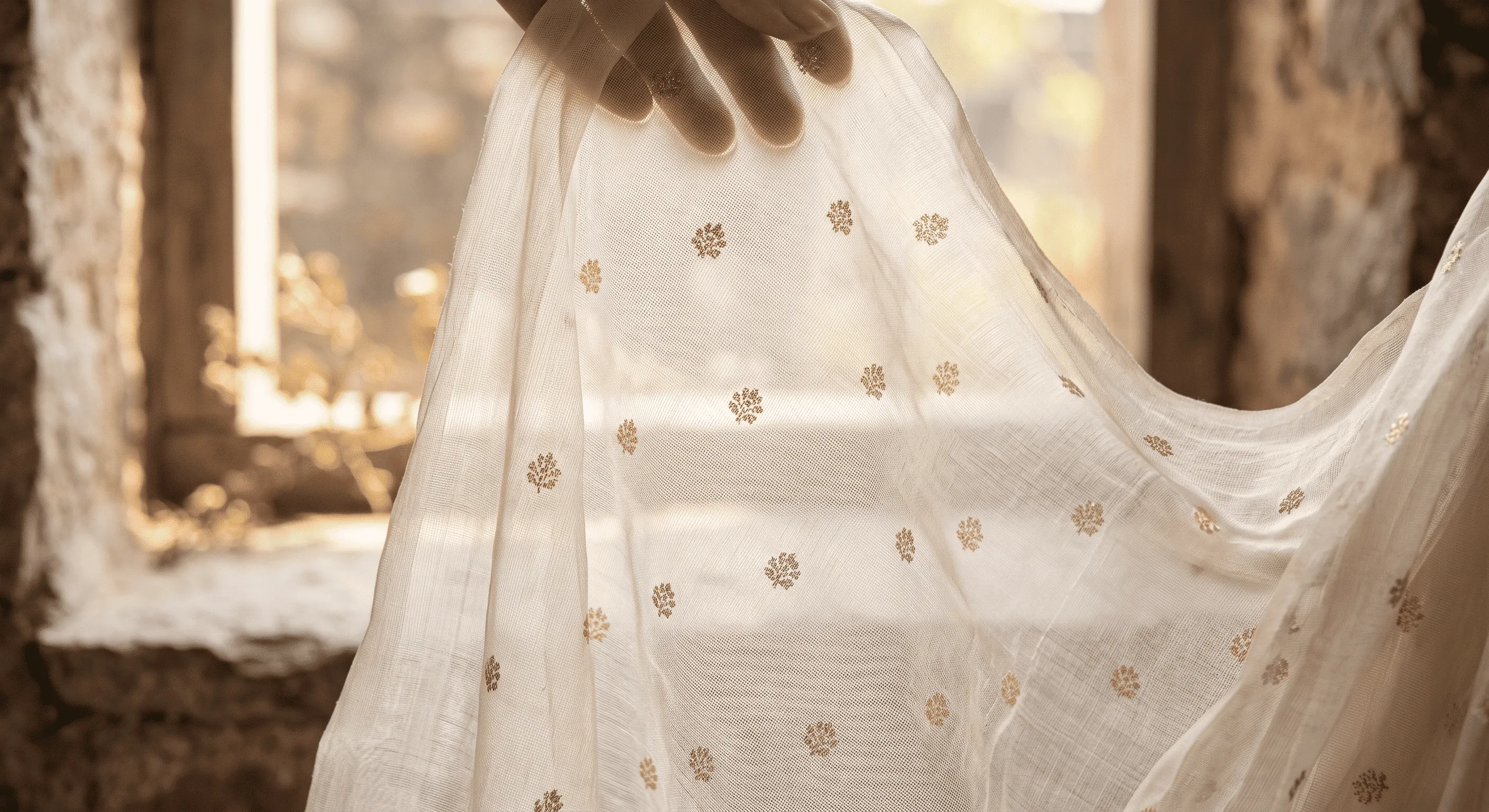
Why Is Chanderi Fabric Sheer?
The transparency of Chanderi is not simply the result of making the fabric thin.
Its appearance comes from the combination of fine yarns and the way they are woven.
The spaces created within the fine weave allow light to travel through the cloth, producing the characteristic translucent effect.
That does not mean the fabric should look like loose netting.
A good Chanderi textile can remain finely constructed while still appearing airy.
Silk yarn can introduce additional lustre, while cotton gives the fabric a drier, crisper quality. When the two fibres are combined, the result often balances structure, softness and sheen.
This is why Chanderi seems to change character when viewed under different lighting.
In daylight it can appear almost weightless.
Under warm evening lighting, its silk and zari elements become more visible and festive.
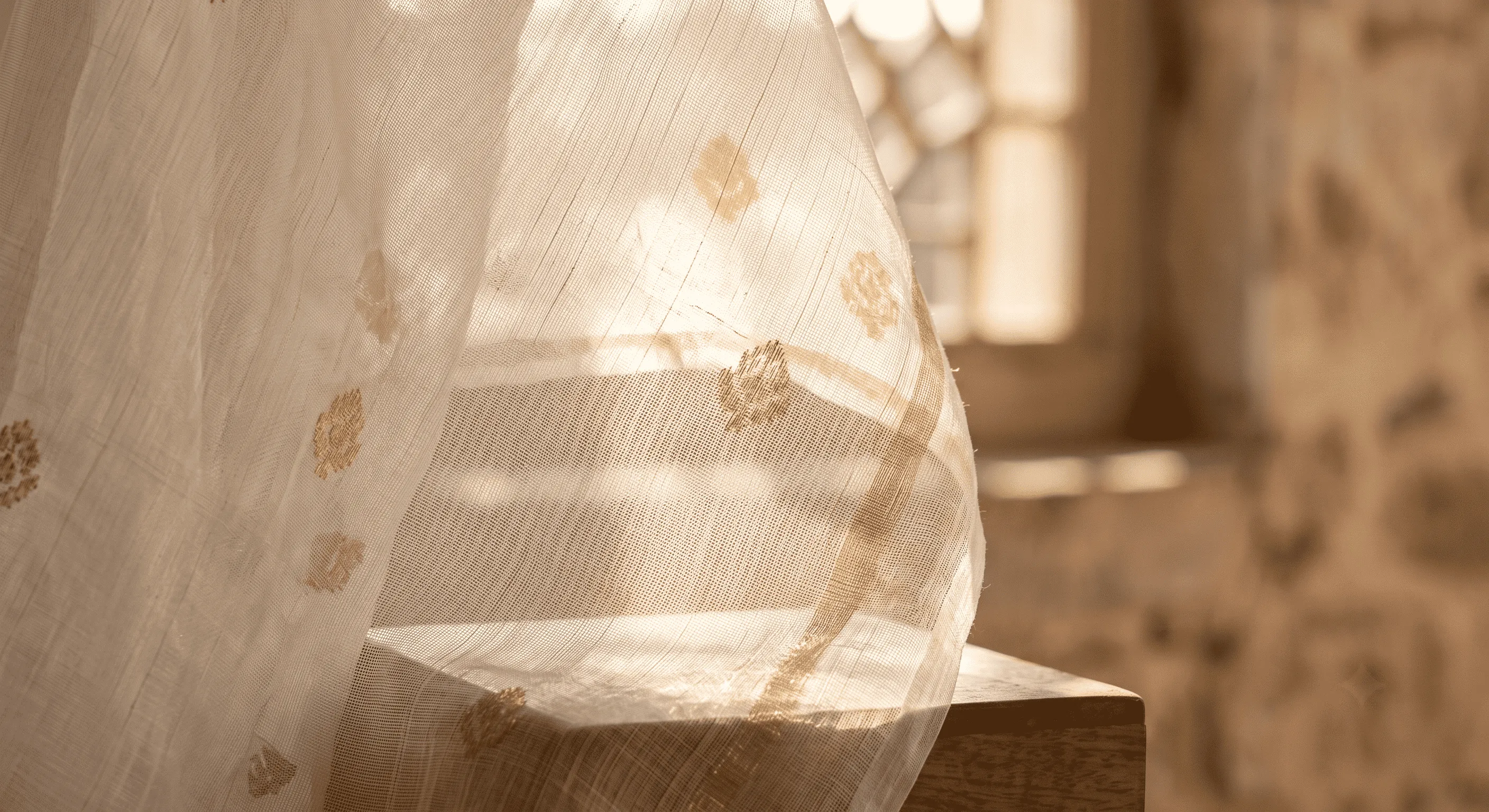
The Regional Identity of Chanderi
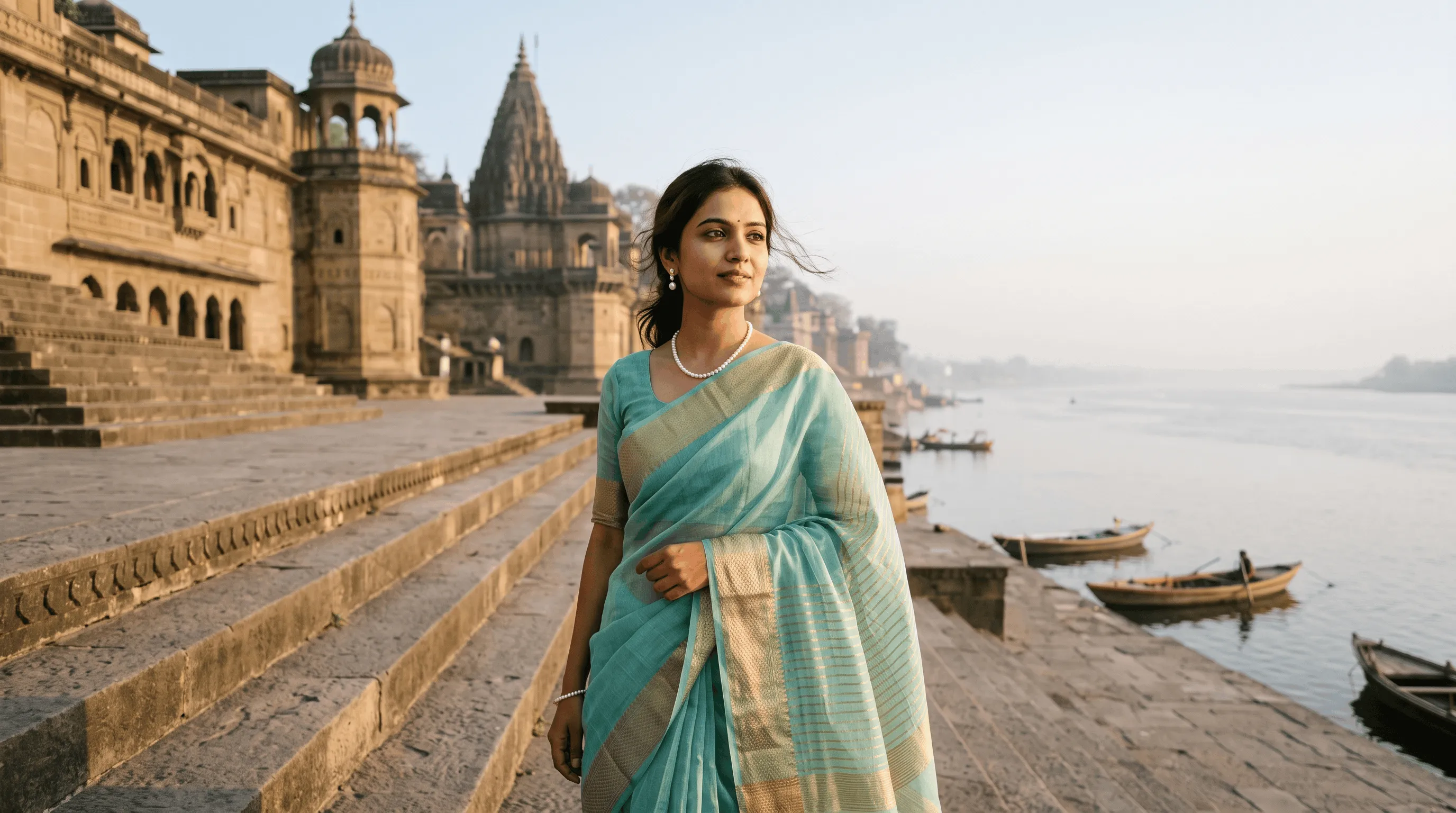
Chanderi is a historic town in present-day Madhya Pradesh, and weaving has become one of the strongest parts of its cultural identity.
The textile developed alongside the town's history as a centre connected with trade, courts and regional rulers.
Over generations, weaving knowledge passed through artisan families, turning the loom into an important part of local livelihood as well as cultural memory.
The textile was not always limited to the saree.
Earlier Chanderi weaving was also associated with garments and cloth used for turbans, safas and other forms of dress.
Over time, the saree became the form most closely associated with the craft.
Today, walking through weaving areas around Chanderi still reveals how closely textile production is connected with domestic and community life.
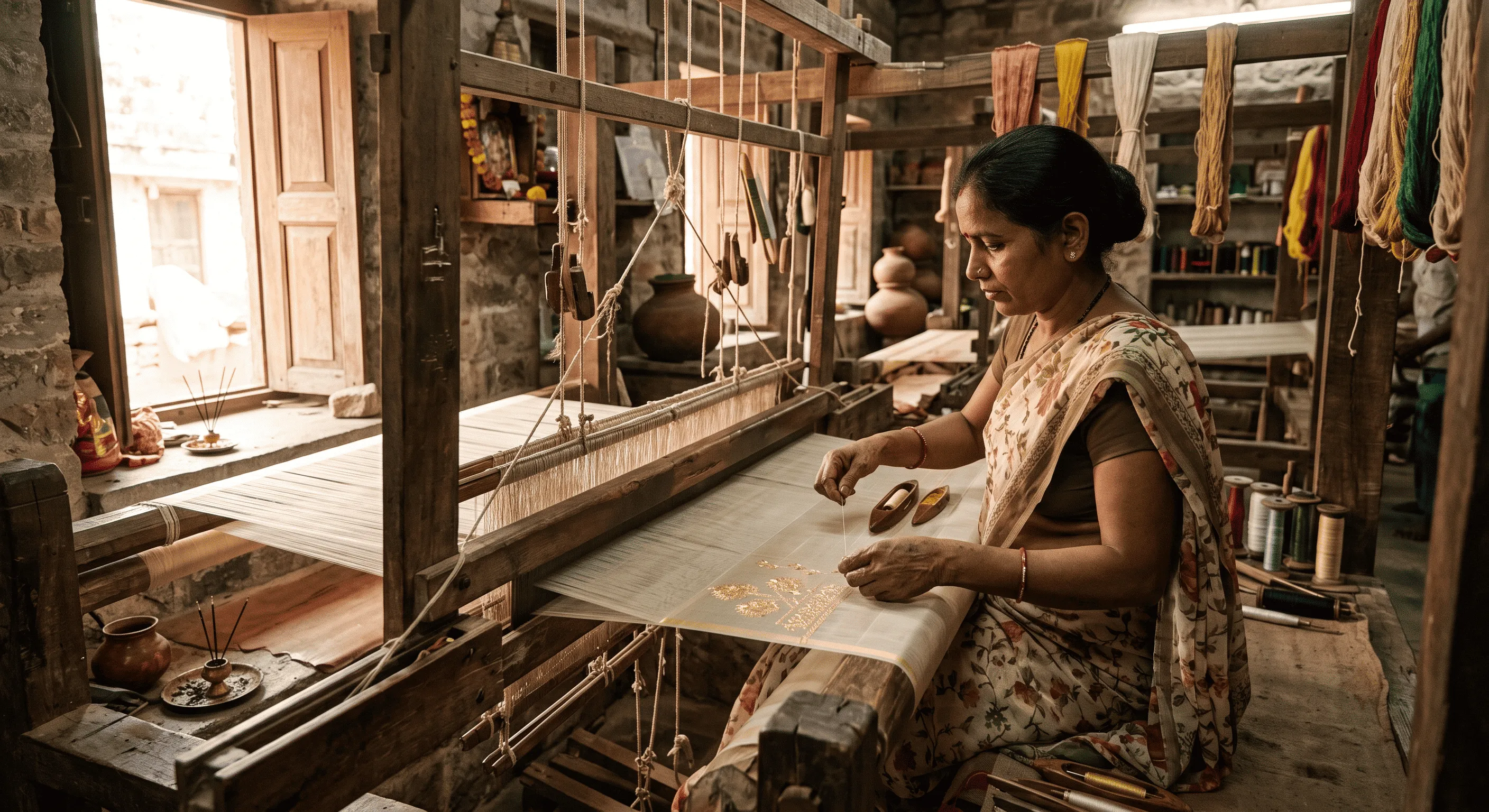
A Brief History of Chanderi Weaving
Chanderi's reputation as a weaving centre developed over centuries.
Historical accounts connect the textile with elite and courtly use, particularly because extremely fine fabrics were once associated with refinement and status.
The tradition evolved as different rulers and patrons influenced the region.
By later periods, Chanderi textiles were admired for the fineness of their cotton and their delicate appearance.
Technological changes also transformed production.
Older forms of weaving required more than one person to operate certain loom systems. The later adoption of the fly-shuttle loom allowed individual weavers to work more efficiently.
The raw materials changed as well.
While fine cotton played an important role historically, silk increasingly became part of contemporary Chanderi production, giving rise to the silk-cotton and silk variations familiar to buyers today.
The result is a textile tradition that has changed with the market without losing its most recognizable feature: lightness.
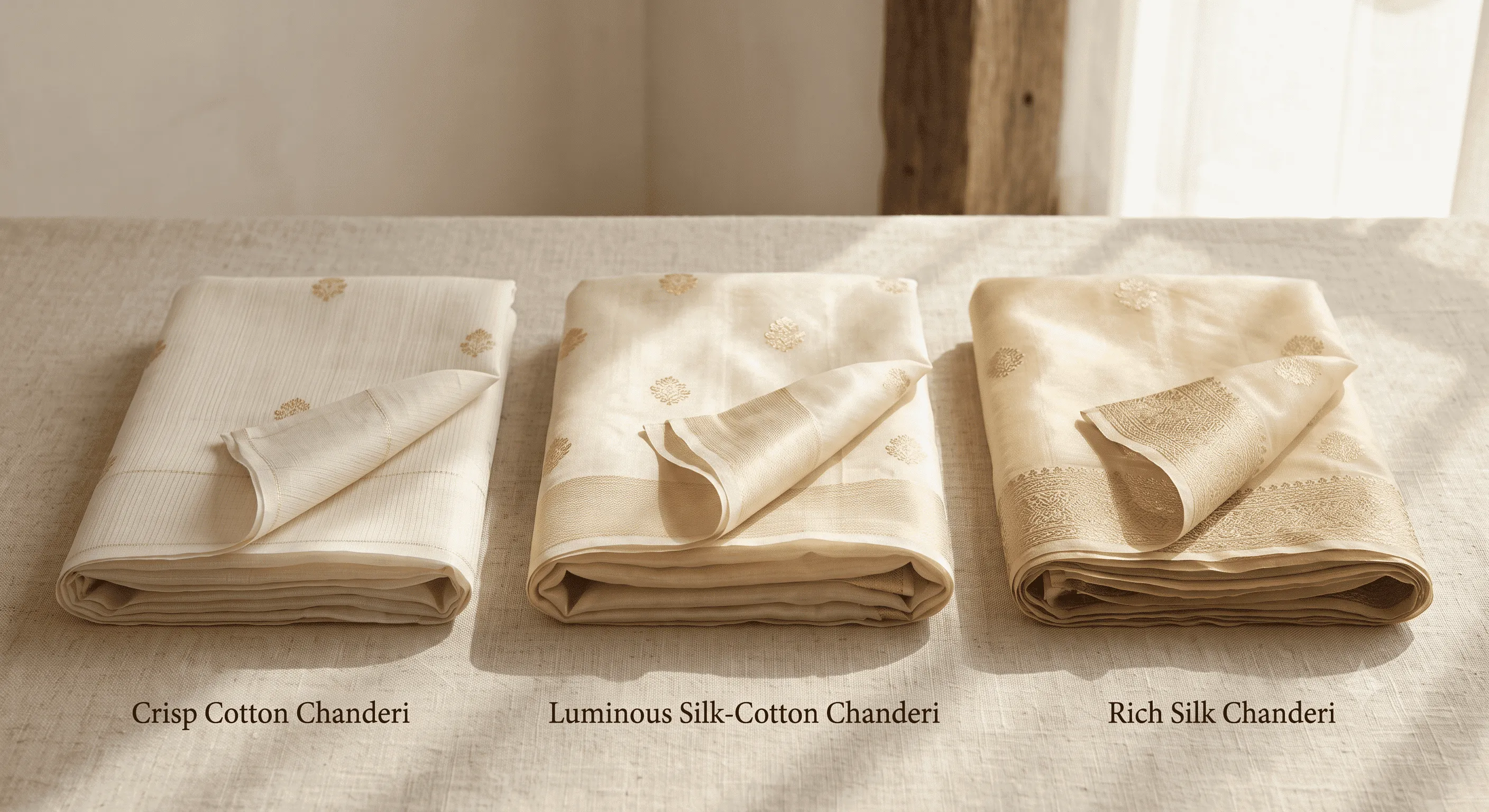
Three Main Types of Chanderi Fabric
Understanding the fibre composition is one of the most useful things you can do before buying Chanderi.
1. Chanderi Cotton
Cotton Chanderi has a lighter, drier and comparatively crisp hand feel.
It is an excellent choice when you want a breathable-looking traditional textile with less of the lustre associated with silk.
Fine cotton Chanderi can feel extremely delicate.
It works beautifully for summer sarees, dupattas and understated festive clothing.
Its appeal comes from refinement rather than shine.
2. Silk-Cotton Chanderi
This is one of the most commonly recognized forms of modern Chanderi.
Cotton and silk yarns create a textile that combines the structure of cotton with the luminosity of silk.
It can feel crisp when new but becomes easier to drape with use.
For buyers who want something light enough for long events but festive enough for weddings and celebrations, silk-cotton is particularly versatile.
3. Silk Chanderi
Silk-dominant Chanderi generally has a richer sheen and more fluid visual quality.
It feels more luxurious and can appear especially beautiful under evening lighting.
Silk versions are popular for weddings, festivals and formal occasions where you want the distinctive transparency of Chanderi with a more elevated finish.
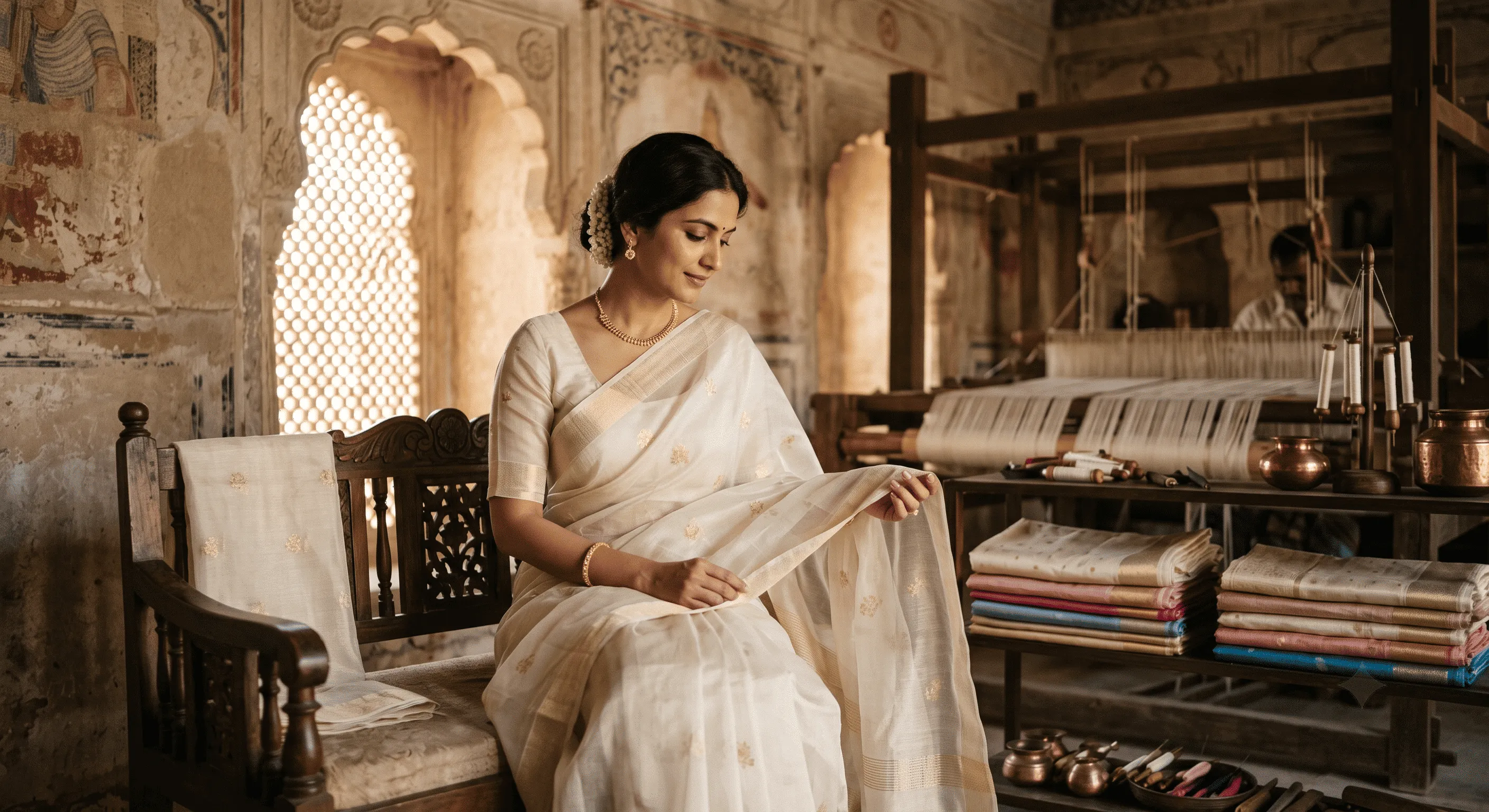
How Chanderi Is Woven
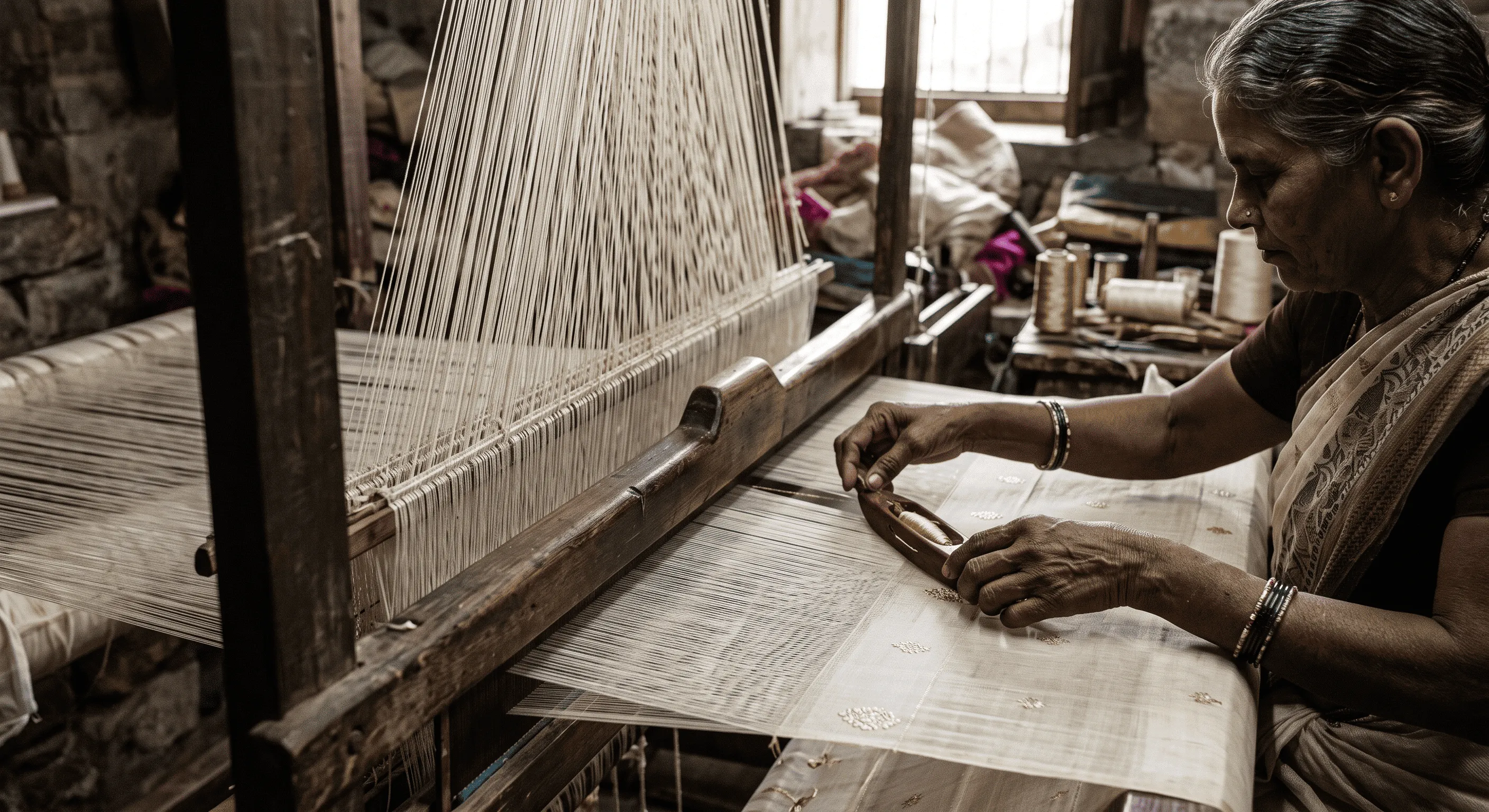
The visual simplicity of Chanderi can hide how much control the weaving requires.
Fine yarns need careful handling because uneven tension can affect the finished textile.
The warp—the lengthwise yarns held on the loom—creates the structural foundation.
The weft travels across the width of the fabric, gradually building the cloth.
Where decorative motifs are required, supplementary yarns may be introduced during weaving.
This means many traditional Chanderi motifs are not printed onto finished cloth.
They become part of the textile as the fabric is made.
Zari can then be incorporated into borders, pallus or individual motifs.
The skill lies in maintaining the lightness of the base fabric without allowing the ornamentation to overwhelm it.
Traditional Chanderi Motifs
Chanderi does not always depend on large, elaborate patterns.
In many sarees, tiny individual motifs scattered across an otherwise open body are enough to create visual richness.
Ashrafi Buti
The ashrafi, or coin-inspired motif, is one of the designs associated with Chanderi weaving.
Its repeated circular form gives the saree a delicate rhythm without covering the entire body.
Floral Motifs
Flowers, buds and leaves appear frequently in both traditional and contemporary Chanderi.
Peacock Motifs
Peacocks introduce a more decorative character and are often used when the saree is intended for festive wear.
Geometric Forms
Simple geometric shapes can make Chanderi look more contemporary while still preserving the woven character of the cloth.
Keri or Mango Motifs
The familiar Indian mango or paisley form also appears in different interpretations.
What Makes Chanderi Different from Organza?
Because both fabrics can look sheer and structured, Chanderi and organza are sometimes confused.
The difference lies in their textile identity.
Organza describes a type of lightweight, sheer fabric construction and may be made from silk or synthetic fibres.
Chanderi, by contrast, refers to a specific Indian weaving tradition associated with Chanderi and its characteristic textile production.
Traditional Chanderi also frequently incorporates handwoven butis and regional zari design vocabulary.
Both can appear crisp and transparent, but they should not automatically be considered the same textile.
Chanderi vs Maheshwari Fabric
Chanderi and Maheshwari are both closely associated with Madhya Pradesh, so buyers sometimes confuse them.
Their visual personalities, however, are different.
Chanderi is particularly recognized for its sheerness, lightness and delicate surface.
Maheshwari sarees are often more opaque and are strongly identified with striped or checked designs, distinctive borders and reversible-looking border traditions.
Chanderi tends to feel ethereal.
Maheshwari usually feels more graphic and structured.
Both are important handloom traditions, but they should be appreciated on their own terms.
How to Identify Good Chanderi Fabric
There is no single trick that can prove authenticity.
Instead, examine several aspects together.
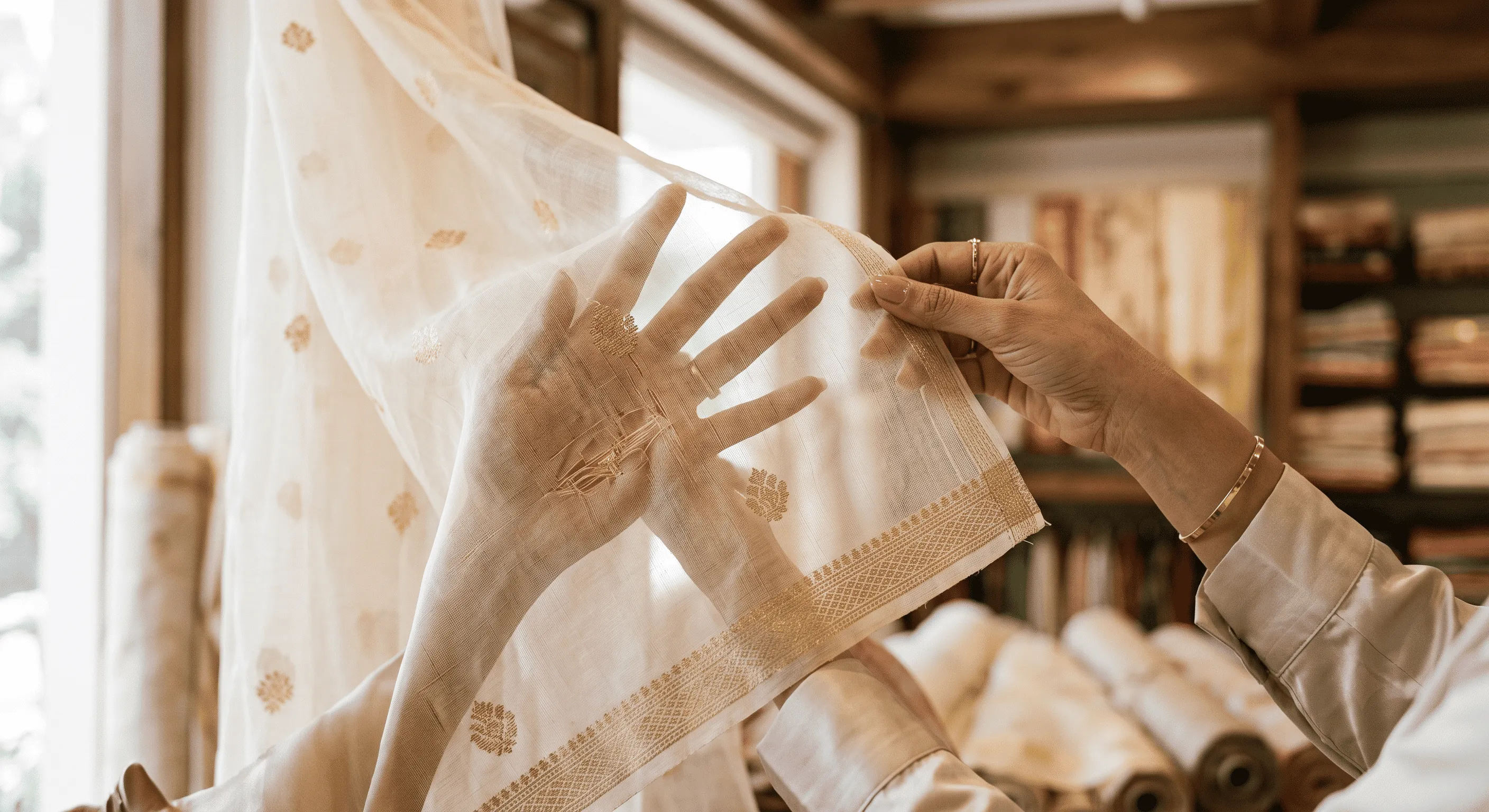
Look at the Transparency
Chanderi should generally appear light and translucent rather than dense and heavy.
Examine the Weave
Look closely at the yarns.
A handwoven textile may reveal subtle irregularities that create character rather than mechanical uniformity.
Inspect the Motifs
In woven Chanderi, motifs should feel integrated into the fabric rather than simply printed on the surface.
Check the Reverse
Woven motifs may reveal thread movement on the back of the textile.
Feel the Fabric
Depending on fibre composition, Chanderi may feel crisp, smooth or gently lustrous, but it should retain its characteristic lightness.
Ask About Fibre Composition
Find out whether you are buying cotton, silk-cotton or silk Chanderi.
The seller should be able to answer clearly.
Handloom vs Power-Loom Chanderi
As demand for Chanderi-style textiles has increased, machine-produced versions have become more common.
Power-loom fabrics can reproduce the general appearance quickly and at a lower price.
That does not automatically make them undesirable.
The important distinction is accurate labelling.
If you are paying for a handloom Chanderi saree, the seller should be able to explain where it was woven and how it was produced.
Handloom pieces may contain small variations in motif placement or weaving tension.
These should be distinguished from actual defects such as damaged threads, loose borders or poor finishing.
Why Does Chanderi Sometimes Feel Stiff?
Buyers occasionally expect every fine fabric to feel extremely soft.
Chanderi can challenge that expectation.
New Chanderi—especially certain cotton and silk-cotton versions—can have a degree of crispness.
This structure is partly what allows the saree to hold elegant pleats despite being very lightweight.
The fabric generally becomes more relaxed with wear and appropriate care.
Excessive stiffness, however, may also come from finishing treatments, so the feel should always be considered alongside fibre composition and quality.
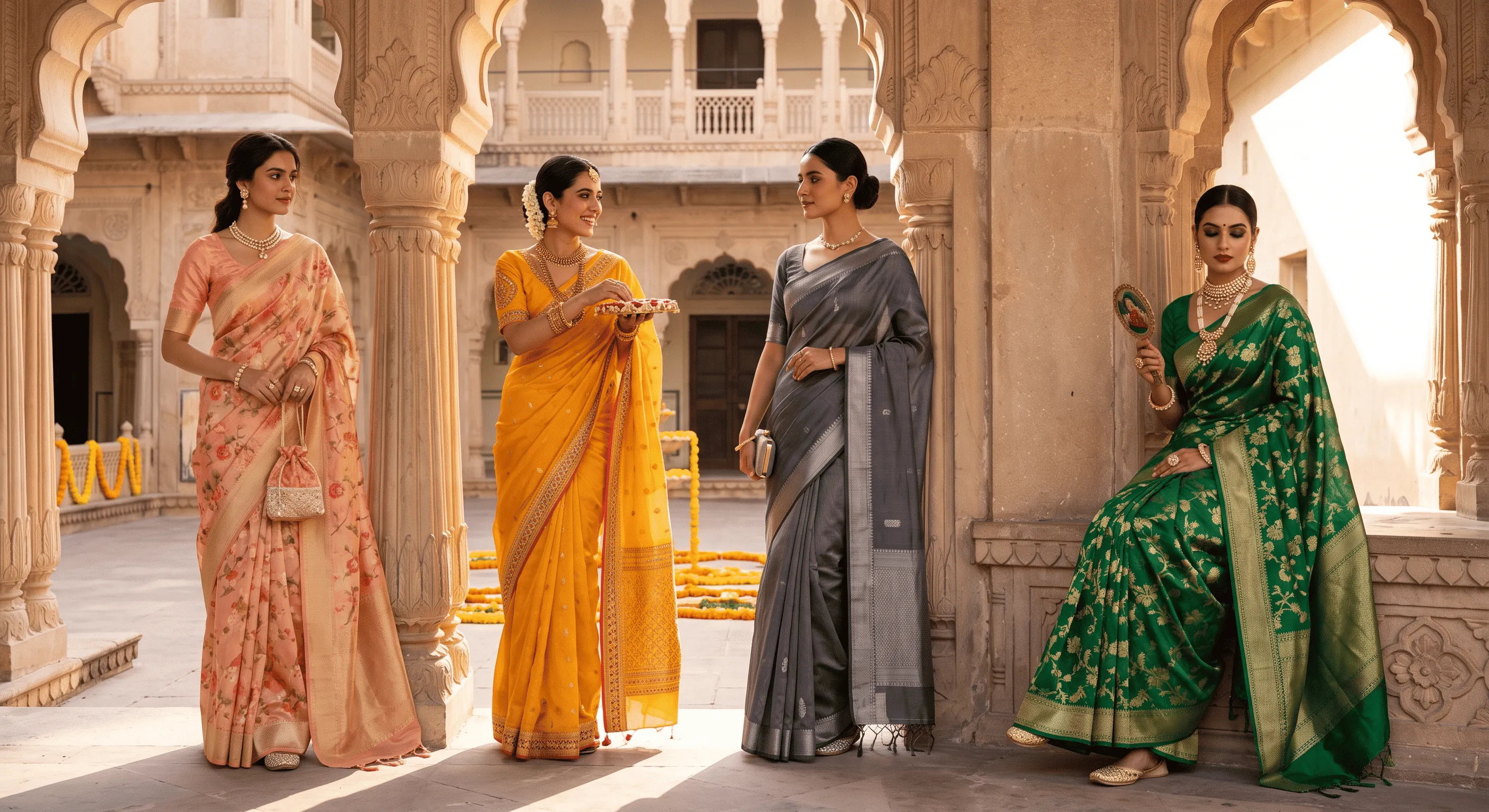
How to Choose Chanderi for Different Occasions
For Daytime Weddings
Choose pastel silk-cotton or silk Chanderi with fine zari.
Blush, mint, powder blue, ivory and peach complement the fabric's airy quality.
For Festivals
Traditional reds, maroons, greens, mustard and rani pink work beautifully with gold zari.
For Office and Formal Wear
Choose cotton or understated silk-cotton Chanderi with smaller motifs and restrained borders.
For Evening Events
Darker silk Chanderi in emerald, navy, plum, charcoal or wine can appear especially rich under warm lighting.
For Summer Celebrations
The visual lightness of Chanderi makes it particularly attractive when you want traditional clothing without the appearance of a heavy textile.
Modern Uses Beyond the Chanderi Saree
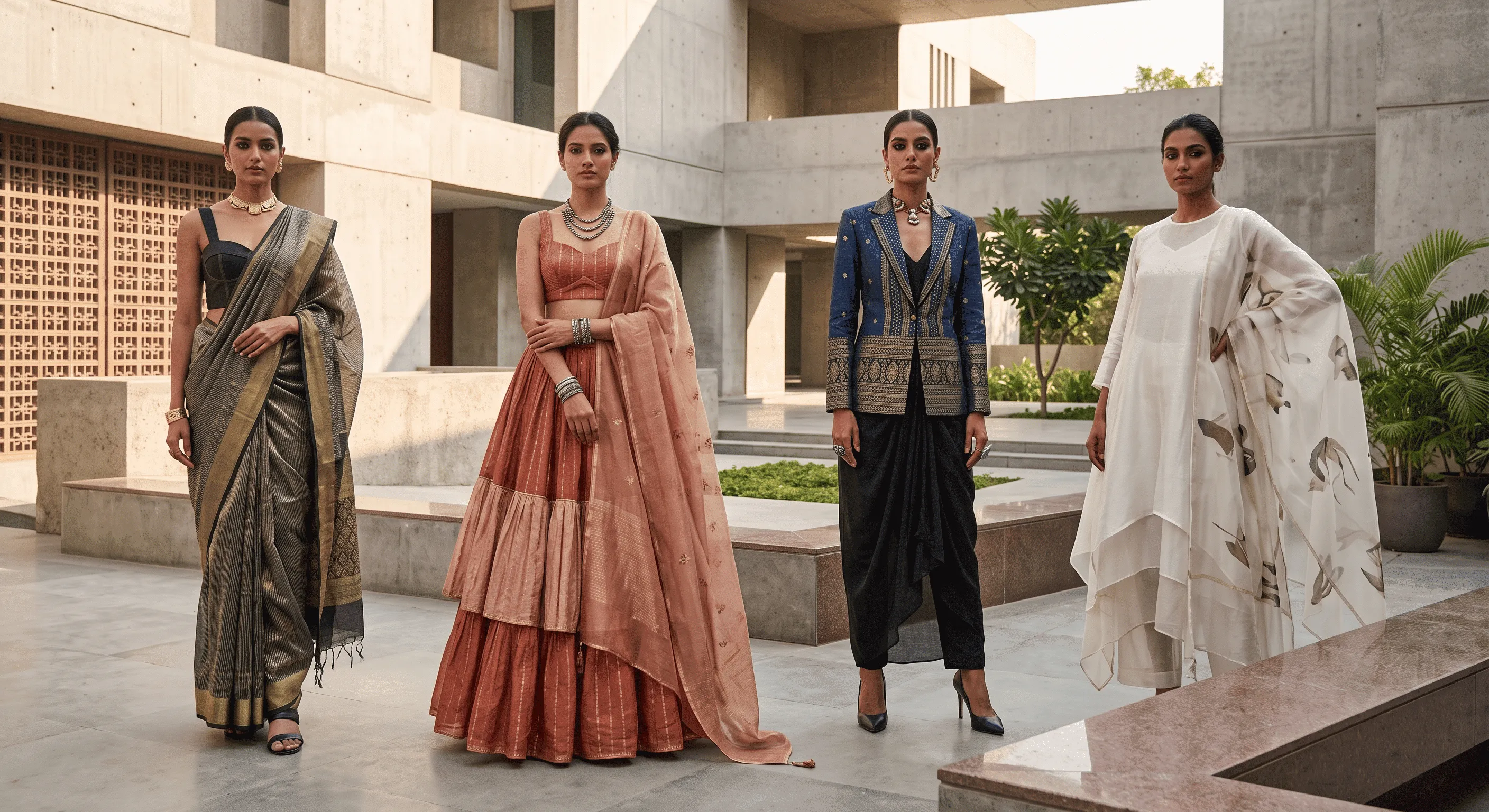
The saree remains the most recognized expression of the textile, but designers and craftspeople now use Chanderi in many other ways.
Its lightweight structure makes it suitable for:
- dupattas,
- kurtas,
- anarkalis,
- lehengas,
- blouses,
- jackets,
- overlays,
- and contemporary occasion wear.
Layering is particularly effective because the fabric's transparency becomes part of the design.
A sheer Chanderi jacket can reveal embroidery beneath it.
A Chanderi dupatta can add traditional texture without overwhelming a simple kurta.
This adaptability has helped the textile remain relevant beyond strictly traditional wardrobes.
How to Care for Chanderi Fabric
Chanderi should be treated as a delicate textile.
For silk or zari-rich pieces, professional dry cleaning is usually the safer option.
Avoid aggressive rubbing, twisting or wringing.
Store Chanderi sarees folded rather than hanging them for very long periods.
A breathable muslin or cotton wrapping can protect the textile while allowing airflow.
Keep the fabric away from damp conditions and direct sunlight during storage.
Refold sarees periodically so the same fold lines do not remain under pressure for years.
Avoid spraying perfume directly onto zari.
If ironing is required, use controlled low heat and place a protective cotton cloth between the iron and delicate fabric.
Common Misconceptions About Chanderi
“All Chanderi Is Silk”
It is not.
Chanderi can be woven in cotton, silk-cotton and silk varieties.
“The More Transparent It Is, the More Authentic It Must Be”
Sheerness is an important characteristic, but extreme transparency alone does not prove authenticity.
“Every Chanderi Saree Is Handloom”
Chanderi-style textiles are also produced mechanically.
Always ask about the production method.
“A Lightweight Saree Must Be Cheap”
Fine yarn, skilled handloom weaving, detailed motifs and zari work can make a very lightweight fabric highly valuable.
“Irregularities Mean Poor Quality”
Small handloom variations can result from manual weaving.
Damage and poor finishing are different and should still be inspected carefully.
Why Chanderi Continues to Matter
Chanderi occupies an interesting place in Indian textiles.
It carries centuries of weaving memory, yet its aesthetic feels surprisingly compatible with modern clothing.
Its transparency works with contemporary layering.
Its lightweight nature suits wardrobes that increasingly value comfort.
Its understated motifs appeal to buyers who want craftsmanship without excessive ornamentation.
And because cotton, silk-cotton and silk versions create noticeably different experiences, Chanderi is not one fixed fabric but a textile vocabulary with several expressions.
The best way to appreciate it is not simply to ask whether a piece is “pure Chanderi.”
Ask what yarn was used, how it was woven, where it came from and what type of Chanderi it represents.
Comments (0)
Leave a Thought
No comments yet. Be the first to share your thoughts!